EVIL’s Casting Couch Could Be the Last Audition! “Young Blondes, Stalked and Murdered!” reviewed! (Anchor Bay / Blu-ray)

Not Red Heads, Not Brunettes, Blondes! “Young Blondes, Stalked and Murdered!” on Blu-ray!

Stacy and Josie are two aspiring young actresses living in Los Angeles.  Both women are blonde and both ambitious to make it big in acting while being friends vying for the same work in the difficult industry that involves casting couches and who-knowing-who to get even just a foot into the door.  As Stacey’s journey to fulfil her acting career stumbles role-after-role, especially after a unique pre-casting session with a film director named Sasha, she finds that Josie receives role interest from the same director.  The pressure gets under Stacey’s skin to where nightmares evoke jealousy and a thin layer of fear, raised by the widespread terror of blonde women, also aspiring actresses, being discovered horrible murdered by a killer who records every kill.  Stacy pushes forward but her friendship with Josey wanes with her casting success and the news of more blonde actresses found gruesomely murdered unlock her nightmares to their full potential. 

“Young Blondes, Stalked and Murdered” catches the eye with a lustrous, vice-drenched title, but the narrative layout is anything but candidly conventional.  The film can be described as a reverse slasher that keeps the serial killer of young, blonde actresses in the peripherals integrated ever so delicately inside a character study of the principal lead, in this case with Stacey, a Minnesotan with stars in her eyes.  Those stars eventually lose their sheen, but the desire doesn’t dull amongst a deficiently of roles for an overabundance of the same type of actress going for them.  For writer-director, “Young Blondes, Stalked and Murdered” is Nick Funess’s first feature-length production based loosely on the trials and tribulations of young women cat scratching their way into the business with a hairline hook of a maniac with a murdered type.  Silence Films serves as the production company with Corentin Leroux and Matt Morello co-executive producing alongside Funess for the L.A. shot film.

Inhabiting as the primary character learning the curve of your desired trade is Samantha Carroll in her second full-length feature role but first at the helm as the star.  However, as Stacy, Carroll plays a character who doesn’t feel like her longed dream of being a star.  Instead, Stacy plays by the rules as if there’s a guide or a playbook to becoming a successful on-screen thespian.  Carroll’s range of emotions can peak from mile excitement to absolutely feeling crushed by the weight of failure.  Disdain and jealousy also rear their ugly heads in between inside a structure that isn’t exclusive in following Stacy as Josie runs a parallel course with less touch-upons in the grind that is to follow one’s dreams.  Elle Chapman’s more dolled up for the role by accentuating her natural beautiful for perkier and more cosmetically inclined haughtiness to contrast her conceit against Stacy’s honest efforts.  Though Funess essentially wraps the story around two actresses, the extent of supporting actors is limited to the exact same number with Gemma Remington as another blonde, actress acquittance and/or rival to Stacy and Zachary Grant as a casting filmmaking who has unspoken quirks about his character Sascha that are told through his rather distinct distilled friendliness and the way Funess and Corentin Leroux frame him by cropping out portions of his body by the frame itself or by objects, as if hiding bits and pieces of his truth in obscurity.  Both Remington and Grant’s scenes are brief and spliced in to add to the stress of an actress’s day-in-a-life, to terraform the the gossipy, cutthroat world, and, in earnest, to be more a grounding third-dimensional force that doesn’t allow Josey to be the only other character for Stacy to bounce off of, yet the characters do add impact with the peripheral killer with Remington’s gruesome news update of another blonde-headed body found as well as hinting at the killer’s possible modus operandi of how he selects, hunts, and dispatches his victims and Grant going further with that idea with a seemingly irrelevant and odd casting couch method depicted with Stacey on screen and with Josey off-screen told anecdotally through her perception, and from both experiences may leave breadcrumb clues toward a suspect without ever divulging concrete evidence toward an unnamed and masked killer rarity making an appearance in the film.

Like most moviegoers might experience, my eyes bored with interest into the unique title.  So much so, my mind started an imagination factory of possibilities there could be inside the encoded disc.  A true-blue slasher initially became settled on with a conventional killer stalking, hunting, and the eventual demise of the titular, ill-fated blondes and while that sort of terminus concept is hackneyed beyond repair, excitement still bubbles to the surface because the method itself sells from it’s tried and true history with genre fans and general audiences alike.  “Young Blondes, Stalked and Murdered” is not that kind of film.  You can label it a deconstructive or backwards slasher, but the subgenre thriller has deeper drama roots in the grounded character conflict garden, blossoming more toward a psychological thriller with a rear mirror, background view of a niche specific serial killer.  Funess’s film is akin to some apocalyptic thrillers of an impending, world-ending devastator on the horizon that you know is coming but it’s the interpersonal dynamics, or maybe even political and authoritarian moments, leading up to that catastrophe that are the heart-and-soul of the story.  Funess’s film is very much a slice of life rather than a slice of flesh with an eye for framed shot, the draw of contention through personal hindrance and envy, the melting mindset stemmed by failure, and it’s an overall celebration of performance by the cast in a story with minimal violence because the violence itself is at the very back of the mind, forgotten almost as these young blonde women continue to strive for just an ounce of limelight no matter the cost that stares directly at their faces. 

Anchor Bay continues to release rebellious films on their revamped label with “Young Blondes, Stalked and Murdered” now available on Blu-ray.  Stored on a single-layered BD25, the AVC encoded high-definition film, 1080p resolution, is presented in widescreen 1.78:1 aspect ratio.  Image wise, the picture captures natural appearances with a soft grading that lightly brightens the image.  There is some excellent use of blacks that are solid and deep with crush but works to the advantage of the scene to create a void tension of what’s inside’s it’s inkiness.  Skin textures are fair with some smoothing over of texture, but the tones appear organic and consistent throughout; the same can be said about fabric and surface textures in a range of settings and outfits that add unconscious concentrated coatings to the mise-en-scene.  The English 5.1 DTS-HD MA audio is overkill for a dialogue and score-driven soundtrack narrative but does provide clean conversation with plenty of clarity and no interference.  The back and side channels are less utilized with most of the action held within camera lens view, reducing any kind of non-diegetic milieu activity to the flutter of soft intrusions.  Sergei Kofman’s delicate perceptible score hangs in the rafters for the most part but does come down form time-to-time when needed to either build tension and show discourse in Stacey’s life/wellbeing as she struggles to get ahead with acting gigs. The special features include a scene-by-scene breakdown audio commentary from writer-director Nick Funess and executive producer-cinematographer Coretin Leroux. Anchor Bay’s Blu-ray is encased in a standard Blu-ray Amaray with a white, yellow, and poker hot red artwork of a splattered star with Stacey’s face inside staring back out at you. A leafy insert depicts the same primary artwork plus additional, similar artwork. Clocking in just above an hour at 65 minutes, “Young Blondes, Stalked and Murdered” has region free playback and is unrated.

Last Rites: “Young Blondes, Stalked and Murdered” is a hard sell as a backwards slasher but the unsettling disseminating of ruthless Hollywood is a methodology projecting hopelessness, defeating, and hostility, metaphorically represented by a killer on the hunt for blonde actresses and could pop into frame at any moment.

Not Red Heads, Not Brunettes, Blondes! “Young Blondes, Stalked and Murdered!” on Blu-ray!

Welcome Proclaimed EVIL Into Your Home! “Video Psycho” reviewed! (SRS Cinema / Blu-ray)

“Video Psycho” on Blu-ray and DVD home video!

On his way back home, Jason picks up a Ryan, a hitchhiker looking for a new start in town, goaled to achieve three things:  a place to call his own, to obtain a job that pays minimum wage, and to find a girlfriend.  Empathetic to Ryan’s new beginnings having gone through himself, Jason invites the hopeful drifter to stay at his shared home with girlfriend Julie and little sister Kylie.  One night drinking between Jason and Ryan, Ryan confesses to killing a man and even delivers video proof with his own recorded snuff film the act.  Disregarding the video and Ryan’s confession immediately as a joke, Jason lets the man stay until another snuff video involving someone Jason knows puts Ryan in the driver’s seat that could set up Jason as the suspect.  Weeks go by and Ryan basically has the run of the house with Kylie and Julie being fed up with his intrusion and Jason’s illogical reasoning for continuing to let him stay.  With Kylie in his romantic sight, Ryan is on his path to achieve his goals. 

A SOV-horror that proves you should never pickup strange hitchhikers and also proves that there are really unsuspecting, trusting, and overall dumb people out there willing to open up themselves, their home, and their family members to complete strangers, even after adamantly admitting to their heinous crimes.  That’s the essential takeaway for Del Kary’s directed, shot-on-video thriller “Video Psycho,” co-written by Kary and Pete Jacelone, a long independent horror producer and writer who began his writing career on the 1997 film and went on to write an abundant of horror you’ve likely never heard of, such as the “Psycho Sisters” series, “The Killer Clown Meets the Candy Man,” and the eyebrow raising “Duck!  The Carbine High Massacre.”  Kary’s career is not as lustrously tarnished with two films in the late 90s, including this one and “Snuff Perversions:  Bizarre Cases of Death,” and not another until last year’s “Cheater, Cheater,” a slasher based off the childish rhyme cheater, cheater pumpkin eater.  Kary solely produces the PsYChO Films production, shot in Yakima, Washington. 

“Video Psycho” embodies that home movie aesthetic that was shot with poor equipment but amongst good friends, and probably a few beers too.  The cast is compromised a bunch of one-and-done actors with Kary’s film being their only credit as the story follows more from the perspective of serial killer Ryan, played by James Paulson.  With a soul patch, poofy dark features, and thick eyebrows that slant down in a malevolence manner, Paulson contains that judgy general appearance of a psychopath and distills apathetic patterns that are nonchalant and blunt.  While Paulson thrives as killer, Jason is the daftest, most gullible person to ever live in the cinematic universe.  Now, I’m not saying actor Adam Kraatz is the blame, performance has nothing to do with the way the character is written by Kary and Jacelone and that’s their own doing, but Jason’s inactivity to do anything or warn anyone is more frightening than the antagonist.  Girlfriend Julie (DeAnna Harrison) and baby sister Kylie (Jennifer Jordan) also can’t understand the man of the house’s submissiveness to a complete stranger who has this power over him.  When they both begin to question his authority and rational when weeks past and this random guy from off the road is still hanging around, Jason reverse psychologizes the two people closest to him which makes us wonder who the real villain is in the story.  The only other characters with substance are Kylie’s boyfriend Rick (Jared Treser), who has little impact being a buffer between sociopath Ryan and his tender beloved Kylie, and video store manager Steve (Art Molina), who does a better buffering job deflecting Ryan’s unwanted and stalkerish advances until Ryan has his way with him.  Outside the principal lot, the rest of the cast fills in with Ryan’s videoed victims, most come in a single montage of analog recorded murder, with Jason Alvord, Chris Valencia, Shannon Dimickl Brandy Jordan, Jack Meikle, Heidi Munson, and Charles Summons.

Lo-fi and dry, “Video Psycho” presents an invariability that ultimately kills any intrigue, tension, and fear.  With the cast being what it is, an adequate of inexperience, the narrative needed a lift to cannon itself beyond the routine of motiveless stranglers who kills for the love of killing.  Kary and Jacelone’s attempted twist for high impact is Ryan showcasing his snuff body of work to newfound friend and host Jason and for Jason to think nothing of it and let the maniac stay with him and his closest loved ones.  At this point, audiences will slap their foreheads so hard aspirin couldn’t handle the amount of pain to follow and attention to the rest of the story will begin to wane as disbelief ad improbability start to set in like a bad side effect of an illicit drug that clearly has said side effects.  Acts two and three barely blip on the developmental and dynamic activity meter between the characters conversations of the Ryan confoundment.  Essentially, they all talk about the inaction of others and give the benefit of doubt rather than taking action themselves to alleviate Ryan’s squatting.  Ryan’s the other character enacting real change during his weeks’ stay by videotaping every count like it’s his last and insidiously inflicting himself creepily toward Kylie.  Kary does output a few notable scenes of unsettlingly imagery, such as Kylie’s haunting dream of Ryan calling her name and getting closer to her bed as she sleeps while in strobe light and with the lo-fi videotape quality, the effect is definitely dream surreal, at least that is what “Video Psycho” has going for it.

SRS Cinema’s newly restored and re-mastered Blu-ray edition is on AVC encoded onto a 25GB BD-R with 1080p high-definition resolution.  Not that the pixel count really matters with “Video Psycho” and it’s lo-fi videotape that’s neutralizes textures and color and comes with its share of interlacing and tracking issues.  To worry about compression problems, to which there is none within the uncomplex file and its size used for the codec, would be a waste of mental and visual space with an image that does delineate objects to differentiate, implies true hue, and does the job of lower grade, SOV-horror with authentic commercial SOV-qualities of home S-VHS camcorders.  SRS Cinema never really cared about being the picture of health when it comes to quality, so this isn’t off brand for their content and schtick but does heavily play more into the little-known obscurity of home-grown thrillers within its full frame 1.33:1 aspect ratio.  The English mono track offers parallel quality to the video with a static and lo-fi quality that won’t have the pithy impact of a robust and all-inclusive surround sound or even stereo.  Kary’s produced in minor key minimalism and dread score is one of the element’s that be elevated. Dialogue’s hit-or-miss with clarity that’s often impeded by the said interference and poor mic placement, or just the intrinsic issues of an on-board mic.  There are no subtitles available.  With poor A/V quality, why release this film on Blu-ray?  The answer is simply because of the wide-ranging special features that include interviews with the actors who play Ryan’s on-screen and video victims, such as Art Molina, Jennifer Jordan, and Adam Kraatz.  There’s also a feature paralleling commentary track, behind-the-scenes rehearsal footage, deleted scenes, alternate takes, and outtakes.  Plus, the official and teaser trailer along with additional SRS Cinema previews.  The company continues to commission some pretty rad artwork and that is also true here with Belgium graphic artist STEMO who electric saturations of purple, red, pink and blue make for a eye-catching and intriguing roadside killer artwork, even if a bit literal with a thumb up hitchhiker holding a video camera on the side of a blood soaked road in the foreground.  The artwork fits snuggly in between the film layer of a standard Blu-ray Amaray and the disc is pressed with the same front cover image.  The 75-minute feature comes not rated and the Blu-ray is available region free.

Last Rites: An unremarkable, home brewed, strangler picture with little to say, “Video Psycho” has unimaginative idiocy with characters and a narrative conclusion that can be seen a mile away, leaving the SRS Cinema’s title worth only to watch because of its catfishing artwork.

“Video Psycho” on Blu-ray and DVD home video!

Master Chen and his EVIL, Alien Clan Try to Take Over the Powers of the Astral Plane! “Furious” (Visual Vengeance / Blu-ray)

Get “Furious” Now on Blu-ray from Amazon.com!

After the murder of his sister who sought pursuit and protection of the astral plane power, the mourning and grief-stricken Karate instructor Simon is summoned to Master Chan’s space-age dojo where’s he’s tasked to track down four connecting pieces of a necklace artifact that will lead him to his sister’s murderer.  As soon as Simon leaves the building, his friends join his quest only to be confronted by Howard, a martial arts henchman with a throng of skilled fighter to descend upon Simon and killing his friends.  Simon finds himself in constant battle against not only Howard but also other highly skilled sub-bosses with ties to Master Chan in a devious and traitorous plot to obtain the power of the astral plane for himself.  Simon uses his Karate discipline to kick and punch his way through hordes of trained fighters to reach Master Chan to stop him and exact revenge for his sister. 

A martial arts movie with aliens, astral plans, a dragon’s head, evil fire-shooting magicians, and more, “Furious” lives up to the moniker as one punch after another action and completely ambitiously and guerrilla style on a miniscule 30K budget.  Entirely helming “Furious’s’” creative control and securing actors and stuntmen willing to take risks on their own accord and dime are USC film students Tim Everitt (visual effects animator and composite artist who would go on to work on “Deep Blue Sea” and “Red Planet”) and Tom Sartori (a career film editor) looking to break into the film industry with their own rapscallion production of a marketable chopsocky genre film at the tail end of its string of success coming out of the 1970s and into the early 1980s when horror began it’s rise.  Everitt and Sartori produced the all-American made martial arts production with funding from a motel entrepreneur.

At the center of “Furious” are two Korean-American brothers, Simon and Phillip Rhee, experts in Karate and dojo sensei who, like Everitt and Sartori, were looking break into the business.  The California-born Rhee brothers play the protagonist and antagonist roles with Simon playing the namesake hero thrust into doing evil’s biding while avenging his sister’s death and Phillip donning Master Chen’s white hair and manically, ruthless plot to exploit not only Simon to obtain astral plane summoning necklace pieces but also his henchmen who carry the pieces that must hold the essence of death.  Virtuosos in karate, the Rhee brothers show and pull off incredible difficult moves done practically, especially in the early 1980s without the help of high-flying wires and only a little help with some camera angle movie magic.  The sparring is fast and realistic without being pull-punching obviousness.  All of the sound was done in post, so the Rhee’s real voices are not used to either replicate the martial arts jagged voice synchronicity or sound design was not in the budget.  Likely, a little of both.  The lower-level bosses are a medley bunch and have a range of talents from a staff wielding wilderness man (Bob Folkard), to a tiger style soul fighter (Howard Jackson, “The Delta Force”), to a crazed wizard (Mika Elkan) with flaming projectiles Simon has deal with, one-on-one, in order to reach the pyramidal top, Master Chen.  “Furious” is purely an action film, casting no love interest for Simon resulting in no emotional or romantical arch.  The former is emphasized more intently by Simon’s lack of expressiveness for revenge; there’s a sliver of poignant energy when Simon has visions of his dead friends’ severed heads served to him on a food platter that could warrant retribution attributions.  Jon Dane, John Potter, and Joyce Tilley who are quicky established as character friends to Simon and are equally as quickly dispatched to place Simon in a world of loneliness against an aliens and evil karate master alliance for astral plane domination.

From the depths of Tubi comes a curation for the ages release of “Furious” for the first time ever having a proper package that’s not related to pornography, as was the first and only VHS issuance by VCII, a well-known adult film distributor at the time who released “Debbie Does Dallas.”  “Furious” is an odd, unpredictable, mashup of throwing darts to see what sticks and in that volatility, anticipation of what’s to come next is considerably high, especially when a shoestring budget production surprisingly opens with incredible helicopter shots tracking a foot chase sequence.  From there, “Furious’ keeps astonishment alive with high-level increments of bizarre alien in human skin behavior, punitive human to animal transformations, talking pigs, astral plane battles, Superman flying, and Devo band mania coupled with extensive and coherent editing to flesh out a feature on the front and back ends.  Granted, the plot’s very puzzling and motives are dubious at best to why Master Chen would task a competent fighter like Simon to track down pieces of a unifying necklace when Chen’s own men possess all of them and could easily have killed them himself for the death essence.  There’s also the alien aspect that goes by the wayside in a lack of explanation or exposition by jumping into assumption just by weird behaviors and flashy, ultra-modern buildings to serve as extraterrestrial evidence.  Even with that ambiguity, seeing Simon Rhee perform a triple-hit kick amongst a slew of other highly impressive stunts and special effects relative to the budget has “Furious” become a cult fan favorite. 

Visual Vengeance curates another title from out of the shadows and into our Blu-ray players with “Furious,” encoded with AVC, presented in a high-definition 1080p of the original fullscreen aspect ratio 1.33:1, on a BD50.  Sourced from the original tape elements, which I’m assuming was the original VHS release a few years later as the film was shot on an Arriflex camera that used film stock, the Blu-ray contains a new, director-approved SD master print.  Cleaned up to get some color saturation into the anemic picture, the image doesn’t look as washed as the monochromic qualities of VHS and this is a vast improvement in picture quality as well with some better delineation around objects.  There’s quite a bit of aliasing and ghosting that leaves object trails and rough edging but not enough to warrant visual concern for texture properties, such as the pig stubble or the decapitated heads on a pater that show coarseness where it matters.  Print damage, such as virtual scratches and some rough editing room splices and re-tapings, are present but not profound.  All of this is covered in the technical forewarning, regularly at the beginning of ever Visual Vengeance film so the expectation is set.  The English language LPCM stereo is all postproduction additions with ADR and foley artistry.  The first instances of dialogue don’t come up in the mix until the 13-minute mark, leaving much of the opening left to Foley work to build kinetic and atmospheric sound.  With any early postproduction work, three will always be space in between the synchrony and that can be said here but on slightly jagged edge which says something positive about Everitt and Sartori’s handling of the audio track.  Optional English subtitles are available.  Obscurity doesn’t mean less supplement goodies either and Visual Vengeance has proved that over time again and again with their amazing stockpile of exclusive and archived special features.  New interviews with directors Tom Sartori, High Kicking in Hollywood, and Tim Everitt, The Kung Fu Kid begin the exclusive content with length editing discussions from the directors about their time before, during, and after “Furious.”  Filmmaker and podcaster Justin Decloux provides a slew of material, including a feature length commentary, cohosted with Peter Kuplowsky of Toronto International Film Festival.  Decloux does a pair of video essays – North American No-Budget Martial Arts Cinema Primer and Rhee Brothers career overview. The buck doesn’t stop there with an archive commentary with co-director Tim Everitt, an archive podcast with Everitt circa 2013, Super 8 behind-the-scenes footage of “Furious,” Scorched Earth Policy 1987 EP with full six tracks, Cinema Face live in concert, Tom Sartori’s 80’s music video reel and Super 8 short films, original film trailers, and Visual Vengeance trailers. That’s not all! New slipcover artwork brings together an illustrated compilation of what to expect with the same art on the inside Amaray case. The cover art is reversible, depicting the original VHS cover art that’s not as charismatic, or good. Insert section houses a folded mini-poster reproduction of the original one sheet, a double-sided acknowledgement advert with alternate art, Visual Vengeance’s retro VHS sticker sheet, and a ninja star keychain accessory! The 17th Visual Vengeance title comes region free, has a runtime of 73 minutes, and is unrated.

Last Rites: Anomalously action-packed with a fantasy element, “Furious” is a one-of-a-kind, indie martial arts production that has everything, even the kitchen sink, thrown at with a journeyman tale of alien butt-kicking, astral plane dogfighting, and anthropomorphic black arts.

Get “Furious” Now on Blu-ray from Amazon.com!

To Be EVIL, It Takes a Little Backbone. “The Fifth Thoracic Vertebra” reviewed! (IndiePix Unlimited / DVD)

Own “The Fifth Thoracic Vertebra” on DVD. Purchase Here!

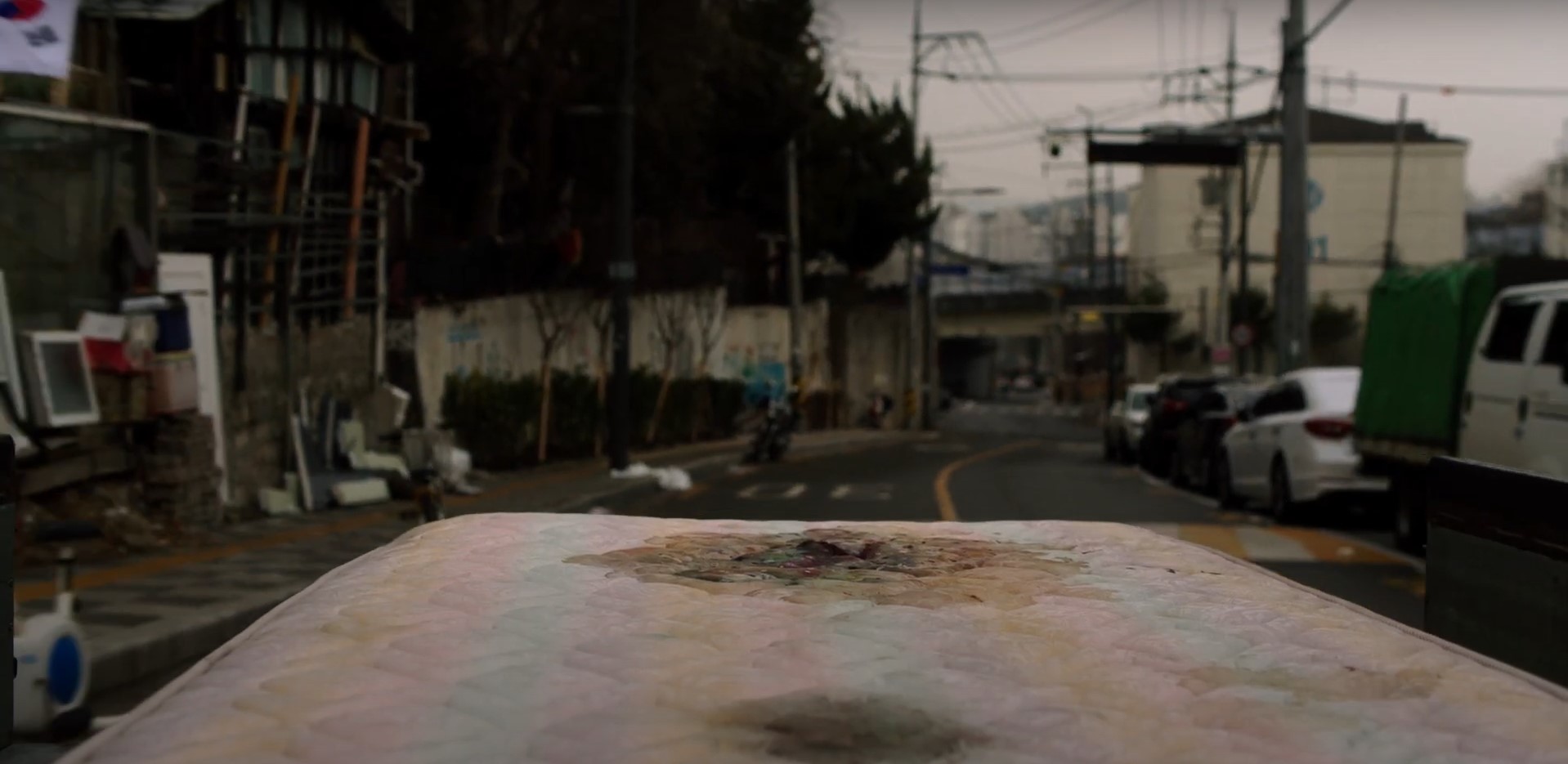
In the Gyeongbuk region of South Korea, a brand-new mattress is being delivered to a young couple’s new apartment but upon arrival, the fed-up delivery men take off when no one answers the door and leave it for the job endeavoring girlfriend who must lug up the mattress herself as she finds her boyfriend asleep on the floor. After more than year together, the threadbare relationship inevitably ends and the girlfriend vacates the apartment, but during all that time together, a mysterious mold formulates from within the mattress and surfaces on the pillow top. The mold turns sentient and uses an outgrowth protuberance to latch onto and extract the boyfriend’s vertebra for nourishment. From then on, the mattress is discarded into the world, being picked up and used by unsuspecting nourishments for the interior mold. Travelling across Korea land to difference providences, feasting on the vertebrae that becomes the building blocks of a new being, the growing mold digests to integrate itself into a human world. Absorbing the miscellanea range of emotions from its victims, what was once small fry fungi has become self-aware, compassionate, and even more hungry to live.

How do you write-up the depth of a film that’s undeniably indescribable? Syeyoung Park’s “The Fifth Thoracic Vertebra” trembles on the edge of being the epitome of that very sentiment with an abstract creature feature concept bred out of people’s raw emotions. The 2022 South Korean phantasmagoric horror, fattening itself off the dysphoric and euphoric morsels, is written-and-directed by Park as the filmmaker’s debut feature film credit that tackles life birthed out of death, such as the symbolic end of relationships and literal death, and becomes a metaphor stemmed by the natural growth phenomena of fungi, a new lifeform that grows out of rot. The Moonstone Productions indie picture is a festival favorite amongst the Fantasia Film Festival and others and is distributed onto physical media by the s streaming platform IndiePix Unlimited.

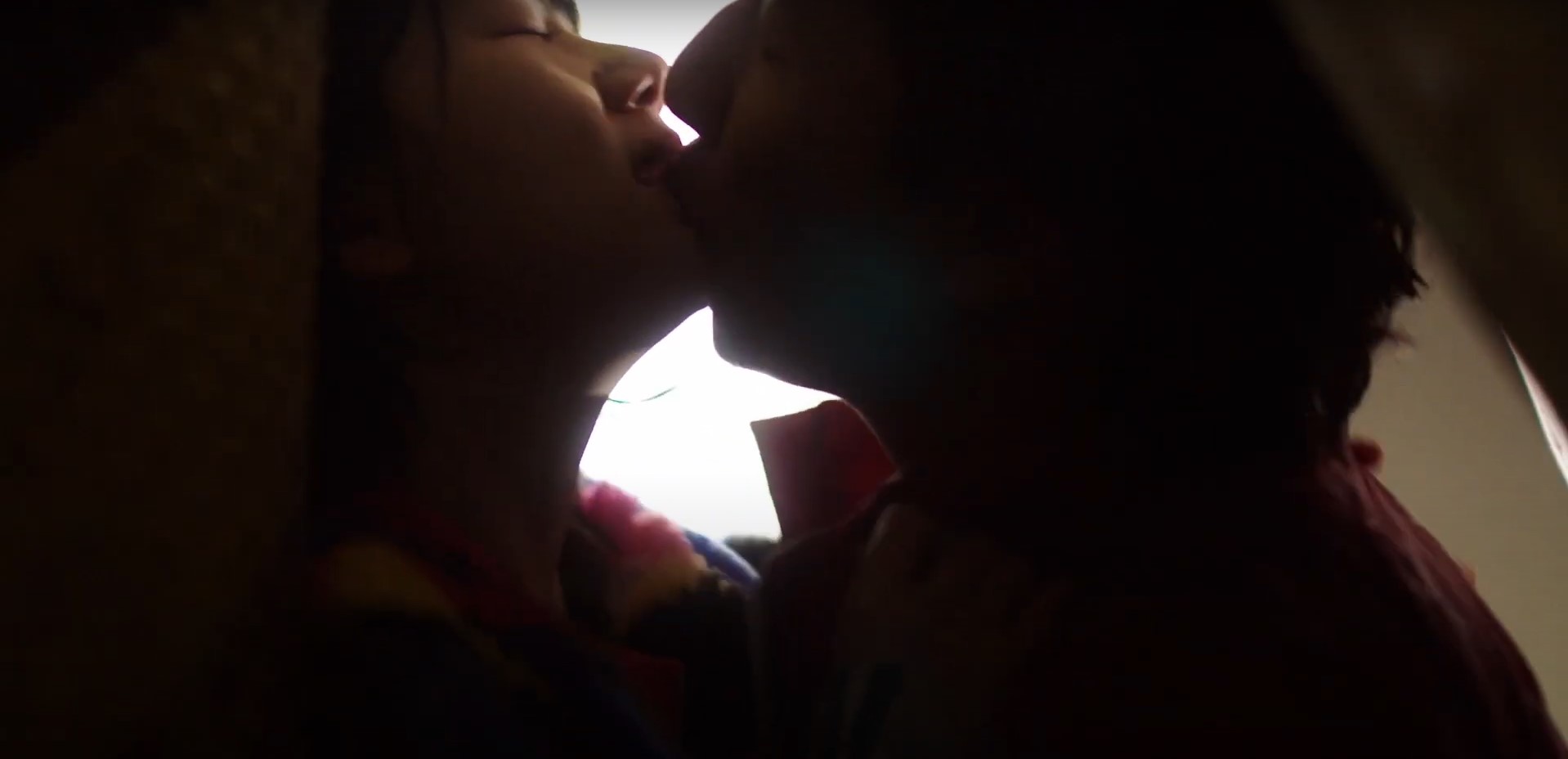
“The Fifth Thoracic Vertebra” doesn’t hone into and latch onto one core group of principals characters; instead, the travelling, moldy mattress has episodic events with interactions to various emotionally-turbulent or charged people that the being inside the dingy mattress not only cuts out and extracts a physical piece of who these characters are but also absorbs their emotional weight, in what could be considered as an incident in molding the mold into what it itself can come to be.  One-sided care and love, a tempestuous connection, contempt, amorous spontaneity, loneliness, and death feed the fungus and shape its mildewy putrescence on the mattress like the coating of an incubation chamber to ensure growth, maturity, and nutrition.  The episodic events hit and miss the gravitational pull needed land firmly on what’s being conveyed.  The woman on death’s bed was perhaps the most impactful written with regret left unsaid, unaccounted for, and is shouldered by the thing in the mattress to fulfill with a letter to the woman’s daughter to let her know about the mother’s definitive adoration.  Other instances are fleeting, perhaps lost in translation, of the evocative impression intended as the mattresses does a reach around for a clean vertebrae excision.  In either case, the now-vertebrae-less don’t even notice when a large part of their backbone is literally ripped from them in the moment; only in post-snatch do they double over in pain and unable to stand and straighten from their crippling past.  The film’s cast includes Mun Hye-in, Ham Sukyoung, On Jeong Yeon, Jung Soo-min, Kim Ye-na, and Park Jihyeon as the humanoid creature.

The fifth thoracic vertebrae, the T-5 spine part and not the film’s title, is located near the top-center of the spine in the thoracic grouping and it supports the abdominal muscles and feeds into the chest wall coinciding with the muscles around the rib cage, lungs, and diaphragm, to assist with breathing.  In Sye-young’s abstract, “The Fifth Thoracic Vertebra” does not brace audiences for metaphorical monsters surrounded by dreamlike imagery and esoteric purposes.  With no explanation, visual or verbally articulated, piecing together the strange circumstances is heavily relied upon our own personal experiences in life, our past mistakes, our relationship fails, our giddy fondness, and so forth to interpret Sye-young’s theoretical philosophy on the unfinished leftovers of a kaput relationship.  I believe Sye-young also felt the need to explain his film in a director’s statement on the back of a DVD that questions the whereabout “bits and scraps” of a failed relationship by anthropomorphism means and relating it all to the cycle of fungus.  While a difficult conceptual pill to swallow, “the Fifth Thoracic Vertebrae” can display beauty and disgust in a composite of odd juxtaposition in a peculiar world where a dirty, moldy mattress is an acceptable roadside pickup and debilitating excised bones of the body go without being questioned.   There’s an aloof presence that speaks symbolic volumes to the relationships depicted and with an open mind and broad, thoughtful strokes, one may see through the director’s expressionism.

Indiepix Unlimited, an online streaming service dedicated to independent films, also caters to the physical media market with a DVD release of “The Fifth Thoracic Vertebra.”  Encoded onto a single layered 5GB DVD-R, it’s been a while since I’ve seen an official release on the recordable DVD format and for the visual picture quality that’s already on a standard definition 720p resolution, we receive a middle-of-the-road 1.78:1 widescreen aspect ratio presentation. Posterization, in voids and on the skin, is the main artefact culprit in a stylish context of warm gel yellows and greens and the seldomly naturally lit hues which are not as richly saturated but can hold its own for a DVD-R.  There’s not a ton of detail in the mattress mold and any clear view frames are obscured by distance, the cover of darkness, and the cover of blankets as, much like all else, the contours are nicely delineated but the overall color scheme of the film blend together. The South Korean uncompressed LPC 2.0 mix has a pleasing enough unassuming range and depth field that hits all the notes and presents ambience with basically what is needed to envelope the immediate surroundings around the principal objects, all balanced through the dual channels.  The burned in English subtitles are not flawless but are synched well and seemingly translated okay.  The release comes feature only and the standard DVD Amary casing comes with an eye-catching, or rather eye-starring, front cover with no outer coverings or inserts.  The disc art deliberately yells DVD-R with a plain white, barely unique logoed, ring splay.   The release comes not rated with a runtime of 65 minutes and is confirmed to play on region 1 playback.  Untested for other regions. 

Last Rites: “The Fifth Thoracic Vertebra” impresses with forlorn residue in what is an offbeat creature feature where the creature is inside the mattress rather than under it.  Yet, the story stretches the imagination too far and near a snapping point that allows for no breathing room in what is a tale of lamentable remnants that creepingly germinates spores into a melancholic mycelium overtime. 

Own “The Fifth Thoracic Vertebra” on DVD. Purchase Here!

Never Trust a Script Written by an Egotistically EVIL “Scream Queen” reviewed! (Visual Vengeance / Blu-ray)

This Chainsaw’s Made for Cutting! “Scream Queen” on Blu-ray!

Malicia Tombs, an acclaimed horror actress known for B-movies and bad attitude, bursts into a wreckage of flames when her car sudden explodes after storming off the set of her new movie, “Scream Queen,” in which she wrote and starred as the titular character.  Part of the cast and crew were devastated by the accident that had cut their own career short while others were relieved the egotistical Tombs had perished despite publicly feigning grief over the loss of a genre fan-favorite.  Months later, the small cast and crew receive a mysterious invitation to gather at a creepy mansion butlered by Runyon.  When their host is unveiled as to be a very much alive Malicia Tombs, she offers them a lucrative sum of money to finish the film they’ve started but with a new script.  As the guests read through the new treatment, the cast and crew realize their present moments read just as their being played out in the script, even their deaths. 

If there was ever a single face deserving the representative distinction within an overpopulated categorized scream queen genus, Linnea Quigley would be that green-eyed, blonde-topped, beautiful face with an infectious smile.  Quigley worked with an array of filmmakers, ranging from some of the most renowned cult films of all times amidst reams of horror movies for nearly half a century (yes, we’re feeling old now) to the most independent of the independents films never having really receive the proper exhibition format or audience attention.  To what would be a delight to Quigley’s fanbase, one of those obscure features is Brad Sykes’ “Scream Queen,” a late 90’s filmed, 2002-released, SOV, U.S. slasher written-and-directed by the “Camp Blood” and low-budget filmmaker with Quigley in mind to play the scream queen character Malicia Tombs, now available, officially, on Blu-ray.  “Scream Queen” is the first major project for Brad Sykes in a collaborating effort in not only as a director but also as a co-producer alongside David Sterling of Sterling Entertainment.

“The Return of the Living Dead” and “Night of the Demons” Quigley puts on another memorable and wickedly fiendish performance as the haughty genre scream queen Malicia Tombs who superiority has gone to her head as she embraces her designation to an exact mania, displayed early on when her character’s character attempts to choke-kill another actress despite the numbered scene not being a death scene and Malicia harps on wanting to continue with the resembling act of murder.  As much as Malicia Tombs embraces the killer instinct inside of her, Linnea Quigley very much embraces Malicia Tombs without having to take her top off and despite having less screen time than her costars.  While Quigley fades in and out of the linear story, the narrative progresses with livelihood hardships of the now out-of-work cast and crew who relied heavily on that small film to boost their acting and filmmaking careers.  That crop of characters falls short tipping into their expectations, aspirations, and even their relations to be just slasher fodder for the mysterious maniac roaming the house.  Jenni (Emilie Jo Tisdale,” Escape from Hell”) and Devon (Nova Sheppard) are inferred romantic roommates who sell clothes on the side of the street to make ends meet post failed film but don’t have surmountable direction to either be a full-fledged couple to sympathize or seem terribly concerned about opening their own clothing shop other than what would be a bad decision to reside at the mansion overnight.  Again, no sympathy there either.  The special effects goof Squib (Bryan Cooper churns chuckles relentlessly by relating more to his crafted effects dummy more than people, marking him conclusively comedy relief as well as fated for death that, like in life, no one takes him seriously when he shows up gruesomely mutilated.  The other principal actress across from Tombs is Christine (Nicole West, “Dimension in Fear”), a buxom blonde tired of secretary work succumbing to lead man flirtations in a dark and scary house where every shadowy corner is lodged with threat.  The pair fall into that horror character cliché of have sex, will die, quickly downgrading their pre-professional relationship into nothing more than dark house desire.  Director Eric Orloff (Jarrod Robbins, “Evil Sister 2”), a presumed spin on the Awful Dr. Orloff and perhaps hints at his motives, seems to be stuck in angsty avoidance and melancholy stemmed by what could have been with Scream Queen but that also peters to a gross negligence end of an arc waste.  Rounding out the cast are a couple of special bit parts played by prolific Full Moon Entertainment and overall horror movie screenwriter C. Courtney Joyner (“Puppet Masters III,” “From A Whisper to Scream”) as a televised homicide detective and Kurt Levee in a quasi-return of his character Runnion from “Evil Sister” but alternatively spelled “Runyon” in “Scream Queen.”  

Though obviously and definitely not the first to do this, “Scream Queen” humors metacinema measures built upon horror tropes and spherical plot points that redirects the story back upon itself for a killer effect.  The feature has no issues making and poking fun at itself within a campy context albeit the usually grave apprehensions of a true scary slasher movie that’s less campy of which a scream queen is born – think Jamie Lee Curtis in “Halloween” or Neve Campbell in “Scream.”  Bryan Cooper not only portrayed the foolish effects guy persona but also actually did a lot of the gore gags for the film, achieving very detailed inlaid gore prosthetics for a smalltime picture with an axe embedded into a chest and a mangled face to name a few.  The story itself feels a bit rough and ready as it slips into supernatural obscurity and, as aforementioned, character setups flounder to a stagnation, killing instantly the miniscule arcs that were structured prior to their mansion gathering in what becomes a slapdash of serial offing that wraps up the story post-haste without much cat-and-mouse tension.  With that said, “Scream Queen’s” unpolished plot had once mirrored its fallowed physical release until recently but now witnessing its birth out of twilight has been multitudinous worth the wait. 

Another of Linnea Quigley’s lost films has been resurrected from the format graveyard by Visual Vengeance with a new Blu-ray release of “Scream Queen.”  The Wild Eye Releasing sublabel release comes with an AVC encoded, high definition interlaced scanned and director approved 1080i transfer from the 480p tape elements on BD50 capacity and comes also with the qualitative joys of a standard definition shot on video experience.  SOV tape upconversion can never completely eradicate the imperfections associated with tape and we also know this going in courtesy of Visual Vengeance’s standard practice of a fair warning before the film, but the overall “Scream Queen” presentation passes as clear content despite some minor tracking blips, 1.33:1 aspect ratio, original lower resolution, and scan line visibility, which is smoothed out nicely by the 1080i conversion. Exteriors and brightly lit scenes take on more shape compared to darker and low-lit areas that become like a void in standard DEF, which also hits the natural grading into a washed-out drab.  The English Dolby Digital 2.0 stereo labors to maintain some form of auricular strength but often nearly goes dark to where certain Linnea Quigley monologues periodically go silent for a few seconds, so the dialogue isn’t entirely clear but when it is, it’s relatively clean. There’s no hardiness pop in the audio track, staying suppressed throughout, and having little-to-no range or depth to the compile contexture. Some electro-interference throughout but nothing to be bothered by considering the grade of the SOV. Optional English subtitles are available. Special features include a commentary with writer-director Brad Sykes, a new behind-the-scenes documentary Once Upon A Time Horrowood that’s mostly Brad Sykes going through the stages of making “Scream Queen” and his recollections of his first big time produced film, a new interview with star Linnea Quigley, a new interview with one of the three various editors Mark Polonia (director of “Splatter Farm”), an original full-length feature producer’s cut of “Scream Queen,” a behind-the-scenes image gallery, Linnea Quigley image gallery, snippets from the original script, original trailer, and other Visual Vengeance distribution trailers. Along with the hearty software special features, hardware physical features include a six-page trifold with behind-the-scenes color photos notes by Weng’s Chop Magazine’s Tony Strauss and beautifully illustrated with dripping blood, a chainsaw, and Linnea Quigley on the front cover, a folded up mini color poster of a scantily-leathered Linnea holding one of the film’s murderous weapons, retro stickers, and your very own Four Star Video plastic rental card. All of this great stuff is stuffed inside a clear Blu-ray Amary case with a pressed disc art of a bloody illustrated Linnea sawing some unknown guy’s face off. The same illustrated graces the front cover in an expanded form and under a different hue. If you don’t like it, which I would be hard-pressed if you don’t, the reverse side contains one of the original cover arts with, again, a scantily-leathered Linnea holding that murderous weapon. The entire package is sheathed inside a rigid O-slipcover with an extended view of that chainsaw scoring with a bloody spray the eyeball from some guy’s face. The 13th Visual Vengeance release comes region free, unrated, and has a runtime of 78-minutes. Lost vintage now found and digitally revived to give us even more Linnea Quigley than we knew we needed with a meta-film shows initiative and fit special effects but swerves off trajectory into a more-of-the-same pathway. 

This Chainsaw’s Made for Cutting! “Scream Queen” on Blu-ray!