EVIL Wants You Tour Your Own Personal Hell! “Trapped Ashes” reviewed! (4K UHD and Blu-ray / Deaf Crocodile)

4K and Blu-ray “Trapped Ashes” from Deaf Crocodile. Available Here!

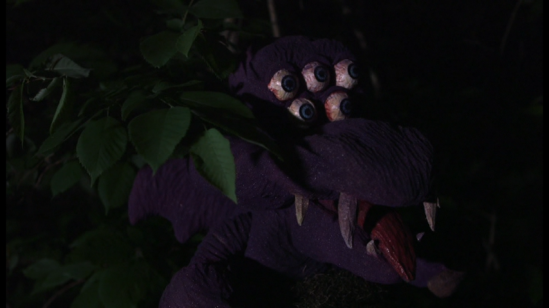
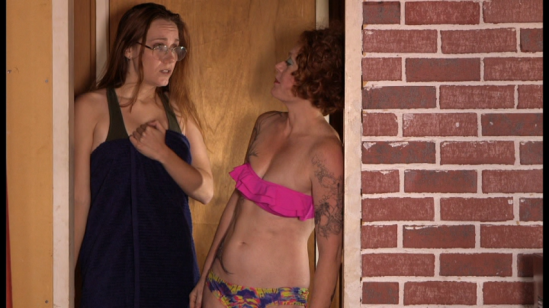
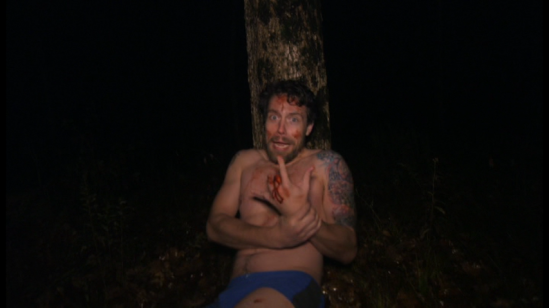
The VIP package for a historical studio backlot tour gives seven strangers a behind-the-scenes look at how movies were made and the background behind them.   When their cart pulls up to one of the more infamous movie houses for Desmond Hacker’s fright flick Hysteria, the tour group are eager to explore what’s typically off limits for normal, non-VIP tour attractions.  Once inside the backlot house, much of the Hacker’s funhouse tricks and odd designs are although covered in cobwebs are still very functionally practical as the group separates and goes room-by-room to peruse a movie house.  When they all gather in what looks to be the commune dining area, they find themselves unable to locate the way out no matter which unlocked door they choose, which circles them back.  The tour guide mentions Hacker’s movie had similar parallels and that the only way to free themselves would be to tell their own personal horror story.  With nowhere to go and nothing to lose, the stories begin their descent into terror. 
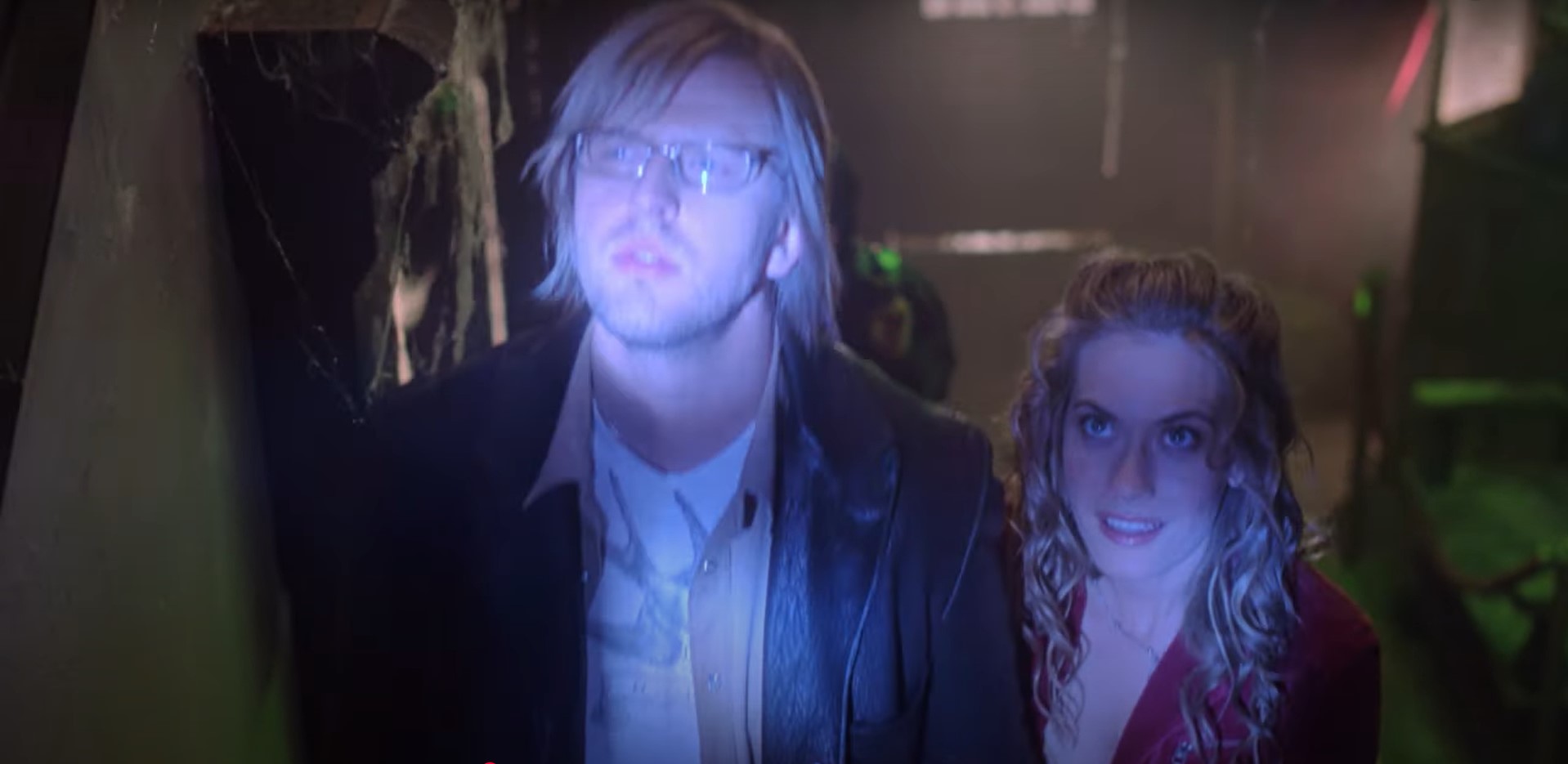
For someone who doesn’t go out of their way to watch horror anthologies, I’ve been on a kick lately with a decent string of short film compilation feature, starting with the latest entry from the popular “V/H/S” franchise, “V/H/S/Beyond.”  Next up takes us back to 2006 with “Trapped Ashes,” a campy horror anthology that not only brought together legendary genre directors, such as “Friday the 13th’s” Sean S. Cunningham, “Gremlins’s” Joe Dante, “The Matrix” visual effects arts John Gaeta, “Silent Night, Deadly Night 3:  Better Watch Out’s” Monte Hellman, and the late director of “Altered States,” Ken Russell, but also brings together aged, yet still legendary, familiar faced actors that have since past that short time between 2006 and 2025   Dennis Bartok wrote the anthology piece and is his brainchild, producing the film.

Those aforesaid actors have a combined nearly centuries (plural!) of experience with careers spanning an average of 50 years each.  Henry Gibson (“The ‘burbs”), John Saxon (“A Nightmare on Elm Street”), and Dick Miller (“Gremlins”) all together in one film.  Granted, Dick Miller’s cameo was so short that all three were only together for a brief scene but the trio alone should bring in genre fans to witness Henry Gibson in a persona he does best, a round faced under stark white hair and with puppy dog eyes that draws one closer to his innocence only to have the rug snatched right from under you when he turns sinisterly dark as the seemingly harmless tour guide.  Saxon also plays true to his conventional character archetype as a wise-cracking tough guy too cool for school; this time, he plays a screenwriter haunted by his own betrayal toward his best friend while being infatuated with a bewitching beautiful woman.  Unlike most horror anthologies, “Trapped Ashes’” individual tales contain mostly the same cast as the wraparound with Saxon, Jayce Bartok (“Founder’s Day”), Lara Harris (“The Dogfighters”), Rachel Veltri (“Pray for Morning”), Michèle-Barbara Pelletier (“Brainscan”), and Scott Lowell as the tour guests with personal hell to tell.  The heterogeneous group convey their supernatural-laced anecdotes that mingle inside the context of their being or life whether body image, marriage, friendships, and childhood, subjective intimacies that shape their excruciating experiences that, if audiences see them on screen for the first time, wouldn’t be clear how deeply burdened or troubled they are at first glance.  Once the story is told, moods and personalities shift, or perhaps seemingly normal habits are made clearer, and this is made possible by the eclectic bunch of actors to carve away their characters’ exterior shells to see who they really portray.  Ryo Ishibashi (“Audition”), Yoshinori Hiruma, Mina E. Mina (“Eastern Promises”), Winston Rekert (“Eternal Evil”), Ken Russell, Tahmoh Penikett (“Trick r’ Treat”), Tygh Runyan (“Disturbing Behavior”), Amelia Cooke (“Species III”), Luke Macfarlane, Deanna Milligan, and Matreya Fedor (“Slither”).
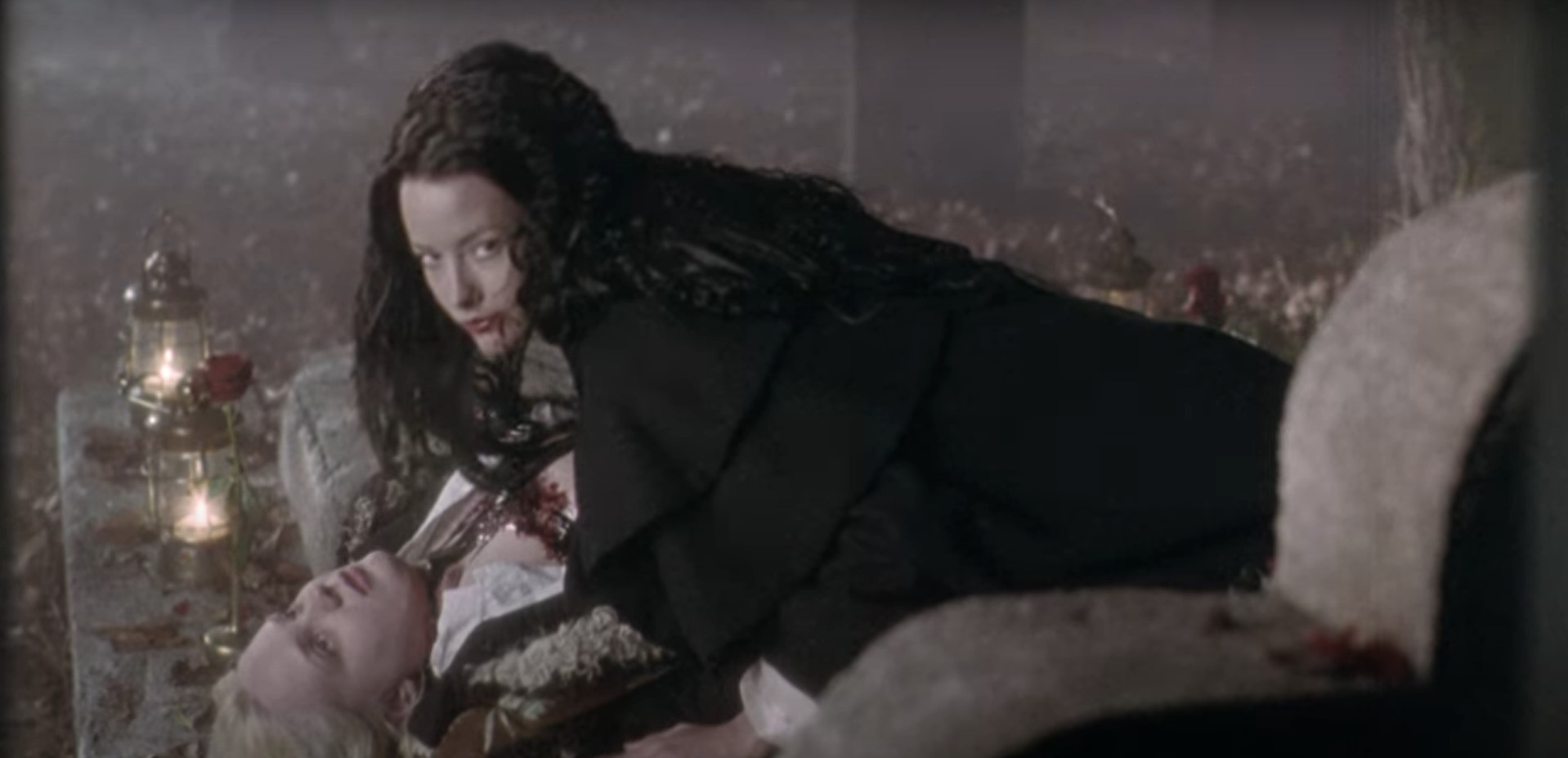
Riffling through the obvious camp “Trapped Ashes” touts very proudly, there are nuggets surrounding the unsavory themes.  Body dysphoria within “The Girl with Golden Breasts” is one of these topics, where an actress feels compelled to enhance her bosom for better, younger roles, and that speaks the relevance ill of the movie industry’s perverse tidings of late as actors and actresses continue to fill, inject, scar, and manipulate themselves into being their unnatural self to satisfy producers, execs, and audience likes and expectations when, in reality, hurts nothing but themselves.  Dissatisfaction marriage, or perhaps better labeled stagnant marriage, leads into invasive third party to sate long neglect passion and in this case, that third party is an ancient Japanese demon named Seishin (Japanese for Spirit) who lures the wife’s sexual appetite down to the pits of the netherworld.  From there, themes love triangles, obsession, cheating, and dysfunctional family structures formulate a pod of personal pate smeared with victimization, the victims being the storytellers stuck in the Desmond Hacker’s Hysteria backlot house.  “Trapped Ashes” isn’t about being victim, it’s more about playing the victim and those playing may not be victims of their own tales at all that adds a morsel of supernaturality to the recipe that changed the course of the idiosyncratic anecdotes that are close to their emotions and mental well-beings as well as proximally physically hazardous. 
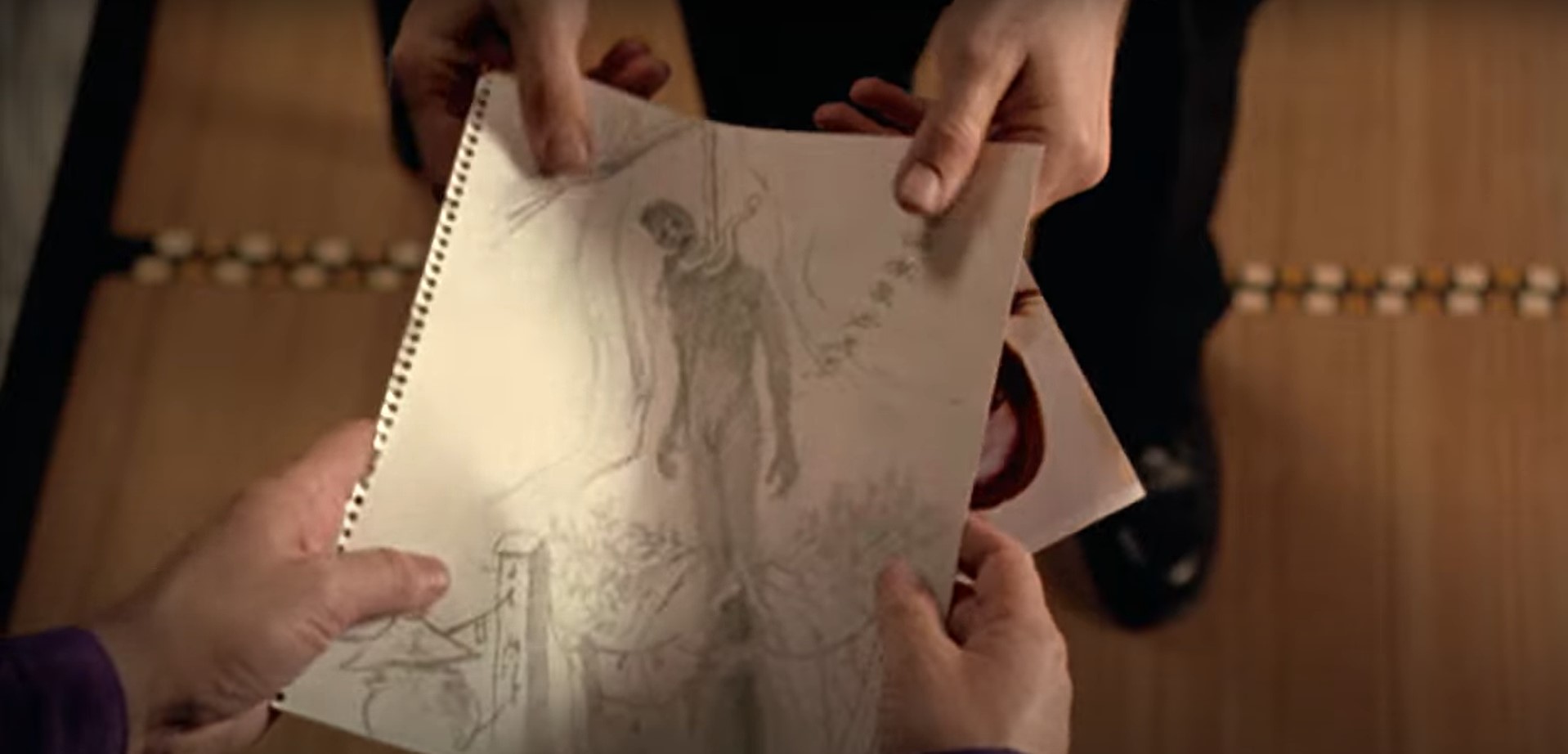
Our first time covering the Dennis Bartok and Craig Rogers founded Deaf Crocodile release and it doesn’t disappointment with a sleek new 2-Disc 4K UHD and Blu-ray of “Trapped Ashes,” scanned and restored in 4K for its Blu-ray debut.  Presented in a widescreen 1.85:1 aspect ratio, the Deaf Crocodile UHD is HVEC encoded, 2160p Dolby Vision, BD66 and the Blu-ray is AVC encoded, 1080p high definition, BD50.  For an early 2000 production, “Trapped Ashes” doesn’t have the digital veneer of early 2000s film besides some visual effects work of the image manipulation drooping effect.  The extra pixels of UHD really brighten and elevate the image to today’s standards to surface the most inconspicuous details lost in standard definition.  Color saturation and skin tones appear natural and organic with no signs of compression issues or imbedded problems with the digital equipment.  Depth has really opened up in areas like the funhouse illusions of the Hysteria house in the wraparound segment and or in “Twin” when reality of the situation is made clear to put the explanation in one single medium-to-medium closeup frame.  Blu-ray copy mimics a lot same UHD accolades with a less fine tune edge around the background.  The English DTS-HD 5.1 surround sound is the only audio option available on both formats.  More than ample, the lossless provides a deepening immersion the deeper you go into stories with balanced side and back channels complimented by an even-keeled LFE to register the bass near the front while whispery events hover around a surrounding backside, such as with Cunningham’s “Jibaku’s” drawing-in hallucination moment of a Japanese painting that instills reverberating echoes and Shepherd tones.  English SDH subtitles are available.  Bonus features include threw new interviews – Dennis Bartok moderates a feature-length, online platform interview with director John Gaeta, cast members Jayce Bartok, Scott Lowell, and Lisi Tribble, producers Yuki Yoshikawa and Yushifumi Hosoya, and cinematographer Zoran Popvic, a second feature-length interview with cast members Tahmoh Penikett and Tygh Runyan and production designer Robb Wilson King, and the last approx. 40-minute interview is with producers Mike Frislev of Nomadic Pictures.  Extras do not stop there with a director’s cut of Monte Hellman’s “Stanley’s Girlfriend,” the original full-length cut of Ken Russell’s “The Girl with the Golden Breasts,” and a 5-part making-of with cast and crew archive interviews, a new visual essay Hollywood Parasite:  Hysteria in Trapped Ashes by journalist and physical media expert Ryan Verrill and film professor Dr. Will Dodson.  This is the so-called standard release compared to its Deluxe Limited Edition companion release, but this release is also pretty deluxe physically.  There’s no limited O-slipcover but the unique, almost 70’s-eseque cover design is appealing yet simple with a reverse side depicting an image of the wrapround characters inside the Hysteria house dining room or commune area.  The UHD and Blu-ray overlap each other in their differentiated locking mechanism on the ride of the clear Amaray case while the left insert portion holds a Deaf Crocodile QR code for access of the transcribed bonus content.  This release has the rated R cut with a runtime of 104 minutes and is region encoded A playback only.

Last Rites: Anthologies can be the antithesis of horror – building and dropping tension, an innate broken narrative, different stylistic choices that disunify the entire film, etc., but if campy enough, if not taken too seriously, if cast John Saxon, Henry Gibson, and Dick Miller, “Trapped Ashes” can find a home in the genre and in our collections with a new and extra-loaded Deaf Crocodile 4K UHD and Blu-ray set.
4K and Blu-ray “Trapped Ashes” from Deaf Crocodile. Available Here!

Etiquette over EVIL Shot in Super 8! “Kung Fu Rascals” reviewed! (Visual Vengeance / Blu-ray)

Kung Fu Rascals Kicking Butt on Blu-ray!

Chen Chow Mein expertly steals an ancient tablet from the evil overlord Bamboo Man from Ka Pow whose plan is to seek complete and total dominion with the tablet stone.  Chen regroups with this acolyte pupils, Reepo and Lao Ze, to visit an old wise man for translation of the tablet’s mysteries and follow it’s mapped out quest that’ll lead them to glory over the land’s malevolent beings, but the Bamboo Man from Ka Pow will not let their journey be so easy by dispatching head minion Raspmutant the Mad Monk to hire the corrupt Sherriff of Ching Wa County and his two apprentices, Dar Ling and Ba Foon, as well as summoning the monolithic Neo Titan to stop them at all costs.  Always training their Kung-Fu etiquette, the trio embark on a journey through a land filled with evil ninja henchmen and must fight together to finish the journey.

Sculptor and creature effects guru Seve Wang might be best known for his work on some of the genre’s most memorable and favorite characters, such as designing the final extraterrestrial jungle hunter of John McTiernan’s “Predator,” created the Mohawk Spider Gremlin in Joe Dante’s “Gremlins 2:  The New Batch,” and sculpted the failed Ripley clones in “Alien Resurrection” amongst other notable cult and blockbuster films.  What you might not know is that Steve Wang had also directed, incorporating too his special effects and sculpting talents behind the camera in a debut feature, a homage to the Kung-Fu and Kaiju genres, titled “Kung Fun Rascals.”  Wang also cowrote the 1992 film with another special effects artist and actor Johnnie S. Espiritu (aka Johnnie Saiko) of “Hell Comes to Frogtown” and “Aliens vs. Predator:  Requiem.”  Wang self-produced the film after a series of short films to gain financial backing for a feature-length production.

On any self-produced, independent film, the cast usually wears multiple hats.  “Kung Fu Rascals” was no different as writer-director-producer-caterer-sculptor-and etc., Steve Wang also starred as Chen Chow Mien, an expert Kung-Fu fighter who steals a pivotal stone tablet from the Bamboo Man of Ka Pow, one of the many roles played by Ted Smith.  Wang and Smith are friends, and that age-old motif of a friend casted film holds very true for “Kung Fu Rascals,” comprised of mostly the director’s friends, who are also special effects and makeup artists, to accomplish his dream of branching out into a different field in filmmaking.  Johnnie Saiko is also one of those friends and is one of the two actors in this Kung-Fu romp playing Reepo, the trio’s good-natured goofball stylized like a character out of a “Mad Max” movie garbed in black and with a standing mohawk.  The third that rounds out the team is Lao Ze from one of the few actors initially not a part of Wang’s friend pool in Troy Fromin (“Shrunken Heads”).  Quaintly and quietly inspired by the antics and approaches of “The Three Stooges,” the “Kung Fu Rascals” march to a different dynamic drum as quasi-foolish, good-hearted good guys acted with slapstick, sure-fisted parody against a hapless army of animal-flavored mutants and their master with a flair for villainy.  Along with that master villain role, Smith continues his trend of being the guy in the suit throughout the film by being a giant Kaiju Meta Spartan and hilariously plays out of the suit with Dar Ling, a queer flamboyant henchman alongside fellow henchmen and Chicken-style Kung-Fu fighter Ba Foon (Aaron Simms) as they add a sense of diversity and daffy under the leadership Les Claypool’s Sherriff of Ching Wa County.  Yes, the same Les Claypool from the band Primus.  The cast rounds out with Cleve Hall (“The Halfway House”) as an old wise, creepy, and slightly uncouth clairvoyant, Matt Rose as the wild-eyed torturer, Michelle McCrary as The Spider Witch, Ed Yang as the other Kaiju Neo Titan, Tom Martinek as the hoppy Frog guard, and Wyatt Weed (“Predator 2”) doing the devil in the details with every step as the fully anthropomorphic Pig fitted Raspmutant the Mad Monk.

“Kung Fu Rascals” is the tastier, punchier, made with more heart version of “Kung Pow,” and I don’t mean the Chinese spicy stir-fry chicken dish with hints of peanut and accompanied with vegetables and peppers.  For an independent, first-time feature on a budget, Steve Wang and friends sculps and fashions meticulous creatures from head-to-toe.  Not one latex ear, not one molded snout, and not one full-body outfit appears shoddy or cheap overtop encased actors who know what to do underneath all that masking makeup and rubber.  On top of that, the fight choreography, editing, and dimensional effects are high level pointing in all the right directions with interesting camera visuals and angles to turn a little production like “Kung Fu Rascals” into a fully-fledged feature that audiences of 1992 weren’t ready yet until Power Rangers explosively came onto the scene a year later.  Of course, there was “The Guyver” a year earlier, also from Steve Wang, but “The Guyver” was geared for a limited audience that blended science-fiction with gory elements.  “Kung Fu Rascals” settles at the other end of the spectrum with a more family-friendly façade with an homage to Asian cinema and medieval monsters.  “Kung Fu Rascals” might not have been made today being quite politically incorrect with its play-on-names, stereotypes, and white-washing Asians but in the end, it’s Kung-Fu etiquette is entertaining chop-socky. 

Visual Vengeance once again delivers.  A high-end presentation and package of Steve Wang’s “Kung Fu Rascals” finds Blu-ray gold with a high-definition release despite the film being shot in Super 8 film.  The AVC encoded, 1080p resolution, BD50 is presented in a 1:33:1 aspect ratio.  Super 8 is not peak definition or color saturation as the image is captured straight onto the celluloid, color and contrast in all, in a direct positive process that left hardly any room for cleaner reprocessing.  Scenes often look darker at a higher contrast on a lower, blockier resolution, decoding at a broad range of 8 to 25Mbps, and the editing, though keeping continuous fighting scenes seamless, fluctuates with surface finish inconsistency in shots that make some scenes appear dark in the daylight; this could also be result in the filming time-of-day.  Yet, the cinematography is excellent in capturing interesting visual angles and the lighting setup is stunning despite the unpolished Super 8.  Visual Vengeance continues to supply the technical disclaimer with the caveat of using the best possible source materials for their releases, including this director-supervised version of the standard definition master tape and original film elements, which had a few, very minor, linear scratches and dust/dirt speckles.  The English language Dolby Digital Stereo mix is quite sharp and clean that emulates the boxiness of Asian dubbing/ADR.  Thrown punches and kicks hit their audio marks with timed whack and thud Foley and the dialogue, through the cheesy and cheeky antics, suffers from no fidelity loss or reel damage.  I’m surprised how clean the track is with little-to-no static, crackling, or hissing. English subtitles are available though no listed on the back.  If looking for special features, Visual Vengeance has the definitive special features for the Steve Wang’s obscurity with a brand new feature length documentary The Making of Kung Fu Rascals containing interviews with cast and crew, two new feature-parallel commentary tracks with the first being the “Kung Fu Rascals” themselves, Steve Wang, Troy Fromin, and Johnnie Saiko, as well with composter-actor Les Claypool and actor Ted Smith and the second with film superfans Justin Decloux and Dylan Cheung, an exclusive reunion of the Rascals with a sit down conversation between Wang, Fromin, and Saiko, a Steve Wang and Les Claypool reunion, Film Threat editor Chris Gore interview on distributing the VHS, a behind-the-scenes video diary, the 30-minute “Kung Fun Rascals” Super 8 short film, the 9-minute “Code 9” Steve Wang short film, Film Threat video #6 behind-the-scenes article, film and behind-the-scene stills, and Visual Vengeance cut version of the “Kung Fu Rascals” trailer.  Visual Vengeance also has your physical needs covered, and no I don’t mean sexually, with a cardboard O-Slipcover illustrated with a new art design by Thomas “The Dude Designs” Hodge overtop the clear Blu-ray Amaray case.  The reversible sleeve contains two compositional, Asian cinema-homage illustrations that an eye-appealing.  Inside contains a 13-page, Marc Gras illustrated, official comic book adaptation, a 2-sided single sheet insert with a fourth artwork design and Blu-ray acknowledgements, a folded mini-poster of the primary Blu-ray art, and a Visual Vengeance rental stick sheet containing 12-rental theme descriptor stickers.  The unrated release comes region free and has a runtime of 102 minutes.

Last Rites: Phenomenal creature suits and makeup, a lost sense of irreverent, spot-on comedy, and butt-kicking Kung Fu, Steve Wang’s little-known picture is the poster child for satirical, independent comedy-action and a good time overall.

Kung Fu Rascals Kicking Butt on Blu-ray!

A World Lost in Time Ruled by the EVILEST Animated Lizards with Spears! “The Primevals” reviewed! (Full Moon Features / Blu-ray)

Yetis! Reptiles! “The Primevals” Lives Up To Its Title!

Himalayan Sherpas kill what was once considered the mythical Yeti.  The corpse is then donated to a U.S. university for scientific study.  When the grand reveal and world announcement that the abdominal snowman does exist, not only does the mankind go into a frenzy of questions and shock, but also proves sound one self-ostracized student’s long-rejected university thesis on the creature’s existences.  Teaming up with the university scientific department head, who now apologetically regrets personally rejecting his thesis based of speculatory concepts, an expedition to the Himalayas is formed to find, capture, and study the Yeti and sets in motion yet another discovery of a lifetime, a thousands of years old reptilian and technologically advanced alien race that have isolated themselves and have settled in a manipulated climate control river valley of the mountains and has surgically altered the minds of the Yeti to be more aggressive for battle and entertainment. 

“The Primevals” is a film 30 years in the making and is new film by a director who has long since passed away.  The 2023 released Full Moon production began its journey in 1993 with director David Allen, a visual and special effects artist who held prominence in Charles Band’s company as one of the go-to effects artists having played a big part of the crew in the “Puppet Master” franchise as well as note-worthy outside Band’s company with 1970’s “Equinox” and Joe Dante’s “The Howling” with stop-motion animation.  “The Primevals” relies heavily on stop-motion for the Yeti and reptilian race creatures based on Allen’s co-script treatment with another stop-motion and depth/dimensional effects master in “The Gate’s” Randall William Cook.  With all the live-action shots completed over the course of five years due to do Full Moon financial issues and “The Primevals” being an ambitious endeavor, David Allen untimely passes and the film is shelved for the unforeseeable future.  Once the ground under his feet was solid again, Band initiated an Indiegogo campaign to get the film finished and did so with a humble amount raised from contributors.  The Full Moon production was filmed in Romania, with the coproduction of Castle Film Romania, with additional mountain scenes filmed in Italy at the Dolomites mountains. 

Perhaps one of the more wholesome productions from Full Moon, “The Primevals” embraces that made-for-TV bravado of an expedition trek into a journey of the lost world.   The selected expeditioners are diverse enough to encourage character backstories and development, beginning with the civilized contentious history between Matt Connor, a former student whose Yeti thesis was rejected, and Dr. Claire Collier, the department director who did the rejecting on Matt Connor’s paper.  While the opportunity for a smug I-told-you-so moment is missed with a greater rebuff of excuses from the academia elite, respective role takers Richard Joseph Paul (“Oblivion,” “Vampirella”) and English actress Juliet Mills (“Beyond the Door,” “Demon, Demon”) are a cordial couple of platonic researchers who put their differences aside for the greater good of science.  In the real world, this premise wouldn’t fly and really harks back to underneath the bedrock of golden age cinema where creature features and lost world genre films reside.  They’re joined by the sport-hunting rehabilitated tracker and overall sensitive macho man Rando Montana, played by the screaming old man in the woods from “A Quiet Place,” Leon Russom.  Russom’s portrays a solid enough tough guy without really being challenged as such and that hurts Rando’s likeability, credibility, and survivability.  The grittiness, through the vessel of revenge, comes more from the Himalayan Sherpa with a grudge Siku by Tai Thai (“Killing Zoe”).  Walker Brandt (“Dante’s Peak”) rounds out the ensemble, whitewashing as a Sherpa sister to Siku.  With no real motive why she joins the expedition, Brandt’s character Kathleen dons the possible love interest role to Matt Cooper but that also doesn’t necessarily flesh out and secludes Kathleen’s contributions and presence as unnecessary.  Now, perhaps if she played a red shirt character, that would be another story. 

For a 30-year-old production, which still boggles my 40-year-old mind that it was only 1993, “The Primevals” footage was kept in great care by Charles Band and Full Moon Entertainment as it lies and waits to be restarted, and modernly restored, after it’s energizing battery, Director David Allen, suddenly dies.  The film embodies a show of perseverance by Band and company to not only have this homage of harrowing Earthbound sci-fi feature not be lost forever but also to posthumously honor David Allen and his legacy.  The stop-motion animation that was later added to the live action shots has near a seamless quality and is smoother, livelier than earlier examples of its anthropomorphic kind with stronger depth in the matte imagery to create the illusion of space and girth and puppeteering conjoined with more frames represent a sharper realism.  Granted, the Yeti and reptilian race still have the rad appearance of tangible 1990s toys but stop-motion has become a lost art that’s seeing a bit of a comeback in indie horror and sci-fi and it’s a welcome revert from the glossy, smoothed over, and ridiculously unnatural and impalpable computer-generated visual effects of certain films today. 

The epic arrives onto the home media format with a Full Moon Features single disc Blu-ray release.  A single-layered BD25 presented in a 1080p high definition and widescreen aspect ratio of anamorphic 1.78:1, “The Primevals” emerges generally seamless, especially since the work completed on the film spans over multiple decades.  However, what I suspect is the original 35mm print has been slightly smoothed over in the 2K processing and gives “The Primevals” a cleaner, sterile façade without the presence of natural grain.  Now, that’s not deeming the transfer as an enhanced flaw but rather just an observance as the image does favor the retro-adventure style of what the project aimed to accomplish.  Matte landscapes and miniaturized objects and characters meld and unify into one frame thanks to Randall Cook’s dimensional knowhow, the details on David Allen’s puppets, and a solidly uniform transfer of diffuse color, lower contrast, and cared for print.  The English language audio has two options, a Dolby Digital 2.0 and 5.1, both containing lossy clear, robust dialogue overtop a lively energetic and epic orchestra score by Charles Band’s brother, Richard Band.  Synchronized Foley assists in the anthropomorphic puppetry come to life and can be perceived instinctually through the side and rear channels.  There’s not a ton of LFE in what is more of one-sided octave above around the 4 or 5th.  Subtitles are available in English only.  One area that lacks substance in where one would think after 30-years of effort to get “The Primevals” out from the shadows is the special features.  Likely due to budget constraints, there is no showcasing of bons materials that structure around the struggles of finishing the film or a tribute to David Allen’s legacy and that greatly diminishes a portion of “The Primevals’” context value to audiences that may not be aware of the film’s historical troubles.  The only special feature listed under the static menu is the official trailer.  The standard physical release has little going for it too with a traditional Blu-ray Amaray casing sporting an epically rendered illustration of what to expect and a suitable homage to classic stop-motion adventure-creature celluloids.  Inside is a blue washed image of a Yeti pressed on the disc and there are no tangible inserts included.  Full Moon backdates the numerical order of catalogue releases and lists it as number 87.  The region free Blu-ray comes not rated and has a runtime 91 minutes. 

Last Rites: While its phenomenal to see that the beleaguered “The Primevals” didn’t let death and financial ruin didn’t stop Charles Band and steadfast backers from ponying up time and funds to see this project through to a long-awaited release, and such a marvel homage the film itself is to behold, there’s still a frustration to be had against the standard release that shows little interest in bonus featuring Davide Allen to celebrate the man, the myth, and the story’s ultimate creator. That material you’ll have to wait until 2025 when Full Moon releases the 3-Disc Collector’s Edition.

Yetis! Reptiles! “The Primevals” Lives Up To Its Title!

Happy, EVIL Halloween, Halloween, Halloween. Happy, EVIL Halloween, Silver Shamrock! “Halloween III: Season of the Witch” reviewed! (Via Vision / Limited Edition Blu-ray)

“Halloween III: Season of the Witch” Available on Limited Edition Blu-ray from Via Vision!

Just days before Halloween, a man stumbles hurt and delusional rantings into the hospital of Dr. Daniel Challis.  Clutching a Halloween mask to his chest, Challis figures the man to be crazy before stabilizing his vitals for rest but when the man is heinously murdered in his hospital room and the murderer burns himself alive in the hospital parking lot, Dr. Challis doesn’t know now what to make of the man’s rantings about something or someone is going to kill us all.  In walks Ellie Grimbridge, the man’s daughter, who has been investigating her father’s mysterious death.  Intrigued not only by the case, but also by the lovely Ellie, Dr. Challis and Ellie’s investigative work leads them to the Silver Shamrock mask factory in Santa Mira, the same mask factory that created the mask Ellie’s father was clutching before he died.  What they uncover is a plot of sacrifice on Halloween night, spearheaded by an Irish toy maker in Conal Cochran.

With a novel concept in the hands of one of horror’s most promising filmmakers, John Carpenter, a script penned by an uncredited yet famed British science fiction writer in Nigel Kneale and touched up by Carpenter, and a young Carpenter protégé, Tommy Lee Wallace, at the helm, “Halloween III” attempted to be an off-the-beaten path of success new story for what would have an annual Halloween-themed anthology going forward.  Unfortunately, and regrettable, “Halloween III:  Season of the Witch” failed to connect with an audiences and Michael Myer fanboys too stubborn to let go of The Shape.  It wasn’t until years later that the 1982 feature, released on the coattails of 1981’s part II of the original Michael Myers saga, found footing with fans who now appreciate the unique story, its practical effects, and the bold, yet defunct, vision Carpenter and crew once envisioned.  Carpenter and Debra Hill returned to produce, alongside Joseph Wolf, Irwin Yablans, and Barry Bernadi, with Universal Pictures as the backing studio. 

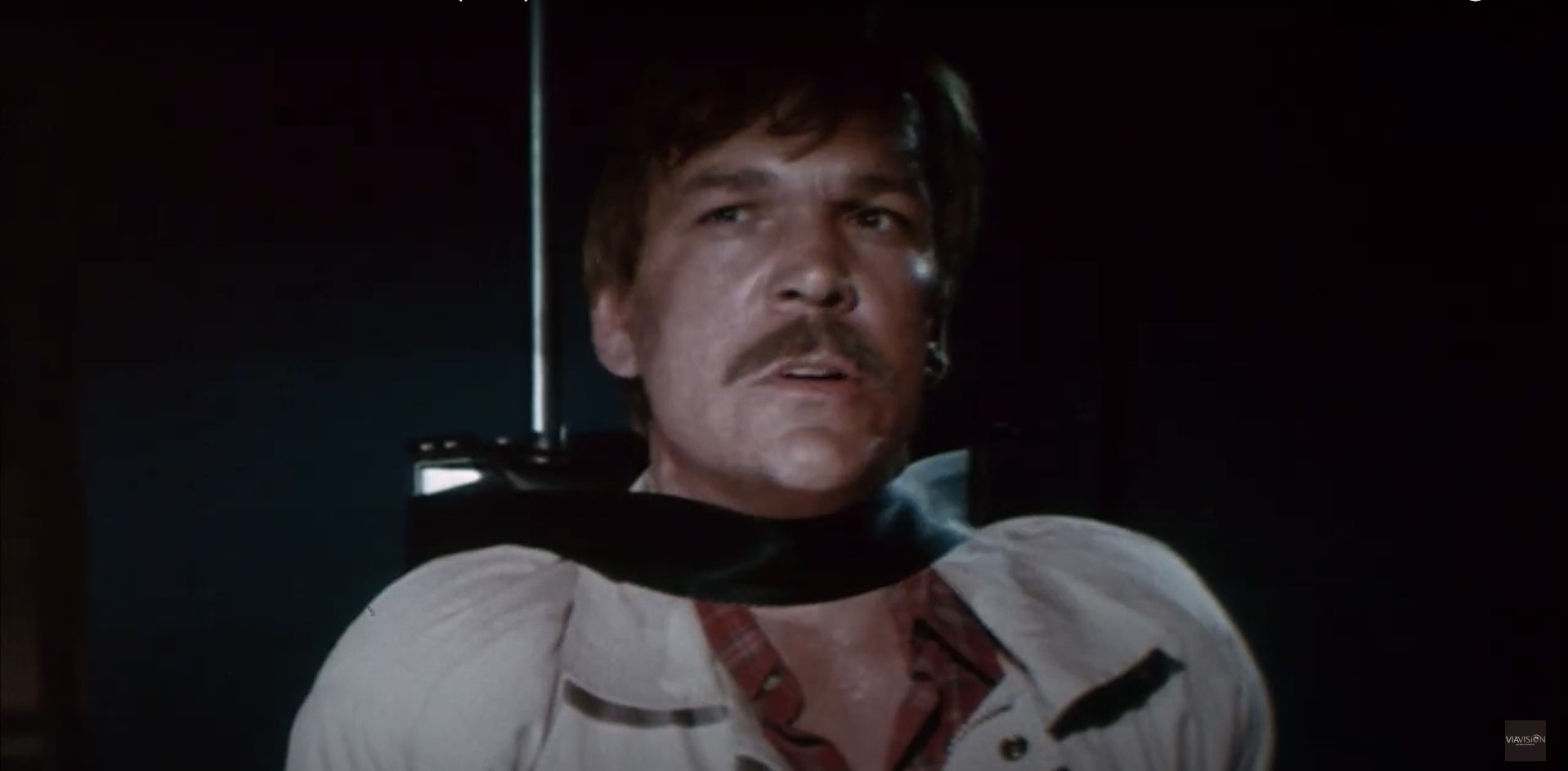
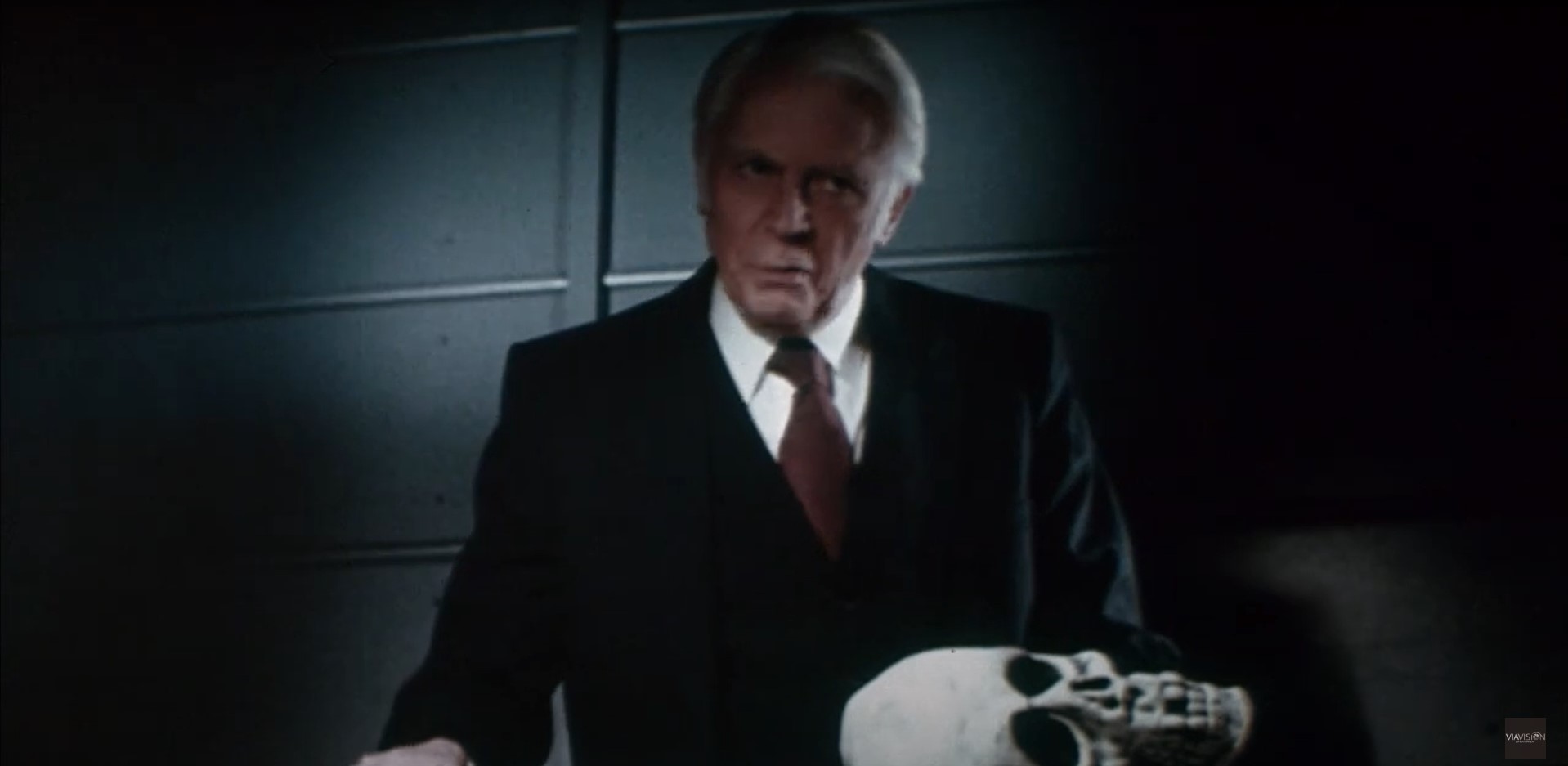
Now, “Season of the Witch” just didn’t star a bunch of nobodies in this offshoot of a newly branded “Halloween” concept.  Before playing the quasi-alcoholic, deadbeat father Dr. Challis, Tom Atkins was already a rising star in the land of John Carpenter films with “The Fog” and “Escape from New York” In 1980 and 1981.  Atkins’s usual confident and charming qualities underneath the rugged good looks and trimmed mustache serve him the better part of man doing his bit part in a not-his-business investigation of a man’s death to please a good-looking woman that happens to be the dead man’s daughter.  That good-looking woman is Ellie Grimbridge, embodied by the Mad Magazine Production’s “Up the Academy’s” Stacey Nelkin, and if you blink, you might miss Atkin’s Dr. Challis being perhaps the worst father ever to his two children and ex-wife.  The subplot is so subtle and overshadowed by the Silver Shamrock Halloween plot that being invested in the crumbling family dynamics doesn’t even hold substantial weight and it truly works to subvert the subconscious and plant a destructive pipe bomb smartly into your moral compass because if you think Dr. Challis is the hero of the story, which in many perspectives he is, he’s also doesn’t keep up with his own children interests or current events, numerously bails on their planned care, runs off and sleeps with a much younger woman he hardly knows, is an active alcoholic, and is quite the handsy philanderer at that when he grabs his much older nurse’s bottom in a playful moment.  No, Dr. Challis is every ounce an antihero hidden in plain sight and in the guise of a potential savior of the children, the world, as he takes on Silver Shamrock and its founder, an Irish toymaker named Conal Cochran with tremendous evil genius and mastermind appeal by Dan O’Herlihy (“The Last Starfighter”).  “Halloween III:  Season of the Witch” rounds out the cast with Ralph Strait, Jadeen Barbor, Al Berry, Michael Currie, Garn Stephens and Essex Smith in key support roles.

Lots of previous opinionated chatter surrounding “Halloween III” collectively concludes to if the filmmakers decided to title the film anything else, maybe just the tagline of “Season of the Witch,” then the film would have won over audiences with a fresh take of science fictional horror and would not have been wrongfully panned by critics and moviegoers.  I call BS on this take.  The original intention was to deliver a new, Halloween-themed horror film year-after-year with John Carpenter attached in some way, shape, or form of bringing novelty terror to our eyeballs and brain.  Instead, public persuasion and studio submissiveness rendered the concept powerless and as a result, and no disrespect to any Michael Myers films that followed, was the departure of John Carpenter and Debra Hill and a string of mediocre and wacky Michael Myer sequels that went deep off the far end.  “Season of Witch” is not a teeny bit at all slasheresque, separating itself far from Michael Myers as much as possible by unconfining itself from location concentration by expanding the threat domestically, if not globally, with a parlor trick plot that involves special, laser-shooting masks that make kids’ heads melt into glop of crickets, snakes, and other creepy-crawly sui generis of the animal kingdom.  While strange in the cause and effect, the practical effects and superimposed visuals work to convey some taught gore and prosthetic knots that can be unraveled, even retrospectively critiquing them by today’s standards.  Wallace masters the film while, at the same time, hitting the ground running on his debut feature that has a look and feel of a graduate from the film of the John Carpenter. 

Halloween season may be months away, but Christmas comes early with Via Vision’s limited-edition Blu-ray set of “Halloween III: Season of the Witch.” The AVC encoded, high-definition 1080p, BD50 presents the film in a widescreen aspect ratio 2.35:1. Much like the Via Vision’s companion release with “Halloween II,” “Season of the Witch” mirrors the same resolution picture quality and stellar package presentation. Dean Cundey’s delivers another smoky noir realism that definably hard-edged and hard-lit that while isn’t the most colorful contrast it does create an abundance of inky shadow to lost in and sink into. A cleaner picture does bring with a reveal of how obsolete some of the composite matte effects but, simultaneously, revives what once was, nostalgia and a more tactile truth in movie magic. Details come through within contour delineation and textural elements. The English language DTS-HD Master Audio 2.0 has dual channel balance and strength with lossless fidelity. Dialogue retains saliency throughout from a rather middle-of-the-road strength ambience albeit a wide range of effects from explosions to laser beam bursts and its constructed, catchy Silver Shamrock jingle, often muted through the television programming, and John Carpenter’s and Alan Howath’s synth collaboration that’s tonally reminiscent of previous “Halloween” films but stands by itself in distinct measure to garner new-sound tension. English subtitles are optionally available. Also, like Via Vision’s “Halloween II” Blu-ray release, a 2024 commentary is recorded and encoded with film critic/historian Lee Gambin and a special appearance by “The Howling” director Joe Dante. Archival commentaries from Tommy Lee Wallace and Tom Atkins are also on the disc with all three commentaries in the setup menu. Special features content includes 2012 Scream Factory-Red Shirt productions with Stand Alone: The Making of Halloween III: Season of the Witch documentary surrounding a Micheal Myers-less picture, it’s critical shockwave, and its ultimate cult following and Horror’s Hallowed Grounds: Revisiting the Original Shooting Locations hosted by Sean Clark visiting a few of the locations used for the film. A still gallery, theatrical trailer, and television spots round out the rest. Of course, my favorite part is the lenticular cover on the limited-edition and numbered cardboard sleeve case of the three, silhouetted little trick-or-treaters with a crone-ish face coming down from above the fire red dusk sky. The slightly thicker Blu-ray Amaray case cover art is stark still image from the movie with another, different image on the reverse side. The black background disc has the skull mask and title across from each other in nice compositional juxtaposition. Next to the Amary case is an envelope with 6 art (picture) cards taken from the film. The Via Vision release is rated M for Mature for moderate violence and moderate coarse language, has a runtime of 109 minutes, and has region B playback only.

Last Rites: Who knew being the outcast looked so damn good. “Halloween III: Season of the Witch” deserved better and received the best on this Australian, limited-edition, lenticular Blu-ray set that’ll leave you whistling the Silver Shamrock jingle and fearing Halloween masks more than ever.

“Halloween III: Season of the Witch” Available on Limited Edition Blu-ray from Via Vision!

Bite Sized Evil With a Real Bite! “Ghastlies” review!


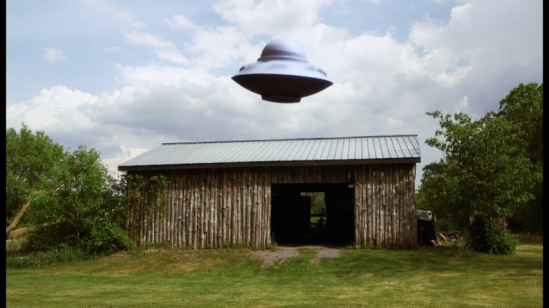
Four sorority sisters embark on a isolated cabin vacation for an all girls’ weekend in the quiet woods. Through all the booze and the trips to the lakeside beach, Sloane, Abby, Margot, and Lulu reap the benefits of solitude and sisterhood and just when everything seems to be going delightfully swell, even when Sloane’s perverse boyfriend and his friend show up unexpectedly, trouble brews beneath their feet, under the leaf-riddled surface, when Abby unwittingly unleashes three space originated, pint-sized ghastly ghouls. As the miniature and ferocious creatures rip through unlucky victims, nobody knows how to stop, let alone escape, their woodland carnage, especially when they’re being aided and abetted by human caretakers.

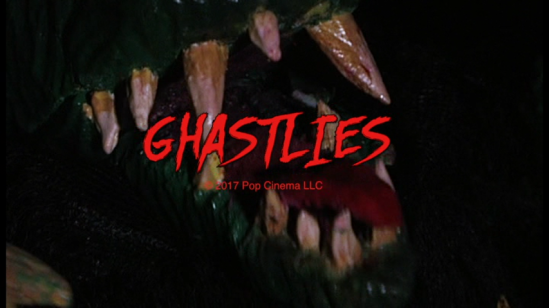
In the filmmaking fashion of Brett Piper (“Queen Crab”) or Mike Lyddon (“First Man on Mars”), Brett Kelly offers his low-rent talents in construction an 80s-esque creature feature on a pygmy scale in more ways than one. The Ontario born director has helmed a vast amount of independent b-horror prior to, including such great titled credits as “The Bonesetter,” “Attack of the Jurassic Shark,” and “Raiders of the Lost Shark.” Now, released for the very first time on any format, anywhere, is “Ghastlies,” a “Gremlines” or “Critters” creature feature that aims to rain down terror when all hell breaks loose with ankle biters running around and while the low budget production or creature value doesn’t par with the more popular Joe Dante or Stephen Herek films, the heartfelt attempt in this modern day feature accomplishes the intended effect of a 1980’s horror comedy, complete with synthesized score and era correlating attired.

“Ghastlies'” lineup consists of Brett Kelly regulars such as Jessica Huether and Kendra Summerfield from “Raiders of the Lost Shark.” Huether’s and Summerfield’s performance as the nerdy, yet overall good girl Abby and the snobby, superficially rich bitch Lulu, instilling the yin and yang personas of the group, and their joined by Julie Mainville and Kim Valentine as the unforgettably clueless Margot and the sisterhood leader in Sloane. Mainville more memorable out of the four sisters as she has spot on timing and delivery with the witless and likable Margot. John Migliore, known more for slabbing on the prosthetics and makeup to be a zombie, has a minor costarring role as a dimwitted bike cop Officer Vinnie and Migliore, whose donned zombie wear in films like “Land of the Dead” and “Ninjas vs Monsters,” filled multi-faceted shoes for the Kelly film by dappling into the spaceship special effects and providing the Ghastlies puppetry. Migliore’s Officer Vinnie is paired with another similar goofy character in Peter Whittaker as Officer Frank as well as Joel Elliott “Countrycide,” Eric Deniverville, Stephanie Moran, and Kyle Martellacci who also co-star in the zany trope-ladened homage. As his first feature credit, Chris Bavota’s script creates no real dynamic between the characters who all pertain to a self-serving purpose under a guise of slapped together dialogue that’s no more substantial than a boulder in outer space.

And there in lies the rub. “Ghastlies” inability to click together to fulfill the allusion of was what-once-was is the film’s weakness. The cartoonish hand puppets, the implausible effects, and the technical inconsistencies can all be overlooked as campy charm, passed aside to enjoy “Ghastlies” for what it’s worth, but what can’t subside is the wonky connection between the cast that doesn’t favor well that’s diluted at the end by the starkly questionable and abrupt editing, resulting in a presumed unfinished film that seeks to either be an open ended invitation for a potential sequel, defined by one of the characters standing up with a makeshift mini-gun and garbed in Rambo-like gear, or a hasty cut that provides a lukewarm, satisfactory, and budget friendly finale that actually invokes more confusion than viewership appeasement. Shortly following the live-action wrap up, a short animated comedy, illustrated by the multitalented John Migliore, in the same vain as the quirky Looney Tunes but with Ghastlies.

The lovely, cuddly, and ghoulish “Ghastlies” is released onto DVD and Blu-ray combo from Camp Motion Pictures. Image quality for the Blu-ray format is by far stunning for a low-budget feature presented in 1080p encoded MPEG-4 AVC BD 25. The coloring naturally displays and even the darks had great depth without distortion or inconsistencies. The English Dolby Digital 2.0 is another story as, unlike the image quality, the presentation is inconsistent with imbalanced levels that make a few scenes difficult to comprehend. Clarity isn’t necessarily an issue with no blights on the tracks, but the technical placements could have been smoother. The electric score score by Tomb Dragomir, the composers first score ever, manages to engross and re-illuminate the decade that inspires “Ghastlies.” Bonus material includes a special effects interview with john Migliore’s helping hand into Ghastlies’ FX, Tomb Dragomir discusses his experience scoring his first feature, “Ghastlies'” music video, the trailer and Camp Motion Pictures’ trailers, and an audio commentary with director Brett Kelly. “Ghastlies” is part “Gremlins,” part Lovecraftian, and all borderline shlock-y fun, but the loose character interactions and out of kilter editing embargo the full bodied experience.

“Ghastlies” available on Blu-ray!