EVIL Lies in Ancestral Ties! “Dogra Magra” reviewed! (Radiance Films / Limited-Edition Blu-ray)

“Dogra Magra” on Limited Edition Blu-ray! Purchase Here!

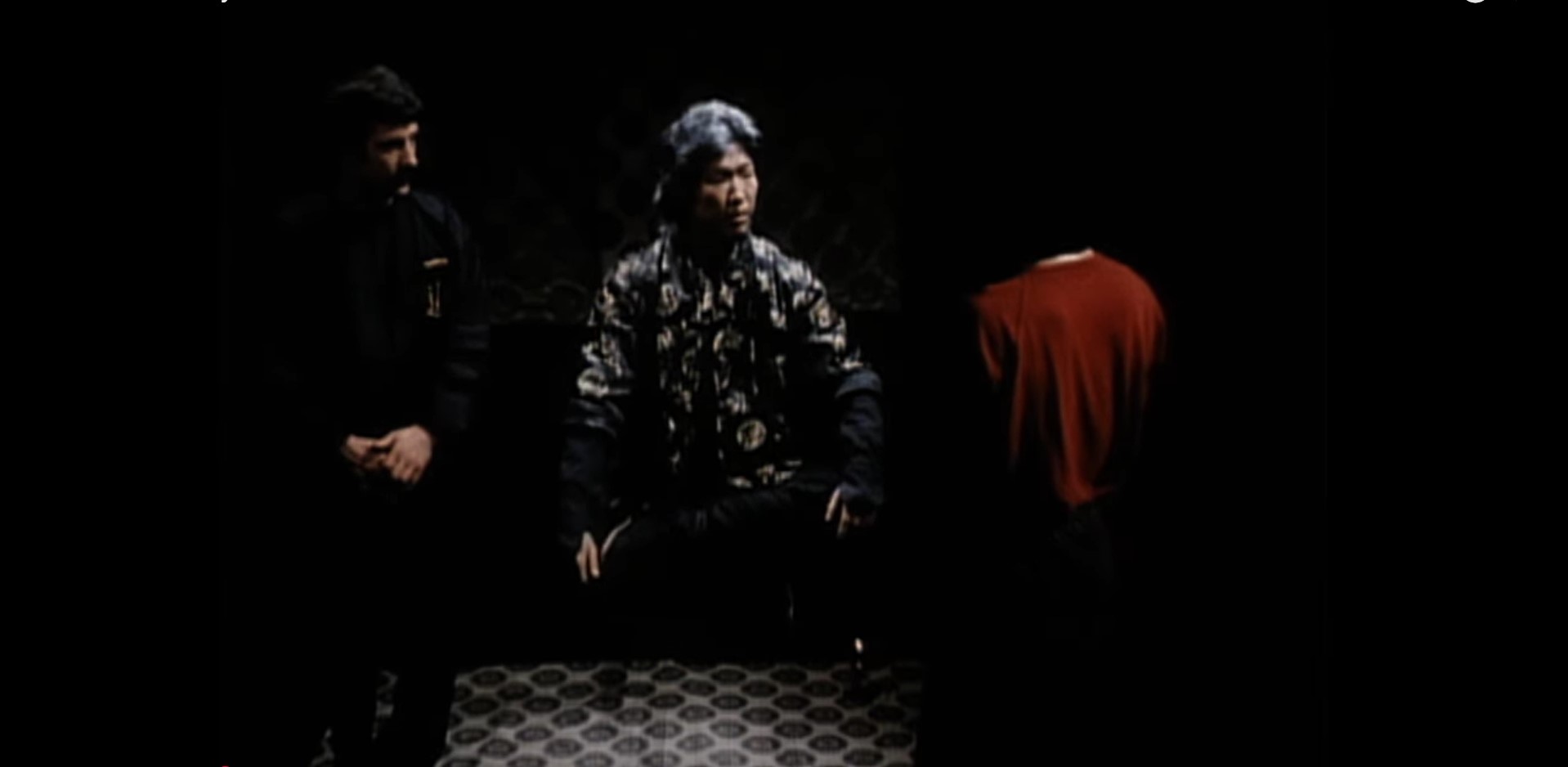
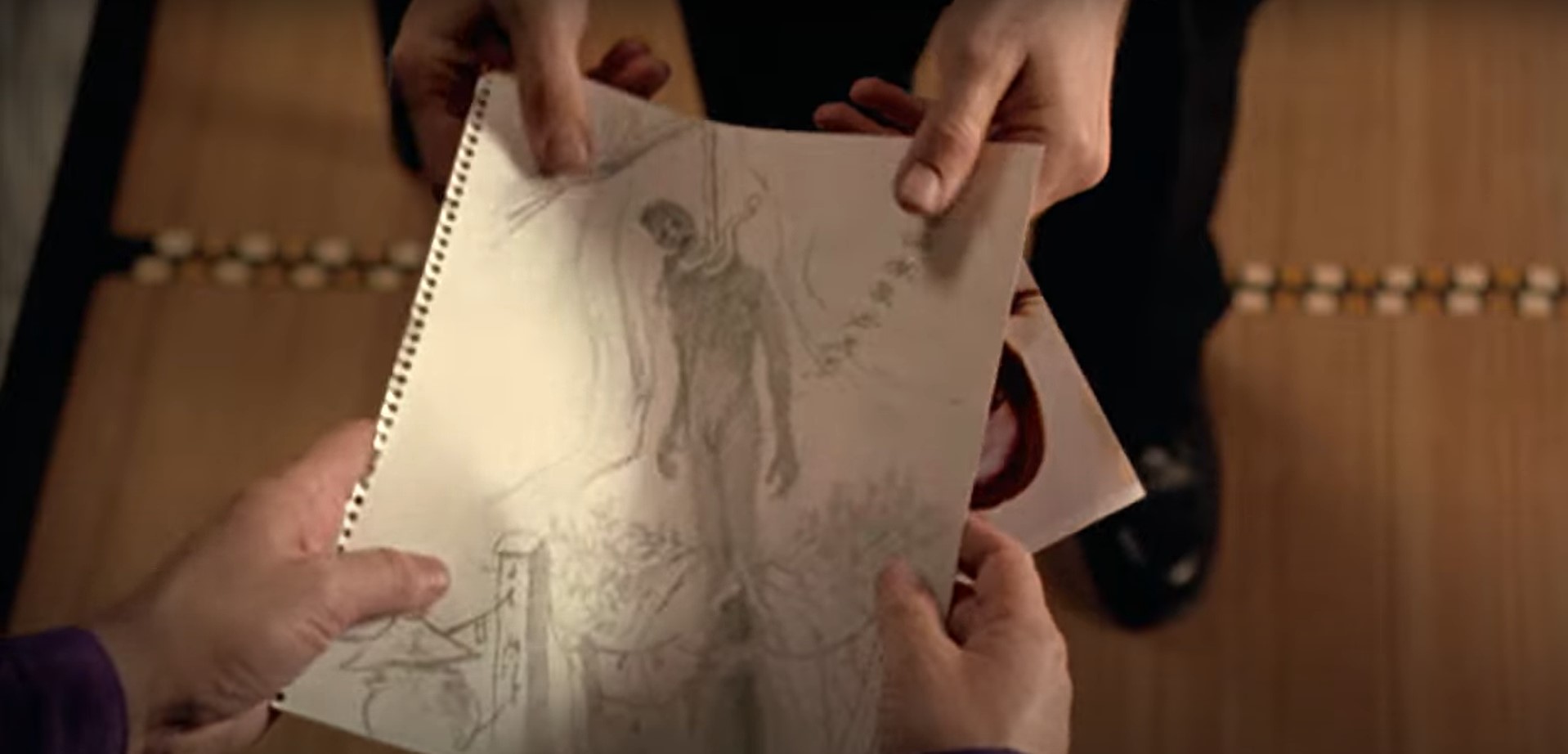
A young man wakes up in an asylum cell, unable to remember how he got there, his name, and doesn’t even recognize his face.  The asylum supervisor, Prof. Wakabayashi, has been overseeing his condition ever since the suicidal passing of former experimenting director, Dr. Masaki, nearly a month ago.  Disoriented, the young man is toured around the hospital grounds where Wakabayashi tells him the tragic tale of a 9th century man who kills his bride the day before their wedding day to capture the stages of her decomposition recorded onto a sacred scroll.  Distancing himself from the possibility of being murderous man, Wakabayashi informs him he is Kure Ichiro, the direct descendent of the groom and he enacted the very same events his ancestor committed long ago.  When the sudden reemergence of Dr. Masaki covertly corners Ichiro in his office, Masaki divulges his and Wakabayashi’s theories about Ichiro’s case but how the events came to fruition just may be plain and simple murder. 

Nature versus Nurture and the psychosis that ensues when discussing Pre-World War II context of Empirical Japan and their either inherent tendencies to repeat a violent past or to be triggered, poked, and prodded toward repeating history is the surmised and experimental plot of writer Yumeno Kyūsaku and his psychoanalytical novel “Dogura Magura.”  The title rearranged to “Dogra Mogra” is used for the film adaptation of Kyūsaku’s novel with the script written-and-directed by the avant-garde filmmaker Toshio Matsumoto (Japan’s “Demons” of 1971).  Matsumoto cowrites the script with Atsushi Yamatoya (“Story of David:  Hunting for Beautiful Girls”) written primarily from the distressed perspective of the protagonist Kure Ichiro only to switch hands when the experimenting Masaki enters the fold.  Shuji Shibata and Kazuo Shimizu inpendently produce the 1988 film under production companies Katsujindo Cinema and Toshykanky Kaihatsu AG.

Principal players of “Dogra Magra” boil down to a three-prong outfit centered around Kure Ichiro and his theorized amnesia.  Before being the lead voice actor in “Prince Mononoke,” a decade earlier Yôji Matsuda was waking up with an inexplicable unawareness of who he was or what he had done as Kure Ichiro.  Matsuda feigns forgetfulness with shock and surprise, that will too place audiences in situational darkness, with the young Ichiro arousing in a powerful moment of unfamiliarity.  A shaken, discombobulated Ichiro becomes the object of obsessional mark between two theoretical and experimental-competing psychoanalysts in Prof. Wakabayashi and Dr. Masaki, played respectively by a collectively calm and bearded Hideo Murota (“Rape and Death of a Housewife,” “Original Sin”) that emits a sense of academia and medical security and reason and a hyenic-laughing, bald and glasses-wearing Eri Misawa who is more maniacal and unconventional to the likes of a mad-scientist   Yet both men have motivation that stirs the enigmatic pot of Kure Ichiro’s plight, stemmed from the very same source that drives the brutal murder of his beautiful bride one day before their wedding that eerily follows the footsteps of his macabre ancestral history.  There’s an inarguable difference between Wakabayashi and Masaki’s approach handling the curious case of Kure Ichiro; Wakabayashi’s hides in the clandestine shadows that aims to subvert the thought dead Masaki’s work whereas Masaki, under his blunt-force mania, is straight forward, almost apathetically.  In either case, both psychoanalytical professionals are indifferent to the crux of human life by focusing solely on whether either one of their theories is correct in an odd game of deception and death.  “Dogra Magra” rounds out the cast with Kyôko Enami (“Curse, Death & Spirit”) and Eri Misawa.

An attribute for audiences to become lost in “Dogra Magra’s” ethereal can be contributed by Toshio Matsumoto’s accosting avant-garde disorientation that swallows Kure Ichiro past, present, and future, plays tricks on his mind and eyes, and that also fishes patiently for a conclusion that rarely seems apparent.  The experimental qualities of “Dogra Magra” seep out of the tap of dark comedy and amnestic thriller and into a basin of spreading horror and exploitation.  “Dogra Magra’s” surreal storytelling and interesting, visceral visuals often reminds us of an old-dark house film a decade prior with the Nobuhiko Obayashi film, “Hausu,” and while not based in satirical foreplay like “Hausu,” “Dogra Magra” begins to unravel more questions than answers with a fleeting sense that nothing is real, nothing is as it seems, and maybe perhaps were all stuck in Kure Ichiro’s herded and scrambled mind that may or may not be his inherent, innate doing after all and that changes the narrative entirely.  Themes of historical repetition, ancestral culpability, forgetting the past, and empirical brainwashing are churned intrinsically into “Dogra Magra’s” constitution as well as within Japanese legacy with a formidable and prophetical proposition for no hope on horizon through a chimerical lens of learning and growing into the truth.

Radiance Films continues to starkly highlight underscored and wayward films from around the globe and “Dogra Magra” is no exception with a beautifully curated Blu-ray release.  The AVC encoded, 1080p high-definition, BD50 features the original widescreen aspect ratio of 1.85:1 filmed by cinematographer Tatsuo Suzuki.  The Radiance print for the limited-edition Blu-ray is pulled from the original 35mm elements and transferred in Hi-Def by producer Shuji Shibata and supervised by Tatsuo Suzuki.  The stunning upgrade leaves nothing to the imagination with a starkly harsh color grading that appears rawer than air or bright, leaning into grayscale more with darker tones of a greenish-yellow to accentuate the morbid, maybe even grittier, side of this tale, but often has naturally flourishing landscapes, such as the beach cove and the asylum yard that provides a good stretch of depth when not filtered through a POV celluloid handheld.  What’s a real winner here are the textural details that emerge through a blanket of consistent, healthy stock grain with dust and dirt retained to an extreme minimum.  The Japanese LPCM Mono mix disperse a sure-designed composition between natural audio elements layered upon or spliced with the incongruous tunes of one going through a hallucinogenic and dissociative state.  Dr. Masaki’s maniacal laughter has a sharp authoritarian jest that makes it even more frighteningly surreal.  Dialogue withholds that same sharpness and clarity throughout channeled through a single output, harnessing all the action into a funnel but clearly distinct.  English subtitles are optionally available.  The static menu’s special features store an achieved commentary track from late director Toshio Matsumoto, a 2003 interview with the director, programmer and curator Julian Ross’s visual essay on the cinematography Dogra Magra Through the Eyes of Tatsuo Suzuki, a featurette Instructions on Ahodara Sutra on the subject of the chant used in the story, a still gallery of production sketches, and the trailer.  A 51-page, color book weighs the Blu-ray package with contents that include a director’s statement from 1988, exclusive essays and an interview by Hirofumi Sakamoto Late-Period Toshio Matsumoto and Dogra Magra, Jasper Sharp The Pen is Mightier than the Sword:  The Life of Atsushi Yamatoya, and Alexander Fee and Karin Yamamoto Memory traces:  Interview with Producer Shuji Shibata, and rounding out with transfer credits and release acknowledgements.  The reversible sleeve is housed in a clear Blu-ray Amaray with new illustration compositional art and the original, more traditionally composed, Ukiyo-e artwork on the reverse.  Encoded only for regions A and B, Radiance Films’ limited-edition release to 3000 copies has a runtime of 109 minutes and is not rated. 

Last Rites: “Dogra Magra” psychosomatic surrealism is mind games on methamphetamines and Radiance Films does the 1988 Japanese picture justice rekindling its worth to the world of cinema.

“Dogra Magra” on Limited Edition Blu-ray! Purchase Here!

Etiquette over EVIL Shot in Super 8! “Kung Fu Rascals” reviewed! (Visual Vengeance / Blu-ray)

Kung Fu Rascals Kicking Butt on Blu-ray!

Chen Chow Mein expertly steals an ancient tablet from the evil overlord Bamboo Man from Ka Pow whose plan is to seek complete and total dominion with the tablet stone.  Chen regroups with this acolyte pupils, Reepo and Lao Ze, to visit an old wise man for translation of the tablet’s mysteries and follow it’s mapped out quest that’ll lead them to glory over the land’s malevolent beings, but the Bamboo Man from Ka Pow will not let their journey be so easy by dispatching head minion Raspmutant the Mad Monk to hire the corrupt Sherriff of Ching Wa County and his two apprentices, Dar Ling and Ba Foon, as well as summoning the monolithic Neo Titan to stop them at all costs.  Always training their Kung-Fu etiquette, the trio embark on a journey through a land filled with evil ninja henchmen and must fight together to finish the journey.

Sculptor and creature effects guru Seve Wang might be best known for his work on some of the genre’s most memorable and favorite characters, such as designing the final extraterrestrial jungle hunter of John McTiernan’s “Predator,” created the Mohawk Spider Gremlin in Joe Dante’s “Gremlins 2:  The New Batch,” and sculpted the failed Ripley clones in “Alien Resurrection” amongst other notable cult and blockbuster films.  What you might not know is that Steve Wang had also directed, incorporating too his special effects and sculpting talents behind the camera in a debut feature, a homage to the Kung-Fu and Kaiju genres, titled “Kung Fun Rascals.”  Wang also cowrote the 1992 film with another special effects artist and actor Johnnie S. Espiritu (aka Johnnie Saiko) of “Hell Comes to Frogtown” and “Aliens vs. Predator:  Requiem.”  Wang self-produced the film after a series of short films to gain financial backing for a feature-length production.

On any self-produced, independent film, the cast usually wears multiple hats.  “Kung Fu Rascals” was no different as writer-director-producer-caterer-sculptor-and etc., Steve Wang also starred as Chen Chow Mien, an expert Kung-Fu fighter who steals a pivotal stone tablet from the Bamboo Man of Ka Pow, one of the many roles played by Ted Smith.  Wang and Smith are friends, and that age-old motif of a friend casted film holds very true for “Kung Fu Rascals,” comprised of mostly the director’s friends, who are also special effects and makeup artists, to accomplish his dream of branching out into a different field in filmmaking.  Johnnie Saiko is also one of those friends and is one of the two actors in this Kung-Fu romp playing Reepo, the trio’s good-natured goofball stylized like a character out of a “Mad Max” movie garbed in black and with a standing mohawk.  The third that rounds out the team is Lao Ze from one of the few actors initially not a part of Wang’s friend pool in Troy Fromin (“Shrunken Heads”).  Quaintly and quietly inspired by the antics and approaches of “The Three Stooges,” the “Kung Fu Rascals” march to a different dynamic drum as quasi-foolish, good-hearted good guys acted with slapstick, sure-fisted parody against a hapless army of animal-flavored mutants and their master with a flair for villainy.  Along with that master villain role, Smith continues his trend of being the guy in the suit throughout the film by being a giant Kaiju Meta Spartan and hilariously plays out of the suit with Dar Ling, a queer flamboyant henchman alongside fellow henchmen and Chicken-style Kung-Fu fighter Ba Foon (Aaron Simms) as they add a sense of diversity and daffy under the leadership Les Claypool’s Sherriff of Ching Wa County.  Yes, the same Les Claypool from the band Primus.  The cast rounds out with Cleve Hall (“The Halfway House”) as an old wise, creepy, and slightly uncouth clairvoyant, Matt Rose as the wild-eyed torturer, Michelle McCrary as The Spider Witch, Ed Yang as the other Kaiju Neo Titan, Tom Martinek as the hoppy Frog guard, and Wyatt Weed (“Predator 2”) doing the devil in the details with every step as the fully anthropomorphic Pig fitted Raspmutant the Mad Monk.

“Kung Fu Rascals” is the tastier, punchier, made with more heart version of “Kung Pow,” and I don’t mean the Chinese spicy stir-fry chicken dish with hints of peanut and accompanied with vegetables and peppers.  For an independent, first-time feature on a budget, Steve Wang and friends sculps and fashions meticulous creatures from head-to-toe.  Not one latex ear, not one molded snout, and not one full-body outfit appears shoddy or cheap overtop encased actors who know what to do underneath all that masking makeup and rubber.  On top of that, the fight choreography, editing, and dimensional effects are high level pointing in all the right directions with interesting camera visuals and angles to turn a little production like “Kung Fu Rascals” into a fully-fledged feature that audiences of 1992 weren’t ready yet until Power Rangers explosively came onto the scene a year later.  Of course, there was “The Guyver” a year earlier, also from Steve Wang, but “The Guyver” was geared for a limited audience that blended science-fiction with gory elements.  “Kung Fu Rascals” settles at the other end of the spectrum with a more family-friendly façade with an homage to Asian cinema and medieval monsters.  “Kung Fu Rascals” might not have been made today being quite politically incorrect with its play-on-names, stereotypes, and white-washing Asians but in the end, it’s Kung-Fu etiquette is entertaining chop-socky. 

Visual Vengeance once again delivers.  A high-end presentation and package of Steve Wang’s “Kung Fu Rascals” finds Blu-ray gold with a high-definition release despite the film being shot in Super 8 film.  The AVC encoded, 1080p resolution, BD50 is presented in a 1:33:1 aspect ratio.  Super 8 is not peak definition or color saturation as the image is captured straight onto the celluloid, color and contrast in all, in a direct positive process that left hardly any room for cleaner reprocessing.  Scenes often look darker at a higher contrast on a lower, blockier resolution, decoding at a broad range of 8 to 25Mbps, and the editing, though keeping continuous fighting scenes seamless, fluctuates with surface finish inconsistency in shots that make some scenes appear dark in the daylight; this could also be result in the filming time-of-day.  Yet, the cinematography is excellent in capturing interesting visual angles and the lighting setup is stunning despite the unpolished Super 8.  Visual Vengeance continues to supply the technical disclaimer with the caveat of using the best possible source materials for their releases, including this director-supervised version of the standard definition master tape and original film elements, which had a few, very minor, linear scratches and dust/dirt speckles.  The English language Dolby Digital Stereo mix is quite sharp and clean that emulates the boxiness of Asian dubbing/ADR.  Thrown punches and kicks hit their audio marks with timed whack and thud Foley and the dialogue, through the cheesy and cheeky antics, suffers from no fidelity loss or reel damage.  I’m surprised how clean the track is with little-to-no static, crackling, or hissing. English subtitles are available though no listed on the back.  If looking for special features, Visual Vengeance has the definitive special features for the Steve Wang’s obscurity with a brand new feature length documentary The Making of Kung Fu Rascals containing interviews with cast and crew, two new feature-parallel commentary tracks with the first being the “Kung Fu Rascals” themselves, Steve Wang, Troy Fromin, and Johnnie Saiko, as well with composter-actor Les Claypool and actor Ted Smith and the second with film superfans Justin Decloux and Dylan Cheung, an exclusive reunion of the Rascals with a sit down conversation between Wang, Fromin, and Saiko, a Steve Wang and Les Claypool reunion, Film Threat editor Chris Gore interview on distributing the VHS, a behind-the-scenes video diary, the 30-minute “Kung Fun Rascals” Super 8 short film, the 9-minute “Code 9” Steve Wang short film, Film Threat video #6 behind-the-scenes article, film and behind-the-scene stills, and Visual Vengeance cut version of the “Kung Fu Rascals” trailer.  Visual Vengeance also has your physical needs covered, and no I don’t mean sexually, with a cardboard O-Slipcover illustrated with a new art design by Thomas “The Dude Designs” Hodge overtop the clear Blu-ray Amaray case.  The reversible sleeve contains two compositional, Asian cinema-homage illustrations that an eye-appealing.  Inside contains a 13-page, Marc Gras illustrated, official comic book adaptation, a 2-sided single sheet insert with a fourth artwork design and Blu-ray acknowledgements, a folded mini-poster of the primary Blu-ray art, and a Visual Vengeance rental stick sheet containing 12-rental theme descriptor stickers.  The unrated release comes region free and has a runtime of 102 minutes.

Last Rites: Phenomenal creature suits and makeup, a lost sense of irreverent, spot-on comedy, and butt-kicking Kung Fu, Steve Wang’s little-known picture is the poster child for satirical, independent comedy-action and a good time overall.

Kung Fu Rascals Kicking Butt on Blu-ray!

Dump Buckets and Buckets of Water Back into this Dry EVIL Well. “Ring Shark” reviewed! (SRS Cinema / DVD)

“Ring Shark” Now Curses the DVD Market! Own It Here!

For the subscribers of her Youtube show, vlogging social media influence Kanamasa and her co-host search for a stone well rumored to be in a haunted forest surrounded by unfriendly villagers who aggressively ward off unwelcomed visitors.  Upon discovering the well, a shark-like creature emerges suddenly and bites Kanamasa, scaring them off.  A few days later, another pair of Youtube investigators of the Psychic Investigations Big Summer learn of Khana’s disappearance after her last video surfaces of what looks to be a shark fin and then a ghastly body surfaces from within her bathtub, attacking her bikini-garbed body.  Seeking the truth and eager to find Khana, the investigators conduct interviews with “shark” experts and attempt to visit the same well only to be shooed off by the villagers until, finally, they’re able to reach the same spot and experience the same sharp-teethed horror lurking within it.  Unknowingly, that same supernatural terror of the well had follow them home. 

Sharksploitation has admittedly gotten out of hand.  The beloved horror subgenre that began with Steven Spielberg and Bruce the mechanical monstrous shark who terrorized the beaches of Amity Island have since drowned in its own watery subcategory of the ocean’s maneater predators with microbudget ineptitude that takes the shark from its natural ecosystem and rehomes it in a miscellany of nonsense locations, such as on land, in the weather, and even circling in toilets.  Well, today is the day we’ve come across a movie been assimilated into that same fatuous collective with “Ring Shark,” aka “Well Shark,” aka “Ido Shark.”  The Japanese, found-footage comedy-horror is the first of a trio of incongruous shark films released between 2023 and 2024 by Taichiro Natsume with “Love Shark” and “Last Shark” to follow, connected by the Big Summer team of Psychic Investigators.  Natsume also wrote and produced the feature.

Unfamiliar with the Psychic Investigator Big Summer series, which there’s uncertainty if Big Summer is a Japanese comedic troupe, equivalent to the Broken Lizard of America, what “Ring Shark, or “Ido Shark” begins is a series of various haunted case probes by the Big Summer team, which in this film in particular include actors using modifications of or using their actual names as characters in the story, such as director Taichiro Natsume being the single male lead in the group under character name Daiichiro Natsume.  Daiichiro Natsume can be a bumbling, yet persistent fool when it comes to the mysterious case of Kana-san with his steady motif of exclaiming his love for big boobs and determination to resolve the mystery.  He’s joined by colleagues on-and-off screen in Momoka Asahi and Chihiro Nishikawa, the latter not to be confused with Chihiro Nishikawa of JVA.  While Nishikawa and Natsume continue the running gag conversating about big breasts, Momoka Asahi enters the picture much later as the third investigating team member when Natsume goes down with a well shark bite infection that haunts him from the inside out and puts him in the hospital.  From there, Nishikawa and Momoka take the reigns on investigation by not only tending to Natsume’s dwindling health but also interviewing internet paranormal sleuths Hiroshima Freddy, a Japanese horror influence in real life, as well as Black Story Kuro, who I imagine is another influencer but couldn’t confirm it.  Typically, the Japanese language has a ton of fluid inflections and tones that dictates situations and mood, but “Ring Shark” avoids much of the vocal ups-and-downs with a consistently level tone of flat and dry humor peppered with fear, arbitrary bickering, and a pinch of kawaii to sustain a semi-serious documentary style investigation.  Maya Mineo, Issei Kunisawa, Yacch Chara, Daiki Mizuno, Honey Trap, Umeki, and the wrestler known as The Shark fills out the cast.

“Ring Shark” is “Blair Witch Project” meets “The Ring.”  The latter having the most prominent appearance as the at home media, that was once titled, or probably is likely titled in Japan, as “Ido Shark,” is marketed for U.S. consumption because every moviegoer is either well versed or knows of Hideo Nakata’s “The Ring” series and its heebie-jeebies Samara spirit.  Instead of a cursed tape that summons Samara out of the depths of her murdered resting spot, a well, to kill anyone after a week of viewing said tape, “Ring Shark” only real connective tissue to “The Ring” is that there is a well in the story and a murdered girl’s body was dumped inside.  That’s it.  From there, the structure is more to the tune of “Blair Witch Project” with a pseudo-found footage of one social media’s disappearance igniting the Psychic Investigator Big Summer team to check it out after the tape is brought to their attention form Kanasama’s co-host.  The docu-style incorporates dry wit of interviewing shark experts, creature academics, urban legend connoisseurs, and thorough analysts and researchers, as well as themselves as angry villagers and a supernatural hand puppet shark head subverts their stratospheric sublayer with soul-chumming results.  Yet, none of everything just said really clicks in a flimsy and slapdashedly put together microbudget story derived for effect for true and absurd exploitation of sharks gone wild. 

“Ring Shark” swims right into SRS Cinema’s well-house with a brand-new DVD from the microbudget cult film distributor.  Upscaled to 1080p, the MPEG2 encoded, single layer DVD5 presents the Big Summer production ion a widescreen 1.85:1 aspect ratio.  Though upscaled to 1080p, the cell phone footage renders stretched limitations under the light of low-budget constraints.  Night vision and poor lighting coupled with closeups-to-extreme closeups, and shaky camera work dematerializes story-important images.  Natural lit and stationary camera work provide cleaner visuals in what is mostly a deluge of exposition and regular camera angles without atmospheric makeup.  The Japanese language Dolby Digital 2.0 stereo provides lean composition with ample inherent surrounding ambience, picking up the natural wildlife chirping in the background, the vocal amplification of someone talking through a microphone, the hustle and bustle of a restaurant, etc. Dialogue isn’t impeded by the commercial phone camera recording that creates a rather good reproduction and diffusion of sound amongst the space.  Added audio effects, such as the shark’s growling or snarling, does feel unnaturally alienated from the rest of the audio but works to the film’s advantage despite the obvious hand puppetry.  English subtitles are burned in but do synch well and appear error free. There’s also what looks to be double English subtitles along with Japanese title cards or subtitles that are a part of the Youtube investigation and often coincide with the main English subtitles in a distracting, screen space absorbing real estate. The Japanese electro-rap graced static menu, which samples Lil Jon’s Yeeeah, contains no bonus feature selection; instead, the bonus content is right on the main menu with short film “Shark of the Dead” (8.26 minutes) and the “Ring Shark” trailer.  I love bad movie cover art and SRS Cinema’s “Ring Shark” is no exception with smokey-eyed, electrically charged, and monstrously toothy shark breaching from a little stone well underneath “The Ring”-font film title.  The disc is pressed with the same image and there are no inserts included.  The barely hour-long film, clocking in at 63-minutes, comes not rated and has a region free playback.

Last Rites: “Ring Shark” is a monumental prosaic mockumentary aimed to swell Sharksploitation into further ill-repute and disrepair with an unfunny and uninteresting undertaking of underwhelming pastiche.

“Ring Shark” Now Curses the DVD Market! Own It Here!

Disguise as the Dead to Defeat EVIL! “The Shadow Boxing” reviewed! (88 Films / Blu-ray)

Corpse Herding Isn’t Easy in “The Shadow Boxing.” Purchase Your Copy Here!

Corpse herder Fan Chun-Yuen has studied Master Chen for years, learning the ritual incantations and mastering the nuances of getting the dead home to their loved ones for proper burial.  What should have been a routine corpse herding goes astray when the last arrival of a corpse, a bald man, seemingly has issues following the simple incantations and master Chen’s leg is broken during a misunderstanding over gambling winnings at one of their resting pitstops.  Being left with no choice, Fan Chun-Yuen must herd the rest of the hopping corpses, publicly feared as hopping vampires, to their terminus with the aid of aspiring corpse herder and an undeterred woman Ah-Fei.  At the same time, criminal overlord Zhou, a casino owner, and a corrupt military leader are in search of a moral sub-lieutenant who can foil their plans and who has seemingly evaded all military checkpoints in route to Zhou, leaving the corpse herding understudies in the middle of a danger. 

The jiāngshī, or hopping vampire, is the Chinese version of the living dead, whether be a vampire, zombie, or a ghost in the country’s folklore.  In Chia-Liang Liu’s 1979 comedy-actioner “The Shadow Boxing,” the horror element of the jiāngshī is reduced to no more than a few false scares on the Chinese cultural collectiveness of superstitious fears.  Originally known as “Mao shan jiang shi quan” and also known as “The Spiritual Boxer II,” the film is considered a quasi-sequel to also Liu’s 1975 “The Spiritual Boxer” but only in association to the director and one of the principal actors and not a direct, character-connecting sequel by any other means.  The late “Human Lanterns” and “Demon of the Lute” writer Kuang Ni pens the script with Kung-fu comedy in mind amongst seedy corruption aimed to thwart tradition and principles, shot in Hong Kong by Celestial Entertainment on the Shaw Brothers studio lot, and produced by younger Shaw brother, Run Run or Shao Renleng. 

The actor who carries over from “The Spiritual Boxer” is “Dirty Ho” star Yue Wong in the role of corpse herding apprentice with a bad memory, Fan Chun-Yuen.  Wong’s character is a likeable learner who has the skills to be great at his vocation but lacks the confidence without being tethered to his master, played as drunkard and obsessive gambler by Chia-Liang’s brother, Chia-Young Liu, a longtime stunt man (“Once Upon A Time in China,” “The Savage Killers”) and actor (“The Return of the One Armed Swordsman,” “Five Fingers of Death”).  Fan Chun-Yuen tries to keep his sifu on a straighten arrow and focus on the task on hand and Wong and Chia-Liang invest that dynamic wholeheartedly while maintaining their sense of strength outside military force and criminal brutality to be masters under the flags of good and just.  Between them, a level of trust and reliance is displayed through their fighting casino goons and military soldiers where Wong needs his master to shout commands of the vampire style due to his bad memory.  There’s almost zero context on why that is but adds a melted layer of slip-in, slip-out comedy to make it unusually entertaining.  An understudy of the understudy and borderline love interest comes from Cecilia Wong (“The Hunter, the Butterfly and the Crocodile”) as Ah-Fei, a friend of Fan Chun Yuen who doesn’t want an arranged marriage but has an underscoring coyness with Fan Chun but their misadventures delivering the beloved bodies to grieving relatives proves to be difficult and much of their shenanigans to try and make their “mastery” believable in order to deliver the goods gets in the way of that amorous connection.  Also in the way are the corruptive forces hellbent to track down Chang Chieh (another Liu brother in Gordon Liu, “Kill Bill”) before he foils their transgressions, coinciding with performances from Lung Chan, Han Chiang, Wu-liang Chang, and Norman Chu.

“The Shadow Boxing” finely blends the chop-socky action with mystical folklore and comedy that’s not overly slapstick or buffoonery.  A serious layer runs through the middle of story and while the line chart fluctuates between peaks of let-loose Wing Chun and then violent sway the other direction with fleeting spikes of death and ghoulish shades, there’s never a tiresome tone of stagnating acts as Kuang Ni’s script develops and progresses upon the micro and macro dynamics of good versus evil characters, especially how Ni slyly introduces audiences to the last and bald corpse and it’s diverging acts of not exactly following incantational direction, in a mistakenly, humorous way.  The off feeling is there of baldie being of some importance but not until more third-party clues come to light halfway through the runtime and it’s by then the lightbulb begins to flutter and anticipatory wait for exposure begins.  If looking at “The Shadow Boxing” on a more comprehensive scale in the martial arts genre, the pace of fighting emulates too much on the lines of choreography counting.  Slow and herky-jerky, there’s not a smooth transition of moves in either of the individualized faceoffs or in the group skirmishes that doesn’t reflect well upon the stunt department as martial arts is the centerpiece of the action.  Every other aspect of creating tension and levity with the action works perfectly only to be lopsided by the sudden starts, stops, starts of checklist kick and punches. 

88 Films’ North American label lands the new high-definition release of “The Shadow Boxing” with an AVC encoded, 1080p, BD50.  The transfer is processed from the original negative and presented in the original Cinemascope aspect ratio of a 2.35:1.  The anamorphic lens used compresses the image, creating a spherical or rounded out sides on tighter shots, a known issue for the lenses of those times.  The 35mm negative has won the test of time with a near spotless print that 88 Films sharpens the color palette and defines the broader details with texture lacing, decoding the image at an average of 33Mbps.  There are times the details appear too texturally chiseled with the Shaw Brothers’ set backgrounds exposed as obviously painted backdrops, see the final showdown fight.  A single audio, uncompressed output of a LPCM Mandarin 2.0 mono is offered on the release.  The track comprises enough overlapping range of effects to sturdy the sound design almost as if it was an innate recording.  The instilled post effects have the traditional Chinese martial arts flare of whacks and thunks but added with greatly synchronous care whereas the dialogue, though clean and present at the front, has the expected timing issues with an intensity level that doesn’t quite match at times.  English subtitles are optionally available.  Surprisingly, this is one of the few 88 Films releases without special features other than the original trailer.  Instead, the label elevates the physical release with a limited-edition stunning monochromatic and illustrated cover art by Mark Bell with subtle tactile elements on the cardboard O-slipcover.  The same image is showcased as the primary clear Amaray cover art but with slightly more color added to it while the reverse sleeve features the original Hong Kong poster art.  The LE also comes with 4 collectable artcards, though they’re more still image cards than art.  The not rated, 101-minute runtime 88 Films release is encoded for only two of the three regions with an A and B playback.

Last Rites: Hong Kong cinema has been fast, loose, and either furiously funny or folklorically fist over hard-hitting fist and Chia-Liang Liu’s “The Shadow Boxing” takes into account both now on a format pedestal with a new Blu-ray release from 88 Films!

Corpse Herding Isn’t Easy in “The Shadow Boxing.” Purchase Your Copy Here!

A World Lost in Time Ruled by the EVILEST Animated Lizards with Spears! “The Primevals” reviewed! (Full Moon Features / Blu-ray)

Yetis! Reptiles! “The Primevals” Lives Up To Its Title!

Himalayan Sherpas kill what was once considered the mythical Yeti.  The corpse is then donated to a U.S. university for scientific study.  When the grand reveal and world announcement that the abdominal snowman does exist, not only does the mankind go into a frenzy of questions and shock, but also proves sound one self-ostracized student’s long-rejected university thesis on the creature’s existences.  Teaming up with the university scientific department head, who now apologetically regrets personally rejecting his thesis based of speculatory concepts, an expedition to the Himalayas is formed to find, capture, and study the Yeti and sets in motion yet another discovery of a lifetime, a thousands of years old reptilian and technologically advanced alien race that have isolated themselves and have settled in a manipulated climate control river valley of the mountains and has surgically altered the minds of the Yeti to be more aggressive for battle and entertainment. 

“The Primevals” is a film 30 years in the making and is new film by a director who has long since passed away.  The 2023 released Full Moon production began its journey in 1993 with director David Allen, a visual and special effects artist who held prominence in Charles Band’s company as one of the go-to effects artists having played a big part of the crew in the “Puppet Master” franchise as well as note-worthy outside Band’s company with 1970’s “Equinox” and Joe Dante’s “The Howling” with stop-motion animation.  “The Primevals” relies heavily on stop-motion for the Yeti and reptilian race creatures based on Allen’s co-script treatment with another stop-motion and depth/dimensional effects master in “The Gate’s” Randall William Cook.  With all the live-action shots completed over the course of five years due to do Full Moon financial issues and “The Primevals” being an ambitious endeavor, David Allen untimely passes and the film is shelved for the unforeseeable future.  Once the ground under his feet was solid again, Band initiated an Indiegogo campaign to get the film finished and did so with a humble amount raised from contributors.  The Full Moon production was filmed in Romania, with the coproduction of Castle Film Romania, with additional mountain scenes filmed in Italy at the Dolomites mountains. 

Perhaps one of the more wholesome productions from Full Moon, “The Primevals” embraces that made-for-TV bravado of an expedition trek into a journey of the lost world.   The selected expeditioners are diverse enough to encourage character backstories and development, beginning with the civilized contentious history between Matt Connor, a former student whose Yeti thesis was rejected, and Dr. Claire Collier, the department director who did the rejecting on Matt Connor’s paper.  While the opportunity for a smug I-told-you-so moment is missed with a greater rebuff of excuses from the academia elite, respective role takers Richard Joseph Paul (“Oblivion,” “Vampirella”) and English actress Juliet Mills (“Beyond the Door,” “Demon, Demon”) are a cordial couple of platonic researchers who put their differences aside for the greater good of science.  In the real world, this premise wouldn’t fly and really harks back to underneath the bedrock of golden age cinema where creature features and lost world genre films reside.  They’re joined by the sport-hunting rehabilitated tracker and overall sensitive macho man Rando Montana, played by the screaming old man in the woods from “A Quiet Place,” Leon Russom.  Russom’s portrays a solid enough tough guy without really being challenged as such and that hurts Rando’s likeability, credibility, and survivability.  The grittiness, through the vessel of revenge, comes more from the Himalayan Sherpa with a grudge Siku by Tai Thai (“Killing Zoe”).  Walker Brandt (“Dante’s Peak”) rounds out the ensemble, whitewashing as a Sherpa sister to Siku.  With no real motive why she joins the expedition, Brandt’s character Kathleen dons the possible love interest role to Matt Cooper but that also doesn’t necessarily flesh out and secludes Kathleen’s contributions and presence as unnecessary.  Now, perhaps if she played a red shirt character, that would be another story. 

For a 30-year-old production, which still boggles my 40-year-old mind that it was only 1993, “The Primevals” footage was kept in great care by Charles Band and Full Moon Entertainment as it lies and waits to be restarted, and modernly restored, after it’s energizing battery, Director David Allen, suddenly dies.  The film embodies a show of perseverance by Band and company to not only have this homage of harrowing Earthbound sci-fi feature not be lost forever but also to posthumously honor David Allen and his legacy.  The stop-motion animation that was later added to the live action shots has near a seamless quality and is smoother, livelier than earlier examples of its anthropomorphic kind with stronger depth in the matte imagery to create the illusion of space and girth and puppeteering conjoined with more frames represent a sharper realism.  Granted, the Yeti and reptilian race still have the rad appearance of tangible 1990s toys but stop-motion has become a lost art that’s seeing a bit of a comeback in indie horror and sci-fi and it’s a welcome revert from the glossy, smoothed over, and ridiculously unnatural and impalpable computer-generated visual effects of certain films today. 

The epic arrives onto the home media format with a Full Moon Features single disc Blu-ray release.  A single-layered BD25 presented in a 1080p high definition and widescreen aspect ratio of anamorphic 1.78:1, “The Primevals” emerges generally seamless, especially since the work completed on the film spans over multiple decades.  However, what I suspect is the original 35mm print has been slightly smoothed over in the 2K processing and gives “The Primevals” a cleaner, sterile façade without the presence of natural grain.  Now, that’s not deeming the transfer as an enhanced flaw but rather just an observance as the image does favor the retro-adventure style of what the project aimed to accomplish.  Matte landscapes and miniaturized objects and characters meld and unify into one frame thanks to Randall Cook’s dimensional knowhow, the details on David Allen’s puppets, and a solidly uniform transfer of diffuse color, lower contrast, and cared for print.  The English language audio has two options, a Dolby Digital 2.0 and 5.1, both containing lossy clear, robust dialogue overtop a lively energetic and epic orchestra score by Charles Band’s brother, Richard Band.  Synchronized Foley assists in the anthropomorphic puppetry come to life and can be perceived instinctually through the side and rear channels.  There’s not a ton of LFE in what is more of one-sided octave above around the 4 or 5th.  Subtitles are available in English only.  One area that lacks substance in where one would think after 30-years of effort to get “The Primevals” out from the shadows is the special features.  Likely due to budget constraints, there is no showcasing of bons materials that structure around the struggles of finishing the film or a tribute to David Allen’s legacy and that greatly diminishes a portion of “The Primevals’” context value to audiences that may not be aware of the film’s historical troubles.  The only special feature listed under the static menu is the official trailer.  The standard physical release has little going for it too with a traditional Blu-ray Amaray casing sporting an epically rendered illustration of what to expect and a suitable homage to classic stop-motion adventure-creature celluloids.  Inside is a blue washed image of a Yeti pressed on the disc and there are no tangible inserts included.  Full Moon backdates the numerical order of catalogue releases and lists it as number 87.  The region free Blu-ray comes not rated and has a runtime 91 minutes. 

Last Rites: While its phenomenal to see that the beleaguered “The Primevals” didn’t let death and financial ruin didn’t stop Charles Band and steadfast backers from ponying up time and funds to see this project through to a long-awaited release, and such a marvel homage the film itself is to behold, there’s still a frustration to be had against the standard release that shows little interest in bonus featuring Davide Allen to celebrate the man, the myth, and the story’s ultimate creator. That material you’ll have to wait until 2025 when Full Moon releases the 3-Disc Collector’s Edition.

Yetis! Reptiles! “The Primevals” Lives Up To Its Title!