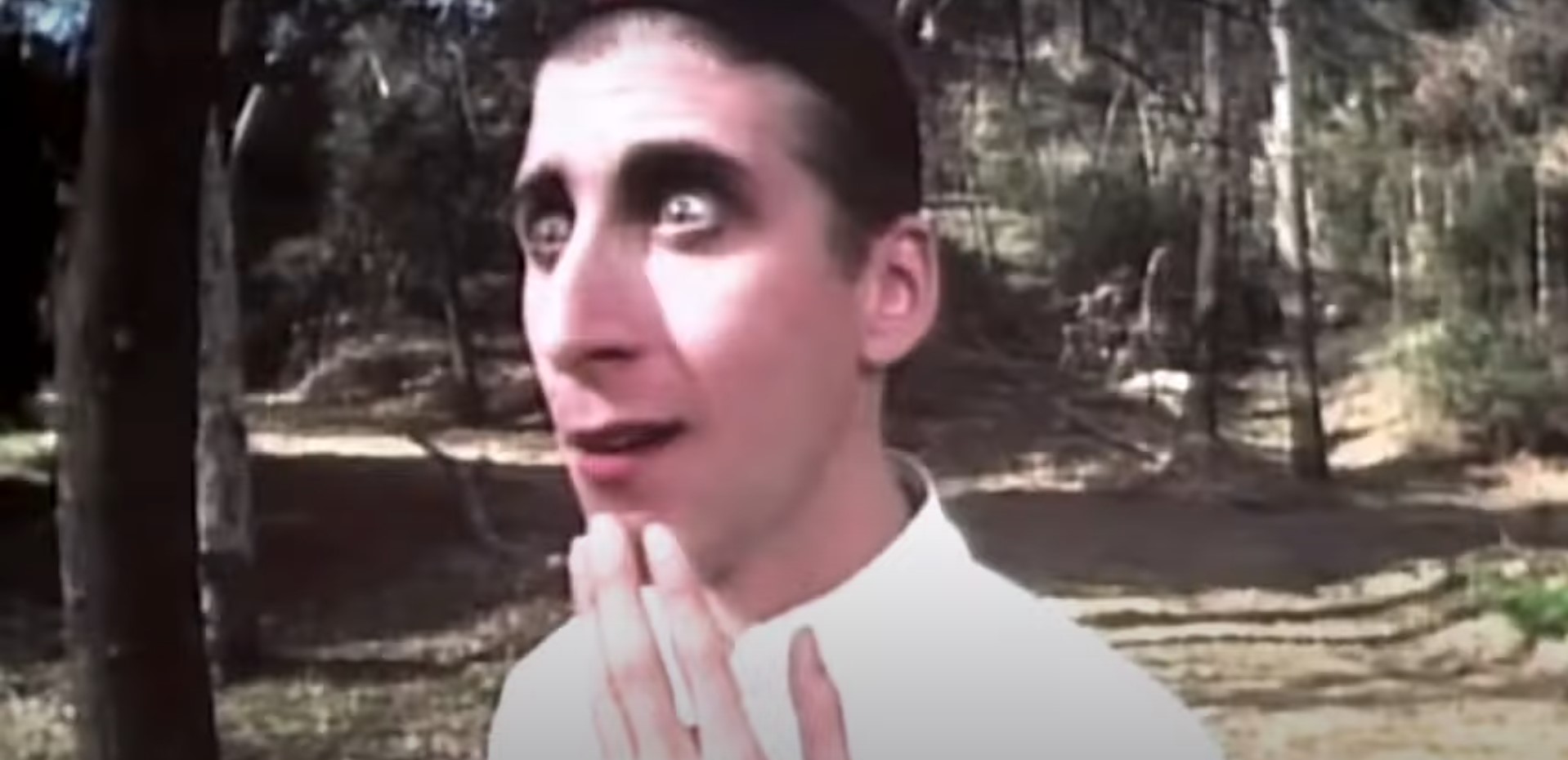
Feminism’s EVIL Plan Thwarted by CIA Hunk in “The Million Eyes of Sumuru” reviewed! (Blue Underground / Extended Edition 4K UHD and Blu-ray)

Sumuru’s Eyes Are Everywhere, Even Here on Amazon! Purchase the 4K and Standard Blu-ray Set Here!

Tall, handsome, and witty CIA agent Nick West is about to go on a much-needed vacation.  As soon as he steps outside of headquarters, he’s approached by British agent Colonel Baisbrook to cash in a favor the CIA owes the British government.  Unable to refuse, West agrees to investigate the assassination plot against one President Boong of an unnamed East Asian country.  The assassins are nothing short of extraordinary as a bunch of femme fatale infiltrators have put themselves in positions of power all over the globe as wives and girlfriends of nation leaders and President Boong is the only one that has refused to take the bait.  West and his good friend Tommy Carter find themselves quipping and philandering amongst the most dangerous female-centric organization on the planet, led by the ruthless and beautiful Sumuru.  To protect President Boong, West must become friendly with Sumuru who uses his likeness in a new elimination plot that puts him front, center, and in between saving the world or watch the men become subservient by an ambitious woman seeking world domination.

Double agents.  Foreign places.  Secret lairs.  Suave operatives.  Sexy women.  These descriptors are the very spirit of a James Bond movie.  At the height of the Sean Connery 007 era, plenty of knockoffs were produced to capitalize on the action and sex appeal of martini-drinking covert agent that rules the 1960s.  One of those copies was helmed by Lindsay Shonteff in 1967, titled “The Million Eyes of Sumuru.”  The “Devil Doll” and “Voodoo Blood Bath” director had already an espionage thriller under his directorial belt with “The 2nd Best Secret Agent in the Whole Wide World,” I bet you can guess who the first was during that time.  Kevin Kavanagh pens the script from the original story by legendary B-movie producer Harry Alan Towers (“The Face of Fu Manchu,” “Psycho-Circus”) that would become an incongruously and acerbically witty-tale of pseudo-feminism with hot pursuits, sensual promiscuity, and a dart gun that can turn a person to stone.  Towers also produces “The Million Eyes of Sumuru” under his LLC and filmed in Hong Kong at the Shaw Brothers Studios. 

As Sean Connery heats up the screen with his double 0 escapades through all over the global to thwart the men of evil and with an astounding amount of carbon copy espionage reels rearing to chase the all mighty buck, “The Million Eyes Sumuru” desperately needed a cast to keep afloat in a flooded spy film market.  For the most part, Towers and Shonteff’s cast pull off exactly what the story needed, a caricature of crowning chuckles subdued only by its slivers of spy game ventures.  That’s not to say there’s an abundance of gun play and fight sequences with terrific tussling as “House of 1,000 Doll’s” George Nadar uses his tall stature and ear-to-ear smile to be a lover, not a fighter in the wise-crackin’ American CIA agent Nick West.  West destroys the all-women Sumuru arsenal with just his manliness in a satirical jab at Ian Fleming’s titular protagonist and, for all intent and purposes, it works in the story to see Sumuru’s plans become ruined by not a gun nor a fist but because women in her organization, even Sumuru (Shirley Eaten, “Goldfinger”) herself, throw themselves onto him at critical moments and Nadar’s timing and screen charm laps every second of it.  Frankie Avalon (“Horror House”) and Wilfred Hyde-White (“The Third Man”) play Nick West’s allies as friend Tommy Carter and cavalier British agent Colonel Baisbrook who both play in two totally different capacities.  Tommy Carter equals West witticisms but falls behind as the friend who must journey solo to find West in the middle of Asia while Baisbrook effortlessly shows up in the nick of time to be either a savior or West’s handler with another mission in his pocket for West to reluctantly tackle.  A pair of principals that are held at bay is the beautiful Maria Rohm (“99 Women”) and the eccentric Klaus Kinski (“Nosferatu the Vampyre”) whose swift takes leave more to be desired as Rohm becomes weak-kneed on her Sumuru femme fatale application and Kinski plays drug-addicted, politically incorrect, and perverse president of this untitled Asian country. 

“The Million Eyes of Sumuru” contests to be a smartly funny, exotically set, and action-invested covert operative film of the late 60s, swimming against the current of some of the hard to beats and who have more of a legacy in the subgenre.  While “The Million Eyes of Sumuru might be more Swinging 60’s with cavalierism rather than sophistication and intent, the production value could rival the best Bond film of it’s time but it’s the stunts that drive this one down below the bar as Shonteff looks toward George Nadar’s quick wit and budding personality to be the masculine sex symbol that drives the rabid female race to their supposed manhating knees.  Its quite comical to see a firm line of feminism course through the plot’s veins, a plot where deadly women penetrate and subvert men world leaders only to become a slave to West’s dunce charm and attractive appearance.  West really isn’t the smartest of secret agents as he’s not trying to evade capture with rapid haste or fool anybody of his intentions; instead, he’s just mildly clever with broad shoulders and, apparently, that’s what women droll over instead of carrying out their loyalty pact of a global coup d’etat.   

Swinging onto the 4k Ultra HD Blu-ray bandwagon is the Blue Underground’s 2-Disc combo set UHD and Standard Blu-ray release of “The Million Eyes of Sumuro.”  The HEVC encoded, 2164p resolution, BD66 has picture quality absolution with a stunning brand-new 4K restoration transfer from the original 35mm camera negative thought originally lost.  The rich and colorful picture hits all the important markers with balanced film density that diffuses the hues nicely into every aspect of depth and focus, from the background to the foreground.  This goes for texture too.  No matter where an object lies in the frame, there’s an accurate representation in the reproduction inside the immense range of color schemes, landscapes, and textures.  Delineation is quite pleasing; the close ups of George Nader’s face exhibit ever facial feature with precision without appearing overly bright or smoothed.  The AVC encoded, 1080p resolution, BD50 Blu-ray captures much of the same finer points too on a slimmer pixel count but still denotes Blue Underground’s improved restoration, complete with inky blacks and no compressional misses to sully the quality.  The extended cut adds approx. 10 minutes of additional footage, which in these cases can often be less-than-pristine upon discovery of the elements but the additional scenes are seamlessly blended into previous releases’ runtime, suggesting the print was greatly protected from all harmful exterior factors.  A single channel English DTS-HD mono is the only mix available. Though standard and not as dynamic as more modern audio designs, the uncompressed track provides superb fidelity clearness, cleanliness, and with an even-keeled throughout.  The snappy dialogue shows prominence amongst a wide-berth range of surrounding elements.  There’s a blend of ADR and live recording, much to the chagrin of the Asian actors who have their English post-dubbed with a more accented stereotype.  English SDH are optionally available.  Capacity limitations on the UHD keep disc one to just two audio commentaries:  Film academics David Del Valle and Dan Marino on the first commentary with usual commentary notables Nathaniel Thompson and Troy Howarth on the second.  These commentaries are encoded on the Standard Blu-ray version of the film, accompanied by a new feature-length documentary England’s Unknown Exploitation Film Eccentric:  The Schlock-Cinema Legacy of Lindsay Shonteff that has historian interviewees, such as Kim Newman, discuss the brilliance of Shonteff’s work amongst the espionage thrillers of the time, an exclusive RiffTrax Edition of the film, riffed by Mike Nelson, Bill Corbett, and Kevin Murphy, the theatrical trailer, and the poster and still gallery.  It’s always a pleasure and a thrill to have tactile elements on the Blue Underground O-slips, such as this release with the embossed title overtop and below the memorable packed compositional, illustrated artwork.  The slightly thicker black Amaray casing houses the same artwork with a reverse side of the original Blue Underground DVD artwork.  Each interior side contain each format disc, pressed individual with the same cover arts, with the Blu-ray on the left and the UHD on the right.  Encoded for all region playback, “The Million Eyes of Sumuru” now clocks in at 89 minutes and is not rated.

Last Rites: “The Million Eyes of Sumuru” has a million positives – a farce of the espionage subgenre, cheekily acted, exotic locations, and an extended, clean-cut version from Blue Underground – to name a few that quickly surmises the Lindsay Shonteff film to be the golden gun of his repertoire.

Sumuru’s Eyes Are Everywhere, Even Here on Amazon! Purchase the 4K and Standard Blu-ray Set Here!

At Odds With Each Other Can’t Stop the EVIL That’s Coming for Them! “House of Dolls” reviewed! (VMI Releasing / Blu-ray)

“House of Dolls” Is Ready to Play! Blu-ray Available at Amazon.

Estranged sisters Jenn, Diana, and Adalene are summoned to reunite by their dying father.  Greeted by their grandmother and a lawyer informing them of an inheritance within their father’s will, the verbally combative sisters are more than eager for their fair share of the will and be happy to never see each other again as they go on with their lives, but the will’s stipulation states the sisters must work together and revitalize the long severed kinship within the walls of his hand-built estate, a life-size representation of a doll house constructed for the love of his life where clues to their inheritance lie hidden inside.  Before even the first ounce of hope to mend their broken bond, one of the sisters is found brutally murdered in one of garish rooms and a masked maniac hunts for not only the two remaining sisters but also those close to them outside the house of dolls.

Juan Sala’s “House of Dolls” is the return to horror for the Texas taught director since his urban-thriller “Alp” in 2016 and the first independent story helmed that didn’t involve Sala’s going pen-to-paper with a script.  That task was handled by another Texas film school graduate, Iv Amenti, in her first feather length screenwriter credit aimed to label itself as a mystery-slasher under the guise of grueling family rejuvenation.  The 2023 released film’s story was shot on location in Los Angeles with Juan Salas solo producing the feature.  Salas is no stranger producing his own work as he’s done with most of his own repertoire (“The Triple D,” “The Wolf Catcher,” and “The Devil’s Ring”) while also branching out occasionally to support and/or fund other creative minds, such as with Brian King’s “Hell of a Night.”  Polar Bear Films produced the film along with Vantage Media International, or VMI Worldwide, who produced and distributed the film.

Powering “House of Dolls” vessel into explicit view is headliner Dee Wallace.  The “Cujo” and “Critters” scream queen has been on a junket of mom-and-pop productions for the better part of the last decade for aspiring horror filmmakers to leech off that eye-catching and weight-bearing Dee Wallace name.  Wallace reminds me of Linnea Quigley once said in an interview, if producers meet her price, she’ll star in pretty much anything.  Wallace seemingly has the same philosophy with a continuous stream of projects that screen her for no more than a total of 15-minutes, tops.  While this works to an extent, based off the prominence or the memorability of the role, most of that bankable name and face do little elevating the film, resulting in just a paycheck performance.  Sure, Wallace’s fans will check it out for the sake of Dee Wallace but for “House of Dolls,” as with the story or just as with the entity of the film, the gimmick doesn’t leave a mark.  The plot crux favors the three bickering sisters, Adalene (Violeta Ortega), Jenn (Stephanie Troyak), and Diana (Alicia Underwood).  Sibling diverging personalities uphold their seething hate for each other, that is much as obvious, but for what specific reason is never unfolded, or is unfolded but made unclear in the wake of its untidy heap.  What’s definingly unclear is the mother of these unlikeable brats.  Mentions of individually owning the unfortunate event of a mother’s death makes the ambiguous ruling that there is at least one half-sister.  They could all be half-sisters, but the unbridled dialogue and no conveyed backstory strays away from important pieces of the puzzle that make it as frustrating as trying to match a 2D puzzle piece within a 3D puzzle scheme.  The story also incorporates flimsy relationships with the sisters, Jenn’s drug buddy Justin (Jack Rain) who unexpectantly arrives with the sisters at their father’s estate, Adalene’s semi-sweet boyfriend Caleb (Phil Blevins), Diana’s vague friendzone coworker or perhaps boyfriend Lenny (Matt Blackwell”), and Diana’s out-of-nowhere go-to detective who just happens to be at her father’s hospital, dressed in beat cop fatigues, in Det. Ramierz (Meeko).  All these seedling characters are detached in their gravitational encircling around the sisters, pulling in zero weight on a story that’s quickly deflating.  Rounding out the fleeting supporting cast is Trey Peyton. 

Following “House of Dolls” plotline might as well be riddles with attention deficit disorder.  Too much is happening without the ease of transition or even sense to hold down a floating story that’s constituting forced uniformity and civility amongst rival siblings by way of a mysterious house with mysterious clues. Yet, those clues don’t flesh out and intrigue over what could have been a backstory backbone turns into gelatinous indiscretion of kill-after-kill by a leather coat-wearing masked-maniac with knives that offers up in the end being nothing more than surface level, superficial slasher.  Salas pulls off some decent, gory kills, such as a slimy disembowelment and a bisected torso that spills guts, to add some value to the production that’s ultimately equalized by areas of cut-rate props, such as the obviously flat and dull large knives that look more like cardboard than metal.  Like in true slasher tropes, the killer is seemingly everywhere at once, hopping from one location to the next, even if the other locations are across town, but this punk-cladded, homicidal maniac appears in-and-out of the alternating scenes too lackadaisically without systematic care to at least in try and make it plausible.   

VMI Releasing and MVD Visual handle the physical media distribution with a 1080p, high-definition Blu-ray.  The AVC encoded BD50 has the capacity for the eclectically ranged front lit key lighting and neon lighting, delivering a clean picture without compression issues.  Details waver between certain aspects of lighting, which is expected, but the details that do emerge pinpoint textural qualities and the key lighting reveals appropriate, vivid coloring and skin tones when contrasted against heavier background shadows.  Jorge Villa’s sizzling neon gives a warm glow in purple, blues, reds, and orange that enhances to a near music video quality outside the normal lighting and production parameters.  The film is presented in a 1.78:1 aspect ratio.  The uncompressed DTS-HD 5.1 English audio mix is an upbeat combination of verbal jabs, deregulated dialogue, and a medley of pop music and low-tone beat creator for the villain peppered with hip-hop rhythms, violin and piano down tone, and some suspense synthesized keyboard notes that do lean into what makes a decent horror soundtrack.  No complaints on the dialogue track that’s fairly level but doesn’t explore much in depth as characters are often up front and center on the camera.  There’s also not enough range to really utilize the multi-channel network and so the lack of miscellany fight for audible supremacy. Subtitles are available in English only.  Bonus features are aplenty on this larger capacity disc with Juan Salas commentary track that runs parallel to the feature, Juan Salas and Dee Wallace have a Halloween special video chat to converse about their time in production, a Natasha Martinez hosted cast Q&A for the U.S. premiere, a making-of featurette, and a MiB Legacy music video The Man Who Was Death.  On the outside, VMI’s standard Blu-ray comes with an appealing touchup of the killer in full dress from the chest-up, singled out by a black background and the title just overhead.  The disc is pressed with the same image with no other tangible features.  The film is not rated with region free capabilities and has a runtime of 84 minutes.    

Last Rites: “House of Dolls” crumbles as a clunky attempt at a slasher with a twist ending. The story shatters like someone pulling a pin on a grenade and pieces of act structure shrapnel propel in all different directions and never once hit target in the latest from director Juan Salas.

“House of Dolls” Is Ready to Play! Blu-ray Available at Amazon.

Cheese Isn’t the Only Snack on this EVIL Rodent’s Diet! “Rat Man” reviewed! (Cauldron Films / Blu-ray)

See Nelson de la Rosa as the “Rat Man” on Blu-ray!

On the Caribbean Island of Santo Domingo, a genetic fiend scampers on the streets.  By injecting the sperm of a rat into a Monkey embryo, one fervent geneticist’s desires to be globally renowned creates a small yet deadly human rat.  Intelligent, agile, and with a lethal poison under its fingernails that could kill a normal size human in a matter of seconds, the creature escapes confines and roams the streets looking for fresh meat to eat.  One of the victims is a photoshoot supermodel from New York City that prompts an unofficial investigation of the mistaken sister to the supermodel and a mystery writer who are now on the hunt for the whereabouts of the others from the photoshoot group.  As the bodies pile up, the rat man wreaks havoc on the small island villages where the survivors and investigators must fight for their life to avoid being gnawed upon.

“Rat Man,” aka “Quella villa in fondo al parco,” translated to “That Villa at the End of the Park,” is the 1988 the Italian-made, creature feature of predominant spaghetti western and poliziotteschi director Giuliano Carnimeo in what would become one of his last feature films  Credited as Anthony Ascot, the western “Sartana” franchise and “The Exterminators of the Year 3000” director tackles the horrors of genetic manipulation with survivalist rodent given primate intelligence, a far cry from Carnimeo’s usual genres.  The screenplay comes from “Demons” and “The Ogre” writer Dandano Sacchetti under the penname David Parker Jr.  Carnimeo and Sacchetti Americanize their credits to appeal more to western audiences who, in the late 80’s, were lapping up Italian horror and creature features starring known international actors in tropical republics and “Rat Man” falls perfectly into that category.  “Zombie” and “The Beyond” producer Fabrizio De Angelis produces the film from production companies Surf Film and Fulvia Film.

While usually Italian productions go after American names, like John Saxon, Christopher George, or Robert Vaughn, “Rat Man” looked elsewhere amongst the surrounding Anglo-Saxon countries and plucked a few names that lead the charge in what would become a cluster of principals to become ensnared by tropical bred, genetically tainted vermin standing just over 2-feet tall, with elongated sharp teeth, and poisonous fingernails.  Without a defined lead, the script swirls through possible hero and heroine tropes, such as the investigating team-up between New Zealand actor David Warbeck (“The Beyond”) and Swedish actress Janet Agren (“Eaten Alive”) who are no strangers starring Italian productions.  Agren plays Terry who flies into Santo Domingo under the impression her supermodel sister was brutally murdered, and she happenstance meets at the same hailed cab Warbeck’s character, work vacationing mystery writer Fred Williams, who for some reason, some how becomes involved in helping Terry without significant cause or benefit other than possibly the mysterious case being a good plot for his next book.  There’s also the case of the false hero and final girl with the pursuit of photoshop photographer Mark, played by Austrian actor Werner Pochath (“Devil in the Flesh”) and his hot model Marilyn, by Italian actress Eva Grimaldi (“Covent of Sinners”).  These intended, or perhaps not intended, red herrings do make “Rat Man” favorably unpredictable as well as grim in regard to centric characters.  Grimaldi becomes the object of obsession with gratuitous nudity and a showcase of her other assets.  In more forgiving times when the diverging physical differences subjected actors into selective roles, the film employed one of the shortest men in our lifetime with Nelson de la Rosa.  Standing all of 2’ 4 ¼” because of Seckel Syndrome, the Dominican Republic born actor donned the makeup, false teeth, glued-on nails, and the ratty clothes to be transformed into the titular villain.  Limited movements and with no dialogue, de la Rosa’s underrated, give-it-his-best performance reveals to be a bright spot in story about a rat spliced with a monkey with the assistance of some movie magic; that one scene where he climbs up the window drapes and looks over his shoulder at Eva Grimaldi as she sleeps in a dark room and he’s slipping into the shadows gives proper chills.  Cast rounds out with Anna Silvia Grullon, Luisa Menon, Pepito Guerra, and Franklin Dominguez. 

Out in the cinema land, there have been worse genetical abomination movies through the decades.  “Rat Man,” surprisingly enough, champions for the middle ground as a solid, campy, man-made creature-on-the-loose feature with, dare I say it, okay performances, competent camerawork, and a villain unlike any other scampering around.  Sure, there are cheesy moments, but rats do like cheese, or so the stereotype goes, and that adds a layer of relaxation and ease knowing Giuliano Carnimeo had a sense of acceptability rather than trying to make a absolute, serious horror movie.  The one aspect I will mention where there was difficulty in swallowing was the scattered story flow.  “Rat Man” seemed to be everywhere all at once from beaches to the jungle to the vacant streets of Santo Domingo without rhyme or reason.  For a while I ran with the theory the Rat Man followed the photoshoot group, targeting the eye candy for its own perverse desires, but that promising concept was blown to smithereens when the little village of St. Martin had been terrorized and abandoned in a moment of exposition awareness.  Carnimeo’s jump from out of the western pot and into the horror fire translates his eye for the lingering and peripheral dread, much like a showdown of glares that has revolutionized to the lie and wait of the rat man cometh but if only the director could yoke the loose story for a straighter edge, “Rat Man” would have been acute as pestilence in the Italian horror mercati.

The “Rat Man” chews its way onto a brand-new Blu-ray release from Cauldron Films.  The restored in 4K transfer is pulled from the 35mm original negative and presented on an AVC encoded, high-definition 1080p, dual-layered BD50, exhibited in the original European widescreen aspect ratio of 1.66:1.  Primarily in low key, shadows run the range of a creature lurking in every nook and cranny, turning “The Naked Doorwoman’s” Roberto Girometti’s, credited as Robert Gardner, cinematography from darkened eyesore to a penetrating thriller of what’s scuttering beneath the shadows.  Emerging from the color is the perfect diffusion of color and texture underneath the natural looking stock grain.  There also isn’t a compression blemish insight or any kind of unnecessary enhancements from this good-looking print.  The only audio optional available is an English dub 2.0 mono track.  Despite an assortment of nationalities, the English dub does make the distinct accents go away with language uniformity.  Foley strength lies principally in the forefront but does champion the beast with a low growl always at your feet, or face depending on the camera angle.   English subtitles are optionally available and synch well with no errors in spelling or in grammar. Cauldron Films exclusive bonus features include an audio commentary, also available on the audio setup portion of the fluid menu, with film historians Eugenio Ercolani, Troy Howarth, and Nathaniel Thompson, and three Italian language with English subtitles interviews with cinematographer Robert Girometti, camera operator Federico Del Zoppo, and post-production consultant Alberto De Martino. “Rat Man’s” trailer rounds out the special features encoded content. The standard release comes in a clear Amaray Blu-ray case with new illustrated artwork that gives a real sense of what to expect by Justin Coffee. The reverse has the original, and if I might add beautiful, poster art that’s less surmising but more intriguing. Authored for region free playback, Cauldron Films’ “Rat Man” scurries with an 82-minute runtime and is not rated.

Last Rites: Forget setting out the poison, “Rat Man” can’t be exterminated with a phenomenally invincible release from Cauldron Films. In the slim pickings of the killer rat subgenre, “Rat Man” leads the pack rats as one of the more bizarre, degrading, and omnipotent villains ever to be on prowl.

See Nelson de la Rosa as the “Rat Man” on Blu-ray!

EVIL, Over a Decade in the Making! “Profane Exhibit” reviewed! (Unearthed Films / Blu-ray)

“The Profane Exhibit” is Finally Here! Come And Get It!

Forged, smelted, and baked from the fiery grounds of hell, 10 stories of bleak and utter horror crimson the soul with blood and pale it with terror.  Ten directors, ten stories, ten obscure unfathomable depictions tell of a draconian religious sister matron with a despotic rule over a child orphanage, a daughter held prisoner by her parents in her own home basement, a cult willing to sacrifice newborns for the sake of their demonic tribute, the Third Reich submitting to extreme measures to keep their ranks pure, a reenactment of a father and son’s unnatural skin-to-skin bonding, a nightclub’s underground bloodletting witchery, and more unnervingly bizarre ballads.  These tales of torment tatter the life force piece-by-piece until there’s nothing left to exhibit, nothing left of one’s humanity, nothing left of being human.  A cruel anthology awaits just beyond the play button, ready to shock, appeal, and maybe even stimulate the perverse, primal nature in us all.   

An anthology a decade in the making or, to be more specific, a decade plus one year in the making in the long awaited “The Profane Exhibit.”  The 10-short film anthology is the brainchild of Amanda Manuel that began principal production in 2013 and finally saw completion and release in 2024 after a slow slog of shoots, edits, and post-production this-and-thats to finally crossover the finish line.  Varying from micro shorts and to average length short films, the anthology employed 10 different in degree genre directors from all over the world to make the mark in what would become a manic syndrome of monsters, mayhem, and molestation.  Yes, we’re talking about some really gross things, some terrifying things, and some other abnormal, abstract, and abysmal things that could be happening right now in your nightmares, or under your nose.  Anthony DiBlasi (“Malum”), Yoshihiro Nishimura (“Tokyo Gore Police”), Uwe Boll (“Bloodrayne”), Marian Dora (“Cannibal”), Ryan Nicholson (“Gutterballs”), Ruggero Deodato (“Cannibal Holocaust”), Michael Todd Schneider (“August Underground’s Mordum”), Nacho Vigalondo (“Timecrimes”), Sergio Stivaletti (“The Wax Mask,”) and Jeremy Kasten (“Attic Expeditions”) helm shorts they’ve either written themselves or by contributing screenwriters Carol Baldacci Carli (“The Evil Inside”) and Paolo Zelati (“Twilight of the Dead,”).  Harbinger Pictures and Unearthed Films, who also premiered it’s at-home release, co-produced the anthology.

Much like the diversity of directors, the cast is also an assortment of aggregated talent that stretches the global gamut.  Popular and classic horror figures like Caroline Williams (“The Texas Chainsaw Massacre 2”) and Clint Howard (“Ice Scream Man”) play the normal couple next door conversating about politics, date night, and work while all the while they’ve locked their daughter away from the world and use her as daddy’s little sex slave in Uwe Boll’s “Basement,” depicting the normal and safe is actually abnormal and danger right in the middle of suburbia.  Others such as the underrated scream queens Monique Parent (“The Witches of Breastwick”) as a fully naked and willing “Goodwife” to her sadistic husband, Mel Heflin (“Queen Dracula Sucks Again”) donning a pig mask, naked by the way, in a rave club along with Tina Krause (“Bloodletting”), Elhi Shiina (“Audition”) and Maki Mizui (“Mutant Girl Squad”) finding happiness amongst death, and notable global genre actors Thomas Goersch (“Voyage to Agatis”) as the German father crippled by his son’s retardation, Dan Ellis (“Gutterballs”) as the hardworking husband who has everything but it all means nihilistically nothing, and Art Ettinger, the editor name and face of Ultra Violent Magazine doing his part with a bit patron part in the nightclub.  Mostly all listed have previously worked with their short film directors previously that denotes a sense of ease and expectation from their performances but that still makes their acts nonetheless shocking.  “The Profane Exhibit” also sees a few newer faces in the conglomerated cast with Christine Ahanotu, Tayler Robinson, Tara Cardinal, Mario Dominick, Witallj Kühne, Valentina Lainati, Josep Seguí Pujol, Dídac Alcaraz, and Stephanie Bertoni showing us what they can dish out disgustingly. 

Was the 11-year wait worth it?  Over the last months years, “The Profane Exhibit” received substantial hype when Unearthed Films announced its home video release, pelting social media with here it comes, get ready for it posts, tweets, and emails and for fans who’ve been following the decade long progress, director Amanda Manuel’s “The Profane Exhibit” does not disappoint as the content storyline harks back to the lump-in-your-throat, gulp-swallowing roots of general discomfort from an Unearthed Films release.  While it may not “Slaughter Vomit Dolls” level gross of upheaved bile and whatever was ingested moments before shooting, the filmmakers go deeper into the viscerally ignorant, ugly truths.  We’re not talking monsters or supernatural entities tearing Hell a new rectum, but “The Profane Exhibit” delineates the sordid nature of the human condition in an egregiously behavioral way that some of these ideas are not so farfetched.  A select few of the filmmakers incorporate surrealism into their shorts, such as with Yoshihiro Nishimura’s aberrant Mary Poppins, known as Hell Chef, replaces a spoon full of sugar with a bowl full of cooked human when turning a frown upside down of a young girl who just killed a man who she suspected tried to rape her.  The Geisha-garbed Hell Chef flies through the air holding up her Wagasa, Japanese umbrella, when her job is done.  Most others are grounded by realism with sadism being the primary culprit – “Basement,” “Goodwife,” and, to an extent, “Sins of the Father” and “Mors of Tabula.”  And then, there are shorts like the late, and great, Ruggaro Deodato’s “The Good Kid’s” that feels hackneyed and unimpressive coming up short amongst the others and makes one think if his name alone awarded the short a spot in Manuel’s lineup. 

In all, “The Profane Exhibit” delicately caters to the indelicate and is a visual instrument of visceral imagery curated for pure shock value. Unearthed Films’ Blu-ray release has finally arrived and is now in our bone-exposed and gory fingertips. The AVC encoded, 1080p high-definition, BD50 allows for dual-layer capacity for not only to squeeze in the 108-minutes’ worth of micro shorts, but allow for extended extras, deserving to fans who’ve waited years for this production to see the light of day.  Like any other anthology, a mishmash of styles but up against each other with the assemblage of different stroke directors and cinematographers but there seems to be no issues with compression, such as banding, blocking, aliasing, or any abundance of blurry noise, in the flexing widescreens aspect ratios of 2.35:1 and 1.78:1.  A good example of Unearthed Films’ codec processing is Deodato’s bridge scene; while I don’t care for the short all that much, the long shots of the bridge are nicely detailed in the nighttime, lit only be the bridge’s powered light poles, creating a downcast of warm yellow along a solid shadow-spotty bridge.  You can see and realize the stoned texture without even using your imagination on how it should look and that tell me there’s not a ton of lossy codec at work here.  An English, Spanish, Italian, and German mix of uncompress PCM 2.0 audio serves as the common output to be as collective and unified as possible.  No issues with hampered dialogue with a clear and focused track.  There dual channel quality is robust and vibrant, living up to Yoshihiro Nishimura’s surreal energy and a commanding Japanese tone while still finding voice prominence in other shorts, if dialogue exist.  Depth is fleeting without the use of a surround mix with an anthology that’s centered around the human condition rather than atmospherics, but I do believe Jeremy Kasten’s Amuse Bouche would have greatly benefited from the distinct gnashing, squirting, and smacking sound elements of a pig being processed to consumption in his wraparound.  English and Spanish subtitles are optionally available. Years of bonus content has been produced and collected for this special release which includes an audio commentary Director Michael Todd Schneider, Producer Amanda Manuel and Ultra Violent Magazine’s Art Ettinger, a world premiere interview with creator Amanda Manuel and short director Michael Todd Schneider at the Buffalo Dreams Fantastic Film Festival, a world premiere Q&A, a 15-minute mini documentary Ten Years Later with “Mors in Tabula” director Marian Dora, an extended short entitled “Awaken Manna” with introduction and discourse, PopHorror’s Tiffany Blem Zoom interviews select directors with Michael Todd Schneider, Uwe Boll, Jeremy Kasten, and showrunner Amanda Manuel, image gallery, and trailer. The 2024 release has a runtime of 110 minutes, is not rated, and is region free.

Last Rites: Worth it. That’s the bottom line for this long-awaited film imbuing with bottom-feeders. Unearthed Films returns to roots with rancidity and fans will find their bloodlust satisfied.

“The Profane Exhibit” is Finally Here! Come And Get It!

EVIL Comes to Town to Extract Your Deadly, Dark Secret. “Peter Five Eight” reviewed! (Invincible Entertainment / DVD)

Check Out Kevin Spacey and “Peter Five Eight” on DVD!

A dynamic real estate agent and her loafing husband drink themselves in an abusive back-and-forth most nights living in a small mountain town.  When a dapper new arrival observes her comings-and-goings about the community, he confronts her out of the blue with questions about a past life she’s desperate to forget.  Her dark secret remains isolated within her, even kept under wraps from her townie husband who is trying to make a change toward contributing to their relationship.  As she continues to heavily drink every night away, the stranger makes every effort to interactive with her, pushing the same questions for answers a faraway adversary seeks, as well as infiltrate the social bubble of her close friends and colleagues to try and obtain more information on the state of her mental anguish.  The closer he gets to her, the more she drinks, and her secrets become exposed toward a deadly end of the cat-and-mouse game he plays. 

Is it poor judgement to review a new film starring a blacklisted actor?  The internal struggle is real when pondering whether review consideration and shining a time-of-day spotlight on the stain considering the damage done by the main actor with sordid personal affairs made public.  This is the case with “Peter Five Eight,” a modern noir comedy-thriller that casted an ousted two-time academy award winner who we’ve really haven’t seen on the screen since 2017 after sexual battery allegations arose.  Yet, ever since this actor won the sexual battery lawsuit against his accuser, an attempt to recoup a career has bene placed in the slow cooker and writer-director Michael Zaiko Hall, a “Cloverfield” and “Planet Terror” visual effects artist turned director, adds another step toward a reel redemption and provides a curiosity to reviewers who like to be the devil’s advocate.  The 2024 released film was shot in Mount Shasta, California and is a productionally comprised of LTD Films, Ascent Films, Forever Safe and Mad Honey Productions with Hall, John Lerchen (“Vampirus”), Chavez Fred (“Hotel Dunsmuir”), and co-star Jet Jandreau producing.

That actor mentioned above is none other than “L.A. Confidential” and “House of Cards” actor Kevin Spacey in the shoes of the titular hitman named Peter.  Now it’s unclear what the “Five Eight” exactly refers to, whether to be the explicitly noted Peter 5:8 verse in the bible which reads, “Be alert and of sober mind. Your enemy the devil prowls around like a roaring lion looking for someone to devour,” and that scripture is also voiced over by Spacey in film’ opening, or “Five Eight” could also refer to the Peter’s age which is noted almost inconspicuously in the dialogue when Peter is pseudo-flirting with a potential asset.  Now whether that age is in reference to his incognito, hitman persona of the passage is unclear, leaving the title more ambiguous than ever, but Spacey’s part is not so terribly vague as an expensive assassin willing to do whatever his employer requires of him.  Stacey’s rakish, twangy charm is quintessential to his more recent onscreen personas and the actor continues to enact it quite well even in a role that often feels more like a stage play than an homage to classic film noir as intended.  There’s a bit of tongue-and-cheek in every line and action cast, and not just in Spacey’s, that slips the tone of his “Peter Five Eight” into wafting black comedy and awkwardly dispositional encounters.  Michael Zaiko Hall perhaps contributes to the latter with his inability to find a way to make Stacey be suave when being suave is required, such as with his pool hall/bar dance where Stacey sings a jukebox tune with an accompanied dance on the pool table felt and imitate the actions of a trombone with a pool cue.   The scene just didn’t sit right and turned what should have been a crowd-pleasing spectacle of smooth coolness into this odd lump of Stacey peacocking around in order to attract a certain someone at the bar as part of his master plan.  Opposite Spacey is co-star and co-producer Jet Jandreau (“Next of Vampires”) as the alcoholic real estate agent Samantha, aka Sam, harboring a dark, past secret and her channeling of Bette Davis cadences and inflections denotes that noir tone they’re aiming for and sinks into melodramatics of the prosaic fashion, serving more of ear sore of lampoon the subgenre rather than resurrecting it out of antiquated techniques.  The character is built well in Sam’s overdrinking and over-paranoia the deeper into the Peter’s story of truth extraction and inevitable cleanup.  Michael Emery (“The Intrusion”), Garrett Smith (“The Gates”), Dale Dobson (“Don’t Get Eaten”), John Otrin (“Friday the 13th:  The New Blood”), and “Dawn of the Dead” remake’s “Jake Weber and “The Hand that Rocks the Cradle’s” Rebecca De Mornay play an affluent and ruthless, revenge seeker and the local real estate agent head close to Sam. 

“Peter Five Eight” likes to live in between layers and forces audiences to read in between the lines on multiple surfaces.  Sam’s escape to the mountains, to flee from her past’s problems, has little footing when husband Travis comes into play as Travis borders being a flake of a husband, a fellow alcoholic, who Sam shares her addiction by proxy or maybe uses as a crutch in an exploitative manner, but he becomes a throwaway character from never being fleshed out and same goes with Garrett Smith’s role as Sam’s ex-husband who enters the picture unwillingly but shows up a little too late to be of importance.  We also needed more from Jake Weber’s richer-the-God Lock who hires Peter to track down and punishing Sam for her past transgressions that, we assume, tragically hurt him.  Peter’s base price is a cool $50 million, and Lock even adds another $8 for Peter’s efficiency, but that egregious, astronomical figure is chased away by Lock’s mysterious career background.  A cryptocurrency motif is sprinkled into the fold, mentioned here and there by various characters in various situations, and that’s perhaps Lock’s key to success but, again, never fleshes out.  There was a real desire to enjoy “Peter Five Eight” and while Kevin Spacey doesn’t necessarily sully the film, and on the contrary entertains with flamboyant articulation, Hall has a hard time creating coherency with his wish-wash noir.

Though intrigued by the premise and Kevin Stacey’s resurrection out of being totally eclipsed from in front of the camera, “Peter Five Eight” arrives onto an Invincible Pictures DVD home release in what is a surprising dreary A/V folly.  The MPEG2 encoded DVD5 is every much the resolution of 720p with smoothed over details and you can see the outlined splotch patches on the RGB model.  Hall and director of photography Eric Liberacki (“The Pale Man”) use mostly natural lighting of the sunny mountainside community and the window-laden interiors.  Night scenes are often lightly misted with a drifting fog or smoke but the weird part of this is it’s mostly in interior sets, creating that noir illusion but mostly just plays havoc on the already suffering details.  No issues with aliasing or noise with the digital playback.  The audio oddly enough is an English Stereo 2.0.  Unsure why a surround sound mix was not in the mix, so to speak, as there’s gunplay, explosions, townsfolk chatter, car crashes, and other elements that add to the range and depth.  The compressed result is a flat, muted track that has zero vitality in its audio projection, and this is also reflected in the decoding kbps that retains a constant flatline rather than a dynamic decoding based off the action.  I have not seen this before on modern DVDs and was taken aback by its feebleness.  English subtitles are optionally available.  The only bonus feature, to which you access straight from the static menu, contains a Kevin Spacey helmed promotional featurette for the film as well as to give the audience a historical lecture on the film noir subgenre.   Invincible Entertainment’s release comes not rated, with a 100-minute return, and a region 1 playback.

Last Rites: Though weird to watch a blackballed actor back on top of the horse, but the black comedy noir that is “Peter Five Eight” is not totally sullied by his name, it’s tarnished by the aphonic character development and the poor A/V basics for the home release that continue to beat the horse with a sprained ankle.

Check Out Kevin Spacey and “Peter Five Eight” on DVD!