Desert Rats Doing EVIL To Anyone Crossing Their Path! “Motorpsycho!” reviewed! (Severin Films / Blu-ray)

“Motorpsycho!” on a new 4K scan Blu-ray from Severin Films!

Three motorcycle hooligans on their way to Las Vegas through the Mojave Desert ride up on a smalltown Veterinarian named Cory Maddox and his voluptuous wife Gail.  A minor brush with the gang does little harm to the Maddoxes and the couple move on with their life certain the gang has moved on to the next town, but little does Cory know while on a professional checkup of a local mare, the gang invades his home and violently rapes his wife.  Hellbent for vengeance, Cory tracks their transgressive escapades through the arid landscape and comes across Ruby, a beautiful woman left for dead after her husband is gunned down and she herself being grazed by a bullet fired by the same delinquents.  The two track them down into an inescapable, unidirectional corner of the desert but with both sides facing car trouble, injury, and seeping slowly into mental instability, only one side will come out alive. 

By and large, “Motorpsycho!” is the Russ Meyer helmed B-picture that side straddles less explicit content.  The 1965 exploitational action feature, that sported less-than-speedy Honda Trials, flirted with bare-chested women, and immersed itself in light and dark innuendo, is nestled amongst two other Meyer films, “Mudhoney” and “Faster, Pussycat! Kill! Kill!,” released the same year and are showcase of unscrupulous violence and sexual content and innately sets the stage for Meyer’s bosomy and barren set movies that bestowed the former World War II photographer turned sexploitation director accolade success later in his career with the “Vixen!” branded films.  “Motorpsycho!” is co-written by Meyer and fellow “Mudhoney” writer William E. Sprague from an original idea from the screenwriters along with James Griffith (“Russ Meyer’s Lorna”) and Hal Hopper.  The Meyers, being Russ and wife Eve, produce the story in cahoots with Ross Massbaum (“Beach House”) and is produced and distributed theatrically by Eve Meyer’s Eve Productions.

The way Meyer sequences the “Motorpsycho!” story is an ebb and flow of events that culminate into a showdown and audiences, perhaps, won’t know exactly who the leads are until well into the chaos, such as with the female principal lead Ruby, a Cajun woman down on her luck travelling in a forced by necessity marriage to an older man in order ot start a new life in California, played by Haji, a Canadian dancer with a unique face and beautiful curves who caught Meyer’s eye for “Faster, Pussycat!  Kill!  Kill!”   For a new actress, Haji is impeccable and easy on the eyes while working off another first-time actor, principal lead Alex Rocco (“The Godfather”), playing vengeful veterinarian Cory Maddox.  Haji and Maddox have unquestionable sexual chemistry and tension despite their slight platonic relationship of seeking revenge as Meyer provides a great deal of sexual innuendo and reference instead, beating around the bush for the ultimate tease.  Don’t worry, “Motorpsycho!” doesn’t hang around the coquettish scene for entire duration as there’s plenty of one-on-one racy and salivating spiciness to sate sexploitation fans between the playful bedtime arousals of Rocco and on-screen wife Lane Carroll (“The Crazies”) and the playfully aggressive rape of Carroll and a fisherman’s wife a bikini-cladded large bosom.  “Motorpsycho!” has a man to woman ratio that strays from the normal Russ Meyer credits with the female cast rounding out with Sharon Lee in her usual typecasted role of a blonde bombshell and, more specifically in this story, a mare-owning flirt for Cory Maddox’s services.  While not a large breasted woman craving sex in every episodic scenario, this Meyer run has an interesting arc for the three ruffians who initially start with copasetic unity in their troublemaking fun through the Mojave only to end themselves in disbandment of backstabbing and derangement in unswerving performances from Timothy Scott (“Lolly-Madonna XXX”) as the handheld radio melomaniac, Joseph Cellini (“Beyond the Valley of the Dolls”) as a hip cat love-taker, Steve Oliver (“Werewolves on Wheels”) as their military vet leader with a stoic expression but unpredictably violent.  “Motorpsycho!” rounds out the cast with Coleman Francis (“Beyond the Valley of the Dolls”), Steve Masters, Fred Owens (“Supervixens!”), George Costello and Russ Meyer as the unsympathetic, cynical Sheriff.

Not as sordidly sleazy or insatiably randy as many of the Russ Meyer films we all know and love for their perky antics, voluptuous vixens, and zany comedy with a isolated desert town backdrop, “Motorpsycho!” is virtually nudity free in comparison to his thereafter work and shot entirely in black and white that, too, tones down the situationally shaded situations of diverging sexual overdrives that conclude around a centered focus, usually around something sexually themed.  That’s not to say just because production year is in the cinema puritanical early 60s and is in black and white does that mean the film goes without a fair amount of brief nudity as Meyer slips into a couple of nipple slipping instances and countless sideboob that would be deemed too salacious for media content harking back 60-years ago.  Innuendo has always been fair game in all sorts of production sizes and studios but couple what Meyer has done with the sexualized material with the gang violence and what you have is one of the earliest known grindhouse pictures prior to its monikered labeling in the 1970s.  Production value and authenticity floats around the low-budget spectrum with a film titled “Motorpsycho!” that spends what little funds there is to supply Honda Trials that are more the speed and look of Mopeds than motorcycles, but Meyer competently adds and edits fast paced car chases, the discharging of a single pump action rifle, and a curtain calling explosion with body prop fragmenting special effects to level up the value where it counts. 

The Museum of Modern Art and Severin Films restore and scan Russ Meyer’s “Motorpsycho!” onto a new 4K transfer from the original camera negative and encode the transfer onto a new Blu-ray release as part of the Russ Meyer’s Bosomania collection.  The region free AVC encoded, 1080p high-definition, BD25 is a perfect, snug fit for a well-endowed black-and-white feature restored to a virtually free of dust, dirt, and damage.  Meyer’s an eclectic electric editor and every transition is smooth and robust without fading reduction of quality in the rapid, rambunctious edits of his assembling panache.  Though in black-and-white, details don’t suffer from monochromic flattening and every inch of desert is captured with precision, every bodily curve is shapely contoured, and even when a resembled nights dims the lights, there’s plenty of definition of outline to let the mind do the rest of the work with textures and delineation within the presented 1.85:1 widescreen aspect ratio.  The English LPCM 1.0 track is about as expected, flat, but pumps through the single channel with great vitality and strength to be an effective, agreeable sound mix that, again, sees little-to-no distortion or interference.  Dialogue renders over clean and clearly without hissing or crackling in its ADR form with obvious but little asynchronous measure between visual and audio.  Closed captioning English subtitles are available.  Severin Films compiled special features, in association with the Russ Meyer Trust, include an audio commentary with queer film historian Elizabeth Purchell and “Malevolent” editor and filmmaker Zach Clark, archived interviews with stars Haji and Alex Rocco Desert Rats on Hondas, and the film’s trailer.  Primary red boxes in a mustard yellow background cover art with Steve Oliver and Sharon Lee providing the film’s genre caliber with fast bikes and big breasts plastically encased inside a black Blu-ray Amaray with the inside disc pressed with the same image, following suit to the previous first three Bosomania installments of “Vixen,” “Supervixens,” and “Beneath the Valley of Ultra-Vixens.”   The region free release has a runtime of 74-minutes.

Last Rites: “Motorpsycho!” is Russ Meyer convincing us he’s more than just a T&A sex hound with a 100% pure exploitation revved up with revenge, violence, and sordid sexual behavior.

“Motorpsycho!” on a new 4K scan Blu-ray from Severin Films!

Psychological and Psychotic EVIL Descend Upon a High School Boy! “Butcher, Baker, Nightmare Maker” reviewed! (Severin Films / 2-Disc 4K UHD and Blu-ray)

The 2-Disc UHD and Blu-ray Available for Pre-Order. Due to Release 5/28!

Orphaned Billy Lynch has raised by his Aunt Cheryl after his parents are tragically killed in a motor vehicle accident.  On the verge of his 17th birthday, Billy is ready to move on from his old life living under the overly caring Aunt to building a relationship with girlfriend Julia and possibly moving to Denver on a basketball scholarship, but the threatened Aunt Cheryl will do anything to keep Billy home, even if that means murder.  A brutal, stabbing incident of a local television repair man in their home leads to Detective Joe Carlson to suspect Billy as the main culprit and begins digging into the young man’s life that, coincidently, unearths the dead repair man had a homosexual relationship with Billy’s basketball coach.  Bigotry and intimidate course through Detective Carlson being as he prejudicially hounds and interrogatingly paints Billy as a gay, jealous lover without an ounce of hesitation.  Between his crazy Aunt and an intolerant cop, Billy’s life spirals dangerously out of his control. 

‘Butcher, Baker, Nightmare Maker,” also known as “Momma’s Boy,” “Night Warning,” or just “Nightmare Maker,” is the 1981 queer awareness and maturing suppression horror-thriller from “Bewitched” TV-series director William Asher.  Trying his hand at an edgier storyline with plenty of graphic violence and subversive themes, Asher helms the picture working off a script by a trio of debuting writers in Steven Breimer, Alan Jay Glueckman (“The Fear Inside”), and Boon Collins (“The Abducted”).  The American-made production brought considered taboo topics to the table when homosexuality was becoming more prominent in American culture in light of the AIDs epidemic and while the sexually transmitted disease has no part in this story, the derogatory fear of same-sex coupling is mercilessly present.  “Butcher, Baker, Nightmare Maker” is a Royal American Pictures production, distributed theatrically under Comworld Pictures, and is produced by screenwriter Steve Breimer and “Class of 1999” producer Eugene Mazzola.

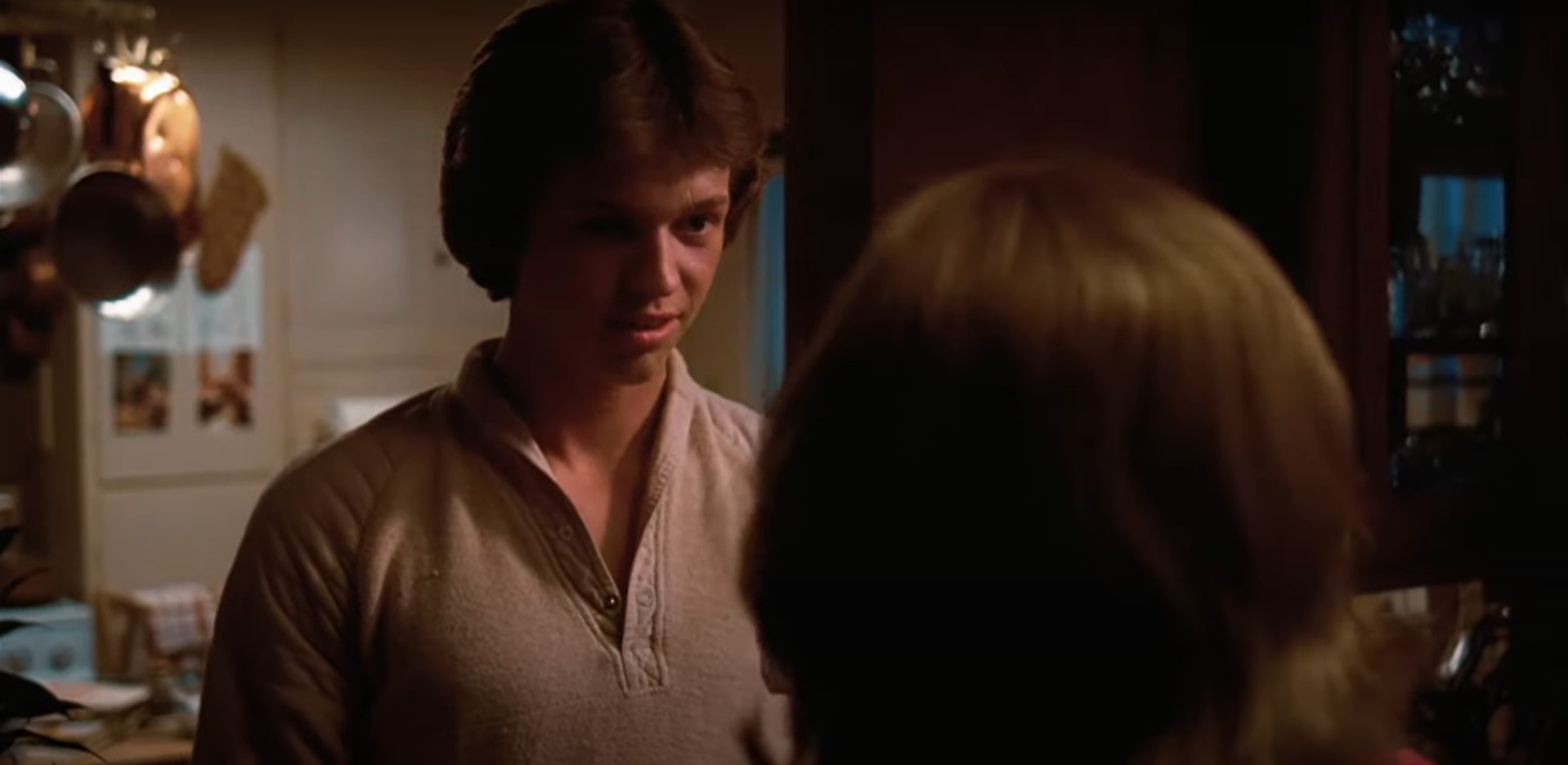
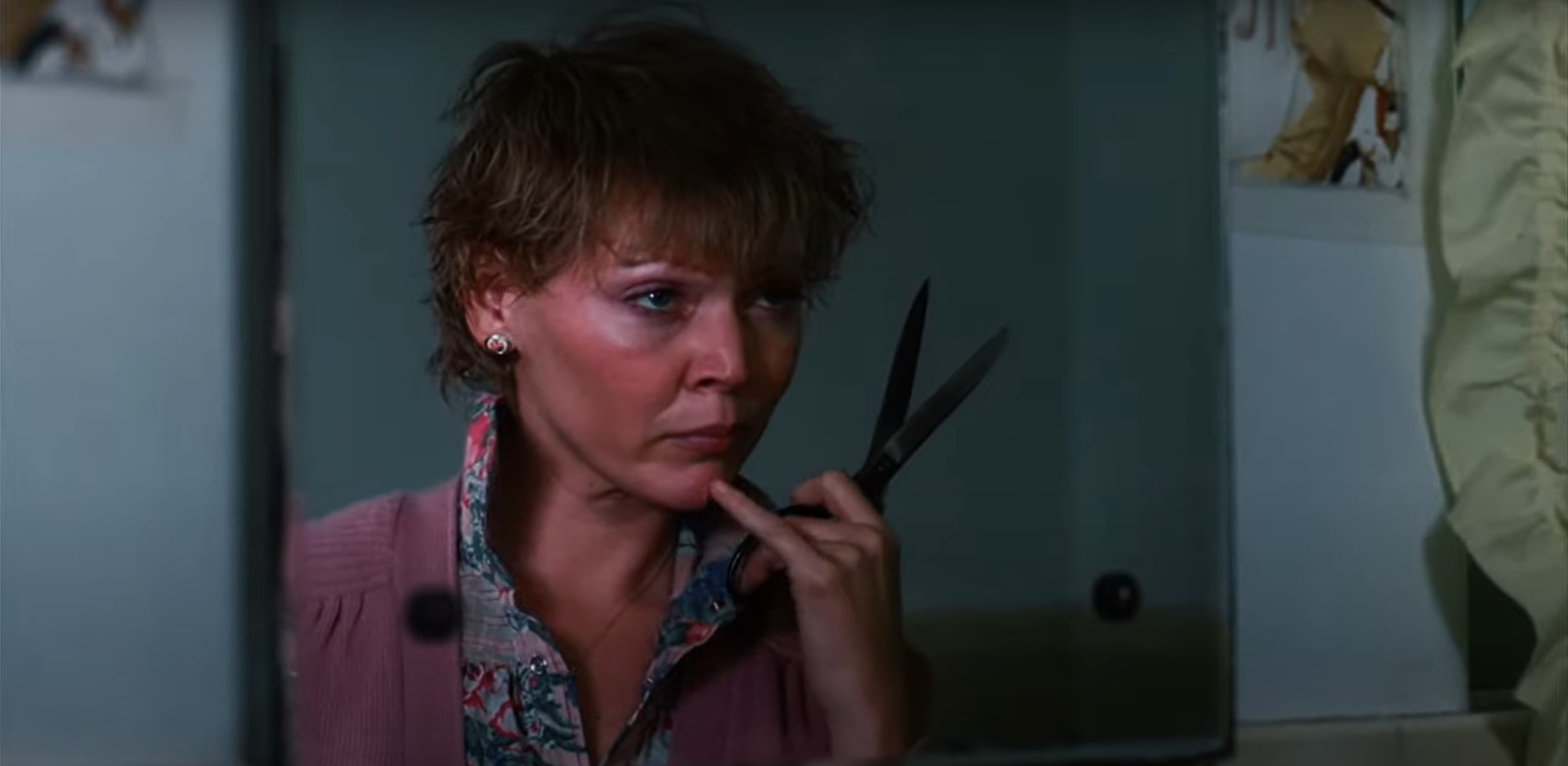
Hardly does any film ever made have the perfect cast.  “Butcher, Baker, Nightmare Maker” does not reside in that genus of imperfection.  Every performance is spot on and fitting for this early 80’s video nasty, each actor playing the singular part ingrained into their act that deciphering if their behavior is actually like that in real life can be tremendously difficult and a completely disorienting.  The story focuses on Jimmy McNichol’s 17-year-old high schooler Billy Lynch who, until recently, has been living moderately comfortable under his Aunt Cheryl’s roof.  That is until school sis nearly over and the prospect of college and girls sows the seeds of springing him from his childhood home.  Though the story is supposed to be centrically Billy Lynch, it’s the quirky and unusuality of Susan Tyrrell as the undefined obsessed Aunt Cheryl with a thick undertone of sexual tension toward her nephew that just makes McNichol and Tyrrell’s scenes enormously uncomfortable.  The late actress, who starred in Richard Elfman’s “Forbidden Zone” and would later have roles in “Flesh+Blood” and “From a Whisper to a Scream,” could charm audiences with perky provocativeness and scare into submission with the ability to pivot to a crazed madwoman.  And while we’re slightly turned on and also frightened by Tyrrell, we’re completely in disgust of “The Delta Force’s” Bo Svenson’s one-train-thought, homophobic detective strongarming high school teens, coaches, and even his sergeant (Britt Leach, “Weird Science”) into being cocksure of his own short-sighted homicide theory driven by hate for homosexuality.  Marcia Lewis (“The Ice Pirates”), Steve Eastin (“Killers of the Flower Moon”), Julia Duffy (“Camp X-Ray”), and before he was a big superstar, a young Bill Paxton (“Aliens,” “Predator 2”) bring up the supporting cast rear.

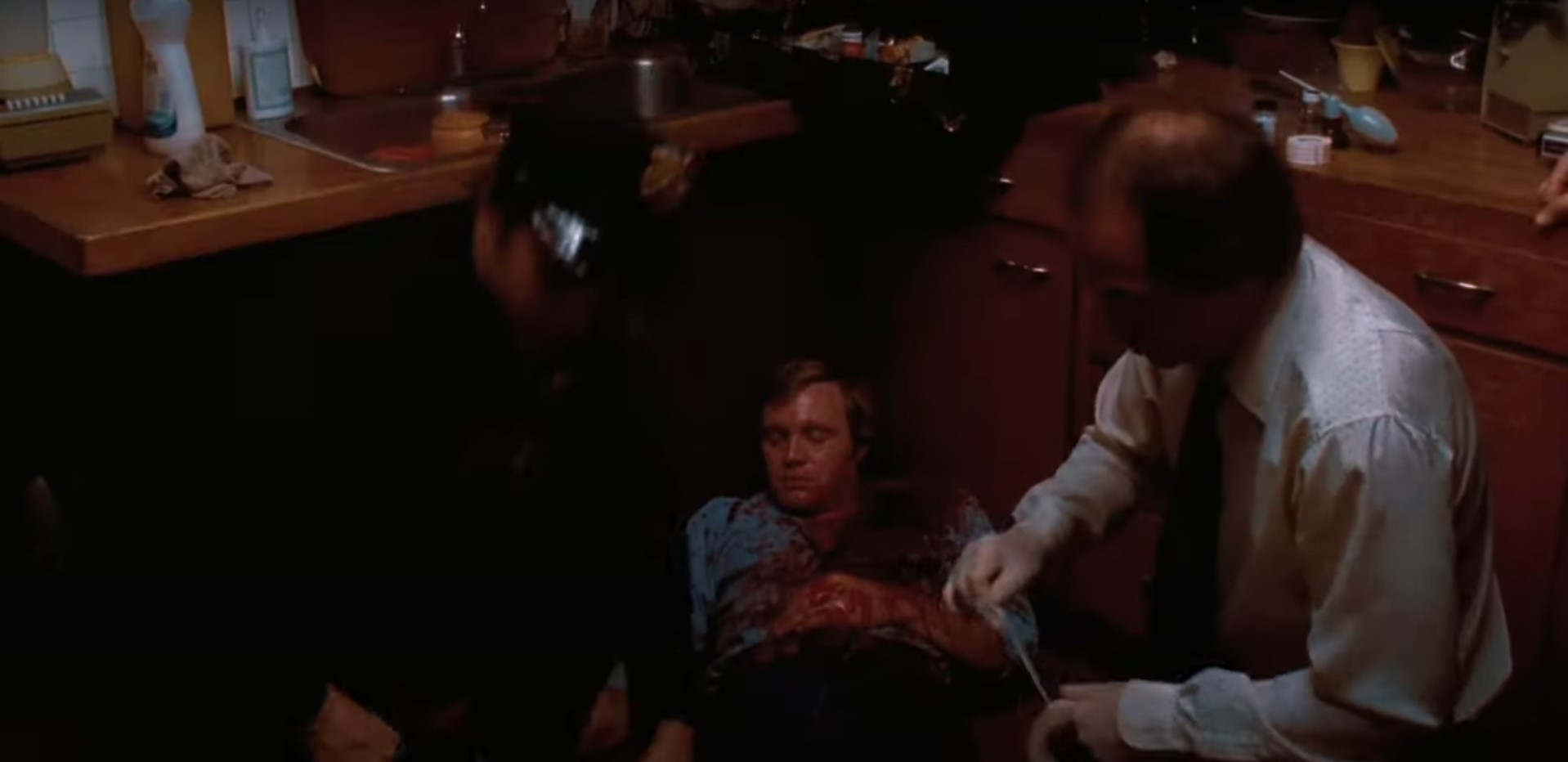
For an early 80s video nasty, “Butcher, Baker, Nightmare Maker” is without a doubt intense and provocative with timeless themes that nearly table the trenchant violence for corrosive mental issues, systematic homophobia, and pressures of maturity.  The two prong antagonistic sides bear down on Billy Lynch and the one principal who still technically a child and learning all the facets of adulthood has his own good being thwarted by conventional adult role models of family and law enforcement.  Director William Asher, through the script, inlays a pro-queer avenue where the gay basketball coach displays immensely more wit, sense, and compassion than that of Aunt Cheryl and Detective Carlson, awarding the coach with more likeability and favor to come out of this ugly business unscathed.  Asher’s very intent on defining the personalities and the actors deliver tenfold under a surly environment of not only the brusque characters but also Cheryl’s home that is a tomb for one of Aunt Cheryl’s past lovers and is becoming a tomb for Billy who will either bend to Aunt Cheryl’s sexually-toned obsessiveness or die a terrible a death.  “Butcher, Baker, Nightmare Maker” also predates the infamous “Final Destination 2” log truck scene with its own that’s equally hard hitting and macabre, the latter also being expressed thoroughly throughout the entire narrative with a morose overhang that’s simmering to explode. 

Arriving onto a 2-disc UHD and Blu-ray set, “Butcher, Bake, Nightmare” is Severin’s latest title to go ultra-high definition, first for the William Asher film, with an HVEC encoded, 2160p 4K resolution, BD100 and an AVC encoded, 1080p high definition, BD50 for the Blu-ray.  Presented in an anamorphic widescreen 1.85:1 aspect ratio, “Butcher, Baker, Nightmare Maker” favors a stark and naturally vibrant color scheme with low profile compression issues on a pristine transfer, scanned in 4K from the original camera negative.  I could not detect any compression artefacts with the dark spots retaining their inky cohesion and the details retain superior depth in a slightly more saturated contrast of a healthy-looking, grain-appropriate picture quality, even elevated more definitively with the extra pixels.  The English uncompressed PCM mom track has lossless appeal with some foremostly faint dialogue hissing and crackling that’s more of given with age rather than a flaw in the mix.  The mix also doesn’t establish depth all too well with one channel doing all the heavy lifting, but the layers are well-balanced in proportional volume that make the audio composition effective and scary.  English subtitles are available. Encoded special features include 6 hours of content. On the UHD in lies three audio commentaries: one with star Jimmy McNichol, one with cowriters Steve Breimer and Alan Jay Glueckman, moderated by Mondo Digital’s Nathaniel Thompson, and the last one with co-producer and unit production manager Eugene Mazzola. The theatrical trailer cabooses the UHD special features. All of the above are also on the Blu-ray special features with additional content that includes a new interview with Bo Svenson Extreme Prejudice, a new interview with director of photography Robbie Greenberg Point and Shoot, a new interview with editor Ted Nicolaou (“Don’t Let Her In”) Family Dynamics, archival cast and crew interviews with Susan Tyrrell, Jimmy McNichol, Steve Eastin, make-up artist Allan A. Apone and producer Steve Breimer, and a TV spot as the cherry on top of some sweet special features. However plentiful and well-curated the special features are, my favorite attribute of this Severin release is the exterior with a dual-sided cardboard slipcover that has new illustrated compositional art and tactile features. Underneath, a reversable cover art featuring the film’s one-sheet poster art with a more Severin Film’s retro constructed “Nightmare Maker” arrangement that’s more red-blood heated. Inside does not contain any insert goodies or booklets and a disc on either side of the interior featuring the slipcase and black UHD Amaray case cover art. Both formats are region free, have a runtime of 93 minutes, and are not rated.

Last Rites: Seriously messed up on so many levels, if being a teenage boy isn’t pressurized enough right before manhood, becoming an adult can be arrantly deadly in this superbly packaged shocker “Butcher, Baker, Nightmare Maker” now on 4K UHD for the first time ever on May 28th!

The 2-Disc UHD and Blu-ray Available for Pre-Order. Due to Release 5/28!

Sadomasochism and Decapitation Seen by a Child Turns Him into An EVIL Adult! “Nightmare” reviewed! (Severin / 4K UHD – Blu-ray)

Your “Nightmare” Should Be in 4K! Own it Here!

A schizophrenic patient continues to have reoccurring dreams of a young boy chopping the head of a woman in the midst of rough sexual fetishism.  The intense nightmares send him into violent stints, delusional states, and severe seizures.  As a test subject for an experimental behavior drug, the troubled man shows promise of recovery and enough so that he’s released from the mental hospital with continued outpatient therapy sessions.  Not long after his release does he skip his sessions to hightail it from New York City to Daytona Beach, Florida, killing people along the way after decapitating nightmare continues to plague and force him to murder.  In Daytona Beach, single mother of three becomes his obsession as he stalks the youngest boy, a mischievous troublemaker, and even breaks into their house when it’s not occupied , but as the bodies begin to pile up on the hands of his need to kill, the more brazen he becomes to entering while they’re home alone. 

Based loosely on the improprieties of government spy agencies using drugs to bend the minds of home and oversee terrorism to their wills, “Nightmare” sensationalizes the concept for the public sector involving a mental patient, experimental drugs, and exasperating an already instable person’s constitution into a hyperdrive of bloodletting carnage.  The U.S. production is written-and-directed by Italian filmmaker Romano Scavolini who came to America to shop around his scripts having failed to secure financial support in Europe, including, you guessed it, “Nightmare.”  Shot in New York and mostly around the Cocoa Beach Florida, the crime thriller filmmaker flexes his muscle with his first attempt at horror and the outcome is nothing short of unadulterated madness.  Once considered to be titled “Dark Games,” and goes loosely by “Blood Splash” and “Nightmare in the Damaged Brain,” the 1981 film is a feature of Goldmine Productions with John Watkins and Bill Milling (“Silent Madness”) producing.

The man behind the nightmare is George Tatum and the man behind George Tatum is Baird Stafford in one of his only two roles as an actor.  “Nightmare” wouldn’t be as skin-crawlingly shocking if it wasn’t for Stafford’s distressing performance of a man whose psychology is being peeled away and you can see Tatum physically fighting the urge, fighting to stay sane, but losing the battle as the grisly terror replays over and over inside his mind.  Stafford’s asunder of Tatum’s equilibrium has unequivocal transference to the audience.  Parallel Stafford is a child, a young child by the name of C.J. Cooke who essentially played his own version of himself in C.J. Temper, a mischievous prankster that ran babysitters up a wall mad and frightened and frustrated the living daylights out of his mother.  C.J. is part of the family Tatum is hellbent on driving down from New York to Florida to see for a reason that isn’t made clear yet until the shocking reveal.  C.J.’s single parent, a mother desperate for love and affection, is played by Sharon Smith who has become romantically involved with nice guy, and yacht owner, Bob Rosen, with Mik Cribben in the role.  Cribben was actually part of the cast but the original actor for Bob Rosen dropped out and Cribben quickly filled into the role that suited him well enough as a suitable suitor for C.J.’s mother.  “Nightmare” rounds out the cast with Danny Ronan, Scott Praetorius, Christina Keefe, William Kirksey, Tammy Patterson, Kim Patterson, Kathleen Ferguson, Candese Marchese, Tommy Bouvier, and producers John L. Watkins and Bill Milling as drug trial executive and psychologist tracking down Tatum to clean up their mistake. 

“Nightmare” combines excellent U.S. thespianism with an Italian way of suspense and violence glued together by the success of the late Leslie Larraine and team’s special effects albeit the controversial assertion on the film’s posters that Tom Savini (“Dawn of the Dead” ’78, “Friday the 13th, ’80) had been the effects supervisor on the film albeit Savini’s adamant claims of the opposite and denying the credit being false and liable for using his name to draw in audiences.  Savini continues to state his contribution “Nightmare” was limited to best to the action of a decapitating swing of the axe.  Ultimately, the whole ordeal mars Larraine’s due recognition for some of the more up-close and personal gory effects this side of the early 80s.  Scavolini also deserves well-received credit for his narrative vision of Tatum’s psychosexual struggles that drive him to kill.  Robert Megginson’s editing and the re-recording mixing team tackle a form of character plummeting that’s unlike any other from the intercut concatenation of events between Tatum’s horrific, blood-soaked nightmares and his antagonizing, sweat-inducing impulses that propel him without a choice.  The simultaneous parallels between Tatum and young C.J., as Scavolini aims to connect the two against-the-grain personalities as a singular link with back-and-forth subplots, leach the shock out of Sharon Smith’s acme line as mother Susan Temper that uncovers the truth when the chaotic smoke clears.  Why Tatum would drive so far from New York City to Daytona Beach, Florida with reason to stop and make roost on this one particular family fails to form mystery around what’s often crafted to be an arbitrary target with some minute hints that may provide clues to the audience is because even without those inklings, the shooting script defines the rationale right from the beginning thus bringing the viewers out from a shrouded suspenser and into being buckled in just along for the ride. 

Severin Films’ 4K scan of the 35mm internegative compositions the print with various foreign element sources for a comprehensive version of Romano Scavolini’s “Nightmare” on a 4K UHD and Blu-ray 2-dsic set.  The UHD is on a HEVC encoded, ultra high-definition 2160p with a 4K resolution, BD66 and the Blu-ray is housed on an AVC encoded, high-definition 1080p, BD50.  What’s released is a very enriched saturation of the technicolor process that defines and differentiates the innate hues.   Details are more than consistent throughout as we’re able to pinpoint the beads of sweat down Tatum’s face or feel the palpable slick sinew of a decapitated head amongst the examples.  Blood is a deep, glossy red and contrasts strikingly in the more sopping moments despite Savini’s claim that it needed more green dye to better pop for the camera.  A consistent layer of agreeable grain runs throughout from the 35mm film stock, as it should, without any inimical dust, dirt, scratches, flares, or of the like to obstruct viewing or cause lapse in the narrative, as it shouldn’t.  Between the resolution diverse formats, there’s a slightly more grindhouse look to the Blu-ray whereas the HDR10 crisps the image for better vibrancy.  Both formats retain inky blacks without shimmering or banding.  The English language audio tracks are available in two lossless options:  DTS-HD 5.1 and a DTS-HD Stereo 2.0.  The surround mix’s dialogue has resounding infusion, spread through the multi-channels to encompass a multi-directional approach to centralize.  The design is effective as it’s prominent to not understate the vocals but leaves little room for spatial distant to which no matter where characters stand, they are almost audible on the same audio plane.  Jack Eric Williams warping harmonica and twangy guitar, intrinsically integrated with piano notes, a variety of percussion, interjecting funk bass chords, and hints of string instruments, that ebb and swell with great intensity and favorable discordance is a real celebration of Williams’ score on Severin’s latest restorative edition of “Nightmare.”  English subtitles are optionally available.  The Ultra HD release comes the film’s trailers and a pair of audio commentaries as the only accompanying special features; commentary one has features star Baird Stafford and special effects assistant Cleve Hall with Lee Christian and David Decoteau and commentary two features producer William Paul.  The Blu-ray also has the commentaries and trailers plus an extended lot of interviews, such as a feature length (71-minute) Kill Thy Father and Thy Mother interview with director Romano Scavolini (Italian with English subtitles), Dreaming Up A Nightmare interview with cast and crew, a brief interview with Tom Savini discussing his role, or rather his not role, in The Nightmare of Nightmare to which Savini looks a little tired of answer the same question about his inaccurate involvement, an interview with makeup artist Robin Stevens The Stuff that Nightmares Are Made of.  Also included is an open matte peepshow as well as untouched deleted scenes, extending beyond the already newly achieved 99-minute runtime for the film.  “Nightmare” from Severin comes in a standard 4K Amaray case with original poster art used for the front cover.  The discs are separated and tab locked on either side of inner casing and this particular release, the 2-disc set, does not come with any insert or content.  The front cover is reversible with the European title “Nightmares in a Damaged Brain” and a different image composition of the European poster art. The disc has region free playback and is not rated.

Last Rites: “Nightmare” on a new, extended restoration in 4K and Blu-ray is a dream of a release. A nerve-wracking performance in Baird Stafford’s schizo vilifies the very classification of the mentally ill in what is sure to go down in history as one of the most disturbing, and disturbed, characters of the video nasty era.

Your “Nightmare” Should Be in 4K! Own it Here!

Make Do With Your God-Given EVIL! “Bad Biology” reviewed! (Severin Films / 4K UHD – Blu-ray)

“Bad Biology” on 4KUHD and Blu-ray Combo Set. Purchase Here!

Jennifer and Batz don’t know each other and live two totally different lives but they have one thing in common, they are enslaved by their abnormal sexual organs.  Jennifer, a young provocative photographer, embraces her vagina’s biological differences and immensely magnified hormones whereas Batz suffers monstrously from his radical rehabilitation of a once limp manhood.  The contrasts continue as Jennifer must scratch the inflamed itch to be penetrated, luring men with her insatiable lust that ultimately end in their demise with an irrepressible emotional sway, whereas the botted-up Batz’s love life is virtually bankrupt due in fear of his conscious and uncontrollable enlarged penis.  When Jennifer happens upon Batz in her peripheral during a photoshoot, she finds him intriguing enough to break into his home and watch him with a prostitute.  The experience left the prostitute with a continuous orgasm long after penetration was over and left Jennifer with an impression that her vagina has finally found it’s match in life. 

Seventeen years.  That’s how long the inactivity span was between Frank Henenlotter’s last directed film and his next.  Not since 1991 did Henenlotter, the madcap mastermind behind some of the more than unusual creature-esque concepts surrounding sexuality, addiction, and childbirth in a way that sheds light on society’s blatant distaste for the odd and grotesque,  profess his creative talents with his trademark dark humor and unabashed practical effects that campy the content toward much to our enjoyment again until returning to the director’s chair with the 2008 shlock-sleazy horror-comedy “Bad Biology,” cowritten alongside American rapper R.A. “The Rugged Man” Thorburn as the musicians first taste of the film industry.  Shot in and around the New York metropolitan area, “Bad Biology” is also produced by Thorburn alongside associate producers Dario Correale, Nicholas Deeg, Antonia Napoli, Vinnie Paz, and star Anthony Sneed under the LLC created for Bad Biology. 

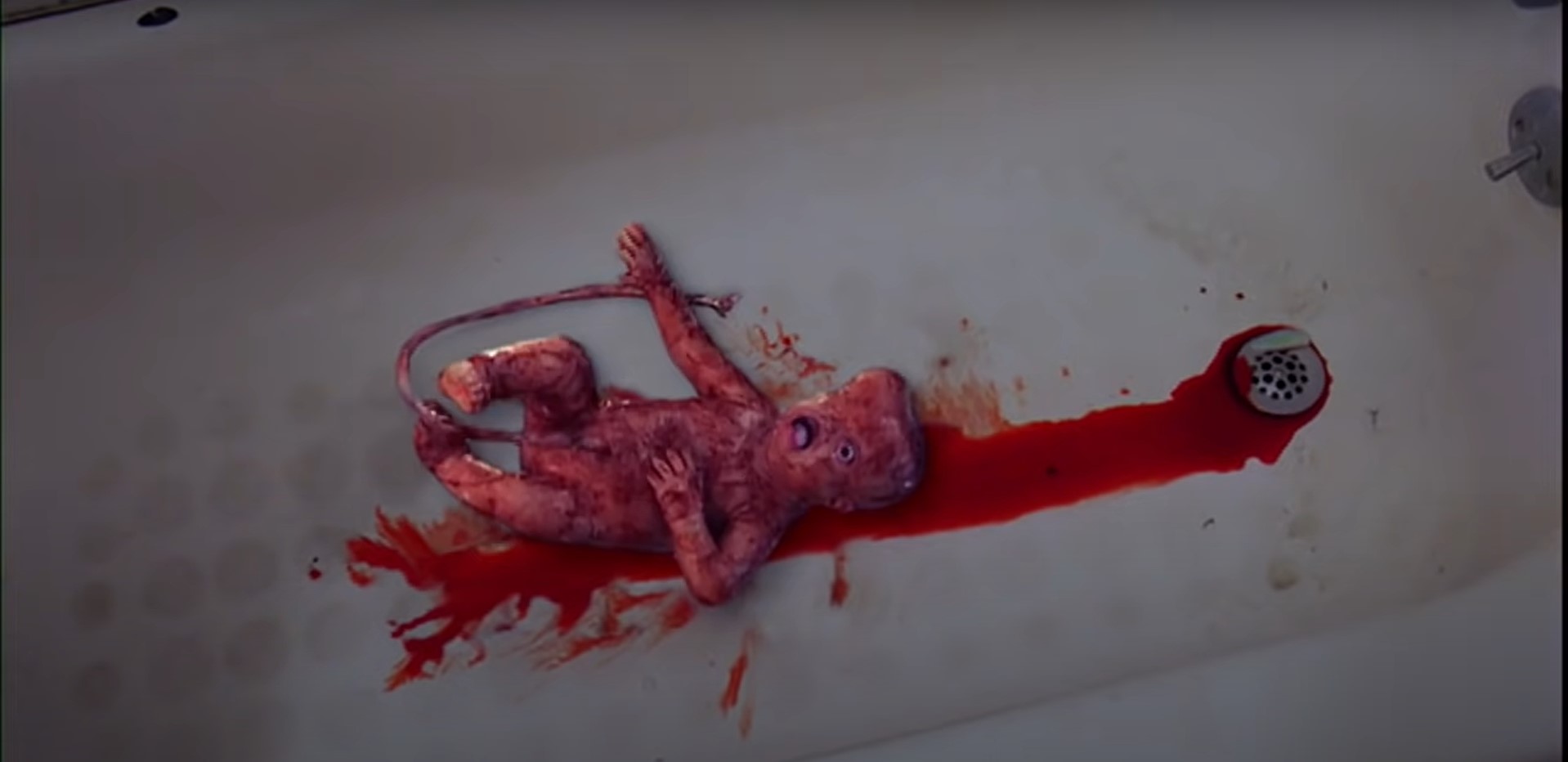
Not many would take on a role with heightened sexual absurdity, especially one with a puppeteered penis on the hunt for feminine pelvic regions or where a numerous clitorises ramp up sexual drive into murderous overdrive.  Yet, first time actors Charlee Danielson and Anthony Sneed seem game for the roles as lonely sexual misfits Jennifer and Batz.  To debut right out the gate as a character proclaiming to have 7 clits in the very first scene can’t be easy and I’m sure a deluge of thoughts questioning just what in the ridiculous Hell did I get myself into accelerated through her thoughts but Charlee Danielson doesn’t pull punches or need a second to rethink life choices in the feed the need role of lust, sex, kill, labor, birth and repeat.  Same can be said about Anthony Sneed’s slinking and desperate peculiarities for Batz and Sneed’s willingness to browbeat his own anaconda trouser snake to assert back in being control.  Danielson and Sneeds have tough jobs but pull off Henenlotter and Thorburn’s grotesquely envisioned gallows humor and body horror.  While the confidence is there, the experience is not resulting in a stiff, monotone performances in nearly every scene and that can dampen the story’s eccentrical principals who are just delivering the lines instead of taking the lines to heart.  Being that “The Rugged Man” is a rapper, the cast is comprised of other likeminded musical artists, mostly rappers as well, with Remedy, J-Zone, Vinnie Paz, and Reef the Lost Cause along with cameos from other artists and music producers.  And being a film mostly about sex, “Bad Biology” fills out the cast with models and actors very comfortable showing their skin in Vivian Sanchez, Carolyn Thompson, Brittany Moyer, Vicky Wiese, Ginger Starr, Vladislav S., and well-verse indie horror scream queen Tina Krause (“Crimson Nights”, “The Fappening”).

Outrageous with bad taste, “Bad Biology” prides itself with point-blank profaneness and kitschy special effects, a resounding typical Frank Henenlotter production as the director hasn’t seemingly lost a step in 17 years between films.  Yet, the story’s infiltrated by the need to incorporate strong personality cameos and is uneven in a way that hyper focuses on Jennifer’s quest, with inner monologuing, flashbacks, and direct camera speaking surrounding her spiritual search of a satiable schlong for her specialized snatch, becomes subverted by Batz’s less significantly told story quickly summed up in introspection while being pleasured by a homemade, industrial-sized masturbator.  Doesn’t quite feel Batz receives the same valued introduction in contrast to his female counterpart, but he quickly forges a more interesting path having a roid-raging, self-aware, monster cock that’s addicted to large animal anabolic steroids and is isolated from the rest of the world.  As polar opposite in the way Jennifer and Batz view and handle their sexual anomalies, the pair make the perfect odd couple, like “Ghostbusters’ Key Master and Gatekeeper, but at the cost of their own stories and their inevitable hookup that becomes flattened by a steamrolling climatic slasher-esque moment that doesn’t really involve them at all, segregating the leads momentarily from their own catalytic arc that deflates the finale into a flaccidity.  Most of the comedy also falls flat but the dialogue is well bulbous in the skilled rhapsody and written dialogue that shocks and awes with every depraved bluster.

Scanned in 4K from the camera negative, “Bad Biology” receives a UHD plus Blu-ray 2-disc set from Severin Films. The HEVC encoded, ultra high-definition 2160p, BD100 and the AVC encoded, high-definition 1080p, BD50 are both presented in a widescreen 1.78:1 aspect ratio. The 4K scan fills in the gaps of next stage video evolution though the gaps filled are minuscule at best. What makes the real difference is Henenlotter shooting in Super 35mm that provides a gritty grain overlay and similar, if not identical, saturation as film stock. Finer details more in the setting aspects, around darker areas, that are more illuminated by the pixel increase. Skin tones and grading are naturally set without much of a stylistic presence other than the gels used for the giant penis vision and the peering from inside-out Jennifer’s Uterine cavity. I do think facial details are not as firm, possibly smoothed too much during the restoration. The English language audio options include a lossless DTS-HD 5.1 Master Audio and a 2.0 stereo. Presenting flawless dialogue within the heavy soapboxing monologues and philosophical diatribes, “Bad Biology” promenades dialogue as an important part to the film’s machination. This doesn’t mean everything is flounders with a range of outrageous sound effects, including the gushings of childbirth, the whooshing whips of a conscious monster male member, and the squishy ins-and-outs of copulation. Spatial depths have finite proportions that relinquishes true depth to keep audiences near the action audibly. Closed caption English subtitles are optionally available. The 4K disc might have a capacity of 100 gigabytes but the format’s space on this release is quickly depleted for the feature and two audio commentary tracks – one with director Frank Henenlotter, director of photography Nick Deeg, and actor Anthony Sneed while the second commentary also includes Henenlotter and cowriter/producer R.A. The Rugged Man Thorburn. Both commentaries are also on the Blu-ray, housing over 5+ hours of special features which includes interviews with a Spook House entitled segment featuring interviews with Henenlotter, Thorburn, Deeg, production coordinator Michael Shershenovich, production manager Chaz Kangas, and David Henenlotter, an unorthodox interview between a basketball and actress Charlee Danielson In the Basement with Charlee Danielson, a lengthy back and forth question and answer between actor Anothy Sneed and cinematographer Nicholas Deeg, an interview with special effects artist Gabe Bartalos (“Frankenhooker,” “Basket Case 3”) Swollen Agenda, a behind the scenes of the film, photographer Clay Patrick McBride snapping cast and crew O-faces around Henenlotter’s apartment in F*ck Face, short film “Suck” directed by Anthony Sneed, R.A. The Rugged Man Thorburn music video for “Legendary Loser,” an imagine gallery, behind-the-scenes shots, and video covers and death stills. The standard 4K UHD release comes in the traditional black Amary case with an O-face compilation compositional cover art and has a lock-tabbed disc on each side. The release does not come with a reversible covert art or insert. Both idiosyncratic disc arts have whimsically crude caricatures of the main characters. The region free release has a runtime of 84 minutes and unrated.

Last Rites: “Bad Biology” marks a return to ungovernable psychotronic cinema for filmmaker Frank Henenlotter with new blood, a new story, and the same old objectionable orifices and organs of monstrous body horror.

“Bad Biology” on 4KUHD and Blu-ray Combo Set. Purchase Here!

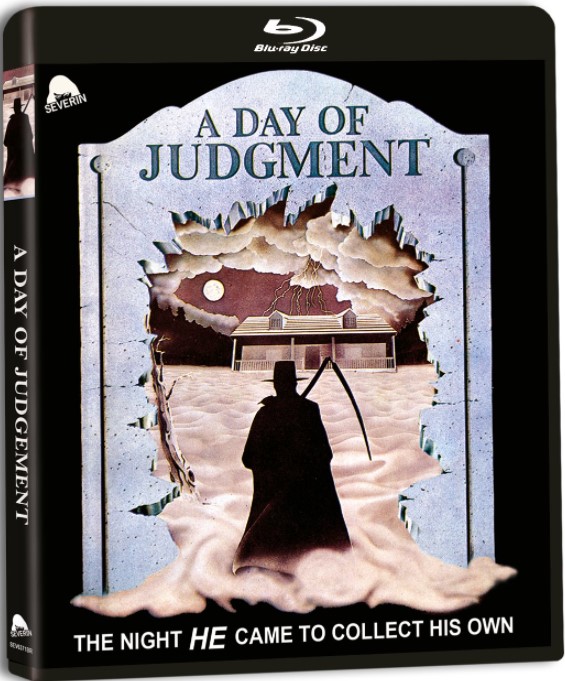
Do EVIL, Get Dead! “A Day of Judgment” reviewed! (Severin Films / Blu-ray)


1930s rural America – the dejected town priest resigns his congregational duties after failing the local townsfolk who have all but returned to the Church and reclaim their faith in the savior lord Jesus Christ and God.  On his exit of the town’s border, the priest crosses paths with a shadowy figure riding an austere wagon and holding a scythe.  A town full of heartless schemers, adulterers, swindlers, and murders have their unforgiving stories told that leave their fellow townsfolk, their friends, and even their families left suffering in their wake.  The shadowy figure tracks each sinning stray down to face retributing judgment.  The righteous and terrible punishments send the unsavable souls to an eternal existence in Hell.

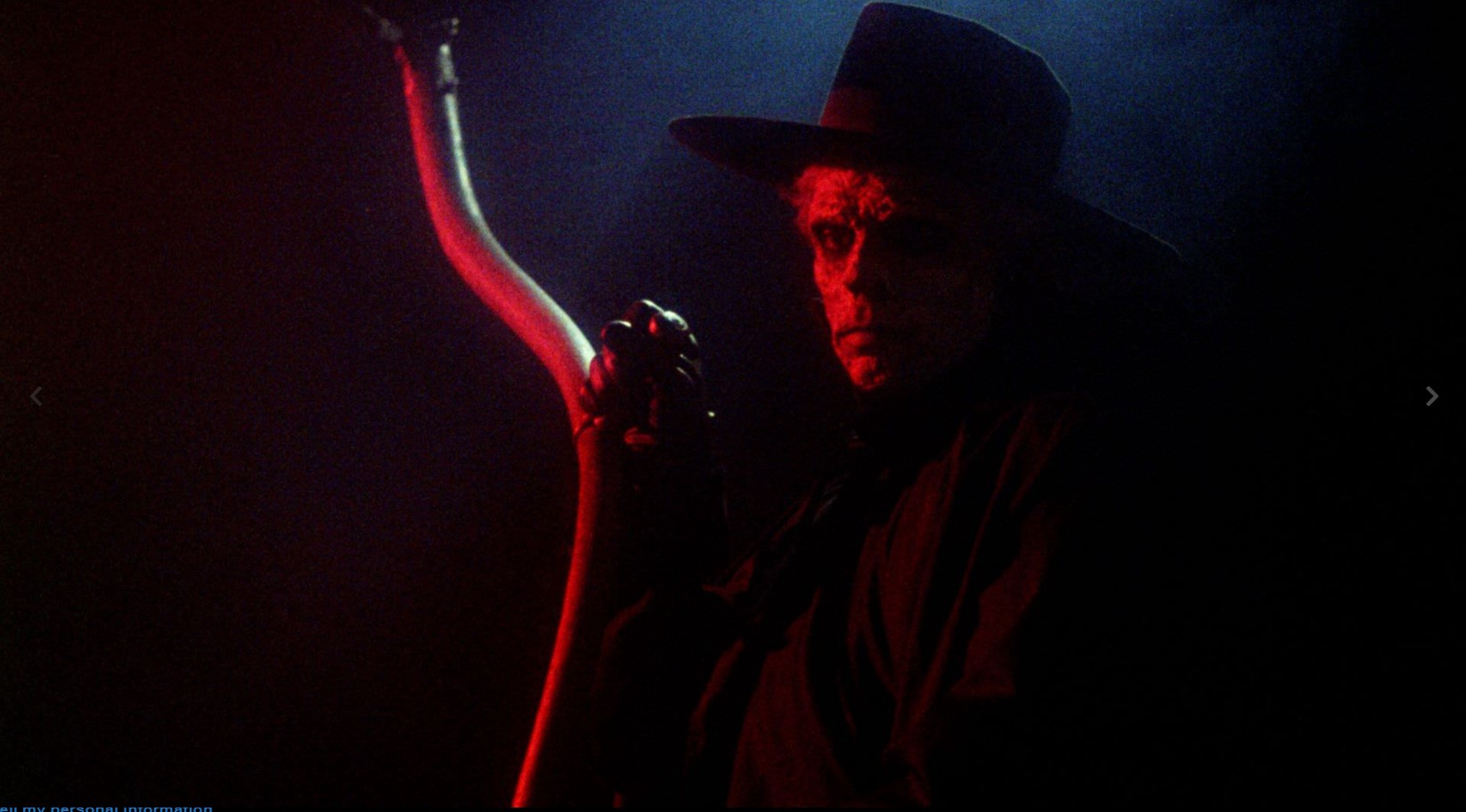
The Grim Reaper cometh. Screen cap courtesy of Severin.

What was once considered to be a Christian-centric educational project had turned into a Christian-centric damnation of horrors in the quasi-anthology “The Day of Judgment,” where the sinners of sin town deviate from the Godfearing path and into a vat of immorality and ungodly aberration.  “The Day of Judgment,” occasionally under the U.S. bootleg title of “Stormbringer,” is the one and only directorial from C.D.H Reynolds (aka Charles Reynolds), an academic educator turned briefly to film working under the legendary, North Carolina based Earl Owensby Studios that produced the 1981 released film.  The script is penned by Owensby Studios’ regular writer, Thom McIntyre, who inked the film between a pair of genre credits, including the incarcerated grindhouse actioner “Seabo,” also known as “Buckstone County Prison” a few years earlier and a snippy flick of a pack killer Rottweilers terrorizing a mountain resort in “Dogs of Hell” a couple of years later.   Owensby, obviously in regard to his own studio work, took part as the fire and brimstone tale’s producer along with associate producer and longtime “Power Ranger” director Worth Keeter curating the final touches as the creative architect of the script’s grimmest portions or more line as the assistant director of adding the bleaker, bloodier fates of the sinners.

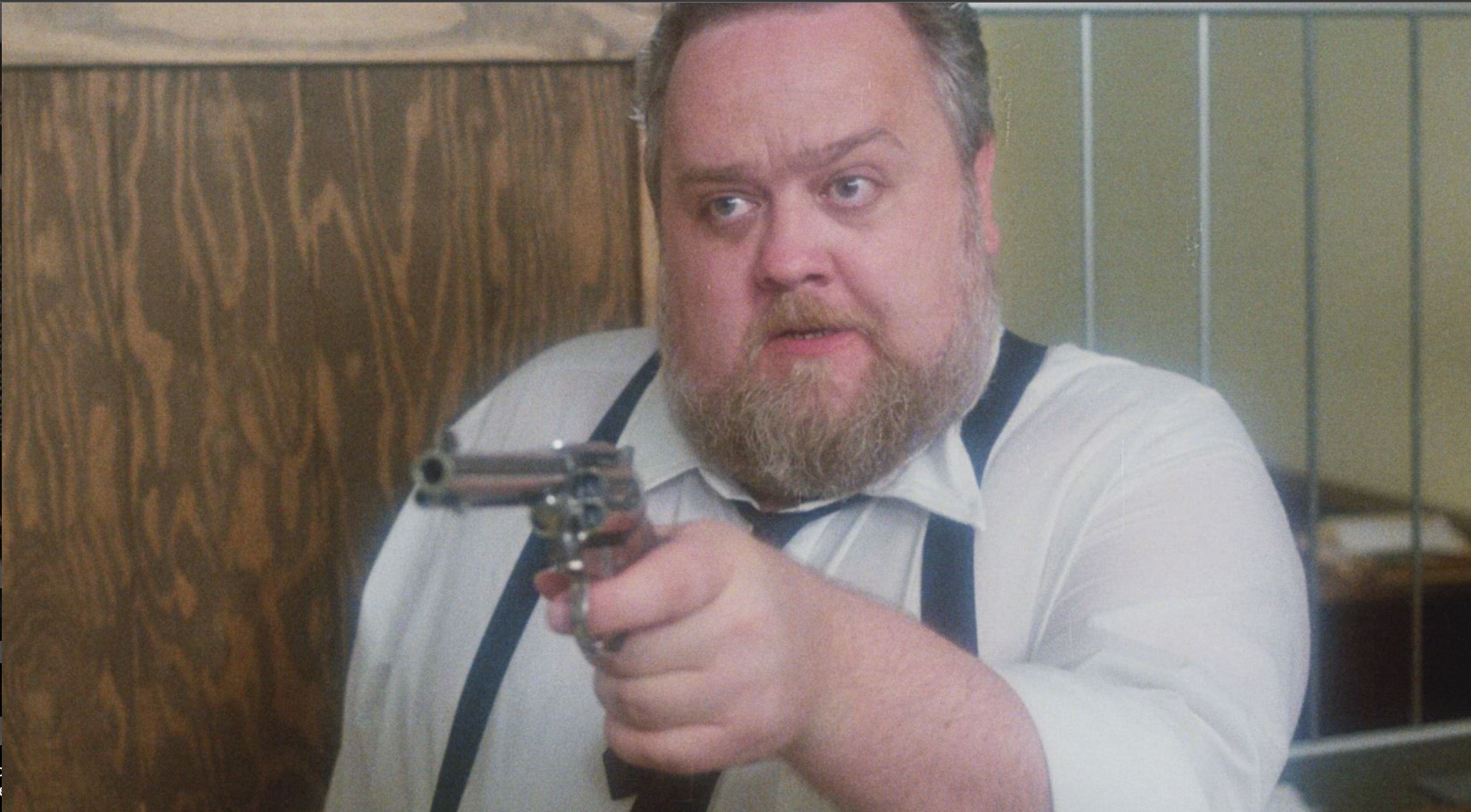
William T. Hicks. Screen cap courtesy of Severin.

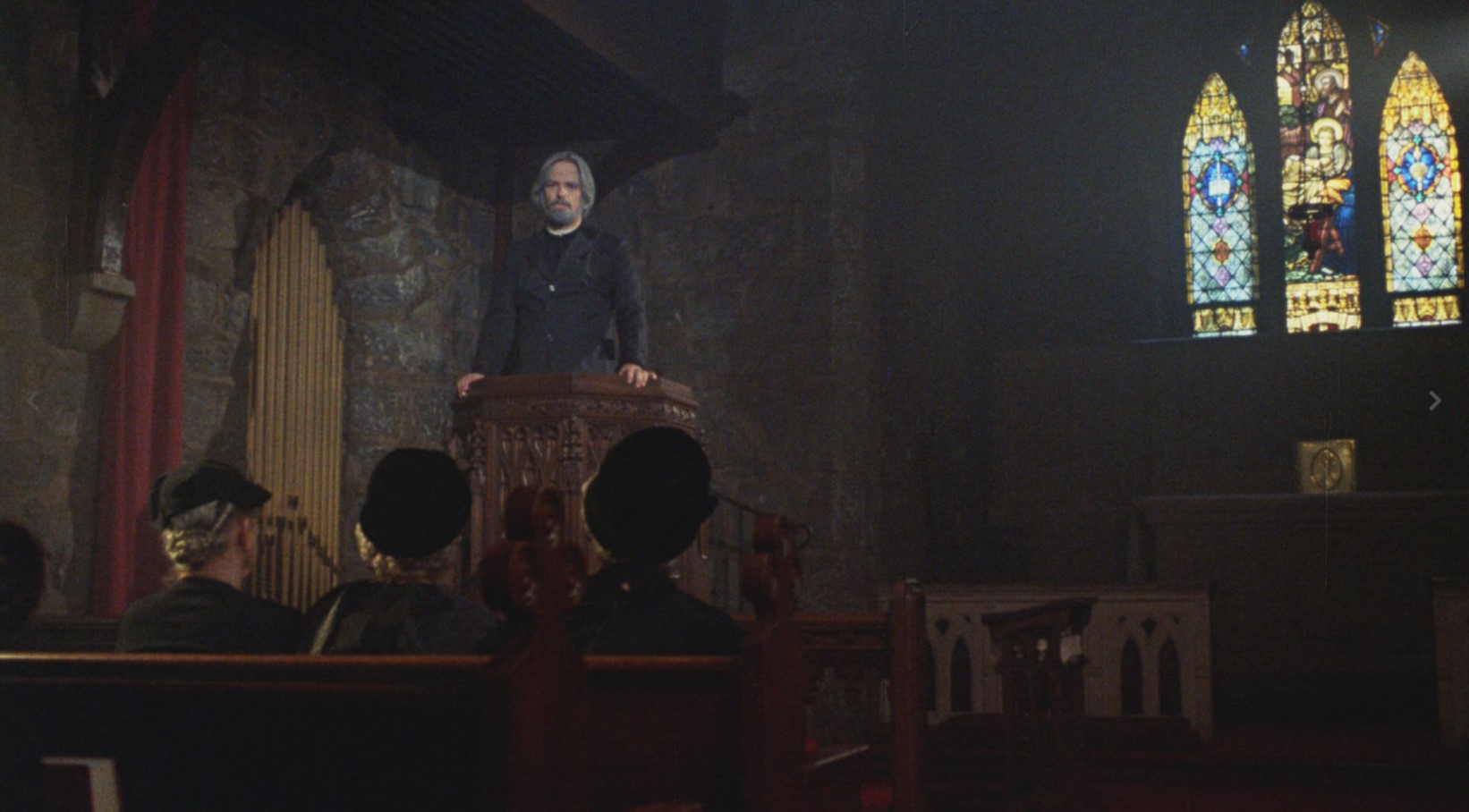
“A Day of Judgment” has a non-linear anthology-like structure that swings back and forth between different character scenarios of wickedness.  You may meet one character at the very beginning of the story and don’t meet them again, until you’re already through having sent a good chunk, if not all, of the sinners to Hell in a handbasket.  But McIntyre hones in well on setting up nicely each character’s backstory, those who the priest crosses paths with as he exits the town and delivering their ultimate demise (with an assistant from Worth Keeter’s gloomier approach).  The director himself Charles Reynolds plays the crestfallen Reverend Cage in a classic expository preacher riding out of town and crossing paths with soon-to-be-troublesome townies in William T. Hicks (“Death Screams”) as a greedy and heartless bank owner, Careyanne Sutton and Larry Sprinkle (“Trick or Treat”) as man slaughtering, pretense adulterers. Toby Wallace as the hometown disparaging mechanic scheming to steal the family business out from his parents noses to sell, Helene Tryon (“Dogs of Hell”) as the frettingly kook and paranoid old lady poisoning the local children’s pet goat, and Brownlee Davis (“Wolfman” ’79) as the delusional and disgruntled former employee of his best friend looking for a finality in revenge.  “A Day of Judgment” had this weirdly transitional acting style for an 80’s released horror that resembled the Golden Age of cinema through the 1950s and 1960s where everything is loud and pronounced without much reflection, pause, or change in tone.  Though the style sticks out like a sore thumb, perhaps Reynolds made a shallow attempt to recapture the 1930s as which the narrative period is set.  The acting isn’t terrible but is more staged and reactionary to the course of events.  The cast rounds out with Carlton Bortell, Richard Dedmon, Inga Dennis, Denise Myers, Jerry Rushing, Harris Bloodworth and Fred Roland.

C.D.H. Reynolds as Reverend Cage. Screen cap courtesy of Severin.

Earl Owensby produced films were not known to be big box office hits as they coursed the grindhouse, drive-in theater circuits with relatively unknown talent nearly strict to the back pockets of the Owensby Studios and still meeting profitable margins on low budgets.  “The Day of Judgment,” which doesn’t feel like a grindhouse film, carried meager success by way of production design and wardrobes alone.  Give credit where credit is due with an Owensby film that can dole out a variety of era appropriate automotive roadsters and specific period garments for the illusion.  Some sets are dressed scarcer than others with lots of blank spaces and sparse knickknacks to build upon the 1930’s décor but the overall impression is quite effective, transporting one out of the 80’s and into the depression era the narrative frequently suggests.  I also favored the non-linear anthology of individual hell bound circumstances as that structure rendered “A Day of Judgment” as a whole rather than a pie sliced into six-even segments with a common core connection that, at times with other films, individual stories can feel untethered to the main theme.  In today’s times, “A Day of Judgment” is severely antiquated but the more “bleaker” character demises often landed with underripe special effects and a fair amount of cheesiness that’s a Loony-Toons illustrated representation of Hell that looks more like Wile E. Coyote’s Southwest American desert home.  I was anxiously awaiting the beep-beep of Roadrunner, speeding across the screen, and the drop an ACME anvil on top of the sinners’ melons. 

Helene Tryon being dragged to Hell. Screen cap courtesy of Severin.

The overall message in “A Day of Judgment” is clear that sin and crime doesn’t pay, and the wrath of God’s retribution will come down hard in the form of a scythe.  Severin Films presents up a new Blu-ray, scanned in 2K of the original interpositive print now in full 1080p HD resolution of the widescreen 1.85:1 aspect ratio. Preserved pristine and having virtually no wear from age, “A Day of Judgment” is an amazing picture to behold for its first Blu-ray release with heightened resolution that extricates more details than possible than any other release can provide, especially when those other releases are the official VHS and DVD bootlegs. Here the color grading excellently pops with deeper hues of prime colors to provide more life into the death that’s onscreen. One thing to note about the release is the immense phosphorescence glow around whites and other lighter colors that can be eye-catchingly distracting when a piece of white paper becomes the main focus due to a conspicuous radiance. Other than that, the picture is clean, the grain is healthy, and no obvious signs of alterations to enhance the visual spectrum. The English language mono audio track, though emitting crystal clarity without any audio blemishes, is not terribly clear on whether Severin went with Dolby Digital or the DTS-HD. Other listings on the web offer up “A Day of Judgment” with a dual channel DTS-HD Master Audio while the back cover displays the Dolby Digital logo with a detached written description as a mono track, which coincides with Severin’s official site. With the film’s outmoded ingrained technology, Dolby Digital would be, to me, the obvious format that produces higher quality sound using a lower bitrate. Special features include a pair of new Severin exclusive interviews with British author Stephen Thrower of “Nightmare USA” in The Atheist’s Sins and snippet interviews from Worth Keeter and Thom McIntyre in Tales of Judgment. Final spec notes on the Blu-ray are a region free coding and has a runtime of 97 minutes. Stuck in stasis of prim and conservatism, “A Day of Judgment” has become this oddball labeled slasher of the 80s era that aimed to explore new and unusual stories and techniques on every avenue, but still leaves this impression of Bible-thumping Christian values that serve as a stern warning for all ye sinners!

“A Day of Judgment” on Blu-ray and DVD from Severin Films.  Click Here to Purchase at Amazon.com