
From the EVIL Clowns to the EVIL Scarecrow. “Die’ced: Reloaded” reviewed! (Dread / Blu-ray)

Go Beyond the Short Film with “Die’ced: Reloaded” on Blu-ray!

As child, Benjamin ripped his parents to shreds with his bare hands after long stints of abuse, including cutting out his tongue to forever silence him.  Now as a mute man, Benjamin remains incarcerated in a psychiatric prison, quiet behind a homemade mask, and under the care of a psychiatric doctor with good intentions.  After a violent, aided escape, leaving the doctor and a nurse mutilated and dismembered, Benjamin finds himself roaming the streets on Halloween night, coming across and killing a young man for his elaborately exaggerated scarecrow costume.  The imposing killer now has his sights set on a teenage girl, Cassandra, stalking her from inside the crowded venue of a friend’s costume party to invading her family home where her father is home alone.  Benjamin becomes a relentless force obsessed with Cassandra and he will stop at nothing and rack up the bodies in unrestricted violence just to have her.

Back in 2023, the co-director of “The Dark Side,” Jeremy Rudd, created a 50-minute slasher short “Die’ced” that took its villainous maniac, a scarecrow mute with a penchant for maiming and slaughtering, and made him into a viral internet hit, snagging the attention of the creative producing team over at Dread.  Along with some meager crowdfunded capital, roughly $3,500 out of a $75,000 goal, Rudd was able to extend his written-and-directed short film into a feature length release in 2025 and rebranded the film with the slightly tweaked title of “Die’ced:  Reloaded.”  Rudd, who has a 20-year career acting in front of the camera, brings his most eyed feature to his home of Seattle, Washington, set on Halloween as the backdrop for the slasher’s body pool, and utilizes Seattle surrounding specific businesses for some of his scenes, such as The Lott Coffee shop and the A&W Bottling Company in Snohomish county as key sets.  Taylor Jones produces with Louis Gallegos and Jeremy’s identical twin brother, Nathan, serving as executive producers.

Acting as “Die’ced’s” frontman without a single line of dialogue, Jason Brooks stalks without being stealth as the deranged psych-prison escape Benjamin.  As a character actor of many faces, having donned the mask of the iconic Jason Voorhees character in a handful of short tributes, strapped on the gloves and fedora for a quick Fred Krueger, and has played the monster countless times over and over again, Brooks follows the footsteps of the likes of Kane Hodder, a part time stuntman keen on being the on-screen villain and making the role is own.  As Benjamin, there’s no qualms about the character’s imposing height and careful movements, some being gently infantile while most have an aggressive cruelty like a wild dog shaking a mouse in its jaws to literal pieces in a fit of blood spatter.   In the other corner, the final girl, Cassandra is just a seemingly normal teenage girl trying to live her adolescent life by going to parties and being a sister to brother Tommy.  However, there’s no way you could convince me Eden Campbell and Collin Fischer are playing teenagers.  Typically, a slasher high school cast would be near the edge or just over the threshold of adulthood, but Cassandra and Tommy are way too old to be high school students with an age range of mid-to-late 20s having a noticeable, natural filled out physique of maturity.  Campbell career stretch has her as a micro-scream queen of sorts from a few horror-related roles from her haunted theater debut performance in “Ghostlight” to having a significant role in the two-part Netflix series “Fear Street:  1978” based off the R.L. Stine scholastic book and with “Die’ced,” Campbell is no Lauren LaVera or Jamie Lee Curtis with her final girl character that’s pitted against a scarecrow garbed killer who’s able to take down without much to-do.  The cast rounds out with Christine Rose Allen as Benjamin’s nurse and escape benefactor, John Karyus (“Lo,” “The Gruesome Death of Tommy Pistol”) as an unfortunately psychiatric doctor being utterly taken apart piece-by-piece, and Nigal Vonas (“Coyote Cage”) as the Cassandra and Tommy’s father.

If analyzing “Die’ced: Reload” in the grand scheme of the slasher iconography, Benjamin, the scarecrow, boils down to being an unauthorized spinoff of Art the Clown, a completely unmistakable byproduct of the widely popular, ultra-violent “Terrifer” film and subsequent franchise about a devilish smiling clown immensely enjoying eviscerating victims in all different kind of ways.  With the same traditional traits of a brawny butcher running on vocal silence, Benjamin is compared to the fan favorites of Michael Myers and Jason Voorhees by its filmmakers, but as far as costume and behavior style goes, along with the intense desire to craft art out of the entrails of his victims, the “Die’ced: Reload” antagonist has more qualitative measure toward Art the Clown with the Aguste face makeup that accentuates the odd shape of a distinct facial bone structure, the harlequin jester who revels in the pursued dismemberment and savagery of innocent parties, and the fact a girl/woman becomes the singled out and obsessed target that rivals the Art the Clown versus Sienna inextricable link.  To further the film pretentiousness, the narrative is held together by elementary school graded glue and Scotch tape with an inexplicable twist that fails elucidation and logic and a familiar narrative that also relies too heavily on the gratuitous gore elements to carry it from beginning to end, reducing the once 2023 viral short into nothing more than a too soon hackneyed concept for 2025.  The “Reload” subtitle gimmick extends the original 2023 short by 30-minutes’ worth of additional gore footage and slipping in some of Benjamin’s backstory while the narrative trunk remains unchanged, but the overall outcome bares a slapdash impression as the story isn’t as terrifying or is whole enough for the Benjamin scarecrow to scare off even a murder of cowardly crows.
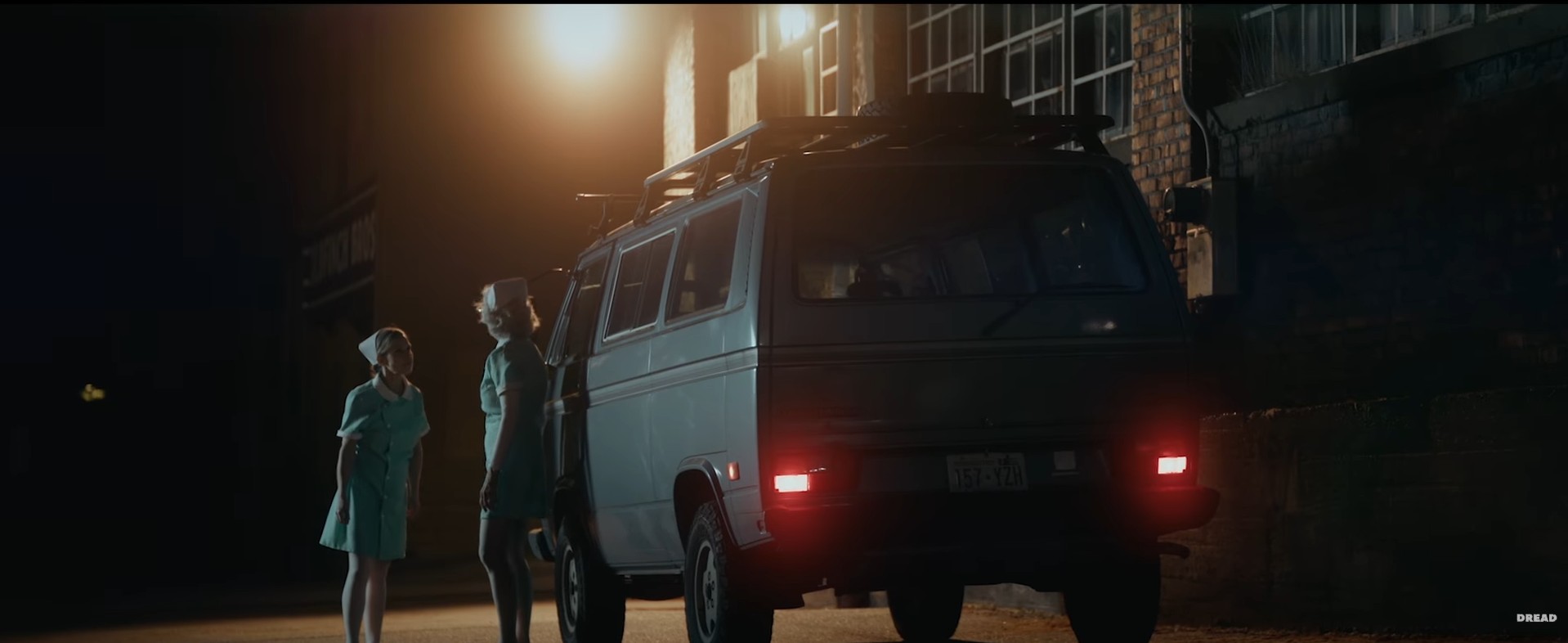
”Reload” scares its way onto Blu-ray from Dread’s home video label, Epic Pictures Group, with an AVC encoded, 1080p high definition, BD25 that’s has definitively no issues with the compression integrity seeing pitch black negative space, delineated outlining, and a stable digital image quality but isn’t quite as sharp.  “Die’ced” and director Jeremy Rudd pride themselves on their retro homage to the slasher genre of yesteryear where “Halloween” and “Friday the13th” reigned supreme and Rudd tries to emulate the effect with hazy fog, low and key lighting, and plenty of corner shadowing that impairs surface details and textual outputs.  Coloring is fine but the dark tone grading hampers the hue explosion that leaves the Scarecrow, or maybe Clownish, makeup moderately subdued under the straw mop and burlap hat. “Die’ced” is presented in a widescreen 1.85:1 aspect ratio and without a grain filter to exact a throwback 80’s slasher.  The English Dolby Digital 5.1 audio mix offers a tampered fidelity through the multi-channel system with a weaker side and back channels to focus more on the front.  Dialogue doesn’t deny clarity and provides enough prominence to be the singled finest element of the audio design that really lacks the range for broader Halloween costumed killer on the loose in Seattle that winds up at a drinking party and a bottling factory without making a bigger splash in the audio pool.  Special features include the original “Die’ced” short film and trailer, plus additional Dread produced film trailers.  Physical packaging is a standard Blu-ray Amaray case with Benjamin’s clown-scarecrow mug menacing smiling through the arch of a bloodstained sickle garnished with one single retro VHS “Horror” sticker which perfectly denotes the extent of “Die’ced’s” throwback slashery.  Epic Picture Group’s Blu-ray is region free and presents the film not rated with an 81-inute runtime.

Last Rites: I’m not seeing the viral sensation the internet saw with a hackneyed antagonist doing much of the same as those who came before, but “Die’ced: Reload” has an extreme slasher violence appeal that can temporarily quench bloodthirst and the open ending leaves more to be explored for character redemption.

Go Beyond the Short Film with “Die’ced: Reloaded” on Blu-ray!

You, Me, and EVIL Makes Three on “The Island” reviewed! (Eureka Entertainment / Special Edition Blu-ray)

“The Island” from Eureka Entertainment and MVD Visual! Order Here!

Geography teacher Mr. Cheung faith in his student’s studies lacks encourage and their grades likely won’t improve.  He decides to take his class on a field trip to an isolated island he once visited more than a decade ago as a young man.  With the intended purpose of relaxation, Mr. Cheung refuses his students of mentioning any schoolwork and studies to try and enjoy the coasting waters and the native nature the island has to offer.  However, there’s more than just animals and plants inhabiting the island as a family of three eccentric brothers welcome them with strange behavior and creepy vibes.  When the younger brother selects one of the student girls as his bride to carrier on their lineage, the once ideal getaway traps Mr. Cheung and his students without a way of escaping the irrational whims and delusions of the three brothers.  With a retrieval boat still a day out, the cornered teacher must keep his party alive at all costs. 

Considered Hong Kong’s answer or version of the backwoods pursuers of cutoff society people, 1985’s “The Island” secludes normal kids and their acquiescent teacher on an island where inbreeding has corrupted the copies of three brothers who’ve recently interred their adamant mother to rest and who’ve been searching for mainland women suitable to be the unsterile youngest’s wife.  Leung Po-Chi, or Po-Chih Leong, director behind “He Lives By Night” and “Hong Kong 1941,” produces a Jekyll-and-Hyde contrasting tale that’s sad and bleak to the core with a script not pinpointed to one particular writer but rather to a creative team within the production company D & B Films, aimed to capitalize on the western grim nature of the deranged and callous upon the unsuspecting and innocent seen in such exploitation and other B-pictures as Hong Kong shifts from the longstanding yet now waning Kung-Fu pictures.  Dickson Poon, Sammo Hung Kam-Bo, and John Sham, the founders of D & B Films, produce the film. 

John Sham may not be the ideal looking or sounding hero with a receiving hairline close to Three Stooges’ Larry Fine, thick, round spectacles, and about as average build of a middle-aged man as they come, but for “The Island” the ‘Yes! Madam” actor and D & B Films’s cofounder is suitable and ideal to be the pliantly, run-of-the-mill geography instructor looking to leave the woes of education behind him for a chance to revisit a place from his youth.  Unfortunately, Sham’s inadvertently the head of the snake as everyone remembers the exposed poisonous fangs threateningly elongated from with out the jowls underneath the reptilian beady and glowing eyes.  No one really remembers the slithering body unless there’s a warning rattle connected at the end.  That’s how the rest of the student body reproduces in trying to portray characters to care about but not really achieving the level of sympathy needed to rise about that film of understanding.  One of the more prominent kids is Phyllis, labeled the chunkier one by youngest aggressive, the snotty-simpleton Sam Fat (Billy Sau Yat Ching, “Scared Stiff”) and she’s targeted for Sam Fat’s procreation affections.  Played by Hoi-Lun Au, Phyllis has a working but tiffed relationship with Ronald (Ronald Young, “Sex and Zen III”) and see the untimely death of Ronald sends Phyllis into seeing red, being a formidable survival combatant against the remaining Fat brothers Tai (Lung Chan, “Encounter of the Spooky Kind”) and Yee (Jing Chen, “Riki-Oh:  The Story of Ricky”).  Billy Sau Yat Ching, Lung Chan, and Jing Chen are distinctly diverse to the best possible way, and each deliver their own dish of crazy that gives “The Island” an inescapable locked inside a padded cell substructure all too familiar on its base componentry but alien enough to master a new diverging kind of terror.  Che Ching-Yuen, Chan Lap-Ban (“Hex After Hex”), Kitty Ngan Bo-Yan, Lisa Yeun Lai-Seung, and Timothy Zao (“Diary of the Serial Killer”) costar in the relatively fresh faced and unknown at the time casted film. 

Leung Po-Chi wets our whistle with an opening of an intense forced marriage ceremony involving shuddering sexual exploitation and personal space invasive mistreatment of a mainland young woman, a swimmer who swam her way into trouble with the island’s inhabitants – an elderly mother and her three disturbed sons with the goal of using her for breeding a new bloodline.  This ultimately sets up the tone for a bleaker story that tells of nihilist cruelty with a thematic division between the urban educated and the unsophisticated rural folk, in this case the rural Bumpkins are isolated island inhabitants, but then Leung switches gears with a lighthearted introduction of frolic scurrying teacher and his students as they spread amongst the island’s sandy beaches wearing brilliantly colored skin tight swimsuits and bask in the island’s natural beauty with a couple of them going tangent into their own personal secondary storylines.   Those subplots never vine out and upward to flower fully but there’s enough stem and leafing groundwork between the good old gay times and a few individual internal affairs to setup sympathy for at least a select few as the relationship between visitors and residents quickly sours with Sam-Fat’s eyes growing bigger and bigger and his drool becoming slobbery and slobbery for Phyllis.  There’s not a ton of autonomy for the brothers who do their mother’s bidding long after she expires, committing themselves to the original plan of marrying off Sam-Fat in a show of take and force that robs Mr. Chueng’s dual purpose plan of a good time of fun and nostalgia.  Leung acutely abrupt faces again, back to the cruel inklings from the beginning, that displays unsettling camera shots, dark and low-warmth lighting, and a ferocity that’s always been with the brothers now more evident and growing inside the remaining survives who must fight for each other as well as themselves.  Leung’s style feels very much like a blend between the quick editing and fast action of a martial arts production but has the lighting and chaos-laden horror of an Italian video nasty that does see and lingers onto blood spilled. 

“The Island’s” a terror-riddled getaway that has arrived onto a new Blu-ray from UK label Eureka Entertainment routed through North American distributor MVD Visual.  For the first time on the format outside of Asia and as part of the company’s Masters of Cinema series (#324), Eureka’s Special Edition release is AVC encoded, 1080p high-definition resolution, BD50 and presented in the original widescreen aspect ratio 1.85:1.  With a brand new 2K restoration scan, “The Island” has impeccable quality measure that emerges the most minute details in every frame.  Skin tones have inarguable organic quality and a true-to-form reactionary sweat-gleam look induced when the chase is on.  The textures pop through in garb, foliage, and in dilapidated structure that gives certain discernibility and depth of object.  The original print has virtually no wear or tear as well as any aging problems, appearing to be a fresh off the reel transfer with natural appeasing grain.  The original Cantonese mono track is the only track available and is really the only mix we could expect and receive without a remastering, but, in all fairness, the mono works well enough to satisfy dialogue, ambient, and soundtrack integrity in its limited fidelity box  Dialogue is clean and clear on the encoding with no damage or other verbal obstructions but the modulation favors the antiquate characteristics of the era and the paralleling ADR offers little synchronous value, both to not fault of Eureka.  The optional, newly translated English subtitles by Ken Zhang pace well and are in flawless transcription.  The special edition is encoded with a new commentary with East Asian film expert Frank Djeng, a second new commentary by genre connoisseurs Mike Leeder and Arne Venema, a 2023 interview with the director Po-Chih Leong Surviving the Shoot, East Asian film expert Tony Rayns provides an appreciation video essay Tony Rayns on “The Island,” and the film’s trailer.  The limited-edition set comes with a red and yellow pastel colored O-card slipcover with new beaitfully illustrated artwork by horror graphic artist Ilan Sheady, whose supplied extreme and gory “Terrifier” franchise artwork to European media books, and delivers “The Island” a warm glaze of trouble-in-paradise, capturing the essence of what to expect from the story.  Original poster art graces the clear Amaray façade with a sepia image of John Sham from the opening scenes on the reverse side.  The limited set also includes a 19-page color booklet containing photos of “The Island” as well as other Leong productions, cast and crew credits, To Genre and Back:  The Cinema of Po-Chih Leong program notes by Roger Garcia for a strand celebrating Po-Chih Leong at the 2023 Far East Film Festival, an interview with the director conducted by Roger Garcia All Within the Same Film:  An Interview with Po-Chih Leong, and bring up the booklet’s rear are viewing notes and release credits.  The not rated feature has a runtime of 93 minutes and is region A/B locked for playback.

Last Rites: Director Po-Chih Leong’s trip to “The Island” is beyond bleak in social commentary and in of dire situation of nothing but pure innocence being destroyed by those left forgotten on the outskirts of mainlanders and of sanity. Eureka Entertainment’s Blu-ray honors “The Island” with praise upon praise for its slick high-definition picture, solid extras, and beautifully designed O-slipcase and design.

“The Island” from Eureka Entertainment and MVD Visual! Order Here!

Babysitter Wanted….by EVIL! “The House of the Devil” reviewed! (Second Sight Films / Blu-ray)

University student Samantha is strapped for cash when trying to express her independence from an invasive and inconsiderate college roommate by renting a house.  In need of quick money to put down the first month’s rent by upcoming Monday, Samatha answers a babysitting billboard ad that leads her to an isolated house outside city limits on a night when the moon is going to be fully eclipsed.  Misled by her employers, the Ulmans, that the care job is not for a child, but rather Mrs. Ulman’s elderly mother and in her desperation, Samantha accepts the odd job for the money needed to secure her new home.  Alone in a dark old house, Samantha’s nerves quickly tingle and recoil at every sound and strange occurrence, quickly coming to realize the Ulmans may be lying to her more than she knows, especially behind the locked rooms where satanic secrets reside and she’s the key to their black practices during the occultation. 

Perhaps one of the hottest directors in the horror genre today with his “X” trilogy, within the trilogy is also “Pearl” and “MaXXXine,” Ti West has been a consistent genre filmmaker since his first feature “The Roost” two decades ago.  Yet, before the “X” trilogy, the year was 2009 when West caught the attention of horror fans with his 198’s inspired and veneered satanic panic film, “The House of the Devil.”  Shot in Connecticut, primarily in an older woman’s gothic Victorian style home, West wanted to bring back the alone babysitter and old dark house theme from decade the story is set, shooting entirely on 16mm that, too, provides that grainy image and darker aesthetic through each frame of the stock.  Initially called just “The House” in initial script treatments, Ti West’s completed film is a production of Larry Fessenden’s Glass Eye Pix (“The Last Winter”) in association with RingTheJing Entertainment and Construtovision with MPI Media Group (“Henry:  Portrait of a Serial Killer” presenting and is produced by Fessenden, Josh Braun (“Creep”), Derek Curl (“Stake Land”), Roger Kass (“A History of Violence”), and Peter Phok (“X”).

In her western, button-up plaid shirt and high-rise mom jeans, Jocelin Donahue (“Doctor Sleep,” “The Burrowers”) epitomized the look of young college girl of the 1980s and with her dialogue and her eclectic 2-minute dance session through the Ulman house proved she has the speech and movements that resemble the timeframe as well.  Donahue is extremely good of taking her character, Samantha Hughes, from a panic scale of one straight up to panic scale of ten in this slow burn, tension-building thriller that isn’t a rollercoaster ride of the next attention deficient disorder event but rather a steady increase of anxiety and anticipation that nags in the back of one’s mind.  Donahue has good reason to be as frightened as she appears on screen with the towering presence of the ever something’s-terribly-off-about-this-character portrayal by “Manhunter’s” Tom Noonan and the malicious grim of a steely wolf under a pearly sheep’s wool from “Night of the Comet’s” Mary Woronov as a pair of satanists.  Noonan and Woronov don’t have immense screentime and are behaviorally underused in the interactions with their babysitter Samantha as West intended target is for Samantha to dynamically degrade within the shadows and creaks of a creepy old house rather have characters be the foremost formidable, focused fear.  In the peripherals is Samatha’s wealthy and vocally blunt friend Megan (Greta Gerwig and, yes, the same Greta Gerwig who wrong and directed that “Barbie” movie) who provides that calling of rationality toward a strange situation only to find herself too wrapped up in her friend’s choices rather than seeing the danger that’s in front of her and there’s also fellow Satan cultist Victor (AJ Bowen, “You’re Next”) who is more or less the son in this Ulman trio of terror.  The cast rounds out with Heather Robb (“The Roost”) as Samantha’s inconsiderate roommate and the genre actor Dee Wallace (“Cujo”) in a small cameo role of the Landlady who, refreshingly, isn’t part of the core plot to burden the actress as an accelerant to pulse the heart of the story faster.

Ti West really did harness and recreate the dark, solemn energy of the alone babysitter and/or the old dark house subgenres that propelled films such as “When a Stranger Calls,” “Black Christmas,” and even “Halloween” into the cult favorite cosmos.  These particular horror categories are obviously nothing new to diehard fans but they have unfortunately been, for a lack of a better term, forgotten, conjured up only in stored memory banks of those old enough, like me, to have lived consciously through the 70s and 80s and, maybe because of West, audiences starting to see a revival of sorts with modern day retrograding to relive the golden age of the slasher renaissance, popularized by hardcore and gory scares with films like “All Hallows Eve” and the “Terrifier” trilogy,.  Yet, “The House of the Devil” is not an overly gory and squirmy disgusting feature as West meticulously structures the narrative to be evidently tense in an uncomfortable, unfamiliar environmental setting of an antiquated house owned by equally antiquated, and frankly weird, bunch in Tom Noonan and Mary Woronov and West guides audiences step-by-step very slowly up to craggy edge before pushing us violently into the infernal grips of satanists and the demons that seek a female vessel for, whom we presume will be, their unholy lord and destructor.  The third act rips ferociously in contrast to earlier acts in a spiral fit of rite and sacrifice that incorporates more characters, more blood, and a cynical ending that requires no more exposition, no more scenes, and no further explanation in its wayward wake. 

Second Sight Films delivers Satan to us with a new UK Blu-ray release.  The AVC encoded, 1080p high-definition, BD50 is jam-packed with bonus content and a more than satisfactory A/V package.  Presented in a widescreen aspect ratio of 1.78:1, the colorist reproduction leans into that of an 80s horror with a diffused, mid-level saturation of frame cells on 16mm stock, bestowing the image quality with more noticeable grain elements because of its smaller size blown up.  The seemingly white fleck-riddled darker areas or clustering grain experience may discourage audiences of a broad digital generation but for those who know, know how great “The House of the Devil” aesthetically looks as a whole, complete with era appropriate wardrobe and set dressings.  Textures and details do come through despite the stock naturalities but they’re not terribly overpowering or as substantially present an a mostly tan or brown color scheme in a lower contrast.  The English language DTS-HD 5.1 Master Audio offers superb audio reproduction and spatial dissemination, especially through the wood-laden house to where the strain creaks of wood floors and doors offer a side and back-channel chill.  There’s plenty of front loaded, two channel action between the dialogue and the rest of the meium-to-close range shots with a range of diegetic effects – i.e. gunshots, telephone rings, and other actionable movements within the frame – and non-diegetic effects that include demonic whisper through moveless lips and, of course, those creaky noises amongst the empty house.  Dialogue is clean, clear, and prominent throughout.  There are English subtitles optionally available for selection.  Second Sight films did a ton of legwork here for special features, conducting and encoding new interviews with director Ti West The Right Vibe, actress Jocelin Donahue Satanic Panic, actor AJ Bowen Slowing Down is Death, producer Peter Phok A Level of Ambition, producer Larry Fessenden An Enduring Title, director of photography Eliot Rockett It All Feels Appropriate, and composer Jeff Grace Hiding the Seams, sound designer Graham Reznick Writing Through Sound.  There are also a pair of audio commentaries with 1) writer-director Ti West and actress Jocelin Donahue and 2) West with producers Larry Fessenden and Peter Phok along with sound designer Graham Reznick and the rounds out with a making-of featurette, deleted scenes, and original trailer.  Since we’re reviewing the standard Blu-ray release from Second Sights, this version does not call with all the physical bells and whistles associated with the limited, rigid slipbox releases that contain lobby cards and booklet, usually.  Instead, the standard release is a streamlined, green-hued Blu-ray Amaray with uncredited illustrated artwork of Donahue’s character overtop of the titular house with the dark and spooky moon in the background.  Instead, is just the disc pressed with the same front cover image of the house sans Donahue and the moon.  The UK certified 18 release contains strong violence and gore, is hard encoded B for regional playback, and has a runtime of 95 minutes.

Last Rites: The 80’s knock back with Ti West’s satanic panic inspired alone babysitter thriller with a sleek new Blu-ray, overflowing with new retrospective interviews, from Second Sight Films!

EVIL Loves to Clown Around. “The Jester” reviewed! (Dread / Blu-ray)

“The Jester” on Blu-ray Home Video!

Days before Halloween, a man hangs himself from off a bridge.  His funeral not only services the wake for his grieving daughter Jocelyn but also brought out his estranged and aggrieved daughter Emma, Jocelyn’s half-sister from a failed marriage their father had abandoned when Emma was very young.  Jocelyn reaches across the aisle to connect and to bond with the peripheral Emma, but the scorned older half-sibling only expresses anger and confliction over feeling grief for man who no longer wanted to be a part of her life until the very end after reaching out a few times to make amends.  Emma and Jocelyn soon discover that a malevolent, supernatural trickster, known as the Jester, was somehow involved with their father’s untimely demise and now, on Halloween night, the Jester is following and toying with them in a playfully sadistic manner, preying on the one thing that bonds and also disconnects the sisters from being content. 

Based on his 2016 three chaptered shorts of the same name, writer-director Colin Krawchuk pulls from the best parts of those shorts, sprinkles a little more sadism on top, and creates his debut into full-length feature film with this titular antagonist, “The Jester,” at the center.  Co-written with longtime collaborate on various shorts as well as “The Jester” shorts is Michael Sheffield, who also brings to life the Jester’s amusing animated animosity and flamboyant cryptic personality from script to screen.   “The Jester” represents a theme of tormenting guilt for this afflicted and those surrounding the person and is symbolized by the absurdity of a clown masked fool in a gaudily colored top-hat and cheap suit with a deviant chip on his shoulder.  Film in and around the Frederick, Maryland area, “The Jester” is a product of Cinematic Productions, based in local Maryland region, and the Dread Central acquiring entertainment company, Epic Productions, under the Dread genre label with Carlo Glorioso, Patrick Ewald, and Katie Page producing with Mary Beth McAndrews and Eduardo Sánchez (director of “Satanic Hispanics”) executive producing.

Through the years of cinema, a plethora of personalities have emerged all vying for our entertainment seeking eye and while most, especially in the indie market, recycle the very idiosyncratic eccentricities of notable characters or extract some inspiration for blatant misappropriation into their own performance, every once and awhile comes a role that can be undeniably fresh, engaging, and unpredictable.  That’s how Michael Sheffield’s Jester presents to me as a versatile villain with broad expressions and precise stratagem that even by not saying a single word in the entire runtime still manages to have us on edge with just what’s up the Jester’s playful, prestidigitate sleeve.  Sheffield’s tall and lanky stature greatly suits the Machiavellian complimented by the outlandish vestments and wooden cane.  As an unceremonious symbol of guilt, the Jester becomes the obstacle between half-sisters from both sides of their father’s railroad tracks.  Delaney White’s introductory feature film begins her off as Jocelyn, a well-liked, sympathetic, and balanced young woman who can’t help but want to connect with an older half-sister she never knew.  Lelia Symington (“Brut Force”) couldn’t portray older sister Emma anymore opposite as a daughter holding onto a rightful grudge against a father who abandoned here at a young age.   That same bitterness extends to the more affable and kept cherished extension of her father, to Jocelyn, but an innate emotion eats at Emma, an inexplicable pang for his death that drives her to pique when she shouldn’t care less about her deadbeat dad and that manifests into deadlier, dastardlier demons, or at least one dressed-up, duplicitous, and dapper demon.  Matt Servitto, Lena Janes, Mia Rae Roberts, Sam Lukowski (“You’re F@#K’n Dead!”), and Cory Okouchi (“Ninjas vs. Zombies”) fill out “The Jester’s” roles.

Once the end credits started roll, I immediately research “The Jester” like I do with all the films I review to try and go beyond just the film with information, trivia, connections, see other reviews and public opinion, etc.  Why?  Because I’m a hardcore nerd, but what I found in the public comments about the film, especially on Letterboxd, is that many compared “The Jester” as a rip of Art the Clown from “Terrifier.”  Initially, a small voice inside my mind, processing the images from my visual cortex, thought the very same the mass majority did, or does rather.  Quickly, I nipped that fleeting resemblance in the bud because of a couple of reasons: “Terrifier’s” whole gag is gore-drenched for purely shock value as Art the Clown terrorizes and kills those in his path whereas “The Jester” represents more between the lines of guilt, loss, and connecting with what matters between the disfiguration of a dysfunction relations and the other reason is both films nearly sprout at the same time.  Yes, “All Hallows Eve” was released three years prior to Krawchuk’s short films and while it’s unknown whether the director was inspired by Damien Leone’s first pass, “All Hallows Eve” didn’t quite overflow the social media cup like “Terrifier” did a few years later.  Many in the horror community compare “The Jester” to “Terrifier” despite the latter not having been coined until the same year as “The Jester’s” shorts films were released.  Sure, Art the Clown and the Jester share similarities, such as a form of a clown mask and have malevolent supernatural abilities, but the blanket comments are like saying just because Jason Voorhees wears a mask, uses a knife, and doesn’t say a word that he is a clone of Michael Myers.  Overall, “The Jester’s” understated tone with a no holds barred harlequin has decent dark humor due in part to Michael Sheffield’s charade of an act and precision special effect, editing, and camera angles.  Where “The Jester” struggles is where it hurts the film the most and that is with an ending that just drops off the edge of the cliff without a ton of closer that really wraps Jocelyn and Emma’s story neatly nor offers a satisfyingly open-ended dangler for more violent jest.   Perhaps 7-years too late after the release of the shorts, “The Jester” will see push back as a facsimile but I implore you, the readers, to give the Colin Krawchuk feature more than just a bias-gazing once over. 

Epic Pictures’ genre label Dread releases “The Jester” on an AVC encoded, 1080p high-definition, BD25 that’s presented in a widescreen 1.85:1 aspect ratio.  As much of the film takes place at night, details are heavily reliant on the lighting and the compression encoding.  While “The Jester” is not the epitome of sharp edge delineation and detail with a supercharged color palette, the encoded shingles retain a pullulating scheme of adequate grading and detail keeping artifacts to a reduced level within the slightly softer image. The heavier image compression is fastened to the three shorts in the bonus content with horrendous basins of splotchy patches. Two English Dolby Digital audio tracks come with the release: a 5.1 surround sound and a 2.0 stereo. Each render about the same with the 5.1 slimming down and isolating channels for specific back, front, and center audio assignments. No issues with the clean and clear dialogue through the digital, interference-free registering though most of the conversations are one-sided with the Jester’s mime expressions. English closed caption subtitles are available. The three Colin Krawchuk and Michael Sheffield 2016 shorts, as I said multiple times already, are included in the special features along with the official trailer and other Dread previews. The standard Blu-ray Amary has a hard-lit Jester face to exact ever fold of the mask smack on the front cover with a bare insert pocket and the pressed disc art fanned out with the Jester’s antique playing cards imprinted on top. The region free release has a runtime of 80 minutes and comes not rated. Clever, entertaining, and devilish, “The Jester” acts the whimsical clown of conscience-stricken torment with an indelible joker different from the rest of the villainy pool.

“The Jester” on Blu-ray Home Video!

EVIL Suplexes A Group of Campers on the “100 Acres of Hell” reviewed!


Former high profile wrestler Buck Sever finds himself in a world of personal hurt. After a family tragedy and a derailing injury, Sever’s stuck in what’s left of his life with not much reason or motivation to pick himself back up. High school friend Trent Masters organizes a bros weekend on an urban legend infamous game preserve called Foggy Creek for some drinking and hunting, but even his so-called friends exploit his celebrity status to attract women and gain personal benefit. They spot themselves right in the heart of the game preserve said to be notorious for backwoods murders committed in the 1960’s at the hands of local legend Jeb Tucker. Blowing off the mystery shrouding Foggy Creek, the four friends soon find themselves face-to-face with a mask killer with immense strength that equals Sever’s and there’s no stopping his onslaught of spilling weekend warrior blood.

Wrestling is a multi-billion dollar global juggernaut with a fan base like no other and as an industry has seen a steady increase in popularity that spans over decades. The sports iconic wrestlers are idolized by many adoring fans who hold up supportive signage at matches, imitate their trademark finishing moves with friends on makeshift rings, and even sport their merchandise while throwing out their favorite wrestlers’ memorable gestures. The sport has been become so engrained into our culture, movies like Mickey Rourke’s “The Wrestler,” that show the downtrodden life of a has-been wrestler, can be nominated and win major studio awards, such as an Oscar or a Golden Globe, and wrestlers have been seeping into the film industry that’s now at a raging pace where the professional body slammers are some of the highest paid actors, such as the established Dwayne “The Rock” Johnson and John Cena. However, not every wrestler can be a glamourous super-stud in the cinematic universe. That’s the case with “100 Acres of Hell” directed by Hank Leigh Hump and starring 6’8″ Gene Snitsky and Samula “Samu” Anoa’i. Produced and penned by Snitsky, co-written alongside with Ed McKeever (“Bikini Girls Vs.The Surf Wolf”) and Jason Koerner (“Zombie Death Camp”) to enthrall a survival, campsite horror set and shot in the rural backyards of Pennsylvania.

Snitsky, retired from professional wrestling in 2018, turns to acting late in his career with his entry into the indie circuit. He portrays Buck Severs, a gargantuan man in a tragic life slump, whose seems like a harmless, gentle giant with a group of eccentric and callous group of friends that treat him poorly despite their best intentions. Snitsky’s has moments of genuine truth in delivery and body language, especially for crowd performer. Jim Roof plays one of his friends, Bo McKeever, a sordid white liar of a car salesman always looking to score between two legs. I remember Roof from his role as a snuff filmmaker in another film with “100” in the title – “House with 100 Eyes.” Roof’s funny and likable alongside Snitsky, but the other half of the “Bros” weekend pack droll with weak characterizations despite decent performances from Jeff Swanton and Ernest O’Donnell (“Jay and Silent Bob Reboot”). Both their roles fall flat by running out of steam when the potential is at the peak of flowing through their veins and unfortunately fizzle before they can be an pivotal means to an end. Catherine Corcoran (“Terrifier”), Meg Carriero (“Return to Return to Nuke ‘Em High Aka Vol. 2”), Bob Cleary (“Shadows of the Forest”) and Eileen Dietz (“Halloween II” remake) round out of the cast.

“100 Acres of Hell” sounds like a tour de force of forestry fury coupled with two ex-wrestlers and a backwards, backwoods, hillbilly killer without a cause, but that is where the pipe dream ends and an enigmatic reality sets in. The banter between the friends is palatable and, dare I say it, amusing at times and the camping setup, though trope-conventional, is braced with a solid foundation and a good catalytic promise of beer and urban legend to get things moving toward Foggy Creek. Where “100 Acres of Hell” ultimately falters, in a pair of places, is around the second into the third act as characters are quickly whacked from the story like the combat denizens of the second Mortal Kombat film – “Annihilation.” Jeb Tucker literally wipes the floor with the unlucky campers and their guests like an inbred super Shredder. Secondly, Hank Leigh Hump’s directorial debut is coherently challenging, an unbalanced execution, and a character imploding mishap that shapes “100 Acres of Hell’s” latter half into a struggle to comprehension. Hump’s film feels and looks incomplete from this perspective as if the post-production quickly finalize the project with blind haste and willy-nilly attitude.

“100 Acres of Hell” is a Jersey Lights and Screenshot Entertainment production paying homage to the Golden Age of slashers in the 1980’s with a masked killer and a high body count. The home video distributor, Indican Pictures, released the DVD and the digital streaming services this past October. Unfortunately, a screener copy was provided from this review and a full critique of the image and audio quality will not be covered. As far as bonus material, the screener contained a static menu with Indican Pictures’ preview trailers and a chaptered scene selection. Two former WWE wresters battle out of the ring and onto the screen with a retrograde slasher, “100 Acres of Hell,” but can’t pin down a 1-2-3 count for a win. Alternatively, if looking for the summit version of Jeb Tucker’s personal hunting reserve, a digital “100 Acres of Hell” comic from Swampline Comics offers a colorfully pulpy rendition of Tucker’s brutal adventures in slaying and enslaving campers…something the movie could not provide.

Dare to tread of “100 Acres of Hell!”