Tony Todd’s Last EVIL Released Film! “Cutter’s Club” reviewed! (Full Moon Feature / Blu-ray)

“Cutter’s Club” is Ready for Your Corpse! Buy it Here!

Two promising surgeons Jack and Jill seeking to reach new heights beyond their Hippocratic oath find themselves in presence of Dr. George Roberts, a once renowned surgeon turned obsessed head of a secretly society of surgeons known as the Cutter’s Club who use their skill to be monster makers, craved from slivers of fresh human flesh and harvested internal organs.  Suffering from a severe dissociative order, Dr. Roberts is eager to recruit his former lover and colleague Jill who has the necessary surgical skillset and medical knowledge to bring his two-headed, pint-sized monstrosity to life.  There’s only one problem, Jill’s boyfriend Jack is not in Dr. Roberts’s good graces and is kept out of secret operations to piece together a monster.  As Dr. Roberts’s split personality divides even further and the police become aware of the missing corpses used in their experiments, all of the Cutter’s Clubs efforts, two-headed monster, and even their lives are in jeopardy.

Filmed in 2005, shelved due to lack of funding, and thought lost by the lab storing the negative, the Charles Band directed “Cutter’s Club” went through hell and back to be finally released 20 years later.  The science fiction-horror teeters the same basic premise and principals of David Cronenberg’s “Crimes of the Future” where surgery is the new sex and expressive art, a concept Cronenberg had for decades prior, yet the “Videodrome” director couldn’t fully flesh out the idea into cinematic fruition until recently, starring Viggio Mortensen and Léa Seydoux in 2022.  The script that’s less body horror and more mad science than Cronenberg’s vision is penned by “Thir13en Ghosts” and “AMIEE:  The Visitor” writer, and long time Full Moon narrative collaborator, Neal Marshall Stevens under his pseudonym of Benjamin Carr.  Re-discovered, ironically, the same month Tony Todd died, the “Cutter’s Club” was restored to be the unreleased swan song production from the late and great “Candyman” actor.  Band produces the venture under his founded company Full Moon.

This November is the one-year anniversary of Tony Todd’s death, yet the actor still has new movie releases with “Cutter’s Club” being one of them.  As Dr. George Roberts, Todd plays to his stereotyped tune of being large and in-charge, commanding the screen with his low-frequency voice and intense stares, but Dr. Roberts also has a softer side in his disassociation, a side that’s kinder and gentler against the mad doctor version of himself but that more gentile version barely surfaces and Todd’s ultimately stuck playing an aggressor role he’s all too familiar with and known for.  Not to speak too ill of the dead, but Todd does a bit of overacting with the character by stretching into unnecessary exposition and melodrama, especially when kinder Dr. Roberts briefly sits behind the driver’s seat.  A more down-to-Earth performance comes from Melissa Searing (“Deadly Beloved”) as the anti-heroine Jill.  Grounding an overly articulated Todd to the story, Searing makes for a decent ambitious surgeon trapped inside the confines of the law and ethics and being romantically attached to colleague Jack who’s own self-indulgent inclusion is motivated by the affection he has for Jill.  Played by Davee Youngblood (“Bigfoot County”), Jack looks like the typical Full Moon principal white guy actor that’s more surfer dude with an early 2000’s spikey hair and puka pendant necklace and less defined as a serious surgeon other than wearing the blue scrubs.  Along with Todd’s Dr. Roberts, the Cutter’s Cub society is comprised of lesser disturbed promising medical professionals with David Sean Robinson, Jemal McNeil, and Raelyn Hennessee in various facets of medicine from anesthesiology to retrieving dead bodies from the morgue to being star students when it comes to surgery.  The latter Hennessee is also supposed to playing the jealous other woman to Jill with an at interval relationship with Dr. Roberts that suggests a level perversion or infatuation we’re never privy to.  Jon Simanton, from another Charles Band production “The Creeps,” fills out the cast as the man in a monster suit, stuffing himself into Two-Head, the pieced together monstrous creation.

Without a doubt, horror fans will flock to get their hands on the last and once lost Tony Todd title, but as with many notable genre actors, only a handful of first-class films out of many of the horror legends’ filmographies deserve to be stamped and sealed into their legacy.  “Cutter’s Club” will not be one of those remarkably renowned films.  And like usual, the interesting story of monster making and crafting art out of the flesh of the recently deceased is cut off at the knees by the production’s lack of funding, funding that has rarely been outside the inbreeding of crew talent that retains a certain staleness and the necessary funding to elevate “Cutter’s Cub” from out of the depths of dirt cheap filmmaking and into novel and crisply stylish territory.  Charles Band also nearly always finds a way to integrate his fascination with miniaturized dolls and creatures by having Two-Head be short and stout side villain, adding his directing trademark where he can.  You know it’s a dime-store production not by the rudimentary crafted man-in-a-shoddy-monster suit or the bunch of greenhorn actors that can’t express lines or actions without sullying themselves but rather by the obvious nude nipple pastie on Melissa Searing as she rides an over-sex acting Davee Youngblood nearly convulses out of the bed while lying on his back.  While nude nipples pasties themselves don’t indicate the production’s value, its the from behind-and-over-the-shoulder perspective camera shot that provides a little Searing side boob with the bubbling and loose pastie that really speaks to the fast-and-loose “Cutter’s Club” construction, screaming to the top of it’s lungs that not even a nipple pastie is worth the time and effort to fix for realism.  The story itself has the bone density to stand on it’s own two feet but has hardly any flesh clingy on the Jill love triangle with Jack and George, Jill’s intense motivation to be beyond the grave of a conventional surgeon’s oath to help people, and the secretly society’s wishy-washy goal that doesn’t quite materialize whether their objective is to sculpt art out of flesh or to be monster makers as their deranged core values.

Todd fans will surely want to pick up this lost but not forgotten movie that has been resurrected from the tomb of misplaced films. Full Moon Features handles their own production and distribution with a Blu-ray release on an AVC encoded, 1080p high-definition resolution, BD25, formatted in a widescreen 1.78:1 aspect ratio.  For an early-to-mid 2000s horror, that pleasant film layer of 35mm stock grain is a sight for sore eyes from modern day digital capturing with natural saturation and texturization that provide better practicality to the picture quality. Depth between medium to close up shorts offer plenty of outline and detail around the simultaneous focus points.  There’s not a ton of color range or texture with a most of the mise-en-scene blends a bland swirl of greens, browns, and blacks mostly only a few micro pops of brighter hues, though muted from the desaturated grading, coming through with Jack and Jill’s blue scrubs and we do get some nice sliminess from Two-Head’s stucco flesh.  Full Moon encodes two English audio options:  a Dolby Digital 2.0 and a Dolby Digital 5.1.  Both mixes keep put mostly in front with little atmosphere surround through the back and a front channels, resulting in the stereo mix to be just as adequate as the surround.  Dialogue retains prevalence throughout with the carnivalesque soundtrack of a usually tagged team of Charles Band-directed and Richard Band scored mix replaced with the Jonathan Walters trickling keyboard struck alto keys of menacing science.  English closed captioning is available.  Special features include an interview featurette with director Charles Band and actors Melissa Searing and Davee Youngblood.  The official trailer rounds out the special content laid out alongside a Full Moon promotional trailer for their streaming video magazine, VIdeoZone.  The standard Amaray Blu-ray contains collective character compositional artwork with no other physical trimmings.  The 82 minute, not rated film has region free playback capabilities. 

Last Rites: Jack and Jill might have went to fetch a pail of water, but “Cutter’s Club” is the one that fell and broke its crown. Nice to see Tony Todd in a relatively new project posthumously; yet, having no more financial standing to finish, “Cutter’s Club” feels just that, unfinished, as another slapdash, get-it-out-there-on-the-shelves, product to bank as the unseen film.
“Cutter’s Club” is Ready for Your Corpse! Buy it Here!

Rage EVIL Leads to A Legion of Drone Dwarfs! “The Brood” reviewed! (Second Sight / 4K UHD)

“The Brood” Available Now from Second Sight!

After a series of mentally abusive behavior, Frank Carveth’s wife Nola resides under the unorthodox psychology of Dr. Hal Raglan whose controversial impersonation techniques to break down his patients’ dissociative psychological hangups and destructive blocks.  After months of therapy and witnessing Dr. Raglan’s methods in action, Frank is ready to pull the plug on the doctor’s sideshow sessions he deems are doing more harm than good when his daughter shows signs of physical abuse after a visit with her mother.  The prolonged verbal bout to get his wife out of Raglan’s care leads to Frank confiding in Nola’s mother who is found brutally murdered soon after.  When Nola’s estranged father comes into town to oversee the burial arrangements, he’s also brutally murdered.  Frank begins to connect pieces, theorizing that Dr. Raglan’s procedures and the murders may be linked and as he investigates further, the truth is more terrifying than he could ever imagine. 

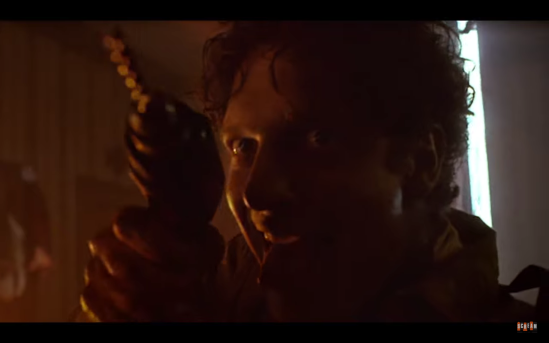
Surging with emotional turmoil through a bitter divorce with ex-wife Margaret Hindson, Canadian body-horror director David Cronenberg pulled the rancorous inspiration from that turbulent time to write the originial screenplay for “The Brood,” a 1979 released thriller between an estranged couple, the effect of their ascending troubles upon their only child during the separation, and the sort of radical and systematic behaviors and practices used to reform a relationship bond that actually divides the emotional expanse even further.  Sprinkle a little of the unknown and grotesque abilities of unnatural corporeal world in there and you have yourself one hell of a dysfunctional and undomesticated horror only the unconventional David Cronenberg could conjure.  “The Brood” is produced by Claude Héroux, who would go on to produce Cronenberg’s next series of films, “Scanners” and “Videodrome,” and the Ontario filmed production is a studio venture from the CFDC (Canadian Film Development Corporation), Elgin International Films, and Mutual Productions.

Art Hindle is in the role of Frank Carveth, a father initially skeptical and frustrated with his wife’s supervised treatment and care.  The “Black Christmas” and “Invasion of the Body Snatchers” actor Hindle plays the role of a hinged investigative husband-parent involved into something far more unbelievable than initially imagined.  Next to his on screen dazed and mentally tarnished wife by Samantha Eggar, of “The Exterminator” and “Demonoid,” Hindle enacts normal responses that carry over into extreme situations when those around him – his mother-in-law (Nuala Fitzgerald, “Obsession”), his father-in-law (Henry Beckman, “Side Roads”), and his daughter’s teacher (Susan Hogan, “Phobia”) who might have had a little something-something with while on the rocks with the misses – dies a violent death at the hands of kid-sized mutants that resemble, partially, his own daughter Candace (Cindy Hinds, “The Dead Zone”).  As Nola Carveth, Eggars is only present in a few scenes alongside Dr. Raglan, played by the formidable British actor Oliver Reed (“Paranoiac,” “Gladiator”), as a staring into space, emotionally compromised woman struggling to cope with her past that makes her angry and upset and, in turn, makes her inexplicably conjure do-bidders in the birthing means of advanced evolution or in a parallelism to eusocial insects, like bees or ants.  Reed is the monkey in the middle of all of this between fending off Frank Carveth who challenges the results of his unorthodox psychological methods while also using those methods to unearth the root cause of Nola Carveth’s strange and unusual behavior and, eventual, psychic abilities.  Reeds delivers his typical stoic indifference which makes him ideal for a confident character of the scientific community eager for results rather than feeding his motivations with emotional fodder by empathizing with Carveth’s concerns.  Gary McKeehan (“Rabid”) and Robert A. Silverman (“Naked Lunch”) costar.

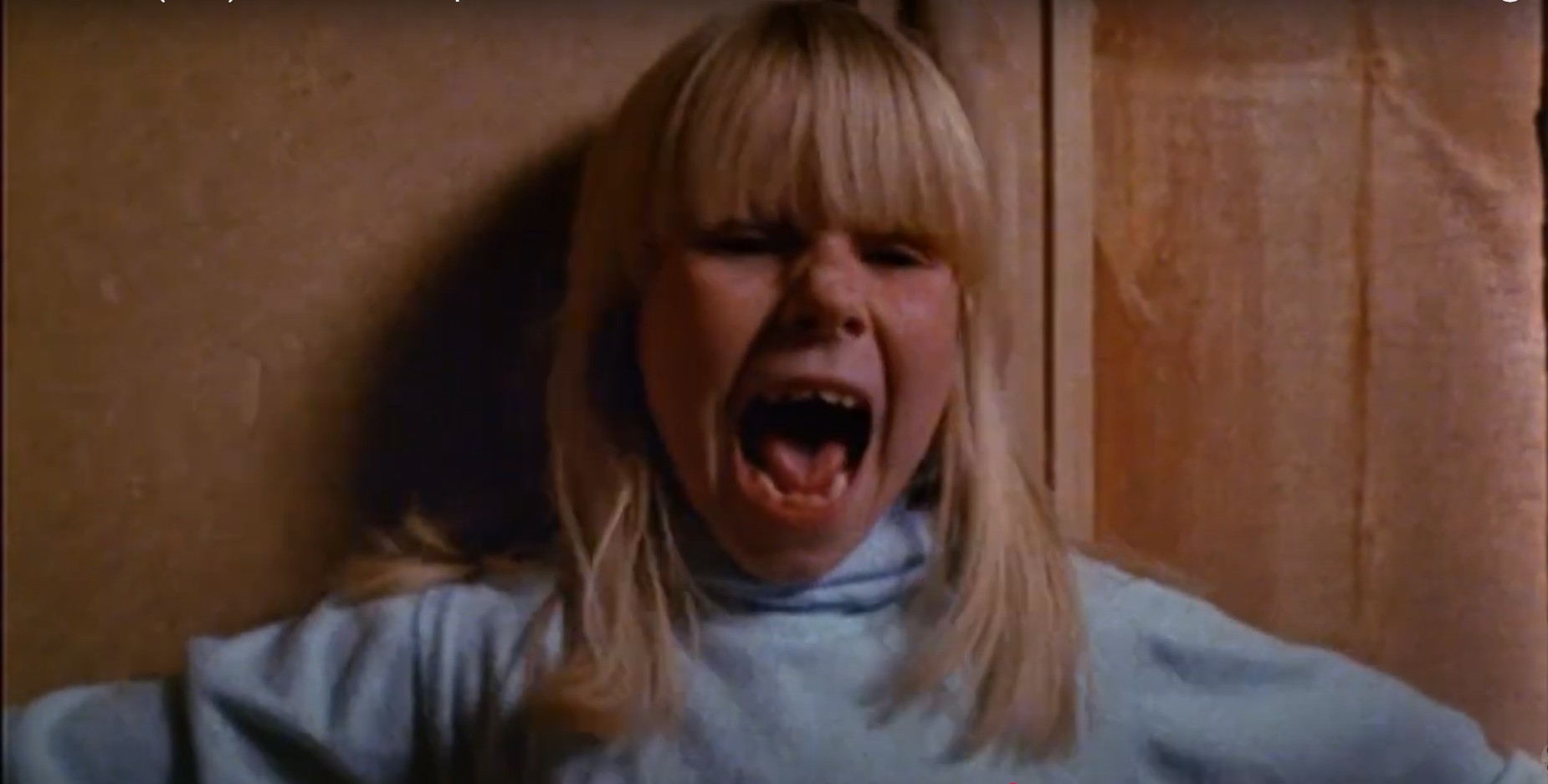
In his 50-year plus career, David Cronenberg has evolved in style, substance, and story that dip into more of alternate universes and deliver new ways to blend the future into an organic composite with commercial and social sub context.  While technology and personal and professional growth have developed the director into what he has accomplished and known for today, especially on the verge of his latest release with the living and dead connection theme in “The Shrouds,”  the core of what David Cronenberg does best and still does today has an etiology leading back to his earlier work and “The Brood” is definitely an archetype of his niche.  Cronenberg works the narrative up to his reveal of body horror, and “The Brood” is dangerously on the edge of being atypical, subjecting audiences to more of a buildup in the story and the delimitation of character  disclosure without a steady course of the maladjusted, mutated or modified human body as the villain or the escape, only for that theme to be quasi hinted and then unveiled at the end in a shocking reveal.  “The Brood” plays more of the slasher tones, using the children, dwarfs, or however you want to describe the little, mutant minions to be unknown villain tropes, even when one is laid up on a morgue slab for examination of its biology, or lack thereof.  Cronenberg’s directed ambiguity tees up one of the best endings of his career and, perhaps, even horror cinema as “The Brood” is queen sized stomach-churner, literally.

David Cronenberg’s “The Brood” arrives in 4K on a Ultra HD Blu-ray from UK boutique label Second Sight Films.  The BD100 is HEVC encoded with a 4K resolution or a pixel count of 2160 with Dolby Vision HDR10 and presented in a widescreen 1.85:1 aspect ratio.  On the back cover, the 4K restoration is approved by David Cronenberg.  There’s definitively a more positive treatment of the restored transfer that brightens with a slightly tweaked color grading compared to other DVD or Blu-ray releases, improving delineation as well as rectifying intended details to burst through what’s been long frustrating by a darkened wall of low-resolution definition.  Retaining and sustaining cinema coarse grain, the picture looks and feels incredibly natural without the presence of compromising touchups and smoothing overs that do more harm than good in the plastic-like approach to restoration.  The UHD reinforces the coloring with vibrant richness and range, boosting the once little Canadian film that could into an expensive-appearing optical overhaul that puts to shame previously shelved videos.  Audio fidelity is too retained with a LPCM 1.0 mono that although funnels through a single output is more than an adequate mix all in thanks to the competent sound engineering of Peter Burgess and team to amalgamate recorded sound and post-production ADR into a brawny singular unit that meshes nicely.  Dialogue foots the bill as a clean and clear presentation, the ambient sound design renders distinctly over without ambiguity, and longtime David Cronenberg collaborator and friend Howard Shore conducts an orchestra score that breaks through and keeps the course with an unforgettable amount of tension build.  English subtitles are available.  Special features are aplenty with a new audio commentary by film critics and historians Martyn Conterio and Kat Ellinger, a second commentary with film academic William Beard, interviews with actors Art Hindle and Cindy Hinds moderated by Fangoria’s editor Chris Alexander Meet the Carveths, an interview with executive producer Pierre David Producing the Brood, interview with cinematographer Mark Irwin The Look of Rage, interview with composer Howard Shore Scoring the Brood, an interview with actor Robert A Silverman Character for Cronenberg, a new video essay by film journalist Leigh Singer Anger Management: Cronenberg’s Brood and Shapes of Cinematic Rage, and an archived David Cronenberg interview The Early Years.  The standard Second Sight release comes in the traditional 4K UHD black Amaray case with new unnamed, unsigned illustrated cover art.  The UK certified 18 film is presented region free in this release and has a runtime of 92 minutes. 

Last Rites:  Cronenberg’s play on the word Brood is next level genius with litter rage as a result of mental health and a broken home.  The director’s filmic roots have proved time-and-time again his mastery of moviemaking as his body horror and thought-inducing stories, intermixed with social commentary, are complex visual and narrative devices braised an organic edge. 

“The Brood” Available Now from Second Sight!

The Dead Don’t Stay Dead in EVIL Burial Grounds! “Pet Sematary Two” reviewed! (Scream Factory / Blu-ray)


After the accidental and traumatizing death of his beautiful actress mother, happening right before his eyes, Jeff Matthews and his veterinarian father move from Los Angeles to his mother’s quaint hometown of Ludlow, Maine to start over. The father and son are met with small town hostility from an arrogant, abusive Sheriff and the high school bully, but the ease of settling into their new surroundings with a new veterinarian business going well and Jeff gaining friendship with the Sheriff’s stepson, Drew, provides some inkling of comfort after their loss. When the Sheriff’s hot-headed temper murders Drew’s dog, the disconsolate Drew, along with Jeff, buries his beloved best friend in a sacred Indian burial ground with a smidgen of hope of the dog’s return, as the town’s urban legends suggest, but the dog becomes the first to return in a series of deaths and catastrophic returns that stagger to a family reuniting climax Jeff and his father won’t ever forget.

With Stephen King removing his name and separating himself from the overall project, the sequel to the 1989 “Pet Sematary” raised a few eye brows from the general public, and I’m sure some anxious investors, of how just would a non-adapted sequel to one of Stephen King popular novels would pan out come release. “Pet Sematary Two,” released three years after first film, would follow the predeceasing story a few years later with an entirely new cast of characters while still evoking the presence of the first film to linger about with director Mary Lambert to return to the director’s chair and helm a script by a relatively unknown writer, Richard Outten. Yet, Lambert’s return didn’t necessary equate to the reimplementing a broody, ominous, darkness facade as the well versed music video and television director flipped the script on a film she might not have any control over albeit financial backers did. Instead, “Pet Sematary Two” garnishes a scoffing rock’n’roll polarity that’s a raiper-like obverse approach of merriment morbidity doused with flammable fun and demented delight.

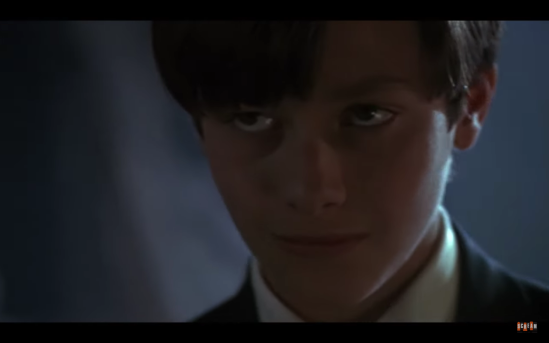
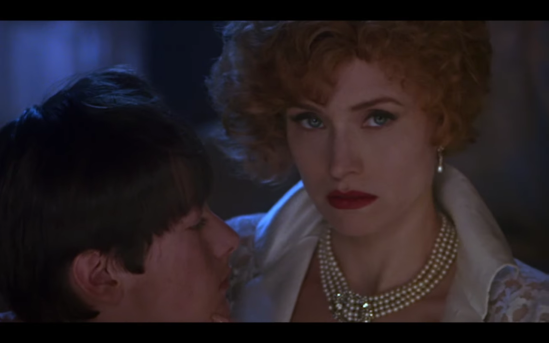
Hot off the presses of his first major role as a young John Connor fighting man-killing machines from the future in “Terminator 2: Judgement Day,” Edward Furlong stars as the scathingly broody Jeff Matthews. While Jeff Matthews isn’t as punk, off the street, as the delinquent turned hero John Connor, Furlong is about to turn Jeff back into being a kid with real life problems such as bullying, father-son quarrels, and dealing with the death of a parent. That screeching cry, those sunken eyes, and that bad boy attitude from “T2: Judgement Day” convinced thousands of young teenage girls that Edward Furlong was a desired heartthrob and “Pet Sematary Two” continued to showcase those attributes even further. However, in my humble opinion, Clancy Brown is the real heartthrob of the sequel with his over-the-top performance in the abrasive Sheriff Gus. The New England twang instantly sells Gus’s malignancy and crimson temper without even lifting one ill-fitting moral finger. From another King adaptation in “Shawshank Redemption” to being a bug hunter Commander Zim in “Starship Troopers,” Brown’s distinguishable deep and resonating voice, square jaw, and tall with broad shoulders has made the veteran actor the picture of law enforcement and military type and while “Pet Sematary Two” played into that typecast, Brown, who didn’t want to venture into horror, saw the laughter in the darkness and came out on top with a stellar exaggerated and unforgettable Sheriff Gus as a full blown undead maniac. Furlong and Brown stands out immensely over the rest but the remainder of the roles are just a grand with performances from “Revenge of the Nerds'” Anthony Edwards, Jared Rushton, Darlene Fluegel (“Freeway”), Jason McGuire, and Sarah Trigger.

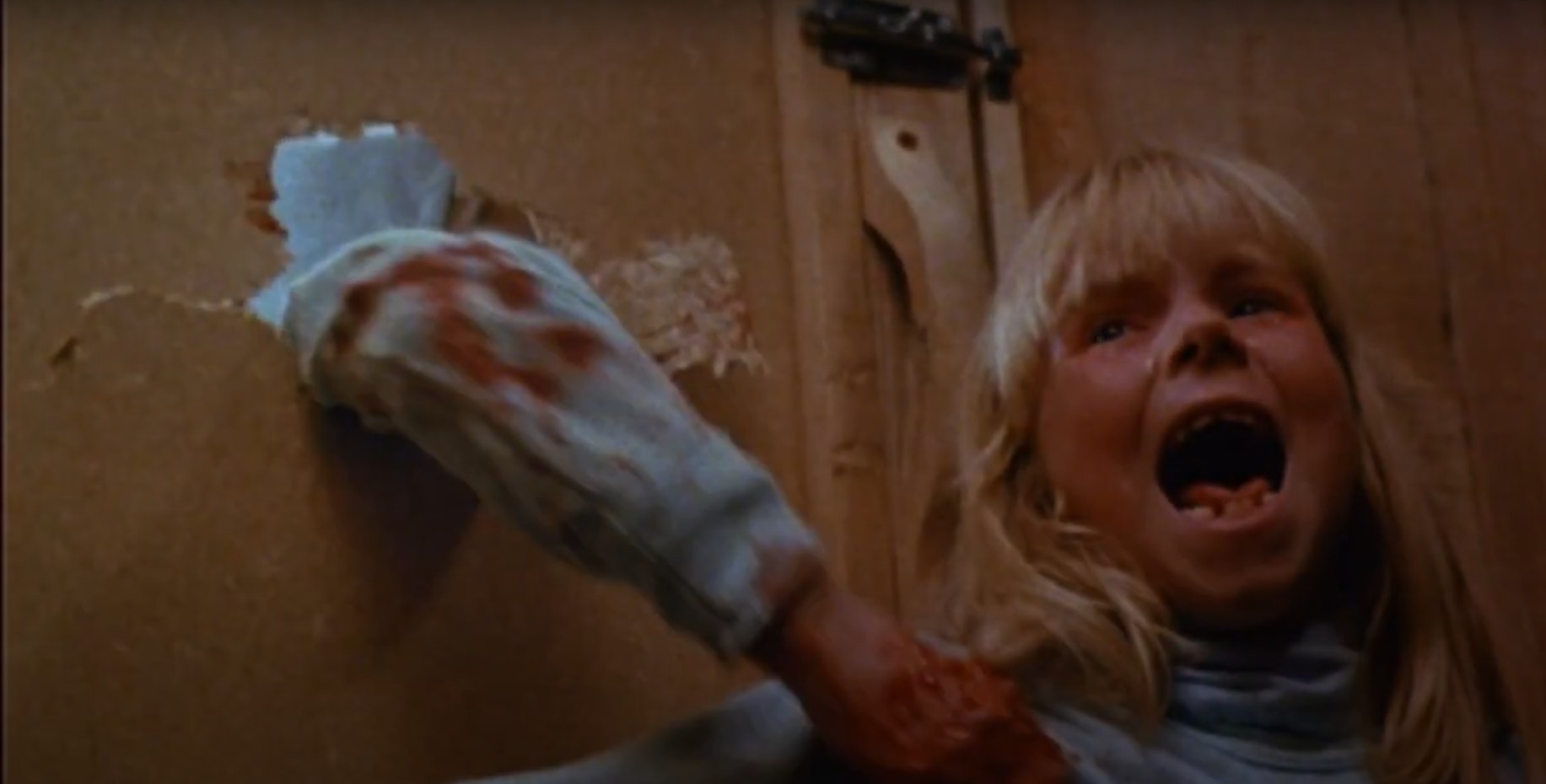
“Pet Sematary Two” might have been profane against all that is (un)holy from the Stephen King’s novel and Lambert’s first film, but truth be told, the sequel is a whole lot of fun, a shell of the name worth watching, and provides substantial brutality with gory leftovers including skinning stark white rabbits, shredding the face off a young punk with the back wheel of a motocross bike, and an electrocution that ends with a head eruption. The Steven Johnson effects had range and bite, but unfortunately, the full brunt of the “Videodrome” and “Night of the Demons” effects artist’s work was perhaps not entirely showcased with some hard cuts to obtain a R rating, even unfortunately keeping the age-old rating with the new collector’s edition from Scream Factory that’s also the feature’s Blu-ray debut. Lambert certainly wanted the sequel to bask in a different kind of darkness that’s more comedic than gloomy and the schism between the two gulfs compares like a night and day, but the core principles of what makes “Pet Sematary” “Pet Sematary” remains faithfully intact. In hindsight, the sequel should have been labeled something else other than “Pet Sematary.”

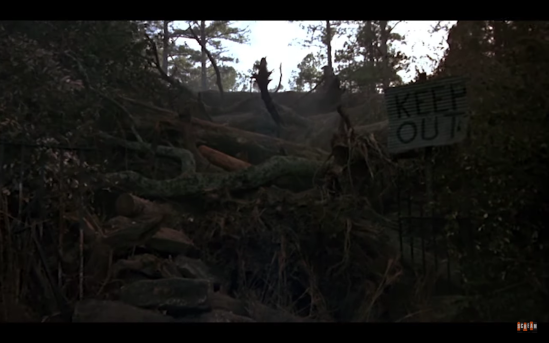
Back from the physical media graveyard comes Paramount Pictures’ “Pet Sematary Two” onto a full 1080p, High Definition, collector’s edition Blu-ray from Scream Factory, hitting retailers February 25th. The release sports a new 4K scan of the original 35mm camera negative and presented in the original aspect ratio, 1.85:1 widescreen. The fact the source material remains unblemished becomes a plus that renders the newly scanned transfer with complementary darker shades of Autumn foliage and outerwear, delineating the burial ground and town nicely, and offering a range over hues that amplifying the perilous circumstances ahead. Still leaving some natural grain, the scan chisels through the softer portions and really does offer some nice details toward facial finishes, even in the dog’s mangy and matted blood stained fur. A few select poor edit choices, such as slow motion techniques, counteract against the detail naturally by disrupting the frames per second and causing a bit of a smoother finish than desired. If the English language 5.1 DTS-HD Master Audio could be described as one thing, that would be a menagerie of ambient gratification. The crinkling of leaves and the subtle cries of wildlife really set the primal and augury atmosphere. Dialogue clearly comes through and Mark Governor’s score shutters as a gothic western, an oddity for sure, mixed with wolf howls and Native American percussions, that fits the in the film’s black argyle pattern. All new special features accompany the single disc release, sheathed in an Laz Marquez illustrated cardboard cover, including a new audio commentary by director Mary Lambert, new interviews with Edward Furlong, Clancy Brown, Jason McGuire, special effectors advisor Steven Johnson, and composer Mark Governor, and a standard edition theatrical trailer. While not a fully uncut, “Pet Sematary Two” for the first time on Blu-ray is paramount to the genre the feature serves, swerving far from the antecedent, and evolving into a promising guilty pleasure.

Zowie Wowie! Check Out Pet Sematary Two on Blu-ray come Feb. 25th!

Evil Never Sleeps! “Coyote” review!

output_7kg1oQ
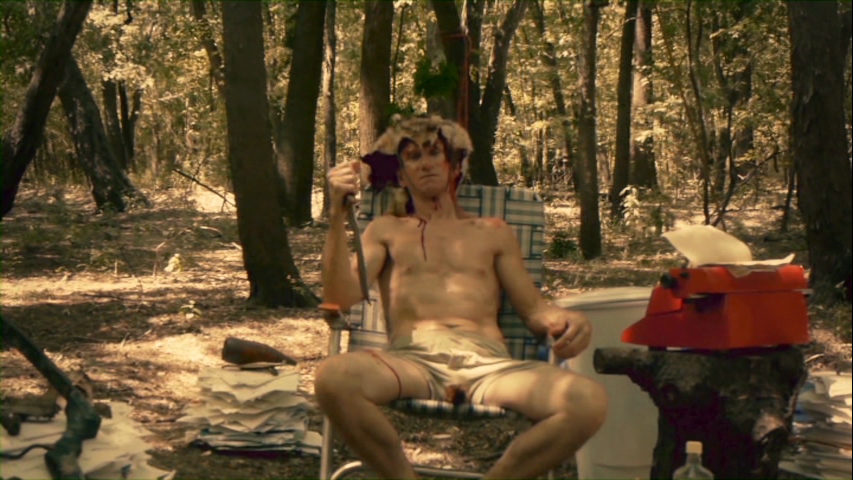
Cult actor Bill Oberst Jr. plays a deranged struggling writer with insomniac.  Bill’s lack of sleep drives him to extremely hallucinate to the point of being dangerous to not only himself but to others.  His derangement wields a bowie knife, a rust colored hammer, and a sporting bow and arrow as the hallucinations get weirder, stranger, and more violent and everyone that Bill comes into contact with becomes a target of his severe breakdown into insanity.
vlcsnap-2015-01-05-20h26m25s140
Who doesn’t love Bill Oberst Jr? The veteran actor has a unique look about him and his acting method brings stage and screen acting together into one great performance in Trevor Juenger’s “Coyote.” Without saying much through the entirety of the film, Oberst interpretation of one man’s sleepless delusions sports no talking head explanation. Rigorously and physically involved in the role, “Coyote” could not have been possible if it wasn’t for Oberst serious role indulgence.
vlcsnap-2015-01-05-20h27m34s62
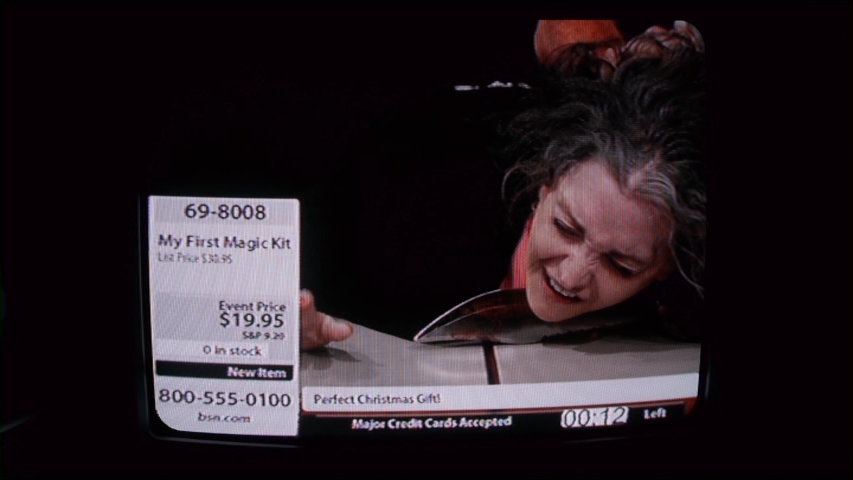
The film is described as a blend between “Taxi Driver” and “Videodrome.” That description is entirely accurate. Full of body horror and plenty of schizo to go around, the surrealism in the editing by Juenger is remarkable pitted against budgetary restraints. Hard to follow, lost in translation, yet somehow by the end of the movie you get it, you just get it. You might even feel lost for the first hour and by the time the last half hour comes around, you’re just as angry, confused, and disturbed as Bill. You might even want to take out a person or two with a bowie knife.
vlcsnap-2015-01-05-20h27m19s169
“Coyote” won’t break much cinematic ground like “Taxi Driver” or “Videodrome,” but “Coyote” will be a great embarkment to a honorable homage and a surreal look into fresh art-house horror. If you like this type of material full of masochistic mutilation, visceral carnage, and a visual look into the mind of lunacy, then Wild Eye Releasing’s “Coyote” is for you.