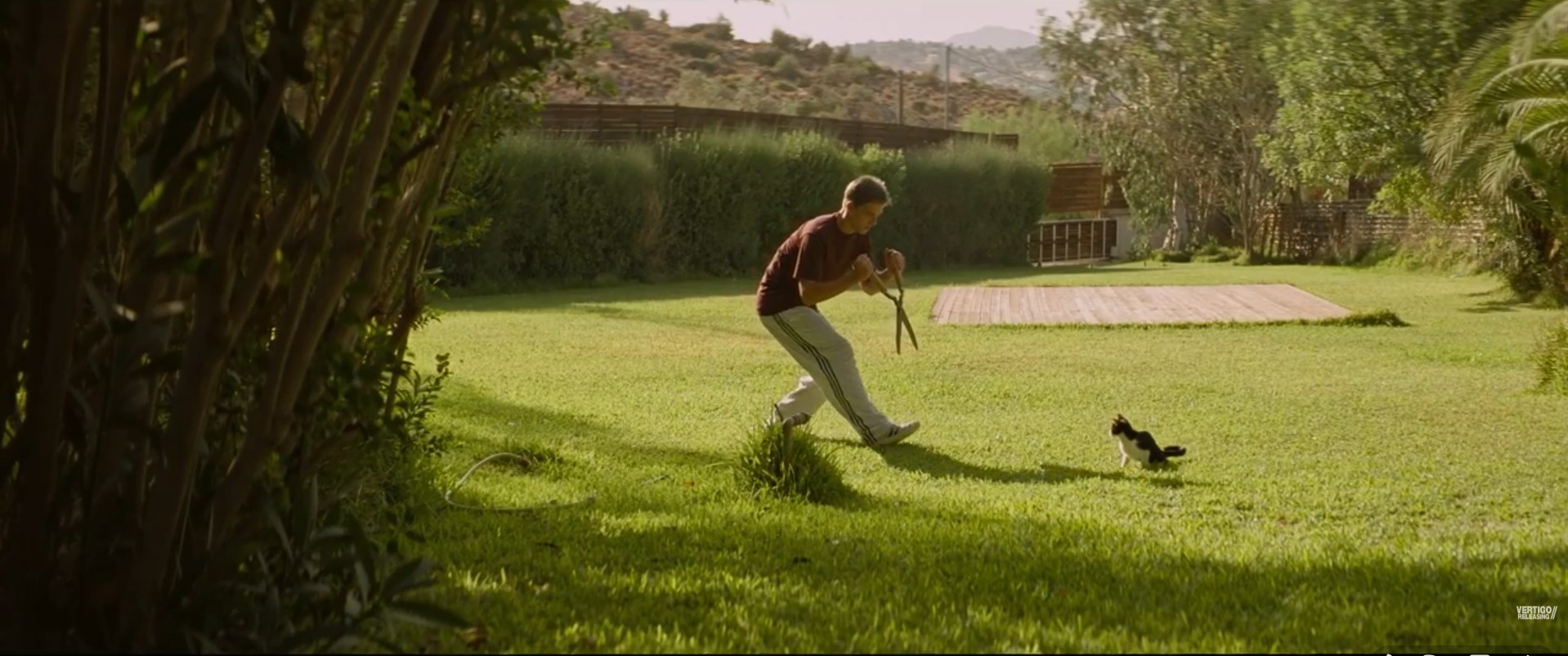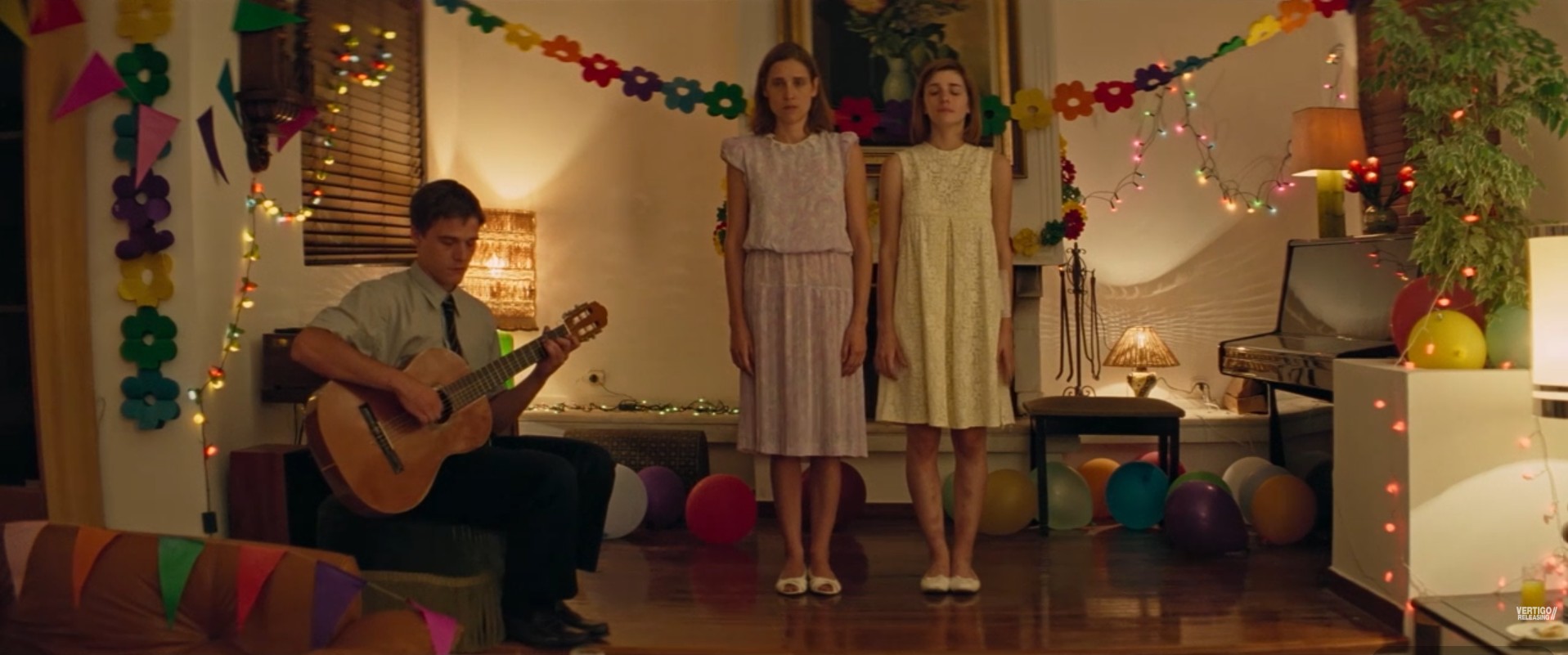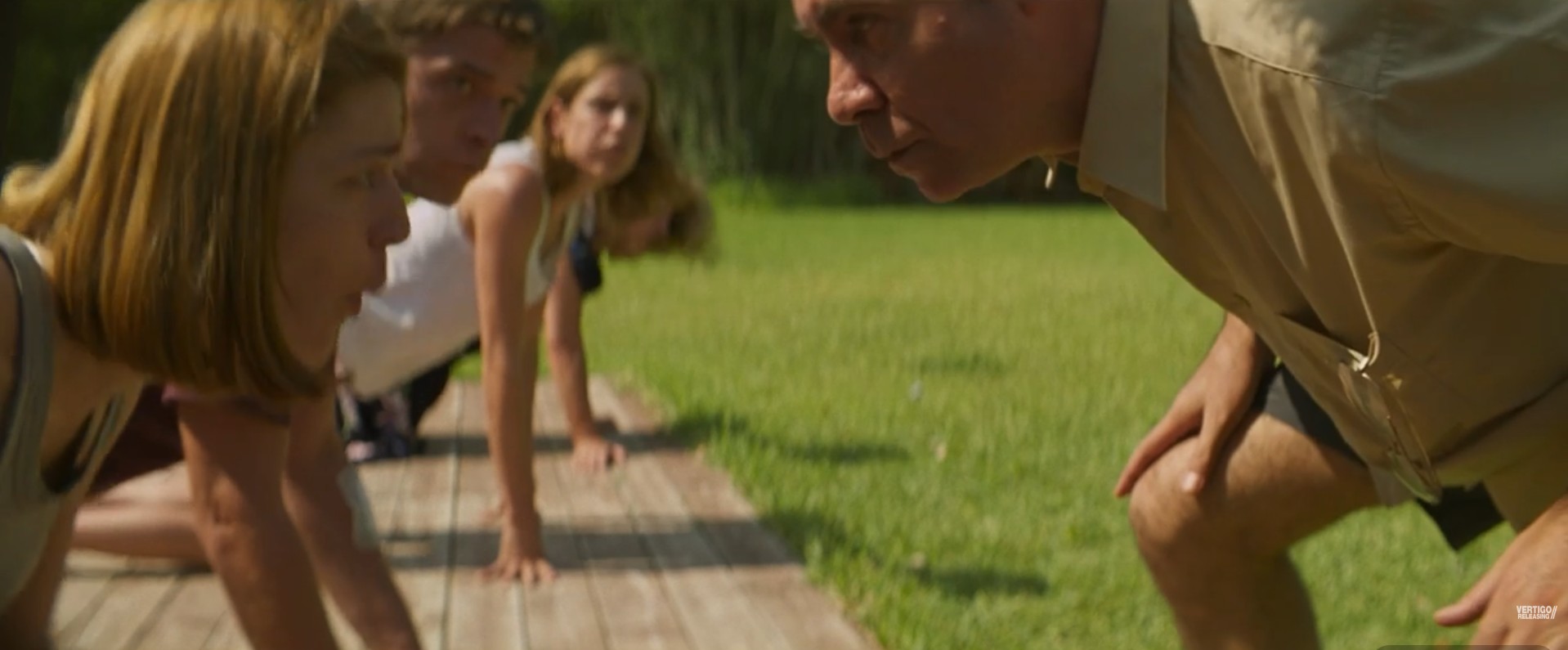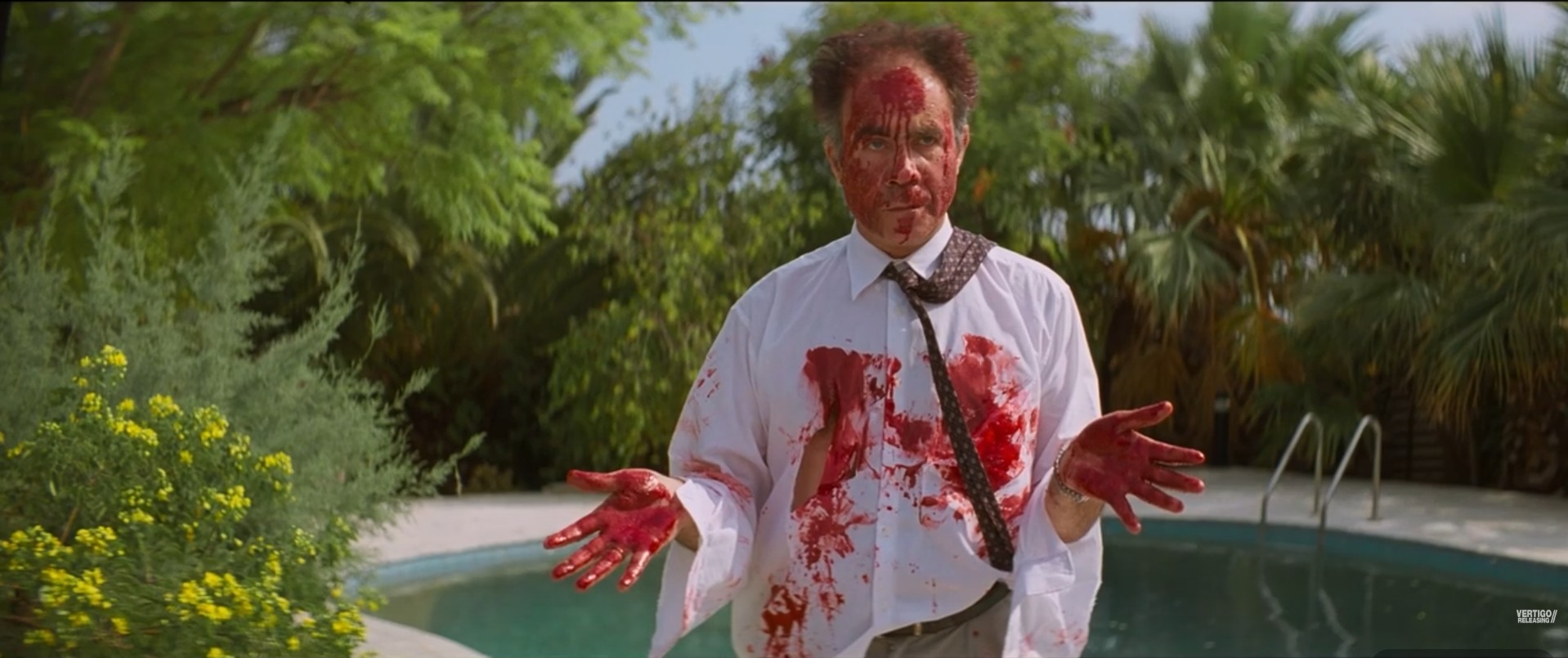
To Be a Star, the EVIL Past Must Be Erased! “MaXXXine” reviewed! (Second Sight Films / 4K UHD Blu-ray)

Grab Your Limited Edition Set of “MaXXXine!”

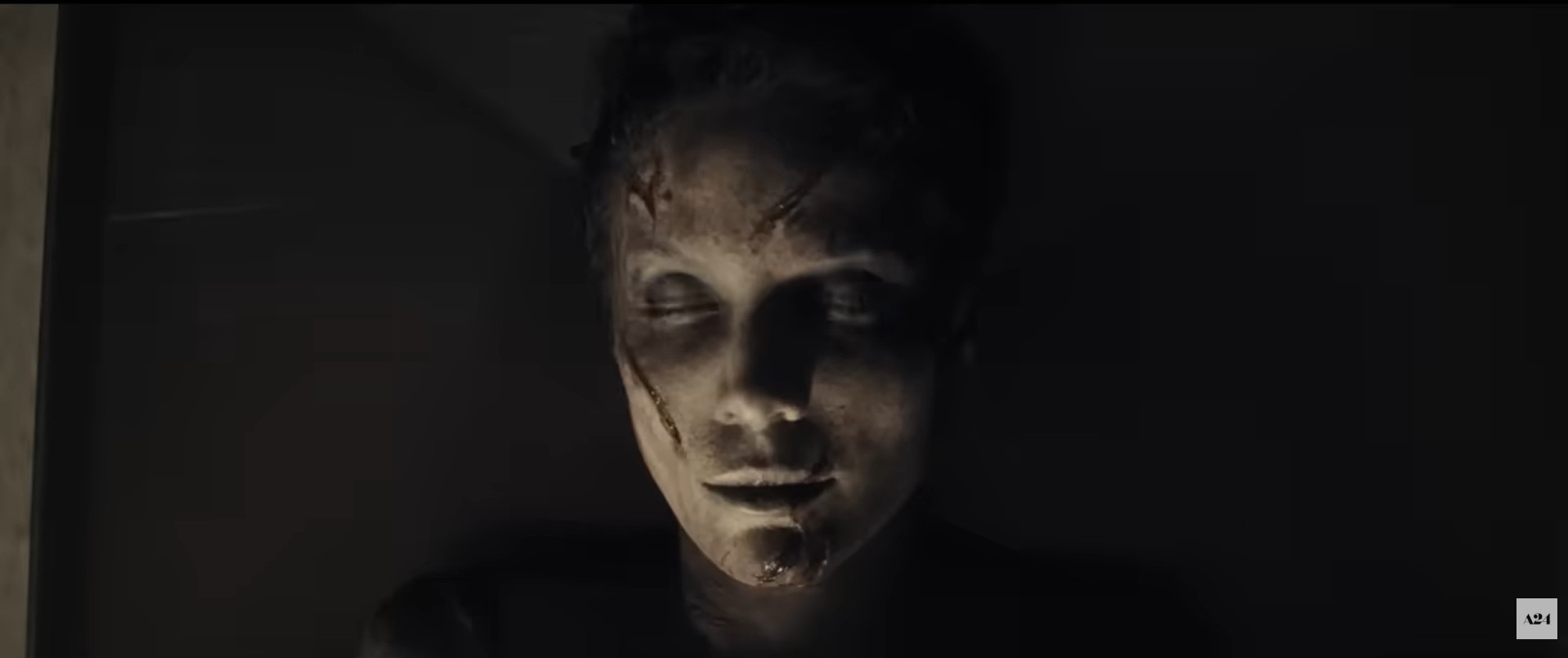
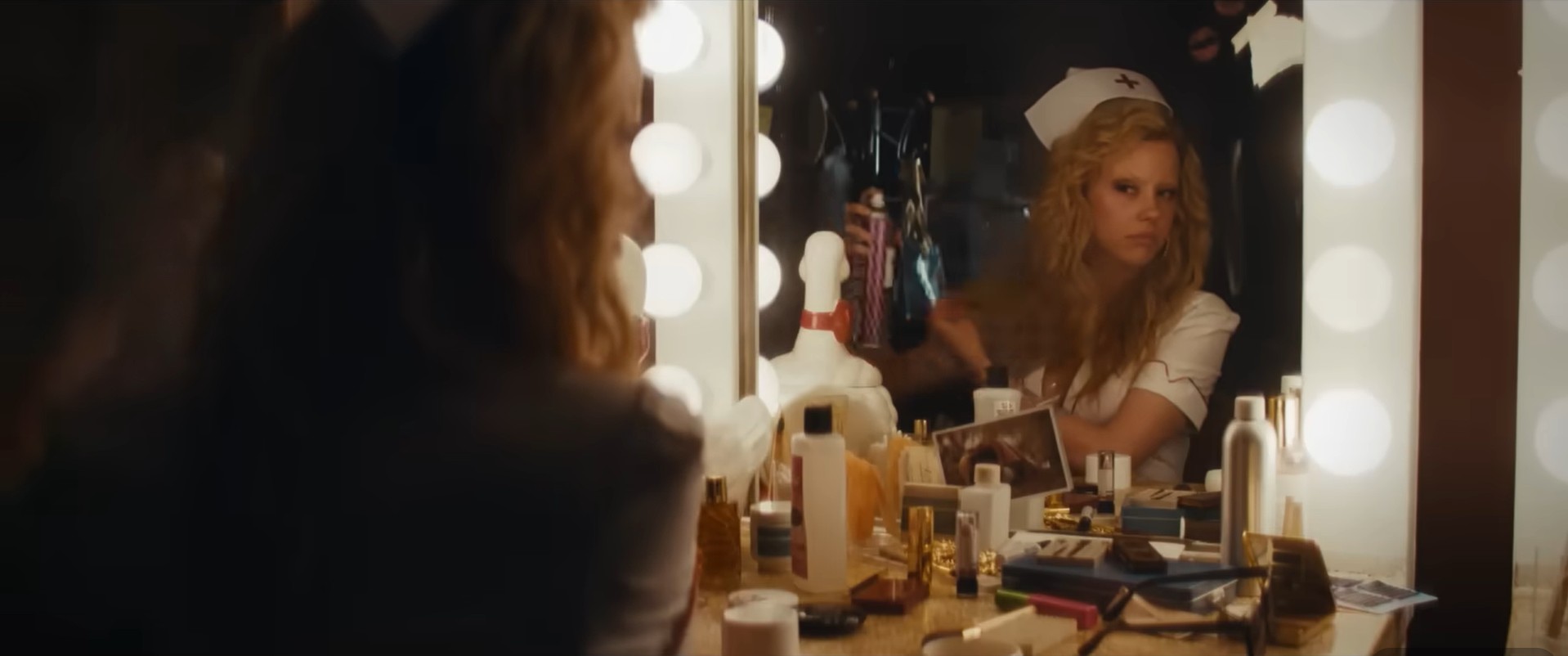
After the harrowing events in Texas, Maxine moves to Hollywood where she finds tremendous success as a famous 80’s adult film star but that’s not enough for the pious-raised Maxine who has an ambitious eye to make it big as a legitimate movie actress.  The crossover won’t be easy as her past creeps up on her after being awarded a role in an upcoming horror sequel, and not just any role but the leading role that’ll solidify her name as an actress.   When those close around her wind up brutally murdered and a seedy private detective hounds her for more than he’s paid for, Maxine juggles her ambitions with a tough director with trying to stay alive in a cutthroat town that’ll spit her out of the golden opportunity as soon as it swallowed her up into it.  Having already survived a deranged bloodbath in Texas, nothing will stop Maxine from being a silver screen star. 

Ti West’s “X” trilogy concludes with a sequel directly tied to the aftermath of “X” but years later, bringing back the hard-fought and harden survivor of a Texas porn shoot gone waywardly wild and a few people end up dead.  That sequel is known as “MaXXXine,” focusing entirely on the titular character’s drive to get out of triple-X films and into the elusively lustrousness of Hollywood acting set in the lively grime of a neon-torched 1980s Tinseltown.  The “House of the Devil” and “The Sacrament” director writes-and-directs the 2024 released, giallo-inspired suspenser, keeping in suit with the first two films, that takes a backlot tour of the sordid side of newfangled fortune and possible fame.  The roundup film behind “Pearl” and “X” in the trilogy is produced by series star Mia Goth as well as Jacob Jaffke, Harrison Kreiss, Kevin Turne, and Ti West with musician Kid Cudi serving as one of the film’s executive producers, all of whom were involved in “X.”  A24 presents the Motel Mojave and Access Entertainment coproduction.

Mia Goth, who broke onto the scene in Lars von Trier’s hypersexualized art film “Nymphomaniac” and as a fellow dancer at a prestigious ballet school with a dark, witchy secret in the 2018 remake of “Suspiria,” has quickly become a household name amongst genre and cult film fans, especially in the last four years thanks to Ti West’s “X” trilogy.  Unabashed in pushing the envelope with her performances, as the titular character Maxine, Goth immerses herself in the starlet’s ambitious arrogance and libertine lifestyle with resolution.   There’s so much determination in Maxine that it takes mysterious VHS tapes and dead bodies to recollect a deadly past and for first time audiences unaware of the trials and tribulations the character went through in Texas; that historic side of her life from “X” contains threadbare context in “MaXXXine,” nearly splintering the third film into an isolated entity without reliant on “X” to be a crutch into Maxine’s next traumatic chapter full of decade appertaining characters, unsavory underbelly types, and it can’t be the 80’s hair metal and video nasty period without the fervent of satanic panic.  Kevin Bacon (“Tremors,” “Hollow Man” ) plays a prominent opposite in an unscrupulous Cajun private detective John Labat, hired to do track down the untrackable Maxine Minx and even catch himself in her cobweb of strife when she breaks his nose for snooping too close for comfort.  Labat brings the physical manifestation of an omnipresent threat that not only targets Maxine but terrorizes the entirety of Hollywood with a serial killer known Night Stalker who kills, maims, and even dismember victims at random.  While Labat isn’t the Night Stalker himself, he certainly could be the hired hand behind the serial killer or an entirely different danger riding the fear wave in tandem.  The cast rounds out with kill fodder, entrenched accomplices, and stubborn vocation types that include Elizabeth Debicki (“The Cloverfield Paradox”) as the dedicated live by the film director, Giancarlo Esposito (“Harley Davidson and The Marlboro Man”) as Maxine’s do-anything talent agent, Moses Sumney as Maxxine’s video store clerk friend, Simon Prast as Maxine’s zealot father, singer Halsey as Maxine’s unfortunate adult industry friends, and Sophie Thatcher (“Companion”) as Puritan II’s SFX mold caster. 

“MaXXXine” is no churn-and-burn, fly-by-night, 80’s inspired horror.  Ti West puts in the aesthetic work to build the decade with a production value that extends above colorfully tacky outfits, teased hair, and bold and geometrical VHS visual graphics and into entire sets of building facades and concreted avenues, boxy-shaped cars upon cars, and the quintessential performances accompanied by gum smacking and antiquated gestures in this well thought out and well adored decade design surrounding Maxine.  The story plays out like an Italian giallo, Americanized for the licentious space nestled in the protest of prejudicial morality that sets the state for the satanic panic movement of the time where the belief that rock music and horror movies had insidiously, devilish intentions toward America’s youth.  West firm leans into that setup with historical footage of musicians as defendant or advocates for their and their peers’ music in courtrooms, broadcasts sponsoring the harmful effects of these entertainment outlets, and others that build a background stage in conjunction with the factual attacks of the greater Los Angeles serial killer, the Night Stalker.  An obscure killer with masked gloves, a cloak-and-dagger danger of dalliance between the shadowy figure and our heroine Maxine, violent and sexy, and plenty of dread building surrealism and creative artistry are all subgenre hallmarks used by West to flavor “MaXXXIne” differently by adding his own gritty 80’s seasoning.  There’s enough back alley and dim-lit ambience to set the treacherous atmospheric tone that quickly immerses the titular starlet into nearly being a victim of her own unintended instigation but the story eventually loses steam near the climatic apex, faltering just at the precipice of a perfect suitor to accompany “Pearl” and “X” in a new age, throwback trilogy for the horror genre.  The stumble comes when West tries to do something too ambitious with Maxine’s mental approach with an outer body experience that helps her see her true North, a vision that isn’t preluding by much or at least provided an inkling of starry eyed connection through the entire harrowing ordeal that’s put her life on the line for a career she’s willing to die for, and that scene, that moment, just seems too far out of place. 

Lout and proud, gory and storied, “MaXXXine” is a fitting finale for female badass survivalism.  Now available in the UK on 4K UltraHD from Second Sight Films, “MaXXXine” receives the HVEC encoded, 2160p ultra high-resolution treatment, presented in a widescreen 2.39:1 aspect ratio on an encoded BD50.  With 24 frames per second and equipped with DolbyVision, Second Sight’s release can keep up with “MaXXXine” whipping narrative and fast-paced editing, especially in the variety of media clipped montage opening.  The encoding appears to sustain compression excellently, leaving no issue hanging for audiences and cinephiles to catch notice.  Details are fine and distinct of a showy, gaudy 80’s texture, fabric, and skullduggery with a slight color desaturation toward a grindhouse aesthetic layer of grittiness for its exploitational exerts.  The English language audio tracks included are a Dolby Atmos 7.1.4 and a DTS-HD Master Audio 5.1.  Both have a quantitative immersion to provide the best all-around surround sound, filling in the side and back channels with ambience direction that drop you right into the bustle L.A. city scene as well as the quiet touch of more intimate atmospheres between a single character to a handful in a single space.  Dialogue is brutally present, meaning all is clear as it clears away for “MaXXXine’s” genuine curtness and confident demeanor, as well Kevin Bacon’s emulated Cajun accent.  The decade-specific, medley soundtrack, which includes tracks from Animotion,  ZZ Top, Frankie Goes to Hollywood, Judas Priest, and New Order, embarks on a journey of synth and what is now considered classic rock interspersed between Tyler Bates more cinematic, if not innocuous, notes.  English subtitles are available for selection.  Second Sight includes an abundance of new special features, including a new commentary by Bill Ackerman and Amanda Reyes, a new interview with writer-director Ti West Back to the Blank Page, a new interview with producer Jacob Jafftke Money on the Screen, an interview with director of photography Eliot Rockett B-Movie Aesthetic, an audio interview with production designer Jason Kisvarday Curating Space, Kat Hughes’s MaXXXine video essay The Whole World’s Gonna Know My NameBelly of the Beast and XXX Marks the Spot are behind the scenes look at the making of the film, Hollywood is a Killer dives deeper into the special effects, and rounding out with a nearly half-hour Q&A with writer-director Ti West.  Second Sight releases a limited-edition box with rigid slipbox and the standard release, the latter of which is reviewed here, and that includes the standard 4K UHD black Amaray with an illustrated front cover art of the titular character that’s a slight variant to the film’s real character-driven theatrical poster.  There are no other physical contents.  The UK certified 18 film for strong bloody violence, gore, sex, and sexualized violence has a runtime of 104 minutes and is region free for all players.

Last Rites: “MaXXXine” is powerful feminism, a powerful maverick, and a powerful throwback to a great time to be alive, to listen to music, and to be a star of the 1980’s. “MaXXXine” overcomes a troubled past that’s more personal and heavily influential in its noir world, but determination is a powerful drug, matching perfectly for an equally powerful decade of sex and stardom.

Grab Your Limited Edition Set of “MaXXXine!”

EVIL Versus EVIL to the Death! “Mad Foxes” reviewed! (Cauldron Films / Limited Edition 4K UHD and Blu-ray)

“Mad Foxes” LE 4K UHD and Blu-ray Still Available to Get Before X-Max!

Playboy Hal drives fast cars and enjoys a good time.  While driving his girlfriend out for a night on the town, a road rage run-in with a Nazi biker gang leaves one of biker’s dead and Hal continues on his way to the nightclub for bubbly and music.  The bikers track him down, beating Hal to a pulp and raping his date as the night ends.  Not to roll over and be passive take to insult, Hal recruit’s a friend’s dojo class for an all-out brawl during the outside funeral ceremony for the biker’s fallen comrade, taking violence to the extreme by castrating the gang leader.  In retaliation, the entire dojo class is gunned down in a vengeful massacre days later.  Hal and the biker gang continue their back-and-forth as they embark on a short-term blood feud aimed to annihilate each other’s lives, spilling violence beyond friends and into family ties without mercy. 

A tale of perpetual revenge and exploitation from Spain, “Mad Foxes” takes one-upping to a whole new grotesque level.  After production manager Paul Grau worked on the tantalizing pictures “Secrets of the French Maid,” “Caged Women,” and “The Amorous Sisters” and before helming the comedic sexploitation “Six Swedish Girls in the Alps,” the Nordic born filmmaker debuted with tit-for-tat terror in the streets film cowritten between Grau and softcore, erotic film producers Hans R. Walthard (“Six Swedes in Paradise”) and Jaime Jesús Balcázar (“The Couple’s Sexual World”), leaving no surprise to the shocking and provocative nature of this Euro-nasty that castrates Nazi bikers, shotguns old ladies in wheelchairs, and blows up entire apartment buildings all in the name of spite.  Erwin C. Dietrich and Hans R. Walthard serve as producer and executive producer under the production collaboration of Jaime Jesús Balcázar’s  Balcázar Producciones Cinematográficas and Reflection Film.

A biker gang revenge story sounds right up there with “Death Wish” starring Charles Bronson, but instead of Bronson’s character going up against the impossible odds by way of an organized and self-controlled planning, executing, and removing the threat for good, “Mad Foxes” strikes impulsively while the iron is hot with such ferocity it’ll make your head spin right off the neck.  José Gras (“Hell of the Living Dead,” “Conquest”) envelopes himself to the solo side as Hal in contra the larger Neo-Nazi biker gang.  Hal’s a bit of a philanderer though it’s not entirely explicit but his raped date Babsy (Andrea Albani aka Laly Espinet, “The Hot Girl Juliet”) is a quickly and inexplicably out of the picture before he picks up free-spirited nomad Silvia (Laura Premic) and, by then, Hal seemingly doesn’t have any other care in the world though the aforesaid date Babsy, or perhaps it was his young girlfriend, was raped, and his good friend’s entire dojo, plus said friend (Paul Grau), are massacred in an open fire execution of bullets after they wipe the floor with the Neo-Nazis in a karate skirmish that ends in the gang leader being gratuitously castrated.  Having already cross paths with the gang at least four times, Hal hops in his fast car and drives to the countryside to get away from it all, picking up Silvia on the way, but he inadvertently leads the ruthless camo and leather-cladded gang, led by character played by Peter Saunders and Eric Falk (“Blue Rita,” “Ilsa:  The Wicked Warden”), to his wealthy, elderly, and impaired parents and their house servants.  From there you can imagine the bloodshed that quickly spirals into payback but all throughout the retaliatory strikes, one begins to question who the actually is the good guy in all of this because Hal actually initially ran one of the biker’s off the ran and to his death, driving away with speed and a serene sense of no remorse or concern.  Does Hal bring an ill-fated war upon himself?  One could argue a case for it.  “Mad Foxes” rounds out with Helmi Sigg, Brian Billings, Garry Membrini, Ana Roca, Hank Sutter, Iren Semmling, Hans R. Walthard, Esther Studer and Guillermo Balcazar.

“Mad Foxes” is a gratuitous showcase of trashy Euro cinema, the grindhouse champagne of Spanish sleaze, and has little worth toward elevated commentary or technical grandeur.  Yet, within our miniscule cinema-thirsty molecules and riding along our less trodden synapse highways, a spark of interest can’t keep our eyes off the lurid lunacy that’s unfolding before us.  Paul Grau has invested, produced, and released an entertaining indelicate that won’t bore, won’t tire, and won’t be a total waste of time in its eye-for-an-eye format.  Does one man’s need for revenge need to make self-preservation sense?  No.  Does a bike gang have the wherewithal to track down one man from city-to-rural without breaking a sweat?  No.  One aspect of the story that holds relatable consistency through the years, decades, or even millennia is that violence remains a universal truth, and “Mad Foxes” has plenty of teeth to tout when an act of pettiness turns into the next World War for one man and a biker gang.  The story is no “Death Wish” or “Death Sentence” but it does remove rationality from the shackles of a rancorous reality and plops viewers into the throes of an odd quarrel that won’t seemingly end until the very last standing have turned vertical, and all signs of life has ceased.  Hal’s no rogue ex-cop or former elite marine, just a regular playboy with friends in karate places and has a stubborn will to take on the gang singlehandedly on their own sordid turf.  Grau’s unabashed violence never stumbles or wanes to be implied with the Switzerland director helming a Spanish produce movie that churns out Italian-like shock with the closeup carnage and the cynical nature of a fatalistic bout. 

Cauldron Films proudly presents “Mad Foxes” Ultra High-Definition debut to the world featuring a new 4K restoration with Dolby Vision HDR color grading on an HVEC encoded BD66 with 2164p.  This limited-edition 2-disc set also includes a standard Blu-ray presentation that’s AVC encoded on a BD50 with a 1080p resolution.  The Dolby Vision HDR 10 offers extensive and immense saturation that’s balanced, stable, and more vibrant in it’s support of a wider pixel range.  Without compromising the story’s gritty nature with an unflexed amount of detail, textures retain their respective fabric types from the sheen of Hal’s silveresque bomber jacket to the taut leather of the neo-Nazi bikers.  The skin tones appear organic with a surface appeal that denotes and defines body hair, wrinkles, and other skin imperfections, more notably in close ups.  Focal depth does not completely wash out objects or landscapes with careful delineating a sandy beach and wavy ocean with distinction while the cityscape has the light and tone range in clarity of the object.  Only the UHD was covered for the image review, but the Blu-ray pulls from the same 4K restoration that I suspect has most of the same results but with a lesser pixel count in the quality that may be not as perceptible.  Both formats include an English DTS-HD 5.1 Master Audio, a DTS-HD 2.0 mono, and a Spanish DTS-HD 2.0 mono mix.  All include optional English subtitles in, what I consider horrendous, ADR mixing.  Dialogue has clarity and is clean throughout, but the voice acting is just beyond reproach with drab inflection to express the right emotion during the scene, its all fairly monotonic and automaton deliveries through the asynchronous matching of voice and mouth.  With no innate recording during filming, the milieu sounds are limited to the immediate action of post-production kick and punch skirmishes, a volley of gunshots, car and motorcycle engines, and murderous snikts of blade strikes.  This, in turn, limits and relegates the surround sound channels to mostly the front with only a flutter of immersive quality, mostly with the revving car engines and the occasional gunfire.  Special features on the UHD only include the commentary by film critics Nanni Cobretti and Merlyn Roberts.  The commentary is also on the standard Blu-ray along with additional content in The Untold Story of Robert O’Neal:  a near feature-length interview with leading man José Gras discussing his career in Europe, Erwin and the Foxes offers interviews with producer Erwin C. Dietrich and actors Eric Falk and Helmi Sigg discussing their roles and the production, an additional interview Mad Eric has a second interview with actor Eric Falk, and Troy Howarth provides a video essay with stills and video snippets in Nazi Fox Bikers Must Die.  The special features round out with an image gallery and a feature trailer.  The curated packaging comes in a rigid slipbox with new compositional artwork by Justin Coffee.  Inside, is a clear Amaray Blu-ray case that display same primary artwork and is accompanied with an adjacent folded mini poster, also of Coffee’s art.  The UHD is region free and the Blu-ray is region A for playback as both films carry an unrated designation and have na 80-minute runtime in their widescreen, 1.85:1 aspect ratio, presentation. 

Last Rites: Revenge films are often formulaic but “Mad Foxes” is no ordinary payback thriller that continues to the hit back well into last man standing. The new Cauldron Films’ limited-edition boxset pushes the media technology to max superiority sure to squash any rival, unlike Paul Grau’s ceaseless chaos.

“Mad Foxes” LE 4K UHD and Blu-ray Still Available to Get Before X-Max!

To Be or Not To Be EVIL? That is the Question! “#Shakespeare Shitstorm” reviewed! (Troma / 3-Disc 4K UHD and Standard Blu-ray)

A Wild and Crazy Shakespearean Parody of “The Tempest!” Own it here!

Inspired by William Shakespeare’s revenge and restoration themed play, “The Tempest,” the ostracized pharmaceutical scientist Prospero plots his revenge with whale laxative as gushes of multiple killer whale defecation shipwreck the excrement slathered global elite to the shores of Tromaville, New Jersey where Prospero owns a nightclub and laboratory for his mad experiments.  Miranda, his beautiful daughter blinded by the Trauma of her mother’s suicide, falls for Ferdinand, son of the rich pharmaceutical king Big Al who, along with Prospero’s twin sister Antoinette, betrayed Prospero to exile and displacement.  Revenge is a dish best served as cocaine tainted with mutant growth hormones concocted in Prospero lab.  With the help of a wheelchair bound crack-whore as his right-hand pusher, Prospero’s vindictive plan melds bodies and bodily fluids together in one flesh heap of disfigured dysfunction against the conglomerating corporate greed in the midst of two lovers formulating a bound beyond partisan lines.

Troma Entertainment president Lloyd Kaufman returns to the director’s chair to helm a classical rendition of William Shakespeare’s “The Tempest” with the NSFW eloquent title “#Shakespeare Shitstorm” and, as any self-respecting Tromaville fan knows, Troma titles can be extreme literally and, in this case, the adaptation is one big splash park of diarrhea.  “The Tempest” isn’t the company’s first re-imagining of a Shakespeare’s work with “Tromeo and Juliette” being the humble career beginnings of now mega-MCU and DCU director James Gunn (“Guardians of the Galaxy,” “Superman”).  For Kaufman, “#Shakespeare Shitstorm” might be one of the last directing efforts for the independent filmmaker and social justice warrior as he reaches into his 80th year of age, but that doesn’t stop the 50-year moviemaking vet from passionately wanting to create art from behind the camera to in front of it with this Brandon Bassham script based off a story between Kaufman, Gabriel Friedman (“Slashing:  The Final Beginning”), and, of course, the Bard of Avon.  While Shakespeare doesn’t foot the bill for the budget, him and Troma do have something wildly in common being masters of the low-cost arts as Kaufman, Troma cofounded Michael Herz, Doug Sakmann, Justin A. Martell, and John Patrick Brennan produce “#Shakespeare Shitstorm” on a shoestring budget put muster together a wild and crazy story and effects movie.

Kaufman’s so passionately about making art and filmmaking, and also watching his bottom line, that he also dons a dual role playing the revenge-seeking and masterclass scientist Prospero and crossdressing, which he’s done frequently and without a morsel of shame, to become the treacherous twin sister and marketing guru Antoinette.  Kaufman’s continues to throw caution to the wind in an unabashed performance that’s outrageously crude and lined with verbose dialogue that’s definitely memorized with monotonic intention but none of that should be surprising as Troma was built on fervor absurdity, and all the actors have a range of tactlessness that runs the gamut.  The eclectic personalities never conflict with overlapping or feel forced as sometimes they often do with Troma or with farce comedies in general.  Each character shines on an idiosyncratic level, such as Abraham Sparrow’s Big Al’s magnified pompous and drug-fueled pharmaceutical big shot, Amanda Flowers (“Werewolf Bitches from Outer Space”) crack-whore cripple Ariel, and Dylan Mars Greenberg (“Psychic Vampire”) as a social media influence and justice warrior.  Kate McGarrigle and Erin Patrick Miller, like Kaufman’s Prospero and Antoinette, play two characters from the Shakespearean play with Miranda and Ferdinand respectively.  Their opposite sides, Romeo & Juliet-esque affair has more an even keel, still absurd without a doubt, but better balances the stranger side of the deep character pool.  Let’s also note that “#Shakespeare Shitstorm” is also a musical that puts more effort in synching action and lyrics into a frame already filled with slapstick surrealism and socio-political satire.  The cast rounds out with Frazer Brown, Monique Dupree, Teresa Hui, Ahkai Franklin, Zoë Geltman, Zac Amico, Elizabeth D’Ambrosio, Nadia White, Dai Green, Vada Callisto, and special guest stars Ming Chen, Tommy Pistol, Bill Weeden, Julie Anne Prescott, Doug Sakmann, and Catherine Corcoran.

If afraid to get down and dirty with drowning in logs of whale feces, be offended by the large, and small, phalluses and other nudist behavior, be enraged by the comedic appropriation of the disabled, transgendered, and race communities, or just become upset at the smallest off-kilter behavior and uncouth conduct, then “#Shakespeare Shitstorm” should be on your top ten list of must watch because that’s Troma’s whole schtick is to challenge the uptight and corporate commercial narrative that has everyone on edge and afraid to walk on the permissible wild side, especially in art that’s supposed to covered by freedom of expression and speech.  Kaufman puts the light on the irony, the preposterousness, and the two-faced hypocrisy that is the dark side of social media, such as cancel culture, which is in itself is an ironical dig at far liberal thinking, a stance bred from the same gene pool that has supported Troma over the last half a century, but that doesn’t mean Troma stops parodying and caricaturing the gentrifying and oligarchical elite with their own brand of downright vulgarity, and being funny and rights advocating while doing it, such as an extreme deluge of whale feces being evacuated right onto a luxury yacht, shipwrecking the survivors onto the seedy shores where a tainted drug nightclub brings revenge to a fleshy, body-horror amalgam finale that is Brian Yuzna’s “Society” on steroids and Viagra.  Characters Miranda and Ferdinand represent the best parts of both worlds, restoring and evolving out from their parental trauma induced wormwood ways into love and hope, two core values Troma preaches from the rooftop.

“#Shakespeare Shitstorm” receives a huge 3-disc UHD Blu-ray and standard Blu-ray release that’s….not a shit storm.  The UHD is HEVC encoded, 2160p ultra-high definition resolution, BD66 with an HDR10 range and the standard Blu-ray is AVC encoded, 1080p resolution, BD50.  Troma pulls out all the stops for what could have been Kaufman’s last feature film directorial, leaving nothing to chance with detail and sound immersion to make sure audiences get into the sticky crevices of every mutated orifice.  Cloudy with haze, bathed in neon lighting, and lots of rough, low-lighting doesn’t provide the utmost specifics surrounding every textural aspect but there’s plenty to field in both formats that warrant squeamish reactions and repulsive states through the mound of transformative flesh that for the most of the time show their fabricated prosthetic qualities.  While both formats produce a vivid image, neither one of them really stand out above the other with only minor, insignificant detailing coming through the UHD.  The film is presented in a widescreen 1.78:1 aspect ratio.  An English DTS-HD 5.1 master audio mix is surprisingly utilized!  Environmental ambience, diegetic and non-diegetic, has isolated channeling, such as the pitter-patter of rain through the back channels, that provide a layered sound design and added depth to the picture.  The dialogue, through regular conversation and musical numbers, retains a clear understanding without any feebleness and often times with Troma productions, the audio can sound one-dimension, but this Kaufmann film is a multi-diagonal product with an abundance of surround sound through all the bodily fluids and it’s acts of secretion sounds.  Rob Gabriele, Filipe Melo, and Louise Aronowitz music and compositions run with the Troma tide in executing highlighted whimsical and comedically inclined numbers for the actors to either be engulfed by or lip-sync.  English subtitles are available.  Two discs packed with extras extend the endless absurdity.  First disc includes a typical introduction from Lloyd Kaufman, also available before running the feature, who teases the road ahead and shows enthusiasm for the film’s UHD properties, there’s also two commenter tracks – one with Lloyd Kaufman and fellow producers Justin Martell, John Brennan, and Mark Finch and the other with actors Zac Amico, Teresa Hui, Amanda Flowers, and Dylan Mars Greenberg, producer John Brennan and production designer Yuki Nakamura, who both also work on the Last Drive-in with Joe Bob Briggs, regaling their tales through production designing, a music video Tromatized featuring Abbie Harper, a Troma Now advert featuring two lone Tromettes bored and looking for something to do/watch when Uncle Lloyd gives them Troma streaming guidance before locking lips, and the teaser plus three theatrical trailers for the feature.  The bonus 2nd disc includes the full-length, behind-the-scenes documentary Brown is the Warmest Color (a riff on “Blue is the Warmest Color”) that follows the pre-principal-and-post production and all its departmental successes, problems, and day-to-day that though even shows how ardent Lloyd Kaufman is about his on-set direction for art, love, and expression, it also does show how tyrannical, at times, he can be on set with an impatient nature and rigorous time productivity.  Also including on the disc is Tromalbania as the production goes to Albania to finish the yacht sequence, Troma in Times Square is another video marketing maneuver for the company’s streaming service by having Toxic Avenger face off against the evil Netpix, isolated musical numbers from the film in #Shakespeare’s Shitstorm:  Musical Numbers, and the auditions for select roles, including but not limited to Dylan Greenberg Mars, Nadia White, and Amanda Flowers.  The encoded features are definitely good insight and tourist attraction beacons that depict movie magic, intent, and can offer comedic and cringeworthy states of independent filmmaking, but packing a punch as well is the packaging that offers embossed tactile elements of the O-slip with some sick (awesome) illustrative, back-and-front artwork by Sadist Art Designs  The black UHD Amaray sports a white trimmed version of the O-slip backside artwork and inside is a hinged flap that tightly secures discs 1 (UHD feature) and 2 (standard Blu-ray feature) with the third disc snapped securely onto the interior back cover.  Each disc displays a different story depiction with either the front O-slip art on the UHD disc with the standard Blu-ray and the bonus disc with memorable movie imagery.  The self-labeled comedy-epic, with gashes of unhinged body-horror, has a runtime of 94 minutes with the not rated 4K UHD disc is encoded as region free while the Blu-rays are region A.

Last Rites: “#Shakespeare Shitstorm” may be a lot of things – crude, offensive, over-the-top – but Lloyd Kaufman’s supposed last magnum opus seizes every opportunity to make a statement, one that’s literally on a crapload of sociopolitical and cultural renaissance level!

A Wild and Crazy Shakespearean Parody of “The Tempest!” Own it here!

EVIL Minds the Door! “Raw Meat” reviewed! (Blue Underground /2-Disc 4K UHD Blu-ray and Standard Blu-ray)

“Raw Meat” Its What’s for 4K UHD and Standard Blu-ray Dinner!

Young lovers Alex Campbell, an American studying abroad, and Patricia Wilson discover an unconscious man on the steps of a London metro subway station.  When they alert a beat cop and make their way back to the spot, the man had vanished.  Assuming the well-dressed man an alcoholic sleeping off a bender, David and Patricia move on with their lives while the police report comes across the desk of Inspector Calhoun, an eccentric investigator who recalls a recent string of disappearances surrounding the same London station.  Over the next few days, several more station related disappearances occur, forcing Inspector Calhoun to dig deeper into the mysterious circumstances involving a missing Mi-5 agent and three subway employees with David and Patricia his only witness to at least one of them.  When Patricia suddenly goes missing with her last known siting at the subway station, a concerned David explores the train tunnels that connect the last known whereabouts of all whom have vanished, leading him to a tragic history of collateral damage survival, long forgotten generational lineage, and cannibalism. 

London, England was the first to introduce the metro subway station to the world in 1863 with the Metropolitan Railway.  It seems only fitting that London be the setting for “Raw Meat,” a subterrain horror that integrates London’s metro history with the consequential hazards of an early underground railway, the insufficient costs that prove to be costly, and the pitied blamelessness of unthinkable survival from neglectful businesses.  Originally entitled “Death Line,” rebranded to “Raw Meat” for American audiences, the 1972 film is actually directed by an American, Chicagoan Gary Sherman, in his debut and would go on to helm “Dead & Buried” and “Poltergeist III.”  Based off an original concept form Sherman, one that takes the plausibility and some fact of workers being buried under a collapsed railway project and survive generationally living off the nourishment of each other in more ways than one, the script is penned by Ceri Jones and is a production of Harbor Ventures and Kanter-Ladd Productions with the late “Police Academy” franchise’s Paul Maslansky producing

I’m going to preface this character introduction with “Raw Meat” would not have been as entertaining if it wasn’t for the peak performance by a more eccentric Donald Pleasance in a pre-“Halloween” performance.  As Inspector Calhoun, Pleasence is fully in charge as an intimidating case investigator with a snarky wit, or as Christopher Lee’s MI-5 character put it, what a droll fellow you are in a stiff yet jab remark exchange interaction between the two British icons of a bygone cinema industry.  Lee’s role is only a fraction in comparison to Pleasance and would have been two big personalties too big for the meager production to contain.  Another staggeringly highlighted performance comes from an unknown in Hugh Armstrong’s portrayal of the subhuman cannibal whose fellow inbred family members have all left by deceased means, leaving him alone and the last of his kind with mumbling tunnel vernacular and unkempt open sores all over his body and face in a state of unhealthy living conditions.  Armstrong’s acted ungainliness renders the man a monster amongst society standards but also sheds a softer, compassionate light upon reflection of his forced position into a world he knowns no better about having grown up completely in the railway tunnels all his life, living off what he can scramble up which included human flesh and organs.  In contrast to Pleasance and Armstrong, David Ladd (“The Klansman”) and Sharon Gurney (“Crucible of Horror”) impress as middle ground, plain as can be, characters being two lovers in the midst of mystery, almost becoming history themselves when the man targets her to amend his loneliness in a gibberish mind the door effort to show her affection.  Normal Rossington (“House of the Long Shadows”) and Heather Stoney are the only two understated completely overstated in the film as Inspector Calhoun’s constant whips demands for bolos and tea.  James Cossins, Hugh Dickson, Jack Woolgar, Clive Swift, Gerry Crampton, Terence Plummer, and Gordon Petrie pull into the station as the remaining cast.

Hovering between the horrifying truth of early construction, underground railway accidents and the urban legend of trapped workers under tunnel collapses, Gary Sherman unearths middle ground terror somewhere in between the two with a plausible terror line narrative that not only instills recognition of the past and those who gave the ultimate sacrifice but also invites the nonfictional hunting-cannibal rising to the surface in search for food and, to an extent, companionship.  The cast elevates “Raw Meat’s” character efflorescence but there’s also other areas to illuminate its noteworthiness that take the film from out of the tunnel shadows as cinematographer Alex Thomson’s bleak tunnel aesthetic rouses filth and a sense of hardcore survival over a century.  The 7-minute tracking shot near the beginning, at the introduction of the cannibal’s tunnel home depicted with a decorum of decaying and freshly strewn corpses salvaged for their organic parts, is an astonishing backwards tracking shot without a blip of hesitation and lingering just enough to seed an unsettling undergrowth of grisly ghastliness.  The only drawback from “Raw Meat,” if looking for one or perhaps it’s not even a big deal, lies with the young couple Alex and Patricia.  It’s possible to stumble into a situation, as they did after coming off the last train for the night and crossing paths with an unconscious man on the staircase up to the surface; however, Alex and Patricia were not exactly looking for trouble or pursuing a follow up on the man’s health-and-wellbeing, God knows they argued over about their stance on helping ailed strangers in public, but they wind up having this off topic tangent about said contentious topic and rebuild the tumbled down building blocks of their relationship for a stronger bond.  Yet, lightning strikes twice in the subway tunnel and Patricia is whisked away by the tunnel ghoul in a second pure coincidental interaction that ignites Alex to make good on that stronger bond with Patrica by investigating her last known whereabouts.

Be a cannibal and consume “Raw Meat” on a new 4K UHD and Standard Blu-ray 2-Dsic combo set from Blue Underground. Restored and scanned in 4K 16-bit from the original uncensored camera negative with Dolby Vision HDR and presented in a widescreen 1.85:1 aspect ratio, “Raw Meat” comes from out of the near total blackout of tunnelling darkness of standard definition and poorly contrasted previous Blu-ray editions with a precision of delineating crafting brilliance, adding depth of separation between object and background.  The HVC encoded,2160p ultra high-definition resolution, BD66 was well aimed to squash any compression issues, leaving blacks black and textures coarse that nearly lift off the screen.  You can actually try and count the whiskers on Christopher Lee’s caterpillar mustache.  Colors have also improved and enhanced in saturation without being overly intensifying; “Raw Meat” thrives on the dank, dark world of not only the abandoned tunnel line but also the cold and sleazed London streets.  Alex Thomson’s tunnel life aesthetic musters an earthy and dingy frontage and coupled with some hard glowing red, yellows, and the subsequently mix orange, there’s a real harrowing subterranean tone in the man’s macabre ossuary home.  The 2nd disc standard Blu-ray is AVC encoded, 1080p resolution, BD50.  Blue Underground’s release offers multiple audio options, including a new Dolby Atmos mix alongside the already established DTS-HD 5.1, both rendered in English.  Toggling between both surround sound mixes, there’s little-to-no difference in the immersive experience.  Atmos provides an echoier shaft experience that can be heard as directionless whereas the DTS specifies the reverberating soundwave direction based on channel markers.  Mind the Door is certainly more accentuated as it lingers through the chambers just a little more ubiquitous and chillingly underscored.  With no crackling or hissing, dialogue is clean, clear, and robust that solidifies Donald Pleasance as a master of quick wit and blunt investigation tactics as well as the track cherishing the quality of all other players involved.  Some instances of dialogue are ADR, likely due to poor record quality, resulting in an artificial separation between the action frame and the post-production recording.  Train sounds play a supporting factor and are acutely integrated into the design of a makeshift substation construction from an abandoned platform.  The other audio options include an English 1.0 DTS-HD and a dubbed French 1.0 DTS-HD.  English SDH are available.  Disc 1 – the 4K UHD Blu-ray – contains two commentaries a 1) archived writer-director Gary Sherman, producer Paul Maslansky, and assistant director Lewis More O’Farrell and 2) a new critique and analyst commentary discussion from film historians Nathaniel Thompson and Troy Howarth.  Bringing up the UHD rear are radio/TV spots and various trailer cuts.  Disc 2 – standard Blu-ray – has all of the above on disc one plus an interview with writer-director Gary Sherman and executive producers Jay Kanter and Alan Ladd Jr. Tales from the Tube, an interview with star David Ladd, producer Paul Maslansky, and assistant director Lewis More O’Ferrall From the Depths, and an interview with the now late Hugh Armstrong, the cannibal tunnel man, Mind the Doors.  An extended poster and still gallery flesh out the standard Blu-ray’s supplemental content.  The classic poster art has been upgraded to a textile vision of blood red and half-naked men and women with blank chromium eyes within the embossed image on the slipcover and that extends to the sides and back of the O-slip.  The same illustration also graces the black 4K UHD Amaray as primary cover art, but this different variation has more natural coloring on the hair, tattered clothes, and skin tones on the white-eyed ghoulish faces.  The reverse side of the cover is the original “Death Line” titled cover art as seen on the old MGM DVD with the bearded man walking on the railway with a lit-up train to his back and a woman lying seemingly dead on the rails in front of him.  The Blue Underground release is Not rated, clocks in at 87-minutes, and is encoded to play in all regions.

Last Rites: A classic of subterranean horror, “Raw Meat” is much more than a broad line of cannibalistic terror. The new Blue Underground Ultra Hi-Def release illuminates the wretched state of being and the ugly truth of generational survival that provides a strange brew of compassion for the forced feral human who feeds on human flesh.

“Raw Meat” Its What’s for 4K UHD and Standard Blu-ray Dinner!

Enjoy The Last Night in EVIL’s Hotel. “The Innkeepers” reviewed! (Second Sight Films / 4K UHD Blu-ray)

Book a Copy of “The Innkeepers” on 4K Ultra High-Definition!

The Yankee Pedlar is a historic hospitality hotel with over 100 years of service that comes with its own notorious past and haunted tidings.  On the verge of closing for good, the Yankee Pedlar has one more weekend to remain open and house guests but with only a handful of rooms occupied, there’s not much else to do for the two innkeepers, Claire and Luke.  As a way to pass the time, Claire is eager to video capture spooky events to feed into Luke’s website based off the hotel’s history in the death of Madeline O’Malle, a bride to be who committed suicide on her wedding day when the finance no-showed and her corpse was left to rot for 3 days in the basement as hotel owners feared for bad publicity, but when eerie begin to plague, call for her, with visions of a bloodied O’Malle in a white gown, Claire finds herself in the dangerous company with a permanent guest at the dying hotel. 

Ti West, the established genre director with the famed “X” trilogy, kept audiences pale in fear and the hairs on the back of their neck stiff and straight up with his written-and-directed horror films that retained staying power amongst fans.  2009’s “The House of the Devil” is considered one of the more recent better throwback horrors of our time surrounding classic tropes like a satanic cult and a home alone babysitter.  West’s 2011 film  “The Innkeepers” comes at a rebound time when his commercial picture, “Cabin Fever 2:  Spring Fever”, sequel to Eli Roth’s breakthrough hit from 2002 about a flesh-eating virus, didn’t quite feel like his film and “The Innkeepers” also hit a little different by shielding audiences from any type of horrific, on screen splatter violence and be concentrated on pure fear of the senses.  Though narratively set in perhaps Pennsylvania due to some references of towns an hour outside of Philadelphia, “The Innkeepers” was actually filmed more North in Connecticut with the real-life Yankee Pedlar building.  Larry Fessenden (“The Last Winter,” “Rehab”) of Glass Eye Pix and Derek Curl of Darksky Pictures co-produce the film along with Peter Phok and Ti West. 

In the two principal roles of Claire and Luke is “Barbarian’s” Sara Paxton as an unmotivated hotel clerk coasting until the very, bitter end and “Cheap Thrill’s” Pat Healy as a blasé and uninterested front desk colleague interested in getting on the popular haunted house train with his own website about their employer’s centenarian hotel.  Paxton inarguably shoulders much of the screentime as the girl who cried wolf when she experience’s the sounds of a wolf, aka the spooky serenades of one Madeline O’Malle, and the visual eviscerations of her bloodied corpse that would scare the bejesus out of anyone.  However, the frights are not enough to seemingly strike fear in Paxton’s shield of composure or even enough to put West’s story to rest with a simple I’m outta here as most of us chickens would flock toward the exit on the first instance waking from a vivid dream too real for comfort.  Healy ultimately steals the primary performance away from Paxton with his own gruff and irritated by everything:  the hotel, the guests, his own pitiful existence.  Healy does a nice job creating that subtle tension between Luke and Claire, knowing Luke’s own hangups lie somewhere in between and haven’t been exposed yet, all the while being a sarcastic boor for most of the time.  There are also side characters in the form of random guests occupying the skeleton-crewed hotel bringing with them their own set of baggage.  One of guests is Kelly McGillis and the “Top Gun” actress, in a bit of a meta-role of an aging actress turned mystic.  There’s also Alison Bartlett (Gina from various Sesame Street shows and specials) and Jake Ryan (“Asteroid City”) as scorned wife and her son and the peculiar older gentlemen, played by George Riddle, who requests a special room and will not take no for an answer.  One of the more curious castings is Girls’ Lena Dunham as a coffeeshop barista in a one and only brief scene that doesn’t add really anything to the whole in a pointlessly random interaction with Claire that, perhaps, plays off Claire’s repetitiveness and stasis life of going there everyday but not really knowing much about the barista, who is apparently always there too. 

Juggling between the blended tones of comedy and horror, Ti West doesn’t commingle the two directly into one scene, keeping distinction for one or the other in their individualized moments.  This leaves little room for alleviating dread levity inside the scare moment after building tension and fear of being chased or waiting for the silence to be broken but an unsuspected jump scare.  Outside the context of the fright-filled moment, back and forth quips and playful antics between Luke and Claire as two bored and starved for company innkeepers in the hotel’s waning days are delivered in brightly lit rooms and mostly shared with another person to be a telltale safe space against the malevolence of serrating spook-house intensity that often lingers and waits on with bated breath.  In the innermost between is Claire’s internal struggle to cope with the impending outcome that there is nothing on the horizon for her.  No secure job, no ambitions, no plans of any kind are seemingly providing the character with no hope and in that stagnation, she desperately holds onto what’s nearby – Luke’s interest in the Yankee Pedlar’s hauntings.  Enhanced by the odd actions and placement of the modicum of guests – McGillis as a crystal charm intuitive and Riddle as a strange-enough older man with a specific room fascination – Claire motivation to reveal Madeline O’Malle becomes tenfold because of her unconscious lack to move forward in life, which then spurs the question, is Claire’s experiences grounded in truth or are they just a downspout of manifestations induced compensation?  You’ll have to be the judge.

Like “House of the Devil,” another of Ti West films makes the Second Sight Film cut onto a newly restored 4K scanned UHD Blu-ray release.  “The Innkeepers” HVEC encoded, 2160p ultra high-definition, BD100 has the true presence of quality video with a gradual improvement in the finer details of a greater pixel count inside the HDR with Dolby Vision.  Though digitally recorded with a no imperfections to note from previous releases, Second Sight’s release does appear sharper and deeper around the black levels that often improve with better resolution and suitable compression and with a good portion of the story taking place in the dark recesses of a hotel basement and the in the shadows of unlit rooms, there’s no visual compression issue or loss of expected detail.  Contrastively, darker scenes appear more lit by a lower contrast but still, the details are there in depth and in closeup.  The English DTS-HD 5.1 surround sound audio track diffuses the spread of atmospheric creepiness – ghosts whispers, nondiegetic bangs and clangs, and a Jeff Grace building orchestral score that keeps the heart bumping (think Richard Band’s “Re-Animator” but with more lulls”).  Dialogue is prominently clear and in front of the aforesaid layers with depth mostly between Claire and Luke’s conversing in the lobby and range limited to, again, the aforesaid.  English subtitles are available.  Though this review is catered to the limited edition, rigid slipbox release full of tangible goodies, the standard release does have encoded a small army of special features that has two audio commentaries with the first including Ti West, producer Larry Fessenden of Glass Eye Pix, producer Peter Phok, and sound designer Graham Reznick and the second commentary also West but with principal actors Sara Paxton and Pat Healy.  A slew of new interviews provide a well-rounded, in-depth look at the creative design as It West A Lasting Memory, Pat Healy Let’s Make This Good, Larry Fessenden Our Dysfunctional World, director of photography Eliot Rockett Living in the Process, composer Jeff Grace Cast a Wide Net, and line producer Jacob Jaffke A Validating Moment contribute to the retrospective.  Special features round out with archival behind-the-scenes and the trailer.  The physical presence of Second Sight’s “The Innkeepers” keeps in-line with previous standard edition 4K releases with a black Amaray case and a monochromic grayish illustrative cover art setting audiences up for ghostly expectations.  The UK certified 15 release contains strong horror, gore, language, and sex reference – though the gore is subtle and definitely not over-the-top or even explicit.  This particular UK release, that has a runtime of 101 minutes, is region free and presented in a widescreen 2.40:1 aspect ratio.

Last Rites: “The Innkeepers” works, if not wriggles, into the brain, much like the invasive worthlessness inside Claire’s swirling mind, and the Second Sight Films’ 4K UHD Blu-ray is an ultimate celebration of not only the film itself, but also the venerable work of the horror genre’s freshest master Ti West.

Book a Copy of “The Innkeepers” on 4K Ultra High-Definition!