100-Year Return Brings a Plague of Flesh-Eating EVIL to a Small Town! “Messiah of Evil” reviewed! (Radiance Films / Blu-ray)

The “Messiah of Evil” has Come to Blu-ray Home Video!

Arletty travels up the California coast to a small beach town known as Point Dune.  The reason for her visit is to find her artisan father after a series of bizarre letters came to an abrupt stop.  She arrives at his mural-graffitied home to discover it empty and decides to stay a few days to ask around town about his whereabouts and to be present for his return home.  Her inquiries at art gallery shopkeepers lead to a motel where Thom, a wealthy collector of urban legends and spooky stories, and his two travelling female companions, Laura and Toni, have also sought out Artletty’s father for his bizarre experiences.  As the days pass, Point Dune slowly becomes a literal ghost town that forces Thom and his companions to stay with Arletty and, together, they experience the horrible truth of what’s really happening to the  residents of the west coast community who eagerly await the arrival of the dark stranger. 

Once married filmmakers Willard Huyck and Gloria Katz are the creative minds behind the stories of “Howard the Duck” and “Indiana Jones and the Temple of Doom.”  They also wrote “American Graffiti” in what was to become their link toward working on Steven Spielberg’s Indiana Jones sequel since both “American Graffiti” and “The Temple of Doon” were both produced by the father of “Star Wars,” George Lucas.  Yet, in the midst of “American Graffiti,” the couple also penned and Huyck came into the entrance of directing with the 1974 horror-thriller “Messiah of Evil” that pulled from various themes of mindless consumerism and the rising fears of dangerous and deadly cults in the U.S.  Also known by a variety of titles around the world, including “Dead People,” “Night of the Danmed,” “Messiah of the Evil Dead,” “Revenge of the Screaming Dead,” and “Blood Busters” to name a few, the Californian coast shot film is a production of the International Cine Film Corp and V/M Productions with Gatz producing and Alan Riche (“Deep Blue Sea”) serving as executive producer. 

“Messiah of Evil” slinks into the soul leaving behind dread’s unwashed pull against what we know as conventional horror.  In order to accomplish such a fear-induced feat, a cast must envelope themselves fully in world of weird and irregularities that nestle an uneasiness stemmed not solely from their performances but from how they react to the eccentric environment, to the crumbling small town society, and to ghastly behaviors of normal-looking people.  Like most daughters, Arletty has concerns for her father and seeks to understand the truth behind his unhinged letters.  Marianna Hill (“Schizoid,” “The Baby”) plays the quietly curious at a cat daughter dabbing residents with barely an effort in interrogational questioning of her father’s whereabouts.  Hill floats Arletty through stages of a slow descent into madness that simmers slowly to a boiling point understanding of what’s taking shape around her.  The same happens to Thom, played by Richard Greer (“The Curious Female”), who initially is a fraction of the nonconformity surrounding Point Dune with his obsession toward collecting strange stories and his polyamorous collection of women.  Of character, Greer is resoundingly in control without being dominating with Thom who has wealth and magnetisms but isn’t someone to be beholden to forever as we see with Laura (Anita Ford, “The Big Bird Cage”) who deserts him for his open-door intimacy policy in his pursuit of Arletty and with the childish Toni (Joy Bang, “Night of the Cobra Woman”) in her infinitely naïve opinions surrounding the dull Point Dune.  One actor I wish we had more of but is utilized perfectly as Arletty’s father and a harbinger of what’s coming is Royal Dano (“Ghoulies II,” “Spaced Invaders”) in a non-humorous nor drunken idiot role that seemed to typecast him later in his career.  Dano’s short but sweetly terrifying stretch divulges a man torn between his previous life and a new terror that now occupies him as he interacts with Marianna Hill as concerned and contaminated father holding it all within toward his frightened, confused daughter.  “Messiah of Evil’s” cast rounds out with Elisha Cook Jr (“Rosemary’s Baby”), Bennie Robinson, and Charles Dierkop (“Grotesque”). 

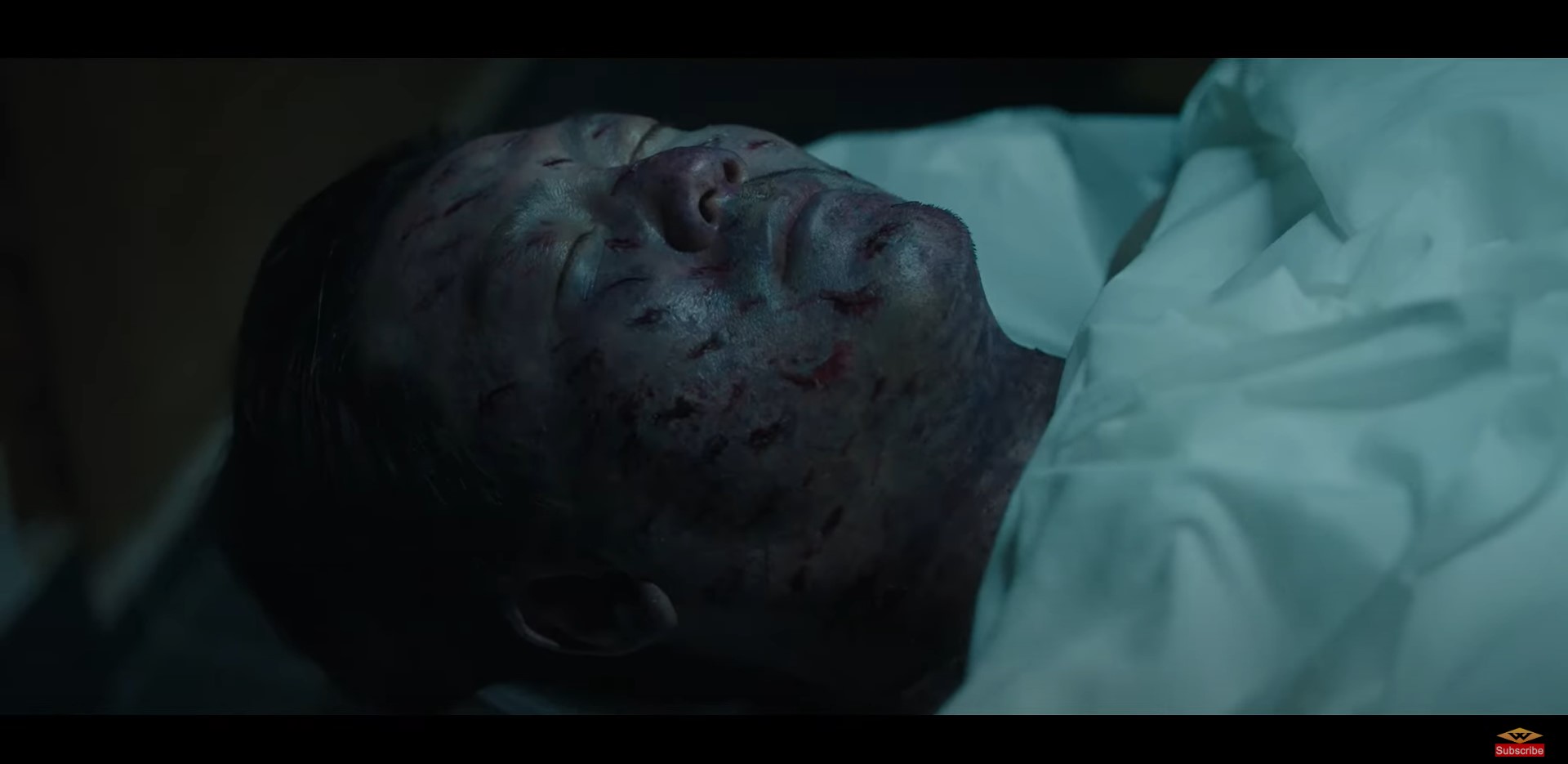
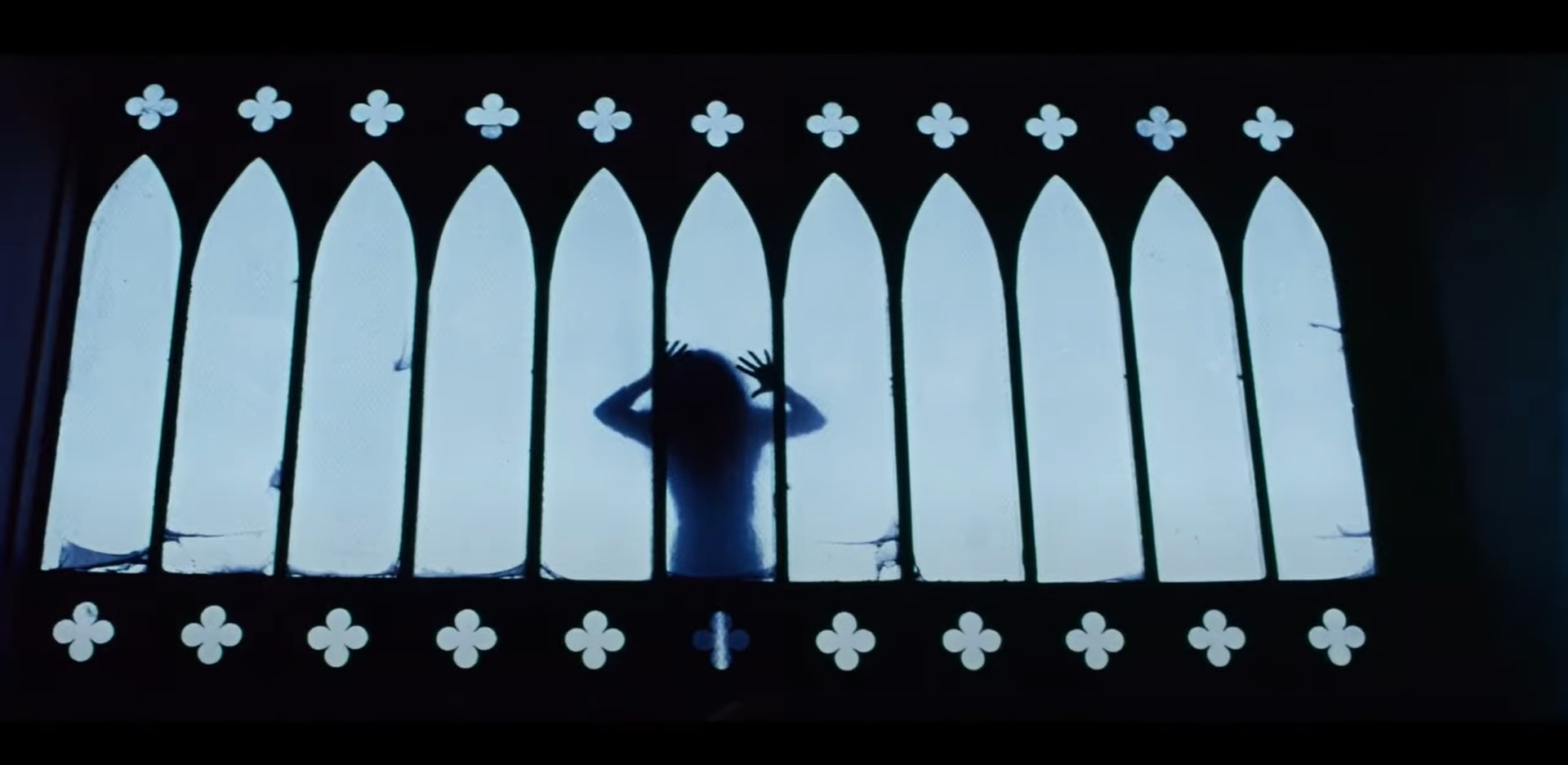
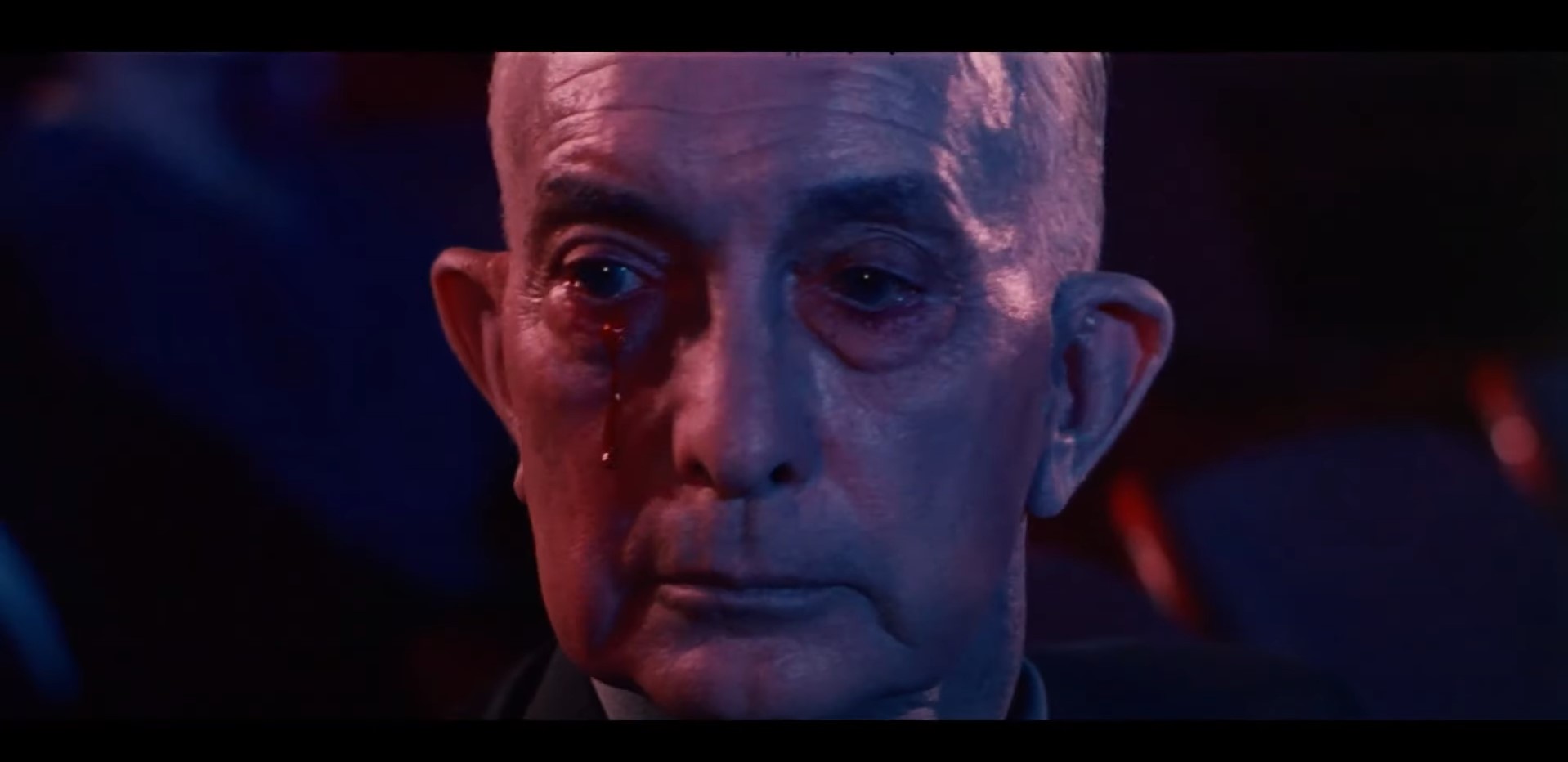
Huyck directs with colorful and verismo synergism that takes the positives of what should be life’s routine pleasures and turns them against us as fantastical and harrowin deadly elements of false securities.  The rolling crashes of Point Dune’s waves takes on a constant cacophony of sinister foreshadowing, a bright and welcoming supermarket becomes a vacant trap in every aisle, the entertaining movie theater darkens with blood on the screen, and an artist’s home, full realistic murals and colors, is an oppressive feast of lifeless eyes.  Point Dune becomes a dead town, literally, as the inhabitants succumb to dark forces from beyond their years, turning primeval in their contemporary three-piece suits and evening blouses.  Huyck and Gatz story pulls inspiration from U.S. history and folklore to mark the 100-year return of spreading evil amongst the land, an evil that resorts to cannibalism by either spellbinding archfiend, an internal infection, or the rise of the undead and not just any mindless, shuffling, flesh-eating zombie but a transmogrified plotter able to move fast and think as a single unit with the touched by evil masse with telltale signs of a single rivel of blood seeping from out of their eye and their insatiable need to consume other people. ”Messiah of Evil” is not overtly graphic like George A. Romero zombies or like the unbridled number of zombie films to follow inspired by Romero’s zombie game-changing wake for the last 60 plus years, separating the flesh-eaters from Romero’s gut-gnashing, pale faced, and slow-walking undead and Huyck and Gatz’s transmitted pestilent receiving horde running fast in their best church shoes with vastly different traits. Huyck and Gatz dip into more eldritch means with the return of a paganistic dark stranger in a pared down explanation without explicitly being definitive who or what the dark stranger (a demon?Antichrist?) is that is driving foreboding signs to a doomsday-disseminating end. ”Messiah of Evil” thrives as the mysterious and strange fulcrum of the beginning of the end told through the point of view of young woman left to tell the world of what’s to come only to be about as believed as much as a man wearing a polka-dotted tutu who has delusions of unicorns dancing the waltz with garden gnomes in his front yard. 

United Kingdom distributor Radiance Films releases a new restoration transfer of “Messiah of Evil” also on their U.S. line. The AVC encoded, 1080p high-definition, BD50 presents a 4K scan of the best-known surviving 35mm print from the Academy Film Archive in a widescreen 2.35:1 aspect ratio. As noted in the release’s inserted booklet, the restoration processes used was the Digital Vision’s Phoenix Finish and DaVinci Resolve was used for color correction, under the supervision of Sebastian del Castillo at the Heavenly Movie Corporation. Audio was also restored with the Izotope RXB. For a surviving print, the original elements look pretty darn good with barely any celluloid hiccup. No vinegar syndrome, not significant tearing, or exposure to name a few issues of possibility. There are a few minor blemishes and missing or damaged frames that seem to provide an unwanted cut but most of “Messiah of Evil’s” film problems stem mostly behind the camera with a rework of the story during the stop-and-go production and conflicts in marketing the film, hence the various title aliases of the film from around the globe. Other detail low points are when the film is bathed in blue and purple gels and tint for to set an apprehensive wander and wonder while retaining more natural grading in its majority throughout. The resorted audio is a lossless English LPCM mono mix. Really focusing on the electronic score of Phillan Bishop (“The Severed Arm”), the low-frequency score sets a perpetual and durable tone of dread out of place in a prosaic small town, much like the Arletty’s father’s work-of-art home that sticks out amongst the mediocrity. In design, dialogue remains robust yet delicate when the scene calls for it, such as Elisha Cook Jr. story of how he was born in what is essentially him, as a vagrant paid for his story, making the only noise in the room. Dialogue in these moments is greatly discernible with negligible electronic interference. Depth layers the permeating isolation of a town gone mad in unison with the range stretching from the distressing design of rolling, crashing, oppressive waves to the scuffles of zombies’ consuls and heels scuffing against asphalt, pavement, and shattering through panes of glass. Radiance provides English subtitles with their release. Bonus features include a new audio commentary by film historian and horror archetype authors Kim Newman and Stephen Thrower, an archived interview with director Willard Huyck, and a new, feature-length documentary showcasing “Messiah of Evil’s” background, themes, production, and influences by various horror scholars, including Kat Ellinger who also voiceovers a visual essay on American Gothic and Female Hysteria, which if I’m being honest, parallelly treads on similarities with Ellinger’s Motherhood & Madness: Mia Farrow and the Female Gothic on Imprint’s “The Haunting of Julia.” Radiance has in the short time poured their heart and soul into their releases and “Messiah of Evil” is no different with a sleek cladded and clear Amara Blu-ray case that’s subtle in showing less but feeling more on the cover art, opposite of the reverse side that houses a classical black and white compositional illustration of characters. Inside the 28th release for the label is a 23-page color booklet insert with the appraisal writings of Bill Ackerman, transfer notes, release credits, and acknowledgements. The disc is pressed red, much like the red moon in the film, with a stark black title. The Radiance release is unrated, region free, and has a runtime of 90 minutes. ”Messiah of Evil” uses cult fears, satanic panic, and the loss of ordinary life to penetrate the spirit by way of slowly eating at it. The crawling, creeping dread meanders, much like Artletty who is seemingly held in place at Point Dune, and we’re glued to the engrossing rate of the terror to come orchestrated by the captivations of a once married couple on a fast track toward success.

The “Messiah of Evil” has Come to Blu-ray Home Video!

Your Mother Sucks EVIL in Hell! “The Exorcist: Believer” reviewed! (Universal Studios / 4K-Blu-ray)

Let the Power of 4K Compel You!  “The Exorcist Believer” from Universal Home Video!

Thirteen years after having to make the tough life-and-death choice between his wife and unborn child, Victor Fielding strives to protect his daughter now teenage daughter Angela, even if that means being a little overprotective.  When Angela persuades her father for an afterschool study date with a friend, Angela’s seizes his moment of letting down his guard with real intentions to sneak into the woods with a different friend, Katherine.  Eager to connect with the late mother she never knew, Angela evokes a simple rite to call upon her mother’s spirit.  Three days later, Angela and Katherine are found in a barn, with no memory of days passed, and returned to their worried parents only to deteriorate with violent behavior, self-abuse, and an altered appearance that can’t be explained by science.  Desperate, Victor is turned toward Chris MacNeil, author of similar experiences that happened to her daughter Regan 50-years ago, to help exorcise an entity that has taken residence in the girls. 

William Friedkin’s “The Exorcist” has been labeled one of if not the scariest movies of all time, according to sources like Rotten Tomatoes, Rolling Stone Magazine, and countless other outlets who run a top-rated lists.  Usually in pensile at the top seed spot, “The Exorcist” has become a terrifying beloved and timeless horror classic amongst genre crossing fans who hide in horror behind a blanket as priests do battle in good versus evil while others may revel in and gawk at the profane possession of a young girl turned into a head-spinning, vomit spewing demon host.  No matter which category fans find themselves in, there’s one singular, common impression, “The Exorcist” could never be dethroned as the scariest movie of all time, even if direct sequel “The Exorcist:  Believer,” helmed by the latest “Halloween” trilogy director David Gordon Green, and marks the return of Ellen Burstyn as Chris MacNeil, contemporarily challenges the 1973 demonic suspenser.  The sequel would be doomed in an instant of it’s trailer, and know what?  It was for the fans had immediately forsaken it, prejudging it without a second thought and a holy exorcism prayer.  Fortunately, prejudging is not in my lexicon database until the credits role.  “The Exorcist:  Believer” is written and executive produced by David Gordon Green, cowritten by “Camp X-Ray” writer-director Peter Sattler, and executive produced Danny McBride (actor of “Pineapple Express” and producer of the latest “Halloween” trilogy), Atilla Salih Yücer, and “M3GAN” producer Mark David Katchur with James G. Robinson and Blum House’s Jason Blum producing.

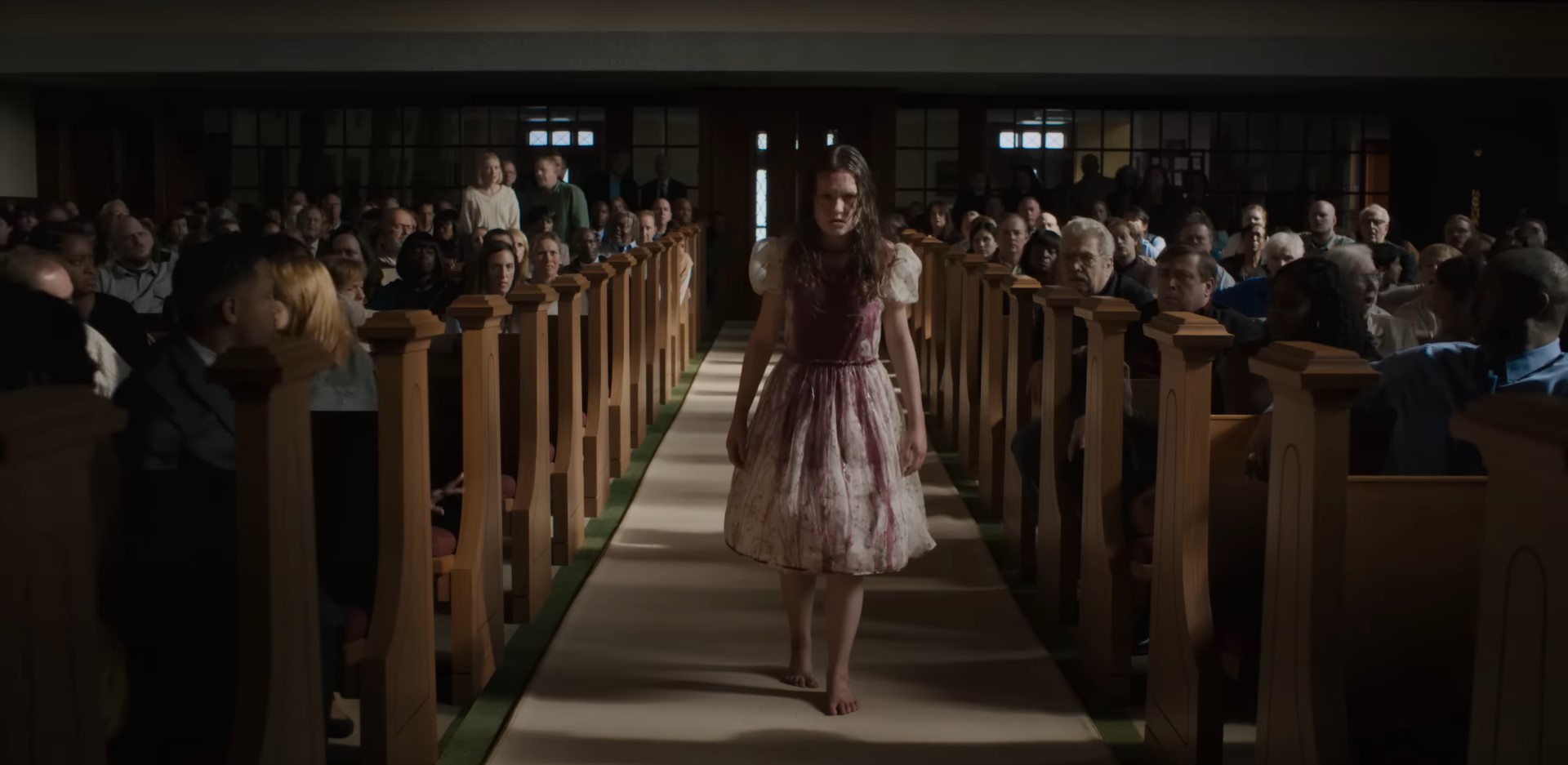
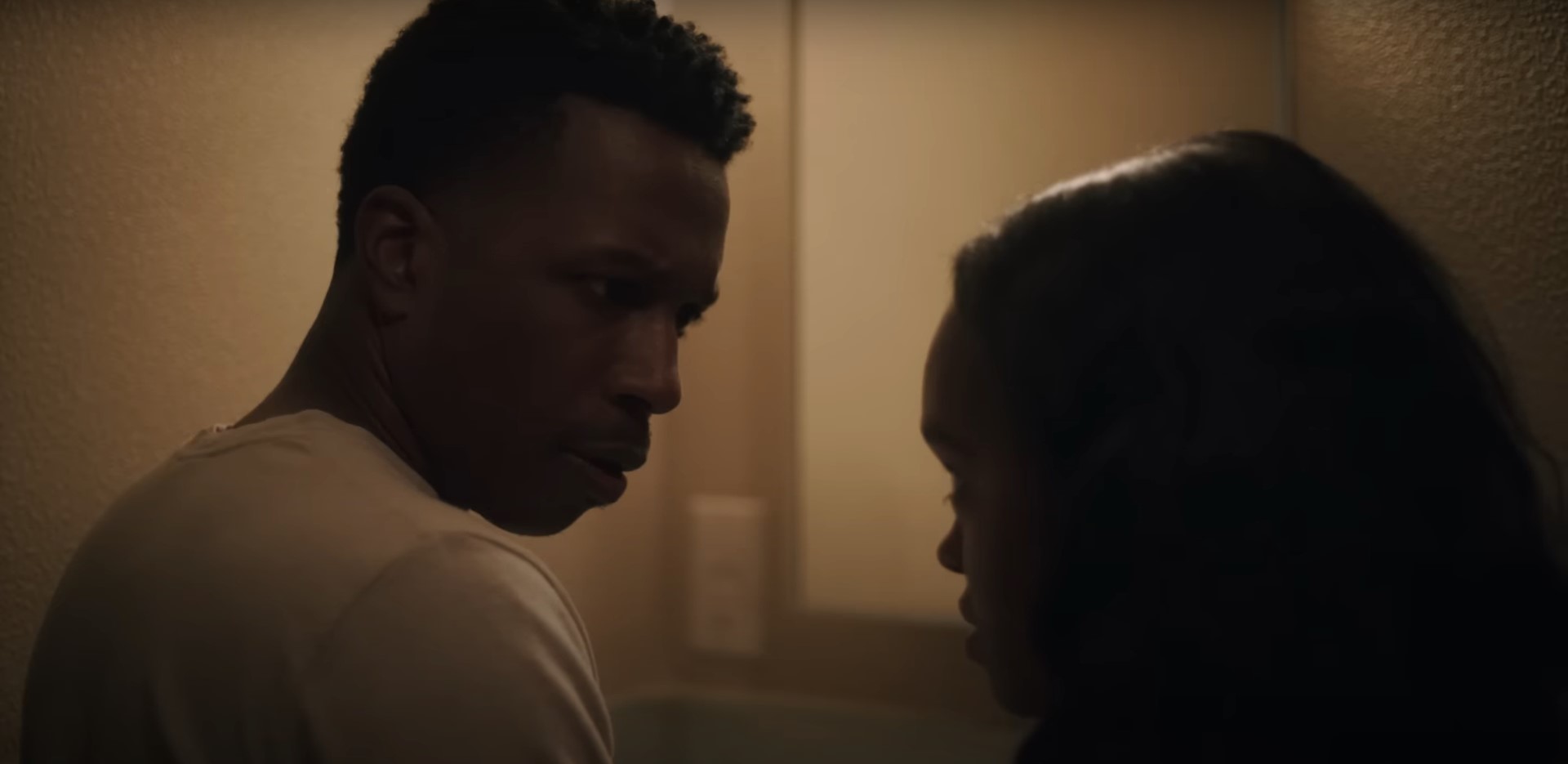
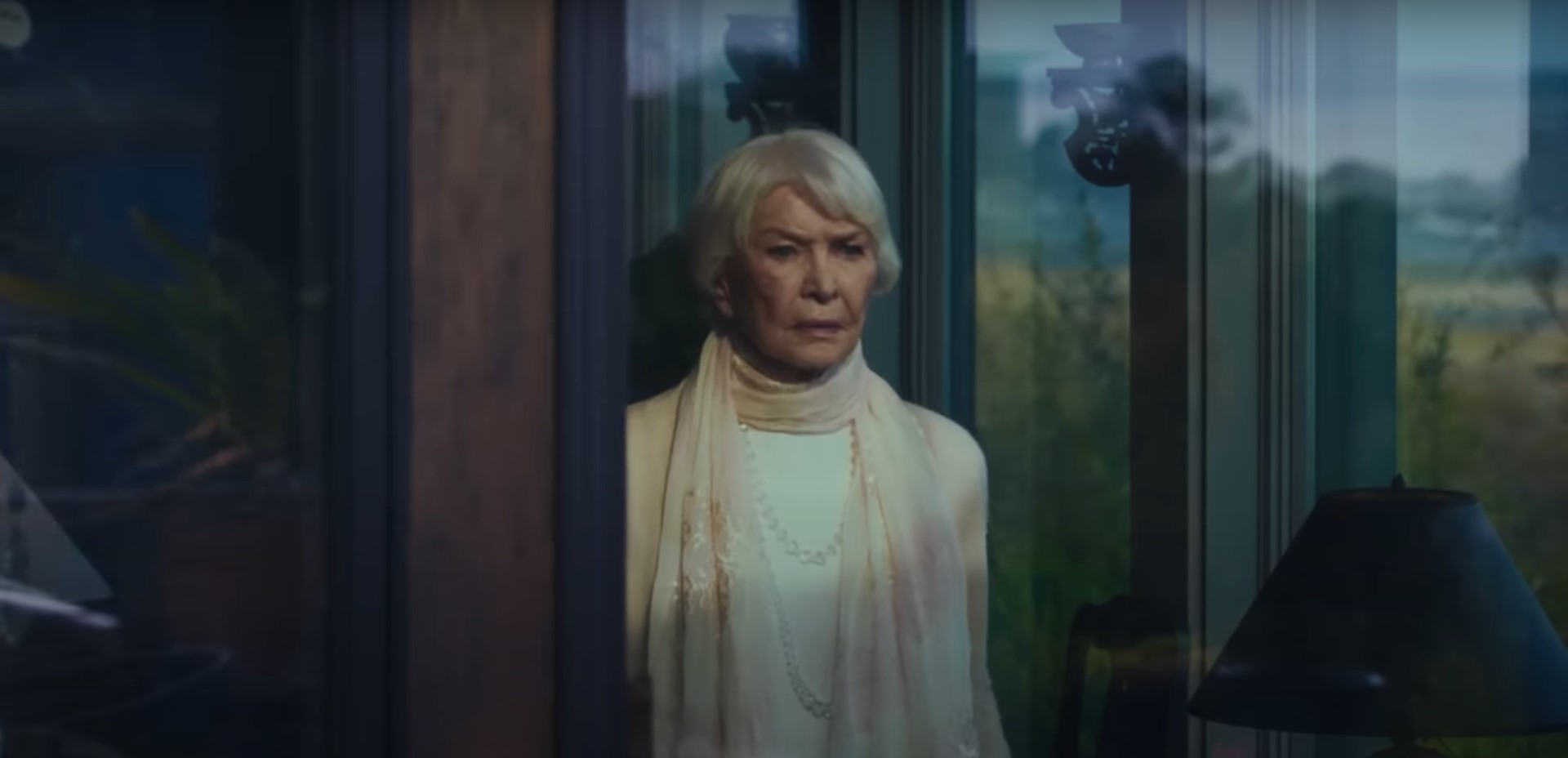
Much like Linda Blair stepping into Regan’s white gown before becoming vilely sullied by a demon, “Believer” hosts two up-and-coming actresses fresh for being Hell’s marionettes in Lidya Jewett and Olivia O’Neill.  Jewett, with more acting chops experience having had roles in kid friendly and feel good stories of “Wonder” and “Nightbooks,” plays daughter Angela to “Murder on the Orient Express’s” Leslie Odom Jr.’s widowed father Victor, a photographer who had to make a difficult decision after a massive Earthquake on their babymoon trip to ancestral Haiti cost wife Sorenne (Tracey Graves, “Sebastian”) her life but not their child.  The father-daughter combination becomes center story as a daughter trying to understand and know the woman who bore her despite living in reason to her death and a guilt-ridden father serving his existence by helicopter protection of his miracle child.  Angela and Victor’s story becomes intertwined between the past and the upcoming events, shedding light on circumstance that hinges on the subtle cracks of their relationship.  Meanwhile, the whole second possessed, Katherine, is essentially collateral damage.  Played as her debut role, Olivia O’Neill awfully resembles Linda Blair, recreating a Regan anti-transfiguration that has two purposes into the tale – 1) being a second difficult choice for Victor Fielding and 2) a bridging support to connect to Friedkin’s film in it’s 50-year gap alongside the more prominent connection in Ellen Burstyn returning as Regan’s mother Chris MacNeil.  MacNeil’s return gives “Believer” a boost in legitimacy and the potential to put die hard “The Exorcist” fans’ butts back into theatrical seats for the sequel, but the then now 91-year-old actress, who was likely in her late 80s or 90 at the time of principal photography, seemed relatively uninterested.  Now whether that was age related weariness or not is undeterminable, I’m sure it was a factor, but there is no pop in the actress’s step as a mother who previously fought the devil for her daughter’s soul and won.  “Believer” rounds the cast with some throwaway characters who come into the picture offering slim worth despite being pivotal to the story’s universal belief theme with performances from Danny McCarthy, Sugarland country singer Jennifer Nettles (“The Amityville Horror” ’05), Norbert Leo Butz (“New World Order”), E.J. Bonilla (“The House That Jack Built”), Okwui Okpokwasili (“Master”), Rapheal Sbarge (“There’s No Such Things as Vampires”), and “Handmaid Tale’s” Ann Dowd as the former nun-turned-nurse neighbor of the Fielding’s. 

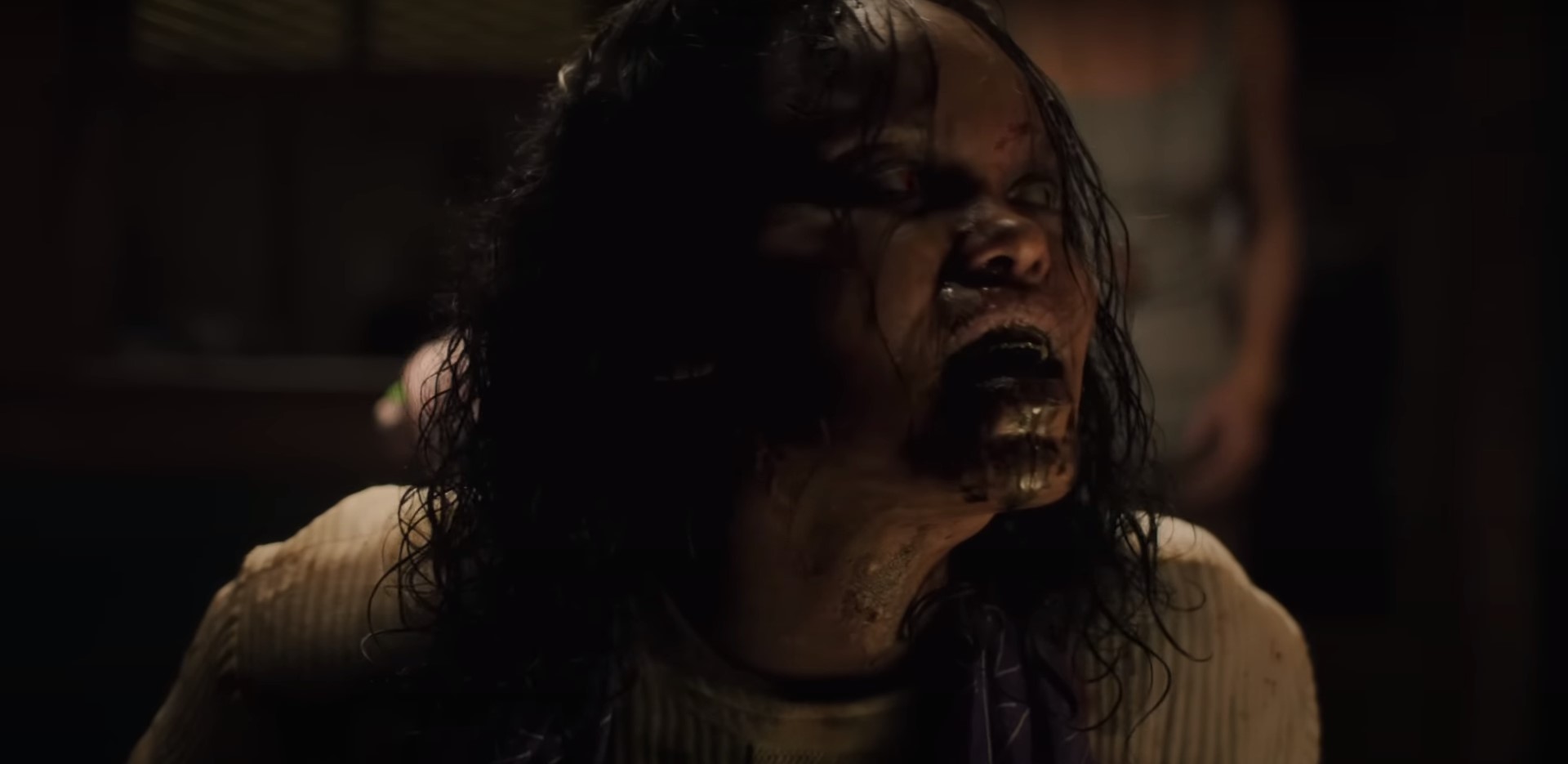
Much of “Believer’s” message is to separate the Catholicism answer in order to separate the sequel as a duplicate of the 1973 production where Catholic priests dig in deep to expel the demon from within.  Writers nix the Catholics by making them not only unwilling participants, afraid of the damage that might incur from an exorcism, but also immediately removing the only willing Catholic to go against the Church in order to do the right thing.  Damned if you do, damned if you don’t.  Instead, “Believer” marks an era of new faith or, rather, new faiths with a sundry of religious convictions unifying to bring the girls back beyond Hell’s reach and dominion.  Pastor of a Georgia Baptist church, excommunicated nun, Earth-centric religious beliefs, and skeptics formulate a bond to save loved ones, creating the perfect bedrock for taut tension with colliding beliefs and, yet there’s none of that disagreement as much of the dissent is turned toward from within the individual who challenges their own convictions in what they see, hear, and experience.  For the most part, the farrago works against the grain of dichotomies who are usually at each other’s throats to one up their own beliefs, Gods, or what have you.  The incongruous mix of faiths easily falls into rough-and-ready kumbaya in what assumed scared beyond the point of a reality-smacking wakeup call that announces the confirmation of Heaven and Hell.  Netherworld hellion can very much be felt akin to Regan, though I believe Pazuzu’s possession of Regan was more violent and obscene in comparison to the diluted Lamashtu having been split into two bodies.  Lidya Jewett and Olivia O’Neill rocked the Christopher Nelson (“Fear Street” trilogy) makeup artistry to distinguish and differentiate themselves from each other but still stay in line with the Regan model and like the Pozuzu demon, we don’t get to see or experience much of Lamashtu other than phasing briefly into that plane of existence within the soul to see the winged, horned, and deformed body cast of the demon through the distorted, blurry sight of a viewing glass.  While practical effects shine with the makeup, prosthetics, cable work, and so forth, praise for the entire body of work is containment by the use of poor, poxy visual effects in an attempt to be bigger than its much older predecessor.

For double the demon, you can get 4-times the sharper image with the new Collector’s Edition of “The Exorcist: Believer” on a Universal Studios 4K UltraHD, Blu-ray, and Digital Code set. The 2-disc set presents the feature in a widescreen 1.85:1 aspect ratio. The 4K UHD is stored on an HEVC encoded BD100 with a HD10/Dolby Vision resolution while the Blu-ray comes AVC encoded, BD50 stored with a 1080p resolution. There’s nothing really to fault with the presentation that sets crystalized moods and tones without a hint of compression complications on either format. Through the lens of Michael Simmonds, the tenebrous tone of the new Halloween trilogy, variegated briefly only by surround bursts of the environment elements, is transplanted to “Believer’s” as in equal in less light austerity. UHD pixels offers slightly contouring and detail but not much to make a tremendous different between image presentation, which both really do the job pulling every surface attribute from the possessed girls’ abraded faces and a mounting demon taking shape. Both formats contain an English Dolby Atmos and Digital Plus 7.1 surround with the Blu-ray also sporting a DVS 2.0 stereo mix. Again, not much to express negatively here with a multifaceted and versatile output that creates the tension but lacks the palpable finesses of the original film by adding more score to the production with a sample nod of Mike Oldfield’s iconic tubular bell theme integrated into a less iconic composition by Amman Abbasi and David Wingo. Sound design ushers in a nice ambience and spatial rhythm while also inducing a couple of sudden low-frequency jump scares. Dialogue is clean and clear with the appropriate intensities in due part. Other non-English options include Spanish and French on the UHD and Blu-ray. English, Spanish, and French subtitles are included and optional. Bonus features, in 1080 HD, includes Making a Believer a behind-scenes-look with cast and crew interviews and raw principal photography footage, Ellen and Linda:Reunited sits down briefly with director David Gordon Green, Ellen Burstyn, and Linda Blair on reuniting the actresses after many years for the first time in scene, Stages of Possession goes through the makeup process and the Lydia Jewett and Olivia O’Neill’s impressions on the possessed makeup and prosthetics, The Opening shot in the Dominican Republic to recreate Haiti where the story begins, Editing an Exorcism has editor Timothy Alverson (“Sinister 2”) speak toward editing the chaos and creating scares in a new “Exorcist” installment, Matters of Faith explores theologies via consulting experts to recreate accurate depiction of different beliefs, and feature-length parallel commentary with co-writer/director David Gordon Green, executive producer Ryan Turek, co-writer Peter Sattler, and special makeup FX designer Christopher Nelson. Stylistically, I really like this sleek multi-format package design of the two deeply possessed girls, sideways on a black and silver and monochrome kissed cover as you don’t get too lost in the coloring and focus on just what we’re all here to see, the demonic destruction, right on the rigid O-slipcover with embossed title in the middle. The 4K Amary case holds the same image arrangement back and front compared to the slipcover. Inside, each format resides on its own side of case real estate with the Blu-ray pressed with simplistic CD-like art while the UDH goes with the same front cover image. In the insert slip is a digital code for your downloading pleasure. With a near 2-hour runtime at one hour and 51-minutes, the release doesn’t list region playback, but I would suspect region one and is rated R for some violent content, disturbing images, language, and sexual references. With the exception of a few moderately eye-twitching jump scares, “The Exorcist: Believer” has been exorcised of the breath-holding terror that exalted William Friedkin’s film. However, what David Gordon Green produces is a different breed of religious cultivating inclusiveness inclined to be more so about the social commentary than being about the rite of excruciating deliverance. 

Let the Power of 4K Compel You!  “The Exorcist Believer” from Universal Home Video!

Eric Bana Embraces EVIL’s Infamy! “Chopper” reviewed! (Second Sight Films / Blu-ray)

Mark “Chopper” Read is one of Australia’s bestselling authors.  Read is also one of Australia’s most notorious criminals having wrote his autobiography in prison.  The pathological criminal’s life begins in the H Division of the Pentridge Prison in the late 70s where he quickly establishes himself a leader of a small three-man gang and viciously murders a rival leader at the chagrin of his acolytes, Jimmy Loughnan and Bluey Barnes.  When Jimmy turns on Chopper, stabbing him multiple times and then accusing him of attacking first, the ordeal has a subtle effect on the wildly shrewd and wayward Chopper who 8 years later is released with massively suppressed paranoia as old flings and old acquaintances are believed to be going behind his back or contracting a kill order on his head.  Under the delusions of working for the police, a paranoid, suspicious-filled, and unpredictable Chopper takes the opportunity to revisit old accomplices, such as the treacherous prison mate now turned drug addicted family man Jimmy Loughnan, after rumors circulate of Loughnan’s involvement in placing a contract on Chopper that results in conspiracy and murder.

Not to be confused as being completely autobiographical, or even semi-biographical, “Chopper” is a highly-stylized and self-proclaimed embellished account of the late Mark Brandon Read.  The Australian feature written-and-directed by Andrew Dominik (“Killing Them Softly”) was once the highest grossing Australian films of all time and still marks as a predominant, early 2000 release to accentuate Chopper’s high energy, erraticism, and violent behavior along with a stellar, method-acting performance from the lead star Eric Bana, who before turning into one of Hollywood’s most recognizable Australian actors was a former sketch comedian and stand-up comic.  Shot in Melbourne, Victoria, “Chopper” is produced by Michele Bennett and Michael Gudinski (“Wolf Creek,” “Cut”) with Al Clark (“Gothic”) and Marin Fabinyi (“Bait’) as executive producers under the state funded Australian Film Finance Corp. as well as Mushroom Pictures and Pariah Entertainment. 

As mentioned, Eric Bana, star of Ang Lee’s “Hulk,” and having villainous roles in the J.J. Abrams “Star Trek” prequel and “Deadfall” alongside Olivia Wilde, helms the titular character with a plumped-up version of himself, grows a wicked handlebar mustache, and engrosses himself into the peculiar persona that is Mark Brandon Read.  “Chopper” really puts Bana’s range on display with a crucial to success performance and the actor lets Read sublease headspace in what is an aberrated humor and darkly concerning ball of a biography.  Bana manages to make Chopper likeable yet terrifying, funny yet ferocious, and human yet monstrous as an unpredictable juggernaut of paranoia and survival that only knows how to protect himself by thwarting violence with violence.  Chopper mingles with other unsavory, carnivalesque characters in his journey through a jailbird’s life with what he considered his number one mate in prison Jimmy Loughnan (Simon Lydon, “Blackrock”), an old foe in Neville Bartos (Vince Colosimo, “Daybreakers”), and druggie girlfriend Tanya (Kate Beahan, “The Return”).  In Chopper’s post-near death eyes, enemies and friends are now subject to his suspicions, making him truly lonely in his own world of crime.  Performances shepherd in waves of volatility, intensity, and even immodest humor that force the scenes between them and Chopper into a pool of frigid and death-calling ice water, yet somehow, in the same breath, Dominik is able to take those performances in “Chopper” and turn them into one-giant joke at Read’s expense while still managing to keep afloat some sort of baseline truth to this period in time of his existence.  “Chopper’s” cast fills out with other colorful roles from Dan Wyllie, David Field, Gary Waddell, Hilton Henderson, Kenny Graham, Brian Mannix, Sam Houli, Robert Rabiah, Skye Wansey, and Terry Willesee. 

Most Americans will likely never understand “Chopper” as the comedy Dominik intends.  Bana does so damn good at his job, especially in his feature film debut, and Dominik’s black humor becomes murky by subsequent and sudden jerks toward humanization that audiences will grasp in different directions on how they’re supposed to feel and relate toward a character who stabs a man to death in the face and then cry in compassion for him or beats his girlfriend and then next scene unzips his pants and pulls out his manhood under the bar countertop to show his now ex-girlfriend while talking to two police investigators about his delusions of undercover responsibilities at the other end of the bar.  In its two-tone theme of the 1970’s thin, assured, and incarcerated Read and the decade later bulkier, paranoid, and free Read, “Chopper” has paradoxical and against the grain tones of wildly encompassing visualized thoughts stitched stylistically in the same fashion for pure entertainment value to symbolize Read’s emotively internalized expression.   Though fully linear, Dominik’s narrative structure can also be off-putting to audiences, digging into the entertainment value with crude edits and choppy segues that hardly shapes a timeframe and that can be tough for viewers invested in a particular storyline only to be abruptly pulled out of it and placed into another decade and an entirely different situation altogether.  Then again, “Chopper” essentially has no conventional plot other than the fleeting, distinct stages of a bumpy and insecure Mark Brandon Read’s course through crimes of contract and charisma of character. 

“Chopper” arrives onto a Second Sight Films Limited Edition Blu-ray set and a Standard Edition Blu-ray in association with Vertigo Releasing.  This reviewer was able to get hands on the Standard Edition that’s an AVC encoded BD50 with 1080p High-Definition resolution of a 2K graded, restored scan presented in a widescreen 1.78:1 aspect ratio.  A steely graded first act leads into vivid variability with color, matching Chopper’s descent tenor from shaking stability to a rocky road of mistrust. Decoding at a bitrate of approx. 23Mbps, Second Sight Films’ scan has elevated the details within the tumble of stylistic choices that closely symbolizes specific Chopper eras in which a very different Chopper is exclusive to one or the other while retaining a great amount of natural grain of the 35mm print. Audio specs include an English DTS-HD Master Audio 5.1 which, though lossy, has great compressed fidelity mostly in the dialogue department. Plenty of reverberations captured onsite at the Pentridge Penitentiary scenes that add a slither of realism instead of isolating solely the actors’ discourse. Dialogue itself is clean and clear without obstruction. When moved past Pentridge, the environment layers are scaled back to more isolated effects driven by the actors, i.e. gunshots, scuffles, etc., and so we lose that bit of realism deeper we go into Chopper’s psyche and the soundtrack from “Deliver Us From Evil’s” Mick Harvey pumps a little harder. Optional English subtitles are available. Though missing out on some of the physical lot in the bonus content, the standard release still offers a bountiful built-in special feature of old and new with fresh commentaries by Australian critic and author Alexandra Heller-Nicholas and Australian film scholar Josh Nelson, new interviews by writer-director Andrew Dominik Stand-up Comedy and Violence, new interview with composer Mick Harvey Not your Typical Film Composer, and a new interview with editor Ken Sallows A Tale of Two Halves. Archived bonus material regains new life and traction with commentaries from Chopper himself Mark Read and one with Andrew Dominik, a behind-the-scenes that sees raw film footage and cast and crew tidbits, a Weekend With Chopper is raw and untouched home video footage of Andrew Dominik and Eric Bana spending a couple of days with a wildly excited Read giving anecdotal accounts of his prison life and discussing his disbelief with a film where the subject is himself, and deleted scenes with optional director’s commentary. This particular Second Sight release comes off a little different than past dispersions in physical attributes with a clear green Amary Blu-ray case, something I have not seen before from the UK label. Detail illustration of Eric Bana as the titular Chopper holding a gun to his head in ebullience is quite striking and explicit in its purple-green coloring. Inside is what you roughly get with any standard release with no insert, but the disc is pressed with the same cinereal-alike art representing one of the Chopper’s frequent locations in the story. ”Chopper” is regionally locked on B for the feature that has a 94-minute runtime and is UK certified 18 for strong bloody violence and very strong language. Unlike any criminal to have ever lived and to have ever been represented on screen, “Chopper” wily tussles with Western audiences despite the dedication of Eric Bana but the work and the film can’t be denied as anything but great about an unusual man in a hyper dramatization that pierces more truth than fiction and now Second Sight cements a next level, Hi-Def release to better legitimize the irregular gang member and thug Chopper into cinema homes around the globe.

EVIL Loves to Clown Around. “The Jester” reviewed! (Dread / Blu-ray)

“The Jester” on Blu-ray Home Video!

Days before Halloween, a man hangs himself from off a bridge.  His funeral not only services the wake for his grieving daughter Jocelyn but also brought out his estranged and aggrieved daughter Emma, Jocelyn’s half-sister from a failed marriage their father had abandoned when Emma was very young.  Jocelyn reaches across the aisle to connect and to bond with the peripheral Emma, but the scorned older half-sibling only expresses anger and confliction over feeling grief for man who no longer wanted to be a part of her life until the very end after reaching out a few times to make amends.  Emma and Jocelyn soon discover that a malevolent, supernatural trickster, known as the Jester, was somehow involved with their father’s untimely demise and now, on Halloween night, the Jester is following and toying with them in a playfully sadistic manner, preying on the one thing that bonds and also disconnects the sisters from being content. 

Based on his 2016 three chaptered shorts of the same name, writer-director Colin Krawchuk pulls from the best parts of those shorts, sprinkles a little more sadism on top, and creates his debut into full-length feature film with this titular antagonist, “The Jester,” at the center.  Co-written with longtime collaborate on various shorts as well as “The Jester” shorts is Michael Sheffield, who also brings to life the Jester’s amusing animated animosity and flamboyant cryptic personality from script to screen.   “The Jester” represents a theme of tormenting guilt for this afflicted and those surrounding the person and is symbolized by the absurdity of a clown masked fool in a gaudily colored top-hat and cheap suit with a deviant chip on his shoulder.  Film in and around the Frederick, Maryland area, “The Jester” is a product of Cinematic Productions, based in local Maryland region, and the Dread Central acquiring entertainment company, Epic Productions, under the Dread genre label with Carlo Glorioso, Patrick Ewald, and Katie Page producing with Mary Beth McAndrews and Eduardo Sánchez (director of “Satanic Hispanics”) executive producing.

Through the years of cinema, a plethora of personalities have emerged all vying for our entertainment seeking eye and while most, especially in the indie market, recycle the very idiosyncratic eccentricities of notable characters or extract some inspiration for blatant misappropriation into their own performance, every once and awhile comes a role that can be undeniably fresh, engaging, and unpredictable.  That’s how Michael Sheffield’s Jester presents to me as a versatile villain with broad expressions and precise stratagem that even by not saying a single word in the entire runtime still manages to have us on edge with just what’s up the Jester’s playful, prestidigitate sleeve.  Sheffield’s tall and lanky stature greatly suits the Machiavellian complimented by the outlandish vestments and wooden cane.  As an unceremonious symbol of guilt, the Jester becomes the obstacle between half-sisters from both sides of their father’s railroad tracks.  Delaney White’s introductory feature film begins her off as Jocelyn, a well-liked, sympathetic, and balanced young woman who can’t help but want to connect with an older half-sister she never knew.  Lelia Symington (“Brut Force”) couldn’t portray older sister Emma anymore opposite as a daughter holding onto a rightful grudge against a father who abandoned here at a young age.   That same bitterness extends to the more affable and kept cherished extension of her father, to Jocelyn, but an innate emotion eats at Emma, an inexplicable pang for his death that drives her to pique when she shouldn’t care less about her deadbeat dad and that manifests into deadlier, dastardlier demons, or at least one dressed-up, duplicitous, and dapper demon.  Matt Servitto, Lena Janes, Mia Rae Roberts, Sam Lukowski (“You’re F@#K’n Dead!”), and Cory Okouchi (“Ninjas vs. Zombies”) fill out “The Jester’s” roles.

Once the end credits started roll, I immediately research “The Jester” like I do with all the films I review to try and go beyond just the film with information, trivia, connections, see other reviews and public opinion, etc.  Why?  Because I’m a hardcore nerd, but what I found in the public comments about the film, especially on Letterboxd, is that many compared “The Jester” as a rip of Art the Clown from “Terrifier.”  Initially, a small voice inside my mind, processing the images from my visual cortex, thought the very same the mass majority did, or does rather.  Quickly, I nipped that fleeting resemblance in the bud because of a couple of reasons: “Terrifier’s” whole gag is gore-drenched for purely shock value as Art the Clown terrorizes and kills those in his path whereas “The Jester” represents more between the lines of guilt, loss, and connecting with what matters between the disfiguration of a dysfunction relations and the other reason is both films nearly sprout at the same time.  Yes, “All Hallows Eve” was released three years prior to Krawchuk’s short films and while it’s unknown whether the director was inspired by Damien Leone’s first pass, “All Hallows Eve” didn’t quite overflow the social media cup like “Terrifier” did a few years later.  Many in the horror community compare “The Jester” to “Terrifier” despite the latter not having been coined until the same year as “The Jester’s” shorts films were released.  Sure, Art the Clown and the Jester share similarities, such as a form of a clown mask and have malevolent supernatural abilities, but the blanket comments are like saying just because Jason Voorhees wears a mask, uses a knife, and doesn’t say a word that he is a clone of Michael Myers.  Overall, “The Jester’s” understated tone with a no holds barred harlequin has decent dark humor due in part to Michael Sheffield’s charade of an act and precision special effect, editing, and camera angles.  Where “The Jester” struggles is where it hurts the film the most and that is with an ending that just drops off the edge of the cliff without a ton of closer that really wraps Jocelyn and Emma’s story neatly nor offers a satisfyingly open-ended dangler for more violent jest.   Perhaps 7-years too late after the release of the shorts, “The Jester” will see push back as a facsimile but I implore you, the readers, to give the Colin Krawchuk feature more than just a bias-gazing once over. 

Epic Pictures’ genre label Dread releases “The Jester” on an AVC encoded, 1080p high-definition, BD25 that’s presented in a widescreen 1.85:1 aspect ratio.  As much of the film takes place at night, details are heavily reliant on the lighting and the compression encoding.  While “The Jester” is not the epitome of sharp edge delineation and detail with a supercharged color palette, the encoded shingles retain a pullulating scheme of adequate grading and detail keeping artifacts to a reduced level within the slightly softer image. The heavier image compression is fastened to the three shorts in the bonus content with horrendous basins of splotchy patches. Two English Dolby Digital audio tracks come with the release: a 5.1 surround sound and a 2.0 stereo. Each render about the same with the 5.1 slimming down and isolating channels for specific back, front, and center audio assignments. No issues with the clean and clear dialogue through the digital, interference-free registering though most of the conversations are one-sided with the Jester’s mime expressions. English closed caption subtitles are available. The three Colin Krawchuk and Michael Sheffield 2016 shorts, as I said multiple times already, are included in the special features along with the official trailer and other Dread previews. The standard Blu-ray Amary has a hard-lit Jester face to exact ever fold of the mask smack on the front cover with a bare insert pocket and the pressed disc art fanned out with the Jester’s antique playing cards imprinted on top. The region free release has a runtime of 80 minutes and comes not rated. Clever, entertaining, and devilish, “The Jester” acts the whimsical clown of conscience-stricken torment with an indelible joker different from the rest of the villainy pool.

“The Jester” on Blu-ray Home Video!

Amusing Little EVIL Enjoying the Carnival Rides! “Ghoulies II” reviewed! (MVD Visual / Blu-ray)

Next Time You Sit On the Can, Check the Bowl First!  “Ghoulies II” on Blu-ray!

The travelling Hardin Family carnival has been on a steady decline through the years.  The Hardin Holdings group, aka Mr. Hardin, dispatches his young senior accountant and son, Philip Hardin, as authoritative proxy to ensure sustainable profit.  One of the longstanding attractions, Satan’s Den, lies headfirst on the chopping block with a dismal profit rate.  Determined to recover and avoid being permanently shut down, Larry, his drunk uncle Ned, and actor Sir Nigel Penneyweight won’t give up so easily despite needing a miracle.  That miracle comes in the form of the Ghoulies who hitch a ride on Satan’s Den’s trailer while escaping persecution.   The pintsized demons bring the slowly withering Satan’s Den back to lucrative life but at the deadly cost of the patrons and carneys who fall victim to the Ghoulies impish behavior.  Larry vows to rid the amusement on their infestation after uncle Ned perishes at the demons’ tiny hands but Philip has glimmering money signs in his eyes. 

They’re back!  The Ghoulies return as masterless nomads after a failed attempt of abduction by a devout crusader aiming to destroy the pagan evocations and wreak mischievous havoc on a two-bit amusement park suffering from low attendance.  The late Albert Band, father of Full Moon’s Charlie Band and director of “Dracula’s Dog” and “I Bury the Living,” took over the reins from first film director Luca Bercovici and helmed “Ghoules II,” a vastly different kind Ghoulies tale of terrorizing totality based off the Charlie Dolan story and a polished script from “Re-Animator’s” and “From Beyond’s” Dennis Paoli.  Filmed entirely in Rome, and mostly in a soundstage, where Empire Pictures headquarters were located, the 1987 sequel was the last Ghoulies venture from executive producer Band and his Empire Productions empire before Vestron oversaw the subsequent sequels.  Albert Band produced the feature with Frank Hildebrand (“Once Bitten,” “Project Metalbeast”) serving as associate producer. 

With the contestable exception of the five prosthetic creatures receiving a dust off and sprucing up paint job, none of the lively characters from the first film return for the sequel in what becomes a principal clean slate.  The story starts off with who appears to be a man of God fleeing on foot with a bag over his shoulder from three cloaked cult acolytes.  There’s never a reference to this escaping man (Anthony Dawson) or the shrouded cultists in torch-in-hand tow but does arouse a bit of enigmatic energy around the Ghoulies misadventures through the human plane and happening upon the likes of two opposite side of the spectrum carneys who are also related between the long-in-the-tooth and drunk Ned by the loveable character actor in Royal Dano (“Killer Klowns from Outer Space,” “Spaced Invaders”) and his big top tenderfoot nephew Larry played by Damon Martin.  Ned’s alcoholism combined with stress over possibly losing Satan’s Den makes causes him complexity within his closest confidants for when he happens upon the Ghoulies after citing an incantation, he’s also in a drunken stupor, and so he words of exciting, or maybe even warning, fall on deaf ears as intoxicated imaginations that result in a pity for his dependency.  As Larry and the Shakespearean line spewing Sir Nigel Pennyweight (Phil Fondacaro, “Willow”) continue with setting up the ragamuffin that is the antiquated Satan’s Den, they let Neg wander despite suspecting his delusions of demons due to the pressures of one carnival hotshot Phil Hardin (J. Downing, “Robot Wars”) who has come to town to clean up his family’s carnival act with threatens of shutdowns and layoffs.  Hardin’s your typical weight-throwing antagonist with a pompous attitude and wandering eye for the most gorgeous girl under the tent, in this case it’s with Larry’s love interest Nicole (Kerry Remsen, “Pumpkinhead”), a once great high-wire performer turned belly dancer for the departmental freakshow act.  Nichole’s hidden talents, buried deep beneath past personal pain, will undoubted be utilized for climatic gain as all chaos breaks loose on carnival grounds with the Ghoulies break free of Satan’s Den menagerie of cardboard and latex-crafted horrors.  “Ghoulies II” rounds out the cast with Jon Pennell, Sasha Jenson, Donnie Jeffcoat, Donald Hodson, Dale Wyatt, Romano Puppo, Ames Morton, Michael Deak, and Full Moon actor-turned-director William Butler (“Night of the Living Dead” ’90, “Baby Oopsie”).

Along with a new set of human characters, “Ghoulies II” also freshens up the trajectory by focusing less on the black magic that saturated the plot of the first film and relying more on the gremlin-like playfulness of the Ghoulies themselves, rightfully giving way into the very creatures of the title. There’s some magic involved but only to the extent that doesn’t have the Ghoulies rely on a master to evocate them from the Netherworld or for the dark powers to be used to perpetuate wickedness upon others.  Instead, the ghoulies are depicted utilizing their skillsets, such as flying, oral expelling sticky-gunk, super-strength, and chomping, which obviously lead to more of a micro-level apocalypse of carnage; however, the print obtained for the MVD Blu-ray release is the edited down version for theatrical circulation so some, not a lot mind you, of the gory bits have been taken out and this makes the storyline stutter with misplaced time with rough segues and an imbalance of edits that aren’t as smooth.  From what I’ve seen, the minuscule timed deleted scenes are not much more violent or gory but add just that tad more context to the next scene instead of our brains working to connect the dots on what should be a brain shutoff, entertaining creature feature.  Yet, you can’t deny the sequel’s appeal that has turned to center around the little demons assiduously but managing to keep the same, steady pace of ferity and gothic skim of mise-en-scene from the first.  Puppetry is retained for that palpable product while also introducing stop-motion, a visual effect that has served Empire/Full Moon well throughout the years and is only used sparingly to wet the limitless capabilities of our miniature monsters to roam free in open spaces. 

“Ghoulies” return with the sequel to MVD’s Rewind Collection as Blu-ray release number 53 on the spine. The AVC encoded, high-definition, 1080p Blu-ray is presented in a widescreen 1.85:1 aspect ratio. A virtual carbon copy of the first film in regard to a well-preserved print, the sequel isn’t noted in having a 4K restoration scan like the antecessor release number 52 but the 2K scan offers an abundancy of positive picture rendering with a seamless color grading that isolates distinction and range as well as a tangible details, especially on characters and the ghoulies alike who are often gleaming and show off every nook and cranny ridge on their dark, hairy bodies. Aforementioned, this print is the theatrical cut, missing some gruesome elements for the sake of a broader audience, and while most of the print is near flawless, there is one dunk tank scene that’s cropped and noticeably marred with horizon creases in the brief airtime. The English LPCM uncompressed 2.0 stereo mix caters to every audible necessity of the “Ghoulies” soundtrack, ambience, Foley, and dialogue. The latter is clean and clear with prominence over the rest of the layers though I wouldn’t label it flawless with some echoey segments, almost a doubling effect, that might be due to the soundstage vibrations at Empire. Ambient track provides a wide range with exact depth with the example being inside Satan’s Den of horrors where doors creak, motorized bats fly overhead, and other models of haunted house spookery, along with an underlining carnivalesque soundtrack by Fuzzbee Morse (“Dolls”), is the epitome of a great sound design suffused together. English, French, and Spanish subtitles are optionally available on this release. Special features include an introduction by screenwriter Dennis Paoli, which is also available as a standalone at the play feature option, More Toilets, More Terror: A Making of Ghoulies 2 is a retrospective lookback with select cast and crew, an interview with Dennis Paoli Under a Magic Moon, the gruesome deleted scenes, a photo gallery, and theatrical trailer. Physical attributes include a VHS retro-esque mockup of the original poster art on a cardboard O-slipcover, fitting for the sub-bannering Rewind Collection. The same image graces the front cover of the clear Blu-ray Amary case, but the cover art is also reversible with one of the film’s most memorable smoochy-kiss moments plus title above. The disc is art pressed similar as the first film, a laser disc veneer on the Blu-ray top. Opposite side is the folded poster insert of the slipcover front image. The region A playback release has a runtime of 90 minutes and is rated PG-13. “Ghoulies II” retains that same diabolical energy as the first film but channels it very differently into the very titular creatures that puts them at the forefront instead of being just an afterthought in a sequel that celebrates their uncontrollable knavery and loving every second of it.

Next Time You Sit On the Can, Check the Bowl First!  “Ghoulies II” on Blu-ray!