EVIL Chews Through Its Own Loved Ones as “The Vourdalak” reviewed! (Oscilloscope Laboratories / Blu-ray)

“The Vourdalak” Available Now at Amazon.com!

The special emissary of the King of France is ambushed by Turks in an isolated Slovic countryside.  With his carriage and clothes stolen and his driver-servant dead, Monseigneur Marquis Jacques Antoine Saturnin d’Urfé has nothing more than the clothes on his back.  He finds himself in the home of Gorcha, an enemy of the Turks, who resides with his three adult children, a daughter in law, and a grandson, but Gorcha was not presently there to greet his hapless visitor until his returns later that day from fighting the Turkish raiders.  Yet, aside from the oldest son Jegor, the family’s superstitious beliefs lead them to doubt Gorcha returning home human and instead has returned as vourdalak, or a blood hungry vampiric creature who feeds on his own loving family to turn them all into the same unnatural ilk.  From an outsider’s point of view, what Marquis d’Urfé witnesses initially is a strange peasant family’s irritational fear turn into a harrowing horror as one-by-one the family members reach an unfortunate end after the return of Gorcha.

Based off the gothic novella “La Famille du Vourdalak. Fragment inedit des Memoires d’un inconnu” from Russian author Aleksey Konstantinovic Tolstoy, a story that plays on the etymology of the Slavic folklore word Wurdulac, or a vampire-like creature, that exacts a similar transpiring fate as described in the above plotline of Adrien Beau’s “The Vourdalak.”   The writer-director fleshes out the 1839 Tolstoy story, one that’s predates Bram Stoker’s “Dracula” by nearly 60 years, for his own period set rendition created for modern times almost two centuries later in 2023 as his debut feature-length film.  The French film is cowritten alongside Hadrien Bouvier who doesn’t depict the vampiric creature as a nobleman, or even a man of wealth, but rather as a likely lowly serf of the countryside under a noble or lord.  Yet, the script, very much like Tolstoy’s novella, is contained within the family and their home rather than expanding across continents and seas, as in Stoker’s “Dracula.”  “The Vourdalak” is produced by “Alone in Berlin’s” Marco and Lola Pacchnioni and Judith Lou Lévy (“Zombie Child”) under the production banners of Les Films du Ball, Master Movies and, in association with, Cinemage 17 and Amazon. 

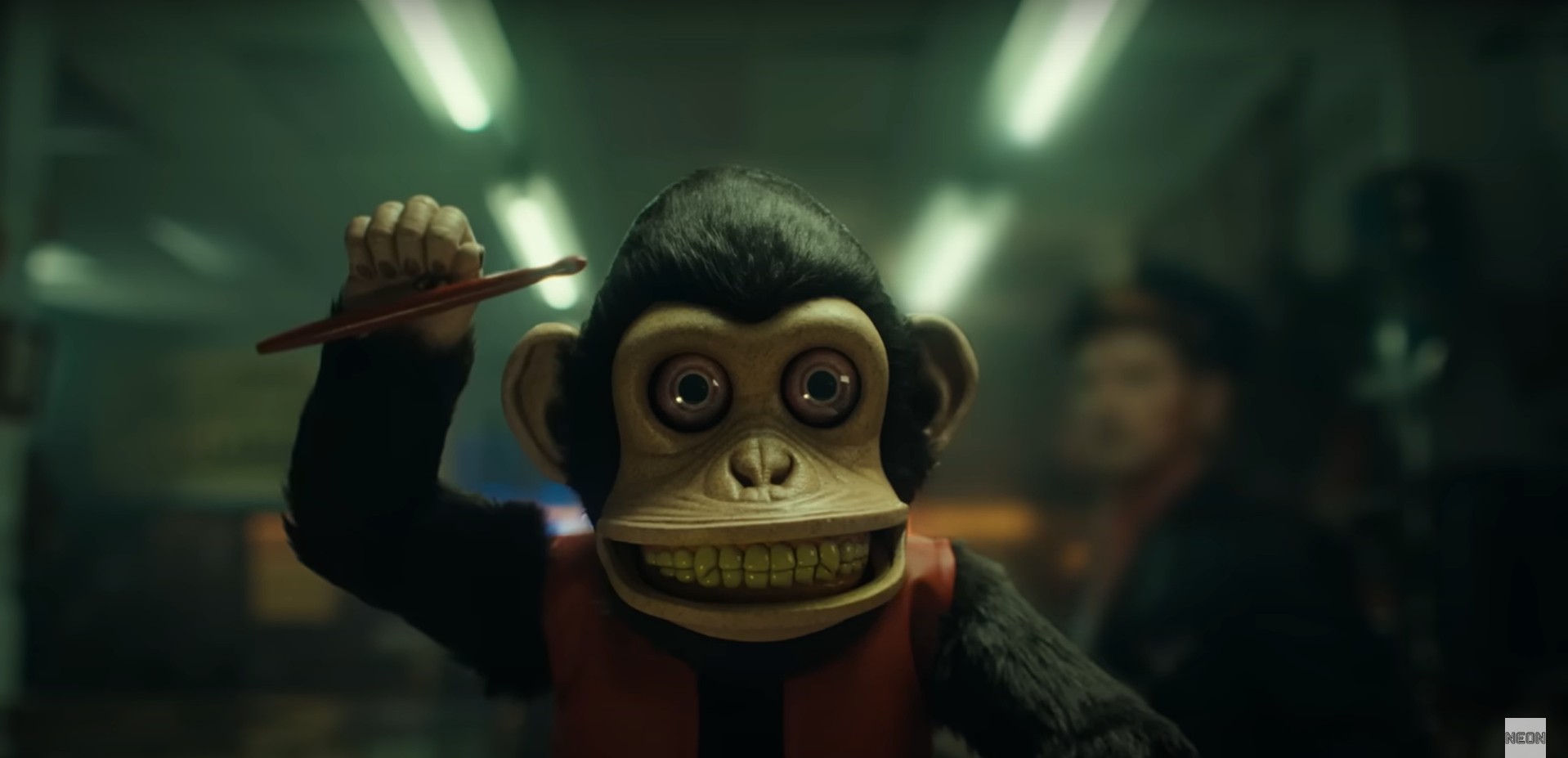
A period piece with an intimate cast brings closer together the targeted era of late 18th century to early 19th century costuming, articles, and, to extent, performances that sell the monarchial times of French aristocracy and Slavic provincials living humbly on the fringes of an everlasting Russo-Turkish war that spanned decades.  Leading the charge is the only French aristocrat portrayed character in the story played by Kacey Mottet Klein (“The Suicide Shop”).  Dressed in traditional Empiric style high collar shirt, petty coat, and a white wig and garishly garnished with white pale-looking makeup with mouche, an adhesive mole, to reflect their wealth and status, Klein’s prim-and-proper, yet prudish and prissy, Marquis Jacques Antoine Saturnin d’Urfé is finely out of his element with a satisfiable character arc that has the Monseigneur go from a squeamish snob to finding compassion, sympathy, and courage amongst darkness aimed to swallow a family whole as d’Urfé’s high society and fantastical life clashes with the real world with war, necessity, death, natural beauty, unconventionalities, and consideration through another type of fantasy lens, a troubling, insidious darkness that plagues and feeds on the blood from within a domestic design that’s ruthless as it is unfathomable.  Jegor (Grégoire Colin, “Bastards”) is the loyal eldest son, Piotr (Vassili Schneider, “The Demons”) is the sexual orient ambiguous second son with external emotions unlike his other brother, Sdenka (Ariane Labed, “The Brutalist”) is the free-spirited but melancholic beauty, Anja (Claire Duburcq, “She is Conann”) as Jegor’s more than practical and realistic wife and young Vlad (Gabriel Pavie) is Jegor and Anje’s preadolescent boy.  The aforenoted characters are all embodied by a physical, living person to play the role but Gorcha is a horse of another color.  In fact, Gorcha’s not a living thing at all and is actually a puppet personified by two puppeteers and voiced by director Adrien Beau.  The puppet has an emaciated appearance, resembling closely to those used in “Return of the Living Dead, and with the power of green screen, the animating arms and bodies are overlayed out and Gorcha lives and breathes with an animatism spirit that’s creepy as all Hell with an underscoring tow of vampirism. 

In its essence, “The Vourdalak” embraces the simplicity with a less-is-more atmosphere, a self-assured reliance in the palpable and practical, and a confidence in its cast to extract the drama and horror of a longstanding folklore and deliver its poignant potency with eccentric diversity and steady anxiety.  Beau drenches dread into every crevice that sticks like humidity to its subdued black comedy attire.  Yes, “The Vourdalak,” though grim and dark, has a sliver of comedy course through its bloodlet and lapped up veins from the main character’s perspective who, at first, is quite out of his comfortable, aristocracy element being wiggled into a lower-class family’s unusual dysfunctionality.  There’s also the puppet aspect integrated into living, breathing actors as if one of their own and that certainly as a basic layer of absurd surrealism, the French know a thing or two about liberal arts absurdism.  Beau’s shooting style resembles a blend between the fixed camera and low-key lit silent films, also implementing throwback spyglass shots that were widely used in the early cinematic period, and the Euro-horror movement of the 1960s to early 1980s with an ominous romanticism, a dark and creepy-fog environment, and tinged to cooler shades of soft blues and greens all the while lightly touching upon themes of sexuality, homosexuality, and family structures that often collide with one another to stir the pot and overshadows the imminent danger in front of them. 

“The Vourdalak” is unpredictably grotesque in the most amusingly macabre way and is now on a region free Blu-ray release from our friends at Oscilloscope Laboratories.  AVC encoded onto the BD50, the high definition, 1080p resolution, might throw audiences and purveyors of physical media for a loop when the picture isn’t as fine as expected for a modern released picture.  That’s because Adrien Beau shot “The Dourdalak” in Super 16mm that enlivens a grainy and soft toned picture that can appear slightly blurry, resembling the ilk of European horror from the 1960s-1980s  Presented in an anamorphic widescreen 2.35:1 aspect ratio, Beau is very committed the coldness of bleak grays, blues, reds and the variant fused shades of purple, pink, and teals that sparingly envelope the entire frame with a lens tint in surreal moments, such as fever dreams or emulated night shots.  Though unfocused at times, plenty of distinction can still be rendered, such as the very stooge features and qualities of the Gorcha puppet.  The French DTS-HD Master Audio stereo track is an audio sensory mini-triumph.  In its modest sound design, minor qualitative sounds instill creepy atmospherics, especially the sound prominence of a raw chewing theme associated with the vourdalak creature’s folklore.  Adrien Beau also better animates and personifies his Gorcha puppet with a wheezy and struggling voice over for who is supposed to be a very elderly father-grandfather in an undernourished and skeletal appearance with sunken, bulging eyes and a near fully exposed teeth. The special features include two of Adrien Beau’s short films “Les Condiments Irreguliers” and “La Petite Sirene” as well as a behind-the-scenes featurette that’s more of the raw footage of animating and acting the Gorcha puppet without the visual effects removing the puppeteers. The Oscilloscope Laboratories Blu-ray comes in a clear Amaray case with soft, airbrushed quality composition artwork of a calm Marquis Jacques Antoine Saturnin d’Urfé being feasted upon around his neck by the vourdalak. The reverse side contains a still image of a medium-far shot of one of the more powerful images in the film of a graveyard d’Urfé passes through as if it was a revolving doorway in and out of death. A simple yellow title and label name are splayed across the disc, consistent and normal per the company’s design, and the film is not rated with a runtime of 90 minutes.

Last Rites: Rarely do I give a five-star review for a film but Adrien Beau’s “The Vourdalak” is a fascinating and frightening visualization of Aleksey Konstantinovic Tolstoy story that trades visceral images for palpable ones in a folkloric entrancement of unnatural beings disrupting the natural world, a concept worth chewing on the nape of the neck for.

“The Vourdalak” Available Now at Amazon.com!

Who is This EVIL Named “Dariuss” reviewed! (SRS Cinema / DVD – Extreme and Unrated)

Find Out Who “Dariuss” Is With this SRS Release!

An experimental vision quest of loss, grief, and death takes refuge in a small English town, inside an old and quaint English house.  A mother grieves for the loss of her child, sobbing uncontrollably and mindlessly wanders with distant stares as the heart pains for her child.  The grandmother, doing what she can, comforts her daughter’s newfangled distraught nature while the husband, grieving in his own isolated way, stays out late at night to drink himself into a stupor.  When madness lurks about their home and intrudes upon their privacy, a vile and heinous loss of life bathes a depraved lunatic in their fluids.  Neither mother, father, nor grandmother is safe from terrific travesty in corporeal form.  A sickness has arrived to cure the inconsolable, eradicating them slowly of the pain in the most painful of ways imaginable, and doing it all with a bloodstained maniacal grin stretching from ear-to-ear.

A hellish loop of defeating pessimism, “Dariuss” fringes the black void areas around reality and escapism that evoke the uncomfortable nature of people and the unpredictable tides that turn for the worst when already at rock bottom.  “Dariuss’s” brackish, brainsick narrative is the brainchild of Guerrilla Metropolitana, an Italian artist crafting his underground and dark cinemaverse of misanthropic mayhem and esoteric eroticism.  The writer-director Metropolitana lives and creates out of London, UK and “Dariuss” is his 2023, debut feature-length film behind an oeuvre of distressing shorts of human imperfection and immortality encroached by a constant line of madness.  Metropolitana not only self-funds and produces his film, where he achieves total control to push back against not only major studio norms but also conventional independent stratagem, but provides the avant-garde cinematography, unorthodox editing, an experimental score and sound design, and even costars the trench coat covered naked body of the antagonistic killer. 

One element to not forget to mention before going through the cast is that “Dariuss” is completely without dialogue.  Metropolitana’s sound design manipulates and repeats many sound clips, such as the plops of water droplets or the high-pitch lip trilling, to fashion an uncomfortable audio sensation sporadically strung throughout that parallel’s the coupled low tumbling score and baby laughter, the later more so when referring to child loss or the abhorrent reincarnation of the child.  Ila Argento holds the majority screen time, especially since the pregnant woman credited as Sarah Isabèl is also Argento as well in some sort of meta crafting or illusion, and she plays the grieving, depressed wife wailing, screaming, and just distantly starring in vast quantities and in a daze of mirrored or painted inversions about the English home.  “Dariuss” is more than just extreme performance art as it embodies interval wretchedness associated with trauma, or in this case more specifically, loss through a reverse world looking glass.  As the wife is tended to by the grandmother, played with apneic conditions and posturing concern is Marie Antoinette de Robespierre, Archibald Kane’s the husband role is scantily around for a father who just lost a child and when the father is in frame, he’s idling in his car drinking, or rather gulping, from a bottle.  Both the grandmother and father roles are a part of Metropolitana’s message of a shattered family structure of insincerity and disconnect. Feeding on that dysfunction is the childlike maniac, played by Metropolitana himself, with rapacious amusement off the back of the household’s suffering.  Almost as if the maniac is a reincarnation of the lost child, perceived by play like antics in a nearly naked and hairless state and audible by the babylike, post-introduced laughter, returning home to exact horrific horseplay on his family involving rape and murder and cannibalism alongside the frolicking and breast milk chugging.  

Let’s preface with an important fact that “Dariuss” will not be everybody’s cup of tea; in fact, Metropolitana’s film is more like bitter black coffee with a pungent, sour smell as a narrative series of images, like a splayed, taped together string of polaroids, giving godawful glimpses of grief and gore.  Sounds and images repeat that beg for madness to emerge out of the nouvelle vague filming style, experimenting with various inverted images, mirrored and angled shots, different types of aged filters and strange lighting, various camera speeds, and oddly framed shots will subject audiences to pricklier sensory sensations than the depicted violence and gore, which is graphically ghastly and extreme with necrophilia and cannibalism.  Story structure also veers into non-linear territory but the gist of the acts is present, if not loose and equivocal for open interpretation and choice cinema characteristics that stray from normal convention, to mold a beginning, middle, and end in only a way Metropolitana can construct by contrasting melancholic grief with stagnating indifference, with a maniacal pleasure of a sandbox of sinew, and, in way, comical by way of the insanity with disturbing imagery mixed with playful mischievousness. 

Just who is Dariuss?  That’s the obstruse person perhaps at the centermost of this ghastly, grisly story that’s now on DVD from SRS Cinema as a part of their Extreme and Uncut label.  The DVD comes MPEG2 encoded, 480p standard definition, 5-gigabyte DVDR that showcases a wide-range of filters, inversions, lighting designs, grading, and you name it, “Dariuss” likely did it of cinematography techniques that stay in the rough patches of eccentricity rather than being comfortable in the fairways.  Picture quality fluctuates and varies depending on the aesthetic chaos methods being deployed, leaving behind not the sharpest looking picture with noticeable pixelation on anything above a 32″ television but not enough of an eyesore to be an imperceptibly deterrent.  Depth has fair spatial qualities but range and saturation is pretty limited to an anemic neutral palette to only when the monochrome or higher contrasts are not in play. The LPCM 2.0 stereo contains no organic matter, meaning that none of the sound is captured within the scenes, as Metropolitana modulates, manipulates, and modifies singular notes and tones for creepy and ear-splicing effect. This also pertains to the soundtrack being completely devoid of dialogue to give the auteur complete authority of how his film she be heard and every bit of that sound design is front loaded and high-powered but to an intended unrefined audio art. English captioning for the deaf and hard of hearing is available. Special features encoded are a behind-the-scenes still gallery and SRS trailers while the standard Amaray comes with an SRS illustration of the film’s original one-sheet, transposed to the disc pressing. There are no inserts included nor slipcover. SRS Cinema’s release is region free and has a runtime of 62, ideal, or even a tad bit too long, for this type of experimentation.

Last Rites: Not to be confused as a nail-biting, popcorn thriller, “Dariuss” will only speak to a select few able to bend the mind to impressionistic, dark eroticism and savagery, both qualities of which Guerrilla Metropolitana has and depicts in droves.

Find Out Who “Dariuss” Is With this SRS Release!

EVIL Doesn’t Take Rejection Well. “Village of Doom” reviewed! (Unearthed Films / Collector’s Edition Blu-ray)

“Village of Doom” now on Unearthed Film’s Collector’s Edition Blu-ray!

Tsugio Inumaru is considered the smartest young man in his village.  Illness took the life of his parents, and he raised by his grandmother and lives off her land’s income, looking after him and dreading the day Tsugio becomes drafted as a soldier in war service, which bestows great honor from the villagers.  While husbands are away serving their country, bored and lonely housewives and bachelorettes desire the carnal company of the men remaining and with Tsugio’s youth and his own sexual yearnings bubbling to the surface, he’s prime Kobe beef for the hungry village women.  When Tsugio’s health examination reveals a tuberculosis diagnosis, he’s acutely shunned by the villagers, drying up his sexual escapades, as well as potential betrotheds.  Rejection by his village, and even his country, sends the young man into plotting a massive killing spree, targeting all of those who’ve forsaken or scorned him to a life not worth living. 

In the Tsuyama outskirt village of Kamo of 1938, 21-year-old Mutsuo Toi cut the village’s electricity, strapped flashlights to the side of his head, and took a mini arsenal that included a Browning shotgun, a katana, and an axe to 30 villagers, including his grandmother, in an act to revenge killing for being rejected socially and sexually because of his tuberculosis diagnosis.  What is known as the Tsuyama Massacre, Mutsuo Toi’s cold and merciless act of carnage was the basis for Noboru Tanaka’s “Village of Doom.”  The pinkupsloitation director of “Rape and Death of a Housewife” and “Angel Guts:  Nami” helms the Japanese, semi-biographical tale, penned by Takuya Nishioka (“Tattoo,” “Female Teacher:  Chain and Bondage”), that follows closely the bullet point events of Mustuo Toi but with different named characters and a strong pink eiga touch.  “Village of Doom” is one of Kazuyoshi Okuyama’s (“R100,” “Self-Bondage:  All Tied Up with My Own Rope”) first produced ventures and is a production of the Fuji Eiga and Shochiku Eizo Companies. 

While Mutsuo Toi is not directly portrayed, his downward spiraling steps are indirectly followed by Tsugio Inumaru, played by the late Nikkatsu actor Masato Furuoya.  Furuoya’s relationship with director Noboru Tanaka is well established within their director-actor collaborating context with Furuoya having roles in Tanaka’s previous credits of “Rape and Death of a Housewife” and “Angel Guts:  Nami.”  There’s a blanket of comfortability within Furuoya who must treat his character as one-part pink paramour and one-part biographical massacrer, seducing with a tantamount tease of fantasy and authenticity.  Furuoya’s beleaguered performance is a jagged mountainous range of emotions from confidence and compassion to hormonal desires, to the stressed misgivings from cold shoulders and bad fortune mishandled by Tsugio’s own sense of worth to his himself and the village that has turned its back on him.  In keeping with the simulated practice of Yobai, the night crawling sexual escapades amongst young men and women, typically unmarried men and women, Tanaka portions heavily toward Tsugio’s internal grievances with the suddenly thrusted into the primitive and stimulated needs of a young man’s novice sex drive awaken with a morsel nude photograph.  Furuoya’s costars are the collective antagonist from the perspective of Tsugio with their geniality turned hostility of the TB diagnosis.  Sexualized warmth and freedom run rampant, peppered in between with subdued duty to village and country, that cradles an shy Tsugio’s into his manhood but when his manhood is threatened and the village neglects and rejects his contributions, Tsugio’s acute ostracization from within the only community circle he’s ever known disfigures his rationality into revenge.  The cast is surprisingly pink vet lite with the actors coming from other Japanese oriented popular subgenres like samurai films, erotic but tasteful comedies and romance, and horror with Misako Tanaka, Isao Natsuyagi (“Female Prisoner #701: Scorpion,” Kumiko Ôba (“Hausu”), Shino Ikenami (“Evil Dead Trap 2”), Midori Satsuki, Yashiro Arai, Renji Ishibashi, and Izumi Hara (“Island of the Evil Spirits”).

“Village of the Doom” is a two-toned down spiral to build up only to crash down the hopes of an impressionable young person.  Similarly seen in later works like Gus Van Sant’s “Elephant” where the visually intense, raw, and viscerally slicing culmination of enough-is-enough points back to the series of occurrences that significantly mile mark every step lead to the slaughter.  Set inside a valley surrounded by green mountains, the idyllic and rural riverside village impresses more backdrop tranquility than doom with slower pace and dutiful lifestyles but like most cutoff societies, the slow, insidious corruption of morality courses with infectious infidelity under the guise of Yobai, upends rightful justice and trades in for lynch mobs, and wanes promises for easy streets and exploitation run out dates that run its course for one but not the other.  All these aspects have relevant translatability to today’s cliques and inner circles that oust the unusual to where a sense of belonging feels hopelessly frustrating.  The isolation is so engrained that it highlights, in a very matter-of-fact way but does speak to it quite a bit, is the incestuous relationships between related villagers with the instances of Tsugio and cousin Kazuko’s flirtatious meetups and talk of marriage as well as Tsugio accidental arousal around his cousin’s aunt.  This adds to the tension and the corruption of that old idiom of don’t shit where you eat and the evident sourness spoils relationship ties when family is important to lessen the blows of life’s subsidiary problems.  For Tsugio, who is already dealt a bad hand with both parents deceased and his illness, the whole village rots what’s left of his innocence and ambitions and, in turn, aims to exterminate those who’ve foiled his purity.

A wicked, notorious true crime story now for the rest of the world to visual in “Village of Doom” on Blu-ray, courtesy of Unearthed Films on their Unearthed Classics sublabel.  The new Collector’s Edition Blu-ray is format encoded onto an AVC encoded, 1080p high-definition, BD50.  The picture is tempered with the muted colors, or rather the scaled grays, of an archaic Japanese village coupled by the browns and straw hued housing set amongst in and surrounded by a sea of green foliaged valley, and while objects are delineated nicely without any saturation bleeding or compression issues, the colors don’t necessary pop.  What does pop are the textures of the same articles mentioned above.  The groves of thatched wooden abodes are remarkable deep, the greens, though seamless, are nicely touched upon in the foreground, and skin consistencies vary person-be-person within idiosyncratic personal brackets with dynamic sweatiness and emotion-delivery contouring to accentuate.  The Japanese LPCM 1.0 mono has no problem discerning elements.  Though all funneling through a single channel, the dialogue and ambience works together thanks to the clean, more immersive ADR.  Mashanori Sasaji’s tests the soundscapes of traditional Japanese drum rhythms of Oo-daiko with then modernized synthesized notes to create a forebodingly, entrancing composition.  With any post-production voiceover work, dialogue is very robust, and the synchronized English subtitles offer an error-free and organic translation.  The original audio file is compressed cleanly with no issues with crackling, hissing, or any other damage for noting. Unearthed Film’s 17th spined Classics title supplements with an audio commentary by Asian film experts Arne Venema and Mike Leeder, a look at the Tsuyama Massacre in Dark Asia with Megan: Case #57 Japan’s Darkest Night, a promotional gallery, and the theatrical trailer. The Amary Blu-ray case is housed in a cardboard O-slipcover featuring Mutsuo’s iconic night-crawlin’ getup on Masato Furuoya’s Tsugio in colorless black-and-white. The case has the same image used for the cover with no reversible sleeve and the inside does not contain any tangible inserts or materials. The disc is pressed with not the same image but the same head flashlight Tsugio, this time looking right at you in unison with his shotgun barrel. The not rated feature has a runtime of 106 minutes and is region A locked.

Last Rites: “Village of Doom” depicts the same sad story that strikes the hearts of today’s mass shootings, spurred by the dispel from those in proximity, intimate, and friendly. “Village of Doom” is a true classic of casted out carnage relit by Unearthed Films to retell the notorious narrative of Japan’s deadliest mass killing ever.

“Village of Doom” now on Unearthed Film’s Collector’s Edition Blu-ray!

Sacrifice and Intestines Make Great EVIL Slashers! “Ikenie Man” and “Harawata Man” reviewed! (Wild Eye Releasing / DVD)

“Ikenie Man” Available on DVD Home Video!

“Ikenie Man”

Four university friends involved in a movie making club trek deep into the remote, phone service-snuffing forest eager to make their esteemed stamp on the slasher genre, or rather just the director does, as frustrations build between them, exploding furiously into an inability to find cohesive creativity, and their lead actress quits and walks off location in a fit of distaste for horror and their Prima donna director.  Idea and idea between the rest of crew of how to recoup their film from being a total failure and loss has been rejected by the nitpicking auteur looking for that novel concept to make him famous until he and the crew stumble upon a group of eight campers who all conveniently fit into conventional tropes of horror characters.  A plan quickly arranges to use their masked and knife-wielding movie villain to scare the unsuspecting campers with guerilla filmmaking tactics but there’s more to these seemingly innocent young campers than what meets the eye. 

A meta horror self-aware to all the necessary components that make a great horror movie becomes upended in a topsy-turvy tumbling machine of all the aligning mechanisms you thought you knew about a horror story.  Yu Nakamoto (“Phone of the Dead,” “Teacher! It’s a Slit-mouthed Woman!”) writes and directs the meta, self-deprecating, indie Japanese horror-comedy “Ikenie Man.”  Ikenie, translated literally to the word Sacrifice, is used to describe the in-story director’s deranged masked killer the direct himself portrays and finds himself at the sharp end of a knife, barbed wired baseball, razor edges of a chainsaw, and etc.  The 2019 released film is an open-faced hotdog of an absurd horror comedy, slathered with gory ketchup, and self-produced by the then 28-year-old, Hiroshima-born Yu Nakamoto as his sophomore short feature length film under his indie credited production company of Nakamoto Films. 

Also, Follow Up With “Harawata Man” on DVD Home Video!

“Harawata Man”

One year after the terrifying ordeal in the woods, the university movie club has evolved with the departure of the director and lead actress after graduation.  The two remaining members are joined by newcomers with an actor, actress, sound engineer, and camera operator to work on another masked slasher, titled “Harawata Man.”  When directed to meet up and shoot inside an abandoned manufacturing plant, the crew praises the location’s creepy atmospherics, but they run into another film crew shooting simultaneously on a project of their own.  Mistaken as the hired assistant crew members, they jump at the opportunity to work on a bigger-scale film until an actress is brought into the scene, sat in the middle of the room, and is bludgeoned to her actual death by the story’s plastic apron killer.  The opportunity of a lifetime just became a snuff film nightmare they can’t escape.

“Harawata Man” sequentially follows on the heels of “Ikenie Man” by taking place one year after the events of the first film and moving the setting from one genre-staple setting of the thick woods to the next best location of an abandoned factory.  Released the same year as “Ikenie Man,” one could deduce that both “Ikenie Man” and “Harawata Man” were shot essentially back-to-back with some down time in between productions and that might explain the mark of no return of some principal characters that didn’t, or couldn’t, appropriately fit into the new story, which would align with the absence of the titular “Ikenie Man.”  Harawata translates to the ever-delicate word Intestines describes the story’s small indie film crew’s killer who rips out the victim’s guts.  “Harawata Man” is a less meta than its predecessor film by relying more on its comedic context as another Yu Nakamoto Film production. 

_______

So, because I do not know the Japanese alphabetical language of hiragana, katakana, and kanj and there’s limited information on IMDB.com, as well as other referential sources, the cross reference of cast to characters is not obviously clear.  Instead, going through the character carousal to understand motivations and journeys has become a forced prudence.  “Ikenie Man’s” setup is an expositional setup from the indie filmmaking foursome to run through what us genre aficionados already know:  character tropes, emblematic motifs, and traditional character arcs, such as the rise of the final girl.  “Scream” had highlighted and called out the trade ingredients of recipe elements to make Grandma’s stew that much more appetizing to a new, inexperienced market of up-and-coming fans.  The franchise’s sequels to follow leaned into the rules of subsequential follow ups with each tweaking just a little to make them worthwhile.  Nakamoto flips the script for more campy devices into an un-genre-like routine that sees the virgin killed right away, the nerd is secretly a jock under his four eyes wear, and the only masked “killer” in the story turns out to be the unwilling hero.  “Harawata Man” takes a step back toward more familiar plot grounds of an independent film crew winding up into unfortunate chanceful circumstances and having to defend themselves against sociopathic snuff filmmakers.  However, it’s the way the misfortunate film crew becomes fortunately favored is how they use slasher rudiments to defends themselves that dips the toes of this sequel into the meta pool, taking on the role of maniacs and omnipresent killers who slice and dice with authority and the snuff filmmakers run, yell, and scream for their live becoming the hapless kill fodder.  Yûta Chatani, Maki Hamada (“Tokyo Gore Police”), Tomoaki Saitô (“Phone of the Dead”), Yasunari Ujiie, Yûko Gotô, Marie Kai, Tanabe Nanami, Tsugumi Sakurai, Sumre Ueno (“Ghost Squad”), Yû Yasuda (“Rise of the Machine Girls’), and Shigeo Ôsako (“Grotesque”) are the cast listed.

As far as Japanese gore films go, Nakamoto films are lite when looking at the niche genre as a whole, paling in comparison to such films as “Toyko Gore Police” or “Audition,” but that doesn’t stop “Ikenie Man” or “Harawata Man” from decapitation, severing, eviscerating, and perforating at will with fountainous blood splatter, one of the better absurd keynotes seen in gory J-horror that goes back to Japan’s samurai films of yore.  Gore certainly dangles the carrot of catching these films on either the preferrable home video or, dare I say it, Tubi, but Nakamoto refuses to make it the focal backbone of his films; instead, the story’s meta comedy goes hard with assurances toward every genuine horror fan out there will recognize Nakamoto’s admiration for the genre.  “Ikenie Man” and “Harawata Man” not only spoof horror but also adapt into a new breed of that line of thinking that reminiscent of how “Tucker & Dale vs. Evil” brought upon role reversals through character perception.  Plot paths switch to an unrecognizable gear, much like the films’ official synopses try to mislead with a generic framework, but these new directions still sate that blood thirst to keep interest, tone the black humor to be less wincingly slapdash, and keep the pacing fair, drive practical-effects with intent, and the intense horror-comedy upright in a saturated genre market.

Now available from Wild Eye Releasing is “Ikenie Man” and “Harawata Man” on DVD, encoded on a MPEG-2 compression DVD-5 with upscaled 1080p resolution. Curious enough, the opening company credits list both films as part of the Raw & Extreme sublabel but the physical cases list no such notation in what appears to be a regular Wild Eye Releasing title. Presented in a 1.78:1 aspect ratio, the uncredited same camera and unlisted cinematography process by Yu Nakamoto is used for each production with “Ikenie Man” using gel filters to get a nice wide variety of primary glow splashed along character faces during night and light fog sequences. “Harawata Man” forgoes a colorful visual tone for more key lighting in a darker, basement dwelling. Picture quality and detail from the digital capturing translates fine from original print to reproduction with adequate compression of a short feature film with virtually no extras encoded. A LPCM uncompress Stereo 2.0 lines both audio tracks with fair fidelity in a clean and prominent pitch-accented Japanese language, balanced between two very contrasting scores of an energetic synth and “Halloween”-esque piano tracks of “Ikenie Man” compared to the generic stock of hurried, lower keyed tones that pale against Nakamoto’s first score. Depth is good and the range of sounds, such as the ripping of the chainsaw or the thwacking of kicks and punches, have a mixed realism that plays into the comedy side of the horror-comedy. Between hectic moments, you can recognize the unfiltered growling of a generator in the background in “Ikenie Man” to be able to shoot in the woods, a little indie film audio easter egg to discern. English subtitles are forced on both Japanese tracks and while the pacing is good and there are no misspellings, you can tell the translator is not a native English speaker as the written grammar is more literal and unnatural. Only trailers grace both films’ bonus features, but each individual physical set comes with new original compositional poster art front covers from Japanese artist Kit Nishino, staying the tried-and-true course of Wild Eye Releasing’s outrageous physical media facades, as well as the reversible sleeve contains the original Japanese poster art. Both discs are pressed with their respective primary cover arts and there are no inserts included. The Wild Eye Releases are region free, not rated, and have brief, under 60-minute runtimes of 52-minues for “Ikenie Man” and 46-minutes for “Harawata Man.”

Last Rites: Yu Nakamoto’s small but mighty meta slashers make a good double bill, an on its head combo of a run amok head decapitations for the sake of playing the reverse card to mix things up on a respectable homage, comedy, and horror scale that gives Wild Eye Releasing’s “Ikenie Man” and “Harawata Man” more than just the self-referential mediocrity treatment.

“Ikenie Man” Available on DVD Home Video!

Also, Follow Up With “Harawata Man” on DVD Home Video!

A Boy’s Imagination Can Conjure Up EVIL Death and Sex. “Viva La Muerte” reviewed! (Radiance Films / Limited Edition Blu-ray)

“Viva la Muerte” Limited Edition Won’t Be Around Long. Grab Your Copy Here!

At the peak low of the Spanish Civil War, naïve adolescent boy Fando doesn’t understand what is happening between the Catholic-blessed fascist takeover of his country nor exactly why his father was arrested and what has since happened to him.  He stumbles upon letters written by his mother suggesting that she had something to do with his sudden arrest because of his parents’ rival principles paralleling their nation’s bloody conflict of dividing beliefs.  Fando asks his remaining family questions, especially pelting his mother with detailed inquiries, about his father, death, and the fascist opposition, and while he’s lives under the draconian rule of a fascism reality and his family who abides it closely, the inquisitive boy intersperses his new, complex reality with his own way of comprehending, filling in the blanks with his vivid imagination of childish macabre, oedipal maturing, and an uninhibited interpretation of the evolving revolution surrounding him.   

“Viva la Muerte,” aka “Long Live Death,” is the 1971 surrealistic war horror from then debut filmmaker Fernando Arrabal.  Arrabal, who went on to modest yet esteemed career with such arthouse films such as “I Will Walk Like a Crazy Horse,” “Car Cemetery” and another Spanish Civil War set drama “L’arbre de Guernia,” also wrote the film that cemented his contributions to the surrealistic performance art movement known as the Panic Movement.  Though Arrabal was born in Spain and tells the story of the Spanish Civil War, the filmmaker had lived in France where the movement’s genesis began solely as street shock performances alongside fellow filmmaker Alejandro Jodorowsky (“El Topo”) and writer/actor Roland Topor, the latter had penned the novel of inspiration for what would be Roman Polanski’s “The Tenant.”  Eventually, the Panic Movement slid into cinemas and the French production/language “Viva la Muerte” was designed to not only exhibit chaotic, childlike account of the Spanish Civil War but also shock audiences with bizarre imagery.  Isabelle Films and S.A.T.P.E.C. fund the film under the producing credits of Hassene Daldoul and Jean Velter.

What better way to express an arthouse film than with arthouse performances from a blend of European actors and actresses from the French and Spanish territories.  “Viva la Muerte” couriers a perception through the eyes of a preteen child, a young boy of approx. 10 years of age, in Fando played with infatuation innocence and a model of child-to-adult growth in Mahdi Chaouch.  Fando’s virtue through the Spanish Civil War becomes shaped by not only the sudden loss of his father but also the quick onset of maturity being left and lifted as the man of the house.  Fando slips into a mix of fantasy and disdain for his mother, played by Spanish actress Núria Espert, surrounded and shaped by a political conflict climate as he interprets every statement she makes regarding his father’s irresolute fate between imprisonment and execution and every desirably suggested aspect of her action that drives him to internally create visuals of sex and death.  In the effect of one’s different self is the subtle infusion of the aunt whom Fando lives with for a while, a role by French actress Anouk Ferjac (“Hallucinations sadiques”) and mirrors the mother in appearances and in the same taboo risking amorous ways that creates thick, nearly line-crossing, sexual tension between adult woman and male child, especially topped by its incestuous nature.  Unknowns Jazia Klibi, Jean-Louis Chassigneux, Suzanne Comte, and Ivan Henriques as Fando’s dissident father round out the cast with a sense of authenticity for real world conflict. 

Arrabal’s “Viva la Muerte” becomes a beaconing example of merging stern reality with liberal imagination.  Though starkly apposition in film styles and surreal contrasts against the backdrop of a new world and bleak order of a fascism regime, reality and fantasy do blend to a degree as Arrabal sought to have one and the other bleed into one another to evoke questions of motives and symbolize with child caricaturizing the authoritarian oppression.  The overtly sexual fantasies of a naked mother and aunt in the presence of the boy can be egregiously sensed outside the dreamlike context with paused moments of starring and awkward touching.  Same can be said about Fando’s father’s demise as the boy goes through an array of grotesquely creative possibilities regarding father’s fate with most often being death and while Fando is spoon-fed lesser punitive measures by his mother, the chances of the father being alive after being arrested are likely zero based off earlier graveside executions of military firing squads for those with strong ideology opposition.  Fando’s mother plays a hefty role in his deadly, warped thoughts and just not sexually either as her role in his colorfully constructed explanations pin her as the chief executioner after reading her letters to the church about his dissident behavior.  Catholicism, or rather the Church, plays a huge role in shaping young Fando’s personal arc.  Religious imagery of his mother as the virgin Mary, a priest blessing fascist swords before battle, and also the same priest having his manhood violently removed and fed to him represents a way to explain how Catholicism has essentially failed stand against the violence to which, later exhibited in the story, molds Fando as a trouble instigator or rebel in his Catholic nun run school for the Church’s complicity in his father’s death.  Fando’s rejection of the Church confirms his character’s growth from the story’s beginning of his extreme self-penancing and opposition to such aberrant thoughts; thoughts that are not just sexual in nature but also incline themselves to be dirty, literally, with skin-covering mud and scat in playful mirth to signify enjoyment equates to being sinful and filthy.  Arrabal really does give you lots to unravel and the panic really starts to set in, hence his Panic Movement.

Limited to 3000 copies, “Viva la Muerte” arrives to the U.S. on its first Blu-ray release here in the States from Radiance Films.  The beautiful, new 4K restoration scan, with the collaboration of director Fernando Arrabal, pulled from the best elements of the original 35mm negative, 35mm French sound negative, and 35mm interpositive negative fathoms a rich spectrum of a diffused color palette on the AVC encoded, dual layer, BD50, presented in a high-definition 1080p and in the original European aspect ratio of 1.66:1.  Reality scenes are grounded by natural lighting, brighter contrast of the mountainous desert landscape, and a thorough macro-examination of the details and textures that pop the imagery between the grandfather’s bloodletting scene on the shaved portion of his fibrous head to the wet-slick and soapy naked Fando as he stands to get scrubbed down in the bath.  Blacks are solid without signs of a weaker compression encoding.  The surreal imagery switches gears, harshly, from 35mm film to an interlaced videotape, changing and reducing the quality down significantly but with the tape image is heavily colored in mostly primary colors to denote an artful way of imaginary explanations in Fando’s head.  No other issues arise from the video portion, retaining Radiance Films’ attention to detail and respect intact for their culturally valuable and extensive catalogue.  The French language uncompressed LPCM 2.0 mono track fairs well from a virtually damage free preservation.  A slight background hiss or hum can be found as the only audio blemish to note.  ADR dialogue is clean and clear throughout and with usually any post dialogue recordings there’s a bit of enclosed reverberations that don’t synch well with the scene that should sound airier.  Optional English subtitles synch fine and are error free with seemingly proper translational grammar.  Special features include an audio discussion between Projection Booth podcast’s Mike White, esoteric and horror film writer and former Video Watchdog contributor Heather Drain, and filmmaker-writer Jess Byard whom provide commentary overtop of the feature but not in synch with watching feature, a feature-length documentary on Arrabal by French novelist Xavier Pasturel Barron that contains interviews with friends, family, and fans of the director, an exclusive interview with cinema historian David Archibald, a new cut trailer from Radiance, and an image gallery.  Radiance continues to impress with the encoded special features and, not to be outshined, the physical features are also a bright light that reflects the essence of the Panic Movement with a clear, a millimeter thicker Amaray presenting the yellow and red background with provocative character imagery at the center that speaks the sex and death motif.  The reverse side has the same color scheme mixed up with an illustration of one of the characters displayed infamously in the film.  The insert contains a 35-page color booklet, bounded end-to-end with the strange and uneasy drawings of Fernando Arrabal, with a 1976 Arrabal interview by film critic and historians Peter Brunette and Gerald Peary and an exclusive essay from Sabina Stent.  Transfer notes as well as a complete cast and crew acknowledgement bookends the booklet’s main courses.  The disc is pressed in a solid, canary yellow with black lettering for the title.  Radiance’s 66th title comes region free release has a runtime of 88 minutes and is not rated. 

Last Rites: War is hell. For Fernando Arrabal, war is ambiguous and surreal. Radiance spotlights every ambivalent corner of Arrabal’s “Viva la Muerte” to light up its anti-nondescript digestion of one boy’s survival of his own maturity during a post-war fascist scrub, a task none too simple to undertake much like Arrabal’s storytelling.

“Viva la Muerte” Limited Edition Won’t Be Around Long. Grab Your Copy Here!