EVIL Will Always Get You in the End! “Ghoulies” reviewed! (MVD Visual / 4K-Blu-ray set)

“Ghoulies” Will Get You in the End With a 4K-Blu-ray set!

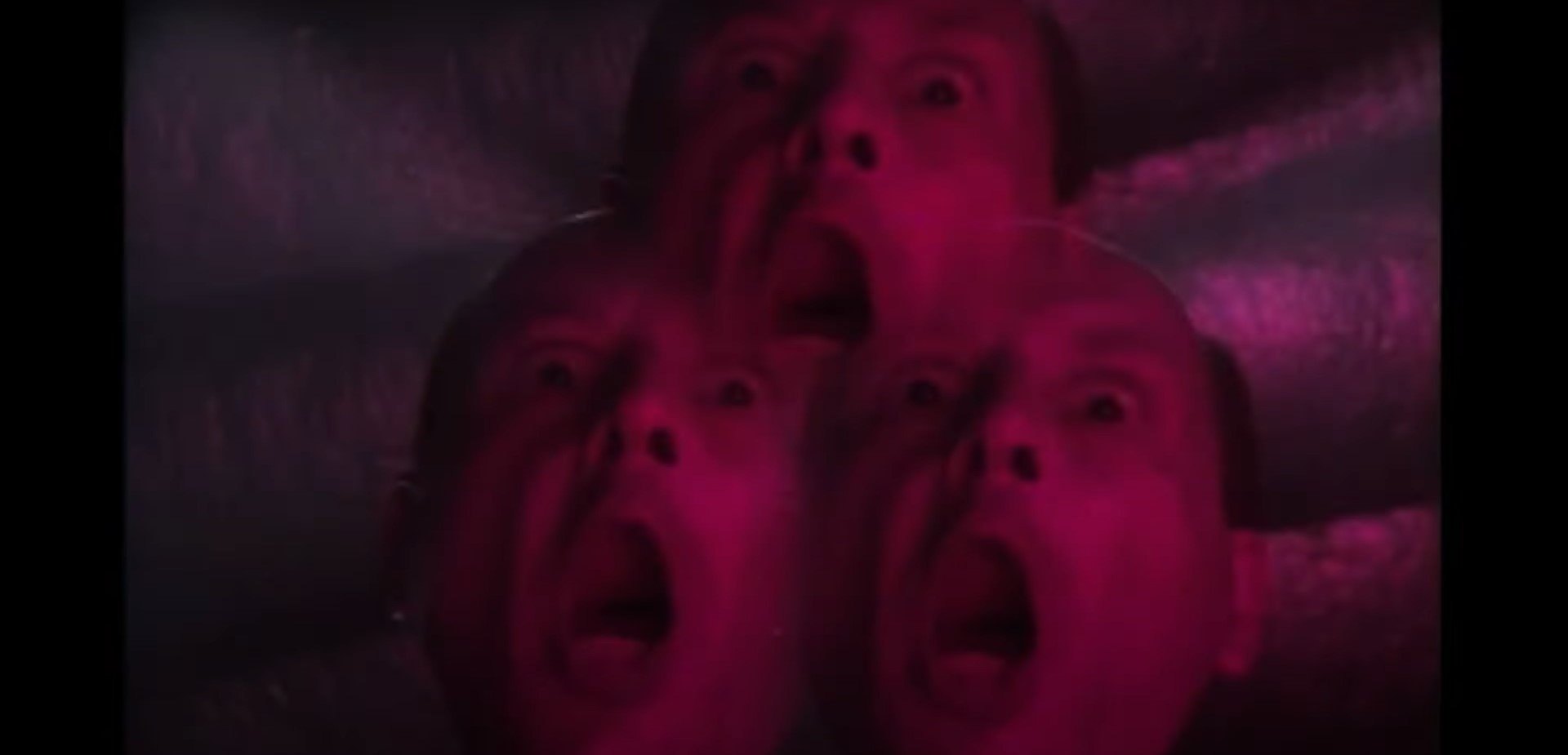
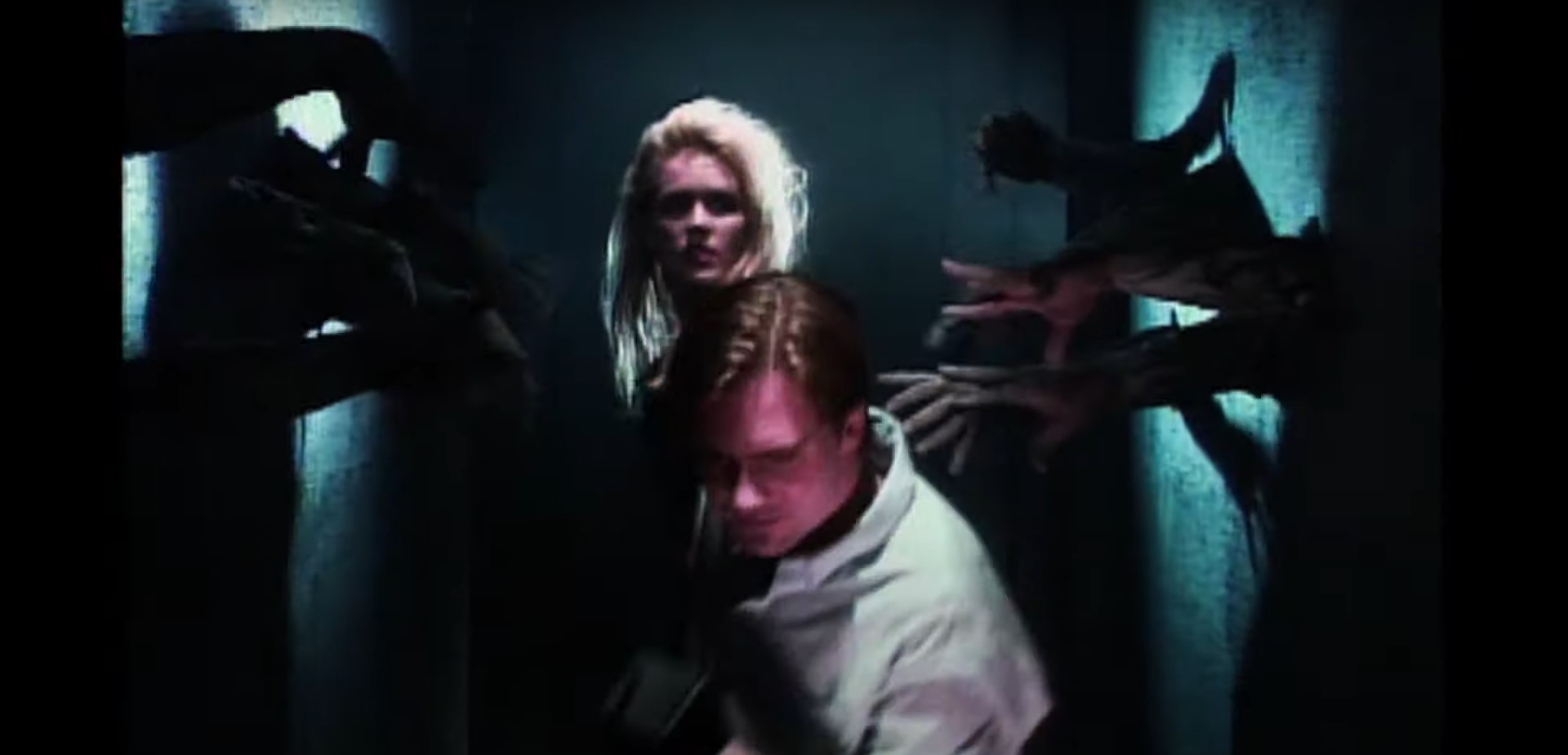
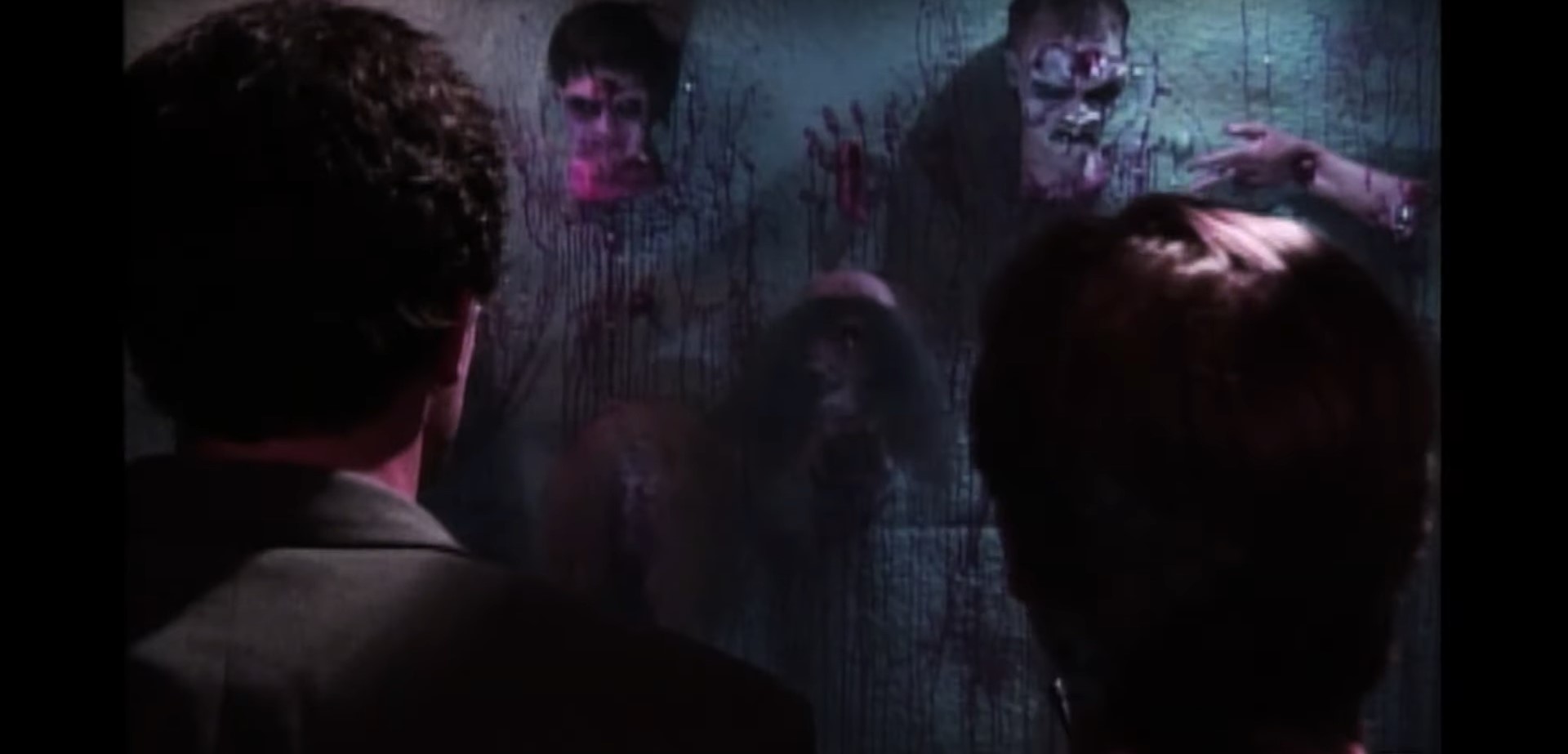
When a satanic ritual of sacrificing an infant boy is foiled by the acolyte mother, the child is taken far away from the fathering dark warlock who attempted to harness the boy’s youth for his own.  Fast forward 25-years-later, the malevolent father dies and the curse of the fiendish family tree has thought to be lifted.  The mansion is bestowed to very same young boy, Jonathan Graves.  Now a man in graduate studies and with Rebecca, his longtime girlfriend and love of his life, the inherited gothic mansion quickly entrances him into the urge for dark rituals, finding fascination in drawing and calling out the spirits and demons to do his bidding as their exclusive master.  In spite of Rebecca’s concerns and hoodwinking his unsuspecting close friends into a dark rite, Graves unwittingly resurrects his deceased and powerful father who seeks to pick up where he left off with his own callous ceremony from 25 years ago. 

If there are pint sized characters with a mischievous, devious edge, you better believe it that Charles Band is more than certainly behind the little terror-tykes hellbent on hell’s work.  One of the more successful ventures to come out of Charles Band’s empire, literally out from his Empire Production studio, is the 1984 released “Ghoulies.”  Written-and-directed by Luca Bercovici, as his debut feature film and who would later direct “Rockula” and “The Granny,” and co-written with Jefery Levy, who would go on to inevitably write a pair of sequels off the original film, the American-made production masters a flawlessly edited and sound designed layer composition mixed with the imprudence of 80’s stereotyped horror-teen character and nostalgic lighting and matte effects that make “Ghoulies” a travel-sized cult classic.  “Ghoulies” is produced and distributed by Empire pictures with Charles Band as executive producer, Jefery Levy as producer, and Debra Dion (“Oblivion”) as associate producer.

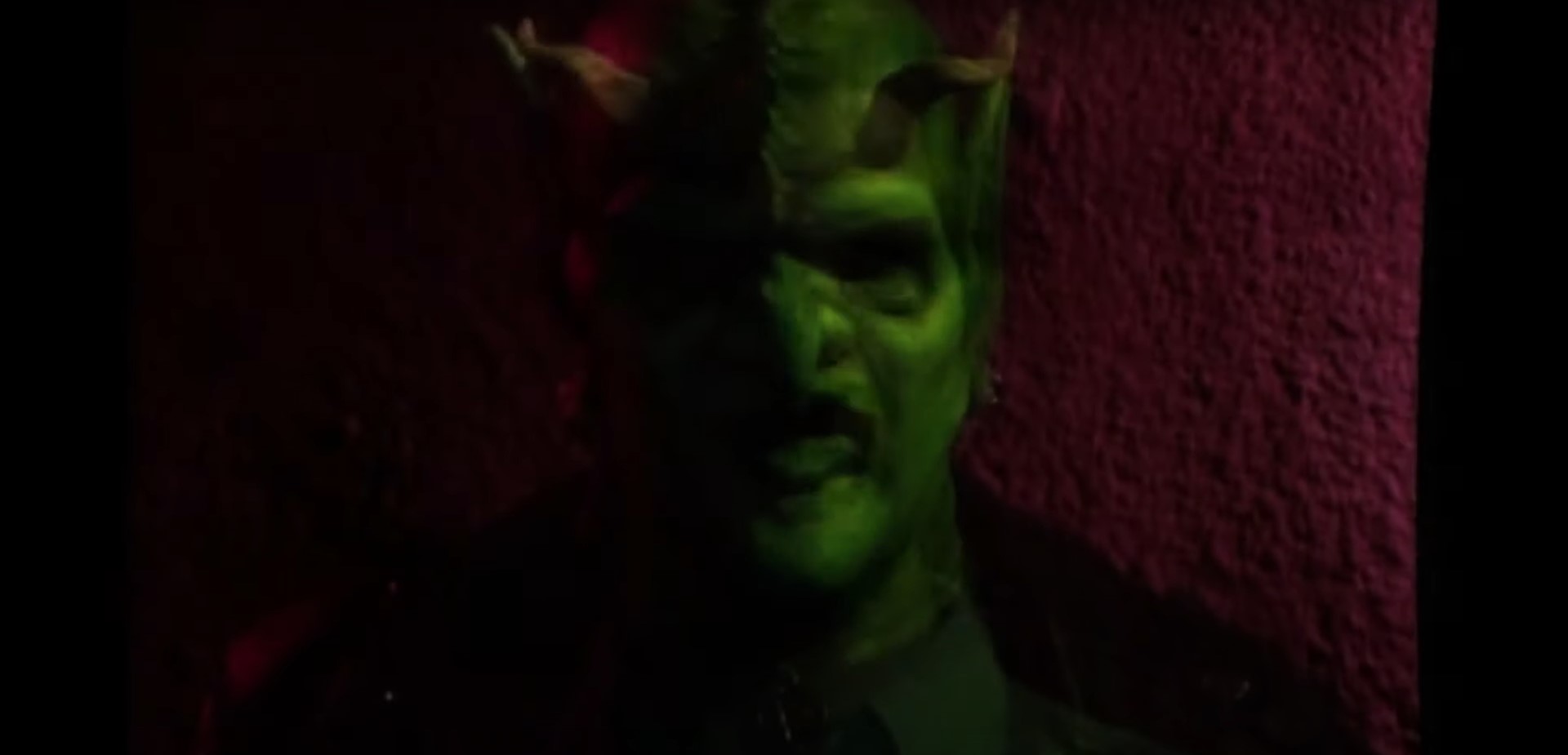
You can’t have a story about necromancing sorcery and demonic disinterring without big personalities and, fortunately, “Ghoulies” has a few that standout with memorable dark magic melodramatics.  Opening scenes of a ritual’s beginning introduces Malcolm Graves, an infernally flamboyant, wide-eyed, and animated with his hands sorcerer who likely won’t win the father of the year award.  “Mulholland Drive” and “Waxwork II:  Lost in Time” actor Michael Des Barres lights up the lurid life of Malcolm Graves with great enthusiasm and piercing eyes.  Graves eccentricity is balanced by another Lynchian actor Jack Nance as the acolyte turned mansion caretaker who oversees the Jonathan Graves’ wellbeing.   Nance meticulous eye gazes and gestural articulation combat and numb down Barress over-the-top dark magic ringmaster.  The “Eraserhead” and “Blue Velvet” actor definitely transposes his defined and evident presence of idiosyncrasies over to this little monster movie with manipulating occultist mascara that make “Ghoulies” that much more special.  The third actor is principal lead Peter Liapis who swings the pendula between normalcy and obsessive occultist as Jonathan Graves quickly swept up by an invisible force that drives him to become an intermediate master of miniature minions.  Liapis has that on/off switch ability to be sane one second and completely maniacal the next and when acting tranquil and the boyfriend of nicety to Rebecca (Lisa Pelikan, “Jennifer”), you better believe that we are convinced by his prosaic act.  Jonathan’s friends are an mixed lot of stereotypical lambs for the slaughter, to be used as pawns, and never know their role in the ritual of resurrection.  Stoners buds Mike (Scott Thomson, “Parasite”) and Eddie (David Dayan) fill “Ghoulies” with comedic jokester relief, rockabilly rake Dick (Keith Joe Dick) has eyes on the bedding prize with promiscuous Anastasia (Victoria Catlin, “Maniac Cop”), and an awkward dork Mark aka Toad Boy (Ralph Seymour, “Just Before Dawn”) tries to tickle swoon hottie Donna (a very young Mariska Hargitay, “Law & Order:  SVU”) are the paired up friends to fall into the, pun-intended, Graves trap.  “Ghoulies” round out the cast with the blonde and busty “Evil Spawn” and “Mausoleum” actress Bobbie Bresee as an open-armed invitation for sex and sacrifice while persons of short stature, Peter Risch (“Malibu Hot Summer”) and Tamara de Treaux (“Don’t Be Afraid of the Dark”), credited as the smallest actress in the world, made up a pair of mischievous, quarrelling minions fed up with the current incumbent of infernal dealings. 

For a 1984, Charles Band production, especially one of his first to be distributed under his Empire Productions, “Ghoulies” establishes the bar for the miniature maniac mogul’s subsequent earlier films that may have been the peak era for Empire and even Full Moon pictures, having and hitting all the hallmark tropes of effectual horror.  A fog permeating production design with enough gothic hulk in the mansion and in the out-the-window small gravesite to immerse atmospherics, a matte composition of brilliantly simple visual effects blended with the catastrophe force inspired practical effects that aggrandizes the budget, the fantastic editing by now longtime Full Moon filmmaker Ted Nicolaou (director of “Subspecies,” “Don’t Let her In”) to piece together a more-than-palatable sound design and image, the carnivalesque soundtrack by Charles Band’s brother, Richard Band, to enrich impish latency around the characters, and, of course, the icky-coated and reptilian-rinded puppet demons by creator John Vulich (“Dolls,” “From Beyond”) in dynamic surroundings with the living, breathing characters.  What “Ghoulies” could use is fine tuning on was to further the story development.  A little more exposition into the background of who Malcom Graves is or who Jonathan Graves was calling from the slither of beyond could go a long way.  The ending transition also took a lighter approach, an additional aspect in this pre-Full Moon, Empire Production we don’t typical see in the ensuing works that grinds the desolation gears by shifting the clutch into third gear of blood, boobs, and bodies. 

Coming in at number two on the spine of the MVD Rewind Collection, as part of the 4K UHD LaserVision line, “Ghoulies” comes a 2-disc UHD and Blu-ray set. Presented in a 4K Dolby Vision HDR restoration from a16-bit scan of the original camera negative in 2460p and a sister 1080p Hi-Def restoration for the Blu-ray, both transfers exhibit in the original widescreen aspect ratio 1.85:1. Both transfers cherish the source material and even celebrate it with a clean print scan that elevates the definition of a gloomy, brooding abode under the cast of many a shadow. No issues with compression as black levels remain inky and the in-lined picture isn’t blighted by artefacts, revealing the natural grain without a combover to smooth out any original veneer from the 35mm acetated celluloid. Both discs come with an English DTS-HD 2.0 master audio that’s stark as it is clear and orderly with a prominent dialogue track and a ridiculously good sound design edit that enhances the rituals and rambunctiousness of the cult and kids. Boosted levels are balanced and well overlayed to provide max composition as we get a good range and depth of sound and space with the eye lasers, atmospheric house creaks, and an Earth-rattling finale. English subtitles are available on both formats. As usual due to the vast number of gigabytes needed, the Blu-ray special features outnumber the 4K UHD. The 4K special features include once Shout Factory! exclusives, such as a 2015 archival audio commentary by director Luca Bercovici, a 2016 audio commentary with Bercovici moderated by Terror Transmission’s Jason Andreasen. With the Blu-ray, you receive the 4K content plus a video introduction by Bercovici, which is quick, simple, and not much too an opening recollection of the keystone of his career, an interview with editor Ted Nicolau Editing an Empire that more so Nicolau’s career from beginning to current, an interview with actor Scott Thomson A Mind Is a Terrible Thing to Waste as he exchanges his “Ghoulies” remembrance in that same stoner-fog as his character, an interview with Luca Bercovici Just for the Chick Man, a half-hour behind-the-scenes featurette From Toilets to Terror, a photo gallery, four television spots, and the theatrical trailer. The physical contents include a faux crumpled cardboard slipcover of the iconic Ghoulie in the toilet marketing ploy complete with security tag at the bottom. Sheathed inside is a black Blu-ray amaray with an ironed version of the cardboard O-slip. Inside, both discs are pressed with laserdisc-esque pattern art, and the insert contains a folded collectible mini-poster of the faux crumpled slipcover. The 80-minute, region A locked release doesn’t list a rating on the back cover but I suspect an unrated feature like with most Empire/Full Moon products and this seems to be the complete, unedited version. “Ghoulies” is a must-see for the casual horror fan, “Ghoulies” is a must-see for die-hard fans, and this MVD 4K and Blu-ray Rewind Collection release of “Ghoulies” is a must-own for the collector at heart.

“Ghoulies” Will Get You in the End With a 4K-Blu-ray set!

Death Penalized EVIL Returns to Wreak Havoc on Young Women. “The Stay Awake” reviewed! (Cheezy Movies / DVD)

Can You Keep Your Eyes Open at “The Stay Awake?”  On DVD now!

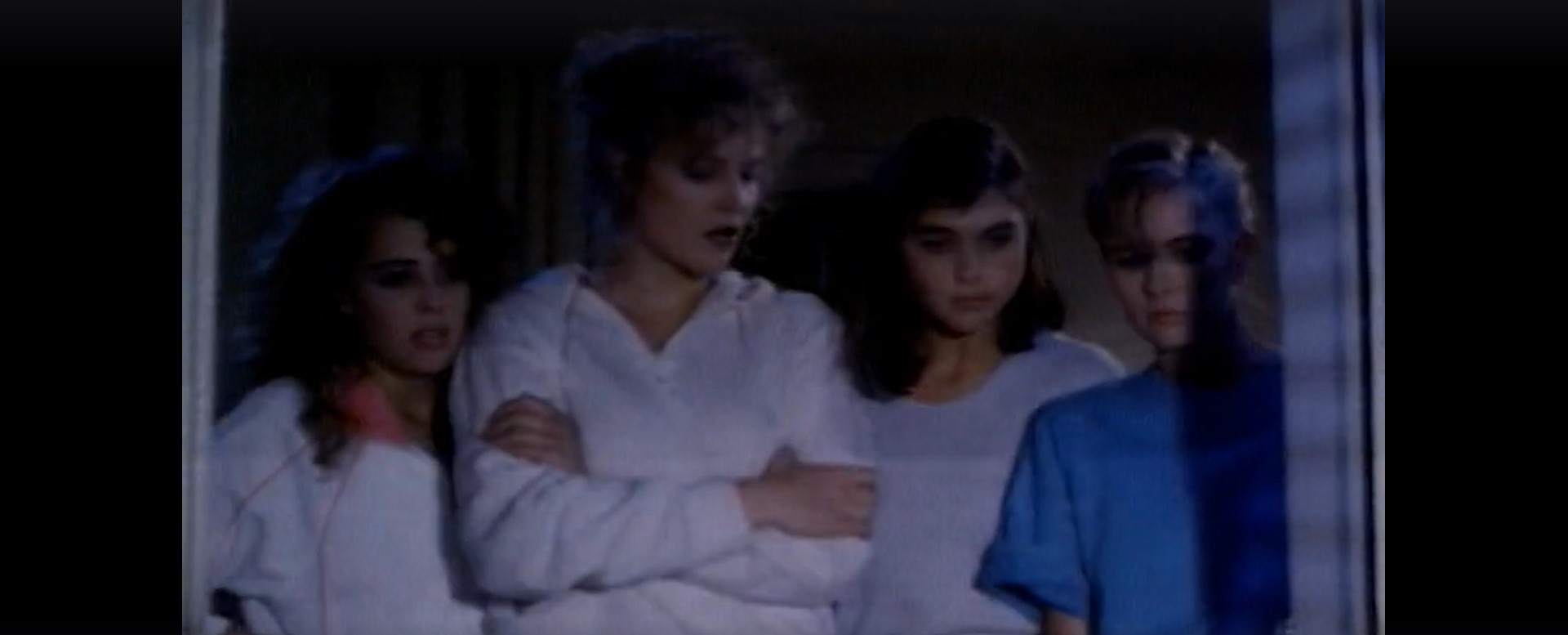
America, 1969. William John Brown brutally slays and sexually assaults 11 women. Before a judge, the serial killer is sentenced to death by gas chamber where his last words proclaim him as the Angel of Darkness sent Earthbound to ravage women. Nearly 20-years later in 1988, the St. Mary’s School for Girls in Europe is holding a stay awake event where a handful of students and one chaperone stay up the entire night as a fundraiser for their school. Dark and nearly vacant, the school basks in an eerie haven for the murderous William John Brown’s returning spirit seeking new souls of the softer sex. Determined to protect the girls at all costs, chaperone Trish Walton will not stop protecting the frightened girls until the entity is destroyed but when the ethereal malevolent spirit takes shape of a monstrous rodent with outstretching attack tentacles and psychokinetic glowing eyes, chances of survival are bleak.

Malevolent forces crossing oceans to death grip the innocent are films that are few and far in between as most transatlantic terror usually stays put, regionalized and localized to keep an authentic aural blend of superstition and history. Director John Bernard attempts to go against the grain with a small crowd of filmmakers who either overcame the parochial provenance and succeeded tenfold or became lost in foreign land narrative and failed miserably.  Bernard and, assumed brother, Johan Bernard co-write “The Stay Awake,” a South African mixed lot of horror elements brewed together into a supernatural schlocker that’s one-half dark and stormy night, gloomy Church Gothicism and one-half final girl survival slasher but equal parts outlandishly overexerted ghost thriller stretching across multiple continents.  “The Stay Awake” is a product of Heyns Film & Television Productions, produced by Thys Heyns of South African action-thriller flicks, as well as produced by Paul Raleigh, the producer of the “From Dusk Till Dawn” and the notable Millennium Films cofounder Avi Lerner, of “American Ninja” and “The Expendables” franchises, in one of his earliest credits from 1988.

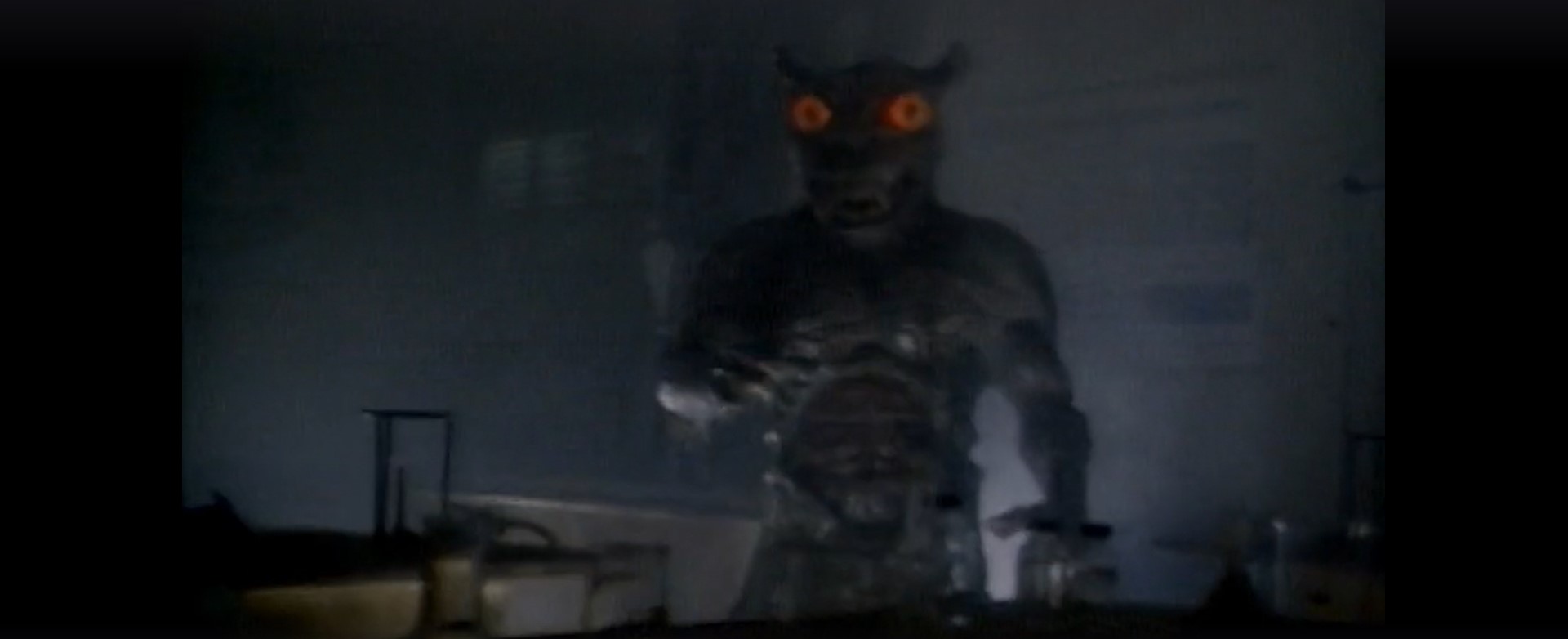
Though the story begins in America and mostly takes place in Europe, the cast is comprised of mostly South Africans trying to pass their accents for British English that is more like a rotating centrifuge of South African sub-accents.  Shirley Jane Harris (“The Most Dangerous Woman Alive”) spearheads the cast of principals with an extremely proclaiming protagonist, delivering lines with flatfeet and flat inflection that makes her one of the more forgettable final girls.  Her foe compares just as bland with a grunting, bodiless entity floating through corridors and hiding behind indoor plants (why would an imperceptible spirit need to hide behind anything at all?) before manifesting into what looks like a giant, big-eyed, and built on steroids rodent that then shows the William John Brown (Lindsay Reardon, “The Masque of the Red Death”) in side profile speaking in omnipresent and menacingly through the beast to taunt his prey.  The script allows just enough the group of young, private school girls to standout cliquishly, contain an ounce of contempt for each other, and underpin some form of individualism to make them retain some interest in their wellbeing.  However, most of the buildup that’s created to antagonize or unify between their personalities ultimately fizzle out into resembling something along the lines of kowtowing sheep or lemmings in more ways than one.  “The Stay Awake” caffeinates with a sizeable cast including Tanay Gordon (“Hellgate”), Jayne Hutton, Michelle Carey, Maxine John (“Howling IV: The Original Nightmare”), Hellie Oeschger, Joanna Rowlands (“Armageddon: The Final Challenge”) as the damsels, Bart Fouche (“Monster Hunter”), Clinton Ephron, Warren Du Preez, and Pierre Jacobs as the imposing boys, and Ken Marshall (“Return of the Family Man”) as the school’s night caretaker.

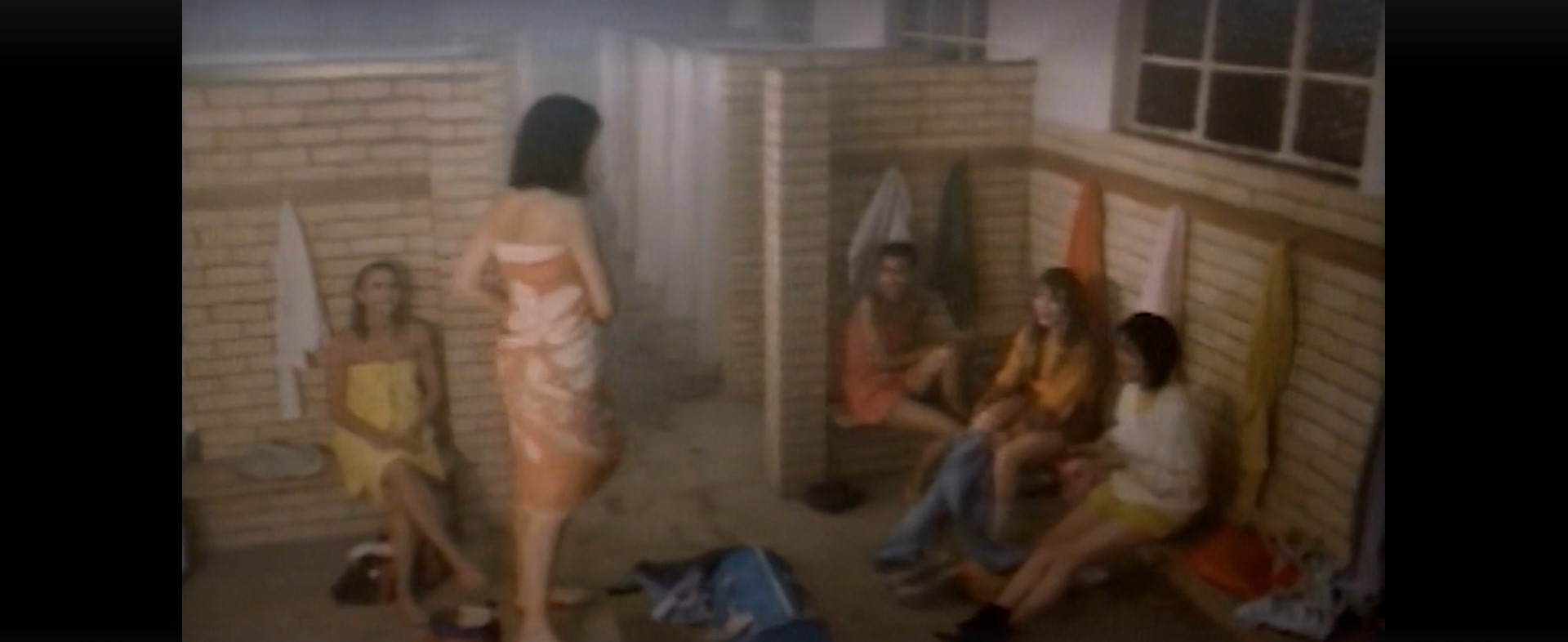
John and Johan Bernard’s logline for “The Stay Awake” likely looked appealing on paper but a full story treatment begs to differ with an inscrutable concept from start-to-finish.  “The Stay Awake” wades in generalities, oversimplifying locations and periods such as “America, 1969” and “Europe, 1988.”  The setup meat in between the disjointed times periods sets up a standard yet effective backstory for the killer, William John Brown, with a Judge’s voiceover of all his brutal transgressions, flashbacks of his victims at the death scene, and a slow walk down the corridor to the gas chamber that clearly denote him as the villain but then accentuates his supernatural supervillainy with a demonic voice screaming his return before the gas engulfs him.  However, why move from America to Europe and why in the span of 19 years does an unexplained possessed version of William John Brown return and select a group of religious school girls while his previous victims look to be a pact of randoms from off the street?  From the start, “The Stay Awake” has little to stay our fictional plausibility.  Couple the perplexation with dry performances, a possibly Hell originated monstrous, burning eyes rat creature, and the gratuitous horror nudity rug being pulled from under our feet as the schoolgirls tease with a shower scene only to be shown showering with towels wrapped around them and what has looked to be a promising possession of perpetual pandemonium  has quickly turned into a deflated disappointment with the only really good thing to come out of the film is the stationary man in a creature suit rat monster built like a bodybuilder.

“The Stay Awake” arrives onto DVD distributed by Cheezy Movies in a direct rip of the standard definitional 480i VHS transfer with a letterbox 1.33:1 aspect ratio.  Don’t expect a detailed transfer in a jittery and smoothed over standard definition that’s covered in a harsh blue tinted lens, but the condition of the interlaced video is surprisingly close to being damage free in a well-cared for print.  However, delph and range is difficult to determine due to the obvious lack of delineation but mostly because of the blue tint, poorly lit scenes, and contrast levels that make this presentation nearly pitch-black unwatchable in corridors, classrooms, and in the room of the like, but darkness is seriously enhanced and meshed together by Bernard stylistic choices of backlighting characters or using soft light to center the focus to offer a darkened horror picture. An English Dolby Digital 2.0 stereo serves as the only audio option which differentiates the soundtrack from the rest of the tracks.  Dialogue mostly separates itself to the top of the audio dogpile but is also well imbedded into the other track fighting to be heard that renders the dialogue dull and flat behind a wall of constant and diffused feedback static.  There’s also hissing at the tail end of sentences and faint crackling throughout.  Subtitles are not available.  The only extras on the static menu are back-to-back, quasi-grindhouse style trailers for two Cheezy Movies distributed titles of the blaxploitation “The Man from Harlem” and a “Dirty-Dozen”-esque “Commandoes.”  The physical aspects include a standard black DVD snapper with a rather enticing original title being sandwich with the demon’s glowing eyes on top and four schoolgirls ready to fight at the bottom.  The disk art is the same image except the four schoolgirls are cropped out and an unfortunate placement on the “The” from the title finds it punched out by the disc center/disc lock to just reveal “Stay Awake.”  The rated-R DVD has a region free playback and a runtime of 85 minutes.  “The Stay Awake” has all the indications of a cheap imitation on an established horror formula and this particular physical release doesn’t help the feature’s cause with an extremely dark and nebulous image to match its narrative.

Can You Keep Your Eyes Open at “The Stay Awake?”  On DVD now!

https://vimeo.com/814964711

When EVIL Won’t Let Go to “Those Who Walk Away” reviewed! (VMI Releasing / DVD)

Never Abandon Your Problems.  Face Them!  “Those Who Walk Away” on DVD!

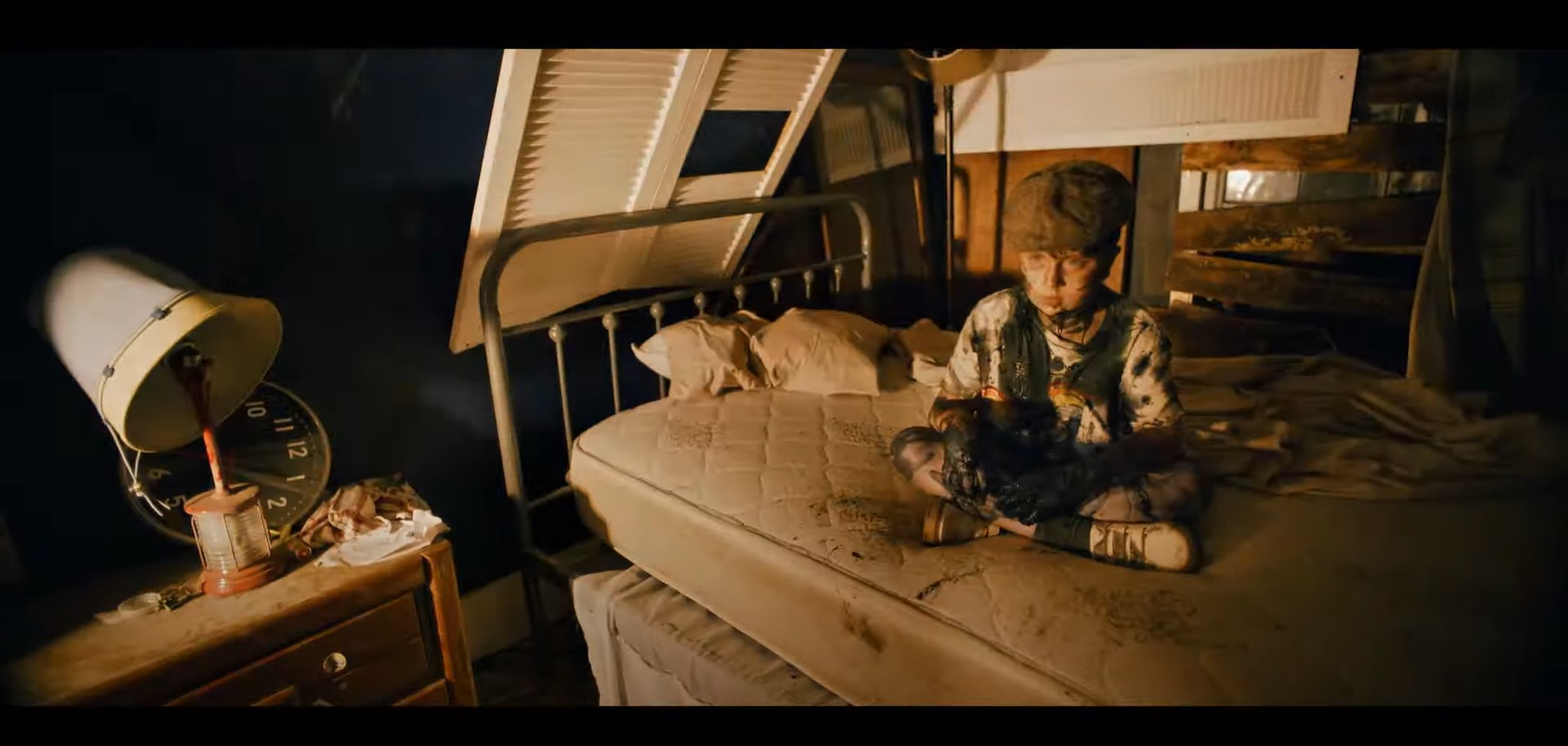
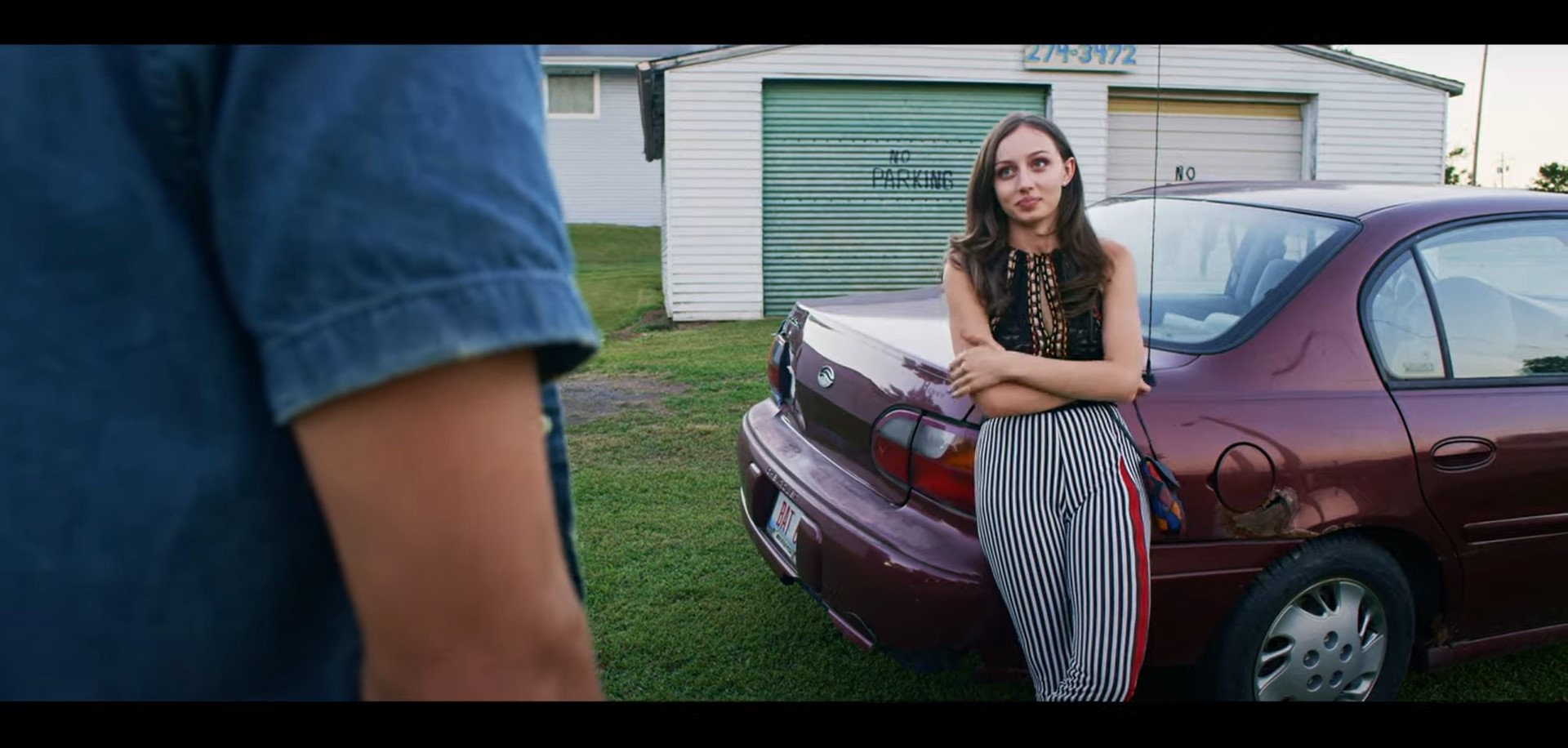
When Max could no longer stomach the sight of his mother falling deeper into severe sickness, he abandons his mother’s side after a year of care.  A year-long hiatus from dating has put a temporary halt on his love life, but as he rejoins the socializing game, he connects with Avery on an online dating app.  Avery appears to be the perfect girl:  smart, witty, and really into him.  The start of their first date is a match made in heaven until the girl too good to be true decides to drive him to a supposed haunted house for uninhibited fun when their original plans fall through.  Inside, a dilapidated abode comes with an appalling story, surrounding a malevolent urban legend spirit known as Rotcreep.  Swallowed by house’s notoriety, Max and Avery grapple with their own personal demons that have come back to haunt them and with no escape, facing the trauma is the only path toward survival.

A lot of films, past and present, are drenched dripping in the trauma theme that the subtopic has become waterlogged in the independent and mainstream scene, but has there ever been a trauma touted full length feature film that was done in one long single take?  That’s the novelty concept to proof of product feature from writer-director Robert Rippberger, a documentary filmmaker who has only recently dipped his toes into fictional storytelling.  After the 2019 unsung release of “Strive,” an urban drama of perseverance starring Danny Glover (“Predator 2”), Rippberger’s latest “Those Who Walk Away” sets two personal distresses into a prevailing evasion of death.   Rippberger’s script, cowritten with Spencer Moleda, materializes one’s own baggage being personified as waking nightmares or a manifestation of shackling malevolence, manacled by past mistakes and centrifugal hurt.  The Chillicothe, Illinois shot picture is a production of Ripberger’s own Los Angeles based SIE Films, Argentic Productions, and is in association with Slated Productions and Sandeep Sekhar Films with Rippberger, Sandeep Skehar, and Argentic’s KT Kent producing. 

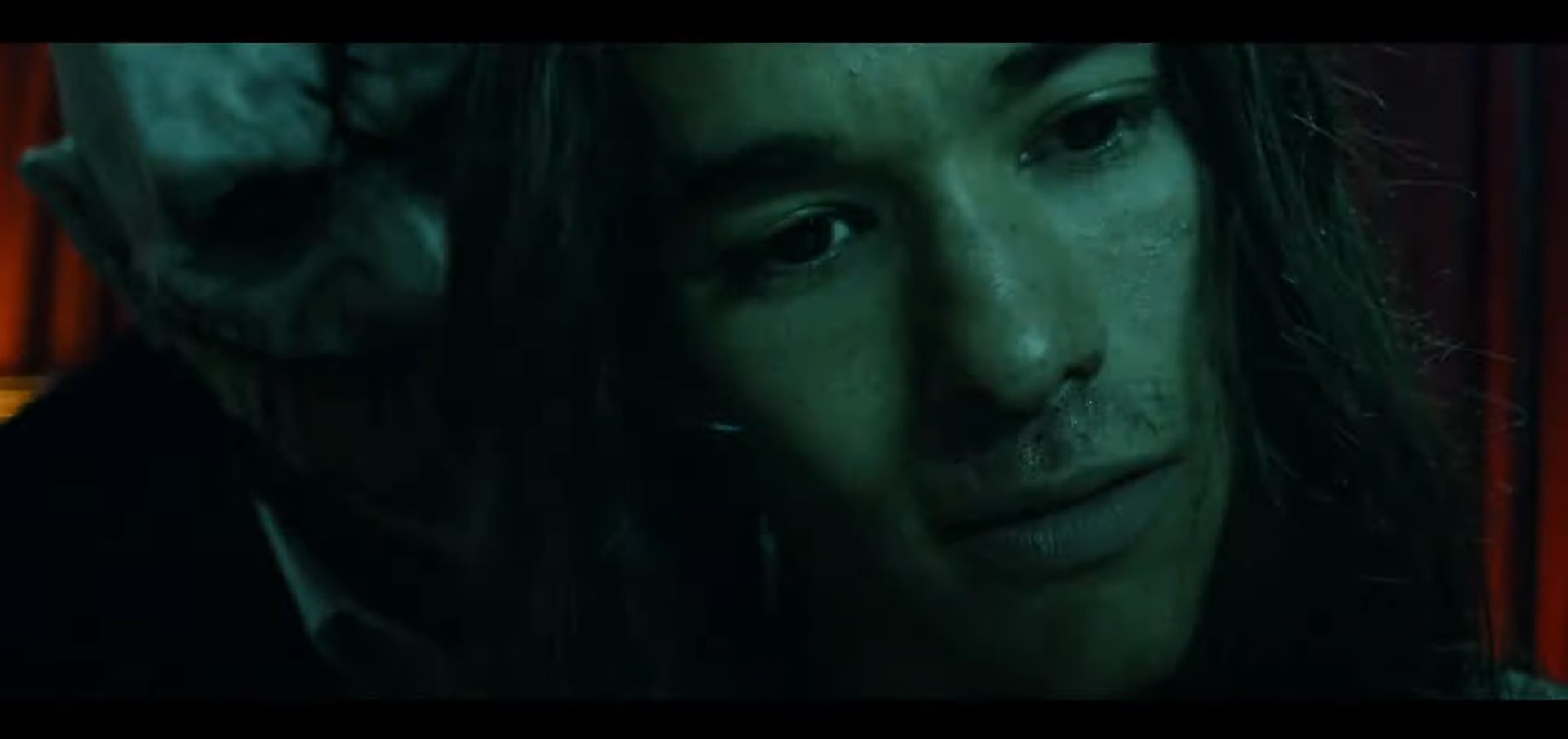
At the center of the story are Max, played by “Twilight” franchise’s Booboo Stewart (no relationship to Kristen Stewart), and Avery, played by Scarlett Sperduto (“Float”), as individuals looking for love or connection having met on a dating app.  Necessary lengthy exposition provides the footing for “Those Who Walk Away’s” climatic third act, giving Max and Avery a chance to go to town on their historical credentials during the date as we learn about Max’s ill mother and his sudden departure from her around the clock care before the heartache becomes soul consuming and about Avery’s fight or flight childhood, anecdotal and accounts that are kept closer to her chest,  with her close and adored brother.  The chemistry is palpable between them with nervous conversational exchanges and teasing jocularity that makes their one long scene seem like an actual first date, completely selling the dynamics with the audience who are induced with anxious butterflies and an eagerness to connect, emotionally and sexually, on Max and Avery’s behalf.  The narrative, ultimately, has to change because “Those Who Walk Away” is not a romantic-comedy but rather a dramatic-horror.  Whereas everything seemed to go swimmingly with the two young love birds really getting into the moment, we’re suddenly engaged with a different, if not darker, tone that has come out of the swindling shadows and into the light of a dimly lit, ramshackle haunted house that is the premier first date destination experience, if you’re a sociopathic survivor that is.  “Those Who Walk Away” works with a tight, small cast that finishes off the list with Grant Morningstar, Devin Keaton, Bryson Whereas, Connor McKinley Griffin, and former professional wrestler, veteran stuntman, and veteran actor of such films as “The Mask,” “Barb Wire,” “Hot Wax Zombies on Wheels” with Nils Allen Stewart, aka The Stomper, as the Rotcreep – again, not related to Kristen Stewart, but is father of lead actor Booboo Stewart.

“Those Who Walk Away” has the concentrated acting chops to pull off the two-pronged plot and despite the obscure and incoherencies with the revelation climax, the turn of events still bids a gripping blank check on what to expect next.  Yet, the most interesting portions of the film are not those aspects that do have a degree of excellence for an indie project.  Instead, the single long take from opening-to-ending credits is a mind-blowing feat.  Unless there’s a seamless cut that I’m missing or blind to, “Those Who Walk Away” never edits or cuts away from the action that puts the actors in a position of having to perform to perfection.  Rippberger also doesn’t remain stationary to a single location for the first half of the film, coursing through the populated public park and bustling small town of Chillicothe during Max and Avery’s getting-to-know-you talk-and-walk, and as the story evolves toward more sinister circumstances in a one house setting, Rippberger can’t sit still and uses nearly every square inch of the creepy, boarded up house to his advantage, creating and changing up room interiors that fashion an illusionary creepy funhouse that Max scrambles from room-to-room avoiding Rotcreep and finding a way out of what could be perceived as Hell in a house, a metaphor for Max’s own mother-abandoning torment.  If that isn’t impressive enough, Diego Cordero’s camera handling to make the single take work isn’t bush league cinematography as having the frame trajectory move in tight, confined spaces without a bit of awkwardness, like moving from outside the car to inside the front of the cab then to the back between the driver and passenger seat while keeping characters in frame and keeping the characters acting is a tough, planned shot.  What’s also tough is achieving crisp dialogue in one take and that’s where the film falters a little with the pivotal exposition losing strength and clarity where it’s needed the most, essentially being muddled instead of meticulously articulate if actors are either not vigorously vocal enough, mic placement isn’t exact, or mic picks up other noises that scuttle overtop the dialogue.

Courtesy of VMI Releasing and MVD Visual comes a chilling crucible in “Those Who Walk Away” on DVD.  Presented in 720p on a widescreen 1.78:1 aspect ratio, the film is distributed on a DVD5 with a reasonable compression rate to keep the image sharp without a lot of addition fluff to bog down the overall compacted digital transfer.  Instances of off and on lens focus works against the long take, much like the audio, where timely is key but as far as VMI Releasing’s handling of the storage, the resolution and image quality do the work to represent the best quality possible.  Although the DVD back cover states one audio option – an English Dolby Digital 5.1 – there is a second option with a English Dolby Digital 2.0 Stereo.  Unless you’re setup with a surround sound, the stereo option will have identical dialogue and ambience noise but there is an amplified finish on the soundtrack by video game composer Dmitrii Miachin with the drawn out violins and a brooding, sonorous pitch.  Dialogue is a minorly muddle as mentioned before with the tribulations on a feature length shot but mostly clean and clear to the point of satisfaction.  Aside from the static menu’s original trailer for the film, and the illustratively ghoulish opening sequence, the DVD comes with no other bonus material.  The DVD comes in a standard DVD tall case with a front cover of a bloodied Booboo Steward looking dazed walking through fire and the same image is used for the disc art.  Psychologically scything, “Those Who Walk Away’s” fillets guilt from the bone with scene shooting originality and a cast that nails every second lapse. 

Never Abandon Your Problems.  Face Them!  “Those Who Walk Away” on DVD!

On the Verge of a New Millennium, New Faces and Stories Tell Their Terror on the Same Old EVIL Video Format! “V/H/S/99” reviewed! (Acorn Media International / Blu-ray)

Found Footage is all the 90’s Craze These Days! “V/H/S/99” Available at Amazon!

The year:  1999.  The format:  VHS.  The theme:  The most horrifying experiences caught on found footage camera.  A horror anthology for the turn of the century puts together five of the most terror-drenched short films that resurrects the punk-rock dead, turns urban legends into vindictive playthings, televises Lovecraftian game show frights, peers into the stone-cold eyes of a Gorgon neighbor, and goes to Hell and back!  All caught on camera from a first-person view as VHS vicariously relives the glory days through a digital world, capsulated by the horror realm and all its fanatical acolytes for the analogue video format to live undead forever. 

Living in the age of a VHS comeback is admittedly kind of weird.  VHS has become a hot collectible, especially and obvious the rate and obscure that mostly resides in the horror and cult genre.  Most recently, a discovery on a Brazilian VHS cut of Jaws 2 has a couple of minutes of shot footage that no other release holds to this day.  That, being just one example, is sought after power of VHS that saw various versions of one film be disperse far and wide across continents, which the same could be said about DVD that too saw a variety of different cuts due to the diversity of playback formats, distribute cuts, and numerous levels of censorship between countries.  VHS is also making a comeback in format style with gritty, faded, flat colored image veneer and tracking lines and the absent transmission signal of snow statically adorning the screen with beautifully hypnotical and flickering white dots.  So, it’s now surprise that on the heels of 2021’s “V/H/S/94,” another analog anthology is greenlit in 94’s wake with “V/H/S/99” for 2022, written and helmed by newcomers to the series but not necessarily newcomers to the horror scene.  The movie’s sequential lineup Is as follows:  Short filmmaker Maggie Levin writes-and-directors “Shredding,” taking a break from killer sharks is Johannes Roberts to oversee his “Suicide Bid” entry, musician Flying Lotus directs and co-writes with Zoe Cooper with “Ozzy’s Dungeon,” “Tragedy Girls’” director Tyler Macintyre writes-directs “The Gawkers” along with co-writer and fellow “Tragedy Girls’” screenwriter Chris Lee Hill, and the husband and wife tag team of Joseph and Vanessa Winter, filmmakers of “Deadstream,” helms-and-pens “To Hell And Back.”  The Shudder exclusive series latest is produced by Josh Goldbloom (“V/H/S/94”), David Bruckner (director of “Hellraiser” ‘22), Chad Villella (producer of the of 2022’s “Scream”), Bloody Disgusting’s Brad Miska, and “Scream” ’22 and “Scream VI” director Matt Bettinelli-Olpin under the production banner of Studio 71 and presented by Cinepocalypse Productions and Bloody Disgusting.

A new set of five tales of analog rendered terror invoke a new set of actors in each short film that carrier with them a broad range of experience. While a couple of the stories shred the narrative with hectic editing (I’m looking at you “Shredding”), performances throughout come over with blistering consternation and definitely a late 90’s grunge attitude with “Shredding” and “The Gawkers” delivering the full blunt force of period, heckling away in their baggy clothing, bohemian hairstyles, and a penchant for skateboard thrashing. The other films are merely timeless with only mere mentions of date, or their timestamped on the video tape recording, or are just a thematical proverbial nod to the specific point in time, lacking the keep it real essence that is quite idiosyncratic to the hop from a phasing out decade and into a whole new other. The cast of these shorts play their roles with exuberance and wackiness, which if you have lived in or can look back to the converging decades/millennium and see some of the gameshows or cultural shenanigans that defined America as people or, if you want to go smaller, just the pop culture, wacky is a pinpoint descriptor. The short films’ of “V/H/S/99” are comprised of a cast including, selectively, Steven Ogg (“The Walking Dead”), Ally Ioannides (“Synchronic”), Keanush Tafreshi, Jesse LaTourette (“There’s Someone In Your House”), Dashiell Derrickson, Isabelle Hahn, Sonya Eddy (“Blast”), Emily Sweet (“Castle Freak” ’20), Melanie Stone (“Deadstream”), Archelaus Crisanto, Luke Mullen, and Ethan Pogue.

Anthologies have been around for decades and are a great medium to showcase a multitude of individual storytelling from a variety of filmmakers walking different paths in life.  Fans can often salivate over these types of jump-the-shark formats that can start off with the zombie undead, transition 10 minutes later into a supernatural spooky, and then segue into a creature feature with a wraparound bonus story that may or may not connect them all and squeeze each episodic terror vision in a full-length feature runtime.  Though I enjoy a good collection of short and sheer frightful films, anthologies are not my cup of sanguinary tea.  Hopefully, no partisan takes seep out of this review as I attempt to examine “V/H/S/99” objectively.  Out of the five segments, three have landed strong with a right amount combination of style, gore, performance, narrative logic, and, of course, terror, and if you like comedic sugar in your black cup of horror then “To Hell And Back” is a perfect Venti-sized, well-blended mulatto of choice that thrusts two dimwitted demonic ritual documentarians into the pits of dark, gloomy, and malformed creature Hell and fight their way back to their own plane of existence.  Though one flaw some make catch when watching the caboose film of the anthology is that it doesn’t particularly reflect 1999 other than the small caveat, which is pivotal to the story, that at the turn of the millennia is when the veil between our world and Hell is as it’s thinnest.  The other two better entries capture more infinitesimally in detail of the late 90s, early 2000s clothing and discourse.  “The Gawkers” taps hard into the weird aggressive hormones of a teenage boy while exploring the newfound ways to use technology as spyware.   Webcams aboard big boxy desktops chauffeur in a whole new way to be creepy that lands them in hot water not by the law but by the wrath of ancient femme fatale of Greek mythology.  Johannes Roberts rounds out the better half with a sorority haze gone wrong that evokes an urban legend to become more than just a story and Roberts “Suicide Bid” offers, again, that period presence that feels like a tribute throwback to the 1998 “Urban Legend” film itself, but adds a supernatural surprise that utterly creepy and not as deep with only 6 feet underground rather than a 47 meters down, the director is slowing raising his fear to the surface.  The shorts left hanging below the bar are “Shredding” and “Ozzy’s Dungeon” and for reasons that have to do with their style and story. “Shredding” promising premise is plagued not by punk phantasms back from the dead but simply pilfered of focus with a hectic, if not severely chaotic, VHS-graded editing scheme that shocks the perception senses while “Ozzy’s Dungeon” is inspired by Nickelodeon’s Legends of the Hidden Temple gameshow where kids have to compete in toned down ancient society games to race up the temple to win the big prize. “Ozzy’s Dungeon” definitely is weird, sadistic, and Lovecraftian-inspired for sure but its story design loses motivation and often cheats rounding the bases in order to reach the shocking climatic finale.

Acorn Media International brings tape to the United Kingdom with a Blu-ray home entertainment release of “V/H/S/99.” Presented in a widescreen 1.78:1 aspect ratio, though doesn’t cater to the standard 4:3 ratio of video tape, the provided image quality purposefully varies to give audiences the titular analog experience. Faded grading, tracking lines, static and that jittery playback is all part of the visual environmental experience and even a few of the filmmakers shoot the film digitally to then run it through VHS to garnish with unnatural base video turbulence. The English DTS-HD 5.1 surround sound mix heightens the exposure and familiarity to of being that person behind the camera as all of these shorts of short POV. Intense and, often, cacophonous, the audio tracks still manage to level out, be discerned, and manage to relay the chaos no matter how much bedlam is thrown at the screen. From the zoom in-and-outs of the video tape recorder, there’s a clean sense of depth and the range is bountiful as the ambient track runs the gamut of omnifarious sounds that give each episode an individualized stamp. English SHD is optional. Bonus content includes an exclusive panel from New York’s Comic Con with guests producer Josh Goldbloom, “The Gawkers'” Tyler Macintyre, and “To Hell And Back’s” Joseph and Vanessa Winter as well as a total arc gag reel. After that encompassing project feature, the girth of the bonus content breaks down into the individual shorts with “Shredding” having a deleted scene and the complete fictious band BitchCat music video, “Ozzy Dungeon” has two deleted scenes, “The Gawkers” has a deleted scene as well as bloopers, camera tests, and The Making of Medusa, and “To Hell And Back” rounds out the features with a hefty look at the raw footage, scouted location, and a storyboard and blocking rehearsals. There are no bonus features for Johannes Roberts’ “Suicide Bid.” Physical features include a slightly thicker traditional Blu-ray snapper, a Europe standard, with a cover art that matches the North American RLJE release, a city being loomed over by skull made out of colorful galactic stars and a pair of video lenses for blank eyes. The disc art is pressed with the same front cover image. Though no mention of a region playback on the back cover, I suspect a region B encoded release as per usual with Acorn Media Interntional. “V/H/S/99” has a total runtime of 109 minutes and is UK certified 18 for strong blood violence/gore. “V/H/S/99” is not my kind of off the heasy subgenre, but the latest series anthology packs a punch and I would never discourage anyone from not experiencing firsthand an homage trip through terror.

Found Footage is all the 90’s Craze These Days! “V/H/S/99” Available at Amazon!

The EVIL is Inside Me! “Nightmare Man” reviewed! (Ronin Flix / Blu-ray)

“Nightmare Man” Is Here To Haunt Your Dreams in High-Definition!  Blu-ray Available at Amazon.com

To channel mystical help with her and her husband’s fertility issues, Ellen purchases a mask from overseas that supposed to provide fruitful results.   Instead, Ellen is plagued by nightmares of a demon figure, forcing himself onto her with a maniacally grin.  Diagnosed a paranoid schizophrenic and on medication to dilute the vivid dreams, Ellen’s husband chauffeurs her to the mountain isolated Devonshire Institute to commit her for treatment, but when the car runs out of gas and her husband ambles for gas, Ellen finds herself alone in the car at night and with the nightmare man lurking outside,   Escaping barely with her lift now that the physical form of her tormentor is no longer just in her dreams, Ellen takes refuge with a pair of couples celebrating an engagement party.  Rambling erratically about an entity no longer inside her, a debate between the group of friends question Ellen’s sanity until the nightmare man shows up and slaughters anyone in his path, but the party’s just beginning when another killer has been freed from suppression.

Pivot stories are the best!  The investments into a foundation roots a focus, provides a clear understanding of the forthcoming, and can be, for better or worse, an expectation of narrative structure.  What happens when a monkey wrench is thrown into the story and completely bends the storyline at a 90-degree angle onto another totally unexpected path?  Some would be too jarred by the jerk toward another direction, coming out of the film with a severe case of whiplash that joggles and boggles the mind, while others, like myself, would find a refreshing phoenix out of the tired ashes of a stale genre and welcome it with open, grateful arms to keep my rear-end sewn to the couch and eyes glued to the television to see what happens next!  Writer-Director Rolfe Kanefsky (“There’s Nothing Out There,” “Art of the Dead”) alters the early 2000s post-“Scream,” masked-slasher with a twist and never second guesses the decision to bounce from out of one subgenre and into another without skipping a beat.  “Nightmare Man” is a production of Delusional Films and is non-SAG, shot in the area of Big Bear, California, produced film by the father-son team of Rolfe and Victor Kanefsky and Esther Goodstein, and Frederico Lapenda.

What’s very curious as well as fascinating about “Nightmare Man’s” character hierarchy is that there isn’t just one lead principal throughout the film.  In fact, lead principals change hands at least three times and also misleads audiences into thinking someone is going to charge of the situation only to be cut down in a blink of eye and a jolt to the normal hardwires of our cerebral higher functioning.   The titular star of Rolfe Kanefsky’s “Jacqueline Hyde,” Blythe Metz, returns to work with the filmmaker as a woman overwhelmed by dreams of a demonic dybbuk of sorts who chases her and tries to force himself onto her, into her, in a violating way.  Metz convinces much later as someone suffering from delusions and paranoia but her Ellen character, a woman who is supposed to be wealthy from some of the dialogue bits, is a bit more lucid and grounded early into the story with only her frustration to lean back on to warrant being committed, which seems like a harsh and unconvincing setup for the character that also induces early suspicion on her husband’s (Luciano Szafir, “Hopekillers”) eagerness to check his wife into a mental institution.  Before long, we’re introduced to two couples, played by Jack Sallfield (aka Jack Sway), Johanna Putnam (“Feast II and III”), James Ferris (“Jacqueline Hyde”), and every fan’s favorite scream queen, who’s currently playing a reoccurring character in season 3 of “Picard,” Tiffany Shepis (“Abominable,” “The Black Room”), partaking in an intimate celebration and partaking in what mostly early 2000s portrayed characters love to participate in – sex themed conversation, games, and forbidden secrets.   Soon, the two parties collide when Ellen is chased through the woods by her African horn-masked dream stalker (Aaron Sherry) and then the situation turns into mice in a glass cage with a snake circling hungry.  Shepis doesn’t stray terrible too far from her normal cache of credits or Tromaville antics as a provocative, promiscuous, and downright master of her domain with intent.  While Shepis doesn’t necessarily compete with any other onscreen personas, as the long-time horror vet can steal a show with ease, we’re also treated to strong performances from her costars, such as Metz splitting into thirds with her diagnosed paranoid-schizophrenia, and we’re introduced to Johanna Putnam in her debut role as an engaged woman has who a dangling lesbian secret from her past hanging over her head.  The dynamic works not in a dramatic means but rather as a comedy portico tossed into the narrative structure to spruce up character conversing toward something humorous and interesting as arrows plunge into chests and knives are puncturing through lower jaws.  “Nightmare Man” rounds out the cast with Richard Moll.  Yes, Bull from Night Court, as well as “Scary Movie 2” and “Sorority Party Massacre, makes brief cameo appearance as the local sheriff and you need look very closely because the scene is so dark, you can barely tell it’s him. 

The one theme that keeps popping up in the recess of the mind is perhaps the one theme that eludes being talked enough about when overhauling “Nightmare Man” as a message bearer. Being an early 2000’s horror in the long established and well-dipped into the shadow of the “Scream,” “I Know What You Did Last Summer,” and “Urban Legend” franchises that defined the turn of century before it even happened might have had something to do with “Nightmare Man’s” lack of enticements for distributors to feel love for the man of nightmares and notice it for the novelty and the theme for what it is, an instilled paranoid fear that one’s sexual attacker leaves behind as a post-traumatic stress bomb that is everything all consuming. Kanefsky patterns the hallmarks of rape trauma stealthily into the script, disguised as a shadow, with a teethy mask, and vividly glowing and menacing eyes. Some other scenes are more obvious than others, such as Ellen’s dreams of the sinister smiling figure pinning her to the attic floor and spreading her legs right before she wakes or when she cries out, “I still feel him inside me,” while held up inside the cabin, with Kanefsky painting with a broader brush on “Nightmare Man’s” obscured presence and masked killer with an agenda that attaches itself directly in avoidance of calling a spade a spade. The kills and gore effect gags can stand up against any big budget, Hollywood production and are just unique enough to make the killer interesting in diversity and brutal enough to give “Nightmare Man” an edge sharper than the knife he wields.

If a Tiffany Shepis fan, or a fan of Tiffany Shepis in her underwear holding a crossbow and won’t be rattled by the bent elbow plot pivot, the Rolfe Kanefsky picture is an enjoyable, campy romp that gives homage to the horror films that have set the scene for “Nightmare man” to exist.   Ronin Flix plucks “Nightmare Man” out of standard definition dreamland and into the reality of high-def, 1080p Blu-ray.  Presented in an anamorphic widescreen 1.78:1 aspect ratio, the story is set almost entirely at night with more household lighting for interior shots and not too much exterior lighting to brighten objects or even cast hard-edged shadows.  While this creates more realistic atmospherics of isolating apprehension in the woods horror, Kanefsky and cinematographer Paul Deng (“Trancers 6,” “Song of the Vampire”) bathe many of the night shoots in deep blue tint and the Ronin Flix transfer appears to display in low contrast and is very dark, leaving focal objects nondelineated and obscured.  I haven’t checked out the Lionsgate After Dark DVD print of this film so I can’t compare.  There some dip in the compression decoding as the release hovers in the mid-30Mbps for good periods of time but does dip into the lower 20s and it shows with light phasing macroblocking.  When not bathed in blue, skin tones and grading often look natural and palpable.  The English language DTS-HD 5.1 Master Audio is balanced between all levels tracks, putting the dialogue in the forefront, keeping the range of ambient noises at an appropriate depth, and a soundtrack that maintains tensions rather than over intensifies to a fault.  I will say that the multi-channel lacked a significant stalwart production that didn’t provide the anticipated strength of audio.  Dialogue is clean and clear with no perceptible issues and the overall package track can be said the same.  English SDH are optional.  With the Ronin Flix release, new bonus supplementals extend more background and insight with retrospective discussions and distribution challenges associated with “Nightmare Man,” such has a new interview featurette with director Rolf Kanefsky, producer Esther Goodstein, and star Tiffany Shepis in There’s Something Out There:  The Making of Nightmare Man and a new audio track isolating the film score by Christopher Farrell (“Bus Party to Hell”).  Also included is Creating the Nightmare:  The Making of Nightmare Man – a raw footage behind-the-scenes look at some of special effects, makeup, and off-the-cuff tomfoolery during in between take down time, extended scenes, Tiffany’s Behind-the-Scenes of Tiffany Shepis weaponizing a handheld camera with her flare of sexualized humor and potty-mouth pizazz, an audio commentary track, on the audio setup, with director Rolf Kanefsky, producer Esther Goodstein, and star Tiffany Shepis, Flubbing a Nightmare Gag Reel, still photos, and a promo reel.  The physical features include a David Levine package design of an abract-esque composite of the Nightmare Man mask, Tiffany Shepis in a bra, and a knife all splashed in red lined inside a traditional Blu-ray snapper case with no insert.  The release is locked on Region A playback and the film has a runtime of 87 minutes and is rated R for horror violence, gore, some sexuality/nudity, and language – what Tiffany Shepis release wouldn’t include all of that?  “Nightmare Man” is a dream of a subgenre-bending film; sexy, gory, intense, and unpredictable, all the prefigures of a hell of a good time.

“Nightmare Man” Is Here To Haunt Your Dreams in High-Definition!  Blu-ray Available at Amazon.com