How Many Chickens Need to Have Their Throats Cut to Satisfying Ritualistic, Naked EVIL! “Voodoo Passion” reviewed! (Full Moon Features / Blu-ray)

Get Entranced by Full Moon’s “Voodoo Passion” Blu-ray!

Newly married Susan House travels to Haiti to join her consulate husband, Jack House, who has been stationed at the British Embassy.   Captivated by the Haitian voodoo religion and culture, Susan is eager to tour the island nation’s most ambiguous practice most don’t or will never understand all the while Jack’s naked and nymphomaniac Sister, Olga, makes forward, flirtatious advances toward her.  That fervor for voodooism and Olga’s point-blank seduction has seemingly incepted terrible nightmares of naked, animal sacrificial rituals and murder conducted beguilingly by a priestess in the form of Jack House’s native housekeeper, Inês.  When Susan awakes, the realism of her dreams afflicts her but her husband Jack and his colleague, a psychiatrist by the name of Dr. Pierre Barré swear there have been no police reported murders.  Night after night, Susan’s entranced nightmares continue to be vivid with murderous mysticism that’s slowly driving her mad in the land of voodoo. 

One of Jesus “Jess” Franco’s more bosom and bush erotic-thrillers, “Voodoo Passion” is nearly a fully naked runtime feature sprinkled with hints of the nation’s cultural religion.  The 1977 released, German Production, also known by the titles “”Call of the Blonde Goddess” or “Der Ruf der blonden Göttin,” was less about his own stylistic substance and auteur stamp and more about spasmatic, gyrating nudity under rhythmic bongo beats for the Spanish sleaze and exploitation genre filmmaker.   The gratuitously sexed-up, multinational feature is penned by the Switzerland born, sexploitation and adult genre screenwriter Erwin C. Dietrich under one of his pen names, Manfred Gregor.  Dietrich also produces the film amongst a substantially historical collaborative effort between himself and Franco over the course of the late 70s to early 80s.  Nestor Film Producktion serves as the production company, filming entirely not in Haiti but in the beautifully scenic and old-world allure of the seaside capital of Lisbon, Portugal.  

Lots of hot body action in this beat-driven, voodooism thriller primarily between a trio of character-diverse, titillating ladies and peppered with peripheral nude women and men tribals engaged in a ceaseless native, ritual thrusting, pulsing, and shaking trance dance.  “Voodoo Passion” grips itself around the rags-to-riches character of Mrs. Susan House in what is a matron-look for Spanish actress Ada Tauler (“The Sexy Horrible Vampire,” “Love Camp”) brought to Haiti at the behest of her British consult, newlywed husband Jack House, played by the stony-faced and “Eugenie” and “Pieces” American actor Jack Taylor able to swing both thrills and feminine frills in his films.  While Tauler’s doesn’t shy away from full nudity of Susan House’s fever dream state, the actress pales in comparison to the other two-thirds who are more engaged in sexual promiscuity and the liberating fervor of ethnic ceremony.   Those two actresses are “Caged Women’s” Karine Gambier as the nymphomaniac sister of Jack House and the face of most of “Voodoo Passion’s” physical marketing with French actress Muriel Montossé (“Cecilia”), under the more westernized stage name of Vicky Adams.  With a face and body like a model, Vicky Adams’s wild arm and stoic expression dance moves will hypnotize viewers entranced with the bongo tempo’s transfixing pomp, contributing to the film’s psychotronic premise of magical and religious rites, obfuscated nightmares, and, cue Austin Powers’s voice, murder.  Yeah, Baby!  “Voodoo Passion” has curves for days and in all different personas that keep things weirdly, but welcomingly, platonic on some level and not just an overly saturated sex-fest.  The film’s cast rounds out with Vitor Mendes (“Swedish Nympho Slaves”) and Ly Frey.

If asked to describe or give an opinion on “Voodoo Passion,” one would say cheekily the Jess Franco film is a thriller swathed in an eyeful of bosom and bush.  If the 4-minute introductory scene with voiceover exposition to the ceremonial voodoo band and half-naked native dancers wasn’t enough of a clue, Ada Tauler and Karine Gambier pull you right back into the soaking tub with their soapy, wet bodies as they immediately take a bath together upon meeting for the first time.  From that point on, the bosom and bush bar has been set and in that the thicket of unshaven landing strips, there’s a good story underneath about the mystics and misconceptions of Haitian voodooism.  Unfortunately, much of that story falls behind the showcases of skin, thrusting the principal ladies into the spotlight, overshadowing Jack Taylor’s performance as well as doing nothing for the poor psychologist in Vitor Mendes, and undercutting the very theme of ritual exploitation and misconduct which is half of “Voodoo Passion’s” concept.  The entirety is all quickly surmised in one fell swoop of exposition without the necessary leg work, that should have been carried out by either Susan House or the consul assistant Inês, of building evidence for or against the contrary exposed in the finale.  Then again, does gorgeous naked women dancing about really need a well-rounded plot?  All depends on the eyes of the beholder and these eyes needed that equilibrium!

Full Moon Features conjures up a Blu-ray for this Jess Franco thriller debased in sexploitation slather.  The AVC encoded, high-definition 1080p, is housed on a single layer BD25, yet not encoded heavily with bonus content, “Voodoo Passion” is able to retain a full-bodied image from a remastered German original negative owned by producer Erwin C. Dietrich.  Vivid color saturation, contrast levels accompanying each other, natural looking skin tons, and the stunning detail render this Full Moon Features release the bees’ knees.  No signs of blocking or banding but some celluloid frames are slightly grainier than others that might be a result of age, wear, or the variable of film stock.  There is only a single audio option, an English LPCM 5.1 renders lossless audio, clearing each channel with ease, and delivering a rhythmic bongo drum beat with intensity.  Dialogue mirrors the richness despite the ADR track overtop the diverse nationalities’ native tongues.  There are no English subtitles, or any setup option for that matter, for this English only track release.  Special features included are an archival interview with Jess Franco with forced English subtitles Franco, Bloody Franco, a rare photo slideshow of images from the film, the German trailer, and a Jess Franco vintage trailer reel of most of his schlocky Eurosleaze fair.  What’s party treasured about these newly re-released films onto a new full HD transfer is Full Moon’s physical package redesigns that offer a cardboard slipcover with new illustrated, pinup-esque, art.  “Voodoo Passion” has a half-naked woman, presumably the nymphomaniac sister Olga, moaning in ecstasy while holding a…hand mirror?  Wonder if that should have been the champaign bottle Olga uses to, well, you know, pleasure herself with.   There’s also a striking, NSFW, Muriel Montossé pose in a scene from the film on the traditional Blu-ray Amaray front cover with additional explicit scenes on the backside.  The disc is pressed with the same slipcover illustration and there are no inserts inside the case.  Presented uncut and region free, this Full Moon release of Jess Franco’s vintage sleaze has a runtime of 86-minutes.   

Last Rites:  Another wholly impressive picture quality presentation of another unwholesome, softcore sexploitation by Full Moon Features, a friend to Haitian voodoo and you, the licentiously greedy viewer! 

Get Entranced by Full Moon’s “Voodoo Passion” Blu-ray!

Gaudy, Superfluous EVIL Sits in Your Living Room and Destroys Your Family. “The Coffee Table” reviewed! (Cinephobia Releasing / DVD)

“The Coffee Table” Would Look Good in Your Living Room! Purchase It Here Today!

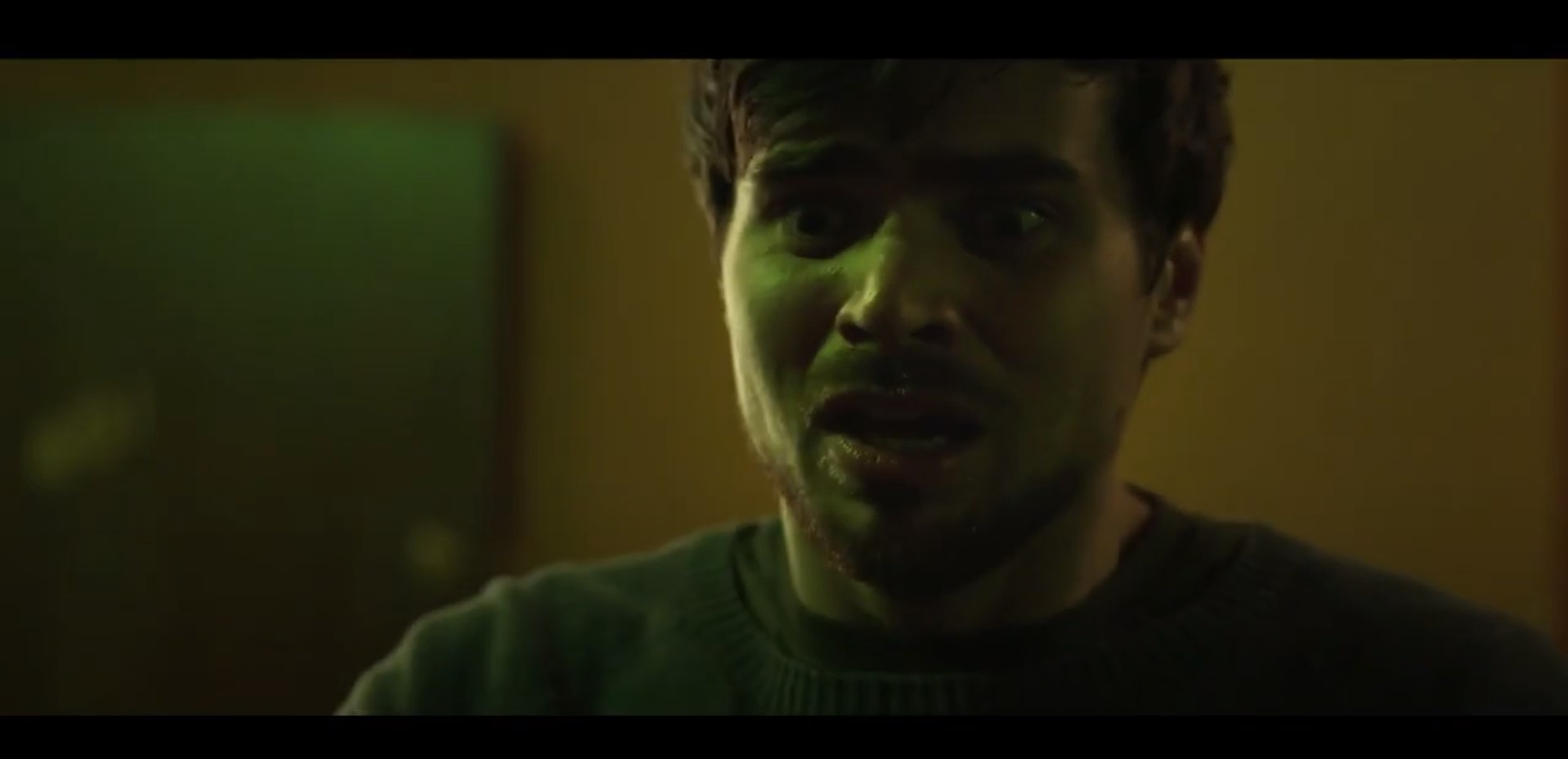
Jesús and Maria are new parents with a beautiful baby boy.  Maria has been eager for a baby and sent through several medical treatment for the bundle of joy while Jesús continuous rides the fence about being a father.  When the baby arrives, the boy becomes a source of usually one-sided bickering and jabbing contention as Maria feels Jesús could be a better father to their newborn son.  When they move into a new apartment, they find themselves in a furniture store looking at a gaudy glass coffee table Maria can’t stand the sight of, but Jesús very much can’t live without.  While Maria steps out to shop for an upcoming luncheon with Jesús’s brother and young girlfriend, Jesús briefly stops assembling the table to take care of the baby until a tragic accident happens that reshapes everything and everyone Jesús cares about, and impels him to bottle in the tragedy, hiding it in extreme guilt from his wife and guests, as he struggles to find the right moment to relieve his soul. 

Marriage is hard.  Parenting is even harder.  Choosing a coffee table should be a delicious piece of decision-making cake but for director Caye Casas choosing living room décor can be deadly.  The “Killing God” director follow up his debut feature with the 2022 released domestic disturbing comedy-horror “La Mesita Del Comedor,” aka “The Coffee Table.”   Casas cowrites the film with Cristina Borobla, her first screenwriting credit but not her first collaborative effort working with the director as the vocational Art Director has been involved in Cases’s other works, such as “Killing God,” his 2017 short “RIP,” and amongst others.  Maria José Serra (“Amigo Invisible”) and Norbert Llaràs (“Killing God,” “The Perfect Witness”) put their producer café mugs onto “The Coffee Table” with the hailing from Spain production companies La Charito Films, Alhena Production, and Apocalipsis Producciones. 

Much of “The Coffee Table” is set inside the tiny, newly moved into apartment of Jesús and Maria who even though rag on each other’s opinions and one of them don’t necessarily favor being a parent, deep down the unlikely pair do have a strong love attraction that swims upstream against the repelling.  In the roles of Jesús and Maria are David Pareja, whose worked with Casas inner circle before with “Killing God,” and Estefanía de los Santos with an unforgettable, characteristic raspy voice that magnifies the role tenfold.  Both Pareja and de los Santos are comedically bred with a long list of hilarious Spanish features to prep them to see the gut-punching, black humor of what’s to come in “The Coffee Table.”  Frankly, there’s nothing negatively to report in Pareja and de los Santo’s flawless, funny, and unfortunate family dysfunctional performances surrounding their love-hate relationship and the knot of culpability and the bliss ignorance contrast that’s delineated between them.  Floating into the mix of repressiveness are side stories that become assimilated by the untold tragedy, such as the neighbor’s daughter (Gala Flores) with an intense belief Jesús loves her, the smarmy coffee table salesman (Eduardo Antuña, “Killing God”) who also have an interest in Jesús, and Jesús’s brother Carlos (Josep Maria Riera, “RIP”) and his barely 18-year-old girlfriend (Claudia Riera, “The Communion Girl”) being ribbed for their own odd couple relationship and giving a surprise announcement of their own. 

Though a comedy and a horror, I didn’t find “The Coffee Table” all that funny but more so quirky, outrageously bold, and shockingly hard-hitting instead.  Horror, definitely without a doubt, comes through but not in a typical to be scared or to exact fear way with any of the conventional themes to support its harrowing weight.  The horror that uncoils is every parent’s worst scenario, the underlying nightmare that grabs the soul and squeezes until every drop of anxiety is wrung out of our wet bag of bones and meat.  The incident itself is gnarly and unspeakable but the post-trauma slithers in a nasty case of guilty conscious, shame, and fear that can freeze someone to the spot to where they clam up, sweat profusely, stomach twisted, and have self-harming thoughts from the conjoined cause and effect of having to tell your partner the most terrible of news and see their composure, their affection flush away in a blink of an eye.  Casas able to string along the aftermath to extract a feature length film without it ever approaching critically forced or farfetched, adding on and expanding upon the luncheon or Jesús’s wiggling through painfully with excuses on why Maria should leave the baby sleeping peacefully in their room.  The passively aggressive sparring atmosphere quickly turns into colossal tension and hopelessness through the mechanism of dark black comedy.  As a parent myself, “The Coffee Table” evokes great sadness and mental strife of the situational possibility, the greatest horror of all time.    

The cruel film by Caye Casas arrives onto a Cinephobia Releasing DVD. The MPEG2 encoded, upscaled 720p, DVD5 comes in at being the eleventh release for the Philadelphia based, eclectic independent film distributor. And, boy, is it a doozy. For “The Coffee Table’s” image, not the two, artificially gilded naked women holding an oval shape, unbreakable pane of glass, the feature’s picture quality renders about as good as any single layer capacity unit can decode in a digital age with modest details, muted hues, hard lit, and a good amount of spectrum banding in the darker areas. Not to fret, however, as there’s plenty to discern with a film that isn’t reliant on details but more reliant on hitting you wear it hurts, heavyheartedly. The Spanish language Dolby Digital 5.1 uses a lossy compression that, again, suitable to the movie’s means of conveying a contortioned, ruthless story defining the very meaning of a no way-out, no-win situation. Dialogue really is key for this type of narrative to work and progress and does come through fine without an ounce of earshot hinderance. Also, not that type of film that provides a breadth of range or depth as much of the layers express in a very near arrangement, as expected in a concentrated setting of Jesús and Maria’s apartment home. English subtitles are optionally available, and they synch up and pace well with only one noticeable grammatical error. Not much in the way of special features as only Cinephobia Releasing trailers fill that spot and there is not mid or end credits scene. The 90-minute film’s DVD release comes not rated and has region 1 playback. Other regions are untested, and the back cover does not state the official region playback capacity.

Last Rites: Caye Casas and Cinephobia Releasing has the cajónes to not table this wonderfully bleak black comedy-horror from reaching audiences far and wide. “The Coffee Table” is a painful reminder of just how fragile life can be, much like a cheapy made piece of tawdry decor from China.

“The Coffee Table” Would Look Good in Your Living Room! Purchase It Here Today!

Blind, EVIL, Undead Templar Knights Hunt for a Bite to Eat! “Tombs of the Blind Dead” reviewed! (Synapse / Special Edition 2-DiscBlu-ray)

“Tombs of the Blind Dead” 2-Disc Blu-ray Available for Purchase Here!

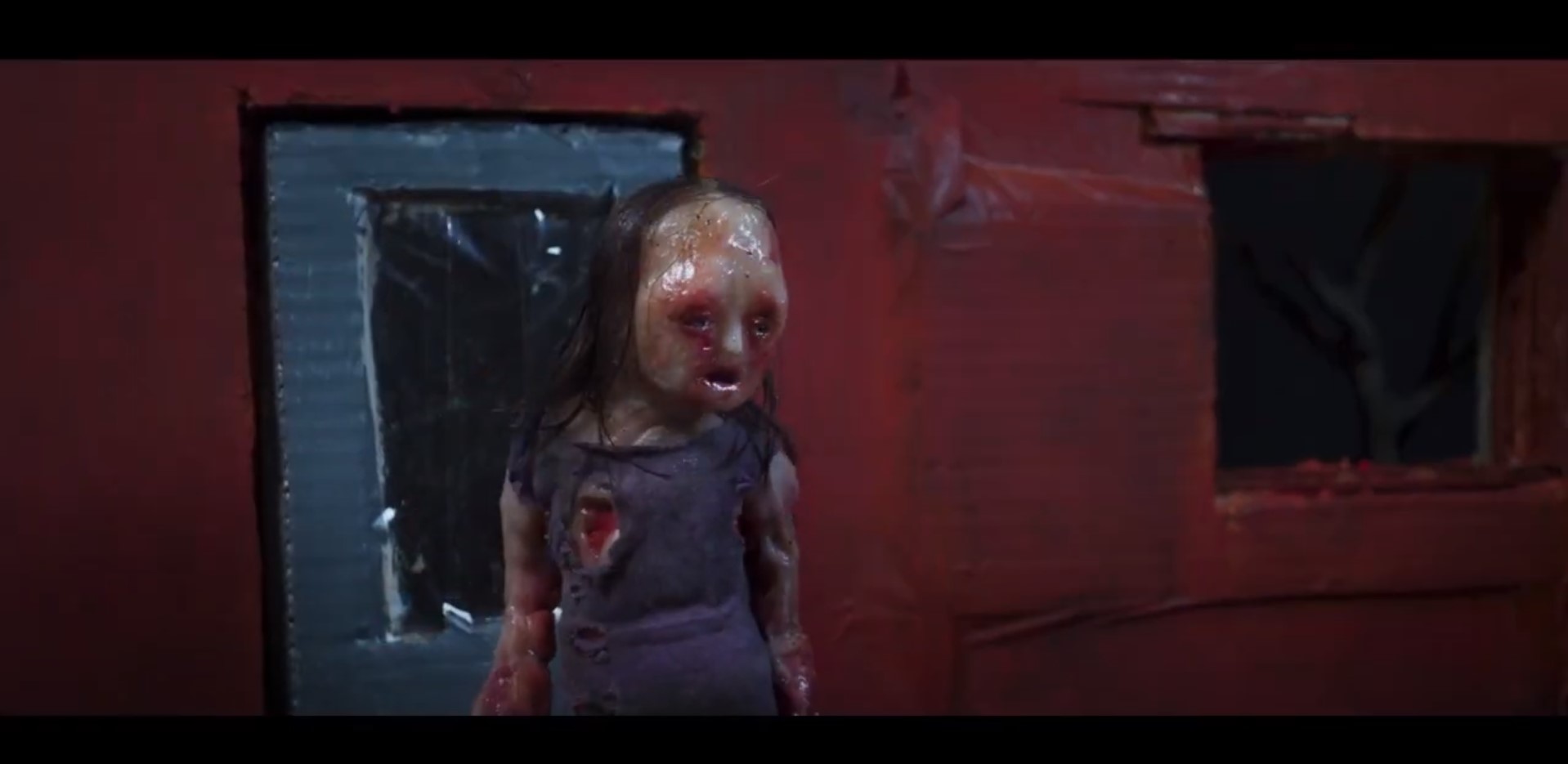
Maria, Betty and Roger take a train across the Spanish countryside to see the landscape sights.  When Maria feels like a third wheel stuck in between Betty and Roger’s flirtations, she jumps off the moving train, leaving her friends aboard, and camping out under the ruins of an old countryside Church.  There’s only one problem, the Church was home to the ancient order of the Knights of Templar who took a blood oath for Satan by sacrificing young virgins by drinking their blood and lynched by the Church for their crimes against man and God.  The Cursed Knights, reduced to rags, bones, and without eyes, rise from underneath their graves every night and roam the countryside on the hunt for anybody in proximity they can feast upon.  Betty and Roger learn of Maria’s strange demise without knowing the details and form a four-person search party only to step into the same dangerous den of the Knights of Templar. 

“Tombs of the Blind Dead,” or as known as the U.S. as just “The Blind Dead,” is the first in a series of four undead Templar Knights films that would come to be known as The Blind Dead collection by Spanish filmmaker Amando de Ossorio.  Natively titled “La noche del terror ciego” was released in 1971 and penned by Ossorio who laid a new path of Spanish horror that didn’t involve Paul Naschy or Jess Franco with undoubtedly slow dread of the undead that resembled more of the Italian-bred beyond the grave films where ghouls and ghosts return to life and wreak bloody havoc on the living, a guise for social context and for political dictatorship.  Themes of rebellions, rape, and bisexuality course through the feature’s necrotic veins as the film receives Spanish and Portugal co-production support from Plata Films and Interfilme with executive producer Salvadore Romero (“The Werewolf Versus the Vampire Woman”) spearheading pre-production and behind the scenes.   

Following of a newly formed trio of friends traveling the countryside to take in the sights, an underlying green-eyed trouble brews right from the moment when an enchanted Roger, the debut film and character of 1973’s “Green Inferno’s” César Burner, meets gorgeous red head Betty, “It Happened at Nightmare Inn’s” Lone Fleming,” and Roger’s travel companion and Betty’s Catholic boarding school roommate/best friend, Virginia, “The House that Screamed’s Maria Elena Arpón, feels the twinges of jealousy as her amorous covets for Roger never materializes and she sees her future with relationship with roger forever in the friend zone.  Virginia becomes so intolerant of Roger and Betty’s innocent flirtations that she’s willing to hop off a not-so-speeding train and camp inside the creepy, ruined structures at centerstage of a burial ground.  Arpón’s passive aggressive behavior is quite convincing, even the part where she tucks and rolls off a moving train in what stupid things do when people are frustrated, especially in the gray territory of love.  The love triangle is so simplistically arranged, each behavioral component goes without being farfetched.  From Virginia’s first sexual experience at the caressive, soft hands of her roommate/best friend Betty while at boarding school to Roger and Betty’s blameless attraction to one another that spurs Virginia’s irrational, self-serving behavior, Ossorio’s characters are written very well when homogeneously compared to other outside of cinema love triangles.  José Thelman (“Night of the Sorcerers”) indulges as the smuggler swine Pedro who’s roped into the reconning of the Templar tomb to clear his name with authorities by proving someone else had murdered Roger and Betty’s friend.  Joined by his floosy sidepiece María, played by another María in the iconic Spanish B-horror actress.  María Silva (“The Awful Dr. Orlof”), Pedro brutishly flaunts arrogance and confidence, taking what he wants, especially with the women uncharmed by the male sex, and that’s curious, fluid attribute when he attacks Betty but in the wake of the moment, the two of them are silently surfeited as they share the scene and that’s severely different from what anyone other filmmaker was doing at that time.  Andrés Isbert (“The Kovak Box”), Antonio Orengo (“Love Letters of a Nun”), Francisco Sanz (“Django Kill… If You Live, Shoot!”), Rufino Inglés, and Verónica Llimerá (“Hatchet for the Honeymoon”) round out the cast.

Performances give “Tombs of the Blind Dead” credibility in anxiety-riddled survival and turbulent human interactions but where those performances start to give way coincides with Ossorio’s building of dread.  No doubt the use of slow-motion sets the ghoulish, harrowing tone of the depraved, unabating, skeletally-cursed Templar Knights giving chase on horseback as they track down their flailing fresh meat, but in the process of that spinetingling, in between the Knights self-unearthing and the eventual snare and snack of their human victims, Ossorio doesn’t quite know how to flesh out formidable trepidation.  Pursued, screaming characters stand in the face of danger as if their feet are hardened in cement, stopping at every brief moment when out of sight of the hooded decaying bones and rags with dusty swords, and absentmindedly run right into the exposed radius and ulnas of the slow-moving and blind medieval damned maniacs in sequences that run out too long to be wholly gratifying.  Ossorio better pedestals the ingrained Spanish themes of never escaping your gruesome, haunting past, as seen with the circular narrative of always return back to the Knight’s ruins, and the sexual taboos of bisexuality and rape that lead to destruction.  These course through a more classically presented gothic horror. Perhaps explaining the fervent melodramatics of flamboyant fear, under the dictatorship regime of Francisco Franco and his cult-like ritualization in fascism oversight of Spain.

The sightless, flesh-feasting Templar Knights have found a new home in the Synapse Films’ tomb of terror with a new restoration transfer on a 2-Disc Blu-ray. Refurbished from the uncut original camera negative, the AVC encoded, 1080p high-definition, BD50 capacity suppresses any compression issues to display polychromatic decadence in front of a backdrop of steely graded blues. Plenty of a darker scenes to be affected by artefact corruption but the blacks are greatly dyed-in-the-wood saturated and not delineated or in spectrum of lesser decoding. Scenes never approach being flat, in color tone and in field depth, as beads of glistening sweat can be visually elaborated on and the distinction between color, shadow, and scale discern wonderfully. Two audio option tracks are available: a lossless Spanish PCM 2.0 mono track and a lossless hybrid of Spanish-English (Spanglish?) PCM 2.0 mono track. Both tracks are of a post-production dub with the Spanish option having greater synchrony with the articulating native Spanish actors of this Spanish coproduction. Audibly clean with little-to-no hissing, popping, or crackling, Synapse’s singular restoration is in good company with a high impact, high clarity, and low distortion dialogue track that meets eye-to-eye with the visual components as well as the film’s ambience cluster and Antón García Abril’s breathy and discordant, Gothically canticle score. Option subtitles are available in English on both tracks. Special features on the first disc contains individual audio commentaries by horror film historian Troy Howarth, Betty actress Lone Fleming, and the NaschyCast podcasters Troy Guinn and Rod Barnett. A feature-length documentary Marauders from the Mediterranean go from head-to-toe on not just detail Ossorio’s “Tombs of the Blind Dead” as the Spanish stamp in the juggernauting zombie genre of the times but also going in depth with the Spanish laid in horror from the 1960s to 1980s, featuring interviews with Lone Fleming, John Russo (“Night of the Living Dead”), director Jorge Grau (“The Living Dead at Manchester Morgue”), Sitges Film Festival director Mike Hostench, critics Kim Newman and John Martin, film academics Steve Jones and Calum Waddell, actors Helge Line, Manuel de Blas, Antonio Mayans, and Jack Taylor, and even Paul Naschy’s son, Sergio Molina. An alternate U.S. opening sequence Revenge of Planet Ape gives expositional insight on how the success of “The Plant of the Apes” films influenced the American distribution market to rebrand “Tombs of the Blind Dead” as an ape rebellion piece to ride the coattails of the series’ success on a lower, foreign budget. Rounding out the special features is a featurette Awakening of Spanish Horror Cinema, Salem Pop’s “Templar Tears” music video, the original theatrical trailer, and a still gallery. While Synapse has 3-Disc limited-edition set of only 4000 copies made with all the bells-and-whistles of the visual elements of new artwork, a slipcover, and a 3rd disc audio CD, the 2-Disc standard edition comes with all the same special features and all three versions of the film inside the black Amaray Blu-ray case and classic “Tombs of the Blind Dead” poster for cover art. Inside, you’ll get Synapse’s physical media catalogue and a disc on each side of the Amaray’s interior with disc 1 “Tombs of the Blind Dead” and disc 2 “The Blind Dead,” housing the shortened 83-minute U.S. re-edit on a BD25, that sport their own pressed artworks. The uncut disc 1 has a runtime of 101-minutes and has region free playback.

Last Rites: “Tombs of the Blind Dead” is Spain’s answer to “Night of the Living Dead” with discerning individualities ingrained by director Amando de Ossorio to include his country’s own social and political subtext and while Blue Underground’s The Blind Dead DVD collection is an impressive physical media crown jewel of upscaled 720p, the Blu-ray gods favor Synapse with an impressive hi-def A/V release with stellar bonus features.

“Tombs of the Blind Dead” 2-Disc Blu-ray Available for Purchase Here!

A Fiasco of EVIL When Jobs Collide! “Punto Rojo” reviewed! (MVD Visual / Blu-ray)

“Punto Rojo” on MVD Visual Blu-ray!

Diego, an imperial member of a hooligan gang dedicated to a fútbol club, sits and waits in a car in the middle of nowhere and listening in on a radio quiz show about his club’s sport where contestants can win $200,000 if they answer the questions correctly.  Having more knowledge than any run-of-the-mill caller, Diego rings up the radio station and passes easily to the next round, providing him a chance to win the jackpot once he passes the two more rounds he’ll be called upon to answer later in the day.  After hanging up, a man falls from the sky and lands dead on the hood of his car, a plane crashes in the distance, and a combat ready agent parachutes down and points a gun directly at him.  When brought around to his trunk, a tied-up man lies inside seemingly knowing the armed agent.  Two illegitimate jobs collide and go sideways when one faction underestimates the other in a fiery dance of fists, bullets, and explosions between hooligans, gangers, and law enforcement. 

A pulpy crime comedy-thriller tapped from the same snappy, vicious vein as such film as Guy Ritchie’s “Lock Stock and Two Smoking Barrels, David Fincher’s “Fight Club,” and Joe Canrnahan’s “Smokin’ Aces,” this Argentinian-produced, writhing black comedy titled “Punto Rojo,” translated to English to “Red Point,” is written-and-directed by “Necrophobia 3D” writer Nicanor Loreti, credited as Nic Loreti.  The 2023 film delivers eclectic, colorful characters, a contortioned, nonlinear narrative, and has knockaround and kick it in the teeth clout told partly in a violence-laden flashback fashion.  Loreti self produces the crassly club leitmotif and high level-level compositional film alongside Damian Loreti, Lucas Accardo, and Orlana Castro under the product flags of Boitkot Films, Otto Films, and the government nationalized INCAA, the National Institute of Film and Audiovisual Arts. 

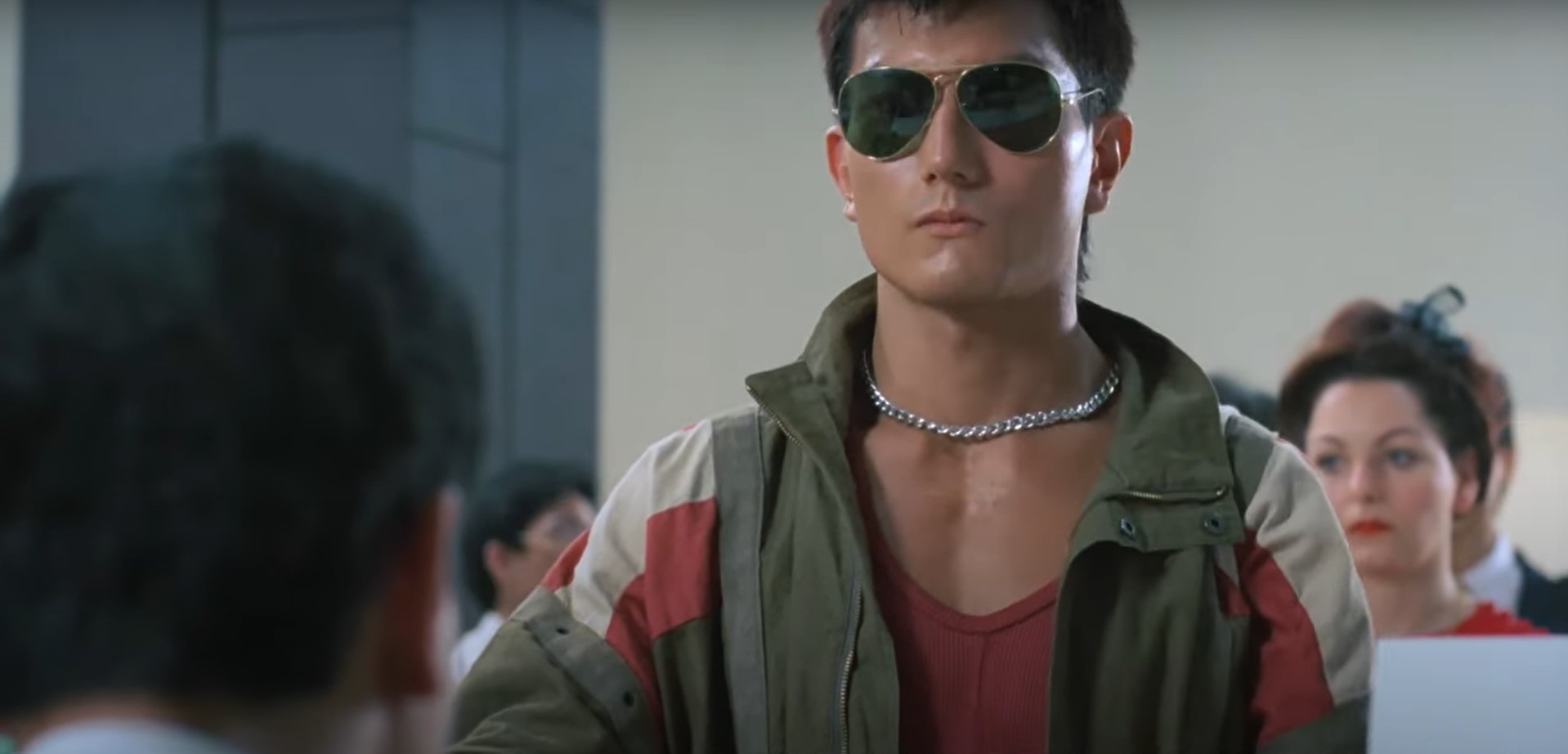
“Punto Rojo” begins quietly enough with Diego, played by the ruggedly intense features of Demián Salomón (“Terrified,” “Satanic Hispanics”), car sitting alone in, you guessed it, Red Point, a pediplain-esque area with not a soul surrounding him.  That is until a sleek, aero-suited skydiver crashes onto the hood ruins his euphoric fun of scoring first run success on-air of a radio quiz show.  Salomón dually presents the brutish outward appearing Diego as one-dimensional until he’s face-to-face with Paula, an Interpol officer also dressed in a sleek, skydiver area-suit and sporting a pixie cut from Mariana Anghileri (“On the 3rd Day”), then Diego’s simplicity turns complex in a more than meets the eye rough and tumble character pitted to hold his own in a brief cat-and-mouse game against an Interpol agent whose worked months, if not years, undercover to take down a high-powered criminal organization transporting a characterized atomic bomb.  Diego turns into one of those takes a hit and keeps on ticking tough guys as Paula has to work out and resolving the crumbling operation at hand.  Anghileri can act tough, be tough, and look tough during an operation gone awry and while both Diego and Paula square off in an advantage taking tit-for-tat, they’re unknowingly intertwined and sequestered by two different reasons that makes their fighting comically, and brutally, erroneous unfounded.   “Punto Rojo” fills out the cast with Juan Paolomino, Matías Lértora, Paula Manzone, and Pablo Sala.

While not based on the Argentinian comic book series of the same name, penned by Fernando Calvi, and published by Totem Comics, one can’t help believe Calvi’s metaphysical superhero somehow slipped in and brushed a bit of influence upon Nic Loreti’s pulpy design that sees screen filling, voulou text, brief live scene-to-comic transformative illustration filters, and, of course, the absurd ultraviolence that allows for a great deal of forgiving punishment in the name of entertainment value.  The nonlinear narrative told through a couple of extended flashbacks fills in the first acts’ gaps mechanized by an all-in-one, up-to-speed process to fully explain how and when the two lead principals came to meet but then suddenly becomes muddled when the patiently and systematically cared for first two acts hastily unfolds by the rapid fire ending that doesn’t have an ounce, or even a chance for, coherency.  The ending almost resembles the unfortunate process of an unfinished film that is quickly cut for wrapping and presentation as a last-ditch effort to accrue a pocket change profit from the investment and the crude finale is cheaply glued together, pieced slapdashedly, and arranged with crisscross confusion.  The ending also drops that comic book style used early on, bringing the integrated audio score combined to flex with the enlarged, ostentatious text and vivid panache to a grinding halt against what could have been a stellar ending from the short-lived laid out and shocking material we do get to experience.  By no means is “Punto Rojo” a bad story, just mixed up technically and arranged, and that hurts the viewership the most when an intriguing, weaving concept falls short of expectations. 

MVD Visual brings this South American quagmire of a story Stateside with a new Blu-ray release. The AVC encoded, 1080p high-definition, BD25, presented in an anamorphic 2.39:1 aspect ratio, captures in full frame Loreti’s long shots held in landscape view without a touch of grading to betone the natural exterior features. Mariano Suárez (“When Evil Lurks”) works the camera angles, dollies, cranes, and, I suspect, drones to blueprint and definition an extremely near sea of brown and tan around the more thrilling elements, such as the characters, that bring the drab set to life with a pop of color. No real issues with compression as the quality in color and, aside from the superimposed, gimcrack plane explosion, details remain unwavering, to which to also note that black levels, and there are many in flashbacks, render a solid inky darkness. The Spanish language audio options come in two lossless formats: a DTS-HD master audio 5.1 and a LPCM 2.0 stereo. The infusion of Pablo Sala’s (“Witch”) guttural guitar notes into the opening and closing credits, as well as isolated and detached to denote significant plot points, has potency inside the channels, as well as having a pleasantly diversifying grating of our ears, but never insidious replaces or missteps into the dialogue’s solid top track amongst the variable fray of explosions, skirmishes, and thematic atmospherics of the setting that do slither into the right auditory fields. Option subtitles are available and are timely moderately well with only a single mistake noted. Special features include Nic Loreti’s short film “Pinball” and the original theatrical trailer, both in high-definition. In the audio options, director Nic Loreti and producer Lucas Accardo’s English commentary can be sourced for more feature-length insight. Coming in a standard Blu-ray Amary case, the mesh screen-topped, blood red graded cover lacks that format fixation for marketability but gets the point across of the principal players involved in the fracas. The disc is pressed with a cropped version of the front cover and there is no insert included. The region free MVD Visual release comes not rated and has a runtime of 80 minutes.

Last Rites: Good start, bad finish. “Punto Rojo” lurid charisma out the gate lures audiences into a world of deceit, action, and violence that promises a backfill to fulfill a middle-of-the-story beginning; however, the climatic bomb dropped on us, or rather U.S., had no time to dissolve into our nervous system and what “Punto Rojo” greatly constructs with its economic desperation and black humor is quickly demolished in a blink of an eye in the sky.

“Punto Rojo” on MVD Visual Blu-ray!

Underneath the Pulpit Waits an EVIL Difficult to Stomach! “The Borderlands” reviewed! (Second Sight Films / Limited Edition Blu-ray)

Order the Limited Edition Blu-ray of “The Borderlands” Here at Amazon.com

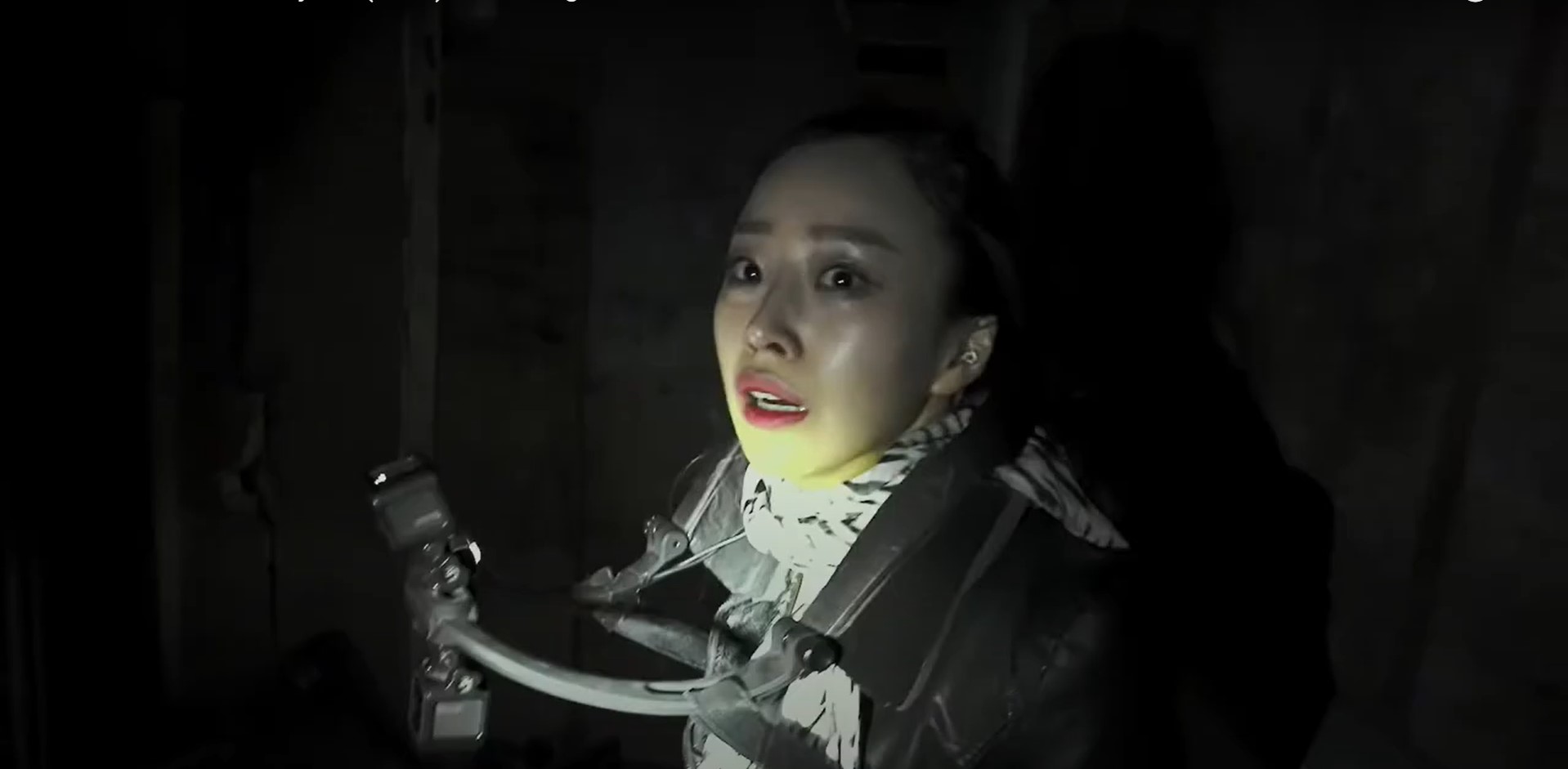
After exposing phony divine miracles at a Catholic Church in Brazil that resulted in the death of fellow Catholics, including a Cardinal, Vatican investigator and religious brother Deacon starts to lose faith with every fraud upon fraud case that points to the non-existence of a higher being.  Having fallen on the drink, the skeptical Deacon is dispatched to the English countryside of Devon where a Father Crellick had reopened a 13th century abandoned church and has been experiencing, in the Father’s words, miracles from God.  Joined by a Gray, a hired technology expert with agnostic beliefs, and a stern Father Mark, eager to disprove another false hope, the three men descend upon the Church with full, unequivocal examination to swiftly reveal the hoax and part ways.  Tensions rise between when logical explanation can’t be unearthed during Church rumblings, disembodied baby cries, and a behind-the-wall, shifting scratch sound that leads them to an underground labyrinth that will swallow them whole. 

Released in the U.S. under the title “Final Prayer,” Elliot Goldner’s 2013, found-footage UK horror “The Borderlands” is the director’s debut, and only, feature that places you right into the belly of the beast at POV level.  In a sea of found footage horror, “The Borderlands” seizes the opportunity to separate itself from the overwhelming portions of shaky camera, purposeful variable video and audio quality, and practical, obscured effects to put into question the strength of faith, specifically here in the Catholic setting, and what ultimately brings about the inevitable in that no matter what religious denomination or outlook you might have, no one is exempt from the grim reality that awaits.  Filmed mostly on location in Devon, UK, as well as West Ogwell and Chislehurst, London for many of the interior scenes, “The Borderlands” is a production of Metrodome Distribution and is produced by Jennifer Handorf (“Prevenge”) with Jezz Vernon (“They’re Outside”) serving as executive producer. 

Our team of Vatican investigators follows three men with starkly differing handles on religious faith.  Coinciding on their stance on the existence of a higher power, individualistically, they’re also incompatible to each other which makes for palpable tension and livens up the dynamic when predictability and patterns can be discerned with likeminded characters.  On the scale of human compositions, polar opposite of both spirituality and comportment is Father Mark (Aidan McArdle, “Metamorphosis”), a by-the-book priest unamused by the elaborate ruses created by those swimming in the same faith pool as himself, and Gray (Robin Hill, “Meg 2:  The Trench”), an untroubled, exuberant, hired techie eager to believe the face-value of the supposed miracles before him.  Aidan McArdle’s tenacity for dogma character comes through well enough to know that good Irish Catholic Father Mark is about as numb as the next investigating Catholic never on the verge of a true miracle as the frustration just oozes out him after one after another hoax divine ephiphany.  Robin Hill, on the other hand, could be the best John Oliver, of Max’s “Last Week Tonight,” impersonator I’ve ever seen and heard.  In all serious, Hill exacts a man looking for religion through the lens of paycheck and a fanboy of the supernatural, like as if the average horror movie enthusiastic came upon the real Freddy Kruger and just geeks the Hell out.  Then, there’s Deacon (Gordon Kennedy, (“T2 Trainspotting”) and like Father Mark, Deacon’s faith hangs in the balance after a botched investigator inadvertently sees the death of a Cardinal at the hands of pious locals.  Kennedy doubles down with Deacon’s wavering faith by drowning the character in alcohol and doubting every inexplicable Devon church oddity.  Yet, Deacon and Gray meld together to a near swap of credence, seesawing in their religious principles, when the things that go bump in the church can’t be explained.  Luke Neal (“Wilderness”) and Patrick Godfrey (“The Count of Monte Cristo”), who’s been practicing the acting craft for over half a century, play a couple of dissimilar priests lured by the Church’s mysterious forces.

What’s noticeably different about this particular bleak found footage nailbiter is the audience is integrated into story by the investigator’s strapped-on headcam, not just some schmo glued to a handheld camcorder running, yelling, and hiding for his life while still depressing the record button.  There’s also the element of a shrouded backstory that becomes unraveled overtime and speaks volumes to a couple of the character’s colorful conducts.  Those elements are then intensified by the cinematic crux, an archaic, resurrected small church’s unexplainable, mostly terrifying, daily disturbances the local priest indiscriminately deems miracles.  Not a single character has arbitrary or useless purpose for the sake of being an in-frame victim of circumstance as each exhibit a radical change over the course of investigation, adding copious ground to the big question, the question that’s on every character’s mind, is there an almighty presence beyond our corporeal plane and cerebral understanding really exist?  Come to find out, the characters are not asking the right question and get sucked into a terror on the terra the more curious they become in finding God amongst them.  Often times, found footage doesn’t fit into the storyline, whether be the aforesaid necessarily handling of the camera through the an insane ordeal or just doesn’t work with a regularly structured narrative, but “The Borderlands” couldn’t be received with success without the stunt of seeing through the eyes of the characters that subsequently emits a trick of light or an overactive imagination that smooths out solid jump scares when needed in what is a definitely watch in the dark type diabolical goosebumper. 

Second Sight Films takes charge with curating a definitive, all-expense paid trip to Elliot Goldner’s “The Borderlands” on Blu-ray home video.  The AVC encoded, high definition 1080p, BD50, hovering around 24 FPS and presented in an anamorphc widescreen 1.78:1 aspect ratio, leverages the capacity and the encoding to sharpen a relatively dark picture with more clarity without losing the unsettling spookiness with overreaching contrast.  Image presentation resembles closer to an upscaled 720p because of the found footage piece, and so we experience patchy spots, static ripples, and other miscellaneous plays into the supernatural sarcophagus that is the Devon church.  Skin tones and grading stays in tune with a brightly lit infusion of handheld torches as well as delineating the necessary with night vision cameras.  Goldner does a fine job with depth with the viewers being the foreground and using a lot of the peripheral and background to keep things hair-raising and interesting.  The English DTS-HD 5.1 audio track has lossless compression and really does throb with a wallop of balanced LFE and to-scaled dialogue.  What throws me off about this particular found footage, as well as some select others, that I find more a bothersome nuisance than a technical gaffe is an inlaid soundtrack.  A slow burn industrial score is used for “The Borderlands” to promote a greater sense of ominous omniety, like a background, repetitive, and sometimes swelling drone you might hear in certain first-person shooters from 20 to 30 years back. Dialogue tops the audio layers without being diluted by poor onboard cameras or having to contend with too much with the score, suggesting well-placed mics and sound design to achieve appropriate range and depth inside the frame configuration or even off-frame, behind or to the side of camera. Optional English subtitles are available. Like most Second Sight Films limited editions, “The Borderlands'” set packs a punch with encoded special features, such as a new audio commentary with actors Robin Hill and Gordon Kennedy, producers Jennifer Handorf, and special effects designer Dan Martin, a new interview that brings Robin Hill and Gordon Kennedy recollecting the behind-the-scenes and their characters in Dressed the Part, a new interview with producer Jennifer Handorf in Losing Faith, a new interview with special effects artist Dan Martin in Monster Goo, and a behind-the-scenes archival featurette. The limited-edition portion of this set includes a rigid slipcase with gorgeously bleak and grim illustrated artwork by Christopher Shy, a thick, 70-page color and black and white book with pictorials and new perspective and analytical essays from Tim Coleman, Martyn Conterio, Shellie McMurdo, and Johnny Walker, and 6 collector’s art cards, mostly resembling a distorted interlaced video and in an imperial purple-ish appearance from haunting scenes of the film. The artwork sheathed inside the translucent green Amaray case is the same as slipcase with no reverse cover work; it’s also pressed on the disc art. This release came with no inserts. One of the few Second Sight limited edition pieces to be licensed with a region free playback and the film itself has a runtime of 89 minutes and is UK certified 15 for strong language and threat.

Last Rites: Second Sight’s filmic selection pool for major league limited editions has been nothing short of stellar with “The Borderlands” being their latest, but definitely not their last, to be knighted worthy of physical media acclaim. Yet, it’s not like “The Borderlands” needed the boost as the film itself has a cult following for its shuddering tale and its monstrous ending that will have you reeling, maybe even screaming, in horror.

Order the Limited Edition Blu-ray of “The Borderlands” Here at Amazon.com