Magnetism Will Separate the EVIL from the Rest of You! “Black Circle” reviewed! (Synapse Films / Blu-ray)

Cosmic horror is the “Black Circle.”  2-Disc Blu-ray/CD on Amazon!

After Isa manages to clean up her life and obtain a upper management job, she’s eager to share her tremendous focus secret with sister Celeste, a university student hitting a mental wall with an important term paper.  Isa says the key to her success came after cleaning out the belongings of their grandmother’s deceased cousin, where she unearthed a record LP on magnetism produced decades ago by a master of the craft.  Celeste is instructed to listen to the LP’s backside right before going to sleep with the promise of her life changing for the better.  After setting the needle, Celeste wakes up next morning feeling unburdened by the challenges ahead and is able to knock out her paper in one day, but she senses another presence following her, watching her, and having vivid dreams of a monstrous double of herself from being inside what the LP calls the black circle.  Shortly after, Isa has disappeared, exiting her new job with erratic and paranoid behavior, only to resurface on Celeste’s doorstop ranting about LP’s frighteningly powerful suggestion and that she’s being followed by someone driving her car.  The sisters track down Lena, creator of the LP and master of magnetism, where they also meet a pair of young psychics who explain the unforeseen, accidental harmful side effects of the LP she thought were all destroyed.  Lena agrees to save the sisters who are faced with losing themselves from themselves. 

Hypnotism has diminutively entranced storytelling, scratching only a limited surface of films with only a few being widely known, such has “Office Space,” “Stir of Echoes,” or “The Cabinet of Dr. Caligari” to name a select few recognizable titles.  To further hypnotism into obscurity, a similar spellbinding field is introduced by filmmaker Adrian Garcia Bogliano.  The Spanish writer-and-director of “Here Comes the Devil” and “Come Play with Me” chills us with a cosmically laced and existentialism albatross with his 2018 “Black Circle.”  The Swedish production, natively titled “Svart cirkel,” pulls loose inspiration from the often-controversial works of German physician Franz Anton Mesmer, as in mesmerize, who first coined animal magnetism as an invisible force within the human body that can be manipulated by skilled magnetizer.  “Black Circle” is produced by Bo and Rickard Gramfors and Bogliano’s longtime collaborator Andrea Quiroz within a conglomerate of production companies that include Klubb Super 8, Njuta Films, Salto de Fe Films, and Evilinski Productions.
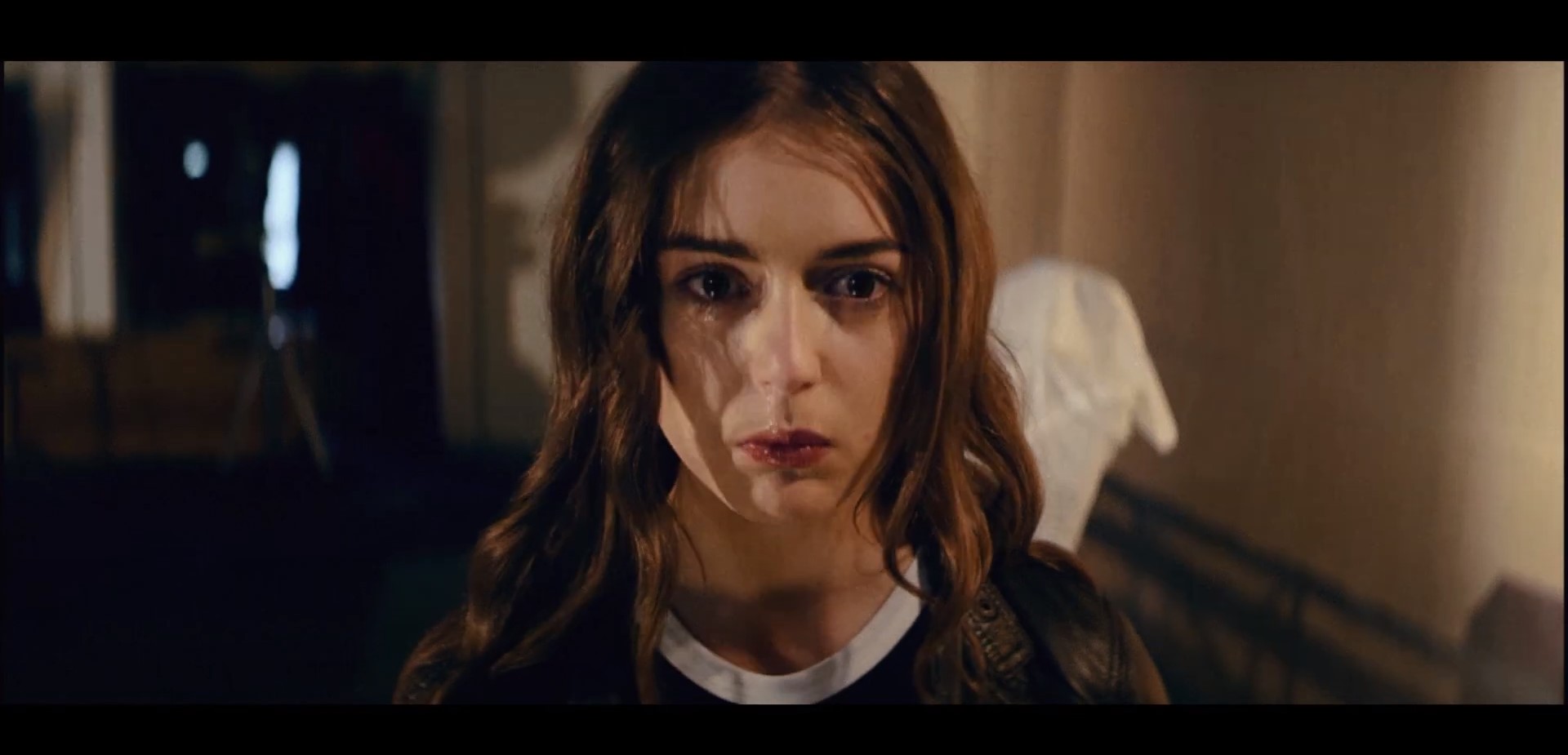
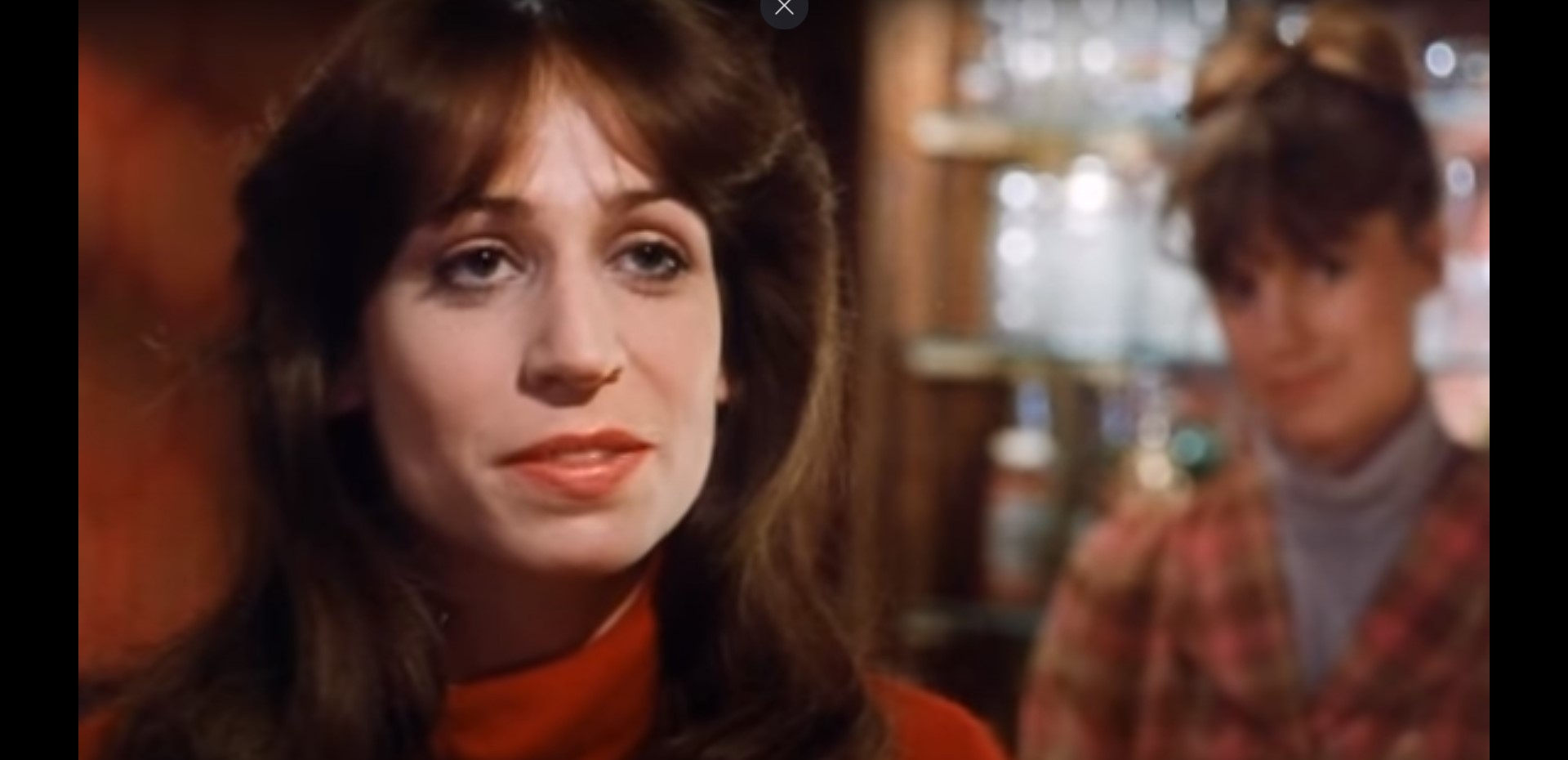
Felice Jankell (“The Bunker Game”) and Erica Midfjäll play the two sisters, Celeste and Isa, embroiled in magnetism bad luck happening up on an old of circ 1970s-1980s LP in today’s age.  There’s quite a bit of tension between the two sisters who are not conjoined at the hip like most close-in-age siblings as they battle their own personal demons that are only talked about rather than exhibited.  Yet, we get the sense of their daily struggles through Jankell’s body language for Celeste and the recollecting conversations both sisters have regarding Isa’s troubles keeping glued together and those existential problems are what connects them, or rather what connect us all as sentient beings, making the characters relatable.  Isa exposes Celeste to the LP in hopes to help Celese regain control over her life but what ensues is not only a weight lifted off her capacity to overcome but also an underlining fear of being followed, watched, and frightened by grotesque dreams of herself in a monstrous form.  At this point, Isa and Celeste are experience parallel psychosis spurred by the record that leads them, and us, to the headliner of film, genre icon Christina Lindberg   The once sweet-faced Swedish brunette, who once donned an eyepatch and took a shotgun to her rapists in the role of Madeleine in “Thriller:  A Cruel Picture” and who once debuted as a 16-year-old virginial maiden in the sexploitation “Maid in Sweden,” has now grown up to become a woman basking in the essence of power and control at all times with Lena, a magnetism expert attempting to rectify unintended mistakes distributing a soul separating, charmed-grooved vinyl from decades earlier.  Lena has rich history that’s dropped in segments from the moment she’s introduced on screen, almost immediately displaying her limitless power on two young, intrusive psychics (Johan Palm and Hanna Asp) who enter her home by the summoning Supreme, an exterior planed creature who supervises the psychic realm.  Performances are incredible skintight as actor brings an elevated show for their individual role, including the rest of the supporting cast in Hans Sandqvist, Iwa Boman, Inger Nilsson, and Erica Midfjäll’s twin sister, Hanna, to sell the “Black Circle’s” premise and promise more convincingly terrifying.
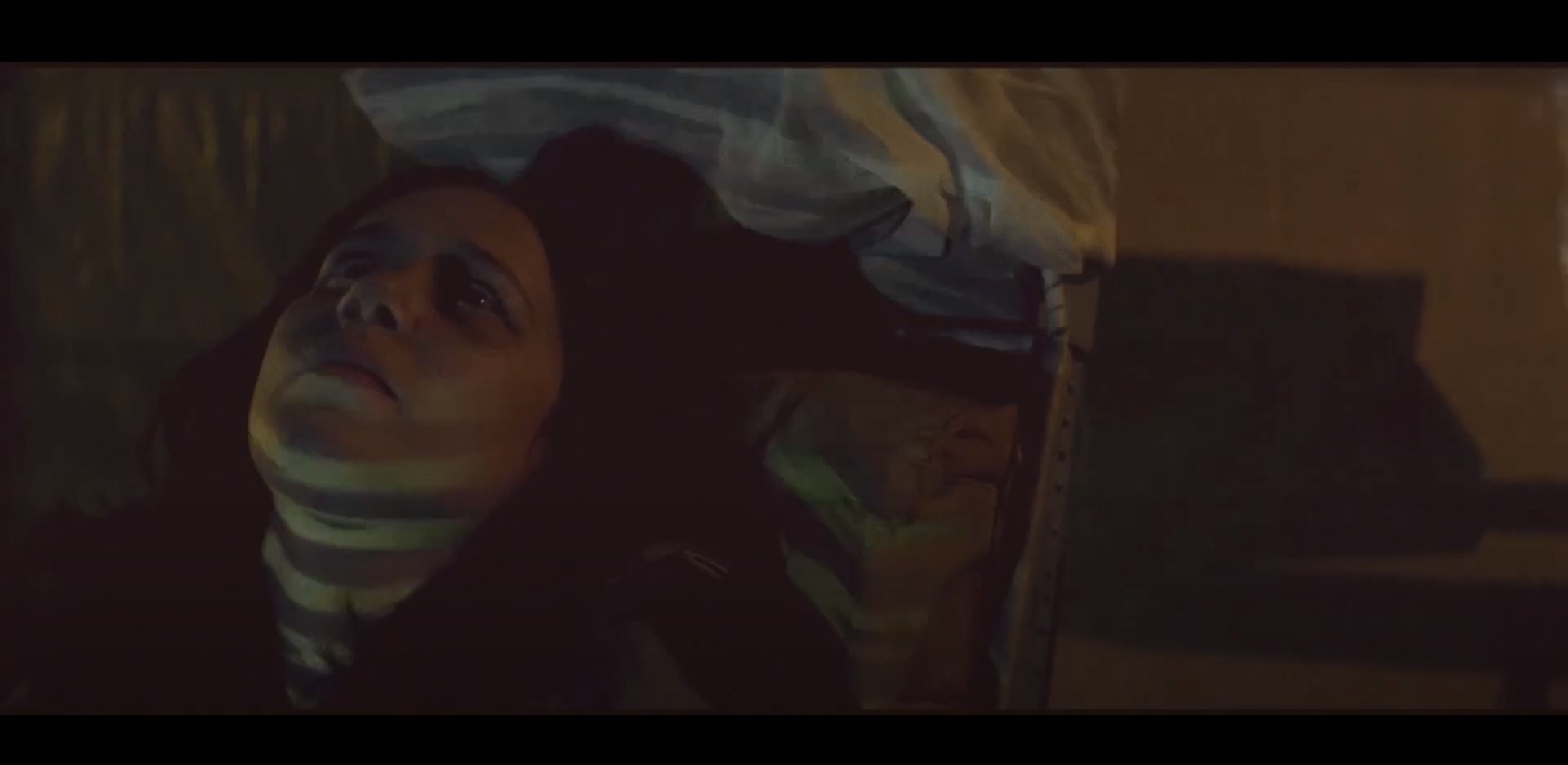
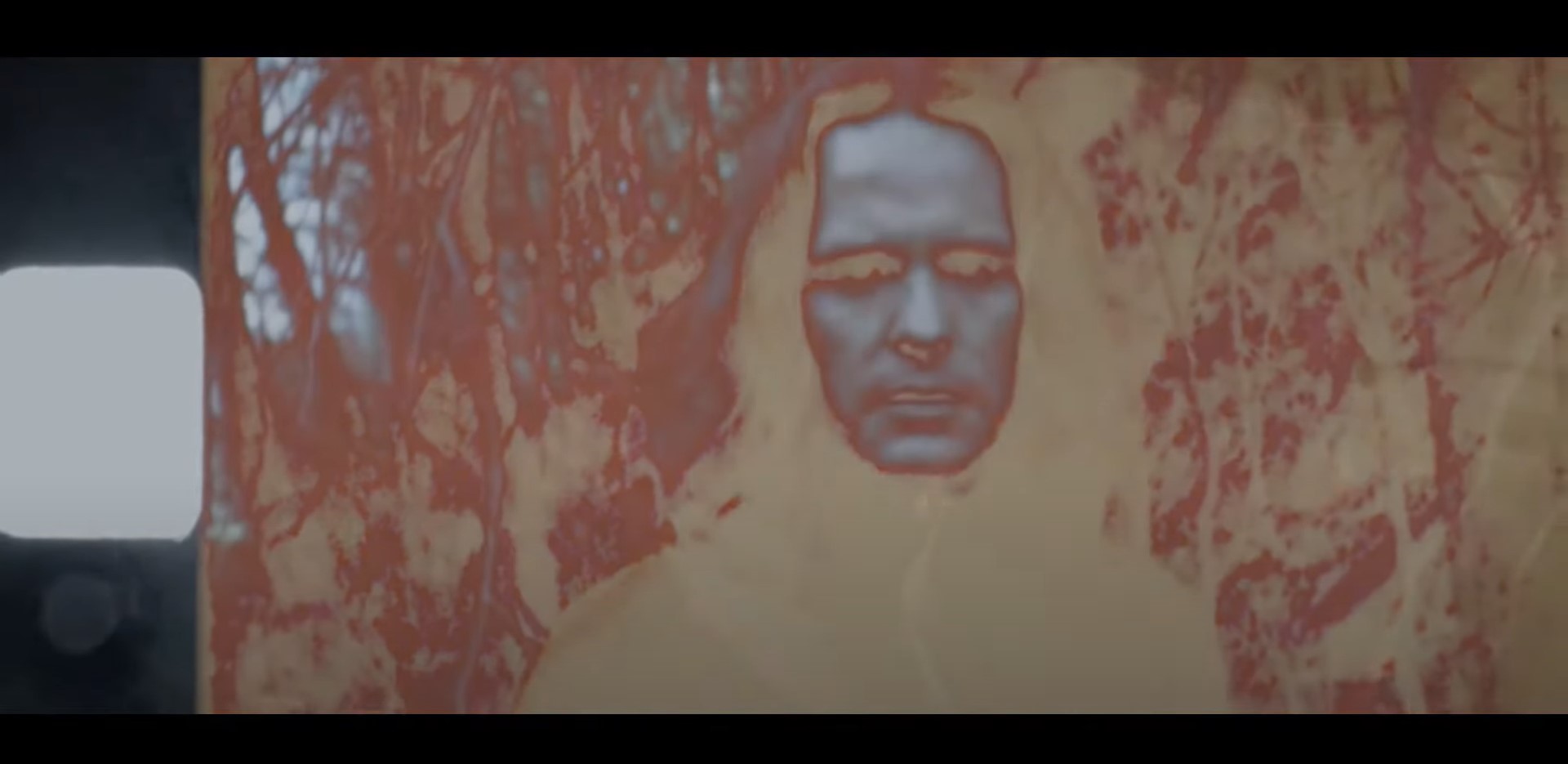
If you were forced to only see one indie contemporary release this year, “Black Circle’ should be it.  Bogliano’s “Black Circle” doesn’t dazzle with a ton of effects nor is production value or exotic and grand set locations applied to lure in viewers, but what Bogliano does do well, and what ultimately instills a fascinating story, is the well-written script, character developments, and the subtle effects that bore a fear of the unknown dread persistently and consistently throughout.  Bogliano delivers a unique story sold on the rarity of proto-hypnosis with a premise fashioned around the development of his own mythos of psychic realm rules and beings. Best part about Bogliano’s piece of the macrocosmos is the way he chapters the narrative, ushering viewers gently and with explanation inside a context construction that uses phantasmagorical visuals and voice over narration to interpret magnetism jargon or to provide inside to setup the next chapter. This processing style of breaking up the acts accentuates, or offsets, the rather raw Dario Goldgel cinematography of the reality story, turning “Black Circle” in pedagogic inside into the basis of the wildly scrutinized, often criticized, hypnosis. What’s also neat about “Black Circle’s” story is the lack of a clearcut antagonist. Neither Lena, the two psychics, or even the monolithic, fazing Supreme serve as opposition against the two sisters but, in a twist of the tale, the sisters are actually their own worst enemies with doppelganger trouble in what afflicts us all at one point or another – existence. Yes, “Black Circle” is about the existential encounter that relates to good and evil, a theme of duality done without a tale of twins (or if you want to get technical, “Black Circle” was casted with a set of twins) and involves more with a separation of, what the story calls, an ethereal double that will eventually absorb itself into being the stronger, dominant replacement if the magnetism vinyl continues to be listened to in enough times it will weaken the original, strengthen the evil carbon copy, and there will be no going back.
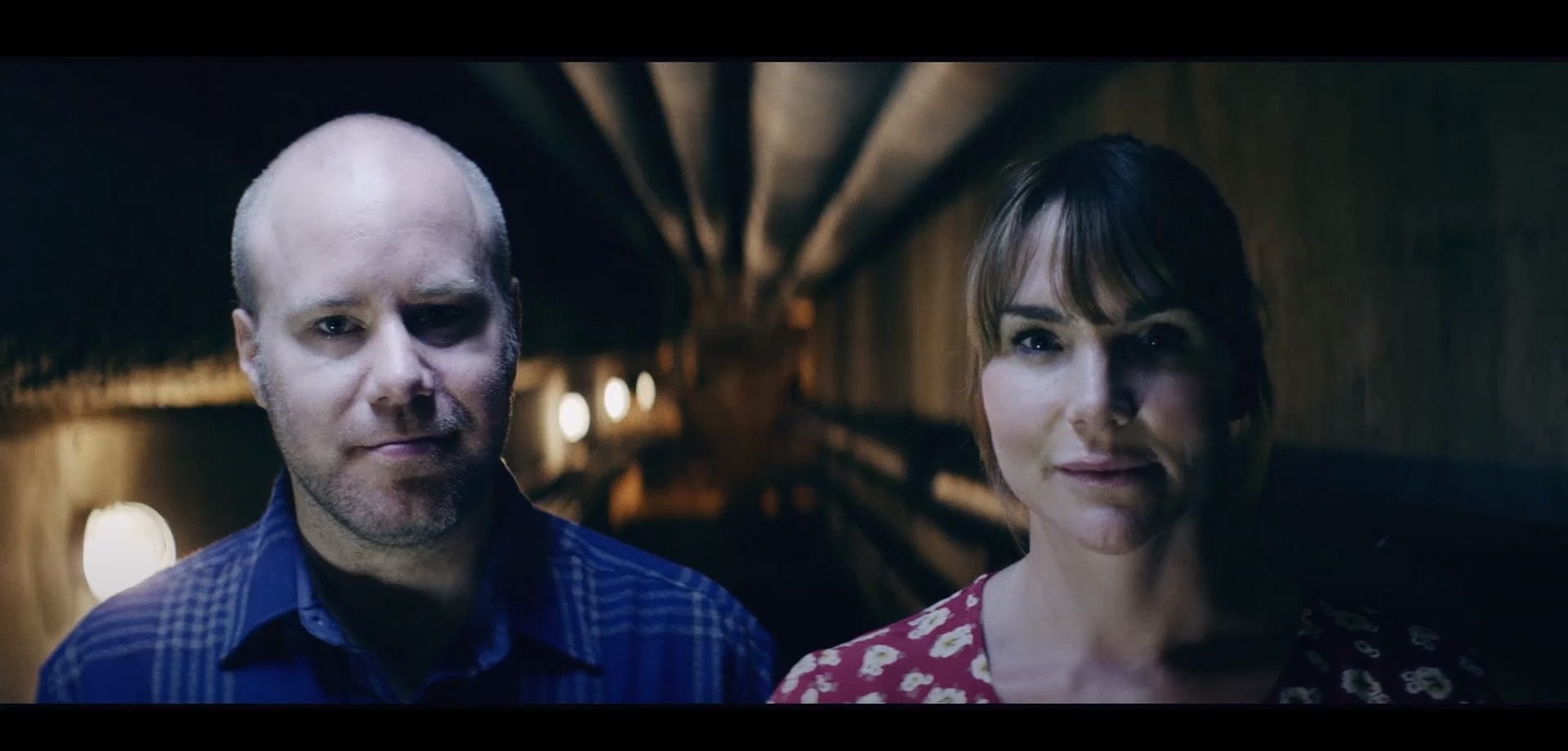
Become entranced by Adrian Garcia Bagliano’s “Black Circle” now available on a Synapse high-definition Bluray release. The AVC encoded, 1080p, dual-layered BD50, presented in a 2.40:1 to really grab the space of tighter quarters and lengthen the berth, has less transfer complications than let’s say most of Synapse’s catalogue. The digitally recorded video doesn’t require as much remastering as a decades old production on celluloid or videotape, but the narrative does feign video degradation or aging in the more elucidation scenes on magnetism 101. Details are fine and textured, blacks are especially inky and void-encompassing, and no signs of compressions issues with a bitrate average around low-to-mid 30s. The light sepia grading envelopes a welcoming, steely coldness around the characters and their astral plight. The Blu-ray comes with a Swedish DTS-HD 5.1 surround sound mix and an English dub Dolby Digital 2.0. With being reliant on pulsing waves to match the hypnotic scheme, the backdropped soundtrack adds to the unsettling pensiveness, like the metallic hum of a tuning fork, that never protrudes outright and even into the character’s dialogue space. Not a ton of spacing depth between dialogue and ambient but enough to sate directional awareness and atmosphere. English subtitles are optionally available. Bonus features include an audio commentary with the director, two individual interviews with director Andrea Garcia Bogliano and star Christina Lindberg, both in fluid English, an Inside Black Circle behind the scenes featurette, a still gallery, and the original teaser trailer. Synapse’s release is actually a 2-disc set containing a CD of producer Rickard Gamfors score. Inside the black Blu-ray casing, a red and black insert card with the three faces of main principal characters, the sisters and Lena, in linear composition overtop the black circle with the title underneath. On the backside, the complete 18-piece CD track list complete with instrument and mixing acknowledgements. Also in the insert liner is a 2023 Synapse product catalogue. Front cover art has retro appeal with a black background emphasizing the perfect spiral red and black circle being touched by disembodied and flat matted red hands. The disc itself mirrors the front cover’s spiral but sheens like a vinyl LP but in red and black alternate rings. Dread the duplication, fear the far-side of yourself, when becoming magnetized by magnetism of the underutilized genre that knows no limits and has a plethora of petrifying possibilities inside the “Black Circle.”

Cosmic horror is the “Black Circle.”  2-Disc Blu-ray/CD on Amazon!
Hail Down EVIL for a Ride! “Taxi Hunter” reviewed! (88 Films / Blu-ray)

“Taxi Hunter” Now Available on Blu-ray!

A moderately successful and mild-mannered insurance salesman is soon to be a new father.  As he and his wife baby prep with shopping around town for supplies, a few run ins with crabbily rude and scamming cab drivers make it known that the cab drivers flood the market with lawlessness.  When his wife unexpectedly goes into labor and his personal car out of service, he has no choice but to hail a cab but when the cabbie refuses the fare due excess vaginal bleed, the cabbie quickly shuts the passenger door and speeds off during the torrential rain stop, not realizing snagging the woman night gown and dragging her down the street a few yards, killing her and the unborn child, and speeding off in attempt to save his own skin.  Spiraling down into a deep depression and pushed beyond his moral limit, he justifies killing the taxi drivers for their abhorrent behavior that makes him a hero of the common people while also making him be public enemy number one with the taxi union and the police. 

History has proven, at least since the pre-2000s, that taxi drivers have had a long notorious stigma of being rude, uncouth, and greedy, especially in big metropolitan areas where traffic jams on a daily basis and the amount of fares determine your livelihood wage can eventually and insidiously get under a driver’s skin and turn the once service-needed necessity into a crabby-cabbie, a side-effect symptom of the profession one could assume.  Hong Kong’s 1993, Cat III shocker “Taxi Hunter” releases that pent up anger most of us have experienced under the clicking of the fare meter when Joe cab takes the long way around town.  Written by Wing-Kin Lau (“The Untold Story III”) and Kai-Chung Mak (“Twist”), “Taxi Hunter” marks the second collaboration effect of the same year as “The Untold Story” and “The Untold Story’s” co-director Herman Yau.  “Black Blood’s” Hung-Wah “Tony” Leung and “Tiger Cage” franchise’s Stephen Shin produce under Galaxy Films Limited and distributed theatrically by Media Film Asia.

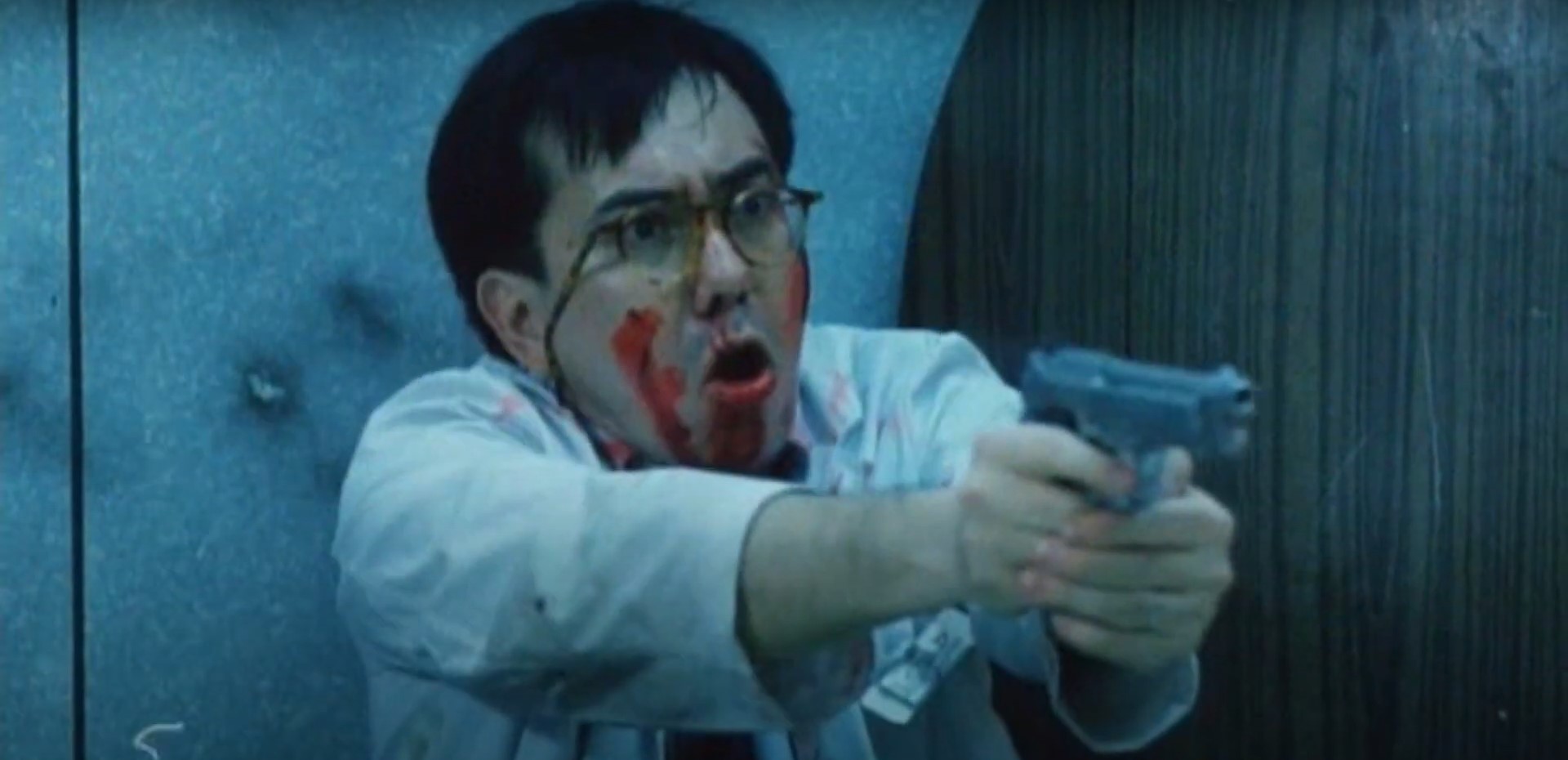
Not only do the writers and director Herman Yau reteam to develop another controversial Category III picture but “The Untold Story’s” star Anthony Wong steps foot into another unraveled monster of a man with Kin, an amicable insurance salesman good at his job and eager to be the best father as possible quickly spins into melancholy and murder after the death of his pregnant wife at the hands of an unprofessionally hasty taxi driver.  Unlike the quietly stewing and maniacally murderous pork bun shop owner, Wong’s villainous runs takes backseat to his anti-hero performance, a punisher of taxi scum.  As Kin, Wong can be the delicately wonderful husband and the brazen barbaric with an easy slippery slope transition in between as he works to perfect Kin’s killing craft.  Unbeknownst to him, tracking him down is Kin’s own police detective brother Yu and his fun-loving goofy partner Goh, but unbeknownst to the detectives is the taxi serial killer is Kin.  “Iron Monkey” star Rongguant Yu offers up tough cop like it’s his job, mixing a humble blend martial arts and entrenched investigator into his character while also being blind to his brother’s moonlighting massacres.  Goh, on the other hand, played Man-Tat Ng (“Shaolin Soccer,” “Tiger Cage”) is supposed to provide the levity, the comic relief, the humor, but the cartoony way Goh is portrayed, in garb and in gab, reduces him to be nothing more than a Western Poser of the East with NBA and other Western branded gear from head to toe.  Goh feels very much like an attempt to jab fun at what Hong Kong might have perceived as American culture:  tasteless, worthless, and clueless.  Goh seemingly only exists to be a link between Kin and his brother when Kin hops into Goh’s undercover operation of pretending to be a taxi driver to which Kin takes his numbskull manner as cantankerous cabbie.  “Taxi Hunter” chauffeurs in the rest of the core supporting cast with Athena Chu (“Super Lady Cop”) and Hoi-Shan Lai (“Dr. Lamb”).

However still managing to provoke potency in parental guidance, to me, “Taxi Hunter” is perhaps the least intense Category III film I’ve experienced to date, but don’t let that keep you from taking a ride in Herman Yau’s rancorous retribution vehicle that has scores of variable car action scenes and a sordid glaze of street-level grime amongst the taxi industry.  “Taxi Hunter” engages us to think about the minor point As to point Bs in our lives that can easily subvert the well-oiled machine that is our existence.  Kin has a promising career, money (a motif we’ll revisit later), and a baby on the way and aside from the money, bizarrely enough, it all comes crashing down in the moment of a car door slamming shut. Those micro-fissions separating our good moments with nastiness slog us into another mindset, a killer’s mindset, when we’re wading at the very bottom of the losing everything depression. Lau and Mak don’t immediately set Kin’s path shortly after the turning point event, which also had a good chunk of setup. Posthumous need to kill cabbies didn’t occur directly after the tragedy as the script allowed time for Kin to try and stomach digesting tremendous loss, even giving away much of his money, as aforementioned, for services gone unrendered such as with the prostitute he didn’t end up sleeping with or being overcharged a child’s trading card just to make a crying child, a future version of his own child now deceased, happy when his parents would not purchase it. “Taxi Hunter” has more than just a singular character-driven story with plenty of suspense from Kin’s evolving practice of killing taxi drivers to the plethora of practical car action. “Taxi Hunter” is metered madness that shies away disgusting you with overt violence or seducing you with graphic sex of other Cat III film in its purer requital black comedy only Herman Yau and Anthony Wong could chauffeur in.

Presented in full high-definition 1080p from the original 35mm stock, “Taxi Hunter” has been flagged down for a new Blu-ray release from 88 Films, shown in anamorphic widescreen 1.85:1 aspect ratio. The transferred print keeps the natural grain of the 35mm film but swells the pixelations to ramp up details and textures tenfold without appearing touched up or improperly enhanced. 88 Films’ coloring grading leans slighting into the metallic blue steel, offering a gritty detective thriller with the overcast effect. The print also shows hardly any age or damage that results in a clean redress of a pristine print. Only one audio option is available for selection, a Cantonese LPCM 2.0 mono. Curious to why there isn’t a Mandarin option leads to speculation that Cantonese sole use was due to the dialect being more widespread in Hong Kong to keep a product of Hong Kong, typically with CAT III products where mainland China censorship would have picked “Taxi Hunter” to pieces. Though in original language, ADR is still used in post and while dialogue is cleaning in the forefront of the rest of the audio tracks, there’s not a ton of depth being too at the forefront, especially with Goh’s goofball gab. However, the action-laden and quarrelsome dynamics provide a plentiful range of sounds from screeching of tires, to the car crashes through windowfronts, to the multiple gunshots that make this sound design rich and energetic. English subtitles are offered and though glibly bland and concise, a lot of repetitive words and phrases, such as a wide use of bro, the subtitles are error-free and paced well. This special edition release includes a new audio commentary with Hong Kong film expert Frank Djeng, a new interview with producer Tony Leung Hunting for Words, a new interview with actor Anthony Wong Falling Down in Hong Kong, a new interview with action director James Ha How to Murder Your Taxi Driver?, still gallery, and trailer. Physical features available, if you’re quick enough, include a limited-edition cardboard slipcover with Sean Longmore’s compositional illustrated art and a folded poster insert of the same art. Also available inside the green Blu-ray case is reversible cover art with the initial same design as the slipcover or, my personal favorite, the original Hong Kong poster art that I proudly display on the shelf. Disc art is pressed with a slight variant of Longmore’s art and the not rated disc’s format comes region A and B playback with the film clocking in at evenly paced 90 minutes. Classic 1990’s fare without charging us an arm and a leg in wasted time, “Taxi Hunter” is solid CAT III with more vindictive and veridical visceral moments that change gears often and punches the gas into accelerating this terminal taxi tormentor.

“Taxi Hunter” Now Available on Blu-ray!

Staying in the Closet Can Lead to an EVIL Series of Events! “The Latent Image” reviewed! (Cinephobia Releasing / DVD)

Out today on DVD “The Latent Image” from Cinesphobia Releasing!

An aspiring novelist isolates himself in a secluded cabin to write his work-on-progress thriller without distractions, especially avoiding he contentious ones with his longtime boyfriend. Working through the night hours on the precipice of a storm, a mystery man drifts into the cabin, injured and claiming car trouble. After letting him stay the night on the couch and knowing he should ask the drifter to leave, the man’s rough allure instills deep desiring dark fantasies to bubble up to the surface that result in keeping his lingering presence around while also the experience doubles as subject inspiration for his novel. Yet, there’s something off about his unexpected and unusual visitor that lends to curiosity into what’s being hidden or being unsaid. The drifter’s trunk becomes an object of obsession that turns into wild speculation. Fear and fantasy collide into an explosive and destructive cat-and-mouse game of downlow and deadly secrets.

Based on the 2019 short film of the same title, writer-director Alexander McGregor Birrell (“Braincell,” “Sleepaway Slasher”), alongside co-writer and star Joshua Tonks, return to “The Latent Image” for a 2022 full script treatment to flesh out a fleshy grass isn’t always greener on the other side homoerotic thriller.  “The Latent Image” is Birrell’s third feature length film of essentially is Joshua Tonks inaugural writing and producing credit into the United Kingdom production that clashes tantalizing and dangerous one-time temptations with the safety and security of routine and longevity woven out of being inside a complicated gay relationship that stings with old systematic-induced worries and consequences.  Latent Image defines as an exposed picture or film not yet developed and Birrell and Tonks use that to purposely shield viewers from the utmost truth until the petrifying picture is clear.  Latent Image LLC in association with the queer community storytelling serving June Gloom Productions are the picture’s production handlers with the latter company’s Brandon Kirby and Michael Varrati as executive producers and Tonks and Birrell co-producing their debut feature collaboration.

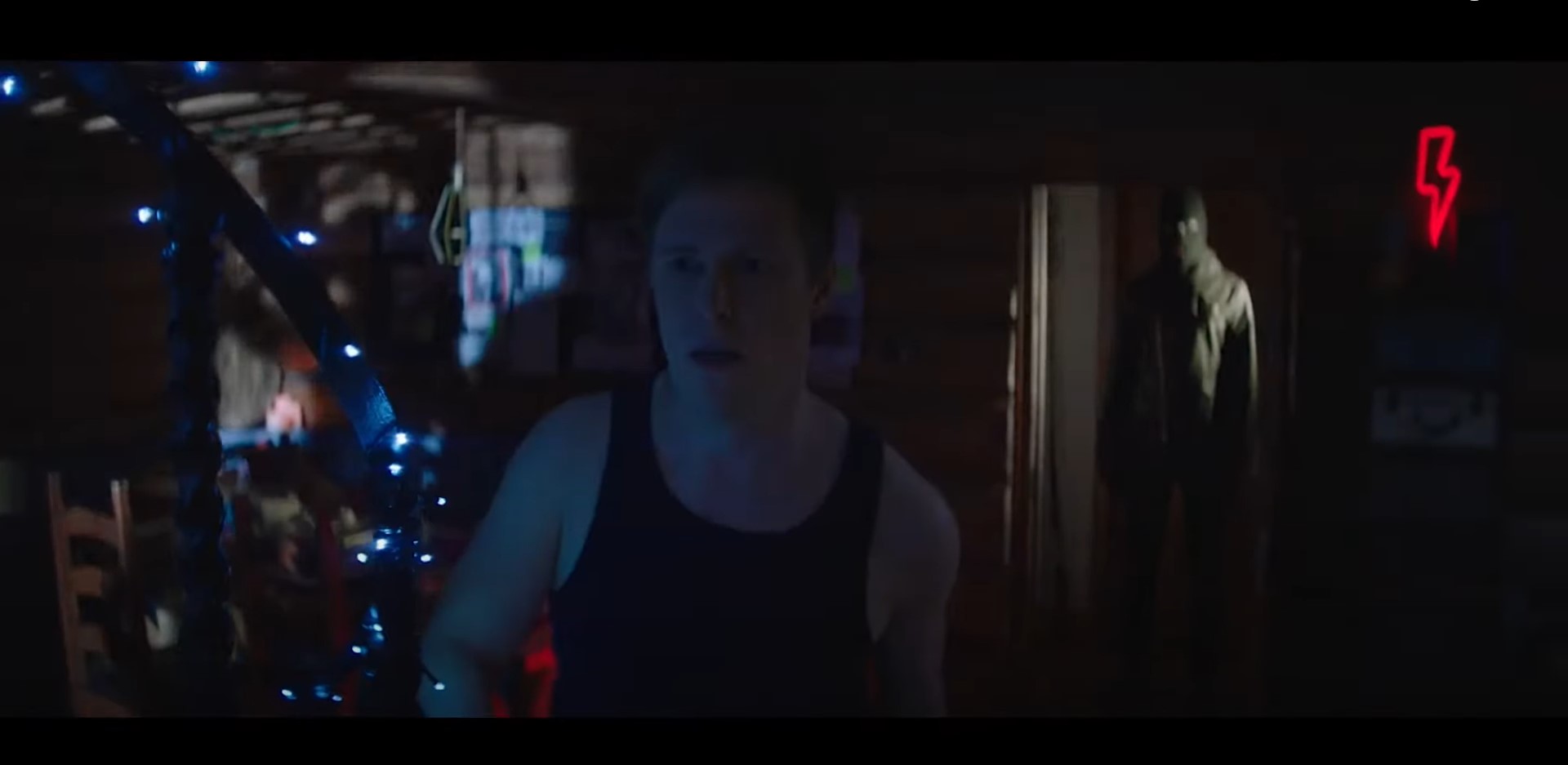
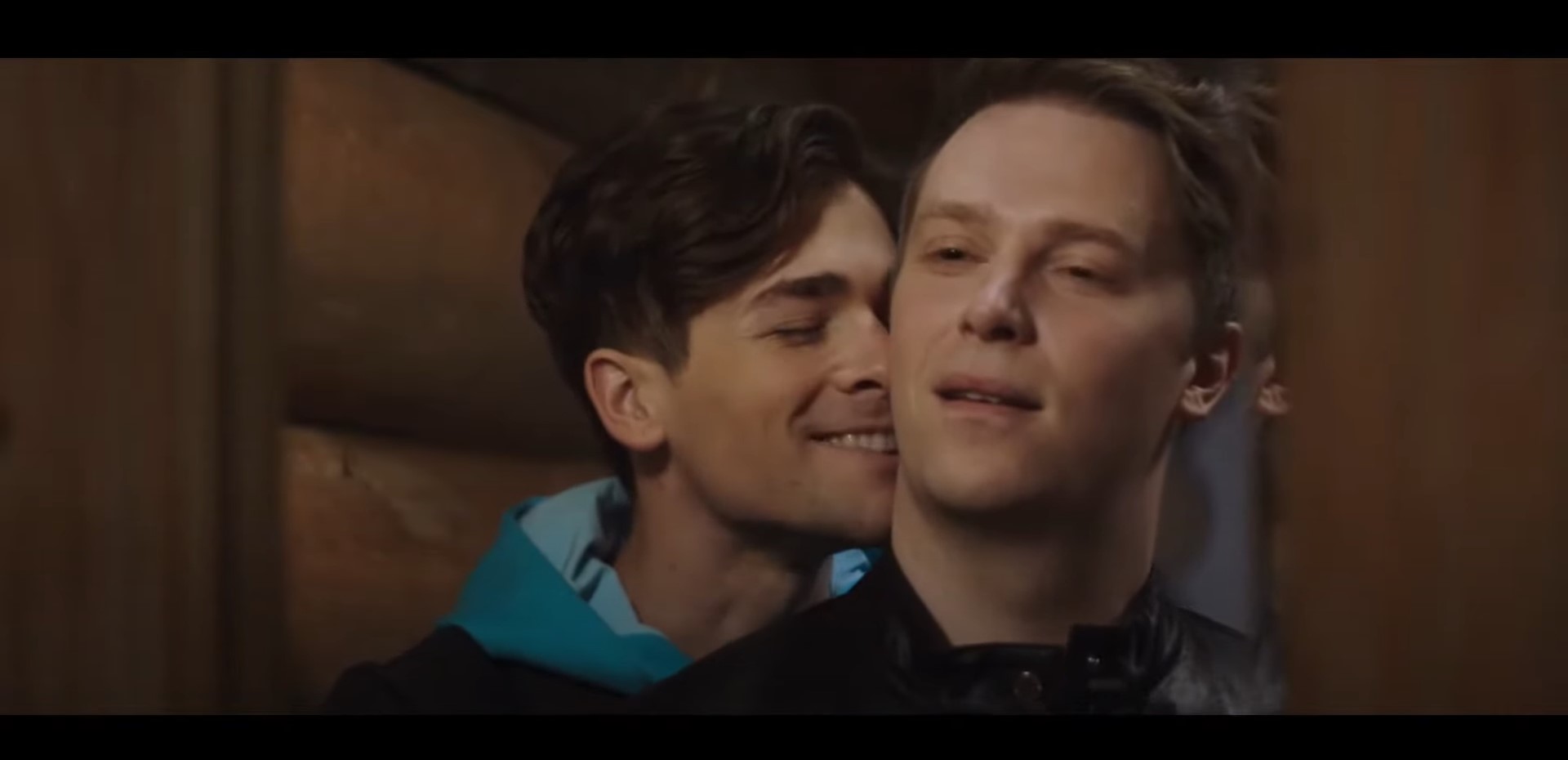
Being Joshua Tonks’s grandstand into his first feature production and as the lead character, the British-born, Vancouver film school-trained actor reprises his short film part with only two significant differences:  one being a principal name change from Robert to Ben and the other in providing Ben with more substantial backstory in the form of reveries or creative abstractions of a linear trickster narrative.  Ben’s old school, a reflection seen through his love for old photography without a display screen, his typewriting of the novel, and filming on celluloid film stock with a Super 8 camera.  This affinity for the antiquated matches his sexual stigmas, a flaw that shepherds in more harm than good.  Tonks readily handles Ben’s technological quirks as well as deepen his character’s philandering fantasy life with sexual daydream and night terror trances of being pursued, abused, and enjoying it.  Tonks works off the more indelicate stranger-danger of fellow Vancouver film school graduate Jay Clift.  Long hair, leather jacket, rugged approach, Clift in the role simply known as The Man portrays patience as weapon to wield to win over the quasi confidence and trust of the lonely and relationship confused novelist with an active imagination, a deadly combination to be caught with your pants down.  Clift becomes the character interloper in Ben’s life in more ways than one, some more subtle than others, and equivocally provides baited lure to either seduce the novelists or setup him for a fate far worse.  To complicate matters, Ben’s boyfriend, who he has a current agitated relationship with and viewers will initially think is safe and cozy back at their abode, will eventually enter the picture with newcomer William Tippery in the role to complete the all-male, three-man cast.

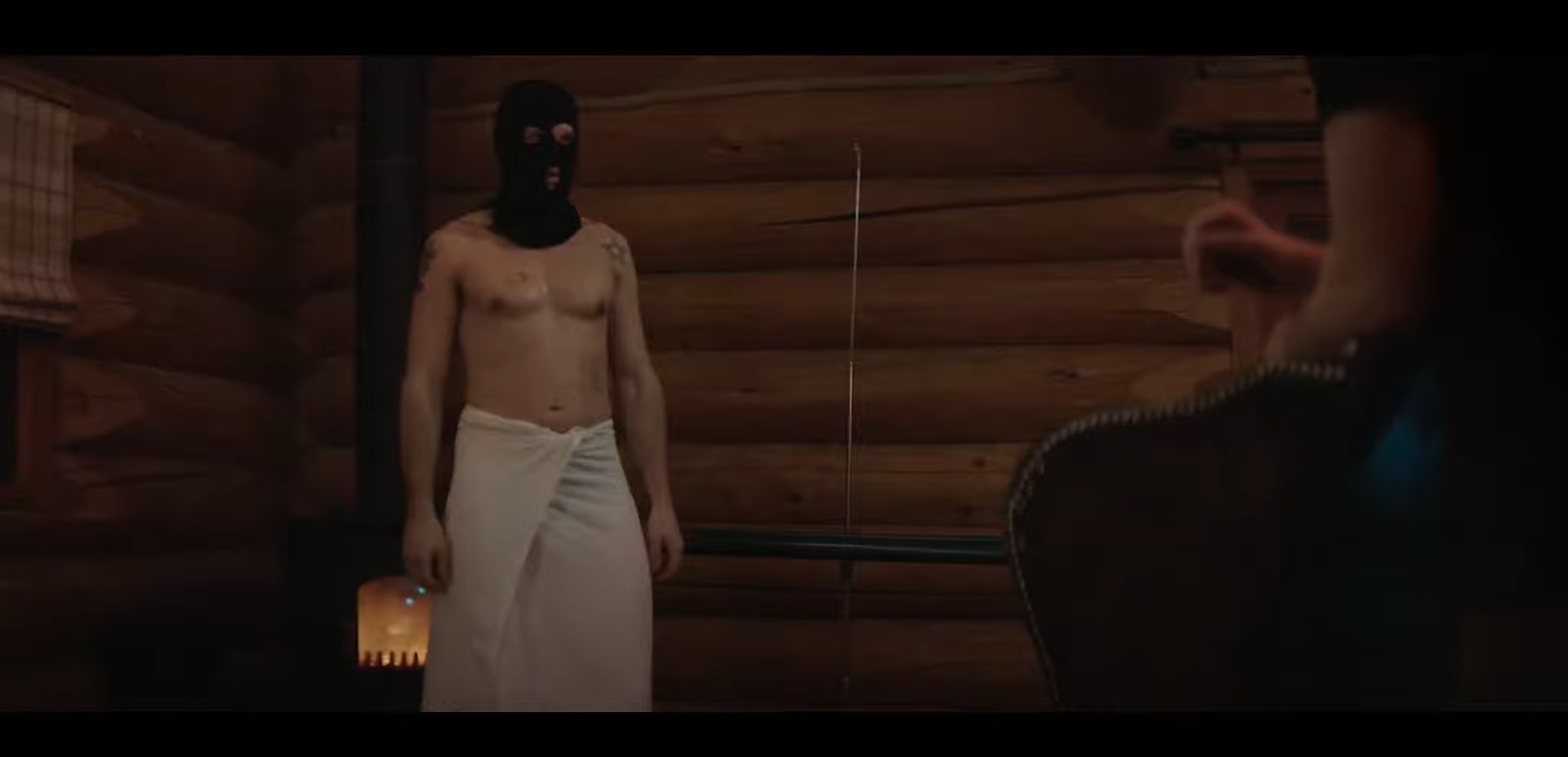
“The Latent Image” plotline doesn’t justify Birrell’s picture as anything else but another stranger showing up at cabin in the woods thriller.  However, beyond the shallows of the film’s surface level tension are deeper waters surrounding Ben’s parting of pathways.  The novelist not only struggles to conjure up a decent spinetingling narrative, but he also struggles personally with an uncertainty of where he fits into his relationship with at-home boyfriend Jamie and with this new, dark fella wandering into the cabin in rake portance.  From the beginning, Birrell and Tonks often visits Ben’s unconscious chimera but also often feels very real in its merge of reality and fantasy of what Ben’s sometimes wishes would happen, but don’t expect this thriller to be a based in psychosis.  “The Latent Image” is not a mental health movie of one man’s isolation snaps his baseline reality.  That would have overdone, overcooked, and overserved with stale bread and flat soda.  What “The Latent Image” taps into is not the age-old tale of a drifter’s in doubt motivations but rather a fear of being found out or fear of oneself when they themselves are unsure of who they are as a person and that can be a scary thought to let the imagination run wild. 

“The Latent Image” lands a debut distribution deal with the Philadelphia based Cinephobia Releasing.  The single layer DVD, arriving on retail shelves September 12th, is a compressed MPEG presented in anamorphic widescreen 2.39:1 aspect ratio.  Between the use of anamorphic lens, split lens, Super 8 reverse stock, and a ton of mood lighting, “The Latent Image” really pops cinematically with a variety of visuals and looks that can induce a breadth of emotions.  For a DVD presentation in an age where Hi-Def continues to the upward climb, the Cinephobia Releasing has tremendous sharpness and detail inside and out of the fuzzy warmth and often the vividly brilliant, focused lighting that induce back and front shadowing, decoding at average of 8 to 9 Mbps that eliminates any prospect of compression complications.  The English audio options include a Dolby Digital 5.1 surround sound and a Dolby Digital 2.0.  The 5.1 trumps the 2.0 In offering much environmental elements of rustled foliage and depth of character actions.  Dialogue conveys strongly, securing its spot Infront of the other tracks where depth allows.  English optional closed caption subtitles are available in the setup menu.  Special features include an audio commentary with director Alexander McGregor Birrell and stars Joshua Tonks and William Tippery going over their mindset of the characters, background, and visual and stylistic choices in an enlightening discourse, the 2019 short film “The Latent Image,” the audio commentary for the short featuring just Birrell, and other Cinephobia Releasing trailers.  The 83-minute film is released not rated and has region 1 layback, untested for other regions.  Well executed indie suspenser with a subtext clout to one’s essential nature and a smartly planned story has exposed “The Latent Image” as impressively top-notch and worth seeing. 

Out today on DVD “The Latent Image” from Cinesphobia Releasing!

Limited Edition EVIL to the Extreme! “August Underground” reviewed! (Unearthed Films / DVD/Blu-ray Combo)

Limited Edition “August Underground” Ready to be Received! 

A young farm owner invites his quirky, video-taping friend into the soiled and confined basement of his home where he keeps a nude, young woman gagged and rope bound to a chair, previously been tortured, and covered in her own blood and filth.  Both feeling giddy with excitement over their new plaything, the two sociopaths revel inflicting more torment and pain on the woman while her boyfriend’s mutilated and dead corpse is being dismembered in the next room.  When their basement plaything expires after days of neglect, the two joy killers hit the New Jersey and Pennsylvania turnpikes and backroads to continue a merciless killing spree of whomever stands in their path.  Convenient store clerks, hitchhikers, prostitutes, even their tattoo artist and his twin comic book enthusiastic brother are not safe from their chockful of callous carnage and every moment is recorded via videotape for reliving the moment in posterity. 

As far as underground horror goes, Fred Vogel’s “August Underground” is about as extreme and underground as they come and still be recognizable amongst the most casual of horror fandom.  Vogel’s inaugural written-and-directed, pitilessly violent, exploitation begins a direct-to-video trilogy of torture-on-tape with SOV quality, imparting grisly shudders to the unfathomable amount of blank-labeled VHS cassettes through man’s stowage, collecting dust bunnies and remaining unseen over the years to the horrors the magnetic tape just might behold.  What “August Underground” essentially boils down to is a raw day-to-day look of two maniacal serial killers on a free-for-all of a butcher’s market, the shooting locations stretch from the recesses of Vogel’s hometown of Warren, New Jersey and all the way to the surrounding back roads and isolated areas of Pittsburgh, Pennsylvania.  Self-produced by Fred Vogel and co-producer John A. Wisniewski, “August Underground” set inaugural voyage on the blood red sea for Vogel’s Toe Tag Productions in 2001.

There is a severe lack of story for Vogel’s debut and that’s no oversight or a sign of omission of a subconscious creativity.  Most normal, everyday people video-record with the intent on not making a feature-length film but rather to capture memories and store them away for another day.  Vogel strives for that realism here where a plot is, for lack of a better word, pointless for the depicted atrocities where the sole purposes is to exhibit dementedness and insanity.  The same can be said about the cast of nameless characters.  The freeform recording does not spout off introductions or make references to monikers to, again, portray as much as organic conversation or realism as possible to further skewer an already gore and violence skewed imagination into thinking what we’re seeing is authentic and inconclusive of its entertainment purpose.  Fred Vogel, under his so-called porno stage name of Peter Mountain, plays the main principal dressed in arrogance and apathy as he’s recorded in a thumbed selection of runtime filmed by an equally bad-natured, sociopathic friend behind the camera, played by a post-release distancing actor under the pseudonym of Allen Peters.  The two complement each other in a Beavis and Butthead friendship kind of way with Vogel in synch with his character’s bloodlust as well as the burly bulk while camera buddy perversely watches, giggling to his friends’ blood shedding exploits.  Their relationship feels like a lonesome outlet to do harm and senseless killing makes the connection firmer, more enjoyable, in the easiest opportunities of a rural area where bored people do evil just to pass the time.  Vogel sets up a series of scenarios rather than plotting acts of a linear story in what becomes an anthology of anarchy that has us climbing down the manhole of maniacal mischief.  Mania is soaked into every inch of “August Underground” and that fits snug and makes warm the scattered story into a much more coagulated coherency.  “August Underground” rounds out the victims, I mean cast, with AnnMarie Reveruzzi, Erika Risovich, Randi Stubbs, Aaron LaBonte, Ben LaBtone, Victoria Jones, Alexis Iris, Stephen Vogel, Dan Friedman, Casey Eganey, Kyle Dealman, and Andy Lauer.

“August Underground” is ugly, nasty, grimy, sordid, perverse, tasteless, callous, and not shot with technical or detailed perfection.  “August Underground” is also unique, bold, unafraid, successful, gory, realistic, practical, and not shot with technical or detailed perfection that’s actually, in its own way, gorgeous.  “August Underground” is all those things and more with its rough-and-ready, extreme exploitation that will be polarizing amongst horror fans and not be a film for everyone’s taste or collection.  Frankly, there are worse underground and extreme horror films out there in the world, but “August Underground,” through the disgusting trices of dismemberment, force feeding of feces, and vomit inducing snuff, has somehow ,at least in this reviewer’s humble opinion, who like in a Dr. Seuss line, has been here, there, and everywhere within the horror spectrum, slipped through the veil of obscurity, having a foot well positioned in the land of the universal acknowledgement where many genre fans putter around with the same old formulas.  The depth of this story is so shallow that digging any deeper into the themes and the possibilities isn’t necessary with its home-made movie facade of people joyfully torturing and killing people being already horrific enough. 

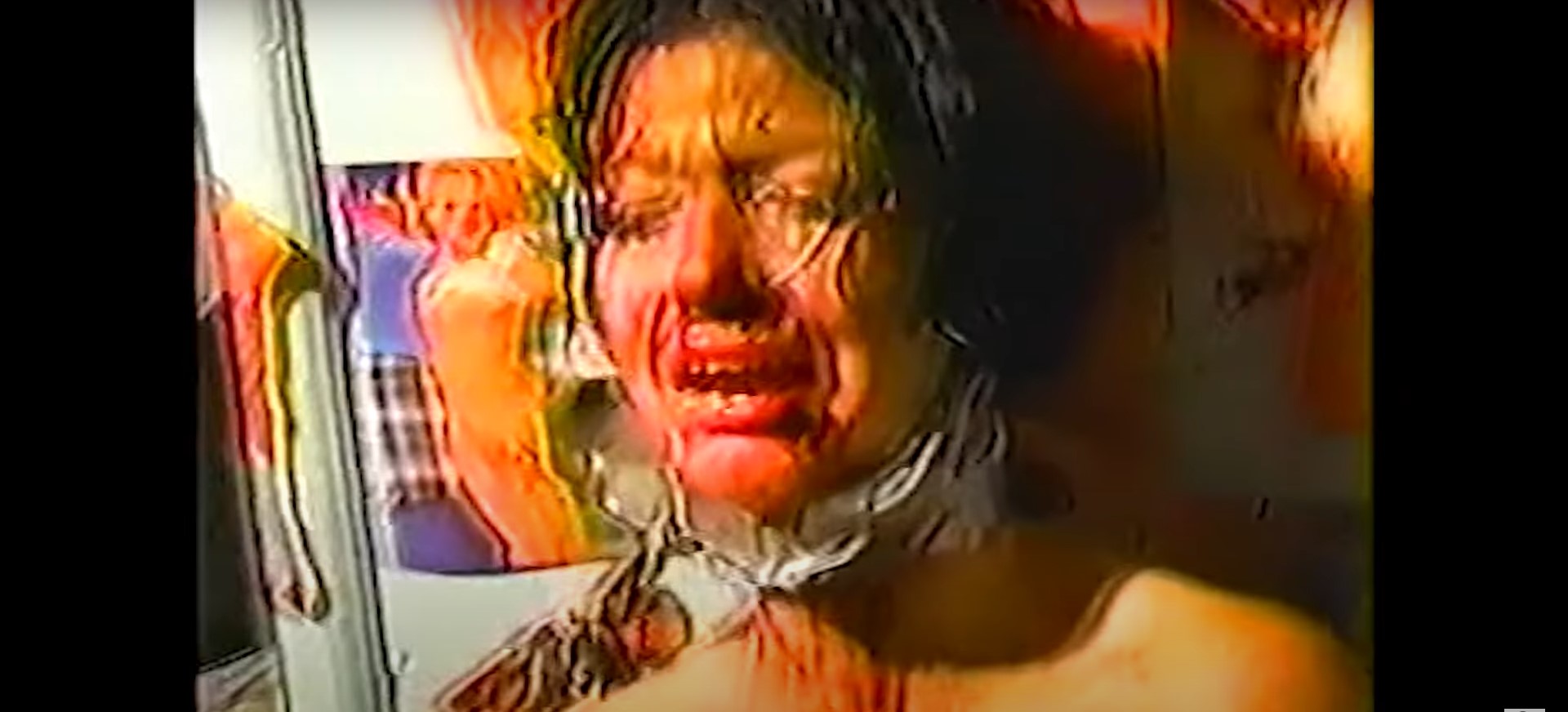
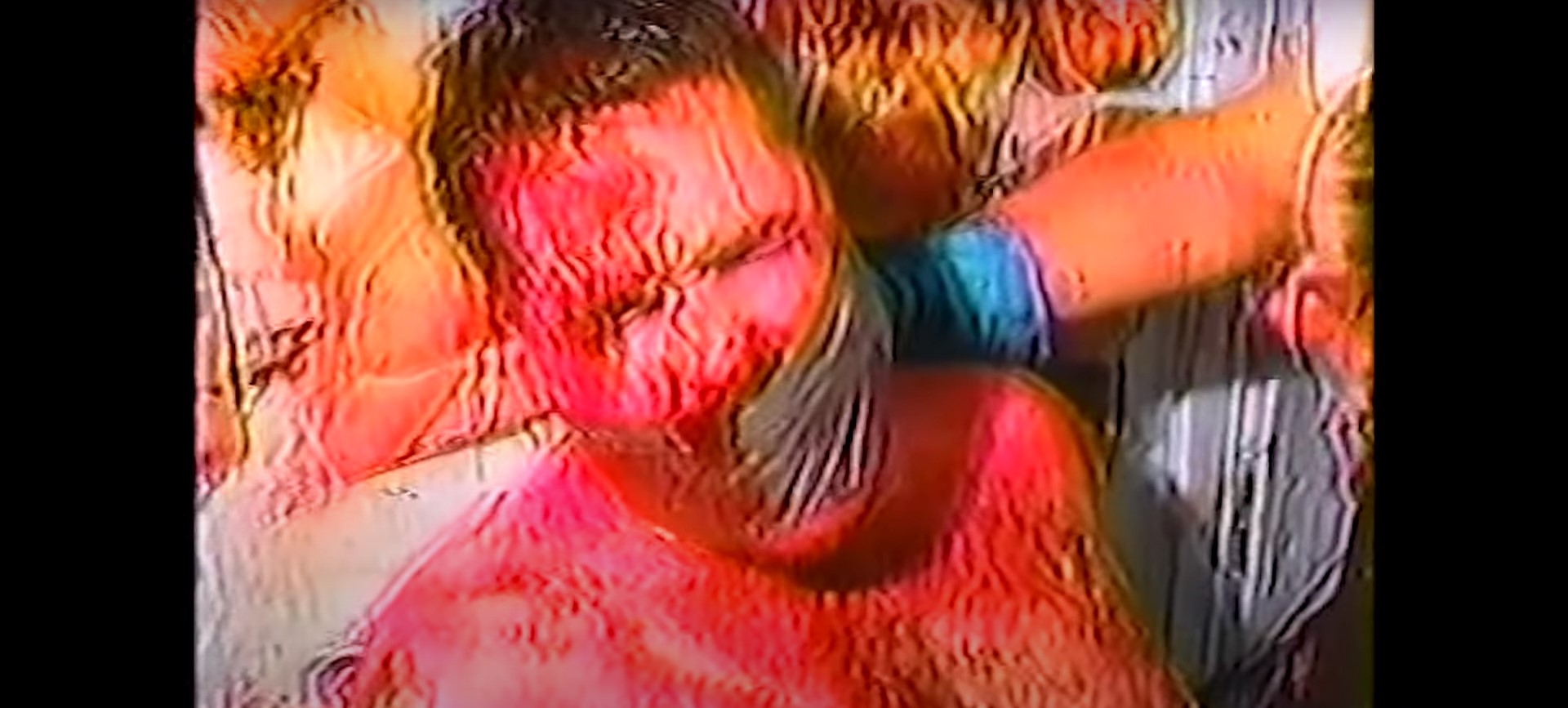
For certain to go out of stock and out of print into physical release obscurity once again, Unearthed Films’ limited-edition collector’s edition of “August Underground” is the 2-disc DVD/Blu-ray combo set to act on right now. The AVC encoded, high definition 1080p, BD50 comes from a MiniDV print, often considered the transitional format from analog and to digital in a tape format with lossy compression. Presented in the original aspect ratio of 1.33:1 aspect ratio, don’t expect image quality to be pristinely detailed and sharp as the MiniDV maxes out at 720p resulting in both, standard and Hi-Def formats, having indistinguishable presentations. Resembling the amateur, at-home movie, scaled down tape quality renders ghosting which shapes and details are bleary and the coloring resembles ember or incandescent with a warm, red-and-yellow layer. What we don’t see much of is a ton of tracking, static, or a ton of noticeable interlace but blacks can be prominently spotty with the horizontal bars. The lossless on-board MiniDV English audio is a PCM 2.0 that doesn’t extend beyond the limits of the camera’s microphone, but the clarity fairs well with clean and commanding dialogue with a natural range between the proximitous cameraman and his killing machine star of a friend in front of the camera. Also, equally interchangeable between the physical formats with what’s made to be a rough recording, discernible differences are minute at best. The Blu-ray and DVD have many of the same special features with the Blu-ray containing a few more frills over its format counterpart with a new Dave Parker interviewing Fred Vogel as well as a separate interview with Vogel and Mike Watt of Rue Morgue Magazine, another new interview with Fred Vogel from Severed Cinema Revisiting Infamy. The formats shared bonus content includes never before seen and new material, such as the original screener version of the film that comes with watermark and a slightly different color grading, a new audio commentary by Fred Vogel and Ultra Violent Magazine’s creator Art Ettinger, a new 10 questions with Fred Vogel answering some of the longstanding queries surrounding the film’s realism achievements and behind-the-scenes permissions and achievements, and a new Toe Tag Masterclass that compares storyboards with the screen version. Archived bonus content include audio commentary with Vogel and actors-producers-brothers Aaron and Ben LaBonte, another commentary track with Fred Vogel alone, an audio commentary by the witty, giggly “Killer,” Hammer to the Head closer look at “August Underground,” on location behind-the scenes, a behind-the-brutality of the film, outsiders’ perspective take in a Too Real for Comfort discussion, an introduction by director Fred Vogel, photo gallery, and trailers. The limited-edition collector’s set comes with a cardboard slipcover with a blurry, interlaced still of Vogel’s character wrapping a forearm around a gagged-girl’s throat while peering into the camera, but it’s the clear snapper case’s front cover that’s more developed with a graphic pencil-graphite illustration of the same slipcover image with more visible mutilated skin and visual weapon of human body destruction. Front cover is also reversible with an interlacing black-and-white image of the main killer. Both discs also sport two different art presses with the Blu-ray mirroring the slipcover image while the DVD has nearly the identical position of killer and victim but with a whole new victim. The region A locked edition has a digestible 70-minute runtime and is, of course, not rated. I would never say Unearthed Films has been diluting their pool of extreme underground gore and guts horror, but their “August Underground” release puts the brazen company back on the mondo-macabre map with definitely a too real for comfort twisted depravity and an au naturel sense of debauchery.

Limited Edition “August Underground” Ready to be Received! 

Feminism Fights EVIL The Only Way Possible in “Broken Mirrors” reviewed! (Cult Epics / Blu-ray)

The Best Depiction of the Unpleasant Side of Brothels.  “Broken Mirrors” on Blu-ray.

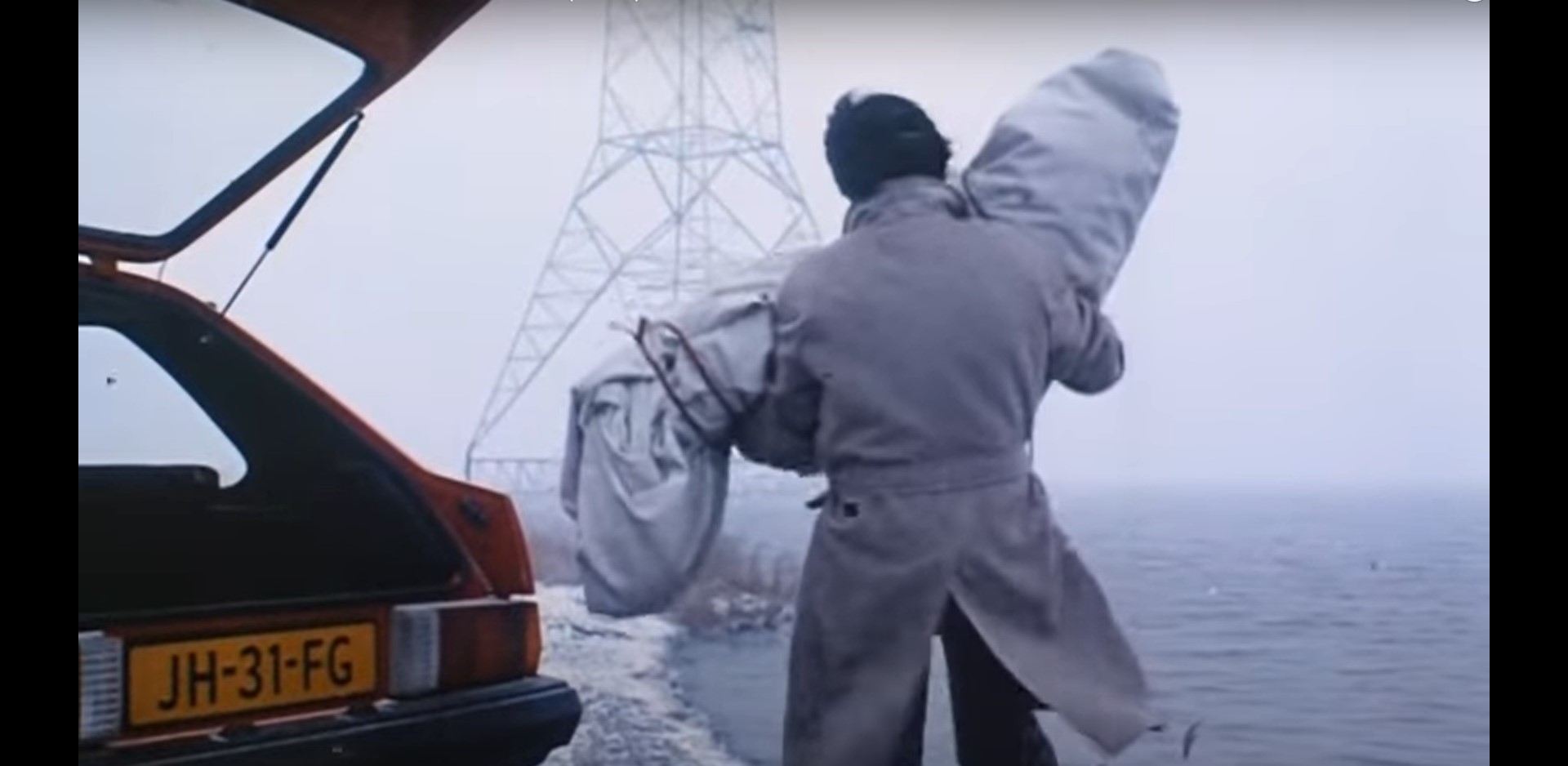
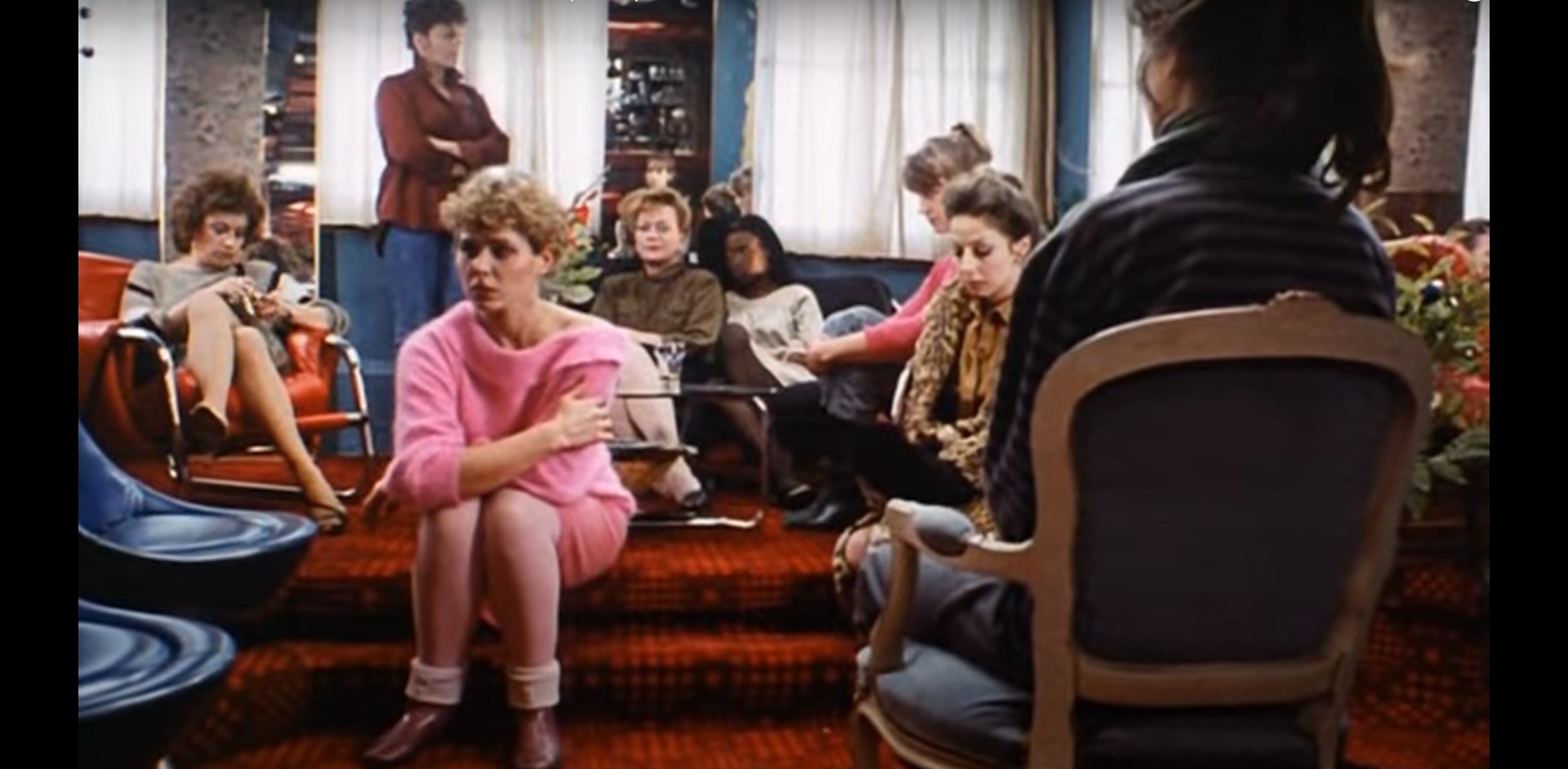
An Amsterdam brothel Happy House Club clings to the good girls that remain employed to pleasure the reprobate and insensitive johns that visit.  Dora, a virtual working girl lifer, brings in new blood, Diane, a young mother desperate in need of financial support because of her drug addicted husband.  Night after night, customers select through the ever-growing service list the club’s owner deems profitable while the women and the matron manager naively cope with a profession that’s quick, easy cash.  They create a process, a standard of procedure so to speak, that tries to make the work that much less degrading but with each client, a little piece of their humanity is chipped away.  Simultaneously, a methodical serial killer abducts the women he previously surveillances from off the street, chains them to a bed in a remote room, takes snapshots of them in confinement, and slowly starves them to death, which could last months.  The two stories are intertwined and connected by a gender dominance disease in which a slow resistance begins to build to an explosive head.

The unofficial sobriquet of the Queen of Feminism Marleen Gorris had made a name for herself as a staunch supporter of feminism and lesbianism with her controversial and provocative films.  Her acclaimed 1982 debut written-and-directed “A Question of Silence” show oppressed gender solidarity and mutiny against a systematically enslaved masculine society.  Continuing her crusade against the patriarchal grain, Gorris followed up “A Question of Silence” with another powerfully messaged, social commentary film that, again, places women emotions and safety under the unyielding thumb of men two years later with “Broken Mirrors.”  Natively known in the Netherlands as “Gebroken Spiegels,” the film marks the return of select cast from her inaugural feature, marshalling in a new narrative in the neo-feminism cinema under the returning production company Sigma Film Productions with producer Matthijs van Heijningen (“A Woman Like Eve,” “The Cool Lakes of Death.”).

As mentioned, a pair of actresses have carried over from “A Question of Silence” to maintain a principal performance in “Broken Mirrors,” beginning with Henriëtte Tol who played the outwitting secretary in Gorri’s debut returns as a woman working in Amsterdam’s red-light district as a seasoned employee of the Happy House Club.  Tol ups the ferocity levels of her previous performance while still maintaining a gradually steady sex appeal.  Another returning actress who nearly didn’t have any dialogue in her previous role as a mother without a voice is Edda Barends now in a character that can’t stop screaming for her life as the latest abductee chained to a cruddy bed in a cruddy room with a coming-and-going, polaroid-enthused sociopath. In Barends starkly different rage against the man machine archetype, the actress finds herself discomposed in the face man she can’t understand but eventually recognizes his nasty need and withdraws it.  Both women excel beyond the unsavory current conditions and transfer the power that’s been dangling over their heads into themselves.  Newcomer Diane, played by Lineke Rijxman, becomes the key to initiate the unraveling of power of a man-owned brothel that subjugates women not as mere employees of a man-owned business but as nothing more than moneymaking ass-shakers and back-layers.  Rijxman puts in the work of having her character be resilient at work and at home as she juggles a wide variety of disgusting clients to please their whims while coming home to deal with a junkie husband’s mess.  As the story progresses and the women fall deeper under life’s heel, Dora and Diane spark what begins as a mutual friendship that slips gradually into sexual tension, giving them more assurances when they need it the most as the brothel parties become bigger and more intense.  The parallel story runs along the same oppressive path but in unconventional, unlawful, and inhuman way with the kidnap and starvation torture of a young mother.  Eddie Brugman is also a returning “A Question of Silence” actor who now finds himself in the shoes of Jean-Pierre, a mild-manner husband and by all rights societally normal seemingly man who visits the brothel for a quickie, easy money as Francine (Marijke Veugelers) would proclaim, but his dark hobby is to snatch unsuspecting women for his own perverse pleasure of watching and hearing them plea for their lives.  By the end of both stories, connected by Jean-Pierre and who finds himself at the end of the disappointing stick for his kicks, crafts more than one way to not give in and to stand up against male malarkey and nastiness.  The cast rounds out with Carla Hardy, Coby Stunnenberg, Anke van ‘t Hof, Elja Pelgrom, Hedda Oledzky, Arline Renfurm, Johan Leysen, Wim Wama, and Elsje de Wiljn.

Not only is “Broken Mirrors” another contentious and provocative incendiary story that wedges apart men and women, with the latter being victimized and justified in their actions, but Marleen Gorris also directs one hell of a boiling point intertwining between parallelisms that almost have no link to each other until the reveal.  Gorris doesn’t necessarily employ red herrings to keep audiences guessing but rather keep the killer obscure, as all that we are exposed to see is from behind the man, who doesn’t speak much either and if he does speak, his responses are to the point with as little descriptors and adjectives as possible.  Not only is the editing between simultaneous stories organic but also the other editing techniques that materialize the characters’ emotional decaying befit the mostly linear structure, such as with the student party montage at the brothel that does a roundtable of individualized scenarios between the women and their slimeball clients in an emotionally painful grin-and-bear it series that culminates to which one character best describes the ordeal as feeling like a human lavatory.  The feeling is very much mutual with viewers as well, like a used wet nap to scrub off a soul staining filth covering head to toe, as Gorris represents a thematic exactitude of fiercely dividing feminism that would define her career. A clear understanding of how brothels operate is greatly depicted with that flimsy layer of excitement and efficiency to mask the ugliness underneath.

“Broken Mirrors” arrives on a Blu-ray home video from Cult Epics and, once again, resurrects and restores a pièce de résistance of Netherland celluloid. The new 4K high-definition transfer from the original 35mm negative is presented in European widescreen 1.66:1 aspect ratio on an AVC encoded, 1080p, BD50. 35mm print looks none worse the wear over the course of father time with a mint print. Restored color graded has freshened up the natural print palette of the brothel story while the kidnapper’s tale sustains a grayscale to bisect the narrative and the delineation for both presents a palatable depth. The aplenty natural grain doesn’t swarm and takeover the higher pixelations to award us with a satisfying vintage image that now enriched without any smoothing enhancements nor any compression issues to note. The Danish language release comes with two audio tracks: A DTS-HD MA 2.0 Mono and a LPCM 2.0 Mono. “Broken Mirrors” fair well from both dual channel formats with the DTS-HD aggrandizing the Lodewijk de Boer razor synth score with intent that in itself is a character. Comparatively elsewhere, the two outputs offer little differences and sate with forefront dialogue, balanced in front an equally balanced ambient track. Optional error-free English subtitles are available with haste text to keep up with the fast-paced Dutch. Special features include an audio commentary by Leiden University film scholar Peter Verstraten, an archived 1984 interview with U.S. sex worker and activist Margo St. James with Cinema 3 host Adriaan van Dis, a promotional still gallery, and trailers. The Cult Epics Blu-ray comes in a clear, traditional snapper sporting the film’s most iconic and titular moment, displayed also on the disc art, while the reverse side of the cover depicts a still image of Carla Hardy. The region free Blu runs at a not rated 110 minutes. A good double bill against “A Question of Silence,” “Broken Mirrors” makes for a morosely on the trot sister feature in more ways than one to further a Marleen Gorris artfully aired agenda.

The Best Depiction of the Unpleasant Side of Brothels.  “Broken Mirrors” on Blu-ray.