Rage EVIL Leads to A Legion of Drone Dwarfs! “The Brood” reviewed! (Second Sight / 4K UHD)

“The Brood” Available Now from Second Sight!

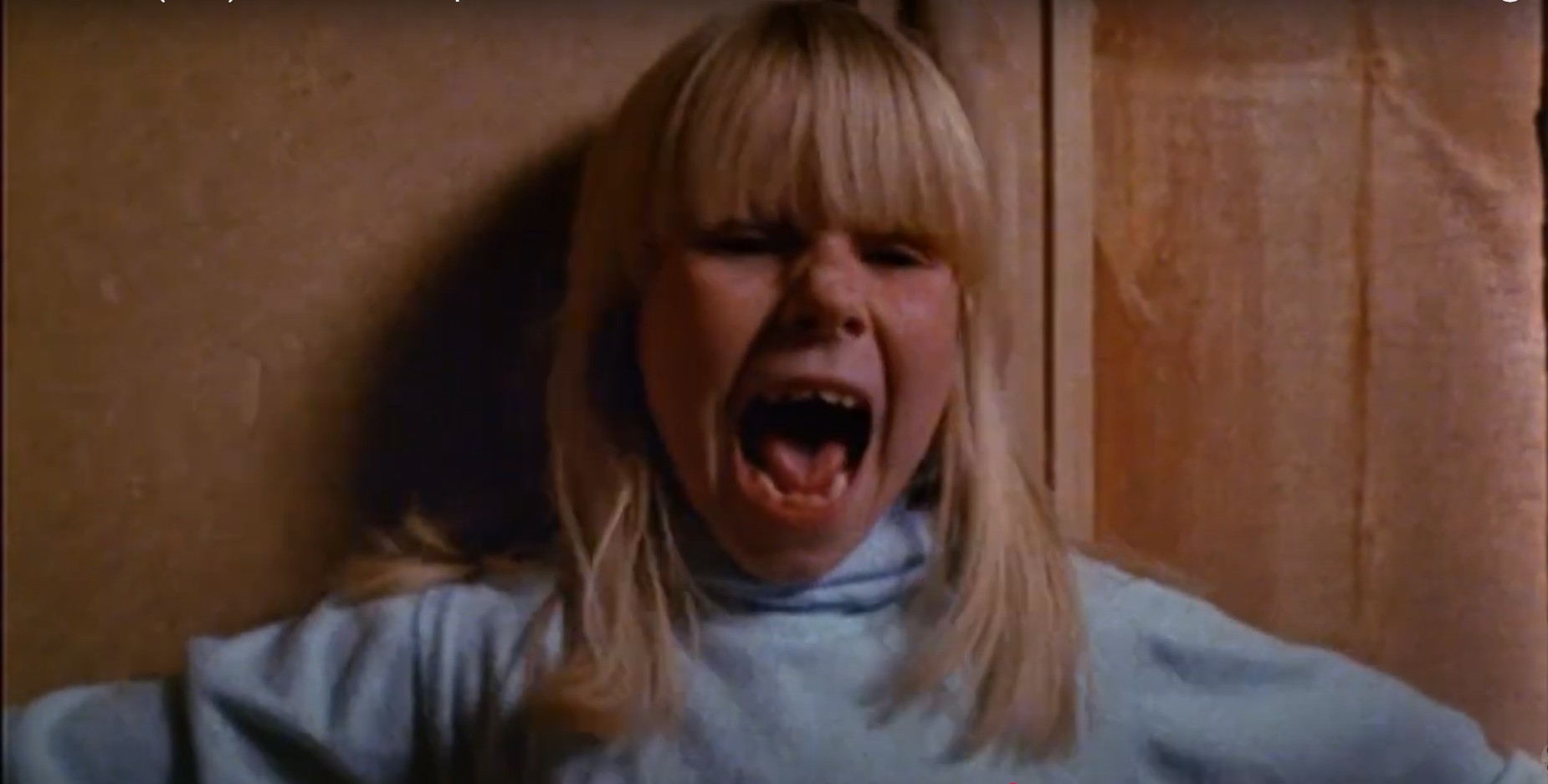
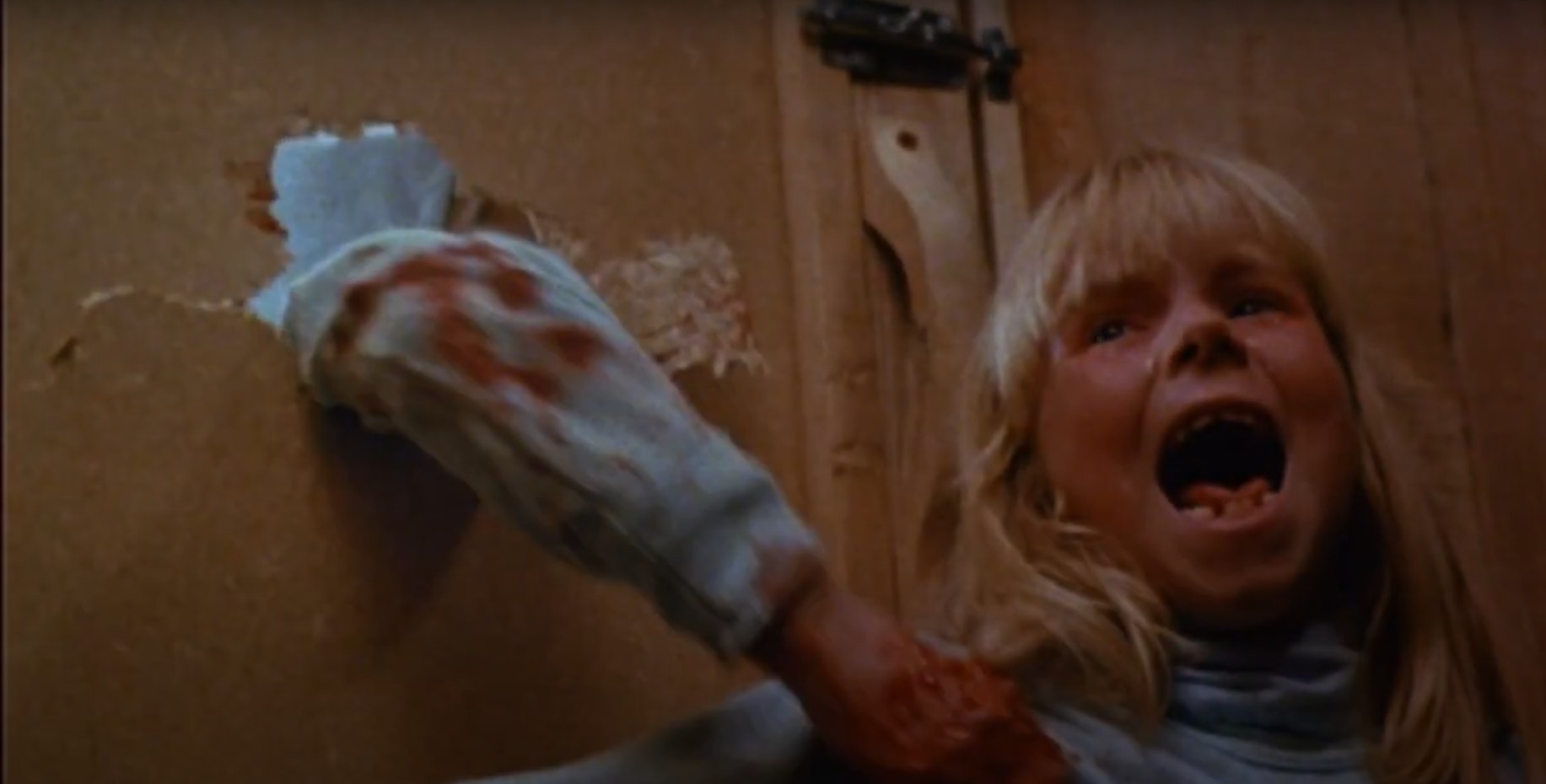
After a series of mentally abusive behavior, Frank Carveth’s wife Nola resides under the unorthodox psychology of Dr. Hal Raglan whose controversial impersonation techniques to break down his patients’ dissociative psychological hangups and destructive blocks.  After months of therapy and witnessing Dr. Raglan’s methods in action, Frank is ready to pull the plug on the doctor’s sideshow sessions he deems are doing more harm than good when his daughter shows signs of physical abuse after a visit with her mother.  The prolonged verbal bout to get his wife out of Raglan’s care leads to Frank confiding in Nola’s mother who is found brutally murdered soon after.  When Nola’s estranged father comes into town to oversee the burial arrangements, he’s also brutally murdered.  Frank begins to connect pieces, theorizing that Dr. Raglan’s procedures and the murders may be linked and as he investigates further, the truth is more terrifying than he could ever imagine. 

Surging with emotional turmoil through a bitter divorce with ex-wife Margaret Hindson, Canadian body-horror director David Cronenberg pulled the rancorous inspiration from that turbulent time to write the originial screenplay for “The Brood,” a 1979 released thriller between an estranged couple, the effect of their ascending troubles upon their only child during the separation, and the sort of radical and systematic behaviors and practices used to reform a relationship bond that actually divides the emotional expanse even further.  Sprinkle a little of the unknown and grotesque abilities of unnatural corporeal world in there and you have yourself one hell of a dysfunctional and undomesticated horror only the unconventional David Cronenberg could conjure.  “The Brood” is produced by Claude Héroux, who would go on to produce Cronenberg’s next series of films, “Scanners” and “Videodrome,” and the Ontario filmed production is a studio venture from the CFDC (Canadian Film Development Corporation), Elgin International Films, and Mutual Productions.

Art Hindle is in the role of Frank Carveth, a father initially skeptical and frustrated with his wife’s supervised treatment and care.  The “Black Christmas” and “Invasion of the Body Snatchers” actor Hindle plays the role of a hinged investigative husband-parent involved into something far more unbelievable than initially imagined.  Next to his on screen dazed and mentally tarnished wife by Samantha Eggar, of “The Exterminator” and “Demonoid,” Hindle enacts normal responses that carry over into extreme situations when those around him – his mother-in-law (Nuala Fitzgerald, “Obsession”), his father-in-law (Henry Beckman, “Side Roads”), and his daughter’s teacher (Susan Hogan, “Phobia”) who might have had a little something-something with while on the rocks with the misses – dies a violent death at the hands of kid-sized mutants that resemble, partially, his own daughter Candace (Cindy Hinds, “The Dead Zone”).  As Nola Carveth, Eggars is only present in a few scenes alongside Dr. Raglan, played by the formidable British actor Oliver Reed (“Paranoiac,” “Gladiator”), as a staring into space, emotionally compromised woman struggling to cope with her past that makes her angry and upset and, in turn, makes her inexplicably conjure do-bidders in the birthing means of advanced evolution or in a parallelism to eusocial insects, like bees or ants.  Reed is the monkey in the middle of all of this between fending off Frank Carveth who challenges the results of his unorthodox psychological methods while also using those methods to unearth the root cause of Nola Carveth’s strange and unusual behavior and, eventual, psychic abilities.  Reeds delivers his typical stoic indifference which makes him ideal for a confident character of the scientific community eager for results rather than feeding his motivations with emotional fodder by empathizing with Carveth’s concerns.  Gary McKeehan (“Rabid”) and Robert A. Silverman (“Naked Lunch”) costar.

In his 50-year plus career, David Cronenberg has evolved in style, substance, and story that dip into more of alternate universes and deliver new ways to blend the future into an organic composite with commercial and social sub context.  While technology and personal and professional growth have developed the director into what he has accomplished and known for today, especially on the verge of his latest release with the living and dead connection theme in “The Shrouds,”  the core of what David Cronenberg does best and still does today has an etiology leading back to his earlier work and “The Brood” is definitely an archetype of his niche.  Cronenberg works the narrative up to his reveal of body horror, and “The Brood” is dangerously on the edge of being atypical, subjecting audiences to more of a buildup in the story and the delimitation of character  disclosure without a steady course of the maladjusted, mutated or modified human body as the villain or the escape, only for that theme to be quasi hinted and then unveiled at the end in a shocking reveal.  “The Brood” plays more of the slasher tones, using the children, dwarfs, or however you want to describe the little, mutant minions to be unknown villain tropes, even when one is laid up on a morgue slab for examination of its biology, or lack thereof.  Cronenberg’s directed ambiguity tees up one of the best endings of his career and, perhaps, even horror cinema as “The Brood” is queen sized stomach-churner, literally.

David Cronenberg’s “The Brood” arrives in 4K on a Ultra HD Blu-ray from UK boutique label Second Sight Films.  The BD100 is HEVC encoded with a 4K resolution or a pixel count of 2160 with Dolby Vision HDR10 and presented in a widescreen 1.85:1 aspect ratio.  On the back cover, the 4K restoration is approved by David Cronenberg.  There’s definitively a more positive treatment of the restored transfer that brightens with a slightly tweaked color grading compared to other DVD or Blu-ray releases, improving delineation as well as rectifying intended details to burst through what’s been long frustrating by a darkened wall of low-resolution definition.  Retaining and sustaining cinema coarse grain, the picture looks and feels incredibly natural without the presence of compromising touchups and smoothing overs that do more harm than good in the plastic-like approach to restoration.  The UHD reinforces the coloring with vibrant richness and range, boosting the once little Canadian film that could into an expensive-appearing optical overhaul that puts to shame previously shelved videos.  Audio fidelity is too retained with a LPCM 1.0 mono that although funnels through a single output is more than an adequate mix all in thanks to the competent sound engineering of Peter Burgess and team to amalgamate recorded sound and post-production ADR into a brawny singular unit that meshes nicely.  Dialogue foots the bill as a clean and clear presentation, the ambient sound design renders distinctly over without ambiguity, and longtime David Cronenberg collaborator and friend Howard Shore conducts an orchestra score that breaks through and keeps the course with an unforgettable amount of tension build.  English subtitles are available.  Special features are aplenty with a new audio commentary by film critics and historians Martyn Conterio and Kat Ellinger, a second commentary with film academic William Beard, interviews with actors Art Hindle and Cindy Hinds moderated by Fangoria’s editor Chris Alexander Meet the Carveths, an interview with executive producer Pierre David Producing the Brood, interview with cinematographer Mark Irwin The Look of Rage, interview with composer Howard Shore Scoring the Brood, an interview with actor Robert A Silverman Character for Cronenberg, a new video essay by film journalist Leigh Singer Anger Management: Cronenberg’s Brood and Shapes of Cinematic Rage, and an archived David Cronenberg interview The Early Years.  The standard Second Sight release comes in the traditional 4K UHD black Amaray case with new unnamed, unsigned illustrated cover art.  The UK certified 18 film is presented region free in this release and has a runtime of 92 minutes. 

Last Rites:  Cronenberg’s play on the word Brood is next level genius with litter rage as a result of mental health and a broken home.  The director’s filmic roots have proved time-and-time again his mastery of moviemaking as his body horror and thought-inducing stories, intermixed with social commentary, are complex visual and narrative devices braised an organic edge. 

“The Brood” Available Now from Second Sight!

Milan Has All the Best Short Film EVIL! “Drag Me To Fest” reviewed! (Rustblade / DVD)

Hurry! Grab the Limited Edition Copy of “Drag Me to Fest” Before Its Gone!

An outpatient nurse is requested by an old woman leaving by her lonesome.  Always forgetting and troubling eccentric, the humble nurse finds he’s in way over his head with a clearly unstable, possibly delusion woman, until the truth of her hidden secret unveils a web of horror.  A young couple looking to help a lonely farmer find themselves erecting a sheep fence as well as maintaining the upkeep of a strange rock formation known as a Tursemorkel that emits ooze out of black orifices and soon find the psychological and physiological energy from the Tursemorkel is more than they can withstand.  An elderly couple, tucked away inside their roadside camper trailer, whips up a finger-licking meaty stew made from all natural, locally sourced ingredients as they watch the nightly news’ top story of a missing person.  A man answers the doorbell and finds a package on his step, scratching and crawling out is a festering corpse eager to play with him.  A priest with an obsessive bug collection has him turnaround when a recently caught rare beetle toys with his mind.  Dafne, a young woman lost in another state of mind, is in the presence and in the arms of her own, personal demon. 

These bloodcurdling tales are the latest batch of horror shorts from the annual Milan, Italy hosted Drag Me to Fest.  The festival brings together Italy and international filmmakers to submit their unique brand of terror.  The 2024 lineup were submitted to the Milan collection in 2023, hit the festival the following year, and has now been compiled onto a home video release for North American audiences to enjoy and cower in teeth chattering fear under its namesake title, “Drag Me to Fest,” from Italian distributor Rustblade Records in association with MVD Visual, a subsidiary of MVD Entertainment Group.  Norway’s “Vevkjerring,” or “The Weaving” by Øyvind Willumsen and “Tistlebu” by Matthew Valentine kick off the anthology followed by Italian filmmaker’s Riccardo Suriano’s “Long Pig”, Julie Gun’s “Dafne is Gone,” and Jacopo Vismara’s “Il Coleottero” and finally rounding out with Japanese director Nori Uchida’s “For What the Doorbell Tolls,” all of which are self-produced.

Three countries, six distinct films, and all packed into the unusual side of ambiguously horrifying elements contained inside six short films.  Each character is curated to fit inside the narrative design, no matter how outrageous or avant grade the message is.  Willumsen’s “The Weaver” is a more straight forward, common structured horror of building up tension in an already uncomfortable situation of a friendly, living assisted male nurse Henrik (Fredrik Hovdegård) knocking on the doorstep of a haggard and kooky old croon named Gudrun, played devilishly and disgustingly by Isa Belle.  The next four episodes become a bit vaguer in their intentions of madness, purgatory, survival, and obsession that intends to either harm or transfigure into something beyond the dimensional standard.  “Tistlebu” aims to transfigure as a young city couple (Sascha Slengesol Balgobin and Sjur Vatne Brean) look to connect with nature and their curiosity, coupled by intrusive misuse and sexuality, toward an earthy pillar of energy inside a widow’s (Oda Schjoll) barn enraptures them into something more primordial, literally connecting them to an omnipresent natural world that’s much bigger than their insignificant need.  Uchida provides his own one-of-a-kind performance based immensely off Sam Raimi’s “Evil Dead” by playing not only the hero but also the decaying plaything that arrives at the hero’s doorstep in one’s mirrored rotting of loneliness.  “Il Coleottero’s” Don Antonio (Mimmo Chianese) has a crisis of faith that become sidetracked by his diligent hobby of entomology when his prized find, a rare beetle, suddenly disappears from his collection.  Chianese finds the balance between being a disenchanted priest and an anxious man hunting for the beetle that got away and that will eventually destroy him.  Julie Gun’s “Dafne is Gone” is more operatically finessed with interpretive dance between Dafne (Giulia Gonella) and a demon (Jason Marek Isleib) that’s completely absent of dialogue, stagecraft visualized, and characteristically naked to showcase Dafne’s descent into the Demon’s spellbinding movements.

The collected and presented works are not the highest dollar productions but do encase a prosthetic practicality as seen in Willumsen’s “The Weaver” with a shedding of an exterior layer into a more grotesque freak of nature while Uchida takes the tribute route using filleted flesh and milky contacts, along with LFE tones and grading, modulated vocals, to accomplish his own version of “Evil Dead” without the presence of Ashley Williams.  The others are not as cut and dry with their infinite interpretational insights that likely will speak more on a personal level than a glossy buttered popcorn one that requires little effort to absorb.  “Tistlebu” and “Dafne is Gone” entrench themselves in their respective unknown and modern art by providing very little in the one thing they both have in common, a shared sense of unsettlement.  There’s also an undertone of sexualism as if it equates to the very beast that entrances, which in these shorts is the Tursemorkel, which is a large surface growth that emits an allurement of safety and gratification, and, in comparison, to the demon, perhaps her own visceral demon, that frolics to breach Dafne’s temptation, drawing her closer to his own colorfully neon netherworld in a production of warmly dark euphemism.  “Il Coleottero” is perhaps the best understated undercurrent between the skepticism that plagues man and his faith.  Shot mostly naturally, tension is built on Father Antonio continuous deviations from his religious duties, distracted in his homilies and divine surroundings, by the mere fact of a lost beetle, a beetle, similar to the appearance of a Stag Beetle, that toys with him.  One could assume the beetle represents a test from God to challenge the priest’s diversification balancing his faith between realism against spirituality, to quote biologist J.B.S. Haldane, and I paraphrase, if the creator had made life, it must have been inordinate fondness for beetles because of their profound species diversity.

“Drag Me to Fest” has now hit DVD home video for the first time in its 3rd annual run with a limited edition to 500 copies courtesy of Rustblade Records, routed through the North American distribution channels of MVD Entertainment Group under their MVDVisual label.  The region free release, presented in a widescreen 1.78:1 aspect ratio, is encoded onto a MPEG2, upscaled 1080p, DVD5 with palatable average of image quality in its varying degrees of filming equipment, lighting, and technical know-how to get the intended look without suffering cinematography faux pas.  Compression wise can be a different story but, generally, “Drag Me to Fest” has an adequate presentation albeit a less-than-desirable color saturation, especially Gun’s “Dafne is Gone” that implements warm neon primary coloring in a high contrast, hard light emulsion.  Skin and pattern textures vary from short-to-short, but the delineation is there to not blend depth nor create solid, smoothed out surfaces.  Valentine’s “Tislebu” relies heavily on the rolling hills and greenery farmscape to enact its character qualities for an Earthy or terrestrial mystery important to the sentient and engrossing formation.  The Italian, Japanese, and Norwegian language Dolby Digital 2.0 Stereo offers a passable mix that doesn’t elevate the atmospherics or construct tension to the max but neither does it flounder or lay waste to the support of the shorts.  There’s not a profound amount of leveled depth or creative sound design to fabricate space as much of the dialogue and environment resides in the foreground, and the dialogue does render over clean and clearly with forced errorfree English subtitles, but the focus is primarily on moving the story in a matter of minutes for some of the shorts, leaving narrative devices, such as characters and the effects, to drive the story and its tension.  The DVD is a barebones released that does not come with any encoded extra content, but the slim, trifold jewel case does depict a grouping of cherry-picked ideas from the shorts in a green bath illustration from graphic artist Gonz and has individual taglines and color stills for each short.  The 92-minute anthology is unrated. 

Last Rites: Abroad anthology with a goal to highlight and amplify short filmmaker voices, “Drag Me to Fest” finishes up from the main screen and extends to home video for the first time! Rustblade and MVDVisual illuminate the cinema obscure for the general public and we’re all the richer for it!

Hurry! Grab the Limited Edition Copy of “Drag Me to Fest” Before Its Gone!

Who is This EVIL Named “Dariuss” reviewed! (SRS Cinema / DVD – Extreme and Unrated)

Find Out Who “Dariuss” Is With this SRS Release!

An experimental vision quest of loss, grief, and death takes refuge in a small English town, inside an old and quaint English house.  A mother grieves for the loss of her child, sobbing uncontrollably and mindlessly wanders with distant stares as the heart pains for her child.  The grandmother, doing what she can, comforts her daughter’s newfangled distraught nature while the husband, grieving in his own isolated way, stays out late at night to drink himself into a stupor.  When madness lurks about their home and intrudes upon their privacy, a vile and heinous loss of life bathes a depraved lunatic in their fluids.  Neither mother, father, nor grandmother is safe from terrific travesty in corporeal form.  A sickness has arrived to cure the inconsolable, eradicating them slowly of the pain in the most painful of ways imaginable, and doing it all with a bloodstained maniacal grin stretching from ear-to-ear.

A hellish loop of defeating pessimism, “Dariuss” fringes the black void areas around reality and escapism that evoke the uncomfortable nature of people and the unpredictable tides that turn for the worst when already at rock bottom.  “Dariuss’s” brackish, brainsick narrative is the brainchild of Guerrilla Metropolitana, an Italian artist crafting his underground and dark cinemaverse of misanthropic mayhem and esoteric eroticism.  The writer-director Metropolitana lives and creates out of London, UK and “Dariuss” is his 2023, debut feature-length film behind an oeuvre of distressing shorts of human imperfection and immortality encroached by a constant line of madness.  Metropolitana not only self-funds and produces his film, where he achieves total control to push back against not only major studio norms but also conventional independent stratagem, but provides the avant-garde cinematography, unorthodox editing, an experimental score and sound design, and even costars the trench coat covered naked body of the antagonistic killer. 

One element to not forget to mention before going through the cast is that “Dariuss” is completely without dialogue.  Metropolitana’s sound design manipulates and repeats many sound clips, such as the plops of water droplets or the high-pitch lip trilling, to fashion an uncomfortable audio sensation sporadically strung throughout that parallel’s the coupled low tumbling score and baby laughter, the later more so when referring to child loss or the abhorrent reincarnation of the child.  Ila Argento holds the majority screen time, especially since the pregnant woman credited as Sarah Isabèl is also Argento as well in some sort of meta crafting or illusion, and she plays the grieving, depressed wife wailing, screaming, and just distantly starring in vast quantities and in a daze of mirrored or painted inversions about the English home.  “Dariuss” is more than just extreme performance art as it embodies interval wretchedness associated with trauma, or in this case more specifically, loss through a reverse world looking glass.  As the wife is tended to by the grandmother, played with apneic conditions and posturing concern is Marie Antoinette de Robespierre, Archibald Kane’s the husband role is scantily around for a father who just lost a child and when the father is in frame, he’s idling in his car drinking, or rather gulping, from a bottle.  Both the grandmother and father roles are a part of Metropolitana’s message of a shattered family structure of insincerity and disconnect. Feeding on that dysfunction is the childlike maniac, played by Metropolitana himself, with rapacious amusement off the back of the household’s suffering.  Almost as if the maniac is a reincarnation of the lost child, perceived by play like antics in a nearly naked and hairless state and audible by the babylike, post-introduced laughter, returning home to exact horrific horseplay on his family involving rape and murder and cannibalism alongside the frolicking and breast milk chugging.  

Let’s preface with an important fact that “Dariuss” will not be everybody’s cup of tea; in fact, Metropolitana’s film is more like bitter black coffee with a pungent, sour smell as a narrative series of images, like a splayed, taped together string of polaroids, giving godawful glimpses of grief and gore.  Sounds and images repeat that beg for madness to emerge out of the nouvelle vague filming style, experimenting with various inverted images, mirrored and angled shots, different types of aged filters and strange lighting, various camera speeds, and oddly framed shots will subject audiences to pricklier sensory sensations than the depicted violence and gore, which is graphically ghastly and extreme with necrophilia and cannibalism.  Story structure also veers into non-linear territory but the gist of the acts is present, if not loose and equivocal for open interpretation and choice cinema characteristics that stray from normal convention, to mold a beginning, middle, and end in only a way Metropolitana can construct by contrasting melancholic grief with stagnating indifference, with a maniacal pleasure of a sandbox of sinew, and, in way, comical by way of the insanity with disturbing imagery mixed with playful mischievousness. 

Just who is Dariuss?  That’s the obstruse person perhaps at the centermost of this ghastly, grisly story that’s now on DVD from SRS Cinema as a part of their Extreme and Uncut label.  The DVD comes MPEG2 encoded, 480p standard definition, 5-gigabyte DVDR that showcases a wide-range of filters, inversions, lighting designs, grading, and you name it, “Dariuss” likely did it of cinematography techniques that stay in the rough patches of eccentricity rather than being comfortable in the fairways.  Picture quality fluctuates and varies depending on the aesthetic chaos methods being deployed, leaving behind not the sharpest looking picture with noticeable pixelation on anything above a 32″ television but not enough of an eyesore to be an imperceptibly deterrent.  Depth has fair spatial qualities but range and saturation is pretty limited to an anemic neutral palette to only when the monochrome or higher contrasts are not in play. The LPCM 2.0 stereo contains no organic matter, meaning that none of the sound is captured within the scenes, as Metropolitana modulates, manipulates, and modifies singular notes and tones for creepy and ear-splicing effect. This also pertains to the soundtrack being completely devoid of dialogue to give the auteur complete authority of how his film she be heard and every bit of that sound design is front loaded and high-powered but to an intended unrefined audio art. English captioning for the deaf and hard of hearing is available. Special features encoded are a behind-the-scenes still gallery and SRS trailers while the standard Amaray comes with an SRS illustration of the film’s original one-sheet, transposed to the disc pressing. There are no inserts included nor slipcover. SRS Cinema’s release is region free and has a runtime of 62, ideal, or even a tad bit too long, for this type of experimentation.

Last Rites: Not to be confused as a nail-biting, popcorn thriller, “Dariuss” will only speak to a select few able to bend the mind to impressionistic, dark eroticism and savagery, both qualities of which Guerrilla Metropolitana has and depicts in droves.

Find Out Who “Dariuss” Is With this SRS Release!

EVIL Wants You Tour Your Own Personal Hell! “Trapped Ashes” reviewed! (4K UHD and Blu-ray / Deaf Crocodile)

4K and Blu-ray “Trapped Ashes” from Deaf Crocodile. Available Here!

The VIP package for a historical studio backlot tour gives seven strangers a behind-the-scenes look at how movies were made and the background behind them.   When their cart pulls up to one of the more infamous movie houses for Desmond Hacker’s fright flick Hysteria, the tour group are eager to explore what’s typically off limits for normal, non-VIP tour attractions.  Once inside the backlot house, much of the Hacker’s funhouse tricks and odd designs are although covered in cobwebs are still very functionally practical as the group separates and goes room-by-room to peruse a movie house.  When they all gather in what looks to be the commune dining area, they find themselves unable to locate the way out no matter which unlocked door they choose, which circles them back.  The tour guide mentions Hacker’s movie had similar parallels and that the only way to free themselves would be to tell their own personal horror story.  With nowhere to go and nothing to lose, the stories begin their descent into terror. 

For someone who doesn’t go out of their way to watch horror anthologies, I’ve been on a kick lately with a decent string of short film compilation feature, starting with the latest entry from the popular “V/H/S” franchise, “V/H/S/Beyond.”  Next up takes us back to 2006 with “Trapped Ashes,” a campy horror anthology that not only brought together legendary genre directors, such as “Friday the 13th’s” Sean S. Cunningham, “Gremlins’s” Joe Dante, “The Matrix” visual effects arts John Gaeta, “Silent Night, Deadly Night 3:  Better Watch Out’s” Monte Hellman, and the late director of “Altered States,” Ken Russell, but also brings together aged, yet still legendary, familiar faced actors that have since past that short time between 2006 and 2025   Dennis Bartok wrote the anthology piece and is his brainchild, producing the film.

Those aforesaid actors have a combined nearly centuries (plural!) of experience with careers spanning an average of 50 years each.  Henry Gibson (“The ‘burbs”), John Saxon (“A Nightmare on Elm Street”), and Dick Miller (“Gremlins”) all together in one film.  Granted, Dick Miller’s cameo was so short that all three were only together for a brief scene but the trio alone should bring in genre fans to witness Henry Gibson in a persona he does best, a round faced under stark white hair and with puppy dog eyes that draws one closer to his innocence only to have the rug snatched right from under you when he turns sinisterly dark as the seemingly harmless tour guide.  Saxon also plays true to his conventional character archetype as a wise-cracking tough guy too cool for school; this time, he plays a screenwriter haunted by his own betrayal toward his best friend while being infatuated with a bewitching beautiful woman.  Unlike most horror anthologies, “Trapped Ashes’” individual tales contain mostly the same cast as the wraparound with Saxon, Jayce Bartok (“Founder’s Day”), Lara Harris (“The Dogfighters”), Rachel Veltri (“Pray for Morning”), Michèle-Barbara Pelletier (“Brainscan”), and Scott Lowell as the tour guests with personal hell to tell.  The heterogeneous group convey their supernatural-laced anecdotes that mingle inside the context of their being or life whether body image, marriage, friendships, and childhood, subjective intimacies that shape their excruciating experiences that, if audiences see them on screen for the first time, wouldn’t be clear how deeply burdened or troubled they are at first glance.  Once the story is told, moods and personalities shift, or perhaps seemingly normal habits are made clearer, and this is made possible by the eclectic bunch of actors to carve away their characters’ exterior shells to see who they really portray.  Ryo Ishibashi (“Audition”), Yoshinori Hiruma, Mina E. Mina (“Eastern Promises”), Winston Rekert (“Eternal Evil”), Ken Russell, Tahmoh Penikett (“Trick r’ Treat”), Tygh Runyan (“Disturbing Behavior”), Amelia Cooke (“Species III”), Luke Macfarlane, Deanna Milligan, and Matreya Fedor (“Slither”).

Riffling through the obvious camp “Trapped Ashes” touts very proudly, there are nuggets surrounding the unsavory themes.  Body dysphoria within “The Girl with Golden Breasts” is one of these topics, where an actress feels compelled to enhance her bosom for better, younger roles, and that speaks the relevance ill of the movie industry’s perverse tidings of late as actors and actresses continue to fill, inject, scar, and manipulate themselves into being their unnatural self to satisfy producers, execs, and audience likes and expectations when, in reality, hurts nothing but themselves.  Dissatisfaction marriage, or perhaps better labeled stagnant marriage, leads into invasive third party to sate long neglect passion and in this case, that third party is an ancient Japanese demon named Seishin (Japanese for Spirit) who lures the wife’s sexual appetite down to the pits of the netherworld.  From there, themes love triangles, obsession, cheating, and dysfunctional family structures formulate a pod of personal pate smeared with victimization, the victims being the storytellers stuck in the Desmond Hacker’s Hysteria backlot house.  “Trapped Ashes” isn’t about being victim, it’s more about playing the victim and those playing may not be victims of their own tales at all that adds a morsel of supernaturality to the recipe that changed the course of the idiosyncratic anecdotes that are close to their emotions and mental well-beings as well as proximally physically hazardous. 

Our first time covering the Dennis Bartok and Craig Rogers founded Deaf Crocodile release and it doesn’t disappointment with a sleek new 2-Disc 4K UHD and Blu-ray of “Trapped Ashes,” scanned and restored in 4K for its Blu-ray debut.  Presented in a widescreen 1.85:1 aspect ratio, the Deaf Crocodile UHD is HVEC encoded, 2160p Dolby Vision, BD66 and the Blu-ray is AVC encoded, 1080p high definition, BD50.  For an early 2000 production, “Trapped Ashes” doesn’t have the digital veneer of early 2000s film besides some visual effects work of the image manipulation drooping effect.  The extra pixels of UHD really brighten and elevate the image to today’s standards to surface the most inconspicuous details lost in standard definition.  Color saturation and skin tones appear natural and organic with no signs of compression issues or imbedded problems with the digital equipment.  Depth has really opened up in areas like the funhouse illusions of the Hysteria house in the wraparound segment and or in “Twin” when reality of the situation is made clear to put the explanation in one single medium-to-medium closeup frame.  Blu-ray copy mimics a lot same UHD accolades with a less fine tune edge around the background.  The English DTS-HD 5.1 surround sound is the only audio option available on both formats.  More than ample, the lossless provides a deepening immersion the deeper you go into stories with balanced side and back channels complimented by an even-keeled LFE to register the bass near the front while whispery events hover around a surrounding backside, such as with Cunningham’s “Jibaku’s” drawing-in hallucination moment of a Japanese painting that instills reverberating echoes and Shepherd tones.  English SDH subtitles are available.  Bonus features include threw new interviews – Dennis Bartok moderates a feature-length, online platform interview with director John Gaeta, cast members Jayce Bartok, Scott Lowell, and Lisi Tribble, producers Yuki Yoshikawa and Yushifumi Hosoya, and cinematographer Zoran Popvic, a second feature-length interview with cast members Tahmoh Penikett and Tygh Runyan and production designer Robb Wilson King, and the last approx. 40-minute interview is with producers Mike Frislev of Nomadic Pictures.  Extras do not stop there with a director’s cut of Monte Hellman’s “Stanley’s Girlfriend,” the original full-length cut of Ken Russell’s “The Girl with the Golden Breasts,” and a 5-part making-of with cast and crew archive interviews, a new visual essay Hollywood Parasite:  Hysteria in Trapped Ashes by journalist and physical media expert Ryan Verrill and film professor Dr. Will Dodson.  This is the so-called standard release compared to its Deluxe Limited Edition companion release, but this release is also pretty deluxe physically.  There’s no limited O-slipcover but the unique, almost 70’s-eseque cover design is appealing yet simple with a reverse side depicting an image of the wrapround characters inside the Hysteria house dining room or commune area.  The UHD and Blu-ray overlap each other in their differentiated locking mechanism on the ride of the clear Amaray case while the left insert portion holds a Deaf Crocodile QR code for access of the transcribed bonus content.  This release has the rated R cut with a runtime of 104 minutes and is region encoded A playback only.

Last Rites: Anthologies can be the antithesis of horror – building and dropping tension, an innate broken narrative, different stylistic choices that disunify the entire film, etc., but if campy enough, if not taken too seriously, if cast John Saxon, Henry Gibson, and Dick Miller, “Trapped Ashes” can find a home in the genre and in our collections with a new and extra-loaded Deaf Crocodile 4K UHD and Blu-ray set.

4K and Blu-ray “Trapped Ashes” from Deaf Crocodile. Available Here!

There’s No EVIL Magic Cure for the Inevitable. “Bag of Lies” reviewed! (Dread / Blu-ray)

See What’s in the Bag! “Bag of Lies” on Blu-ray!

When everything seems to be going Matt and Claire’s way with a strong marital bond, a beautiful house, and rising careers, life throws them a nasty curveball – Claire is hit with inoperable, terminal cancer. Laid up in bed, her weak immune system and fleeting strength are spent on retching up the remains of the chemotherapy treatments she suddenly quits. Matt, under a considerable amount of pressure in losing his wife, has tried everything from conventional medical treatment to the snake oil practices of holistic cults. Desperate for a cure, Matt turns to a man and his bag. Not just any bag, but a bag given the right ritual and stated purpose will produce all that Mark desires and, in this case, the return of his wife’s good health. The man warns that rules must be followed and when Matt can’t uphold his end of the agreement, what he wishes for will still come true in a way most unpleasant.

“Bag of Lies” is the 2024 released supernatural thriller to boldly state that no matter whatever miracle cure is trialed or desperate attempted, one can’t stop the juggernaut of grim inevitability, and if somehow, someway one beats the momentous odds, nothing will ever be the same again or, perhaps, it will be worse.  Debuting his first feature, David Andrew James is the mastermind behind the screen treatment of the story, directing and writing the shooting script based off a story by Nick Laughlin, known for his art and props on “Wrong Turn” remake and “Bones and All,” and “Clever Girl” creator Joe Zappa that tackles one of the more painfully enduring occurrences of impending loss, the slow and excruciating rot of cancer that selfishly takes everything and all anyone, especially loved ones, can do is sit and watch the wasting away from internal consumption of being.  “Bag of Lies” is another Dread Presents and Traverse Terror collaboration, produced by Dread and Epic Picture’s Patrick Ewald and Matt Cleckner alongside Spencer Frazen, Joe Hui, Victoria McDevitt, Jake Heineke, and director David Andrew James.

One of the problems “Bag of Lies” has lies with the married couple Matt and Claire Quimby, played respectively by Patrick Taft and Brandi Botkin (“Bystanders,” “Wicked Ones”).  The problem is not chemistry as the affectionate teasing and relationship frustrations are the hallmarks done right to reflect any kind of amorous partnership on screen and the fact that Taft and Botkin have previously collaborated also makes establishing an already established couple a lot easier but the latter has been under different roles and conditions with Taft producing projects, such as “Wicked Ones,” and both also having roles in the same television series entitled “Wildfire” but overlapping only once in their own three episodes span.  The problem falls upon how their characters got to be where they are now and that creates an injustice to that particular unpleasant side of the story because the audience never experiences the good times the Quimby’s once had before cancer strikes at Claire, not even in a remote sense, and that ultimately fails them because its hard to fall long and hard if not privy to the height of their good fortune.  The lack of backstory extends to the supporting cast with Matt’s awfully empathetic cousin Harold (John Wells, “The Possessed”) who hangs around, brings over a 6-pack, and occasion reworks their basement to surprise Claire with an in-house music studio, more so the former two, and the mysterious man Al (Terry Tacontins) who offers or is sought out or is just happened upon, it’s unclear, the even more mysterious bag option to Matt with a vague understanding of instructions or the cost of what he’s about to unleash or sacrifice or both.  These supporting characters lack of reason for being a cog in the bigger machine seems happenstance rather than necessary to the progression or the problem in what evolves into more of a three-way triangle between Matt, Claire, and an unusual young woman sneaking into their house and property and has a quirky laugh and a dark circle on her palm, played by Madison Pullins (“Baby Oopsie: The Series”).  Aja Nicole and a Kayla Theis round out the cast as Matt’s doctor friend Gwen and local bartender Lilly who has loved one ailment issues that parallel to Matt.

The title “Bag of Lies” is a spin on the idiom a pack of lies, defined as a grouping of false statements or information led to deceit.  “Bag of Lies” plays and preys upon that deception of an all-in-one, quick-and-easy remedy aimed to be a cure-all when, in reality, the thing to solve all your problems is nothing but snake oil that builds hope out of desperation, that sees confidence stemmed from false promise, and instills blindness to the consequences it delivers.  David Andrew James favors suspending in disbelief more than what’s comfortable as Matt experiences haunting visions of ominous means to an end yet doesn’t seem too bothered to really dig into the background and so the story flounders in the second act with Matt just experience weird and frightening sights and sounds without even an attempt to explain, until near the end.  Frankly, if I kept seeing a quirky, quizzical madwoman constantly around and inside my house, the cops would be on speed dial.  Instead, Matt lets himself be silage for the taking, cut off from the rest of reality for the most part without ever going to the authorities, without ever confiding in his friends, nor without ever digesting his experiences and talking about it with his wife, who is usually part of the strange visional equation.  That isolation plays into the burdening effect of trying to beat the odds by doing it yourself and not asking for help, which is definitely being depicted here in Matt’s own surreal nightmare, but the lackadaisical effort and having one peculiar instance roll over him after another breaks down the story’s credibility.  Much like the cancerous rot that’s eating his wife from in the inside out, Matt’s own rot origins from being stagnant and it’s that do-nothing that bears the consequences of terrifying transfigurations in not only his sweet Claire but also in himself. 

“Invasion of the Body Snatchers” interlocked with desperation and a melancholic longing is how the “Bag of Lies” shapes fictional hope around a wrenched inevitability, similar to what the French author Guy de Maupassant once said,, “ the only certainty is death.”  Dread and Epic Pictures brings home an unrated, AVC encoded, 1080p high definition, BD25. Presented in a widescreen 2.40:1 aspect ratio.  Brandt Hackney’s shadowy cinematographer has a fairly nature presence in natural daylight sequences but utilizes a quite a bit of low-level, low-frequency lighting to create a soft incandescence and low-contrast shadows spreads.  Much of the same textures and colors are shown over and over and without that breadth of diversity, comparing scene-by-scene details are more than slim but what’s apparent is subordinate to the atmospheric lighting, or lack thereof, to create moody, broody dark house settings with little light to expose detail and color.  Even in bar sequences, the dimness doesn’t allow detail.  The English audio offerings are a Dolby Digital 5.1 and a Dolby Digital 2.0 Stereo. What’s uniquely about the “Bag of Lies” audio facet is the distinct distortional soundtrack by James Paul Bailey who, in his own words, could never recreate or repeat the score again because of the randomized tones and feedback produces by temperamental distortion boxes, overlayed and modulated to produce a one-of-a-kind soundtrack to parallel the rotting horror “Bag of Lies” corkscrews into. Dialogue does the job with a clean and clear rendering by an indifferently satisfying sort of humdrum performances unfazed by the surrounding sideshow of black bag magic and the curious curiosity that’s emerging vocally from within its capacity. There’s decent localized range within Quimby house with conversating interactions with a door or a vent in between, using post-production to fill in hurling diatribes from the basement below toward Matt in Claire’s voice. English and Spanish subtitles are optionally available. Special features include a brief behind-the-scenes featurette with cast interviews voicing their deconstructing opinions about the story. Though not listed on the back cover, there is a longer, more in-depth featurette around James Paul Bailey’s distortion oeuvre for the film that’s quite comprehensive, plus the film’s trailer and other Dread Presents film trailers. Physical features are just like all the other bare minimum Dread-Epic Pictures release with a standard Blu-ray Amaray and no inserts. The cover illustration has clunky written all over it with a photoshop job of what looks like a giant dirty taco, but it’s the titular bag, with a dirty disfigured hand reaching up and out. The release has a region A playback and has a runtime of 96 minutes.

Last Rites: Neither great nor is it terrible, “Bag of Lies” skips a few key steps toward being a promising indie horror and though the theme is poignant, fantastical, and infused with a jarring soundtrack, the ironic inevitability is there is no cure for what can’t be fixed.

See What’s in the Bag! “Bag of Lies” on Blu-ray!