EVIL Ted Bundy is “The Black Mass” reviewed! (Cleopatra Entertainment / Blu-ray)

“The Black Mass” on Blu-ray Can Be Ordered Here!

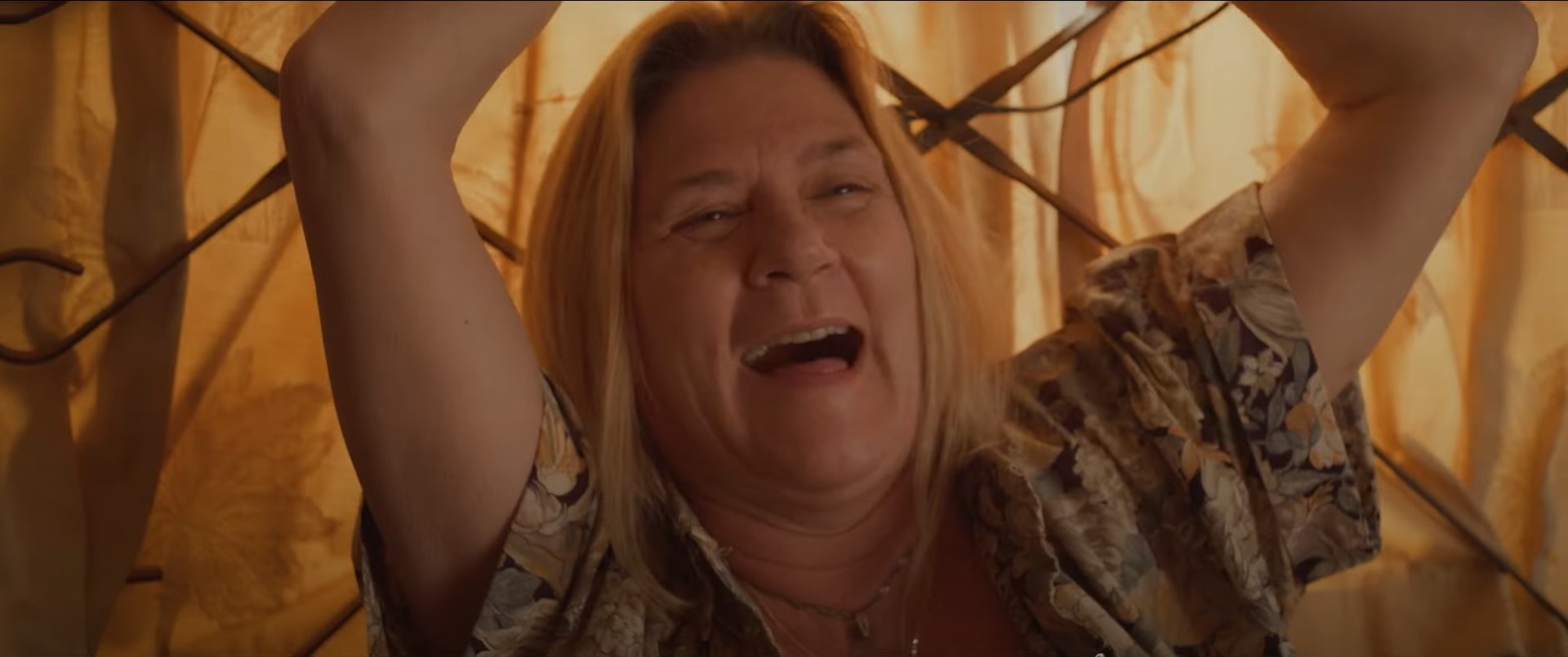
Based off a slice of Ted Bundy’s murderous impulse-driven life, the notorious American serial killer’s escapes from the upper West Coast and lands him residence in Tallahassee, Florida in the moderately warm winter of 1978.  As he picks the pockets of those around him, scrounging up what little cash he needs to survive on, Bundy urges grow to kill grow more intense.  He begins to stalk a nearby university sorority house that’s buzzing with potential prey.  As works out a plan to attack, his good looks and impeccable charm make him desirable around women and men alike, offering opportunities that tend to fizzle out before they can begin, and when his need to spill blood agitates him excessively, he starts to creep out those around him by glaring out them and making off-the-cuff shrewd comments.  With his options declining rapidly, Bundy decides to take advantage of the sorority house’s broken backdoor lock and set in motion a night that will forever live in American infamy. 

For her feature length film debut, scream queen actress Devanny Pinn takes on one of the most vile villains ever to walk the Earth in her biographical horror “The Black Mass.”  The “Song of the Shattered” and “Frost” actress and producer brings a headspace perspective to Ted Bundy committed at least 20 confirmed murders between 1974 and 1978.  The true crime thriller named after what one of the victims described Bundy’s attack on her as simply as a black mass before being bludgeoned.  Brandon Slagle (“Song of the Shattered”) and Eric Pereira (“The Locals”) collaborate on penning the script.  Slagle directed Pinn in the 2022 element horror and survival feature “Frost” and now it’s Pinn to take a stab at the director’s chair with a Slagle screenplay, pun intended.  Pinn coproducers her film alongside Michelle Romano (“Night Aboard the Salem”) and Cleopatra Entertainment’s Tim Yasui (“Frost,” “The 27 Club”) under the production banners of Jaguar Motion Pictures (“Dead Sea”) and Roman Media (“Millwood”).

The main focus in the feature is of the titular character, “The Black Mass,” that is Ted Bundy, almost seeing what he sees through his eyes of skulking and morbid fantasy.  Played by British actor Andrew Sykes, the centrically focused character is experienced not directly through his eyes but over his shoulder, peering from behind as if audiences are accomplices to his murderous wake.  Sykes performs well in a nearly voiceless role that does more lurking than talking but Sykes’s worked up frustration clearly surfaces and erupts out of Bundy when strapped for cash and has a tremendous itch that needs to be scratched as his wishy-washy path to do good crumbles from under his footing.  As the main focal point, no other character really comes close to a lead principal.  The sorority girls are introduced in mass and jump from sister-to-sister individually conversating routine and tales of the day-to-day within the college student context with roles from but not limited to Lara Jean Mummert-Sullivan (“2 Jennifer”), Brittney Ayona Clemons (“Twisted Date”), and Alex Paige Fream (“Into the Arms of Danger”).  Yet, Pinn’s storytelling purpose is paradoxical with the whole story flowing through the perspective of Ted Bundy with his prey hanging mostly in the peripheral and not emanating the warm and fuzzies of sympathetic, relatable characters, but at the end of the film, there’s an acknowledging tribute for the victims who we really know nothing about from the narrative, creating an acute pivot from the killer’s personal bubble.  “The Black Mass” rounds out it’s relatively large passing-through cast with Chelsea Gilson, Susan Lanier, Eva Hamilton, Sarah Nicklin, Elisabeth Montanaro, Mikaylee Mina, Jennifer Wenger, Grace Newton, Devanny Pinn, and with cameos from Lew Temple (“The Devil’s Rejects”), Jeremy London (“Alien Opponent”), Lisa Wilcox (“A Nightmare on Elm Street 4:  The Dream Warriors”), Kathleen Kinmont (“Halloween 4:  The Return of Michael Myers”), and schlock movie veteran Mike Ferguson.

“The Black Mass” is the perfect example of style over substance.  While the story is formatted around Bundy’s outlook, there’s not a significant amount of edification for his warped mindset.  Some backstory leaks through his beseeching phone conversations with ex- or current girlfriend Liv, a phone voiceover presumingly based off the real Bundy girlfriend Elizabeth Kendall, that teeters the appearance of his humanity side as he talks about his addictive struggles and trying to walk a straight line, but any kind of sympathy is quickly tabled without an ounce of provision, likely for his inclination to lie for advantage and exploitation’s sake.  Pinn only teases the inexplicable morose and ghastly gears that rotate inside Bundy’s head, spurring a single blood-drenched daydream of a girl pulling off her skin in the shower, and erotically enjoying it immensely.  The scene feels sorely out of place amongst the rest of reality-grounded narrative that resorts to a cut-rate version of Bundy’s devolving surrounding is fleeting patience and feign niceties.  What’s appreciated mostly about “The Black Mass” is Pinn’s ability to work the camera in not revealing too much of a modern-day society by maintaining that closeup distance behind Bundy and only really showing what needs to be seen for a late 70’s biopic.  Costuming, production design, and vernacular are appropriate for the era as well.  Coming back to the proximity around Bundy, there’s a purposefulness in not showing his full face or looking at him from the front that keeps the particulars of his image in an effective, if not slightly scary, enigma albeit the other characters’ brief descriptions of him in conversation do provide a rough picture of him. 

MVD Visual distributes the newest cinematic Bundy biopic from Cleopatra Entertainment. The AVC encoded, high-definition 1080p, BD25, presented in a widescreen 2.39:1, has welcoming veneer, splashed with a 70’s color scheme saturation, and is graded with a middle-of-the-road or slightly darker color palette. Sufficient capacity and compression encoding offers a clean, sleek digital image without artifacts and with the ample attention to minor era details where possible and Noah Luke’s fill and back-lit cinematography when things get really dark, as in sinister, that snappy image presentation is key. The English language options are a lossy Dolby Digital 5.1 and a PCM 2.0 stereo renders a clean, balanced mix between dialogue, ambience, and dialogue with less suppression on the PCM audio if you’re looking for a lossless option. The setting sounds are nicely immersive compared to the limited and concise framing, opening up the world audibly rather than visually. No technical issues with the digital audio on neither front; however, depth and reality checks are missed marks as all the dialogue doesn’t abide by spatial awareness; when the sorority sisters are talking indoors or from afar while Bundy lurks outside the house, or from a distance, spying on them, all the dialogue is unobstructed and too prominently clear for natural conventions. Bonus features include an image slideshow and the feature trailer. Ancillary content includes other trailers for Cleopatra films with “Frost,” “The Ghosts of Monday,” “The Long Dark Trail,” “What the Waters Left Behind: Scars,” and “Lion-Girl.” Released in a traditional Amaray Blu-ray case, “The Black Mass” sports a Dimension-like front cover, dark and full of characters. No insert or tangible content inside and the disc art mirrors the front cover. Cleopatra’s region free Blu-ray comes unrated and has a runtime 82 minutes.

Last Rites: Devanny Pinn quarterbacking her first feature film with an à la mode Ted Bundy portion, an interpretative taste of his absolute madness, doesn’t faze the long-time scream queen actress and producer who takes on the subject head on, but the overall concept does need tweaking in the area of purpose that can be easily conquered with more practice.

“The Black Mass” on Blu-ray Can Be Ordered Here!

Sadomasochism and Decapitation Seen by a Child Turns Him into An EVIL Adult! “Nightmare” reviewed! (Severin / 4K UHD – Blu-ray)

Your “Nightmare” Should Be in 4K! Own it Here!

A schizophrenic patient continues to have reoccurring dreams of a young boy chopping the head of a woman in the midst of rough sexual fetishism.  The intense nightmares send him into violent stints, delusional states, and severe seizures.  As a test subject for an experimental behavior drug, the troubled man shows promise of recovery and enough so that he’s released from the mental hospital with continued outpatient therapy sessions.  Not long after his release does he skip his sessions to hightail it from New York City to Daytona Beach, Florida, killing people along the way after decapitating nightmare continues to plague and force him to murder.  In Daytona Beach, single mother of three becomes his obsession as he stalks the youngest boy, a mischievous troublemaker, and even breaks into their house when it’s not occupied , but as the bodies begin to pile up on the hands of his need to kill, the more brazen he becomes to entering while they’re home alone. 

Based loosely on the improprieties of government spy agencies using drugs to bend the minds of home and oversee terrorism to their wills, “Nightmare” sensationalizes the concept for the public sector involving a mental patient, experimental drugs, and exasperating an already instable person’s constitution into a hyperdrive of bloodletting carnage.  The U.S. production is written-and-directed by Italian filmmaker Romano Scavolini who came to America to shop around his scripts having failed to secure financial support in Europe, including, you guessed it, “Nightmare.”  Shot in New York and mostly around the Cocoa Beach Florida, the crime thriller filmmaker flexes his muscle with his first attempt at horror and the outcome is nothing short of unadulterated madness.  Once considered to be titled “Dark Games,” and goes loosely by “Blood Splash” and “Nightmare in the Damaged Brain,” the 1981 film is a feature of Goldmine Productions with John Watkins and Bill Milling (“Silent Madness”) producing.

The man behind the nightmare is George Tatum and the man behind George Tatum is Baird Stafford in one of his only two roles as an actor.  “Nightmare” wouldn’t be as skin-crawlingly shocking if it wasn’t for Stafford’s distressing performance of a man whose psychology is being peeled away and you can see Tatum physically fighting the urge, fighting to stay sane, but losing the battle as the grisly terror replays over and over inside his mind.  Stafford’s asunder of Tatum’s equilibrium has unequivocal transference to the audience.  Parallel Stafford is a child, a young child by the name of C.J. Cooke who essentially played his own version of himself in C.J. Temper, a mischievous prankster that ran babysitters up a wall mad and frightened and frustrated the living daylights out of his mother.  C.J. is part of the family Tatum is hellbent on driving down from New York to Florida to see for a reason that isn’t made clear yet until the shocking reveal.  C.J.’s single parent, a mother desperate for love and affection, is played by Sharon Smith who has become romantically involved with nice guy, and yacht owner, Bob Rosen, with Mik Cribben in the role.  Cribben was actually part of the cast but the original actor for Bob Rosen dropped out and Cribben quickly filled into the role that suited him well enough as a suitable suitor for C.J.’s mother.  “Nightmare” rounds out the cast with Danny Ronan, Scott Praetorius, Christina Keefe, William Kirksey, Tammy Patterson, Kim Patterson, Kathleen Ferguson, Candese Marchese, Tommy Bouvier, and producers John L. Watkins and Bill Milling as drug trial executive and psychologist tracking down Tatum to clean up their mistake. 

“Nightmare” combines excellent U.S. thespianism with an Italian way of suspense and violence glued together by the success of the late Leslie Larraine and team’s special effects albeit the controversial assertion on the film’s posters that Tom Savini (“Dawn of the Dead” ’78, “Friday the 13th, ’80) had been the effects supervisor on the film albeit Savini’s adamant claims of the opposite and denying the credit being false and liable for using his name to draw in audiences.  Savini continues to state his contribution “Nightmare” was limited to best to the action of a decapitating swing of the axe.  Ultimately, the whole ordeal mars Larraine’s due recognition for some of the more up-close and personal gory effects this side of the early 80s.  Scavolini also deserves well-received credit for his narrative vision of Tatum’s psychosexual struggles that drive him to kill.  Robert Megginson’s editing and the re-recording mixing team tackle a form of character plummeting that’s unlike any other from the intercut concatenation of events between Tatum’s horrific, blood-soaked nightmares and his antagonizing, sweat-inducing impulses that propel him without a choice.  The simultaneous parallels between Tatum and young C.J., as Scavolini aims to connect the two against-the-grain personalities as a singular link with back-and-forth subplots, leach the shock out of Sharon Smith’s acme line as mother Susan Temper that uncovers the truth when the chaotic smoke clears.  Why Tatum would drive so far from New York City to Daytona Beach, Florida with reason to stop and make roost on this one particular family fails to form mystery around what’s often crafted to be an arbitrary target with some minute hints that may provide clues to the audience is because even without those inklings, the shooting script defines the rationale right from the beginning thus bringing the viewers out from a shrouded suspenser and into being buckled in just along for the ride. 

Severin Films’ 4K scan of the 35mm internegative compositions the print with various foreign element sources for a comprehensive version of Romano Scavolini’s “Nightmare” on a 4K UHD and Blu-ray 2-dsic set.  The UHD is on a HEVC encoded, ultra high-definition 2160p with a 4K resolution, BD66 and the Blu-ray is housed on an AVC encoded, high-definition 1080p, BD50.  What’s released is a very enriched saturation of the technicolor process that defines and differentiates the innate hues.   Details are more than consistent throughout as we’re able to pinpoint the beads of sweat down Tatum’s face or feel the palpable slick sinew of a decapitated head amongst the examples.  Blood is a deep, glossy red and contrasts strikingly in the more sopping moments despite Savini’s claim that it needed more green dye to better pop for the camera.  A consistent layer of agreeable grain runs throughout from the 35mm film stock, as it should, without any inimical dust, dirt, scratches, flares, or of the like to obstruct viewing or cause lapse in the narrative, as it shouldn’t.  Between the resolution diverse formats, there’s a slightly more grindhouse look to the Blu-ray whereas the HDR10 crisps the image for better vibrancy.  Both formats retain inky blacks without shimmering or banding.  The English language audio tracks are available in two lossless options:  DTS-HD 5.1 and a DTS-HD Stereo 2.0.  The surround mix’s dialogue has resounding infusion, spread through the multi-channels to encompass a multi-directional approach to centralize.  The design is effective as it’s prominent to not understate the vocals but leaves little room for spatial distant to which no matter where characters stand, they are almost audible on the same audio plane.  Jack Eric Williams warping harmonica and twangy guitar, intrinsically integrated with piano notes, a variety of percussion, interjecting funk bass chords, and hints of string instruments, that ebb and swell with great intensity and favorable discordance is a real celebration of Williams’ score on Severin’s latest restorative edition of “Nightmare.”  English subtitles are optionally available.  The Ultra HD release comes the film’s trailers and a pair of audio commentaries as the only accompanying special features; commentary one has features star Baird Stafford and special effects assistant Cleve Hall with Lee Christian and David Decoteau and commentary two features producer William Paul.  The Blu-ray also has the commentaries and trailers plus an extended lot of interviews, such as a feature length (71-minute) Kill Thy Father and Thy Mother interview with director Romano Scavolini (Italian with English subtitles), Dreaming Up A Nightmare interview with cast and crew, a brief interview with Tom Savini discussing his role, or rather his not role, in The Nightmare of Nightmare to which Savini looks a little tired of answer the same question about his inaccurate involvement, an interview with makeup artist Robin Stevens The Stuff that Nightmares Are Made of.  Also included is an open matte peepshow as well as untouched deleted scenes, extending beyond the already newly achieved 99-minute runtime for the film.  “Nightmare” from Severin comes in a standard 4K Amaray case with original poster art used for the front cover.  The discs are separated and tab locked on either side of inner casing and this particular release, the 2-disc set, does not come with any insert or content.  The front cover is reversible with the European title “Nightmares in a Damaged Brain” and a different image composition of the European poster art. The disc has region free playback and is not rated.

Last Rites: “Nightmare” on a new, extended restoration in 4K and Blu-ray is a dream of a release. A nerve-wracking performance in Baird Stafford’s schizo vilifies the very classification of the mentally ill in what is sure to go down in history as one of the most disturbing, and disturbed, characters of the video nasty era.

Your “Nightmare” Should Be in 4K! Own it Here!

Beer Can Stuff Boots Give EVIL a New Height! “The Lost” reviewed! (Ronin Flix / Blu-ray)

Click Here to Purchase “The Lost” on Blu-ray!

Sociopathic teen-adult Ray Pye guns down two young women he suspects are romantically involved with each other and wants to feel the thrill of the kill for the first time with his two friends, Jennifer and Tim, as frightened, reluctant witnesses and abettors to his heinous crime.  Four years later, police investigation can’t pinpoint Pye as the culprit when the only surviving victim succumbs to her wounds after being in a coma all this time.  Pye, the slicked haired, pathological liar and assistant manager of his mother’s motel, continues his nice boy act as he peddles drugs and tries to woo any girl into bed while having a firm, feared grip on best friend Tim and girlfriend Jennifer to keep them in line.  As Pye chases after new women that enter in his world, the police continue their unofficial investigation, waiting for Pye to slip up and make a mistake but as his manipulation backfires and things don’t go his way, Pye’s already unstable nature morphs into an all-in, serial killer rampage and kidnapping of the three prominent women that have recently challenged his masculinity.

A real down spiral of machoism and growing up out of the adolescent fantasy world, “The Lost” is the 2006, loosely based biopic thriller inspired by real-life serial killer, the Pied Piper of Tucson, Charles Schmid interpreted from the book of the same title by late horror novelist Jack Ketchum.  This part II of our serial killer film review coverage, following the Robert “Willy” Pickton Canadian murders inspiring “Pig Killer,” “The Lost” bring us back to American murderers and is the first solo feature run for writer-and-director Chris Sivertson.   The father-son duo Mike and Lucky McKee, the filmmakers behind “May” and “Roman” co-produce “The Lost” alongside Sivertson and Shelli Merrill under the production company banners of Silver Web Productions.

To play Ray Pye, the actor must incarnate being on the edge of principles and be crazed to the point of no return.   For Marc Senter, Ray Pye was a means to break from minor television roles and star as a leading man defying principal conventions in being the best bad guy he could cook up.  Senter, who went on to be in credited roles of “Wicked Lake,” “Cabin Fever 2:  Spring Fever,” and “Old Man,” will forever be seen as the crushed soda can-filled boot wearing and greaser veneered Ray Pye as the boyish-looking Colorado native brings the ferocity, the energy, and the killer instinct of a high-strung teen teetering the line of losing it all.  Senter’s approach rides on insecure masculinity of being a short man showing teeth to appear larger than life and exacts a screen perforating fear that holds friends Jennifer (Shay Aster, “Ernest Scared Stupid”) and Tim (Alex Frost, “Elephant”) in a tail-between-the-leg stasis of his end all, be all despot presence.  Aside from the Ray Pye storyline, a trio of sub-stories add more development and substance to other principal characters, such as Tim and Jennifer hooking up dictated by them inching out from under Ray Pye’s reach, a washed out midlife Detective (Ed Lauter, “Cujo”), who was formerly on the Ray Pye investigation, and his romantic involvement with a Pye pursuant Sally (Megan Henning, “I Know Who Killed Me”), who is approx. 40-years the Detective’s junior that creates an intriguing, struggling dichotomy between love and appearance, and with the alluring Katherine Wallace (Full Moon regular actress Robin Sydney, “Evil Bong” franchise) in a love-hate, obstinate relationship with an absent psychotic mother and her fondness for Ray in who on some levels mirrors the same qualities as Katherine’s mother.  Michael Bowen (“Deadgirl”), Dee Wallace (“Cujo”), Tom Ayers (“Bloody Bridget”), Cynthia Cervini, Richard Riehle (“3 From Hell”), and to compound skin scenes, soft-core erotic starlets Erin Brown (aka Misty Mundae, “An Erotic Werewolf in London”), and Elise Larocca (“Blood for the Muse”) co-star.

What first struck me about Sivertson’s “The Lost” is it doesn’t define a period in time.  Charles Schmid’s reign of terror coursed the span of a year in the mid-to-late 60s, which follow’s Ketchum’s timeline in the novel.  Yet, the books’ characters follow the movie’s scheme without clearly stating the years, stringing the connection between the three like step-relationships.  Pye’s greaser finish, drive-in burger joints, boxy-rectangle cars and VW Beetles, and a motel as one of the principal shooting locations float in the very essence of the title itself, as a Lost in time story that stretches the decades.  What’s not lost is the aggressive sexual nature that drives the nihilistic Ray Pye’s bedding scorecard by feigned compassion and romance; yet there’s plenty depth behind his sleazy cockiness that warrants more discussion into his problematic psyche, such as how he’s able to charm the pants of these women and how he’s able to keep those who fear him, close to him.  Sivertson’s unafraid to make a statement in “The Lost’s” sexuality with plenty of skin from a number of the principal actresses to the simulated sexual acts in and out the vein of style and in and out of Pye’s sociopathic tantrums that’s more self-doubting bullying than actual power.  At a young age, Pye aims high for machohood by the misguided dealings of the cards he’s dealt, augmenting himself with shoe stuffers and makeup to make him taller and more attractive.  “The Lost” is very much a deconstruction of masculinity mania in the way we see Pye’s worlds comes crashing down and he loses everything when his guard is down by one swift moment of real, tangible love with Katherine and the only way to gain back control, like a hissy-fitting baby, is to go berserk in a if I can’t have it, nobody will tear. 

Evil never looked so dapper as “The Lost” receives a new 2K remaster produced from a 4K scan of the original camera negative by the boutique label Ronin Flix.  The AVC encoded, 1080p, high-definition BD50 contains the presented anamorphic widescreen 2.35:1 film with pixel-by-pixel coherence exacting extensive details and chromatic fidelity.  What stuck out the most from the 4K scan was the night scenes blanked in near sheer darkness with minimal direction illumination from natural and unnatural lighting in a positive, well, light.  In night forest scenes, especially around the lake, objects are lost in the void of shadows, tenebrously covered in obscurity, and that’s accomplished and accentuated in the opening moments of Ray Pye’s debut double murder, creating a better illusion of reality rather than creating an illusion out of often folly fabrication of dark blue gels or immense random key lighting.  Textures are strong through, greatly defined by the delineating of edges on striking clothing, cars, and the amount of skin displayed.  Two lossless English audio options are available to select from:  a 5.1 DTS-HD Master Audio and a 2.0 Stereo DTS-HD Master Audio.  “The Lost’s” audio/video design produces a high fidelity and contains a blend of unprocessed and stylistic expression that stretch the audio range depending on the current Ray Pye Richter scaled mood.  Pye’s occasional rapid-fire rants are unmistakable and clear as the decoding unfolds every syllable without sounding seamless or garbled.  English SDH are optionally available.  Ronin Flix delivers new and previously owned special features.  New content like an audio commentary with director Chris Sivertson and Lucky Mckee serve as a trip down memory lane with new, pondered upon insights and recalled tales and new individualized interviews with principal actors Marc Senter, Robin Sydney, and Shay Astar in regard to auditioning, prepping for the role, and recalling their experience on the shoot expand more into “The Lost’s” attention and what it took to illuminate focus on the Pied Piper of Tucson.  A second, archival commentary with writer Monica O’Rourke moderating conversation with late novelist Jack Ketchum, audition tapes, outtakes, storyboard sequence, and the original “Jack and Jill” short film directed by Chris Sivertson fill out the special features.  A new front cover design, replacing the bland bullet hole-riddled and blood-puddled eyes cover on the Anchor Bay DVD and Blu-ray, on the trio of cardboard O-slipcover, translucent Blu-ray Amaray case, and disc art spruces up the Ronin Flix’s lifted release with a sense of hep threads and fatal knuckle sandwiches.; however, that’s about the extent of its physical beauty and tangible adjuncts.  The region free Blu-ray comes not rated and has a runtime of 119 minutes.  Marc Senter’s tour de force burns rubber, a ferocity of friction and perpetual anger sculps one of the best true-to-life silver screen villains from the last two decades. 

Click Here to Purchase “The Lost” on Blu-ray!

Sooie EVIL Sooie! “Pig Killer” reviewed! (Breaking Glass Pictures & Darkstar Pictures / Blu-ray)

On This Farm There Was a “PIg Killer” now on Blu-ray!

Pig ranching landowner Robert “Willy” Pickton’s compulsions to pick up unprincipled women involved in prostitution and drugs and horrifically rape and murder them in the name of salvation stems from a severely abusive childhood with the father’s physically and mentally tormenting as well as a scornful mother sexually assaulting him.  Willy’s fanatical obsession threatens his drug-fueled, orgy-laden, rock-n-rolling Piggy’s Powwow party, a regular throwdown held at his ranch that has elicited a cease and desist letter from the city, but Willy pushes the party forward despite his brother David and their lawyer’s stern opposition.  Paralleling Willy’s story is Wendy Eastman who almost dies of an accidental drug overdose.  The incident stirs more the already contentious bad blood between her uncompromising stepmother and insecure father that leads to storm out and bump into Willy at a bar with the feeling of destiny bringing them together only to horrifically discover Willy’s unsavory secret the hard way. 

Part one of my reviews on serial killer biopics, headfirst we go into the psychotic world of Robert “Willy” Pickton, a pig former turned one of Canada’s most notorious serial rapists and killers living in Port Coquitlam, British Columbia.  While the extent of his butchery is vague at best and even in some ways evolving over the course of the last two decades, Pickton was able to be the filmic inspiration for the Chad Ferrin brazen biopic “Pig Killer.”  The “Easter Bunny, Kill! Kill!” and “Someone’s Knocking at the Door” director wrote-and-helmed the interpretation of the egregiously presumed methods Pickton executed upon his female victims, mostly drug-addicted sex workers from the Eastside of Vancouver.  Once under the working ttile of “Pork Chop Rod,” Ferrin’s Crappy World Films, Girls and Corpses (of Robert Steven Rhine’s Girls and Corpses Magazine), and the post-production company Laurelwood Pictures served as co-productions with 50-year acting vet Robert Miano (“Malevolence,” “Giallo”) co-producing.

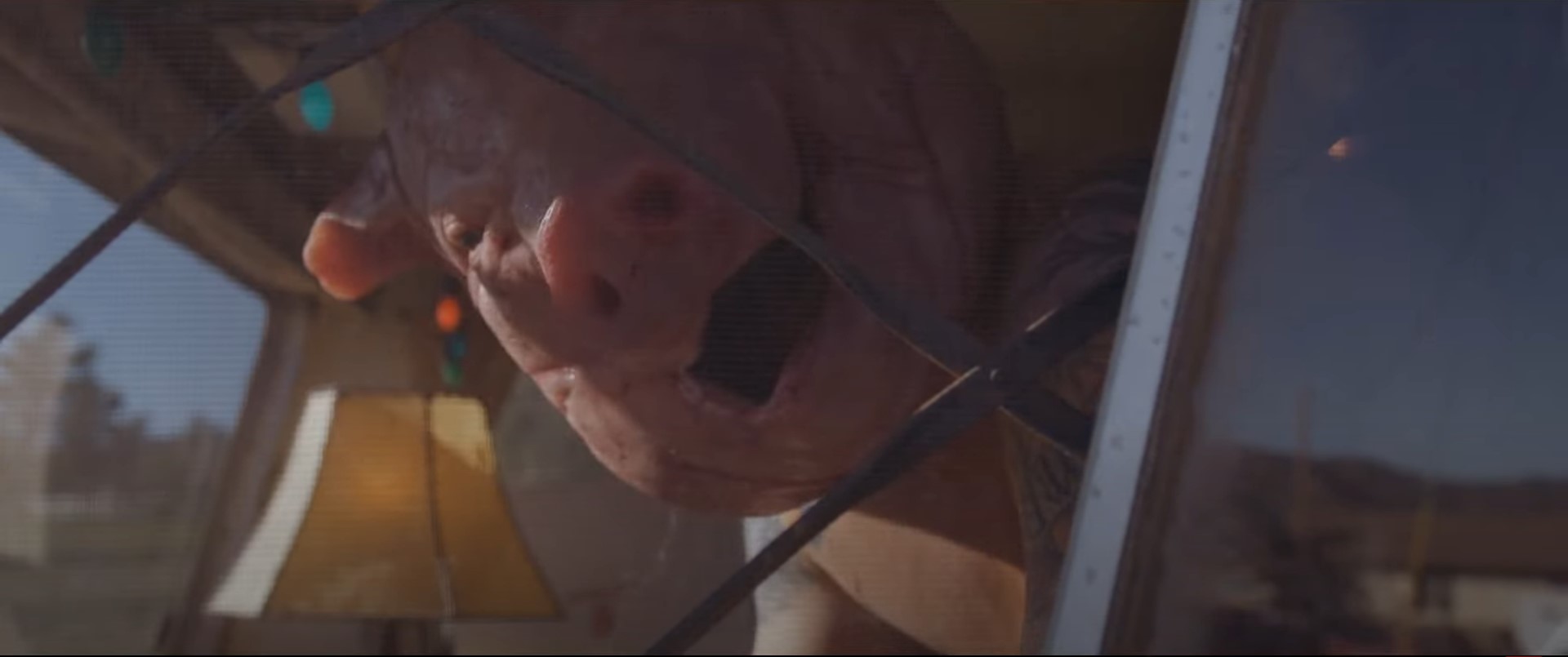
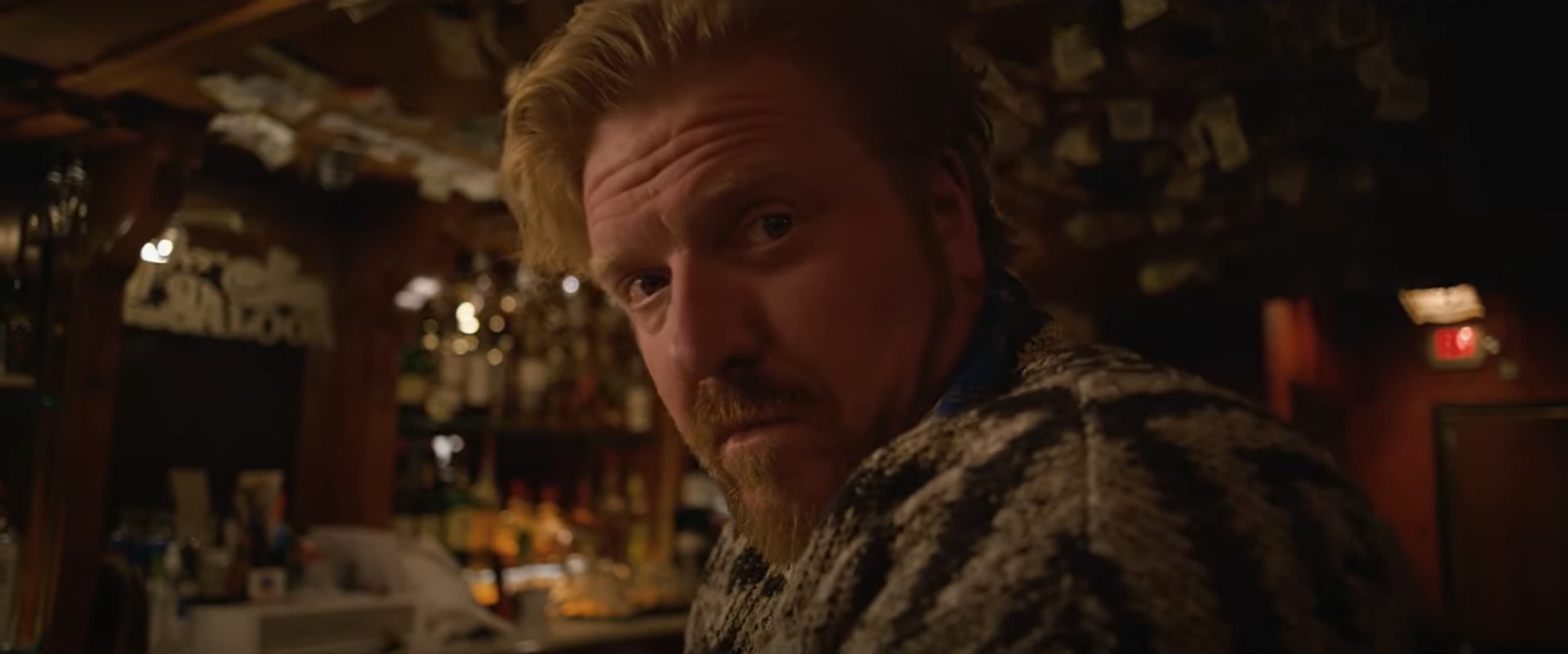
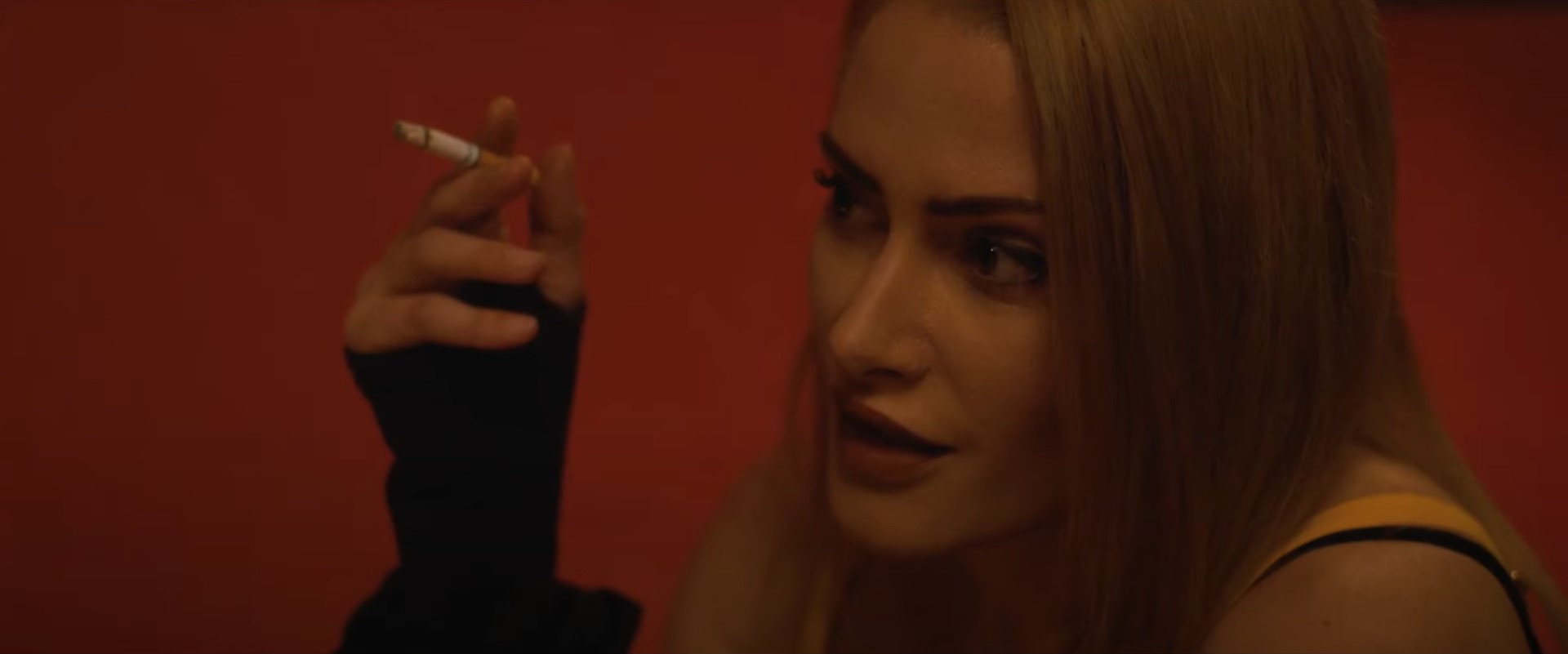
Even though this actor has portrayed serial killers in “Identity,” “The Hitcher II,” and “The Frighteners,” and even a deranged zealot in “Contact,” I would never have imagined in a million years “Starship Troopers” actor Jake Busey would have stepped into the sordid shoes of Willy Pickton in a Chad Ferrin production.  There’s something to be said for Jake Busey’s nerve in moving forward with eccentric and controversial and Willy Pickton is every fiber of those infamy traits and all that is in between.   Disheveled and dirty, maniacal and demented, prosthetic phalluses and dildo revolvers, pig masks and masturbation – Jake Busey doesn’t hold back on an exigent script important to Pickton’s state of mind.  Creepy and apathetic blanked by his deceased mother’s devout spitefulness and her incestuous sexual abuse, Busey secretes these irascible qualities held dormant in Pickton until the sleaze is sated and his patients runs out then it’s time to go hog wild, literally. Lew Temple (“Halloween,” “Devil’s Rejects”) plays Willy’s brother David who also has mother issues, but that avenue is not as profoundly travelled as Willy’s, both men see delusional visions of their mother’s tirades but definitely lopsided in disfavor of Willy and that leaves David left in the dust some to not have his mental faculties inspected.  Their flashback, foul-mouth, and Electral loving mother goes to an unabashed by former adult actress turned low-budget horror scream queen Ginger Lynn Allen (“Murdercise,” “31”) in what her scenes can only be described as uncut and uncomfortable lewdness as she bares it all at the ripe young age of 60 years old.  Another standout performance goes to Kate Patel as the debut actress, who in her own right is an Amazonian goodness buff beyond rebuff in black lace underwear, finds her voice as a young woman named Wendy Eastman in a complicated and dysfunctional household after the death of her mother, at odds with a wicked stepmother, and an insecure father with passive fortitude.  The only obstacle that can be rendered cleanly from her performance is how her character’s written to be drawn to Willy Pickton as because between age gaps and social differences, the two have nothing tangible to drawn them together mutually.  “Pig Killer” rounds out the cast with producer Robert Miano as Wendy Eastman’s father, Michael Paré (“Streets of Fire”) and producer Robert Rhine as Detectives Oppal and Schneer, Silvia Spross (“Parasites”) as Wendy’s disparaging stepmother, Jon Budinoff (“Someone’s Knocking at the Door”) as Wendy’s friend and drug source, Elina Madison (“Caged Lesbos A-Go-Go”) as a druggie sex worker, Bai Ling (“Exorcism at 60,000 Feet”) as also a druggie sex worker, and Kurt Bonzell (“Parasites”) as Willy’s disfigured and throat-cancer suffering friend Pat. 

Sensationalized for cinematic charm, the story behind the “Pig Killer” hits near the bullseye of all major bullet points from the escape of Wendy Eastman (actual person being Wendy Eistetter) and her coinciding her drug addiction to the wild gathers at the Pickton farm known as Piggy’s Powwow (actual title being Piggy Palace Good Times Society) where motorcycle gangs and prostitutes congregated for a drug-fueled good time.  If having viewed a few of Ferrin’s credits before, some of the unrestrained gore and shock will not come at a surprise.  The benumbing unconcern of misanthropy is poignant amongst Ferrin’s soft-pedaling of horror with a whimsical manner within a gritty film that doesn’t feel as gritty as it should be considering the subject and subject material.  Another mitigating moment, one that’s more counterproductive to the Pickton storyline, is the parallel melodramatics of Wendy Eastman that eventually rendezvous with the titular “Pig Killer” and become the rendition of Wendy Eistetter supposed personal backstory and escape from death.  Wendy’s overdose and family issues provide reason for her subsequent run away from home, but the extent of the backstory unnecessarily rivals Willy Pickton’s and the whole destiny meetup enlists some deeper rooted significance that isn’t neatly fleshed out, turning awkwardly impertinent that waters down their entanglement. 

Arriving onto a Breaking Glass Pictures and a Darkstar Pictures collab, “Pig Killer” oinks itself onto an AVC encoded, 1080p, High-definition Blu-ray.  Presented in an anamorphic widescreen 2.39:1 aspect ratio, “Pig Killer” under the warm glow and desert dry eye of cinematographer Jeff Billings (“The Deep Ones”) sundries the shot types in various techniques, such as closeup slow motion to be inside Willy’s moment of divination, to provide Ferrin’s feature with comely appeal even in the vilest of moments. Details are sharp and delineated nicely albeit the quick editing for intensity purposes and to float Willy in and out of psychosis. Coloring is more natural than anything else with a few gels scatter about to spruce up the vibrancy. The lossless English DTS-HD 5.1 master audio renders clear dialogue without any distortions or other audible disturbances; however, the strength of the dialogue favors an infirm conveyance to grasp a few exchanges, especially in the exterior. A maximal Gerard McMahon soundtrack scores the entire biopic from start to finish with a range of 80’s power ballads to 90’s pop rock; the 76-year-old not only scores the project but also has a concert performance role with his band G Tom Mac. Depth and range supplement greatly as sound design cater to the surrounding atmospheres, such as the echo vibrations under the Eastside bridge or the pig-pen oinks and frenzies when feeding bits and pieces of sex workers to his farmyard swine. English SDH is optionally available. Packed with extra content, supplements included are an interview intercut with scenes with Ginger Lynn as well as a few of her clothed adult industry spreads/modeling, a behind-the-scenes footage with Michael Paré, deleted and extended scenes, and Q&A from Cine Excess, the making-of the Pig Mask, a making-of the film entitled Canadian Bacon, an introduction to Spunky the Pig aka Willy’s pig, a screen test of Kate Patel in the role of Willy, which was considered before Jake Busey landed the role, “Pig Killer” auditions, and the trailer. The clear Blu-ray Amaray case sports a dark-and-dirty gilt image of a half-naked Kate Patel and a menacing pig-masked person holding a clever overhead. Reverse side contains a still image of the insides of Willy’s pigsty camper while the disc is pressed with the same menacing pig and clever but more prominent. The collab release has a region A playback, a runtime of 122 minutes, and is not rated. The back cover also lists a 2000 production date, conflicting with the 2023 release states elsewhere, but the 2000 date would be before Willy Pickton’s arrest and so that might be a misprint. Chad Ferrin and Jake Busey jointly tackling the monster that is brutal serial killer Willy Pickton with an inkling of lighter material coursing through its arteries, style secreting through the madness, and, of course, gore, the most important ingredient to the likes of a film entitled “Pig Killer.” 

On This Farm There Was a “PIg Killer” now on Blu-ray!

Limited Edition EVIL to the Extreme! “August Underground” reviewed! (Unearthed Films / DVD/Blu-ray Combo)

Limited Edition “August Underground” Ready to be Received! 

A young farm owner invites his quirky, video-taping friend into the soiled and confined basement of his home where he keeps a nude, young woman gagged and rope bound to a chair, previously been tortured, and covered in her own blood and filth.  Both feeling giddy with excitement over their new plaything, the two sociopaths revel inflicting more torment and pain on the woman while her boyfriend’s mutilated and dead corpse is being dismembered in the next room.  When their basement plaything expires after days of neglect, the two joy killers hit the New Jersey and Pennsylvania turnpikes and backroads to continue a merciless killing spree of whomever stands in their path.  Convenient store clerks, hitchhikers, prostitutes, even their tattoo artist and his twin comic book enthusiastic brother are not safe from their chockful of callous carnage and every moment is recorded via videotape for reliving the moment in posterity. 

As far as underground horror goes, Fred Vogel’s “August Underground” is about as extreme and underground as they come and still be recognizable amongst the most casual of horror fandom.  Vogel’s inaugural written-and-directed, pitilessly violent, exploitation begins a direct-to-video trilogy of torture-on-tape with SOV quality, imparting grisly shudders to the unfathomable amount of blank-labeled VHS cassettes through man’s stowage, collecting dust bunnies and remaining unseen over the years to the horrors the magnetic tape just might behold.  What “August Underground” essentially boils down to is a raw day-to-day look of two maniacal serial killers on a free-for-all of a butcher’s market, the shooting locations stretch from the recesses of Vogel’s hometown of Warren, New Jersey and all the way to the surrounding back roads and isolated areas of Pittsburgh, Pennsylvania.  Self-produced by Fred Vogel and co-producer John A. Wisniewski, “August Underground” set inaugural voyage on the blood red sea for Vogel’s Toe Tag Productions in 2001.

There is a severe lack of story for Vogel’s debut and that’s no oversight or a sign of omission of a subconscious creativity.  Most normal, everyday people video-record with the intent on not making a feature-length film but rather to capture memories and store them away for another day.  Vogel strives for that realism here where a plot is, for lack of a better word, pointless for the depicted atrocities where the sole purposes is to exhibit dementedness and insanity.  The same can be said about the cast of nameless characters.  The freeform recording does not spout off introductions or make references to monikers to, again, portray as much as organic conversation or realism as possible to further skewer an already gore and violence skewed imagination into thinking what we’re seeing is authentic and inconclusive of its entertainment purpose.  Fred Vogel, under his so-called porno stage name of Peter Mountain, plays the main principal dressed in arrogance and apathy as he’s recorded in a thumbed selection of runtime filmed by an equally bad-natured, sociopathic friend behind the camera, played by a post-release distancing actor under the pseudonym of Allen Peters.  The two complement each other in a Beavis and Butthead friendship kind of way with Vogel in synch with his character’s bloodlust as well as the burly bulk while camera buddy perversely watches, giggling to his friends’ blood shedding exploits.  Their relationship feels like a lonesome outlet to do harm and senseless killing makes the connection firmer, more enjoyable, in the easiest opportunities of a rural area where bored people do evil just to pass the time.  Vogel sets up a series of scenarios rather than plotting acts of a linear story in what becomes an anthology of anarchy that has us climbing down the manhole of maniacal mischief.  Mania is soaked into every inch of “August Underground” and that fits snug and makes warm the scattered story into a much more coagulated coherency.  “August Underground” rounds out the victims, I mean cast, with AnnMarie Reveruzzi, Erika Risovich, Randi Stubbs, Aaron LaBonte, Ben LaBtone, Victoria Jones, Alexis Iris, Stephen Vogel, Dan Friedman, Casey Eganey, Kyle Dealman, and Andy Lauer.

“August Underground” is ugly, nasty, grimy, sordid, perverse, tasteless, callous, and not shot with technical or detailed perfection.  “August Underground” is also unique, bold, unafraid, successful, gory, realistic, practical, and not shot with technical or detailed perfection that’s actually, in its own way, gorgeous.  “August Underground” is all those things and more with its rough-and-ready, extreme exploitation that will be polarizing amongst horror fans and not be a film for everyone’s taste or collection.  Frankly, there are worse underground and extreme horror films out there in the world, but “August Underground,” through the disgusting trices of dismemberment, force feeding of feces, and vomit inducing snuff, has somehow ,at least in this reviewer’s humble opinion, who like in a Dr. Seuss line, has been here, there, and everywhere within the horror spectrum, slipped through the veil of obscurity, having a foot well positioned in the land of the universal acknowledgement where many genre fans putter around with the same old formulas.  The depth of this story is so shallow that digging any deeper into the themes and the possibilities isn’t necessary with its home-made movie facade of people joyfully torturing and killing people being already horrific enough. 

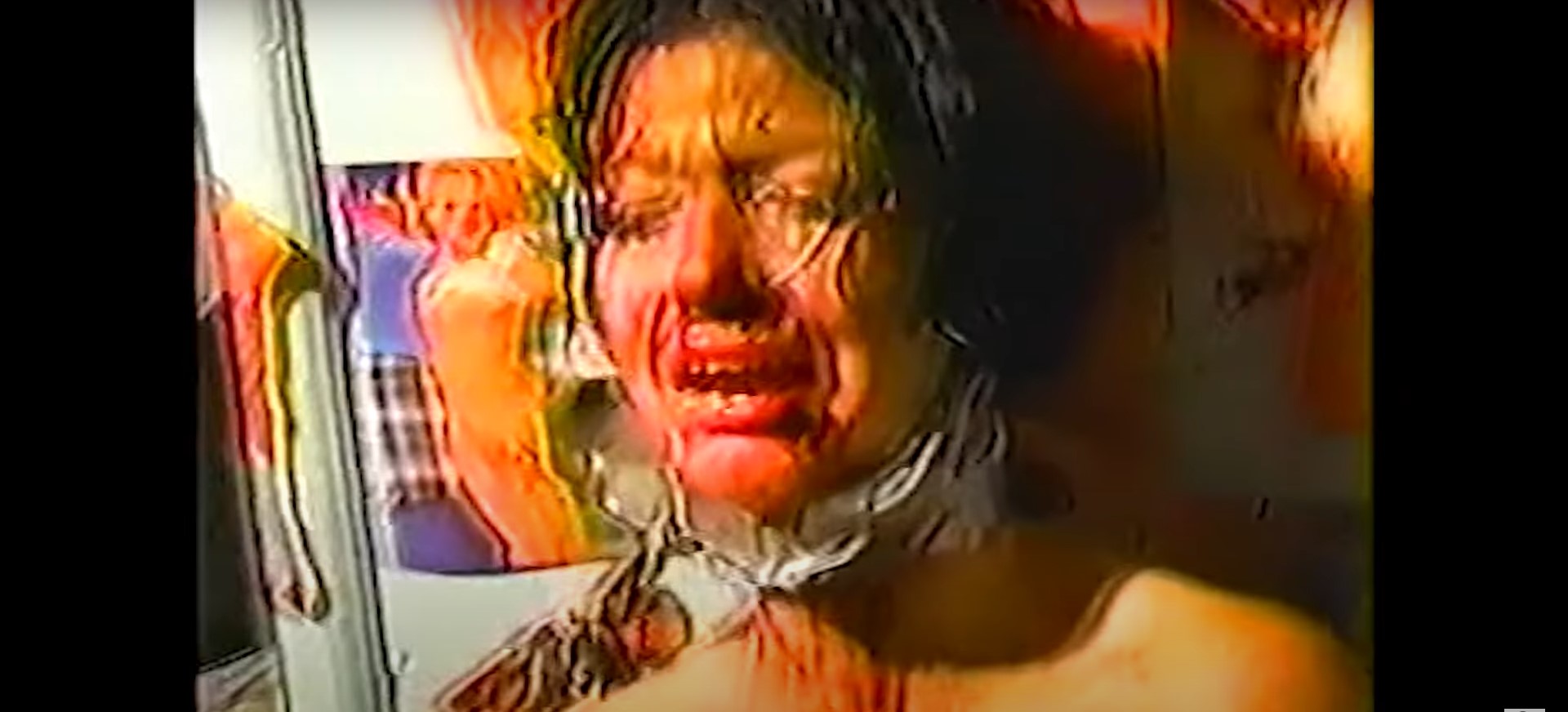
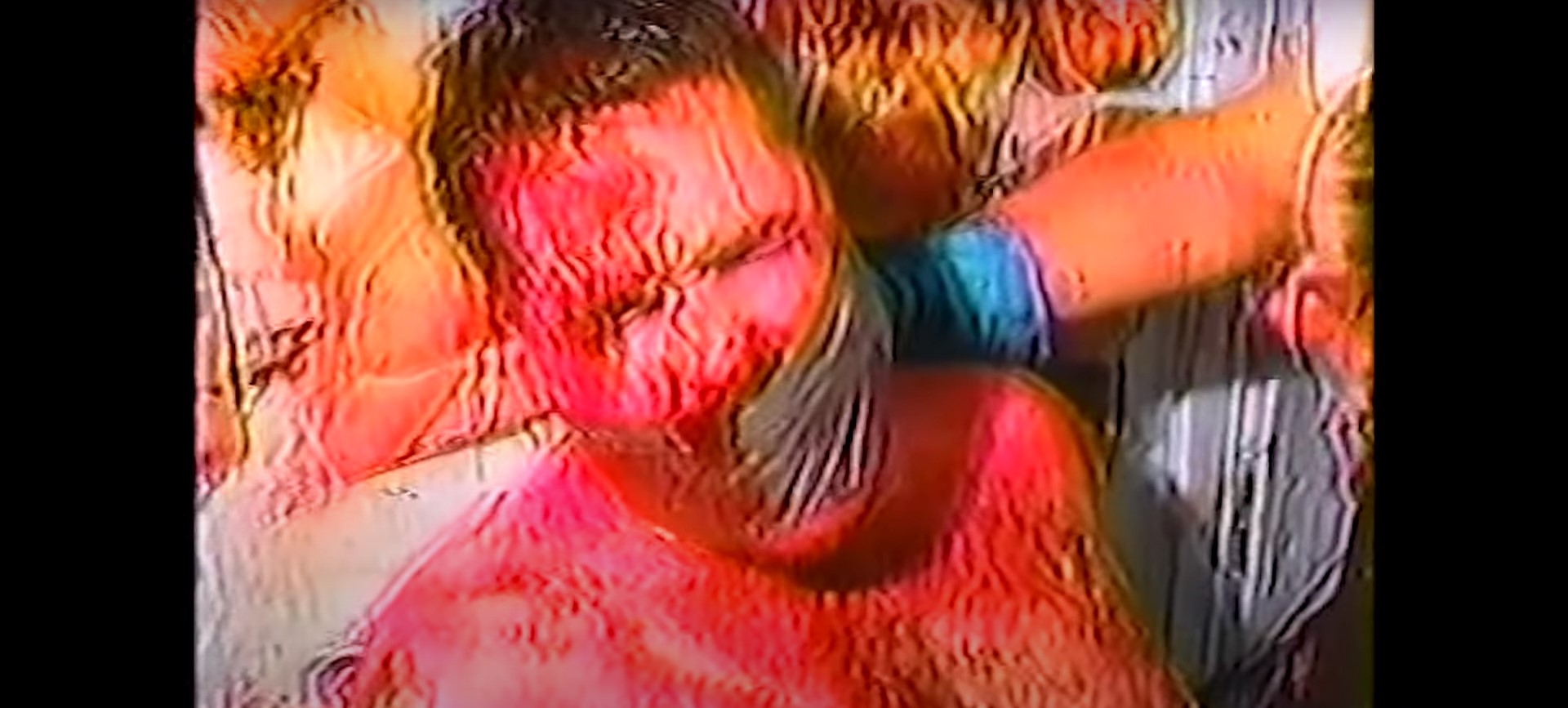
For certain to go out of stock and out of print into physical release obscurity once again, Unearthed Films’ limited-edition collector’s edition of “August Underground” is the 2-disc DVD/Blu-ray combo set to act on right now. The AVC encoded, high definition 1080p, BD50 comes from a MiniDV print, often considered the transitional format from analog and to digital in a tape format with lossy compression. Presented in the original aspect ratio of 1.33:1 aspect ratio, don’t expect image quality to be pristinely detailed and sharp as the MiniDV maxes out at 720p resulting in both, standard and Hi-Def formats, having indistinguishable presentations. Resembling the amateur, at-home movie, scaled down tape quality renders ghosting which shapes and details are bleary and the coloring resembles ember or incandescent with a warm, red-and-yellow layer. What we don’t see much of is a ton of tracking, static, or a ton of noticeable interlace but blacks can be prominently spotty with the horizontal bars. The lossless on-board MiniDV English audio is a PCM 2.0 that doesn’t extend beyond the limits of the camera’s microphone, but the clarity fairs well with clean and commanding dialogue with a natural range between the proximitous cameraman and his killing machine star of a friend in front of the camera. Also, equally interchangeable between the physical formats with what’s made to be a rough recording, discernible differences are minute at best. The Blu-ray and DVD have many of the same special features with the Blu-ray containing a few more frills over its format counterpart with a new Dave Parker interviewing Fred Vogel as well as a separate interview with Vogel and Mike Watt of Rue Morgue Magazine, another new interview with Fred Vogel from Severed Cinema Revisiting Infamy. The formats shared bonus content includes never before seen and new material, such as the original screener version of the film that comes with watermark and a slightly different color grading, a new audio commentary by Fred Vogel and Ultra Violent Magazine’s creator Art Ettinger, a new 10 questions with Fred Vogel answering some of the longstanding queries surrounding the film’s realism achievements and behind-the-scenes permissions and achievements, and a new Toe Tag Masterclass that compares storyboards with the screen version. Archived bonus content include audio commentary with Vogel and actors-producers-brothers Aaron and Ben LaBonte, another commentary track with Fred Vogel alone, an audio commentary by the witty, giggly “Killer,” Hammer to the Head closer look at “August Underground,” on location behind-the scenes, a behind-the-brutality of the film, outsiders’ perspective take in a Too Real for Comfort discussion, an introduction by director Fred Vogel, photo gallery, and trailers. The limited-edition collector’s set comes with a cardboard slipcover with a blurry, interlaced still of Vogel’s character wrapping a forearm around a gagged-girl’s throat while peering into the camera, but it’s the clear snapper case’s front cover that’s more developed with a graphic pencil-graphite illustration of the same slipcover image with more visible mutilated skin and visual weapon of human body destruction. Front cover is also reversible with an interlacing black-and-white image of the main killer. Both discs also sport two different art presses with the Blu-ray mirroring the slipcover image while the DVD has nearly the identical position of killer and victim but with a whole new victim. The region A locked edition has a digestible 70-minute runtime and is, of course, not rated. I would never say Unearthed Films has been diluting their pool of extreme underground gore and guts horror, but their “August Underground” release puts the brazen company back on the mondo-macabre map with definitely a too real for comfort twisted depravity and an au naturel sense of debauchery.

Limited Edition “August Underground” Ready to be Received!