Beware of Friendly Strangers, They Just Might Be EVIL! “Speak No Evil” reviewed! (Acorn Media International / DVD)

“Speak No Evil” has Speechless Horror! Now Available at Amazon!

A Danish family on holiday in Tuscany meets a family from Holland.  The two families hit it off enjoying each other’s company on the final days at the getaway villa.  Weeks after returning home, a postcard arrives from the Dutch family, inviting the Danish family to stay with them for a weekend at their home.  What starts off as the pleasant beginnings of friendship slowly degrades to an unsettling suspicion something is not right with the Holland family.  Abel, the Dutch couple’s mute son, is held to a higher standard with uncompromising, punitive measure, the husband and wife’s acute uncouth behavior sets an uncomfortable stage, and their attention toward the Danes’ daughter, Agnes, is unconscionably overstepping parental boundaries.  An attempt to call out or even leave the home altogether has been met with disbelief, guilt, and pleads for stay and enjoy under their guise of sincerest apologies soon to be dropped for something far more sinister. 

Before James McAvoy grew a beard, got jacked, and attired himself in buffalo plaid for his manly maniac performance in the 2024, usurpative family thriller, “Speak No Evil,” directed by “Eden Lake’s” James Watkins, the Netherlands and Denmark were the original blunt forces behind the sociopathic caprices of those assumed normal and amiable adults.  Only released two years ago, the 2022 film that spurred the American remake and the feature’s namesake is directed by the Copenhagen-born Christian Tafdrup (“Parents’) and co-written between Christian and brother, Mads Tafdrup, as one of their numerous collaborations since 2017, beginning with a manipulative tale of a viperous female in “A Horrible Woman.”  Profile Pictures (“Holy Spider”), in a co-production association with OAK Motion Pictures, serves as the production companies on the Jacob Jerek, of Profile Pictures, and Trent, of OAK Motion Pictures, produced motion picture shot primarily in the southern portion of Netherlands in the Friesland region.

The Danish father and mother, Bjørn and Louise, are played by Morten Burian and Sidsel Siem Koch and before becoming ingrained into the crux of the story, the couple reflect a complicated complexion all on their own, especially and specifically with the focus toward Bjørn who seems unsatisfied or unhappy with his life as he’s shown staring off in the distance or mentally checking out at the dinner table.  The Danish are represented as a couple who are too nice to a fault, unable to say no most of the time, and try to keep to themselves mostly when a problem arises, skirting away without notice in a dust of avoidance.  That’s not so much the case with the Holland father and mother, Patrick and Karin, bordering as an equally amiable couple performance by Fedja van Huêt and Karina Smulders.  That is until the outer appearance of friendly strangers turns into an uncomfortable nightmare of being caught between a rock and a hard place of how other people live and do things, especially from another culture or country.  Patrick and Karin show more passionate displays of anger, sexuality, and bohemianism that wasn’t on display on their shared holiday with the Danes.  Then, there are the children.  Agnes (Liva Forsberg) is a lovely young daughter perhaps too coddled by her parents, especially by Bjørn who can’t resist saying no in going to find Agnes’s beloved stuff animal when she constantly loses it.  Abel (Marius Damslev), on the other hand, is shy and can’ talk due to a tongue malformation, but the overly critical parenting by Patrick and Karin keeps Abel on a silent edge.  The Holland family’s outer haul slowly regresses, facades drop, but still the Danes are reeled back in by their own niceties despite all the red flags.

I can’t help but think those comportment particulars are somehow a reflection of the Denmark peoples’ true nature as a statement to their culture and social relations between themselves and, in this case, their neighboring countries.  The Tafdrup brothers prelude the script with verbal contrast between the two countries, such as their similarities, but the Tafdrup’s firmly stamp that just because you’re similar doesn’t mean you’re the same.  The notion can be applied to anybody of people from groups to individuals living amongst each other in a neighboring fashion and that their differences are being conducted right under your noses.  Of course, the script then embellishes more a distributing sensationalism of a spider leading the innocent moth to it’s sticky web by an attractive, orienting glow of light.  The analogy is right up Bjørn’s alley as a man who is looking to loosen the chains of parental and marital, perhaps even inherent to his nationality, suppression in a misguided notion that his promises have put a limitation on freedom; he finds himself attracted to Patrick’s freewheeling way of life and wants to emulate that in some sort of way.  The psychology behind “Speak No Evil” runs rampant with a paralyzing inability to let wicked do what it wants without confronting it head-on or without fighting it.  “Speak No Evil” is a chilling story of the all too familiar Edward Burke phrase, the only thing necessary for the triumph of evil is for good men to do nothing

“Speak No Evil” arrives onto UK DVD from Acorn Media International co-presented as a Shudder Exclusive and IFC Midnight production.  The MPEG 2 encoded, upscaled 1080p, DVD9 is presented with an anamorphic aspect ratio of 2.35:1 that encompasses an array of landscapes from vast fields, rocky dunes, and Tuscany vistas.  Contrastingly, director of photography Erik Molberg Hansen goes for an austere, harsh grading with little less light to give everything surface a rough edge from skin to fabric to natural to synthetics.  Colors a held at neutral browns, tans, grays, and blacks to accentuate the severity that continues to increase as the story progresses when moving away from holiday in Italy to the morose, rock-strewn dunes in Holland and while details are generally lost in dense nighttime exteriors, the more brightly lit corners excel in isolated spots.  The Danish-Holland-English audio comes in only one format, a lossy Dolby Digital 5.1 surround sound mix.  Adequate for this type of interpersonal awkwardness, the score and sound design offers a plentiful mix free from compression issues or physical obstacles on the recording in post.  “Speak No Evil” is person-on-person violence in the most primal form that leaves the possibility of added effects from violence next to nothing in what is more of a less is more design under a suppressive audio format that’s akin to trying silence a low-talker.  Dialogue is clean, clear, and at the bow of all the other layers in the audio boat.  What’s interesting about the encoded English subtitles is that they’re only available for the Danish dialogue and not the Netherlanders’, which adds an additional layer of intrigue and suspension as the non-native Dutch speakers with not understand what Patrick or Karin are communicating between each other.  The static menu offers no special features option and there is no stinger at the end of the credits.  The clear DVD case showcases that austere black and gray look with one of the story’s most engagingly odd scenes involving Abel.  The insides are standard edition bare as well with this disc pressed with the same primary image.  THE PAL disc is hard coded with region 2 playback, has a runtime of 93 minutes, and is certified 18 for strong violence and injury detail.

Last Rites: The original “Speak No Evil” speaks volumes of the dangers of societal pleasantries that turn a blind eye to caution for the sake of not hurting the feelings of others, but those subconscious hints are a part of the innate, primal early warning system in us all. Once we ignore those insinuations, we might as well dig our own grave.

“Speak No Evil” has Speechless Horror! Now Available at Amazon!

Sadomasochism and Decapitation Seen by a Child Turns Him into An EVIL Adult! “Nightmare” reviewed! (Severin / 4K UHD – Blu-ray)

Your “Nightmare” Should Be in 4K! Own it Here!

A schizophrenic patient continues to have reoccurring dreams of a young boy chopping the head of a woman in the midst of rough sexual fetishism.  The intense nightmares send him into violent stints, delusional states, and severe seizures.  As a test subject for an experimental behavior drug, the troubled man shows promise of recovery and enough so that he’s released from the mental hospital with continued outpatient therapy sessions.  Not long after his release does he skip his sessions to hightail it from New York City to Daytona Beach, Florida, killing people along the way after decapitating nightmare continues to plague and force him to murder.  In Daytona Beach, single mother of three becomes his obsession as he stalks the youngest boy, a mischievous troublemaker, and even breaks into their house when it’s not occupied , but as the bodies begin to pile up on the hands of his need to kill, the more brazen he becomes to entering while they’re home alone. 

Based loosely on the improprieties of government spy agencies using drugs to bend the minds of home and oversee terrorism to their wills, “Nightmare” sensationalizes the concept for the public sector involving a mental patient, experimental drugs, and exasperating an already instable person’s constitution into a hyperdrive of bloodletting carnage.  The U.S. production is written-and-directed by Italian filmmaker Romano Scavolini who came to America to shop around his scripts having failed to secure financial support in Europe, including, you guessed it, “Nightmare.”  Shot in New York and mostly around the Cocoa Beach Florida, the crime thriller filmmaker flexes his muscle with his first attempt at horror and the outcome is nothing short of unadulterated madness.  Once considered to be titled “Dark Games,” and goes loosely by “Blood Splash” and “Nightmare in the Damaged Brain,” the 1981 film is a feature of Goldmine Productions with John Watkins and Bill Milling (“Silent Madness”) producing.

The man behind the nightmare is George Tatum and the man behind George Tatum is Baird Stafford in one of his only two roles as an actor.  “Nightmare” wouldn’t be as skin-crawlingly shocking if it wasn’t for Stafford’s distressing performance of a man whose psychology is being peeled away and you can see Tatum physically fighting the urge, fighting to stay sane, but losing the battle as the grisly terror replays over and over inside his mind.  Stafford’s asunder of Tatum’s equilibrium has unequivocal transference to the audience.  Parallel Stafford is a child, a young child by the name of C.J. Cooke who essentially played his own version of himself in C.J. Temper, a mischievous prankster that ran babysitters up a wall mad and frightened and frustrated the living daylights out of his mother.  C.J. is part of the family Tatum is hellbent on driving down from New York to Florida to see for a reason that isn’t made clear yet until the shocking reveal.  C.J.’s single parent, a mother desperate for love and affection, is played by Sharon Smith who has become romantically involved with nice guy, and yacht owner, Bob Rosen, with Mik Cribben in the role.  Cribben was actually part of the cast but the original actor for Bob Rosen dropped out and Cribben quickly filled into the role that suited him well enough as a suitable suitor for C.J.’s mother.  “Nightmare” rounds out the cast with Danny Ronan, Scott Praetorius, Christina Keefe, William Kirksey, Tammy Patterson, Kim Patterson, Kathleen Ferguson, Candese Marchese, Tommy Bouvier, and producers John L. Watkins and Bill Milling as drug trial executive and psychologist tracking down Tatum to clean up their mistake. 

“Nightmare” combines excellent U.S. thespianism with an Italian way of suspense and violence glued together by the success of the late Leslie Larraine and team’s special effects albeit the controversial assertion on the film’s posters that Tom Savini (“Dawn of the Dead” ’78, “Friday the 13th, ’80) had been the effects supervisor on the film albeit Savini’s adamant claims of the opposite and denying the credit being false and liable for using his name to draw in audiences.  Savini continues to state his contribution “Nightmare” was limited to best to the action of a decapitating swing of the axe.  Ultimately, the whole ordeal mars Larraine’s due recognition for some of the more up-close and personal gory effects this side of the early 80s.  Scavolini also deserves well-received credit for his narrative vision of Tatum’s psychosexual struggles that drive him to kill.  Robert Megginson’s editing and the re-recording mixing team tackle a form of character plummeting that’s unlike any other from the intercut concatenation of events between Tatum’s horrific, blood-soaked nightmares and his antagonizing, sweat-inducing impulses that propel him without a choice.  The simultaneous parallels between Tatum and young C.J., as Scavolini aims to connect the two against-the-grain personalities as a singular link with back-and-forth subplots, leach the shock out of Sharon Smith’s acme line as mother Susan Temper that uncovers the truth when the chaotic smoke clears.  Why Tatum would drive so far from New York City to Daytona Beach, Florida with reason to stop and make roost on this one particular family fails to form mystery around what’s often crafted to be an arbitrary target with some minute hints that may provide clues to the audience is because even without those inklings, the shooting script defines the rationale right from the beginning thus bringing the viewers out from a shrouded suspenser and into being buckled in just along for the ride. 

Severin Films’ 4K scan of the 35mm internegative compositions the print with various foreign element sources for a comprehensive version of Romano Scavolini’s “Nightmare” on a 4K UHD and Blu-ray 2-dsic set.  The UHD is on a HEVC encoded, ultra high-definition 2160p with a 4K resolution, BD66 and the Blu-ray is housed on an AVC encoded, high-definition 1080p, BD50.  What’s released is a very enriched saturation of the technicolor process that defines and differentiates the innate hues.   Details are more than consistent throughout as we’re able to pinpoint the beads of sweat down Tatum’s face or feel the palpable slick sinew of a decapitated head amongst the examples.  Blood is a deep, glossy red and contrasts strikingly in the more sopping moments despite Savini’s claim that it needed more green dye to better pop for the camera.  A consistent layer of agreeable grain runs throughout from the 35mm film stock, as it should, without any inimical dust, dirt, scratches, flares, or of the like to obstruct viewing or cause lapse in the narrative, as it shouldn’t.  Between the resolution diverse formats, there’s a slightly more grindhouse look to the Blu-ray whereas the HDR10 crisps the image for better vibrancy.  Both formats retain inky blacks without shimmering or banding.  The English language audio tracks are available in two lossless options:  DTS-HD 5.1 and a DTS-HD Stereo 2.0.  The surround mix’s dialogue has resounding infusion, spread through the multi-channels to encompass a multi-directional approach to centralize.  The design is effective as it’s prominent to not understate the vocals but leaves little room for spatial distant to which no matter where characters stand, they are almost audible on the same audio plane.  Jack Eric Williams warping harmonica and twangy guitar, intrinsically integrated with piano notes, a variety of percussion, interjecting funk bass chords, and hints of string instruments, that ebb and swell with great intensity and favorable discordance is a real celebration of Williams’ score on Severin’s latest restorative edition of “Nightmare.”  English subtitles are optionally available.  The Ultra HD release comes the film’s trailers and a pair of audio commentaries as the only accompanying special features; commentary one has features star Baird Stafford and special effects assistant Cleve Hall with Lee Christian and David Decoteau and commentary two features producer William Paul.  The Blu-ray also has the commentaries and trailers plus an extended lot of interviews, such as a feature length (71-minute) Kill Thy Father and Thy Mother interview with director Romano Scavolini (Italian with English subtitles), Dreaming Up A Nightmare interview with cast and crew, a brief interview with Tom Savini discussing his role, or rather his not role, in The Nightmare of Nightmare to which Savini looks a little tired of answer the same question about his inaccurate involvement, an interview with makeup artist Robin Stevens The Stuff that Nightmares Are Made of.  Also included is an open matte peepshow as well as untouched deleted scenes, extending beyond the already newly achieved 99-minute runtime for the film.  “Nightmare” from Severin comes in a standard 4K Amaray case with original poster art used for the front cover.  The discs are separated and tab locked on either side of inner casing and this particular release, the 2-disc set, does not come with any insert or content.  The front cover is reversible with the European title “Nightmares in a Damaged Brain” and a different image composition of the European poster art. The disc has region free playback and is not rated.

Last Rites: “Nightmare” on a new, extended restoration in 4K and Blu-ray is a dream of a release. A nerve-wracking performance in Baird Stafford’s schizo vilifies the very classification of the mentally ill in what is sure to go down in history as one of the most disturbing, and disturbed, characters of the video nasty era.

Your “Nightmare” Should Be in 4K! Own it Here!

The EVIL Fat Man Delivers a Sack Full of Slaughter in “Christmas Cruelty!” reviewed! (Unearthed Films / Blu-ray)

Oh, Its Starting To Look a lot Like “Christmas Cruelty! on Blu-ray!

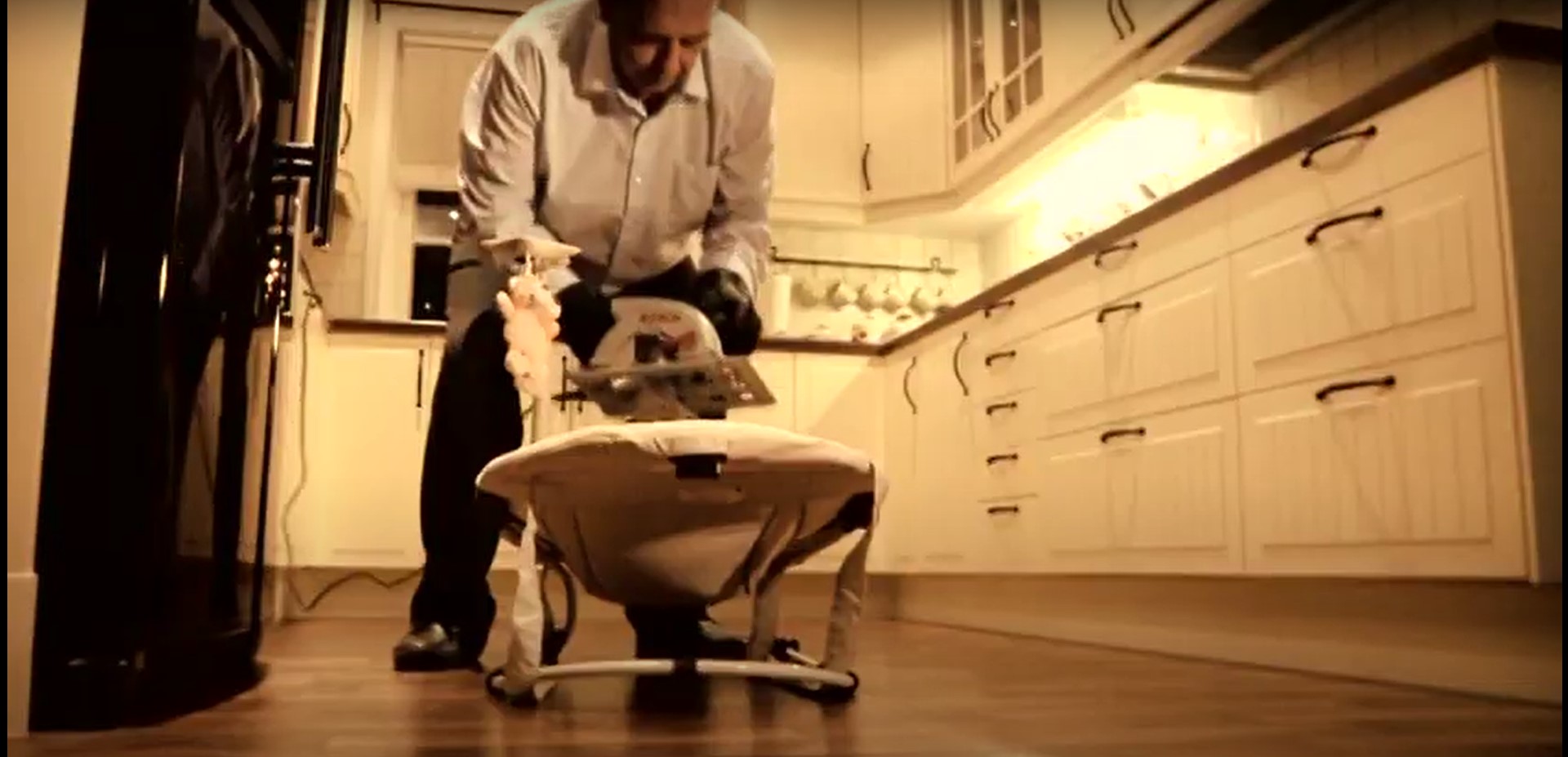
Eline, Per-Ingvar, and Magne are three close and eccentric friends preparing for the jolliest time of year, Christmas. Concocting a unique Christmas spirit of their own with scarring passers dressed as Krampus and brewing an alcohol infused cocktail, the unconventional celebration reflects their individual perspectives on the holiday: a knowledgeable Eline embraces more traditional values, Magne goes against the grain with a loose grasp on the concept of it all, and the lack of mental acuity for wheelchair bound Per-Ingvar leaves him in naive, gullible belief. All the while the friends prep the groundwork for a Christmas party, a homicidal sociopath tracks and records their every movement, habits, and personal attributes and when Christmas comes, the meticulous and brutal serial killer dresses as Santa and infiltrates what turned from being a joyous bash into Santa bashing in heads with a hammer, decapitates party guests, and rip-roars a chainsaw with blood splattering apathy.

It’s that time of year again to ride the Christmas slay down the hills covered with blood-red snow. Santa, usually a sign of pure good and jovial togetherness, is transformed to embody terror and evil across the holiday season. In 2013, Norwegian filmmaker Per-Ingvar “PIT” Tomren (“Bonzai Motherfucker!”) and his co-director Magne Steinsvoll (producer of “Killungard” and “Lyst”) not only star in another Yuletide horror that yields itself to violence and blood but also adds their perspective entry into the vast Scandanavian subgenre of ole’ Saint Nick, or an imposter of the jolly fat guy, going postal in the worst possible way. Tomren and Steinsvioll work into their debut feature film off a script penned by principal co-star Eline Aasheim as well as Janne Iren Holseter, Anita Nyhagen, and directors Tomren and Steinsvoll. Originally entitled “O’Hellige Jul!” in Norwegian, the 2013 released “Christmas Cruelty” is a Stonewall Productions and presented by DC Medias under the producing credits of Magne Steinsvoll, Kim Haldoersen, and Raymond Volle (“Saga”).

Instead of hiring an outside cast for a serial rapist and killer Santa flick, why not just star in the film yourself? In order to get their feet wet in film production as well as learning the rigors of acting, Per-Ingvar Tomren, Magne Steinsvoll, and Eline Aasheim essentially portray themselves as the three friends spending unique quality time together during Christmas. Per-Ingvar works into the script the corporeal truth of this delicate skeletal structure that battles brittle bone disease aka osteogenesis imperfecta. Confined almost entirely to his wheelchair, Tomren curbs his wellbeing for the sake of art as the filmmaker doesn’t exempt himself from the various physical altercation scenes to have a stuntman take the glory. The same kind of sentiment can be said for Eline Aasheim whose character must endure an invasive attack, one that’s deeply uncomfortable and intimate in nature surrounded by a virtually an all-male cast which includes offscreen friendships. Then there’s Magne. If Per-Ingvar and Eline embodied metaphorically everything that is good about the Christmas spirit, Magne was the complete opposite as a complaining, sexist, and indelicate sourpuss living in the moment rather than grasping his own barbed attitude. The malarky between the three friends on screen is perhaps very mirrorlike offscreen as there is a comfortability level with each other performances that keeps the dynamic on the edge of combusting but yet you never feel like a change in their relationship will ever mount, keeping their friendship close, tight, and compact. The outsider, the Serial Santa, is played mid-50’s Norway actor Tormod Lien. I mention Lien’s age because he is older than the other principal characters and that plays into his character’s wisdom as a family man who takes notes on who’s halls he will soon deck. Calm, organized, and deviant, Lien plays into the apathy without a twinkle of empathy and engineers a bloody show of planned homicide with some comedic bits put on by Lien when Serial Santa has to go off script because of interruptions.

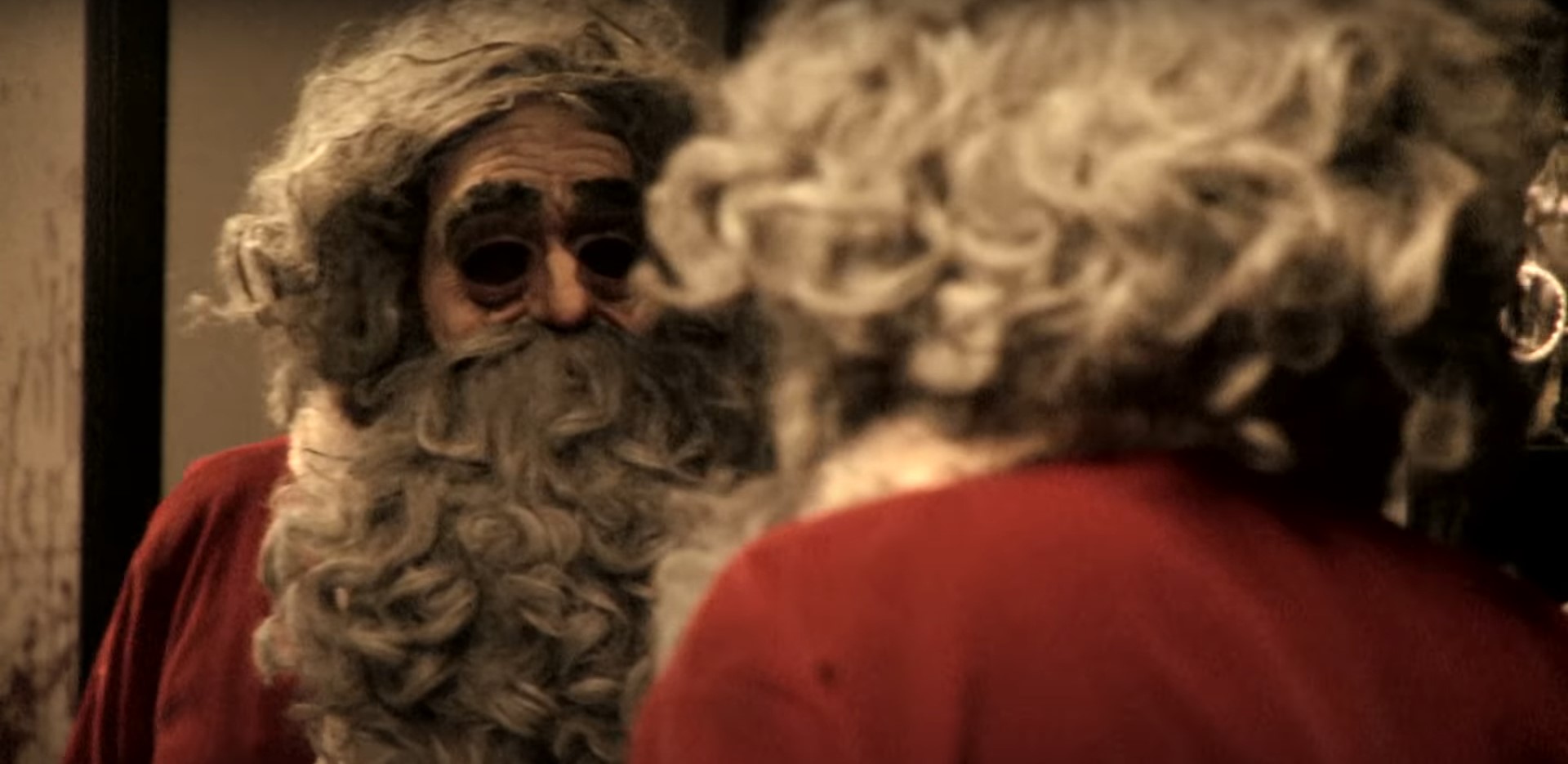
In my mind, there are two types of Christmas horror films: the uncanny universe where Santa, or something related to Santa, such as his toyshop elves or Krampus, world’s lives and breathes in a twisted malevolency while the other type resides in fact with sociopathic and mentally unstable Santa impersonators who go on a merry murdering spree. “Christmas Cruelty!” falls in that latter category with serial killer, dressed as Santa and a grotesque mask, gatecrashes the good protagonists’ party for the nefarious primordial urge to hurt, rape, and kill. Maybe even dabble in a little cannibalism. “Christmas Cruelty!” is a lump of extreme exploitation for next level nihilism. I’ve seen my fair share of messed up movies, but the Tomren and Steinsvoll defiling picture doesn’t even have a millimeter of morality. Without a theme, a message, or a basic point, “Christmas Cruelty!” is hollow atrocity for the sake of shock and slaughter. The principal goods are either too afraid to help each other, too unwilling to help each other, or are too conceited to even take notice that something is amiss. Instead, it’s the Serial-Santa who has his ducks in order, unabashed to simply walk into a room and start his plan of cold-hearted perversion, but before even getting to that moment with deliciously diabolical practical special effects that can produce a gut-wrenching impact, the story goes static with the principal goods chitchatting about history of Christmas, their likes and dislikes of the season, and nursing a hangover from hell. This portion to build character doesn’t actually build character as we’re skirted around victimized trio’s reason for to deserving of our sympathy. Yeah, there’s a person with learning disabilities in a wheelchair and a young woman with an inkling of a moral compass but I find them aimless, sleepwalking through life, and without purpose.

Christmas comes early with the release of “Christmas Cruelty” on Blu-ray home video from our friends at Unearthed Films and MVD Visual. Presented in 1080p with a widescreen 1.78:1 aspect ratio on an AVE encoded BD50, Unearthed Films rendering of the transfer goes without a hitch, but the stylistic choices of Tomren and Steinsvoll are an eyesore with a mustard yellow overlay intended for a grindhouse veneer that also correlates with the large font and embossed opening credits. Much of the details and natural look are lost in the yellow tint. The erratic editing is supposed to reflect Serial Santa’s fragmented mind which idiosyncratically finds footing but can be off-putting to its experimental quality. The Norwegian language DTS-HD 5.1 surround sound mix reflects no issues with depth and range despite having limited need for both and has mostly clear dialogue albeit some obstruction from the soundtrack that is heavily integrated into the sound design and becomes a character in itself with a blend of English-lyrical Christmas themed tunes, instrumental string melodies, acoustic solos by Magne Steinsvoll, generic rock tracks, and folksy jamming that ends with the loud roaring of a chainsaw slicing through body parts. The bonus features include an audio commentary with co-director Per-Ingvar Tomren and producer Raymond Volle, retrospective interviews in How Cruelty Changes Our Lives featurette, blooper outtakes, photo gallery, The Last Rebels hit “Endless Highway,” an interview with Morten Haagensen, “Tradition” short film, Press Conference, a watch-a-long session with Flesh Wound Horror, and teaser trailer. The Unearthed Films menu options were a bit cumbersome to navigate when trying to play the movie as the next screen goes to the three audio options – either two commentaries that run along with the film and the play movie without commentary, but the options are not terribly intuitive and had to go through the options before I was able to play just the movie. The physical release comes in a traditional blue snapper case with the soulless, dead eyes of the Santa mask illustrated with liver sports and aged wrinkles on the front cover. Unearthed Films’ release comes not rated, region A encoded, and has a runtime of 94 minutes. Probably not the perfect holiday gift for the conventional horror filmgoer, “Christmas Cruelty” is difficult to ingest and digest as not only an extreme exploitation film but as a film as whole, but with the callous chunks of coal and the striped blood red candy cane of scrumptious special effects, the Norwegian definitely offers a good stocking stuffer.

Oh, Its Starting To Look a lot Like “Christmas Cruelty! on Blu-ray!

Book an EVIL Getaway Rental from the “Superhost” reviewed! (Acorn Media International / Blu-ray)

Never Again Feel Welcome After Watcing “Superhost” on Blu-ray Available at Amazon

Airbnb reviewer vloggers Claire and Teddy are bleeding viewership fast.  To save their monetized video channel, their financial independence, and possibly live happily ever after as man and wife, the duo was finally able to rent a highly demanded location set in isolated in the forest when it became available.  The house is more than they could ever hope for with beautiful floor-to-ceiling windows, spacious accommodations, and breathtaking idyllic mountain views.  The one little hiccup about the residential stay is the quirky superhost, Rebecca, who has been more than overly friendly.  An unsuspecting guest from the past turns the tables on Claire and Teddy as Rebecca slowly unravels her true intentions in a nerve-wracking game of life and death with all the amenities.

From the director of the supernatural baby-snatching “Still/Born” and the imaginary friend from Hell in “Z” comes Brandon Christensen’s next written-and-directed demented thriller “Superhost” that takes the automated vacation rental methodology and breaks them in half.  Shot just outside Las Vegas in the rural area of Mount Charleston, Christensen provides the illusion of a far trek away from busy street society with a cabin in the woods what if’er of an overzealous hosting homeowner making weird and uncomfortable conversation with their tenants on a daily or nightly basis.  Tacked onto that idea is the new age monetizing of vlogs and racking up subscribers that overtake or make us blind to what’s really important.  The Superchill and First Look Releasing production is executive produced by the Ty and Darren Siversten and produced by Christensen, Kurtis David Harder (“Spiral,” “V/H/S/94”), and stars Sara Canning and Osric Chau.

Aforementioned, Sara Canning (“Z,” “The Banana Splits Movie”) and Osric Chau (“Supernatural”) star in the film as vlogging couple Claire and Teddy.  Whether be the actors’ performances or the blind obsession toward their monetized YouTube platform to secure financial freedom, the on-screen chemistry between the couple didn’t jive.  What doesn’t help is there’s no real romance being displayed during their time together nor was there any expositional or any form of mentioning what their life looked like before becoming internet influencers.  Being influencers makes up a sizeable portion of what the audiences (us as viewers and not their video channel followers) know about the couple sans the miscellaneous background of Teddy’s parents providing rent aid whenever needed and Teddy’s top-secret engagement plan in which he also vlogs to his viewers behind Claire’s back.  We experience a little more where Teddy comes from, but Claire is a complete mystery much in the same way as superhost Rebecca.  However, as the crazed host, the enigma surrounding the jovially expressed Rebecca, eager to help with clog toilets and whip up pancakes, adds to her strange and frightening demeanor.  I would never want Gracie Gillam (“Fright Night” ’11, “Z Nation”) to uninvitedly walk into my vacation rental in her full Rebecca form.  I would forego my deposit lickety-split and hightail away from a much-needed getaway to literally save my skin from Rebecca’s crackpot revelry. Popping into the frame a couple of times is genre veteran and overall fan favorite is Barbara Crampton (“From Beyond,” “Re-Animator”) as Vera, a disgruntled property owner who tracks down Claire and Teddy for a vindictive, rock-throwing rant but becomes unsuspectedly ensnared in the Rebecca’s mare’s nest.

Brandon Christensen is no stranger to small productions with a small cast, but “Superhost” is a micro-production with a micro-cast and, somehow at no surprise, busts out a truly terrifying lunacy that can make you double think before clicking that confirmation button on the vacation rental reservation. “Superhost” is unsettling and invasive as if privacy is nonexistent and the ever-watchful eye is always looming. In fact, it is! With security cameras installed in basically every room, there’s 24-hour CCTV footage of every moment of Claire and Teddy, but isn’t the moment captured and being filmed constantly is what their livelihood and vocation is all about? Christensen has that paradoxical undertone packed exceedingly well beneath the veneer of voyeurism, inescapability, and troubled relationship issues that the theme becomes a backburner hit on the tail end in that what the thing that provides Claire and Teddy a reason to be free as individuals is the also the very thing that they can’t flee from and become merely a battered object of one’s mad person’s whims much like their more critical reviews can be ruinous to others. While “Superhost” can feel a bit slow for the first two acts, the story showcases a development and escalation of Grace Gillam’s Rebecca as a woman with more than one loose screw. Of course, Rebecca’s not seen for who she really is by the compulsion to film not just the rental, but also her, as gold-plated viewership material. “Superhost” admonishes a tread carefully thriller to beware and adhere the signs of mania danger and all those Rebeccas out there.

Trust me – cancel that reservation, plan on a staycation, and watch the Shudder-exclusive “Superhost” now on Blu-ray home video from Acorn Media International. The region 2, PAL encoded, Blu-ray is presented in an anamorphic widescreen aspect ratio of 2.35:1. Nothing terrible to note here as much of the digitally captured, RED Gemini images are about as crisp as they come with a natural presentation all around from cinematographer Clayton Moore (“It Stains the Sands Red”) with the exception of the unfiltered handheld camera and CCTV footage, which is also very authentic. The English language Dolby Digital 5.1 surround sound rustles together clearly and discernibly ever creak of the floorboards and every gushy stabbing sound for full impact purposes. Dialogue track is clean with pronunciation clarity and the bottom-and-bass dropping score by instrumental band Blitz//Berlin (“Psycho Gorman,” “The Void”) continue to impress with their original soundtracks. The special feature includes a director’s commentary, a behind-the-scenes that talks about Mount Charleston location, the annoying tiny beetle swarms, and how amazingly small the production crew was, a solid blooper reel, “Superhost” VFX featurette with green screening and matting car scenes and the ultra-graphic knife through the mouth effect, a behind-the-scenes still gallery, and episodes 1 and 2 of Brandon Christensen’s television shorts, “Scaredycats.” Remember, guys, hit that like bottom and subscribe to follow Brandon Christensen’s descension of guests becoming unaccommodated by a psychotic “Superhost!”

Never Again Feel Welcome After Watcing “Superhost” on Blu-ray Available at Amazon

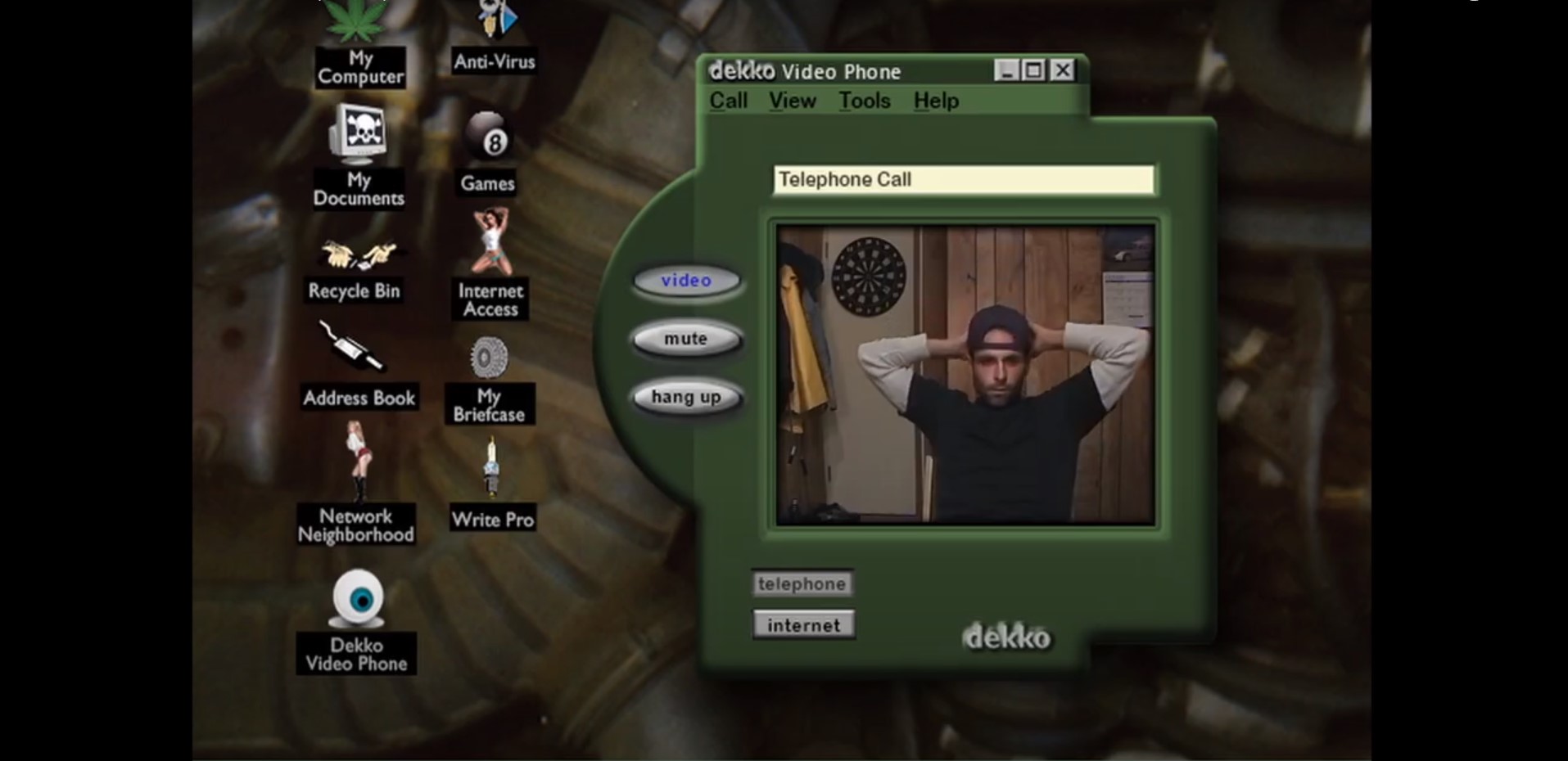
Take a Dekko at this EVIL! “The Collingswood Story” reviewed! (Cauldron Films / Blu-ray)


Rebecca moves from her small town of Bedford, Virginia to Collingswood, New Jersey to attend college.  Her small town boyfriend, Johnny, buys her a webcam to keep in touch with long distant video chatting, or to more so keep tabs on the sanctity of their fraying relationship.  For her birthday, Johnny provides her an entertaining list of audiovisual phone numbers to call, one such number belonging to an enigmatic online psychic Vera Madeline who is compelled to reveal Collingswood’s gruesome, satanic ritualistic history with one of the town’s most horrific mass murders having occurred at the very house Rebecca currently resides.  As Rebecca and Johnny investigate deeper, the webcam keeps rolling as their curiosity leads them into a dark and deadly supernatural mystery that will engulf them both. 

Talk about dated content!  “The Collingswood Story” is the 2002 trailblazer for the paranormal webcam subgenre that has ballooned over the last decade with the success of “Host,” “Followed,” and even the “Paranormal Activity” mega-franchise.  Writer-director Mike Costanza’s early 2000s film starkly contrasts how internet communication technology has changed over the last two decades with the ridiculous long corded phone jack plugins, time consuming uploading of camera footage before the invention of social media live platforms, and the lack of a pre-multiple participant teleconference with a limited single caller-to-caller video application. Once under the working title of “Mischief Night” as the story is set around Halloween night, “The Collingswood Story” is one of Constanza’s first feature films after branching out from the Paramount Pictures’ art department and right into the low-budget horror constraints, but the novel stylistic idea, based off real reports of a mass murder in a New Jersey town and saw little-to-no post-completion success traction back in the early 2000s, was a sell-produced production by Constanza’s Cinerebel Media along with associate producer Beverly Burton.

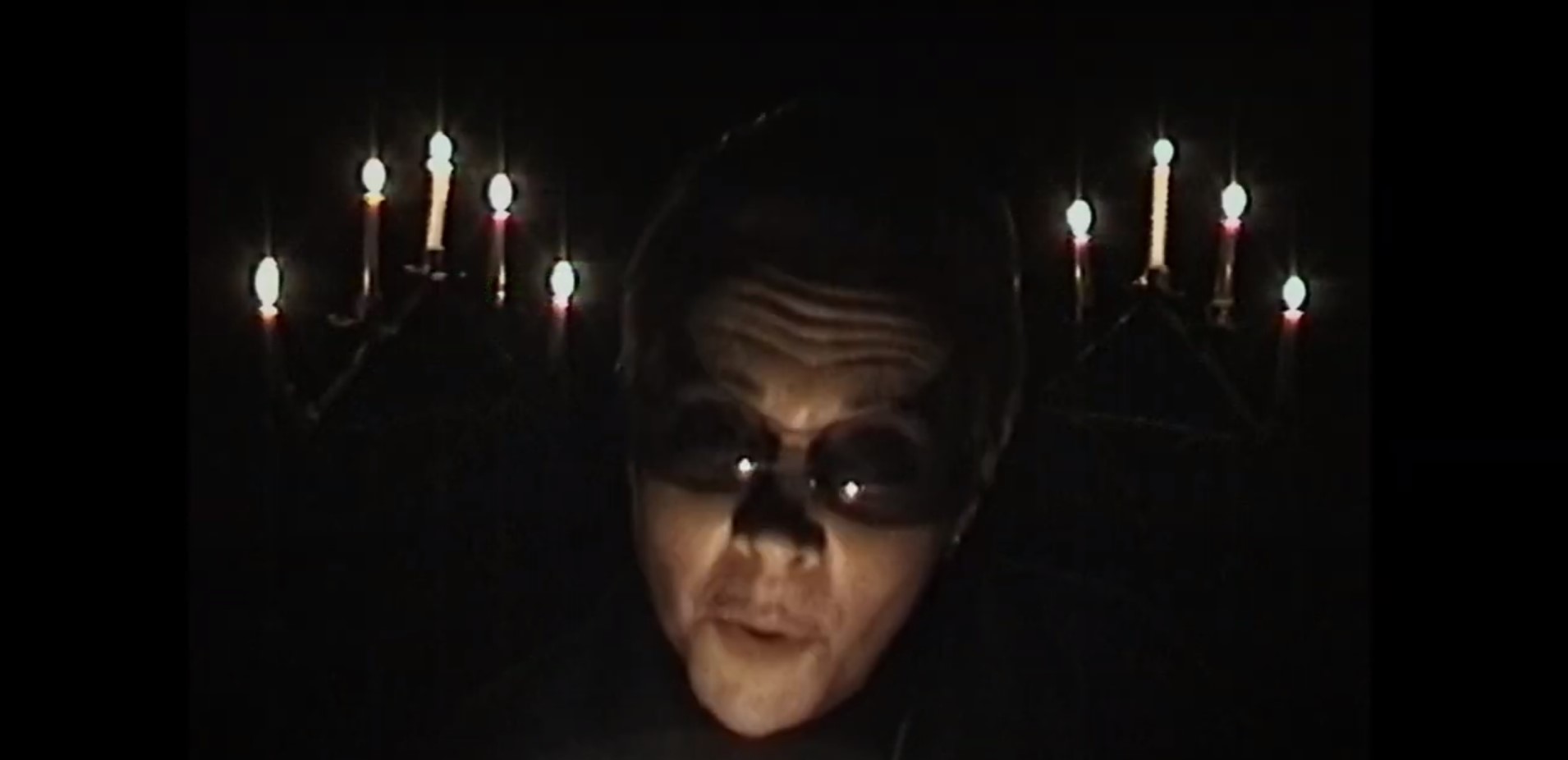
An interesting tidbit about “The Collingwood Story’s” shooting with the cast is that all the actors were shot individually since everything was done on essentially a webcam. Constaza would be in the room and read opposite the actor in performance. What’s spliced together makes good on delivering reasonable and believable menace, but without talent performances, there would not have been a revisiting home video release of this title. Stephanie Dees got her start in a major horror franchise by playing a minor role in “Halloween 4: The Return of Michael Myers” and 13 years later, Dees finds herself in the lead role of pioneering computer horror as birthday Rebecca. Opposite Rebecca is the lovesick paranoid puppy Johnny, played by Johnny Burton in his only credited role. Rebecca and Johnny go through the song and dance of his skirting around his relationship controlling paranoia as he bounces from Rebecca to his crass friend Bill (Grant Edmonds) while Rebecca is the picture of studious student, ignorant to the self-imposed friction in Johnny’s head. Burton’s a little stiff around the gills in his one-note and uninspired blue collar rendition of a longing, small town boyfriend whose personality matches his small bedroom as a background that never changes with the character unlike Rebecca who seems to grow into her environment with ever frame. In what’s probably her biggest identified role in a feature film, television actress Diane Behrens lurks in the shadows as the enigmatic psychic Vera Madeline wresting the story away from the slow burn of a dissolving relationship of young lovers and diverting into what we all came here for – a thrilling ghost story. Behrens plays the part with showmanship and a subtle inking that anything itching to come off her of mouth will be infomercial and portentous.

What Costanza has accomplished technically with “The Collingswood Story” is nothing short of amazing in his ability to seamlessly film and edit not only the scenes together coherently but also fabricate a meaningful connection between the two actors, shooting separately without a breath of another’s creativity to pull from, over still rather new and evolving technology to which some opposing critics would consider the technology to be disassociating the social standards.  “The Collingswood Story” is not a point and click monotony of talking head syndrome one might expect as Costanza, despite the gratuitous B-roll footage recorded by Rebecca as she drives around Collingwood searching specific locations, adds enough main footage filler of Johnny’s suspicions of a secret boyfriend, Johnny’s lowlife, yet witty, friend Billy giving him bad advice, and of psychic Vera Madeline’s mystifying mysticisms to keep viewers engaged while looking through the garbled eyeglass of lower compression bitrate quality of webcam footage shot on a Hi-8 camcorder that truly gives Costanza’s film that 90’s SOV feel at times.  There’s also the age-old theme of helplessness associated with webcam horror where those characters watching, just like us viewers, can only watch in an eye-widening terror unable to be a lifesaving branch of help when the supernatural stuff goes down.  Costanza also conveys the sense that the paranormal has zero limitations on a medium, in either a soothsayer or an internet conduit facet, to extend evil from the beyond, but the limitations on sensibility can extend only to a certain point in a culminating of Rebecca’s foreboding curiosity as her expedition into her lodging’s attic behooves her to take her laptop, along with its super long extension jack plugin cord, in order for her boyfriend, who lives a good 600 miles South, to accompany her into the darkness.  At this point, technology has yet to catch up with “The Collingswood Story” need and that’s where plausibility of the characters logic fumbles coinciding with an open for interpretation ending that wraps too quickly and asks more questions than provide answers.

For the first time, “The Collingswood Story” receives a proper North American release where technology has finally caught up to Mike Costanza’s vision! Cauldron Films presents the worldwide debut of a high definition, unrated, and region free Blu-ray release, remastered from the original source tapes by Costanza himself. Filmed on a Super Hi-8 camcorder, with Costanza undoubtedly the DP, “The Collingswood Story” remains presented in it’s original 1.33:1 aspect ratio and what also remains is the compression artefacts associated with transferring the source tapes. Certainly nothing devastating beyond a handful of B-roll scenes as much of the webcam shots look neat and tidy, but I’m surprised the reversal, aka webcam perspective of the person talking, scenes still shows a fair amount of blocky noise. The English language 2.0 stereo mix emits noticeable background static from, more than likely the culprit, the digital interference. The faint hum of dialogue track feedback hum is annoyingly choppy and it’s not just the play on the webcam mic of come-and-go vocals and background noise; however, the dialogue is clean and clear. The choice of soundtrack, a sundry of late 90’s-early 2000s placid rock, is audibly limp even for the dual channel output. The release comes with option English SDH subtitles and has a runtime of 82 minutes. Special features includes a behind the story with Mike Costanza looking back at the genesis of the idea as well as noting his inspiration for the idea, an interview with Stephanie Dees, an interview with Johnny Burton and Grant Edmonds, a director commentary, image gallery, and trailer. Despite it’s antiquated flaws, the crossbreeding of tech and terror in “The Collingswood Story” should have lifted the film into the cult status rafters of found footage films with the likes of “The Blair Witch Project,” but in lieu of the world’s massive oversight, Cauldron Film’s release is a big leap forward that looks back to the past.

Own the Limited Edition “The Collingswood Story” on Blu-ray Today!