Make Do With Your God-Given EVIL! “Bad Biology” reviewed! (Severin Films / 4K UHD – Blu-ray)

“Bad Biology” on 4KUHD and Blu-ray Combo Set. Purchase Here!

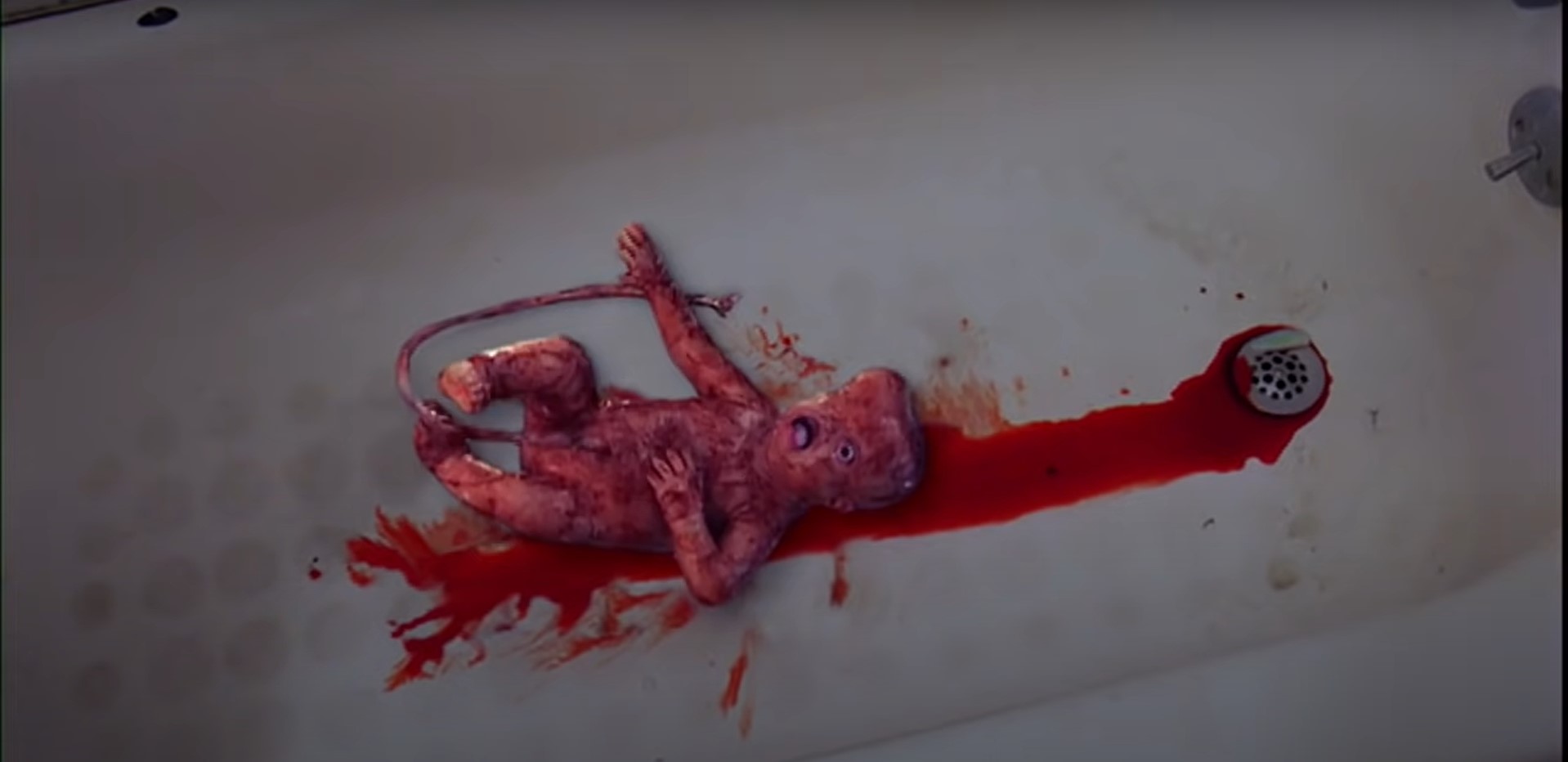
Jennifer and Batz don’t know each other and live two totally different lives but they have one thing in common, they are enslaved by their abnormal sexual organs.  Jennifer, a young provocative photographer, embraces her vagina’s biological differences and immensely magnified hormones whereas Batz suffers monstrously from his radical rehabilitation of a once limp manhood.  The contrasts continue as Jennifer must scratch the inflamed itch to be penetrated, luring men with her insatiable lust that ultimately end in their demise with an irrepressible emotional sway, whereas the botted-up Batz’s love life is virtually bankrupt due in fear of his conscious and uncontrollable enlarged penis.  When Jennifer happens upon Batz in her peripheral during a photoshoot, she finds him intriguing enough to break into his home and watch him with a prostitute.  The experience left the prostitute with a continuous orgasm long after penetration was over and left Jennifer with an impression that her vagina has finally found it’s match in life. 

Seventeen years.  That’s how long the inactivity span was between Frank Henenlotter’s last directed film and his next.  Not since 1991 did Henenlotter, the madcap mastermind behind some of the more than unusual creature-esque concepts surrounding sexuality, addiction, and childbirth in a way that sheds light on society’s blatant distaste for the odd and grotesque,  profess his creative talents with his trademark dark humor and unabashed practical effects that campy the content toward much to our enjoyment again until returning to the director’s chair with the 2008 shlock-sleazy horror-comedy “Bad Biology,” cowritten alongside American rapper R.A. “The Rugged Man” Thorburn as the musicians first taste of the film industry.  Shot in and around the New York metropolitan area, “Bad Biology” is also produced by Thorburn alongside associate producers Dario Correale, Nicholas Deeg, Antonia Napoli, Vinnie Paz, and star Anthony Sneed under the LLC created for Bad Biology. 

Not many would take on a role with heightened sexual absurdity, especially one with a puppeteered penis on the hunt for feminine pelvic regions or where a numerous clitorises ramp up sexual drive into murderous overdrive.  Yet, first time actors Charlee Danielson and Anthony Sneed seem game for the roles as lonely sexual misfits Jennifer and Batz.  To debut right out the gate as a character proclaiming to have 7 clits in the very first scene can’t be easy and I’m sure a deluge of thoughts questioning just what in the ridiculous Hell did I get myself into accelerated through her thoughts but Charlee Danielson doesn’t pull punches or need a second to rethink life choices in the feed the need role of lust, sex, kill, labor, birth and repeat.  Same can be said about Anthony Sneed’s slinking and desperate peculiarities for Batz and Sneed’s willingness to browbeat his own anaconda trouser snake to assert back in being control.  Danielson and Sneeds have tough jobs but pull off Henenlotter and Thorburn’s grotesquely envisioned gallows humor and body horror.  While the confidence is there, the experience is not resulting in a stiff, monotone performances in nearly every scene and that can dampen the story’s eccentrical principals who are just delivering the lines instead of taking the lines to heart.  Being that “The Rugged Man” is a rapper, the cast is comprised of other likeminded musical artists, mostly rappers as well, with Remedy, J-Zone, Vinnie Paz, and Reef the Lost Cause along with cameos from other artists and music producers.  And being a film mostly about sex, “Bad Biology” fills out the cast with models and actors very comfortable showing their skin in Vivian Sanchez, Carolyn Thompson, Brittany Moyer, Vicky Wiese, Ginger Starr, Vladislav S., and well-verse indie horror scream queen Tina Krause (“Crimson Nights”, “The Fappening”).

Outrageous with bad taste, “Bad Biology” prides itself with point-blank profaneness and kitschy special effects, a resounding typical Frank Henenlotter production as the director hasn’t seemingly lost a step in 17 years between films.  Yet, the story’s infiltrated by the need to incorporate strong personality cameos and is uneven in a way that hyper focuses on Jennifer’s quest, with inner monologuing, flashbacks, and direct camera speaking surrounding her spiritual search of a satiable schlong for her specialized snatch, becomes subverted by Batz’s less significantly told story quickly summed up in introspection while being pleasured by a homemade, industrial-sized masturbator.  Doesn’t quite feel Batz receives the same valued introduction in contrast to his female counterpart, but he quickly forges a more interesting path having a roid-raging, self-aware, monster cock that’s addicted to large animal anabolic steroids and is isolated from the rest of the world.  As polar opposite in the way Jennifer and Batz view and handle their sexual anomalies, the pair make the perfect odd couple, like “Ghostbusters’ Key Master and Gatekeeper, but at the cost of their own stories and their inevitable hookup that becomes flattened by a steamrolling climatic slasher-esque moment that doesn’t really involve them at all, segregating the leads momentarily from their own catalytic arc that deflates the finale into a flaccidity.  Most of the comedy also falls flat but the dialogue is well bulbous in the skilled rhapsody and written dialogue that shocks and awes with every depraved bluster.

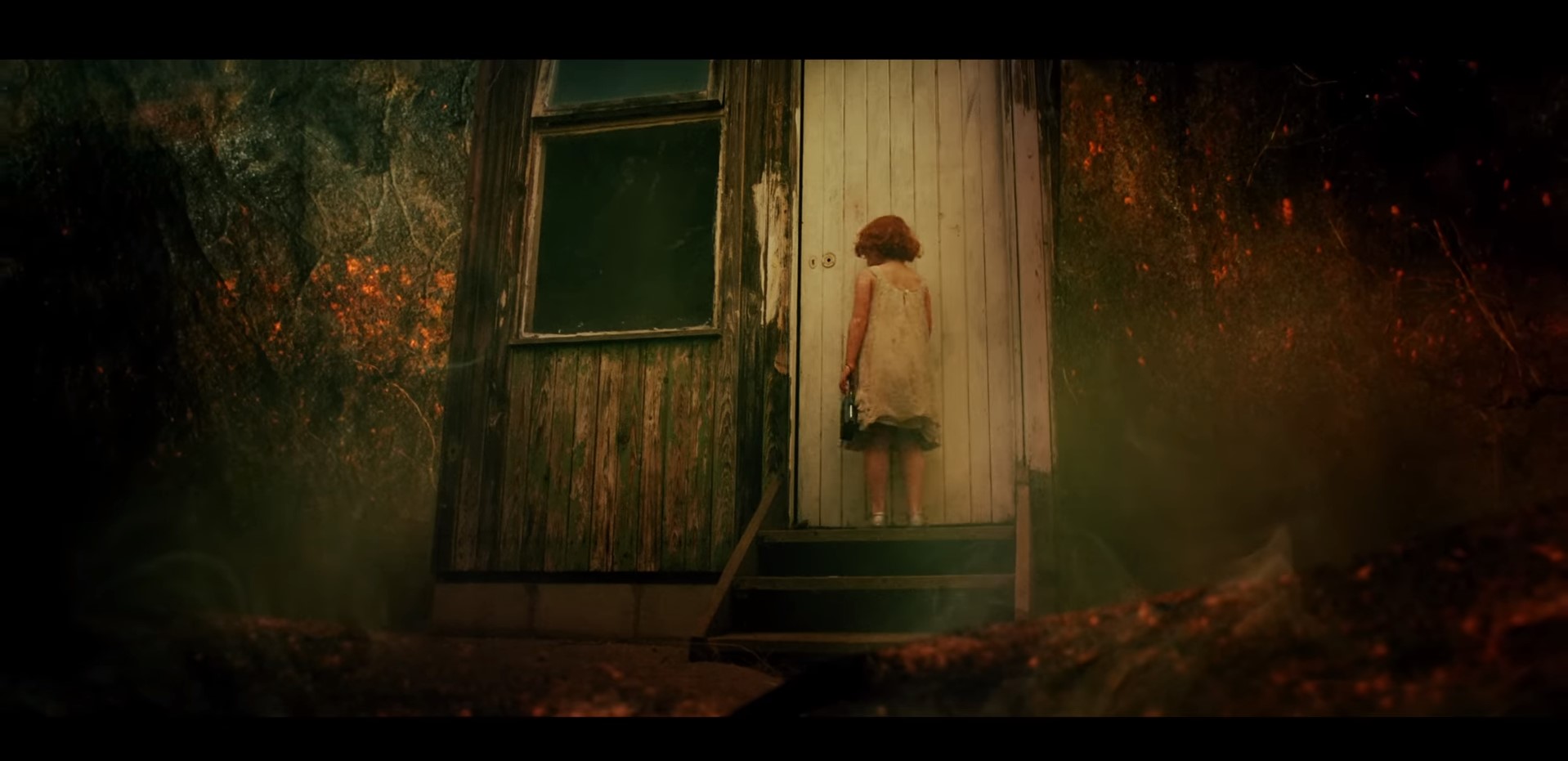
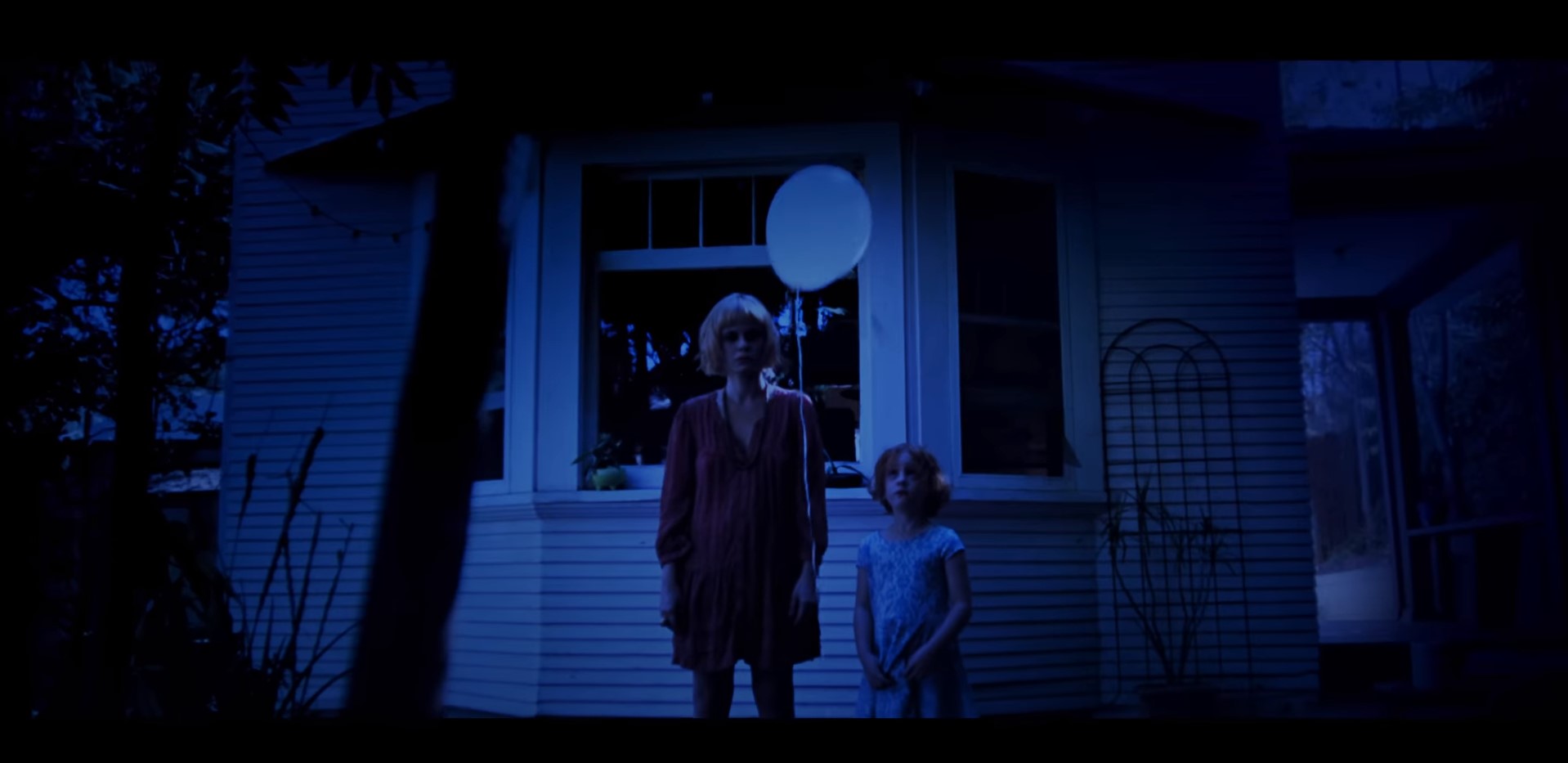
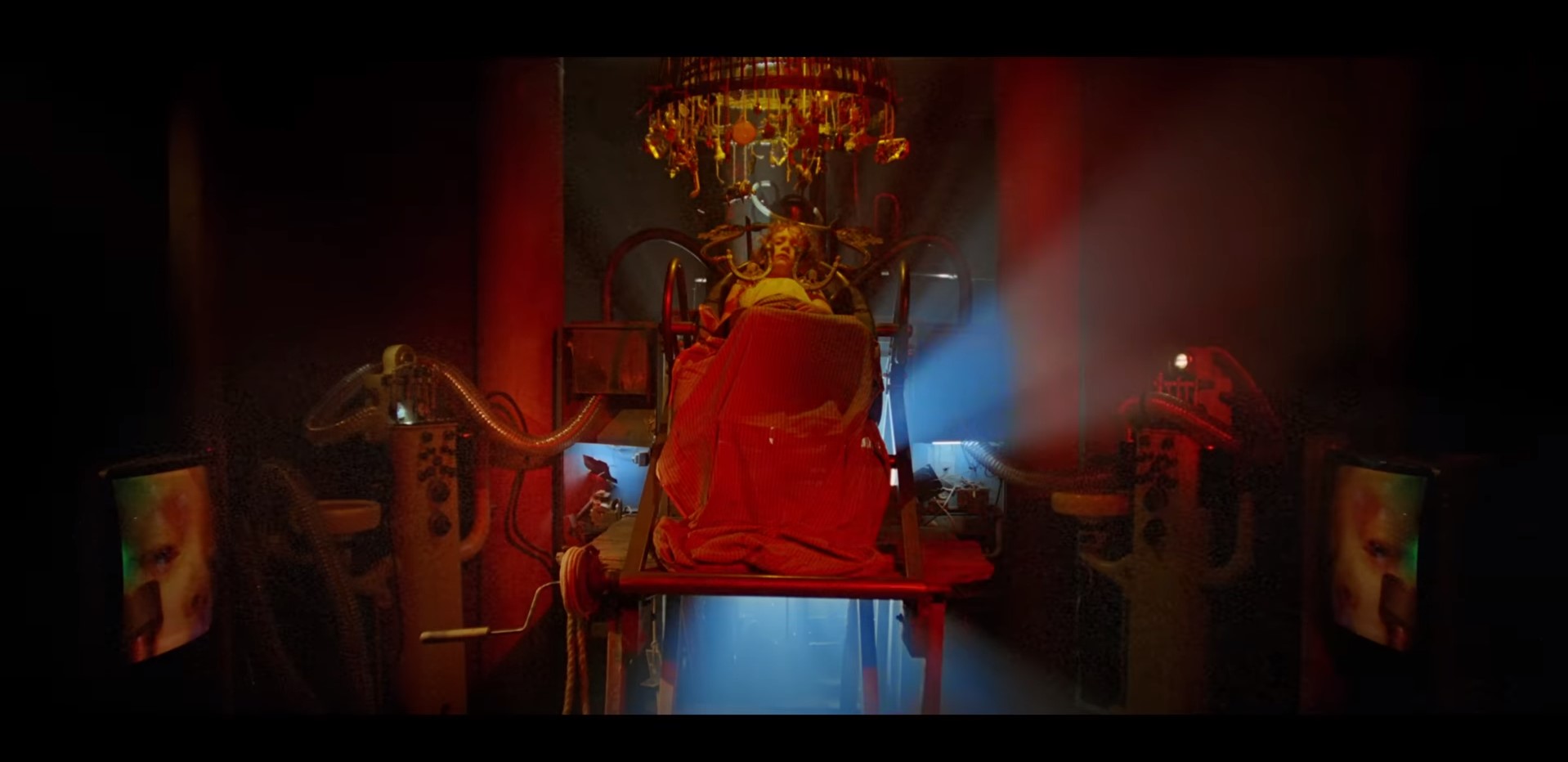
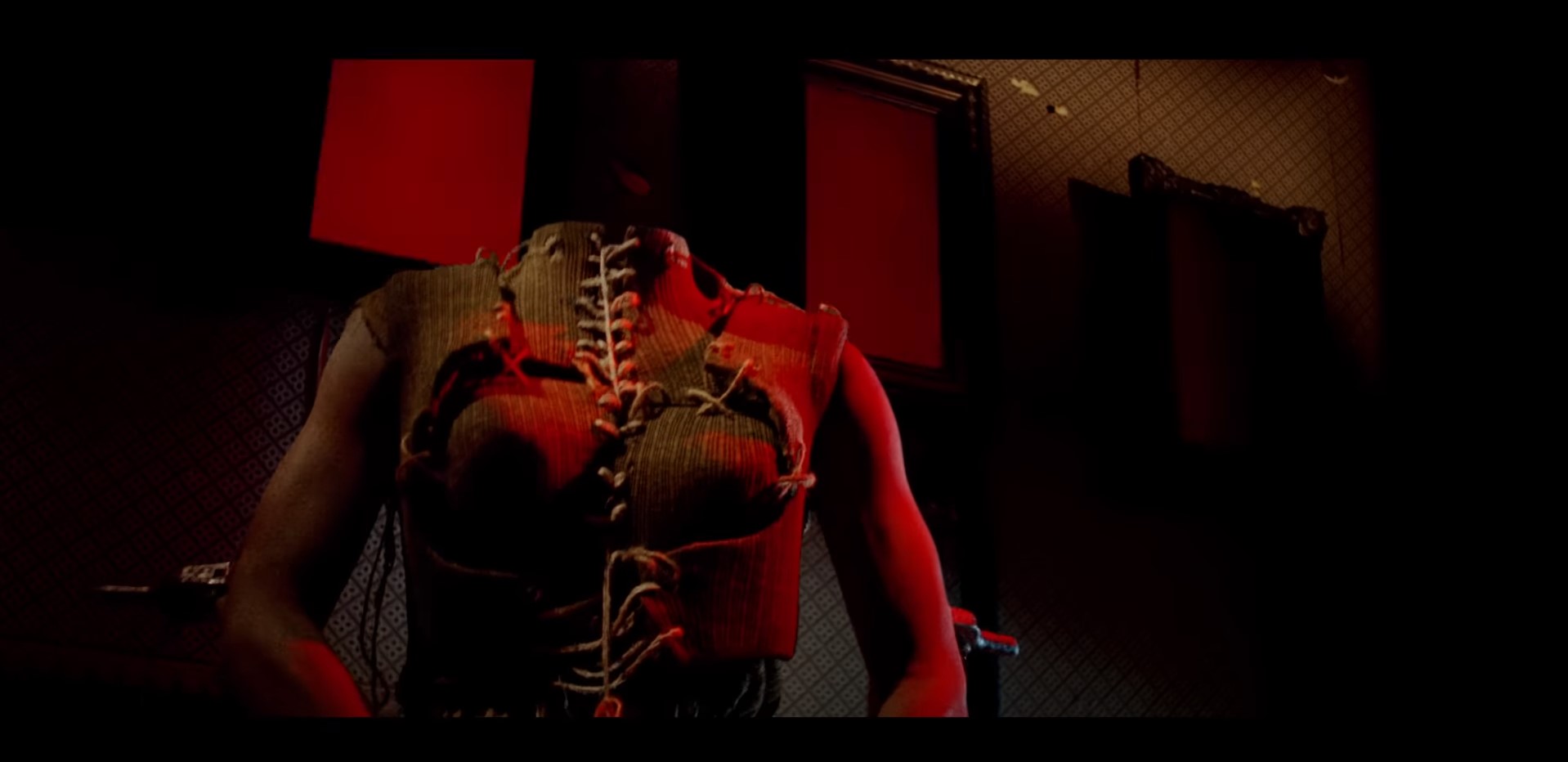
Scanned in 4K from the camera negative, “Bad Biology” receives a UHD plus Blu-ray 2-disc set from Severin Films. The HEVC encoded, ultra high-definition 2160p, BD100 and the AVC encoded, high-definition 1080p, BD50 are both presented in a widescreen 1.78:1 aspect ratio. The 4K scan fills in the gaps of next stage video evolution though the gaps filled are minuscule at best. What makes the real difference is Henenlotter shooting in Super 35mm that provides a gritty grain overlay and similar, if not identical, saturation as film stock. Finer details more in the setting aspects, around darker areas, that are more illuminated by the pixel increase. Skin tones and grading are naturally set without much of a stylistic presence other than the gels used for the giant penis vision and the peering from inside-out Jennifer’s Uterine cavity. I do think facial details are not as firm, possibly smoothed too much during the restoration. The English language audio options include a lossless DTS-HD 5.1 Master Audio and a 2.0 stereo. Presenting flawless dialogue within the heavy soapboxing monologues and philosophical diatribes, “Bad Biology” promenades dialogue as an important part to the film’s machination. This doesn’t mean everything is flounders with a range of outrageous sound effects, including the gushings of childbirth, the whooshing whips of a conscious monster male member, and the squishy ins-and-outs of copulation. Spatial depths have finite proportions that relinquishes true depth to keep audiences near the action audibly. Closed caption English subtitles are optionally available. The 4K disc might have a capacity of 100 gigabytes but the format’s space on this release is quickly depleted for the feature and two audio commentary tracks – one with director Frank Henenlotter, director of photography Nick Deeg, and actor Anthony Sneed while the second commentary also includes Henenlotter and cowriter/producer R.A. The Rugged Man Thorburn. Both commentaries are also on the Blu-ray, housing over 5+ hours of special features which includes interviews with a Spook House entitled segment featuring interviews with Henenlotter, Thorburn, Deeg, production coordinator Michael Shershenovich, production manager Chaz Kangas, and David Henenlotter, an unorthodox interview between a basketball and actress Charlee Danielson In the Basement with Charlee Danielson, a lengthy back and forth question and answer between actor Anothy Sneed and cinematographer Nicholas Deeg, an interview with special effects artist Gabe Bartalos (“Frankenhooker,” “Basket Case 3”) Swollen Agenda, a behind the scenes of the film, photographer Clay Patrick McBride snapping cast and crew O-faces around Henenlotter’s apartment in F*ck Face, short film “Suck” directed by Anthony Sneed, R.A. The Rugged Man Thorburn music video for “Legendary Loser,” an imagine gallery, behind-the-scenes shots, and video covers and death stills. The standard 4K UHD release comes in the traditional black Amary case with an O-face compilation compositional cover art and has a lock-tabbed disc on each side. The release does not come with a reversible covert art or insert. Both idiosyncratic disc arts have whimsically crude caricatures of the main characters. The region free release has a runtime of 84 minutes and unrated.

Last Rites: “Bad Biology” marks a return to ungovernable psychotronic cinema for filmmaker Frank Henenlotter with new blood, a new story, and the same old objectionable orifices and organs of monstrous body horror.

“Bad Biology” on 4KUHD and Blu-ray Combo Set. Purchase Here!

Might Be Dressed as a Fool, but EVIL Can’t Outwit This Jester! “The Wrong Door” reviewed! (Visual Vengeance / Blu-ray)

“The Wrong Door” Collector’s Set Available at Amazon!

Ted, a radio sound design student, has to perform a singing telegram dressed in a jester costume on the very evening of having to pull an all-nighter to finish his final college class project.  After his melodic duties are fulfilled and the guests are entertained, he discovers a girl’s unconscious, bleeding body in an adjacent, dark apartment, a girl that he recognizes from campus.  Frightened by the sight and the shadowy figure in the apartment with him, Ted goes for help only to discover the girl vanished with no one else inside the apartment.  His drive back home is full of contemplation on the shocking memory when he notices the girl lying lifeless in the backseat of his car.  From then on out, Ted becomes embroiled into a murder mystery and pursued by the killers who are hellbent on tracking down the Jester-cladded man to cover up incrimination evidence and tie up loose ends.

Even though our unlucky protagonist wears a court jester outfit, there’s nothing funny about the 1990 thriller, an intense bird-dogging murder-mystery, known as “The Wrong Door.”  Helmed by the creative ensemble of friends, the film is written and directed by James Groetsch, Shawn Korby, and Bill Weiss who eagerly sought to make a feature film on a strapped for cash budget after success of their Super 8 short films.  Contemplating using tape for their inaugural throes into feature film land, the auteurs revert their thinking back to film, settling on a faithful celluloid format to which they have experience with in, the ever gritty Super 8.  What results is a tenebrous yet effectively taut confrontation of frenetic hunting and a shocking homicide driven more with ambient sound than character dialogue.  The three creative minds behind “The Wrong Door” formed Sandman Films and coproduced alongside John Schonebaum for the Minneapolis Twin Cities’ production.

Cast locally around Minneapolis area, “The Wrong Door” is chock full of directors’ acquaintances who turned out to be really quite good at the parts they play.  Matt Felmlee stars in his debut performance as Ted, the class assignment under the gun student looking to knock out one last paying singing telegram gig before cutting and splicing audio for a final exam.  Felmlee isn’t given much dialogue to work with and his credibility relies burdensomely on nearly a vocally silent rundown from Jeff Tatum and Chris Hall respectively as deranged stalker and ransacking lunatic Jeff and his accomplice Vic.  Jeff Tatum makes for a good hardnosed psycho in a subtle yet menacing take of a trench coat robed coup de grâce kind of thug but the thug’s partner Vic is left as an nearly obscured sidekick and we don’t get to see Chris Hall ever come out and shine independently from Tatum’s enormous shadow.  Concluding on the three talking roles, unless you consider Loreal Steiner’s mostly dead body popping up performance where she speaks only in Ted’s nightmares, “The Wrong Door” instruments of interaction circulate around the three male principals peppered with Steiner’s maybe lifeless, maybe lively body stringing Ted along in order to slip him damning evidence on who and why she is being brutally murdered, in a nod of Hitchcockian hamboning.  A cast of supplementary, locally sourced pop-ins, including Jeanine Bourdaghs as Ted’s Radio classmate bestie, Stephanie.

Obscured to the depths of regional relevance, “The Wrong Door” is opened only to adventurous cinephiles who are willing to spend hours upon hours scouring through the vastly lower-to-no budget, independent films lost behind the borders of zonal solitude  A Hitchcockian thriller venerated on a humble scale in regard to the storytelling’s use of focused sound design to narrate a chased protagonist under the gun, literally and figuratively, that turns a studious radio sound design student with a final exam project to complete into a marked man hunted down in a foolish jester suit.  Bookend by dialogue setup and a tense, skirmishing climax, the near omission of dialogue in order for sound to reign supreme as atmospheric tensions force viewers, and force them appealingly I might add, into Ted’s chest-tightening, alone-in-fear experience with not only being incognizant of the particulars of the murder surrounding the young woman he was once smitten with but also to his being pursued by goons that hangs us on tenterhooks.  There’s also pulsing paranoia of where the dead set antagonists are hot on his trail and will suddenly appear unforeseen out of the blanketing darkness of an exterior cat-and-mouse game.  This leads into ambiguity near the end that asks the question, did Ted experience all of this strife or was it a clever cut and splice of imaginative audio files to create a whodunit thriller?  A brief sense of hesitation brings a sigh of relief from the nightmare and also onsets a different kind of anxiety of not knowing what truly went down until the very last shot that explains it all. 

Wrong place at the wrong time is the theme for “The Wrong Door” which is the right door to open if looking to walk-through to an understudied tensioner. Well versed in greatly misunderstood, profound stepped over, and overall underdog pictures is the smaller picture championing Visual Vengeance, the distributor behind the collector’s edition Blu-ray release of “The Wrong Door” with an AVC encoded, 1080p high-definition, BD50 product presented in a full screen 1.33:1 aspect ratio. For the first time on disc anywhere, the Super 8mm film receives a brand new, director approved 2K HD transfer from the original elements. The perception of Super 8mm does not hold water here with a relatively pristine image quality for the sized celluloid with a mighty clean image. Other than the white speckles of dust, other signs of minute debris, and the natural amount of grain of Super 8mm, no cigarette burns, light emitting on the frame edges due to perforation alignment, and hardly any scratches hinder quality. Poor lighting conditions in the exterior, and even some interiors, plays to the strengths of negative voids but, in my opinion, adds to the gloomy puzzler filled with action, suspense, and acrimony. While 8mm’s grasp on a grittier saturation, the tonal shading refuses to pop inside the faded film stock. The English Dolby Digital 2.0 stereo doesn’t do the new transfer justice. The lossy format likely not the best choice on a sound gimmicky, indie film that uses more innate ambient sound and Foley to tell the story rather than through dialogue. Though manageably capable to pull through to the end, the already lo-fi standard now compressed audio file has anemic energy through the dual channels but while the distinctions are dainty, some distinct distancing between more than two effects does convey. Switching between ADR and boom, there’s never a sense of uniformity with the dialogue that can sounds lively and volumes with post-production recordings yet also be frail within natural earshot of a recording device. Optional English subtitles are available. What’s most impressive about this 14th release from Visual Vengeance amongst 13 titles before it is the seemingly incalculable number of special features within the submenu of the flat, rodded colorful cutouts on the fluid main screen. New grouped audio commentaries with directors Bill Weiss and Shawn Korby in one and the third director James Groestsch and John Schonebaum on the second kick off the content followed by a new documentary with interviews from all three directors in Men Make Movie, If Not Million$, individual interviews with James Groetsch, Shawn Korby, Bill Weise, and actor Bill Felmlee, an interview with Film Threat founder Chris Gore who was one of the few in the field to put the film in his magazine, an alternate, director’s cut of “The Wrong Door” coming in as a second feature, Super 8 shorts: Raiders of the Lost Bark and The Pizza Man, a 20-minute television episode from The Gale Whitman Show, the original unedited Muther Video VHS intro, image gallery, original storyboard gallery, the original ran print from Film Threat, a Visual Vengeance 2023 cut trailer of “The Wrong Door,” and other Visual Vengeance trailers. Tangibly, the release comes with a rigid O-slipcover hypnotically graded in Jester colors of subtle pink and purple. Inside is a clear Amary Blu-ray case with the illustrated cover art that also does double duty for the motion menu and the folded mini-poster insert. Also inserted is a double-sided Blu-ray acknowledgment one sheet, a Visual Vengeance exclusive “Do Not Disturb …The Disturbed!” doorknob hanger, and a retro sticker sheet that’s come standard with every release to date. Reversible cover art displays the original VHS cover, and the disc is pressed as a mock play of a cassette tape’s supply reel teeth – neat! The region free Blu-ray comes unrated and has a runtime of 73 minutes.

Last Rites: Do you hear what I hear? No longer lingering in the vacuous space of radio static, “The Wrong Door” was once another shamefully sidestepped film that has been resurrected by Visual Vengeance for the first time anywhere on disc and, all I can say is, it’s about damn time.

“The Wrong Door” Collector’s Set Available at Amazon!

EVIL Wants to Cut Out Your Unborn Child. “Inside” reviewed! (Second Sight / Blu-ray)

Order The Limited Edition Copy of “Inside” From Second Sight!

Four months after deadly car crash that claimed the life of her husband, a disheartened and depressed Sarah is 24 hours away from being induced into labor on Christmas day.  Just wanting to be left alone, Sarah is eager to lower her head into her work as a photojournalist of capturing horrifying images that bear a resemblance to her own accident and inviting her editor over later to discuss the work ahead.  As the even lingers into night, an unexpected woman knocks at the door and menacingly tries to break into her house.  As the police arrive to investigate the incident, the woman is nowhere to be found and brush off the incident with little concern, but the woman returns, finds herself inside Sarah’s home, and is determined to cut the baby directly from Sarah’s womb to be her own child.  The tormenting violence becomes a cat-and-mouse game between the two women with an unborn child hanging in the balance. 

Extremely violent and soul biting, “Inside” is one of the more corrosively dehumanizing and destructive films under the French New Extremism, French New Wave Horror, flag.  The 2007 French feature cowritten-and-directed by Alexandre Bustillo and Julien Maury broke the duo into the industry as formidable and fearless filmmakers, reaching global heights having helmed later in their careers a segment of the popular anthology “ABCs of Death 2” and tackling one of America’s more renowned and bred-and-buttered horror franchises with the chainsaw-wielding cannibal in “Leatherface.”  “Inside” comes after the tremendous success of Alexandre Aja’s “Haute Tension,” opening the flood gates to other extreme French horror films in early 2000s with also “Martyrs” and “Frontier(s).”  La Fabrique de Films and BR Films in association with Canal+ server as production companies with later “Frontier(s)’s” Teddy Percherancier, Frederic Ovcaric, Rodolphe Guglielmi, and “Witching and Bitching’s” Franck Ribière and Vérane Frédiani producing the film known as “À l’intérieur” in France.

Not your typical home invasion ultraviolence, Sarah and who we know as labeled only as The Woman are two vipers circling each other, ready to strike when the guards are let down.  Of course, both have distinct personalities and strategies in the measured way of attack and survival that will impress on viewers preconceived notions about them.  As Sarah, Alysson Paradis, younger sister of Johnny Depp’s wife Vanessa Paradis, is bathed in exposed light, literally and figuratively, as the pinpointed principal woman from the start, battered and bloodied in the opening two car accident, to the end, in the final harrowing moments with the relentless Woman but though Paradis performance reeks greatly of depression and perhaps hopelessness with the death of her husband with a baby soon to be brought into this world without a companion by her side, the momentum shifts towards proposed surface villain of the story, The Woman, in a frightening portrayal of stony guile and grim severity by the established, character provocateur French actress Béatrice Dalle (“The Witches’ Sabbath”) in comparison to Paradis relatively filmic beginnings.  Dalle’s role expresses more physically than vocally with motivation coursing through her eyes, facial expressions, and body language that strikes a transfixing chord, turning Dalle’s the Woman into not only an unpredictable killer but an on-screen killer with a lighted purpose without confounding arbitrary slaughter as the yearning for The Woman’s reason never breaks silence until the shocking end.  François-Régis Marchasson, Nathalie Roussel, Ludovic Berthillot, Nicolas Duvauchelle, Aymen Saïdi, Emmanuel Lanzi, and Dominique Frot (“Among the Living”) fill out “Inside’s” cast.

Most will plainly see and interpret “Inside” as a regular home invasion thriller of a pregnant woman defending herself to survive a mad woman’s unborn baby obsession, and maybe that’s how Alexandre Bustillo and Julien Maury mostly intends the narrative to be as an overly graphic portrayal of hate and envy that makes us uncontrollable sinners at heart.  However, there’s something inside me to dig deeper below the face value of terrorizing prenatal torment of a young, expecting mother-to-be in what could be construed as a double-edged explanation.  The Woman doesn’t hold a name as she symbolizes all the worst qualities of a mother, such as anger, deceit, and she even smokes, in Sarah that could be considered a split persona or an archetype of duality.  Sarah is cladded in a bright white nightgown while The Woman is dressed all in black from head-to-toe, contrasting a good versus evil, and both want the same child.  The climax does rebuff the split duality theory to an extent but the way the script is written and how the film is shot very much suggest these two women are cleaved from the same whole with a patriarch-less presence and, to add as an interesting note to further examine and contemplate, all the male characters in the story are slain by the same women while the only other female character is brought down by the other in what is a powerful suggestion of split gender and how gender plays a role in their individual lives.

In what can be said to be the most definitive edition of one of the most brutal films ever produced, Second Sight Films’ Limited-Edition boxset of “Inside” is amply packed with goodies, in application and in a tangible sense. Presented in a widescreen 1.78:1 aspect ratio, the AVC encoded, 1080p high-definition, double-layered BD50 from the UK label holds tremendous value with not only new special features and neat and attractive corporeal contents but also valued by retaining image fidelity with a gritty 35mm print. Natural grain and low-fi celluloid present the seedy grindhouse overlay that’ll take audiences from the comfy, cozy reality into a dark, anomalous atmosphere with warm muted coloring, lambency, and an overall light general haze suffused into the setting. The cinematography has been purposefully constructed with analog building blocks for a rough look for a rough story. Not technically applicable here but “Inside” is set around Christmas, Christmas eve into Christmas day to be exact, but the choice production dressing exhibits little holiday spirit with a far less ostentation presentation and in how the characters dress the season feels more fall like than winter. The lossless French 5.1 DTS-HD master audio offers plenty of spatial awareness during intense pocket skirmishes inside the quaint two-story home, which is the primary setting of the story. The range provides laceration slits and surgical squishes of blades and scissors while gunfire shocks with an innate immediacy. Even with a mostly prominent inconversable back-and-forth, the dialogue that does come up carries through with robust confidence without overbearing the action or feeling out of synch. Speaking of being in synch, English subtitles are available with the French audio track and are error-free and pace well. Special features include a new audio commentary by The Final Girls’ and film critic Anna Bogutskaya, new audio commentary by editor Elena Lazic of the online magazine outlet Animus, a newly produced interview with writer-directors Alexandre Bustillo and Julien Maury First Born as well as newly produced interviews with principal actress Alysson Paradis Labour Pains, producer Franck Ribière A New Extreme, cinematographer Laurent Barès Womb Raider, and stunt coordinator Emmanuel Lanzi Reel Action, with The Birth of a Mother, a Jenn Adams analytical essay focusing on a denied mother’s perspective and the opposite. The limited-edition physical elements of the release add additional magic to the whole package with a rigid, cardboard sleeve case with new artwork by Second Sight retainer artist James Neal. Inside the “Inside” sleeve is a 70-page book with color pictures and thematic essays from film historians and critics Chad Collins, Kat Ellinger, Annie Rose Mahamet, and Hannah Strong. There are also 6-5×7 collector art cards adjacent. The green Blu-ray Amary case houses the same Neal front cover from the rigid sleeve, likely will be the face of the standard release, with the interior disc art having a simple yet effective image of a blade open pair of scissors and psycho-split or -sliced title in red and while. UK certified 18 for strong bloody violence and very strong language, this Second Sight release is B region locked and has a runtime of 83-minutes.

Last Rites: Second Sight invests in “Inside” and its first-time French directors nearly two decades after initial release with a comprehensive package that not only elevates beyond what many labels sought to get out of the gore-laden entropy, quick cash, but this premier release also has depth and range into the film’s applied style and dives into demystifying the breadth of thought preluding random terror.

Order The Limited Edition Copy of “Inside” From Second Sight!

Conman Bites Off More EVIL Than He Can Chew. “Impulse” reviewed! (Grindhouse Releasing / Blu-ray)

Pre-Order “Impulse” Here at Amazon!

As a boy, Matt Stone had an altercation that resulted in the transfixing death of a man at his hands.  As an adult years later after a sanitarium stint, Stone seduces wealthy women as a sophisticated and well-off playboy, using the cultured guise as way to con women out of thousands of dollars, and then murders them when has milked them for all their worth or when their patience for his extravagant and philandering behavior has run it’s course.  When he meets widow Ann Moy, Stone begins his plan of deceit, eyeing not only the single mother for her riches but also Ann’s even more affluent and eccentric best friend Julia.   Stone’s scheme begins to unravel when a strong-arming ex-partner unexpected show up to force into his ploy, his mental instability flares into paranoia and near psychosis, and then there’s rambunctious Tina, Ann’s young daughter who even though doesn’t want Stone to replace her deceased father also witnesses firsthand Stone’s violent transgressions. 

Personally, when William Shatner comes into the conversation about anything, “Star Trek” inevitable pops into the mind first thing.  “Star Trek” and “Captain Kirk” have become not only a household name for Trekkies but also for the non-science fiction laymen who rather get lost in, dare I say, rom-coms.  Shudder.  Diehard horror fans know Shatner is more than just the charismatic space explorer seducing alien women, karate chopping the Gorn, and become inundated with the furry Tribble.  The now 92-year-old Canadian born Shatner has sporadically yet constantly been the star of thrillers for much of his career, such as 1966’s “Incubus,” 1975’s “The Devil’s Rain,” and even the more recent 2019’s “Devil’s Revenge” with fluctuating, polarizing success.  Yet, one of Shatner’s engrossingly more disturbing performances comes from director William Grefé’s (“Mako:  The Jaws of Death”) 1974 schizo-thriller “Impulse.”  Penned by “Blood Mania” and “The Killing Kind’s” Tony Crechales, “Impulse” was filmed in Tampa, Florida under Conquerer Films with Socrates Ballis in his first producing role.

What most don’t realize about William Shatner, from their limited scope of him inside just “Star Trek,” is the man has range and can accomplish more complexity than just being confident space captain.  “Impulse” really drives Shatner to split hairs and be a polygonal persona, one that goes into deep anxiety at the sight of blood or extreme violence, one that can polished and suave in charm and romance, and one that can be ruthless and cunning.  All these traits fit into Shatner’s performance bubble of Matt Stone, chiseling each angle of the traumatized encoded individual into a wolf in sheep’s clothing in constant conflict with himself and those around him.  With the exception of Tina, those around Stone are targets as he swoons Anne Moy (Jennifer Bishop, “Horror of the Blood Monster”) and Julia Marstow (Ruth Roman, “The Baby”) of their money.  Anne and Julie feed into Stone’s false promises and hidden agendas and, as characters, Bishop and Marstow play their diverse friendship with traditional flare that can be easily duped by a stranger from off the street and barely know.  Tina is the only wildcard.  With the look like Heather O’Rourke and a prickly preteen attitude, Kim Nicholas falls in tune with the boy who cried wolf but, in this instance, as the girl who cried wolf as she becomes the aware adolescent privy to a fault to Stone’s dangerous side.  Agitated by the loss of her father and her mother’s effortless slip into a physical relationship, not to forget to mention her impish naughtiness, turns Tina into an incredible source, labeled spiteful, and angry at the world despite her true knowledge of her own world burning down around her with Matt Stone at the wheel.  “Impulse” rounds out the cast with James Dobson (“The Search for the Evil One”), Marcia Knight (“Stanley”), Shatner’s then wife Marcy Lafferty (“Kingdom of the Spiders”), and James Bond’s Odd-Job himself, the former heavy weight wrestler Harold Sakata as the ex-partner Karate Pete crashing Stone’s scam.

William Grefé steers childhood trauma to be the root cause that shapes Matt Stone into a cold and calculating killer.  While not driven to be a rabid dog seeking to kill on sight, the sweet and innocent child only protecting his mother from the potentially rapist hand of a drunken brute had not only been scarred by the incident but also incited his mother to institutionally commit him as if assigning him blameful wrongdoing, extenuating his reality into a woman hating deviant.  And the worst part of it is, and the part that Grefé is able to define and make Stone be sympathetic to audiences, is Stone knows he shouldn’t have been deinstitutionalized, as he more than once referred to his situation as a puppy left out in the middle of the street.  Then, does “Impulse” become more of a tragedy for our principal villain as an unfortunate byproduct of a catastrophic situation, an ill fit mother, and a system that have all let him spiral down to this point in the story?  The only individual to see through his ruse, in fact, is another child, Tina, with a child’s sixth sense in their melting pot of developing emotions.  The social niceties and grown-up cognitive reasoning shield Anne Moy, Julia Marstow, and others, and even to an extent the unscrupulous brute Karate Pete, from Stone’s devious nature and his will to survive at any cost, no matter who he has to kill whether be a lover, former partner, or a little girl. 

The new Grindhouse Releasing, the first through the distribution firm MVD, is a 2-disc Blu-ray release restored from a rare archived, 35mm film elements.  The original negative was unfortunately destroyed and the restored, 4K scanned print comes with a prologue disclaimer that some elements may not be up to quality standards.  However, the print, on the March 12th Blu-ray release now available for pre-order, looks stellar, stored on an AVC encoded, 1080p High-Definition, BD50, and presented in a widescreen 1.85:1 aspect ratio, with only a few noticeable scratches, faint to the eye, in a few brief frames within the natural grain.  Grading can appear monochromatic gray in some exterior scenes but the overall grading pops and are distinct in natural-looking shading. We can also look at Grefé’s direction and Edmund Gibson’s cinematography as just as striking as the picture quality with brazen, worth-while shots that include an interior car shot aimed toward the windshield heading toward a watery grave. The English language original mono track, for a single channel output, clears the bar with room to spare with intelligible, comprehensive dialogue, capturing every word and sentence distinct and syllabized to great detail without too much interference, technically and from layering. Slight popping and background electronic interference never engulfs or take the reins over the layers. Decent spacing and a good range, supported by the Lewis Perles lingering unhinged musical composition, adds value to Shatner and the casts’ performances. Grindhouse Releasing Blu-ray also comes with the original mono French soundtrack. English subtitles are optionally available. Loaded with special features with a William Grefé audio commentary, Shatner Between the Treks a Ballyhoo produced documentary regarding Shatner’s various projects before, after, and in-between, Kingdom of the Shatner is a William Shatner live interview in Santa Monica in Oct. ’22 after a Shatner triple feature, Shatner promo shorts, William Grefé shorts “Thumbs,” “Iceman,” “The Cask of Amontillado,” and “Underwood,” a making-of “Impulse,” the 40th anniversary screening at the Tampa Theater with William Grefé post-film discussion, the raw footage of Shatner saving Harold Sakata from accidental lynching with two commentaries from Grefé and Shatner, still gallery, two theatrical trailers, and other trailers from Grindhouse Releasing titles. Also included are bonus Grefé features, including “The Devil’s Sisters that has its own special features with an introduction, Grefé audio commentary, radio spot, still gallery, and a revisiting of the film from the director, plus “The Godmothers” with only an intro by Grefé. Grindhouse Releasing’s “Impulse” is truly a lovefest of the two Bills, Grefé and Shatner, and the label really goes the extra mile with a deluxe edition and restored release with a character and title embossed, fully colorized, and rigid cardboard sleeve with a clear, dual disc push lock Amaray Blu-ray case sporting the originally illustrated, composition cover art that’s also reversible with the same sleave cover design that’s utter madness on printed cardboard. Inside, the discs are locked in on the right, one on top of the other with the top disc snuggly in behind the feature disc in a vertical layout, and both disc arts are rendered with pulpy aesthetics and primary colored, yet darkened feature stills for full fear effect. Opposite in the insert section, a 4×6 illustrated liner portrait of Matt Stone painted by artist Dave Lebow, and a 6-page linear note booklet with color pictures, grindhouse posters, and an essay by Jacques Boyreau. The 87-minute Blu-ray comes region free and is not rated.

Last Rites: The tale of two Bills, Shatner and Grefé, is a match made in heaven, or, better yet, a match made in demented evil with “Impulse” and Grindhouse Releasing stuns with a fully loaded, supersized, and Shatner-stuffed 2-Disc release that puts the film rightfully up on a grandstand pedestal.

Pre-Order “Impulse” Here at Amazon!

‘Twas the Night Before Christmas, When All Through the EVIL “A Creature Was Stirring” reviewed! (Well Go USA Entertainment / Blu-ray)

Purchase “A Creature Was Stirring” Here at Amazon.com

During the height of a 6-day Christmas blizzard, nurse Faith remains home to care for her mysteriously afflicted daughter Charm.   Faith diligently stays vigilant over her daughter’s inexplicable condition with test after test and maintaining Charm’s constant body temperature between 102 to 104.4 degrees, seemingly stabilizing Charm’s condition.  If the temperature exceeds beyond, Charm transmogrifies into a barbed humanoid creature.  While Faith works on a compound cure, Liz and Kory, a sibling pair of Jesus zealots, break into the house seeking shelter out of the deadly snowstorm.  Faith has no other choice but to let them stay the night until the storm subsides but the appearance of Charm’s at-home care and the young girl’s sudden seizures and erratic behavior sends Liz into savior mode, meddling into more than she can comprehend.  Yet, something else lurks inside the house, between the shadows, and beneath the veil of reality that is way more terrifying. 

Even though Christmas might be long over and all the gaudy and brilliantly lit decorates are stowed away back into Grandma’s attic that doesn’t mean the holiday horror train has to depart the station.  And I’m not talking about no Polar Express with the edging on creepy motion capture animation.  I’m talking about “The Cleansing Hour’s” Damien LeVeck’s Twas the Night Before Christmas-inspired titled “A Creature Was Stirring.”  The equivocal creature feature set in the throes of a raging blizzard and inside a very decked the halls house is penned by debut screenwriter Shannon Wells under the original title of “Good Luck, Nightingale.”   Aimed to be more than what meets the eye, “A Creature Was Stirring” blends the involuntary struggles of drug addiction with potent secretions of supernaturalism.  The U.S. production was shot in Louisville, Kentucky, produced by LeVeck, wife Natalie, as well as “Scare Package” producers Aaron B. Koontz and Cameron Burns with Vladislav Severtsev (“The Bride”) under the production companies Skubalon, 10/09 Films, and Paper Street Pictures. 

Topping the bill as Faith is “This Is Us” star Chrissy Metz, portraying a nurse practitioner and mother desperate on concocting a cure to her daughter’s strange, monstrous manifesting condition.  Metz brings the multifaceted mania between being rock solid and stringent with medical checks and procedures and being able to turn aggressive when the moment calls for it, especially swinging a screwed-spiked baseball bat.  This underlines an underlying secret or hidden predicament viewers will be dipped into and begin processing all the little traces of one-offs that don’t necessary make sense to an already peculiar narrative.  Then, there’s Charm, played by Annalise Basso (“Oculus”), in constant oversight, constantly mutable, and urging to constantly be free from her mother’s impervious iron grip to lighten up.   Basso retains angsty opposition while tossing moments of reflective consideration for her mother and for herself, disquieting the teetering tranquility when Liz and Kory come into play.  Respectively played by “Halloween” ‘07’s Scout Taylor-Compton and “Stake Land’s” Connor Paolo, siblings Liz and Kory stir the pot that’s slowly simmering to a boil as one religious dogmatist and one eager to break the constraints of his sister’s purity with sex and drugs complicate the strained mother-daughter relationship with their intrinsic quirks that expose a deeper, rooted-to-reality problem.  The now generational scream queen Compton dons colorful dreads and a large Messiah back tattoo amongst a high and mighty attitude while Paolo can be praised for the sarcasm brought out from the scripted dialogue.  Each of the four principals are inherently different and clash, in a good way, to provoke complications. 

Drug addiction has infiltrated horror years ago and have been the basis of many notable films such as Abel Ferrara’s “The Addiction,” Larry Fessenden’s “Habit,” and Frank Henelotter’s “Brain Damage” to name a few from the massive lot.  “A Creature Was Stirring” taps into that same vein as LeVeck’s injects and shoots up his own interpretation of horrors with withdrawals.  Long time addicts suffer through agonizing, powerful withdrawals that screenwriter Shannon Wells incorporates symptomatically with a figurative approach and while Wells’ story invokes colorfully rich characters and enigmatic tale of terror, brought to life by LeVeck’s vibrantly warm and glow Christmas adorned and atmospheric house, the finished feature, that really has nothing to do with Christmas oddly enough, feels uneven when revealing the irony of surprise doesn’t become catchall illumination.   The most ambiguous part about the tale is the spiny-signified creature, a mutated, zoomorphic porcupine of sorts, to represent ferocity of the withdrawn drug with its hypodermic needle-like defense mechanism and malevolence nature.  The shadowy man-thing is given such a threadbare association between Charm’s anecdotal encounter with large rodent and its manifestation metamorphosis into the fold that the hostile has hardly any staying power as a villain and, like a rodent, really does feel just like a mouse was stirring as it scurries arbitrarily throughout the house but not all is negative as there are scenes that make you go holy crap when recollecting character and creature interactive moments that suddenly click and make sense, often coinciding and juxtaposed against really neat interior cinematography bathed in mixture of hard light and soft glows. 

Well Go USA Entertainment presents “A Creature Was Stirring” on a high-definition Blu-ray home video.  The AVC encoded, 1080p, BD25 has soft illumination but a grading design that’s befits the ’tis the season paradigm with the primary color warmth radiating out from Christmas lights strung up around the house and the beaming brilliance of white battery-operated light-up decorations. Between the crude adornment lighting, some lighter translucent gels, and with a splash of black-and-white, Alexander Chinnic cinematography, presented in an anamorphic widescreen 1.78:1, resembles a rave clad fitting into the drug theme as an echo of the one character’s pill-popping, molly-dropping past. Details become diffused by the varying, indiscriminate incandescence and shadowy fields that play into the creature’s tenebrific threat, but those same shadows are often deep without posterization. The English 5.1 DTS-HD master audio achieves the goal of the very title of something stirring inside creating rustling movements and spiny-shifting clacking, coursing through the back and side channels and maintaining an even keeled LFE. Space awareness is key for close quartered tension and that’s rendered well in the design. Dialogue comes off without a hitch and is elevated above the rest of the tracks with no issues with compression faults or a fractured recording. English SDH subtitles are available. Like most Well Go USA releases, “A Creature Was Stirring” shoulders only Well Go USA preview trailers with no real bonus features of its own in the semi-static main menu but what we do get is a better than modest laid out standard Amaray Blu-ray package with a lightly titled embossed cardboard O-slipcover and on the back two different texture types, a polaroid slick abutted against the smooth cardboard. Image design is a greatly detailed silhouette of the porcupine creature looming over the house. The same image is also on the Blu-ray cover with a simple red-beaded or red-string light encircling the title on the disc. There is no insert inside. Rated R for violence, bloody images, drug context, language, and some sexual suggestion, the 96-minute Blu-ray comes region A locked. 

Last Rites: Chrissy Metz battling a deformative disease, drug addiction, an angsty teen, two home invasive siblings, and a large porcupine monstrosity all in the name of “A Creature Was Stirring” is the prickly cold turkey suspenser this side of the New Year.  

Purchase “A Creature Was Stirring” Here at Amazon.com