EVIL Follows the Virtuous. “Justine” reviewed! (Blue Underground / 4K UHD & Blu-ray)

Own Your Piece of Virtue with this 2-Disc “Justine” set from Blue Undergrounda and MVD Visual!  

Unable to continue their religious education, left with a meager currency to afford room, board and food, and holding no station or options for social pursuit, Justine and her sister Juliette are put out to the streets of 18th century France.  While Juliette recruits herself into a Madame’s established brothel for money, shelter, and sleight of hand opportunities, leading a life sinful in flesh, murder, and exploit that reaps luxurious benefits into high society, a more chaste Justine finds her path to be far less desirable.  Her virtue becomes the object of obsession, lust, and is taken advantage of for other’s personal gain.  No longer protected by her parents or the convent’s shelter, Justine is exposed to the wickedness of the world in every form and fashion with only slithers of bliss here and there as a reward of her decency only to be immediately snatched from her grasp before she can even enjoy a second.  Accused of stealing and murder, tortured and branded, imprisoned and convicted, labeled an escaped enemy of France, and with her virtue corrupted by a cult of pleasure seekers, Justine questions a life led in chastity and overall goodness that has brought her nothing but pain and strife. 

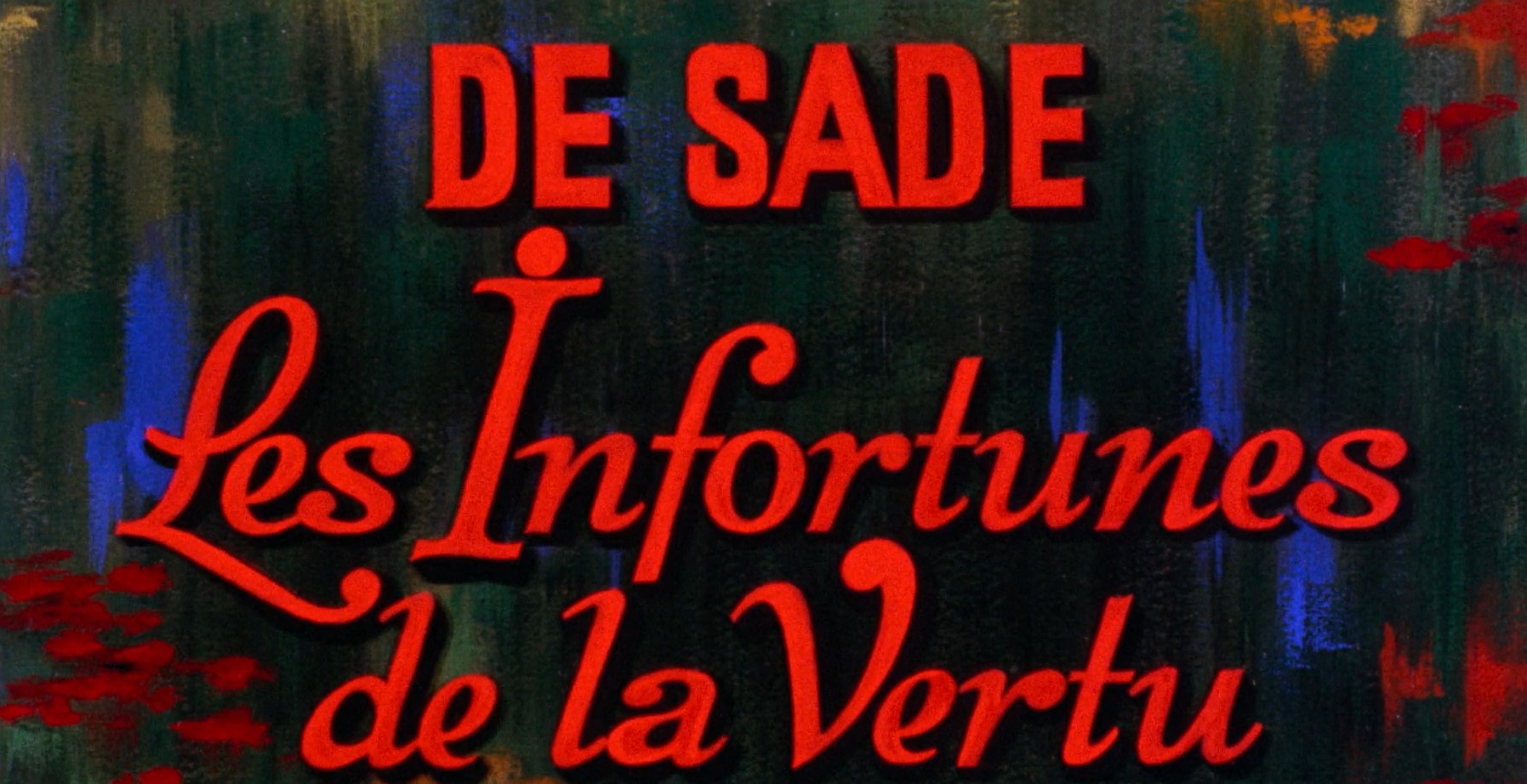
On the heels of my own personal overseas trip to France, a trip for pleasure if you must know, I found it timely and fitting that the Jess Franco directed film, the Marquis de Sade’s “Justine,” would be the next celluloid critique of enticing pulpy obscura.  A part of a pair of Marquis de Sade-themed productions from producer Harry Alan Towers, the other being “Eugenie,” the Eurotrash sexploitation is based off Marquis de Sade’s 1791 novel Justine, or The Misfortunes of Virtue and is adapted for screen by Towers from an original treatment penned by Arpad DeRiso (“Death Steps in the Dark”) and Erich Kronte. “Justine” is one of Franco’s most ambitious visual epics with ornate time period customers, elaborate and grand locations, and an anthology of sorts of the titular character’s misadventures through France that disenchant her chastity. Corona Filmproduktion and the Aica Cinematografica S.R.L. served as the co-productions of this Italian-Spanish 1969 film.

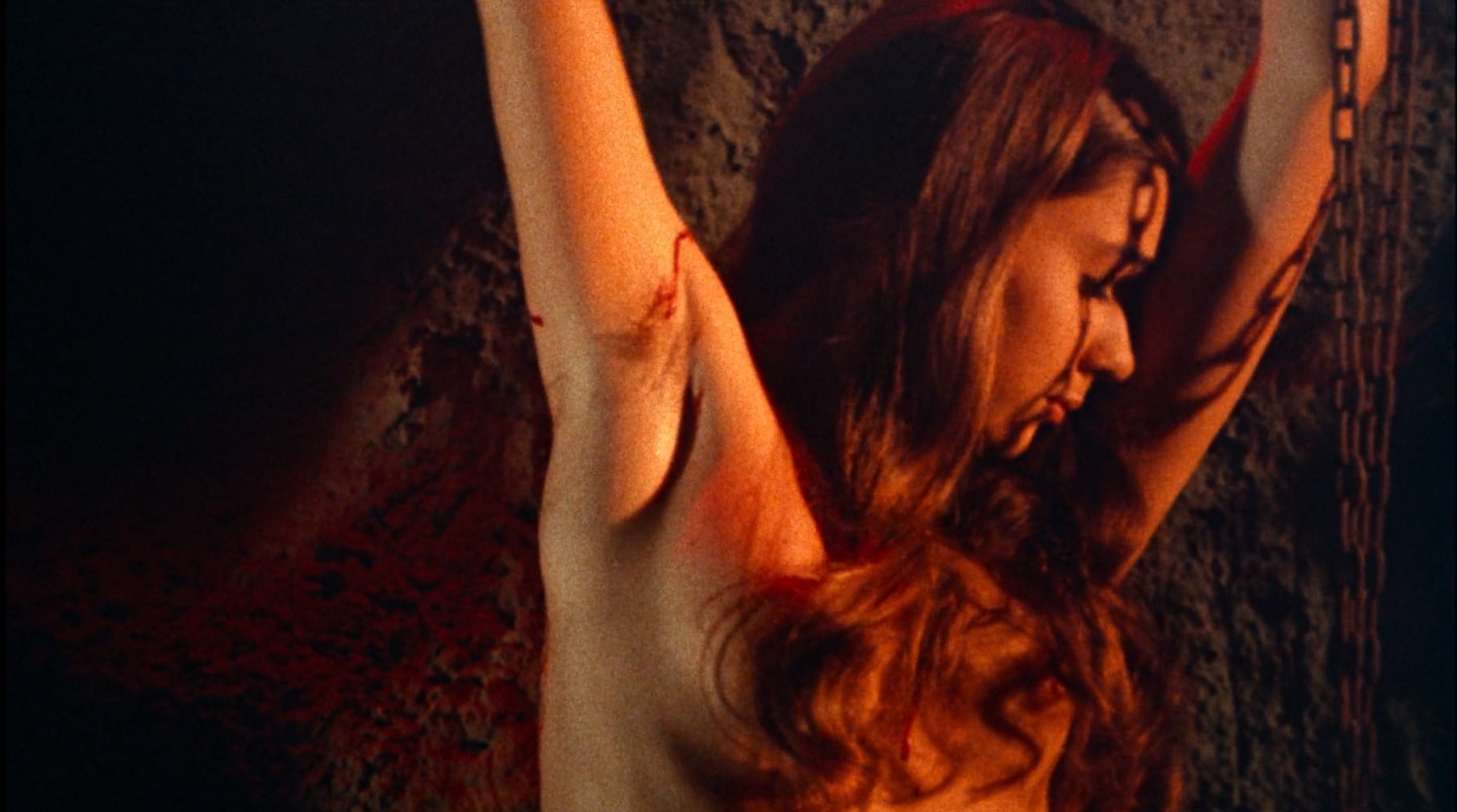
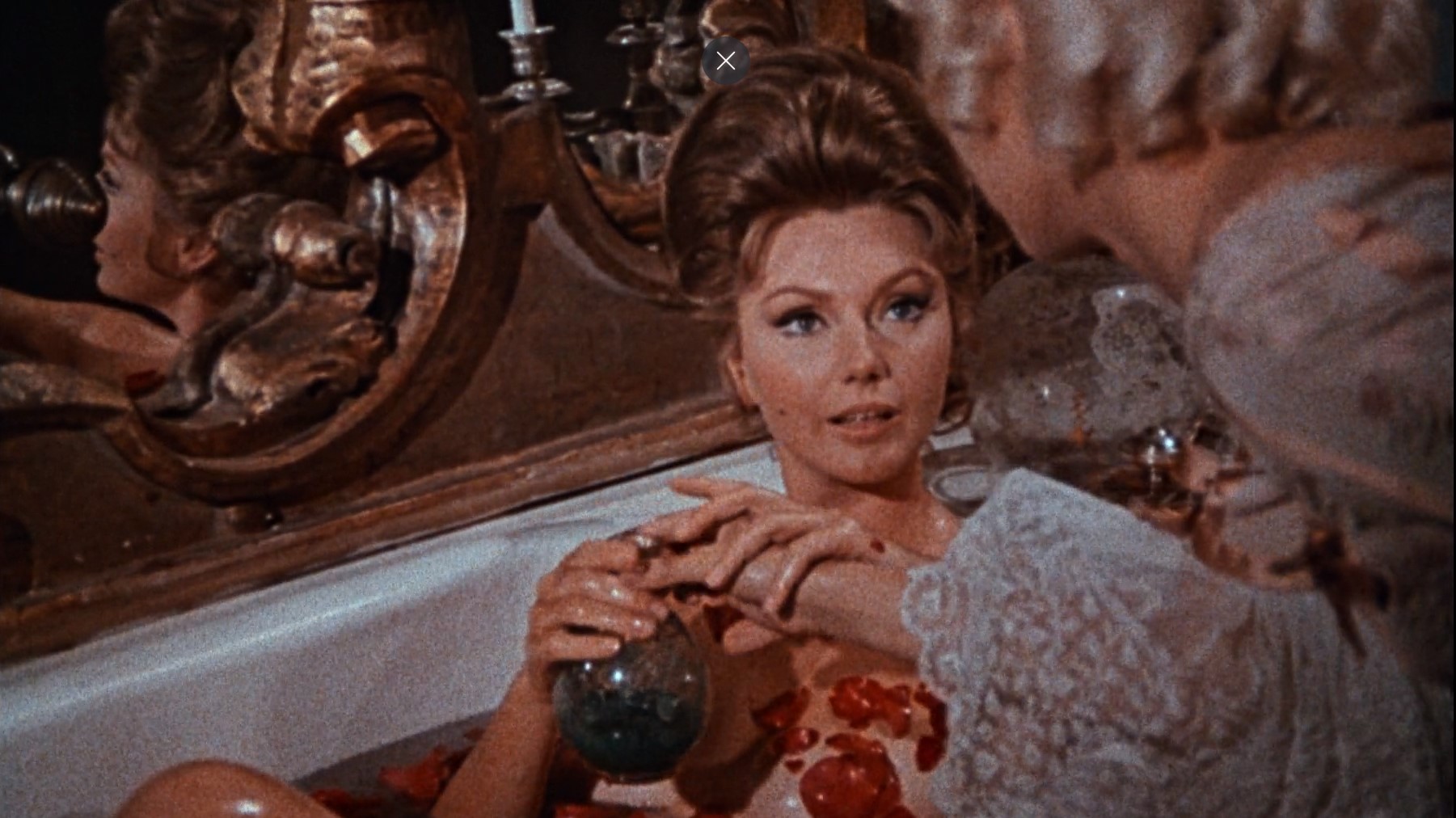
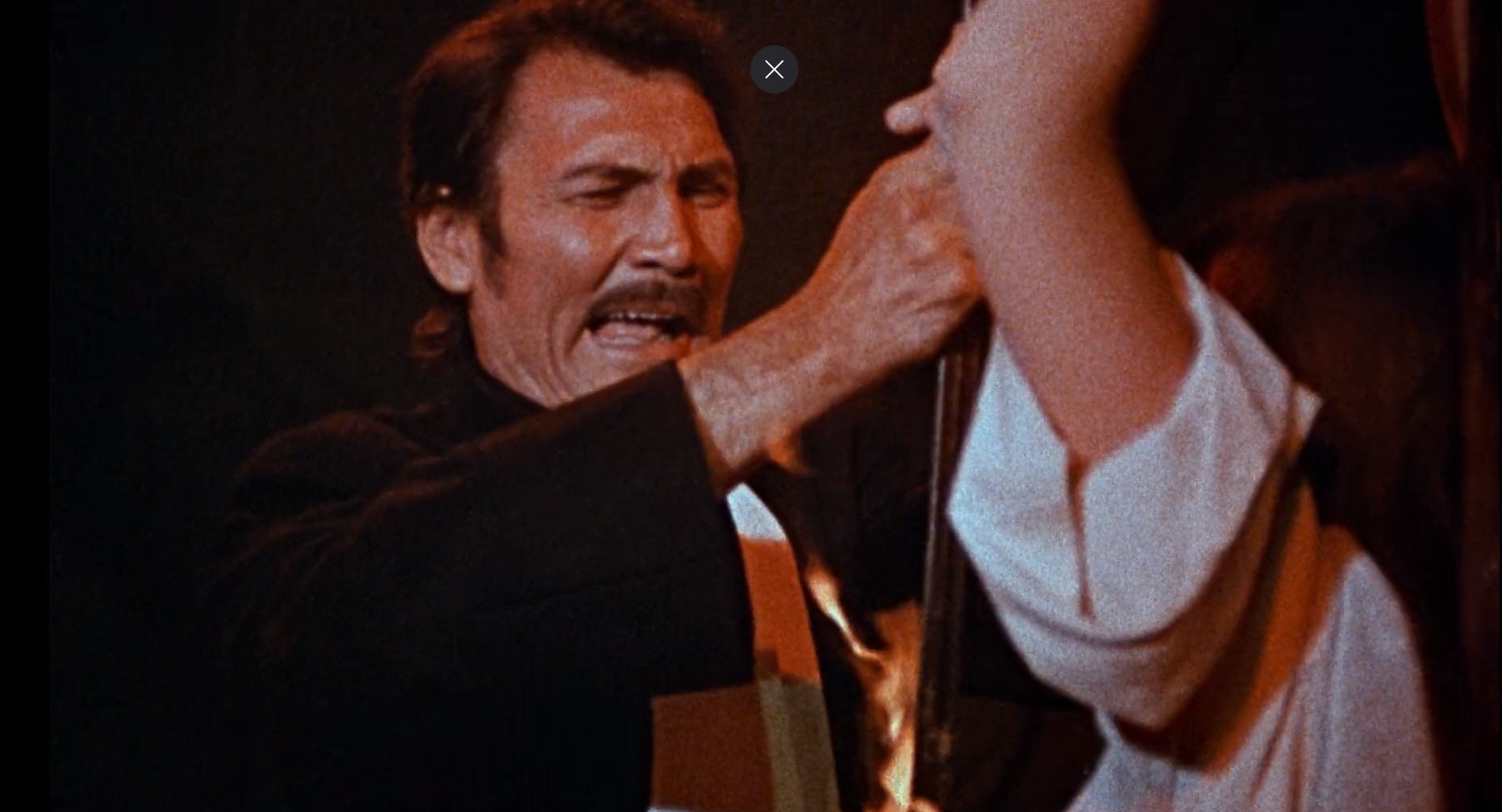
Perhaps the most recognizable and most notable adaptation of Marquis de Sade’s novel, “Justine” is also popularized by its identifiable cast with big names in not only Europe but also in America. The opening scenes with Klaus Kinski, in a wraparound narrative as the Marquis de Sade himself imprisoned and suffering visions of bloodied and bound naked women, immediately draws you into the “Nosferatu the Vampyre” and “Schizoid” actor’s character plight and muted damnation into writing about virtue, a misfortunate respectability. The other famous face in the film, one that spans from Europe to the U.S., is Romina Power as the titular “Justine.” Power, daughter of actor-songwriter Tyrone Power, was, in her own right, a well-known Eurovision singer after the release of the Franco film, but it was her father’s musical talents who landed the sweet-faced Romina into the denigrated young woman role. While Kinski acts on pure facial expression alone, using his iconic, distinct facial features, Power offered a more rigid approach like a child locked by confusion and while unintentional and usually not what any filmmaker wants in a devoid of relaying vicarious expressive emotions, Power naive innocence proves key to Justine’s, well dare I say it, naive innocence. Power’s beauty alone could have stood ground in making the attack from angles perversity film work like a charm. One of the more surprising casted members is Jack Palance. Yes, Curly from “City Slickers” or Jake Stone from “Cops and Robbersons” outlines the formidable pleasure-seeking cult leader Brother Antonin with such gusto flamboyance, the must-see and most-enjoyable performance seemingly feels alien to the usual stoic and stern typecasted actor who could rival Clint Eastwood with a fierce thousand-yard stare. Having co-starred in the Franco-de Sade film “Eugenie” a few years later, Maria Rohm, aka Harry Alan Towers wife, plays the role of Juliette and while the story is ultimately a dichotomy of virtue and sin, there’s an imbalance between the two characters for screen time. The Marquis de Sade’s novel was named “Justine” after all. For her alotted screen time, Rohm provides a suitable sinful scarlet woman climbing the aristocratic ladder by cheating, stealing, and killing her way to the top. The cast fills out with Harold Leiptnitz (“The Brides of Fu Manchu”), Horst Frank (“The Cat o’ Nine Tails”), Gustavo Re (“Horror Story”), Sylva Koscina (“Uncle was a Vampire”), Akim Tamiroff, Rosalba Neri (“The French Sex Murders”), and “99 Women’s” Mercedes McCambridge in an unforgettable role as a nasty gang-leading woman whose high-velocity cruelty rockets are so homed in on Justine it’s explosively devastating to watch.

Having seen the elegance of interior architectures inside Paris’s Opera house, walked the cobblestone streets surrounding the monumental Eiffel Tower, and taking in the laissez-faire of the French way of life, I can honestly say Jess Franco captures France impeccably well for an self-exiled Spaniard known more for his sleaziness and horror than his efforts in cinematic expressionism.   Arching with one big showcase revolving around the idea that virtue will get you nowhere and will be nothing but trouble, ultimately putting to question the validity of the decency concept, the narrative is broken up into a mini-scenarios, mostly of Justine being completely subjugated to the wicked whims of others and a handful of Juliette erecting a better life off the backs of others she’s duped or snuffed.  Franco mastered false hope and misconceptions with each of Justine’s encounters as they lure her in with promises of salvation to then only kick her when she’s down and reap full advantage of her inexperience and gullibility that the world is full of good people.  Sordid and cruel, “Justine” is a contradiction of actionable cynicism in the foreground of depicted magnificence in location, costume, and cinematography choices that hews into the coarse callousness; one particular scene comes to mind involves Jack Palance’s Antonin arranged with hand positioning that abbreviates the name Jesus Christ and as Antonin is holding this hand arrangement, he seemingly glides or floats down the stone corridors toward Justine, demonstrating religious imagery as a form of abusive power or corrupted guidance to serve one’s own deviant devices.  Though labeled in some circles a sexploitation film and certainly full of skin from Romina Power, Maria Rohm, and Rosalba Neri amongst others peekabooing their assets through cut potato sacks during the sex slave orientation scene, much of the sex is heavily implied with a limited gratuitous outcome.  Before going fully into an Eurotrash market by the late 70s and all the way through to the 90s, Franco made every effort to be a considerable filmmaker for a broad audience in numerous countries and his dislike for censorship shines through to his work, despite the likelihood of costing him acclaimed fame as a director. 

“Justine” arrives on 4K UHD in a Blu-ray combo set from Blue Underground.  The two disc set is AVC encoded Blu-ray 50gig and a triple layered Blu-ray 100gig with 1080p (standard BR) and 2160p (UHD) high-definition resolution, and presented in the original European widescreen aspect ratio of 1.66:1.  The brand new 4K restoration from the uncensored original camera negative of the 35mm film with Dolby Vision HDR is a foremost upgrade to the highest power, an ultra-balanced grading that reels in a wide variety of colors from interior to exterior that helps bring the ornamentation of 18th century France to a vivacious life on screen.  The saturation is enriched and finitely retuned to deliver the best and naturalistic grading as humanly possible, or as current technology allows.  The Blu-ray offers a just as reasonable presentation but does lack that high attention to detail because of the lower pixel count.  Bitrate decades are a comfortable average in the high 30s to low 40s.  The UHD and standard Blu-ray offer a clean and free from compression artifacts with immeasurable format capacity to render an unimpeachable picture. Both formats come with an English DTS-HD mono, dubbed in English by voice actors and not the original cast. No hissing, popping, and only a slight interference hum. Dialogue is dub boxy but clean, clear, and right forefront without question of what’s being discoursed and is well-folded into the ambient and Bruno Nicolai epic vein-coursing score that triumphs a military march over a classical base. English SDH are optional. In regard to special features, both formats include a new audio commentary with film historians Nathaniel Thompson and Troy Howarth and the French trailer, but the Blu-ray contains archive interviews with director Jess Franco and writer-producer Harry Alan Towers, an interview with author Stephen Thrower of Murderous Passions: The Delirious Cinema of Jesus Franco, a new interview with actress Rosalba Neri, in Italian with English subtitles, On Set With Jess, a newly expanded poster and still gallery, and a Jess Franco dreaded censored cut of the Americanized shorter version of the film under the “Deadly Sanctuary” title in HD and clocking in at 96 minutes, a nearly 30 minutes shorter. The physical features mirror the “Eugenie” 4k/Blu-ray release with a black Blu-ray snapper case with similar thickness. A shackled Justinne graces the front cover, as with the previous DVD Blue Underground release, and has the same cardboard slipcover with an oval shaped like mirror cutout to not block the half-naked Romina Power. Back covers are both the snapper case and cardboard cover have the same layout design but different still images on each. Inside, there is a disc on each side of the case held in by a push lock. The UHD is a sizzling infrared and sultrier posed version of the snapper cover while the Blu-ray, in the same red hue, is a composition of characters clustered together in a circular design. The film comes not rated, region free, and has the presentation feature with a runtime of 124 minutes. The Marquis de Sade divulges a sardonic, topsy-turvy belief that the more you stay virtuous, the more trouble follows as it’s the way of the world and the more you swindle, the more headway you make in life. Jess Franco brings the Marquis’s vision to cinematic life with a grand and sordid tale, dissevering the two ways toward their individual soul crushing path, and discovering morality within the immoral.

Own Your Piece of Virtue with this 2-Disc “Justine” set from Blue Undergrounda and MVD Visual!  

When the EVIL Novice Becomes the EVIL Master. “Assault! 13th hour!) reviewed! (Impulse Pictures / DVD)

“Assault!  13th Hour” on DVD from Impulse Pictures!

A gas station attendant is beguiled by the culpable bad boy antics of a serial rapist in a red jacket. As the attendant becomes more enthralled by the sociopath’s life-altering school of assault and apprenticeship, he attempts a solo flight to turn his women victims into loving his deplorable acts of sexual misconducts. His emulation of sprouting a decadent rape fantasy fails as the connective alternative sexual experience between the powerful and the powerless only induces complete fear. Curious to how the connoisseur of forced copulation gets away with women paying him for ravishment again, the novice learner of lechery aims to seek as much knowledge as possible without hesitation and without question but a homosexual gang hunts down his master in the crimson jacket for an unspecified act that warrants retribution. Caught in the middle, the gas station attendant must fight for his life if he wants to continue the legacy of violation.

Better known as “Rape! 13th Hour,” Yasuharu Hasebe’s “Assault! 13th Hour” is a perhaps a more marketable film for many western distributors with the world rape kicking off as an exclamational in the title. One of Japan’s well-known exploitation and pinku filmmakers, having directed a slew of films with a combination of action, crime, and sexual dysphoria and kink with the Stray Cat Rock film series (“Sex Hunter,” “Delinquent Girl Boss”) as well as “Rape!,” “Secret Honeymoon: Rape Train,” and “Raping!” Yeah, I would say Hasebe had a deviant fantasy for the subject. Released in 1977, “Assault! 13th Hour” comes from the same mind of “Hausu” screenwriter Chiho Katsura and Toshiro Masuda’s “The Perfect Game,” a Criterion release film, screenwriter Yoshio Shirasaka. Now, the 73-minute narrative rapt in the idea of women throwing themselves, as well as their yen, at the attacker in a twisted reaction to forceful violation with a greenhorn being trained-to-inherit the practice is by no means as surreally horrifying as “Hausu” or as complicatedly thrilling as the gambling-gone-awry “The Perfect Game.” Still, an underlying, nagging feeling of the patriarchal power that is deeply engrained into Japanese culture can be digested with this pinku-production under the company eye of Nikkatsu Corporation, releasing the film under its pinku eiga subsidiary, the Nikkatsu Roman Porn banner, with Ryoji Ito (“Cruel High School Girls: Sex Lynch”) producing.

Now, whether “Assault! 13th Hour” is a sequel to either Hasebe’s “Rape!” or “Assault!” is not clear from this reviewer’s eyes – I have yet to see either one of those particular previously films – but there lies one commonality between all of them, Akira Takahashi. A lifer in the pinku eiga industry, Takahashi has collaborated with Hasebe on a number of films that run the gamut of exploitation. For his role of Crimson, a serial rapist and delinquent who sports a red bomber jacket, the principal predator is more mysterious in not only his actions but his backstory involving the homosexual gang boss and his two equally sapphic goons and this is where I suspect “Assault! 13th Hour” might be a follow up film as Crimson’s historical transgressions don’t come to light. Hence, the gang’s manhunt never fleshes out to a warranted chase down and the unsuspected sexual tension that produces from it between Crimson and the gang boss. Takahashi brings a confident and suave creep to the lead but doesn’t necessarily have the charisma to make Crimson stand out on his own as a memorable character. Crimson’s accomplice, and the story’s perspective primary, played by Yûdai Ishiyama (“Izo”), fits snuggly into the part of curious in his character who takes uninitiated baby steps into wanting to be a part of this cabal of beastly baroque bedfellows that can persuade Stockholm syndrome upon their victims before they zip up their pants. Ishiyama’s role provides more depth as a low-end gas station attendant with a pent-up perversion and who’s better to exploit and nurture his willingness more than his equivocal new best friend, Crimson. The story’s unpublicized character list provides the story with a nebulous pall to make a statement that this can happen to anyone and can even happen to this cast list of Yuri Yamashina, Tamaki Katsura, Naomi Oka, and Rei Okamoto.

I’m still wrapping my head around the plot’s sudden drop into mid-story without a callback to Crimson’s sordid history that weaves between his seemingly magical persuasion of perversion and his tumultuous involvement with the homosexual gang who want more than just to beat him to pulp. The chance stance Hasebe has to fashion into a comprehensible story, based off the script’s limiting section of a whole, is turned into a wildly suitable and often alternate universe viewed milieu where corruption and immorality goes without proper attention or justice. There are no detectives tracking down the rapists’ rampage or even the display of just a single police vehicle at the aftermath of the crimes. Judgements are contained within the confines of the criminal underworld from a twisted perspective of vigilante justice and, you know, it works! The one-sided standpoint immerses the viewer into a filthy, degrading, and perversely fantastical sea of immorality where lawlessness is the law, but as far as pink films are concerned, “Assault! 13th Hour” is a tame entry that doesn’t shockingly exploit the senses. Likely, that reserved jolt from the jarring material stems from decades of repetitive similar films of the same genre and/or nature and we, those fans drowning in fascination of the pink film category, might feel a little numb to its debauchery though the ending’s infringing necrophilia onto nearly every possible orifice on the victim’s body can be an eye-opener, or an eye-closer depending on your level of comfort and intrigue. Assault! 13th Hour” explores a trade far less trodden in its unusual master and pupil dynamic and subjugates any ambiguities over the blurry line between heterosexuality and homosexually with a slightly biased preconceived notion that heterosexual assault leads to viable passion whereas the counter only offers brutality and bloodshed.

Arriving onto DVD from Impulse Pictures, the XXX and erotica sublabel of Synapse Films, is the Nikkatsu Roman released “Assault! 13th Hour!” The anamorphic 1.85:1 presentation renders a respectable transfer of the 35mm film despite the noticeable age and wear of the warm, inferior negative stock that often appears dark and detailed indiscernible, unlike the stylish use of high contrast. The Japanese Dolby Digital 2.0 dual channel casts a better-than-expected dialogue track and general ambient score albeit the overplayed audio bytes for cars revs and screeching tires. The constant low whir never goes above a whisper, leaving alone the dialogue to remain clear and free of obstructions and that also goes for the absence of pops and hissing. The newly translated and removable English subtitles pace well, display without typos, and are synchronously consistent. The 1977 Japanese erotica and roughie is a feature only release for Impulse Pictures with no bonus material included. The tight and taut, rough and dirty, “Assault! 13th Hour” is a tinderbox of ferocity as well as a tender box of far out fantasies that makes this dichotomy of sexuality and violence an interesting slice of Japanese erotic cinema.

“Assault!  13th Hour” on DVD from Impulse Pictures!

Fausto and His EVIL Queen Will Enslave You in the “Forbidden Zone” reviewed! (MVD Visual / Blu-ray)

Intestine to the “Forbidden Zone” on Bluray!

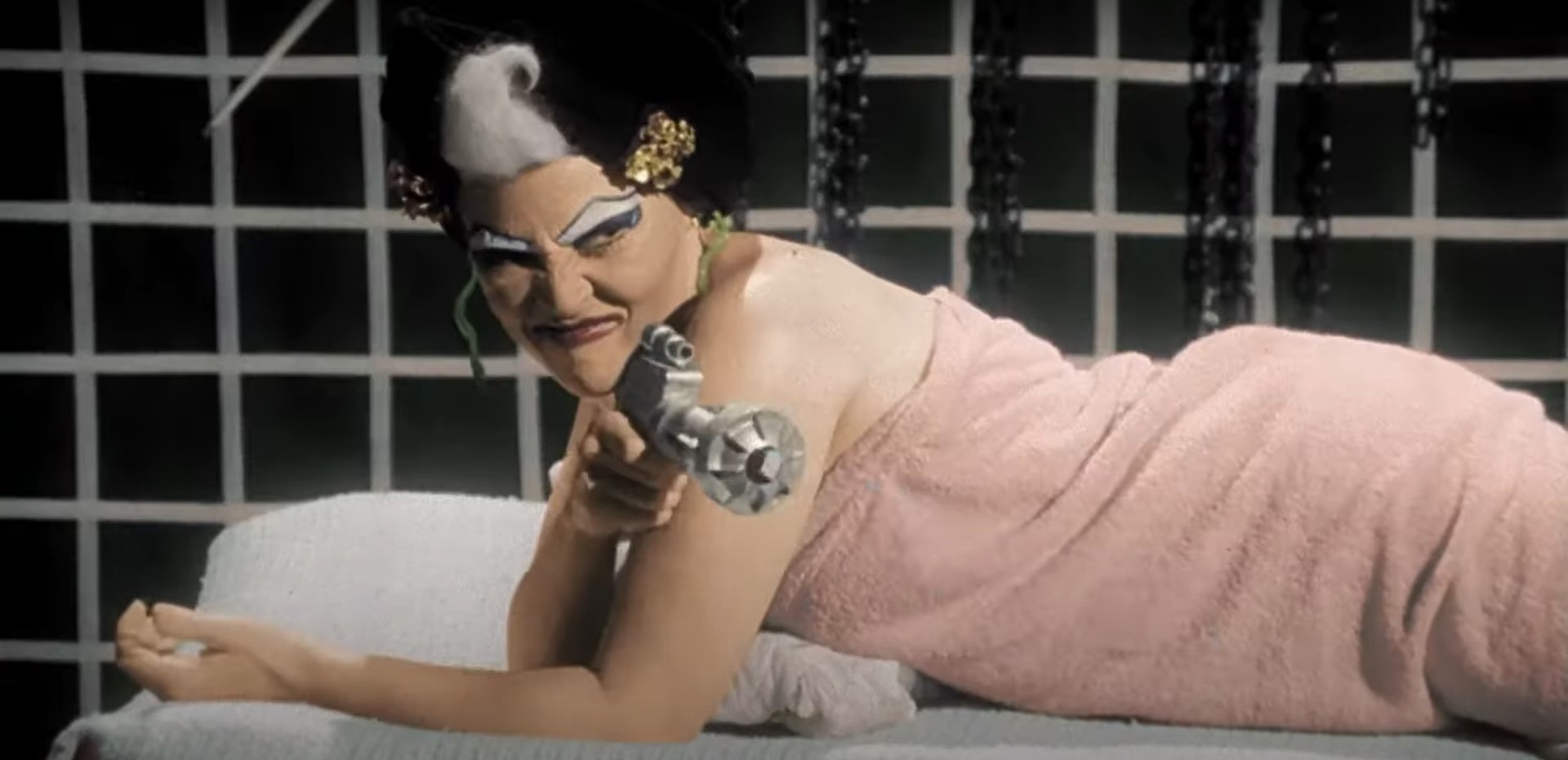
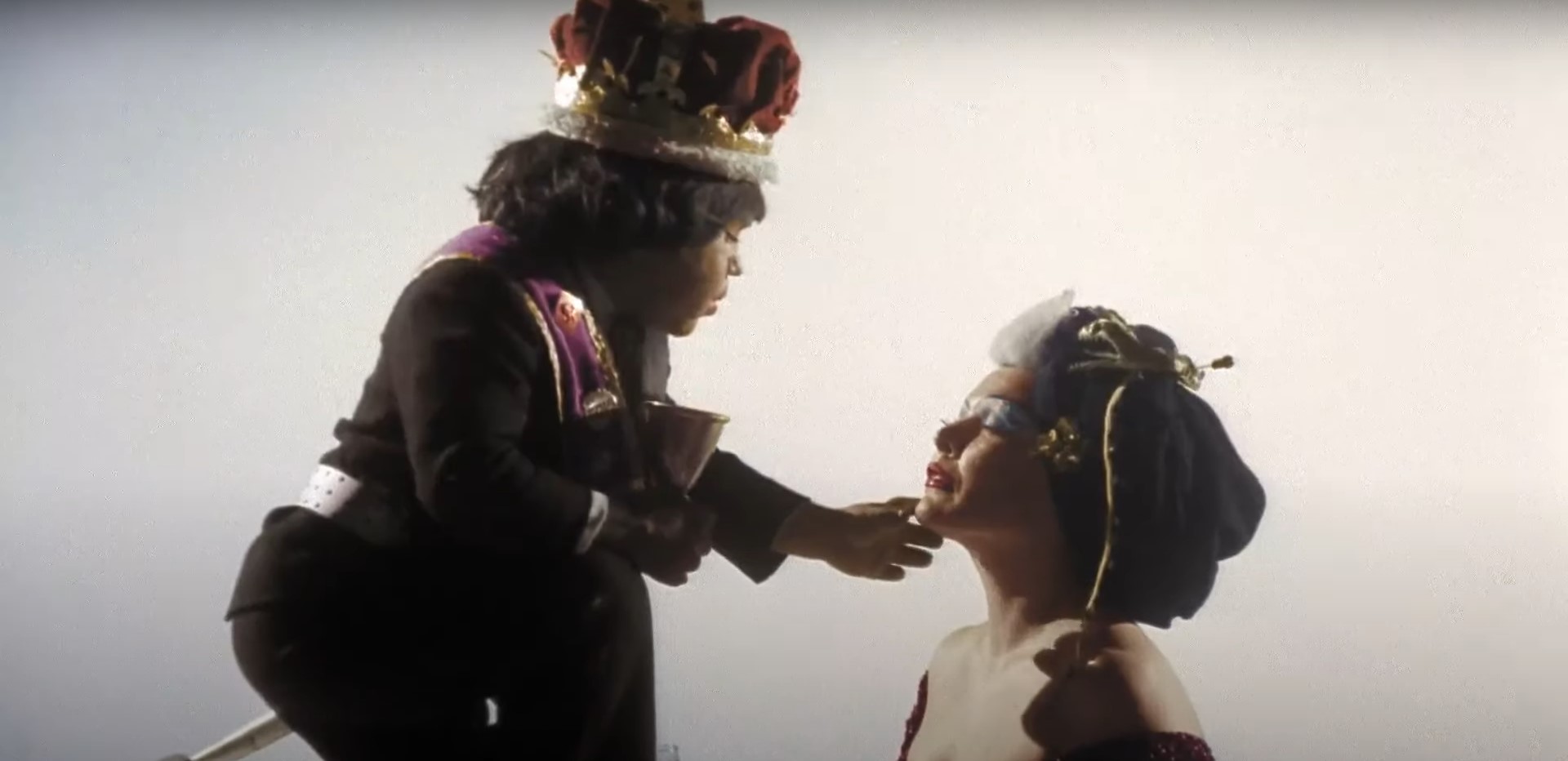
The Hercules family recently purchases a house from a drug dealer who warns them to never open the basement door that leads into, what he calls, the Forbidden Zone.  Curious about the secrets the Forbidden Zone holds, the beautiful daughter, Frenchy, accidently finds herself in the Sixth Dimension, a subterranean word ruled by King Fausto and his sadistic Queen Doris who superintends the torturing of half-naked prisoners. Having laid his eyes upon for Frenchy for the first time, Fausto is instantly enamored with her beauty and the Queen, jealous beyond reason, along with her sadistic daughter, Princess, seek to destroy Fausto’s newest concubine. Frenchy’s brother, Flash, and their mentally invalid grandfather dive into the “Forbidden Zone’s” gonzo world to try and save Frenchy only to find themselves in a labyrinth of skimpy-cladded slaves and nonchalant sex. All hope seems lost for the Hercules family until a deal with Satan might become their only way to salvation.

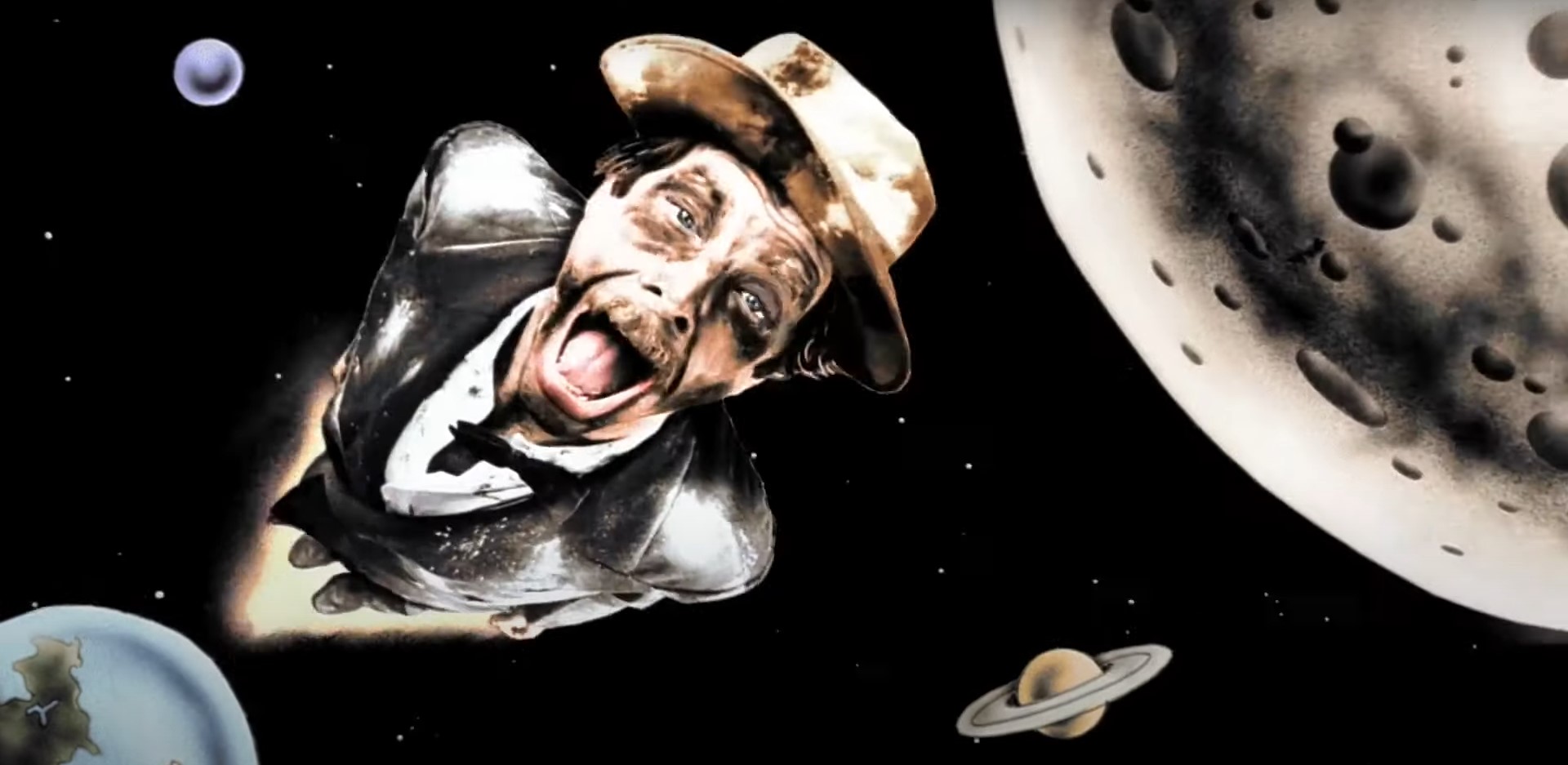
Remember that opening blurb in my recent review of Richard Elfman’s “Aliens, Clowns, and Geeks” where I state my only regret in watching Elfman’s zany 2019 sci-fi comedy was that I didn’t priorly and properly experience his cult classic, the “Forbidden Zone,” first? Everything makes sense now in regard to Elfman’s fascination with the harlequin, his esoteric humor, and a knack for ridiculously unconventional in a direct pull of inspiration from his and his brother’s, Danny Elfman’s, time performing with the musical stage troupe, the Mystic Knights of Oingo Boingo, which would later evolve, at the behest of Danny Elfman, into a popular 80’s ska-band with a reduced name simply known as Oingo Boingo. Richard Elfman wanted to take that stage presence of the Mystic Knights and transpose it to the silver screen, effectively doing by penning and helming a microbudget musical complete with series of extremely detailed and cockamamie cutout animation blended with morbid sideshow talent and performances tuned to the over-the-top theatrics of a well-oil, low-budget, far-out comedy. “Forbidden Zone” became the stepping-stone for script cowriters Matthew Bright (“Freeway”), Martin Nicholson (“House II: The Second Story”), and Nicholas James and was produced by Elfman and James along with executive product Gene Cunningham under the limited production of Hercules Films.

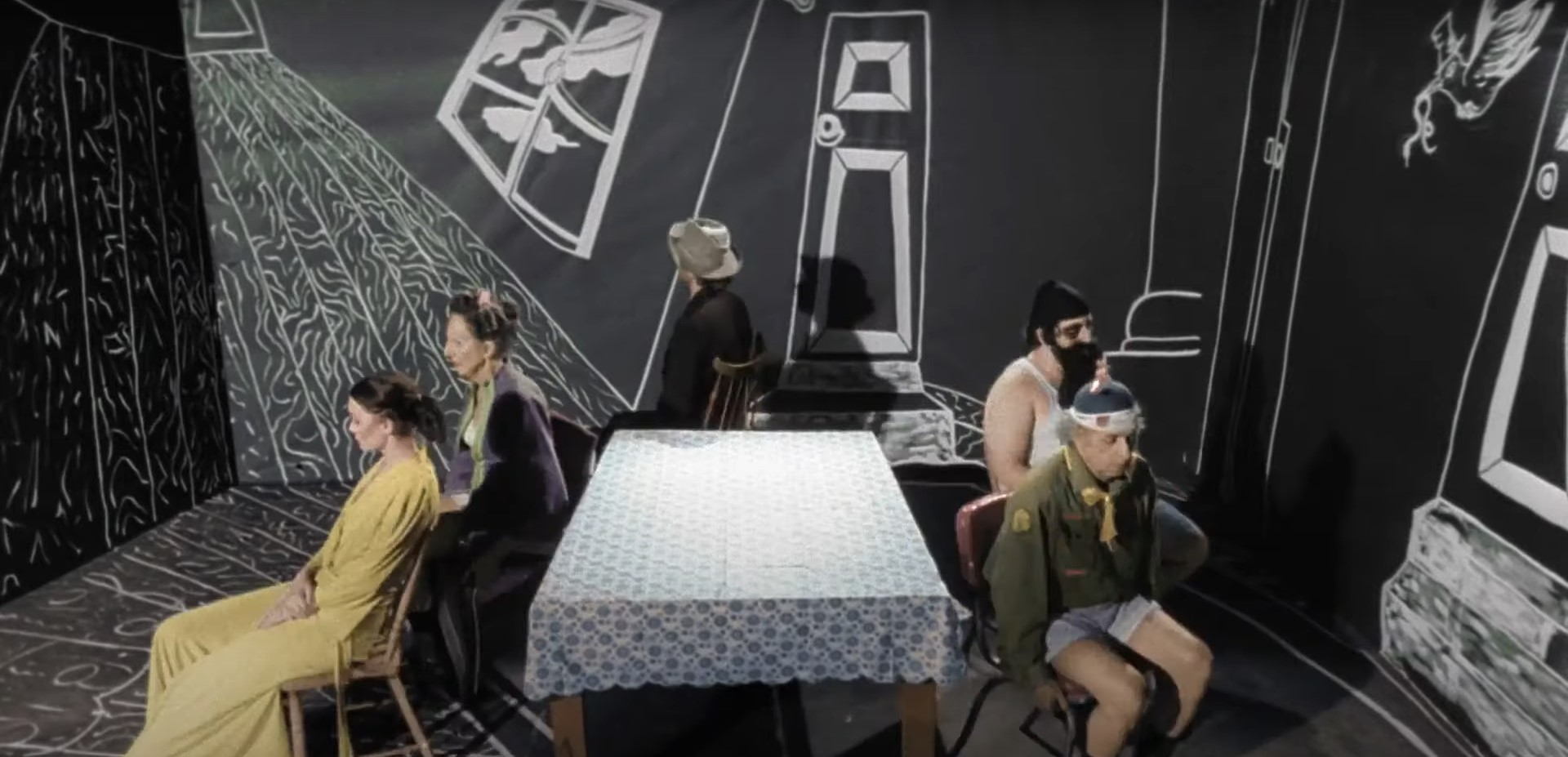
“Forbidden Zone” isn’t your normal run-of-the-mill musical feature as an assortment of styles coursing through what results as an eye-widening breach of political correctness. A smidgen of arthouse, a true to form vaudeville, and wall-to-wall crude comical carpeting would be a challenge to any actor set to play any role in this farcical natured fantasy, yet with the help of the Mystic Knights and Elfman’s madman charm, “Forbidden Zone” lands just the right cast to pull off a production this barking mad, beginning with the casting of Elfman’s then wife, Marie-Pascale Elfman, as the principal lead and anti-damsel in distress, Frenchy. Dredging for comprehension through Marie-Pascale’s thick French accent proved to frustratingly difficult to a linguistical layman’s ear, but her performance is light, fluffy, and defiant against the stark contrast of a brutish, no-nonsense Susan Tyrrell (“Butcher, Bake, Nightmare Maker”) as Queen Doris. Tyrrell is phenomenally “Rocky Horror” in prosaic seething and in dive-bar dress while having her Sixth Dimension King be played by her real-life lover off screen, “Fantasy Island’s” Hervé Villechaize. The chemistry between Tyrrell and Villechaize is more than natural even in Elfman’s pasquinade light. A few of my personally favorite performances are in the grandfather and grandson dynamic duo of Gramps and Flash. Phil Gordon wears a hilarious propeller hat and boy scout uniform overtop his older older-than-the-rest-of-the-cast body and though Hyman Diamond doesn’t say one single world in the entire film, as the former Jewish wrestler, Gramps, his antics are far funnier. Danny Elfman, undoubtedly, has a role in his brother’s debut feature, reprising himself in essentially a reoccurring role from his stage acts as Satan. His brief time on screen solidifies the presence of the Mystic Knights with the musicians taking bit parts playing instruments as Satan’s hooded minions. “Forbidden Zone” fills out the cast with executive producer Gene Cunningham as Pa Hercules, Jan Stuart Schwartz as the servant frog Bust Rod, writer-producer Matthew Bright playing twins Squeezeit, the chicken boy, and Rene, Squeezeit’s crossdressing brother, Gisele Lindley as the topless Princess, Kedric Wolfe as a crossdressing teacher and a chandelier (Yes, you heard right, he plays a chandelier), Virginia Rose as Ma Hercules, Viva as the former Sixth Dimension queen, Joe Spinell as a drunken sailor, and the performance artists Kipper Kids, who I remember seeing briefly from Weird Al Yankovic’s “UHF.”

Creative control is everything and with total control, total madness (or genius) can takeover to recreate a bastardized version of Lewis Carroll’s “Alice in Wonderland” that follows a young girl falling down into a curvy intestine chute and come face-to-face with anthropomorphic creatures, a dice-decorative land (parallel’s “Alice in Wonderland’s” playing card theme), and a Queen with a strict and haughty dominion over her terrified subjects.  I also wonder if the Mickey Mouse hats worn by many of the characters in the Sixth Dimension is also a direct connection or an Elfman homage to the Disney rendition of Carroll’s story.  The “Forbidden Zone” should be explored, should be experienced, and should be enamored as a cult favorite amongst fans of not only Through the Looking Glass but also of Terry Gilliam, “Rocky Horror Picture Show,” and Pee-wee’s Playhouse.  With a barebones production value but with immensely vigorous performances that bring to life the extraordinary and flamboyant in all walks of life characters, Richard Elfman materializes a vision, his own vision, of transpiring a feature length film platform for his founded street theatre group, the Mystic Knights of Oingo Boingo.  At the time, did the film change the troupe’s musical journey for the better or skyrocket Danny Elfman’s evolutionary, new wave band?  That remains ambiguously unclear, but the project certainly places Oingo Boingo, in all its moniker and various bandmember forms, on a pop culture map and on everyone’s weird science fiction radar with an unforgettable, unimaginable chthonic comedy spurring laughs and gasps of content. 

After watching “Aliens, Clowns, and Geeks,” we had an inkling that Richard Elfman was an ass man and looking back at “Forbidden Zone” only confirms our theory of a cutout animation poop-chute characters pass through entering the Sixth Dimension and the continuous Kipper Kids’ vocal raspberries and revealing jockstrap ass cheeks.  If you like big butts (and cannot lie), then you’ll like the weirdness of the “Forbidden Zone” on a new Blu-ray director’s cut from MVD Visual, presented in its more recently colorized version of its 35mm stock with a 1.78:1 widescreen aspect ratio.  Retouched with a few Richard Elfman enhancements to the video quality and special effects, the Blu-ray display a remarkable durability of film transfer that show no sign of deterioration or damage.  Natural grain goes unobtrusive and there are any detectable egregious enhancements to circumvent any flaws in the used film stock.  The audio is a slightly different story in the English language LPCM 2.0 stereo that often feels lossy, muted, and hissy at times.  The musical numbers are bore a static underlayer that’s faint but there.  This never inhibits the dialogue or other audio tracks in anyway but can be a nuisance.  English subtitles are an available option.  Special features include a new introduction from director Danny Elfman, a new music video of Richard Elfman beating a bongo drum to a tune to a Danny Elfman score with his wife, Anastasia, thrusting her daisy-duke clothed crotch, and a guised band playing behind them, the original audio commentary by Richard Elfman and writer-actor Matthew Bright, A Look into “Forbidden Zone” featurette from a few years back, prior to Susan Tyrrell’s death, that showcases interviews with the cast and crew looking back at the film, black and white outtakes and deleted scenes, and the theatrical trailer.  “Forbidden Zone” is an ostentatious ornament that’s larger than life in many regards and remains a cult classic to this day with a niche fanbase and tribute theatre productions still being done to this day.

Intestine to the “Forbidden Zone” on Bluray!

Surrounded by Aquatic EVIL, No One Can Escape “The Island of the Fishmen!” reviewed! (Full Moon / Blu-ray)

Check out the scantily-cladded woman encroached upon on “The Island of the Fishmen” Blu-ray!

A French prisoner ship sinks to the bottom of the Caribbean leaving only a handful of prisoners and the Left Lieutenant Claude de Ross, the ship’s doctor, stranded on a lifeboat for weeks until they a mysterious force drives them through the fog and crash them on the rocks of a seemingly deserted volcanic island. Only a few prisoners and the doctor manage to survive the wreckage, stumbling upon a ritualistic area of empty graves and abandoned artifacts of an island society. This is where the haggard and hungry men meet the beautiful Amanda Marvin on horseback and follow her through the island jungle to a clearing where the edifice of Edmond Rackham sits imposing on them. Having left his home country, Rackham settled upon this uncharted island, garnering local Caribbean inhabitants as servants, and being a greedy treasure hunter who might have just discovered the lost city of Atlantis. There’s only one problem, the city is surrounded by aggressive fishmen kept at bay by Amanda’s famed disgraced biologist father who has fallen severely ill, charting a course for the good doctor, Lt. Claude de Ross, to be unharmed in order to care for perhaps the only person who knows how to manage the wrath of the fishmen.

A swimmingly aquatic creature feature with an all-around gratifying men in costume pastiche, familiar to the style of “The Creature from the Black Lagoon,” in Sergio Martino action-adventure horror “The Island of the Fishman.” Also know under the revamped shots of “Screamers” aka “Something Waits in the Dark,” here we have the original film in all it’s natural glory from the director of “Your Vice Is a Locked Room and Only I Have the Key” and “Torso” director Martino from a script by Martino, Sergio Donati (“Orca”), “Slave of the Cannibal God’s” Cesare Frugoni who workshopped with Sergio Martino’s older brother, Luciano Martino, (“So Sweet… So Perverse”) on the original story. Some would also say that “The Island of the Fishmen” is also a crossbreed between H.G. Wells’ “The Island of Dr. Moreau,” H.P. Lovecraft’s “The Shadow Over Innsmouth,” and, aforementioned, “The Creature from the Black Lagoon.” The 1979 Italian production stars an international cast shooting along various locations in Italy and is produced by Luciano Martino under Dania Films and Medusa Distribution.

American, United Kingdom, and, of course, Italian come together to form “The Island of the Fishmen” cast that doesn’t stray too far away from their individual innate dialects. The most pompous is he Essex-born Richard Johnson’s sadistic and fortune hungry Edmond Rackham with a caricature of a voice that isn’t like anything in his performance in Lucio Fulci’s “Zombie.” As Rackham, the inflections reminisce of a British Humphrey Bogart mixed with a one Dick Dasterdly and so Johnson comes off a bit cartoony and overly dramatic compared to the film’s panache malnourished yet earnest hero in Italian actor Claudio Cassinelli (“Murder Rock,” “The Scorpion With Two Tails”) as Left Lieutenant Claude de Ross, a ship’s doctor who suddenly becomes the medical caretaker and leading guard over a lifeboat full of hardened prisoners, some who have blood on their hands. Franco Javarone and Roberto Posse play a pair of surviving convicts, especially two at odds on how they should treat their next in rank penal officer. Though being thrust into the oversight position, the Lieutenant doesn’t have to worry about his prisoners for too long as the island’s baleful environment with jungle death traps, poisonous water, voodoo priestess, a sadistic lord of estate, and mutant fish people swimming in circles around the island’s parameter and through the cut through waterways sees to their wellbeing. “Island of the Fishmen” does have a few predominant male figures of different caliber but there are also a pair of women inhabiting the island who, too, have counteracting roles. Bond girl Barabara Bach (“The Spy Who Loved Me”) became plagued by the ocean’s frightening fishmen only two years later as the captive dame of Edmond Rackham who holds her hostage as he pushes her father (Joseph Cotton, “The Survivor”) to continue with his mind control potion over the fishmen. Then, there’s Shakira. No, not the Brazilian singer-song writer with the hypnotizing booty shaker. This Shakira is a voodoo priestess, played by Jamaican actress Beryl Cunningham (“Dorian Gray”), who works for Rackham but ultimately envisions foreboding doom on the volcanic island. Giuseppe Castellano and Franco Mazzieri round out the cast.

A whole lot is going on in this film that from the surface seems, surfacing meaning the home video covers and posters, to focus chiefly on the hostile half-fish half-man creatures that bubble to surface, check out top side for any unwanted visitors, and quickly dispatch them before disappearing under the glassy waters of the Caribbean. I adore the design of the rather stiff but crudely convincing creature suits with buggy fisheyes, razor piranha like teeth, and cladded entirely green and scaley in a design by Massimo Antonello Geleng who by vocation was more a production designer with credits including this film along with “Cannibal Holocaust,” “City of the Living Dead,” “The Church,” and “Dellamorte Dellamore” to name a few. Yet, the fishmen were not a sole source of danger on an island that had a deadly schemer in Edmond Rackham, the motif of voodoo and jungle trap throughout, a volcano ready to erupt and engulf the island with lava, and the lost city of Atlantis as the grand epic finale that pivots this story on an acute elbow left that shows a mighty ambitious story on an Italian slim budget. To put it frank, Sergio Martino was able to put all the elements together into a cohesive, coherent plot with action, horror, exploitation, and mad science fiction albeit the story’s wild and diverging concepts.

Though many U.S. audiences know this film as Roger Corman’s highly altered, New World Pictures presented cut retitled as “Screamers,” Full Moon features releases the original oeuvre of Sergio Martino with a remastered Blu-ray release from the original 35mm negative. The 99-minute film is presented in a widescreen 2.35:1 aspect ratio that captures in perfect matte composition and frame the locational miniatures, such as the manor house or the underwater Atlantis temples, in a compression that doesn’t make the structures obvious fakes. Slightly tinged yellow, the overall color palette is renders out well enough to suit the release with a pristine transfer seeing no signs of real significant damage. The English language tracks come in two formats – a PCM 2.0 and a Dolby Digital 5.1 surround sound. The English-speaking actors have their original tracks intact while the Italian cast have their original dialogue re-dubbed in English for posterity on new releases such as this one. Dialogue, nor any of the corresponding audio tracks, show any signs of fidelity issues or damage, but do feel muffled, even on the 5.1 as if the sound was boost stifled and left with some of the channels lacking vigor. Aside from Full Moon trailers, the R-rated film rides solo on this hi-def release. “Island of the Fishmen” is a small film fighting hard to swim upstream and really does a number on many different levels regarding where the audiences should focus their attention on, but I can see why Roger Corman wanted to give Martino’s film a second run after a commercial flop with a new, gory scenes edited right into the heart of “Island of the Fishmen’s” flexible, cartilaginous bones. Despite Corman’s efforts, Sergio Martino’s unmolested, original reeling reel is the one and only catch of the day for this purist.

Check out the scantily-cladded woman encroached upon on “The Island of the Fishmen” Blu-ray!

The Best Spies Seek Thrills When Taking Down EVIL! “Deathcheaters” reviewed! (Umbrella Entertainment / Blu-ray)

If Anyone Can Hide from the Grim Reaper, It’s the “Deathcheaters” on Blu-ray from Umbrella Entertainment!

Vietnam War brothers-in-arms Steve Hall and Rodney Cann banded together well after the fighting was over and channeled all their pent up energy into being adrenaline junky stuntmen for movies, television series, and commercials as a living and as a lifestyle.  When the two Australians are duped and setup into a high speed chase and a daring rescue mission by one of their country’s own clandestine government agencies in a ploy to test Steve and Rod’s daredevil abilities, they pass the qualifying assessments and are offered an espionage job by agency head under the pseudonym of Mr. Culpepper who has no other incentive to provide other than the job to be the most challenging, death-defying operation to gorge on by two extreme sport enthusiasts.  Unable to resist, the stuntmen embark to a secret base on a remote island of the Philippines where they’ll dodge bullets, explosions, and over 100 guards to fight their way in and out to obtain classified documents for their country.

“Deathcheaters” became the third viewing adventure involving the actor-director combination of stuntman Grant Page and director Brian Trenchard-Smith that falls right in between “The Man from Hong Kong” and “Stunt Rock” and clearly delineates an understanding that Grant Page was a genuine fascination for Trenchard-Smith who sought to take the daring stuntman out of solely stunt role and puree him into a leading man role, showcasing Page’s hang-gliding, dune buggy, and skyscraper falls,  for the director’s second feature film released in 1976.  And, then, there’s John Hargreaves who we will dive into his there-but-not there presence later on. “Deathcheaters” is an ozploitation action-comedy that fulfilled two of Trenchard-Smith’s obsessions – stuntmen and spy films – from a story by the director and penned to script by Michael Cove and is produced by Trenchard productions alongside a conglomerate of production companies, including “Mad Max’s”  Roadshow Entertainment (a subsidiary of Village Roadshow), D.L. Taffner (“Ghost Stories”), Nine Network Australia, and the Australian Film Commission.

Undoubtedly, “Deathcheaters” stars Grant Page as the relationship unattached and cocky Rodney Cann whose only other interest besides bedding the single ladies is his enamored basset hound, Bismark.  Cann’s best friend, Steve Hall, is newly hitched to Julia who more-or-less disapproves of her husband’s risky vocation.  “Long Weekend’s” John Hargreaves plays the cheeky Steve Hall with sarcastic charm, matching his complement stunt partner and while Hargreaves has the chops to pull of the persona, the late Sydney born actor is well behind the curve when matched up with Grant Page.  Page is a stuntman playing a stuntman while Hargreaves is an actor portraying to be a stuntman and, unquestionably, that delta shows pretty radically when Page is driving the dune buggy, is descending rapidly from a tall building, or scaling a rock cliff without a harness and Hargreaves is relatively stationary.  Hargreaves has his moments but is greatly overshadowed by the veteran Page.  Before she was Brian Trenchard-Smith’s wife, “Stunt Rock’s” Margaret Gerard was John Hargreaves on screen romance who is vocal but wishy-washy on her husband’s exploits, even on the highly dangerous, international espionage mission assigned by the enigmatic Mr. Culpepper (Noel Ferrier, “Turkey Shoot”).  “Deathcheaters” round out with Judith Woodroffe, Drew Forsythe, Annie Semler, and Vincent Ball.

“Deathcheasters’ falls on the heels of the martial arts success of “The Man from Hong Kong” and is another stunt celebratory film from the ozploitation director with a penchant for large explosions and need-for-speed car chases.  All the stunts were perfectly poised in design and well executed.  Trenchard-Smith isn’t at all afraid to have the camera right in the middle of the action, strapping the 16mm camera to whatever plausible to place the audience in the action with the heroes.  As much as Trenchard-Smith goes full throttle with a tour de force, the same tricks become a little stale after, unfortunately, having previously watched “Stunt Rock” and “The Man from Hong Kong” that also featured self-set wet-gel fires, hang gliding, free falling, and among others aerobatic and dangerous acts that are seemingly in Page’s limited bag of showstopping routines.  There’s rarely anything new in “Deathcheaters” that warrant an awe response and that can be cliched, tiresome, and overall detrimental to the experience unless you’ve never seen a Trenchard-Smith film. If you’re one of those people never to have popped in one of his films, don’t expect “Deathcheaters” to be gritty, tough-as-nails, spitfire. Many of Trenchard-Smith’s earlier films, including “Deathcheaters,” sells solely on the witty, clean banter and a knack for the implied something really terrible happened to the bad guys with nothing ostentatiously explicit in the demise category. “Deathcheaters” can be wholesome, light, and aromatic of a repartee trashcan, but you get some great stunt work, explosions, and a car chase from this 1970’s Australian picture.

Like “The Man from Hong Kong” and “Stunt Work,” “Deathcheaters” too receives the Ozploitation Classics Blu-ray honor bestowed upon it from Umbrella Entertainment as spine number 10. Newly scanned in high definition 4K for the first time, John Seale’s cinematic vision has never looked better in this region free release, presented in standard widescreen 1.85:1 aspect ratio. The original vault materials held up nice enough to warrant a clear picture with only a few, brief blemishes. The super 16mm shot film, blown up to 35mm, often still feels ever so lightly flat in contour definition and in color; yet all the scenes look naturally aboriginal from the masters. The English language DTS-HD master audio 2.0 mono is a naturally lossy single speaker audio mix that doesn’t exact full representation of the action on screen though robust in fidelity. Dialogue perceives feebler during exterior scenes as capturing dialogue competes with the elements due to poor boom placement or just inferior equipment. Like the other releases, bonus features are nicely packed with a newly extended interviews with Brian Trenchard-Smith, Grant Page, and John Seale from the Not Quite Hollywood documentary, a new audio only interview Remembering “Deathcheaters” with executive producer Richard Brennan, new liner notes from Trenchard-Smith, a 2008 commentary with the director, executive producer, and leading lady Margaret Gerard (listed as Margaret Trenchard-Smith), Trenchard-Smith trailer reel, theatrical trailer, and a Trenchard-Smith directed bonus feature in “Dangerfreaks – The Ultimate Documentary.” The clear snapper case is housed inside a cardboard slipcover and inside the snapper’s liner is a 16-page comic book adaptation from Dark Oz, much like Umbrella accompanied with “Stunt Rock.” “Deathcheaters” shows its age but still pulls out all the stops with amazing stunt choreography and gave way to Grant Page being solidified lead man material, even with his corny one-liners, and simultaneously building upon Brian Trenchard-Smith’s early career in a niche field of being obsessed with overachieving, arrogant, and unafraid stuntmen.

If Anyone Can Hide from the Grim Reaper, It’s the “Deathcheaters” on Blu-ray from Umbrella Entertainment!