Milan Has All the Best Short Film EVIL! “Drag Me To Fest” reviewed! (Rustblade / DVD)

Hurry! Grab the Limited Edition Copy of “Drag Me to Fest” Before Its Gone!

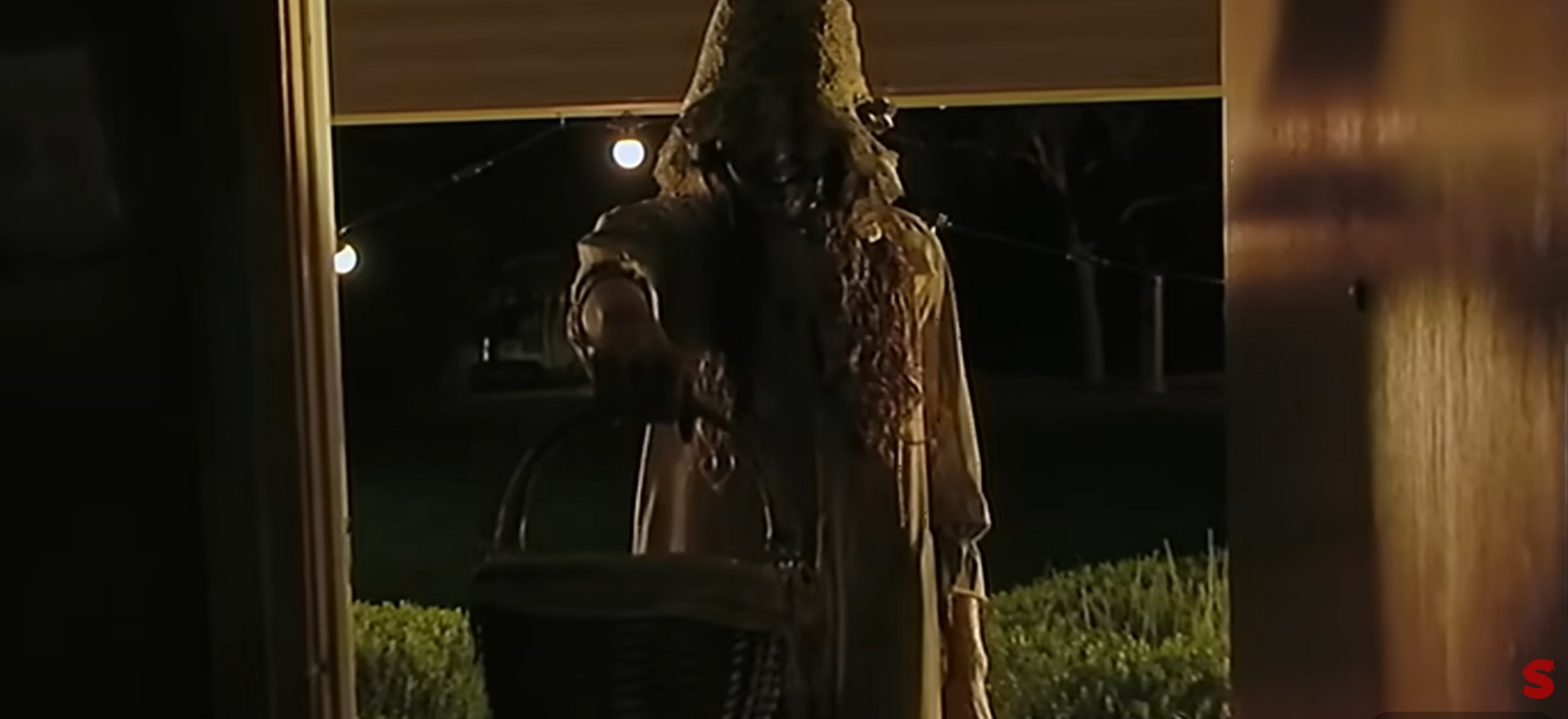
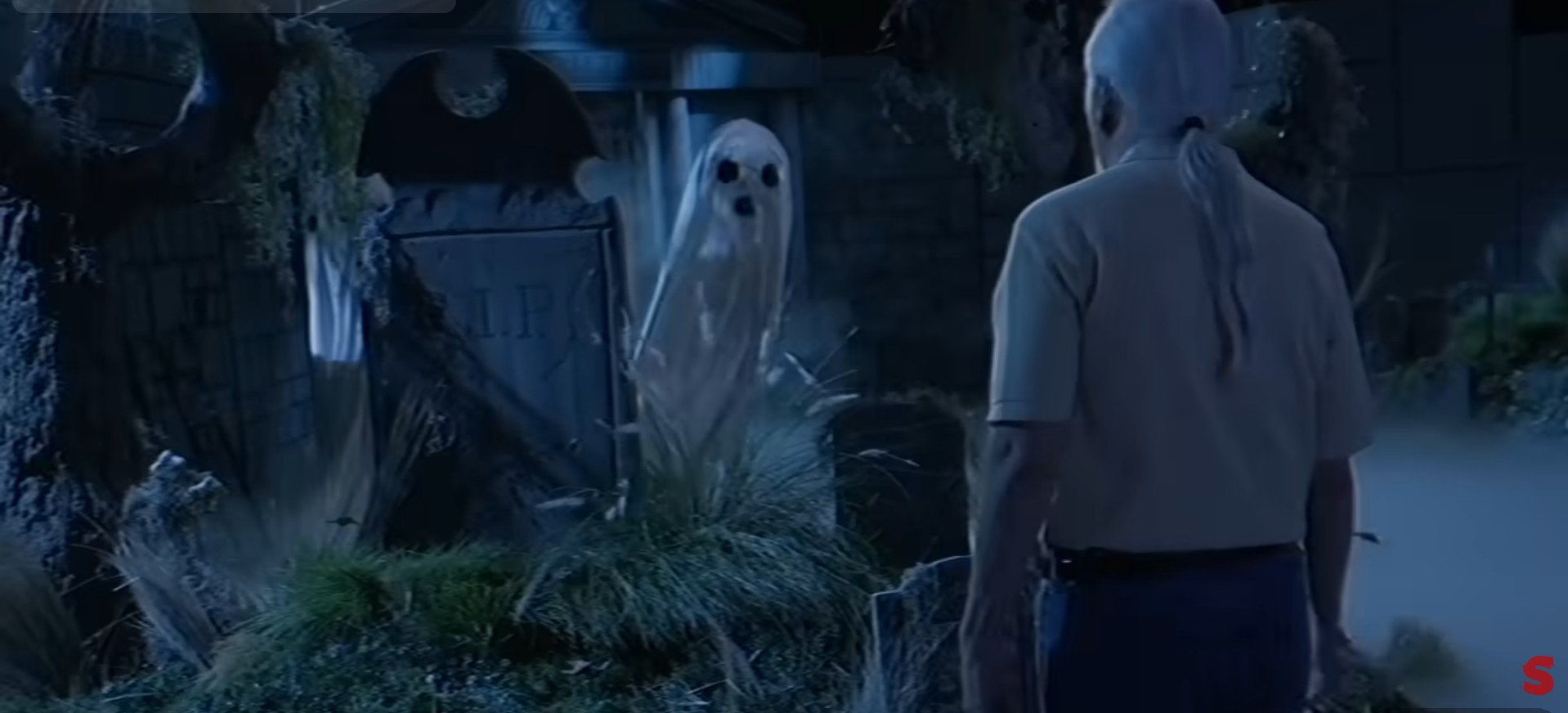
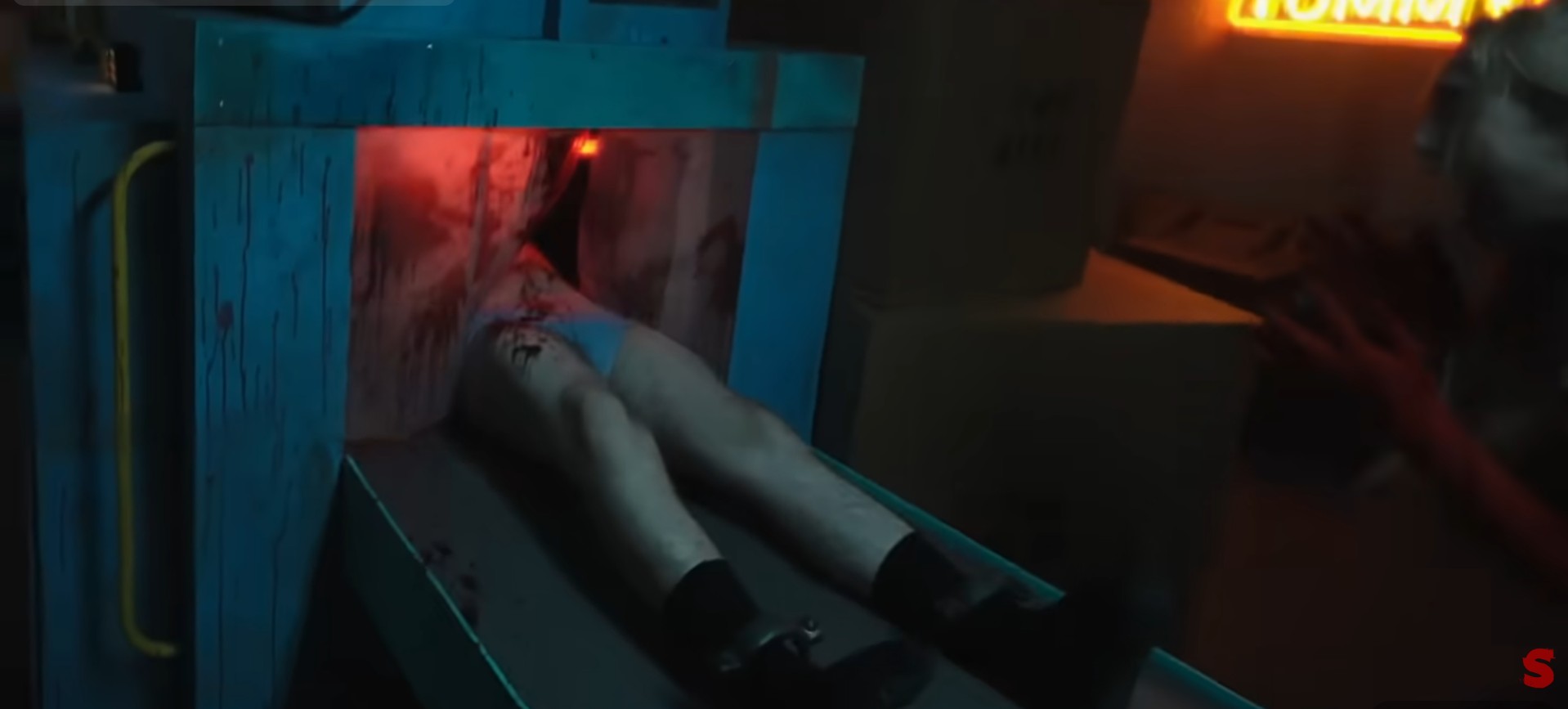
An outpatient nurse is requested by an old woman leaving by her lonesome.  Always forgetting and troubling eccentric, the humble nurse finds he’s in way over his head with a clearly unstable, possibly delusion woman, until the truth of her hidden secret unveils a web of horror.  A young couple looking to help a lonely farmer find themselves erecting a sheep fence as well as maintaining the upkeep of a strange rock formation known as a Tursemorkel that emits ooze out of black orifices and soon find the psychological and physiological energy from the Tursemorkel is more than they can withstand.  An elderly couple, tucked away inside their roadside camper trailer, whips up a finger-licking meaty stew made from all natural, locally sourced ingredients as they watch the nightly news’ top story of a missing person.  A man answers the doorbell and finds a package on his step, scratching and crawling out is a festering corpse eager to play with him.  A priest with an obsessive bug collection has him turnaround when a recently caught rare beetle toys with his mind.  Dafne, a young woman lost in another state of mind, is in the presence and in the arms of her own, personal demon. 

These bloodcurdling tales are the latest batch of horror shorts from the annual Milan, Italy hosted Drag Me to Fest.  The festival brings together Italy and international filmmakers to submit their unique brand of terror.  The 2024 lineup were submitted to the Milan collection in 2023, hit the festival the following year, and has now been compiled onto a home video release for North American audiences to enjoy and cower in teeth chattering fear under its namesake title, “Drag Me to Fest,” from Italian distributor Rustblade Records in association with MVD Visual, a subsidiary of MVD Entertainment Group.  Norway’s “Vevkjerring,” or “The Weaving” by Øyvind Willumsen and “Tistlebu” by Matthew Valentine kick off the anthology followed by Italian filmmaker’s Riccardo Suriano’s “Long Pig”, Julie Gun’s “Dafne is Gone,” and Jacopo Vismara’s “Il Coleottero” and finally rounding out with Japanese director Nori Uchida’s “For What the Doorbell Tolls,” all of which are self-produced.

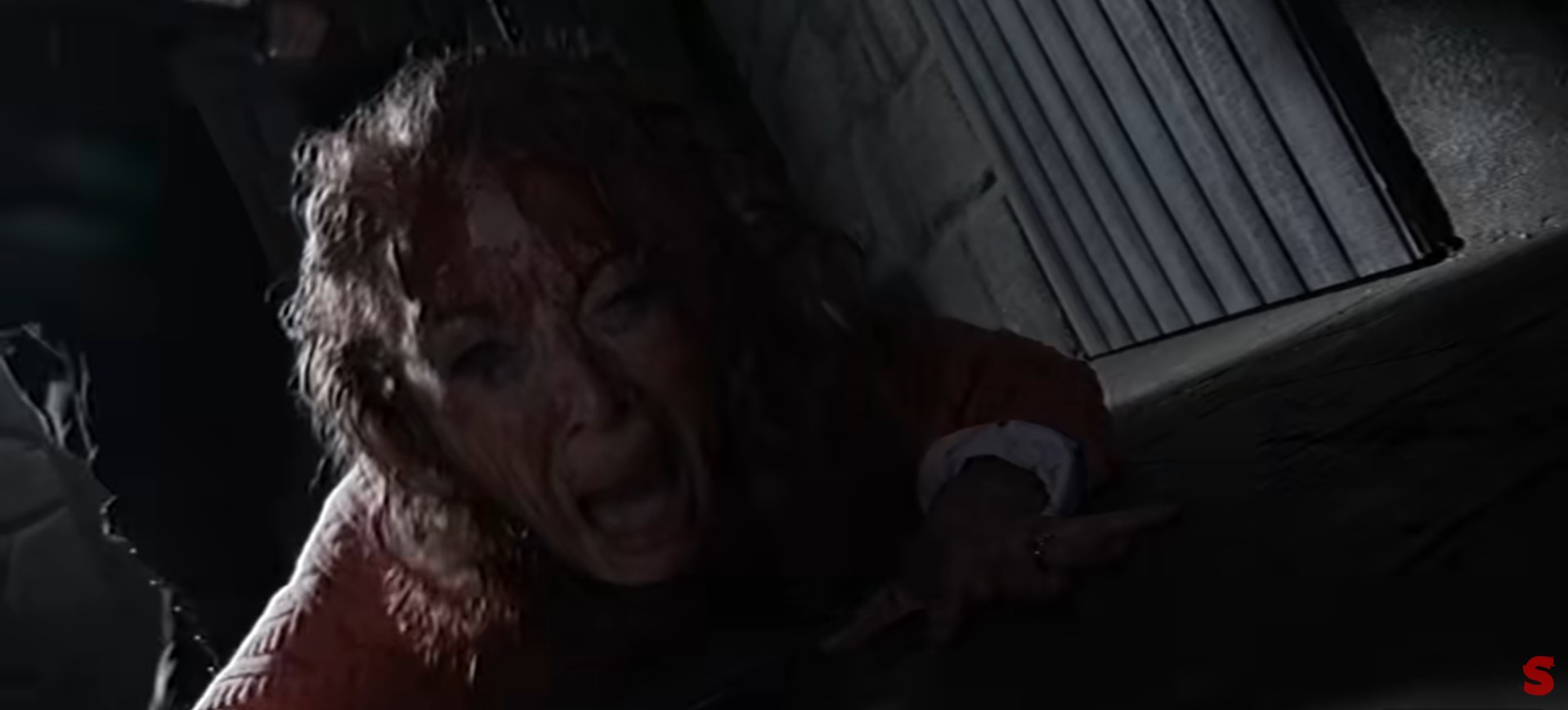
Three countries, six distinct films, and all packed into the unusual side of ambiguously horrifying elements contained inside six short films.  Each character is curated to fit inside the narrative design, no matter how outrageous or avant grade the message is.  Willumsen’s “The Weaver” is a more straight forward, common structured horror of building up tension in an already uncomfortable situation of a friendly, living assisted male nurse Henrik (Fredrik Hovdegård) knocking on the doorstep of a haggard and kooky old croon named Gudrun, played devilishly and disgustingly by Isa Belle.  The next four episodes become a bit vaguer in their intentions of madness, purgatory, survival, and obsession that intends to either harm or transfigure into something beyond the dimensional standard.  “Tistlebu” aims to transfigure as a young city couple (Sascha Slengesol Balgobin and Sjur Vatne Brean) look to connect with nature and their curiosity, coupled by intrusive misuse and sexuality, toward an earthy pillar of energy inside a widow’s (Oda Schjoll) barn enraptures them into something more primordial, literally connecting them to an omnipresent natural world that’s much bigger than their insignificant need.  Uchida provides his own one-of-a-kind performance based immensely off Sam Raimi’s “Evil Dead” by playing not only the hero but also the decaying plaything that arrives at the hero’s doorstep in one’s mirrored rotting of loneliness.  “Il Coleottero’s” Don Antonio (Mimmo Chianese) has a crisis of faith that become sidetracked by his diligent hobby of entomology when his prized find, a rare beetle, suddenly disappears from his collection.  Chianese finds the balance between being a disenchanted priest and an anxious man hunting for the beetle that got away and that will eventually destroy him.  Julie Gun’s “Dafne is Gone” is more operatically finessed with interpretive dance between Dafne (Giulia Gonella) and a demon (Jason Marek Isleib) that’s completely absent of dialogue, stagecraft visualized, and characteristically naked to showcase Dafne’s descent into the Demon’s spellbinding movements.

The collected and presented works are not the highest dollar productions but do encase a prosthetic practicality as seen in Willumsen’s “The Weaver” with a shedding of an exterior layer into a more grotesque freak of nature while Uchida takes the tribute route using filleted flesh and milky contacts, along with LFE tones and grading, modulated vocals, to accomplish his own version of “Evil Dead” without the presence of Ashley Williams.  The others are not as cut and dry with their infinite interpretational insights that likely will speak more on a personal level than a glossy buttered popcorn one that requires little effort to absorb.  “Tistlebu” and “Dafne is Gone” entrench themselves in their respective unknown and modern art by providing very little in the one thing they both have in common, a shared sense of unsettlement.  There’s also an undertone of sexualism as if it equates to the very beast that entrances, which in these shorts is the Tursemorkel, which is a large surface growth that emits an allurement of safety and gratification, and, in comparison, to the demon, perhaps her own visceral demon, that frolics to breach Dafne’s temptation, drawing her closer to his own colorfully neon netherworld in a production of warmly dark euphemism.  “Il Coleottero” is perhaps the best understated undercurrent between the skepticism that plagues man and his faith.  Shot mostly naturally, tension is built on Father Antonio continuous deviations from his religious duties, distracted in his homilies and divine surroundings, by the mere fact of a lost beetle, a beetle, similar to the appearance of a Stag Beetle, that toys with him.  One could assume the beetle represents a test from God to challenge the priest’s diversification balancing his faith between realism against spirituality, to quote biologist J.B.S. Haldane, and I paraphrase, if the creator had made life, it must have been inordinate fondness for beetles because of their profound species diversity.

“Drag Me to Fest” has now hit DVD home video for the first time in its 3rd annual run with a limited edition to 500 copies courtesy of Rustblade Records, routed through the North American distribution channels of MVD Entertainment Group under their MVDVisual label.  The region free release, presented in a widescreen 1.78:1 aspect ratio, is encoded onto a MPEG2, upscaled 1080p, DVD5 with palatable average of image quality in its varying degrees of filming equipment, lighting, and technical know-how to get the intended look without suffering cinematography faux pas.  Compression wise can be a different story but, generally, “Drag Me to Fest” has an adequate presentation albeit a less-than-desirable color saturation, especially Gun’s “Dafne is Gone” that implements warm neon primary coloring in a high contrast, hard light emulsion.  Skin and pattern textures vary from short-to-short, but the delineation is there to not blend depth nor create solid, smoothed out surfaces.  Valentine’s “Tislebu” relies heavily on the rolling hills and greenery farmscape to enact its character qualities for an Earthy or terrestrial mystery important to the sentient and engrossing formation.  The Italian, Japanese, and Norwegian language Dolby Digital 2.0 Stereo offers a passable mix that doesn’t elevate the atmospherics or construct tension to the max but neither does it flounder or lay waste to the support of the shorts.  There’s not a profound amount of leveled depth or creative sound design to fabricate space as much of the dialogue and environment resides in the foreground, and the dialogue does render over clean and clearly with forced errorfree English subtitles, but the focus is primarily on moving the story in a matter of minutes for some of the shorts, leaving narrative devices, such as characters and the effects, to drive the story and its tension.  The DVD is a barebones released that does not come with any encoded extra content, but the slim, trifold jewel case does depict a grouping of cherry-picked ideas from the shorts in a green bath illustration from graphic artist Gonz and has individual taglines and color stills for each short.  The 92-minute anthology is unrated. 

Last Rites: Abroad anthology with a goal to highlight and amplify short filmmaker voices, “Drag Me to Fest” finishes up from the main screen and extends to home video for the first time! Rustblade and MVDVisual illuminate the cinema obscure for the general public and we’re all the richer for it!

Hurry! Grab the Limited Edition Copy of “Drag Me to Fest” Before Its Gone!

EVIL Wants You Tour Your Own Personal Hell! “Trapped Ashes” reviewed! (4K UHD and Blu-ray / Deaf Crocodile)

4K and Blu-ray “Trapped Ashes” from Deaf Crocodile. Available Here!

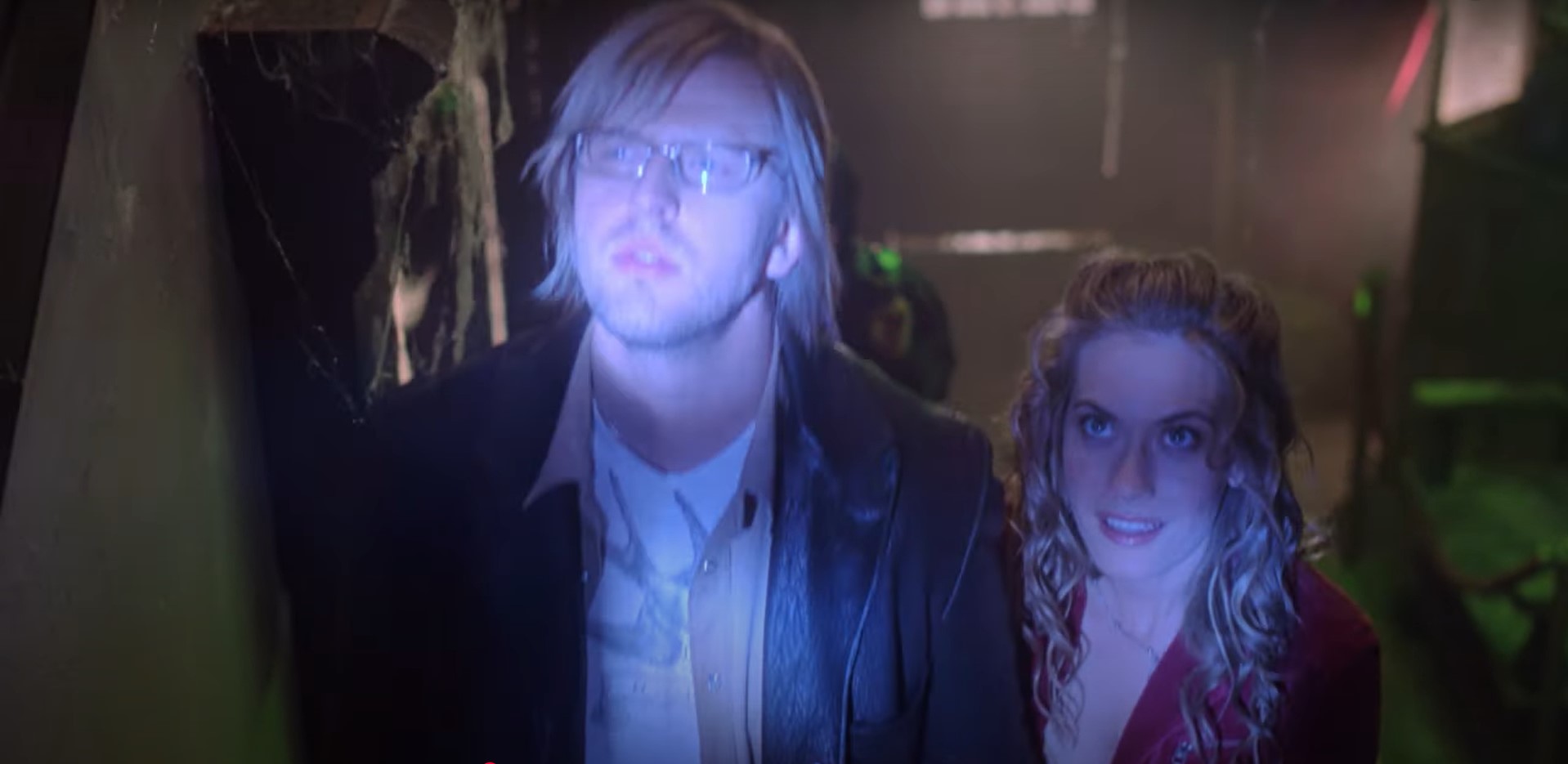
The VIP package for a historical studio backlot tour gives seven strangers a behind-the-scenes look at how movies were made and the background behind them.   When their cart pulls up to one of the more infamous movie houses for Desmond Hacker’s fright flick Hysteria, the tour group are eager to explore what’s typically off limits for normal, non-VIP tour attractions.  Once inside the backlot house, much of the Hacker’s funhouse tricks and odd designs are although covered in cobwebs are still very functionally practical as the group separates and goes room-by-room to peruse a movie house.  When they all gather in what looks to be the commune dining area, they find themselves unable to locate the way out no matter which unlocked door they choose, which circles them back.  The tour guide mentions Hacker’s movie had similar parallels and that the only way to free themselves would be to tell their own personal horror story.  With nowhere to go and nothing to lose, the stories begin their descent into terror. 

For someone who doesn’t go out of their way to watch horror anthologies, I’ve been on a kick lately with a decent string of short film compilation feature, starting with the latest entry from the popular “V/H/S” franchise, “V/H/S/Beyond.”  Next up takes us back to 2006 with “Trapped Ashes,” a campy horror anthology that not only brought together legendary genre directors, such as “Friday the 13th’s” Sean S. Cunningham, “Gremlins’s” Joe Dante, “The Matrix” visual effects arts John Gaeta, “Silent Night, Deadly Night 3:  Better Watch Out’s” Monte Hellman, and the late director of “Altered States,” Ken Russell, but also brings together aged, yet still legendary, familiar faced actors that have since past that short time between 2006 and 2025   Dennis Bartok wrote the anthology piece and is his brainchild, producing the film.

Those aforesaid actors have a combined nearly centuries (plural!) of experience with careers spanning an average of 50 years each.  Henry Gibson (“The ‘burbs”), John Saxon (“A Nightmare on Elm Street”), and Dick Miller (“Gremlins”) all together in one film.  Granted, Dick Miller’s cameo was so short that all three were only together for a brief scene but the trio alone should bring in genre fans to witness Henry Gibson in a persona he does best, a round faced under stark white hair and with puppy dog eyes that draws one closer to his innocence only to have the rug snatched right from under you when he turns sinisterly dark as the seemingly harmless tour guide.  Saxon also plays true to his conventional character archetype as a wise-cracking tough guy too cool for school; this time, he plays a screenwriter haunted by his own betrayal toward his best friend while being infatuated with a bewitching beautiful woman.  Unlike most horror anthologies, “Trapped Ashes’” individual tales contain mostly the same cast as the wraparound with Saxon, Jayce Bartok (“Founder’s Day”), Lara Harris (“The Dogfighters”), Rachel Veltri (“Pray for Morning”), Michèle-Barbara Pelletier (“Brainscan”), and Scott Lowell as the tour guests with personal hell to tell.  The heterogeneous group convey their supernatural-laced anecdotes that mingle inside the context of their being or life whether body image, marriage, friendships, and childhood, subjective intimacies that shape their excruciating experiences that, if audiences see them on screen for the first time, wouldn’t be clear how deeply burdened or troubled they are at first glance.  Once the story is told, moods and personalities shift, or perhaps seemingly normal habits are made clearer, and this is made possible by the eclectic bunch of actors to carve away their characters’ exterior shells to see who they really portray.  Ryo Ishibashi (“Audition”), Yoshinori Hiruma, Mina E. Mina (“Eastern Promises”), Winston Rekert (“Eternal Evil”), Ken Russell, Tahmoh Penikett (“Trick r’ Treat”), Tygh Runyan (“Disturbing Behavior”), Amelia Cooke (“Species III”), Luke Macfarlane, Deanna Milligan, and Matreya Fedor (“Slither”).

Riffling through the obvious camp “Trapped Ashes” touts very proudly, there are nuggets surrounding the unsavory themes.  Body dysphoria within “The Girl with Golden Breasts” is one of these topics, where an actress feels compelled to enhance her bosom for better, younger roles, and that speaks the relevance ill of the movie industry’s perverse tidings of late as actors and actresses continue to fill, inject, scar, and manipulate themselves into being their unnatural self to satisfy producers, execs, and audience likes and expectations when, in reality, hurts nothing but themselves.  Dissatisfaction marriage, or perhaps better labeled stagnant marriage, leads into invasive third party to sate long neglect passion and in this case, that third party is an ancient Japanese demon named Seishin (Japanese for Spirit) who lures the wife’s sexual appetite down to the pits of the netherworld.  From there, themes love triangles, obsession, cheating, and dysfunctional family structures formulate a pod of personal pate smeared with victimization, the victims being the storytellers stuck in the Desmond Hacker’s Hysteria backlot house.  “Trapped Ashes” isn’t about being victim, it’s more about playing the victim and those playing may not be victims of their own tales at all that adds a morsel of supernaturality to the recipe that changed the course of the idiosyncratic anecdotes that are close to their emotions and mental well-beings as well as proximally physically hazardous. 

Our first time covering the Dennis Bartok and Craig Rogers founded Deaf Crocodile release and it doesn’t disappointment with a sleek new 2-Disc 4K UHD and Blu-ray of “Trapped Ashes,” scanned and restored in 4K for its Blu-ray debut.  Presented in a widescreen 1.85:1 aspect ratio, the Deaf Crocodile UHD is HVEC encoded, 2160p Dolby Vision, BD66 and the Blu-ray is AVC encoded, 1080p high definition, BD50.  For an early 2000 production, “Trapped Ashes” doesn’t have the digital veneer of early 2000s film besides some visual effects work of the image manipulation drooping effect.  The extra pixels of UHD really brighten and elevate the image to today’s standards to surface the most inconspicuous details lost in standard definition.  Color saturation and skin tones appear natural and organic with no signs of compression issues or imbedded problems with the digital equipment.  Depth has really opened up in areas like the funhouse illusions of the Hysteria house in the wraparound segment and or in “Twin” when reality of the situation is made clear to put the explanation in one single medium-to-medium closeup frame.  Blu-ray copy mimics a lot same UHD accolades with a less fine tune edge around the background.  The English DTS-HD 5.1 surround sound is the only audio option available on both formats.  More than ample, the lossless provides a deepening immersion the deeper you go into stories with balanced side and back channels complimented by an even-keeled LFE to register the bass near the front while whispery events hover around a surrounding backside, such as with Cunningham’s “Jibaku’s” drawing-in hallucination moment of a Japanese painting that instills reverberating echoes and Shepherd tones.  English SDH subtitles are available.  Bonus features include threw new interviews – Dennis Bartok moderates a feature-length, online platform interview with director John Gaeta, cast members Jayce Bartok, Scott Lowell, and Lisi Tribble, producers Yuki Yoshikawa and Yushifumi Hosoya, and cinematographer Zoran Popvic, a second feature-length interview with cast members Tahmoh Penikett and Tygh Runyan and production designer Robb Wilson King, and the last approx. 40-minute interview is with producers Mike Frislev of Nomadic Pictures.  Extras do not stop there with a director’s cut of Monte Hellman’s “Stanley’s Girlfriend,” the original full-length cut of Ken Russell’s “The Girl with the Golden Breasts,” and a 5-part making-of with cast and crew archive interviews, a new visual essay Hollywood Parasite:  Hysteria in Trapped Ashes by journalist and physical media expert Ryan Verrill and film professor Dr. Will Dodson.  This is the so-called standard release compared to its Deluxe Limited Edition companion release, but this release is also pretty deluxe physically.  There’s no limited O-slipcover but the unique, almost 70’s-eseque cover design is appealing yet simple with a reverse side depicting an image of the wrapround characters inside the Hysteria house dining room or commune area.  The UHD and Blu-ray overlap each other in their differentiated locking mechanism on the ride of the clear Amaray case while the left insert portion holds a Deaf Crocodile QR code for access of the transcribed bonus content.  This release has the rated R cut with a runtime of 104 minutes and is region encoded A playback only.

Last Rites: Anthologies can be the antithesis of horror – building and dropping tension, an innate broken narrative, different stylistic choices that disunify the entire film, etc., but if campy enough, if not taken too seriously, if cast John Saxon, Henry Gibson, and Dick Miller, “Trapped Ashes” can find a home in the genre and in our collections with a new and extra-loaded Deaf Crocodile 4K UHD and Blu-ray set.

4K and Blu-ray “Trapped Ashes” from Deaf Crocodile. Available Here!

No One Can Hear You Scream in EVIL Found Footage Space! “V/H/S/Beyond” reviewed! (Acorn Media International / Blu-ray)

Go Beyond the Limit with “V/H/S/Beyond.” Now on Blu-ray!

Six new tapes push the boundaries of what we know is true and what we know as reality.  Six new tapes confirm that we are not alone on this Earth or even in this universe.  Sex new tapes shows the horrors beyond our plane of existence and into another dimension of fear of the unknown.  A special tasked police force raids a house horded by violent, brainless baby-nappers only to discover the horrible creature lurking in the attic.  A megastar under the pressures to perform breaks from the mortal chains of human greed and power.  Skydiving friends encounter an alien attack miles above the Earth surface.  A doggie-daycare aims to transfigure and train people to sit, rollover, and behave like good, obedient hybrid canine creatures, a woman determined to find proof of extraterrestrial’s in the Mojave desert found curiosity didn’t just kill the cat, it also brought it back to life to kill it again and again and again, and a two flea market bought VHS self-tapings quite possibly reveal the horrifying truth of if we are alone in the world.

The next grand tour through “V/H/S” horror has entered orbit!  “V/H/S/Beyond” abducts and probes our fear receptors with invasive and terrifying cold instruments of science-fictional horror tales.  “Beyond” marks the 7th entry into the found-footage anthological franchise formed over a decade ago in 2012, created and produced by genre devotee Brad Miska under his founded, longstanding horror website Bloody Disgusting, and this entry’s theme “Beyond” denotes a sci-fi flare from the hellish man-made creations to vicious visitors from the void above.  Miska returns as producer alongside Josh Goldbloom, James Harris, and Michael Schreiber all of whom have been a part of the series since 2022’s “V/H/S/99.”  Cinepocalypse Productions, Studio71, Spooky Pictures, and Shudder serve as coproduction companies for the shorts directed by Jay Cheel “Abduction/Adduction,” Jordan Downey “Stork,” Virat Pal “Dream Girl,” Justin Martinez “Live and Let Dive,” Christian and Justin Long (yes, that Justin long from “Jeepers Creepers” and “Tusk”) “Fur Babies,” and Kate Siegal “Stowaway.”

“Beyond” introduces a variety of situations, mostly flipping between man-made mistakes to alien encounters, with a medley of spirited characters to shepherd the shorts where they need to end in a timely outcome.  Each found footage story is inherently different with no two situations nearly alike, keeping to the same synonymous rhythm that has garnered fandom for the “V/H/S” anthologies.  The wraparound segment has the facsimile of a mystery documentary of two flea market purchased tapes that are believed to be evidence of alternate life beyond this universe with mock interviews given by the actors casted in the film – Brian Baker, Gerry Eng, Sam Gorski, Mitch Horowitz, Wren Weichman, and Trevor Dow discussing the history of tapes and the house they’re filmed in, social alien background and perception, and determining if the tapes are authentic.  Like all the other wraparounds, story progression is interspersed between the five other shorts with the first being “Stork” where the special police task force W.A.R.D.E.N. takes the fight to the paranormal.  Officers Broome (Thom Hallum, “Bull Shark”), Aubert (James C. Burns, “Lake Dead”), Bennet (Jolene Andersen, “Doctor Death”), Ivy (Tyler Andrews), and E.T. (Vas Provatakis, “Children of the Pines”) storm an infested monster house with rookie Segura (Phillip Andrew Botello, “Devil’s Revenge”) to save stolen infants.  From here, paparazzi Arnab (Sayandeep Sengupta) and Sonu (Rohan Joshi) find themselves at the mercy of an all-powerful and vengeful goddess in megastar Tara (Namrata Sheth), birthday boy Zach (Bobby Slaski, “White Terror”) finds himself free-falling into an alien invasion, doggie daycare owner Becky (Libby Letlow) is dead serious about Frankensteining the purrfect fur babies, and UFO researcher Halley (Alanah Pearce) will find that discover the truth will be a painful purgatorial experience.  “Beyond” brings a wide range of talent to the table with ensemble casts, streamers, Bollywood actors, and solo preformists to exact another side of fear for the franchise with a principal supporting cast rounding the anthology with Virat Pal, Rhett Wellington, Hannah McBride, Matthew Layton, Braedyn Bruner, Phillip Lundquist, and Kevin Bohleber.

One would think an anthology series built upon the idea of a found footage would eventually become stale amongst the public who are feeling the fatigue of an overused subgenre, much like the zombie subgenre in the early 2000s to early 2010 where every George Romero wannabe with a handheld camera set out to either homage or hit it big with the next undead head success.  Found footage is currently, or rather vaguely, in the throes of being overworked because of how cost efficient and effective films of its ilk can be to those inspired to create.  However, the “V/H/S” series hits differently.  For one, it’s an anthology series that brings a fan of imagination to its whole and we’re not subjected the one type of found footage narrative as dissimilar styles, tastes, direction, writing, etc., converge by means of short films.  Another element of “V/H/S” staying power is the series created and developed by genre admirers, such as Brad Miska whose veins course with literally nothing else but the blood cells of the horror.  Lastly, “V/H/S” continues to evolve by colliding past and present, nostalgia and current, and myth and fact together with a serrated surrealism that can thrill you with, often times, hell on Earth entertainment as well as scare the living bejesus out of you.  “Beyond” maintains the trend by coming out of the 80’s and 90’s vibe from the last three installments and diving headfirst into beyond the scope of traditional monsters, terrestrial creatures, and iconic monsters for nothing born of his Earth, such as with the wraparound story, “Stork,” “Live and Let Dive,” and “Stowaway,” and nurturing more a mad-science madness in “Dreamgirl” and “Fur Babies.”  A possible detriment to “Beyond’s” ability to connect with fans of fear and frights with the latest entry leaning heavily on the physical side of action-gore that sometimes is a tall order of campiness rather than the instillation of underlaying, psychological terror aside from the Mike Flanagan (“Oculus,” “Doctor Sleep”) penned “Stowaway” that evokes some segregated space isolation and a death-defying situation that still feels the repetitive painful sting.

“V/H/S/Beyond” lights up the night sky with blood red intergalactic splatter and takes mad science to a whole new abominable level with a new Blu-ray from the UK label Acorn Media International.  The AVC encoded, 1080p high-definition, BD50 presents the film in a widescreen 1.78:1 aspect ratio with an occasion retro-slip into pillar box 4:3 for that VHS façade.  Image presentation ranges because of the home movie, handheld camera, and body cam found footage trope that’s this series bread-and-butter.  Through the intended static, interlacing and tracking lines, fuzzy darkness, quick movements, and mostly whichever video interference objects one can think of, minus authentic celluloid print damage, to pseudo-sell found footage realism.  The outcome is superbly effective and highly captivating albeit moments that are too agitated to understand and connect objects and sounds in the narrative, another part of the collective that makes it effective yet also makes it wasted runtime space for viewers.  What’s not wasted is the chainsaw point of view in “Stock” where ripping through and decapitating monsters has DOOM inspiration all over it. A majority English with some Hindi DTS-HD 5.1 surround sound mix is, too, designed to mimic the gimmick of handheld found footage. Distortions and other audio mic cuts and external interference on the audio system are included to sell the illusion and are often done at great detail in time, overlay, and spatial fractions in-between viewer and what the view is experiencing on screen. Depth is mostly front loaded within the context of first-person viewpoints while the surrounding channels take a subtle backseat but whisper through when there’s a sound behind the camera. LFE charges in during more rambunctious moments, which there are a lot of, and are not quelled for the sake of dialogue that’s mostly discernible when necessary. English subtitles are available. The encoded special features on a static menu include the pre-visuals of explosions, disintegrations, and free-falling bodies on the practical skydiving of the cameraman explain how many jumps were needed to put the pieces altogether for that breathtaking scene at 20,000 miles in the sky, actress Libby Letlow’s audition tape for Becky in the “Fur Babies” short, the making of “The Dreamgirl,” a behind the scenes of “Stork” with IGN, and the how the timelapse was created in “Stowaway.” Physical areas of the releases are about the same other Acorn Media Releases with the thicker UK Amaray casing that has the illustrated cover art of the “V/H/S” thematic skull worked into the swirling steller-laden of scary space. Inside is just the disc pressed with the same image art. UK certified 18 for strong violence and injury detail, “V/H/S/Beyond” has a runtime of 114 minutes and is not noted on the back cover in regard to the region playback, usually Acorn Media releases are hard encoded with region B, but this particular release play on a Region A setting and could be very well region free.

Last Rites: The “V/H/S” team continues to maintain a sustainable supply of fresh meat for the grinder in relation to its current theme. Plenty of splatter, mayhem, lunacy, and backbone quivering chills to get lost in “Beyond’s” cosmic Hell. Can’t wait to see what’s next in store for the anthology!

Go Beyond the Limit with “V/H/S/Beyond.” Now on Blu-ray!

Pinksploitation EVIL is Transgressional Passion! “Love and Crime” reviewed! (88 Films / Limited Edition Blu-ray)

Limited Edition and Numbered Blu-ray / DVD Set Available at Amazon!

The dead body of a young woman arrives at pathology for post-mortem autopsy.  A victim of a heinous crime, the bare corpse already informs the head pathologist of sexual activity before, or after, death because of the fresh semen that’s inside her.  As he toils over her to open the chest, separate the ribs, and get a good look inside to see how and why she perished, the pathologist remains in disbelief that the semen inside her, inside his lifeless wife before him on the cold medical table and under the bright lights, is not his own.  Digging deeper into how someone could kill his beloved wife, the researcher in him hits the books, selecting and scouring through records of similar cases of murderers and rapists from over the years.  Each one under different circumstances concludes in a sentence that reflects the person they have become.  Inside the mind of a killer is a long hard look at ourselves in how far we go for treasure, love, and to quench our insanity. 

“Love and Crime,” or officially known under the Japanese title as “Meiji Taishô Shôwa: Ryôki onna hanzai-shi” aka “Showa Era:  History of Bizarre Female Crimes,” is the Japanese anthology from 1969 that pictorializes true crime narratives of mostly women transgressors, as the title suggests.  Yet, the Teruo Ishii helmed anthology is not entirely female perpetrator centric as the anthology jumps ship briefly to explore crimes against female victims for a crossover, comparative distinction.  Ishii, who played his hand in producing late 1960s sexploitation and violence by directing films in Toei Company’s pinku series that showcased the two subcategories, such as “Orgies of Edo,” “Shogun’s Joy of Torture,” “Inferno of Torture, and among many other titles with similar salaciousness, was thrust into “Love and Crime’s” consolidating short film escapade with a wraparound monologuing narrative that was just as intriguing as the sordid stories themselves.  Shigenu Okada produces “Love and Crime” as well as many of the films aforementioned.

Yoshida Teruo kicks off the wraparound with a mater-of-fact narration running through the head of Murase, the anatomist examining his dead wife’s corpse (Ritsuko Nakamura), in what would be the grisliest part of the anthology, especially when that chest snaps during separation.  Having worked with Ishii previously with “Abashiri Bangaichi,” a crime thriller about a reminiscing criminal aimed to reform himself, Teruo only worked a short stint with the Toei Company but his time spent on such films like “Crime and Love” discerns a piece of the dramatic devotion that would be otherwise missing in these purely exploitative films.  As Marase puts nose to book, he unearths and internally narrates the start of his true crime story journey research, beginning with the cut-throating scheme of the Toyokaku Inn case.  Chiyo (Aoi Mitsuko, “Melancholy Flesh Business:  Sensuous Zone”) and Kosuke (Kenjire Ishiyama, “Kwaiden”) own and run the humble Toyokaku Inn but when Chiyo seeks to changes businesses and cut ties with her philandering husband Kusuke, a treacherous and murderous plot against her is formed between Kusuke, spearheaded by assistant manager Kinue Munekata (Rika Fujie, “Outlaw:  Heartless”), and executed by maintenance man Shibuya (Takashi Fujiki, “Shin Godzlilla”).  From there, the film transitions to other female intertwined crime tales of Sada Abe, a woman who would kill her lover because of love and insistence during alternative sex, the case of Kunihiko Kodaire, a serial rapist and murderer spilling tricks of his trade to authorities, and the last known female murderer executed by katana beheading, Takahashi Oden, for poisoning her husband.  Each performance plays into the intricate patterns described by their true life counterparts with either a chilling contentment in taking a life or hurdling the obstacles inward to do the unpleasantries of what is asked of them  Circumstantial opportunities and conniving plots bury bodies six-feet under in a multifacted range of expression, greed, lust, and all the other deadly sins that plague mortals right to the very end.  “Crime and Love” fill out the pinksploitation anthology with Yukie Kagawa (“Female Prisoner Scorpion:  Jailhouse 41”), Eiji Wakasug (“Inferno of Torture”), Tomoo Koike, Tatsumi Hijikata (“Orgies of Edo”), Yumi Teruko (“Horrors of Malformed Men”), and a special appearance by the actual, reclusive, convicted murderer Abe Sada herself, shot from a distance while being interviewed by Yoshida Teruo.

As anthologies go, especially one rare as true-life crime and love, or in this case sexploitation,” “Love and Crime” has an unsystematic design when it comes to the stories and how they relate to the wraparound narrative.  For starters, not all the bizarre crimes are female centric.  The story of Kodaire revolves about a male serial rapist and murderer divulging his collected anecdotes to investigating confessors and are depicted in monochromatic flashback, the same as his present yarn telling scenes.  Though the case involves multiple women victims, Kodaire greatly stands out amongst the compilation of crimes for the very fact he is a man in an anthology literally entitled History of “Bizarre Female Crimes.”  Was the case of Kordaire a gap filler? Perhaps the uniquity of Japanese serial killers is so low and rare in their culture and history that this particular short story had enough estrogenic blood spilled it avoided the short list cut.  Each story’s relationship toward the wraparound is also thin as neither story suggests a same or remotely similar pattern to death of Maruse’s wife in what is more of a random-generator selection of stories read and worked through for better understanding of the killer female psyche rather than what makes the male killer tick to hit-and-run his wife.

“Love and Crime” is 88 Films’ answer to opening the door of the wonderfully violent and sexually charged world of pinksploitation.  A limited edition and numbered dual-format, AVC encoded, 1080p, 50-gigabye Blu-ray and standard definition, MPEG encoded, dual-layered DVD, set presents the 1969 film in the original aspect ratio of 2.35:1.  With various stylistic color grading outfits, such as grayscale image for the Kadaire case story or the last case of Takahashi Oden that’s starkly cold rooted in blue and green.  There’s not a lot of mention of what kind of work went into restoration but the print has kept in excellent condition with age or damage wear kept to a minimum with nominal vertical scratching and dust speckling.  Colors appear to be handled with true reproduction of the dyed processing, rich and bold leaves no room of ambiguity of image or object representation.  Skin tones appear natural that do flirt a lighter shade of orange at times, textures are coarse and greatly apparent, even in the black-and-white story, and there’s tremendous environment or background distinction that creates an organic depth between character and their setting rather than them being crushed into an all-in-one image.  The encoded audio is the original Japanese language LPCM mono 2.0 that captures the soothing project whir during post ADR.  Dialogue retains prominence with a clean enough clarity albeit some negligible hissing sporadic throughout.  Ambience is not as enlivened within what’s mostly an isolated dialogue mix but is there to complement to composition when necessary, such as the blustery snowfall during the execution that sets a tumultuous tone of desperation and severity.  The improved English subtitles are timely synched and error-free.  Special features include an audio commentary by the 88 Film’s Japanarchy release fire starter and Midnight Eye’s co-editor Jasper Sharp and Fangoria staff writer Amber T., a brand-new film introduction and conversation by film critic and journalist Mark Schilling, a still gallery, and trailer. The Obi-striped 88 Films packaging has a very familiar feel to what Radiance Films, another boutique UK label, is doing with their Blu-ray releases nowadays and “Love and Crime” could be confused for a Radiance resemblance, but clear UK Amary has a gorgeous, commissioned, newly designed artwork from Ilan Sheady that brings all the sordid shades of this anthology to life. The cover art is also reviersible with the original Japanese one-sheet. Inside, the Blu-ray and DVD overlap in a dual-disc lock system on the right while the left stashes 15-page black-and-white-and-colored pictured adorned essay by Nathan Stuart prologued with cast, crew, and release acknowledgments and bounded by the same Sheady artwork without the Obi strip obstruction. 88 Films release comes both in region A and B playback, is not rated, and has a runtime of 92-minutes.

Last Rites: “Love and Crime” will be a love-it or hate-it anthology of early pink violence and sexual discordance because of its broad stroke theme but the 88 Films’ limited edition, Japanarchy debut is an exciting and eager look toward the future of the label’s dive into Japan’s exploitational cinema.

Limited Edition and Numbered Blu-ray / DVD Set Available at Amazon!

EVIL, Over a Decade in the Making! “Profane Exhibit” reviewed! (Unearthed Films / Blu-ray)

“The Profane Exhibit” is Finally Here! Come And Get It!

Forged, smelted, and baked from the fiery grounds of hell, 10 stories of bleak and utter horror crimson the soul with blood and pale it with terror.  Ten directors, ten stories, ten obscure unfathomable depictions tell of a draconian religious sister matron with a despotic rule over a child orphanage, a daughter held prisoner by her parents in her own home basement, a cult willing to sacrifice newborns for the sake of their demonic tribute, the Third Reich submitting to extreme measures to keep their ranks pure, a reenactment of a father and son’s unnatural skin-to-skin bonding, a nightclub’s underground bloodletting witchery, and more unnervingly bizarre ballads.  These tales of torment tatter the life force piece-by-piece until there’s nothing left to exhibit, nothing left of one’s humanity, nothing left of being human.  A cruel anthology awaits just beyond the play button, ready to shock, appeal, and maybe even stimulate the perverse, primal nature in us all.   

An anthology a decade in the making or, to be more specific, a decade plus one year in the making in the long awaited “The Profane Exhibit.”  The 10-short film anthology is the brainchild of Amanda Manuel that began principal production in 2013 and finally saw completion and release in 2024 after a slow slog of shoots, edits, and post-production this-and-thats to finally crossover the finish line.  Varying from micro shorts and to average length short films, the anthology employed 10 different in degree genre directors from all over the world to make the mark in what would become a manic syndrome of monsters, mayhem, and molestation.  Yes, we’re talking about some really gross things, some terrifying things, and some other abnormal, abstract, and abysmal things that could be happening right now in your nightmares, or under your nose.  Anthony DiBlasi (“Malum”), Yoshihiro Nishimura (“Tokyo Gore Police”), Uwe Boll (“Bloodrayne”), Marian Dora (“Cannibal”), Ryan Nicholson (“Gutterballs”), Ruggero Deodato (“Cannibal Holocaust”), Michael Todd Schneider (“August Underground’s Mordum”), Nacho Vigalondo (“Timecrimes”), Sergio Stivaletti (“The Wax Mask,”) and Jeremy Kasten (“Attic Expeditions”) helm shorts they’ve either written themselves or by contributing screenwriters Carol Baldacci Carli (“The Evil Inside”) and Paolo Zelati (“Twilight of the Dead,”).  Harbinger Pictures and Unearthed Films, who also premiered it’s at-home release, co-produced the anthology.

Much like the diversity of directors, the cast is also an assortment of aggregated talent that stretches the global gamut.  Popular and classic horror figures like Caroline Williams (“The Texas Chainsaw Massacre 2”) and Clint Howard (“Ice Scream Man”) play the normal couple next door conversating about politics, date night, and work while all the while they’ve locked their daughter away from the world and use her as daddy’s little sex slave in Uwe Boll’s “Basement,” depicting the normal and safe is actually abnormal and danger right in the middle of suburbia.  Others such as the underrated scream queens Monique Parent (“The Witches of Breastwick”) as a fully naked and willing “Goodwife” to her sadistic husband, Mel Heflin (“Queen Dracula Sucks Again”) donning a pig mask, naked by the way, in a rave club along with Tina Krause (“Bloodletting”), Elhi Shiina (“Audition”) and Maki Mizui (“Mutant Girl Squad”) finding happiness amongst death, and notable global genre actors Thomas Goersch (“Voyage to Agatis”) as the German father crippled by his son’s retardation, Dan Ellis (“Gutterballs”) as the hardworking husband who has everything but it all means nihilistically nothing, and Art Ettinger, the editor name and face of Ultra Violent Magazine doing his part with a bit patron part in the nightclub.  Mostly all listed have previously worked with their short film directors previously that denotes a sense of ease and expectation from their performances but that still makes their acts nonetheless shocking.  “The Profane Exhibit” also sees a few newer faces in the conglomerated cast with Christine Ahanotu, Tayler Robinson, Tara Cardinal, Mario Dominick, Witallj Kühne, Valentina Lainati, Josep Seguí Pujol, Dídac Alcaraz, and Stephanie Bertoni showing us what they can dish out disgustingly. 

Was the 11-year wait worth it?  Over the last months years, “The Profane Exhibit” received substantial hype when Unearthed Films announced its home video release, pelting social media with here it comes, get ready for it posts, tweets, and emails and for fans who’ve been following the decade long progress, director Amanda Manuel’s “The Profane Exhibit” does not disappoint as the content storyline harks back to the lump-in-your-throat, gulp-swallowing roots of general discomfort from an Unearthed Films release.  While it may not “Slaughter Vomit Dolls” level gross of upheaved bile and whatever was ingested moments before shooting, the filmmakers go deeper into the viscerally ignorant, ugly truths.  We’re not talking monsters or supernatural entities tearing Hell a new rectum, but “The Profane Exhibit” delineates the sordid nature of the human condition in an egregiously behavioral way that some of these ideas are not so farfetched.  A select few of the filmmakers incorporate surrealism into their shorts, such as with Yoshihiro Nishimura’s aberrant Mary Poppins, known as Hell Chef, replaces a spoon full of sugar with a bowl full of cooked human when turning a frown upside down of a young girl who just killed a man who she suspected tried to rape her.  The Geisha-garbed Hell Chef flies through the air holding up her Wagasa, Japanese umbrella, when her job is done.  Most others are grounded by realism with sadism being the primary culprit – “Basement,” “Goodwife,” and, to an extent, “Sins of the Father” and “Mors of Tabula.”  And then, there are shorts like the late, and great, Ruggaro Deodato’s “The Good Kid’s” that feels hackneyed and unimpressive coming up short amongst the others and makes one think if his name alone awarded the short a spot in Manuel’s lineup. 

In all, “The Profane Exhibit” delicately caters to the indelicate and is a visual instrument of visceral imagery curated for pure shock value. Unearthed Films’ Blu-ray release has finally arrived and is now in our bone-exposed and gory fingertips. The AVC encoded, 1080p high-definition, BD50 allows for dual-layer capacity for not only to squeeze in the 108-minutes’ worth of micro shorts, but allow for extended extras, deserving to fans who’ve waited years for this production to see the light of day.  Like any other anthology, a mishmash of styles but up against each other with the assemblage of different stroke directors and cinematographers but there seems to be no issues with compression, such as banding, blocking, aliasing, or any abundance of blurry noise, in the flexing widescreens aspect ratios of 2.35:1 and 1.78:1.  A good example of Unearthed Films’ codec processing is Deodato’s bridge scene; while I don’t care for the short all that much, the long shots of the bridge are nicely detailed in the nighttime, lit only be the bridge’s powered light poles, creating a downcast of warm yellow along a solid shadow-spotty bridge.  You can see and realize the stoned texture without even using your imagination on how it should look and that tell me there’s not a ton of lossy codec at work here.  An English, Spanish, Italian, and German mix of uncompress PCM 2.0 audio serves as the common output to be as collective and unified as possible.  No issues with hampered dialogue with a clear and focused track.  There dual channel quality is robust and vibrant, living up to Yoshihiro Nishimura’s surreal energy and a commanding Japanese tone while still finding voice prominence in other shorts, if dialogue exist.  Depth is fleeting without the use of a surround mix with an anthology that’s centered around the human condition rather than atmospherics, but I do believe Jeremy Kasten’s Amuse Bouche would have greatly benefited from the distinct gnashing, squirting, and smacking sound elements of a pig being processed to consumption in his wraparound.  English and Spanish subtitles are optionally available. Years of bonus content has been produced and collected for this special release which includes an audio commentary Director Michael Todd Schneider, Producer Amanda Manuel and Ultra Violent Magazine’s Art Ettinger, a world premiere interview with creator Amanda Manuel and short director Michael Todd Schneider at the Buffalo Dreams Fantastic Film Festival, a world premiere Q&A, a 15-minute mini documentary Ten Years Later with “Mors in Tabula” director Marian Dora, an extended short entitled “Awaken Manna” with introduction and discourse, PopHorror’s Tiffany Blem Zoom interviews select directors with Michael Todd Schneider, Uwe Boll, Jeremy Kasten, and showrunner Amanda Manuel, image gallery, and trailer. The 2024 release has a runtime of 110 minutes, is not rated, and is region free.

Last Rites: Worth it. That’s the bottom line for this long-awaited film imbuing with bottom-feeders. Unearthed Films returns to roots with rancidity and fans will find their bloodlust satisfied.

“The Profane Exhibit” is Finally Here! Come And Get It!