Never Steal EVIL’s Dead Body and Think to Get Away Scot-Free! “Frightmare” reviewed! (Troma / Tromatic Collector’s Edition)

It’s not a Nightmare. It’s a “Frightmare” on Blu-ray!

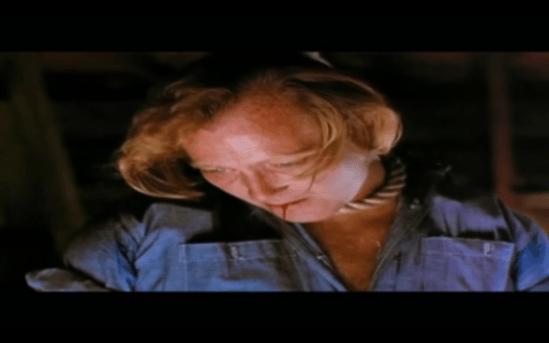
Aging horror icon Conrad Radzoff is on the verge of being forgotten by all except for a few handfuls of diehard fans who gather around a horror society that appreciate classics that are quickly fading from public view.  Arrogant and conceited, Radzoff doesn’t take criticism all too well.  In fact, he kills over it.  After murdering a commercial director and his longtime collaborating director, both of whom loathed his tyrannical, prima donna attitude, Radzoff dies of heart failure shortly after.  The youthful members of the horror society steal his body from Radzoff’s elaborate decorated and booby-trapped mausoleum on a whim and spends the night dining, dancing, and photographing with his lifeless corpse until Radzoff’s wife uses a medium to locate her late husband’s body and inadvertently resurrects him from dead with supernatural psychic powers to pick off his naïve graverobbers one-by-bone in what will be his last great horror performance. 
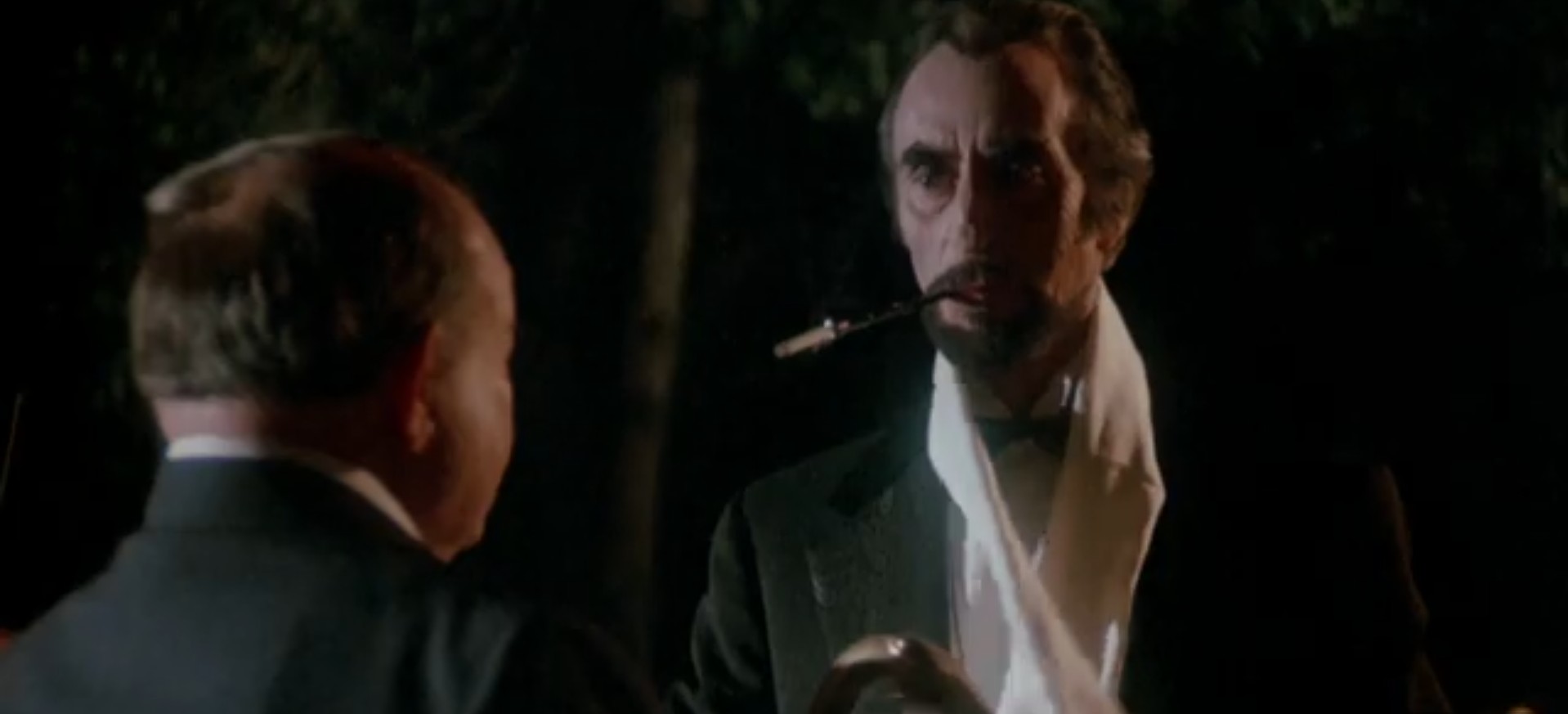
“Frightmare,” aka “The Horror Star,” is the supernatural slasher that tears into the fabric of being forgotten with a lasting impression, one with deadly consequences for a mischievous teens disrespecting the past in order to live with impunity in the present.  The 1983 picture is written-and-directed by Norman Thaddeus Vane, co-director of “The Black Room” and the Elvira-inspired 1988 film “Midnight.”  Shot mostly in the Los Angeles area, “Frightmare’s” principal photography and wrap was completed during 1981 but the film itself was not released until two years later and is not a remake of and has no connection to the Pete Walker film of the same title years earlier in 1974, which focuses on a seemingly mentally disturbed rehabilitated woman released years after committing deadly crimes.  This more necromancing and resurrecting slasher “Frightmare” is produced by Callie and Patrick Wright and with “Shadow of the Hawk’s” Henry Gellis serving as executive producer under the Screenwriters Production Company. 
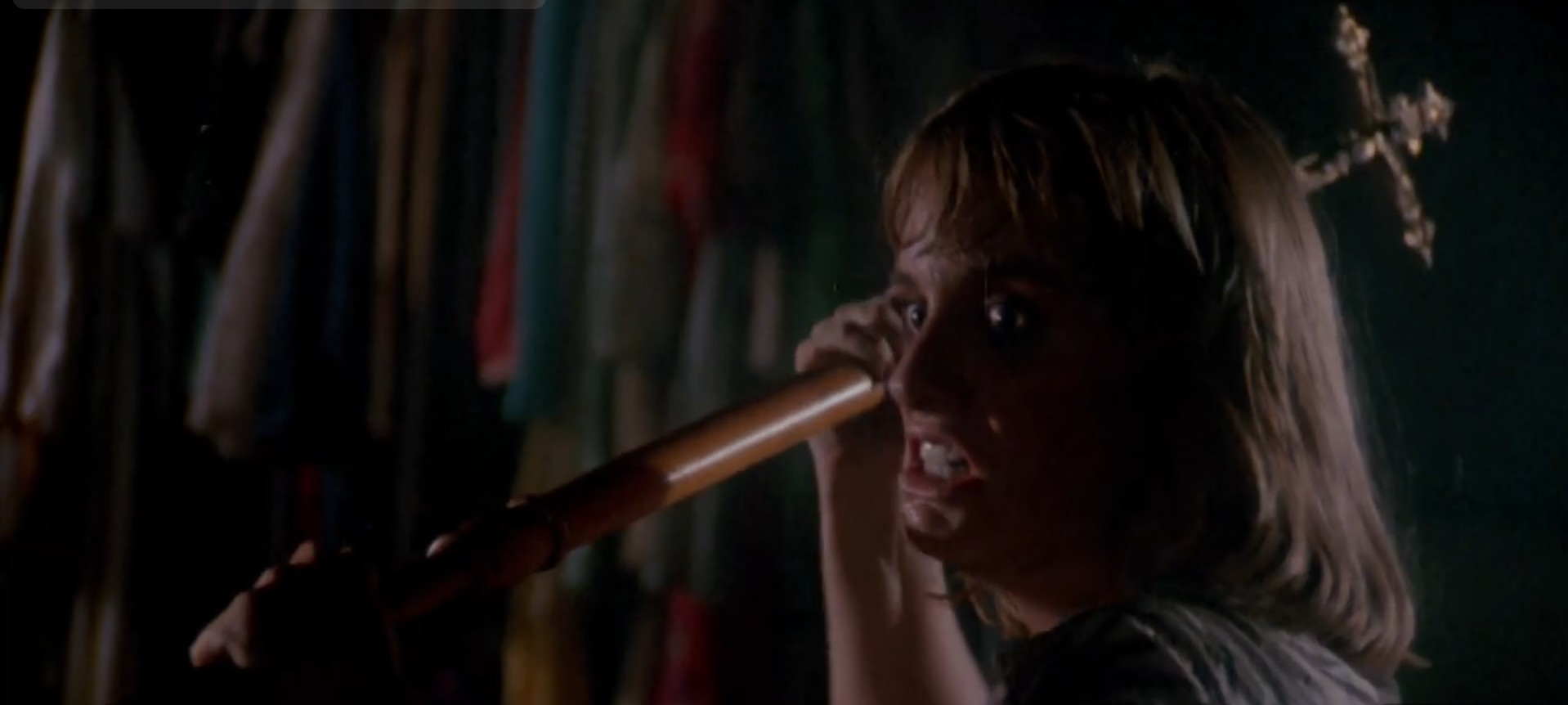
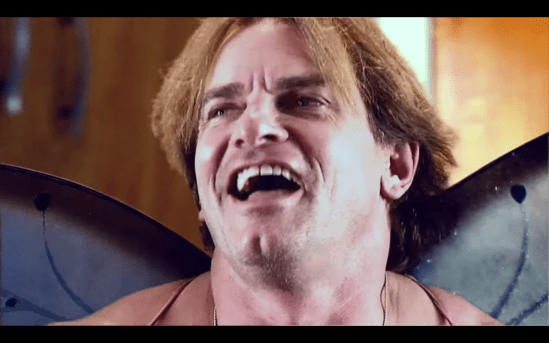
“Frightmare” would undoubtedly become director Norman Thaddeus Vane’s first attempt at replicating a horror icon shell that would later inspire him to direct “Midnight” that pulls influences off horror hostesses, such as Elvira or Vampira.  The centralized character, one who’s prim-and-proper snobbish attitude and flair for the theatrical in film and in life, is loosely, in Conrad Radzoff is loosely based off the Vincent Prices and the Christopher Lees of the genre, classically trained method actors astute to the craft.  Radzoff is, however, embellished with a hellish soul, unlike Price or Lee who sustained a rather indifferent or benevolent character.  There’s a lot to take in and enjoy from Ferdy Mayne’s performance as Radzoff.  Mayne’s first role of it’s kind for the actor with its meta intent to be an actor playing a horror actor reawakened as psychic sociopath from the depths of Hell groomed and garbed as a Vincent Price/Christopher Lee-like gothic vampire, in which Mayne was quite trained for having starred in vampiric films such as “The Vampire Lovers” and “The Fearless Vampire Hunters” in the 1970s, and he crushes the performance with profound effect with Vane’s Euro-style slasher that keeps tabs on the killer as he lurks through the property of the horror society, consisting of going from contravening teens to the unfortunate victims played by Luca Bercovici (“Parasite”), Jennifer Starrett (Run, Angel, Run!”), Alan Stock (“Poison Ivy”), Scott Thomason (“Ghoulies”), then Michael Biehn’s now ex-wife Carlene Olson, Donna McDaniel (“Angel”), and one Jeffrey Combs that would be one of his first films pre-“Re-Animator.”   Narratively, this laid out is the core cast of characters but there are peripheral support characters that are introduced and have key moments but are quickly diminished or erased from completing their story arc.  Radzoff’s wife Ette (Barbara Pilavin, “Maniac Cop 3:  Badge of Silence”) barely has five minutes of screentime but provides the undead Radzoff the key, go-ahead directive to kill his body snatchers but after that intense moment where they psychically connect, her scenes are no more other than one moment with a lightly knotted loose end.  Same can about the intensity of Mrs. Rohmer (Nita Talbot, “Puppet Master II”) that it pops clean off after connecting with Radzoff.  Leon Askin (Doctor Death:  Seeker of Souls”), Chuck Mitchell (“Porky’s”), and Peter Kastner (“Steambath”) fill in the cast.
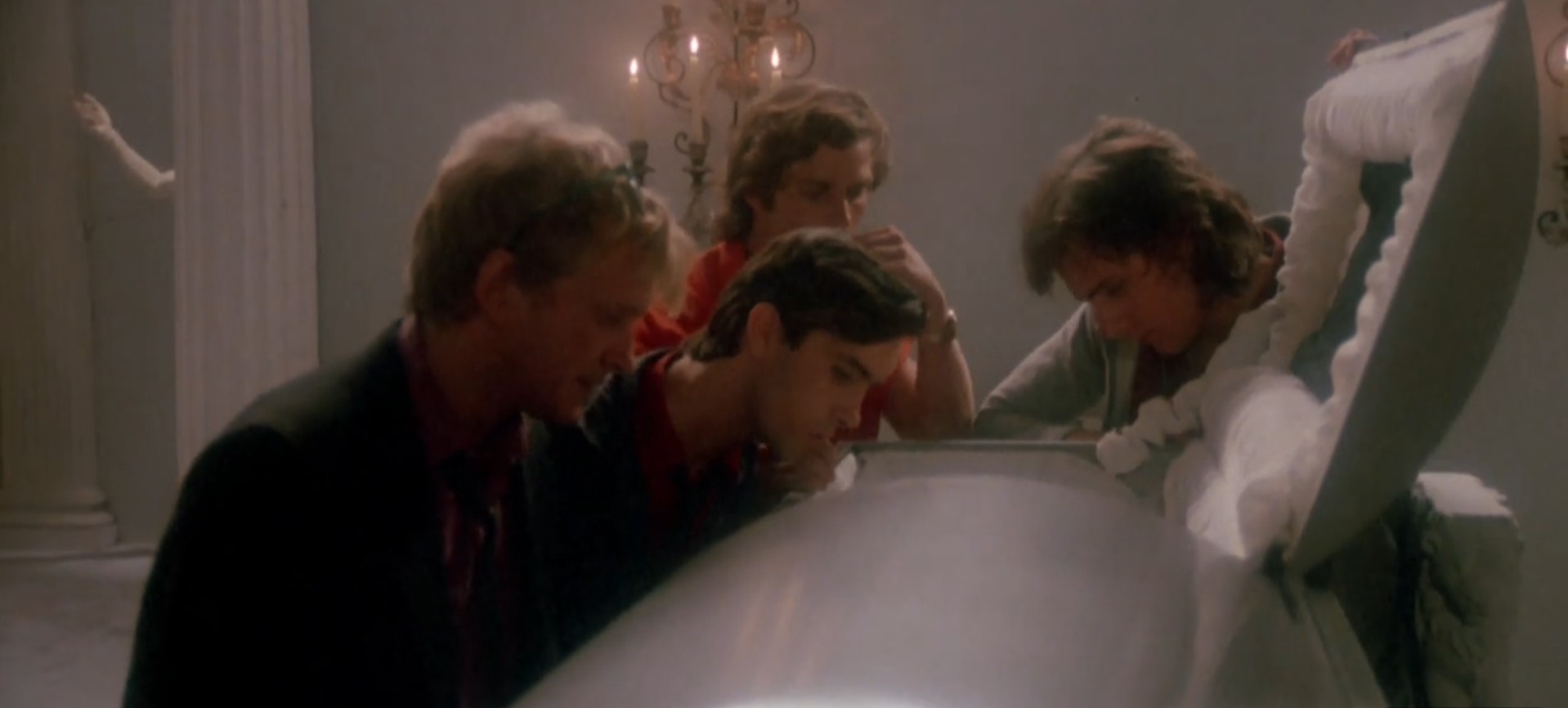
If only one element stood out as “Frightmare’s” most redeeming characteristic, Joel King’s cinematography takes the top spot on the podium with a diffused fog machine backlighting that’s out of this world, angles and movements that complex the simplest and most stationary scenes, and an ingenuity that manifests the magic of a macabre movie also assisted by both of the aforementioned lighting techniques and the camera placements.  “Frightmare’s” also heavily infused with Gothic nuances that pay tribute to the subgenre as well as add to the sinister and oppressive tone of a rapidly enclosing atmosphere of darkness, shadow, and vaulted architecture from Radzoff’s Victorian-era, aristocratic black and white attire to the wood dark-toned and concreated exterior, two-story mansion that becomes the prison to the horror society they can’t escape from, in life with their hobby and in death with Radzoff hunting them through secret passages, dumbwaiters, and its delicately antiquatedly trimmed rooms and hallways.  Blood is accentuated with slow motion and splatter along walls and out of gash wounds with practical effects constructed by “Critters’” Chuck E. Stewart who can build a ghastly looking burned up and smoking body dead on the ground.  “Frightmare” isn’t a narrative that’ll strike fear around every corner but is rather a campy, supernatural slasher with hammed performances and a solid method for one-by-one offing.  The story’s a bit thin with motivations that keep Radzoff’s egocentric boasting about his last performance in death, his deathtrap mausoleum as if the actor knew there would be intruders, and the whole stealing of the corpse that just seemed to be a fruitless, ill-advised whim where there would be no escape from authorities or even the smell of an actively rotting corpse being stowed away in a non-climate controlled attic. 
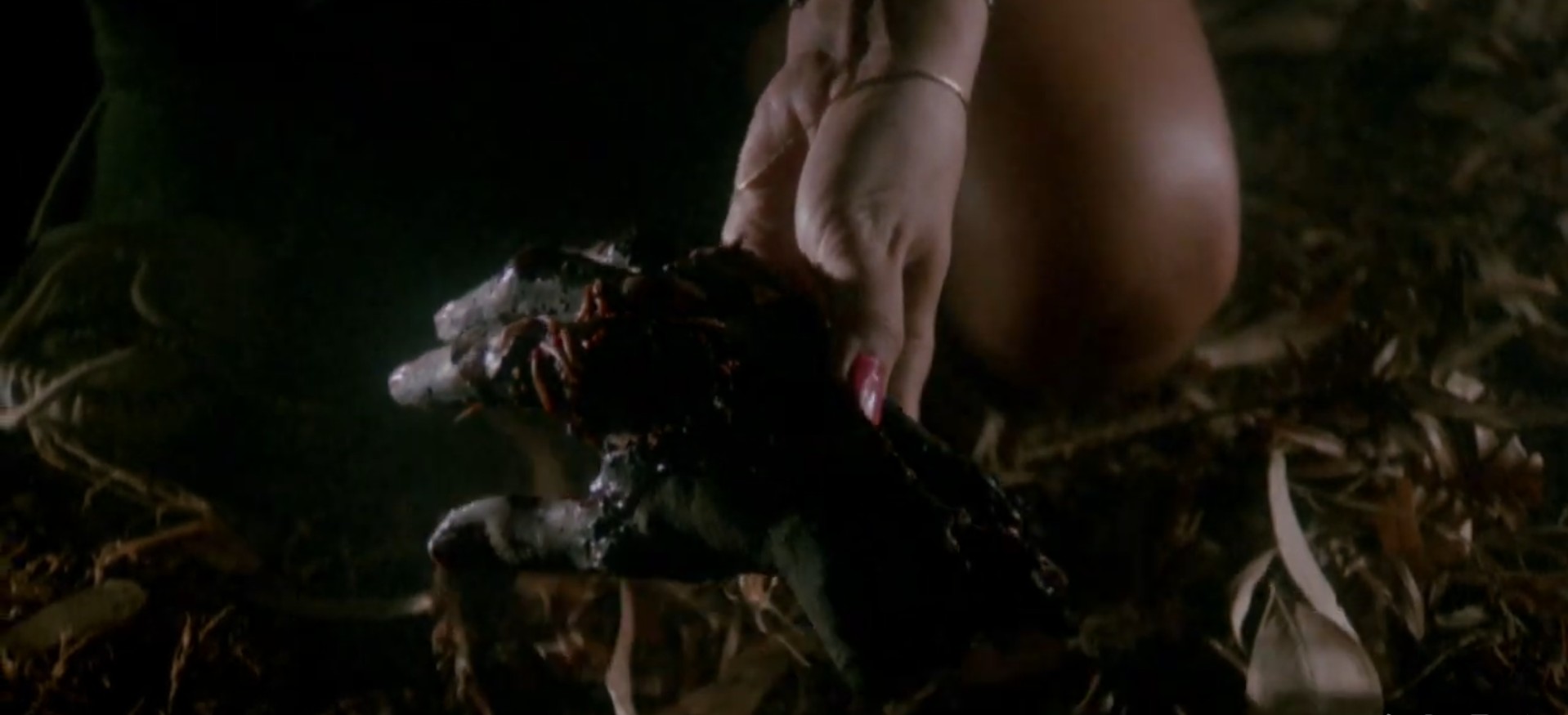
Troma re-releases the Vinger Syndrome transfer onto their own Blu-ray through a partnership contract where Vinegar Syndrome receives first dibs on the upgraded, high definition 1080p, 2K transfer from the original amera negative with the title holding partner, Troma, releasing their own Blu-ray upon after the agreed term and the VS edition now out of print circulation.  The identical AVC encoded onto a BD50 “Frightmare” is presented on a Tromatic Special Edition set that retains the same quality as the Vinegar Syndrome 2021 release even, carrying over some Vinegar Syndrome special features.  Graded toward a dark tone, Joel King’s diffused backlighting and primary color tint elevates “Frightmare’s” kitschy, campy posture toward saturated spooky atmospherics.  Details are more than generally reproduced with deep absorbing in the smaller aspects of eliciting skin surfaces and object textures, such as the mansion wood-grain aesthetic and cobweb strung attic.  There are darker scenes that have unavoidable crush outside the colorful haze key lighting, but most retain pitchy space in the 1.78:1 aspect ratioed framing.  The English audio mix is a DTS-HD Master Audio Mono mix that also the same as Vinegar Syndrome’s release that has adequate audio propagation and diffusion without the lift of distinct layer and multi-channeling.  All through single channel can collide at times, especially between Jerry Mosely’s (“Bloodtide”) inclusively gothic score and the dialogue, but despite the rough audio patches, the single-conduit tracks are constructively discernible for a better part of the runtime.  English subtitles are available.  Special features are blend between Vinegar Syndrome produced historical commentary with David Del Valle and David DeCoteau, a now historical commentary by The Hysteria Continues podcast hosts, an archived interview with director Normal Thaddeus Vane, and a video interview featurette with director of photography Joel King and Troma exclusive supplementaries that are not entirely related to the feature, those include an old Debbie Rechon and Lloyd Kaufman generic intro from the original DVD version (Rechon and Kaufman a years younger), Lloyd Kaufman gives his personal lesson opinion to aspire indie filmmakers from the set of “Meat for Satan’s Ice Box,” the music video for “INNARDS!,” an artwork gallery, the original theatrical trailer, and the ever included Troma Radiation March.  “Frightmare” receives new Troma sleeve art that covers the macabre more than the usual campy slapstick with a horror flair, slipped inside a Blu-ray Amaray with no extra accoutrements inside or on the reverse side the sleeve.  The 86-minute Troma release is region free and is like the R-rated version, much like the Vinegar Syndrome was, but is unlisted on the backside or on the disc.

Last Rites: A supernatural slasher gothic in tone and crude around the edges, “Frightmare” is one of Troma’s more earnest acquirements into the horror genre that looks now leagues better in high-definition with Joel King’s hazy effervescent lighting, Norman Thaddeous Vane’s looping self-referential narrative, and reliable physical gore.
It’s not a Nightmare. It’s a “Frightmare” on Blu-ray!

Mar and Scar is EVIL’s Sullied Handiwork and is Also Its Undoing! “Hanger” reviewed (Blu-ray / Unearthed Films)

Pimp Leroy likes money.  He likes money so much he stop anything and anyone from coming in between him and cold hard cash.  When Rose, his star prostitute, becomes knocked up and she carries the baby into the later terms, Leroy sees that baby as just another obstacle keeping him from dollar signs and performs a back alley abortion on Rose that results in her death and the newborn mauled by the close hanger used to pull him out.   Fast forward 18 years later, the disfigured boy Hanger, named after tool used to extract him from the womb, falls under the wing of his supposed father, one of Rose’s more admirer, only known as The John, and together they seek revenge for Rose.  In the meantime, Hanger is secured a job at the local recycling center where he is befriend by fellow outcast Russell and as The John ignites war against Leroy that spills into every prostituted infested corner of the streets and into the recycler center.

First off…Man, do I miss Ryan Nicholson.  Secondly, “Hanger” is one of the most depraved films I’ve seen in a long time.  Probably the most depraved amongst the credits of the “Gutterballs” and “Collar” writer-director who has left his mark on the sometimes bland indie horror scene with the craziest content that has become the epitomizing taste of Unearthed Films.  Nicholson cowrote the vulgar comedy-exploitation with Patrick Coble in their second feature story collaboration following their 2004 work on the Nicholson brutal rape-and-revenge directed tale “Torched.”  Rape and revenge, plus a whole lot of sleazy, scuzzy, and sordidness, doesn’t buck the Canadian filmmaker into doing something more political correct as the auteur is too well versed into capturing the base layer muck under his Plotdigger Films production banner in Vancouver, British Columbia  “Hanger” is financially produced by Nicholson and Coble and along with Wolfgang Hinz, Stephanie Jennings, and Michelle Grady.

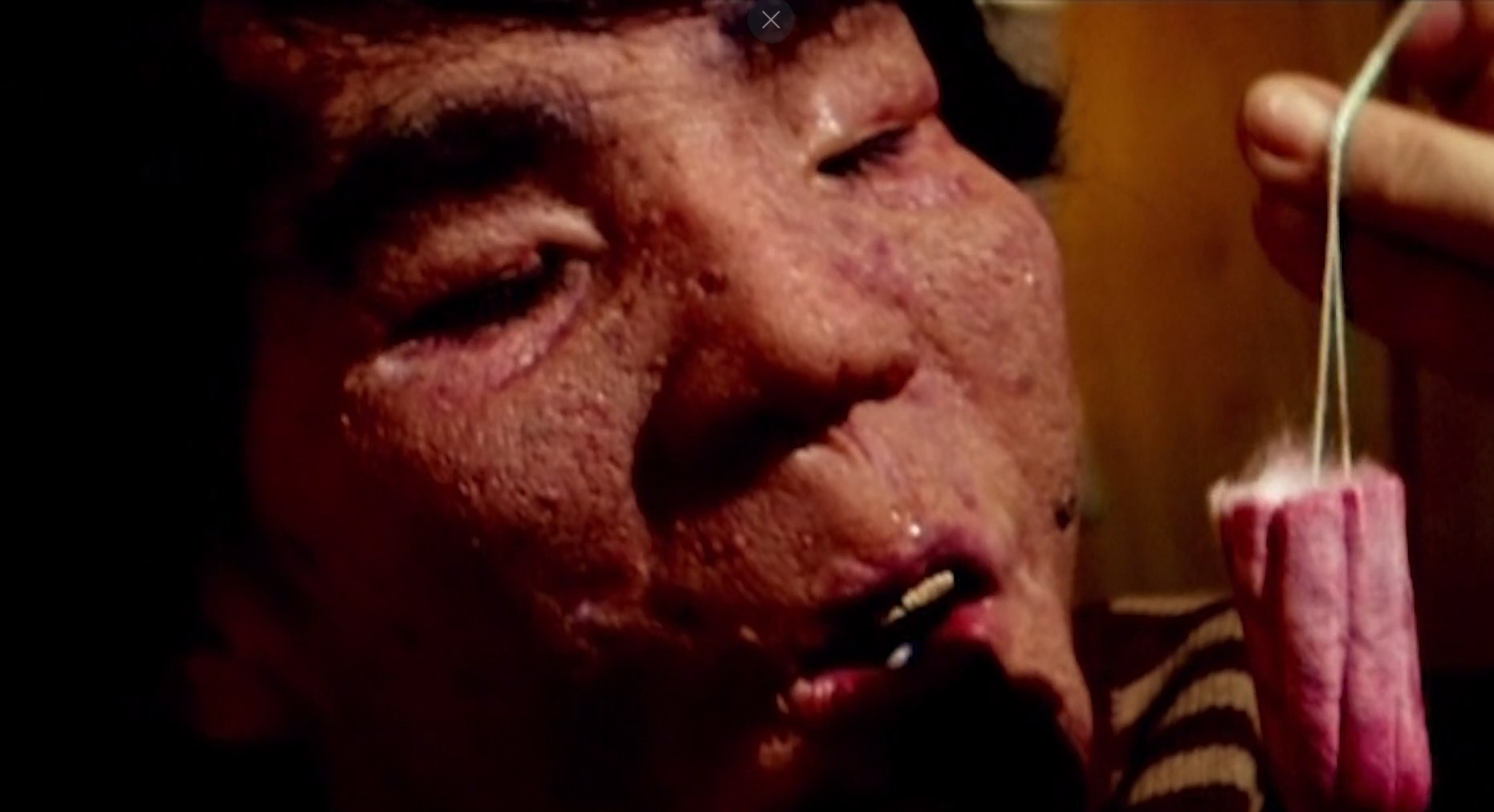
Needing no stamp of approval, “Hanger” would not have been as unpleasantly intoxicating if it wasn’t for the cast.  Each and every character beneath “Dick Tracy”-like prosthetics come to life with their own identifiable quirks and putrid personalities with perhaps the headliner in the tamest role being played by genre icon and scream queen Debbie Rochon (“Tromeo and Juliet,” “Model Hunger”).  Troma’s most famous gal isn’t the only Troma-head to be in Nicholson’s film with a guest appearance by Troma co-founder Lloyd Kaufman as Melvina the Tranny who has her willy kissed the stove-top burner.  I know what you’re thinking – Rochon and Kaufman is in anything is a must-see film!  I couldn’t agree more, but “Hanger” really lives and breathes on the more prosthetic-heavy performances of Nathan Dashwood, Wade Gibb, Dan Ellis, and, especially, Alastair Gamble as Phil.  Also known as Philthy, Phil is also a recycler on the look out for unemptied beer bottles for any kind of alcohol fix he can get his filthy hands on and Gamble really develops the ins-and-outs of the character’s mannerism and style and the “Gutterballs” actor does the role so well that Phil will forever be imprinted into your cerebral character catalogue for the rest of time.  I also couldn’t get enough of Wade Gibb’s Russell who gives the ethnic Chinese man a high-pitched voice and an insatiable hankering for porn and bad jokes.  Russel also has a penchant for trashed picked used tampons the administrative secretary at his job bins when she’s cycling through and after her late night self-pleasures, Russell can’t help but to blather on and on about her to his new friend Hanger, play with domicile explosiveness like TNT by “They Came From the Attic’s” Nathan Dashwood.  Candice Le (who is an uncanny Laura Prepon lookalike), Nadia Grey, Stephanie Walker, Rochelle Lynn-Jones, Susan Arum, Michelle Grady, and Dan Ellis who stars as Rose’s revenger-advocate, The John.

Ryan Nicholson passed away come two years ago come October due to brain cancer. From that condemned mind came some of the most vividly depraved characters, gratuitous gravities, and sweet, lip-smacking gore that just rolls into the place. “Hanger” is no exception; in fact, “Hanger” is probably Nicholson’s magnum opus considering all of the aforementioned descriptors. Obviously, pleasantries is not in Nicholson’s vocabulary with a storyboard progression rock hard on revenge, sex, and a recycling center full of a variety of perversions. Nicholson had a knack for obtaining real locations without having to build sets, one of his more cost-efficiency attributes to appreciate, and the recycling center where Russel, Hanger, and Phil worked was an actual true business, but the way Nicholson shoots the scenes, and with the other exteriors, is masterful in only allowing the audience to see what he wants you to see. Background details are tenebrously obscured as he highlights the basic necessities to convey what to focus on in relation to the characters. These characters are terribly invasive to the point where you can almost smell how they look and the need for a shower after some of their atrocities is well justified as this fetish theme of unsolicited bodily insertions goes over and beyond the borders of comfort. I still can’t get Alastair Gamble’s Phil out of my head. Rubber dicks, fart jokes, racist obscenities, trannies, voyeurism, masturbations, mutilation -“Hanger” has a lot of sin to be unapologetic for as it reeks lowlife war to the max. If desiring a little extra something-something, the Unearthed Films release comes complete with a second version of the film, XXX-rated cut, that’s not available on previous North American releases, such as with Vicious Circle unrated release. Where “Hanger” stumbles is with the narrative that divides like a cell into two rather different narratives after the initial coat hanger botched abortion. Though The John talks a good game and amps Hanger up for vengeance, the ex-military prostitute connoisseur goes for Leroy alone while Hanger and Russell burgeon their unusual friendship with trash-picking tampon diving and just hanging out. With the narrative more so focused on the latter, don’t expect “Hanger” to be round-the-clock carnage from start to finish.

Continuing their distribution of all Nicholson’s Plotdigger Films, Inc. catalogue, Unearthed Films 2-disc collector’s edition Blu-ray of “Hanger” is a must own and a must see for any fans of Unearthed Films’ gory longstanding pedigree and of Ryan Nicholson.  A warning about ghosting and compression artefacts precedes the film that is presented in a widescreen 16:9 aspect ratio, informing views of the unstable picture quality due to the nature of the recording equipment, but for the most part, the worst ghosting and compression issues are in the first scenes of the motel with Debbie Rochon and Lloyd Kaufman.  The controlled contrasting, comprised of limited lighting, a reduction in color, and perfect shadow placement, adds another flavor to “Hanger’s” squalid and vulgar character exteriors by accenting scenes with a post-apocalypse or slum living discomfort.  Details can get a very graphic, explicit, and fleshy as prosthetic organs ride that ambiguous seesaw and the prosthetics overall are extremely unique and memorable under the creative eye of Life to Death FX artist Michelle Grady.  The English language Dolby Digital 5.1 sound mix has ample fidelity despite the self-manipulation of voices and appropriations of cultural accents.  Dialogue is clean and prominently lucid.  Personally, the soundtrack is not particularly my favorite of a compilation of heavy rock and hardcore bands, such as Bison, Nomeansno, Spread Eagle, and Grass City and The Invasives, but do fit right into Nicholson’s scheme and personality.  The 2-disc set comes jampacked with over 16-hours of extras including a commentary with director Ryan Nicholson, Behind the Stoma:  The Making and Taking of Hanger with cast and crew interviews, a video diary-esque of Lloyd Kaufman’s single-day shoot entitled Enough Dope to Hang Yourself With:  On the Set with Lloyd Kaufman, a blooper reel, deleted and additional scenes, photo galley, Debbie “Rose” Rochon’s simulated sex tape “Black on White Bred” with pimp Ronald Patrick “Leroy” Thompson, the Colostomy Bag Edition aka the XXX-rated version of the film, trailer, and a second disc that’s nothing but outtakes.  The scene in the Colostomy Bag Edition, I believe, is just a minor penetrating cut-in scene more than likely not related to any of the actresses in the cast.  The Unearthed Films release is not rated and clocks in at 90 minutes (regular edition) and 91 minutes (Colostomy Bag Edition). The characters alone are worth “Hanger’s” price of admission but Unearthed Films delivers a sweet, comprehensive 2-disc collector’s set for this gore-soaked and grotesque little film.

A Must Own 2-Disc Collector’s Edition of Ryan Nicholson’s “Hanger” Available at Amazon

EVIL’s Madcap and Meshuga Rabbit Hole! “Frankie in Blunderland” reviewed! (Wild Eye Releasing / DVD)


Frankie is the epitome of underachiever living in small, scummy, suburban house with an antagonistic and obtruding houseguest, Tommy Spioch, indisposed to ever new living accommodations and a brash Katie, Frankie’s wife, who loathes every fiber in his body, but reaps the benefits of his income. Fed up with how the way things are, Frankie impulsively decides to do something about by trying to kill Spioch, but when Spioch kidnaps Katie, Frankie wusses out on his freedom from their oppressors and pines to find Katie by hitting the streets. Frankie encounters the strange and unusual as well as the macho confrontational characters along the way, involving a spider with human face, a homeless man with paradoxical wisdom, naked fairies, Mormon aliens, and a hideous marionette-like boy.

In the midst of writing this review, Lewis Carroll is probably rolling over six feet underneath his English gravestone with the bastardized fantasy-comedy variation of his classic literary tale of “Alice in Wonderland with the 2011 released film, “Frankie in Blunderland,” from director Caleb Emerson (“Die You Zombie Bastards!”). Emerson, who is also a frequent editor for “Tosh.0,” helms the pretzeled script written by the late Marta Estirado, who passed away before the official release of the film, but “Frankie in Blunderland” is the Spanish-born writer’s debut screenplay twisted with browbeating cinema anarchism while juxtaposing circumstantial life defeat with an adventitious urge to be better despite the odds. Shot mainly in the greater Los Angeles area of Echo Park and Eagle Rock, “Frankie in Blunderland” is an Emerson funded, low-budget project that courses the weird and unnatural, a pair of descriptors that aren’t so abnormal on and off the streets of Los Angeles.

After assisting his editor skills with “The Gruesome Death of Tommy Pistol,” which was starred, produced, written, and directed by Tommy Pistol himself, Emerson locked down Pistol, whose credited under his real name of Aramis Sartorio, to be the titular character, Frank Bellini. If you’ve been audience to any of Tommy Pistol’s *cough cough* porn, you’re well aware of the male performer’s more-than-professional uninhibited nature to do anything on screen. The same uninhibited nature transcends out of adult industry and into the off-Hollywood narrative as Satorio unloads a wide array of unbridled range that allows Satorio to not only be a despondently enfeebled and sheepish Frankie, but also extend to his self-assured Tommy Pistol persona on the latter half of the character arc. Thea Martin and Brett Hundley (“The Trek”) play Katie and Tommy Spioch respectively as the adverse versions of Frankie’s wife and best friend. Katie and Tommy sincerely embark on the utmost effort in making Frankie feel like a worthless wanker by belittling him continuously on every whim he allows Katie and Tommy to get away with while they also stir the lobotomizing love triangle with their own sidebar skirmishes and much like the Lewis Carroll’s “Alice in Wonderland,” every character that shows up in “Frankie in Blunderland” is antagonistic to one and another in a bizarre battle royale of an irritational reality. The colorful characters continue with performances by David Reynolds (“House of 1000 Corpses”), John Karyus (“Poultrygeist: Night of the Chicken Dead”), Caleb Emerson, Gio Paloma (“Dawn of the Head”), John Christopher Morton (“Girls Against Boys”), Vincent Cusimano (“Blade the Iron Cross”), John Brookbank, Bryan Planer, Sadie Blades, and special appearances by “Slime City Massacre’s” Debbie Rochon as a human-spider and Evan Stone as a well-endowed fairy.

Like a full-feature skit from Eric Wareheim and Tim Heidecker, “Frankie in Blunderland” will activate your receptive inertia dampeners, slowing your comprehension down to the point of a snail’s speed on what exactly is going on with Frankie and his misadventures through an alternate reality of the real world all the while encountering the obscure and abnormal characters along the way, rekindling that trippy, if not hallucinogenic, sensation one gets when watching any other bizarre renditions more faithful to the Lewis Carroll’s classic but with more dry wit and blood. While I feign to know all the answers about the meaning behind Estirado’s outlandish script, I’m truly at a loss for words at understanding it, a feel much of the cast has also stated, and to interpret “Frankie in Blunderland” is to be a perceptive cinematic aficionado disconnected for reality, but from what themes I think I do perceive, Frankie reverses course on moral obligations for self-importance to become a quasi-anti-hero in bizarro world. For much of the film, Frankie is tormented, internally and externally, as he subsequently beats himself up over the abuse he meekly swallows from wife Katie and no-so-best friend Spioch and as act one continues to punish the mildly manner Frankie, there comes a point where Frankie is a glutton to own his maltreatment, learns to evolve from it, and becomes one with the disparaging masses in order to be part of the salt-in-the-wound collective that attempt to beat into submission or just downright destroy those unlike them, seen with characters like the loafer Mike West, the unsightly disjointed puppet boy, and a doughy-soft security guard named Peanutch, whereas a fem-bot, Maggie Robot, whose secretly a robot posing as a woman, can simulate into the natural order of the Blunderland society. When Frankie begins to thrash against and degrade these said characters is when he ascends beyond his suicidal thoughts and shoving aside his timid nice guy persona for more turbulent attitude toward life. If this speculation is anywhere near being accurate, then “Frankie in Blunderland” is a revolutionary view of unorthodox measures to rise up above despair in a day of stupidity enveloped by a ludicrous satire.

Perhaps not very extreme, but certainly raw, “Frankie in Blunderland” lands onto DVD under the Wild Eye Releasing sublabel, Raw and Extreme, and distributed by MVDVisual. The re-released Wild Eye Reelasing DVD is presented in a widescreen, 16:9 aspect ratio, housed with a new illustrated artwork liner that’s akin to the Ghana hand-drawn posters and, more than like, keeps with the first pressing’s lossy compressed image and spastic image jittering shifting between different levels of picture and detail degradation. The vapid coloring devours any story-telling vibrancy, leaving the scenes seemingly lifeless and aesthetically devoid, especially when Frankie has his loopy, unconscious discharge of repeated scenes and avant garde imagery after passing out thinking he killed Tommy Spioch. The visual effects are almost cut and paste crude, but add to the chaotic charm of Frankie’s living nightmare. The stereo dual channel audio mix is equally as lossy noticeably muffled by the compression, leaving also a faint and lingering hum through the 82 minute duration. The position of the dialogue remains even, if not behind, the ambient and soundtrack audiophiles and without any depth and range to compensate the lack of gusto, dialogue is lost in a lackluster limbo of lame and loitering linguistics. On a microbudget of this level, don’t expect in depth special features, but considering the content, I’m happily surprised of what’s available which includes a Caleb Emerson director’s commentary, cast and crew interviews with Aramis Sartorio, a peculiar interview with Thea Martin, and director Caleb Emerson, along with six teaserettes which are short clips from the film, and rounding out with Wild Eye Releasing trailers. “Frankie In Blunderland” is a labor of love for Marta Estirado and a sure fire way to kill a couple of brain cells in this degradingly funny demoralizing epic.

Purchase “Frankie in Blunderland” on DVD from Amazon!

Evil Invades Musically Inclined Fetish Nightclub! “Splatter Disco” review!


Kent Chubbs manages a popular fetish nightclub called Den O’Iniquity in a small conservative town and the demanding, ever-present pressure to close his proclaimed “smut” club from the angry puritanical protestors and unethical politicians have Kent on the hair pulling fences about what to exactly do with his beloved club and loyal employees. To make the matters worse, Kent’s father and club owner, Shank Chubbs, is knocking on death’s door with a bad ticker. To make the matters even more worse, the club’s been a remarkable safe haven for those who choose to express their closeted intimate desires in spanking, furry sex, or lube wrestling, but, during the holiday season, the club has had a low hanging dark cloud in a form of a deranged killer whose been destructively rampaging through the club’s most precious employees and enthusiastic patrons. In order to save everything he holds dear, Kent must find a way to keep everything afloat despite the challenges and his ill-advised legal advice from his acid tripping hippie attorney while also tracking down a psychopath.

In 2007, Richard Griffin directed a hybrid film that structured an abled bodied comedy and interjected moments of gruesome horror and fashioned it with elaborate musical numbers and the result was a niche slasher-musical simply known as “Splatter Disco.” We like this film. Actually, we love this film. Not because we enjoy watching and reviewing Richard Griffin films (see “Flesh for the Inferno,” “The Sins of Dracula,” “The Disco Exorcist,” “Frankenstein’s Hungry Dead,” “Future Justice”) and enjoy seeing where his toddler career began, but because “Splatter Disco” embodies the unlikely mixture of oil and water genres, doesn’t take itself seriously, and was whole-heartedly invested in by some of the biggest names in cult cinema as well as some talented actors and actresses you’ve may have never heard of before, but should certainly know.

Ken Foree, Lynn Lowry, and Debbie Rochon. Three big, well-known names that add their own delectable charm into the mix and, also, three big names who have developed a dynamic, who know each other’s styles, and who can still churn new material on the fly like it’s no big deal. Tack on Trent Haaga (“The Ghouls”) and the then new and Richard Griffin regular from that point on, Sarah Nicklin, who both have the favorably b-movie glow and “Splatter Disco” goes to a whole new level. One of the best performances goes to Jason McCormick as Echo, a DJ Qualls lookalike, with a timely comedic toss that provides a unique schtick to keep the character rememberable and McCormick nails the character right on the flat head. Overall, there were no slacking performances; every actor was chin deep getting into their respective roles with the various fetishes, cloak and dagger shades, and violent intentions. Rounding out the cast is Carlos Brum (“Beyond the Dunwich Horror”), William DeCoff (“The Haunting of Alice D”), Robin L. Watkins (“Poultrygeist”), and Brian L. Mullen III (“Pretty Dead Things”).

If you never experienced a Richard Griffin feature, you’ll pleasantly find out very quickly the director goes all out and the Providence, Rhode Island born director has a great 1970’s-1980’s homage style side dished with lots of vibrant colors and the abundance of suspending smoke and you’ll see why we cater to much of his work. The script’s dialogue, co-written by Griffin and producer Ted Marr, also excellently defines and solidifies the quick wit and whimsical nature of the comedy-horror and to make no mistake, this comedy-musical-horror has no shame with perversions, has well edited bloody special effects, and is ultimately a blast of lively cult cinema! “Splatter Disco” is a self-proclaimed first slasher musical of it’s kind; honestly, I couldn’t think of a prior film of it’s kind, but “Splatter Disco” has hit and catchy imitative tunes provided by Tony Milano and performed by Daniel Hildreth that go hand-and-hand with the humbling dance choreography.

MVDVisual, POP Cinema, and Shock-O-Rama re-releases “Splatter Disco” onto a not rated DVD home video with a 16:9 widescreen presentation. Regrettably, I’m sorely disappointed in the video quality that fully suffers from the distorting and blotchy compression artifacts that make night scenes fuzzy and flimsy in defintion. The lossy 2.0 stereo track is par for the course, even with musical pieces and soundtrack overlay, but does provide a little restitution for the image loss. Bonus features are aplenty that include a commentary with director Richard Griffin and star Lynn Lowry, a behind-the-scenes documentary, alternate scenes, and a Shock-O-Rama trailer vault. “Splatter Disco” is an entertaining 87 minute Richard Griffin slasher capsule classic full of degenerate song and dance!

Get Video Nasty Evil With “I Drink Your Blood” review!


A pledge group of amateur, hippie Satanists on a LSD-induced drug trip have their nationwide havoc reeking voyage come to a screeching halt when their dilapidated van breaks down at an equally dilapidated small quarry town with an isolated population of 40 residents. Squatting in a vacant hotel, Horace, the clique’s leader, dangerously lets his followers indulge in their whims while under the powerful hallucinogen. Their brutal run in with a local girl causes a stir of attempted reprisal amongst the girl’s family, especially with her grandfather who aims to remove the hippies from the area, but when the elderly man is beaten up and given the a taste of LSD, a whole new can of meat pies is opened up! Looking for retaliation for his grandfather’s battering, the grandson withdraws blood from a rabid dog he killed earlier in the day and spikes the town bakery’s meat pies that were to be specifically purchased by Horace’s gang. The combination of rabies and LSD turns the deranged Satanist into foaming at the mouth and infectious killing machines set loose amid the town’s 40 person population.

Let it be known that Satan was an acidhead. That shocking phrase serves as a prelude of the horrible acts to come in David Durston’s “I Drink Your Blood.” The 1970 Jerry Gross produced exploitation and infected horror video nasty, notoriously labeled an X rating solely for the graphic violence, is a quintessential staple of Americana horror. Shot in upstate New York and based off true, and disturbing, events, Durston’s written and directed feature is a horrific tale harnessing every unspeakable evil in the unholy book: rape, drugs, murder, abortion, promiscuity, cannibalism and even touches a little upon racism. Durston flaunts a scattered-brain and raw edit that fluently rides along with the script’s crazed atrocities.

“I Drink Your Blood” never cashes in on one headlining actor to fulfill a star lead; instead, calculated characters fill the void where needed, an endearing homage attested by the structures invested by George Romero who used a similar blueprint for his pioneering, black and white horror classic “Night of the Living Dead.” Bhaskar, aka Bhaskar Roy Chowdhury, tops the credit list. The India born actor stars as the sadistic Satanist leader Horace, one of the handful of ethnic roles whose character background mingles more on the Native American side. Every so often, Bhaskar’s native accent filters through, but the actor’s devilishly brilliant performance reassures a radically raw and physical undertaking that forgiveness for such a small concern is automatically defensible. Other prominent roles were awarded to John Damon (“Blue Sextet”), George Patterson (“God Told Me To”), Rhonda Fultz, Arlene Farber (“The French Connection”), Iris Brooks, Richard Bowler, and a young Riley Mills has the rabies-revenger Peter Banner. However, another cast member, in a minor, less dialogue role, has overshadowed many of her costars in light of her legacy since then. Lynn Lowry, known for her role in George A. Romero’s “The Crazies” and more recently in Debbie Rochon’s directed exploitation film “Model Hunger” that was reviewed here at Its Bloggin’ Evil, plays a mute hippie turned rabid killer in a memorable video nasty-warranted scene involving a, then, antique electric knife, like the ones you plug into the wall.

In the glory of “I Drink Your Blood’s” sickest and most stunning special effects that include the poignantly severed limbs and heads of likable characters, a synthesizing score also gnaws at your gut-riddled nerves. During intense moments, harmless butterflies fluttering against your stomach’s inner layer, tickling your core’s coy innocence, violently alter through a bone-chilling metamorphosis, evolving into gut-busting vampire bats with razor sharp talons and flesh ripping fangs. Your whole whitewashed body will clench during Clay Pitt’s one of a kind visceral score, pitched in an ear piercing vortex during high anxiety segments such as when a diseased oppressed Horace and a shaken dam worker are toe-to-toe in a deadly standoff in the hotel’s attic. The jarring soundtrack pulses up until the end which stands as my only gripe for Durston’s film. The climatic ending has it’s formidable bubble popped when the tense scene immediate concludes while obvious questions still remain, such as what happened to Carrie, Lynn Lowry’s character, that goes unexplained?

Australian EX Films presents a monster of a high definition bundle release for David E. Durston’s “I Drink Your Blood” that includes two Blu-ray discs bundled with a VHS clamshell of the film. Inside a reversible artwork case, the first disc is an all region BD50 that stuns in a vivid 1080p in an 1.66:1 aspect ratio. Image quality maxes out with vibrant blues, yellows, and, especially, blood red, your three main colors in technicolor. The second disc gets even better with two bonus films, Del Tenney’s 1964 usual associated doubled bill feature “I Eat Your Skin” and David Durston’s 1969 erotic “Blue Sextet.” Over the course of the two Blu-ray discs, there are a slew of extras including a commentary by David Durrston and the late Bhaskar Roy Chowdhury, four never before seen scenes, video interviews with Lynn Lowry, Tyde Kierney, and Jack Damon, along with stills, poster, and home video art. You’ll also get rare footage of Bhaskar performing “The Evil King Cobra Dance”, the original trailer with two radio segments, and much, much more. Dolby Digital two-channel track vibrates constantly with forefront dialogue, hardly any disruptive damage, and well balanced levels amongst all tracks. The limited edition bundle includes a PAL formatted cassette of the original double billed films, as aforementioned, inside a reversible artwork housed clamshell. And that’s not all! Lastly, this bundle includes a Horror Hypo Needle and LSD Blotter Art tabs, featuring the artwork from “I Drink Your Blood.” Check out the image below to get an inside look. Even though “I Drink Your Blood” beats around the bush with social depravities such as gangbangs, drugs, and a quick stint of Satanic activity, this overall mega fan package from EX Films is a must own for the true video nasty collector or aggregate aficionados of unhinged horror.

BUY YOUR EX FILMS VHS BUNDLE TODAY! HURRY BEFORE THIS LIMITED EDITION SET IS ALL GONE!