Master Chen and his EVIL, Alien Clan Try to Take Over the Powers of the Astral Plane! “Furious” (Visual Vengeance / Blu-ray)

Get “Furious” Now on Blu-ray from Amazon.com!

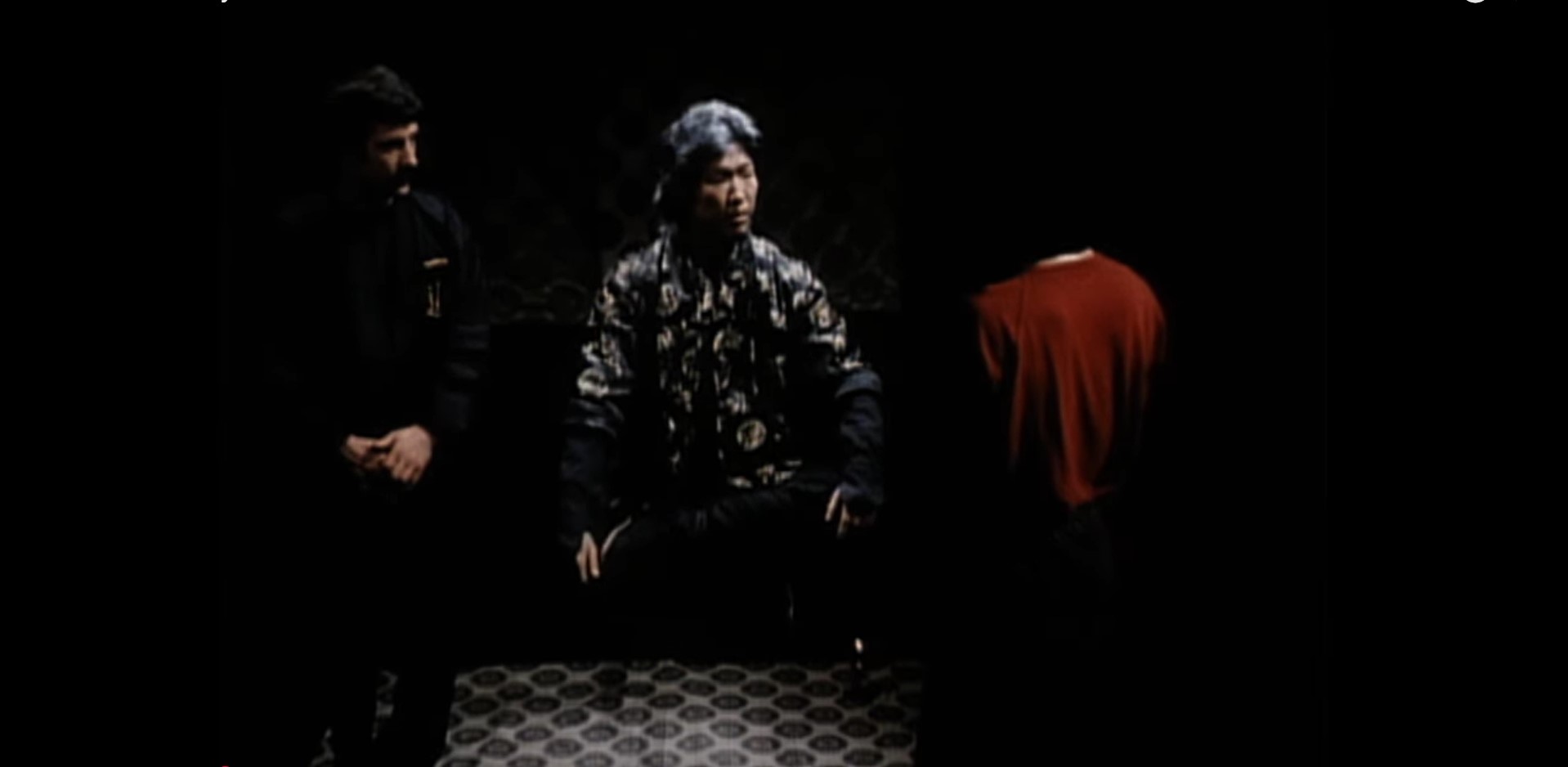
After the murder of his sister who sought pursuit and protection of the astral plane power, the mourning and grief-stricken Karate instructor Simon is summoned to Master Chan’s space-age dojo where’s he’s tasked to track down four connecting pieces of a necklace artifact that will lead him to his sister’s murderer.  As soon as Simon leaves the building, his friends join his quest only to be confronted by Howard, a martial arts henchman with a throng of skilled fighter to descend upon Simon and killing his friends.  Simon finds himself in constant battle against not only Howard but also other highly skilled sub-bosses with ties to Master Chan in a devious and traitorous plot to obtain the power of the astral plane for himself.  Simon uses his Karate discipline to kick and punch his way through hordes of trained fighters to reach Master Chan to stop him and exact revenge for his sister. 

A martial arts movie with aliens, astral plans, a dragon’s head, evil fire-shooting magicians, and more, “Furious” lives up to the moniker as one punch after another action and completely ambitiously and guerrilla style on a miniscule 30K budget.  Entirely helming “Furious’s’” creative control and securing actors and stuntmen willing to take risks on their own accord and dime are USC film students Tim Everitt (visual effects animator and composite artist who would go on to work on “Deep Blue Sea” and “Red Planet”) and Tom Sartori (a career film editor) looking to break into the film industry with their own rapscallion production of a marketable chopsocky genre film at the tail end of its string of success coming out of the 1970s and into the early 1980s when horror began it’s rise.  Everitt and Sartori produced the all-American made martial arts production with funding from a motel entrepreneur.

At the center of “Furious” are two Korean-American brothers, Simon and Phillip Rhee, experts in Karate and dojo sensei who, like Everitt and Sartori, were looking break into the business.  The California-born Rhee brothers play the protagonist and antagonist roles with Simon playing the namesake hero thrust into doing evil’s biding while avenging his sister’s death and Phillip donning Master Chen’s white hair and manically, ruthless plot to exploit not only Simon to obtain astral plane summoning necklace pieces but also his henchmen who carry the pieces that must hold the essence of death.  Virtuosos in karate, the Rhee brothers show and pull off incredible difficult moves done practically, especially in the early 1980s without the help of high-flying wires and only a little help with some camera angle movie magic.  The sparring is fast and realistic without being pull-punching obviousness.  All of the sound was done in post, so the Rhee’s real voices are not used to either replicate the martial arts jagged voice synchronicity or sound design was not in the budget.  Likely, a little of both.  The lower-level bosses are a medley bunch and have a range of talents from a staff wielding wilderness man (Bob Folkard), to a tiger style soul fighter (Howard Jackson, “The Delta Force”), to a crazed wizard (Mika Elkan) with flaming projectiles Simon has deal with, one-on-one, in order to reach the pyramidal top, Master Chen.  “Furious” is purely an action film, casting no love interest for Simon resulting in no emotional or romantical arch.  The former is emphasized more intently by Simon’s lack of expressiveness for revenge; there’s a sliver of poignant energy when Simon has visions of his dead friends’ severed heads served to him on a food platter that could warrant retribution attributions.  Jon Dane, John Potter, and Joyce Tilley who are quicky established as character friends to Simon and are equally as quickly dispatched to place Simon in a world of loneliness against an aliens and evil karate master alliance for astral plane domination.
From the depths of Tubi comes a curation for the ages release of “Furious” for the first time ever having a proper package that’s not related to pornography, as was the first and only VHS issuance by VCII, a well-known adult film distributor at the time who released “Debbie Does Dallas.”  “Furious” is an odd, unpredictable, mashup of throwing darts to see what sticks and in that volatility, anticipation of what’s to come next is considerably high, especially when a shoestring budget production surprisingly opens with incredible helicopter shots tracking a foot chase sequence.  From there, “Furious’ keeps astonishment alive with high-level increments of bizarre alien in human skin behavior, punitive human to animal transformations, talking pigs, astral plane battles, Superman flying, and Devo band mania coupled with extensive and coherent editing to flesh out a feature on the front and back ends.  Granted, the plot’s very puzzling and motives are dubious at best to why Master Chen would task a competent fighter like Simon to track down pieces of a unifying necklace when Chen’s own men possess all of them and could easily have killed them himself for the death essence.  There’s also the alien aspect that goes by the wayside in a lack of explanation or exposition by jumping into assumption just by weird behaviors and flashy, ultra-modern buildings to serve as extraterrestrial evidence.  Even with that ambiguity, seeing Simon Rhee perform a triple-hit kick amongst a slew of other highly impressive stunts and special effects relative to the budget has “Furious” become a cult fan favorite. 

Visual Vengeance curates another title from out of the shadows and into our Blu-ray players with “Furious,” encoded with AVC, presented in a high-definition 1080p of the original fullscreen aspect ratio 1.33:1, on a BD50.  Sourced from the original tape elements, which I’m assuming was the original VHS release a few years later as the film was shot on an Arriflex camera that used film stock, the Blu-ray contains a new, director-approved SD master print.  Cleaned up to get some color saturation into the anemic picture, the image doesn’t look as washed as the monochromic qualities of VHS and this is a vast improvement in picture quality as well with some better delineation around objects.  There’s quite a bit of aliasing and ghosting that leaves object trails and rough edging but not enough to warrant visual concern for texture properties, such as the pig stubble or the decapitated heads on a pater that show coarseness where it matters.  Print damage, such as virtual scratches and some rough editing room splices and re-tapings, are present but not profound.  All of this is covered in the technical forewarning, regularly at the beginning of ever Visual Vengeance film so the expectation is set.  The English language LPCM stereo is all postproduction additions with ADR and foley artistry.  The first instances of dialogue don’t come up in the mix until the 13-minute mark, leaving much of the opening left to Foley work to build kinetic and atmospheric sound.  With any early postproduction work, three will always be space in between the synchrony and that can be said here but on slightly jagged edge which says something positive about Everitt and Sartori’s handling of the audio track.  Optional English subtitles are available.  Obscurity doesn’t mean less supplement goodies either and Visual Vengeance has proved that over time again and again with their amazing stockpile of exclusive and archived special features.  New interviews with directors Tom Sartori, High Kicking in Hollywood, and Tim Everitt, The Kung Fu Kid begin the exclusive content with length editing discussions from the directors about their time before, during, and after “Furious.”  Filmmaker and podcaster Justin Decloux provides a slew of material, including a feature length commentary, cohosted with Peter Kuplowsky of Toronto International Film Festival.  Decloux does a pair of video essays – North American No-Budget Martial Arts Cinema Primer and Rhee Brothers career overview. The buck doesn’t stop there with an archive commentary with co-director Tim Everitt, an archive podcast with Everitt circa 2013, Super 8 behind-the-scenes footage of “Furious,” Scorched Earth Policy 1987 EP with full six tracks, Cinema Face live in concert, Tom Sartori’s 80’s music video reel and Super 8 short films, original film trailers, and Visual Vengeance trailers. That’s not all! New slipcover artwork brings together an illustrated compilation of what to expect with the same art on the inside Amaray case. The cover art is reversible, depicting the original VHS cover art that’s not as charismatic, or good. Insert section houses a folded mini-poster reproduction of the original one sheet, a double-sided acknowledgement advert with alternate art, Visual Vengeance’s retro VHS sticker sheet, and a ninja star keychain accessory! The 17th Visual Vengeance title comes region free, has a runtime of 73 minutes, and is unrated.

Last Rites: Anomalously action-packed with a fantasy element, “Furious” is a one-of-a-kind, indie martial arts production that has everything, even the kitchen sink, thrown at with a journeyman tale of alien butt-kicking, astral plane dogfighting, and anthropomorphic black arts.
Get “Furious” Now on Blu-ray from Amazon.com!

An Odyssey through the Phantasmagoria EVIL. “Moon Garden” reviewed! (Oscilloscope Laboratories / Blu-ray)

Take a Stroll Through the “Moon Garden” on Blu-ray

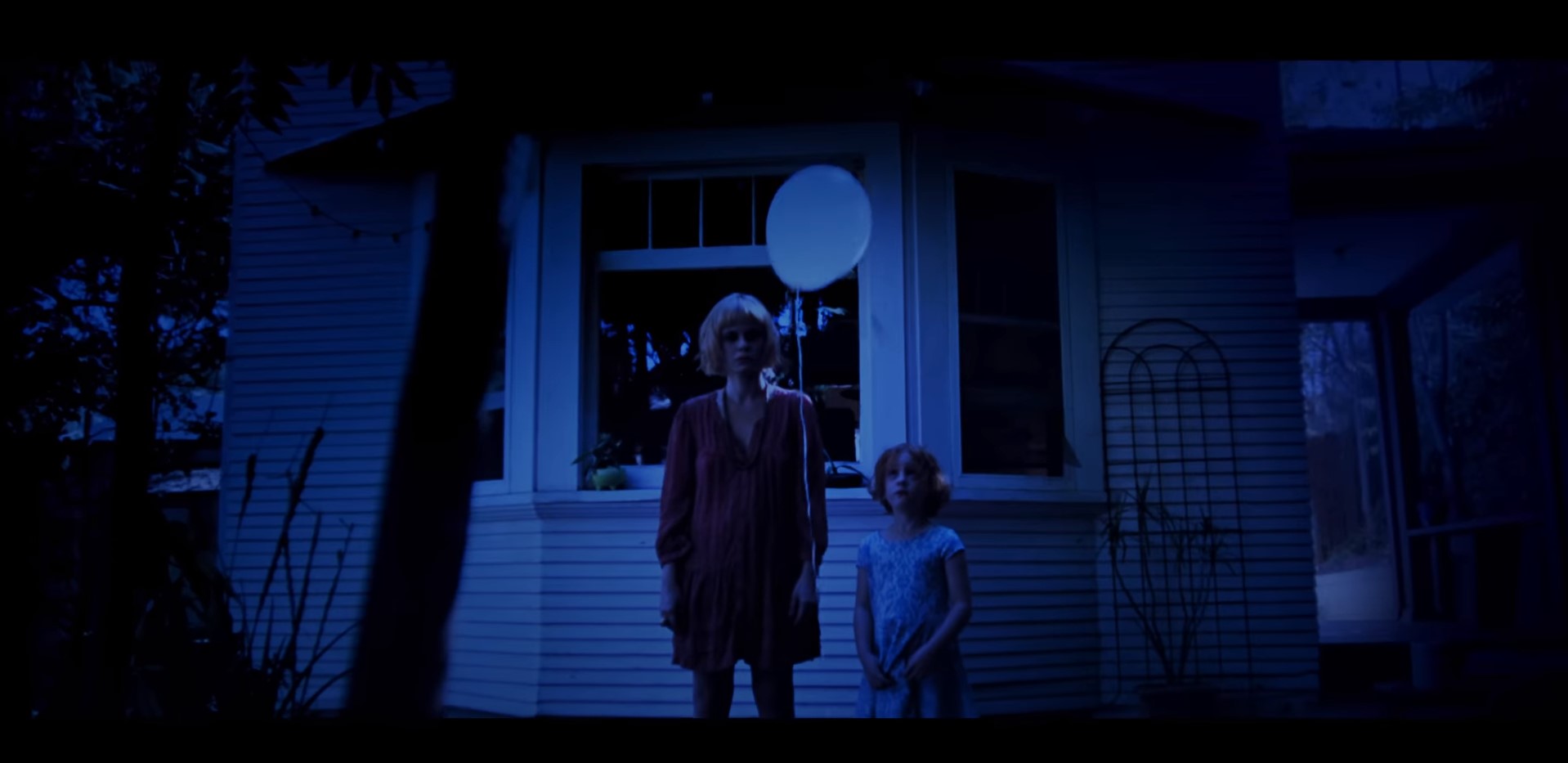
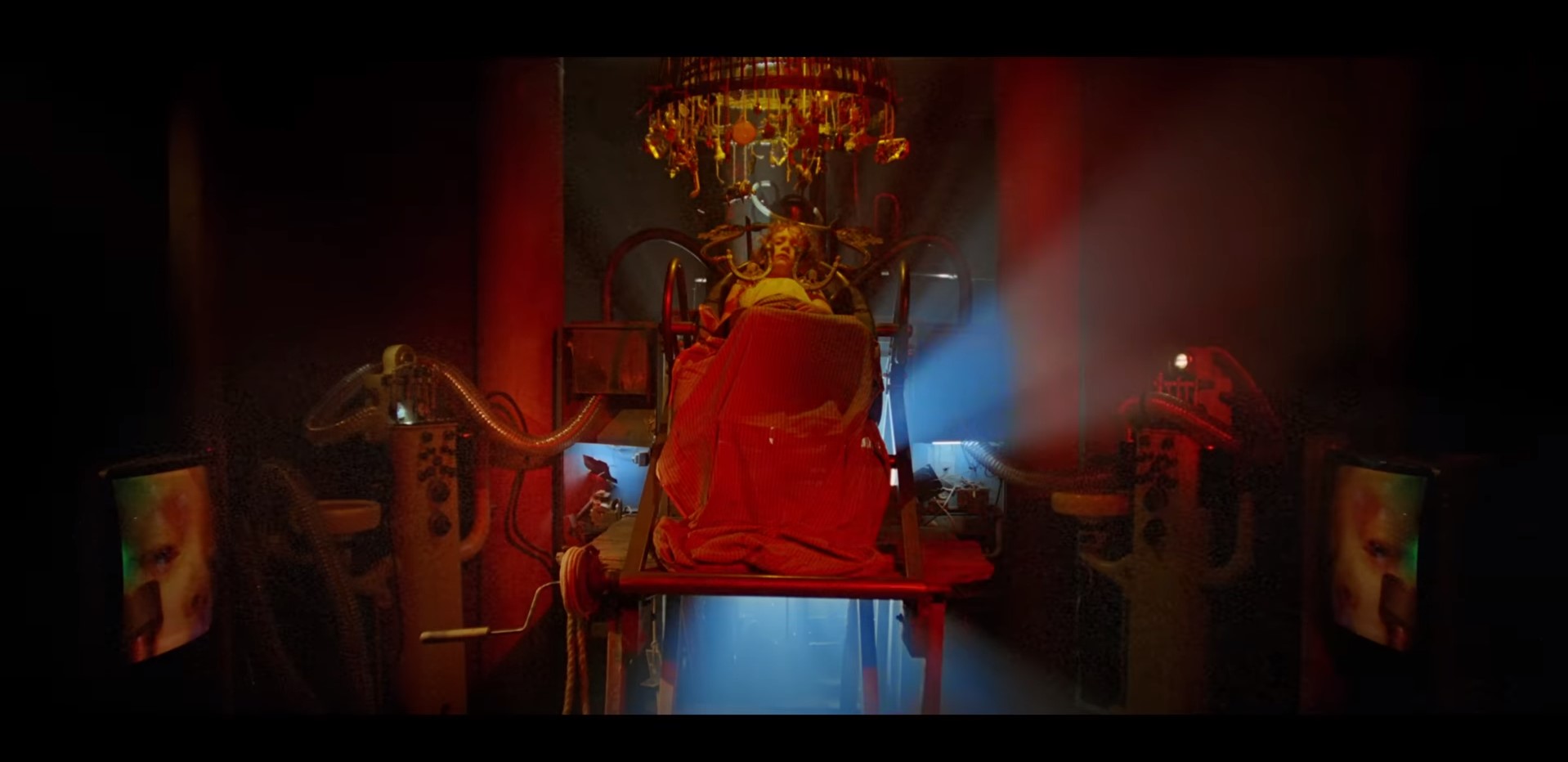
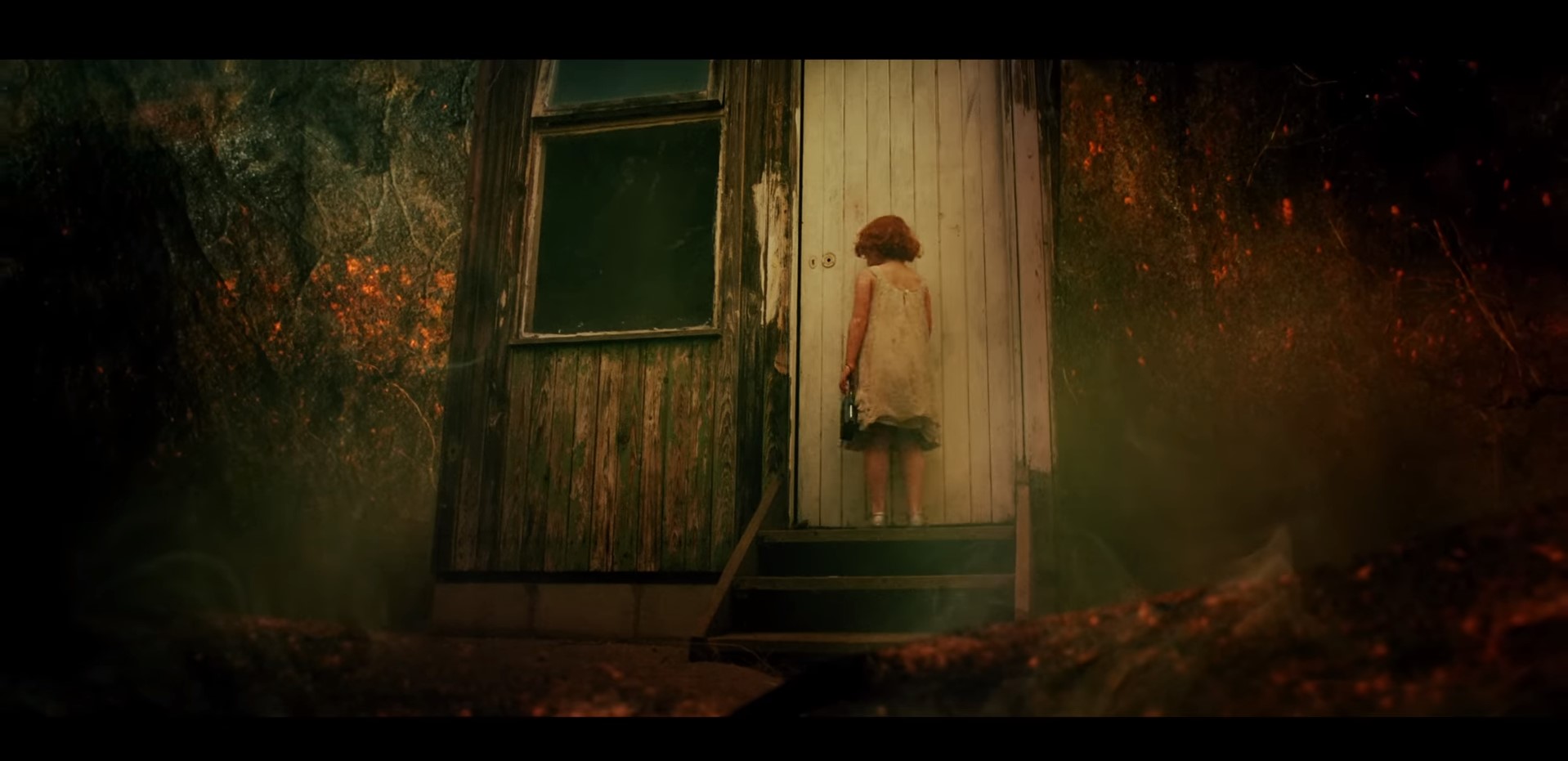
Five-year-old Emma is caught in the middle of her beleaguered parent’s marital strife.  When Emma witnesses one particular heated and nasty argument between mom and dad, she flees to escape the anger only to slip and fall down the stairs, hitting her head that puts her into a comatose state.  She awakes lost, confused, and consumed in an industrialized gray zone, loomed over by strange land’s dark gloom and also curious wonderment that both frighten and amuses her.  As Emma looks from the inside out, seeing her parents come together from the struggles to cope and worriment surrounding her comatose body, the young girl is determined to make it back to her parents by trekking through the bizarre land, but a menacing, chattering being feeding off her fear and tears pursues her and she has to rely on the amiable ambivalence of unique strangers that inhabit this world to help her escape the nightmare and return home.

Cut with relatable bleak themes of family dysfunction, Ohio-born filmmaker Ryan Stevens Harris undertakes fantasy rarely seen in this day and age of computer visuals and special effects, probably not since “Labyrinth” or “The Never Ending Story” of the 1980s.  Stevens, chiefly an editor in the movie industry with credits ranging from indies like “What’s Eating Todd?” to big-budget blockbusters like Roland Emmerich’s “Moonfall,” writes and directs “Moon Garden,” a wayfaring grim fairytale with visual ferocity in a practical DIY-fashion and without major studio help.  The 2022 fantasy envelopes elements of difficult navigation surrounding nuclear family problems through the quivery, unguarded eyes and immense imagination of a very young child still developing those rationality and interpretation skills to make it all make sense.  Based off Harris’s proof-of-concept 13-minute short film “Every Dream is a Child with Teeth,” “Moon Garden” is a production of Harris’s Fire Trial Pictures and is self-produced alongside Fire Trail Picture’s co-founded John Michael Elfers and wife, Colleen.

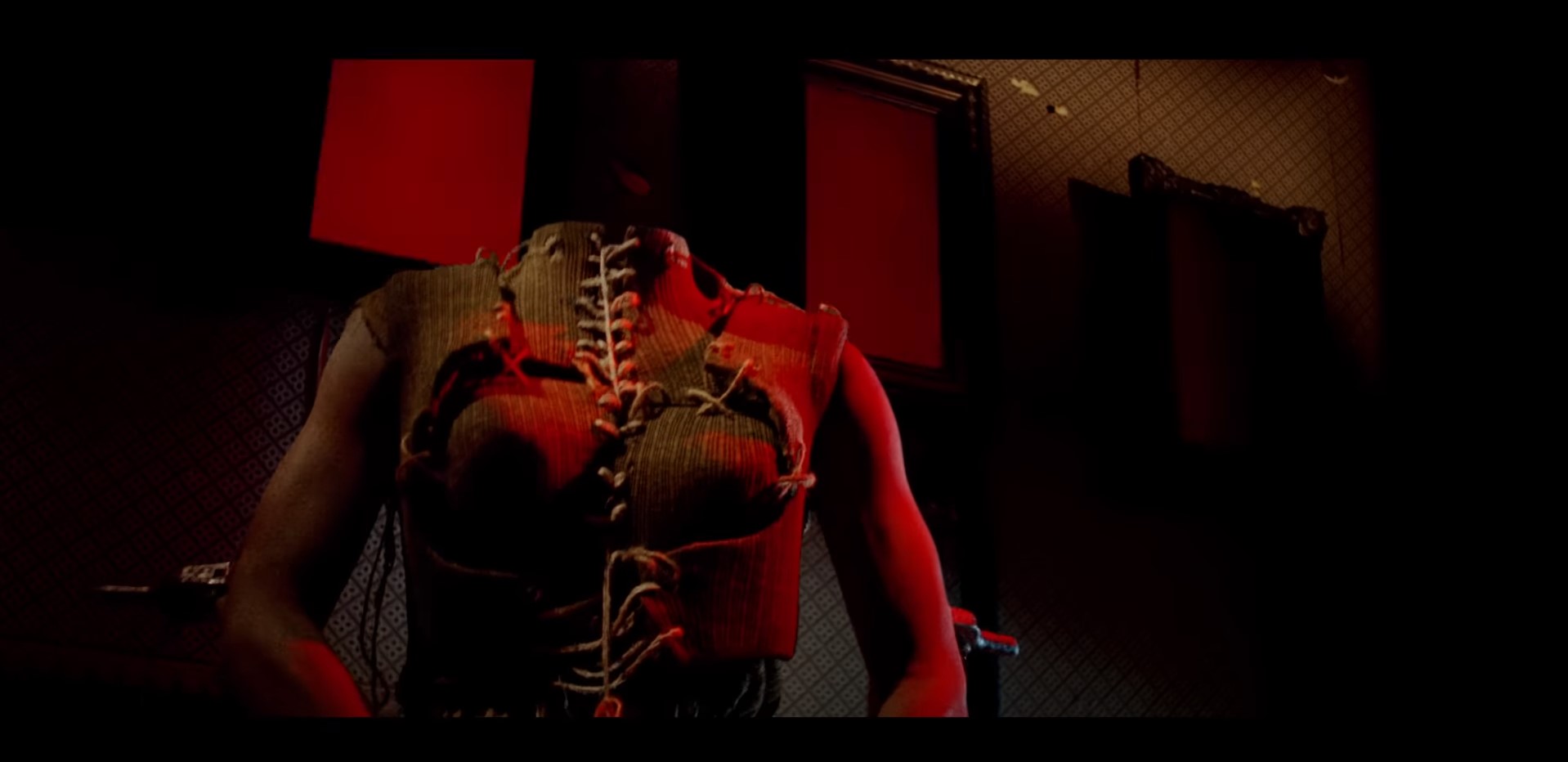
“Moon Garden” is truly a family affair with not just the husband-and-wife collaboration behind the camera but also the couple’s young daughter, Haven Lee Harris, at the forefront as the enchanted young Alice in Wonderland-esque wanderer named Emma.  Haven, who also starred in the “Every Dream is a Child with Teeth” short,” fully embraces Emma’s forming schism between her parents and being engulfed by an intimidating atmosphere that’s often bursting with melancholy and acrimony, a credit to the father-director who can turn the darkness to light by making behind-the-scenes an engagingly fun atmosphere for his impressionable, yet talented, daughter to thrive as an untrained actor in her debut performance.  As Emma travels through the eclectic settings of sewers and steam pipes, dilapidated houses, swampy overgrowth, and towering observatories, she comes across equally eclectic figment inhabitants that help her, a hammering string musician (Phillip E. Walker, “13 Mysteries”), a sullen groom (Timothy Lee DePriest, (“BnB HELL”), a budding mud witch (Angelica Ulloa, “Gnome Alone”), and a lonely Princess (Maria Olsen, “Vile”), but not all seek the wellbeing of Emma as a haunting levitating and sinister pursuer (Morgana Ignis, “Satanic Hispanics”), garbed in inspired militarism and a void where only sharp, chattering teeth makeup it’s face.  Each character is bred out of Emma’s emotional states brought to fruition by her extensive imagination, correlated by her playing with resembling toys before her accident.  Mom and dad are played by Augie Duke (“The Badger Game”) and Brionne Davis (“Mom and Dad”) for the first act and through flasbacks of the second and third.  The parents inadvertently inject sorrow into the heart of their daughter caught in the middle of the martial affliction.  Duke saturates leadenly into the mother’s depression with poignancy and potency, fueled by Davis’s uncompassionate workaholic for the father, and this sparks the tension that requires a forced happy family face around Emma whose brimming at the edge of her imagination for a better existence.  Filling in the cast gaps are Téa Mckay and Emily Meister. 

If Phil Tippett directed a movie from a script by Lewis Carroll, “Moon Garden” would be the outcome.  Pure imagination and creativity ignite a new world to travel down toward the rabbit hole, utilizing a series of practical techniques to show how grotesquely and beautifully grandiose this world can be erected and the odd characters can come alive all without breaking the bank.  With any abstract art, grasping concepts and correlating visual expressions can be difficult but with “Moon Garden” there’s a sense of celebration for movie magic.  Between detailed miniatures, visual compositing, manipulative time and camera techniques, practical special effects, etc., Ryan Stevens Harris promenades the audience through the different levels, stages, and exhibits of what is a carefully curated museum of ingenuous imagination, which sounds like something Willy Wonka would melody about, and does so while tapping into our own fears as not only having once been children ourselves with vivid imaginations looming in ever crevice of our minds but also in us lucky enough to be parents as Harris interposes clips of Emma peering in reverse through the looking glass, into reality, to see her parents reformulating a bond through the muck of grief, worry, and love for their child in what is a parents’ worst nightmare to experience.  “Moon Garden” can be intense and scary at times but certainly could be kid friendly and empowering for little tykes afraid to take on the daunting outside world or the inside of uncertainty. 

Our first venture into an Oscilloscope Laboratories release is anything but paramnesia. “Moon Garden” arrives onto an AVC encoded, high-definition 1080p, 50-gigabyte Blu-ray transferred and processed from the original 35mm print, as Fire Trial Films is a 35mm production company, and presented in a widescreen 2.39:1 aspect ratio. Having scored age-worn film stock, Harris achieves some unusually neat prints that saturate the colors differently than if the stock was in brand new, pristine condition. An ingrained darkness from the stock adds a pinch of otherworldly tincture that accentuate the already overwhelming serrated slumberland atmospherics coupled with a filmy layer of good-clean grain. Primary colors don’t often appear like primary due to the aged film stock but pop in distinct crush, nonetheless. Emma’s unconscious dimensional detour is full of pocket voids, shadowy symmetrical shapes, and dreamy in exact detail on all accounts without being empyrean or wistfully. The English language DTS-HD 5.1 master audio and the film’s original uncompressed stereo 2.0. The lossless surround sound mix options to deliver the identical audio measures in comparison the uncompressed audio while also slinking through the side and back channels for full-bodied immersion into Emma’s tribulating trek back home. Dialogue comes through exceedingly well-enough albeit the multi-faceted improved industrial soundtrack sneaks in staggering oversteps at times. Speaking of the soundtrack, an original score by composer Michael Deragon, the transitional tunes, melodies, discordances, and synths are just a taste of the eclectic, haunting sounds that navigate Emma’s journey and the elegant, melancholic, and even comforting lullabies by Augie Duke as the mother bring a sort of peace and tranquility that resets the intensity and fear of the child in peril. The chattering teeth, though comically inclined to an extent, are especially effective as a looming, omnipresent pursuant. Optional English subtitles are available. Special features on the Blu-ray include a making of “Moon Garden” featurette that lets director Ryan Stevens Harris be giddy-as-school boy proud to show off and explain the how-tos of his masterclass piece of creativity as well as to dote on his sweet daughter Haven, Harris’s 12-minute proof-of-concept short film “Every Dream is a Child with Teeth,” a single deleted scene, and the theatrical trailer. Oscilloscope’s Blu-ray comes in a clear Amaray case with a what looks almost to be an innominate water-colored cover art composition, with gothic overtures, of a few characters with the reverse side bathed in a blue landscape setting that Emma crosses which is shown in the film. The disc art is curiously plain with the Oscilloscope Laboratories logo and the title “Moon Garden” above it. The not rated Blu-ray comes region free and with a 93-minute runtime.

Last Rites: Ever since post-credits, The M Machine’s Moon Song and Promise of a Rose Garden has regained ground in my mind and it’s a very fitting pair of tracks not only for their keyword titles but also for its industrial beats and unconventional sonority structures similar to the cadence of the deep space wandering that is “Moon Garden” as visually the imagery confounds the senses and surrealism takes hold of us as this sweet and innocent little girl confronts alone a world much bigger than anything than we could ever imagine, and only she can pull herself through while the discordant parents can only be a unifying beacon of light and hope. Highly recommended.

Take a Stroll Through the “Moon Garden” on Blu-ray

Medieval Evil in “The Last Warrior” review!


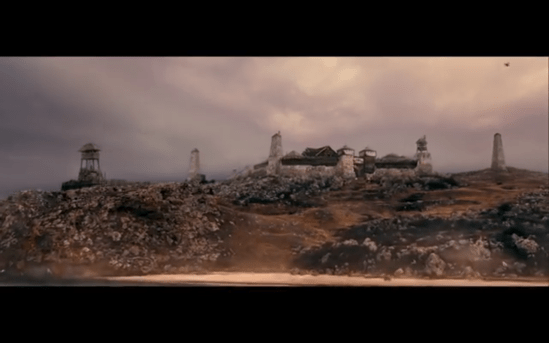
As a respected nobleman and the right hand soldier of his King, the fearless Lyutobor endured the misfortunate event of his wife and newborn son pillaged from his estate by the endangered Scythian assassins known as wolves. The assassins were hired to kidnap the nobleman’s family by an insider in an exchange to overthrow and kill the King to campaign a new leadership, but the King has other plans for his faithful servant; the nobleman has seven days to locate his family and to unearth the dastardly plot against his lord. Using a betrayed and captured young Scythian wolf named Marten as his guide, the pair journey through perilous terrain and murderous adversaries to the secluded Scythian camp. Lyutobor and Marten have to reluctantly rely on each other’s sacred and unwavering oaths and battle experience if they want to survive the cutthroat time where betrayals scathe more deeply and plots thicken.

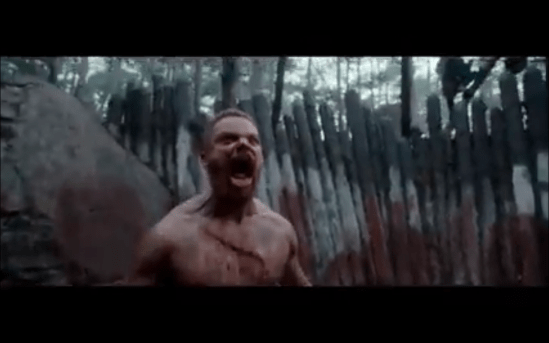
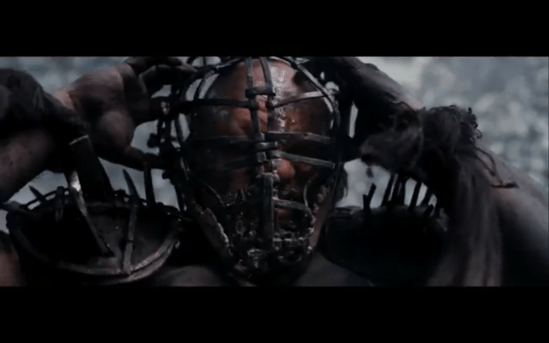
4Digital Media, through Sony Pictures Home Entertainment, presents “The Last Warrior,” a Russian epic fantasy from writer-director Rustam Mosafir and co-penned by Vadim Golovanov. Also known under the original Russian title as “The Scythian,” Mosafir’s feature is a perpetually violent medieval adventure, packed with action and oxymoronic imagery of a serene Eastern European landscape. Tremendously epic with some serious fight sequences, “The Last Warrior” has sword swinging teeth and long lasting narcotic impressions. Its as if the cold inflicted violence of Mel Gibson had middled and mingled with the surrealism action of “The Wanted’s” Timur Bekmambetov and had a child, that child would be “The Last Warrior, born through cauldron of Russian krov’ i ogon’ (blood and fire).

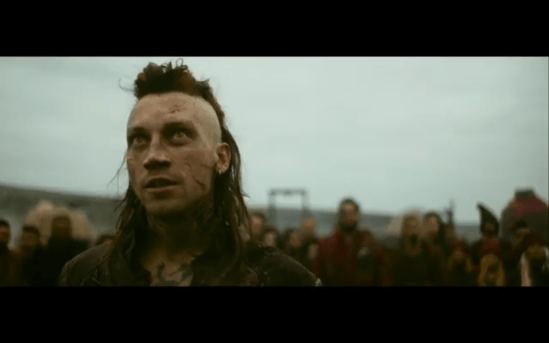
Aleksey Faddeev patrons his time as the last good solider that is Lyutobor. Faddeev simply acts upon an inextinguishable ferocity that’s flames within Lyutobor, seizing every moment like it’s the actor’s last chance to be the hero. Lyutobor’s a bit of a one dimension character, arching ever so gradually to embracing a clan he’s been taught to hate, but only because they didn’t rape or murder his beloved wife. Faddeev pulled the character off with ease; however, Marten has an interesting persona donned by Aleksandr Kuznetsov, sporting a mohawk, cranial tattoos, and an unlikely spartan physique that makes the bloodshot and wired eyed character quite spry and deadly. Kuznetsov bends his character’s will after a taking a sacred oath to his clan’s God. Gods are essential part of the story as every act, every event, or every course is in the interest or will of some sort of God. The cast rounds out with Yuriy Tsurilo, Izmaylova Vasilisa, and Vitaly Kravchenko.

“The Last Warrior” never ceases to degressive transitions, picking up one fight after another without much breathing room in between. The Russian epic fantasy is essentially a visual speed read and by the time ingestion sets in the one crazy, unforgettable moment, Mosafir uses it as a seque right into the next choreographed conflict. Mosafir’s brilliancy illuminates during long takes and optimal camera work that embrace the slipknot action and yet, the director can’t seem to find an equalization during the talking head moments that push the story along. The quickly fed motivation nearly suppresses the story; there are factions that needed more shepherding explanation such as the forest people and their hallucinogenic drug that can release a person’s inner anger bear like an animality in Mortal Kombat 3. After desperately drinking from the drug, Lyutobor’s bear emerges and when pushed, the nobleman can call upon the strength and ferocity of the bear to his advantage, but the concept goes as far as that without much explanation to Lyutobor’s inherence of what could be much rather a curse than a blessing. Watch out, little Lyutobor! Don’t make daddy angry or the bear will come out!

through Sony Pictures Home Entertainment, 4Digital Media presents “The Last Warrior” onto UK DVD home video that takes the oath of an August 20th release date. I’m unable to write up a full technical assessment of the DVD as I was provided with a screener. The screener had a forced dubbed English soundtrack with 15% of the Russian subtitles and no static menu, an atypical critique screener; however, the proper DVD release will have both the Russian audio track with English subtitles and the English dubbed version, which if the same as the screener is completely hilarious, off kilter, and just awful. I’m also positive there will be a static menu as well. To sum up Rustam Mosafir’s medieval fantasy would be to note that its speedy, stab-happy, and a no-nonsense. The sword play is notable, fight scenes are aesthetic, and there lies some neat visuals, but “The Last Warrior” fails to find a deeper purpose to counteract it’s surface level of the bizarre blood splatter in a chute of metal music and that’s where Mosafir will lose most of his well-versed audiences.

Sion Sono’s Brings the Evil Back to the Japanese School Girls! “Tag” review!


Life is seemingly pleasant and happy-go-lucky when two fully loaded coach buses of high school girls travel down a forestry passageway toward a lakeside hotel until sudden violence and gore turns Mitsuko’s classmates into minced meat. Overcome with shock and fear, Mitsuko escapes the terror only to find herself in another horrifying scenario. The vicious cycle continues as Mitsuko is thrusted into one chaotic, blood-splattering world after another, quickly losing her identity with each threshold crossing, and with no clue of what’s going on and how she got into this limbo of hell, Mitsuko must stay alive and unearth the truth behind the surreality of her being.

Nothing is more terrifying than being in a heart-pounding situation and not having one single clue why bodies are being sliced in half like corks popping violent out of champagne bottles, why childhood mentors break their professional oath and slaughter students with a ferocity of a mini-gun, or why being chased by a tuxedo-decked out groom with a gnarly pig head is in tow ready to drop kick anything, or anybody, standing in the way. Writer-director Sion Sono manifests that very chaos entrenched world in the 2015 action-horror “Tag” and, once again, the “Suicide Girls” director puts Japanese school girls back into the harrowed ways of gore and death over salted with an existential surrealism based off a novel by Yûsuke Yamada entitled Riaru Onigokko aka Real Game of Tag. Yamada’s story is followed more closely to that of Issei Shibata’s 2008 “The Chasing World” that involves a Government influence and parallel universes, “Tag” serves more as an abstract remake that Sono masters a soft touch of irrational poetry bathed in gore and strung with chaos rectified with a tremendously talented cast of young actresses.

Actresses such as the Vienna born Reina Triendl. Being Japanese doppelgänger to Mary Elizabeth Windstead with soft round eyes and the picturesque of youthfulness, Triendl transcends tranquility and innocence when portraying a content Mitsuko in the midst of many of her classmates boorishly bearing the typical, low-level adolescent anarchy. When Mitsuko’s thrusted into phantasmagorical mayhem, Triendl steps right there with her discombobulated character in an undried eye panicky frenzy whose character then spawns into two other fleshy vessels, a pair of recognizable names of J-Pop fandom in Mariko Shinoda and Erina Mano, when Mitsuko enters another zone in her fictional world. Though different in all aspects of their appearance and in name – Misuko, Kieko, and Izumi, the three women share the same existence and fathom a unbroken entity of character that hacks her way through the brutal truth. The remaining cast, Yuki Sakurai, Aki Hiraoka, and Ami Tomite, sport the high school miniskirt wardrobe and garnish a bubbly-violent J-horror persona very unique to the genre.

“Tag” is a plethora of metaphors and undertones likely to be over-the-head of most audiences, but if paying close enough attention and understanding the subtle rhythmic pattern of Sono’s direction, the gore and the fantastic venues are all part of an intrinsic, underlining message of feminism and sex inequality that’s built inside a “man”-made, video game structure thirty years into the future. Sono points out, in the most graphic and absurd method, how men treat women like objects or playthings. There’s also a message regarding predestination with white pillow feathers being the metaphor for fate and being spontaneous is the key to break that predestined logic and all of this corresponds to how Misuko, the main character, needs to break the mold, to choose her path, and to remember her past in order to free all the women trapped inside a male-driven purgatory of pain, punishment, and pleasure. Supporting Sono’s ability to disclose an epic survival-fantasy horror in such a way comes from multiple production companies, one of them being NBCUniversal Entertainment, providing the cash flow that allows Sono to flesh out the gore, to acquire massive amount of extras, and to scout out and obtain various locations.

Eureka Entertainment presents a dual format, Blu-ray-DVD combo, of “Tag” for the first time in the United Kingdom. However, the disc provided was a feature-only screener and a critique on the video, audio, and bonus material will not be conducted, but in itself, “Tag” is a full throttle encephalon teaser warranting a need for no supplementary content aside from conventional curiosity into what makes Sono’s “Tag” tick. When all pistons are firing, from the visual effects of Satoshi Akabane to “The Walking Dead” familiar score, “Tag” is no child’s game with a heavily symbolic, touch-and-go and bloodied pro-feministic essence that would serve as an abrupt and acute wakeup call to all the Harvey Weinsteins in the world that women are not to be simply playthings and that their gender destiny lies solely with them despite the misconstrued male manipulation.