Daughters Don’t Cause This Much EVIL! “Son” reviewed! (Acorn Media International / Blu-ray)


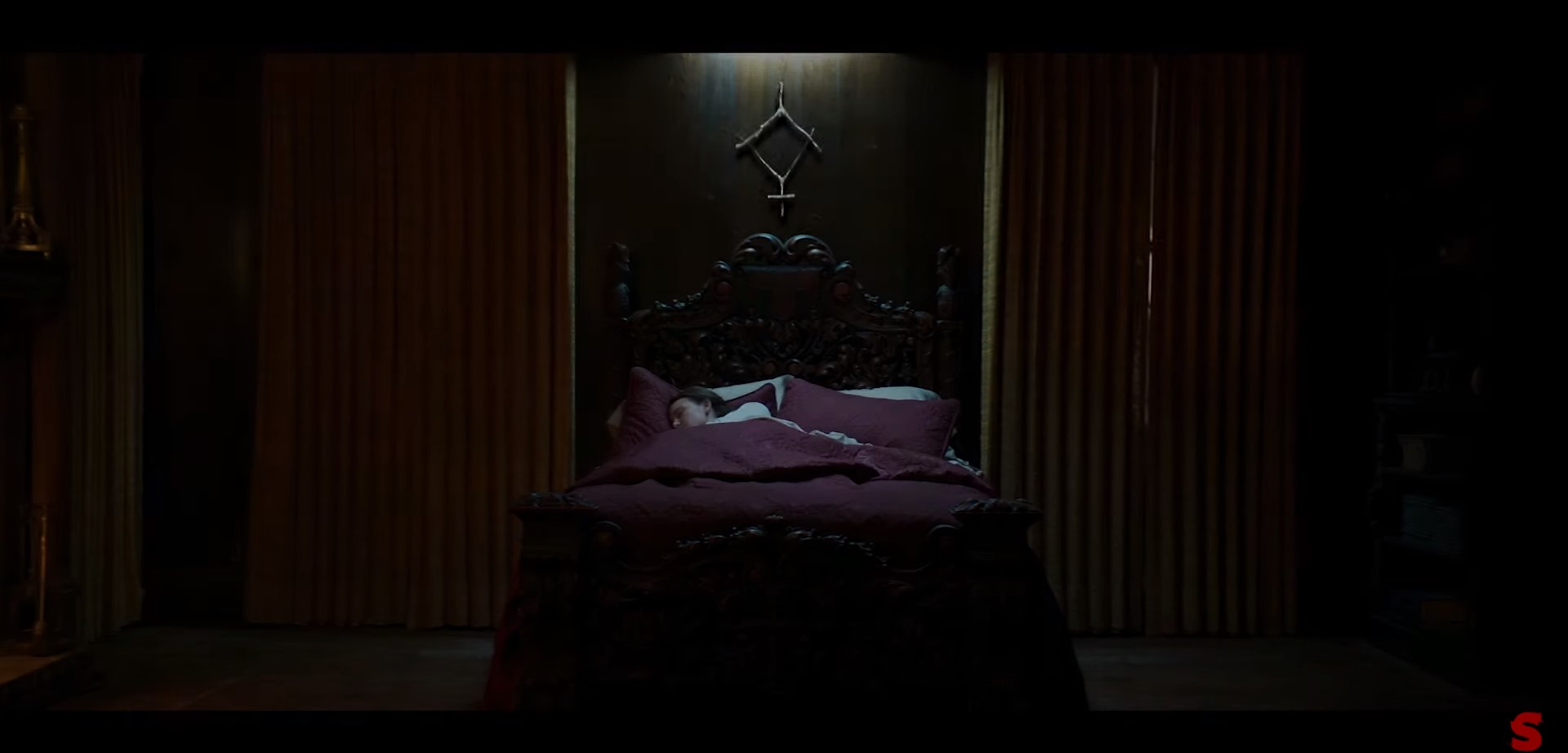
After escaping the imprisonment of an abusive ordeal with her father’s cult, the next eight years have been easy for Laurel living with the joy of her son who was born as a result of her abuse.  When her son contracts a mystery ailment that causes open sore rashes and bloody vomit, the doctors are baffled when the surely fatal, undetermined disease makes a rapid retreat and the boy recovers seemingly miraculously.  Days later, the boy again falls more ill and, this time, Laura suspects her previous life in the cult to be behind his suffering.  With clandestine acolytes making the presence known, Laura flees with her son as the two motel jump across the Midwest with no only two detectives on her tail but also the cult looking to reclaim her son with a terrifying and gruesome new gift. 

Back into the creepy kid subgenre field we go with another multiplex single mother and son relationship American-thriller, simply titled “Son,” from Irish-American writer and director of “The Canal,” Ivan Kavanagh.  Spun from the yarn of familiarities that are stitched together with the overprotective mother trope battling the forces of beleaguering evil reigning down on her child, as seen in such films with Jacob Chase’s “Come Play” and Jennifer Kent’s “The Babadook,” Kavanagh deviates from the abstract lines of the mental illness undercurrent that reshapes and plagues centric characters into horrific, supernatural episodes of isolation, grief, and loneliness personified by often terrorizing entities lurking in the dark.  “Son” is an American production formed by intercontinental production companies with the UK’s Elastic Films (“Cub,” “What We Become”) spearheaded by producer Louis Tisné, Dublin based Park Films co-operated by Kavanagh along with AnneMarie Naughton and Ana Habajec, and René Bastian and Linda Moran’s Belladonna Productions (“Funny Games,” “Stake Land”). “Son” is an exclusive release of Shudder and RLJE International.

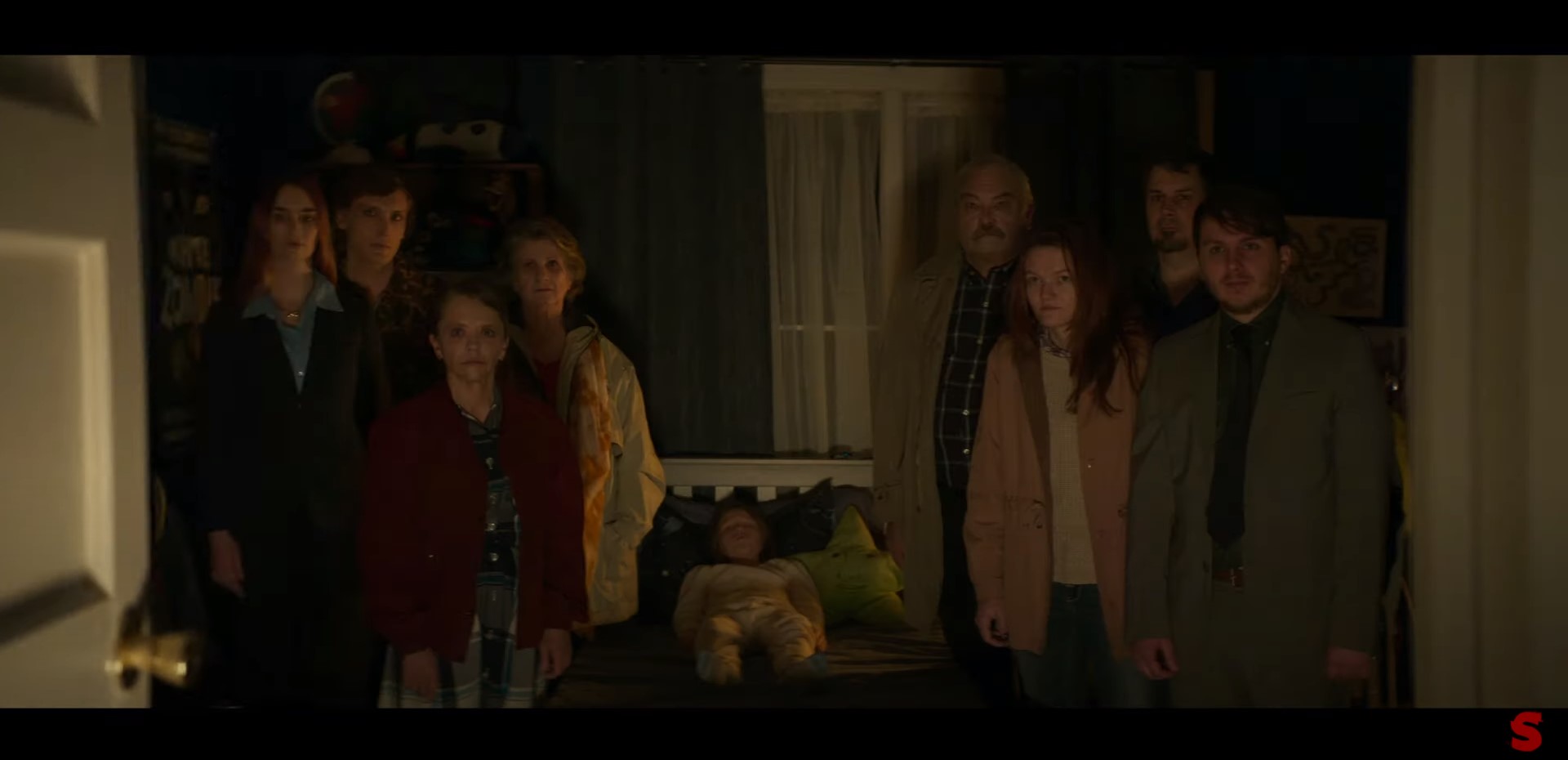
Added to the long history of assorted turmoiled single mothers versus the things that go bump in the night is currently a big name in horror at the moment with being principally casted in the latest three recognized sequels of the “Halloween” franchise.  Andi Matichak steps into the wretched past but ever so optimistic shoes of Kindergarten teacher Laura whose introduced in a prologue of heavy rain and the blood pumping cacophony of an intense chase.  Pregnant and haggardly dirty and barefooted, Laura is being followed by menacing, unknown men before she pulls off to safety just in time to give birth to a child she verbally proclaims no desire for but reluctantly accepts as her own after a bloody, front seat natural delivery, a moment that not only conveys Laura’s compassion but also her strength. Fast forward, Laura and son David (Luke David Blumm, “The King of Staten Island”) living daily normal lives with school, neighbors, and the ins and outs of parenting.  Blumm gives a good run on distress and duress as the titular character that has contracted an illness rapidly reconstructing his mortal soul.  “Killer Joe” and “The Autopsy of Jane Doe’s” Emil Hirsch enacts a sympathetic detective taking an interest in Laura’s case, but Hirsch is mostly silent and stiff, almost like he’s part of the background furniture, for the entirety of the character arc, bringing down, as a counteractive device, much of “Son’s” speedball narrative.  Rounding out “Son’s” cast is Blaine Maye, Cranston Johnson, Kristine Nielsen, Erin Bradley Danger, Adam Stephenson, and David Kallaway.

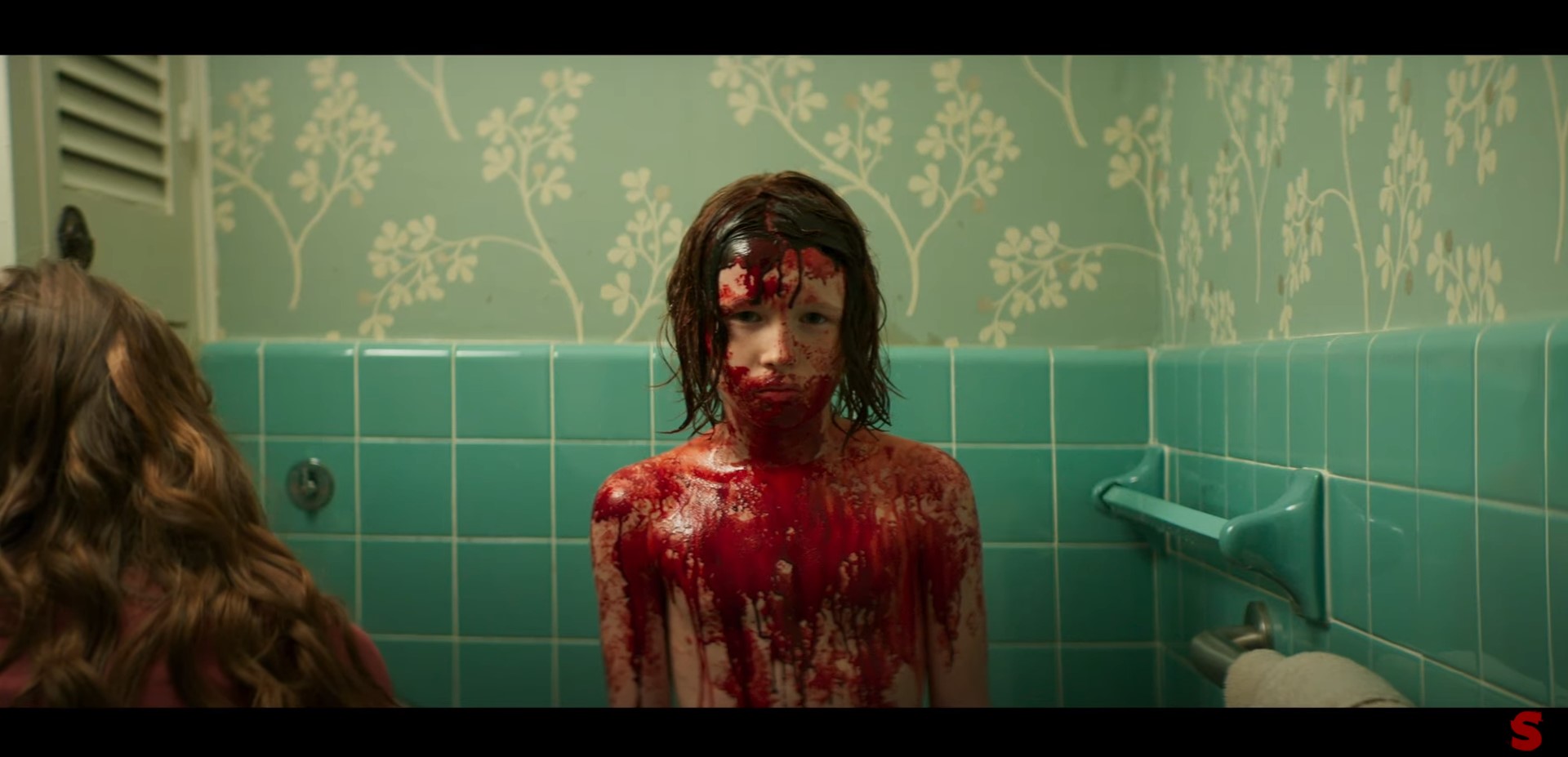
“Son” is surprisingly gory involving intestinal viscera and severed body parts with child actor Luke David Blumm at the center of all the carnage and the story is heartbreakingly sober when a mother, a rape victim, has to make the ultimate sacrifice for the greater good.  Kavanagh subtly massages the thematic quandary of how a rape resulted child can be a perspective schism.  On one hand, the born without sin child stems the mother’s womb, ready to be loved and cared for by instinct to protect our own, whereas the other side, of that coin, more ingrained into the human psyche than we like to admit, is the child is a constant reminder of the past, a figurative reincarnation of a hurtful monster who the victim has to lay eyes on every day for the rest of their life.  Kavanagh instills into Laura that blurred line of trauma while imprisoned by the cult and she couldn’t clearly recollect whether her father or someone, or something, else is David’s biological father.  However, Kavanagh’s script houses too many illogical potholes to warrant foolproof approval, some more egregious than others.  For example, at one point Laura removes her severely ill son from the hospital without authorization because she believes cult members are after him to at which then she arrives back home to gather clothes and supplies to skedaddle out of town.  Yet, there were no police officers or cult members in route or staged at the home which should have been the first place anyone looking for Laura, as Emil Hirsch’s character states over the phone to Laura, would be staked out.  Secondly, the local detectives are able to cross state lines into Mississippi, Kansas, and Alabama without so much as batting an eye lash, presumably stepping over local authority.  Lastly, If evidence of a cult, especially a pedophile cult as one of the detectives suggests, is rearing its ugly head again and coming after a previous victim and her son, the federal government would be much more involved than local PD.  “Son” holds fast in keeping it’s cast close to the chest albeit some severe logical issues.  With that being said, Kavanagh knows how invoke dread and horror with his bleak narrative and stylistic techniques.  Good at horror, poor at story is what Ivan Kavanagh’s “Son” boils down to, leaving behind a lingering middle of the road afterthought in it’s wanton wake.

“Son’s” the past catches up with us all story perpetually never becomes tiresome, hitting every stage precisely with intention and full of scares to garner big, soul-freezing reactions. The iciness of “Son” will leave goosebumps, raise hairs, and shiver spines and you can watch it all now on a UK Blu-ray from Acorn Media International. Presented fully hi-def in a widescreen 2.39:1 aspect ratio, the region 2 Blu-ray is PAL encoded and has a runtime of 98 minutes with UK rating for strong gore, violence, language, sexual threat, and child abuse references. When looking over the picture quality, there’s not much to note other than some scenes appear softer than others in a more a director’s style approach to the content of the scene. Much of the blood is inky black with a nice mirror glaze shine, as Paul Hollywood would say, inside from the solemn color-toned to the natural lighting of daytime scenes. The English language Dolby Digital 5.1 surround mix has a robust and fiery soundtrack in Aza Hand’s quite aggressive sophomore composing score. Dialogue is clean and clear without any break in the chain or obstruction as the audio tracks are balanced appropriately through all five channels. Special features include a spliced together snippets from interviews with the cast and crew along with deleted scenes more directly involved exploring Laura’s cult-captive background. To say you would do anything for your child is a complete understatement in Ivan Kavanagh’s “Son,” a top shelf singer full of venom , but as a whole, better stories are out there.

Take a Dekko at this EVIL! “The Collingswood Story” reviewed! (Cauldron Films / Blu-ray)


Rebecca moves from her small town of Bedford, Virginia to Collingswood, New Jersey to attend college.  Her small town boyfriend, Johnny, buys her a webcam to keep in touch with long distant video chatting, or to more so keep tabs on the sanctity of their fraying relationship.  For her birthday, Johnny provides her an entertaining list of audiovisual phone numbers to call, one such number belonging to an enigmatic online psychic Vera Madeline who is compelled to reveal Collingswood’s gruesome, satanic ritualistic history with one of the town’s most horrific mass murders having occurred at the very house Rebecca currently resides.  As Rebecca and Johnny investigate deeper, the webcam keeps rolling as their curiosity leads them into a dark and deadly supernatural mystery that will engulf them both. 

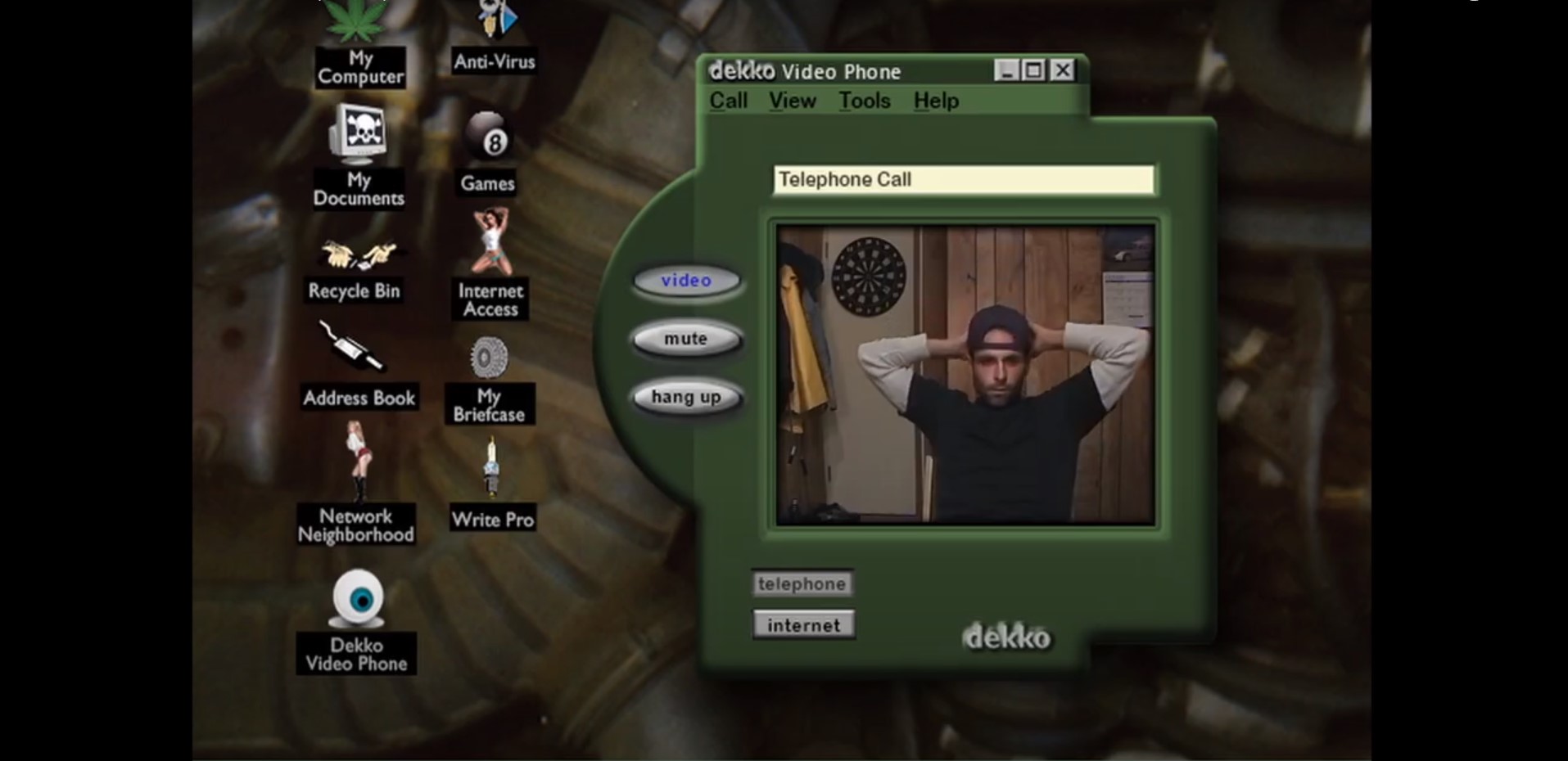
Talk about dated content!  “The Collingswood Story” is the 2002 trailblazer for the paranormal webcam subgenre that has ballooned over the last decade with the success of “Host,” “Followed,” and even the “Paranormal Activity” mega-franchise.  Writer-director Mike Costanza’s early 2000s film starkly contrasts how internet communication technology has changed over the last two decades with the ridiculous long corded phone jack plugins, time consuming uploading of camera footage before the invention of social media live platforms, and the lack of a pre-multiple participant teleconference with a limited single caller-to-caller video application. Once under the working title of “Mischief Night” as the story is set around Halloween night, “The Collingswood Story” is one of Constanza’s first feature films after branching out from the Paramount Pictures’ art department and right into the low-budget horror constraints, but the novel stylistic idea, based off real reports of a mass murder in a New Jersey town and saw little-to-no post-completion success traction back in the early 2000s, was a sell-produced production by Constanza’s Cinerebel Media along with associate producer Beverly Burton.

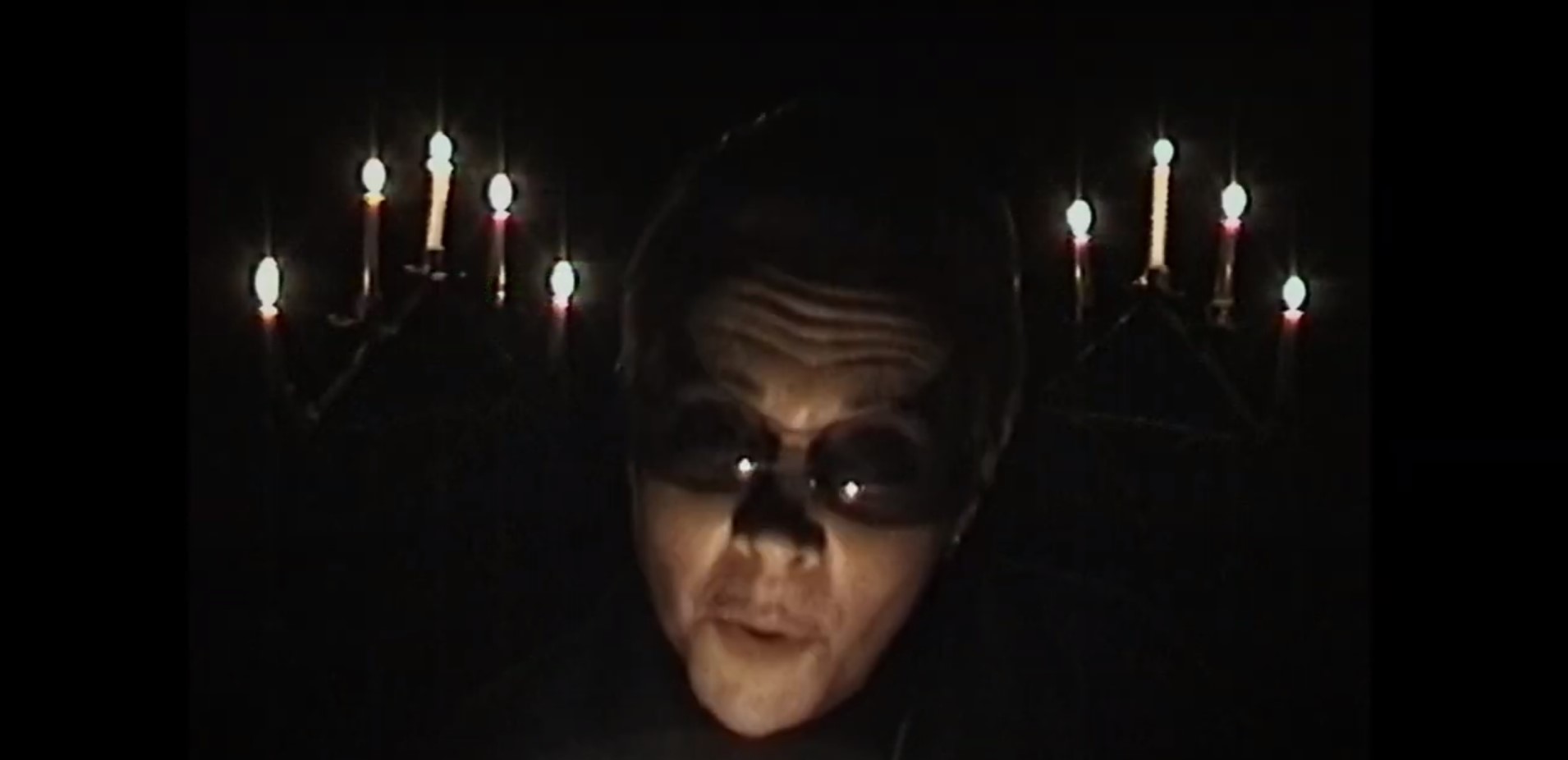
An interesting tidbit about “The Collingwood Story’s” shooting with the cast is that all the actors were shot individually since everything was done on essentially a webcam. Constaza would be in the room and read opposite the actor in performance. What’s spliced together makes good on delivering reasonable and believable menace, but without talent performances, there would not have been a revisiting home video release of this title. Stephanie Dees got her start in a major horror franchise by playing a minor role in “Halloween 4: The Return of Michael Myers” and 13 years later, Dees finds herself in the lead role of pioneering computer horror as birthday Rebecca. Opposite Rebecca is the lovesick paranoid puppy Johnny, played by Johnny Burton in his only credited role. Rebecca and Johnny go through the song and dance of his skirting around his relationship controlling paranoia as he bounces from Rebecca to his crass friend Bill (Grant Edmonds) while Rebecca is the picture of studious student, ignorant to the self-imposed friction in Johnny’s head. Burton’s a little stiff around the gills in his one-note and uninspired blue collar rendition of a longing, small town boyfriend whose personality matches his small bedroom as a background that never changes with the character unlike Rebecca who seems to grow into her environment with ever frame. In what’s probably her biggest identified role in a feature film, television actress Diane Behrens lurks in the shadows as the enigmatic psychic Vera Madeline wresting the story away from the slow burn of a dissolving relationship of young lovers and diverting into what we all came here for – a thrilling ghost story. Behrens plays the part with showmanship and a subtle inking that anything itching to come off her of mouth will be infomercial and portentous.

What Costanza has accomplished technically with “The Collingswood Story” is nothing short of amazing in his ability to seamlessly film and edit not only the scenes together coherently but also fabricate a meaningful connection between the two actors, shooting separately without a breath of another’s creativity to pull from, over still rather new and evolving technology to which some opposing critics would consider the technology to be disassociating the social standards.  “The Collingswood Story” is not a point and click monotony of talking head syndrome one might expect as Costanza, despite the gratuitous B-roll footage recorded by Rebecca as she drives around Collingwood searching specific locations, adds enough main footage filler of Johnny’s suspicions of a secret boyfriend, Johnny’s lowlife, yet witty, friend Billy giving him bad advice, and of psychic Vera Madeline’s mystifying mysticisms to keep viewers engaged while looking through the garbled eyeglass of lower compression bitrate quality of webcam footage shot on a Hi-8 camcorder that truly gives Costanza’s film that 90’s SOV feel at times.  There’s also the age-old theme of helplessness associated with webcam horror where those characters watching, just like us viewers, can only watch in an eye-widening terror unable to be a lifesaving branch of help when the supernatural stuff goes down.  Costanza also conveys the sense that the paranormal has zero limitations on a medium, in either a soothsayer or an internet conduit facet, to extend evil from the beyond, but the limitations on sensibility can extend only to a certain point in a culminating of Rebecca’s foreboding curiosity as her expedition into her lodging’s attic behooves her to take her laptop, along with its super long extension jack plugin cord, in order for her boyfriend, who lives a good 600 miles South, to accompany her into the darkness.  At this point, technology has yet to catch up with “The Collingswood Story” need and that’s where plausibility of the characters logic fumbles coinciding with an open for interpretation ending that wraps too quickly and asks more questions than provide answers.

For the first time, “The Collingswood Story” receives a proper North American release where technology has finally caught up to Mike Costanza’s vision! Cauldron Films presents the worldwide debut of a high definition, unrated, and region free Blu-ray release, remastered from the original source tapes by Costanza himself. Filmed on a Super Hi-8 camcorder, with Costanza undoubtedly the DP, “The Collingswood Story” remains presented in it’s original 1.33:1 aspect ratio and what also remains is the compression artefacts associated with transferring the source tapes. Certainly nothing devastating beyond a handful of B-roll scenes as much of the webcam shots look neat and tidy, but I’m surprised the reversal, aka webcam perspective of the person talking, scenes still shows a fair amount of blocky noise. The English language 2.0 stereo mix emits noticeable background static from, more than likely the culprit, the digital interference. The faint hum of dialogue track feedback hum is annoyingly choppy and it’s not just the play on the webcam mic of come-and-go vocals and background noise; however, the dialogue is clean and clear. The choice of soundtrack, a sundry of late 90’s-early 2000s placid rock, is audibly limp even for the dual channel output. The release comes with option English SDH subtitles and has a runtime of 82 minutes. Special features includes a behind the story with Mike Costanza looking back at the genesis of the idea as well as noting his inspiration for the idea, an interview with Stephanie Dees, an interview with Johnny Burton and Grant Edmonds, a director commentary, image gallery, and trailer. Despite it’s antiquated flaws, the crossbreeding of tech and terror in “The Collingswood Story” should have lifted the film into the cult status rafters of found footage films with the likes of “The Blair Witch Project,” but in lieu of the world’s massive oversight, Cauldron Film’s release is a big leap forward that looks back to the past.

Own the Limited Edition “The Collingswood Story” on Blu-ray Today!

Dan Stevens. The New Face of EVIL? Freakin’ Love It! “The Guest” reviewed! (Second Sight Films / BD-R Screener)

Recently hospital discharged combat soldier David Collins visits a fallen brother in arms’ family, The Petersons, to convey their son’s last moments of love for his family.  Taken immediately in by the grieving mother, David stays for a few nights at the Peterson home, quickly befriending the family of four with his military “yes ma’am” charm and good looks.  When a string of accidental and homicide related deaths begin to flare up in what’s typically a quiet rural town, eldest daughter, Anna, suspicions turn to David.  As Anna digs deeper into David’s past, nothing can stop the elite special forces soldier from taking steps to protect his identity and his mission, even if that means turning the Petersons’ hometown into a deadly warzone. 

One part action, one part slasher – Adam Wingard’s “The Guest” is a hot take on the infiltrator horror subgenre.  The “Pop Skull” and “You’re Next” director, who went on to helm the epic clash of the two biggest creatures in all of creature feature history with this year’s “Godzilla vs. Kong,” directed “The Guest” to challenge the slasher narrative with an atypical, slightly campy, American indie thriller with an unanticipated and surprising twist that’s more than just your run-of-the-mill snapped war-traumatized soldier gone shell-shocked rogue.  The script reteams “Dead Birds’” writer Simon Barrett with Wingard for their eighth collaboration that pits all the story’s action into the rural confines of an unnamed small town in America while the actual shooting location takes place in New Mexico.  “The Guest” is a production of the UK based HanWay Films, which also oversaw the production of Wingard’s “You’re Next,” and Snoot Entertainment of the zomedy “Little Monsters” from the producing management team of Keith and Jess Wu Calder.

To put things simply, Dan Stevens is scary good.  The “Downtown Abbey” star plays the titular troublemaker and, now, I will never look at Matthew Crowley the same way again.  Stevens trades out the proper aristocracy of British English with a slight American English Southern draw, a heavily used trope portrayed with U.S. troops in cinema, but Stevens does more than just talk-the-talk.  The Surrey born actor who once played the Beast in Disney’s live-action version of “Beauty and the Beast” plays a different kind of monster that’s akin to a wolf in sheep’s clothing with David, adorning his physically fit character with a clandestine depth in his ambiguous background and sociopathic tendencies that makes him very much a mysterious maniac much in the same fashion as iconic slasher villains.  Trying to stop David’s undermining reign of controlled carnage is Anna Peterson, played by Maika Monroe (“It Follows,” “Independence Day:  Resurgence”).  Ana’s a levelheaded, yet rebellious, teenager adverse to being told what to do to much of her parents chagrin from dating a pot dealer to her objection in David’s stay with them.  Monre puts angsty effort behind Anna Peterson’s eyes, but the character herself is rather flimsy willing to put her trust in an unsponsored secret organization agent, “John Wick” films’ Lance Reddick, and his request to get into his car urgently without hesitation, but has a difficult time swallowing at her own pace her dead brother’s fellow soldier even with the stamp of whole heartily approval from her parents and little brother and photographic evidence of her brother’s relationship with David.  Yet, Barrett’s openly oblivious characters play into the slasher/thriller campiness of accepting everything at face value without ever an inkling of doubt.  Perfect examples of this would be 3/4th of the Peterson family: the mother (Sheila Kelley, “A Passion to Kill”) trust him with handling routine tasks like picking up her son from school or laundry, the father (the great supporting actor Leland Orser, “Alien:  Resurrection,” “The Bone Collector”) trusts him with personal secrets, and even the school outcast brother (Brendan Meyer, “The Color of Space”) desperately believes David is his friend.  Tabatha Shaun, Joel David Moore, Ethan Embry, Chase Williamson, and Steven Brown co-star.

Pulling loads of admiration and inspiration from the “Halloween” franchise, “The Guest” not only rocks as an action thriller but also mimicking a retrograded slasher in a subgenre slapped with a label I like to call the infiltrator subgenre.  David Collins is no mindless, walking and not talking, killing machine like The Shape, but instead gains trust, backdoors problems, and has the quick confident moves to see the job through with hand-to-hand combat and other more visceral merciless methods.  Barrett and Wingard purposefully leave much to the imagination with David’s past, turning what would usually outcome as frustrating ambiguity for an essential character to more of an enigmatic antagonist allure similar to the way we don’t have a clear-cut motivation why Michael Myers or Jason Voorhees shish kabob horny teens without a second thought.  Sure, there are sequels that try to enlighten reasons, such as being pure evil, but abstract is not concrete.  Same with “The Guest” with a control spoon feeding of just enough backstory to wet one’s thirst for more on David’s ruthless sociopathic behavior.  David’s also a very likeable with the impression that his good deeds done in violence speaks to a justice-driven character, but what’s brilliant about David, and enhanced profoundly by Dan Stevens, is that when he does kill someone in cold blood for this first time, the impact is tremendously unreal because it’s unexpected and off brand from the Barrett and Wingard’s buildup of him being a standup and do-what’s-right soldier.

Second Sight Films invites you to be their guest for their limited edition 4K Ultra Hi-Defintionand Blu-ray of Adam Wingard’s “The Guest” that hit retail shelves this month on October 25th.  The stunning makeover of this cult favorite, limited to 5,000 copies, offers a brand new color grading for both formats supervised by Wingard with 4K UHD presented in Dolby Vision HDR.  Since a BDR was provided, commenting on the exact audio and video quality of the release isn’t possible, but rest assured, knowing the care and attention Second Sight Films put into their releases, “The Guest” will surely not overstay it’s welcome in the image and audio department.  The film has runtime at 100 minutes and a UK 15 certification; however, there is much more to this 3-disc release that includes the film’s 80’s inspired soundtrack on a compact disc.  Special features include new Adam Wingard and Simon Barrett commentary plus an archive commentary track from the two filmmakers, a new interview with actor Dan Stevens The Uninvited Guest, a new interview with actress Maika Monroe A Perfect Stranger, a new interview with Wingard and Barett By Invitation Only, a new interview with producers Keith and Jessica Wu Calder Producing the Guest, a new interview with director of photography Robby Baumgartner Light and Fog, a new interview with production designer Tom Hammock Lightning Strikes, a new interview with composer Steve Moore The Sounds of The Guest, and deleted and alternate including an outtake gag with optional director commentary.  With this limited release comes a rigid slipcase with new artwork by Adam Stothard, 160-page booklet with new essays by script to screen storyboards and extracts, behind the scenes photos, Wingard’s soundtrack notes, and new essays about the film, and, lastly, 6 collector’s art cards. In a time when modern horror desperately needs a solid sequel, “The Guest” is a good candidate with it’s captivating villain with so much story still left to tell. Hopefully, Second Sight Films’ irrefutable powerhouse release will ignite step-taking action amongst the rumors.

Grab it fast!  Liminted Edition “The Guest” on 4K UHD and Blu-ray Now at Amazon.com!

EVIL Doesn’t Joke Around. “Let’s Scare Julie” reviewed! (Shout Studios! / Digital Screener)


After the sudden passing of her father, Emma stays with her cousin, Taylor, along with her aunt and drunkard uncle. Taylor pressures Emma to be part of her prank habitual group of friends, trying to convince Emma how this is how things will be from now on while also trying to be a compassionate shoulder to her reserved cousin. With Taylor’s uncle passed on the sofa downstairs and her mother flying in from out of town, an impromptu sleepover encourages the group of girls to connive a break-and-entering prank to scare a new neighbor, a teenage girl named Julie, across the street. Emma half-heartedly participates by producing a way into the house, allowing her cousin and her heedless new friends onward on their scaring scheme, but when only two of the four girls return, the prank has turned terribly wrong as an urban legend about the house across the street might actually be true.

Breaking out from helming television documentaries and into the genre feature realm is filmmaker Jud Cremata debuting with his written and directed bloodcurdling slumber party, “Let’s Scare Julie,” premiering on in home theaters on digital and VOD come October 2nd, 2020. Starting off Halloween with an innovative filming structure and a good ole fashion horror tale, Cremata never eases on the reins of terror from nearly a single, continuous take of his mischievous teenage girls meet malevolent ghost story that occurs over a single night, condensed further to a time frame that’s almost parallel to the film’s runtime. Formerly known as “Let’s Scare Julie to Death,” the Santa Clara filmed, real time hijinks gone awry spook show is the first horror production from the Los Angeles and Moscow based Blitz Films in association with “Becky’s” Buffalo 8 Productions. Jud Cremata and Marc Wolloff produce the feature alongside Blitz Films’ Eryl Cochran and Nick Sarkisov.

Comprised with a small cast of new talent, “Let’s Scare Julie” focuses around a group of five teenage girls and one elementary grade school girl concentrated more so around a life rebounding Emma played by Troy Leigh-Anne Johnson, making her introduction into feature length films. What makes this a phenomenal role and performance for Johnson is the fact that the young actress has to maintain in-character for the entire length of the film with the camera rarely parting away from her in every moment of the nearly continuous take and she has to adjust her dynamics with a variety volume of characters ranging in temperament from meek, to obnoxious, to terrifying, to drunk, and to the perpetuance of adolescence behavior from her protective, yet peer pressuring cousin Taylor (Isabel May), the obnoxious goof Madison (“Ladyworld’s” Odessa A’zion), the unassertive duddy Paige (Jessica Sarah Flaum), and the confident showoff Jess (“Unearth’s” Brooke Sorenson). Individually, the characters are well developed, hinting more towards unravelling their true selves with each progressive moment their on screen, but not overly enough to have each figured out and that leaves their hopeful futures in ruin, offering more substance to their potential demise. Rounding out “Let’s Scare Julie” cast is Dakota Baccelli, Blake Robbins (“Rubber,” “Martyrs”), and Valorie Hubbard (“Resident Evil: Extinction”) as the evil spirit, Ms. Durer.

Uncomplicated with less fancy footwork adorned, “Let’s Scare Julie” is all about the story and less about the effects hoopla usually associated with vindictive phantasma creepers, especially ones like Ms. Durer who like to seep into her victim’s personal bubble using voodoo black magic dolls while wearing nothing more than her dirty nightgown and scathing glare on her face. The simplicity of the movie is almost refreshing in the inherent campiness of the anecdotal urban legend spieled by the girl living next to the house of ill repute, but one thing about the story that irks me is the marketing of “Let’s Scare Julie” being shot in one continuous take; yet, there are a few edits that not necessarily cut to a different scene, but rather just jump seconds of a frame and continue the moment. Whether the edit’s intent was because of timing, reducing frames in a scene to meet a certain runtime, or to give the actors a slight break, the expectation wasn’t fully met when the handful of edits are slipped in condemning that anticipated single take to just a still impressive compilation of long takes. Chuck Ozea’s maneuvering cinematography seamlessly tells the tale without so much of a hiccup as the veteran music video DP choreographs somewhat of a dance around Troy Leigh-Anne Johnson to capture her slow simmer into terror. “Let’s Scare Julie” does more with less as a round about ghost story, building up suspense above the guise of guilt-riddled themes without placing the perspective in the middle of the supernatural action.

Sometimes, pranks backfire and, in this case, this prank is to die for in the Shout Studios distributed “Let’s Scare Julie,” scaring up into home theaters on Digital and On Demand at the beginning of Halloween season on October 2, 2020. Being a brand new film, there were no psychical media specs to report nor would there would be any A/V if specs were available since this review copy is a digital screener of the film. As a digitally recorded production in this day and age, expect the found footage-like video and sound as faultless as expected, but the quality will be determined by your internet connection and streaming platforms. There were no bonus material with the screener nor were there any additional scenes during or after the credits. Five teens’ prank spree ends on a dark and stormy night of terror where urban legend trounces cruelty over shenanigans in the crafty and solid shiver-inducing “Let’s Scare Julie.”

Pre-order “Let’s Scare Julie” on Prime Video.

EVIL Goes Metal! “Project Metalbeast” reviewed! (Invincible Entertainment and MVDVisual / DVD)


A top secret CIA operation, known as Operation Lycanthropus, leads two agents to a Hungarian castle where they must retrieve a sample of werewolf blood in order to create the prototypical ultimate super soldier. With his partner’s throat ripped out during the initial werewolf attack, agent Butler manages to retrieve a sample after plugging the werewolf with metal bullets, but upon returning to the secret operation headquarters in the States, his supervisor, Agent Miller, and a team of scientists pursue a more subdued approach in synthesizing an advantageous killing machine. The unhinged and impatient Butler injects himself with the remaining blood sample, transforming him into a blood thirsty werewolf. After attacking and killing a scientist, Agent Miller neutralizes the beast and places him in cryogenic suspension, hidden away in the secured basement, for future sinister endeavors. Twenty years later, a new secret operation headquarters building is erected after the first burns down, clearing the way for a new team of scientist developing game changing medical technology for burn and cancer victims by creating artificial skin out of metal, but when the project is suddenly taken charge by Agent Miller, the bewildered and upset scientists are impelled to work on human cadaver trials, placing Agent Butler’s inanimate body on the operating table for a metal skin transplant. When he suddenly awakes, the base of unsuspecting scientists and military personnel come under attack by a formidable and blood hungry beast now armored plated with a metal exterior and virtually no way in stopping it’s vicious wrath.

Talk about an archetypical blend of classic and tech horror, “Project Metalbeast” exemplifies the age-old theme of scientific research being usurped for control and power and the end result is fatally catastrophic. Also known as “Proect Metalbeast: DNA Overload” and just plain ole “Metalbeast,” the film was written and directed by Alessandro De Gaetano (“Bloodbath in Psycho Town”) who spun a 1995 unorthodox werewolf feature that presaged playing God in more ways than one and added a fresh and new elemental armament to an iconic, and already super, beast on the prowl. Tom Irvin, Brad Hardin, David Barrett and Wesley Wofford, who makeup (no pun intended) the special effects team of Magical Media Industries, have credits that include the “Carnosaur” killer dinosaurs and a couple of the “Halloween” franchise sequels and have applied their combined tapestry of creative talents to bring a practical, larger-than-life metalbeast to the screen that’s not only monolithic in size, but also fearsomely primal with a glint of “Terminator” characteristics in its glowing red eyes. “Project Metalbeast” was one of the last semi-cult releases of Prism Entertainment Corporation, a company that chugged out some great B-horror films mainly in the 70s and 80s with titles such as “Eaten Alive” and “Body Melt,” and one of only a few films from the associated production company, Blue Ridge Entertainment.

Before taking Jason Voorhees to space to metalize the already the indestructible carnage incarnate, Kane Hodder did a test run stepping inside the augmented paws of a gnarled werewolf. Instead of space, Hodder grounds his performance by barely able to walk on two hind legs in the fabricated prosthetic suit, but the veteran stuntman and character actor is the dynamo practical effects horror version compared to today’s CGI-guru, Andy Sirkis, thriving tangibly polar opposite on the character effect sake, but Hodder captures the metalbeast’s utmost power gait and stance despite the extremely limited range of motion. Another symbol success in his own right is Barry Bostwick as Agent Miller. Bostwick is best known for his hero role in “The Rocky Horror Picture Show,” but to me, he’ll always be the aloof mayor in Spin City opposite Michael J. Fox so it was challenging to accept Bostwick as a conniving cutthroat intelligence agent. Yet, the longtime actor has perfected the knack of being haughty in not only his performance, but in all his mannerisms, making Agent Miller a completely loathsome character undeterred by the sensitives of others. Opposite Agent Miller is the more rational and sensitive head scientist, Dr. Anna de Carlo, played by Kim Delaney who appeared in “Darkman II: The Return of Durant” that was released the same year. Delaney didn’t excel as the strong heroine one might expect her character to be thrust into a situation that calls for her to protect not only her life, but all the lives outside the base if the creature escapes and the scientist is more-or-less part of a splinter group derived from a team effort against the metalbeast. Costars include Musetta Vander (“Mortal Kombat: Annihilation”), Dean Scofield, Tim Duquette, Lance Slaughter, William G. Clark, and John Marzilli as the unhinged Agent Butler.

“Metalbeast” sounds like a metal title, but Gaetano works the orchestrated talents of Conrad Pope into the soundtrack and “Project Metalbeast,” at the time, was Pope’s scored feature as a composer, the classically trained musician has been the orchestrator on a variety of films, such as the films of “Jurassic Park,” “Star Wars,” and “Harry Potter.” Yet, Pope’s score is akin to Harry Manfredini, a character of the story, that maneuvers coincidingly with the metalbeast while simultaneously triumphantly denotes specific scenes of dread, victory, and intense suspense with the latter being reminiscent of Mandfredini’s “Friday the 13th” brashly intrinsic cello and violin composition when Jason Voorhees would startle victims on the screen and chase them down a moonlit forest path. While Pope’s score is invigorating, the story leans more toward less so with a tediously uninspired quality regarding the film’s semblance of a comprehensive secret operations base that has corridors stunk of a standard hospital setting and story structure that fortunes little against the beast’s point of view in which Gaetano merely removes a few frames and adds a distortion effect to the picture that peers out of the eyes of a drunkard’s discombobulated staggering as well as leaving some plot holes with the bit characters, such as the other military police who simply just vanish though the character pool has been whittled down near the climax. Plus, Bostwick’s Agent Miller doesn’t age in the 20-year gap in the story, leaving any tidbits of truth versus a metallic werewolf as dust in the wind. Even with the faults, “Project Metalbeast” without a doubt is a product of it’s decade with a touch of lycanthropy campiness illuminating a sardonically augmented military killing machine.

Resurrected from the video graveyard and for the first time on a home video release in the States, or at least officially, Alessandro De Gaetano’s “Project Metalbeast” lands onto DVD from independent entertainment distributor, Invincible Entertainment, and partnered with MVDVisual. Presented in a full frame, 1.33:1, the transfer looks like either a VHS rip or a scan from an unofficial DVD release with heavily lossy details amongst a washed hue overlay. There’s some transfer imperfection, such as slight scratches, but is less intrusive than the soft image. The English language mono audio is bombastic, but there’s no strength behind the explosions, beast growls, and such to emphasis the impactful scenes. Dialogue remains in the forefront behind the ambience and, even, Conrad Pope’s powerful, but non-subversive score. Depth and range are acceptable as the camera and sound relation viably work hand-in-hand. The Invincible Entertainment release is nearly bare bones without an significant transfer upgrade, no bonus features, and barely a static menu. “Project Metalbeast” lives and breathes as a poster boy of a 1990’s revamped creature feature genre that transforms a classic monster into a man’s weaponized wet dream, but the film stutters as a reserved case of conservative metal monster mayhem.

Own “Project Metalbeast” on DVD!

Available for free with a Prime Video subscription!