Sadomasochism and Decapitation Seen by a Child Turns Him into An EVIL Adult! “Nightmare” reviewed! (Severin / 4K UHD – Blu-ray)

Your “Nightmare” Should Be in 4K! Own it Here!

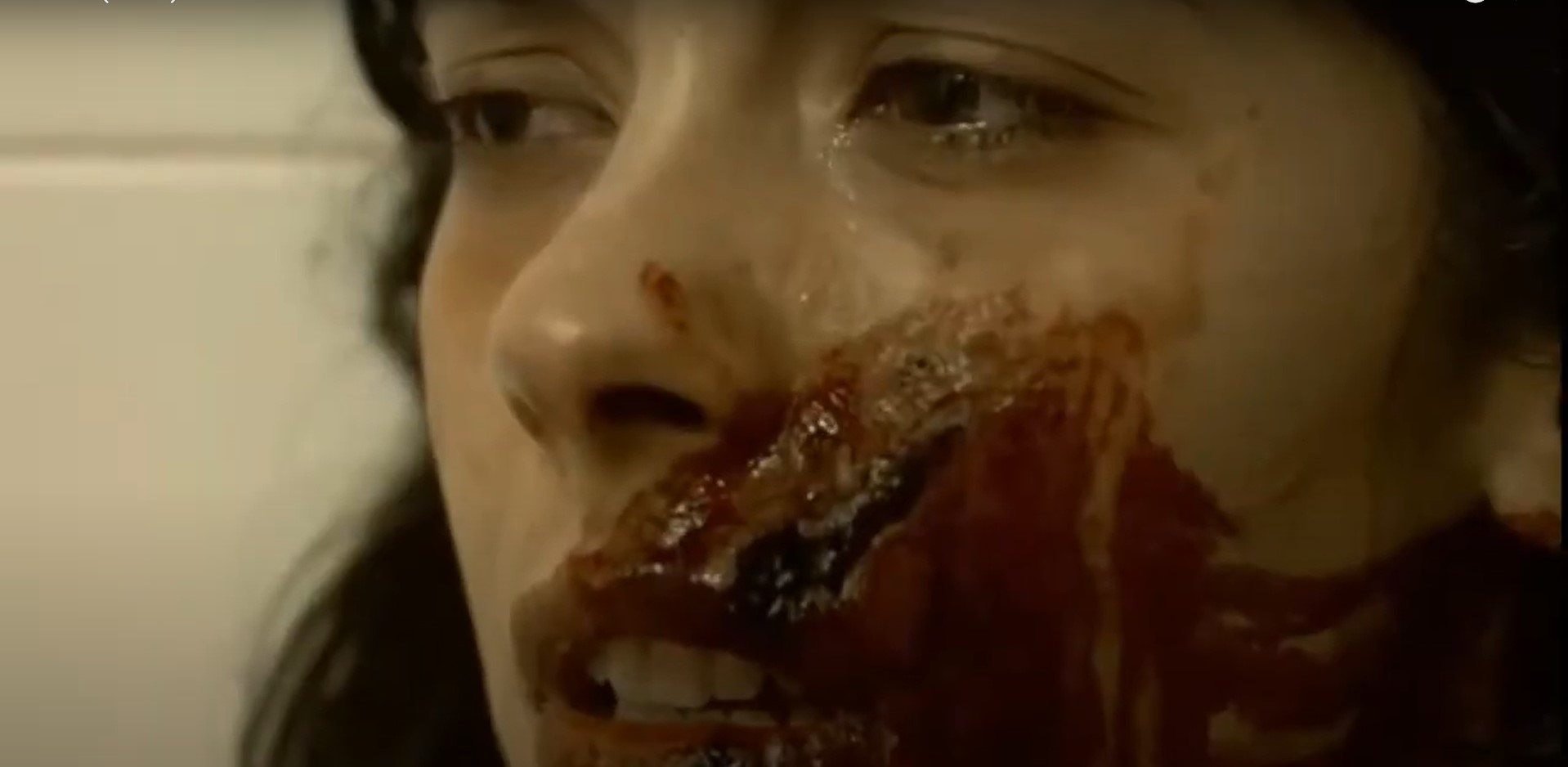
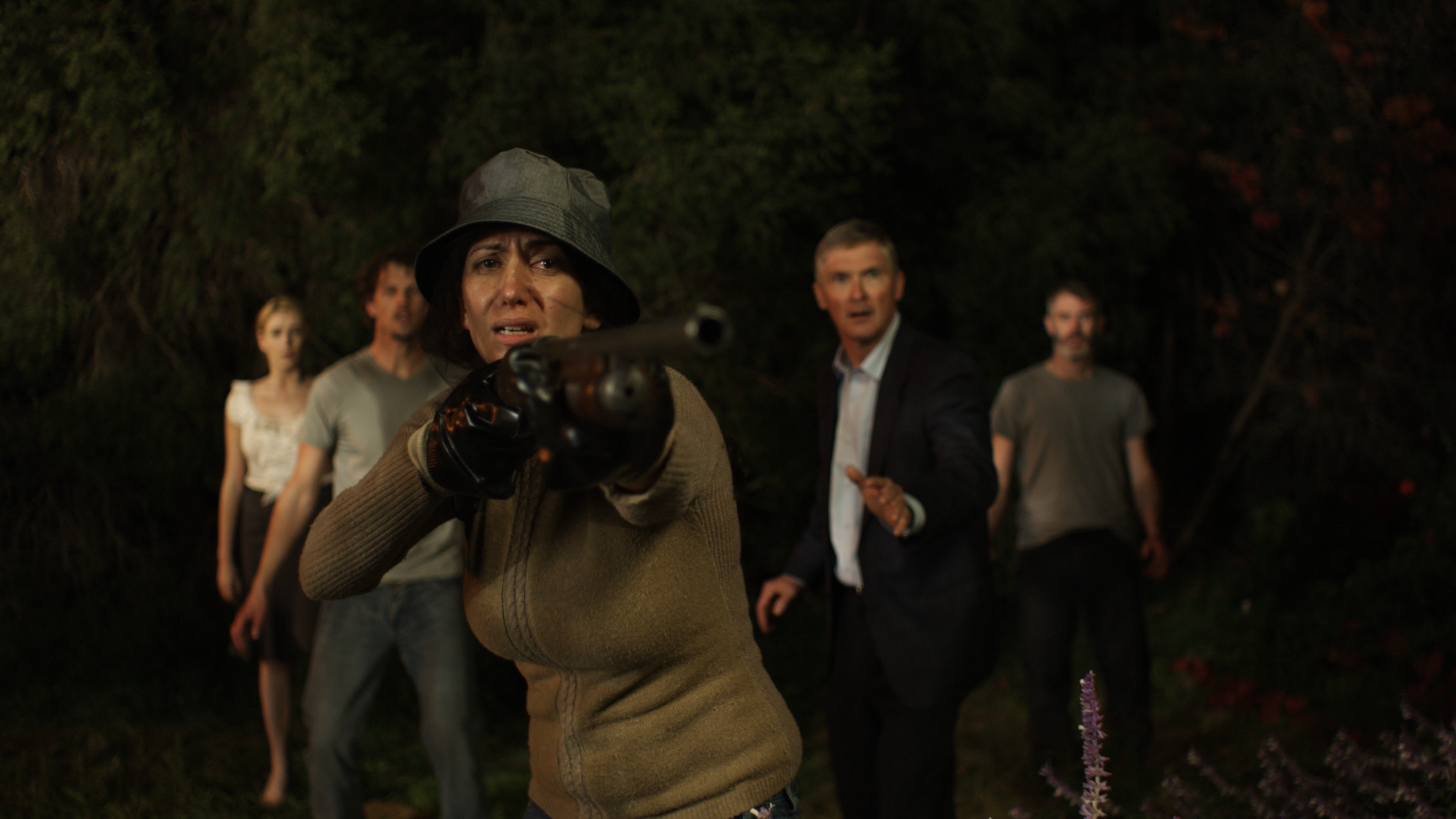
A schizophrenic patient continues to have reoccurring dreams of a young boy chopping the head of a woman in the midst of rough sexual fetishism.  The intense nightmares send him into violent stints, delusional states, and severe seizures.  As a test subject for an experimental behavior drug, the troubled man shows promise of recovery and enough so that he’s released from the mental hospital with continued outpatient therapy sessions.  Not long after his release does he skip his sessions to hightail it from New York City to Daytona Beach, Florida, killing people along the way after decapitating nightmare continues to plague and force him to murder.  In Daytona Beach, single mother of three becomes his obsession as he stalks the youngest boy, a mischievous troublemaker, and even breaks into their house when it’s not occupied , but as the bodies begin to pile up on the hands of his need to kill, the more brazen he becomes to entering while they’re home alone. 

Based loosely on the improprieties of government spy agencies using drugs to bend the minds of home and oversee terrorism to their wills, “Nightmare” sensationalizes the concept for the public sector involving a mental patient, experimental drugs, and exasperating an already instable person’s constitution into a hyperdrive of bloodletting carnage.  The U.S. production is written-and-directed by Italian filmmaker Romano Scavolini who came to America to shop around his scripts having failed to secure financial support in Europe, including, you guessed it, “Nightmare.”  Shot in New York and mostly around the Cocoa Beach Florida, the crime thriller filmmaker flexes his muscle with his first attempt at horror and the outcome is nothing short of unadulterated madness.  Once considered to be titled “Dark Games,” and goes loosely by “Blood Splash” and “Nightmare in the Damaged Brain,” the 1981 film is a feature of Goldmine Productions with John Watkins and Bill Milling (“Silent Madness”) producing.

The man behind the nightmare is George Tatum and the man behind George Tatum is Baird Stafford in one of his only two roles as an actor.  “Nightmare” wouldn’t be as skin-crawlingly shocking if it wasn’t for Stafford’s distressing performance of a man whose psychology is being peeled away and you can see Tatum physically fighting the urge, fighting to stay sane, but losing the battle as the grisly terror replays over and over inside his mind.  Stafford’s asunder of Tatum’s equilibrium has unequivocal transference to the audience.  Parallel Stafford is a child, a young child by the name of C.J. Cooke who essentially played his own version of himself in C.J. Temper, a mischievous prankster that ran babysitters up a wall mad and frightened and frustrated the living daylights out of his mother.  C.J. is part of the family Tatum is hellbent on driving down from New York to Florida to see for a reason that isn’t made clear yet until the shocking reveal.  C.J.’s single parent, a mother desperate for love and affection, is played by Sharon Smith who has become romantically involved with nice guy, and yacht owner, Bob Rosen, with Mik Cribben in the role.  Cribben was actually part of the cast but the original actor for Bob Rosen dropped out and Cribben quickly filled into the role that suited him well enough as a suitable suitor for C.J.’s mother.  “Nightmare” rounds out the cast with Danny Ronan, Scott Praetorius, Christina Keefe, William Kirksey, Tammy Patterson, Kim Patterson, Kathleen Ferguson, Candese Marchese, Tommy Bouvier, and producers John L. Watkins and Bill Milling as drug trial executive and psychologist tracking down Tatum to clean up their mistake. 

“Nightmare” combines excellent U.S. thespianism with an Italian way of suspense and violence glued together by the success of the late Leslie Larraine and team’s special effects albeit the controversial assertion on the film’s posters that Tom Savini (“Dawn of the Dead” ’78, “Friday the 13th, ’80) had been the effects supervisor on the film albeit Savini’s adamant claims of the opposite and denying the credit being false and liable for using his name to draw in audiences.  Savini continues to state his contribution “Nightmare” was limited to best to the action of a decapitating swing of the axe.  Ultimately, the whole ordeal mars Larraine’s due recognition for some of the more up-close and personal gory effects this side of the early 80s.  Scavolini also deserves well-received credit for his narrative vision of Tatum’s psychosexual struggles that drive him to kill.  Robert Megginson’s editing and the re-recording mixing team tackle a form of character plummeting that’s unlike any other from the intercut concatenation of events between Tatum’s horrific, blood-soaked nightmares and his antagonizing, sweat-inducing impulses that propel him without a choice.  The simultaneous parallels between Tatum and young C.J., as Scavolini aims to connect the two against-the-grain personalities as a singular link with back-and-forth subplots, leach the shock out of Sharon Smith’s acme line as mother Susan Temper that uncovers the truth when the chaotic smoke clears.  Why Tatum would drive so far from New York City to Daytona Beach, Florida with reason to stop and make roost on this one particular family fails to form mystery around what’s often crafted to be an arbitrary target with some minute hints that may provide clues to the audience is because even without those inklings, the shooting script defines the rationale right from the beginning thus bringing the viewers out from a shrouded suspenser and into being buckled in just along for the ride. 

Severin Films’ 4K scan of the 35mm internegative compositions the print with various foreign element sources for a comprehensive version of Romano Scavolini’s “Nightmare” on a 4K UHD and Blu-ray 2-dsic set.  The UHD is on a HEVC encoded, ultra high-definition 2160p with a 4K resolution, BD66 and the Blu-ray is housed on an AVC encoded, high-definition 1080p, BD50.  What’s released is a very enriched saturation of the technicolor process that defines and differentiates the innate hues.   Details are more than consistent throughout as we’re able to pinpoint the beads of sweat down Tatum’s face or feel the palpable slick sinew of a decapitated head amongst the examples.  Blood is a deep, glossy red and contrasts strikingly in the more sopping moments despite Savini’s claim that it needed more green dye to better pop for the camera.  A consistent layer of agreeable grain runs throughout from the 35mm film stock, as it should, without any inimical dust, dirt, scratches, flares, or of the like to obstruct viewing or cause lapse in the narrative, as it shouldn’t.  Between the resolution diverse formats, there’s a slightly more grindhouse look to the Blu-ray whereas the HDR10 crisps the image for better vibrancy.  Both formats retain inky blacks without shimmering or banding.  The English language audio tracks are available in two lossless options:  DTS-HD 5.1 and a DTS-HD Stereo 2.0.  The surround mix’s dialogue has resounding infusion, spread through the multi-channels to encompass a multi-directional approach to centralize.  The design is effective as it’s prominent to not understate the vocals but leaves little room for spatial distant to which no matter where characters stand, they are almost audible on the same audio plane.  Jack Eric Williams warping harmonica and twangy guitar, intrinsically integrated with piano notes, a variety of percussion, interjecting funk bass chords, and hints of string instruments, that ebb and swell with great intensity and favorable discordance is a real celebration of Williams’ score on Severin’s latest restorative edition of “Nightmare.”  English subtitles are optionally available.  The Ultra HD release comes the film’s trailers and a pair of audio commentaries as the only accompanying special features; commentary one has features star Baird Stafford and special effects assistant Cleve Hall with Lee Christian and David Decoteau and commentary two features producer William Paul.  The Blu-ray also has the commentaries and trailers plus an extended lot of interviews, such as a feature length (71-minute) Kill Thy Father and Thy Mother interview with director Romano Scavolini (Italian with English subtitles), Dreaming Up A Nightmare interview with cast and crew, a brief interview with Tom Savini discussing his role, or rather his not role, in The Nightmare of Nightmare to which Savini looks a little tired of answer the same question about his inaccurate involvement, an interview with makeup artist Robin Stevens The Stuff that Nightmares Are Made of.  Also included is an open matte peepshow as well as untouched deleted scenes, extending beyond the already newly achieved 99-minute runtime for the film.  “Nightmare” from Severin comes in a standard 4K Amaray case with original poster art used for the front cover.  The discs are separated and tab locked on either side of inner casing and this particular release, the 2-disc set, does not come with any insert or content.  The front cover is reversible with the European title “Nightmares in a Damaged Brain” and a different image composition of the European poster art. The disc has region free playback and is not rated.

Last Rites: “Nightmare” on a new, extended restoration in 4K and Blu-ray is a dream of a release. A nerve-wracking performance in Baird Stafford’s schizo vilifies the very classification of the mentally ill in what is sure to go down in history as one of the most disturbing, and disturbed, characters of the video nasty era.
Your “Nightmare” Should Be in 4K! Own it Here!

EVIL Wants to Cut Out Your Unborn Child. “Inside” reviewed! (Second Sight / Blu-ray)

Order The Limited Edition Copy of “Inside” From Second Sight!

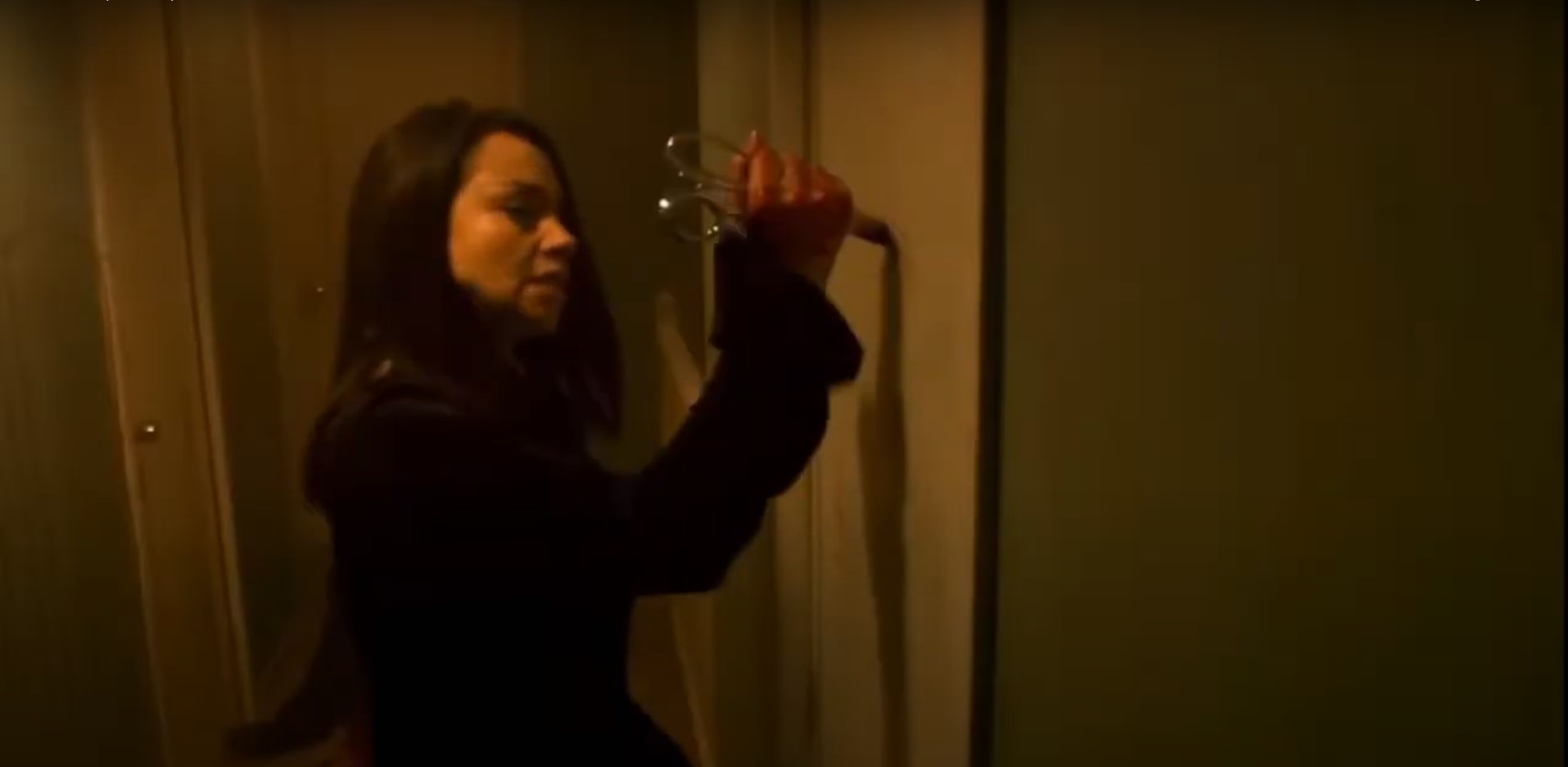
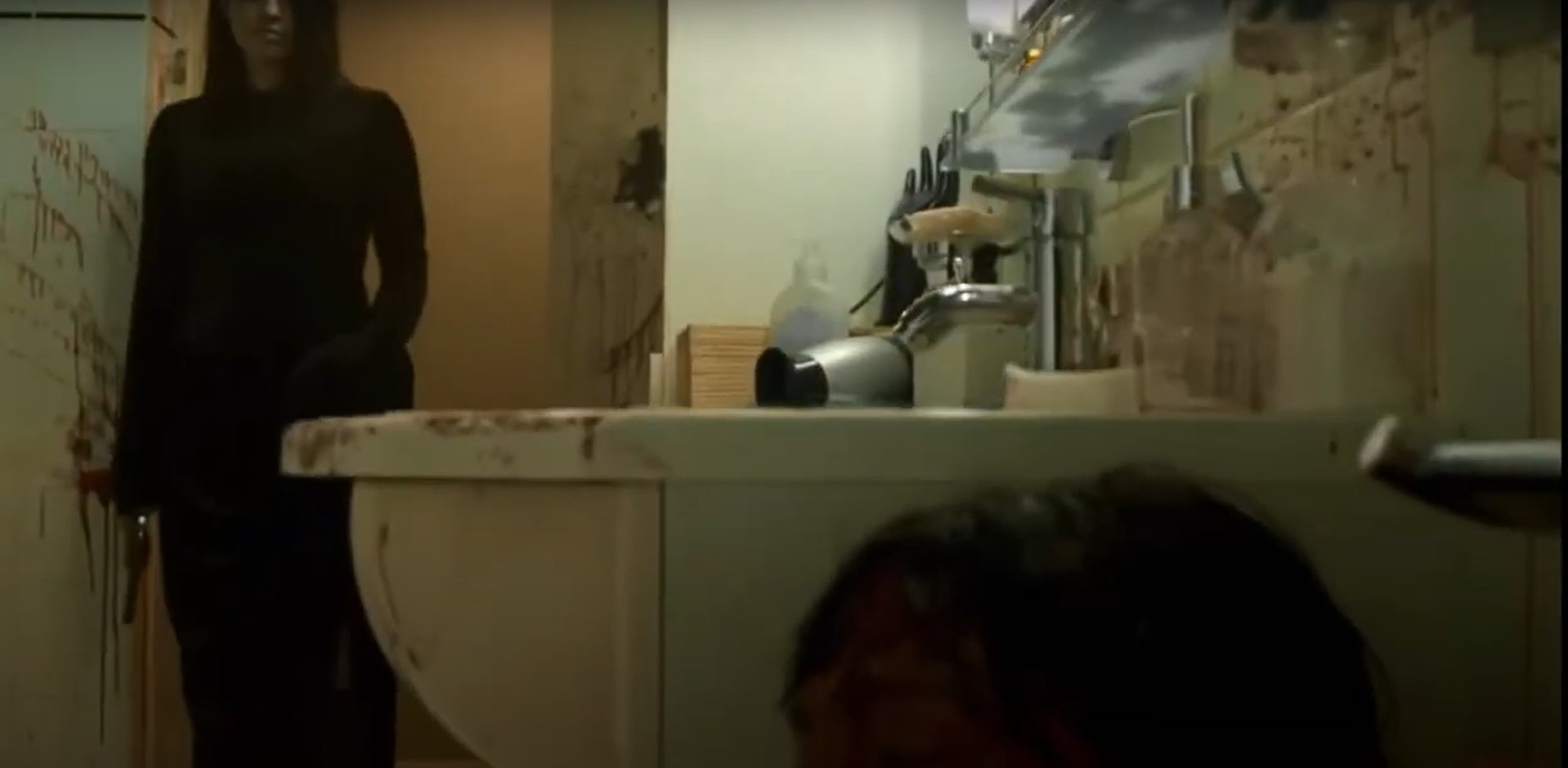
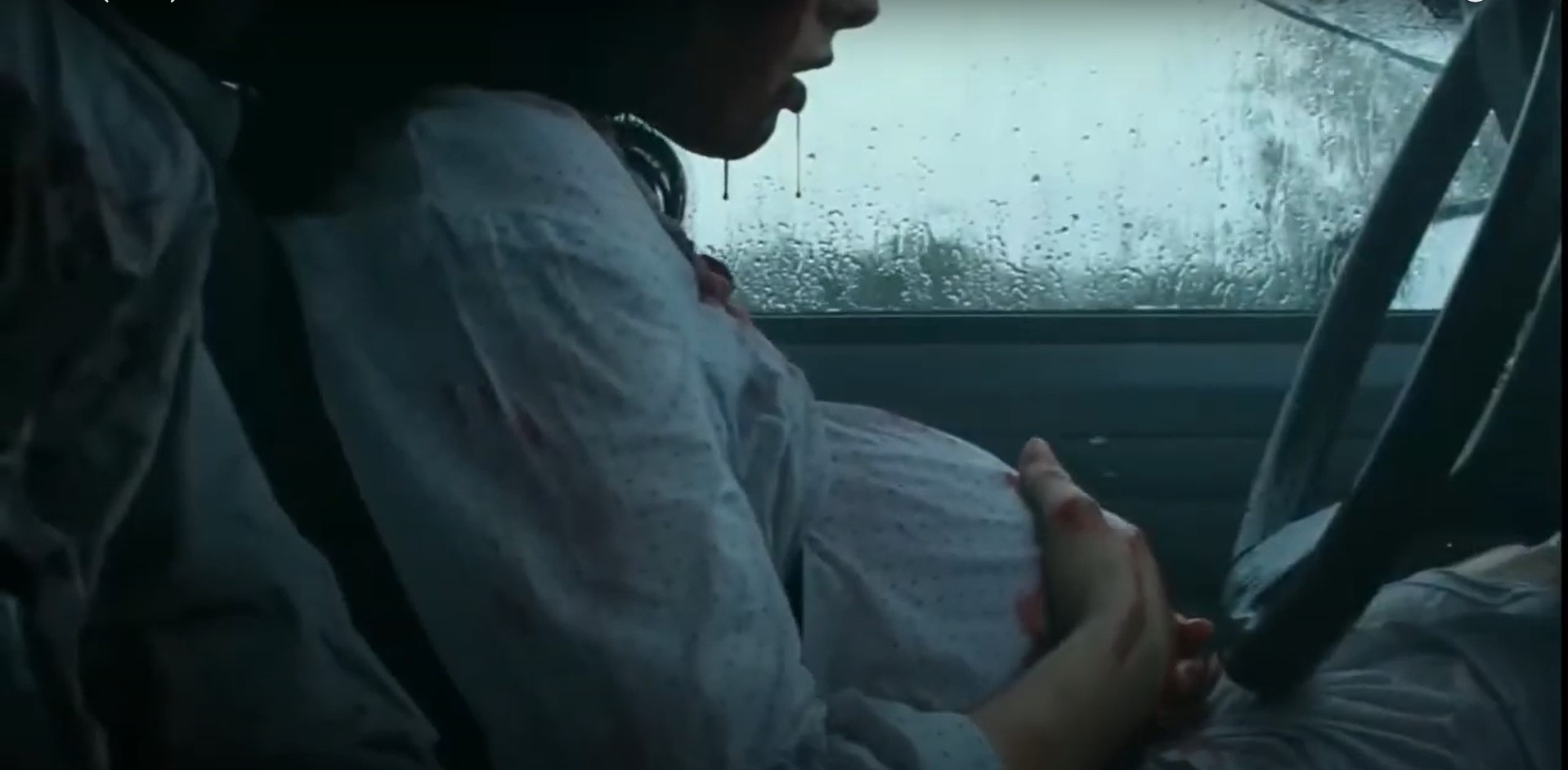
Four months after deadly car crash that claimed the life of her husband, a disheartened and depressed Sarah is 24 hours away from being induced into labor on Christmas day.  Just wanting to be left alone, Sarah is eager to lower her head into her work as a photojournalist of capturing horrifying images that bear a resemblance to her own accident and inviting her editor over later to discuss the work ahead.  As the even lingers into night, an unexpected woman knocks at the door and menacingly tries to break into her house.  As the police arrive to investigate the incident, the woman is nowhere to be found and brush off the incident with little concern, but the woman returns, finds herself inside Sarah’s home, and is determined to cut the baby directly from Sarah’s womb to be her own child.  The tormenting violence becomes a cat-and-mouse game between the two women with an unborn child hanging in the balance. 

Extremely violent and soul biting, “Inside” is one of the more corrosively dehumanizing and destructive films under the French New Extremism, French New Wave Horror, flag.  The 2007 French feature cowritten-and-directed by Alexandre Bustillo and Julien Maury broke the duo into the industry as formidable and fearless filmmakers, reaching global heights having helmed later in their careers a segment of the popular anthology “ABCs of Death 2” and tackling one of America’s more renowned and bred-and-buttered horror franchises with the chainsaw-wielding cannibal in “Leatherface.”  “Inside” comes after the tremendous success of Alexandre Aja’s “Haute Tension,” opening the flood gates to other extreme French horror films in early 2000s with also “Martyrs” and “Frontier(s).”  La Fabrique de Films and BR Films in association with Canal+ server as production companies with later “Frontier(s)’s” Teddy Percherancier, Frederic Ovcaric, Rodolphe Guglielmi, and “Witching and Bitching’s” Franck Ribière and Vérane Frédiani producing the film known as “À l’intérieur” in France.

Not your typical home invasion ultraviolence, Sarah and who we know as labeled only as The Woman are two vipers circling each other, ready to strike when the guards are let down.  Of course, both have distinct personalities and strategies in the measured way of attack and survival that will impress on viewers preconceived notions about them.  As Sarah, Alysson Paradis, younger sister of Johnny Depp’s wife Vanessa Paradis, is bathed in exposed light, literally and figuratively, as the pinpointed principal woman from the start, battered and bloodied in the opening two car accident, to the end, in the final harrowing moments with the relentless Woman but though Paradis performance reeks greatly of depression and perhaps hopelessness with the death of her husband with a baby soon to be brought into this world without a companion by her side, the momentum shifts towards proposed surface villain of the story, The Woman, in a frightening portrayal of stony guile and grim severity by the established, character provocateur French actress Béatrice Dalle (“The Witches’ Sabbath”) in comparison to Paradis relatively filmic beginnings.  Dalle’s role expresses more physically than vocally with motivation coursing through her eyes, facial expressions, and body language that strikes a transfixing chord, turning Dalle’s the Woman into not only an unpredictable killer but an on-screen killer with a lighted purpose without confounding arbitrary slaughter as the yearning for The Woman’s reason never breaks silence until the shocking end.  François-Régis Marchasson, Nathalie Roussel, Ludovic Berthillot, Nicolas Duvauchelle, Aymen Saïdi, Emmanuel Lanzi, and Dominique Frot (“Among the Living”) fill out “Inside’s” cast.

Most will plainly see and interpret “Inside” as a regular home invasion thriller of a pregnant woman defending herself to survive a mad woman’s unborn baby obsession, and maybe that’s how Alexandre Bustillo and Julien Maury mostly intends the narrative to be as an overly graphic portrayal of hate and envy that makes us uncontrollable sinners at heart.  However, there’s something inside me to dig deeper below the face value of terrorizing prenatal torment of a young, expecting mother-to-be in what could be construed as a double-edged explanation.  The Woman doesn’t hold a name as she symbolizes all the worst qualities of a mother, such as anger, deceit, and she even smokes, in Sarah that could be considered a split persona or an archetype of duality.  Sarah is cladded in a bright white nightgown while The Woman is dressed all in black from head-to-toe, contrasting a good versus evil, and both want the same child.  The climax does rebuff the split duality theory to an extent but the way the script is written and how the film is shot very much suggest these two women are cleaved from the same whole with a patriarch-less presence and, to add as an interesting note to further examine and contemplate, all the male characters in the story are slain by the same women while the only other female character is brought down by the other in what is a powerful suggestion of split gender and how gender plays a role in their individual lives.

In what can be said to be the most definitive edition of one of the most brutal films ever produced, Second Sight Films’ Limited-Edition boxset of “Inside” is amply packed with goodies, in application and in a tangible sense. Presented in a widescreen 1.78:1 aspect ratio, the AVC encoded, 1080p high-definition, double-layered BD50 from the UK label holds tremendous value with not only new special features and neat and attractive corporeal contents but also valued by retaining image fidelity with a gritty 35mm print. Natural grain and low-fi celluloid present the seedy grindhouse overlay that’ll take audiences from the comfy, cozy reality into a dark, anomalous atmosphere with warm muted coloring, lambency, and an overall light general haze suffused into the setting. The cinematography has been purposefully constructed with analog building blocks for a rough look for a rough story. Not technically applicable here but “Inside” is set around Christmas, Christmas eve into Christmas day to be exact, but the choice production dressing exhibits little holiday spirit with a far less ostentation presentation and in how the characters dress the season feels more fall like than winter. The lossless French 5.1 DTS-HD master audio offers plenty of spatial awareness during intense pocket skirmishes inside the quaint two-story home, which is the primary setting of the story. The range provides laceration slits and surgical squishes of blades and scissors while gunfire shocks with an innate immediacy. Even with a mostly prominent inconversable back-and-forth, the dialogue that does come up carries through with robust confidence without overbearing the action or feeling out of synch. Speaking of being in synch, English subtitles are available with the French audio track and are error-free and pace well. Special features include a new audio commentary by The Final Girls’ and film critic Anna Bogutskaya, new audio commentary by editor Elena Lazic of the online magazine outlet Animus, a newly produced interview with writer-directors Alexandre Bustillo and Julien Maury First Born as well as newly produced interviews with principal actress Alysson Paradis Labour Pains, producer Franck Ribière A New Extreme, cinematographer Laurent Barès Womb Raider, and stunt coordinator Emmanuel Lanzi Reel Action, with The Birth of a Mother, a Jenn Adams analytical essay focusing on a denied mother’s perspective and the opposite. The limited-edition physical elements of the release add additional magic to the whole package with a rigid, cardboard sleeve case with new artwork by Second Sight retainer artist James Neal. Inside the “Inside” sleeve is a 70-page book with color pictures and thematic essays from film historians and critics Chad Collins, Kat Ellinger, Annie Rose Mahamet, and Hannah Strong. There are also 6-5×7 collector art cards adjacent. The green Blu-ray Amary case houses the same Neal front cover from the rigid sleeve, likely will be the face of the standard release, with the interior disc art having a simple yet effective image of a blade open pair of scissors and psycho-split or -sliced title in red and while. UK certified 18 for strong bloody violence and very strong language, this Second Sight release is B region locked and has a runtime of 83-minutes.

Last Rites: Second Sight invests in “Inside” and its first-time French directors nearly two decades after initial release with a comprehensive package that not only elevates beyond what many labels sought to get out of the gore-laden entropy, quick cash, but this premier release also has depth and range into the film’s applied style and dives into demystifying the breadth of thought preluding random terror.

Order The Limited Edition Copy of “Inside” From Second Sight!

EVIL’s Coaxial Cord Right into Your TV Set! “HeBGB TV” reviewed! (Scream Team Releasing / DVD)

Contact Your Local Cable Provide to Upgrade Your Box for “HeBGB TV” on DVD!

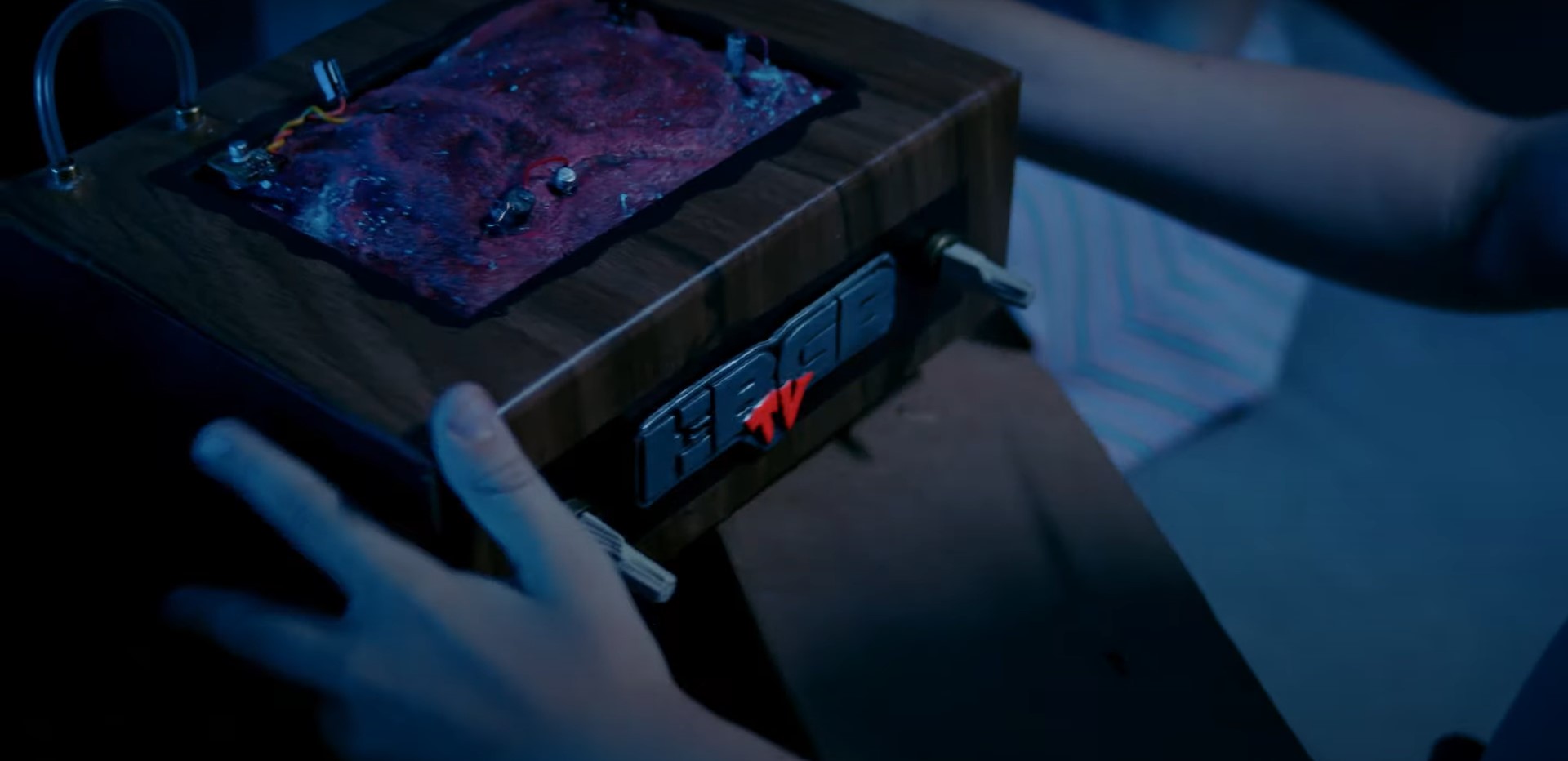
In a world of streaming devices, the cable box era has become nothing but a memory until mysterious HeBGB cable boxes sudden appear on retail shelves and on homeowner doorsteps.  The what looks to be a brain in a box with some wiring quickly self-installs right into the cable jack and manifests a gaudy-dressed tangible host, The Purple Guy, right into your living room.  Promising a guaranteed fun time, The Purple Guy is eager for souls, I mean viewers, to subscribed to the endless commercial content of HeBGB TV, promising nothing but the best entertainment from the other side of the dimension has to offer.  Sordid horror, 90s-inspired carving infomercials, grotesque commercials, monstrous sexy hotlines, demonic feature films, and more provide a source of endless brain-rotting consumerism over the TV broadcast waves.  Eye-glued patrons of senseless horrors become slave to the screens that send their very souls to a machination machine from another world.  Who can stop the evils of doom channel surfing? 

Those who are now in their late 30s, early 40s likely remember how awesome and nearly uninhibited cable television was back in the day.  Money and creative talent were invested in turning the most ordinary retail product into a mini-movie of ostentatiousness, imbued with vividly stark colors and an insanity of pure energy.  Television didn’t coddle, it shaped the very fabric of impressionable children of that era, resulting in imagine and inspiration.  That is what comes to mind when speaking of “HeBGB TV,” a comedy-horror anthology of sorts of shorts written-and-directed by Eric Griffin, Adam Lenhart, and Jake Mcclellan.  The trio’s initial concept, prior to the creation of “HeBGB TV,” was something along the lines of an interactive variety show with short films, standup comedy, and puppetry held in front of a live audience.  When COVID hit in 2020, their idea pivoted toward a movie, eventually a script evolved into a drivable wraparound narrative chalked-full of some of the prefabbed material as well as some other new zany, horror-inspired skits, shorts, and string-pulling puppetries.  Griffin, Lenhart, and Mcclellan produce the feature under their LLC of HeBGB TV productions and PatchTown Films, based right in my regional backyard of Lancaster, PA.

Credited in the film as Knucklehead, Jake Mcclellan may act to the very definition of pseudonym but, in the lack of better words, is the face of “HeBGB TV” by having scores of roles and personalities at his disposable to dress up and become a totally new and grotesquely phantasmagoric character.  Whether be The Purple Guy, PU News’ greasy anchorman, the Blue Monster, or just desperate dieter with a health-hazard late night snacking problem, Mcclellan goes all out with makeup, costuming, and prosthetics in what could be considered a one man drag show and its gorgeously panache and over-the-top but doesn’t stray terribly too far from the outrageous era the horror-comedy emulates.  “HeBGB TV” is full of caricatures of late-night television and oddities of live TV and marketing campaigns, even Eric Griffin and Adam Lenhart get involved in front of camera as a hobo watching a portable antenna TV and as Smokie, the exterminator of potheads with noxious weed, as seen on TV, or rather “HeBGB TV.”  Most of the enthusiasm, and eccentrics, are within film’s faux television programming but the cast of performances flesh out with Ian Sanchez, Curtis Proctor-Artz, Josh Dorsheimer, Zenobia Decoteau, Michael Garland, Mike Madrigall, Ellen Tiberio-Shultz, Kristie Ohlinger, Colleen Madrigall, and Willow and Van Reiner as the kids who The Purple Guy connivingly entertains and Andrew Bowser reprising his most beloved YouTube persona, Onyx the Fortuitous.

Cut from the same cloth as Weird Al’s “UHF, Peter Hyams’s “Stay Tuned,” and Jeff Lieberman’s “Remote Control,” the cable box antics of the 80s-90s TV is quickly fading the analog years into nothing more than static snow of broadcast noise.  However, “HeBGB TV” is the answer, the recollection, and the nostalgia-driven film that delivers better than trying to get a glimpse of the vague outlines of adult actresses in the static noise of premium adult channels.  Directors Griffin, Lenhart, and Mcclellan combine their creative geniuses, incorporate their sentimental love of 90’s media, and integrate their own other interests into a cinematic cannonball of colorful comedy-horror.  While the wraparound stories outside the HeBGB TV box proves able with the inexplicable mass rollout of the brain-in-a-box cable program provider and rotting, killing, and transfiguring viewers into mindless gawkers, overdosed smokers, and malevolent demons, the real star of the feature is flipping through the channels for the go-hard mock-commercials and other putrid programming laced with horror themes and capturing the spirit of television culture of 20-to-30 years ago.  While most of the visual effects reside around the wraparound story, contributing to the alloying of the story, Adam Lenhart’s practical effects more than make up for it a DIY initiative of can-do sculpting, molding, and crafting ingenuity below the embraced realm of unreality.

Don’t touch that dial as Scream Team Releasing delivers cable television like never before with “HeBGB TV” now on DVD! Though the Scream Team Releasing DVD back cover lists the format as a Blu-ray, the data file is actually a MPEG2 encoded, singer-layer DVD5 that has a widescreen 1.78:1 aspect ratio presentation. A combination blend of interlaced and digital video swirl “HeBGB TV” into a time warp of the past and present. The filmmakers captured not only the feel of rambunctious, eccentric, and vividly brilliant 90’s commercials but were also able to capture the look of it too with the interlacing horizontal lines indicative of video frame rates of the time. The wraparound narrative portions are digitally cleaner in juxtaposition, factionalizing present and TV programming with distinction until the culminating plan comes to conclusion. Some of the digital visual effects gags crumble under the practical elements of an analog airing, proving once again that the tangible and practical outstage the digital composition, but the crumbling doesn’t stem from compression issues. The English language Dolby Digital 2.0 mix is a symphony of frenzied chaos, pinpoint advert jingles, and deliciously distasteful horror gags facsimiled perfectly, as if it was plucked straight from the pre-millennium. Dialogue is quick but renders clean and clear in a blend of inset and ADR vocal recording, per the commentary. No issues with depth, range, or any kind of compression side effects. Well scored with a catchy main theme and topnotch sound designed to add to “HeBGB TV’s” romp commercial content. English subtitles are optionally available. Bonus features are aplenty with a retrospective interview with the three directors and short clips going in-depth with behind-the-scenes movie magic, a HeBGB TV video installation guide, a world-premiere pre-show, the first interactive show prior to COVID, and the theatrical trailer in the motion menu option shaped like a retro tube television with right side buttons. Inside the setup option along with the English Subtitle toggle, a directors’ commentary can be selected and played from there. The standard edition encased inside an Amaray comes with faded hues on an illustrated composition cover art of most of the “HeBGB TV’s” wacky pastiches and a disc pressed with the pulsing brain-loaded cable box. The release comes not rated, region free, and has a copasetic runtime of 78 minutes. ”HeBGB TV” is couch potato worthy that syndicates together hilarious travesties and transvestites for timeless television touting, stitched together from previously shot short films, puppetry depravities, and a new sci-fi fiction.

Contact Your Local Cable Provide to Upgrade Your Box for “HeBGB TV” on DVD!

Vampires Can Be Your Evil Saviors! The Caretaker Review!

The-CaretakerDon’t quite count out the vampire genre just yet.  Like the blood thirsty undead, the vampire genre just keeps resurrecting.  Vampire films might be critically castrated for the majority of the time, but there are times when a vampire film just had a lot of heart, especially in a no to low-budget project like the film I’m reviewing in this article – The Caretaker.  Directory Tom Conyers has no feature film directing experience.  Actor Mark White has no feature film acting experience.  Must can be said about the rest of the cast while a couple of them also worked in shorts and television series, but The Caretaker is a real test for the cast on such a venturous storyline.

Mosquito bites cause what many believe to be an epidemic of the flu in the area of Melbourne, Australia.  What the residents of Melbourne believed were wrong…dead wrong.  The bites cause the victims to turn into vampires that reaches out beyond the lines of Melbourne and spread across the world.  A small, on-edge group of four humans hold up on a small vineyard plantation where a vampire has claimed his nest.  In exchange for their protection during the day, the vampire offers his protection against his own kind at night.  The tension is thick not only between human and vampire, but also between human and human.

Now not to rain down on The Caretaker’s parade even though I do like the movie, but I feel there is always too much melodrama.  Melodrama seems to be a plague for many low-budget horror films just because the crew can’t add in top dollar special effects to entertain leaving a “talking head” movie syndrome inevitable.  But I can divulge that the fact that in spite there being melodrama spewing from every orifice, this doesn’t make The Caretaker a bad movie.  The characters are complex enough to welcome some of the “talking head” script.  There are internal conflicts in the characters themselves and they are also projected upon the other survivors causing turmoil in the house or “nest.”

When I said that many low-budget horror films just don’t have the dough to afford high-tech special effects, I didn’t intend on that to mean that The Caretaker’s effects were awful.  I rather enjoyed the effects as they were minimal and believable.  Some effects make a movie campy, but The Caretaker was all serious business and took the vampire story on a different level with an earnest commitment.  Mark White’s as the protective vampire Dr. Ford Grainger who never reveals a good side or an evil side.  We just know he is a bad ass vampire vampire slayer.  The human characters give off the same complexities with only Colin McPherson’s character Lester portraying anything that resembles a villain as the 50-year-old creepy vineyard owner who loves to chase after young women and that young woman happens to be the manic depressed Annie played by Anna Burgess.  Guy and Ron round out the last of the characters played by Clint Dowdell and Lee Mason and these two are buddy buddy at first until Annie’s secret comes to the forefront and then it is game on between the four humans and the lone vampire.

The Caretaker won’t knock your socks off, but comes off as a decent vampire genre flick.  Don’t expect flying body parts or gruesome scenes of vampire attacks with blood squirting in every direction.  Take it in like a worth seeing television soap drama and try to see the heart in the center like I did.  Then, after it is all over and you still didn’t care for The Caretaker, you can rip out that heart and eat with a side of lima beans and wash it down with a nice cold beer, but hey, at least you gave it a try, right?

Trailer for The Caretaker

Not just another evil versus movie! Ninjas vs Vampires review!

If you’ve ever been unfortunate to see that piece of shit Vince D’Amato 2004 film Vampires vs Zombies (also called Carmilla, the Lesbian Vampire), a fear has probably dug deep with in the core of you’re very soul urging you to never, ever watch another indie horror project again for the rest of your mundane life.  No fear fiends!  Lets split up vampires and zombies and add ninjas instead!  First, there was Ninjas vs Zombies; a sleek, funny and fresh clash of two factions that never saw the light of day against each other.  Director and writer Justin Timpane does a great job with the martial art choreographic and special effects that will put your faith back into indie horror.  The subject of this review is Timpane’s sequel to Ninjas vs Zombies; Ninjas vs Vampires was with out a doubt the next logical title for his 2008 versus movie.

Aaron and his long time friend and desire Alex find themselves in the middle of an epic battle between the deadly forces of ninjas and the ultimate blood sucking night stalkers, the vampires.  The ninjas look to stop the world from falling into the sharp fangs of the vampires, but when Alex is kidnapped, the clan and Aaron must make a choice to whether risk the fate of the entire world on a single mortal girl.

Continue reading