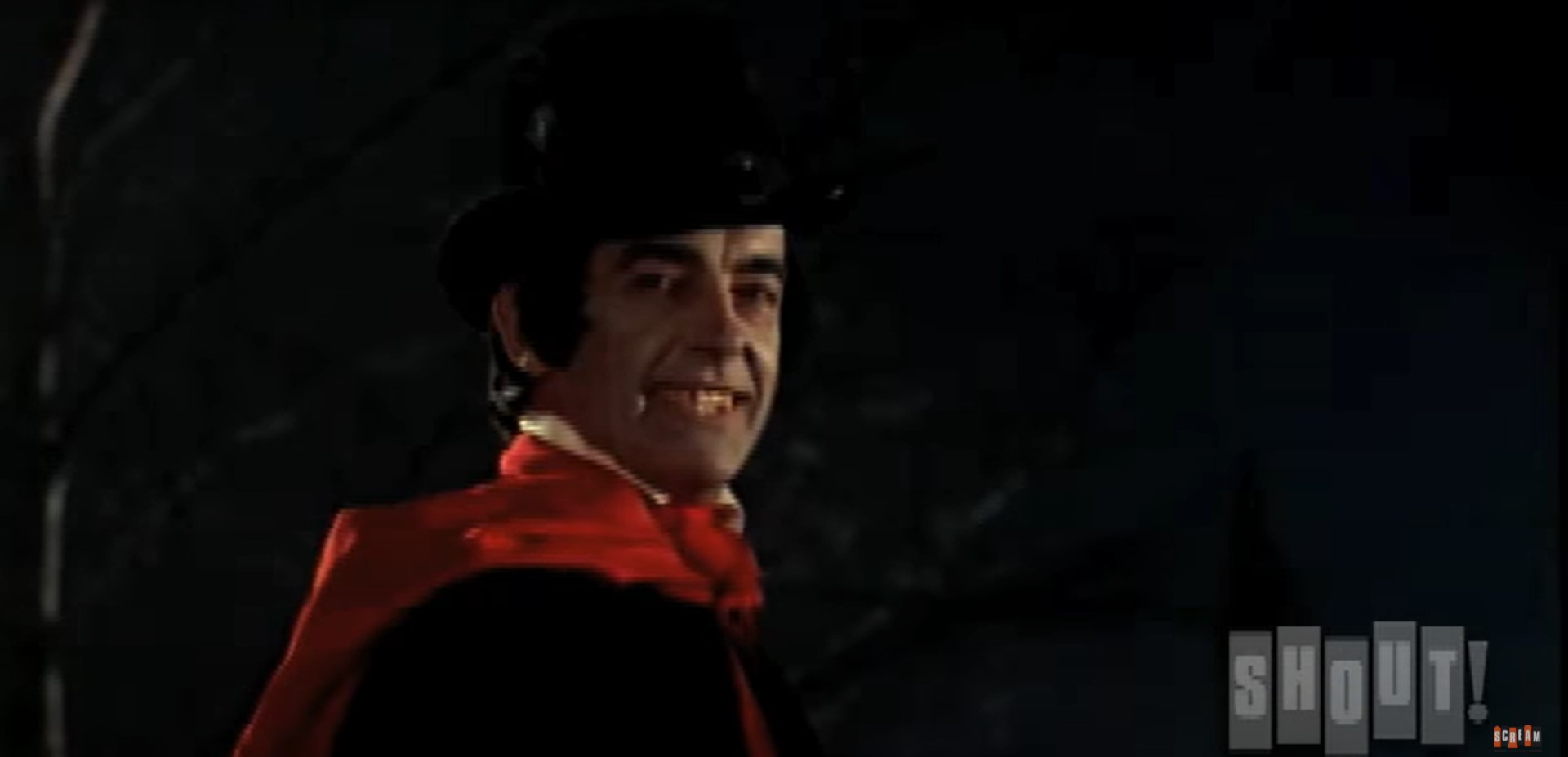
Don’t Mind the Glowing, Ominous Hole in the Wall. That’s Just a Gateway to Evil. “Beyond Darkness” reviewed! (Severin / Blu-ray)

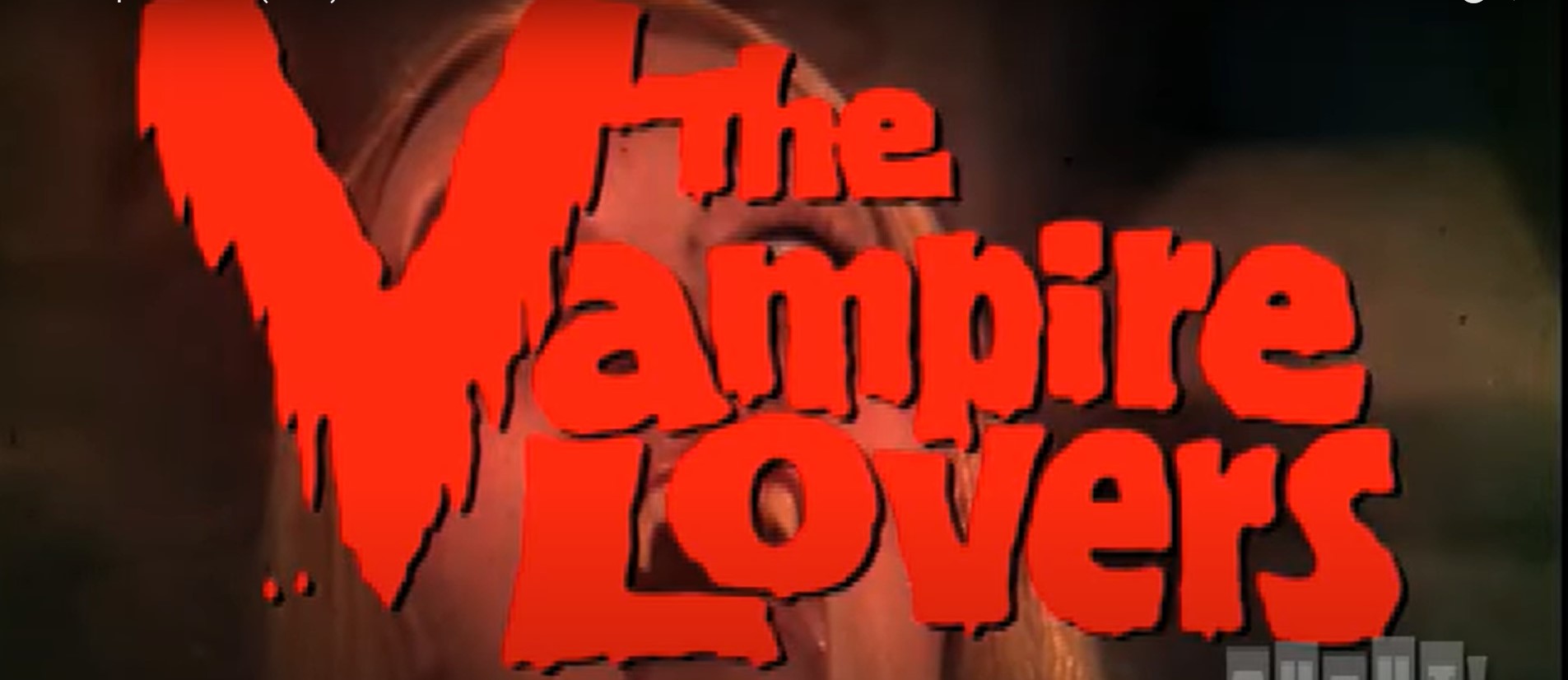
A witch acolyte of Ameth, an underworld demon, is executed on multiple counts of child murder.  The priest who oversaw the witch’s last rites came in with a doubtful heart and upon researching Ameth through an unholy book, disavowed his own religion only to fall into a near drunken stupor of atheism.  Months later, a new priest and his family move into a home arranged by the archdiocese, but soon after settling into the old house, a series of disturbances point to a closed in wall behind a door that’s uncovered to be a gateway to another plane of existence; an existence where the child killing witch is granted access to seek the souls of the priest’s young children.  Fighting with his own struggles of faith, the ex-Jesuit assists the priest and his family in an attempt to cast out evil once and for all. 

Perhaps common knowledge amongst diehard horror fans, but not so much among the casual curiosities of an oblique coursed moviegoer is the fact that “Beyond Darkness” and Sam Raimi’s “The Evil Dead” share a cinematic series connection.  Well, not one in any official capacity one at least.  Drained from the same bloody vain that unofficially corrals Lucio Fulci’s “Zombi 2” as a sequel to George Romero’s “Day of the Dead,” retitled in Italy as “Zombi,” the American-made, Italian-orchestrated “Beyond Darkness” too fell upon the slew of Italian title changes sword with a rechristening into the “La Casa” series.  With the success of “The Evil Dead” in the U.S., Raimi’s video nasty was renamed to “La Case” and “Beyond Darkness” became the fifth “sequel” in the series as “La Casa 5.”  Since Italy has no copywrite laws, a light breeze can easily change any filmic title.  Even the director, Clyde Anderson, dons a false pretense as the Americanized alter ego of Italian director Claudio Fragasso.  The “Scalps” and “Troll 2” Fragasso pens “Beyond Darkness” with longtime script confederate Rossella Drudi, under the Sarah Asproon pseudonym.  “Beyond Darkness” is shot in the deep American South of Louisiana under the Joe D’Amato (aka Aristide Massaccesi) founded Filmirage (“Anthropophagus: The Grim Reaper,” “Deep Blood”), produced by D’Amato, as the Filmirage Production Group.

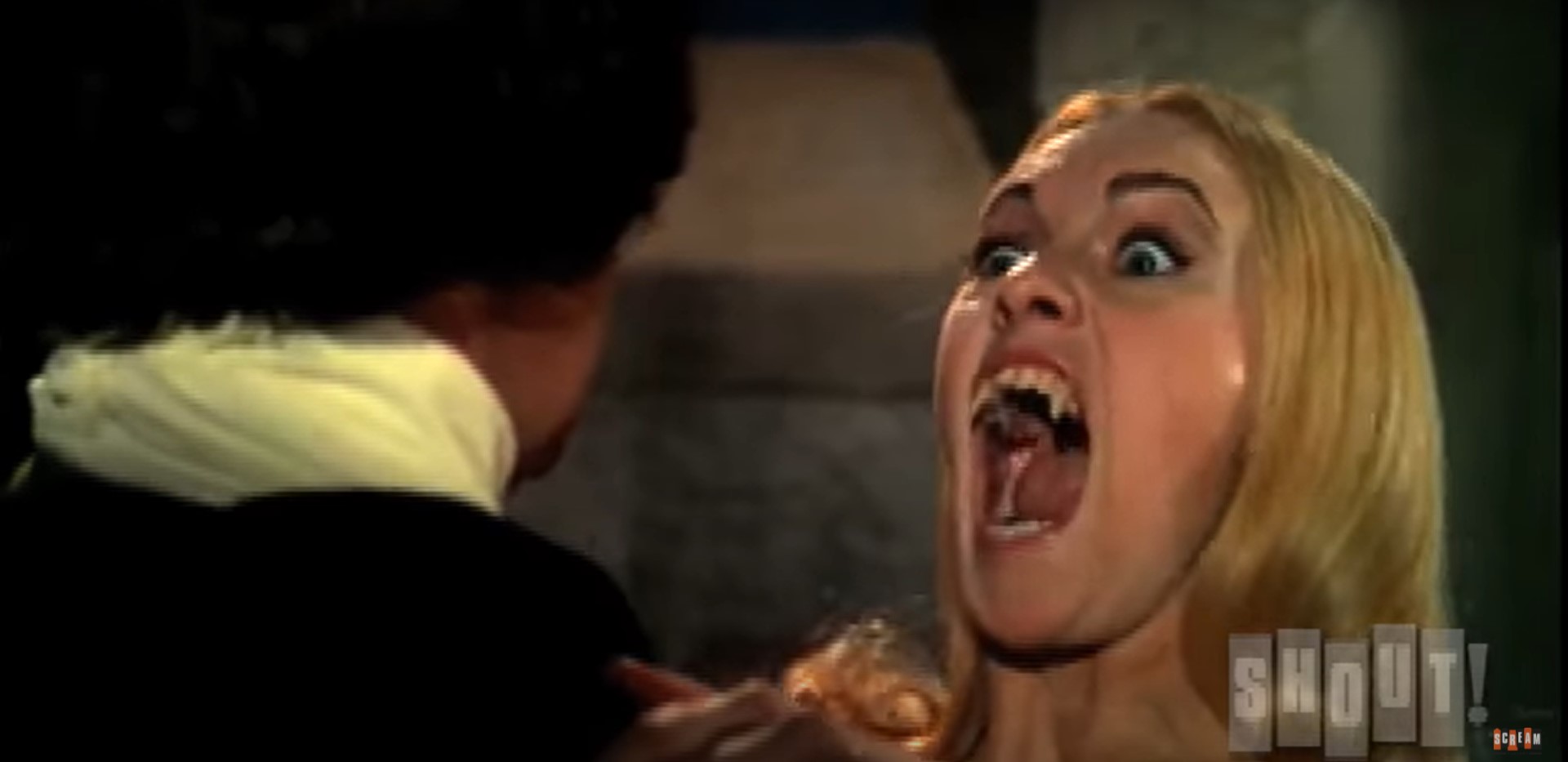
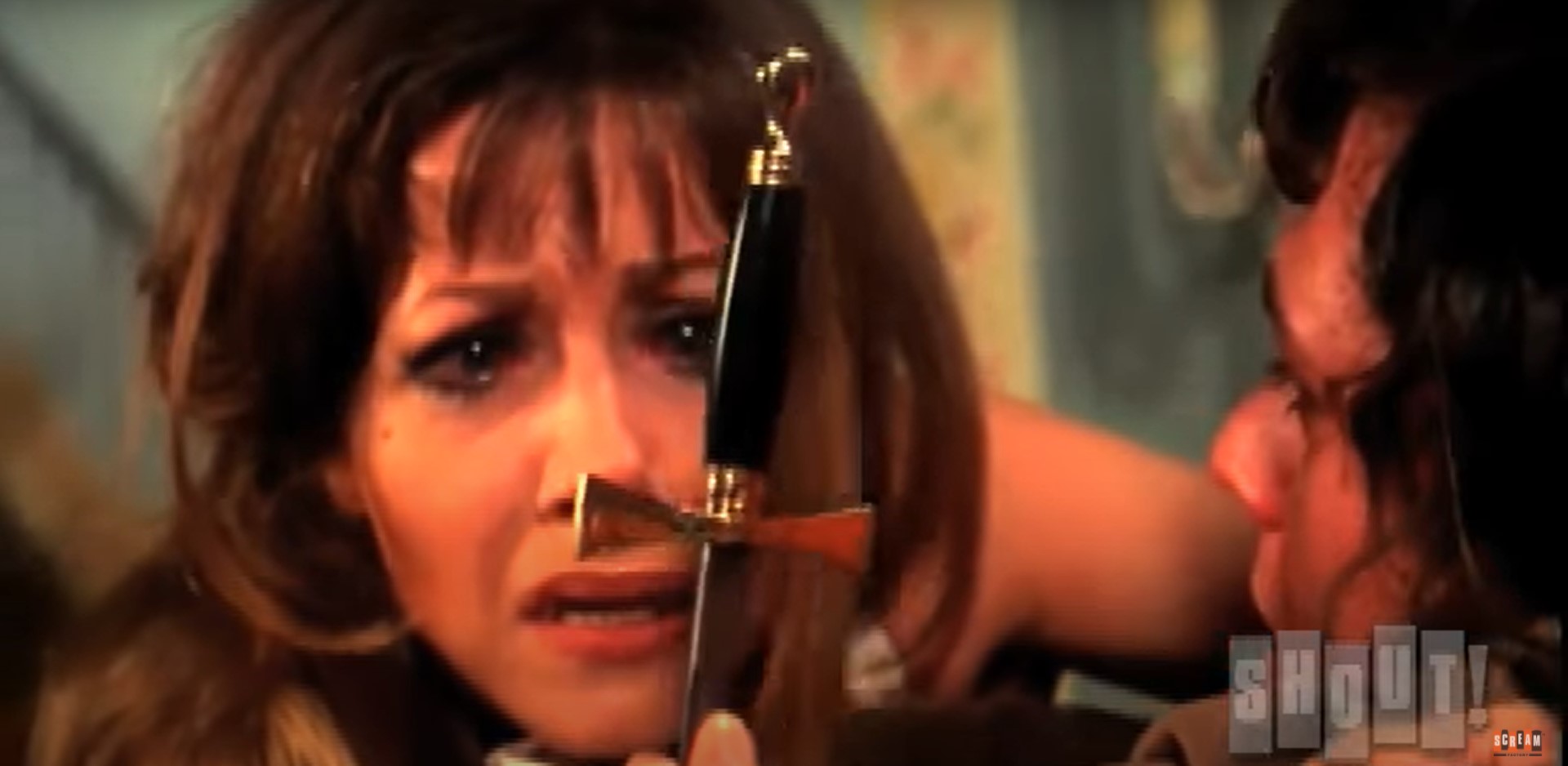
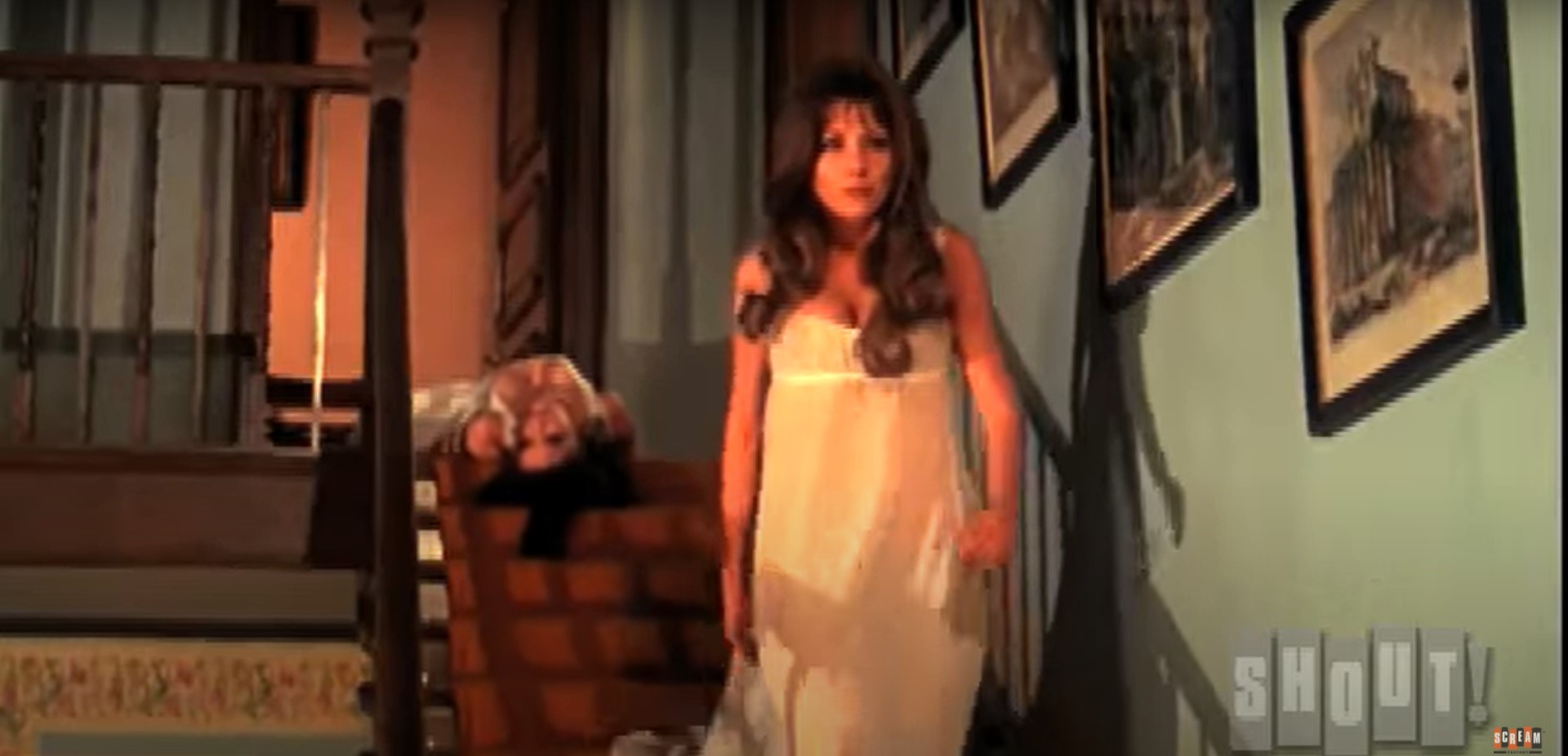
While behind the camera is mostly an Italian production team, in front of the camera is a cast of American and English actors with an opening Louisiana penitentiary pre-execution theology debate between Bette the witch, played by Mary Coulson, and Father George, a priest having a crisis of faith, played by one of D’Amato’s regulars in English actor David Brandon (“StageFright,” “The Emperor Caligula:  The Untold Story”).  Coulson’s role may be punitively small as the “Beyond Darkness’” lead witch and predominant face of the core evil, but the actress puts all into the Bette character comprised of a maniacal laugh and a lots of very European skin-tag makeup effects whereas the classically trained David Brandon has an array of lively emotions and facial expressions sized to fit Father George’s clerical shirt and white tab collar when he’s not sloshed with doubt.  Both characters interweave into the life of a new-to-the-area priest, his wife, and two kids who move into an old house, built on unholy ground, to start his new chapter in priesthood.  Days later, as the kids become instantly okay with a giant black swam rocking horse in the middle of their bedroom, the family is terrorized by flying kitchenware, flooded with a bayou mist, and frightened by figures in black, tattered shrouds seeking to steal their children’s souls.  Christopher Reeve’s lookalike Gene LeBrock (“Night of the Beast”) fails at double father duty in his poorly lit excuse of a worried father with his children being lured to the realm of the spirit side and as a grounded in faith Father combating the forces of evil without a solid sense of what to do.  Both parents are equally written off as incompetents who continue to stay in the house despite on the continuous threat of Baba Yaga wannabes knocking at every door in the house.  As the mother, Barbara Bingham felt as if she had a little more skin the game.  Perhaps having just come off the legacy success of a “Friday the 13th” sequel (“Jason Takes Manhatten”) she felt the responsibility of maintaining a more diligent approach toward being a mother coursing through occult’s dire straits.   Michael Paul Stephenson (“Trolls 2) and Theresa Walker excel much better in their roles as the two kids, Martin and Carole, who’ve become the centerpiece of Bette’s maliceful desires. 

“Beyond Darkness” will come across as very familiar amongst both horror fans and fans of movies in general with a story pulling inspiration from films like William Friedkin’s “The Exorcist” and Tobe Hooper’s “Poltergeist.”  Fragasso picks and chooses a blanket of trope elements to rework with great malleably in order to not be a total copy.  However, for those who know anything about low-budget Italian horror, Fragasso’s rousing similarities to major and independent hits should come as no surprise.  Notoriously renowned schlock horror directors Joe D’Amato and Bruno Mattei, amongst a sea of others, use to fabricate out of fame at every opportunity by gobbling up successful films, chewing them up, and spitting out their Italian produced counterparts without a second thought just to cash in on just a fraction of the original narrative’s success.  The way I see it, the method was (and still is) an honorable form of flattery. Yet, flattery doesn’t cure sloppiness and “Beyond Darkness” is about as sloppy as sloppy joes. Plot hole after plot hole stack up on Fragasso’s inability to amalgamate elements in an entirely coherent way. There are underwhelming revelations to anticipating character build ups that fizzle; such as a thick-tension mystery behind the local archdiocese and their involvement to place a good Christian family in a house built on evil land or what precisely convinced Father George of Ameth’s power to sink him into an alcoholic pit of despair? I already mentioned Martin and Carole’s inept parents on not fleeing the house at first sign of poltergeist activity or any activity since then so don’t get me started. The story needs some fine tuning but not after is amiss. The acting is not entirely a humdrum of monotony, Carlo M. Cordio’s eclectic synthesizer riff and haunting keynotes score is on another level akin to a composition pulled right out of a survival horror video game, and Larry J. Fraser, another one of Joe D’Amato’s pseudonyms, has an honesty about his scenes unlike we’ve ever seen before in a D’Amato production as the cinematographer captures the fog luminously and effervescently surrounding and chasing the family from out to in.

“Beyond Darkness” is no “The Evil Dead” but is a solid demon and ghost dog and pony show from 1990. Now, the Claudio Fragasso (or is it, Clyde Anderson?) classic is heading straight to your level room television set with a new 2-disc Blu-ray. The hardcoded Region A is presented in widescreen 1.66:1 aspect ratio in a full high definition and 1080p resolution. With only a possible color touch up here or there, I would venture to say the transfer used is the most pristine copy with hardly any damage or any age deterioration. The grain looks amply checked and no cropping or edge enhancing at work in an attempt to correct any issues, if any ever existed. Severin offers two audio options: an English language DTS-HD master audio 2.0 and an Italian dub of the same spec. With dual channels, there retains an always room for growth inkling and with the film’s broad range in sounds, a difficult to swallow lossy audio pill plays the aftertaste tune of, man, this could have been way better. Yet, the track is solid enough, if not more so, with virtually zilch damage. Dialogue comes across clean and clear, but there tails some minor hissing. Like with many Severin releases, new interviews are the star of the special feature show with one-side, talking head interviews with writer-director Claudio Fragrasso Beyond Possession, co-writer Rossella Drudi The Devil in Mrs. Drudi, and actor David Brandon Sign of the Cross. Though the theatrical trailer rounds out the first disc special features, Severin also includes Carlo M. Cordio’s superb soundtrack as disc number two along with a two-page booklet with an introduction to the ingredients of a horror score and to Cordio himself as well as a listing of all 17 tracks. “Beyond Darkness” is Claudio Fragrasso’s unbridled mutt, a motley of motion picture royalties rolled up into an adulating and piggybacking horror beyond comparison.

“Beyond Darkness” 2-disc Special Edition Blu-ray Available on Amazon

Be Creative, Be EVIL! “Scare Me” reviewed! (Acorn Media / Blu-ray)

The down on luck Fred and a celebrated Fanny are both horror writers. Well, sort of. You see, Fred is an aspiring horror writer with unpretentious stories acted out by his creativity whereas Fanny is the hot, popular artist who just came out with an acclaimed novel everybody is talking about, even Fred. When their paths cross on a remote, snowy getaway during power outage, they consolidate to one cabin to stave off boredom by telling each other off the cuff scary stories, acting out every minor detail to flesh out the macabre tidbits in order for a good scare. As the night carries on and the stories become more involved, Fred’s night has been a rare highlight in recent days and now that day is on the brink of breaking, Fred has one more emotionally-driven scary story to tell the weary Fanny.

You wanna see something really scary? No, not the line from that wraparound story with Dan Aykroyd and Albert Brooks driving late a night in “The Twilight Zone: The Movie,” but rather really see a scary story come to life before your eyes with enthusiastic performances between two horror writers? Josh Ruben’s “Scare Me” does just that with the filmmakers’ 2020 horror-comedy hit. Ruben, whose latest comedy genre film, “Werewolves Within,” has been a critic success, writes and directs a petite cast packing a powerful punch pitched perfectly more so than this mouthful attempt at an awfully awkward alliteration. “Scare Me” is also produced by Ruben along with Alex Bach and Daniel Powell under a conglomerate of productions companies including Artists First (“Hell Baby”), Last Rodeo Studios (“Save Yourselves!), and Bach and Powell’s Irony Point with Shudder distributing.

Ruben not only writes, directs, and produces his film, he also co-stars as Fred. With this Andy Serkis like looks, motions, and vocal talents, Ruben is a master at amplifying impressions and slapstick from the beginning as Fred using his unrestraint, and probably unstable, imagination to try and write a bestselling horror novel to help him get out of a life funk. Then, their is Aya Cash, who I have personally adored since her villainous role on Prime Video’s “The Boys.” Much like that role’s personality of the super-sadist Storm Front, Cash just dons snarky assertive woman to perfection as she continues the trend by embodying bestselling new age novelist Fanny with such. Fanny downright emancipates…I mean, emasculates…Fred at every chance and at every step along the way despite her warming up to Fred’s kooky lackadaisical first impressions with a side dish of caution for those who yearn for story ideas. Ruben and Cash bounce incredibly well off each other to the point of credibility between the dynamic and the dynamic is far from being a romantic love interest but more so an unlikely best friend; a best friend who constantly proclaims white male privilege whenever the opportunity presents itself. The funnies also keep on coming, especially mixed into the dialogue details, that are sharpened by Ruben and Cash’s timing and delivery telling their individual stories and the reactions each have during them, but then blend into that batter of bust-a-gut with comedian and “Vampires vs. the Bronx” actor Chris Redd, consider your every funny bone in your body rigged for explosion with the trio’s insanely charismatic skits and a musical number about a Devil possessed pop star to die for. Bringing up the rear of the comedic cast is “Key and Peele” writer Rebecca Drysdale.

If you had told me that “Scare Me’s” premise was two writers telling each other scary stories during a power outage, the film would have been near the forgotten bottom of my must-watch list with the inane dancing of “Orgy of the Dead” and the prosaic “Paranormal Activity 4.” After watching the film, all I have to say is this, Mr. Ruben, please accept my heartfelt apology for manifesting one single brain cell of doubt as “Scare Me” is the five-star movie everybody needs to see. I am not worthy. The idea behind the movie is simple, yet novel, that never ceases to peak as Ruben’s film perpetuates a steady incline of sharp-witty dialogue, an involved and spot-on sound design to create the stories’ allusions, and a trope-less ending that fits “Scare Me’s” unique, unbridles nature without being a grandiose end-all finale. Without the punctuating special effects, Ruben definitely curved a workaround with smart dialogue, entertaining writing, and with a cast who couldn’t sell the idea any better. The work lies severely on the shoulders of Cash, Redd, and Ruben and without them, “Scare Me” would probably been acerbically be retitled as “Bore Me” under the breath of many frustrated genre fans. Also, just because there isn’t knock-your-socks-off special effects, that doesn’t mean there was zilch as Fred, Fanny, and Carol (Redd) enact each stories, a slither of their dread-addicted imaginations comes to fruition like window glimpses into their minds and, damn, they can really sell their fear-stroking dark fantasies by telling classic tale spinoffs that could parallel cult favorites, many that were namedropped throughout the 104 minute runtime. “Scare Me” is without a doubt pure love of the genre and a tinseling homage to the macabre.

Better late than never, they say, in viewing Josh Ruben’s bewitching “Scare Me” on UK Blu-ray distributed by Acorn Media International. The region 2, PAL encoded BD25 presents the film in 1080p on a streaming platform dictated 2:1 aspect ratio. Aside from the bookend snowy landscapes and exteriors, much of the setting is located inside the compact two story cabin in the woods in which cinematographer Brandon H. Banks breaks into his debut feature with getting the precise angles to reassure and reaffirm Fred and Fanny’s telling of scary stories. As far as visuals go, the digital recording compression seems to hold up on the BD25 while still flaunting a good amount of bonus material and an English language Dolby Digital 5.1 surround sound. No issues here with the audio with phenomenally clarity in the diversity of sound bites and in dialogue even with Ruben and Cash’s modifying their voices for story characters. There isn’t a lot of actions to hone on and rein in the depth, but with this type of story inside, as aforementioned, a compact cabin, depth won’t make or break the audio report card. Special features include a director and cinematographer commentary, short interviews with the Ruben and Cash that run through their favorites things inside the horror genre, a behind the scenes photo gallery, a Make Cool Shit Podcast, outtakes, and “Feel the Music, Feel the Light” music video. I’m always up for a good tale of Fright and “Scare Me” slashes all the boxes with a traditional layout themed by envy and has a cast that illuminates each and every scene with funnies and fear.

After Death is When Things Get Really EVIL! “One Dark Night” reviewed! (MVD Visual / Blu-ray)

Good girl Julie wants to join a The Sisters, a small high school club ran by three girls, one of who is the ex of Julie’s boyfriend.  Out to prove to herself and to The Sisters she’s willing to go the distance being fun and reckless, Julie subjects herself to The Sisters’ initiations, even the more cruel ones set by her boyfriend’s spiteful ex.  When the last initiation involves staying locked in overnight at a mausoleum, The Sisters will go beyond the limits in trying to scare her out of pledging, but the death of a bio-energy telekinetic practitioner with a cryptic occult past is freshly stowed away in one of the mausoleum’s coffin crypts and in death, he is more powerful and dangerous than when alive.  Trapped, Julie and The Sisters are terrorized by his power as he seeks to transfer his malevolent energy into one their bodily vessels. 

A PG rating back in the pre-1990 was also an abstract concept.  “Clash of the Titans.” “It’s Alive.”  “Jaws. “ “Prophecy” (the one with the spirit bear, not the Christopher Walken film).  These are a handful of titles that were MPAA rated PG approved, but contained nudity, bloody kills, and not to forget to mention some terrifying visuals that’d make anyone piss their pants.  “One Dark Knight” also fits into that category as the 1982 teen horror from “Friday the 13th Part VI:  Jason Lives!” director Tom McLoughlin set his sights toward a R-rating with the mindset that his detailed scenes of decay and rotting corpses and a face blistering the flesh to the skull would surely be slapped with the 17 years or older rating.  Low and behold, the ratings board thought otherwise, surprising McLoughlin and his co-writer Michael Hawes (“Family Reunion”) with a parental guidance rating that my 7 and 4 year old could sit in on without me fearing theater security or, even worse, the mind control hypnosis and repetitive nurturing elements of today’s movies and shows that don’t make a lick of common sense or brandish any artistic heart. McLoughlin’s ‘One Dark Night” has plenty of heart and plenty of floating dead bodies in this Comworld International Pictures production with “Out of the Dark” director Michael Schroeder producing and Thomas P. Johnson as executive producer.

Before hitting the sequel and remake circuit with “Psycho II” and “Body Snatchers,” Meg Tilly broke onto the scene as “One Dark Night’s” leading lady as the amiable Julie whose looking to shake her good girl image. The little sister of “Seed of Chucky” and “Bound” star Jennifer Tilly takes the role by the reins by undulating her fear and determination to do what The Sisters initiate her into completing. The Sisters is comprised of renowned voice actress and “Pee-wee’s Big Adventure” costar Elizabeth Daily, Leslie Speights, and lead by Robin Evans as Carol, the spiteful and venomous ex-girlfriend of Julie’s now jock boyfriend (and Christopher Reeves lookalike in my opinion) in David Mason Daniels. You know what they say about love triangles they? They always lead to psychopathic, telekinetic psychics reeking havoc in a mortuary. Luckily for Tilly, Speight, Daily, Evans, and Daniels, psychopathic, telekinetic psychics are not real and neither is the person who plays the Karl Rhamarevich aka Raymar character! You see, the opening is the post-death scene of Raymar whose lying dead under a coroner’s white sheet along with six beautiful women stuffed into a corner closet in his oddly tatterdemalion apartment. The next time we see Raymar is in his casket, wide open, wide eyed with blue lightning summoning to animate the dead from the mortuary crypts; yet, Raymar is played by a dummy in the film created by Tom and Ellis Burman (“Star Trek” franchise in various capacity and “Scrooged”) and Bob Williams (“The Terminator”) who mold Raymar after the contours of Christopher Walken – second time Walken has popped up in this review! The more interesting casted parts, whose characters don’t do diddly squat in the film, is Adam West (“Batman”) as Raymar’s daughter (Melissa Newman) level-headed husband and The Predator himself, the late Kevin Peter Hall, in a minor appearance before becoming the man behind that one ugly son of a bitch mandible mask. You also actually get to see how tall Hall was in his prime.

“One Dark Night” flirts with being this strange horror that blends teen suspense and shenanigans with gothic horror with pseudo-science deviltry sushi wrapped into a Euro-horror roll. I kind of love it. I’m one of those horror fans who avoid trailers like the plague and try not to read synopses on the back cover, going into every viewing with complete ignorance, total unbias, and good attitude. I didn’t even know Meg Tilly was in “One Dark Night” for Christ sake! As the 90 minute runtime ticks down, I’m curious to where McLoughlin starts to take this film that doesn’t seem to quite get into the horror portion of Raymar’s show-stopping comeback. McLoughlin and Hawes hype up the love triangle with Carol’s bitter acrimony and Julie’s adolescent need to not be a one-note complexion all the while Steve desperately needs Carol to cease and desist any and all torturous hazing attempts, but there’s still this itty-bitty connection still tethered between the two that also causes Steve to two-time his new, more benevolent, girlfriend. In the end, I can confidently say that Steve is a good dude, a guy who double downs on a girl like Julie who can’t seem to get it through her thick skull that she doesn’t need to prove anything to three dimwits with sheeny club bomber jackets. I can tell you who isn’t a stand up guy – Raymar. Kudos to McLoughlin and his crew for creating one evil son of a bitch villain without there ever being a palpable proverbial man behind the mask to bounce off a projection of fear and contention. The evil Raymar practice was so intensely evil it was beyond our dimensional comprehension and broke the mold of death with the abilities to animating the dead among other things. “One Dark Night’s” slow start leads to a not to be forgotten survival terror against an army of the harnessed dead.

Raymar isn’t the only thing brought back from the dead, but also “One Dark Night” as MVD Visual, under the MVD Rewind Collection, strike a deal with Code Red to utilize their OOP transfer and bonus materials for a new re-release Blu-ray hitting retail shelves this Tuesday, August 24th! The 1080p high definition transfer is presented in a 1.78:1 aspect ratio speckled nicely with natural, pleasant looking reel grain. Like the Code Red special edition release, plenty of details shine through the delicate rendering that can be image wispy at times. Loads of superficial damage – frame scratches, edge flare ups, rough editing cuts, smudges – can’t go unnoticed, but these blemishes don’t hinder much as the scenes are more transitional during the setup to the big mortuary finale. What differs from Code Red’s DTS-HD 2.0 mix is thee English language LPCM 2.0 mono mix that still lightly treads with subdued effect, much like the Code Red release. Dialogue can sound muffled with popping landing just under the surface and bubbling up during dialogue scenes. Still, the audio track stands it’s ground by clearly rendering every dialogue, effect, and soundtrack without question. English subtitles are also available. You want bonus features? You got’em! Interviews with director Tom McLoughlin, actress Elizabeth Daily, actress Nancy Mott, cinematographer Hal Trussell, production designer Craig Stearns, producer Michael Schroeder, and special effects crew member Paul Clemens are all individualized for maximum recollection tidbits and factoids. There’s also audio commentaries by McLoughlin and Schroeder as well as McLoughlin and co-writer Michael Hawes. Plus, we also graced with McLoughlin’s director’s cut, a standard definition, unfinished, work print version in a 1.33:1 aspect ratio that shows the director’s true take on the narrative before producers ultimately decided to go another route…behind his back nonetheless. Behind-the-scenes footage, Paul Clemens photo gallery, and original theatrical trailer round out the disc bonus content while the physical release comes with a retro-take card board slipcover, reversible cover art, and a collectible mini poster inside the case liner. If you’re a fan of Euro-horror, “One Dark Night” embodies the very soul of the Lucio Fulci and Michele Saovi supernatural archetype sewn seamlessly into an inescapable and hopeless dance with the gnarly energies of the stoic dead.

Pre-order “One Dark Night” on Blu-ray at Amazon.com!

When You’re Jilted and You Contemptuously Summon an EVIL Succubus! “Lillith” reviewed (Terror Films / Digital Screener)


Jenna’s been dating Brad for 5 years and when she catches him red-handed with another woman, learning that he’s been with multiple women over the span of their relationship, blood boiling revenge seems like the only course of action.  Jenna’s wiccan friend, Emma, has a radical strategy to summon a succubus to sleep with Brad and give him heartbreaking Satanic STDs.  Warned about the dangers of black magic that could backfire 3 times the affliction upon them, Jenna and Emma go through the summoning ritual, calling forth the sex-crazed succubus named Lillith.  Quickly making short work of Brad, tearing him open like a gift on Christmas day, the friend soon realize they’ve unleashed an unstoppable, man-eating killing machine and they have no idea how to stop her. 

In Jewish theology, the she-demon Lilith has been weaves into popular culture and literature time after time again with tweaks, alterations, and revamps to capitalize on the first wife of Adam’s infamous name in various outlets.  Amongst being one of the first female demons, the figure, in name only, has been broaden across numerous religious texts and  pop culture mediums from vampires, to a wild beast, and to a source of lustful dreams.  For Lee Esposito, Lillith sticks to the demoness basics, luring gullible and randy men to sex and death as a ritual beckoned succubus, in the 2019 horror-comedy, merely titled “Lillith.”   The indie picture cautions revenge as a hasty, reckless option that tows disastrous, deadly consequences.  Based off Esposito’s 2016 7-minute concept short of the same name, the 93 minute feature length film levels up the concept’s sound department crew member, Luke Stannard, to cowriter and was the genesis of Esposito’s New Jersey-based production company, Ritterhaus Productions, with executive producers Joey Esposito and Mike Arpala footing the bill. 

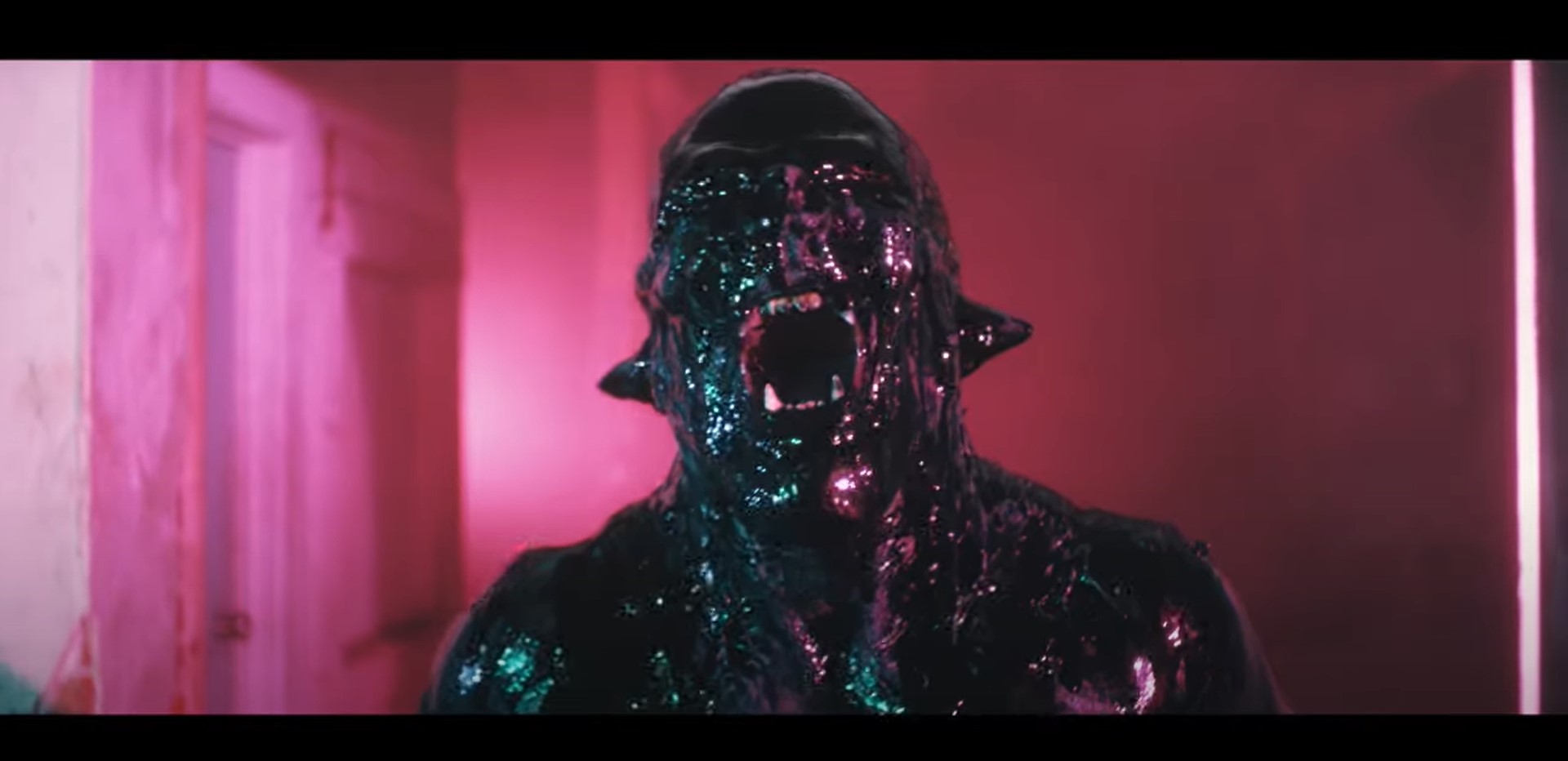
To pull off a slimmer version of “Jennifer’s Body,” “Lillith’s” cast had to be indispensably funny and well-versed with their characters.  For the most part, the cast stick the landing, running away with their character ticks that fully engulf the colorful performances and making them certifiably memorable.  Savannah Whitten most notably showcases her amusement playing the titular character decked out as an alternative-cladded woman with promiscuous purpose.   Whitten also doesn’t look too shabby in full body lime green attire that requires the actress to don a protruding head prosthetic, bulky mouthpiece, and vibrant yellow contacts as the Lillith shifts, in edited scene transitions, back and forth from alt-girl to full blown succubus.  The snazzy redhead, NYC based actress is opposite Nell Kessler and Robin Carolyn Parent in their respective roles, who spell besties as demon summoning chaos, Jenna and Emma.  Kessler and Parent equally have fun in being the vindictively scorned, jilted lover and her eccentric best friend who just wants to see if she can conjure up evil for the hell of it.  The female-led cast deliver timely, funny bits of dialogue individual wrapped like their very own personal skits, but then the attitudes change and the range stretches more meaningful when circumstances become dire and that’s when the cast of ladies really do shine as actors.  “Lillith” wouldn’t be as half as successful if it wasn’t aslo for the supporting cast, even in the small roles, to add a smooth ebb and flow of macabre comedy with Langston Fishburne (yes, that iconic surname is related to Laurence Fishburne), Taylor Turner, Lily Telford, and Michael Finnigan.

“Lillith” very much appeals to the feminist esteemed without beating you over the head with the crusading theme.  Cornerstones like a succubus snacking on sexually-charged males, Emma’s astute quips and enthusiasms about the historical and religious rises and victories over men while also in an unabashed lesbian relationship, and the vagina being held as a live or die power source of extraordinary consequences all reflect feminized filmmaking, but then Esposito, who is a man and identifies as a male, makes a sharp criticism that isn’t exclusive to feminism but can be said about most subjects if slipped into an oversaturated abundance.  What if the actions of feminism goes too far?   What if drilling an ideology beyond the point of no return causes more corrosive damage than actual good?  That’s what Esposito’s “Lillith” explores inside the “uh-oh, we made a mistake and must fix it” latter acts with great attention to how a woman’s genitals becomes key to saving all of mankind.   The irony is unbelievably hilarious, smart, and provocative, whether intentional or not.  What kills most of “Lillith’s” boutique vibe is the fluidity of the A/V technical quality that often approaches homemade movie levels of inconsistent sound design.  I’m frequently adjusting up and down the volume and trying to discern dialogue out of stronger ambience and noise the boom captures in an unfortunate leaky blockade of decent script dialogue. 

July saw the release of Lee Esposito’s “Lillith” rip through the hormonal student body pool with a laid back and snarky she-demon from Hell on Demand and Digital courtesy of indie genre distributor, Terror Films.  “Lillith” is shot over the course of 33 consecutive days from New Jersey to New York with director of photography Vincent Caffarello behind the camera and though making any sort of judgement on the A/V aspects for a streaming link might as well be akin to chucking my words right into the trash, I do firmly believe a considerable amount of budget went into casting solid actors and eye-catching makeup work as sound design guerilla notches into Lillith’s smoother interior like a throwing small river rocks at a pristine car. Maybe the shooting equipment lacked high definition properties or maybe post-production could have cleaned up Caffarello’s basic standard efforted shots but, either way, the DP’s stationary and steady cam of mediums and closeups, with occasional slight POV or over the shoulder, gather enough information about what’s happening in the scene in a still interesting perspective. With any digital screener, special feature content is at a zilch and there are also no bonus scenes during or after the credits; however, let “Lillith” speak for itself without the glamour of extra goodies. There’s hell to pay but paying hell with lives is what the sultry death-dealer “Lillith” does best between the sheets…just watch out for her teeth, gentlemen.

“Lillith” is right now included with Prime Video!  

The EVIL Peruvian Whistle of Death! “Face of the Devil” reviewed (MVD Visual / DVD)


Deep inside the Amazon jungle of Peru, seven friends getaway from university life by staying at a remote riverside resort.  No cell service.  No nearby towns.  The resort shelters an idyllic retreat for those looking to escape the mundane routine of the real world, but the jungle is also home to an indigenous evil entity, some may even label it the Devil.  Better known among the locals as el tunche, the trickster spirit prays on innocence and the naïve, psychologically tormenting with a foreboding whistle indicating it’s nearby presence.   With no help in sight and nowhere to hide, the jungle comes alive with an ear-piercing whistle that seeks to swallow the seven vacationers to their doom. 

To some extent, horror lives and dies by permanency of myth and legends, cultivating inspiration from ancient, as well as new, mythical beasts and spirits and spin them into entertainment macrocosm or, perhaps, even to just simply to share the rarity of knowledge and heritage surrounding the tales.  If in American mountaintop forests bigfoot roams inconspicuously around populated areas, breeding enigma and scaring children around campfire stories, then in South American, el tunche does much of the same instillations for the Peruvians who inhabit their legendary fiend, preying on delinquent youths, in the dense jungle.  Outside of Peru or maybe even South America, el tunche is not globally known, but for one Peruvian film from 2014, local lore becomes broaden beyond confining borders and creeps right into our home video media players.  Director Frank Pérez-Garland helms the maligning mythos with “La Care del Diablo,” aka “Face of the Devil,” from a Vanessa Saba screenplay set in the ominous jungles of Peru plagued by a wandering and whistling evil spirit searching for those lost among the tall trees and foliage.  Peruvian based Star Films and La Soga Producciones spearheads the production located on set of an ecolodge in the uncommercialized area of Tarapoto just North of Lima and serving as producers are Gustavo Sanchez (“The Green Inferno”) and Varun Kumar Kapur. 

“Face of the Devil” is a hyper localized narrative that’s fully contained inside the jungles of Peru as well as a casting all Peruvian actors with zero other nationalities appropriating roles for a mythological tall tale extension that rightfully needs to be expressed by native filmmakers.  As such, you won’t recognize a face amongst the cast unless you’re eyeballs deep into South American cinema.   The film opens with a dream sequence of a young girl staring at her towering mother’s weird, unholy behavior that ends with her mother, played by writer Saba, quickly reaching out for child and abruptly awakens from the dream is Lucero (Vania Accinelli).  Lucero’s nightmares become an important reoccurrence, like an omen, that doesn’t seem to upset the college freshman despite the nightly fright, but other aspects upset her father to the point where he yells at her for wanting to go on a trip with her friends, signifying a quick trip into unspoken complications sanctioning Lucero’s mother death that worries the same fate may also fall upon his daughter.  Before we know it, a reluctantly agreed to Lucero is river boating with her six friends:  couple Mateo (Nicolás Galindo) and Fabiola (Maria Fernanda Valera), Camila (Alexa Centurion), Paola (Carla Arriola), Pablo (Guillermo Castañeda), and new boyfriend Gabriel (Sergio Gjurinovic).  The friends are seemingly full of life, love, and fun but the dynamic turns only slightly complex with love triangles that only go as far as being the butt of the weekend’s jokes.  The characters do very little in the story, splashing around in what seems to be an unreasonable number of ecolodge pools for most of the time while playing spin the bottle, truth or dare, skinny dip, or just make fun of each other because, as a trope bylaw, that is what college-age kids do to spark tensions and cause divisions, and I find the characters and their portrayers to be uninspired to do or be more that invokes the frisky wrath of el tunche.  Javier Valdez and Ismael Contrearas bookend the cast of characters as two polarizing stances on dealing with otherworldly spirits by either being cautions and frightened as Valdez is with Lucero’s papa or embrace the spirits for self-purpose as it is with Contreras who plays the resort owner. 

“Face of the Devil” has all the properties of an European-fried and campy-peppered supernatural kill tally, drawing elements from the jungle cannibal subgenre sans the cannibals and the teen slashers sans the slasher.   Instead, el tunche is an all but forgotten myth lost over time through the generations until “Face of the Devil” calls to mind the cautionary dangers of cultural wise tales for naïve and disrespectful youth who wind up on the deadly end of el tunche’s mean streak.  Saba’s script incorporates more than just your average urban legend come to life tale with a Diablo-sized pretext to why el tunche all of the sudden decides to besiege upon this particular group of vacationers.  Per the legend, el tunche gobbles up those lost in the jungle thicket, but Saba and Pérez-Garland’s religious context direction, including the motifs of the trinity cross and bodily possession, has the good-natured Lucero, infected by her mother’s randomized demonical occurrence, be the proximity key to el tunche’s unleashing.  Good versus evil also becomes strongly painted in the latter half of the narrative and is affixed to the lore’s distinctive construct.  The further Lucero is led from a path of spotless geniality, from her overprotective father, the more she experiences nightmares and the closer she is coming face-to-face with the malevolent forest entity feeding off her tarnished past.  Sadly, “Face of the Devil” weans off from nurturing el tunche into a singular idea with the entity depicted as, but limited to, an invisible presence, a black oil spill in the water, a pulsating yellow glow, or as Anna Gonsalves says in “Predator,” the jungle came alive and took them.  Even the current DVD release represents el tunche as a Lovecraftian-like creature with tentacles coiling out of the jungle river water and enclosing around a bikini-cladded sex symbol with a tattooed vagina – provocative!  Yet, inaccurate.  There are no tentacles and no woman with vagina ink.  “Face of the Devil” struggles with character motivations, sending boyfriends off into the woods without tools or guidance to find help, leaving the story to fend for itself solely on a slap-dashed gory ending that’s a little too late in salvaging the ferocity of one of Peru’s most mythical phantasmas. 

Like aforementioned, the DVD cover is a tad misleading, enticing with sex and tentacles topped with DEVIL in a big red font.  Now, you can go in eyes wide open with your own copy of “Face of the Devil” distributed by MVD Visual in collaboration with Jinga Films and Danse Macabre.  The single layer, single sided, region free DVD5 is 77 minutes presented in a widescreen 1.78”1 aspect ratio. Reason behind discerning the storage format to be a DVD5 is evident in the compression issues that clutters the picture with artifacts, leaving highly noticeable splotches to shake details to the core. There’s also the use of the vapid gray tint insipidly squashing any color and life from the lush green jungle Pérez-Garland finds himself extremely lucky shooting inside. Watching “Face of the Devil” felt cinematography akin to an episode of “The Handsmaid Tale” or “The Walking Dead” where a bland overlay masks more than just brightness and beauty of natural hues and light. The Spanish audio mixes have two lossy options – a 5.1 surround and a 2.0 stereo. Switching between the two, the 5.1 obviously has a little more robust soundtrack during the cacophony of jungle augury. Snakes hissing, bat clicks, the comprehensive soundbites of other animals in audio vibrational flight combined with the intense whistle, like a diluted train whistle, has ambient staying power to be the most effective element to el tunche’s death harbinger presence. Dialogue is less robust but prevalent and the English subtitles synch well without error. As far as special features, nothing beyond that of the static menu and there are also no bonus scenes during or after the credits. The opening title card credit sequence is about as artistic as the film allows itself to be only to then dwindling into pedestrian territory. Set in the Peruvian jungle deemed to be a major waste of location perfection as much of “Face of the Devil” buoys chiefly poolside with the cheap Dollar Store adhesive tape barely coupling a connection between local legend and the Devil in this wet behind the ears teenager-in-danger yarn.

“Face of the Devil” available on DVD at Amazon.com