A Gang’s EVIL Ransom Elicits the Wrath of “Zero Woman: Red Handcuffs” reviewed! (Neon Eagle Video / Blu-ray)

“Zero Woman: Red Handcuffs” is Number One on Our Must Have Lists!

When undercover officer Rei lets her overwhelming emotions kill a suspect on an assignment, her displeased colleagues lock her into a cell, unable to decide her fate with fear of public outcry of police brutality that would blemish the department and force leadership regsinations.  When a prime minister candidate’s daughter is kidnapped by a ruthless gang of rapists and murderers and brought to a cathouse for sale, the brothel madam believes the young woman is better exploited by issuing a large ransom for her safe return.  Unwilling to face public scandal, the politician and a rigid yet loyal investigator of the clandestine Zero Division rig up a covert plan to eliminate every person involved with the kidnapping by offering a murderous deal to Rei in exchange for her freedom.  Rei’s able to infiltrate the gang’s inner circle only to see the plan devolve into chaos and blood between the gang and corrupt authorities.   

Japan doesn’t make films like “Zero Woman:  Red Handcuffs” anymore!  The violent Toei company pinkusploitation production, released in 1974, played a major role in unifying the sexual appetites of Japan’s pink pornos with the rough-and-tumble violence of exploitation action films.  The rising of Nikkatsu Roman Pornos forced the hand of the Toei Company to expand their portfolio, creating such as combinational conquest over salivating grindhouse cinema patrons that the radical subgenre deserved a new sublet coinage labeled pinky violence.  Toei company man Yukio Noda, a staple yakuza filmmaker for the company, helms the visuals translated from a script penned by “Female Prisoner #701:  Scorpion” writers Fumio Kônami and Hirô Matsuda.  Loosely based off the manga written by Tooru Shinohara (who also penned the manga of “Female Prison Scorpion series”), “Zero Woman: Red Handcuffs” stitches its own blood soaked and sexually provocative clothing that would later continue “Zero Woman’s” adventures throughout the years with more films.

Cladded in a chic long red coat, black boats strapped up just below the knee, and wielding an extra-long connector chain pair of red handcuffs, Rei is the anti-heroine of our manga fantasies.  Miki Sugimoto works deep into that fantasy vision as Rei, Division Zero’s lady cop who will do anything and everything, clothed or undressed, to get the job done, even with extreme prejudice.  A frequent delinquent girl portrayer for Toei Company’s gritty bad girl gang pink pictures (try saying that five times fast), Sugimoto’s filmography include the “Girl Boss” series, “Terrifying Girls’ High School:  Women’s Violent Classroom, and “Criminal Woman:  Killing Melody,” and so Sugimoto already had established this foundational layer for Rei as a fortitude of badassery and now tacking on another layer of a moral high ground, justified only by seeing her word through to the end.  Rei is up against a gang of five – four street thugs led by the recent prison released Nagumo (Eiji Go,” The Executioner”) and one lesbian brothel madam (Yôko Mihara, “Sex & Fury”) – as she agrees to a back-against-the-wall deal and slyly subverts the gang by helping Nagumo during a faux ransom sting operation.  Along with Sugimoto’s stoicism, the Toei porn actress retains her promiscuous allure, one where she doesn’t have to do anything to be seductive but just be herself, working not only toward the favor of her character, who continuously is taken advantage of sexually without shame, but also keeping the integrity of the Toei élan for Japanese sleaze.  “Harakiri’s” Tetsurô “Tiger” Tanba resides to the general’s overlooking hill as the prime minister candidate who sends his battlefield colonel in Hideo Murota (“Rape and Death of a Housewife”) to be the Zero Woman’s handler.  Their scheme quickly devolves as their plan evolve when the operation goes slower than expected and the gang’s leader Nagumo begins feel the pressure of paranoia and starts to unhinge, especially around his ruffian acolytes played by Seiji Endô, Rokkô Toura, Iwao Dan, Kôji Fujiyama, and Ichirô Araki as Saburo the mysteriously quiet, aviator-waring knifeman who in himself is an interesting character.  Cast fills in with the Japanese speaking Westerner Ralph Jesser in a wild opening sequence that results in a gunshot to the groin!  

Like most pinky films, “Zero Woman:  Red Handcuff’s” incorporates an X-rated sexual violence but unlike most pinky films, the pinky violence subgenre omits the softer side of sensuality, creating more of a nihilistic viewpoint toward sex of taking what you want, when you want it, and aggressively at that.  Yukio Noda picture contains hostile lesbianism, gang rape, and pressurized perversions that take control thematically in pinky violence.  The corrosive context that has a guilty pleasure pull in most patriarchal dominated cultures and fleapit cinemagoers goes hand-in-hand with the over-the-top violence conjoined at the hip of cause-and-effect.  Usually, the narrative goes an ugly rape equals hard-fought revenge; in Noda’s film, the cause is the kidnapping, and subsequent deflowering of a power politician’s little girl leas to the Zero Woman effect of silencing with corporal punishment that circumvents the law.  Stylish like a spaghetti western and brutally violent, “Zero Woman:  Red Handcuffs” is a meanspirited, out-for-blood, femme fatale engendered on the verge of the pinkusploitation genesis.

Neon Eagle Video, a collaborative boutique label effort between Cauldron Films and Mondo Macabro’s Jared Auner, releases “Zero Woman: Red Handcuffs” onto a new Blu-ray, restored in 4K from the 35mm print. The transfer is AVC encoded, 1080p high-definition, onto a BD50 and shown in the widescreen aspect ratio of 2.35:1. A relatively clean 50-year-old print hardly displays any age wear, if any at all. Scarcely marred by blue vertical emulsion scratches in only a single scene, the print retains and is stored with care to diffuse the range of color and to effectuate as much detail as possible in textures and skin while without taking away from Noda’s underbelly surrealism. The lower contrast infuses a pulpy layer to create softer shadows, but contouring manages to stick an outline thanks to key Rembrandt lighting precision, akin to Hammer Horror with a splash of Kensington gore. The uncompressed Japanese DTS-HD MA 2.0 mono peaks with the best possible optical audio. While not much in the way of depth creation, there’s plenty of range in the Foley, even if it’s artificially abstract and illogical compared to shotgun microphone captured audio. The ADR synch is one of the best inlaid post-recordings with visuals that renders hardly any feedback or unnatural noises on the audio layer. English subtitles are burned into the only available Japanese language picture on the release. Special features include a feature length audio commentary by author and producer for Vinegar Syndrome Samm Deighan, Sex + Violence = Pink Violence TokyoScope author Patrick Macias analyzes “Zero Woman: Red Handcuffs,” and an image gallery. Graphic designer Justin Coffee produces a new, rich-in-red, and taletelling composite illustration of what kind of film to expect on the front cover art of the clear Amaray Blu-ray. The reverse cover houses another illustration, one pulled from the feature’s original poster line. The BD is pressed with more Coffee fiery and red-laced artwork. This particular copy reviewed is not the limited edition set with accompanying slipcover and neither copy contains insert material. The region A playback release comes unrated and has a runtime of 88 minutes.

Last Rites: “Zero Woman: Red Handcuffs” is a fine introductory film into the world of Pinky Violence, a starting line for those perverse-thirsty for the unification of sex and violence in Japanese cinema. Neon Eagle Video delivers excellences with their restored print, second to none in its picture and audio quality that will provide a sterling experience.

“Zero Woman: Red Handcuffs” is Number One on Our Must Have Lists!

If the Tenants Keep on Dying, Better Get Out of that EVIL High-Rise! “The Case of the Bloody Iris” reviewed! (Celluloid Dreams / 2-Disc Blu-ray and 4K UHD Set)

Own Your 4K and Blu-ray copy of “The Case of the Bloody Iris” today!

A pair of beautiful women are heinously murdered in a respectable high-rise apartment building.  As the case remains unsolved, a real estate architect, Andrea Antinon, is looking for models to market his new property, happening upon models Jennifer Langsburgy and Marilyn Ricci during his photographer friend’s photoshoot, and entices them by offering a sublet of the now vacant apartment in the building where one of the girls was murdered.  Jennifer, who finds herself slowly falling for the Andrea, is stalked by her polyamorous sect past and the group’s leader, her ex-husband, Adam who refuses to let her go and while he proves himself dangerous, attempting to kill Andrea after one of his dates with Jennifer, Adam is found dead in her new apartment.  The suspect pool grows as police are continuing to be baffled by an elusive killer remaining at large and set their sights on Andrea with his brief connections in two of the three victims.  Evidence against Andrea swells as those around Jennifer wind up dead and she’s next on the kill list. 

“The Case of the Bloody Iris,” the Iris represented as the delicately beautiful flower that symbolized the bound between Jennifer and her deranged, sex cult ex-husband Adam, is the 1972 giallo thriller from the prolific spaghetti western, Italian director Giuliano Carnimeo (from the previous “Sartana” series and would later helm “The Exterminators of the Year 3000″) and prolific giallo screenwriter Ernesto Gastaldi (“Your Vice is a Locked Room and Only I Have the Key,” “Torso,”) shot in the city of Genoa doubling as Milan.  Full of eccentric suspects, taboo desires, and handsome principals, “The Cast of the Bloody Iris” is a very attractive, violent, and superbly shot whodunit.  Under the original native title of “Perché quelle strane gocce di sangue sul corpo di Jennifer?” aka “What Are Those Strange Drops of Blood on the Body of Jennifer?” Galassia Films serves as the production company with Luciano Martino (“The Strange Vice of Mrs. Wardh”) having produced the giallo. 

The story floats back-and-forth between a pair of co-headlining stars, one of them being the retrospective cult and sex icon actress Edwige Fenech in one of her earlier performances, and who has starred in “Strip Nude for Your Killer” and “The Strange Vice of Mrs. Wardh.  Co-star George Hamilton also stars in that latter giallo, reteaming the handsome-faced “The Case of the Scorpion’s Tail” actor born in Uruguay, and whose birth name is Jorge Hill Acosta y Lara, with Fenech in their respective roles of model Jennifer and architect Andrea intertwined into what is a romantic tale of love at first sight that becomes mangled by a crazed killer on a murder spree and they’re at the heart of the matter.  If revisiting Giuliano Carnimeo, comedies and watching some of his interviews, you can see why he folds in subtle comedic elements that doesn’t allow “The Case of the Bloody Iris,” or a good chunk of his credits, to be a totally engaged, heart-racing murder mystery; those comedic elements come in the form of bumbling police, a too dead-set on commissioner (Giampiero Albertini, “Commandos”) and his more ungainly assistant (Franco Agostini, “The Sex Machine”), who are always one step behind and in the wrong direction.  The juxtaposition may be too evident yet it’s also welcoming, breaking up the forbidding business with a little levity, and creates a backend sense of assurance knowing police, just like today, can be human and clueless on serious natured instances.  The suspect pool and other salient supporting principals include Paola Quattrini as Jennifer’s roommate Marilyn (no doubt based loosely on Marilyn Monroe), Ben Carra as Jennifer’s sex cultist ex-husband, Jorge Rigaud as the professional violinist neighbor, Annabella Incontrera as the professor’s lesbian daughter, Oreste Lionello as a sleazy photographer, Carla Brait as a nightclub’s dominating femme, and Maria Tedeschi as the unfriendly neighbor.

Even though giallos did not appeal to him nor did they really become a staple of his oeuvre, director Giuliano Carmineo had a different perspective than most and that closely aligns with masterclass filmmakers like Dario Argento.  Carmineo and cinematographer, who’ve collaborated previously on a pair of Sartana westerns, had purpose in their odd and first person camera shots and movements, such as laying the camera down and sideways as characters perform routine events before being attacked or looking up and doing a 360-degree turn as if scanning a stairway, that coincided with the usual first person perspective of the conventionally masked and gloved killer wielding a deadly blade.  The technique engages the viewer, as in a sort of tell that something is about to happen or is amiss in a scene to create breath holding, heightened anxiety, but the multi-faceted narrative itself doesn’t need assistant in keeping viewers glued to the edge of their seats with the eclectic mix of sultry and taboo eroticism, lampooning the authority figures, designed seamless red herrings, unique characters, a variety in murder, and an elaborate, mysterious complexity that’s downright deviant. 

If you’re a distributor looking to shoot your shot on your first release, new boutique physical media label, Celluloid Dreams, hit the bullseye with a 2-disc 4K UHD and Standard Blu-ray release of “The Cast of the Bloody Iris” on a HVEC encoded, 2160p resolution, 100 gigabyte 4K UHD and on an AVC encoded, 1080p, 50 gigabyte Blu-ray, scanned and restored brand new in 4K on a pin-registered Arriscan from the film’s original 2-perf Techniscope camera negative, and presented in the original widescreen aspect ratio of 2.35:1.  Coloring grading and restoration is noted on the interior insert being entirely completed by Celluloid Dreams Studios to remove all the celluloid and age imperfections and stimulate a vivid, vibrant picture quality and, by the giallo-Gods, this has to be one of the more flawless image presentations I’ve seen on 4K and Blu-ray in a very long time, or ever!  Meticulous precision techniques reveal a straight from-farm-to-table quality, organic for its era with a balanced, natural grain and color saturation.   Details have delineated trim and higher contrast leveling where appropriate for darker scenes, such as an unilluminated bedroom or a basement boiler room, that retains the rich inkiness of the negative space.  No signs of compression issues in the negative spaces as well and no signs of unnecessary enhancing.  Two, lossless audio options are available for selection:  an Italian 1.0 DTS-HD and an English 1.0 DTS-HD.  Both remastered tracks from the optical sound negative provided full fidelity through the single channel.  Concise and crisp dialogue renders through in full, robust effect with ample detail in the ambience and depth to create a dynamic space.  No hissing, crackling, or popping in the ADR dialogue or ambient tracks and swanky tuned by Bruno Nicolai’s multi-instrumental base, drum, sintir-like guitar, and more score.  English subtitles are available on the Italian track.  With the larger capacity on the UHD, both formats are able to handle the included three featurettes with star George Hilton, principal actress Paola Quattrini, and director and writer, Guliano Carnimeo and Ernesto Gastaldi in Italian language.  Also included is a new commentary track from film critic and Celluloid Dreams co-founder Guido Henkel, an outtake reel that extend out certain scenes, photo gallery, the original Italian Opening Credits that beginning of the feature, and Italian and English theatrical trailers. Inside a dual-sided cardboard slipcover with both the feature’s baptized titles and illustrated cover art representation of Edwige Fenech, the black 4K UHD Amaray case possesses a second and more fleshy-erotic illustration of Fenech. The same art and arrangement are on the reverse side but with the Italian title. Each disc is housed on either side of the interior snapped firmly on a press-lock on with a release acknowledgements and an advert for their next physical feature, “La Tarantola Dal Ventre Nero” aka “Black Belly of the Tarantula.” The region A playback release has a runtime of 94 and is not rated.

Last Rites: Showing such diligence in the restoration efforts, Celluloid Dreams is the new kid on the block, the promising young boutique label with the Midas touch, with a killer first presentation in “The Case of the Bloody Iris.” We can’t wait to see more!

Own Your 4K and Blu-ray copy of “The Case of the Bloody Iris” today!

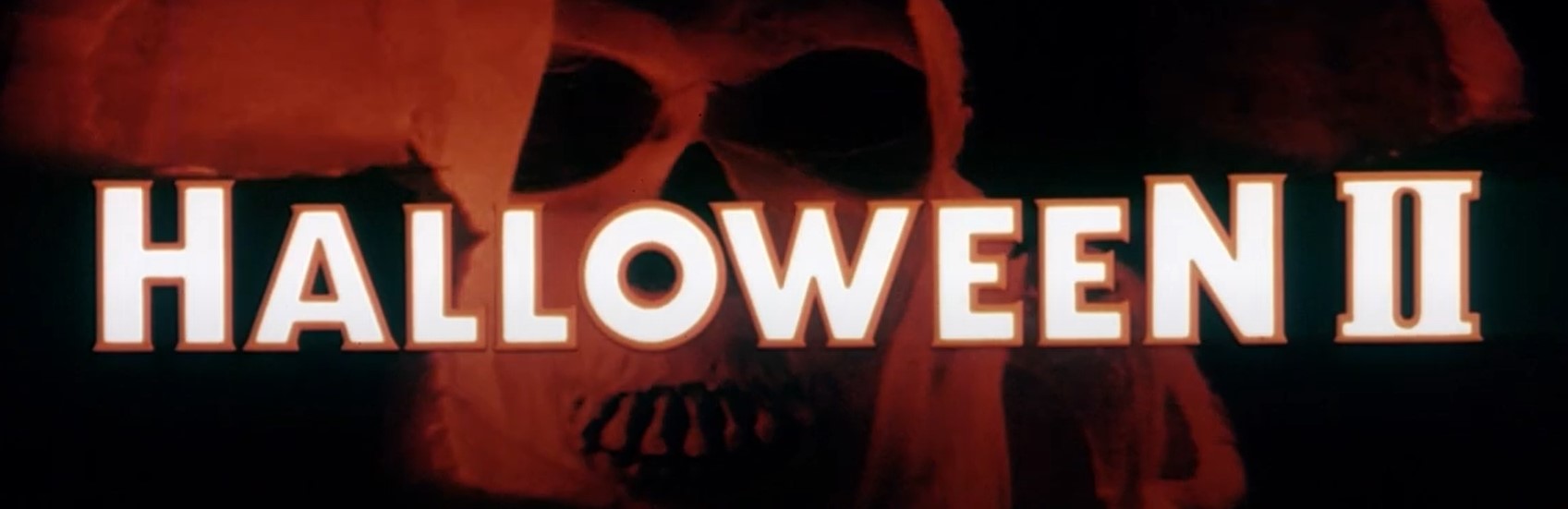
Classic Sequel Gets a Lenticularly EVIL! “Halloween II” reviewed! (Via Vision / Limited Edition Blu-ray)

“Halloween II” Limited Edition Blu-ray + 6 Photo Lobby Cards! Order here!

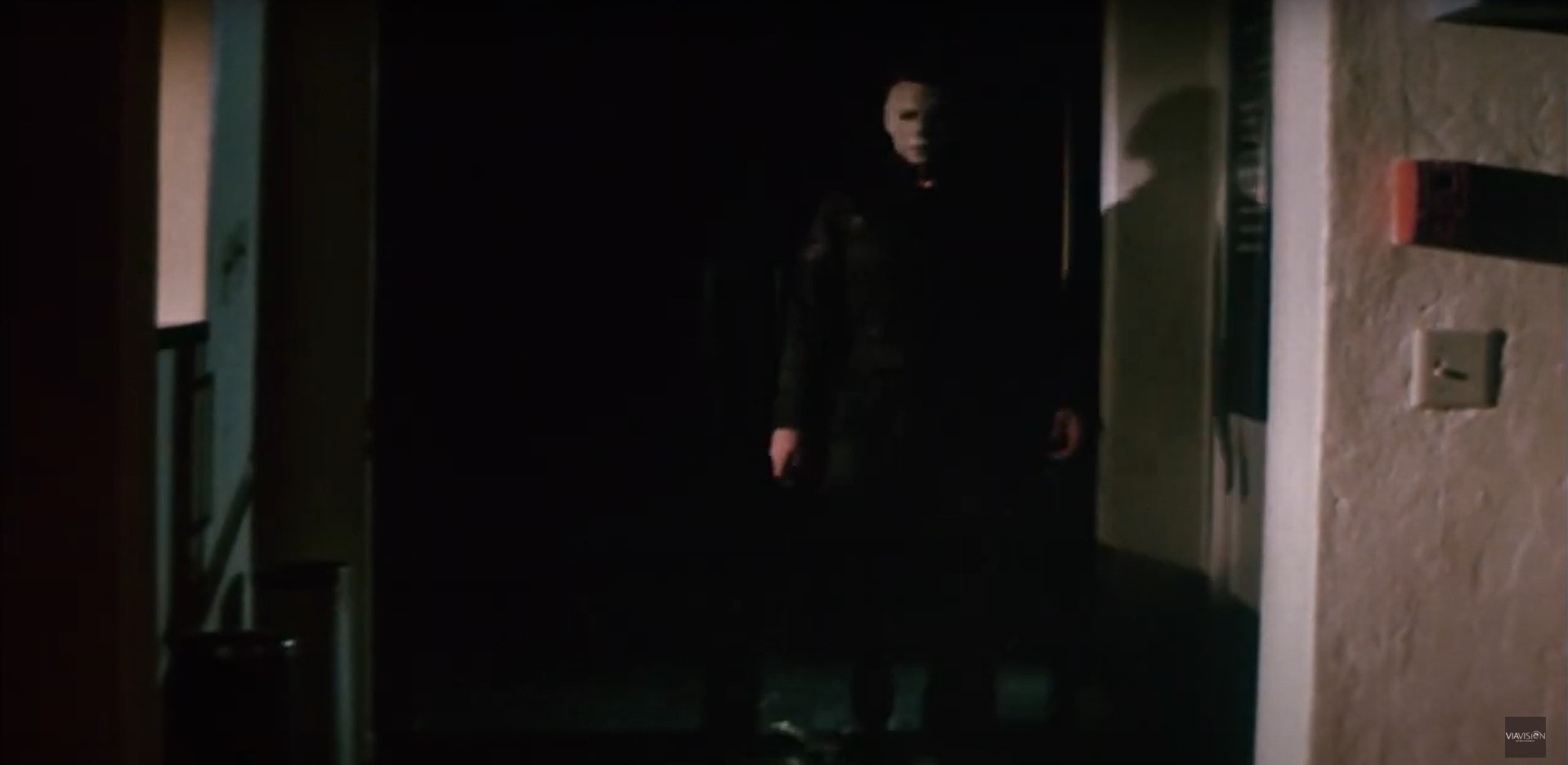
The horrific Halloween night massacre in Haddonfield where a masked escaped mental patient named Michael Myers murdered the close friends of Laurie Strode has not yet ended.  Hurt and in shock after narrowly escape Michael’s relentless pursuit, Laurie is rushed to Haddonfield Memorial Hospital to receive treatment from a skeleton shift while Dr. Loomis, who shot Michael six times, continues his hunt for the hard-to-catch, hard-to-kill killer.  Frantic about the evil inside his former patient, Dr. Loomis will not stop at nothing to track him down with police assistant and try to puzzle together just why Michael had returned to his hometown in the first place.  As Laurie recovers from her injuries and copes with her friends’ deaths, The Shape arrives at the hospital, continuing his emotionless killing spree of hospital staff in order to get to Laurie, and with nowhere to run, Laurie’s only hope is in the hands of a determined Dr. Loomis. 

Picking up where the highly successful independent horror, John Carpenter’s “Halloween,” that changed the slasher genre to what we know it as today, “Halloween II” provides more illumination on The Shape, Laurie, and shuts the door on the significant open-ended and fear-inducing mystery at the finale of Carpenter’s masterpiece.   The 1981 sequel, released three years after the first film, was not helmed by Carpenter whose success skyrocketed post-“Halloween.”  Instead, Carpenter and creative producer Debra Hill agreed to the executive producer title with some creative control in penning the script that would be a what-happens-immediately-next continuation with newcomer Rick Rosenthal sitting in the director’s chair.  The director who would helm later the follow year’s “Bad Boys” with Sean Penn had a goal to retain the same Carpenter stylistic choices to make the sequel seemingly seamless.  Alongside Carpenter and Hill in the melting pot of producers, the more narratively opinionated Moustapha Akkad and Dino De Laurentiis served as executive producers along with Joseph Wolf (“A Nightmare on Elm Street”) and Irwin Yablans (“Tourist Trap”) in what became a coproduction between Universal Studios and Dino De Laurentiis’s production company.

“Halloween” converted the then unknown Jamie Lee Curtis into a couple of things.  She instantly became a household name that at the same time also made Laurie Strode a household icon.  Curtis also became what was a relatively new coined term at the time of a scream queen, propelling her career in the horror genre with “Halloween” subsequent films such as “The Fog,” “Prom Night,” “Terror Train” and, of course, the more recent titular television series “Scream Queens” and the contemporary “Halloween” sequels.  What also emerged post Lee’s performance is the actress was eager for the role and effortless to work with making the 23-year-old daughter of Janet Leigh and Tony Curtis a treat to work with, malleable toward her role, and enthusiastic about returning as Laurie Strode for the sequel.  Curtis falls right back into the role as if filming didn’t stop rolling with Strode in a confounding state of shock and injury from her the relatively short scuffle with Michael Myers until Dr. Loomis intervenes with six gunshots into The Shape at the key and climatic moment, saving Strode from being strangled.  The difference in the sequel is Curtis’s instilled knowledge for her frightened character.  It’s that kind of touch that doesn’t hesitate to react to a force of evil.  Returning as Dr. Loomis, and again as if he never stopped performing as the paranoid and fervent good psychiatric doctor, is the iconic and late Donald Pleasence tracking down his former patient with trench coat sagacity, an understanding that no one else shares except for maybe Myers’ ultimate prey, Laurie Strode.  A new cast of relegated kill fodder magnifies part two’s grislier death count with Lance Guest (“Jaws: The Revenge”), Pamela Susan Shoop (“The One Man Jury”), Leo Rossi (“Maniac Cop 2”), Tawny Moyer (“Looker”), Ana Alicia (“Romero”), Gloria Gifford (“Virgin Paradise’), Hunter Von Leer (“Trancers III”), Cliff Emmich (“Hellhole”), Ford Rainey (“The Cellar”), and Dick Warlock putting on the mask as The Shape with Charles Cyphers and Nancy Stephens returning in their respective roles as Sheriff Brackett and Marion Chambers.

What new can be said about “Halloween II” that hasn’t been already said?  Dichotomously, “Halloween” and its sequel share a single narrative that emanates the same stylistic tone; however, both films couldn’t be more different in their surface level and underlying intentions and that gnaws raggedly on the connective tissue that binds them.  Carpenter’s original embraces the mystery enshrouding Michael Myers motivations with a merciless, yet nearly bloodless, killing spree of horny hopped-up teenagers who wiggle themselves out of responsibility for a little trick-or-treat fun under the sheets or for just being alone in their house.  Myers unneeded and unheeded explanation formed The Shape as evil personified, an incarnate force compelled to return home where the light switch was flipped to an expressionless compassion for human life.  Rosenthal’s part two subverted the unknown by providing Michael reason and that reason being Laurie Strode, anyone else who gets in his way, could foil his plans, or are just in the vicinity of the hunt are eliminated with extreme prejudice, and that leads into the ramped-up gore with large pools of blood and other gratuitous displays of damage to unsuspecting soon-to-be stiffs.  Despite the different strokes, the sequel is not bad by a longshot.  In fact, “Halloween II” is just an extension spiraling in intensity and terror, a product of its time when everyone and their brother had directed gore-ladened slashers during the steep beginnings of the slasher renaissance. 

Though a many number of “Halloween II” video media exists between the current formats, the collaboration of Via Vision and Lionsgate release from Australia is beyond reproach for any kind of transfer print woes, lackluster bonus features, and drab packaging.  The limited edition and numbered 2-Dsic Blu-ray set is a physical media thing of beauty with an AVC encoded, full high-definition 1080p, BD50 on both discs.  Disc one houses the theatrical cut of film, presented in a widescreen 2.35:1 aspect ratio, from pristine print, likely the original negative licensed through Universal Pictures for this very release, with the Via Vision caveat of every effort has been made to produce the highest quality on the back cover.  Not a single reason comes to mind on that statement being false as the Dean Cundey’s cinematography retains an undiluted facsimile of the original “Halloween,” represented here with phenomenally suitable contrast that can presumably hide Micheal Myers in every shadow and create the apprehension in every darkly lit scene with minimal key lighting in various, sometimes neon, shades of red, yellow, and white.  The 35mm film grain has a pleasant consistency of a low-to-medium low visual viscosity that never reaches levels of blotting out picture quality, presenting no issues with zoomed in images or any other touchup enhancements to note for that matter.  Perceptible details sanction The Shape’s tactile and weathered look of a rough night in Haddonfield.  Colorfully warranted scenes, such as the Nurse Alves on a gurney in the middle of a pool of her blood, are robust to display the carnage whereas other, more minimalistic approaches detail just enough for the imagination to take over.  Disc two contains the standard-definition, upscaled to 1080p, television cut of the film, presented in a made-for-TV 1.33:1 aspect ratio, that omits some of the gorier moments, suitable for broadcast viewers.  Audio options include two lossless English language selections with a DTS-HD Master Audio 5.1 and a DTS-HD Master Audio 2.0.  The audio codec distributes punchier ambiences of Myers’s rhythmic breathing through the mask, the jarring alert of a hospital room buzzer, and the impactful moments of Myers slamming his fist-loaded weapon into the skull, back, and….a pillow with the cringe-worthy associated crunch and thud.  No impediments on the dialogue track that’s free of crackling, hissing, and popping and is consistently prominent and mixed well within more chaotic, milieu-mania scenes, such as with the finale with hissing air tanks and scalpel swoops.  Optional English subtitles are available.  Special features are consolidated to the theatrical cut disc only with Shout Factory’s inaugurated 2012 documentaries – The Nightmare Isn’t Over:  The Making of Halloween II and Horror’s Hallowed Grounds:  The Locations of Halloween II – featuring cast and crew interviews with director Dean Cundey, Tommy Lee Wallace, Dick warlock, Leo Rossi, and more as well as visiting locations in a modern time with host Sean Clark, and two commentaries featuring director Rick Rosenthal and Leo Rossi in one and stunt man/The Shape Dick Warlock in the other.  There’s a brand new 2024 commentary with author Dustin McNeill, co-author of Taking Shape:  Developing Halloween from Script to Scream.  The encoded features round out with the alternate ending with more explanation on the fate of a certain left ambiguous character, deleted scenes, a theatrical trailer, TV and radio spots, and a still gallery.  What makes the Via Vision a limited, numbered set is the neat package and physical goodies inside.  The rigid lenticular cardboard sleeve of the skull pumpkin has eyes that follow you at every angle.  Inside is a slightly thicker Blu-ray Amaray casing with reversible cover art displaying notable stills from the feature.  The extra disc, disc 1 likely, is in a clear push-lock, page-turner disc holder.  Six photo lobby cards featuring stills from the movie come alongside the Blu-ray.  Via Vision’s release has a region B playback encoding, a runtime of 93 minutes on both cuts, and rated R.

Last Rites: Michael Myers has been slashing away in the cinema for nearly half a century and “Halloween II” has been a staple entry that, to this day, is a memorable fan-favorite in the grand scheme of most of the franchise’s sequels. Via Vision’s limited edition, lenticular Blu-ray packaging just sweetens the deal with a crystal clear and top-tier quality release worthy in any physical media collection.

“Halloween II” Limited Edition Blu-ray + 6 Photo Lobby Cards! Order here!

Prudish EVIL Takes on the Arcade in “Joysticks!” reviewed! (MVD Visual Rewind Collection / Blu-ray)

Get Your Herky-Jerkey Hands on “Joysticks’ on MVD Blu-ray!

Arcade manager Jefferson Bailey runs his grandfather’s business like a nonstop party lined with token-operated video game machines, stocked with a complete concession counter, and welcoming beautiful women to enjoy not only the endless entertainment of the arcade machines at all hours but also to gush over his handsome, easygoing demeanor. With an expert gamer and a newly hired dweeb helping to run the arcade, Bailey has a lot of free time to enjoy the perks of popularity until a wealthy businessman, Joseph Rutter, continues to have a hard time keeping his entitled daughter away from the arcade and Bailey which he considers both to be corrupting the town’s youth. Rutter, his two bumbling nephews, and a peevish gamer try everything in their power to shut down the arcade but Bailey, the employees, and the lucrative patronages won’t subside without a fight, even if that means settling everything on a single video game battle.

An obscure and forgotten teen sex comedy from the early 1980s, “Joysticks” is a celebration of the coin-operated video game at the height of the arcade’s heyday. Director Greydon Clark (“Satan’s Cheerleaders,” “Without Warning”) helms the Al Gomez, Mickey Epps, and Curtis Burch screenplay with ton of sex appeal, a display of 8-bit gaming graphics, and a cheesy, chunky storyline of big, bad entitlement versus the small, teen-run business of fun, sex, and videogames. The 1983 film was shot in Los Angeles and had introduced to the big screen not only a few of the more popular game titles – Pac-Man, Millipede, Pole Position, Naughty Boy, and Defender 2 – of the period but also introduced a new game with Midway’s Satan’s Hollow. “Joysticks” is a Greydon Park Production with associate producers in Curtis Burch, Daryl Kass (“Darkman”), and George Perkins (“Teen Wolf”) with also Clair Farley and Raylan D. Jensen serving as executive producers.

Headlining “Joysticks” is legendary, recognizable actor of “Walking Tall” and “The Shadow of Chikara,” Joe Don Baker, as the gruffly, arrogant suit Joseph Rutter going up against the then arcading-entrenched youth, represented primarily by actor-turned-director Scott McGinnis (“Last Gasp”) as the fun-loving arcade manager Jefferson Bailey. Baker fits into that stereotypical group of the out of touch older generation who doesn’t understand new and fascinating entertainment technology that attracts young people and, as he would understand it, these arcades are nothing more than the exterminating flame that attracts the unsuspecting moth. Bailey makes for a good fun while upholding certain convictions that doesn’t entail him being the villain of the story; those attributes fall not only into Baker’s lap but also Jonathan Gries as the eccentric gothic gang-leader King Vidiot. The “Fright Night 2” and “TerrorVision” actor, who outside the horror realm is well known for being Uncle Rico to the titular “Napolean Dynamite,” sports blue-red hair, cladded in leather, and has a hold over four equally garbed and dyed-colored women as his subjects to his peculiar behavior around the arcade. Initially Gries felt like an integrated part of the clientry until miffed by the arcade’s resident joystick and buttons master of gameplay, Dorfus (Jim Greenleaf, “Evil Speak”) in a one-on-one challenge. If “Joysticks” is a film about the joys of an arcade hall that’s precious to protect from overly concerned parents, the Dorfus character is pretty much the antithesis of that theme having once been the high school thin valedictorian now a sloppy, flatulating, and overweight gamer. Another character that doesn’t quite fit into the equation is the nerdy Eugene (Leif Green) whose character predates “Revenge of the Nerds” that released a year later but didn’t quite absorb into the fold of the only other companioning misfit in Dorfus. Where Eugene succeeds, with the help of Green’s performance, is the bumbling dumb-smart guy whose innocence instills more trouble for himself than anything else, especially with the braless women around him with Kym Malin (“Weird Science”), Kim G. Michel, Becky LeBleau (“School Spirit”), Lynda Wiesmeier (“Avenging Angel”), Morgan Lofting, and Corinne Bohrer (“Zapped!”). The supporting cast fills out with John Diehl (“Stargate”), John Voldstad (“Leprechaun”), and Logan Ramsey (“Doctor Hackenstein”).

As far as in the canon of 80’s teen sex comedies, “Joysticks” fits the bill as a nonpolitically correct cinematic lark with all the goofy and raunchy bells and whistles that come standard with these types of movies but there’s something missing from the ’83 feature that doesn’t quite put the categorical entry at the same quintessential high level as “Revenge of the Nerds,” “Private School,” or “Porky’s.” The narrative trajectory often stays in stagnant territory, or in more detailed terms a lopsidedness, instead of a back-and-forth, tit-for-tat jostling contest that hardly challenges the opposition to face dire straits. Also, too often does “Joysticks’s” jokes fall flat, perhaps the lost in flavor is due in part to the film’s 40-year-old comedic gags, that mostly reoccurs with Dorfus passing horrible gas or Eugene stumbling into an unlikely sexpot to his disadvantage. There is substance in a deeply rooted character arc with the once pro-level Jefferson Bailey unable to play his beloved coin-operated machines because of a traumatic event involving a past love of his life that results in him trembling, sweating, and getting into his own headspace but that, too, is obstructed by the warmed-over objective that generally has a loveless love-interest in a mostly male dominated principal cast, a short-fused motivation reasoning for most characters, and a rough patch polish, such as with that ear-throbbing main theme song, that tries to compensate with wacky situational and sexual archetypes which are not unpalatable to say the least but can’t keep “Joysticks” from respawning after all its lives have been used up.

Catalogued as number 58th on the MVD Rewind Collection banner, in conjunction with the Multicom Entertainment Group, “Joysticks” receives special package design that will surely please fans of older video game consoles and cartridges, but the packaging keeps with the Rewind Collection overall theme that is a testament to its label.  The AVC encoded, single-layer BD25 presents the fill in full 1080p HD and in an anamorphic widescreen aspect ratio of 1.78:1, based off a 2015 2K scan and restoration of the 25mm film elements.  This 2015 transfer is likely from the Scorpion Releasing limited number release from nearly a decade ago, licensed to MVD for broader and more easily accessible distribution.  Though an older transfer, the color saturation still pops albeit some heftier grainy frames that stumbles the overall consistency from time-to-time.  This ultimately also affects the details to an extent, especially on medium shots where the action is pulled away from the camera to get a wider view.  Closeups and extreme closeups look better with tighter detail and better contrast.  The English LPCM 2.0 mono is the only available audio track.  The lossless format provides ample volume and is a real pedigree of the original audio recording.  Dialogue has most a firm grasp on the layer design with no inaudible inadequacies but can often be anemic in more noisy settings, such as the arcade where bleeps, bloops, and other video game noises invade the audio field and dilute distinction and depth.  Legion’s “Joysticks” theme track also renders palely in his cheesy metaphorical lyrics that mix sex with video game playing, even if as appropriate as it may be to the context.  English subtitles are available for selection.  Special features include an archival feature length commentary and interview with director Greydon Clark but also has a brand-new roundtable commentary with MVD’s director of acquisition Eric D. Wilkinson, Cereal at Midnight host Heath Holland, and Diabolik DVD’s Jesse Nelson.  There’s a short film “Coin Slots” which is a faux “Joysticks” trailer that costars Eric D. Wilkinson and directed by Youtuber and producer Newt Wallen.  MVD’s physical presence of “Joysticks” is where the fun is at with an Atari themed orange slipcover with boxed in picture of sex-comedy appeal poster art, a more slimdown version design that’s more attuned to the MVD Rewind Collection look for the cover art in the clear Blu-ray Amaray case, and a Blu-ray disc pressed with the coloring and markings of an Atari game cartridge.  A more complete version of the cartridge look is on the reverse side of the reverse cover art, preferably for this reviewer to mix up the designs between slipcover and cover art.  A folded, back-and-front illustrated mini-poster of both cover arts is housed in the inside the case insert.  The region free release has a runtime of 88 minutes and is rated R. 

Last Rites: The packaging alone is worth the cost of this inexplicably obscure and quaintly waxen teen sex-comedy that now breathes new life on a more accessible high-definition Blu-ray release from MVD Visual!

Get Your Herky-Jerkey Hands on “Joysticks’ on MVD Blu-ray!

How Many Chickens Need to Have Their Throats Cut to Satisfying Ritualistic, Naked EVIL! “Voodoo Passion” reviewed! (Full Moon Features / Blu-ray)

Get Entranced by Full Moon’s “Voodoo Passion” Blu-ray!

Newly married Susan House travels to Haiti to join her consulate husband, Jack House, who has been stationed at the British Embassy.   Captivated by the Haitian voodoo religion and culture, Susan is eager to tour the island nation’s most ambiguous practice most don’t or will never understand all the while Jack’s naked and nymphomaniac Sister, Olga, makes forward, flirtatious advances toward her.  That fervor for voodooism and Olga’s point-blank seduction has seemingly incepted terrible nightmares of naked, animal sacrificial rituals and murder conducted beguilingly by a priestess in the form of Jack House’s native housekeeper, Inês.  When Susan awakes, the realism of her dreams afflicts her but her husband Jack and his colleague, a psychiatrist by the name of Dr. Pierre Barré swear there have been no police reported murders.  Night after night, Susan’s entranced nightmares continue to be vivid with murderous mysticism that’s slowly driving her mad in the land of voodoo. 

One of Jesus “Jess” Franco’s more bosom and bush erotic-thrillers, “Voodoo Passion” is nearly a fully naked runtime feature sprinkled with hints of the nation’s cultural religion.  The 1977 released, German Production, also known by the titles “”Call of the Blonde Goddess” or “Der Ruf der blonden Göttin,” was less about his own stylistic substance and auteur stamp and more about spasmatic, gyrating nudity under rhythmic bongo beats for the Spanish sleaze and exploitation genre filmmaker.   The gratuitously sexed-up, multinational feature is penned by the Switzerland born, sexploitation and adult genre screenwriter Erwin C. Dietrich under one of his pen names, Manfred Gregor.  Dietrich also produces the film amongst a substantially historical collaborative effort between himself and Franco over the course of the late 70s to early 80s.  Nestor Film Producktion serves as the production company, filming entirely not in Haiti but in the beautifully scenic and old-world allure of the seaside capital of Lisbon, Portugal.  

Lots of hot body action in this beat-driven, voodooism thriller primarily between a trio of character-diverse, titillating ladies and peppered with peripheral nude women and men tribals engaged in a ceaseless native, ritual thrusting, pulsing, and shaking trance dance.  “Voodoo Passion” grips itself around the rags-to-riches character of Mrs. Susan House in what is a matron-look for Spanish actress Ada Tauler (“The Sexy Horrible Vampire,” “Love Camp”) brought to Haiti at the behest of her British consult, newlywed husband Jack House, played by the stony-faced and “Eugenie” and “Pieces” American actor Jack Taylor able to swing both thrills and feminine frills in his films.  While Tauler’s doesn’t shy away from full nudity of Susan House’s fever dream state, the actress pales in comparison to the other two-thirds who are more engaged in sexual promiscuity and the liberating fervor of ethnic ceremony.   Those two actresses are “Caged Women’s” Karine Gambier as the nymphomaniac sister of Jack House and the face of most of “Voodoo Passion’s” physical marketing with French actress Muriel Montossé (“Cecilia”), under the more westernized stage name of Vicky Adams.  With a face and body like a model, Vicky Adams’s wild arm and stoic expression dance moves will hypnotize viewers entranced with the bongo tempo’s transfixing pomp, contributing to the film’s psychotronic premise of magical and religious rites, obfuscated nightmares, and, cue Austin Powers’s voice, murder.  Yeah, Baby!  “Voodoo Passion” has curves for days and in all different personas that keep things weirdly, but welcomingly, platonic on some level and not just an overly saturated sex-fest.  The film’s cast rounds out with Vitor Mendes (“Swedish Nympho Slaves”) and Ly Frey.

If asked to describe or give an opinion on “Voodoo Passion,” one would say cheekily the Jess Franco film is a thriller swathed in an eyeful of bosom and bush.  If the 4-minute introductory scene with voiceover exposition to the ceremonial voodoo band and half-naked native dancers wasn’t enough of a clue, Ada Tauler and Karine Gambier pull you right back into the soaking tub with their soapy, wet bodies as they immediately take a bath together upon meeting for the first time.  From that point on, the bosom and bush bar has been set and in that the thicket of unshaven landing strips, there’s a good story underneath about the mystics and misconceptions of Haitian voodooism.  Unfortunately, much of that story falls behind the showcases of skin, thrusting the principal ladies into the spotlight, overshadowing Jack Taylor’s performance as well as doing nothing for the poor psychologist in Vitor Mendes, and undercutting the very theme of ritual exploitation and misconduct which is half of “Voodoo Passion’s” concept.  The entirety is all quickly surmised in one fell swoop of exposition without the necessary leg work, that should have been carried out by either Susan House or the consul assistant Inês, of building evidence for or against the contrary exposed in the finale.  Then again, does gorgeous naked women dancing about really need a well-rounded plot?  All depends on the eyes of the beholder and these eyes needed that equilibrium!

Full Moon Features conjures up a Blu-ray for this Jess Franco thriller debased in sexploitation slather.  The AVC encoded, high-definition 1080p, is housed on a single layer BD25, yet not encoded heavily with bonus content, “Voodoo Passion” is able to retain a full-bodied image from a remastered German original negative owned by producer Erwin C. Dietrich.  Vivid color saturation, contrast levels accompanying each other, natural looking skin tons, and the stunning detail render this Full Moon Features release the bees’ knees.  No signs of blocking or banding but some celluloid frames are slightly grainier than others that might be a result of age, wear, or the variable of film stock.  There is only a single audio option, an English LPCM 5.1 renders lossless audio, clearing each channel with ease, and delivering a rhythmic bongo drum beat with intensity.  Dialogue mirrors the richness despite the ADR track overtop the diverse nationalities’ native tongues.  There are no English subtitles, or any setup option for that matter, for this English only track release.  Special features included are an archival interview with Jess Franco with forced English subtitles Franco, Bloody Franco, a rare photo slideshow of images from the film, the German trailer, and a Jess Franco vintage trailer reel of most of his schlocky Eurosleaze fair.  What’s party treasured about these newly re-released films onto a new full HD transfer is Full Moon’s physical package redesigns that offer a cardboard slipcover with new illustrated, pinup-esque, art.  “Voodoo Passion” has a half-naked woman, presumably the nymphomaniac sister Olga, moaning in ecstasy while holding a…hand mirror?  Wonder if that should have been the champaign bottle Olga uses to, well, you know, pleasure herself with.   There’s also a striking, NSFW, Muriel Montossé pose in a scene from the film on the traditional Blu-ray Amaray front cover with additional explicit scenes on the backside.  The disc is pressed with the same slipcover illustration and there are no inserts inside the case.  Presented uncut and region free, this Full Moon release of Jess Franco’s vintage sleaze has a runtime of 86-minutes.   

Last Rites:  Another wholly impressive picture quality presentation of another unwholesome, softcore sexploitation by Full Moon Features, a friend to Haitian voodoo and you, the licentiously greedy viewer! 

Get Entranced by Full Moon’s “Voodoo Passion” Blu-ray!