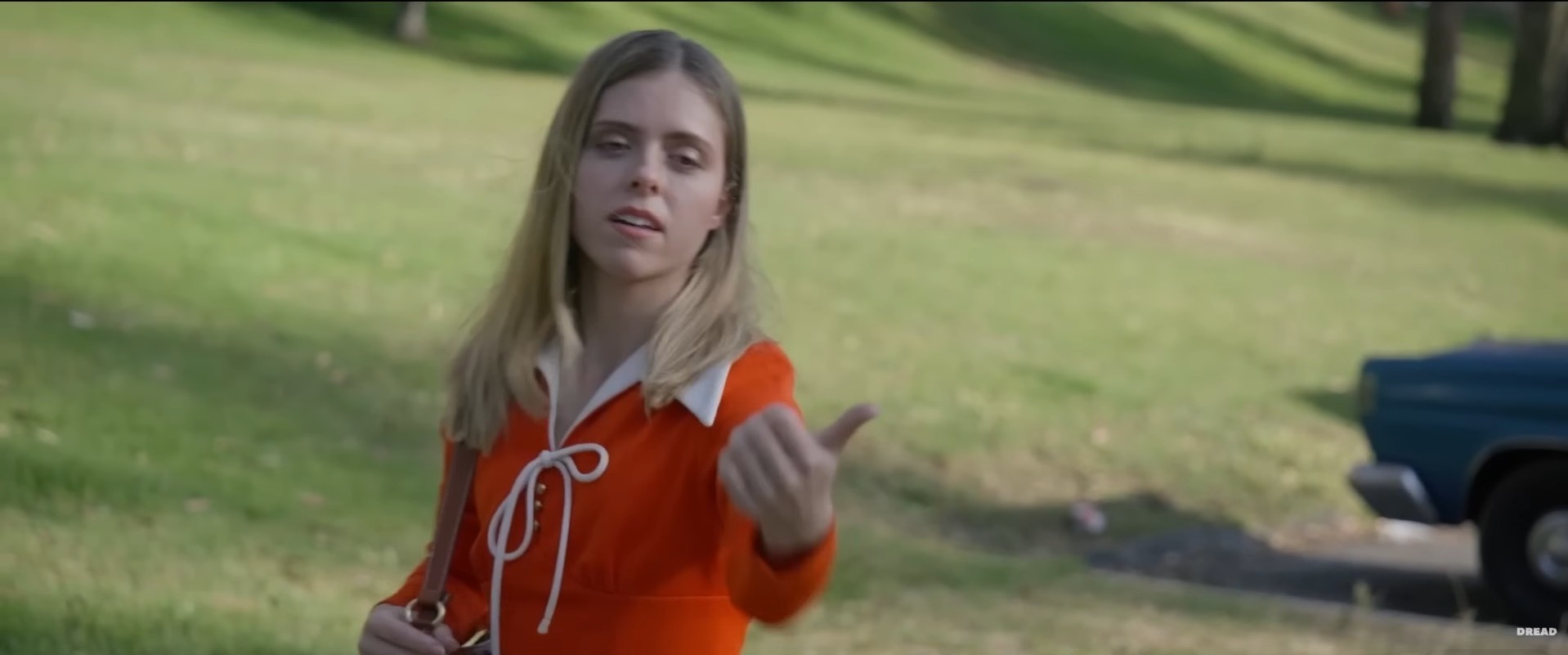
To be a Rich and Famous Rockstar, You Must Sign with EVIL! “Hell’s Bells” reviewed! (SRS Cinema / Blu-ray)

Sign Your Soul To Satan for the “Hells Bells” on Blu-ray!

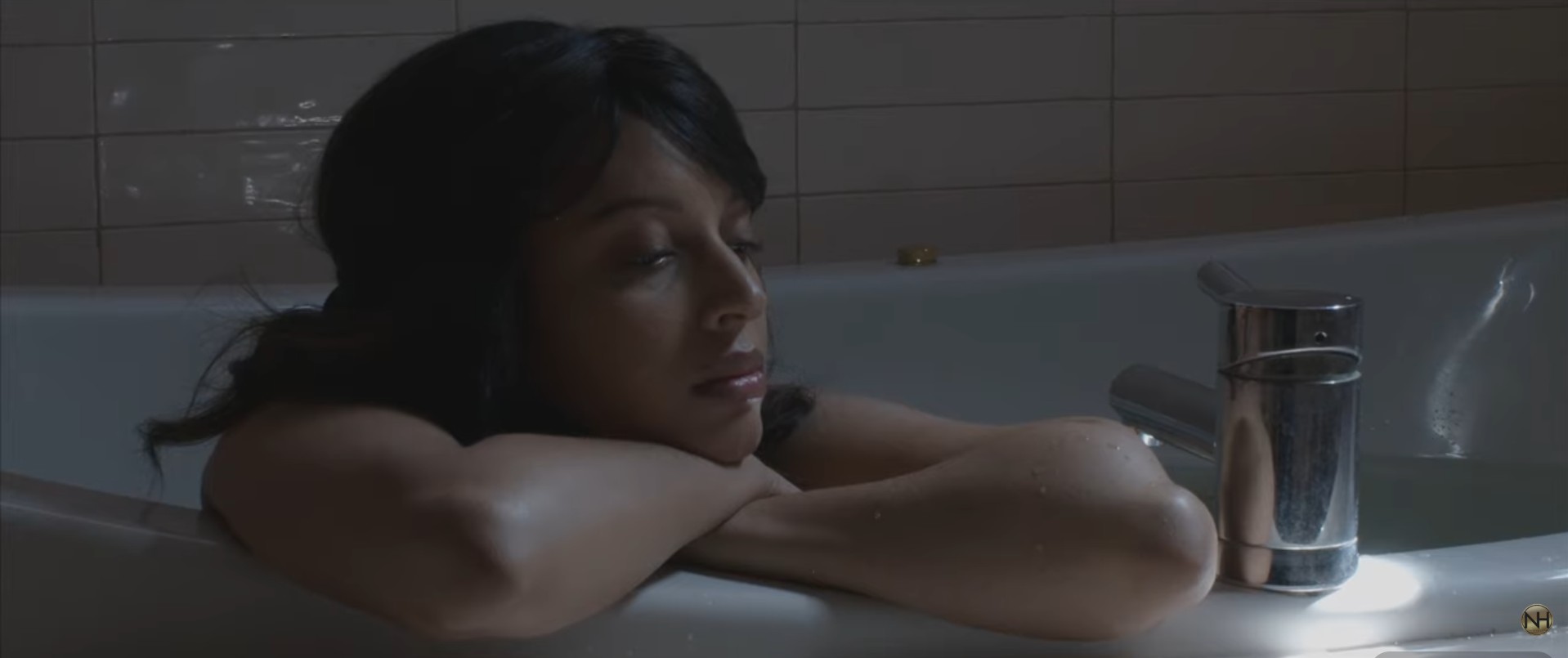
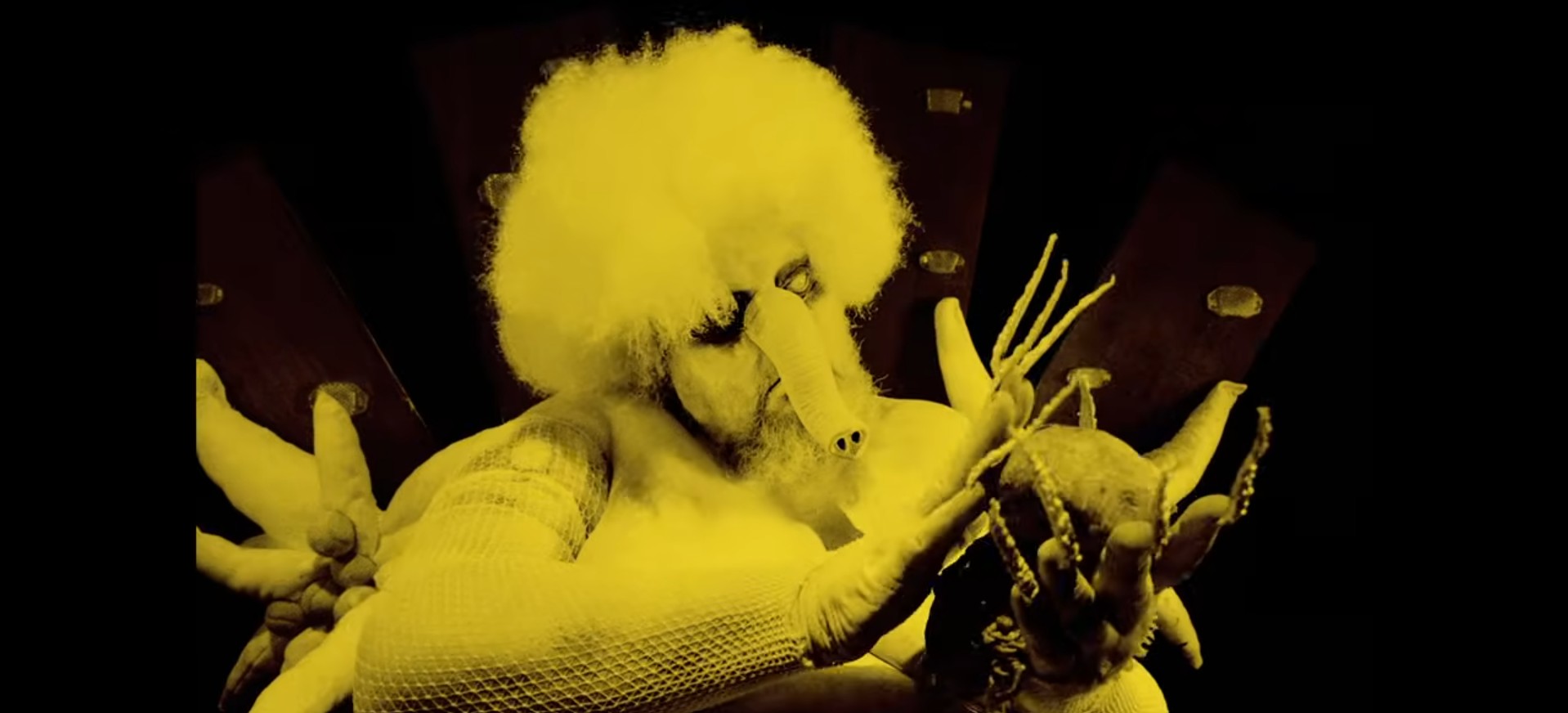
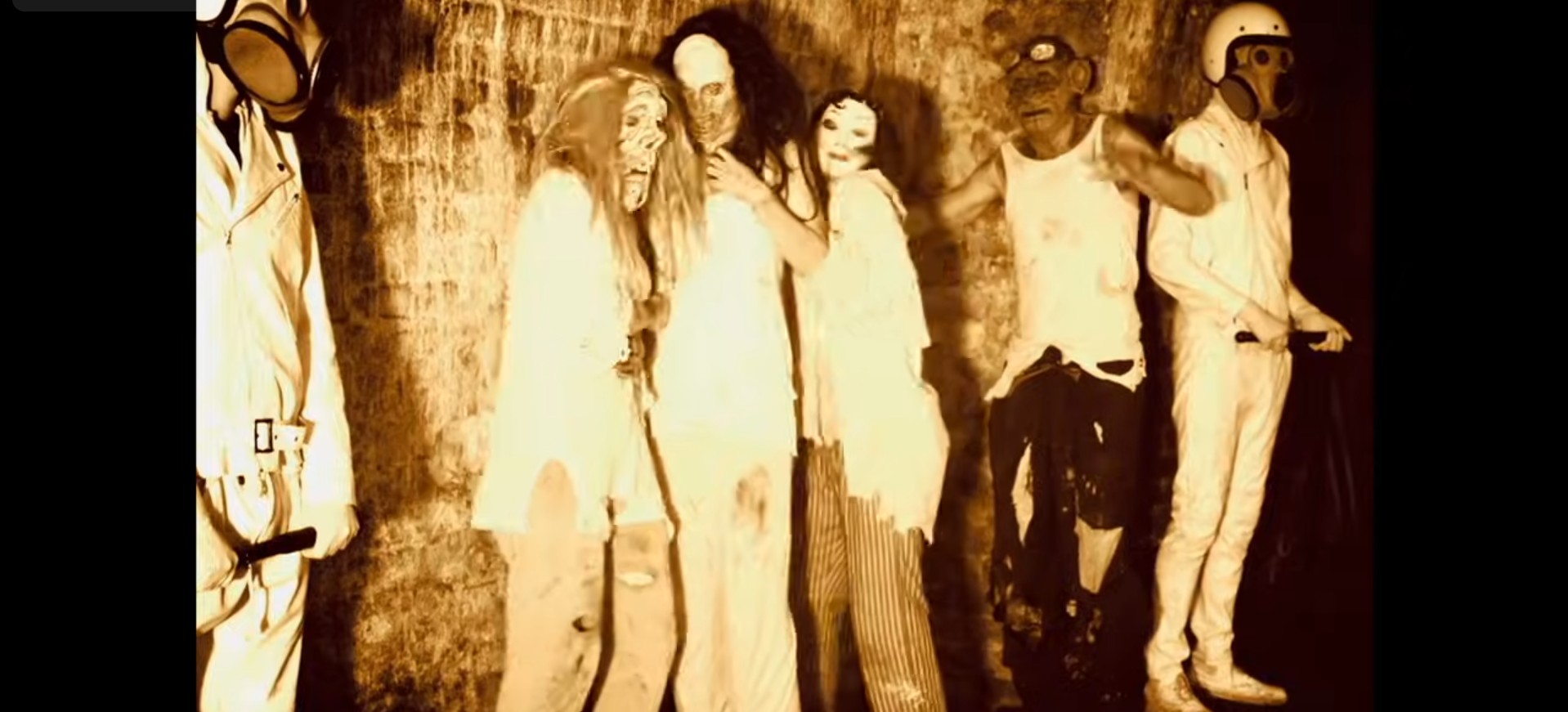
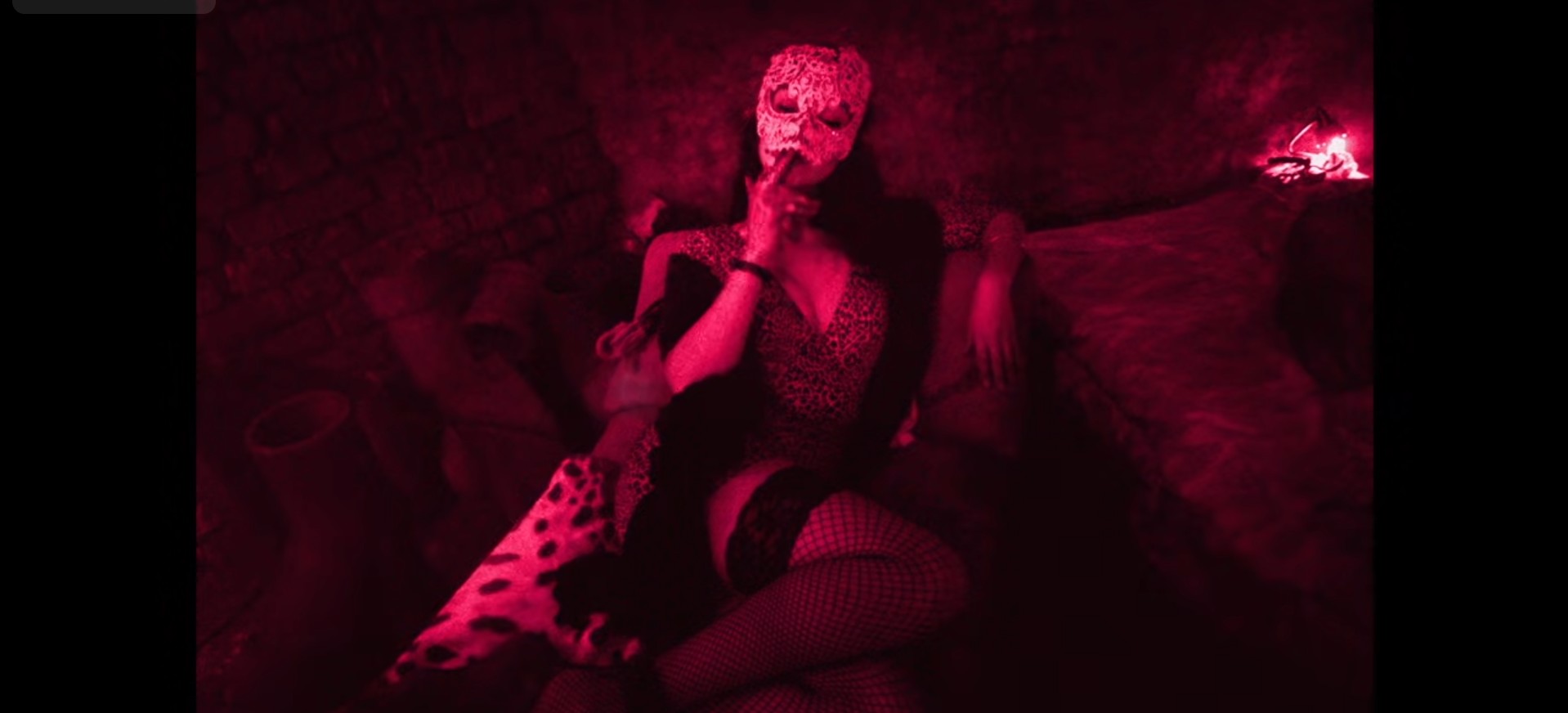
A pair of middle-aged best friends and rockers named Arthur and Herb have minimum waged jobs, no ambitions, and two level-headed wives on the brink of divorcing them if nothing changes.  All the friends have is their band, Devil Music, and their glam rock music. Out of the blue, a music talent agent signs them in a heartbeat and before they know, Devil Music is rocking out to a packed-full arena full of adoring fans and obsessed groupies, raking in money beyond their capabilities of higher counting.  What they’re oblivious to is the band’s collective souls now belong to the Devil under the contract terms with the servile music agent doing the Devil’s fear-based bidding and whose life and soul hangs in the balance.  When the Devil comes to collect, sending his demonic minions to slay each member of the band, Arthur and Herb must find a way to save themselves from the Devil cancelling their life show forever. 

For over a decade now, filmmakers Jim O’Rear, who’s minor zombie role in George Romero’s “Dawn of the Dead” has launched a career in indie horror in front and behind the camera with “Hayride Slaughter,” “Three Tears of Bloodstained Flesh,” and the “Cruel Summer” trilogy,” and Scott Tepperman, who’s more recent filmography into the indie market also saw highlights of horror, have been in business together ever since co-starring in the 2013 haunted hospital flick, “Hospital.”   From then on, the two had formed their own production company, Los Bastardz Production, specializing in low-budget horror with a select entourage of talent.  The devil and his contract film, underscored with a rock-n-roll fame theme, released in 2020 is duo’s “Hell’s Bells,” a horror-comedy built around if it seems too good to be true, it probably is narrative.  “Hell’s Bells” is also produced by the two filmmakers.

Like most of their produced product, it comes to no surprise that the Los Bastardz themselves, Jim O’Rear and Scott Tepperman step in the principal leads of a Beavis & Butthead or Bill & Ted type of heavy metal music centric duo who are daft beyond repair.  Any innovation aimed for the setup is instantly dissolved by the derivative tepidness as we’ve seen these characters before over the decades now, but O’Rear and Tepperman make for a good dimwitted and guileless pair with a gullibility and an innocence that makes them appear sympathetically simpatico, even when their levelheaded wives (Rebekah Erb, “Death Care,” and pornstar Layla Dawn. “Slumber Party Slaughter Party”) use threatening divorce language to motivate their one-track mind toward another desire in life.  The jokes are a bit long in the tooth and there are a handful of needless fart jokes, but the overall gags do land even if the terrain they contextually touch down on is rocky at best as they play to their individual character strengths of being a grocery bagger enthusiastic about making it big and a loafer who actualy has some intelligence underneath his Jesus hairstyle.  Their band mates, the cocky loudmouth drummer Vic (Paul Van Scott), the butch backup singer Shirley (Lisa Kirk), and the catatonic bassist Gary (Cameron Scott), all have their own quirks, and all are played by actors familiar with El Basterdz having donned roles in previously produced films from the company, such as the “Cruel Summer” series.  As the band Devil Music, they are targeted for soul reaping as a part of a contract byproduct against their music agent Caleb (Tom Komsar), drawn up by the devil himself in Marc Price (“Trick or Treat”) by duplicitous means with deceitful promises.  Without the horns, pitchfork, and red skin, Marc Price makes for a good Devil in human skin with only the economized visual effects fashioned glowing eyes.  Harold McLeod II preludes the story as a victim of contract, Cayt Feinics draws attention with a show of toplessness as Shirley’s lover, Jerry Reeves plays the demon x many going after Devil Music, and a sorely underutilized Jimmy Maguire, as the exasperated grocer manager tired of Arthur and Herb’s lack of common sense, fill out “Hell’s Bells” cast.

To preface with my previous experience with El Basterdz films, “Cruel Summer” didn’t do it for me with a dowdy slasher that’s didn’t leave impression.  Yet, “Cruel Summer” has two sequels plus a 4th soon to be on home video, making this series their most popular commodity.  What can I say?  Cinema is subjective.  That bad taste didn’t deter “Hell’s Bells” from the ever-growing review pile and a second chance to get this long-time horror fan aboard with Jim O’Rear and Scott Tepperman’s blithe outlook toward the horror genre, one that doesn’t take itself too seriously.  With that understanding, going into “Hell’s Bells” was rather easy with no expectations for commentative material and top-notch gags and laughs, but what El Basterdz provides has been long appreciated and continuously favored in genre films:  decent VFX, decent practical effects, and, of course, the provocation of nudity.  There may be times when films can get away with having only one of those key elemental pieces present with great immensity and intense projection that the film can’t be denied it’s due right to seen and heard as a well-made film but have all three and the formula works like a charm amongst genre fans no matter how bad the storyline gets and no matter how bad the acting is portrayed, leveling up a mediocre production to potentially the penthouse of the independent skyscraper.  To be fair, neither the story nor the acting in “Hell’s Bells” is atrocious but the technical aspects during principal photography and post-production throw the film off-balance into slapdash hogwash and that can be rather off-putting right out the gate for most audiences.

“Hell’s Bells” finds itself being a story having been told before, many times over in its airheaded budding duo faced with great task none think possible to complete, but O’Rear and Tepperman manage to befit themselves satisfactorily in archetype with a rock-n-roll nightmare by sticking to their character quirks and incorporating the backbone preferences of shoestring genre filmmaking.  SRS Cinema is a distributing house built on shoestring films and “Hell’s Bells” is another brick in its schlock-sturdy foundation with a Blu-ray release.  Encoded with AVC compression, presented with 1080p high-resolution, on a 25GB BD-R with the purple underbelly, “Hell’s Bells” looks pretty good for commercial grade encoding and minimal capacity.  Details are sharp enough to cause no concern to capture skin variations, the contrasting wardrobe textures, and the shifting compositions between reality and fantasy stemmed from visual effects and fade-in/fade-out montage sequences.   Scenes are mixed bag of grading, some more intense than others that are set with a brighter natural veneer, but all retain their intended quality without any substantial issues from compression.  The English language LPCM 2.0 stereo renders a mix of feeble commercial equipment and green technical knowledge that permits a large noticeable swing in all areas of principal sound recording with most of the pain points affecting dialogue with retreated vocal presence in certain scenes while robust in others, and even an in-moment change of the same scene at times.  Post sound design isn’t marred by the same scenarios that’s a clear as crystal with the added rock soundtrack, crowd cheers, and demonic gutturals.  No English subtitles are offered.  Special features include a commentary track with writer-directors Jim O’Rear and Scott Tepperman, a behind-the-scenes featurette, Arthur and Herb’s Devil Music music video, blooper reel, the feature trailer, and SRS Cinema catalogue trailers.  SRS Cinema’s Blu-ray mirrors their limited 100 count release without the director’s signatures, retailed with a regular Blu-ray Amaray case with illustration composition artwork of mostly the chief principal characters, and as always, the graphic artistry SRS uses is always 100x better the film.  There are no other physical accompaniments.  The not rated release has a runtime of 80 minutes and has region free playback. 

Last Rites: Throw up the sign of the devil horns for “Hell’s Bells’s” comedic contract with a hair metal Satan, but don’t let this narrative fool you by hawking new something old and done before.

Sign Your Soul To Satan for the “Hells Bells” on Blu-ray!

EVIL Versus EVIL to the Death! “Mad Foxes” reviewed! (Cauldron Films / Limited Edition 4K UHD and Blu-ray)

“Mad Foxes” LE 4K UHD and Blu-ray Still Available to Get Before X-Max!

Playboy Hal drives fast cars and enjoys a good time.  While driving his girlfriend out for a night on the town, a road rage run-in with a Nazi biker gang leaves one of biker’s dead and Hal continues on his way to the nightclub for bubbly and music.  The bikers track him down, beating Hal to a pulp and raping his date as the night ends.  Not to roll over and be passive take to insult, Hal recruit’s a friend’s dojo class for an all-out brawl during the outside funeral ceremony for the biker’s fallen comrade, taking violence to the extreme by castrating the gang leader.  In retaliation, the entire dojo class is gunned down in a vengeful massacre days later.  Hal and the biker gang continue their back-and-forth as they embark on a short-term blood feud aimed to annihilate each other’s lives, spilling violence beyond friends and into family ties without mercy. 

A tale of perpetual revenge and exploitation from Spain, “Mad Foxes” takes one-upping to a whole new grotesque level.  After production manager Paul Grau worked on the tantalizing pictures “Secrets of the French Maid,” “Caged Women,” and “The Amorous Sisters” and before helming the comedic sexploitation “Six Swedish Girls in the Alps,” the Nordic born filmmaker debuted with tit-for-tat terror in the streets film cowritten between Grau and softcore, erotic film producers Hans R. Walthard (“Six Swedes in Paradise”) and Jaime Jesús Balcázar (“The Couple’s Sexual World”), leaving no surprise to the shocking and provocative nature of this Euro-nasty that castrates Nazi bikers, shotguns old ladies in wheelchairs, and blows up entire apartment buildings all in the name of spite.  Erwin C. Dietrich and Hans R. Walthard serve as producer and executive producer under the production collaboration of Jaime Jesús Balcázar’s  Balcázar Producciones Cinematográficas and Reflection Film.

A biker gang revenge story sounds right up there with “Death Wish” starring Charles Bronson, but instead of Bronson’s character going up against the impossible odds by way of an organized and self-controlled planning, executing, and removing the threat for good, “Mad Foxes” strikes impulsively while the iron is hot with such ferocity it’ll make your head spin right off the neck.  José Gras (“Hell of the Living Dead,” “Conquest”) envelopes himself to the solo side as Hal in contra the larger Neo-Nazi biker gang.  Hal’s a bit of a philanderer though it’s not entirely explicit but his raped date Babsy (Andrea Albani aka Laly Espinet, “The Hot Girl Juliet”) is a quickly and inexplicably out of the picture before he picks up free-spirited nomad Silvia (Laura Premic) and, by then, Hal seemingly doesn’t have any other care in the world though the aforesaid date Babsy, or perhaps it was his young girlfriend, was raped, and his good friend’s entire dojo, plus said friend (Paul Grau), are massacred in an open fire execution of bullets after they wipe the floor with the Neo-Nazis in a karate skirmish that ends in the gang leader being gratuitously castrated.  Having already cross paths with the gang at least four times, Hal hops in his fast car and drives to the countryside to get away from it all, picking up Silvia on the way, but he inadvertently leads the ruthless camo and leather-cladded gang, led by character played by Peter Saunders and Eric Falk (“Blue Rita,” “Ilsa:  The Wicked Warden”), to his wealthy, elderly, and impaired parents and their house servants.  From there you can imagine the bloodshed that quickly spirals into payback but all throughout the retaliatory strikes, one begins to question who the actually is the good guy in all of this because Hal actually initially ran one of the biker’s off the ran and to his death, driving away with speed and a serene sense of no remorse or concern.  Does Hal bring an ill-fated war upon himself?  One could argue a case for it.  “Mad Foxes” rounds out with Helmi Sigg, Brian Billings, Garry Membrini, Ana Roca, Hank Sutter, Iren Semmling, Hans R. Walthard, Esther Studer and Guillermo Balcazar.

“Mad Foxes” is a gratuitous showcase of trashy Euro cinema, the grindhouse champagne of Spanish sleaze, and has little worth toward elevated commentary or technical grandeur.  Yet, within our miniscule cinema-thirsty molecules and riding along our less trodden synapse highways, a spark of interest can’t keep our eyes off the lurid lunacy that’s unfolding before us.  Paul Grau has invested, produced, and released an entertaining indelicate that won’t bore, won’t tire, and won’t be a total waste of time in its eye-for-an-eye format.  Does one man’s need for revenge need to make self-preservation sense?  No.  Does a bike gang have the wherewithal to track down one man from city-to-rural without breaking a sweat?  No.  One aspect of the story that holds relatable consistency through the years, decades, or even millennia is that violence remains a universal truth, and “Mad Foxes” has plenty of teeth to tout when an act of pettiness turns into the next World War for one man and a biker gang.  The story is no “Death Wish” or “Death Sentence” but it does remove rationality from the shackles of a rancorous reality and plops viewers into the throes of an odd quarrel that won’t seemingly end until the very last standing have turned vertical, and all signs of life has ceased.  Hal’s no rogue ex-cop or former elite marine, just a regular playboy with friends in karate places and has a stubborn will to take on the gang singlehandedly on their own sordid turf.  Grau’s unabashed violence never stumbles or wanes to be implied with the Switzerland director helming a Spanish produce movie that churns out Italian-like shock with the closeup carnage and the cynical nature of a fatalistic bout. 

Cauldron Films proudly presents “Mad Foxes” Ultra High-Definition debut to the world featuring a new 4K restoration with Dolby Vision HDR color grading on an HVEC encoded BD66 with 2164p.  This limited-edition 2-disc set also includes a standard Blu-ray presentation that’s AVC encoded on a BD50 with a 1080p resolution.  The Dolby Vision HDR 10 offers extensive and immense saturation that’s balanced, stable, and more vibrant in it’s support of a wider pixel range.  Without compromising the story’s gritty nature with an unflexed amount of detail, textures retain their respective fabric types from the sheen of Hal’s silveresque bomber jacket to the taut leather of the neo-Nazi bikers.  The skin tones appear organic with a surface appeal that denotes and defines body hair, wrinkles, and other skin imperfections, more notably in close ups.  Focal depth does not completely wash out objects or landscapes with careful delineating a sandy beach and wavy ocean with distinction while the cityscape has the light and tone range in clarity of the object.  Only the UHD was covered for the image review, but the Blu-ray pulls from the same 4K restoration that I suspect has most of the same results but with a lesser pixel count in the quality that may be not as perceptible.  Both formats include an English DTS-HD 5.1 Master Audio, a DTS-HD 2.0 mono, and a Spanish DTS-HD 2.0 mono mix.  All include optional English subtitles in, what I consider horrendous, ADR mixing.  Dialogue has clarity and is clean throughout, but the voice acting is just beyond reproach with drab inflection to express the right emotion during the scene, its all fairly monotonic and automaton deliveries through the asynchronous matching of voice and mouth.  With no innate recording during filming, the milieu sounds are limited to the immediate action of post-production kick and punch skirmishes, a volley of gunshots, car and motorcycle engines, and murderous snikts of blade strikes.  This, in turn, limits and relegates the surround sound channels to mostly the front with only a flutter of immersive quality, mostly with the revving car engines and the occasional gunfire.  Special features on the UHD only include the commentary by film critics Nanni Cobretti and Merlyn Roberts.  The commentary is also on the standard Blu-ray along with additional content in The Untold Story of Robert O’Neal:  a near feature-length interview with leading man José Gras discussing his career in Europe, Erwin and the Foxes offers interviews with producer Erwin C. Dietrich and actors Eric Falk and Helmi Sigg discussing their roles and the production, an additional interview Mad Eric has a second interview with actor Eric Falk, and Troy Howarth provides a video essay with stills and video snippets in Nazi Fox Bikers Must Die.  The special features round out with an image gallery and a feature trailer.  The curated packaging comes in a rigid slipbox with new compositional artwork by Justin Coffee.  Inside, is a clear Amaray Blu-ray case that display same primary artwork and is accompanied with an adjacent folded mini poster, also of Coffee’s art.  The UHD is region free and the Blu-ray is region A for playback as both films carry an unrated designation and have na 80-minute runtime in their widescreen, 1.85:1 aspect ratio, presentation. 

Last Rites: Revenge films are often formulaic but “Mad Foxes” is no ordinary payback thriller that continues to the hit back well into last man standing. The new Cauldron Films’ limited-edition boxset pushes the media technology to max superiority sure to squash any rival, unlike Paul Grau’s ceaseless chaos.

“Mad Foxes” LE 4K UHD and Blu-ray Still Available to Get Before X-Max!

Football, God, Family, and EVIL! “Him” reviewed! (Universal Pictures / Blu-ray)

“Him” Collector’s Edition Now Available from Universal Pictures!

Cameron Cade’s father has been firmly preparing his son to be a football GOAT since Cam was a young boy.  Inspired by the 8-time champion Isaiah White, star quarterback of the Saviors, Cam had trained and played through the years and ranks to be the game’s next promising rising superstar athlete.  When a mascot-dressed manic derails Cam with a head trauma-induced attack, Cam takes a step back from competing in the football showcase but receives hope when he receives an invitation from the Saviors to work with Isiah White at his isolated training camp deep in the desert.  Before long, a dream-come-true turns into a terrifying nightmare as the training sessions go deeper into something far more sinister and Isiah’s greatness may be contributed to unnatural forces bound by limited contracts.  How far and how much will Cam have to sacrifice to be the best football player ever and to live up to his idolized hero before the game and those who control it swallow his own soul. 

Jordan Peele, once skit comedian with Keegan-Michael Key in “Key and Peele” turned provocative social commentary director of such films as “Get Out” and “Us,” produces the next potshot at cultural critiquing with 2025 released “Him,” a football themed psychological horror that puts sacrifice for the game over family, intensifies the pressures of equating performance with success, and a misguidance from fatherhood/mentorship that intends on grooming a young person into superstardom.  “Him” is the sophomore feature length film for Justin Tipping who also cowrite the script along with Two-Up Productions cofounders Skip Bronkie and Zack Akers as the first major movie release for the company associated with Peele’s Monkeypaw Productions that not only produces his Peele’s own films but also invests into minority-driven projects, such as “The Candyman” remake, “Monkey Man” with Dev Patel, and Spike Lee’s the “BlacKKKlansman.” 

At top bill of “Him’s” roster is an established comedian, writer, and producer with an even more well-established and famous last name.  Marlon Wayans’s breakout project was the sketch comedy TV show “In Living Color” that also highlighted and rocketed the career of Jamie Fox and Jim Carrey but was also considered a family affair as Marlon’s siblings, Shawn, Kim, Keenan Ivory and Damon Wayans, cohosted with him the African-American centric comedy show.  In “Him,” Marlon plays the 8-time champion quarterback for a football team that is as venerated as his character Isiah White playing for the Saviors.  Wayans, known for his comedic role stints in favorites “Don’t Be a Menace to South Central While Drinking Your Juice in the Hood,” “Scary Movie,” and “White Chicks,” has a surface scratched darker side to his onscreen personas that leave him no stranger to a role like Isaiah White that’s dispassionate yet ferocious – his drug addiction role in  “A Requiem for a Dream” is one of those examples.  Opposite Wayans is the strong, muscular facial features underneath soft, piercing eyes of Tyriq Withers.  The then mid 20-year-old is in peak physical condition for his rising star quarterback Cameron Cade under the pressure cooker of family, agents, and a football league that expects greatness on every level.  Withers’ recent principal parts in perceptively pointless and under-the-radar remakes of classic cult films, “Don’t Tell Mom the Babysitter is Dead” and “I Know What You Did Last Summer,” didn’t elevate the Florida born actor into the spotlight, preparing him for an upcoming lead in a more visible original psychological horror themed around one of America’s favorite sports, but Withers meets the challenge with a promising performance for his promising character that makes “Him” standout above the rest and being his biggest role of his career catalogue.  Wayans and Withers battle out with testosterone trumping into a gray area of occultism that’s not so unlikely from the reality of professional sports.  The principal leads are supported by an eclectic supporting cast of eccentric oddities of the isolated training camp with Julia Fox (“Presence”) as Isiah White’s fast-and-loose, high-end wife Elise, standup comedian Jim Jefferies as White’s personal athletic physician Marco with baggage regrets, Tom Heidecker (“Us”) as Cade’s hype manager Tom, Indira G. Wilson (“The Perfect Host”) as Cam’s mother, and Richard Lippert (“Scare Us”) as the saviors behind-the-scenes owner. 

“Him” came and went from its theatrical run so fast it feels like only yesterday trailers were being played on commercial breaks and on online previews, denoting Justin Tipping’s movie offering not finding a significant audience for the anti-pro sports treatment of players message.  That’s what “Him” powerfully engrosses with is an anti-football message of dog-eat-dog cruelty that cannibalizes itself for what’s best of the sport and discard those who give the sport it all once their eliteness has been completely emaciated, as if the sport is a vampire and drains their athleticism through the carnivorous canines of fans, team, and ownership.  Tipping and his cowriters integrate religious and Roman motifs that relate the gridiron as Church or the blood of the GOAT coursing through another that offers divine playing sacrifice and supremacy while certain aspects of the film regard the football fields as coliseum with players being gladiators with even the finale reenacting scenes similar to that of “Gladiator.”  Along with those strong imageries, iconographies, and representations, Tipping’s linear telling of the story feeds off the phantasmagory and being on the edge of experimental that, in turn, puts into question Cameron Cade’s reality as everything he experiences from the ominous weirdness pulsating his path forward in football to the macabre training and cultish indoctrinations of Isiah White’s desert training camp don’t come about until Cam’s whacked over the head with a long handled and ornate hammer.  Then, the question becomes, is Cam in dead and a warped purgatory?  Is Cam hallucinating?  Or is Cam actually experiencing the darker side of a game he’s been bred to believe in and be the best at.  All of those existential and surreal components overload “Him’s” highbrow and social commentary horror that will fly over the audiences’ head like pre-game ceremony fighter jets. 

“Him” arrives onto a collector’s edition Blu-ray and digital combo set from Universal Pictures.  The AVC encoded, 1080p high-definition, film is stored on a BD50, ensuring room for a visually and audibly stimulating tryout of pigskin piety.  Infused darker tones of shadows, Brunswick greens, and plenty variations of brown from the football to the desert located training camp, there are a very few contrasting moments that embolden cinematographer Kira Kelly (“Skin in the Game”) to emerge out from the hefty draping shadows that obscure much of the compounding and confounding irrationality of the insular football fanaticisms.  Kelly utilizes an array of long to closeup shots from different scenes or even the same scene to throw off the balance and provide depth when needed for the moment.  In addition, the same moments can be implanted with a personal bubble of surrealism through Cameron’s perception of events, never leaving other characters to define the atmosphere or the behaviors that are inherently set by the principal lead character, who or who may not be suffering from an intense concussion untreated unintentionally by the internal turmoil of family politics.  Detailed textures and skin tones have organic qualities, and the X-ray vision has seamless segue with all its intensified bone crunching hits.   “Him” is presented in a widescreen 2.39:1 for an extra stretch of spherical sighted surroundings that work to enclose on Cameron the deeper he’s in with the mentor’s program as well as to fully embrace his destiny with obstinance in the grandest of finales.  The Blu-ray has encoded four audio option a with English Dolby Atmos, a Dolby Virtual Speaker 2.0, a Spanish Dolby Digital Plus 7.1, and a French Dolby Digital 7.1.  All options offer extended reach into the audio localization areas of the compressed, multiple channel formats, and even the DVS adds a little extra to throw sound inside a three-dimensional space which is important for “Him’s” haunting and bizarre oneiric structure.  The Atmos provides more depth and richer lagniappe effort where it comes with Cameron’s perceptive discords of racing arguments and whispering inceptions.  Dialogue is clean and clear throughout, and no issues imposed on The Haxan Cloak aka Bobby Krlic’s subtle descent of a score.  English, French, and Spanish subtitles are available.  Bonus contents include feature commentary with director Justin Tipping touching upon production areas and the cast to create his footprint as a movie artist, an alternate ending, a removed end credits scene, a handful of deleted scenes, two deconstruction of scenes on how they’re made, Becoming Them looks at Tyriq Withers and Marlon Wayans transformation into elite athletes, The Sport of Filmmaking featurette offers a behind-the-scenes look at production of “Him,” and the Hymns of a G.O.A.T. has composer Boby Krlic’s detailing the elements in creating his movie score for the film.  The collector’s edition also comes with a digital code insert to stream or download from anywhere on any device.  The physicality of the collector’s edition is more to the tune of a play fake that doesn’t allow the release to run with an overloaded package.  Instead, Universal laterally passes with a cardboard slipcover with an embossed title for some smooth font texture.  Instead, the standard VIVA case houses the same artwork as the slipcover without the raised lettering and the disc is translucently pressed with the title and film and format technical credits.  “Him” has a runtime of 97 minutes, region A encoded playback, and is rated R for strong bloody violence, language, sexual material, nudity, and some drug use.

Last Rites: If you’ve ever thought professional sport players were commodities before, “Him” brings the blitz of putting football above it all by bringing divine blood, sweat, and tears into a cult of sadists and stardom.

“Him” Collector’s Edition Now Available from Universal Pictures!

The Key to EVIL is to Kill Each Other For It! “A Hyena in the Safe” reviewed! (Celluloid Dreams / Blu-ray)

“A Hyena in the Safe” is on Black Friday sale! Get It at Amazon.com

Eleven months after a jewelry safe heist at the Bank of Amsterdam, a group of specialized international thieves from all over Europe reunite at an Italian mansion estate during a city carnival celebrate used as a distracting facade for their gathering.  Each have a key that form a coalescence to open the safe to ensure not one of them will swindle the others and make off with the jewels worth millions.  Their ringleader Boris, who’s now deceased, hid the safe in his mansion with this wife Anna overseeing his plan and portion of their lifted prize.  When one of the keys end up missing, a series of deceptions and murders begin a feisty vying for the each of the keys.  One-by-one, the criminals fall for inconspicuous laid deadly traps and engage in murderous rendezvous until there’s only one left standing as the old saying goes, there is no honor amongst thieves.

Italy director Cesare Canevari, notable for his contribution to the exploitation subgenre with “A Man for Emmanuelle,” “The Nude Princess,” and the notoriously renowned “The Gestapo’s Last Orgy,” wrote-and-direct a post-caper, bordering giallo in 1968 titled “Una iena in cassaforte,” aka “A Hyena in the Safe.”  Coming in on the incline toward giallo’s height of success, Canevari’s whodunit has less the conventional murder mystery elements but does have arouse that lack of trust amongst the principal characters, a high body count, a vaguely mysterious killer, and definitely a highly stylization of camera angles and visuals that’s correlates with the time period and give this giallo less of a terror firming shape and more of a “Clue” like profile.  Canevari cowrites the script with Alberto Penna and is a production of Fering SRL based in Milano, Italy where the film was shot.

“A Hyena in the Safe” is carried by an eclectic, ensemble cast of international actors and actresses playing the roles that are not of their respective nationalities.  Going around the horn first with the keyholding thieves begins with Stan O’Gadwin’s Klaus, the German, Ben Salvador’s Juan, the Spaniard, Karina Kar’s Karina, the Tangerine and the only non-European of the group, opera singer Dimitri Nabokov’s Steve, The Englishman, and “The Slasher … Is a Sex Maniac!’s” Sandro Pizzchero’s Albert, the Frenchman.  The aforementioned cast primarily reduces to Italian and German actors in a virtually performance only role to exact and exude their character personality types in with Salvador, who gives Juan a thinking man’s confidence within a patient self and has a way of seducing women to extract information, or with Klaus, who’s aggressive pressing as an authoritarian German leans toward pursuit efficiency, or Steve, who’s quietly plotting multiple reserved schemes to deploy later.  Those not a part of the heist crew from the Bank of Amsterdam is Anna, the criminal mastermind’s wife portrayed by Maria Luisa Geisberger, and she, too, is a keyholder but only because the attractive femme fatale takes over the helm with the storage of the jewel vault and implants her own brand of deception after announcing her husband’s demise from an illness.  Jeanine (Cristina Gaioni) and Callaghan (Otto Tinard) are the last two who round out the ensemble in their corresponding roles of Albert’s blonde bombshell girlfriend who’s folded into the scheme at the chagrin of the others, and boy does she take a humiliating beating when Albert comes up short on his key, and the jewel appraiser who watches all the backstabbing unfold from the sidelines and counts down the bodies with the metaphorical removal of their party favor baggies, ones that would have been used to split the jewels between them upon opening the safe.

What’s interesting about “A Hyena in the Safe” is the beginning of the story plotted at the act of reassembling the team and only provide expositional context to a heist well after it’s been done, eleven months ago in fact.  All the characters are fresh and unknown to the audiences, we don’t know their personalities, their skills, their habits, or their attitudes toward one another, and all that dynamical odds and ends has processed, forcing those new to the film to watch, listen, and learn their way through the personality types and the situation at hand.  The tension is quickly laid out amongst the already side-eying and suspicious group of sophisticated thieves that react no differently from the lower class of thief with same cutthroat intent.  Keeping up with Canevari’s edited pacing and unconventional angle shots that squeeze out the tension with taut framing on expression-filled cutting of eyes and fear-induced faces, the mounting intriguing factors wet story hungry appetites with playful catering of the imagery that also consists of fixed and tracking shots.  Considering the film’s more conservative decade, Canevari builds tasteful implied sexual acts between conniving characters and is only explicitly, in physical means, when the scene calls for it, leaving gratuitousness begging to be let in.   One aspect with the pacing that hurts the enticingly heightening pressure cooker between the first act’s slow trot through choppy seas of character dynamics to elucidate taciturn behaviors and backdoor alliances and the last act’s spit firing and cutdown of those who are left standing, there is seemingly no middle act to funnel the trepidation and mystery from one end to the other in an abrupt ease into a quickly diminishing situation that goes from murder mystery to battle royale with switchblade umbrellas, electrifying door handles, and an indoor garage that can turn into an asphyxiating fish tank in a matter of minutes.  There’s an early James Bond campiness to the story’s temperament that can’t be ignored while be positively and simultaneously interesting.

Celluloid Dream’s third release title today “A Hyena in the Safe” arrives onto a new high-definition Blu-ray for the first time that’s AVC encoded onto a BD50 and presented in 1080p and in its televised pillar boxed full screen 1.33:1 aspect ratio.  The restoration of the original, likely, 35mm film stock was done by Rome’s Cinelab Services from the original camera negative, which also included the color grading.  The resulting transfer is peak restoration quality with a fresh coat of brilliant paint, a clear coating of texture producing details, and a virtually flawless image within the spherical lens picture.  Perhaps slightly on the orange side, skin tones come through a variety of shades to match the nationalities of the criminal enterprising collective.  Juan’s dinner jacket evokes tweed textures while Jeanine’s high, golden hair style never loses individual strands in the near all-bright-and-golden wash.  The original Italian mono mix was secured from the optical sound negatives attached to the filmstrip.  The mix had processed the Italian ADR in post and attached to synch to the celluloid, creating a near perfect pace and synchronicity with the conversational action though the lips doesn’t exactly match the actual words being spoken.  Speaking of dialogue, for a mono track the nice and robust with clarity from an untarnished negative albeit it’s lack of depth and not from the true source, and that goes for ambience as well.  English closed captioning is available.  Special features pack the encoding with a commentary track by Celluloid Dreams found and film critic Guido Henkel, interview featurette 7 Guests for a Massacre with Cesare Canevari (misspelled Canevaro on the back cover), Albert actor Sandro Pizzochero, Nini Della Misericordia, journalist/critic Adriana Morlacchi, and journalist/critic Diego Pisati discussing the film’s influence and pizzas from cast, crew, and critic perspective, a video essay by Andy Marshall-Roberts Schrodinger’s Diamonds:  The Duplicitous Mystery of Hyena in the Safe, a location featurette of the shooting setting The Mysteries of Villa Toeplitz, an image gallery, and the theatrical trailer.  The two-faced cover art, same art of dead bodies falling out of a safe, is set with the primary English language on the cover with the Italian language title cover on the reverse side.  The cover art on the encasing O-slip with a character composition design of a shadow-induced, high-contrast illustration by graphic artist Thu-Lieu Pham of Covertopia.com has slip art similarities with same art on both sides but with the title in either in English or Italian.  In the insert is advert for Celluloid Dream’s previous two releases – “The Case of the Bloody Iris” and “Short Night of Glass Dolls” and its upcoming fourth release “The Black Belly of the Tarantula” while the reverse side gives credits and acknowledgement in regard to the film restoration.  “A Hyena in the Safe” comes not rated, clocks in at 92 minutes, and is region locked for A, North America.

Last Rites: “A Hyena in the Safe” is a no laughs, all bite giallo caper once obscured from the public view now brought to the forefront of our attentions with a new Blu-ray release worth backstabbing for!

“A Hyena in the Safe” is on Black Friday sale! Get It at Amazon.com

To Be or Not To Be EVIL? That is the Question! “#Shakespeare Shitstorm” reviewed! (Troma / 3-Disc 4K UHD and Standard Blu-ray)

A Wild and Crazy Shakespearean Parody of “The Tempest!” Own it here!

Inspired by William Shakespeare’s revenge and restoration themed play, “The Tempest,” the ostracized pharmaceutical scientist Prospero plots his revenge with whale laxative as gushes of multiple killer whale defecation shipwreck the excrement slathered global elite to the shores of Tromaville, New Jersey where Prospero owns a nightclub and laboratory for his mad experiments.  Miranda, his beautiful daughter blinded by the Trauma of her mother’s suicide, falls for Ferdinand, son of the rich pharmaceutical king Big Al who, along with Prospero’s twin sister Antoinette, betrayed Prospero to exile and displacement.  Revenge is a dish best served as cocaine tainted with mutant growth hormones concocted in Prospero lab.  With the help of a wheelchair bound crack-whore as his right-hand pusher, Prospero’s vindictive plan melds bodies and bodily fluids together in one flesh heap of disfigured dysfunction against the conglomerating corporate greed in the midst of two lovers formulating a bound beyond partisan lines.

Troma Entertainment president Lloyd Kaufman returns to the director’s chair to helm a classical rendition of William Shakespeare’s “The Tempest” with the NSFW eloquent title “#Shakespeare Shitstorm” and, as any self-respecting Tromaville fan knows, Troma titles can be extreme literally and, in this case, the adaptation is one big splash park of diarrhea.  “The Tempest” isn’t the company’s first re-imagining of a Shakespeare’s work with “Tromeo and Juliette” being the humble career beginnings of now mega-MCU and DCU director James Gunn (“Guardians of the Galaxy,” “Superman”).  For Kaufman, “#Shakespeare Shitstorm” might be one of the last directing efforts for the independent filmmaker and social justice warrior as he reaches into his 80th year of age, but that doesn’t stop the 50-year moviemaking vet from passionately wanting to create art from behind the camera to in front of it with this Brandon Bassham script based off a story between Kaufman, Gabriel Friedman (“Slashing:  The Final Beginning”), and, of course, the Bard of Avon.  While Shakespeare doesn’t foot the bill for the budget, him and Troma do have something wildly in common being masters of the low-cost arts as Kaufman, Troma cofounded Michael Herz, Doug Sakmann, Justin A. Martell, and John Patrick Brennan produce “#Shakespeare Shitstorm” on a shoestring budget put muster together a wild and crazy story and effects movie.

Kaufman’s so passionately about making art and filmmaking, and also watching his bottom line, that he also dons a dual role playing the revenge-seeking and masterclass scientist Prospero and crossdressing, which he’s done frequently and without a morsel of shame, to become the treacherous twin sister and marketing guru Antoinette.  Kaufman’s continues to throw caution to the wind in an unabashed performance that’s outrageously crude and lined with verbose dialogue that’s definitely memorized with monotonic intention but none of that should be surprising as Troma was built on fervor absurdity, and all the actors have a range of tactlessness that runs the gamut.  The eclectic personalities never conflict with overlapping or feel forced as sometimes they often do with Troma or with farce comedies in general.  Each character shines on an idiosyncratic level, such as Abraham Sparrow’s Big Al’s magnified pompous and drug-fueled pharmaceutical big shot, Amanda Flowers (“Werewolf Bitches from Outer Space”) crack-whore cripple Ariel, and Dylan Mars Greenberg (“Psychic Vampire”) as a social media influence and justice warrior.  Kate McGarrigle and Erin Patrick Miller, like Kaufman’s Prospero and Antoinette, play two characters from the Shakespearean play with Miranda and Ferdinand respectively.  Their opposite sides, Romeo & Juliet-esque affair has more an even keel, still absurd without a doubt, but better balances the stranger side of the deep character pool.  Let’s also note that “#Shakespeare Shitstorm” is also a musical that puts more effort in synching action and lyrics into a frame already filled with slapstick surrealism and socio-political satire.  The cast rounds out with Frazer Brown, Monique Dupree, Teresa Hui, Ahkai Franklin, Zoë Geltman, Zac Amico, Elizabeth D’Ambrosio, Nadia White, Dai Green, Vada Callisto, and special guest stars Ming Chen, Tommy Pistol, Bill Weeden, Julie Anne Prescott, Doug Sakmann, and Catherine Corcoran.

If afraid to get down and dirty with drowning in logs of whale feces, be offended by the large, and small, phalluses and other nudist behavior, be enraged by the comedic appropriation of the disabled, transgendered, and race communities, or just become upset at the smallest off-kilter behavior and uncouth conduct, then “#Shakespeare Shitstorm” should be on your top ten list of must watch because that’s Troma’s whole schtick is to challenge the uptight and corporate commercial narrative that has everyone on edge and afraid to walk on the permissible wild side, especially in art that’s supposed to covered by freedom of expression and speech.  Kaufman puts the light on the irony, the preposterousness, and the two-faced hypocrisy that is the dark side of social media, such as cancel culture, which is in itself is an ironical dig at far liberal thinking, a stance bred from the same gene pool that has supported Troma over the last half a century, but that doesn’t mean Troma stops parodying and caricaturing the gentrifying and oligarchical elite with their own brand of downright vulgarity, and being funny and rights advocating while doing it, such as an extreme deluge of whale feces being evacuated right onto a luxury yacht, shipwrecking the survivors onto the seedy shores where a tainted drug nightclub brings revenge to a fleshy, body-horror amalgam finale that is Brian Yuzna’s “Society” on steroids and Viagra.  Characters Miranda and Ferdinand represent the best parts of both worlds, restoring and evolving out from their parental trauma induced wormwood ways into love and hope, two core values Troma preaches from the rooftop.

“#Shakespeare Shitstorm” receives a huge 3-disc UHD Blu-ray and standard Blu-ray release that’s….not a shit storm.  The UHD is HEVC encoded, 2160p ultra-high definition resolution, BD66 with an HDR10 range and the standard Blu-ray is AVC encoded, 1080p resolution, BD50.  Troma pulls out all the stops for what could have been Kaufman’s last feature film directorial, leaving nothing to chance with detail and sound immersion to make sure audiences get into the sticky crevices of every mutated orifice.  Cloudy with haze, bathed in neon lighting, and lots of rough, low-lighting doesn’t provide the utmost specifics surrounding every textural aspect but there’s plenty to field in both formats that warrant squeamish reactions and repulsive states through the mound of transformative flesh that for the most of the time show their fabricated prosthetic qualities.  While both formats produce a vivid image, neither one of them really stand out above the other with only minor, insignificant detailing coming through the UHD.  The film is presented in a widescreen 1.78:1 aspect ratio.  An English DTS-HD 5.1 master audio mix is surprisingly utilized!  Environmental ambience, diegetic and non-diegetic, has isolated channeling, such as the pitter-patter of rain through the back channels, that provide a layered sound design and added depth to the picture.  The dialogue, through regular conversation and musical numbers, retains a clear understanding without any feebleness and often times with Troma productions, the audio can sound one-dimension, but this Kaufmann film is a multi-diagonal product with an abundance of surround sound through all the bodily fluids and it’s acts of secretion sounds.  Rob Gabriele, Filipe Melo, and Louise Aronowitz music and compositions run with the Troma tide in executing highlighted whimsical and comedically inclined numbers for the actors to either be engulfed by or lip-sync.  English subtitles are available.  Two discs packed with extras extend the endless absurdity.  First disc includes a typical introduction from Lloyd Kaufman, also available before running the feature, who teases the road ahead and shows enthusiasm for the film’s UHD properties, there’s also two commenter tracks – one with Lloyd Kaufman and fellow producers Justin Martell, John Brennan, and Mark Finch and the other with actors Zac Amico, Teresa Hui, Amanda Flowers, and Dylan Mars Greenberg, producer John Brennan and production designer Yuki Nakamura, who both also work on the Last Drive-in with Joe Bob Briggs, regaling their tales through production designing, a music video Tromatized featuring Abbie Harper, a Troma Now advert featuring two lone Tromettes bored and looking for something to do/watch when Uncle Lloyd gives them Troma streaming guidance before locking lips, and the teaser plus three theatrical trailers for the feature.  The bonus 2nd disc includes the full-length, behind-the-scenes documentary Brown is the Warmest Color (a riff on “Blue is the Warmest Color”) that follows the pre-principal-and-post production and all its departmental successes, problems, and day-to-day that though even shows how ardent Lloyd Kaufman is about his on-set direction for art, love, and expression, it also does show how tyrannical, at times, he can be on set with an impatient nature and rigorous time productivity.  Also including on the disc is Tromalbania as the production goes to Albania to finish the yacht sequence, Troma in Times Square is another video marketing maneuver for the company’s streaming service by having Toxic Avenger face off against the evil Netpix, isolated musical numbers from the film in #Shakespeare’s Shitstorm:  Musical Numbers, and the auditions for select roles, including but not limited to Dylan Greenberg Mars, Nadia White, and Amanda Flowers.  The encoded features are definitely good insight and tourist attraction beacons that depict movie magic, intent, and can offer comedic and cringeworthy states of independent filmmaking, but packing a punch as well is the packaging that offers embossed tactile elements of the O-slip with some sick (awesome) illustrative, back-and-front artwork by Sadist Art Designs  The black UHD Amaray sports a white trimmed version of the O-slip backside artwork and inside is a hinged flap that tightly secures discs 1 (UHD feature) and 2 (standard Blu-ray feature) with the third disc snapped securely onto the interior back cover.  Each disc displays a different story depiction with either the front O-slip art on the UHD disc with the standard Blu-ray and the bonus disc with memorable movie imagery.  The self-labeled comedy-epic, with gashes of unhinged body-horror, has a runtime of 94 minutes with the not rated 4K UHD disc is encoded as region free while the Blu-rays are region A.

Last Rites: “#Shakespeare Shitstorm” may be a lot of things – crude, offensive, over-the-top – but Lloyd Kaufman’s supposed last magnum opus seizes every opportunity to make a statement, one that’s literally on a crapload of sociopolitical and cultural renaissance level!

A Wild and Crazy Shakespearean Parody of “The Tempest!” Own it here!