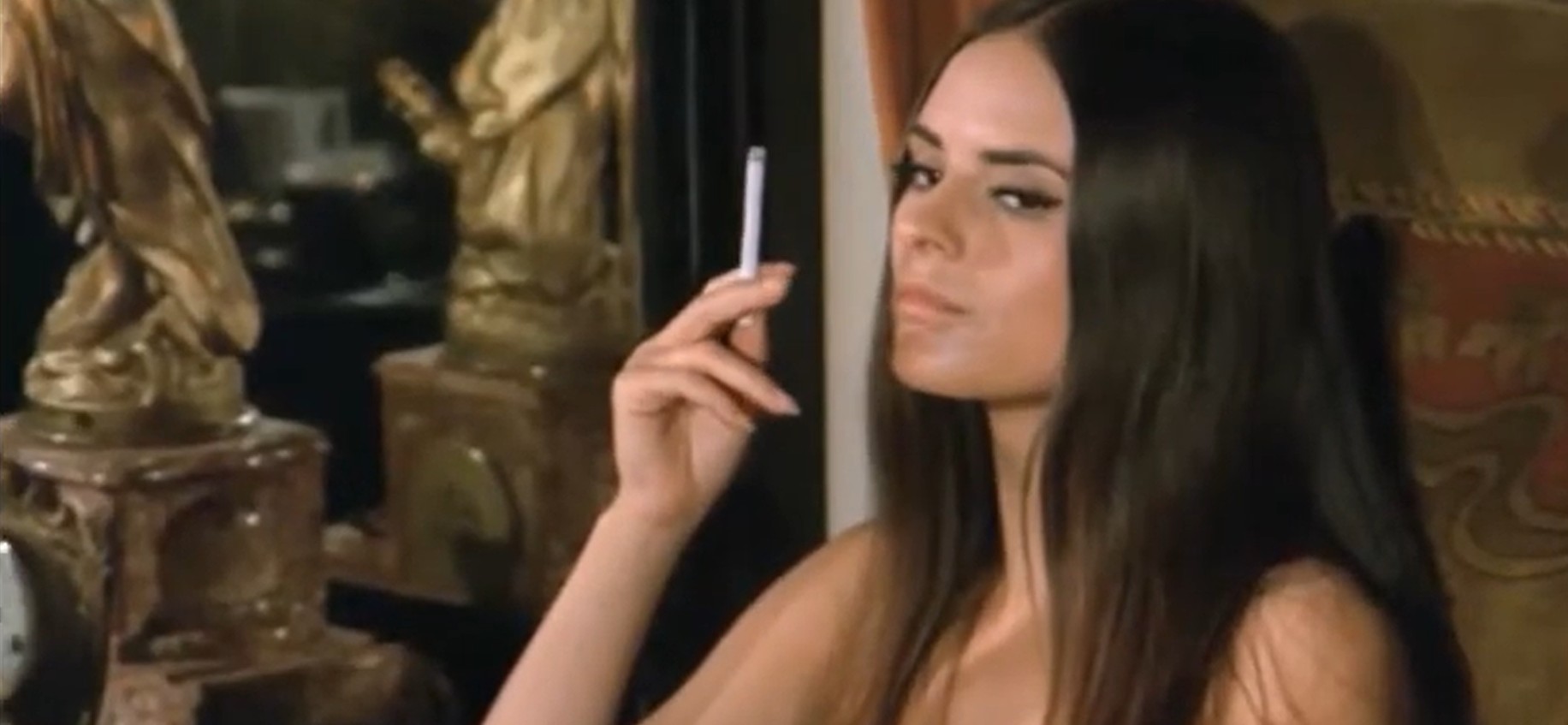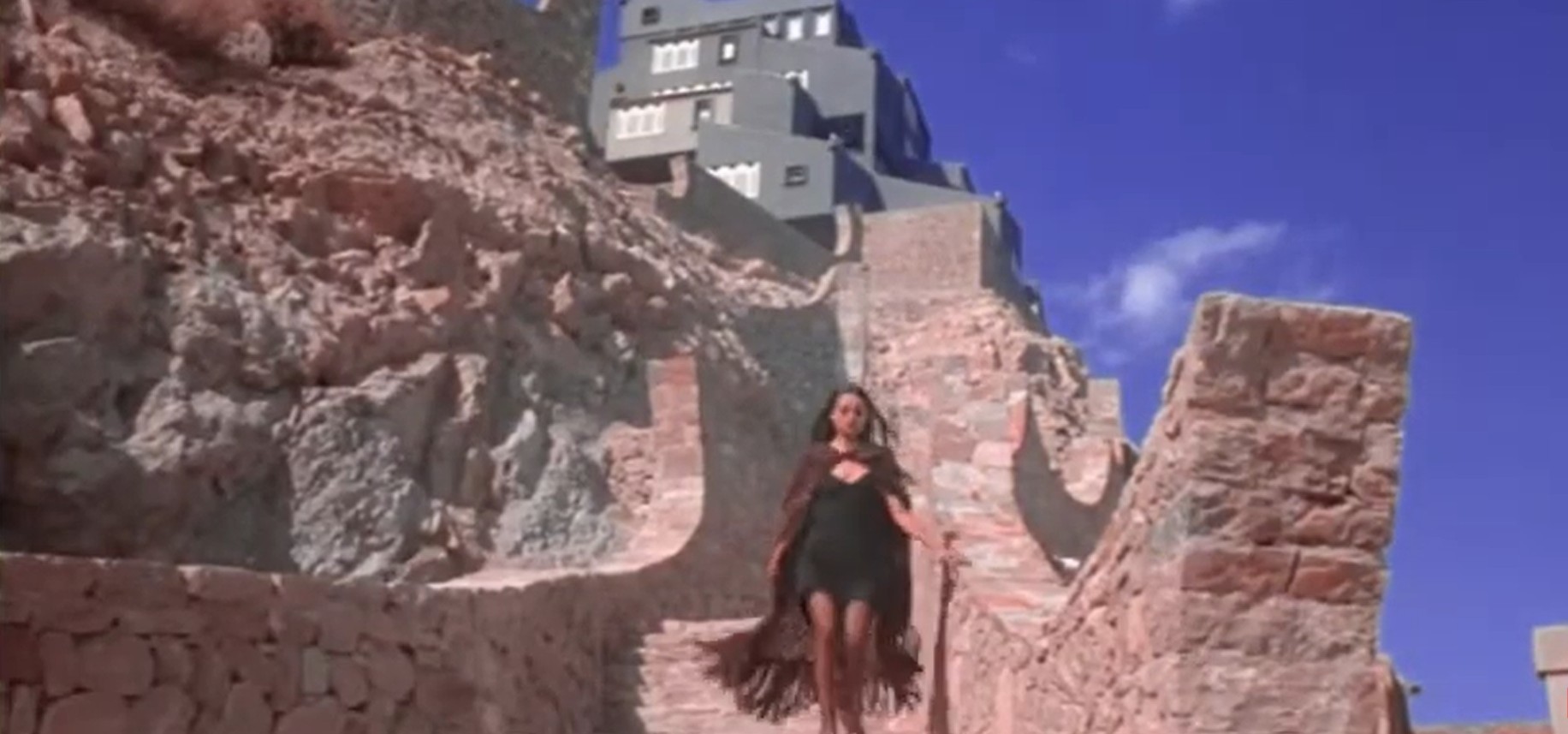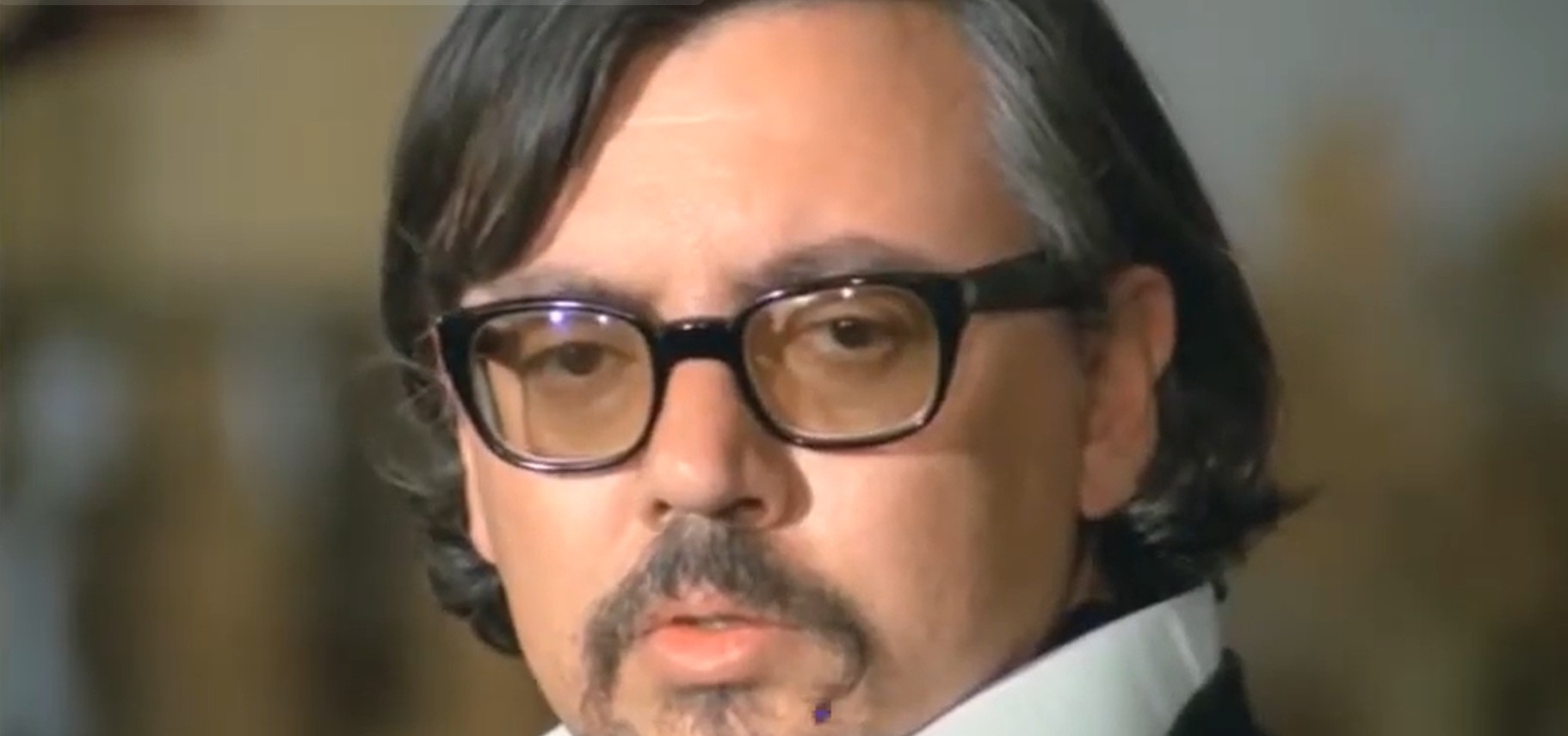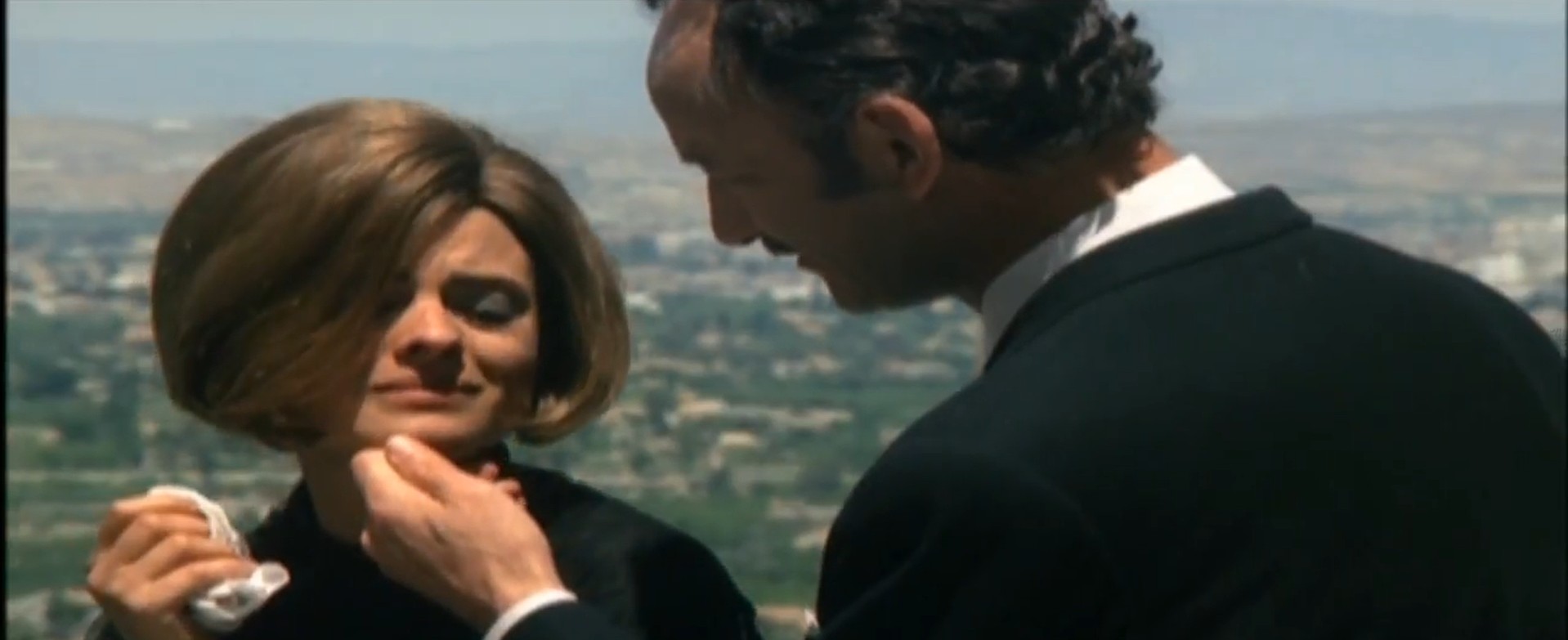
EVIL’s Blonde, Beautiful, and Without Genitalia! “Darbie’s Scream House” reviewed! (Wild Eye Releasing / DVD)

Uh Oh Darbie! “Let’s Go Buy “Darbie Scream House” on DVD!

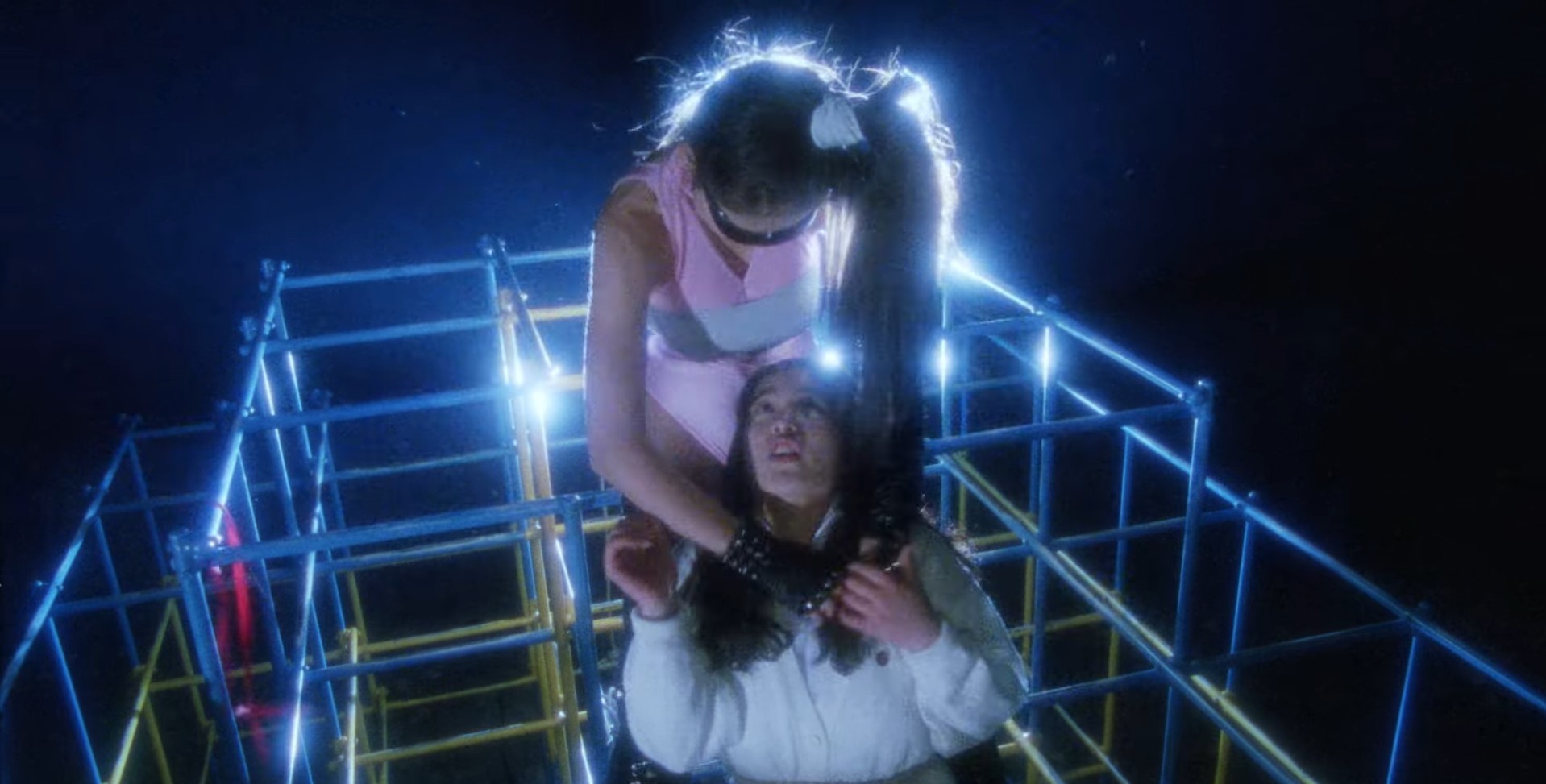
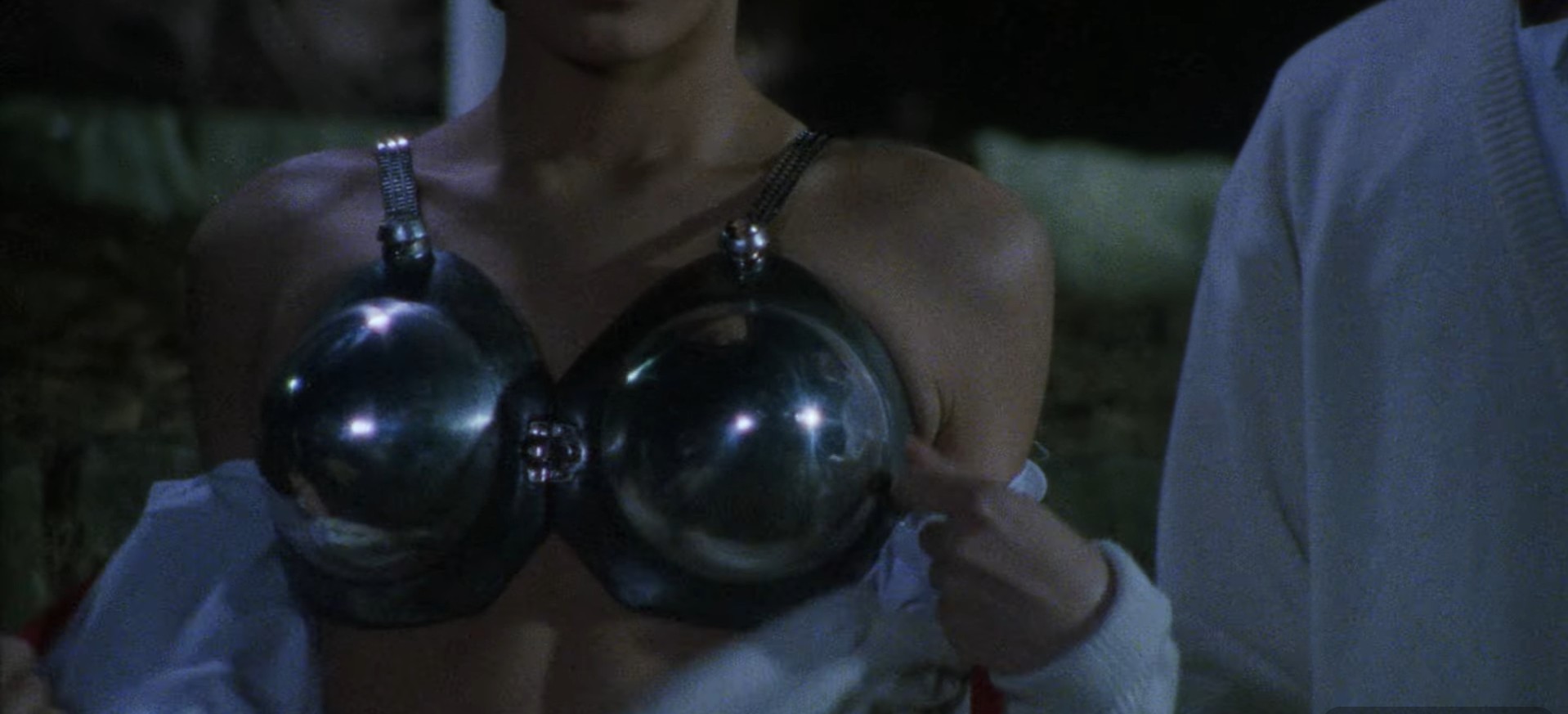
In Doll Town, Darbie is the most popular doll around.  Blonde, beautiful, and busty, Darbie lives a perfect plastic existence.  When her boyfriend Ben wants to plan a surprise birthday bash for Darbie, Tripper, Darbie’s helpful yet gossipy little sister, interprets Ben’s interactions with Darbie’s friends – Danger Darbie, Ditzy Darbie, and Rodeo Darbie – as infidelity despite no evidence of sexual activity, as well no doll in Doll Town having genitalia, and reports back to Darbie with the unpleasant news.   With her perfect world seemingly crumbling down, Darbie pledges to rid Doll Town of her now ex-best friends by taking a big knife to them in vengeful spite, turning her dream life into a spiral nightmare based off a simple misunderstanding and an obsession with contentment, that drives her insane and no one from her friends to boyfriend Ben, to even her sister Tripper, are safe from her accessorial wrath.  

Former, or current depending on how you look at it, alternative adult content creator turned this next generations cult film scream queen, Jessa Flux (“Murdercise,” “Onlyfangs”) co-writes and co-produces her latest venture “Darbie’s Scream House,” a comedy-horror lampooning of Mattel’s Barbie universe.  Flux’s independent film talents hop aboard a legendary name of the same market in Donald Farmer.  The “Cannibal Hookers,” “An Erotic Vampire in Paris,” and “Hi-8 (Horror Independent 8)” filmmaker co-writes and produces with Flux while helming at the seat of the director’s chair.  Together, Flux and Farmer materialize a plastic doll world full of jealousy, rage, scandalmongering, debauchery, and homicidal tendencies.  Crowdfunded through Indiegogo, the campy horror parody.  The 2026 film is a production of Stratosphere Entertainment. 

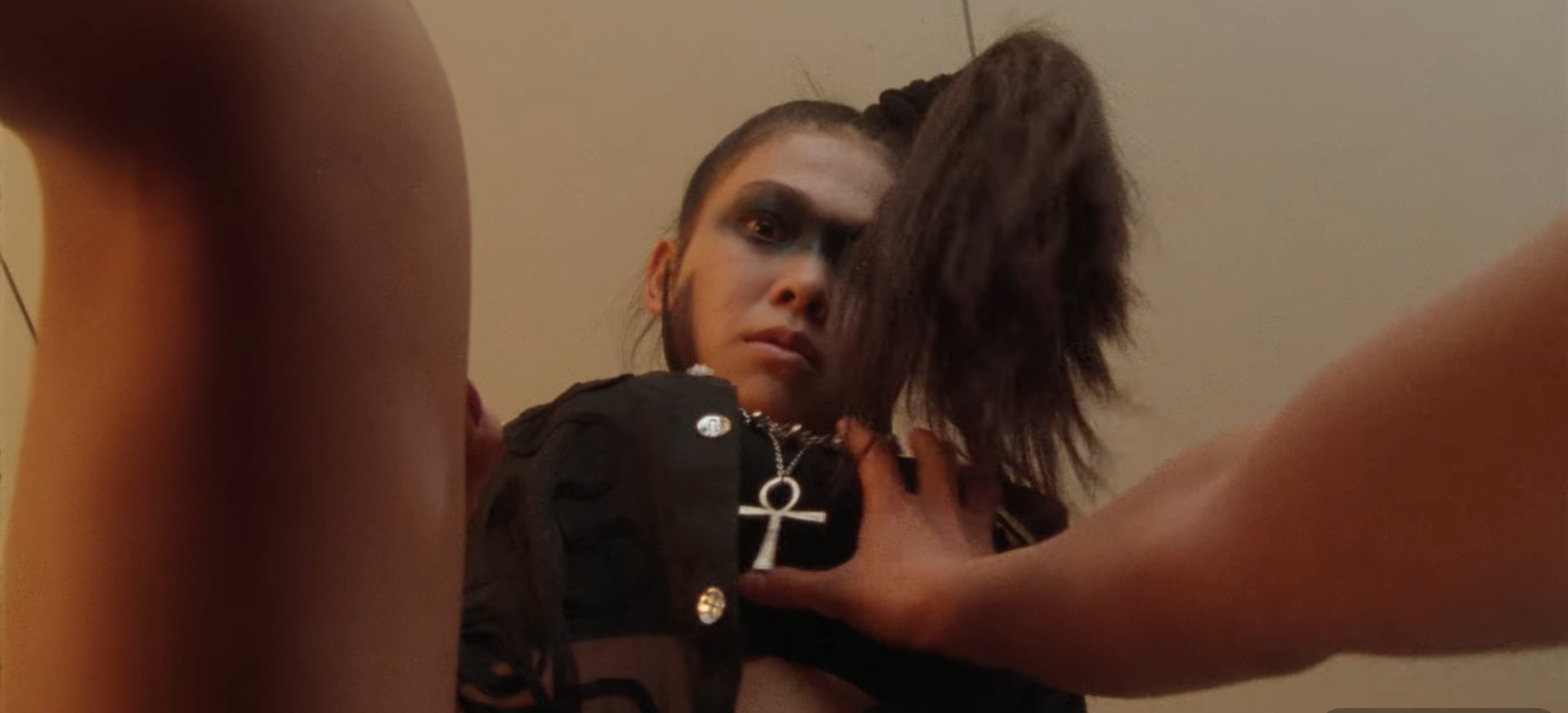
Not only collaboratively writing and producing the feature, but Jessa Flux also stars as the titular character Darbie, the buxom queen of Doll Town with an amiable personality up to a point.  That point is when boyfriend Ben comes under the scrutiny of Darbie’s nosy, troublemaking sister, Tripper.  Claude D. Miles has collaborated with Farmer and Flux on a few other projects, such as Donald Farmer’s “Debbie Does Demons” and “Scream Queens Weenie Roast,” and between Flux and Miles, their rapport doesn’t seem forced as it’s flexed to work as comedic love interests in a parody setting.  Ana Xaden, another indie alternative horror actress, also has worked with Farmer, Flux and Miles on “Scream Queens Weenie Roast” from the year prior, turning the trio into a regular entourage for the “Cannibal Hookers” director.  Xaden also busts out along with Flux as the two become elementary with their dialogue, by that I mean their conversations, whether written in the script like this or just the style of acting incurred by spontaneity upon filming, has an artificiality to it with monotonic delivery and exposition.  Funny thing is, you only really see this flat conjecture between Darbie and Tripper, and maybe even a little bit from Ditzy Darbie (Ashleigh Amberlynn, “Night of the Dead Sorority Babes”) but that’s more expected because of her dunce character.  Ben conversing with Beach Blanket Ben (Joe Casterline, “Shark Exorcist 2”  Unholy Waters”), or any other minor male character, has more natural back-and-forth without any fabricated flavoring, and it’s curious to think that maybe “Darbie Dream House” has a layered depth to that nuisance that speaks to the fake talk and gossip associated generally around women and men letting it, generally again, hang all out.  The cast rounds out with Mel Heflin (“Scarlet Rain”) as aggressive lesbian Rodeo Darbie, Fallon Maressa (“Bloodrunners:  Vampire Wine”) as Dream Date Darbie, and Kasper Meltedhair (“Hooker with a Hacksaw”) as a Doll Town reporter with Kimberly Lynn Cole (“Bloodthirst”) listed in the credits but her scenes cut and placed in the special features’ deleted scene. 

This is not one of those This Is Not Barbie:  An XXX Parody type of film but “Darbie Scream House” very much cold have been with it’s dolled up and naked-positive female cast, male characters with bad wigs and depraved names like Sleazy Steve, and a premise around creeping sexual promiscuity.  However, blood axe-wielding aggression, reared by jealousy, fill in the gaps to level up a cheap stag production to a barebones indie horror that doesn’t take itself very seriously in this meta-existences for the chief characters who are playable dolls of a young, imaginative young girl but who are also moving autonomous with their movements and affairs that are not sanctioned by Barbie or Mattel for that matter.  “Darbie” is a different kind of female empowering doll but in the same breath lacks the informed judgement of a jump-to-conclusions partner, insecure and obsessive over people and ideals.  “Darbie Scream House” caters to that what if scenario if Barbie didn’t have mental positivity and broke into sociopathic tendencies?  The core of the story is there but does heavily rely on the gratuitousness of Jessa Flux, Ana Xaden, and Ashleigh Amberlynn to carry it over the finish line, yet the shoddy effects, poor acting, and mishandling of the meta perspective sink this Donald Farmer production like cemented pink platform and rhinestone shoes. 

This is a no playtime, you can be anything Barbie movie with a house in Malibu and driving a pink convertible.  This is “Darbie’s Scream House,” a bizarro, alternative universe mined form the same vein as the classic children’s characters, such as Winnie the Pooh, Mickey Mouse, and The Grinch, turned into monstrous villains of your nightmares.  “Darbie’s Scream House” is right up Wild Eye Releasing’s alley with plenty of against-the-grain filmmaking, attitude, and shlocky satire, now available on a DVD home video that’s an MPEG2 encoded DVD5 with 720p resolution.  Even if you’re player + television combo can upscale the quality, the image quality is limited to the commercial grade equipment with passable delineation and detail that offers immersive detail but gets the job done. Lots of the details are washed away also but the use of blue or pink saturating gels that flood tense moments of Darbie’s life on the downspin and much of the exteriors are ungraded, using natural the deflection of natural light to the best of their ability.  The English PCM Stereo 2.0 carries an unbalanced depth that’s inconsistent on keeping characters dialogue level within the shot.  Those closer to the camera often have strength priority with the second person only a step or two back sounding as if they’re a good ten yards away in the closeup-to-medium marked shots.  The recording mic also can’t sustain sounds beyond its limitations, such as screaming that breaks the reproduction into bits of static and distortion at high peaks.  Special features contain a blooper reel, a deleted scene, and feature and other Wild Eye Releasing trailers with the physical package sporting an embellished, AI generated cover, which I aways appreciate the fluffing-up of an indie film.  In this instance, the art doesn’t stray from the truth per se but aggrandizes the finer details quite a bit; however, the nice touch here is the Barbie font used for the title.   The reverse sleeve image inside the clear Amaray isn’t afraid to be gory with a severed head from the story that has been lightly touched up for effect.  The not rated DVD is region free for all players and has a runtime of 75 minutes, enough to satisfyingly slay. 

Last Rites: Jessa Flux’s “Darbie’s Scream House” skewers Barbie into an unperfect, deranged universe of emotional unstable killer toy dolls but leaves much on the table of possibility and has a hard time gluing together an airtight campy story that’s too reliant on the kink than the gore.

Uh Oh Darbie! “Let’s Go Buy “Darbie Scream House” on DVD!

EVIL Would Be to Not Allow Yourself to Enjoy Japanese Gravure! “J-Girl Yummy: Mitsuha Kikukawa, Toka Rinne, and Reona Kirishima” reviewed! (Gravure Glamour Girls / Blu-ray)

You Can Find Mitsuha Kikukawa, Toka Rinne, and Reona Kirishima on DVD and Blu-ray at JGirlYummy.com

The J-Girl Yummy series presents three gorgeous new women who are prevalent from the pornographic Japanese Adult Videos (JAV).  Instead of hardcore assembly of action that often doesn’t feel as intimate as maybe one hopes, your favorite starlet now only has eyes for you in this softcore series that nearly leaves nothing to the imagination.  Mitsuha Kikukawa (“My Father Steals My Beautiful Fiancé,” “My Compliant Pet”), Toka Rinne (“Mamacita Stories,” “Married Woman’s Cheating Heart”), and Reona Kirishima (“Countdown to Nakadashi,” “On a Stormy Night – I found Myself Alone with My Sister-in-Law Upon Whom I had a Crush”) find themselves as the next trio lot for the showcasing series that explores their solo talents and provides a one-on-one between their hot bodies and the camera, seducing the lens with playful flirtation, a captivating allure, and a stimulating interaction that breaks the fourth wall as they stare, talk, and moan back with inviting eyes for their loyal fanbase. 

In a world where sex sells, any form of the vice is surely to be valuable.  Hardcore adult films reign as king amongst viewers but there’s also a sizable market for softcore productions, if the ever-desired Skinemax and more highly sought after risky mainstream erotic dramas were not prime evidence enough to make the case.  Across the oceans and lands, hailing from Japan, and landing in the North Americas are the gravure videos, Japanese media of idols, or models, posing suggestively with innocence, brazenness, and fun time pleasureful.  Gravure videos are typically bikini-cladded women, but the Gravure Glamour Girls produced J-Girl Yummy series go the extra mile by rolling back the clothes with the Japanese censorship working overtime trying to keep the pelvis area obscured from view with impenetrable strategically placed objects.  The films offer no credits other than its centerpiece idol on all surfaces of the packaging and in the encoding on the feature.   

We begin with Mitsuha Kikukawa, the now 28-year-old from Tokyo measures in at 5’5” tall with a waist at 61cm (24 inches) that curve down to just above a 3’ hip span and a Japanese F cup bust, equivalent to a U.S size between B and C cup.  With a high and full cheek bone structure, large round eyes, and pearly white teeth underneath a lighter color bob cut, Mitsuha has petite in all the right places of her traditional Japanese physique with a nicely round and slightly larger than hand size breasts and thick tail end around the thighs and rear.  Mitsuha’s presence the best example of erotic foreplay without any physical interaction with a partner as she’s able to work the camera with her eyes, mouth, and body language by herself and that speaks to her level of rising arousal talent coupled by her unique look that closely resembles a live example of an Anime interpretation of a young girl.  Each scene introduces a new element into her working the camera to maximize the intended result, to provoke the viewer’s keen feelings for their obsession, or sex in general, and Mitsuha is the clear winner amongst her J-Girl Yummy counterparts. 

Next, Toka Rinne from the China prefecture feels like a whole foot taller than Mitsuha but according to her stats, Rinne is the same 5’5” in height.  Waist and hips are similar too at 58cm (23 inches) and 90cm (35 inches), making this Amazonian-built like woman smaller around the torso than Mitsuha, despite a small and immaterial front pooch belly, yet her bust size measures in a 98cm, a Japanese I cup, that would secure a U.S. 34D.  Rinne also has long auburn-black hair down to mid-back with a big smile and almond-shaped eyes, Rinne has a classical Japanese face that can be slightly masculine in some areas, such as cheek bones and chin and while she may have more of an hour glass figure with a large rack to appease breast men, she tightens and tucks her chin while leaning her forehead forward slightly.  This might be age related as she’s a whole 6-7 years older than her counterparts, born in 1990.  This is about the tip of the iceberg for her awkward and stiff movements in front of the camera, as if she doesn’t know how to work her hands on herself and she nearly sticks to a single pose for most of the clothes on portions.  Rinne’s body carries her through each scene but is less adventurous within the confines of her imagination to pretend being an intimate partner where it counts. 

Lastly, we come to Tokyo’s Reona Kirishima, the shortest of the three standing at 5’ tall that translates to her 56cm waist (22 inches), hips (33 inches), and a perky D cup bust, a healthy C-cup in the U.S.  Kirishima has lower back length dark hair with a red tint stringing through overtop her girl-next-door-face, well-manicured, slightly freckled face in which she looks more Latina than Japanese.  Though cute and appetizing in all regards to her physical appearance, her camerawork lacks the energy and the sensuality that graces the lens with little-to-no smiles but rather dull, blank stares; her eyes are not overly unique to warrant gazing alone.  She poses half-heartedly through her scenes with a hand timidity and rigidity in her movements, often revealing her hesitation where and how to move her body and, likely, working off verbal instruction from the videographer.  Though lacking kinetic enticements, Kirishima does unveil a little more bush area than Mitsuha (who has no bush) and Rinna (who has some bush).  This opens more opportunity for visual cues for the viewers’ imagination to run wild when teasing just below the top waistline of her bikini bottoms and with her last few scenes, Kirishima may be the most adventurously provocative gravure model of the three despite her lack of expression. 

Each gravure idol entry follows a similar formula that begins innocently enough in the backyard with a simple strip down of clothing, moving toward a semblance of athleticism, such as Mitsuha playing with a toy bat and ball that speaks to her love of baseball, Rinna’s bouncy-in-all-the-right-places jump roping, and Kirishima working the hips quite well with hula hooping.  After breaking a sweat going through the fun physical play motions, it’s time to get ironically down and dirty with a shower scene that begins with a coursing shower head around the button-down white shirt to finally ending up in the tub of murky soap water.  In between, each lady does soap up and massage themselves, missing no spot of skin in the process.  Kirishima nearly bypasses the censorship leg spread in her bath water which is less opaque compared to the others.  From there, it’s sexy secretary time as the ladies’ don similar black skirts, white button downs, and thigh-high or full black stockings that cover a bad girl’s lingerie beneath, slowly being unveiled in an enticing dress down as they longue seductively on leather or velvety upholstered furniture.  Through all the down shirts, up skirts, extreme closeups, thrustings, grindings, and overall peeling back of innocence, the next to last scene embarks head first into a spicier flair by already skimping down the idols into lingerie or bikini in a more vibrantly hot colored walls and décor and introducing a toy of sorts, such as a glass phallus or a fur wand, to accentuate and punctuate their desire and kink.  This sets up the JOI or POV scene of intercourse simulation to the eventual explosion of the male kind right onto the idol’s chest.  These scenes drop the soundtrack and volume up the in-scene sound for erotic dialogue or moaning.  However, not all three participate in the grand finale with Toka Rinna having either opted out or her footage was not included as her video ends with the spicier scene prior; speculation is that since Rinna had retired from JAV a few years prior, she may have opted out of a ”sex” scene.  There’s plenty to like from each three gravure idols but I do wish production was more attended to especially around covering up certain scuffs on the models’ bodies with simple makeup, such as a pair of clotted scrapes on Mitsuha’s hand or even removal of the Band-Aids on the back of Kirishima’s ankles, and this surely speaks to the limited crew and price value of the series and something we’ve noticed before with our last J-Girl Yummy trio review of Ryo Harusaki, Ai Haneda, and Aoi Kurungi.

From Pink Eiga and Gravure Glamour Girls, Mitsuha Kikukawa, Toka Rinne, and Reona Kirishima are now personally available to you in high-definition on the J-Girl Yummy gravures.  The Blu-rays are AVC encoded, offer 1080p resolution, on a 25 gigabyte BD-R, presented in a widescreen 1.78:1 aspect ratio.  Organic image and lots of natural lighting use, the picture often appears with a resulting soft effulgence, or a heavenly light to go with the heavenly bodies, but there are also no counteractive measures to stop the overexposure, washing out some of details not only in the backdrop but also on the body and face.  The digital quality, in its natural state, can’t re-produce the exact detail without a filter or touchup but this more natural approach provides a realism to the gravure despite the non-compression issue image loss.  A BD-R does not replicate or help retain the picture integrity to its fullest, but the J-Girl Yummy product encoding still manages to sustain a sharper image.  I did notice on Reona Kirishima’s static menu some macroblocking with the replay loop but that’s the extent of the glaring artefacts.  I suspect there is an issue with the encoding as Mitsuha and Toka come with an elevator music layer with the static menu but for Reona there is no music but the menu still loops.  The Japanese PCM Stereo is mostly silent during the feature with a genre variety of music from instrumental piano lounge to alternative rock, to a dabble in a low-key synth mix, often rough cutting from on to another in the same scene.  Dialogue, mostly pleasure derived moans and groans, does come about in the last simulated sex scene from the idol and is organically resonating within the given space and unfiltered camera mic.  There are no translation subtitles with the feature dialogue.  Special features are generally the same across the board that includes a captioned interview with the model just after wrapping the gravure, focusing primarily on their sexual habits and pleasures while dipping toes into their personal time favorites, such as hobbies when not filming scenes.  Compared to Mitsuha and Tokas’ interviews, Reona was extremely short with only a couple questions and a statement to the fans.  There is also a still gallery with each idol, the J-Girl Yummy trailer for them, and a preview of the next gravure model.  The Blu-rays come in standard Amaray with half-naked model front and center overtop a black banner with their name and a rainbow design in the backdrop.  Inside is an insert card with a definite NSFW image of them.  Each title is unrated and are region free with runtimes of 60 minutes for Mitsuha, 58 minutes for Toka, and a full feature-length of 80 minutes for Reona.

Last Rites: Sex is subjective. Depending on your desires and your hots for certain Japanese models, these gravure ladies – Mitsuha, Toka, and Reona – could make for great softcore sessions tailored to be tease in a solo performance that makes intimate and sexy. One thing is for sure, J-Girl Yummy series eases the most beautiful women adult stars from the East to the West and we just might not be ready for them yet!

You Can Find Mitsuha Kikukawa, Toka Rinne, and Reona Kirishima on DVD and Blu-ray at JGirlYummy.com

EVIL Sleeps with Women to Anticipate the Antichrist’s Arrival! “Violent New Breed” reviewed! (Visual Vengeance / Blu-ray)

“Violent New Breed” is a violent Visual Vengeance video available now!

The city of New York is under siege by a new drug as the narcotic Rapture sticks in the arms of his addicts, leaving them mindless and helpless to the effects.  At the head of the snake, a demon race known as Breeders are responsible for trafficking Rapture across the city.  Jack and Steve are part of a covert government operation well versed with the Breeder’s stimulation scheme of the junkie community. Going undercover at a Breeder establishment front, Jack concealed effort is blown and he falls to the Breeder’s vile ways, leading partner Steve, along with Jack’s teenage daughter Amy, down in the underbelly of the Breeder lair where cyborg servants are constructed and human women are led to breed more demonic spawn, one in particular in plan to be the birth of the antichrist.  In a hellish, NYC basement, amongst viscera and body part leftovers, Steve and Amy must complete the mission and stop the antichrist from reigning hell down on Earth. 

Independent horror filmmaker Todd Sheets has become a master of the microbudget horror scene since the mid-1980’s.  His evolution began with humble shorts, such as “Blood of the Undead” and “Dead Things,” with the latter being re-imagined by Sheets a decade later, and those early years really sowed the seeds of his behind-the-camera love for extreme and outrageous gore and horror as he creates low-budget horror through the years a rapid, breakneck pace, releasing titles such as the lycanthropic “Moonchild,” the anthological horror “Hi-8 (Horror Independent 8) that brings eight of the best indie filmmakers together to tell their tales of terror, and “Clownado.”  Yes, “Clownado” is, you guessed it, a tornado swirling with murderous clowns in it’s vortex.  My personal favorite has always been “Dreaming Purple Neon” for its off-coloring performances and survival-esque storyline with demons and drugs.  “Violent New Breed” is in the middle of his career having been released in 1997 with Sheets gaining traction on multiple filming locations, employing more principal and supporting cast members as well as an abundance of extras, and upping the violent tone and degenerate microcosms that transport viewers to seedier and deadlier worlds.   “Violent New Breed” is written and directed by Sheets under his early production label, Trustinus Productions, securing him a producer credit too.

Sheets has never been the type of filmmaker to follow conventional guidelines when it comes to his characters, often switching them around or executing a red herring to flesh out the real protagonist or anti-hero.  “Violent New Breed” plays into the former with a switcheroo of the principal protagonist, initially beginning with Jack going undercover and infiltrating the Breed’s strip club bar used as a front for their demonic dealings and ending with partner Steve taking the antichrist to the finish line.  The audience will get pretty far and involved with Jack’s life as he struggles with his divorce and custody of daughter Amy (Rebecca Rose).  Mark Glover, who has worked with Sheets on “Bloodthirsty Cannibal Demons” and “Zombie Bloodbath 2,” lands the subconscious weight of personal strife as he inevitably becomes the lone cop sheep in a den of demonic wolves that leave Amy fatherless.  That’s when Nick Stodden (“Clownado”) steps into the fold as Steve.  Steve’s not terribly present in the fist half of the film but is thrust into the Breed labyrinth by duty and by promise to his partner to keep Amy safe.  Strodden plays an average hero with Steve’s bravery in plenty of supply, but the character lacks the hand-to-hand combat skills or weaponry for a government agent trained to deal with supernatural killers.   Embracing entirely Asmodeus, the slick-rick head honcho of the demon hierarchy, is “Moonchild’s” Dave Miller who rather dons the nice suit, cocky attitude, and twisted demon leader suitably despite some reckless decision-making faux-pas moments that ultimately cost the character everything he’s worked toward.  The characters a mostly filled in with little human survivors of the foreboding infernal uprising, such as with Tamara (Jenni Geigel, “The Shivers”) and Trixie (Becky Stodden, “The Shivers”) who find themselves caught in the middle, and with Rod Will (“The Shivers”), Joel Hedge, Jody Rovick (“Prehistoric Bimbos in Armageddon City”), and Andrea Ureno as numerous demons, even one that has a carcinization lower body while still resembling a humanoid at the top-half with protruding mandibles, an absurd radical efforted pulled off successfully by Sheets and his limited budget. 

Sheets’ vision has always been larger than his funds, but the ambitious indie horror filmmaker can’t be contained or constrained by the size of his wallet and the size of his heart for the genre that inspires his creativity.  “Violent New Breed” epitomizes that Todd Sheets ingenuity and the image of a horrifying tomorrow with a large cast, lots of blood, and a striving story set on the streets of New York City while not actually taking one step in the Big Apple.  Yes, “Violent New Breed” is completely filmed in the Midwest, more specifically in Sheets’ hometown and state of Kansas City, Missouri, but the urban jungle is sold through the editing with interjected NYC cityscapes. However, none of the action really happens on the streets but in enclosed bars, basements, and backalleys that could sell to be anywhere, USA. Like many other Todd Sheets productions, there’s not a ton of backstory to chief characters, such as with Jack and Steve’s covert company of infiltrating and obliterating Breeder operations in what is considered an off-the-books undertaking, not recognized officially, yet the pre-apocalypse of the Breeders’ mission isn’t worth the money or resources to warrant the assignment more than two men. Breeders also outweigh hundred-fold, have abilities to invisible-phase, and have an army of Cyborgs all with the influencing poison on the streets to control most of the human population. Sheets sets up a David vs. Goliath narrative without much fight in the heroes and heroines with the Breeders’ shortcomings breed essentially from them tripping over their own shoelaces by not taking advantage when advantage appears opportune. The heroes’ dumbluck constantly and consistently happen through the film and becomes tiresome to watch weak torchbearers fumble to save all of humanity against domineering supernatural terror from Hell!

‘Violent New Breed” gets a violent-illustrated new release from Visual Vengeance. The new Blu-ray glorifies Sheets’ SOV artistic style through an AVC encoded, 1080p high-resolution, BD50. The precursing title card warning of the film’s technical imperfections through commercial or economical equipment, a wonted service by the Wild Eye Releasing’s SOV label, are not egregiously touched up but rather accentuate a cleaner, meaner version for show, presented in its original pillarbox full screen 1.33:1 aspect ratio. The world-wide debut Blu-ray contains the director approved transfer of the SD master tape elements. The faded details incline toward a warmer tone that almost seems ablaze with a glowing heat lamp just out of frame and this also, along with the 720p video, suppresses finer textures with notes of aliasing around character actions. Sheets’ color gels and hazy lighting work to an extent but there’s little pop to the graded coloring. The English Dolby Digital 2.0 Stereo offers more bite than expected out form it’s two-channel output but has some difficulty deciphering distinct layers inside the scene. Dialogue echoes and varies in volume sporadically through the picture with it also melding into the diegetic environment in a less-than-refined sound. However, dialogue does push through to an extent and is discernible with a rock soundtrack scoring through more effectively like a hot knife through butter. There are English subtitles available for selection. Packed with 12 hours of bonus content, Todd Sheet fans will receive a comprehensive look on not only a “Violent New Breed” but as the filmmaker as a whole. Those with older format copies of the film with be familiar with one of three commentary tracks on the Visual Vengeance release that includes director Todd Sheets and actors Nick Stodden, Antwoine Steele, and Becky Stodden. There’s a Tony Strauss of Weng’s Chop magazine commentary and a Visual Vengeance produced 2023 remastered commentary with Sheets and Rob Hauschild, founder of Wild Eye Releasing. Other bonus content contains an interview with actor Jerry Angell and director Todd Sheets, Sheets discussing working with the late “Dolemite” actor Rudy Ray Moore who plays the last-standing city cleric, a behind-the-scenes documentary, a 2023 Q&A session at the Nitehawk Cinema / Visual Vengeance screening, a blooper reel, a behind-the-scenes image gallery, the original Kansas City local news spot, an uncut version of the strip club entrance sequence, Todd Sheets’ 2014 short zombie-western “Fistful of the Undead” from the 2016 anthology “Grindsploitation 2: The Lost Reels,” and the original and Visual Vengeance trailers. Also included are two alternate versions of the film: the DVD version and The Movie Channel’s R-rated cut. Three movies from the prince of one! Now that you’ve gone through 12-hours of encoded content, next stop is the hefty physical content beginning with graphic artist Heavy J’s Ghana-inspired artwork on the pink carboard O-slipcover that unveils inside a more traditional-approach to Visual Vengeance’s orange, yellow, and black, character-compiled primary art for the standard, clear Blu-ray Amary. The reverse side has the original poster art of a blue-tinted negative image of an axe-wielding Breeder cultist. The insert section has a single-sided folded mini poster of the Ghana art, a trifold essay from Tony Strauss with a bio on Todd Sheets, his filmography, and on “Violent New Breed” that also includes behind-the-scene and movie stills, a single fold, cardboard birth announcement for the coming of the antichrist, and a retro sicker sheet. The 114-minute feature is not rated and is region free encoded.

Last Rites: Todd Sheets enlarges an evil urban with an insidious poison coursing through the city, taking women when they please, and bring forth the antichrist and there’s only a handful of ill-equipped humans to stand in their way. “Violent New Breed’s” Visual Vengeance release, packed with extra content and a spiffy physical presence, is a victory for Todd Sheets and all independent filmmakers like him.

“Violent New Breed” is a violent Visual Vengeance video available now!

EVIL Will Do More Than Just Massage Your Hurt Foot! “Bitter Desire” reviewed! (Sector 5 / Blu-ray)

“Bitter Desire” on Blu-ray from Sector 5 Films!

Pursuing a dangerous criminal leaves police officer Steve injured, sidelining him from work for weeks, if not months.  Two weeks after the altercation, an at-home physical therapist tends to Steve’s painful injured leg and as he works toward recovery, fighting boredom along the way from being confined to home and limited in his movements, a revenge scheme is being plotted behind prison walls as the ruthless criminal Steve helped put away green light’s his sociopathic girlfriend Sasha to infiltrate Steve’s life and destroy it by all means necessary.  Removing the regular hired physical therapist from ever returning to Steve’s home, Sasha impersonates as his new therapist to get the lay of the land and buddying up to not only Steve to gain his trust but also his wife, Lexi.  Becoming closer than any therapist and patient should ever get, Sasha finds herself falling for her mark and will do anything to get him all to herself. 

Nathan Hill, the multi-faceted filmmaker from Australia, is back with a new feature length film, the erotic-thriller “Bitter Desire.”  Following suit from his last film, the melodramatic and science fictional invasion of the husband snatcher “Alien Love,” director Simon Oliver returns to the director’s chair and reteams the once Aliens-are-out-there documentary director with lead actor Hill.  Unlike “Alien Love,” Hill takes a backseat to penning the script, leaving that duty in the hands of Thomas Bodine in his debut feature length narrative after his credits with a pair of UFO and Alien documentaries in his little flying saucer black box. Hill also produces the film, not bucking the trend from over his last few productions such as with “Alien Love,” “Lady Terror,” and “I, Portrait,” with fellow mysteries of the universe documentary filmmaker, Charles Thompson, filling in a coproducer role position under Hill’s studio company, NHProductions.

Hill stars as Steve, introduced to audiences scouring through a burning building looking for a community-terrorizing criminal named Andrew.  “Hotel Underground” actor Tass Tokatlidis embodies Andrew as the mean-faced villain with a shaved head and a magnificent beard breaking Steve’s leg over-and-over again with a crowbar.  However, Tokatlidis, who is an Australian Professional Wrester that comes with some acting chops of showmanship, is not the chief threat as Steve’s direct antagonist.  That role is performed by Tokatlidis on screen girlfriend Diana Benjamin in the therapist infiltrating role Sasha and, in comparison, Benjamin’s wooden performance doesn’t convey or carry evocation and leaves her scenes’ vibe with less dramatic or arousing sway and Tokatlidis had more infliction of pain behind the eyes, more intimidating aspects, and a range of aggression .  Yet, sex sells and Benjamin wins out with a desiring figure that goes toward the story’s erotic thriller model.  Another area where sex sells in “Bitter Desire” strives and succeeds well in is with Shar Dee as Steve’s wife Lexi.  Lexi’s workplace professionalism contrasts against her more sexually aggressive nature at home by considerable pleasure with Dee going above and beyond with topless nudity.  Lexi’s also willing to take the fight to the next level when protecting what’s hers.  Wile the femme fatale and the strong wife have objectifying weight to the tale, Steve lacks a path or a goal in a character who frequently notes fighting boredom.  He dips his toes into alcoholism, idle hands activity of cataloging his unexplained equivocal collection of home movies, and skirts around naively with flirting with his therapists, even with his true hired therapist Harmony (Hao Dao) and while the sexual tension is thick between Hill and all the women he interacts with, Steve has no inkling of something amiss until it hits him in the face, literally.  Rounding out the cast are peripheral supporting characters that don’t add anything to the story but indorse sidebar scenes of random and unimpactful office gossip between Lexi’s colleagues (Natalie Rowe and Michaelle Dowlan) and a pretense of unheeded advice by Sasha’s semi-bosom close friend (Eden Madebo).

Premise wise, a convict’s sociopathic girlfriend committing to her boyfriend’s revenge plot but with a plot twist of her falling for her target is the very definition of erotic-thriller cinema, that may also dip into life imitating art in some areas of the world, that plays to the tune of “Fatal Attraction” or “Body Double.”  However, the script needed to be fleshed out in areas that don’t quite pan toward story positive reinforcement.   Areas such as Steve’s laid up days around the house where he lounges for long periods of time and audiences don’t need to be overexposed to Steven’s aimless lingering but rather just elucidate boredom which he does, multiple times, creating a double dipping aspect that makes his exposition unnecessary.  Steve also has a compulsive obsession in opening and checking the contents of his small safe that isn’t explained and because it’s not explained, his constant checks result in Sasha catching sight of his passcode.  Other things that go unchecked and unexplained are the arbitrary-to-the-story gossip between office colleague Annie and Phoebe, therapist Harmony’s unwillingness to warn the police or even Steve after being let go from Sasha’s theft of just her work badge, and the gold bar in Steve’s aforementioned safe.  Why does a police officer have a gold bar in his safe?  Too many questions weigh heavy on “Bitter Desire” to work effectively as intended, to arouse with eroticism between Shar Dee’s intimate moments with her husband Steve as well as Sasha’s simulated act of fellatio to stir up trouble and to thrill us with deceptive infiltration with a revenge plot that ends violently in its own form of antisocial obsession.  What’s required is more intimate, or close to intimacy’s edge, interactions between Steve and Sasha to really threaten Steve and Lexi’s marriage, to invite trouble head-on in parallel with the plot, and to have Steve conflicted of his choices and consequences that would truly have “Bitter Desire” live up to its title.

The Simon Oliver and Nathan Hill “Bitter Desire” is a killer love triangle and is now available on a Blu-ray home video from distributor by Sector 5 Films.  The AVC encoded, 1080p resolution, 25GB BD-R with the purple underbelly is presented in a widescreen 1.78:1 aspect ratio.  Not the smoothest digital result as details don’t emerge from their full potential in sharpened textures but the overall result is clear and distinct in its ungraded exhibition of a less-is-more approach to filmmaking.  Visual range begins and ends with CGI smoke and flames at the start of the film criminal pursuit, but why the building is engulfed is also a mystery that’s goes unsolved, and the flames are rough and ready ablaze in vf/x composition layering.   Skin tones are in natural tone through the ungraded coloring.  The English Dolby Digital 2.0 mix offers frontloaded sound and dialogue through the dual channels.  Dialogue is very much in the box, meaning it’s echo in large rooms with the reverberation bounce and dampened by the innate mic on the camera, like a handheld with a mic attachment.  Some post diegetic sounds contain corrected action and storyline flair with popping of a gunshot and the crackling of a flame, but that’s the extent of narrative that’s dependent on dialogue, an aspect that doesn’t fill all the moseying voids of downtime between interactions and plot moments.  Special features include are cold table reads with the actors reading through their roles, a Nathan Hil land Shar Dee audio commentary running in tandem with the feature, fight choreography, an interview with Nathan Hil land Shar Dee, an interview with Nathan Hill and Nathalie Rowe interview, a still gallery, and a trailer.  The all-region release has a runtime of 70 minutes and comes without a listed rating, assuming not rated. 

Last Rites: “Bitter Desire” has a decent enough foundation to be sate the erotic-thriller subgenre but above that is a house of cards structure ready to tumble around its stiff acting and mixed-in meandering.

“Bitter Desire” on Blu-ray from Sector 5 Films!

The EVILs that Lie Behind the Mask. “2551” Trology reviewed! (Deaf Crocodile / 4-Disc Blu-ray)

This One You’ll Need to See to Believe! “2551” Trilogy on Blu-ray!

In an underground dystopia ruled with by an ironfisted police state, dwelling creature-noid mutants violently clash with white-suited, gas-masked tactical units of a cruel despot.  One of the rioters, an Apeman, rescues a child with a burlap mask from being trampled between the two groups, injuring his hand in the process.  The child desperately clings to him, unwilling to part far from the Apeman who tries to turn over the child’s care to others, but as soon as the child is taken by the despot’s men, the Apeman goes through the depths of grotesque seediness to rescue the child forced into the training ranks of the police state.  He befriends and falls in love with luchadora who joins forces with him to rescue the child, but her betrayal whisks the child away from his grasp yet again.  Years later, the Apeman has become a salvaging source for an art purveyor’s gallery, but arrogant high society dismisses his efforts, and he’s thrust into violence, resulting him to face the despot’s capital judgement.  He’s saved from death by the child, now ga grown adult employed as a despot inspector, and when the inspector is given a traitorous execution, the Apeman’s immense adoration for the child sends him on a path of retribution to which there’s no coming back from.  

Born into an immense pro-fascism Austrian society a few years after World War II, influenced by political and societal unrest and protest of his time, and a devout mask collector, Norbert Pfaffenbichler construct a dystopian world unlike any other seen before.  Inspired by silent movie slapstick and black-and-white films, Pfaffenbichler channels the likes of Charlie Chaplin, Boris Karloff, and Lon Chaney into his trilogy of experimental grotesquerie of “2551.”  “2551” potentially references a futuristic, numerical year where a post-apocalyptic society, as we know it, has broken down into a sparring duality of survival, either as a penniless mutant driver to beg, sell, or give one’s body to live or a merciless enforcer to be wielded by an authoritarian ruler.  Set as a trilogy that began in 2021 and ended in 2025, Pfaffenbichler also wrote the screenplay for each installment, chaptered with decimal designations and subtitles: “2551.01:  The Kid,” “2551.02:  Orgy of the Damned”, and 255.03:  The End.”  Shot in Vienna, the trilogy is a production support of the BKA (Bundeskanzleramt), The City of Vienna’s Department of Cultural Affairs, and Land Oberosterreich with Pfaffenbichler producing “Orgy of the Damned” and “The End” while coproducing with Bianca Jasmina Rauch on “The Kid”

The ”2551” trilogy goes through the entire three features without a single piece of dialogue spoken from the main cast.  Though the characters may be roughly silent, albeit some added grunts, groans, and wails, added Foley action and movements along with an eclectic and often brooding industrial, punk-rock soundtrack ultimately tell the story coincided with impressive body expression and language.  At center stage, in his own petite personal plight in the aftermath of a devastated and derelict dystopia, is Apeman, a rebellious scavenger just trying to survive like all other half-creature, half-man mutants.  Played by Stefan Erber in all three films, Apeman is the only credit to Erber’s short breadth career but Erber’s very important to “2551’s” storytelling because even though he’s wearing a mask the entire time, his actions and reactions convey a broad range of emotions to where there’s no ambiguity in the scene.  Erber has a number of unique characters to interact with and each do not repeat across the films, such as David Ionescu in “2551.01:  The Kid” as the gunny masked child who clings in desperation to the initially reluctant to care Apeman, and after years passed into “2551.03:  The End,” the now grown child is an adult with Ben Schidla donning the mask as one of the despot’s inspector who helps Apeman escape the grasps of a tyrannical police state gunning for dissidence.  Both Ionescu and Schidla play into the different stage of their child and adult life; Inoescu’s awkward child movements and possessive need for Apeman is true child antics while Schidla provides the maturity and responsibility of being his own, self-reliant person now, one who doesn’t forget Apeman’s selfly act of rescuing him.  Veronika Susanna Harb wrestles as Apeman’s warring love interesting and street fighter in “Orgy of the Damned” and Manuela Deac is another strong female presence in the trilogy in a duel role in “The End” as the Apeman transitions into Apewoman in an anti-matter, alternate dimensional space that looks into the soul and she also is the hypnotic dancing deity near the beginning audience encircling with Apeman being chosen, or perhaps reminded, of his ward. 

When I say you’ve never seen a world like the one Pfaffenbichler pieces together, literally with pieces of severed limbs, stitched flesh, and an eclectic mix of masks, I mean it.  We’ve seen dystopian worlds before of desolate terrains, destructive and cruel authoritarian regimes, hunger, famine, and a dying race and there are obvious signs of influences pulled into “2551” from the likes of Phil Tippett animated and stop motion style to the comical ties of Charlie Chaplin, and the overall components of certain silent movie scenes and improvised, jaunty scores make the disgusting and derelict dark alleys and strange creatures more light-hearted and whimsical.  “2551.01:  The Kid” is a direct homage to Chaplin’’s 1921 “The Kid” by following along the lines of the same premise of a nomadic loner finds and cares for an abandoned child, their relationship jeopardized by their own problems with the law.  The sequels have a different direction but maintains the same bizarre world behind grotesque masks, a normalized consumption of dead animals and body parts, body horror fetishism beyond our comprehension, and a systematic oppression based off one person’s version of Tindr’s swipe right.  “Orgy of the Damned” mines the carnal shale with simulated sexual acts that go beyond missionary ways and into the sordid surgery and beastly BDSM while “The End” explores existentialism through past, present, and future that ultimately leads to a self-destructive revenge, hence the subtitle.  Bazaars of skulls, organic trinkets, and edible organs, flesh, and bone are a traversing theme of near desperation and survival within a concreted underground life where nothing grows, nothing thrives, and all succumb to its darkness.  Motifs of monkeys, including in the protagonists, are strung strongly through the trilogy in perhaps a reflection of the homo sapien within the de-evolved primate, aka the hidden humanity inside the beast.  Masks are the true and standard icon that obscurely hides the fact whether these people are real or whether their mask is their reverse personified reality.   Pfaffenbichler’s metaphorical social commentary is beautiful in its misproportioned and mutated state of mass oppression and the little good that glints through is all the hope in the world, and even in upside-down worlds, the need to recover its benignity is more important than ever.

In today’s society, especially in the U.S., autocratic governance is king or at least thinks it’s king.  For Norbert Pfaffenbichler, his “2551” trilogy parallels the present as well as the past.  Deaf Crocodile, under the playful label guise of Dead Crocodile because of the film’s subject matter, releases Pfaffenbichler’s trilogy on a 4-disc Blu-ray set that’s AVC encoded, 1080p high-definition resolution, on single layer BD25s.  The post-apocalypse is grim looking with a slightly tinged monochromatic experience, often with high levels of grain, and a fluttering of crisp detail through stroboscopic and rotoscope effects but that’s the entire intention of Pfaffenbichler and his cinematographer Martin Putz on all three films, creating a gritty, grungy, bunker-laden, desolate atmospheric that’s a hypogean house of horrors.  Most of the more grainer moments are when the image is blown up to focus on characters and some distress, alien scenes of a grotesque nature.  The black-and-white goes through periods of tint, muted coloring that run the hue gamut, with more traditional colorless scenes fining solace in their antecedent silent films.  Compared to a more austere impressed first film, the sequels do have a more polished appearance than “The Kid” when traversing through the sordid muck of a hazy underworld of flesh and fetishism in “Orgy of the Damned,” laced in tight leather, elegant lace, pastel pasties, and a myriad of masks and rags, while “The End” trades out tint for pure while in the interdimensional void Apeman navigates to find himself.  Each entry adds something a little different to mix up what could be a monotone milieu with bits of experimental panache that’s sustain the post-apocalypse colony.  Entirely shot without any production dialogue, Deaf Crocodile’s release comes with a DTS-HD 2.0 stereo mix to punctuate the action and to provide vitality through its punk and metal soundtracks and dark industrial whir and hum from composers Wolfgang Frisch and Simon Spitzer.   The added in effects applied after in the post sync very well and with the appropriate echo of being in tunnels and dark, hollow spaces.  So well in fact that you don’t realize it’s post-production sound.  The 4th disc is bonus features that include Pfaffenbichler’s seven short films, five new, individual interviews (Dir. Norbert Pfaffenbichler, Apeman actor Stefan Erber, cinematographer Martin Putz, stop motion and visual effects artist Paul Lechmann, and a Q&A hosted by Rolf Giesen with Pflaffenbichler answering), two visual essays (Angel of the Abject:  The 2551 Trilogy as a Necropolis of Cinema by film scholar Stephen Broomer and Don’t Let it Fester:  (Anti)Sentimentality in 2551.01 by Ryan Verrill), each film has its own commentary track that include input from film scholar Shelagh Rowan-Legg, film historian Eva Letourneau, artist and writer Anne Golden, and podcaster Mike White, a “2551.03:  The End” featurette Jam of the Damned is a behind the scenes look into the last film, the soundtrack score on all three films, three new trailers, new art by Beth Morris, and a prelude warning that states:  Trigger Warning:  all 3 films contain nightmarish images featuring simulated sexual and violent acts, as well las strobe lights and stroboscopic effects.  For adult viewers only.  The four-disc standard release is laid out two on each side and one overlapping one of the other in the thicker, clear Amaray with new cover art that’s a composition of stills arranged in a nonconformist arrangement that’s truly unnerving to behold.  The reverse cover art has an equally intense image but more simplistic red and black image with the film and Blu-ray spec info backside.  With a runtime total of 227 minutes, “2551” trilogy is not rated and is encoded for region A playback only.

Last Rites: “2551” is a myriad trilogy of influence and expression through Norbert Pfaffenbichler’s endless mask of hope in a world of oppression. The worldwide debut Blu-ray release from Deaf (Dead) Crocodile respects the subterranean story filled to the brim with sadomasochism, odd creatures, and authoritarian subjugation and the auteur’s unconventional and pallor style in its comprehensive 4-disc set of experimental, cinematic encomium.

This One You’ll Need to See to Believe! “2551” Trilogy on Blu-ray!