Master Chen and his EVIL, Alien Clan Try to Take Over the Powers of the Astral Plane! “Furious” (Visual Vengeance / Blu-ray)

Get “Furious” Now on Blu-ray from Amazon.com!

After the murder of his sister who sought pursuit and protection of the astral plane power, the mourning and grief-stricken Karate instructor Simon is summoned to Master Chan’s space-age dojo where’s he’s tasked to track down four connecting pieces of a necklace artifact that will lead him to his sister’s murderer.  As soon as Simon leaves the building, his friends join his quest only to be confronted by Howard, a martial arts henchman with a throng of skilled fighter to descend upon Simon and killing his friends.  Simon finds himself in constant battle against not only Howard but also other highly skilled sub-bosses with ties to Master Chan in a devious and traitorous plot to obtain the power of the astral plane for himself.  Simon uses his Karate discipline to kick and punch his way through hordes of trained fighters to reach Master Chan to stop him and exact revenge for his sister. 

A martial arts movie with aliens, astral plans, a dragon’s head, evil fire-shooting magicians, and more, “Furious” lives up to the moniker as one punch after another action and completely ambitiously and guerrilla style on a miniscule 30K budget.  Entirely helming “Furious’s’” creative control and securing actors and stuntmen willing to take risks on their own accord and dime are USC film students Tim Everitt (visual effects animator and composite artist who would go on to work on “Deep Blue Sea” and “Red Planet”) and Tom Sartori (a career film editor) looking to break into the film industry with their own rapscallion production of a marketable chopsocky genre film at the tail end of its string of success coming out of the 1970s and into the early 1980s when horror began it’s rise.  Everitt and Sartori produced the all-American made martial arts production with funding from a motel entrepreneur.

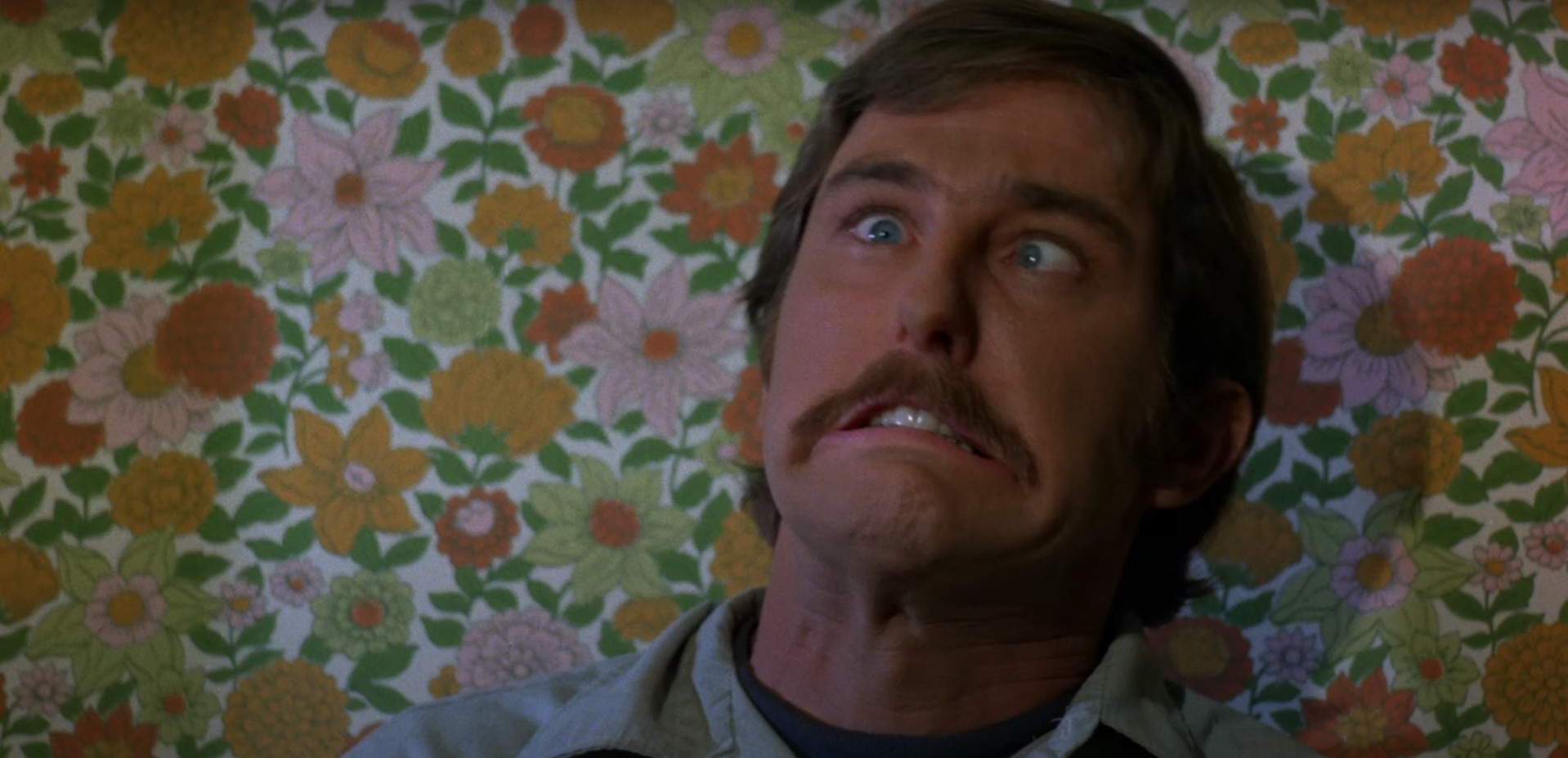
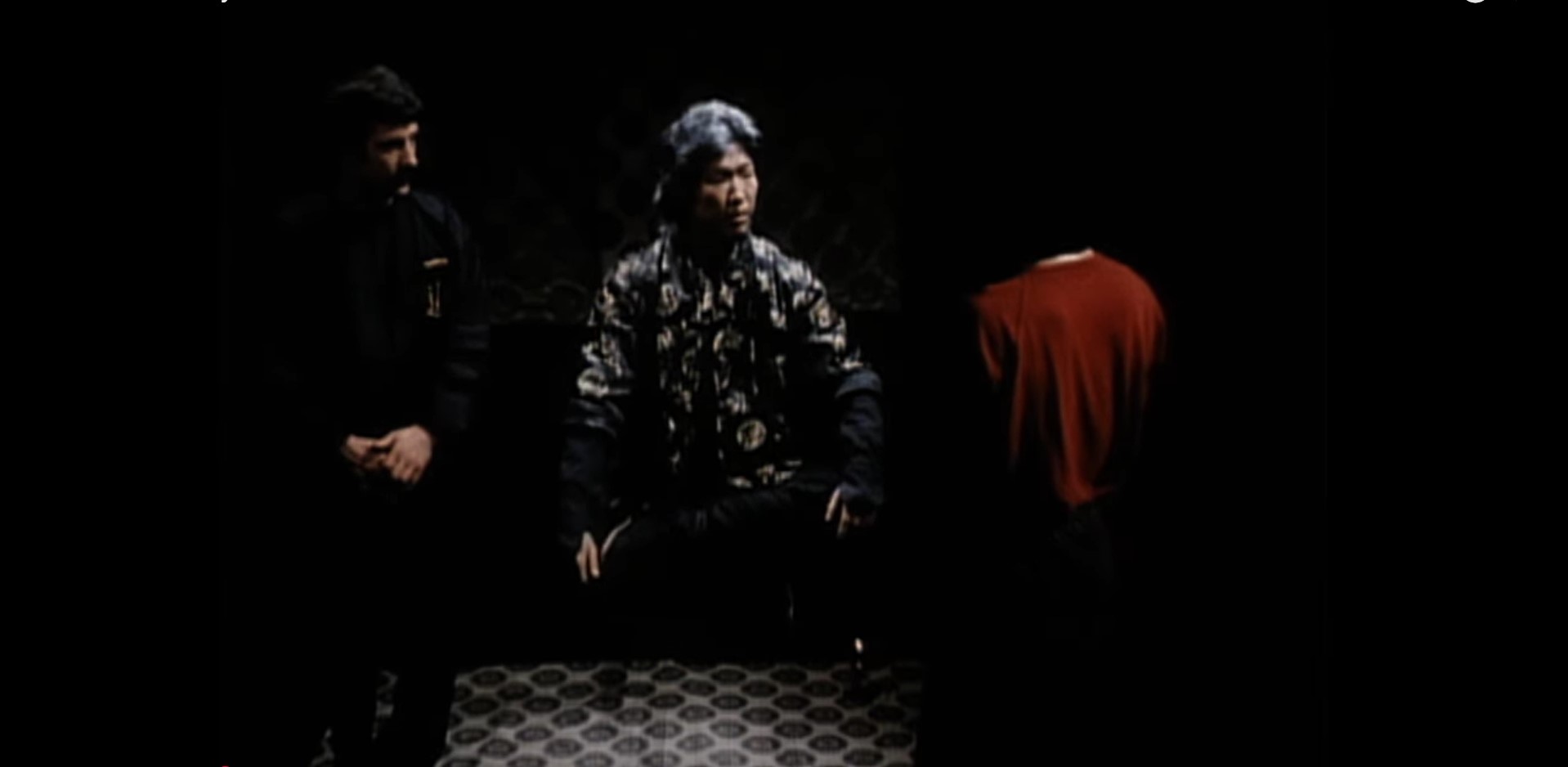
At the center of “Furious” are two Korean-American brothers, Simon and Phillip Rhee, experts in Karate and dojo sensei who, like Everitt and Sartori, were looking break into the business.  The California-born Rhee brothers play the protagonist and antagonist roles with Simon playing the namesake hero thrust into doing evil’s biding while avenging his sister’s death and Phillip donning Master Chen’s white hair and manically, ruthless plot to exploit not only Simon to obtain astral plane summoning necklace pieces but also his henchmen who carry the pieces that must hold the essence of death.  Virtuosos in karate, the Rhee brothers show and pull off incredible difficult moves done practically, especially in the early 1980s without the help of high-flying wires and only a little help with some camera angle movie magic.  The sparring is fast and realistic without being pull-punching obviousness.  All of the sound was done in post, so the Rhee’s real voices are not used to either replicate the martial arts jagged voice synchronicity or sound design was not in the budget.  Likely, a little of both.  The lower-level bosses are a medley bunch and have a range of talents from a staff wielding wilderness man (Bob Folkard), to a tiger style soul fighter (Howard Jackson, “The Delta Force”), to a crazed wizard (Mika Elkan) with flaming projectiles Simon has deal with, one-on-one, in order to reach the pyramidal top, Master Chen.  “Furious” is purely an action film, casting no love interest for Simon resulting in no emotional or romantical arch.  The former is emphasized more intently by Simon’s lack of expressiveness for revenge; there’s a sliver of poignant energy when Simon has visions of his dead friends’ severed heads served to him on a food platter that could warrant retribution attributions.  Jon Dane, John Potter, and Joyce Tilley who are quicky established as character friends to Simon and are equally as quickly dispatched to place Simon in a world of loneliness against an aliens and evil karate master alliance for astral plane domination.
From the depths of Tubi comes a curation for the ages release of “Furious” for the first time ever having a proper package that’s not related to pornography, as was the first and only VHS issuance by VCII, a well-known adult film distributor at the time who released “Debbie Does Dallas.”  “Furious” is an odd, unpredictable, mashup of throwing darts to see what sticks and in that volatility, anticipation of what’s to come next is considerably high, especially when a shoestring budget production surprisingly opens with incredible helicopter shots tracking a foot chase sequence.  From there, “Furious’ keeps astonishment alive with high-level increments of bizarre alien in human skin behavior, punitive human to animal transformations, talking pigs, astral plane battles, Superman flying, and Devo band mania coupled with extensive and coherent editing to flesh out a feature on the front and back ends.  Granted, the plot’s very puzzling and motives are dubious at best to why Master Chen would task a competent fighter like Simon to track down pieces of a unifying necklace when Chen’s own men possess all of them and could easily have killed them himself for the death essence.  There’s also the alien aspect that goes by the wayside in a lack of explanation or exposition by jumping into assumption just by weird behaviors and flashy, ultra-modern buildings to serve as extraterrestrial evidence.  Even with that ambiguity, seeing Simon Rhee perform a triple-hit kick amongst a slew of other highly impressive stunts and special effects relative to the budget has “Furious” become a cult fan favorite. 

Visual Vengeance curates another title from out of the shadows and into our Blu-ray players with “Furious,” encoded with AVC, presented in a high-definition 1080p of the original fullscreen aspect ratio 1.33:1, on a BD50.  Sourced from the original tape elements, which I’m assuming was the original VHS release a few years later as the film was shot on an Arriflex camera that used film stock, the Blu-ray contains a new, director-approved SD master print.  Cleaned up to get some color saturation into the anemic picture, the image doesn’t look as washed as the monochromic qualities of VHS and this is a vast improvement in picture quality as well with some better delineation around objects.  There’s quite a bit of aliasing and ghosting that leaves object trails and rough edging but not enough to warrant visual concern for texture properties, such as the pig stubble or the decapitated heads on a pater that show coarseness where it matters.  Print damage, such as virtual scratches and some rough editing room splices and re-tapings, are present but not profound.  All of this is covered in the technical forewarning, regularly at the beginning of ever Visual Vengeance film so the expectation is set.  The English language LPCM stereo is all postproduction additions with ADR and foley artistry.  The first instances of dialogue don’t come up in the mix until the 13-minute mark, leaving much of the opening left to Foley work to build kinetic and atmospheric sound.  With any early postproduction work, three will always be space in between the synchrony and that can be said here but on slightly jagged edge which says something positive about Everitt and Sartori’s handling of the audio track.  Optional English subtitles are available.  Obscurity doesn’t mean less supplement goodies either and Visual Vengeance has proved that over time again and again with their amazing stockpile of exclusive and archived special features.  New interviews with directors Tom Sartori, High Kicking in Hollywood, and Tim Everitt, The Kung Fu Kid begin the exclusive content with length editing discussions from the directors about their time before, during, and after “Furious.”  Filmmaker and podcaster Justin Decloux provides a slew of material, including a feature length commentary, cohosted with Peter Kuplowsky of Toronto International Film Festival.  Decloux does a pair of video essays – North American No-Budget Martial Arts Cinema Primer and Rhee Brothers career overview. The buck doesn’t stop there with an archive commentary with co-director Tim Everitt, an archive podcast with Everitt circa 2013, Super 8 behind-the-scenes footage of “Furious,” Scorched Earth Policy 1987 EP with full six tracks, Cinema Face live in concert, Tom Sartori’s 80’s music video reel and Super 8 short films, original film trailers, and Visual Vengeance trailers. That’s not all! New slipcover artwork brings together an illustrated compilation of what to expect with the same art on the inside Amaray case. The cover art is reversible, depicting the original VHS cover art that’s not as charismatic, or good. Insert section houses a folded mini-poster reproduction of the original one sheet, a double-sided acknowledgement advert with alternate art, Visual Vengeance’s retro VHS sticker sheet, and a ninja star keychain accessory! The 17th Visual Vengeance title comes region free, has a runtime of 73 minutes, and is unrated.

Last Rites: Anomalously action-packed with a fantasy element, “Furious” is a one-of-a-kind, indie martial arts production that has everything, even the kitchen sink, thrown at with a journeyman tale of alien butt-kicking, astral plane dogfighting, and anthropomorphic black arts.

Get “Furious” Now on Blu-ray from Amazon.com!

Snuff is the New EVIL Industry Fad! “Snuff Queen” reviewed! (Dark Arts Entertainment / DVD)

“Snuff Queen” on DVD from Dark Arts Entertainment!

Snuff, a hot commodity amongst patrons of the black market and dark web provides real violence and real death for real morbid viewers.  Laws are challenged and circumvented by consent of women willing to die for money through various ways of asphyxiation in front of the camera and sold under the controversial snuffing genre.  A Ten-minute window of revival separates the actors and actresses from permanent brain damage or certain expiration.  A snuff performer interfaces with the complexity of thrills and easy money that counterbalances against relationship troubles, social stigma, and the constant threat of actually dying hanging over their heads, or more literally, pressed against their throats.  A handful of willing performances lets a documentarian illustrate their niche profession, lifestyle, and personal struggles to the world with included behind-the-scenes footage on set and in their private spaces as they put on their line mind, body, and soul have to survive.

Those who seek out snuff, even if represented in a sensationalized, fictious way to glorify gore, violence, violence against women, and a fascination, obsession need to satisfy murder lust, likely need to have their heads thoroughly scoured for the tiniest ounce of sociopathic tendencies.  Films like “Effects,” “Faces of Death,” “8MM,” “A Serbian Film,” and the like all contribute to that black desire of control of another person’s existence and getting off perversely on the sadism.  Films like Sean Russell’s “Snuff Queen” are nothing like those more aberrant productions of cruel reproductions.  The 2023 pseudo-documentary and mockumentary hybrid began in 2008 with AVN interviews with porn stars and their take the matter of snuff or overall rough sex.  Shelved for many years because no producer at the time deemed the material worth making a movie out of it, Russell is approached by Dark Arts Entertainment’s Brian Yuzna and John Penney to finish the film with new scenes based off the 2008 script but cut most of the comedy out for a darker tone.  David Navarro producers the film.

Previously shot 2008 AVN interview footage with some of the then biggest talent in the industry, such as Sasha Grey, Bree Olson, Stormy Daniels, Jenna Haze, Stoya, Faye Reagan, Jesse Jane, Belladonna, Aurora Snow, Jessica Drake, Sunny Lane, and even Larry Flynt, is cut into snippets of a montage as they comment on death and sex in various contexts.  The series of comments and quips puts into perspective individual limitations, mindsets, behaviors, and an unfiltered truth underneath the layers of makeup, fake breasts, and forged happiness in the adult entertainment industry masked in glitzy red lights, supersized sex drives, and a prospecting tease of getting laid.  As the 2008 prologue interviews ends, the 2023 interviews begin with mostly scripted talk following the daily lives of a handful of snuff performing women, 4 principal female characters to be exact.  Moxie Owens (“Girl Lost:  A Hollywood Story”) as Jane Doe, Lexie Leone (“It Don’t Bother Me at All”) as Amy Doe, Juliet Kennedy as Angela, and Lindsay Normington (“Anora”) as Audrey Doe become the diverse batch of short-listed actresses of controversial and law-bending snuff films. These core cast of women are joined by gap-filling support, ranging from gays, to blacks, to Asians, and so forth by extenuating out from just a white female dominated industry in touching cultural and race by the less promoted numbers of adult entertainment. Much of “Snuff Queen’s” inauthenticity garb comes from the acting that’s densely overplayed and exaggerated because of the less-comedic directive by shot-calling distributors and performances stand out amongst a darker theme as too watery and less potent, like off-brand prescription drugs. Ironically enough, IMDB.com gives in the title’s controversial nature by not listing the film under any of the actor’s individual credits as to say or allure “Snuff Queen” documentary as real evidence and content based. Tuesday Knight (“A Nightmare on Elm Street: The Dream Master”), Josie Hung (“Staycation”), Gina DeFlilippo, Captain Dare, Zac Mendoza, Neill Flemming (“It Kills at Midnight”), Christopher Parker (“Spider”) and Jake Holley costar.

Much of what is laid out in “Snuff Queen,” all the provocative and debatable ethics, legality, and portentous aspects of Snuff, is all a load of crap and the director, Sean Russell, would be the first person to tell you that.  What Russell intends to convey is an allegorical emotional evaporation in adult entertainment performers and how apathetic the industry is toward the safety and responsibility for its talent who battle with low self-esteem and anger issues that either drive wedges between friend and family or ensue verbal spouts.  There’s also the treatment or being seen as just a bag of meat for the slaughter when getting the shot is important than the person taking all the risk for little reward.  Russell achieves that endgame message despite the cuts of levity humor that do squeeze through every so often but with that squeeze-in of a dark humor chuckle, coincided with a reserved approach to a documentary surrounding Snuff of all things extreme, in lies an off-putting characteristic going against the grain of the film’s black toned nature and Russell’s indelicate undercurrent theme.  “Snuff Queen” is nowhere near the shock level its required to have, especially being bestowed a taboo title, with little-no-effort in the thickness of the story’s creative girth; instead, the 2008 interviews, snipped scenes from previous controversial films, and one atypical scene at the heart of the story teases with stark nudity and blood are the only edgier content of a rather dull feature length pseudo-documentary. 

Presented in a widescreen 1.78:1 aspect ratio, Dark Arts Entertainment distributes the home release of “Snuff Queen” on DVD.  The MPEG2, 720p and 1080p, DVD9 has stark grade resolutions due to the 2008 recorded interviews and footage shoot 15-years later in 2023 with the former a blockier, less-pixelated digital camcorder for ease of AVN, working the crowd, person-to-person use.  Recent footage has the polished look of a high-dollar digital recording sans any artistic grading or stylistic lens.  No issues with compression codec that produces a very fine, detailed image reproduction that sinks into inky blacks and retains a natural color palette.  “Snuff Queen” is authored with a LPCM English stereo mix that’s an imitation of a hot mic of continuous dialogue, as many real, pseudo, and mock documentaries are, that renders cleanly through from one bookend to the other.  There’s also not a ton of interference other than in the 2008 interviews at the AVN with perhaps more commercial equipment or audio setup.  The onboard mic snags the milieu sounds with the raw range and depth.  English subtitles are available.  Encoded special features include a director’s commentary that goes through the first planned steps for the film and its subsequent rejections from producers back in 2008, deleted scenes, and the film’s trailer.  Physical features are stark and spartan with a convention DVD Amaray that has a mock polaroid border and the redacted eyes and mouth of a faceless, chest high naked woman that draws attention in conjunction with the title.  Dark Arts Entertainment presents the release not rated, region free, and has a runtime of 92 minutes. 

Last Rites: “Snuff Queen” might have worked 15-years ago with the old footage that contained real pornstars and real enough gore effects that could have turned this concept onto a creative machination in illusion of the truth or a clever black comedy that really pokes the porn industry in the ribs, but instead time and too many hands the creative pot has relinquished any power “Snuff Queen” may have wielded, dethroning it definitly out of shock contention.

“Snuff Queen” on DVD from Dark Arts Entertainment!

Nymphomania is EVIL’s Best Time! “Vixen!” / “Supervixens” / “Beneath the Valley of the Ultra-Vixens” (Severin Films / Blu-rays)

VIXEN!  (1968)

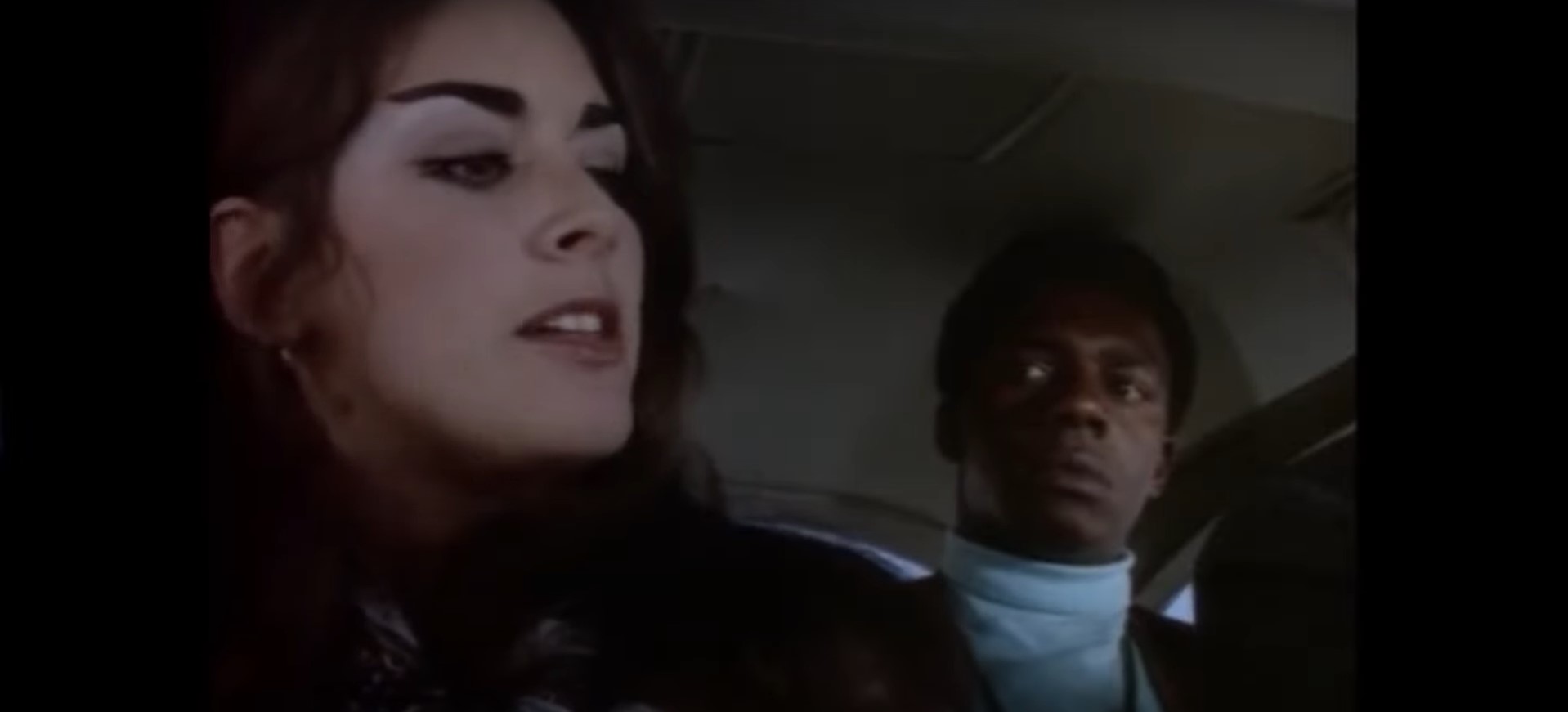
In the untamed wilderness of British Columbia, a bush pilot named Tom picks up fares that give tourist, fisherman, hikers, and the like an experience of a lifetime in raw, Canadian countryside.  Also, an experience of a lifetime is when his clients and guests staying the night in his rugged cabin home meet his nymphomaniac wife, Vixen.  When Tom’s flying about to-and-fro, Vixen slips out of her clothes and into the comforting arms of varietal strangers of men and women alike.  Indoors, outdoors, land, water, men, women…for Vixen, sex is life, and she must take it whatever means necessary, even if that means conniving her way into sleeping with her motorcycling little brother Judd.  No Canadian Mountie can stop her from mounting him.  No lawyer can litigate his way out of her desiring deposition.  In fact, no one can resist the voluptuous Vixen at all except for one man, a negro named Niles, as Vixen’s racist belittlement seeds a strong ambivalence between them.

The first film in Russ Meyer’s “Vixen” trilogy, “Vixen!” is the 1968 produced feature directed by the man dubbed King Leer and The Fellini of the Sex Industry known as Russ Meyer.  The World War II combat photographer saw unequivocal carnage and death in his camera lens but his post-war vocation to become an eroticist earned him being one of the most prolific skin flick filmmakers ever between the 1950s to the 1980s.  With a penchant for heavy-chested women, Meyer’s “Vixen!” is uninhibition incarnate and is a pleasure-seeking good time when the prim-and-proper hubbub is put to the side in this Robert Rudelson penned philandering orgy of ogling based off an original story by the “Faster, Pussycat!  Kill, Kill” and “Motorpsycho!” director and infrequent concept collaborator and producer Anthony-James Ryan (“Black Snake”).  Meyers wife, Eve, served as associate producer alongside Richard S. Brummer and George Costello under the production companies of Goldstein Films, Coldstream Films, and Eve Productions.

SUPERVIXENS (1975)

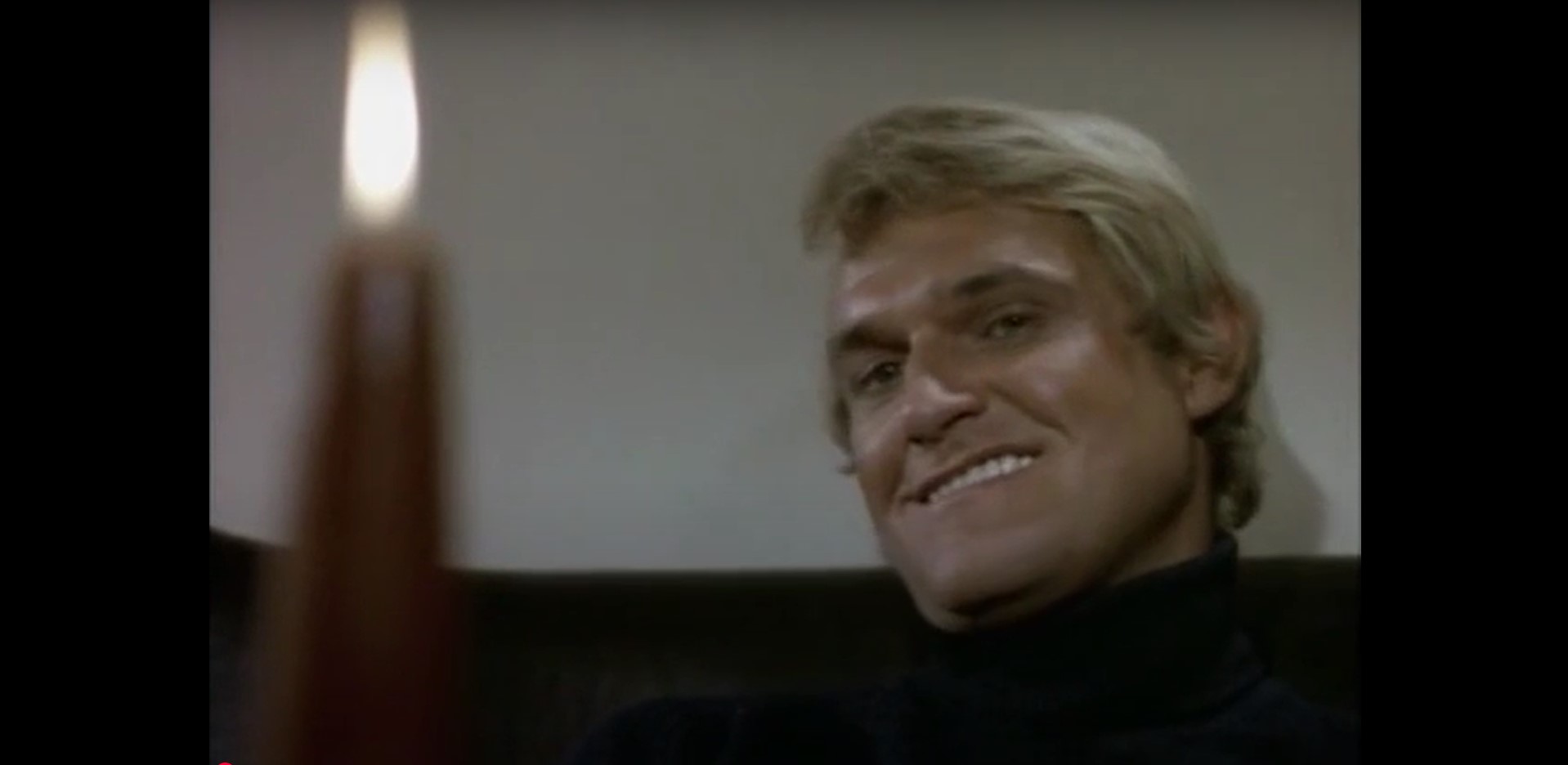
Gas station attendant Clint maintains the steady pumping of gas and washing of windshields that pull up to be serviced, but his insatiable wife, SuperAngel, wants Clint back home for a little pumping of her own.  Constantly calling him at work and threatening the dissolution of marriage frustrates Clint to the point where their lovemaking turns heated and violent that results in Officer Harry Sledge to knock out Clint and trifle with SuperAngel’s coquettish whims after its all said and done.  Yet, Harry Sledge’s inadequacies release his true nature, a pent-up maniac who mercilessly murders SuperAngel and shifts the blame toward Clint.  On the run, Clint finds himself at the mercy of ride givers who either take advantage of his body and what little money he has or provide him a safe place to stay with a caveat of busty, horny temptations knocking down his spare room door.  Clint finally lands being a gas station attendant again with SuperVixen, a gas station inheritor running both the pumps and the hamburger grill, and he finally feels he’s back on his feet in life being in love with SuperVxen.  That is until Harry Sledge coincidently shows up at his gas pump.

Not so much a sequel to “Vixen!” as one would expect in an unaffirmed trilogy, “Supervixens” is Russ Meyer’s 1975 satirical sex-comedy busting at the seams into insanity and out of blouses.  A bigger cast with even bigger boobs, literal and figurative, plays upon a charade of Meyer’s troubled time through divorce that sees a little more violence toward women while still shitkicking characters with well-endowed powers of sexualized influence.  Unlike “Vixen!,” Meyer writes the film too, adding his flare of elongated exposition that in itself is a foreplay of phonics with its blend of sophistication, wit, and obscenity.  The RM (Russ Meyer) International presented film is produced by Meyer, Fred Owens, Charles Napier, Wilfred Kues, James Parsons, executively produced by Anthony-James Ryan, and filmed mostly in the vast Arizona desert.

BENEATH THE VALLEY OF THE ULTRA-VIXENS (1979)

Junkyard worker Lamar is a studios young man who wants nothing more than to earn his degree in smalltown America.  His wife Lovenia is studios in keeping her bed warm by sating her thirst for every man in said smalltown America.  Yet, Lovenia wants Lamar only and badly too but the one thing that wedges their sex life apart is Lamar’s obsession with the backdoor only and not being eye-to-eye intimate.    To try and fix their broken relationship of rear entries and unrestrained randiness, the two young lovers embark on a journey around town to seek salvation into solace of each other’s arms rather than meeting their needs elsewhere.  A gay marriage counselor/dentist with a kinky lesbian nurse, a radio evangelist busting out of her shirt to save souls, 14-year-old athletes being taught adulthood with hands on experience, junkyard and garbageman rendezvous and scrappy scandals, all play a part in working out Lamar’s kinks and sedating Lovenia’s nymphomania. 

Now this Meyer entry has more sequel components.  “Beneath the Valley of the Ultra-Vixens” has even more sexploitation satire shrouded by a saturation of sordid sleaze in what would be essentially Russ Meyer’s last theatrical feature-length film.  The 1979 production really goes into the pubic bush of pushing public boundaries with sexualized situations, intermingling faith with sexualized fervor, and expressing a provocation freedom only in the way Russ Meyer could deliver it.  The story is conceived by Meyer but is written by none other than Roger Ebert under the penname of R. Hyde in what was the last of three feature film collaborations with the director behind “Beyond the Valley of the Dolls” and “Up!”  Meyer’s RM Films International solely presents the Richard S. Brummer, Fred Owens, and Russ Meyer coproduced “Beneath the Valley of the Ultra-Vixens” shot, yet again, on harsh terrain of the American west in arid and rural portions of California.

CAST

All three films center around one sex-driven consumed woman and one hapless in-one-way-or-another man.  Each of the principal lead actress are made up of parts Russ Meyers admires the most: buxom, curvy, and beautiful.  Each provide their own eccentricity to the role despite their common core theme of nymphomania.  In the titular role of “Vixen!” is the Meyer discovered topless dancer Erica Gavin, sporting D cups that were typically, and funny enough, just a tad small for the Russ Meyer usual collective of busty babes.  Gavin’s envelopes herself completely into the promiscuous role that preys upon men like a shark whiffing a solitary drop of blood to get the olfactory senses working overtime.  Gavin devours her counterparts on screen as a saucy, sassy seductress with hips that hypnotize and a chest that chastises chastity with extreme prejudice.  And speaking of prejudices, “Vixen!” paints an obscene vocabulary depiction of the only black actor through the vile and vicious name-calling by the Vixen herself.  Between the verbal bigotry, U.S. military draft dodging, unpopular Vietnam war beliefs and communism, Meyer disguises 1960s socio- and political topical matter underneath a large rack of sexploitation but does evoke the black character Niles (Harrison Page, “Carnosaur”) as a costar rather than a supporting actor.  Super Angel in “Supervixens” can also be rancorous but not in a prejudice sense; instead, the actress Shari Eubank portraying Super Angel has an impatient demeanor for her rather unhurried beau Clint and what also separates Gavin and Eubank in their respective roles is that Eubank has a dual performance in the most irony of names being a malicious tease as Super Angel and being sweet as pie as Super Vixen.  The contrast between the two women also mirrors a resemblance of what once was even to the detail of Clint obtaining his old job back at a new gas station but their arc as couple must face the formidable Harry Sledge as the peak they both must overcome, representing as perhaps a metaphor, coupled with some sly editing and intention, in being an older version of Clint heading toward impotence, anger, and confusing sexual orientation.  The uninhibited nude dancer and adult film starlet Kitten Navidad led the charge in the third film, “Beneath the Valley of the Ultra-Vixens,” as the uber-compulsive sexual Lovenia.  Before starring in the stags “Bodacious Ta Tas” and “Eat at the Blue Fox,” amongst others, Navidad ran rampantly new in swanky, silly, softcore in front of the camera lens of her then husband Russ Meyer.  Lively and lovely, with large breasts and a hairy bush, Navidad sparks a wide grin under her Latina charm as well as portraying a promiscuous housewife gone wild in a starkly different demean that’s more toon in its titillating manner when compared to “Vixen!” and “Supervixens.”  “Beneath the Valley of the Ultra-Vixens” is the only film in the trilogy to be a sequel, and barely at that, with returning characters of “Supervixens” helpful farmer Lute (Stuart Lancaster, “Starlet!”) and his lovely Austrian wife SuperSoul, played by another adult and genre actress Uschi Digard (“Ilsa:  She Wolf of the S.S.,” “Superchick”).  The three films round out the cast increasingly with Garth Pillsbury, Jon Evans, Robert Aiken, Peter Carpenter, Michaenl Donovan O’Donnell, John Furlong, Charles Pitt, Henry Rowland, John Lazar, Fred Owens, Glen Dixon, Ken Kerr, Patrick Wright, Robert E. Pearson, Michael Finn, Don Scarborough, Aram Katcher, and DeForest Covan with sexploitation and adult industry regulars Vincene Wallace (“A Sweet Sickness”), Deborah McGuire (“The Young Secretaries”), Colleen Brennan (“China and Silk”), Christina Cummings, Ann Marie (“For Your Breasts’ Only”), June Mack, Sharon Hill (“Dawn of the Dead”), and Candy Samples (“Fantasm”).

OVERVIEW

From the flowing creeks and tall pines of British Columbia, Canada, to the arid desert rocks and scantily scenic hardscapes of the western U.S. deserts, Russ Meyer had a fondness for the coarse-nature of the great outdoors put up adjacent to the delicate, soft-skin beauty of voluptuous women prancing, dancing, jumping, skipping and fornicating to the beat of oversexualization, perversion, and the problems that rouse from the unfettered arousal.  Meyer’s interests not only laid with gigantic melons and the overall less-is-more clothing on women, but the director also had a fondness for rural, smalltown settings, a subtle paradoxicality to pepper German aspects into the story’s vast and bosomy berth despite his World War II veterancy, and he really tackled sociological issues of race, orientation, and, of course, a broad spectrum of general sexuality too taboo for much of puritanical America.  Yet, Meyer had an eye for what makes cinema alluring and not only from a taboo and bare skin angle but from the angles of which he shot and a stylistic eye to match to create and edit unforgettable compositions.  An eclectic medley of angles, quick coherent edits, a witty, sarcastic, and philosophical dialogue, a swanky and swinging instrumental soundtrack, and the vibrant, sultry, and pulpy coloring of pinks, reds, blues, yellows, and other fuzzy posh palette colors come together in a beautiful mesh of fast-paced filmmaking that tells about the fast-and-loose times, an exaggerated parallel of the rather an unmentionable underbelly most were too ashamed to mention or even think positively minutely about in that era.  Today, sex is more fashionable but 40-50 years ago, Russ Meyer foresaw a future of polyamory in a fun, lightful, sexy, if not borderline sleazy and perverted, way sewn into an alternate universe of risk and reward told in meta fashion.

If you must take one thing away about Severin Films is that the boutique label knows how to restore and package lost treasures.  Such is the case with Russ Meyer’s broad bare-bosom view of Americana cinema with the Vixen trilogy.  These Russ Meyer Bosomania films are restored and scanned in 4K on the worldwide debut of an AVC encoded, 1080p high-definition, BD50 and presented in a widescreen 1.85:1 aspect ratio except for “Vixen!” which is shown in the European aspect ratio 1.66:1.  Noted on the back covers, “Vixen!” print scanned in 4K from the original negative is restored by MoMA, the Museum of Modern Art, “Supervixens’” print is restored by Severin Films in conjunction with The Russ Meyer Trust with the 4K scanned print originating from The Academy of Motion Pictures Arts and Sciences, and “Beneath the Valley of the Ultra-Vixens’” weathered-worn print was painstakingly restored by Severin Films as well with cooperation from The Russ Meyer Trust.  Between 1968 and 1979, there’s more than a subtle difference in image presentation, style, and quality, as expected, whether be Meyer growing as a student of cinematography, film stock upgrades, or just plain print wear and tear.  “Vixen!” has a more muted color palette but nowhere near being totally vapid as Meyer uses less colorfully charged lighting and shadow work that results in an organic image with some inconsequential anemic and barely perceptible damaged frames sporadically throughout.  Details are generally favorable and kind to early colorists, touched up I’m sure in the restoration to pop it out some.  “Supervixens” and “Beneath the Valley of the Ultra-Vixens” do color-pop tremendously, punctuated by Meyer’s stroke of lighting and editing genius to have each scene be enthralling to behold and be aggregated into a class known as the Russ Meyer magnum opus.  Meyer is the David Lynch of the sexploitation subgenre, seducing with sordid and satirical sex-driven maniacs and a peculiarity of situations and themes that often run silent in the general population.  The latter two films are scot-free of print wear which is surprising since “Ultra-Vixens” is noted to have been weathered, which is a true testament to Severin’s dedication to the restoration.  All three films have an ENGLISH LPCM Mono mix of fair fidelity that’s akin to the skin soundtracks of a burlesque-like Benny Hill show.  “Vixen!,” once again,” strays from the pack with glam swing revelry and sultry notes of passion herald in by a smooth piano, percussion, and guitar.  Dialogue renders nicely through from all three films accompanied by more of the near slapstick Foley rather than environment din.  “Vixen!” does emit a bit of an echo is certain scenes, more evidently so when Vixen argues or persuades to get what she wants, and you can hear her dialogue again in like a soft breath underneath.  English closed captioning is available for selection.  Several hours of special hours have been compiled for this set, beginning with “the “Vixen!” allotment that has a second, censor prologue cut of the film in from the theatrical re-release, an archival audio commentary with Russ Meyer, a new audio commentary with Erica Gavin, new interviews with Gavin and Harrison Page in Woman…Or Animal?, a television interview of Russ Meter and Yvette Vickers on the David Del Valle hosted show The Sinister Image, Entertainment… Or Obscenity? Is the Marc Edward Heuck historical and present look at the Cincinnati Censorship Battles against Russ Meyer and his films and rounds out with the feature’s trailer. “Supervixens'” special features include an archival audio commentary with Russ Meyer, an interview between Mike Carroll and Russ Meyer Russ Meyer Versus The Porn-Busters, an interview with The Return of Harry Sledge Charles Napier, S1E5 with Russ Meyer on The Incredibly Strange Film Show, a TV spot, and the trailer. Rounding out the extras on “Beneath the Valley of the Ultra-Dixens” came another archival feature-paralleling commentary with Russ Meyer, The Latin Brünhilde interview with actress Kitten Natividad, an Ellen Adelstein interview with Russ Meyer on her 1979 talk show, a much later and new/current interview with Ellen Adelstein, and the theatrical trailer. All three Amaray cases share the same color scheme of a black case contrasted with a red border on the cover with an inner black border surrounding a still or a retro one sheet with taglines and pulled quotes from past reviews. There are no other tangible elements with the disc pressed roughly with the same primary image. The region free Blus are not rated and have respective runtimes of 71 minutes (“Vixen!”), 106 minutes (“Supervixens”), and 93 minutes (“Beneath the Valley of the Dolls”).

Last Rites: To experience Russ Meyer’s Vixen trilogy is more than these words can ever express. You just have to dive right into the voluminously, voluptuous vixen world and the best, polished way to do it is with Severin’s Russ Meyer Bosomania restored 4K scans!

“Vixen!” Available Here on Blu-ray!

“Supervixens” Available Here on Blu-ray!

“Beneath the Valley of the Ultra-Vixens” Available Here on Blu-ray!

Blind, Witchy, EVIL! “Beezel” reviewed! (Epic Pictures / Blu-ray)

“Beeze” is the Witchiest Blu-ray of 2024! Get it here!

May, 1966 – a young boy is murdered, eaten, in his Northeast home.  Nearly six decades later and a series of disappearances and strange deaths in between, a young couple inherent the property that the locals have feared haunted, cursed, and possibly even inhabited by a witch.  As the house-inheriting husband is eager to sell the house to get rid of the reminder of his mother’s abandoning betrayal, the wife is equally eager to keep the house, settle in, and start a family.  The house possesses a presence captured by the corner of the eye, the hairs on the back of the necks, and the overall sense of dread that lies heavy in the pit of the stomach as the more the couple stay in the house, the more the Beezel, a blind evil witch lurking and hiding in the basement, influences their dreams and reality.  Beezel also wants a child and will take what it desires and kill anyone standing the way. 

What the horror genre needs nowadays is a ferocious witch film and I’m not talking the spellcasting, broom-riding, cauldron-congregating kind of witches with black pointed hats, large warty noses, and catty familiars.  I’m talking about hardcore old and ugly broads with an extreme hunger for not just children but for all of humanity, capped off with, perhaps, a good, solid cackle that’ll redefine the iconic figure from the traditional sense to a reverse revolutionized hag rooted in folklore but scorned by life itself.  A few filmmakers have tackled the idea and filmmaker Aaron Fradkin has taken a stab at it with “Beezel,” a 2024 Northeast-shot, visceral supernatural witch tale that was originally a short film expanded into a full-length feature film based on the short’s positive feedback.  The “Val” director cowrites with wife and fellow “Val” actor-writer, Victoria Fradkin under their cofounded independent film production company Social House Films. 

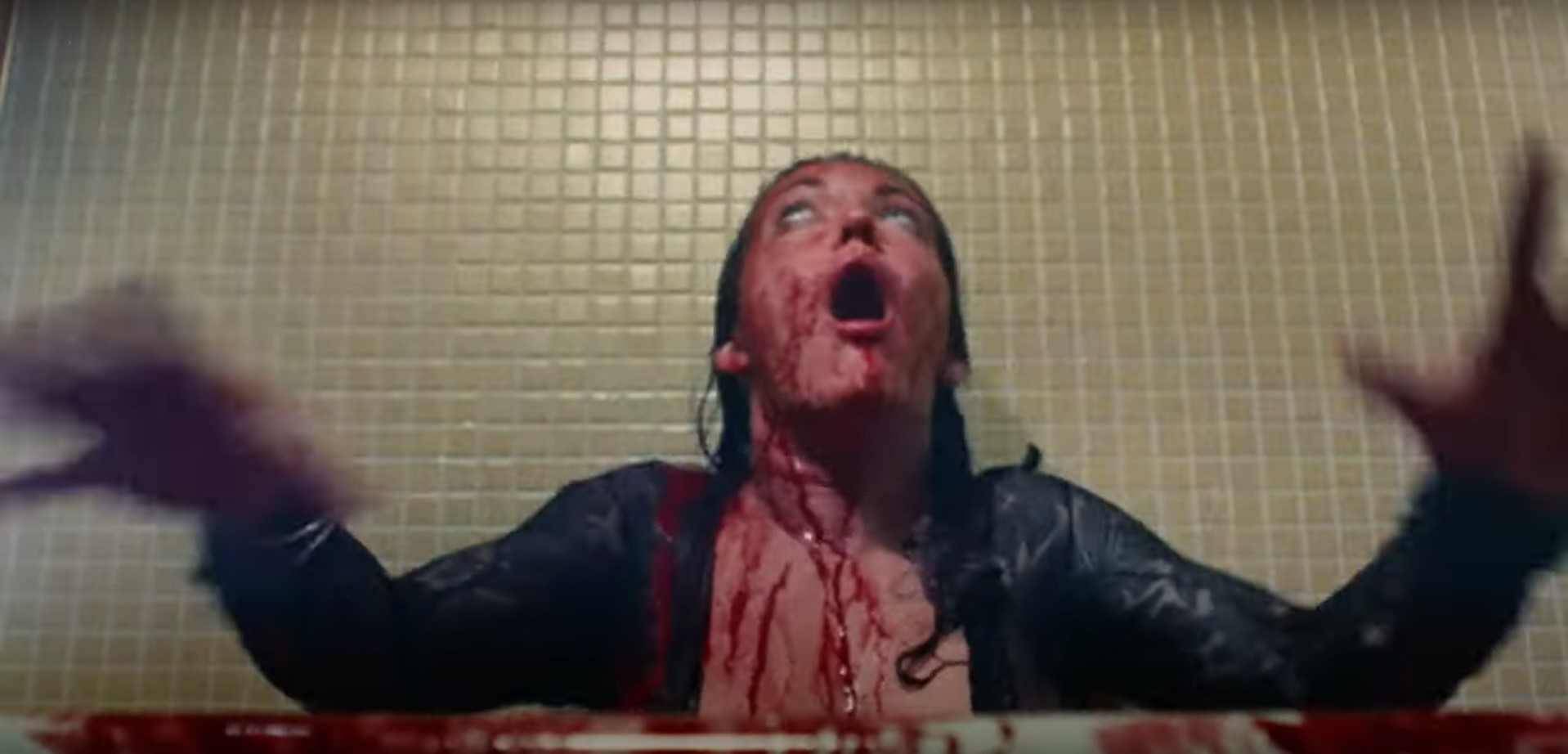
Because “Beezel” was first a short film, to flesh out a full length, the Fradkins smartly built around the short story an episodic series around it that spans decades.  Different actors are casted to reflect different periods, circumstances, and develop a variety of reactions to keep with and keep going a timeline of change, connected all by one single element, the carnivorous blind witch lurking in the basement shadows.  1966 starts off with more of child’s perspective who opens a secret bathroom hatch to the basement to see his pleading-for-food mother before his arm is snatched and he’s rip-to-shreds off camera.  The vicious and quick opener doesn’t leave open the door of development and we don’t get a real sense of anything or anyone until LeJon Woods (“The Hangman”) meets Bob Gallagher (“I Don’t Want to Drink Your Blood Anymore”) about 20 years later outside the home as the documentarian and homeowner, Apollo and Harold Weems.  Having seen now three films his this year, LeJon Woods feels very much like a one-note actor playing the same person throughout those roles.  Gallagher dips into a more sinister cover as the seemingly Mr. Rogers or Ned Flanders neighbor that drops breadcrumb clues of his dark secret and its one scary in-character conversation he has with Apollo.  From there, we jump another 20 years into the early 2000s with what was initially the original short film of an at-home nurse named Naomi (Caroline Quigley) replacing another nurse who disappeared in the Weems house.  This leads into the third act really sets up nicely Harold Weems second wife, Deloris (Kimberly Salditt Poulin), who’s on her deathbed in hospice care and solidifies the tone with a girth of suspense that leads into what would be the final moments left unseen of young couple Lucas and Nova (French actor Nicolas Robin and the director’s wife Victoria Fradkin).  Lucas, who inherited the neighborhood blighted house from his mother Delores, is eager to remove all denotations of his mother from memory, the free-spirited and more forward Nova wants to settle, have children, and start living her life.  Their bond sours overtime with the witch influence invading the subconscious and conscious body for her own ravenous gain in a blood-spilled buffet of knives, guts, and videotape.  The film rounds out with Elise Manning, Leo Wildhagen, and Aaron Fradkin dons the makeup and prosthetics to play the blind witch Beezel.

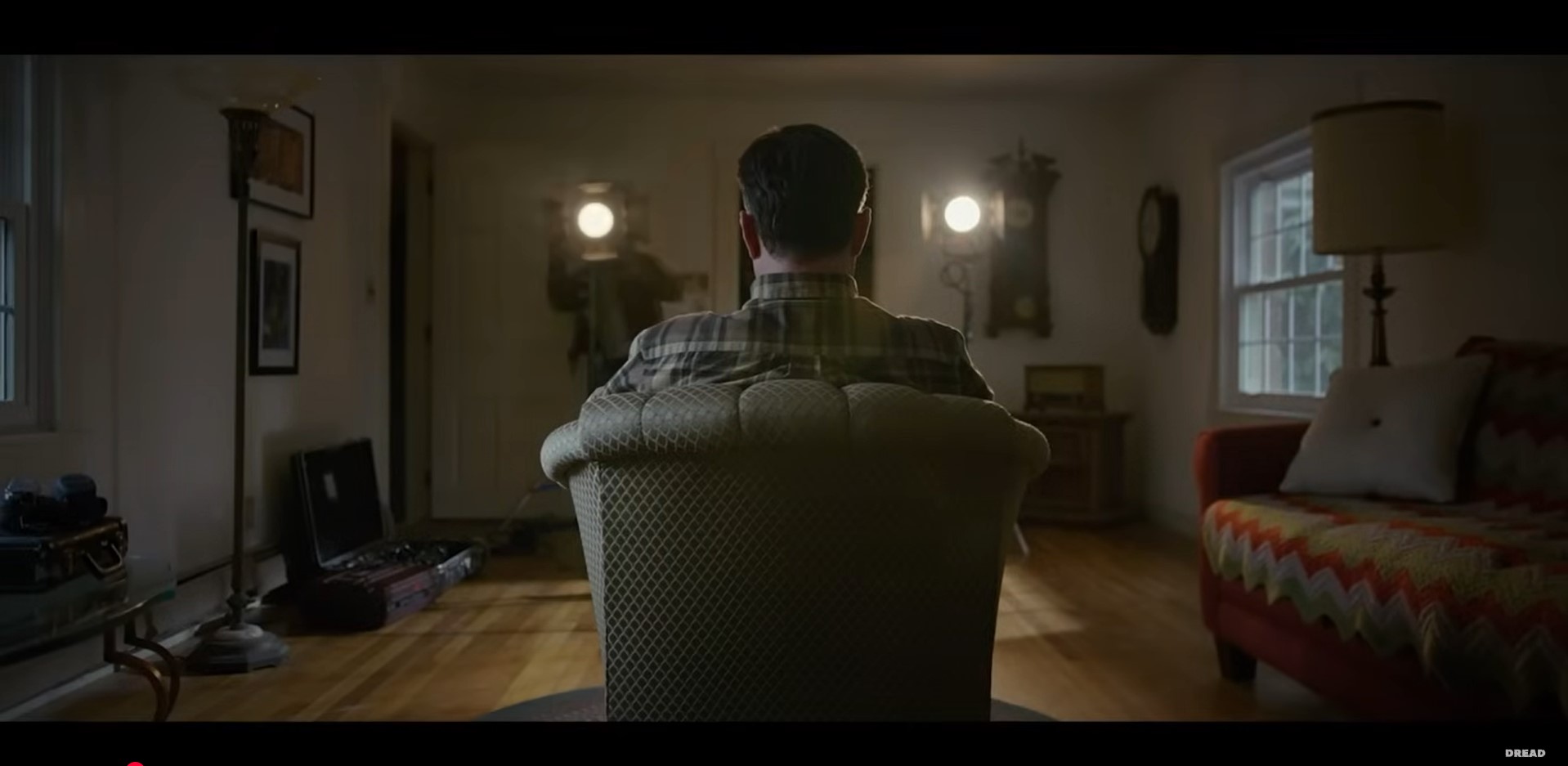
Fradkin’s able to capture desolate mood with limited production sets.  Most of all the “Beezel” story is set inside Fradkin’s childhood home in Massachusetts and with real, cold, New England snow that latter half of the story takes place.  Every tight and cobwebbed crawl space, every radiator-induced floorboard creak, and every outdated, antiquated, and obsolete feature of his parent’s home gave every ounce of spooky energy to “Beezel,” which, ironically enough, is what Beezel actually inflicts upon the current residents of the house.  Editing and the practical witch effects build the tension and suspense without giving too much away of Beezel’s hideous figure, cherishing Beezel for timely appearances rather than relying on its overuse which often leads to exposing too many rubbery and prosthetic flaws.  The episodic nature also keeps the story from being stale by jumping years, if not decades, that shepherd new characters and new scenarios into the fold as the story evolves through the difference lens of technology, in a half-ominous and half-found footage perspective with the latter being shot in super 8, VHS, and digital handheld camcorder and the original short breaking up the pattern with a microcassette tape deck.  “Beezel” perfects the blend of live-action and found footage without feeling forced and unnecessary with a truly frightening approach to the witch trope that’s worth devouring whole. 

The Social House Films brings the meanest witch this side of 2024 and Dread, the subsidiary label of Epic Pictures Group, who also pushes their own boundaries with “Beezel’s” visceral path, as well as sport some uncommon nudity in one of their films, has the Blu-ray for you! The AVC encoded, 1080p resolution, single-layer BD25 manages to scare through the lower end of capacity format with really no issues with compression. No banding, no blocking, nor any other noticeably ostentatious artefacts to speak about as the rendered image, despite its softer detailer markers, pulls off a passable and potent portentous story through a digital, anamorphic 1.78:1 aspect ratio lens, often switching between media parallels of POV Super 8mm, VHS, and DVX camcorder that vary in levels of detail and grain. Dread Central presents two English audio options, both lossy: a Dolby Digital 5.1 and a Dolby Stereo 2.0. Surrounding, multi-level house atmospherics, various media equipment, in-and-out of the dream subconscious, and, of course, the blend witch herself, create an unfaltering, ample, and competent sound design although the format doesn’t reproduce true fidelity. Back and side channels flourish with frightful house creaks and other environmental elements while basking in the silence for a solid jump scare or building palpable tension. English subtitles, as well as Spanish subtitles, are available for selection. Special features include an in-depth look at the making of the film, Aaron Fradkin’s short films “Doctor Death” and “The Sleep Watcher,” and other Dread Central distributed film trailers. I had aforementioned Beezel not being shown too much in the film but her rather grotesque, bloodied-mouthed face captured in still image, glammed up and embellished for public consumption, graces Epic Pictures’ one-sided, front cover image, warmly soaked in a reddish-orange glow. The disc is pressed with a Scolopendra, or Giant Centipede, coiled over the title. No other tangible items come with the release. The not rated release has a runtime of 82 minutes and is region free for all!

Last Rites: As we close out 2024 with an evil old hag, “Beezel” is one hell of a movie to close out on. Soul-tattering story that spans decades, “Beezel’s” the witch with an incredible insatiability and her hunger will have you recoil in fear of being the main course.

“Beeze” is the Witchiest Blu-ray of 2024! Get it here!

EVIL Doesn’t Take Rejection Well. “Village of Doom” reviewed! (Unearthed Films / Collector’s Edition Blu-ray)

“Village of Doom” now on Unearthed Film’s Collector’s Edition Blu-ray!

Tsugio Inumaru is considered the smartest young man in his village.  Illness took the life of his parents, and he raised by his grandmother and lives off her land’s income, looking after him and dreading the day Tsugio becomes drafted as a soldier in war service, which bestows great honor from the villagers.  While husbands are away serving their country, bored and lonely housewives and bachelorettes desire the carnal company of the men remaining and with Tsugio’s youth and his own sexual yearnings bubbling to the surface, he’s prime Kobe beef for the hungry village women.  When Tsugio’s health examination reveals a tuberculosis diagnosis, he’s acutely shunned by the villagers, drying up his sexual escapades, as well as potential betrotheds.  Rejection by his village, and even his country, sends the young man into plotting a massive killing spree, targeting all of those who’ve forsaken or scorned him to a life not worth living. 

In the Tsuyama outskirt village of Kamo of 1938, 21-year-old Mutsuo Toi cut the village’s electricity, strapped flashlights to the side of his head, and took a mini arsenal that included a Browning shotgun, a katana, and an axe to 30 villagers, including his grandmother, in an act to revenge killing for being rejected socially and sexually because of his tuberculosis diagnosis.  What is known as the Tsuyama Massacre, Mutsuo Toi’s cold and merciless act of carnage was the basis for Noboru Tanaka’s “Village of Doom.”  The pinkupsloitation director of “Rape and Death of a Housewife” and “Angel Guts:  Nami” helms the Japanese, semi-biographical tale, penned by Takuya Nishioka (“Tattoo,” “Female Teacher:  Chain and Bondage”), that follows closely the bullet point events of Mustuo Toi but with different named characters and a strong pink eiga touch.  “Village of Doom” is one of Kazuyoshi Okuyama’s (“R100,” “Self-Bondage:  All Tied Up with My Own Rope”) first produced ventures and is a production of the Fuji Eiga and Shochiku Eizo Companies. 

While Mutsuo Toi is not directly portrayed, his downward spiraling steps are indirectly followed by Tsugio Inumaru, played by the late Nikkatsu actor Masato Furuoya.  Furuoya’s relationship with director Noboru Tanaka is well established within their director-actor collaborating context with Furuoya having roles in Tanaka’s previous credits of “Rape and Death of a Housewife” and “Angel Guts:  Nami.”  There’s a blanket of comfortability within Furuoya who must treat his character as one-part pink paramour and one-part biographical massacrer, seducing with a tantamount tease of fantasy and authenticity.  Furuoya’s beleaguered performance is a jagged mountainous range of emotions from confidence and compassion to hormonal desires, to the stressed misgivings from cold shoulders and bad fortune mishandled by Tsugio’s own sense of worth to his himself and the village that has turned its back on him.  In keeping with the simulated practice of Yobai, the night crawling sexual escapades amongst young men and women, typically unmarried men and women, Tanaka portions heavily toward Tsugio’s internal grievances with the suddenly thrusted into the primitive and stimulated needs of a young man’s novice sex drive awaken with a morsel nude photograph.  Furuoya’s costars are the collective antagonist from the perspective of Tsugio with their geniality turned hostility of the TB diagnosis.  Sexualized warmth and freedom run rampant, peppered in between with subdued duty to village and country, that cradles an shy Tsugio’s into his manhood but when his manhood is threatened and the village neglects and rejects his contributions, Tsugio’s acute ostracization from within the only community circle he’s ever known disfigures his rationality into revenge.  The cast is surprisingly pink vet lite with the actors coming from other Japanese oriented popular subgenres like samurai films, erotic but tasteful comedies and romance, and horror with Misako Tanaka, Isao Natsuyagi (“Female Prisoner #701: Scorpion,” Kumiko Ôba (“Hausu”), Shino Ikenami (“Evil Dead Trap 2”), Midori Satsuki, Yashiro Arai, Renji Ishibashi, and Izumi Hara (“Island of the Evil Spirits”).

“Village of the Doom” is a two-toned down spiral to build up only to crash down the hopes of an impressionable young person.  Similarly seen in later works like Gus Van Sant’s “Elephant” where the visually intense, raw, and viscerally slicing culmination of enough-is-enough points back to the series of occurrences that significantly mile mark every step lead to the slaughter.  Set inside a valley surrounded by green mountains, the idyllic and rural riverside village impresses more backdrop tranquility than doom with slower pace and dutiful lifestyles but like most cutoff societies, the slow, insidious corruption of morality courses with infectious infidelity under the guise of Yobai, upends rightful justice and trades in for lynch mobs, and wanes promises for easy streets and exploitation run out dates that run its course for one but not the other.  All these aspects have relevant translatability to today’s cliques and inner circles that oust the unusual to where a sense of belonging feels hopelessly frustrating.  The isolation is so engrained that it highlights, in a very matter-of-fact way but does speak to it quite a bit, is the incestuous relationships between related villagers with the instances of Tsugio and cousin Kazuko’s flirtatious meetups and talk of marriage as well as Tsugio accidental arousal around his cousin’s aunt.  This adds to the tension and the corruption of that old idiom of don’t shit where you eat and the evident sourness spoils relationship ties when family is important to lessen the blows of life’s subsidiary problems.  For Tsugio, who is already dealt a bad hand with both parents deceased and his illness, the whole village rots what’s left of his innocence and ambitions and, in turn, aims to exterminate those who’ve foiled his purity.

A wicked, notorious true crime story now for the rest of the world to visual in “Village of Doom” on Blu-ray, courtesy of Unearthed Films on their Unearthed Classics sublabel.  The new Collector’s Edition Blu-ray is format encoded onto an AVC encoded, 1080p high-definition, BD50.  The picture is tempered with the muted colors, or rather the scaled grays, of an archaic Japanese village coupled by the browns and straw hued housing set amongst in and surrounded by a sea of green foliaged valley, and while objects are delineated nicely without any saturation bleeding or compression issues, the colors don’t necessary pop.  What does pop are the textures of the same articles mentioned above.  The groves of thatched wooden abodes are remarkable deep, the greens, though seamless, are nicely touched upon in the foreground, and skin consistencies vary person-be-person within idiosyncratic personal brackets with dynamic sweatiness and emotion-delivery contouring to accentuate.  The Japanese LPCM 1.0 mono has no problem discerning elements.  Though all funneling through a single channel, the dialogue and ambience works together thanks to the clean, more immersive ADR.  Mashanori Sasaji’s tests the soundscapes of traditional Japanese drum rhythms of Oo-daiko with then modernized synthesized notes to create a forebodingly, entrancing composition.  With any post-production voiceover work, dialogue is very robust, and the synchronized English subtitles offer an error-free and organic translation.  The original audio file is compressed cleanly with no issues with crackling, hissing, or any other damage for noting. Unearthed Film’s 17th spined Classics title supplements with an audio commentary by Asian film experts Arne Venema and Mike Leeder, a look at the Tsuyama Massacre in Dark Asia with Megan: Case #57 Japan’s Darkest Night, a promotional gallery, and the theatrical trailer. The Amary Blu-ray case is housed in a cardboard O-slipcover featuring Mutsuo’s iconic night-crawlin’ getup on Masato Furuoya’s Tsugio in colorless black-and-white. The case has the same image used for the cover with no reversible sleeve and the inside does not contain any tangible inserts or materials. The disc is pressed with not the same image but the same head flashlight Tsugio, this time looking right at you in unison with his shotgun barrel. The not rated feature has a runtime of 106 minutes and is region A locked.

Last Rites: “Village of Doom” depicts the same sad story that strikes the hearts of today’s mass shootings, spurred by the dispel from those in proximity, intimate, and friendly. “Village of Doom” is a true classic of casted out carnage relit by Unearthed Films to retell the notorious narrative of Japan’s deadliest mass killing ever.

“Village of Doom” now on Unearthed Film’s Collector’s Edition Blu-ray!