Blind, Witchy, EVIL! “Beezel” reviewed! (Epic Pictures / Blu-ray)

“Beeze” is the Witchiest Blu-ray of 2024! Get it here!

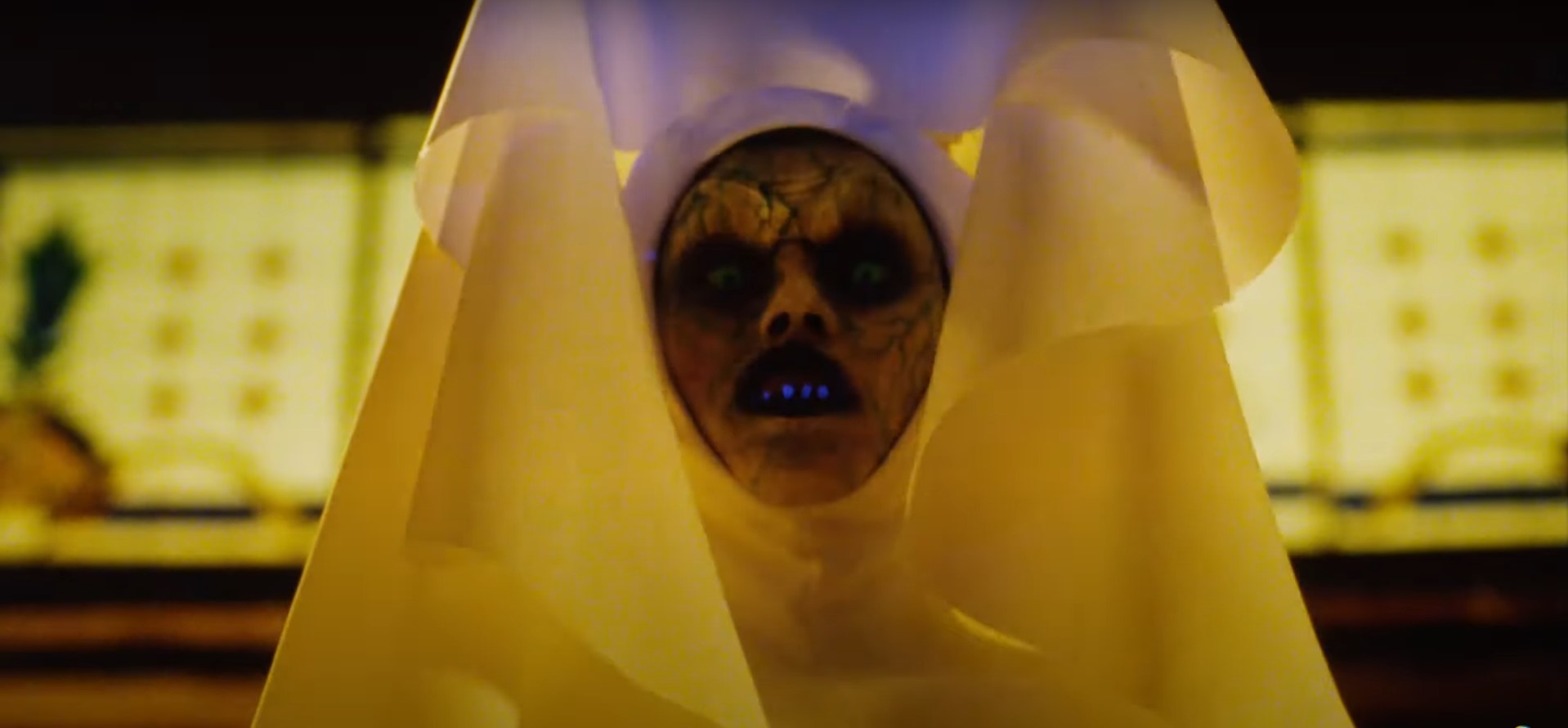
May, 1966 – a young boy is murdered, eaten, in his Northeast home.  Nearly six decades later and a series of disappearances and strange deaths in between, a young couple inherent the property that the locals have feared haunted, cursed, and possibly even inhabited by a witch.  As the house-inheriting husband is eager to sell the house to get rid of the reminder of his mother’s abandoning betrayal, the wife is equally eager to keep the house, settle in, and start a family.  The house possesses a presence captured by the corner of the eye, the hairs on the back of the necks, and the overall sense of dread that lies heavy in the pit of the stomach as the more the couple stay in the house, the more the Beezel, a blind evil witch lurking and hiding in the basement, influences their dreams and reality.  Beezel also wants a child and will take what it desires and kill anyone standing the way. 

What the horror genre needs nowadays is a ferocious witch film and I’m not talking the spellcasting, broom-riding, cauldron-congregating kind of witches with black pointed hats, large warty noses, and catty familiars.  I’m talking about hardcore old and ugly broads with an extreme hunger for not just children but for all of humanity, capped off with, perhaps, a good, solid cackle that’ll redefine the iconic figure from the traditional sense to a reverse revolutionized hag rooted in folklore but scorned by life itself.  A few filmmakers have tackled the idea and filmmaker Aaron Fradkin has taken a stab at it with “Beezel,” a 2024 Northeast-shot, visceral supernatural witch tale that was originally a short film expanded into a full-length feature film based on the short’s positive feedback.  The “Val” director cowrites with wife and fellow “Val” actor-writer, Victoria Fradkin under their cofounded independent film production company Social House Films. 

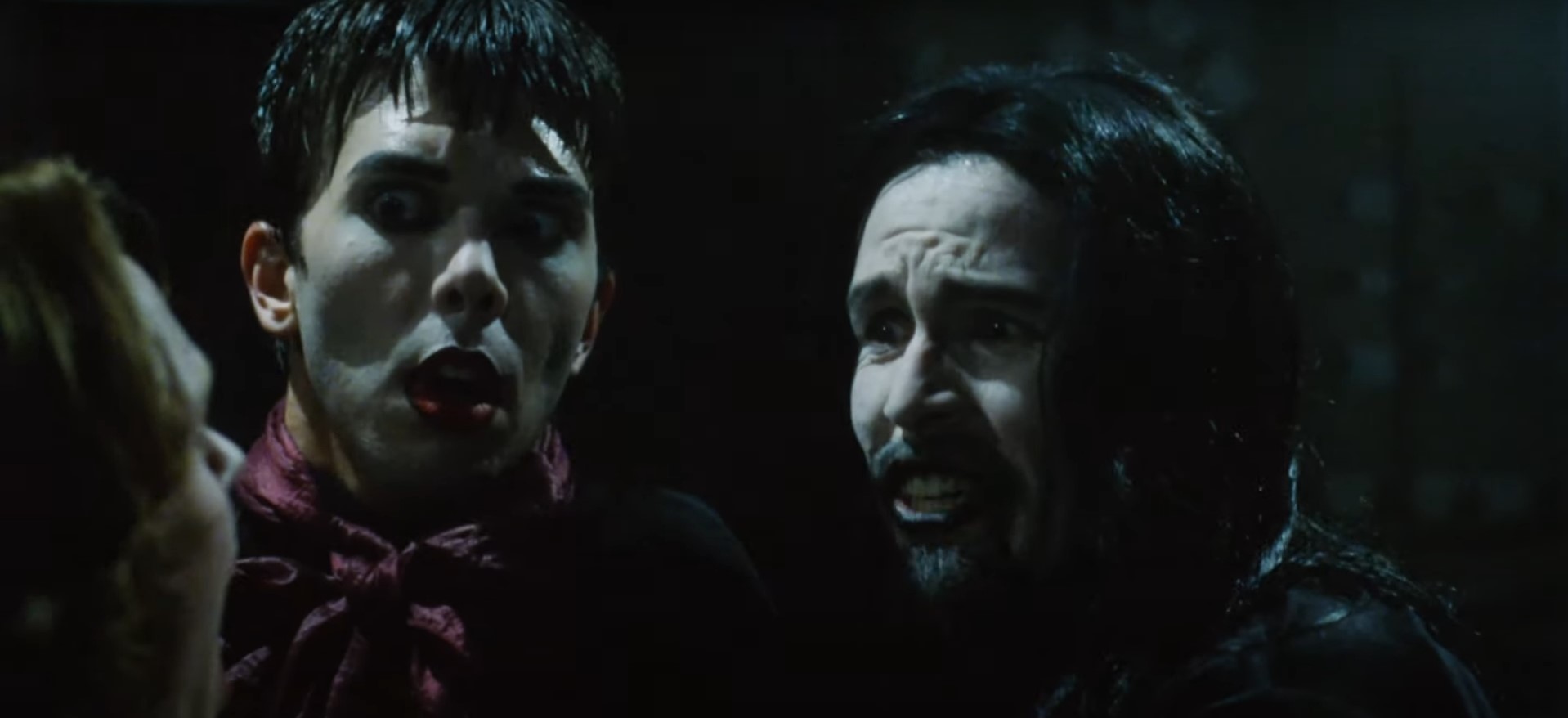
Because “Beezel” was first a short film, to flesh out a full length, the Fradkins smartly built around the short story an episodic series around it that spans decades.  Different actors are casted to reflect different periods, circumstances, and develop a variety of reactions to keep with and keep going a timeline of change, connected all by one single element, the carnivorous blind witch lurking in the basement shadows.  1966 starts off with more of child’s perspective who opens a secret bathroom hatch to the basement to see his pleading-for-food mother before his arm is snatched and he’s rip-to-shreds off camera.  The vicious and quick opener doesn’t leave open the door of development and we don’t get a real sense of anything or anyone until LeJon Woods (“The Hangman”) meets Bob Gallagher (“I Don’t Want to Drink Your Blood Anymore”) about 20 years later outside the home as the documentarian and homeowner, Apollo and Harold Weems.  Having seen now three films his this year, LeJon Woods feels very much like a one-note actor playing the same person throughout those roles.  Gallagher dips into a more sinister cover as the seemingly Mr. Rogers or Ned Flanders neighbor that drops breadcrumb clues of his dark secret and its one scary in-character conversation he has with Apollo.  From there, we jump another 20 years into the early 2000s with what was initially the original short film of an at-home nurse named Naomi (Caroline Quigley) replacing another nurse who disappeared in the Weems house.  This leads into the third act really sets up nicely Harold Weems second wife, Deloris (Kimberly Salditt Poulin), who’s on her deathbed in hospice care and solidifies the tone with a girth of suspense that leads into what would be the final moments left unseen of young couple Lucas and Nova (French actor Nicolas Robin and the director’s wife Victoria Fradkin).  Lucas, who inherited the neighborhood blighted house from his mother Delores, is eager to remove all denotations of his mother from memory, the free-spirited and more forward Nova wants to settle, have children, and start living her life.  Their bond sours overtime with the witch influence invading the subconscious and conscious body for her own ravenous gain in a blood-spilled buffet of knives, guts, and videotape.  The film rounds out with Elise Manning, Leo Wildhagen, and Aaron Fradkin dons the makeup and prosthetics to play the blind witch Beezel.

Fradkin’s able to capture desolate mood with limited production sets.  Most of all the “Beezel” story is set inside Fradkin’s childhood home in Massachusetts and with real, cold, New England snow that latter half of the story takes place.  Every tight and cobwebbed crawl space, every radiator-induced floorboard creak, and every outdated, antiquated, and obsolete feature of his parent’s home gave every ounce of spooky energy to “Beezel,” which, ironically enough, is what Beezel actually inflicts upon the current residents of the house.  Editing and the practical witch effects build the tension and suspense without giving too much away of Beezel’s hideous figure, cherishing Beezel for timely appearances rather than relying on its overuse which often leads to exposing too many rubbery and prosthetic flaws.  The episodic nature also keeps the story from being stale by jumping years, if not decades, that shepherd new characters and new scenarios into the fold as the story evolves through the difference lens of technology, in a half-ominous and half-found footage perspective with the latter being shot in super 8, VHS, and digital handheld camcorder and the original short breaking up the pattern with a microcassette tape deck.  “Beezel” perfects the blend of live-action and found footage without feeling forced and unnecessary with a truly frightening approach to the witch trope that’s worth devouring whole. 
The Social House Films brings the meanest witch this side of 2024 and Dread, the subsidiary label of Epic Pictures Group, who also pushes their own boundaries with “Beezel’s” visceral path, as well as sport some uncommon nudity in one of their films, has the Blu-ray for you! The AVC encoded, 1080p resolution, single-layer BD25 manages to scare through the lower end of capacity format with really no issues with compression. No banding, no blocking, nor any other noticeably ostentatious artefacts to speak about as the rendered image, despite its softer detailer markers, pulls off a passable and potent portentous story through a digital, anamorphic 1.78:1 aspect ratio lens, often switching between media parallels of POV Super 8mm, VHS, and DVX camcorder that vary in levels of detail and grain. Dread Central presents two English audio options, both lossy: a Dolby Digital 5.1 and a Dolby Stereo 2.0. Surrounding, multi-level house atmospherics, various media equipment, in-and-out of the dream subconscious, and, of course, the blend witch herself, create an unfaltering, ample, and competent sound design although the format doesn’t reproduce true fidelity. Back and side channels flourish with frightful house creaks and other environmental elements while basking in the silence for a solid jump scare or building palpable tension. English subtitles, as well as Spanish subtitles, are available for selection. Special features include an in-depth look at the making of the film, Aaron Fradkin’s short films “Doctor Death” and “The Sleep Watcher,” and other Dread Central distributed film trailers. I had aforementioned Beezel not being shown too much in the film but her rather grotesque, bloodied-mouthed face captured in still image, glammed up and embellished for public consumption, graces Epic Pictures’ one-sided, front cover image, warmly soaked in a reddish-orange glow. The disc is pressed with a Scolopendra, or Giant Centipede, coiled over the title. No other tangible items come with the release. The not rated release has a runtime of 82 minutes and is region free for all!

Last Rites: As we close out 2024 with an evil old hag, “Beezel” is one hell of a movie to close out on. Soul-tattering story that spans decades, “Beezel’s” the witch with an incredible insatiability and her hunger will have you recoil in fear of being the main course.

“Beeze” is the Witchiest Blu-ray of 2024! Get it here!

EVIL Doesn’t Take Rejection Well. “Village of Doom” reviewed! (Unearthed Films / Collector’s Edition Blu-ray)

“Village of Doom” now on Unearthed Film’s Collector’s Edition Blu-ray!

Tsugio Inumaru is considered the smartest young man in his village.  Illness took the life of his parents, and he raised by his grandmother and lives off her land’s income, looking after him and dreading the day Tsugio becomes drafted as a soldier in war service, which bestows great honor from the villagers.  While husbands are away serving their country, bored and lonely housewives and bachelorettes desire the carnal company of the men remaining and with Tsugio’s youth and his own sexual yearnings bubbling to the surface, he’s prime Kobe beef for the hungry village women.  When Tsugio’s health examination reveals a tuberculosis diagnosis, he’s acutely shunned by the villagers, drying up his sexual escapades, as well as potential betrotheds.  Rejection by his village, and even his country, sends the young man into plotting a massive killing spree, targeting all of those who’ve forsaken or scorned him to a life not worth living. 

In the Tsuyama outskirt village of Kamo of 1938, 21-year-old Mutsuo Toi cut the village’s electricity, strapped flashlights to the side of his head, and took a mini arsenal that included a Browning shotgun, a katana, and an axe to 30 villagers, including his grandmother, in an act to revenge killing for being rejected socially and sexually because of his tuberculosis diagnosis.  What is known as the Tsuyama Massacre, Mutsuo Toi’s cold and merciless act of carnage was the basis for Noboru Tanaka’s “Village of Doom.”  The pinkupsloitation director of “Rape and Death of a Housewife” and “Angel Guts:  Nami” helms the Japanese, semi-biographical tale, penned by Takuya Nishioka (“Tattoo,” “Female Teacher:  Chain and Bondage”), that follows closely the bullet point events of Mustuo Toi but with different named characters and a strong pink eiga touch.  “Village of Doom” is one of Kazuyoshi Okuyama’s (“R100,” “Self-Bondage:  All Tied Up with My Own Rope”) first produced ventures and is a production of the Fuji Eiga and Shochiku Eizo Companies. 

While Mutsuo Toi is not directly portrayed, his downward spiraling steps are indirectly followed by Tsugio Inumaru, played by the late Nikkatsu actor Masato Furuoya.  Furuoya’s relationship with director Noboru Tanaka is well established within their director-actor collaborating context with Furuoya having roles in Tanaka’s previous credits of “Rape and Death of a Housewife” and “Angel Guts:  Nami.”  There’s a blanket of comfortability within Furuoya who must treat his character as one-part pink paramour and one-part biographical massacrer, seducing with a tantamount tease of fantasy and authenticity.  Furuoya’s beleaguered performance is a jagged mountainous range of emotions from confidence and compassion to hormonal desires, to the stressed misgivings from cold shoulders and bad fortune mishandled by Tsugio’s own sense of worth to his himself and the village that has turned its back on him.  In keeping with the simulated practice of Yobai, the night crawling sexual escapades amongst young men and women, typically unmarried men and women, Tanaka portions heavily toward Tsugio’s internal grievances with the suddenly thrusted into the primitive and stimulated needs of a young man’s novice sex drive awaken with a morsel nude photograph.  Furuoya’s costars are the collective antagonist from the perspective of Tsugio with their geniality turned hostility of the TB diagnosis.  Sexualized warmth and freedom run rampant, peppered in between with subdued duty to village and country, that cradles an shy Tsugio’s into his manhood but when his manhood is threatened and the village neglects and rejects his contributions, Tsugio’s acute ostracization from within the only community circle he’s ever known disfigures his rationality into revenge.  The cast is surprisingly pink vet lite with the actors coming from other Japanese oriented popular subgenres like samurai films, erotic but tasteful comedies and romance, and horror with Misako Tanaka, Isao Natsuyagi (“Female Prisoner #701: Scorpion,” Kumiko Ôba (“Hausu”), Shino Ikenami (“Evil Dead Trap 2”), Midori Satsuki, Yashiro Arai, Renji Ishibashi, and Izumi Hara (“Island of the Evil Spirits”).

“Village of the Doom” is a two-toned down spiral to build up only to crash down the hopes of an impressionable young person.  Similarly seen in later works like Gus Van Sant’s “Elephant” where the visually intense, raw, and viscerally slicing culmination of enough-is-enough points back to the series of occurrences that significantly mile mark every step lead to the slaughter.  Set inside a valley surrounded by green mountains, the idyllic and rural riverside village impresses more backdrop tranquility than doom with slower pace and dutiful lifestyles but like most cutoff societies, the slow, insidious corruption of morality courses with infectious infidelity under the guise of Yobai, upends rightful justice and trades in for lynch mobs, and wanes promises for easy streets and exploitation run out dates that run its course for one but not the other.  All these aspects have relevant translatability to today’s cliques and inner circles that oust the unusual to where a sense of belonging feels hopelessly frustrating.  The isolation is so engrained that it highlights, in a very matter-of-fact way but does speak to it quite a bit, is the incestuous relationships between related villagers with the instances of Tsugio and cousin Kazuko’s flirtatious meetups and talk of marriage as well as Tsugio accidental arousal around his cousin’s aunt.  This adds to the tension and the corruption of that old idiom of don’t shit where you eat and the evident sourness spoils relationship ties when family is important to lessen the blows of life’s subsidiary problems.  For Tsugio, who is already dealt a bad hand with both parents deceased and his illness, the whole village rots what’s left of his innocence and ambitions and, in turn, aims to exterminate those who’ve foiled his purity.

A wicked, notorious true crime story now for the rest of the world to visual in “Village of Doom” on Blu-ray, courtesy of Unearthed Films on their Unearthed Classics sublabel.  The new Collector’s Edition Blu-ray is format encoded onto an AVC encoded, 1080p high-definition, BD50.  The picture is tempered with the muted colors, or rather the scaled grays, of an archaic Japanese village coupled by the browns and straw hued housing set amongst in and surrounded by a sea of green foliaged valley, and while objects are delineated nicely without any saturation bleeding or compression issues, the colors don’t necessary pop.  What does pop are the textures of the same articles mentioned above.  The groves of thatched wooden abodes are remarkable deep, the greens, though seamless, are nicely touched upon in the foreground, and skin consistencies vary person-be-person within idiosyncratic personal brackets with dynamic sweatiness and emotion-delivery contouring to accentuate.  The Japanese LPCM 1.0 mono has no problem discerning elements.  Though all funneling through a single channel, the dialogue and ambience works together thanks to the clean, more immersive ADR.  Mashanori Sasaji’s tests the soundscapes of traditional Japanese drum rhythms of Oo-daiko with then modernized synthesized notes to create a forebodingly, entrancing composition.  With any post-production voiceover work, dialogue is very robust, and the synchronized English subtitles offer an error-free and organic translation.  The original audio file is compressed cleanly with no issues with crackling, hissing, or any other damage for noting. Unearthed Film’s 17th spined Classics title supplements with an audio commentary by Asian film experts Arne Venema and Mike Leeder, a look at the Tsuyama Massacre in Dark Asia with Megan: Case #57 Japan’s Darkest Night, a promotional gallery, and the theatrical trailer. The Amary Blu-ray case is housed in a cardboard O-slipcover featuring Mutsuo’s iconic night-crawlin’ getup on Masato Furuoya’s Tsugio in colorless black-and-white. The case has the same image used for the cover with no reversible sleeve and the inside does not contain any tangible inserts or materials. The disc is pressed with not the same image but the same head flashlight Tsugio, this time looking right at you in unison with his shotgun barrel. The not rated feature has a runtime of 106 minutes and is region A locked.

Last Rites: “Village of Doom” depicts the same sad story that strikes the hearts of today’s mass shootings, spurred by the dispel from those in proximity, intimate, and friendly. “Village of Doom” is a true classic of casted out carnage relit by Unearthed Films to retell the notorious narrative of Japan’s deadliest mass killing ever.

“Village of Doom” now on Unearthed Film’s Collector’s Edition Blu-ray!

Demonic Nuns Want Virgins to Resurrect EVIL! “The Convent” reviewed! (Synapse Films / 4K UHD and Standard Blu-ray)

4K and Blu-ray “The Convent” Demonically Entering Your Soul! Buy It Here!

A woman strides into a convent carrier a can of gasoline and a shotgun during the sacrament of Eucharist between priest and nuns.  After setting the humble nave ablaze, she unloads shotgun shells into all the screaming bodies.  40 years later, a group of Greek life college students look to make their Greek letter mark on the same derelict convent now swarming with urban legends and ghost stories.  When a virginal student is kidnapped by wannabe Satan worshippers, they accidentally open the gate for dormant demons to arise through the corporeal vessels of the dead.  The possessed dead slaughter all in their way to seek another virgin, one that will embody their unholy master until this plane of existence.  The only chance for survival is to track that now woman from four decades ago to finish what she started after 30 years in an insane asylum, to blow away the demonic beasts of Hell!

At the turn of the century in the year of Lord of 2000, a year some Christians believed marked the 2,000th anniversary of the incarnation of Jesus Christ, saw another reincarnation of Hell passing through Catholic sacred ground from the creative culinary of profanity director Mike Mendez.  The one of a handful of creative talents behind the “Satanic Hispanics” anthology film and the native Los Angeleno helmed “The Convent,” his third directorial in horror behind breakout pyscho-hit “Killers” and the male-chauvinist be damned horror-comedy “Bimbo Movie Bash,” from the Chaton Anderson’s debut script full of sacrilegious imagery, glow-in-the-dark veined demons, and the dark comedic charm of early 2000s.  Shot entirely in Los Angeles, the demon-comedy is produced by Anderson and Jed Nolan (“Jurassic Women”) on a microbudget from executive producers Ryan and Roland Carroll of Alpine Pictures (“Dark Honeymoon”), Elliot Metz, and Rene Torres, who served as associate producer on the cult favorite, “Night of the Demons.” 

The collegiate characters are not only surrounded by twitching, carnage-dishing demons under the nuns’ habits but they’re also surrounded by headlining genre greats Adrienne Barbeau (“The Fog,” “Swamp Thing”) and, briefly, Bill Moseley (“The Devil’s Rejects,” “Texas Chainsaw Massacre II”) and gangster rapper, the late Coolio.  Barbeau doesn’t lose a step being the beautiful badass we all know and love from her reign as an 80s-90s scream queen, shotgun barreling down demons left and right as her character’s 40-years-senior self from the Nun-torching and blasting opener, the accused certifiable crazy lady called to action in Christine.  She’s called to once again stop a demonic Catholic kerfuffle she immobilized from spreading four decades back by a new set of naïve, older teenagers looking to get high, get lucky, and get the kicks.  Joanna Canton, who had three seasons in her on “That 70’s Show,” battles back-to-back with Adrienne Barbeau as Clorissa, the lead principal of the trespassing teens.  Canton is joined by story boyfriend Chad (Dax Miller, “Blood Surf”), story friends Biff (Jim Golden), Kaitlin (Renée Graham, “Shriek If You Know What I Did Last Friday the Thirteenth”) and Frijole (Richard Trapp, “Re-Cut”), story little brother and abuse-taking pledger Brant (Liam Kyle Sullivan, “Rideshare”), and story gothic bestie of another life time in Mo (Megahn Perry, “The Perfect Host”) whose been ostracized by mostly Clorissa’s friends and even a little by Clorissa trying to escape a gothic lifestyle for more fit in “normal.”  A dark and spooky night in a rundown convent transforms into a night of terror when Satan Worshippers Sapphira (writer Chaton Anderson, “Wither”), Davina (Allison Dunbar, “Browse”), and Dickie-Boy (“Kelly Mantle, “The Evil Within”) are led by so-called Satanist expert and a poorly 17th century speech replicator Saul (David Gunn, “Killers”).  “The Convent” does have dynamic trope characters, ranging from jock, to druggie, to cheerleader, to goth, and to the nerd, following formulaic footsteps to face forces of ferocious, fanged demons and doing it oh not so well and oh so gloriously bloody.  Casting rounds out with Oakley Stevenson, Larrs Jackson, and Elle Alexander.

Mendez’s “The Convent” has a real identity crisis issue walking in the familiar territory that closely resembles Kevin Tenney’s “Night of the Demons.”  Hell, I would go as far as stating Mendez’s Y2K-personified horror is a near step-by-step remake of Tenney’s 1988 demon possession carnage in an abandoned structure film.  However, minutia differences, a fall of Catholicism theme, and the addition of a motorcycling, demon-destroying Adriene Barbeau keep similarity nuances at bay and the acquainted plot lively and entertaining with a glow-party, nightclub maquillage on the demons to give them a fascia of techno-effervescence veins.  Mendez also adjusts the demons’ movements to a rapid twitch with increased frames per second and having the actors jerk their movements in a wild array.  Seems a little bizarre at first but the effect grows on you, and you can’t imagine “The Convent” demon without the spasmatic shots, as their glowing eyes set on seek-and-destroy roam from dilapidated hallway to dilapidated hallway, succumbing to the evil spirit’s will after the life force leaves the body.  Themes of an evil Catholic perspective will challenge those with a Christian value upbringing, especially with nuns and priests being gunned down and torched, and more character specific concepts of personal growth in deciding what’s right versus what’s popular run a paced course of dispersed too late to fix what’s already broken. 

As part of the Mike Mendez 4K UHD double bill release from Synapse that includes his individual inaugural film “Killers,” which we will review soon too, “The Convent” comes in a 2-disc, dual format set, making it’s uncensored, U.S. debut remastered in Dolby Vision 4K from the original 35mm internegative elements.  HEVC encoded, 2160p ultra-high definition, BD66 and the AVC encoded, 1080p, BD50 rockets the previously out of print film right past a standard Blu-ray release and into the land of 4K with 2k hitching a ride.  Both formats presented in a widescreen 1.78:1 aspect ratio, the definition and color saturation advancement are a huge leap from previous DVD releases with more delineate means inside a broadly shadowed interior.  Light and shadow have now divided fully and agreeably to shapes are now more obscured or in illumination.  With that being said, details are not knocked out of this part and that’s especially surprising since director Mike Mendez supervised the 4K remastering.  Facial features do appear smoothed out, more so on the standard Blu-ray release.  UHD has a slightly better rooting out skin details and customer texturing which Adrienne Barbeau leather jacket and tight denim jeans, with all the folds, zippers, buckles, and such, seeing the most promise.  The superimposed glow f/x has rich lamination with the emanating pulses creating reflection being done well on character faces and throughout an enclosed room.  The UHD and standard Blu-ray come with an English DTS-HD master audio 5.1 surround sound from the original 16-track master audio.  Uncompressed fidelity is a complete win here for “The Convent” that seizes side and back channels with monstrous grunts and growls, and not to forget to mention the often-neglected spooky house ambience of creaks, cracks, and killer hits to the body.  A broad range helps diffuse distinct layers to the individual channels.  Dialogue renders clean and clear with no pitchiness of hissing or crackling to note.  English subtitles are available on both formats. While the UHD only has eyes for the feature, the Blu-ray has the movie plus Hell-Raising bonus content, including two audio commentaries with a cast and crew commentary with director Mike Mendez, Megahn Perry, and Liam Kyle Sullivan and a Lords of Hell commentary featuring David Gunn and Kelly Mantle in full character of Saul and Dickie-Boy, a behind-the-scenes featurette, a location featurette, a single deleted scene, gore/kill scene outtakes, the original EPK (Electronic Press Kit), a pair of promotional trailers, and a still gallery. The new primary cover art and the reverse cover art inside the black Amaray case is illustrated by Ralf Krause and Samhain1992. A 6-page essay from Corey Danna has cropped color pictures along with release acknowledgements on the backside. The not rated film has a 80-minute runtime and is region free.

Last Rites: Never intended to take itself seriously, “The Convent” has wicked style, makeup, and effects under an early 2000’s feng shui and is balls-to-the-wall nonstop with demonically dark humor laughs and the barbaric blasphemy of a savagely railed faith!

4K and Blu-ray “The Convent” Demonically Entering Your Soul! Buy It Here!

Digging Up the EVIL Disentombs the Past! “Exhuma” reviewed! (Well Go USA Entertainment / Blu-ray)

Open the Blu-ray Coffin on “Exhuma” Today!

A shaman and her assistant recruit a geomancer and a mortician to investigate the case of an American newborn boy’s distressing grave calling that has also haunted every patriarch member of the family for generations.  The large paying job sends them to remote forest where the unmarked grave of the boy’s great, great grandfather lies beneath the dirt.  For the geomancer, all signs point to not disturbing the grave but the father’s eagerness to cure his son’s troubles and the shaman’s persistence for a big payday goes against the wise geomancer’s better judgement.  All is seemingly well after exhuming and transferring the ancestral coffin to be cremated at a nearby hospital the next day until a greedy, hospital official pries open the sealed casket, releasing a long-awaited evil, and digging up out of the same burial ground another malevolent and mysterious ancient force that reaches far beyond the borders of Korea. 

Here as of late, ItsBlogginEvil.com’s last three reviews have taken readers on a genre-diverse tour of Asia, from Japan with Yu Nakamoto’s meta-slashers in “Ikenie Man” and “Harawata Man,” to Hong Kong with David Chung’s affrayed police actioner “Royal Warriors,” to conclude in South Korea with the supernatural horror in the realm of cultural superstitions of P’ungsu, or geomancy, in Jang Jae-hyun’s latest written-and-directed thriller “Exhuma.”  The 2024 film follows a string of religious related, supernatural themes Jae-hyun has put out in his prior two directed projects with “The Priests” and “Svaha:  The Sixth Finger,” and like “Ikenie Man,” “Harawata Man,” and “Royal Warriors,” a portion of Jae-hyun’s films are touched by Japanese culture.  “Exhuma” amounts to the same standard of crisscrossing the two cultures with dangerous results with “Exhuma” digging up a past better left alone.  Park Hyeong Jin and Kwon Ji Yong (“Ghost Mansion”) produce the spiritually turbulent story under Showbox Entertaiment and Pinetown Productions. 

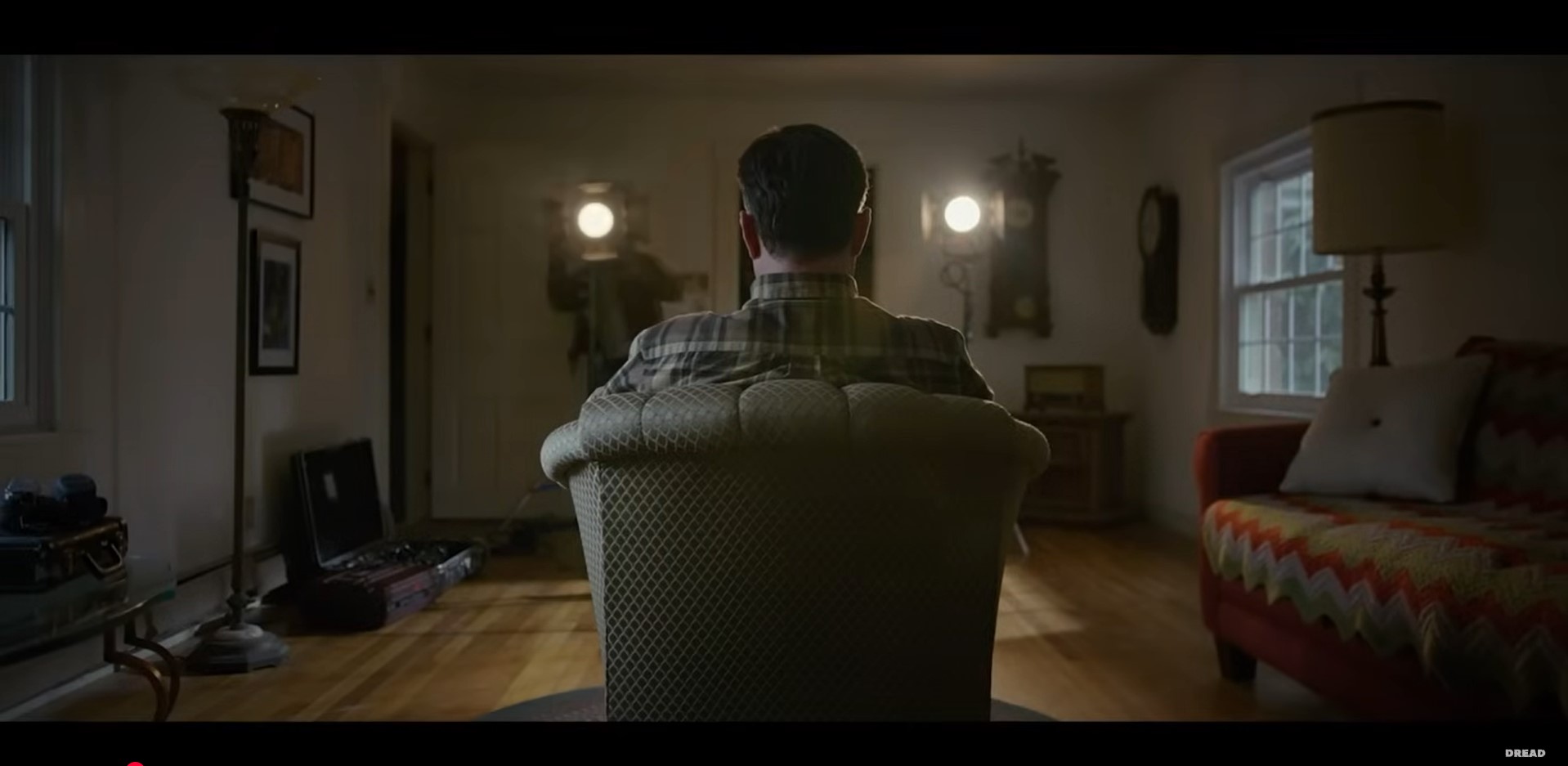
“Exhuma” encircles four culturally inclined characters that entrench themselves into an unorthodox means of exhuming a disturbed essence for what is essentially an exorcism variant to alleviate living perturbation beyond the grave.  The superstition here revolves around the land temperament.  Geomancers find good sites to lay people to rest, ones that exert extrasensory, or grave call, troubles onto family members that place upon them a grief, anxious, and other mentally uneasy state, and it’s the “Exhuma’s” Geomancer who has story predominance, shared only with the young and beautiful shaman woman with tagalongs who resemble more of assistants than coequals.  In an age-old and cautionary tale of wisdom and inexperience, Choi Min-sik (“Oldboy”) and Kim Go-eun (“Monster”) play the respective roles of the reluctant and experienced Geomancer Kim Sang-deok and the naïve eager yet gifted shaman Lee Hwa-rim.  Receiving character voice over monologue introductions and becoming the ultimate deciding factors of this new job is worth the pay, they completely overshadow the Shaman apprentice (Lee Do-hyun,) and the mortician (Yoo Hae-jin) who works with the Geomancer.  Pivotal as these support characters are to the story, not only buffers for the evil that beleaguers them but also as latched on friends and family of the isolating weird and strange subculture to most but normalized in Korea, the shaman apprentice and mortician definitely take a back seat to the more prominent players to the point where they almost seem contributorily worthless to the task.  As a whole, the dynamic works because the shaman and geomancer alone would not be sufficient for diabolical misadventures of an exhumation gone wrong and supplement only when necessary to aid the fight against an ancient evil twice over.  The cast fills out with Hong Seo-jun, Jeon Jin-ki, Kim Jae-Cheol, and Lee Jong-goo.

The wafting back and forth between Korean and Japanese culture, the fraternization of beliefs and superstitions, tells “Exhuma” differently than most hilltop haunts and horrors.  Themes of a haunted past and inexplicable guilt riddle holes through family lineage, resulting rancorous ripples in the form of mental illness, and devised as a story vehicle device of supernatural subverting trauma from the sins of the father.  In America, Shamanism and Geomancy don’t exist, especially in the history, but for Korea and its people, the country is rich in transcendent ritual and mythology that shapes society, even in their cinematic culture as regularly do we see period films of feudal Korea.  History also dictates “Exhuma’s” need to be a representation of purging the long Japanese occupation of Korea for nearly three and half decades from 1910 to 1945.  The occupation was a disruption in Korean way of life with oppression and war machinations stitched into Korean’s fabric, hence the Korean plot of land being very spoiled with vileness in “Exhuma’s” tale of one historically troubled family’s course to remove that uneasiness that has plagued and followed them to America.  Yet, the past is rooted deep and Jang Jae-hyun’s understands the difficulty of eradicating a sullied ancestry by dichotomizing his darkly toned, folklore valued, and occult twisted story into two parts with sublayers as deep as the dirt surrounding the coffin, or rather, coffins with a formidable presence created and conjured by malicious Japanese Yōkai and represented in one of the most iconic Japanese figures as remnants of an Imperial Japan occupation.

Lying in wait underneath the high-definition terra firma is Well Go USA Entertainment’s “Exhuma” on an AVC encoded, 1080p resolution, BD25, presented in a widescreen 1.78:1 aspect ratio. Accompanied by no information on the video vehicle, IMDB.com lists Jang Jae-hyun and cinematographer Lee Mo-gae shoot with an Arri Alexa Mini which offers the ease of use of multiple lenses, and that shows here with a vast stretch to encompass the Korean mountains into the frame as well as keeping tight on characters while keeping in focus the immediate surroundings. Details are sharp under a flinty tone of saturated grays and blacks with spot pops and glows of in-scene lighting and under the capacity’s umbrella, finer textural elements suffuse through the darkness and into the fold. Audio options include the original Korean language DTS-HD 5.1 and an English dub DTS-HD 5.1. Crystal clear dialogue runs through parallel with the visual counterpart and is well timed and potent, touching the side and back channels with the eerie callings of the grave and its inhabited spirits running rampant free while harnessing focus on the character on scene to create a ranging discarnate of deep, ominous sounds that stalk and haunt the principals. English translation paces well and appears to be translated grammatically and is error free. Well Go USA Entertainment releases are feature focused and this one too containing only a making of featurette in the bonus content along with the trailer. The interior of the traditional Blu-ray Amaray comes with a disc pressing of the four principal characters peering into a dug grave. The exterior has a two-tone, subsoil profile forming a face out of a grave with the four principals on the topsoil and the same image also graces the cardboard O-slip that has a pseudo-lenticular sheen. Authored to have a region A playback, “Exhuma” runs just over two hours long at 135 minutes and is not rated.

Last Rites: The addition of learning authentic, practiced rituals benefits “Exhuma’s” folklore frights tenfold and with neat, grounded performances and a superb blend of visual and practical effects, this original, supernatural thriller raises the Korean movie industry up a notch on the global scale.

Open the Blu-ray Coffin on “Exhuma” Today!

This EVIL Has Brains! “Head of the Family” reviewed! (Full Moon Features / Remastered DVD)

Get Ahead in Life with “Head of the Family” on DVD!

The Stackpooles are a little strange and are usually the talk of the small town of Nob Hollows when the zombified trio of siblings pick up the groceries at Lance’s Stop and Shop general store and diner.  Yet, the Stackpoole’s are not Lance’s problem, not yet anyway, when Howard, a no-good shakedown thug, forces his might into Lance’s business as a silent partner.  Little does Howard know that Lance has an ongoing affair with his wife, Loretta, and they devise a plan to get rid of Howard using the newly discovered dirt on the Stackpoole family’s bizarre kidnappings to take care of Howard once and for all.  Lance figures he’s found his meal ticket after blackmailing Mryon, the fourth, and unseen, sibling who’s the mastermind and head of the family – literally a giant head – using telepathy and mind control to against his brothers and sister to do his bidding, but Myron is no fool to be taken advantage of so easily. 

Who just is this Robert Talbot?  The director of “Head of the Family,” who hides behind a black mask and speaks through a voice modulator, is none other than Full Moon’s secret identity for Charles Band under a pseudonym persona to exact a different kind of picture outside the context he’s expected to continue as well as an empire built on the image of horror.  “Head of the Family” may not be tiny dolls inflicting an affliction based on their evil ways or the resurrection of the formerly dead and abnormal to, once again, inflect damage upon their creators, and possibly, the world we know it.  Instead, “Head of the Family” slips out of Full Moon’s comfort zone and into another, different kind of shadowy namkeen to small plate audiences’ bizarre fascination with the weird and fantastical.   Also, to exhibit T&A more than like the usual in the Full Moon repertoire.  The less horror, more zany cult 1995 feature structures around the titular big headed villain, a band of his freakshow kin, and a constantly copulating couple that’s penned by Neal Marshall Stevens (“Thir13en Ghosts”), also under a pseudonym of Benjamin Carr, based off a “Talbot” story, and produced by, also “Talbot,” and “Hideous!” and “Witchouse” producer, Kirk Edward Hansen.

I couldn’t tell you if J.W. Perra is big-headed or not in real life, but the actor is certainly quite cranial as the family-telepathic, wheelchair bound Myron Stackpoole.  The literal pun of the title plays in tune with Full Moon’s madcap maniacal ties while having Perra’s large head shine, or rather sweat gland glisten, under a miniature lame body.  Myron’s enfeebled corporeal flesh drives his hunger to join the ranks of normal people as he kidnaps and surgically operates on the minds of unsuspected townsfolk to incorporate a portion of his higher intellect into a stronger body.  Myron uses his stupefied siblings’ talents, bestowed upon them through a paternal quadruplet birthing, with Wheeler (James Jones, “Dark Honeymoon”) given superhuman bugeye sight and hearing, Otis (Bob Schott, “Gymkata”) given the twice the strength of a normal man, and Georgina (adult actress Alexandria Quinn, “Taboo VIII”) given, you guessed it, the hot and voluptuous body to attract men like moth to a flame.  Speaking of hot bodies, former adult actress and “Femalien” star Jacqueline Lovell, aka porn handle Sara St. James, is absolutely supple as Loretta, a twangy blonde girlfriend to the scheming Lance, played with Cajun confidence by Blake Adams (“Lurking Fear”), and every chance Lance and Loretta get, they’re steaming the scene with erotically charged expo and exposition.  I’m fairly certain Lovell has more lines topless than she does with her clothes fully on.  In the supporting cast inventory, Vicki Lynn (“Fugitive Rage”) and Gordon Jennison Noice (“Virtuosity’) make up the remaining. 

I’ll admit I fell into that hole of expecting “Head of the Family” to play out just like any conventional Full Moon feature, comprised of pint-sized and mischievous devils to a carnivalesque tune of irregular horror.  To my surprise but not to my dismay, Band’s incognito oddity has the bones of a blackmailing thriller spiced with eccentric and caricature types and gratuitous sex at every turned corner.  “Head of the Family” progresses through interacting conversation to outline exploitation arrangements and to be informed of dangers of crossing a big headed brainiac, interjected with the occasional display of drooling operated rejects, Otis and Wheeler’s utilizing their inborn side effects, and, I keep coming around to this motif and hopefully not in a pervy way, the female toplessness that bares bountiful.  The depth perception effect to enlarge J.W. Perra’s head as Myron is executed pretty well with Adolfo Bartoli’s camera work that reflects the actors facing generally at the correct angle, as if they’re eye-to-eye with the Myron, and the edits do the effect justice as well, spliced precisely to account for dimensional space, the effects are reminiscent of Randy Cook’s illusionary work on “The Gate” films using dimensional animation and scale between live actors in the same frame but some distance apart.  If you excuse the upcoming intended pun, Band’s film is more of a talking head production than one of grotesque action, a realization you won’t be aware of until well stretched into the runtime and because of this that’s the reason there’s likely a ton of Jacqueline Lovell nudity.  Okay, okay, I’ll stop blabbering on about the nudity!   

“Head of the Family” arrives onto newly remastered DVD from Full Moon Features.  The MPEG2, upscaled 720p, DVD5, presented in a widescreen 1.78:1 aspect ratio, doesn’t have any detail regarding the remastering on the latest re-release but I suspect it’s the identical image or a slightly touched up 35mm negative used for the original Full Moon release from 1999 scanned in 2K.  15 years later, a reimagined “Head of the Family” retains the softer, radiant picture quality with a highly extensive color palette through the aura glow and a natural, yet reduced, grain.  The negative does have a flaw in what looks to be cell damage a little halfway through the runtime with a brief, dark cut line making itself known, if you blink, you’ll miss it.  This sort of obvious damage does lean more toward an identical transfer being used for the 2024 release with just a 2k scan without restorative elements.  Remastered restoration likely went hot and heavy into the audio elements.  The English language LPCM is available in two channel formats, a dual-channeled 2.0 and a surround sound 5.1 mix.  Robust with added nuances, “Head of the Family’s” soundtrack breathes new aural acuities that not only clean any distortions, if there was any, but also sharpens the tracks like a knife on a wet stone, cutting and clean.  Dialogue is clear and assertive through what is mostly a talking head span.  English close caption subtitles are available.  Much of the special features are reused from the 2016 Blu-ray release, including an audio commentary track from Actor J.W. Perra (Myron), promo behind-the-scenes video of the long anticipated “Bride of Head,” which has been stagnant for years, the original trailer, and other Full Moon Features’ trailers.  The DVD release is an exact mirror image of the physical Blu-ray release from 8 years prior with a disc press image of Myron’s closeup through a murky filter and no inserts included.  The region free release has an 82-minute runtime and is rated R without specifying the content but there is language, nudity, strong sexuality, and violence. 

Last Rites: “Head of the Family” bucks the lucrative trend of miniature killer imps for the Full Moon empire but keeps moderately in line with eccentric characters, unabashed skin, and a Richard Band jaunty soundtrack, accentuated even more in a brand-new remastered DVD version of the film that was helmed by Charlie Band himself in anonymity.

Get Ahead in Life with “Head of the Family” on DVD!