Josef’s Little One-Day Video Diary Bares Unnerving EVIL! “Creep” reviewed! (Second Sight Films / Limited-Edition Blu-ray)

“Creep” on a Limited Edition Second Sight Films Boxset!

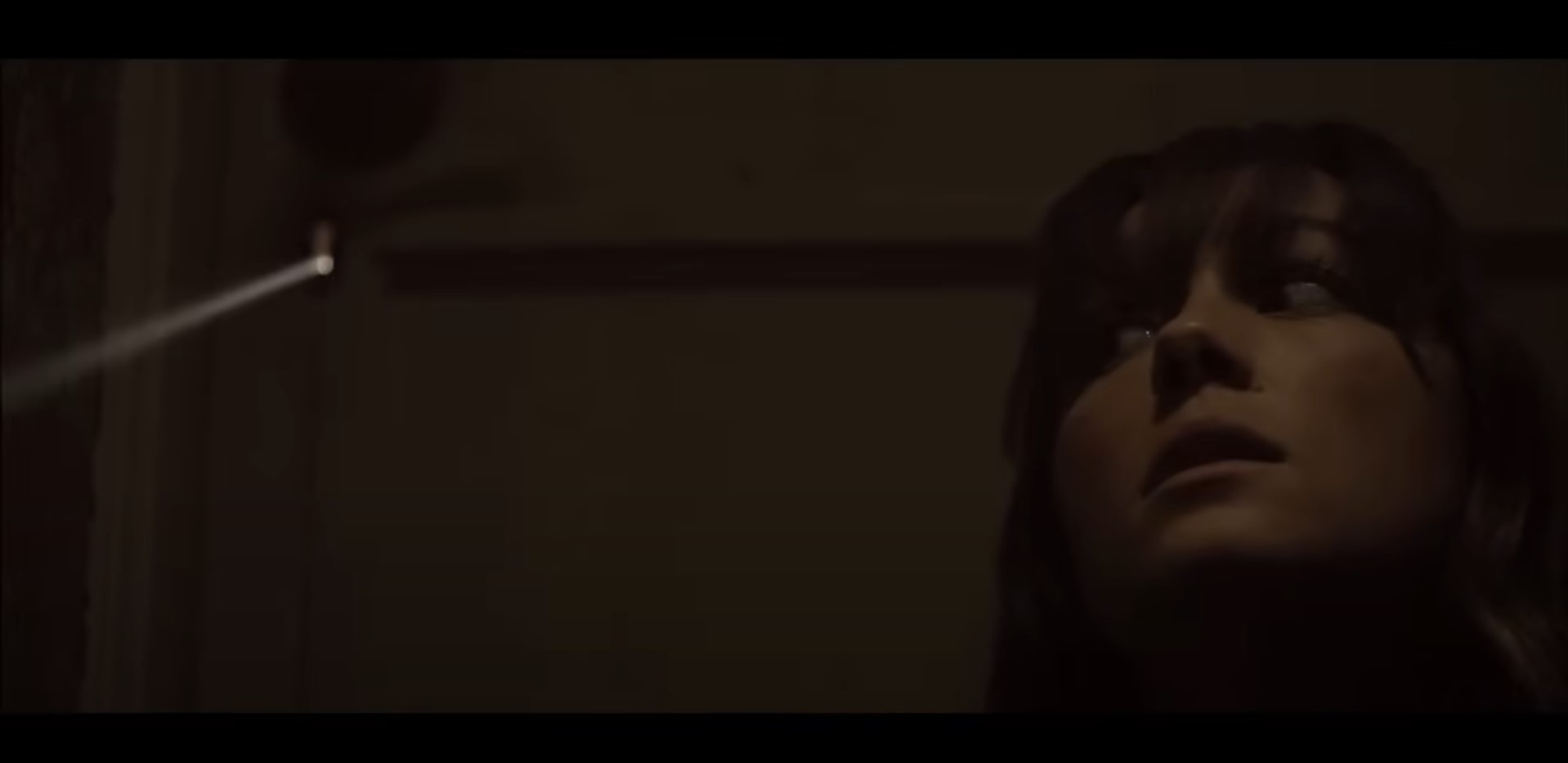
Aaron, a videographer, travels to a lakeside cabin in Crestline, California after responding to an online ad for a single day’s worth of work.  There is where he meets Josef, a husband and soon-to-be father dying of terminal brain cancer who wants to film the entire day as a memoriam video for his unborn child.  As the camera rolls, Aaron captures Josef’s strange yet sad behavior in an outpour of unstable emotions that put Aaron in an uncomfortable spot.  When Aaron learns Josef might not be sane, he’s able to elude the creep’s attempts to hold Aaron captive, but the videographer hasn’t entirely escaped Josef’s obsession with video recordings and unusual gifts being sent to Aaron’s home address.  The call to the police proves pointless when Aaron can’t provide detail information about his former, one-day employer and he often feels not alone in his home, but Josef’s last recording shows a different, desperate side of Josef Aaron can’t ignore. 

What happens when two guys with a camera try to shoot a comedy about two strangers having an awkward encounter?  They end up making one hell of an awkwardly scary horror film.  That’s what happened to Patrick Brice and Mark Duplass on their 2014 found footage film “Creep.”   Brice directed the feature along with co-writing the unsettling dark human nature story with Mark Duplass that proved to be more than just another found footage folly as the original film spawned an expansive, 2017 sequel and this year’s Shudder series “The Creep Tapes” with both Brice and Duplass returning to fill their original, multi-capacitated roles in front and behind the camera.  When those close to Brice and Duplass had screened the originally intended comedy, the feedback was to pivot to an uneasy loner and a serial stalker and that’s where producer Jason Blum of Blumhouse Productions came into play that secured additional shots and reshoots to recut and expand upon the creepy creeper.  “Creep” is also a production Duplass Brothers Productions with another “Creep” franchise regular, Christopher Donlon, serving as co-producer.

With a cast of two, the story must be engaging, interesting, scary, and above in order to continuously captivate or induce edge of your seat anxiety-riddled anticipation.  Brice and Duplass control the narrative by being on both ends of the camera that could only go in one of two directions – be a disastrous outcome of looping and stagnant underdevelopments really about nothing at all or could be evolve constantly, but slowly, to build upon, but not reveal to hastily, a slow burn of psychopathic tendencies toward one person.  Duplass as the dying Josef leaves a frightening, unsettling impression of a man glowing with mania and he’s ever effervescent in trying to playfully scare Aaron, played by Patrick Brice looking through the lens, anyway he can, such as running off into the wilderness to pop up and scream, put on a ferocious-looking wolf mask and do a song and dance act that pinches the nerves, and tell him secretive stories of his life that would disturb any listener.  Amid the craziness, we’re not sure why the character of Aaron would stay and film while being subjected to Josef’s impulses.  Yes, Josef pays him handsomely for a one-day gig but there’s no desperation in Aaron to warrant what seems to be frisky abuse at hands of a grown man on the verge of breakdown.  Audiences from the get-go will experience Aaron’s painful staidness of passivity while Josef just runs him like a high school track and while internally thinking how absent Aaron’s situational awareness is, this act of humoring another person can be totally plausible to a fatal flaw.

Found footage has been mostly overused, misused, and abused for the better part of 20-or-so plus years thanks to the global success of “Blair Witch Project,” but there are diamonds in the rough that stand out amongst the murky muddied subgenre and “Creep” is one of those sparkling few to emerge.  What’s fascinating about the design is it doesn’t try to do too much within the frame.  Simple jump scare gags, such as popping out behind doors, are heart-jarringly effective without all the razzle dazzle of visual effects or practical makeup effects.  Another star quality is the story’s music soundtrack, there is none.  Silence is golden.  One of my personal pet peeves with found footage is the use of a musical score that instantly eliminates the realism the subgenre naturally wants to perceive.  “Creep’s” longevity as a realistic scary situation within the unembellished optical camera nerve lasts because of the smaller things, such as having no soundtrack alongside the raw video recording that creates a deafening, shivering quietness and enhances those basic jump scares to a pee-your-pants level.  There’s no overcomplication of material, no unnecessary enhancing, just two guys with a camera trying to make a comedy and come out with a “Creep” of a film. 

“Creep,” the small film that could, receives a new limited-edition Blu-ray set from UK label, Second Sight Films.  The AVC encoded, 1080p resolution, BD50 is collaborative product with Kaleidoscope Home Entertainment and denotes a picture-perfect home video quality found footage always strives to reflect with a 24 FPS run and an image decoding that averages in the mid-30s.  A wide variety of healthy raw-for-realism shots from a Panasonic AG-DVX100 B version digital handheld that allowed to shoot in a widescreen 1.78:1 aspect ratio.  Darkened shades, contrasting variables, and an ungraded finish is a part of the found footage game, but the way Brice handles the camera is less shaky than most of the subgenre, completed with steadier, tracking shots or left-in-place recordings.  Details are not always going to be defined but for this subgenre, a subtle interlacing effect is appropriate and welcoming.  The lossless English DTS-HD Master Audio 2.0 Stereo mix is recorded from the DVX100’s onboard external microphone that captures the natural elements as well as a softer dialogue track for those in front of the camera compared to behind, creating an organic depth where needed, such as when Josef runs off into the woods we hear the fading crackling of brush under running footsteps.  There are some added elements into the sound design for long shots that need more than what the microphone can offer and those are meticulous placed to work with the images.  The softer dialogue does not give away to intelligible or obstructed dialogue as conversation, whether at a slower speech delivery or a heighted yell or scream, maintains prominence and, occasionally, does feedback slightly into the external microphone, adding to the realism of found footage.  English subtitles are optionally available.  Second Sight boxset are jammed packed full of succulent, exclusive content and “Creep” is not exception to the rule.  The set houses a new audio commentary with director Patrick Brice, editor Christopher Donlon, and actor Mark Duplass, an archival commentary with Brice and Duplass from the initial home video release, a new interview with Patrick Brice Peachfuzz, a new interview with Mark Duplass Into Darker Territory, a new interview with editor Christopher Donlon Expand the Universe, a live Q&A with cast and crew 10 Years of Creep, and deleted and alternate scenes and ending that hark back to the “Creep’s” original intention of an awkward and sad comedy.  The limited-edition contents include a rigid slipcase with new artwork by Luke Headland that plays into the fuchsia coloring motif we’ve seen lately with Second Sight front covers, 6 collectible art cards, and a 70-page colored book with additional Headland art and new essays from Kat Ellinger, David Kittredge, Amber T, Sarah Appleton, and Blu-ray acknowledgments and credits.  The release comes region free with an open licensing and so the 78-minute film, which is UK certified 15 film for strong violence, and references to sexual violence, can be enjoyed globally.

Last Rites: “Creep” will definitely creep you out. Second Sight’s highly anticipated and supplemental heavy set contends to be the last best physical release of this calendar year, closing 2024 by showcasing a troublesome and quirky sociopath and his unforgettable aberrant fixations.

“Creep” on a Limited Edition Second Sight Films Boxset!

Tonight’s Next Guest is EVIL! “Late Night with the Devil!” reviewed! (Second Sight Films / Limited-Edition 4K UHD and Standard Blu-ray)

Check Out the Package on Second Sight’s Latest Limited Edition – “Late Night with the Devil!

In the golden age of late-night television shows, Jack Delroy was one of the hottest late-night comedians and talk show hosts of the early 1970s, only to be beaten out by inches by rival talk show host Johnny Carson every year.  By 1977, Delroy’s viewers and popularity on his show Night Owls was slipping after multiple failed attempts to revive the show’s viewership figures and to hit the number one spot for syndicated station UBL during sweeps week year after year.  That years Halloween episode, during the sweeps week, would promise to be one to be remembered when Delroy brings a medium, a magician-turned-magician promulgator, a paranormal psychologist, and her adopted subject, a young girl who was the last known survival of a Satanic cult.  While the lineup entertains the live audience and those viewers at home throughout the night as well as being excellent for the ratings game, Halloween thins the layer between the real world and the supernatural world and an awry demon summoning goes horribly wrong, caught on the station’s camera, and with Jack Delroy and his guests caught in the middle.

If you’ve never had the pleasure of seeing “100 Bloody Acres,” the 2012, underrated Australian comedy-horror has a fine entertaining balance of black humor, gore, and suspense.  The directors behind the little-known venture, brothers Cameron and Colin Cairnes, may not have moved the needle with their debut feature in Australia, nor globally for that matter, but their latest, a 1970s, found footage, period piece surrounding demonic catastrophe on live television entitled “Late Night with the Devil,” carries with it significance and growth, personally and globally.  Having also written the script, the Cairnes recreate a time period when television use to capture grotesque and jarring images to shock the masses in full, unbridled color through the whimsical lens of a late-night television show.  In a production company opening that seemingly would never end, “Late Night with the Devil” is a conglomerate effort from IFC Films, Shudder, Image Nation Abu Dhabi, Spooky Pictures, Good Fiend Films, AGC Studios, VicScreen, and Future Pictures and produced by Adam White, Steven Schneider (“Trap”), John Mulloy (“Killing Ground”), Mat Govoni, Derek Dauchy (“Watcher”), and Roy Lee (“Barbarian”).

In order for “Late Night with the Devil” to work, the Carines brothers needed a principal lead to understand what it means to be a charismatic and funny host of 1970s late night television.  They found niche trait in “The Last Voyage of the Demeter” and James Gunn’s “Suicide Squad’s” David Dastmalchian who is an adamant man of horror himself from genre scripts, articles, and comic books to being a horror themed host himself as Dr. Fearless hosted by Dark Horse comics.  Dastmalchian plays a different sort of host for the film, a quick-wit, neat as a pin, and handsome Jack Delroy who has lofty goals of elevating his show to the number one spot in the domestic market.  Early success drives Delroy who will do anything to outscore late night king Johnny Carson but when his wife (Georgina Haig, “Road Train”) falls ill and dies early, the ratings battle slows for Delory’s show until his return to try and revive glory with kitschy content.  Halloween 1977, sweeps weeks, proves to be a chance for Delroy and his manager (Josh Quong Tart, “Little Monsters”) to spice things up with phantasmagoric guests in Christou (Fayssal Bazzi), an arrogant former magician turned cynic (Ian Bliss, “The Matrix Reloaded”), and a paranormal psychologist (Laura Gordon, “Saw V”) and her adopted subject Lilly, the debut feature-length film of Ingrid Torelli.  Aside from Chicago-born Dastmalchian, the rest of the Australian production is casted natively and do an impeccable vocal mimicry of an American accent while stunning and convincing in their respective roles, especially for Torelli whose piercing blue eyes, rounded check line, and gently raspy voice gives her an uneasy accompaniment to her off-putting innocence that works to the story’s advantage.  The cast rounds out with key principal Rhys Auteri playing Jack Delroy’s quirky sidekick host Gus McConnell whose story progression trajectory borders the voice of reason ironically enough and without McConnell and Auteri’s spot-on depiction of host announcer and comedic adjutant, there wouldn’t be steady fidelity for those who grew up on late night TV.

Late night TV essence is beautifully captured with mock production set of a 70s television studio, acquired era garbs, costumes, and accessories, and performances that provide a real flavor for programming of that time, and I would know as I would obsessively glue my attention to Johnny Carson reruns at a young age in the 1980s to early 90s.  The Cairnes and director of photography Matthew Temple deploy a studio reproduction of a three-way camera system to unfold the carnage; yet the forementioned behind-the-scenes moments in between live-air tapings feels forced, unnecessary, and artificial to the story with a lack of explanation to who and why these in-betweens are being done.  The black-and-white scenes vary in cameraperson positions from behind the coffee and snack table, behind fake floral, or just right in their face that steals from the live-tape realism.  What then ensues when the demonic light beams from one of the guest’s split open head does redirect attention to the psychokinesis death and destruction and this removes those behind-the-scenes fabrications with a replaced personal, interdimensional Hell for Delroy, shot in a more conventional style outside the confines of found footage under omnipotent means.  Cameron and Colin’s part-documentary, part-found footage, and part-conventional efforts prologue the story with an out, one that sets up connections to link violence on a single character lightning rod with maximum collateral damage, and that lead up of information almost seems trivial but works to the advantage on not only the character’s background but also generates a real spark of juicy, full-circle, nearly imperceptible greed that comes with a cost. 

Second Sight Films knows a good movie when they see one and quickly snatches up the rights to release “Late Night with the Devil” on a limited-edition, dual-format collector’s set.  The UK distributor’s 4K UHD and Standard Blu-ray combo box comes with an HVEC encoded, HDR with Dolby Vision 2160p, BD66  and an AVC encoded, 1080p high-definition, BD50, both formats decoding at a refresh rate around 24 frames per second and presented in the three aspect ratios to reproduce 70’s era television ratios with a 1.33:1 and European ratio 1.66:1 as well as seldomly switching to a 2.39:1 widescreen for more down the rabbit hole sequences.  Much like the variety of aspect ratios, an intentional ebb and flow design between color and black-and-white draws demarcating lines from the colorful live tapings to the monochromic backstage footage after the live cameras stop broadcasting.  To help lift the period piece, three-way studio cameras film within a broadcast simulated fuzzy aberration, interlacing or analog abnormalities, and color reduction used to flatten out the vibrancy some, just enough to be perceptible, until the transcendental camera takes hold and the color because richer, glossier in a moment of unclear clarity.  Textures are often lost in the fuzziness but emerge better out of the backstage footage and the eye-in-the-sky scenes.  The lossless English language DTS-HD Master Audio 5.1 adds an eclectic charge to the mostly grounded television broadcast, rooted by a single set nearly most of the duration.  In frame band elements and instrumentation adds that upbeat and jazzier score denoting late night introductions and commercial breaks.  Vocals are often muffled when viewing the show on a screen and in depth but becomes more robust and clearer when switched to camera angle; this goes hand-in-hand with the dialogue which is clear and acute when needed.  The demonic presence can come off as artificial but still manages to work within the construct.  The range is impressive for a single setting that sees audience’s reactions and loop tracks, the hustle and bustle of backstage when off air, spontaneous combustion, sickening wrangling of bodies, and, naturally of course, a blazing beam of light.  English subtitles are optionally available for the hearing impaired.  With Second Sight’s limited-edition contents, you know you’re getting your money’s worth in exclusives.  Both formats include bonus features, which is surprising considering the UHD takes up a lot of space.  These features include a new audio commentary by film critics Alexandra Heller-Nicholas and Josh Nelson, a new interview with The Cairnes brothers Bringing Their ‘A’ Game, an interview with actor Ian Bliss Mind if I Smoke?, an interview with actress Ingrid Torelli We’re Gonna Make a Horror Movie, an interview with actor Rhys Auteri Extremely Lucky, a video essay entitled Cult Hits by Second Sight content creating regular Zoë “Zobo With A Shotgun” Rose Smith, behind-the-scenes, the making-of the Night Owls brassy band music, the SXSW 2023 Q&A panel with star David Dastmalchian and directors Colin and Cameron Cairnes.  Limited-edition contents come with a rigid, black slipcase of minimalistic but effective artistic work of Jack Delroy and the devil’s pitchfork complete with pentagram on the backside.  Inside the slipcase is a tall, media jewel case to hold both discs on each side, each represented with a story character in front of black backdrop.  A 120-page color book provides new essays by Kat Hughes, James Rose, Rebecca Sayce, Graham Skipper, Juliann Stipids, and Emma Westwood, plus storyboards, costume designs, and a behind-the-scenes gallery.  Lastly, there are six 5 ½’ by 7” character collector cards.  Second Sight’s Blu-ray release is hard encoded region B playback only but the 4K is region free with both formats clocking in with a runtime of 93 minutes and are UK certified 15 for strong horror, violence, gore, and language.

Last Rites: Once again, Second Sight Films clearly has their eyes on the prize and contributes to dishing out the best possible transfers and exclusives when considering physical media. Their latest, “Late Night with the Devil,” is no longer the host but the hosted with a tricked out limited-edition set best watched from under the sheets late at night and thoroughly enjoyed within its special features after the film credits roll.

Check Out the Package on Second Sight’s Latest Limited Edition – “Late Night with the Devil!

Second Sight Delivers the EVIL Goods Yet Again! “You’re Next” reviewed! (Second Sight Films / Blu-ray)

Limited Edition and Standard Edition Sets of “You’re Next” Available At Amazon!

Celebrating 35 years of marriage, Paul and Aubrey Davison invite their four children – Drake, Crispian, Aimee, and Felix – to their rural weekend manor along with their respective spouses for the occasion.  Tensions amongst strained family ties begin to boil over as siblings quarrel before they even share the first meal all together.  Yet, that’s the least of the family’s problems when animal masked intruders shoot crossbow arrows through the windows and are found hiding, waiting under the bed with machetes.  The surprising attack sends a surge of shock through them but not Crispian’s girlfriend Erin who intends on fighting back and defending herself with survival knowhow.  As the night carries on, the family is being brutally executed one-by-one in what is seemingly random acts of violence.  Unsure how many assailants are outside and the cell service not working, Erin and the rest of survivors attempt to survive the night until help arrives. 

Before being the directorial face behind the recent string of mega blockbusters, literally, in the “Godzilla vs. Kong” films, Adam Wingard had more humbling beginnings as an original horror storyteller.  From working with “Texas Chainsaw Massacre: Part II’s” Bill Moseley as a demented door-to-door salesman in “Home Sick,” to interlacing themes of drug addiction and haunting visions in “Pop Skull,” to thrill with an abusive pursuit of an escaped convict tracking down his ex-girlfriend in “A Horrible Way to Die,” Adam Wingard had a knack for extracting small time horror in a big way.  Although all three of those examples saw success at some level, the glass ceiling never really broke until a juncture point just after the turn of the decade in 2010 with “You’re Next.”  Screenwriter Simon Barret, who also before writing “Godzilla x Kong:  The New Empire,” wrote the U.S. home invasion and slasheresque horror-comedy as the fourth film under Wingard’s direction, following “A Horrible Way to Die,” “Autoerotic,” and “What Fun We Are Having;” however, Barrett has found moderate success of his own with “Frankenfish” and, one of my personal favorites, “Dead Birds,” with an early performance from Michael Shannon.  Barrett, alongside Jess Wu and Keith Calder of Snoot Entertainment, Chris Harding, Kim Sherman, and Brock Williams produce the Snoot Entertainment in association with HanWay Films production.

“You’re Next” reunites a cast of Wingard regulars, interchanged with good friend and fellow horror filmmaker Ti West (“The House of the Devil”) that has all but nearly faded the higher the filmmaker climbs the Hollywood latter.  The entourage includes “Hatchet II” and “The House of the Devil’s” A.J. Bowen as the pacifist academic Crispian, “Alien:  Covenant” and “Pet Semetary’s” Amy Seimetz as Crispian’s starving filmic sister Aimie, “The Sacrament” and Autoerotic’s” Joe Swanberg as the pompous older brother Drake, and “Pop Skull,” and “V/H/S’s” Lane Hughes as the Fox masked killer all of whom were in Wingard’s “A Horrible Way to Die” a year earlier.  Plus “Home Sick” and “Pop Skull’s” L.C. Holt dons a killer’s mask and director and friend Ti West of the highly popular X film series also has a brief role that plays into their whole dark nature of storytelling.  The inner circle of friends and usual casting smooths out to fills voids by adding a couple of marketable and genre renowned names to add a solidifying agent to “You’re Next’s” magnetism with “Habit” and “The Last Winter” actor-director Larry Fessenden as well as un-retiring one of the genre’s more respected and timeless scream queens and final girls in Barbara Crampton (“Re-Animator,” “Frome Beyond”) to be playing matriarch and host of the family being invaded upon.  Though marking her return back to horror, Crampton relinquishes her reins on the final girl trope, swallows her stardom by moving aside, and letting have that particular subcategory role to Australian actress Sharni Vinson (“Bait”) in one of her first handful of roles in a feature film.  Vinson will send shockwaves through audiences on her quick turn of character from a lovely, liberal oblique woman to a complete cutthroat badass that not only turns the tables on the attackers but also shepherds in a new fear or thrill – a worriment encompasses over the sociopathic bad guys.  “You’re Next” puts up a high body count with the rest of the cast body including the late Nicholas Tucci (“Choose”), Wendy Glenn (“11-11-11”), Margaret Laney (“Absence”), Rob Moran (“There’s Something About Mary”), and Kate Lyn Sheil (“She Dies Tomorrow”).

Before the film’s release in 2011, the home invasion genre saw an explosion of examples from class that wasn’t exceeding in quantity but rather rocketing skyward in quality.  The French had a good handle on concept with a bleak, ultra-violent coating that completely engrossed viewers as well as rocked their core with how nihilistic and cynical characters could become without a heroic, saves-the-day, or survival outcome, such as is the cast with 2007’s “Inside” and 2008’s “Martyrs.”  The American industry also attempts to capitalize on the niche market with “Funny Games” released in 2007 but that too is based off a European script from Austrian filmmaker Michael Haneke’s original film a decade earlier of the same title.  In all fairness, Haneke also helmed the remake starring Tim Roth and Naomi Watts.  Yet, American audiences adored their own success with Bryan Bertino’s “The Strangers” in 2008 and a remake of Wes Craven’s “The Last House on the Left” by director Dennis Iliadis in 2009 that conveyed that sort of callous violence and anarchial analogies.   Then in steps Adam Wingard and Simon Barrett’s entry of “You’re Next” of shared sadism and pessimism but sprinkles it gallows humor through the dialogue exchanges and impressions of character attitudes to make a hybrid that pulls inspiration from the likes of “Funny Games,” “The Strangers,” and “The Last House on the Left” and still finding individuality amongst the like without suffering from an identity crisis.   Protagonists and antagonists swerve through an interchangeable junction, flipping the script just when you think you’ve plotted the course of the storyline, and yet, a found sense of cold cock shock lands squarely when all is said and done and bits and pieces of the royale rumble characters are strewn about the battled ground mansion. 

“You’re Next” arrives at the UK label and friend to physical media Second Sight Films.  Second Sight’s single disc Blu-ray comes AVC encoded with 1080p hi-def resolution and dual layered with a BD50, projecting a consistent 24FPS.  There’s not much to terribly note about Second Sight’s quality release of Adam Wingard’s over 20-year-old, 4K shot film as digital stock hasn’t necessarily changed significantly for the better over the last two decades.  Presented in a widescreen 2.39: aspect ratio, Wingard and cinematographer Andrew Droz Palermo (“The Green Knight”) choose a warmer color pallet of mustard yellows and burgundies, accentuated by enveloping three-point lighting and the tweed dinner jackets and turtlenecks, to give it a retro 70s or 80s veneer in a modern time.  No banding issues or digital compression anomalies with the ample disc space.  Range is fine but limited to mostly the aforementioned color scheme.  Depth is almost limited in what is mostly a series of medium to closeup shots in an interior setting, but we’re treated to a mixed melee of close-up violence that sees splatter scatter the dark syrupy blood.  A DTS-HD 5.1 Master Audio mix layers a lossless fidelity consistency.  Dialogue has no issues with obstructions, favoring a clean and clear presentation of exchanges without losing inflection, tone, and vitality during the chaos, calmer moments, and tensioned exchanges.  A fugitive depth doesn’t sustain any kind of depth; again, with the close quarters action, we tend to forget Larry Fessenden’s blaring music left on repeat and noted to have at least three layers of depth from within the stereo’s room, between rooms, and outside the house.  Organic and inorganic ambience and action have seamlessly admixed without a sense of artificial notice.   A compilation of artist soundtrack isn’t invasive or intrusive with the assailants and that kind of dampens the effect but it’s an overall workable mix from Mads Heldtberg, Jasper Justice Lee, Kyle McKinnon, and Wingard himself.  Optional English subtitles are available.  Second Sight Films reliability to earn the right to re-release another modern production stands through again another special features laden release that includes a brand-new audio commentary with director Adam Wingard and writer Simon Barrett as well as archive audio commentary with Wingard, Barrett, and actresses Sharni Vinson and Barbara Crampton.   Another new feature is an approx. hour long interview Children of the 80s with Wingard and Barrett recollecting and going through the details for the genesis of the story and film.  Other new interviews include producers Keith and Jess Wu Calder the Most of Us, actor AJ Bowen Script is a Blueprint, actor Joe Swanberg Down in the Basement, actor Amy Seimetz Be Funny or Die, and production designer Tom Hammock Falling into Place.  Animated storyboards, an archival making of What’s Next?, and a video essay from Tim Coleman Slashers Don’t Die fill out the immensely packed second layer.  House in the standard Second Sight green Blu-ray Amaray for their standard lot, the front cover is gruesomely beautiful with a blood illustration of Sarni Vinson in character that’s also very telling of the film’s tone.  Like all their standard releases, this one comes with no inserts inside or other tangible bonus content.  The disc is pressed with another illustration of one of the masked killers.  The UK certified 18 release contains strong bloody violence, as well as language and brief nudity for those of us Americans wondering at home, in a 95-minute duration to which is encoded with a region B playback. 

Last Rites:  “You’re Next” denounces the helpless and the defensive character topes aimed to be slaughter like cattle in an abattoir.  Instead, this final girl and ferocious slasher and home invasion thriller goes against the grain and has gruesomely fun with its kills and thrills.   

Limited Edition and Standard Edition Sets of “You’re Next” Available At Amazon!

Underneath the Pulpit Waits an EVIL Difficult to Stomach! “The Borderlands” reviewed! (Second Sight Films / Limited Edition Blu-ray)

Order the Limited Edition Blu-ray of “The Borderlands” Here at Amazon.com

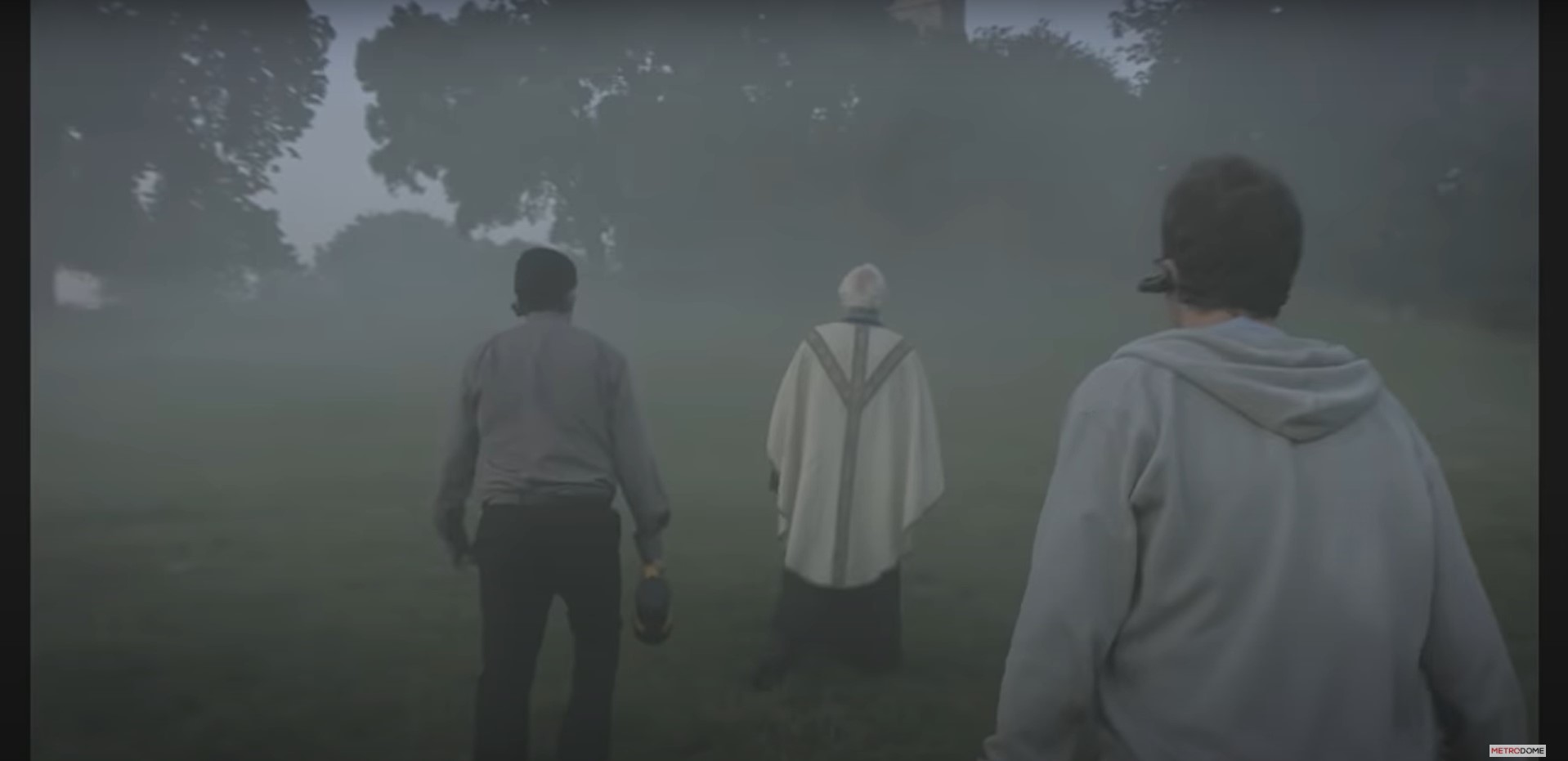
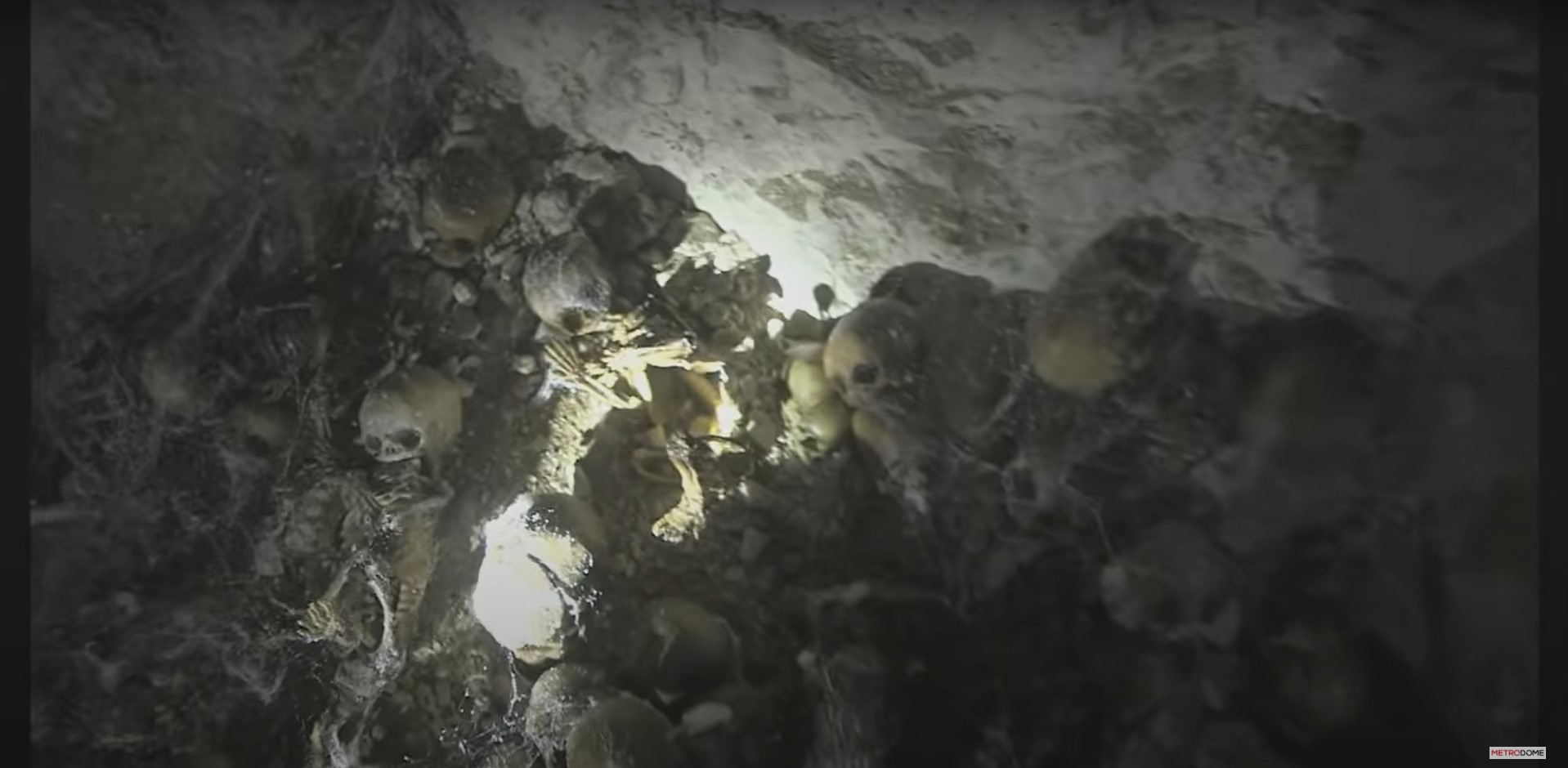
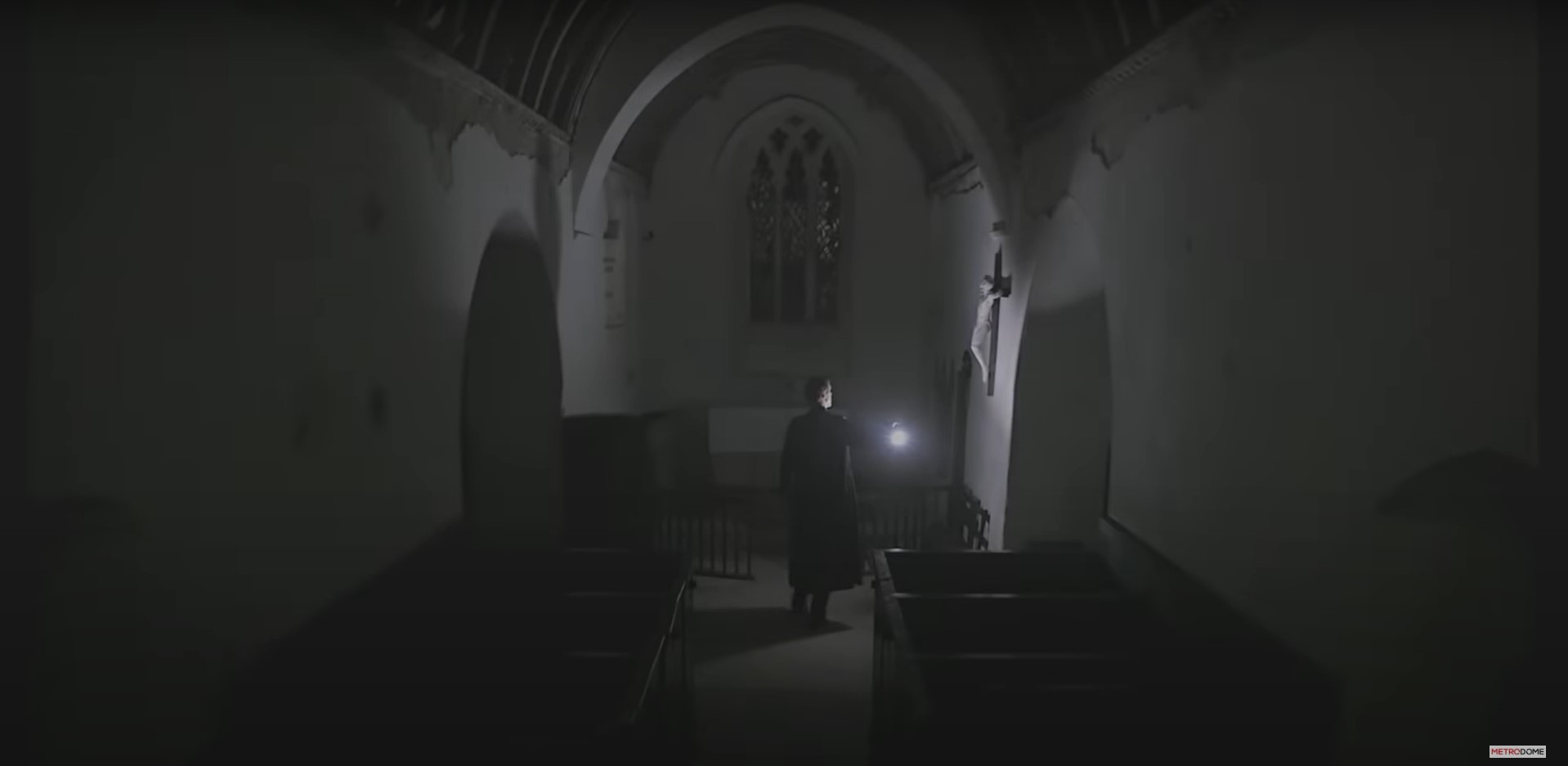
After exposing phony divine miracles at a Catholic Church in Brazil that resulted in the death of fellow Catholics, including a Cardinal, Vatican investigator and religious brother Deacon starts to lose faith with every fraud upon fraud case that points to the non-existence of a higher being.  Having fallen on the drink, the skeptical Deacon is dispatched to the English countryside of Devon where a Father Crellick had reopened a 13th century abandoned church and has been experiencing, in the Father’s words, miracles from God.  Joined by a Gray, a hired technology expert with agnostic beliefs, and a stern Father Mark, eager to disprove another false hope, the three men descend upon the Church with full, unequivocal examination to swiftly reveal the hoax and part ways.  Tensions rise between when logical explanation can’t be unearthed during Church rumblings, disembodied baby cries, and a behind-the-wall, shifting scratch sound that leads them to an underground labyrinth that will swallow them whole. 

Released in the U.S. under the title “Final Prayer,” Elliot Goldner’s 2013, found-footage UK horror “The Borderlands” is the director’s debut, and only, feature that places you right into the belly of the beast at POV level.  In a sea of found footage horror, “The Borderlands” seizes the opportunity to separate itself from the overwhelming portions of shaky camera, purposeful variable video and audio quality, and practical, obscured effects to put into question the strength of faith, specifically here in the Catholic setting, and what ultimately brings about the inevitable in that no matter what religious denomination or outlook you might have, no one is exempt from the grim reality that awaits.  Filmed mostly on location in Devon, UK, as well as West Ogwell and Chislehurst, London for many of the interior scenes, “The Borderlands” is a production of Metrodome Distribution and is produced by Jennifer Handorf (“Prevenge”) with Jezz Vernon (“They’re Outside”) serving as executive producer. 

Our team of Vatican investigators follows three men with starkly differing handles on religious faith.  Coinciding on their stance on the existence of a higher power, individualistically, they’re also incompatible to each other which makes for palpable tension and livens up the dynamic when predictability and patterns can be discerned with likeminded characters.  On the scale of human compositions, polar opposite of both spirituality and comportment is Father Mark (Aidan McArdle, “Metamorphosis”), a by-the-book priest unamused by the elaborate ruses created by those swimming in the same faith pool as himself, and Gray (Robin Hill, “Meg 2:  The Trench”), an untroubled, exuberant, hired techie eager to believe the face-value of the supposed miracles before him.  Aidan McArdle’s tenacity for dogma character comes through well enough to know that good Irish Catholic Father Mark is about as numb as the next investigating Catholic never on the verge of a true miracle as the frustration just oozes out him after one after another hoax divine ephiphany.  Robin Hill, on the other hand, could be the best John Oliver, of Max’s “Last Week Tonight,” impersonator I’ve ever seen and heard.  In all serious, Hill exacts a man looking for religion through the lens of paycheck and a fanboy of the supernatural, like as if the average horror movie enthusiastic came upon the real Freddy Kruger and just geeks the Hell out.  Then, there’s Deacon (Gordon Kennedy, (“T2 Trainspotting”) and like Father Mark, Deacon’s faith hangs in the balance after a botched investigator inadvertently sees the death of a Cardinal at the hands of pious locals.  Kennedy doubles down with Deacon’s wavering faith by drowning the character in alcohol and doubting every inexplicable Devon church oddity.  Yet, Deacon and Gray meld together to a near swap of credence, seesawing in their religious principles, when the things that go bump in the church can’t be explained.  Luke Neal (“Wilderness”) and Patrick Godfrey (“The Count of Monte Cristo”), who’s been practicing the acting craft for over half a century, play a couple of dissimilar priests lured by the Church’s mysterious forces.

What’s noticeably different about this particular bleak found footage nailbiter is the audience is integrated into story by the investigator’s strapped-on headcam, not just some schmo glued to a handheld camcorder running, yelling, and hiding for his life while still depressing the record button.  There’s also the element of a shrouded backstory that becomes unraveled overtime and speaks volumes to a couple of the character’s colorful conducts.  Those elements are then intensified by the cinematic crux, an archaic, resurrected small church’s unexplainable, mostly terrifying, daily disturbances the local priest indiscriminately deems miracles.  Not a single character has arbitrary or useless purpose for the sake of being an in-frame victim of circumstance as each exhibit a radical change over the course of investigation, adding copious ground to the big question, the question that’s on every character’s mind, is there an almighty presence beyond our corporeal plane and cerebral understanding really exist?  Come to find out, the characters are not asking the right question and get sucked into a terror on the terra the more curious they become in finding God amongst them.  Often times, found footage doesn’t fit into the storyline, whether be the aforesaid necessarily handling of the camera through the an insane ordeal or just doesn’t work with a regularly structured narrative, but “The Borderlands” couldn’t be received with success without the stunt of seeing through the eyes of the characters that subsequently emits a trick of light or an overactive imagination that smooths out solid jump scares when needed in what is a definitely watch in the dark type diabolical goosebumper. 

Second Sight Films takes charge with curating a definitive, all-expense paid trip to Elliot Goldner’s “The Borderlands” on Blu-ray home video.  The AVC encoded, high definition 1080p, BD50, hovering around 24 FPS and presented in an anamorphc widescreen 1.78:1 aspect ratio, leverages the capacity and the encoding to sharpen a relatively dark picture with more clarity without losing the unsettling spookiness with overreaching contrast.  Image presentation resembles closer to an upscaled 720p because of the found footage piece, and so we experience patchy spots, static ripples, and other miscellaneous plays into the supernatural sarcophagus that is the Devon church.  Skin tones and grading stays in tune with a brightly lit infusion of handheld torches as well as delineating the necessary with night vision cameras.  Goldner does a fine job with depth with the viewers being the foreground and using a lot of the peripheral and background to keep things hair-raising and interesting.  The English DTS-HD 5.1 audio track has lossless compression and really does throb with a wallop of balanced LFE and to-scaled dialogue.  What throws me off about this particular found footage, as well as some select others, that I find more a bothersome nuisance than a technical gaffe is an inlaid soundtrack.  A slow burn industrial score is used for “The Borderlands” to promote a greater sense of ominous omniety, like a background, repetitive, and sometimes swelling drone you might hear in certain first-person shooters from 20 to 30 years back. Dialogue tops the audio layers without being diluted by poor onboard cameras or having to contend with too much with the score, suggesting well-placed mics and sound design to achieve appropriate range and depth inside the frame configuration or even off-frame, behind or to the side of camera. Optional English subtitles are available. Like most Second Sight Films limited editions, “The Borderlands'” set packs a punch with encoded special features, such as a new audio commentary with actors Robin Hill and Gordon Kennedy, producers Jennifer Handorf, and special effects designer Dan Martin, a new interview that brings Robin Hill and Gordon Kennedy recollecting the behind-the-scenes and their characters in Dressed the Part, a new interview with producer Jennifer Handorf in Losing Faith, a new interview with special effects artist Dan Martin in Monster Goo, and a behind-the-scenes archival featurette. The limited-edition portion of this set includes a rigid slipcase with gorgeously bleak and grim illustrated artwork by Christopher Shy, a thick, 70-page color and black and white book with pictorials and new perspective and analytical essays from Tim Coleman, Martyn Conterio, Shellie McMurdo, and Johnny Walker, and 6 collector’s art cards, mostly resembling a distorted interlaced video and in an imperial purple-ish appearance from haunting scenes of the film. The artwork sheathed inside the translucent green Amaray case is the same as slipcase with no reverse cover work; it’s also pressed on the disc art. This release came with no inserts. One of the few Second Sight limited edition pieces to be licensed with a region free playback and the film itself has a runtime of 89 minutes and is UK certified 15 for strong language and threat.

Last Rites: Second Sight’s filmic selection pool for major league limited editions has been nothing short of stellar with “The Borderlands” being their latest, but definitely not their last, to be knighted worthy of physical media acclaim. Yet, it’s not like “The Borderlands” needed the boost as the film itself has a cult following for its shuddering tale and its monstrous ending that will have you reeling, maybe even screaming, in horror.

Order the Limited Edition Blu-ray of “The Borderlands” Here at Amazon.com

Its Punk to Fight Back Against EVIL Neo-Nazis! “Green Room” reviewed! (Second Sight Films / 4K UHD – Blu-ray)

“Green Room” Now Available on a 4K UHD and Blu-ray Limited Edition Release. Purchase Here!

Hardcore punk band Ain’t Rights struggle to make ends meet as they syphon gas and crash at a pursual journalist’s apartment just to make it across country to the west coast.  When the initial paying gig falls through the cracks, the journalist’s backup plan is his cousin’s spot out in the isolated Pacific Northwest for decent pay.  The only downside to the job is it’s at a neo-Nazi bar.  A successful go-hard set pays off until one fatal witness of a heinous murder confines the band to the bar’s green room and outside, waiting, are plotting neo-Nazi’s concocting a cover up strategy that doesn’t let the Ain’t Rights see another day alive.  Surrounded with nowhere to go, the ruthlessly calculating skinheads use attack dogs, machetes, and other vicious tactics to keep the Ain’t Rights from escaping and learning the truth behind the skinheads’ already sordid and bigoted movement but the tightknit band won’t go quietly down without fighting for their very lives. 

If there is any chance of seeing Captain Jean-Luc Picard himself, the knighted Sir Patrick Stewart, act in a neo-Nazi leadership role, then everyone should share the experience of just how terrifying Stewart can be as a cold-hearted villain.  Jeremy Saulnier’s breakout 2015 film, chockfull of violence and suspense, titled “Green Room” is masterclass grit for survival and to never underestimate the underdog.  Saulnier, the debut filmmaker of 2007’s “Murder Party,” wrote and directed the film shot on site in the densely large forests of Oregon and set the stage for being one of the truest and vehement hardcore punk-laced stories to be told that happens to have a side dish of killer instinct.  Produced by Neil Kopp (“Paranoid Park”), Victor Moyers (“Orphan:  First Kill”), Brian S. Johnston (“Wish Upon”), and actor and longtime Jeremy Saulnier associates, Macon Blair and Anish Savjani, “Green Room” is a production of Broad Green Pictures and Film Science.

Though Sir Patrick Steward is a thespian legend, having been in numerous films and stage plays in the decades of the practice, practically a household name amongst fanatical and the casual moviegoer, the now 83-year-old English actor is not the principal star of “Green Room.”  That falls under the late Anton Yelchin in his late theatrical role.  The established new kid on Hollywood’s block, having seen success in roles from “Alpha Dog,” “Star Trek,” to “Terminator:  Salvation” along with indies such as “Odd Thomas,” and yet was still an up-and-coming young actor who tragically joined the infamous urban legend of the 27 club, where celebrities have died too young at the age of 27, Amy Winehouse and Kurt Cobain are also members of this pop culture phenomena, helmed as lead guitar Pat of the fictional punk band called the Ain’t Rights and Pat becomes intwined as spokesperson to negotiate with Darcy, the manipulatively devious neo-Nazi leader played by Sir Patrick Stewart.  Yelchin’s realistic approach to do the right thing favors the nervously anxious and uncertain body language amongst an already prejudice crowd who are known to be unpredictable and dangerous.  Stewart’s role is emotionless but not taciturn as Darcy who quickly and cleverly decides the fate of witnesses to a brutal murder inside his place of business in what is nearly a duplicated performance from Stewart’s role in “Conspiracy Theory,” as the calm and collected Dr. Jonas eager to get his hands on Mel Gibson’s agitated knowledge of secret dubious schemes.  Pat fights for his life whereas Darcy plans for his death and Yelchin and Stewart apt those two behaviors in a contrast of contention.  Yelchin is backed by his costars, aka Ain’t Right bandmates, Alia Shawkat (“The Final Girls”), Joe Cole (“Pressure”), and Collum Turner (“Victor Frankenstein”) along with a traitor of the fascist cause in Imogen Poots (“28 Weeks Later”) who, in varying degrees, deal with being mice caught inside a shoebox inside a cat factory.  As for the skinheads, a lot is squeezed out from Macon Blair’s Gabe, an uneasy, unsure, bordering fumbling go-along neo-Nazi, as Darcy’s plan unfolds and pivots into more and more of the uncomfortable for the character, but for the rest of the skinheads, such as Clark (Kai Lennox, “Apartment 143”) the dog handler, Big Justin (“Eric Edelstein, “The Hills Have Eyes 2”), and even Darcy don’t fully flesh out once they’re fully engaged in the problem at hand.  David Thompson (“Fear Street:  Part 1”), Brent Werzner, Taylor Tunes (“The Motel ‘6’”), and Mark Webber (“13 Sins”) fill out the cast.

The ”Green Room” narrative is in itself very punk, following an ethos of anti-establishment and a do-it-yourself anarchist pathway in protest for what is right and against greed.  Engrained is the very subculture “Green Room” exposes on the surface level but the essence of the direct action is right there in front of us the whole time soaked into a group of true believers of the punk music and movement, struggling with less than nothing to live on, are trying to do what’s right after witnessing the aftermaths of a gruesome murder and wants to correct the action immediately despite seemingly to look like they would turn the other cheek toward crime.  Instead, they have to go against the xenophobic-authoritarian grain with nothing but grit and whatever is in proximity of arms’ length.  Authenticity is so important to writer-director Jeremy Saulnier and to the film’s success that the Ain’t Right actors actually play the instruments and perform the music themselves with a couple of them learning how to be instrument proficient for the character and the story.  Another truth attributed to the “Green Room” is Saulnier penchant for graphic violence.  From the very first fray, the tone sets in at grim and grue with no one being safe and no one pegged to be the clearcut hero from the get-go. “Green Room” is viscerally charged, uncompromisingly bloody, and embodies all the best characteristics of punk. 

In the 9 years since the film’s release, nearly 8 years since Anton Yelchin’s untimely death, the “Green Room” finally receives the attention and respect it deserves with a new and deluxe limited edition collector’s set from UK distributor Second Sight Films. The 2-Disc, 4K UHD and Blu-ray set, presenting the feature in a widescreen 2.35:1 aspect ratio, offers the ultra-high definition resolution Dolby Vision to brings to the table the best image representation possible and what lands is a delineated and detailed image that’s de facto devoid of any kind of compression artefacts. Blacks saturate without losing contours or bearing the brunt of banding or posterization and distinctly lays out the color palette with an overlay of some dingy-filmed gel lighting in a few scenes inside the neo-Nazi club or low-key lighting in other areas, again in the club or even outside the club, that usually tend to see more problems which is non-existent in this conversion. The transfer fairs well within the smaller UHD range of a HVEC encoded BD66 capacity while still leaving room for bonus content. The 2K scanned Blu-ray is AVC encoded BD50 renders nearly an identical in faultless image quality, decoding at the same rate of 23-24Mbps, yet still an inferior presentation to the 4K with the depth of detail. Both video transfers are clean yet the upgrade to UHD bests all other releases to date. Both formats offer a lossless English language DTS-HD 5.1 master audio mix that are identical technically and to the untrained/trained ear, offering clean, true fidelity with a punk rock soundtrack that’s welcoming hardcore yet can differentiate between the layers with a clean, prominent dialogue and near proximity ambience. Depth and range are good on both accounts but add little to the creation of suspense as much of that area is handled by situational context and depiction of graphic violence. English subtitles are optionally available. The software special features include a new audio commentary by film critics Reyna Cervantes and Prince Jackson, an older, archival commentary by writer-director Jeremy Saulnier, a new interview with the director Going Hardcore, a new interview with actor Callum Turner Punk Rock, a new interview with composes Brooke and Will Blair Rocking Out, and a new interview with production designer Ryan Warren Smith Going Green. Also found on the special features are the Thomas Caldwell on “Green Room” archival featurette Nazi Punks Fuck Off and the making of the film, a behind-the-scenes featurette Into the Pit. Hardware special features, that we all love from Second Sight’s limited-edition sets, come with that rigid box slipcase with new artwork by commercial illustrator Adam Stothard, a 120-page new essay book with contributions by Eugenio Ercolani and Gian Giacomo, Alexandra Heller-Nicholas, Josh Hutardo, Jolene Richardson, Shelagh Rowan-Legg, and Thomas Watson, and six collectors’ art cards to round out the contents in a nice tight and quietly opulent sensational packaging. The region free UHD and region B set is UK certified 18 for strong blood violence and gore with a runtime of 95 minutes.

Last Rites: This new and limited edition “Green Room” release is red hot and the deserving, contemporary thriller, the last for the gone-too-soon Anton Yelchin, couldn’t have been better curated by a more devil-in-the-detail and fan-focused label of Second Sight Films.

“Green Room” Now Available on a 4K UHD and Blu-ray Limited Edition Release. Purchase Here!