Experimental, Recreational Drug Use in College has Killer, EVIL Effects! “Blue Suneshine” reviewed! (Synapse Films / 3-Disc 4K UHD, Blu-ray, and CD Limited Edition Set)

Trip Out on Synapse’s Limited Edition “Blue Sunshine”

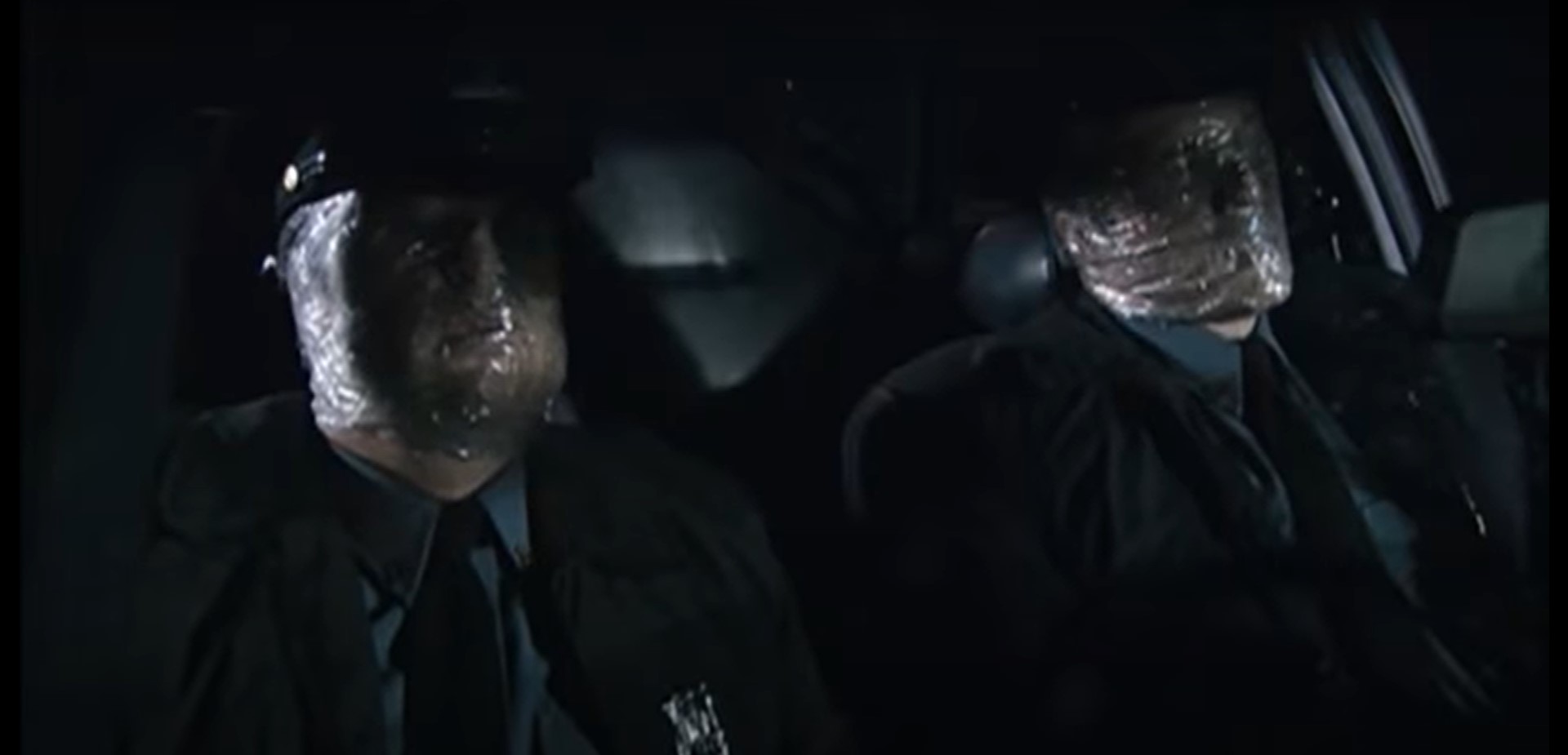
A party between friends turns deadly when one of them goes into a violent frenzy after being reveled his loss of all his hair.  Blamed for the murders, floating through life Jerry Zipkin is evading police investigators while also trying to connect the pieces on why a good friend of his would suddenly turn into a madman with no body hair and with five times the strength of any ordinary man.  His own investigation leads him to Blue Sunshine, an LSD variant connected to every transgressive event similar to the party, and at the center of it all is congressional frontrunner Edward Flemming who peddled Blue Sunshine 10 years ago at Stanford.  The latent consequence is now slowly surfacing to a head and more people are starting to experience the aggressive, alopecia effects, all Zipkin has to do to prove his innocent and a major ticking timebomb is to take a sample from a living specimen to show aberrant chromosome damage caused by the designer drug. 

Before becoming outed and investigated that the U.S. government experimented LSD on human subjects and it’s unknown but possible dormant side effects of years later, writer-director Jeff Lieberman put theory into sensationalized practicality with his post-psychedelic horror “Blue Sunshine” that turned ordinary, friendly people into headache-induced phonophobia sufferers and hairless, homicidal maniacs with super strength.  Lieberman’s 1977 released film snugs in between his killer Earthworm creature feature “Squirm” and one of the better backwoods slashers titled “Just Before Dawn,” tackling with themes of adverse effects from manmade drugs, political corruption, and to never judge a book by its cover.  The film is produced by “Squirm’s” George Manasse with “He Knows Your Alone” and “The Clairvoyant” producers Edgar Lansbury and Joseph Beruh serving as executive producers on the Ellanby Films production.

While the plot point that pushes Jerry Zipkin in the direction of investigation of the sudden fury and death surrounding his friend treads a threadbare rope with little background to suggest Zipkin is characteristically dedicated, loyal, curious, or all of the above to find out what happened, Zalman King’s overall performance as the path unaffixed Zipkin overshadows those missing background pieces and motivations.  In more key precise terms, Lieberman’s misdirection toward King’s erratic and strange behavior puts a lot of the focus on Zipkin rather than obvious derangement of the latent LSD maniacs with corrupted chromosomes in what was meant to puzzle the audiences in believing Zipkin himself might be the loose cannon cause behind the murders or, even perhaps, another ignorant victim of blue sunshine, which the latter would have been more intriguing and powerfully motivating for the Zipkin character as what drives him to solve the mystery and save himself.  None of the relationship resolve any type of secure or genuine interactions, specifically with Alicia Sweeney (Deborah Winters, “Tarantulas:  The Deadly Cargo”) with an unrealistic strong undying love for Zipkin despite only knowing him for a couple of months and the entire Stanford contingent from a decade earlier who Zipkin was able to easily link together within a matter of seconds of either examining a bloody crime scene or meeting a pair of the blue sunshine fiends.  One of the better, solid bonds is between the will-do-what-it-takes congress candidate Ed Flemming (Mark Goddard, Lost in Space) and his towering former college football buddy Wayne Mulligan (Ray Young, “Blood of Dracula’s Castle”) who becomes Flemming’s 6’6” advisor and bodyguard.  While might not seem like a well-rounded bond, Flemming and Mulligan have something tangible one can grab and understand when compared to other dynamic relationships that float in arbitrary.   Robert Walden (“Rage”), Charles Siebert (“Tarantulas:  The Deadly Cargo”), Ann Cooper, and Stefan Gierasch (“Carrie”) costar. 

“Blue Sunshine’s” premise has long stood the test of time because its more relatable now than ever as scientists and medical experts are in a fluid state of studying the effects of drugs digested, snorted, injected, or smoked weeks, months, years, and decades ago.  This premise also translates over to contaminants that cause sicknesses, such as the link between asbestos and cancer were tumors form years after exposure.  Lieberman catches wind early of the dangerous latent effects and manipulates it for the basis his film that is more fact than fiction.  Lieberman’s ability to minimize assurances on who is transfiguring into a killer is all in his characterizing nuances, shading in gray areas with excellently crafted character profile vignettes in between the opening credits that instill suspicion, fear, and some unknown stemmed danger ahead.  The unique setup is the filmmaker’s only real unconventional course in the narrative that plays out mostly a routine hand in a natural style albeit the surrealism of extreme closeups and angles on bald headed balefulness when the rage takes over or the slow, insidious madness that seeps into Zipkin’s mind causing hallucinations to exact an audience experiencing disturbance in the envisaged air.  Engaging and self-security eviscerating, “Blue Sunshine” is carbonated madness in a bottle, shook up and ready to pop. 

Synapse continues to upgrade their catalogue with Blue Sunshine next on the augmentation block with a new and mighty 3-disc Blu-ray and 4K UHD restoration release.  Presented in Dolby Vision HDR10, the restoration of the original 35mm camera negative sees it’s 4K transfer compressed with a HEVC codec that produces 2160p and is stored onto a BD100 while the Blu-ray is a compressed AVC, 1080p resolution, on a BD50.  The restoration will blow you away with diffused color palette and organic details that by far are the best they’ve ever looked with a balanced, natural grain level that keeps the speckling down in darker portions of the film to retain inkiness while securing the authenticity of the film stock without any smoothing over and artificial enhancements.  Vivid coloring, immersive details, and natural skin tones, when not softly grayed by the drug’s effects, throughout are appreciatively stable with no qualitative loss between cuts, creating a pleasurable and seamless visual experience on both formats.  Each format comes with two English audio options, a lossless DTS-HD master audio 5.1 surround sound, supervised and approved by director Jeff Lieberman, and a lossless DTS-HD master audio original theatrical mono 2.0.  While the amplification of the same sound output through the dual channels is inviting for purist, I highly recommend the immersive 5.1 surround sound that retains the genuine article of audio fidelity.   Charlie Gross’s orchestral strings instruments, percussive gongs, and synthesizing score fully engrosses the characters and audiences alike into a fold of unnerving, lingering tingles that evoke the monstrous maniac effect possibilities beyond the Jerry Zipkin tale.  Dialogue renders over with fine precision that hangs on every word and sentence with no hissing and crackling to obstruct it’s sweeping clarity.  A bountiful amount of Mind-Altering special features that fill this limited to 4000 copies set that include a new feature prologue introduction with director Jeff Lieberman.  There are two audio commentaries, an archived 2003 interview with Lieberman, a Channel Z Fantasy Film Festival ”Lieberman on Lieberman” interview with the director hosted by “Sleepwalkers” Mick Garris, a Q&A video from the Fantasia Film Festival 4K premiere moderated by Michael Gingold and Lieberman, an anti-drug scare-film “LSD-25” from 1967 and “LSD:  Insight or Insanity?” From 1968 from the American Genre Film Archive, Jeff Leiberman’s first film “The Ringer” with two cuts of the film, the original uncut version from the projection print source and the final release from the remastered Synapse Films 4K transfer with audio commentary included on the uncut version by Jeff Leiberman and moderator Howard S. Berger, still gallery and theatrical trailers. Synapse’s limited-edition boxset is nothing you’ve ever seen before from the company with not only a rigid slipbox case but there’s also a cardboard O-slipcover, both housing the clear, inch-thick Blu-ray Amaray case and both showcasing new illustrative, compositional, air brushed artwork of some of the key character scenes and expressions by Wes Benscoter, which is a real thing of beauty. The Amaray cover art is the regular 70’s grade cover art seen on previous releases from DVD to Blu-ray with a reverse side an image of the tripped-out Ed Flemming icon photo of his drug peddling days at Stanford. Overlapping 4K and Blu-ray discs display graphic presses in story moment compositions, though I don’t recall a half-naked woman in the film yet is on the cover. Not quite yet done with the bonus material, the 3rd disc is a 13-track Soundtrack CD of the score and laid overtop is the 11-page liner note booklet from Jeff Lieberman’s 2020 memoir “Day of the Living Me: Adventures of a Subversive Cult Filmmaker From the Golden Age,” plus the CD track listing, production credits, and special thanks on the backside. A reproduction of the original one sheet poster is stored in the insert as a mini-folded poster along with Synapse’s 2024 catalogue for your perusing pleasure. The rated-R film has a runtime of 95 minutes, and the limited edition doesn’t limit itself to a confined playback with region free decoding.

Last Rites: In order to snag a copy of this stellar Synapse set, muscles are required as this heavy boxset feels like 5lbs of software and hardware special features regarding Jeff Leiberman’s drugs-are-bad thriller “Blue Sunshine” with chrome dome, blank-stare killers doing the dormant bidding of 10-years-old recessed LSD.

Trip Out on Synapse’s Limited Edition “Blue Sunshine”

Blind, EVIL, Undead Templar Knights Hunt for a Bite to Eat! “Tombs of the Blind Dead” reviewed! (Synapse / Special Edition 2-DiscBlu-ray)

“Tombs of the Blind Dead” 2-Disc Blu-ray Available for Purchase Here!

Maria, Betty and Roger take a train across the Spanish countryside to see the landscape sights.  When Maria feels like a third wheel stuck in between Betty and Roger’s flirtations, she jumps off the moving train, leaving her friends aboard, and camping out under the ruins of an old countryside Church.  There’s only one problem, the Church was home to the ancient order of the Knights of Templar who took a blood oath for Satan by sacrificing young virgins by drinking their blood and lynched by the Church for their crimes against man and God.  The Cursed Knights, reduced to rags, bones, and without eyes, rise from underneath their graves every night and roam the countryside on the hunt for anybody in proximity they can feast upon.  Betty and Roger learn of Maria’s strange demise without knowing the details and form a four-person search party only to step into the same dangerous den of the Knights of Templar. 

“Tombs of the Blind Dead,” or as known as the U.S. as just “The Blind Dead,” is the first in a series of four undead Templar Knights films that would come to be known as The Blind Dead collection by Spanish filmmaker Amando de Ossorio.  Natively titled “La noche del terror ciego” was released in 1971 and penned by Ossorio who laid a new path of Spanish horror that didn’t involve Paul Naschy or Jess Franco with undoubtedly slow dread of the undead that resembled more of the Italian-bred beyond the grave films where ghouls and ghosts return to life and wreak bloody havoc on the living, a guise for social context and for political dictatorship.  Themes of rebellions, rape, and bisexuality course through the feature’s necrotic veins as the film receives Spanish and Portugal co-production support from Plata Films and Interfilme with executive producer Salvadore Romero (“The Werewolf Versus the Vampire Woman”) spearheading pre-production and behind the scenes.   

Following of a newly formed trio of friends traveling the countryside to take in the sights, an underlying green-eyed trouble brews right from the moment when an enchanted Roger, the debut film and character of 1973’s “Green Inferno’s” César Burner, meets gorgeous red head Betty, “It Happened at Nightmare Inn’s” Lone Fleming,” and Roger’s travel companion and Betty’s Catholic boarding school roommate/best friend, Virginia, “The House that Screamed’s Maria Elena Arpón, feels the twinges of jealousy as her amorous covets for Roger never materializes and she sees her future with relationship with roger forever in the friend zone.  Virginia becomes so intolerant of Roger and Betty’s innocent flirtations that she’s willing to hop off a not-so-speeding train and camp inside the creepy, ruined structures at centerstage of a burial ground.  Arpón’s passive aggressive behavior is quite convincing, even the part where she tucks and rolls off a moving train in what stupid things do when people are frustrated, especially in the gray territory of love.  The love triangle is so simplistically arranged, each behavioral component goes without being farfetched.  From Virginia’s first sexual experience at the caressive, soft hands of her roommate/best friend Betty while at boarding school to Roger and Betty’s blameless attraction to one another that spurs Virginia’s irrational, self-serving behavior, Ossorio’s characters are written very well when homogeneously compared to other outside of cinema love triangles.  José Thelman (“Night of the Sorcerers”) indulges as the smuggler swine Pedro who’s roped into the reconning of the Templar tomb to clear his name with authorities by proving someone else had murdered Roger and Betty’s friend.  Joined by his floosy sidepiece María, played by another María in the iconic Spanish B-horror actress.  María Silva (“The Awful Dr. Orlof”), Pedro brutishly flaunts arrogance and confidence, taking what he wants, especially with the women uncharmed by the male sex, and that’s curious, fluid attribute when he attacks Betty but in the wake of the moment, the two of them are silently surfeited as they share the scene and that’s severely different from what anyone other filmmaker was doing at that time.  Andrés Isbert (“The Kovak Box”), Antonio Orengo (“Love Letters of a Nun”), Francisco Sanz (“Django Kill… If You Live, Shoot!”), Rufino Inglés, and Verónica Llimerá (“Hatchet for the Honeymoon”) round out the cast.

Performances give “Tombs of the Blind Dead” credibility in anxiety-riddled survival and turbulent human interactions but where those performances start to give way coincides with Ossorio’s building of dread.  No doubt the use of slow-motion sets the ghoulish, harrowing tone of the depraved, unabating, skeletally-cursed Templar Knights giving chase on horseback as they track down their flailing fresh meat, but in the process of that spinetingling, in between the Knights self-unearthing and the eventual snare and snack of their human victims, Ossorio doesn’t quite know how to flesh out formidable trepidation.  Pursued, screaming characters stand in the face of danger as if their feet are hardened in cement, stopping at every brief moment when out of sight of the hooded decaying bones and rags with dusty swords, and absentmindedly run right into the exposed radius and ulnas of the slow-moving and blind medieval damned maniacs in sequences that run out too long to be wholly gratifying.  Ossorio better pedestals the ingrained Spanish themes of never escaping your gruesome, haunting past, as seen with the circular narrative of always return back to the Knight’s ruins, and the sexual taboos of bisexuality and rape that lead to destruction.  These course through a more classically presented gothic horror. Perhaps explaining the fervent melodramatics of flamboyant fear, under the dictatorship regime of Francisco Franco and his cult-like ritualization in fascism oversight of Spain.

The sightless, flesh-feasting Templar Knights have found a new home in the Synapse Films’ tomb of terror with a new restoration transfer on a 2-Disc Blu-ray. Refurbished from the uncut original camera negative, the AVC encoded, 1080p high-definition, BD50 capacity suppresses any compression issues to display polychromatic decadence in front of a backdrop of steely graded blues. Plenty of a darker scenes to be affected by artefact corruption but the blacks are greatly dyed-in-the-wood saturated and not delineated or in spectrum of lesser decoding. Scenes never approach being flat, in color tone and in field depth, as beads of glistening sweat can be visually elaborated on and the distinction between color, shadow, and scale discern wonderfully. Two audio option tracks are available: a lossless Spanish PCM 2.0 mono track and a lossless hybrid of Spanish-English (Spanglish?) PCM 2.0 mono track. Both tracks are of a post-production dub with the Spanish option having greater synchrony with the articulating native Spanish actors of this Spanish coproduction. Audibly clean with little-to-no hissing, popping, or crackling, Synapse’s singular restoration is in good company with a high impact, high clarity, and low distortion dialogue track that meets eye-to-eye with the visual components as well as the film’s ambience cluster and Antón García Abril’s breathy and discordant, Gothically canticle score. Option subtitles are available in English on both tracks. Special features on the first disc contains individual audio commentaries by horror film historian Troy Howarth, Betty actress Lone Fleming, and the NaschyCast podcasters Troy Guinn and Rod Barnett. A feature-length documentary Marauders from the Mediterranean go from head-to-toe on not just detail Ossorio’s “Tombs of the Blind Dead” as the Spanish stamp in the juggernauting zombie genre of the times but also going in depth with the Spanish laid in horror from the 1960s to 1980s, featuring interviews with Lone Fleming, John Russo (“Night of the Living Dead”), director Jorge Grau (“The Living Dead at Manchester Morgue”), Sitges Film Festival director Mike Hostench, critics Kim Newman and John Martin, film academics Steve Jones and Calum Waddell, actors Helge Line, Manuel de Blas, Antonio Mayans, and Jack Taylor, and even Paul Naschy’s son, Sergio Molina. An alternate U.S. opening sequence Revenge of Planet Ape gives expositional insight on how the success of “The Plant of the Apes” films influenced the American distribution market to rebrand “Tombs of the Blind Dead” as an ape rebellion piece to ride the coattails of the series’ success on a lower, foreign budget. Rounding out the special features is a featurette Awakening of Spanish Horror Cinema, Salem Pop’s “Templar Tears” music video, the original theatrical trailer, and a still gallery. While Synapse has 3-Disc limited-edition set of only 4000 copies made with all the bells-and-whistles of the visual elements of new artwork, a slipcover, and a 3rd disc audio CD, the 2-Disc standard edition comes with all the same special features and all three versions of the film inside the black Amaray Blu-ray case and classic “Tombs of the Blind Dead” poster for cover art. Inside, you’ll get Synapse’s physical media catalogue and a disc on each side of the Amaray’s interior with disc 1 “Tombs of the Blind Dead” and disc 2 “The Blind Dead,” housing the shortened 83-minute U.S. re-edit on a BD25, that sport their own pressed artworks. The uncut disc 1 has a runtime of 101-minutes and has region free playback.

Last Rites: “Tombs of the Blind Dead” is Spain’s answer to “Night of the Living Dead” with discerning individualities ingrained by director Amando de Ossorio to include his country’s own social and political subtext and while Blue Underground’s The Blind Dead DVD collection is an impressive physical media crown jewel of upscaled 720p, the Blu-ray gods favor Synapse with an impressive hi-def A/V release with stellar bonus features.

“Tombs of the Blind Dead” 2-Disc Blu-ray Available for Purchase Here!

A Corrupted Nation, Operated by EVIL Drug Lords, Are No Match for “McBain” reviewed! (Synapse Films / Blu-ray)

“McBain” Explodes onto Blu-ray from Synapse!

Vietnam War has officially ended, and U.S. troops evacuate the worn torn country almost immediately until Robert Santos and his squadron happen upon a Vietcong-controlled POW camp still operating under the merciless thumb of North Vietnamese soldiers either unaware of the news that war is over or are blatantly disregarding defeat to deface the enemy. During the trouncing of opposition in a fury of firearms and explosions, Santos saves POW Robert McBain seconds before being stabbed in the back by the enemy. McBain pledges a debt to Santos for saving his life. Eighteen years later, the now Colombian revolutionary Santos, in fighting for his countrymen’s freedom and end of suffering, is killed by an iniquitous President controlled by a narcotic cartel. Santos’s wife travels to America to find McBain where the former soldier regroups Santos’s old platoon to avenge their brother in arms as well as to free the struggling people of Colombia from dictatorship and tyranny.

Director James Glickenhaus, known for his handful of thrifty, R-rated, action thrillers with some of the biggest names of the 1980s, including Jackie Chan, Sam Elliott, and Peter Weller, had previously not helmed a picture with a budget more than $5-10 million. That is until he met “McBain,” a fictional, titular character Glickenhaus created and wrote the screenplay for in his first feature at the turn of the decade. The 1991 film tripled in budget compared to the filmmaker’s previous films, aimed high for a larger scale that took the retribution guts of the story to multiple locations from around the New York metropolitan area to the surrounding waters of the Philippine islands that doubled for politically despotic Colombia in South America and multiple, sizeable explosions around every scene corner. “McBain” also hired an esteemed actor to bear the weight of the title that would contest the very robust budget against “The King of New York’s” star power, paid for by Glickenhaus’s own production banner, Shapiro-Glickenhaus Productions with executive producers Leonard Shaprio (“Black Roses”) and Alan M. Solomon (“Moontrap”) and producer J. Boyce Harman Jr.

“The King of New York,” if you haven’t clued in on the hint by now, is Christopher Walken playing a former Vietnam veteran turned NYC steel worker fulfilling his promise to repay a life debt to fellow former soldier Roberto Santos (Chick Vennera, “Last Rites”). Walken, in at least my eyes, has always been a one note kind of character and as McBain, that note remains true here as well.  Don’t get me wrong about Walken’s feature-after-feature character continuity as the acclaimed actor has his cool-cat idiosyncratic inflections and pompadour hairdo.  There’s also a relaxed swagger about the now 80-year-old actor that remains recognizable from his earlier work to all the way to today.  Usually, we do not see Walken paired up with a love interest and “McBain” is no different in a side-by-side with “Running Man” and “Predator 2” actress Maria Conchita Alonso as Christina, sister of Robert Santos.  The two are more servants of doing what’s right, connected by singular retribution, to provide justice for a mass of people drowning in injustice because of a small group of corrupt and dangerous empowerment.  McBain and Christina rarely share the screen together in a strategic mix of accomplishing their own parts of the mission:  McBain rallies sympathetic mercenaries to obtain money and gear while Christina rallies her people to rise up and raze the crooked administration.  Walken makes the ordeal look like a stroll in the park with lofty assurance to take down an entire country’s military power juxtaposed against Alonso soulful, teary-eyed pursuance in the eyes of Christina that’s more compassionate and real, especially with Alonso’s investment as a Cuban born actress who may know a thing or two about dictatorships.  McBain mercenaries are not a ragtag bunch but the former military unit that saved him from POW Hell along with Santos, but they are more of a ragtag, mixed lot cast of actors amassed to be characters ready to leave their professions and livelihoods for a South American throwdown.  Michael Ironside (“Scanners,” “Starship Troopers”), Steve James (“The Warriors”), Thomas Waites (“The Thing”), and Jay Patterson (“Hard Rain”) see to it that those mercenary warriors are committed beyond a shadow of a doubt and, no, Michael Ironside does not lose a limb in this film.  A rather bland McBain is backed by a rather highly skill set of commandos, such as post-Vietnam billionaires with long-reaching tech and a war pilot who is also now a surgeon, and this creates some depth complexity between a former POW turned steel worker McBain and those who saved him and came out better in life than the titular character.  “McBain’s” explosive action rounds out with roles from Forrest Compton, Hector Ubarry (“Crocodile Dundee II”), Nigel Redding, Victor Argo (“True Romance”), Michael Joseph Desare, and Luis Guzman (“Innocent Blood”). 

Explosive would be one of the words I would use to describe “McBain” to someone who hasn’t seen the film.  Another word I would use would be rudimental.  “McBain” struggles to provide opposition for our band of solicitous to the cause heroes who steamroll over the entire Colombia army and air force with little-to-no resistance or demise unless it was their own decision.  What basically unfolds is a much more expensive version of the A-Team with high powered gear and a will to flatten just about anything that lays in their path, making “McBain” shallow like an extended television episode rather than a saga of epic explosive proportions.  The one good aspect about Glickenhaus’s production is the pyrotechnics are ridiculously off the charts with a nonstop stop bombardment of military armament, combat vehicles, and personal convoys strapped with a weaponry assortment of M50’s, incendiaries, and stingers to light up every scene with miniature mushroom clouds glow with the heat of orange, yellow, and black.  “McBain” might as well have titled “McSplosion” with all the hellfire that lit up the budget.  Unfortunately, “McBain” doesn’t yield any other megaton fringe benefits from the acting to the story that seemed to have been caught in hoopla of the collateral damaging combustion, like an Andy Sidaris actioner but without the equalizing T&A to extinguish the bad by igniting another kind of pants fire.

Synapse Films delivers another high-quality product with the new 2K transfer of “McBain” on an AVC encoded, 1080p, Blu-ray.  Presented from its OAR of 1.85:1 to a high-definition 1.78:1 widescreen aspect ratio, Synapse’s Blu-ray release clearly has a pristine transfer to work from, likely the reason why there’s no mention of restoration printed on the back cover.  No significant signs of damage, age wear, or unnecessary augments on the 35mm print.  No notifiable compression issues on the information decoding that averages around the high 30s on a sizeable BD50.  A varied color palette has a renewed, clean, and stable appeal, pleasing to absorb and delineate objects within the primaries as well as patterns and sundry hues that separate into a range of objects and locations.  Specified new is the English DTS-HD MA 5.1 surround soundtrack created this release.  Accompanying also is the original theatrical LPCM 2.0 stereo mix.  The DTS-HD mix has superior strength to maximize the explosions across the cross-media channels. There’s also an unobstructed dialogue track that prominent but maintains the varying degree of depth during bullet buzzing skirmishes and the flaming tailed rockets.  Transmissions and comms hold the range to the appropriate subdued amount and, even more so, when the enemies engage each other in aerial combat. Exclusive to the release are newly translated, optional English subtitles. Bonus content underperforms on this particular Synapse title with only an audio commentary with director James Glickenhaus and film historian Chris Poggioli as well as the original theatrical trailer. Physical content comes home in a green, standard-sized Blu-ray snapper case with one of the more illustratively warm “McBain” poster arts on the single-sided cover art. Inside, a multi-page advert catalogue is included for your browsing pleasure and the disc art is rendered with the front cover art. “McBain” is rated-R, has a 104-minute runtime, and the release has a region free playback. “McBain” promises a retreat back into action for those missing action after the war is long over, but though there is a lot of bang, there isn’t a lot of buck with a seldomly challenging fight that practically makes McBain an invincibly dull crusader.

“McBain” Explodes onto Blu-ray from Synapse!

Who Dat? Dat EVIL! “Creature from Black Lake” reviewed! (Synapse / Blu-ray)

“Creature From Black Lake” on Blu-ray is Bigfoot’s Bestfriend

Two University of Chicago students interested in discovering the legendary creature bigfoot take a road trip down to Oil City, Louisiana where there have been multiple reports and sightings of a ape-like man wandering in the Bayou and even an attack on a local trapper, witness by the gruffy drunk, Joe Canton.  Met with stern resistance from the Oil City Sheriff Billy Carter and some reluctance from scared locals in the Bridges family after an mortal encounter with the beast that killed two of their family members, the students dig in and continue their swampy-laden search for bigfoot as well as finding the time to mingle with Louisiana women.  When they discover the mythical beast actually exists, nothing can stop them into catching sight of the creature or maybe even snaring it, not even the Sheriff’s threat of jail time if they don’t high tail it out of town could persuade their mania, but their expedition deep into the swamp and coming in proxmital contact with the aggressive primate outlier may prove to be a fatal mistake rather than a claim to fame. 

Having searched high and low for many years to review just any Bigfoot film that’s above average worthy has been a wearisomely long and arduous task.  A slew of movies dedicated to the big hairy fella have been nothing but a mockery, whether intention or unintentional, of the Sasquatchsploitation horror subgenre.  Instead of being subjugated to the countless, blasphemous modern tales of the mythical monster, I had to travel back in time to 1976 to retrieve what I’ve been searching for in the last decade or so.  The late J.N. Houck Jr’s “Creature from Black Lake” fulfills a great need with very little in its idiosyncratic cast and its obscure visibility of the creature that creates upscale mystery.  The based out of Louisiana “Night of Bloody Horror” and “The Night of the Strangler” director, whose father, owner of The Joy Theaters, already had an established footing not only in the movie business but also in the horror genre when helming a script penned by Jim McCullough Jr. as his first grindhouse treatment blessed by his father, producer Jim McCullough.  McCullough Jr. co-produces the film under the Jim McCullough Productions banner along with William Lewis Ryder Jr. serving as executive producer of the shoot shot on location in Oil City and Shreveport, L.A.

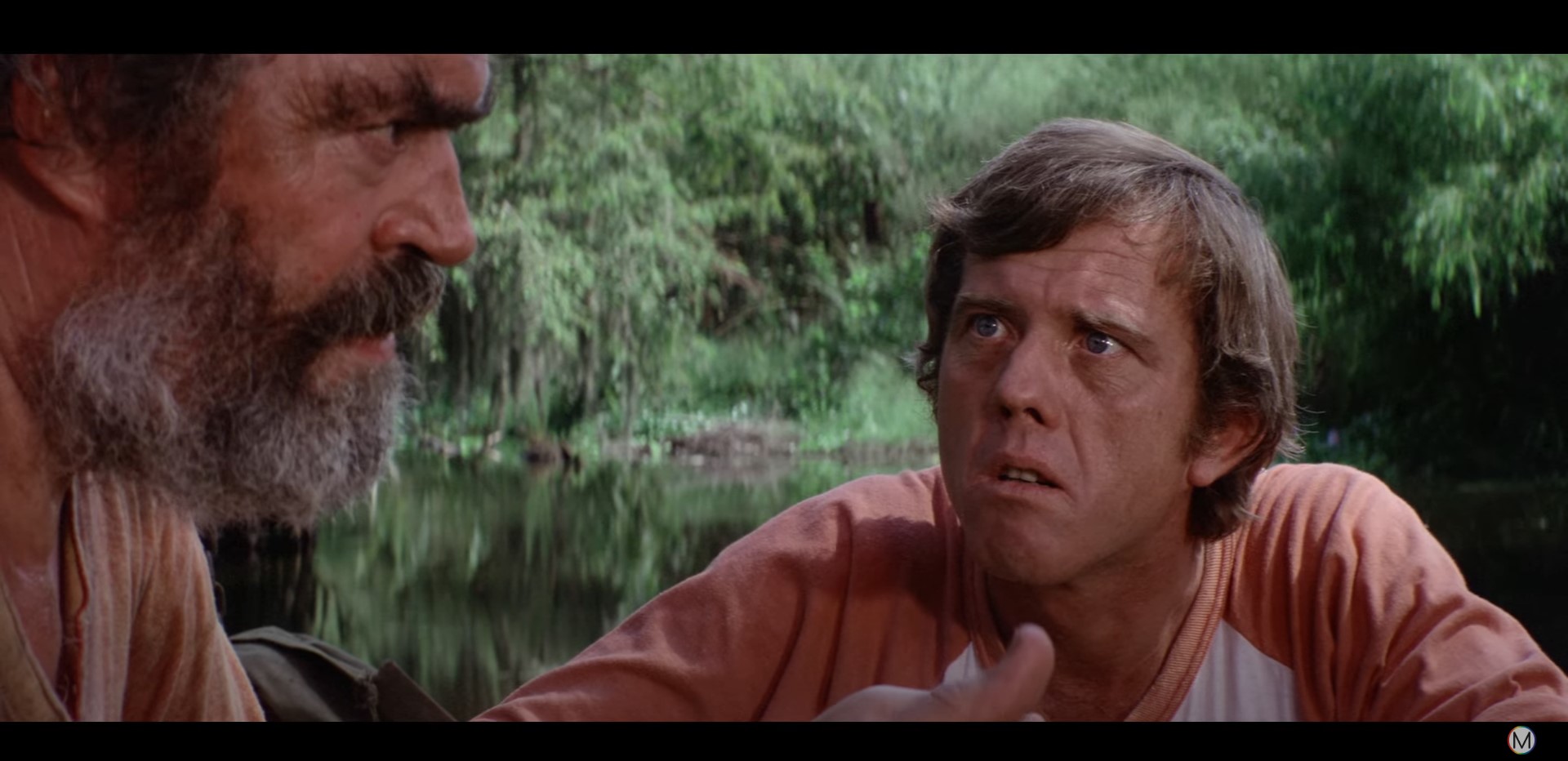
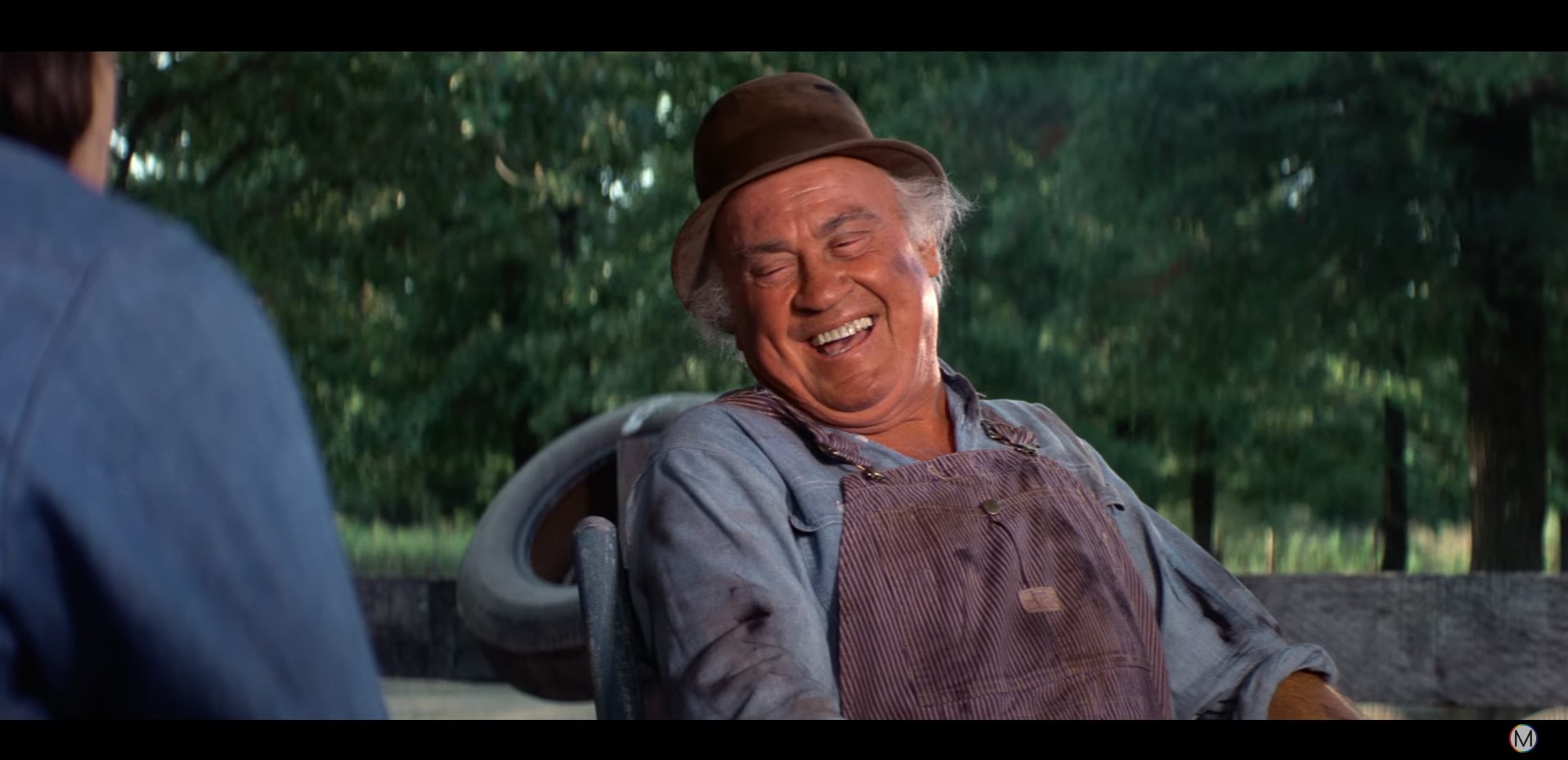
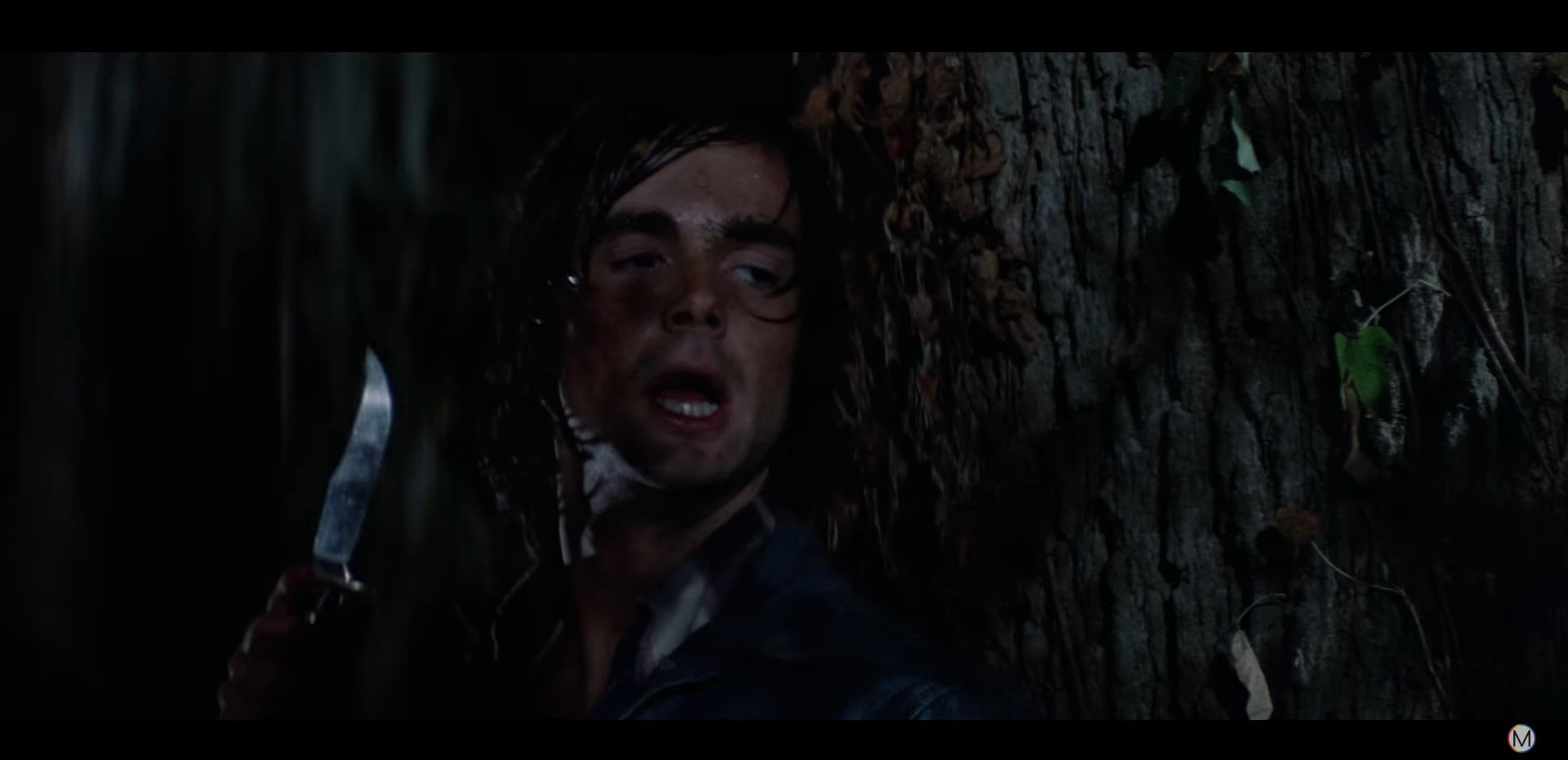
“Creature from Black Lake’s” cast is a distinctive assembly as aforementioned earlier.  Not only do they play their roles well by incorporating localisms where needed but they add a blend of intensity with chunky bits of comedy marbled through a storyline that’s half-anecdotal and half-present action. University of Chicago students Rives (John David Carson, “Empire of the Ants”) and Pahoo (Dennis Fimple, “House of a 1000 Corpses”) set course to Oil City, Louisiana where an indistinct creature is suspected to be in area based of science and suspected fish stories told by local kooks and drunks that turned out to be horribly true. Rives and Pahoo, who in McCullough script is constantly chaffed about his unique name but shrugs and deflects like he’s done it all his life, interview Oil City residents who believed to have bare witnessed firsthand the beast’s atrocities that has taken the lives close to them. These Bayou denizens are enriched by veteran actors with robustly created caricature personalities. Surly voiced with bulging, wild eyes, typecasted western actor Jack Elam had branched out from films like “Gunfight at the O.K. Corral” and “Once Upon a Time in the West” to play a similar grouchy character dwelling in the swamps as a trapper. Elam’s great a feigning an intoxicated mess as you can literally taste the alcohol sweat from his porous skin sheltered by an unkempt beard and a loose fitting crumpled up onesie that’s staple motif for any drunk Cajun or drunk cowpoke, so Elam was fairly comfortable in the role. Dub Taylor is another big old-timey name in the western genre and rarely saw horror as a place to call home. For Taylor, his role as Grandpaw Bridges gave the actor a chance to play an old hayseed complete with a solid effort in Cajun English. Taylor’s lively at times with an animated excitement but can turn somber and stern as soon as his character’s scorned and calls for a more serious tone. Compared to Elam and Taylor, youngsters Carson and Fimple pilfer very little from the veteran’s epic role characteristics but do fine in their own rite with carrying the hunt’s harrowing third act. Bill Thurman (“‘Gator Bait”), Jim McCullough Jr., Cathryn Hartt (“Open House”), Becky Smiser, Michelle Willingham, and Evelyn Hindricks round out “Creature from Black Lake’s” cast.

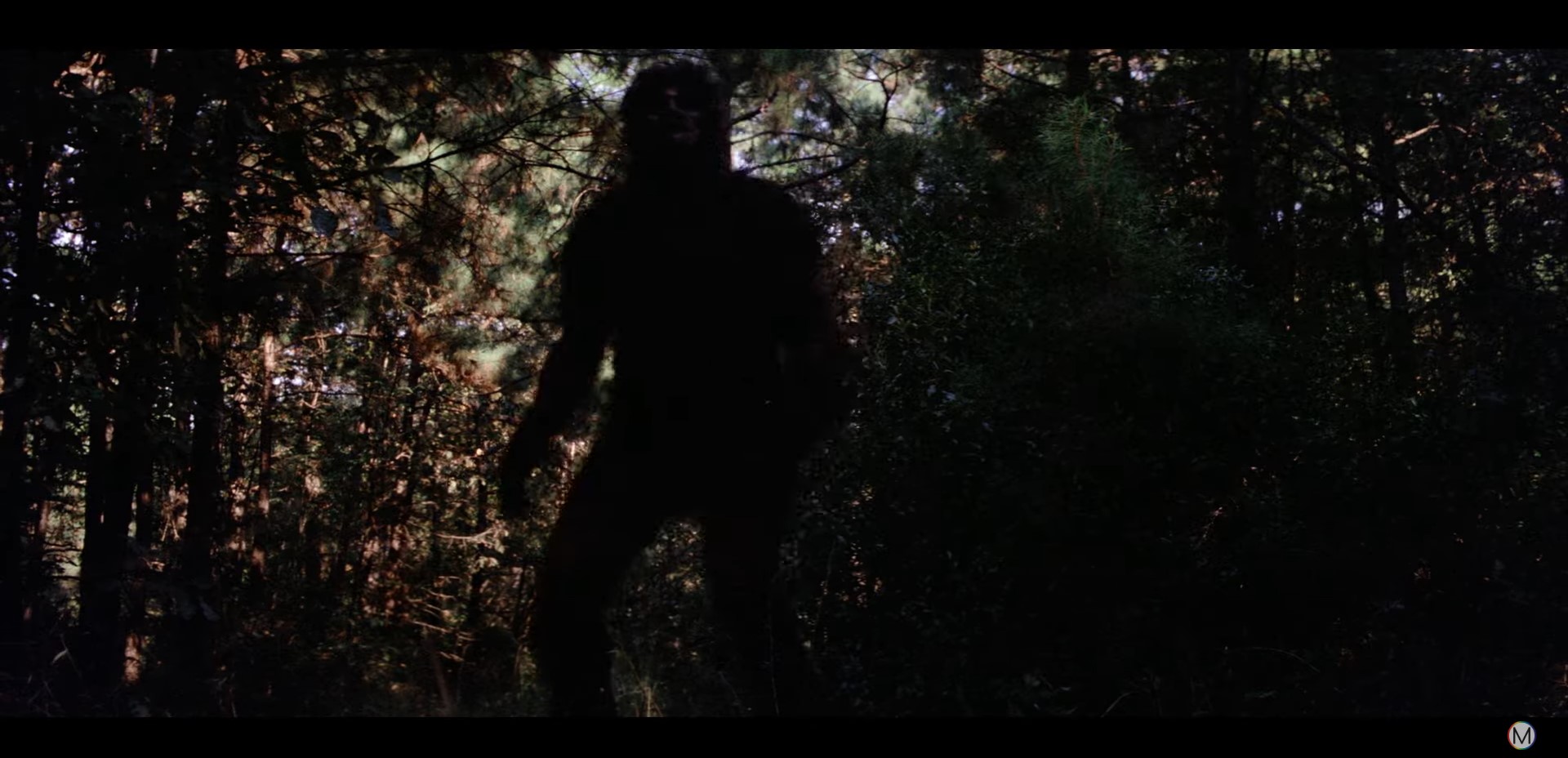
How could a 1976 bigfoot feature be more surprising and compelling than any modernized version? Well, one of the biggest pros to “Creature from Black Lake’s” success is Jim McCullough Jr.’s script that’s surprisingly well written by the first go-around screenwriter and while I’m not primarily speaking on behalf of the principal leads’ motivation or the slightly lack thereof, there lies more interest in the quick-witted dialogue and the blunt banter to keep Rives and Pahoo from being dullards and to keep the story from being a slog. Another aspect that is sharp as a tack is Dean Cundey’s cinematography that keeps the creature firmly in the shadows, producing that suspenseful and mysterious “Jaws” effect where we actually don’t see the shark until the third act. Cundey, best known for handling the cinematography on titles you might have heard of such as “Jurassic Park,” “Death Becomes Her,” and “Big Trouble in Little China,” made a name for himself first in grindhouse horror and exploitation of the early 1970s.  Cundey keeps the apelike creature shrouded from direct light, lurking mostly in the shadows with only a glimmer quickly streaking across the snarling face and an animalistic outline of its furred body and tall stature.  The full effect of bigfoot is never directly in your face or full in view which can be best at times depending on the look of the creature.  Cundey had partially designed the face of bigfoot and thus covering up perhaps his own shoddy work with how to film the titular antagonist of Black Lake.  Now, Black Lake is an actual lake in Louisiana but is about 100 miles SE of Oil City and Shreveport and likely used a combination of Big Lake and Cross Lake that were near the majority of shooting locations to serve as representation of Black Lake.  Where “Creature from Black Lake” struggles is with the Rives and Pahoo dynamic that barely tether’s to how their friendship, though diverse individually, becomes stronger up the end with a near death experience.  Pahoo’s a Vietnam vet and with his wartime experience, he’s the more on edged character out of the two suggesting an underlining PTSD theme when the creature’s roar and circling of the camp puts Pahoo into an eye-widening internal panic.  Rives is cool as a cucumber and is determined to prove something inexplicable in pushing forth and bagging a big hairy beast.  At times, contention flares up between them but is quickly extinguished with a simple sharing of homemade fireside baked beans to sate Pahoo’s ever ravenous stomach.  Their hot and cold amity and indeterminable mission into the Bayou shapes very unsatisfactory their resulting unbreakable bond that hints at something more than just friendship, as if there is metaphorical points of betrayal and forgiveness that makes their connection scar tissue stronger but are not clearly delineated.

Finally!  A bigfoot feature that works mostly at every angle, is more than just palatable from a story standpoint, and has a formidable bigfoot presence that’s more than just a man in a monkey suit. Synapse Films restores not only “Creature from Black Lake’s” original widescreen 2.35:1 aspect ratio onto a high-definition Blu-ray from the dreadfully cropped VHS and TV versions but also restores the creature feature with a brand new 4K scan from the original 35mm camera negative. The result is phenomenal with a widow’s peak view and the grading is touch of tailored class that freshens the 46-year-old with new vigor. No instantaneous signs of compressions issues on the AVC encoded BD50 with inky black shadows and profiles that are sharp around the edges, never losing sight of image and never losing the quality. The Blu-ray comes with only one audio option – DTS-HD Master Audio 2.0 mono track. Not the best representation but perhaps the best that’ll get, some audio elements succumb to the production limitations, such as the stifled dialogue track early on in the film that leaves exchanges between Rives and Pahoo soft and scarcely perceptible. The dialogue issues alleviate as the story progresses, falling in line into an even keeled dual channel output. “Creature from Black Lake” has ample range between the booming closeup shotgun and rifle shots to the light tinkering of utensils and camping gear. We don’t receive much depth, not even with the creature’s roar as it thunders into much of audio space and overtakes everything else. Newly translated English subtitles are available. Bonus features includes an audio commentary with author/filmmaker Michael Gingold and film historian Chris Polliali, a brand-new featurette with cinematographer Dean Cundey Swamp Stories, the original theatrical trailer, and radio spot. The physical release comes in a blacked-out Blu-ray snapper, Synapse Films’ catalogue insert, and has Ralph McQuarrie illustrated cover art that’s an unmistakable masterstroke of his craft. The region free Blu-ray of “Creature from Black Lake” is rated PG and has a runtime of 95 minutes. If you’re on a quest to quench a midnight movie about bigfoot, journey no further as Synapse Films delivers one of the better, more comical and terrifying, Sasquatch movies of our time and in beautiful high definition!

“Creature From Black Lake” on Blu-ray is Bigfoot’s Bestfriend

The Devil Is Never Pretentious with His EVIL! “Satan’s Little Helper” reviewed! (Synapse Films / Blu-ray)

Bluray is Currently Cheaper than DVD!  Grab “Satan’s Little Helper” Fast!

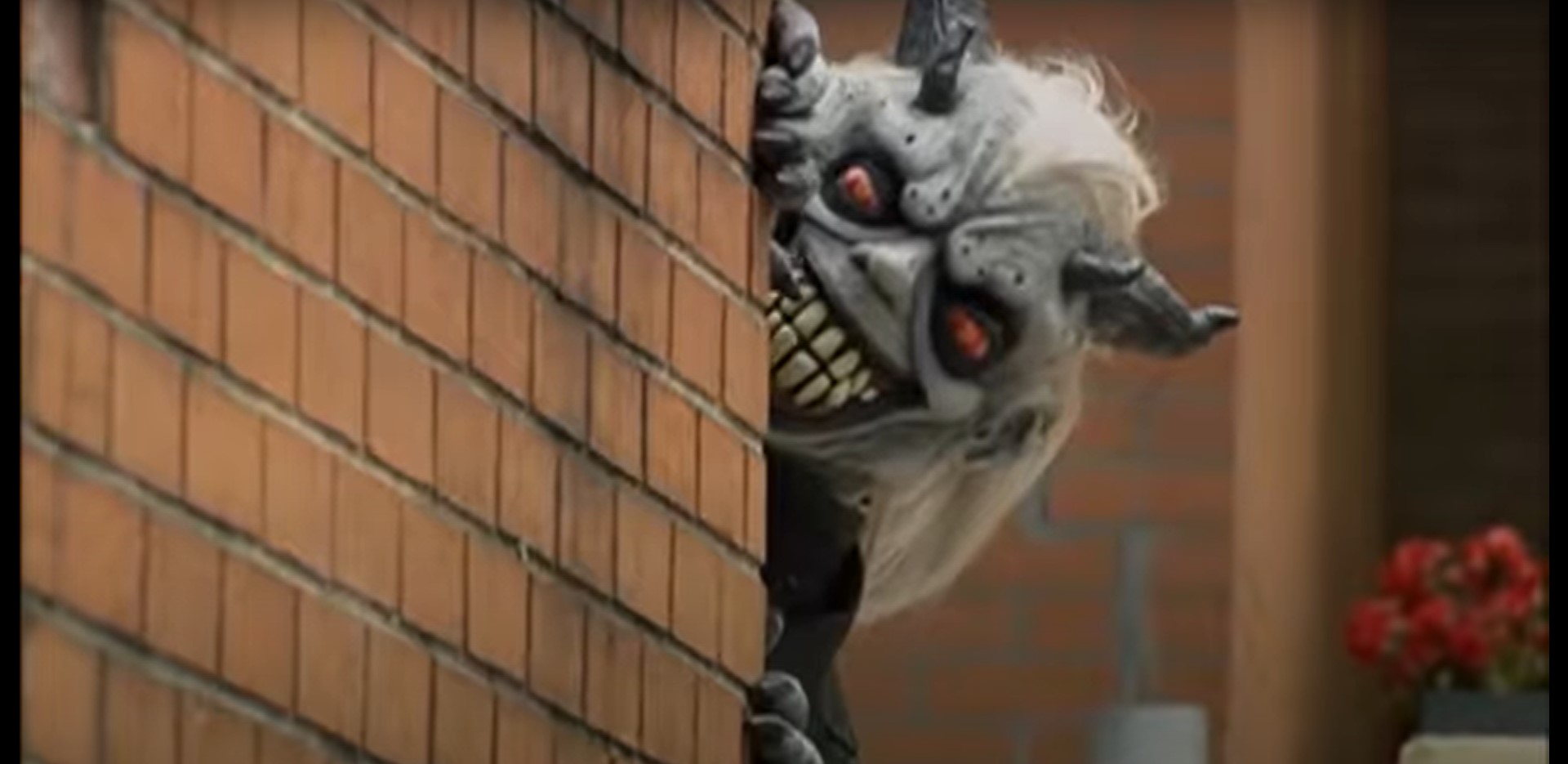
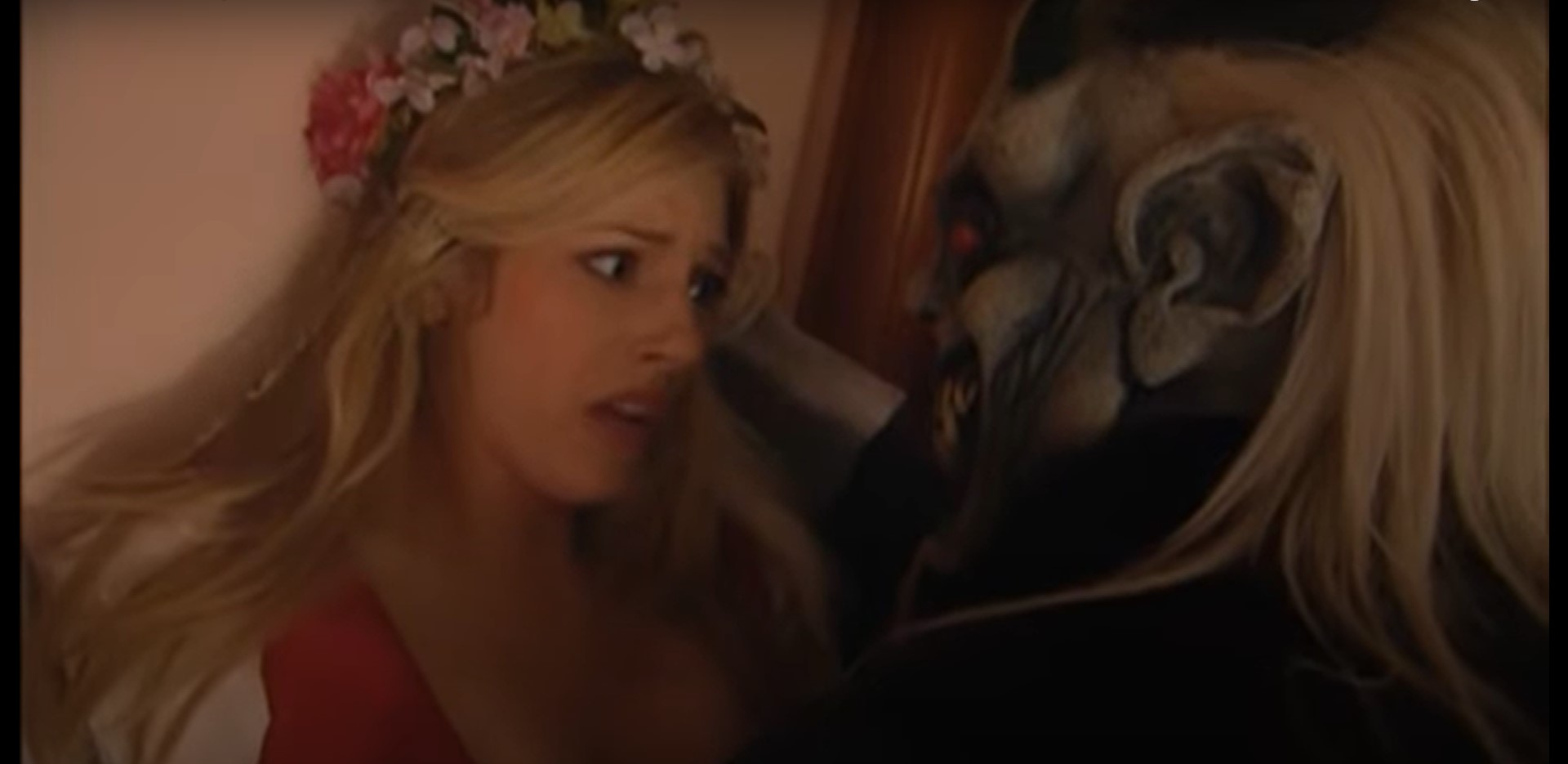
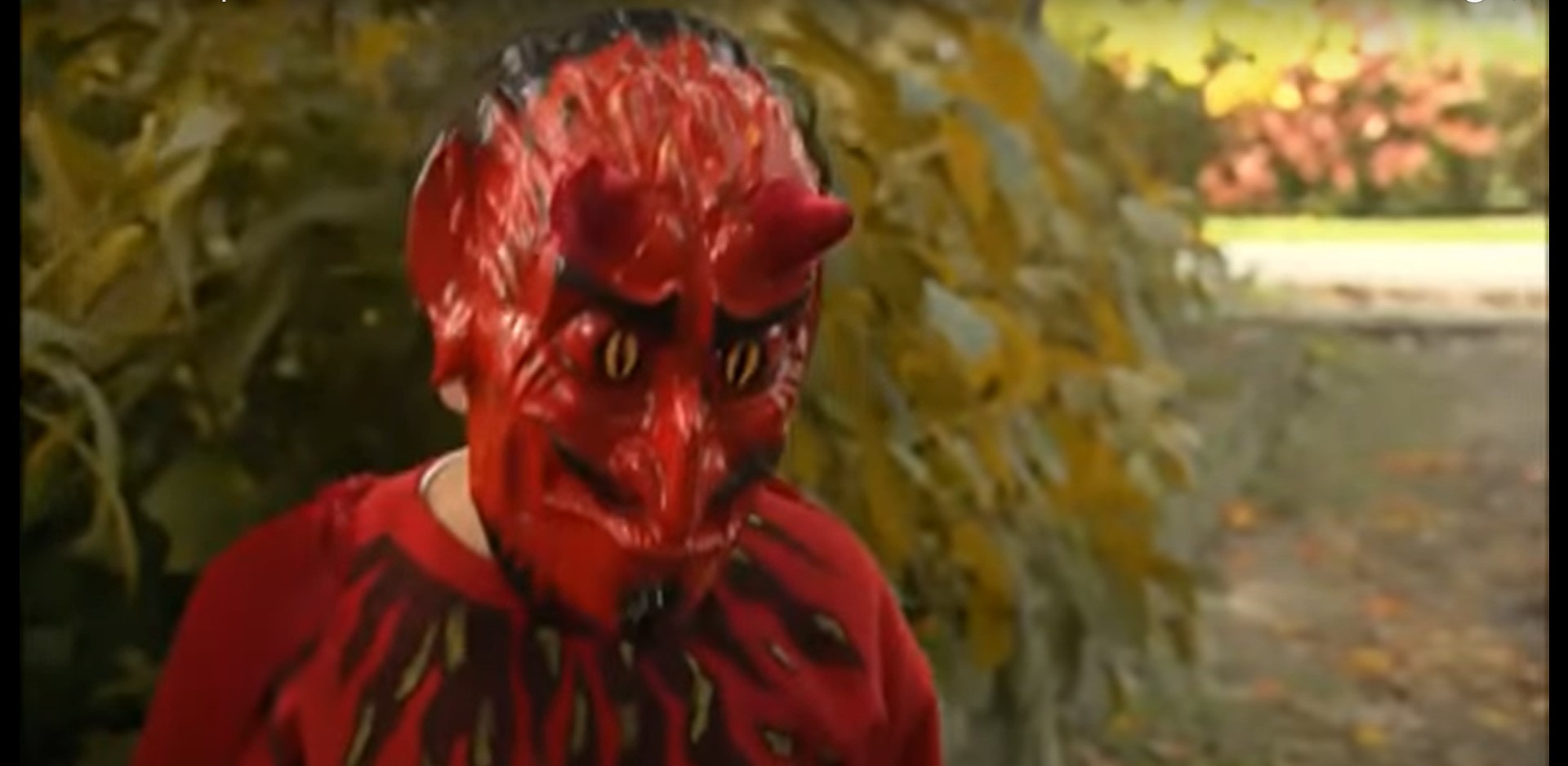
Obsessed with his new video game Satan’s Little Helper, where a little boy helps the Satan dispense murderous bloody mayhem, naïve Dougie, sporting his own hot red Satan costume and mask, swears he’ll have a chance to meet Satan himself during Halloween.  Who Dougie believes he stumbles upon is the master of darkness but, in reality, the overactive and imaginative adolescent has discovered a deranged, untalkative serial killer in a Satan costume going house-to-house setting up realistic looking gruesome displays as Halloween lawn decorations.  Feeling slighted when his college-age sister comes home to Bell Island with a new boyfriend unexpectedly, an upset Dougie wants Satan to kill the boyfriend, but the killer insidiously uses the boy as a pawn and works his way into Dougie’s family home and everyone thinks it’s the new boyfriend masked as Satan to impress and please the difficult child.  Set in motion is a flight of wickedness throughout the night on the island town that’s unprepared for the chaos yet to come. 

Jeff Lieberman is already something of a cult horror director amongst fans. Having written-and-directed obscure classics “Just Before Dawn,” “Blue Sunshine,” and “Squirm” within 5 years between 1976 and 1981, Lieberman took horror by varietal storm by dipping his toes into different subgenres and doing moderately well at it., establishing a legacy with re-releases of his films into the new millennia. Though quiet for many years in the realm of horror, Lieberman makes a return with 2004’s “Satan Little Helper,” a killer horror-comedy filled with an innate fear of the unknown with what or who is truly behind that devilish mask. Lieberman wrote and directed the feature with a dark and morbid stamp perfect for the Halloween season. If you’re looking for a good Halloween movie, “Satan’s Little Helper” should be on your short list. Set on the fictional location of Bell Island, which is actually Long Island, New York, “Satan’s Little Helper” is a production of Intrinsic Value Films (“The Last Thing Mary Saw”) and the limited liability company under the alteration of the film’s title with Satan’s Little Company and is self-produced by Lieberman as well as Mickey McDonough, Isen Robbins, and Aimee Schoof with Carl Tostevin serving as executive producer. Screen Media Films waived the theatrical rights route by releasing the insta-cult film directly onto the video market.

Gracing prominently most physical releases with a sinister grin is a dialogue-less and faceless principal character, who with every centimeter of his latex teeth and showing a lackadaisical posture as he turns Bell Island upside down as his own massacring playground, is obviously the serial killer, played by Joshua Annex. Annex spin on Satan Man reaps the story’s benefits by creating a mischievous antagonist to the likes we’ve never seen on screen before despite being playing the murderer behind the mask trope. Annex might be playing Satan but the actor is not playing the titular character, or is her? The double entendre can be interpreted in two ways: the masked killer is actually Satan’s helper on Earth or Dougie, the annoyingly naive brat with an unhealthy infatuation with the Lord of Darkness. Played by a then adolescent Alexander Brickel in his debut performance, Dougie’s only kicks the hornet’s nest even more for not only the residents of Bell Island, but also for his family as the young loutish lad invites the killer his family abode under false pretenses and never revels the truth until it’s too late. Brickel is intense in an aggravating Dennis the Menace kind of way, but the act works all too well with the flanking character players who need to feed off of Dougie’s hellion deposition that all stems from wanting to marry his sister. Is there some kind of symbolism or metaphor there? Speaking of the sister, Katheryn Winnick (“Hellraiser: Hellworld,” “Polar”) levels the eccentricity with normal reactionaries as the sister Jenna. Counterbalancing to make sure her normalcies don’t overstay their welcome is the great Amanda Plummer (“Pulp Fiction,” “The Prophecy”) with sublimely odd mother that only Amanda Plummer could pull off and make it feel right. Stephen Gramham, Wass Stevens, Melisa McGregor, and Dan Ziskie round out the cast.

Perfect for the season, perfect as a cult film, perfect to just be for everyday viewing, “Satan’s Little Helper” has been kept in the shadows far too long and needs to be risen from the netherworld for all to bear witness the unsystematic carnage from someone who just wants to see the world burned. The Lieberman film intoxicates with spontaneity as you never know what to expect or happen next. The script is simple, yet smartly contrived to work as a haphazard horror with a foundation foe with no limits, no boundaries, and no motivation. There’s a relief that there’s no supernatural or actual Satanic force driving the plot and, instead, unravels in a prevailing fashion with an accepted and logical fear that the person behind the mask is not always the person you believe wearing it. While Lieberman’s script does a nice job fleshing out a feature length film where the doesn’t have one single word of dialogue, there are moments when suspicions amongst the family would have or should have come a lot sooner and that stretches the reality some, making act two gummy around the midsection when the serial killer is playing the part of Jenna’s boyfriend. Lieberman caveats Jenn and her boyfriend, Alex, as a pair of studious actors and Alex is just immersed in his role as Satan to please Dougie and while that seems very plausible, how long the act maintained its course did not. Eventually, Lieberman became wise to the Satan costume’s stagnancy and moved the character along into another facade of choice that then goes into a guess who game of deception. An aspect of the killer’s intelligence that makes the character uber-clever and that much more deadly.

“Satan’s Little Helper” is one of Synapse Film’s more contemporary releases that doesn’t require a hefty image upgrade but the new 1080p high-definition upgrade and a supplemental bonus features make this new Blu-ray release very attractive. Presented in a widescreen 1.78:1 aspect ratio, the AVC encoded Blu-ray craves out a resolute image as expected since the modern film is digitally recorded and hasn’t been affected by the wear-and-tear of age and neglect. Perhaps not as glossy as an expensive Hollywood type production with a late 90’s-early 2000s glaze, gel, or filter, “Satan’s Little Helper” keeps a more than adequate showing of details and a medley of colors amongst is more natural cinematography with a handful of night scenes shot in a day under a dark filter. Only one scene of concern stands out on the ferry pier and in what’s supposed to be a close up of Dougie’s dumbfounded face when meeting Jenna’s boyfriend for the first time has somehow turned into a blown up shot that stretches the image fuzzy and masking the delineation. The English language DTS-HD master audio shows no signs of issues with a flawless and lossless sound design. The clean and clear dialogue raises the bar on Dougie’s testy tantrums and cleans out with the ambient effects toward the killer’s actions to compensate for his lack of chit-chat. Optional English subtitles are offered on this release. Bonus features include a commentary with director Jeff Lieberman, an archival behind-the-scenes featurette, The Devil in the Details making-of featurette that goes into cast and crew interviews with Lieberman, Alexander Brickel (now older and with longer hair), director of photography Dejan Georgevich, and special effects artist Anthony Pepe, a tour of the filming locations guided by Lieberman in Mister Satan’s Neighborhood, and the promotional trailer. The physical release comes in the nifty blackout Blu-ray case with a Synapse catalogue insert in case you want to buy their releases via mailed order form. Synapse Film’s “Satan’s Little Helper” new Blu-ray comes home at the most opportune time during this 2022 Halloween season and is sure to be viewed as a delightful deluge of dark comedy carnage and destruction, some of the best attributes of any good horror film.

Bluray is Currently Cheaper than DVD!  Grab “Satan’s Little Helper” Fast!