EVIL’s One Brush Stroke Away From Losing It! “Spiral” reviewed! (Ronin Flix / Blu-ray)

The New “Spiral” Now on Blu-ray!

Mason, a socially awkward painter and car insurance telemarketer, struggles to cope with a seemingly bad breakup that might have turned into a misdeed, but a quick call to his only, childhood friend Berkeley helps keep his anxious emotions from spiraling out of control into nightmarish allusions.  As Mason gradually works to purge his previously relationship, a woman who was also his inspiration for his artistic work, he suddenly meets Amber, a new amiable hire in his company, sitting with him on his lunchbreak outside bench.  Amber’s able to slowly break down Mason’s guarded wall of insecurity and two begin an innocent, romantic relationship as Mason continues to push his haunting past aside for Amber to fully step into being his modeling muse, but the further imbed she becomes into his life the more enigmatic secrets are revealed surrounding Mason’s life, even the darkness that slowly spreads and loops into it.

Actor Joel David Moore had established himself as an actor in early 2000s, usually portraying the lanky, awkward, if not ungainly trope in comedies most notably in “Dodgeball” and “Grandma’s Boy,” playing a supporting protagonist as well as lead antagonist.  Director Adam Green quickly became an overnight success amongst genre fans with his release of the Cajun miscreant slasher in “Hatchet” that would spawn a pair of sequels.  Having worked as actor and director respectively on “Hatchet,” Moore and Adam became good friends and decided to take a step further to not only expand upon an acting career and expand upon the objectivity of storytelling but also to co-direct their next project entitled “Spiral.”  The script, that orbits around the romantic-psychological thriller purview, is cowritten between Moore with debut feature writer Jeremy Boreing.  The 2007 film revolves around and enters the disconnected mind of an emotionally compromised individual and how he copes and handles everyday life while in constant fear.  “Spiral” is executively produced by Moore and costar Zachary Levi along with Boreing, David Muller, Kurt Schemper and Cory Neal producing under the Balcony 9 and ArieScope Pictures production flag.

If you haven’t gathered already, “Spiral” is Joel David Moore’s baby.  Moore’s idea natural earmarked him as the executive producer and the project is the first to land him a directorial and a writer credit, so unsurprisingly, the role of the socially recluse and mentally scarred Mason went to the Portland, Oregon born actor, likely a role he wrote with himself in mind.  As Mason, Moore breaks the mold that has trapped him in previous films that were relegated to what producers might have considered not leading man material, leaving much to be desired when stuck in a second of third string supporting role.  Then Adam Green puts Moore in “Hatchet” and in the principal protagonist role.  The opportunity proves Moore had more than just comic, sidekick relief and he really cements Mason’s depth with ticks, tantrums, and a taste for tenterhook romance.  Meeting Mason in the ambiguous opening stirs internal conflict for how we’re supposed to receive this hyperventilating wailer confessing to something vile we’re not privy too just yet.  From there, we meet the philandering, go-with-the-flow, and Mason’s best bud, only friend at that, Berkeley (Zachary Levi, “Shazam!) and the quirky cute and Mason-eyer Amber (“Amber Tamblyn, “The Ring”) that develop upon Mason’s home-work relationship that highlight his interests – painting and jazz – as well as his disinterests – basketball and speaking about his past.  The very opening scene compared to the heart of much of the story has stark contrast and, so much so, that audiences will tend to forget Mason’s late-night phone call ramblings and fear to his friend Berkeley, his wake-up screaming nightmares to wear he looks at his hands for blood, and his overall highly anxious persona when he’s talking shop and girls with Berkeley and breaking out of his shell of solitude with Amber in a lengthy string of normalacy.  Ryan Chase, David Muller, Annie Neal and Lori Yohe fill out the cast.

“Spiral” is all about the trauma, a fiercely common theme inside the heads of the mental thriller subgenre.  With deeply troubled lead character, an at interval switchboard that lights and darkens between the protagonist and ambiguous antihero storyline, watching Mason grow, fall, grow, fall, grow, and then finally collapse in a heap of his own trauma is terrifyingly satisfying, mostly to the thanks of Moore’s added plummeting nuances that spit his character back into abnormality.  Mason’s arc circulates in a circular pattern and the evidently timebomb is ticking away but in the middle of that circulation forms a bond, a friendship, an affair, hope, compassion, and every affirmative adjective you can think of to bring happiness to what shouldn’t be a happy trajectory because in the back of our minds, darkness lies.  That’s the sublayer of this trauma-laden yarn with a repressive factor and the key to unleash years of pent up unlocks a whole new side of Mason, one that isn’t completely illuminated upon until the shocking, device-destroying end.  

Ronin Flix rekindles Joel David Moore and Adam Green’s “Spiral” back to Blu-ray with an AVC encoded, 1080p resolution, BD50. Comparatively to the Anchor Bay 2010 Blu-ray release, which also presents the film in a widescreen 1.78:1 aspect ratio, Ronin Flix edges out the now decade previous release but not by much. The back cover only notes the label went through a film restoration with no other details or specifics to elaborate but from a spectator’s view, the 2024 restoration handles a sharper delineation that provides excellent depth that plays key to the various scenes of Amber and Mason’s painting sessions, Mason’s guilt-ridden obsession with the bathroom door, and Mason’s overhead cubicle viewpoint to name a few examples. Details are much more specific in brighter, ambient-lit scenes than the darker shades of key lighting or night sequences not only because of the innate lack of illumining exposure. Blacks tend to crush slightly, bleeding in the details and washing them out in blank of black. Skin and textures particularize better on Ronin Flix’s upgrade that uses a newer codec for compression, elevating the elaboration for this under-the-radar indie. The English DTS-HD Master Audio 5.1 manages the lossless mix much in the same was as Anchor Bay’s with greatly clear articulation on the forefront, a spacious and spatial ambient track, a patterned sound design dynamic to the progression, and a supporting soundtrack that while isn’t overly worthwhile does aid the varying moods, especially when Mason turns on a dime intertwined with jazz brass. Decent sound diffusion through the back and side channels to harness surrounding elements while the fronts tackle the predominant dialogue until an occasion acousmatic turns our heads and our attention. English subtitles are available for selection. The static menu offers special features that includes exclusive content, such as a newly put together making-of “Spiral” entitled Paint it Red, an audio commentary with Adam Green and Joel David Moore, director of photography Will Barrett, and editor Cory Livingston an a behind-the-scenes documentary featurette with interviews from Green, Moore, Livingston, Barrett and co-star and producer Zachary Levi. Archival content includes an audio commentary with the co-directors, director of photography, Levi, writer Jeremy Boreing, and actress Amber Tamblyn, and rounds out with the theatrical trailer. A cardboard O-slipcover sheathes the Blu-ray Amaray case and both contain the same more-gruesome-than-it-really-is cover art and David Levine package design. Inside the case is just the disc pressed with a third copy of the hand dripping blood, or paint. Ronin Flix release is rated PG-13 for disturbing behavior, violence, some partial nudity and language, has a runtime of 91 minutes, and also unlike the Anchor Bay release, this release has region free playback.

Last Rites: “Spiral” paints Joel David Moore in a whole new light, colored in vague tones that just nip at nerves, and slaps you square in the face just when things start to feel warm, cozy, and safe.

The New “Spiral” Now on Blu-ray!

Dump Buckets and Buckets of Water Back into this Dry EVIL Well. “Ring Shark” reviewed! (SRS Cinema / DVD)

“Ring Shark” Now Curses the DVD Market! Own It Here!

For the subscribers of her Youtube show, vlogging social media influence Kanamasa and her co-host search for a stone well rumored to be in a haunted forest surrounded by unfriendly villagers who aggressively ward off unwelcomed visitors.  Upon discovering the well, a shark-like creature emerges suddenly and bites Kanamasa, scaring them off.  A few days later, another pair of Youtube investigators of the Psychic Investigations Big Summer learn of Khana’s disappearance after her last video surfaces of what looks to be a shark fin and then a ghastly body surfaces from within her bathtub, attacking her bikini-garbed body.  Seeking the truth and eager to find Khana, the investigators conduct interviews with “shark” experts and attempt to visit the same well only to be shooed off by the villagers until, finally, they’re able to reach the same spot and experience the same sharp-teethed horror lurking within it.  Unknowingly, that same supernatural terror of the well had follow them home. 

Sharksploitation has admittedly gotten out of hand.  The beloved horror subgenre that began with Steven Spielberg and Bruce the mechanical monstrous shark who terrorized the beaches of Amity Island have since drowned in its own watery subcategory of the ocean’s maneater predators with microbudget ineptitude that takes the shark from its natural ecosystem and rehomes it in a miscellany of nonsense locations, such as on land, in the weather, and even circling in toilets.  Well, today is the day we’ve come across a movie been assimilated into that same fatuous collective with “Ring Shark,” aka “Well Shark,” aka “Ido Shark.”  The Japanese, found-footage comedy-horror is the first of a trio of incongruous shark films released between 2023 and 2024 by Taichiro Natsume with “Love Shark” and “Last Shark” to follow, connected by the Big Summer team of Psychic Investigators.  Natsume also wrote and produced the feature.

Unfamiliar with the Psychic Investigator Big Summer series, which there’s uncertainty if Big Summer is a Japanese comedic troupe, equivalent to the Broken Lizard of America, what “Ring Shark, or “Ido Shark” begins is a series of various haunted case probes by the Big Summer team, which in this film in particular include actors using modifications of or using their actual names as characters in the story, such as director Taichiro Natsume being the single male lead in the group under character name Daiichiro Natsume.  Daiichiro Natsume can be a bumbling, yet persistent fool when it comes to the mysterious case of Kana-san with his steady motif of exclaiming his love for big boobs and determination to resolve the mystery.  He’s joined by colleagues on-and-off screen in Momoka Asahi and Chihiro Nishikawa, the latter not to be confused with Chihiro Nishikawa of JVA.  While Nishikawa and Natsume continue the running gag conversating about big breasts, Momoka Asahi enters the picture much later as the third investigating team member when Natsume goes down with a well shark bite infection that haunts him from the inside out and puts him in the hospital.  From there, Nishikawa and Momoka take the reigns on investigation by not only tending to Natsume’s dwindling health but also interviewing internet paranormal sleuths Hiroshima Freddy, a Japanese horror influence in real life, as well as Black Story Kuro, who I imagine is another influencer but couldn’t confirm it.  Typically, the Japanese language has a ton of fluid inflections and tones that dictates situations and mood, but “Ring Shark” avoids much of the vocal ups-and-downs with a consistently level tone of flat and dry humor peppered with fear, arbitrary bickering, and a pinch of kawaii to sustain a semi-serious documentary style investigation.  Maya Mineo, Issei Kunisawa, Yacch Chara, Daiki Mizuno, Honey Trap, Umeki, and the wrestler known as The Shark fills out the cast.

“Ring Shark” is “Blair Witch Project” meets “The Ring.”  The latter having the most prominent appearance as the at home media, that was once titled, or probably is likely titled in Japan, as “Ido Shark,” is marketed for U.S. consumption because every moviegoer is either well versed or knows of Hideo Nakata’s “The Ring” series and its heebie-jeebies Samara spirit.  Instead of a cursed tape that summons Samara out of the depths of her murdered resting spot, a well, to kill anyone after a week of viewing said tape, “Ring Shark” only real connective tissue to “The Ring” is that there is a well in the story and a murdered girl’s body was dumped inside.  That’s it.  From there, the structure is more to the tune of “Blair Witch Project” with a pseudo-found footage of one social media’s disappearance igniting the Psychic Investigator Big Summer team to check it out after the tape is brought to their attention form Kanasama’s co-host.  The docu-style incorporates dry wit of interviewing shark experts, creature academics, urban legend connoisseurs, and thorough analysts and researchers, as well as themselves as angry villagers and a supernatural hand puppet shark head subverts their stratospheric sublayer with soul-chumming results.  Yet, none of everything just said really clicks in a flimsy and slapdashedly put together microbudget story derived for effect for true and absurd exploitation of sharks gone wild. 

“Ring Shark” swims right into SRS Cinema’s well-house with a brand-new DVD from the microbudget cult film distributor.  Upscaled to 1080p, the MPEG2 encoded, single layer DVD5 presents the Big Summer production ion a widescreen 1.85:1 aspect ratio.  Though upscaled to 1080p, the cell phone footage renders stretched limitations under the light of low-budget constraints.  Night vision and poor lighting coupled with closeups-to-extreme closeups, and shaky camera work dematerializes story-important images.  Natural lit and stationary camera work provide cleaner visuals in what is mostly a deluge of exposition and regular camera angles without atmospheric makeup.  The Japanese language Dolby Digital 2.0 stereo provides lean composition with ample inherent surrounding ambience, picking up the natural wildlife chirping in the background, the vocal amplification of someone talking through a microphone, the hustle and bustle of a restaurant, etc. Dialogue isn’t impeded by the commercial phone camera recording that creates a rather good reproduction and diffusion of sound amongst the space.  Added audio effects, such as the shark’s growling or snarling, does feel unnaturally alienated from the rest of the audio but works to the film’s advantage despite the obvious hand puppetry.  English subtitles are burned in but do synch well and appear error free. There’s also what looks to be double English subtitles along with Japanese title cards or subtitles that are a part of the Youtube investigation and often coincide with the main English subtitles in a distracting, screen space absorbing real estate. The Japanese electro-rap graced static menu, which samples Lil Jon’s Yeeeah, contains no bonus feature selection; instead, the bonus content is right on the main menu with short film “Shark of the Dead” (8.26 minutes) and the “Ring Shark” trailer.  I love bad movie cover art and SRS Cinema’s “Ring Shark” is no exception with smokey-eyed, electrically charged, and monstrously toothy shark breaching from a little stone well underneath “The Ring”-font film title.  The disc is pressed with the same image and there are no inserts included.  The barely hour-long film, clocking in at 63-minutes, comes not rated and has a region free playback.

Last Rites: “Ring Shark” is a monumental prosaic mockumentary aimed to swell Sharksploitation into further ill-repute and disrepair with an unfunny and uninteresting undertaking of underwhelming pastiche.

“Ring Shark” Now Curses the DVD Market! Own It Here!

No Sam Raimi. No Bruce Campbell. Just the EVIL! “Evil Dead Trap” reviewed (Unearthed Films / Blu-ray)


Nami, a Japanese late night show host, is seeing her ratings dipping.  Though not in danger of losing her all-female produced show, Nami decides take her team on an investigation of a mysterious snuff tape that was mailed to her specifically.  Left for her is a bread crumb trail of directions to an abandoned military base, Nami and her crew explore the campus’s rundown structure, searching for evidence, a body, a story that they can televise.  Ignoring the dangerous presence around them, they dig deeper into the dilapidating labyrinth where they horrifying discover something waiting for them laid out in a cruel plan of deadly traps with a maniac pulling at all the strings. 

Bred out of a pedigree of pinkusploitations and a nation’s crisis of identity after the Second Great War, “Evil Dead Trap” is a greatly symbolized Japanese machination tale helmed by pink film director Toshiharu Ikeda (“Sex Hunter,” “Angel Guts:  Red Porno”) and penned by an equally historical pink film screenwriter and “Angel Guts” manga series creator Takashi Ishii (“Girl and the Wooden Horse Torture,” “Angel Guts” series).  Also known under its original Japanese title, “Shiryô no wana,” as well as, and my personal favorite, “Tokyo Snuff,” in Spain, “Evil Dead Trap’s” smorgasbord of rape, torture, and gory death naturally shocked viewers upon release and continues to do so as one of J-Horror’s branched out films that segued out from the brutal and depraved pink film inspired context into the new longstanding ghost genre we’ve seen over the last few decades with “Ringu” (“The Ring”) or “Ju-on” (“The Grudge”).  The production company Joy Pack Films, behind the 1980’s obscure Japan films, such as Genji Nakamura’s “Go For Broke” and Banmel Takahashi’s “Wolf,” houses the “Evil Dead Trap” from executive producer Tadao Masumizu.

If you recognize a couple cast members, or maybe just their naked bodies, then there’s something depraved about you!  With all kidding aside, but no seriously, if Rei (Hitomi Kobayashi) or Kondo (Masahiko Abe) look familiar, then you my friend are pink film aficionados as Kobayashi has starred in “Hard Petting” and “Young Girl Story” and Abe was in these pink film hits the “Pink Curtain” trilogy and “Female College Dorm Vs Nursing School Dormitory.”  If these faces didn’t touch you in any kind of sensual way, no worries, leading lady Miyuki Ono brings the star power.  The “Black Rain’s” Ono plays Nami, a go-getter television host/personality with her sights set on ramping up her late night show’s ratings, but also sucked into the posted snuff film’s darkest allure that’s personally calling her into to a precarious story lead.   Nami could also be a homage to one of screenwriter Takashi Ishii’s manga-inspired pink films entitled “Angel Guts: Nami” and the title might not be the only aspect paid honor to with that particular Nami written with a journalistic vocation drawn into and obsessed with a serial rapist’s attacks, making a striking parallel between the two stories that are nearly a decade apart. Eriko Nakagawa and Aya Katsurgagi fill out Nami’s investigating team as Rei and Mako. As a whole, the characters lack personality; Rei and Kondo tickle with relationship woes that are snuffed out before fruition, Rie’s timid innocence barely peaks through, and Nami and Mako’s thicker bond compared to the rest of the team is squashed to smithereens way before being suckled into note worthy tragedy. This late night show team has been reduced to slasher fodder and, honestly, I’m okay with that as we’re only here for the deadly traps. Noboru Mitani, Shinsuke Shimada, and Yûji Honma, as the mystery man looking for his brother, complete “Evil Dead Traps” casting.

“Evil Dead Trap” boasts a melting pot of inspirations, a mishmash of genres, and spins a nation’s split identity variation crowned in aberration. Diversely colorful neon-hazy lighting complimented by a Goblin-esque synth-rock soundtrack from Tomohiko Kira (“Shadow of the Wraith”), Toshiharu Ikeda shadows early Dario Argento inside and outside the popularity of the Italian giallo genre as the “Evil Dead Trap” murder-mystery horrors resemble more of a westernized slasher with a killer concealed behind a mask stalking a fringed, neglected compound in a conspicuous outfit. While the killer dons no hockey mask or snug in a mechanic’s jumpsuit, an equally domicile, yet more calculated, antagonist taunts more brains than brawns, especially with the severity of traps that seemingly float from out of nowhere. The fun is chiefly in the imagination of how the trap designs operate in the void of physics of a slasher fodder film so wipe clean the Jigsaw and the “Saw” films from your mind completely and relax to enjoy the outlandish kill scenes. Some of the kills are imperialistically inspired by Imperial Japan, that is, to blend the wartime nation’s atrocities with how the proud country wants to distance itself from that old-fashion, war-criminal, stoically perverse superstratum layer, but that’s were “Evil Dead Trap” pulls for most of the juicy parts as well as supplementing with Argento lighting, some, believe it or not, “Evil Dead” elements of that menacing presence bulldozing through the spiritual world, and an divergent climatic finale stuck to the narrative body that’s akin to pulling off the head of a doll and replacing it with T-Rex head’s. The uniformity quells under the pressure of how to end Nami’s and her attacker’s coda with pageantry weirdness that’s typical status quo Japanese cinema. Lots of symbolism, little modest explanation.

Get caught in “Evil Dead Trap” now back in print and on Blu-ray courtesy of Unearthed Films, distributed by MVD Visual, as part of the extreme label’s Unearthed Classics spine #5. The Blu-ray is presented in a matted 1.66:1 aspect ratio, a format rarely used in the States but widely used in other countries. Reverting to the 1.66:1 from Synapse’s 1.85:1 crop, Unearthed Films showcases more of the European feel, heightening that colorful vibrancy of the Argento-like schemes. Image quality has peaked on this transfer with natural grain with the 35mm stock, but details are not granularly sharp in an innate flaw of the time’s equipment and lighting. Shinichi Wakasa’s unobscured practical effects heed to the details and don’t necessary suffer the wrath of miniscule soft picture qualities when you’re impaling someone or birthing a slimy evil twin…you’ll see. Add in Ikeda’s wide range of shooting techniques, you’d think you’re watching Hitchcock or Raimi and the focus really lands there with the differently camera movements and techniques. The Japanese language single channel PCM audio fastens against that robust, vigorous quality to make “Evil Dead Trap’s” diverse range and depth that much more audibly striking, but there’s a good amount of silver lining in there being no damage albeit discernable, but not intrusive static to the audio files, dialogue is unobstructed and prominent, and the stellar synth-rock soundtrack nostalgically takes you back to when you first watched “Suspiria” or “Dawn of the Dead.” English subtitles are available but display with a few second delay which can be cumbersome if trying to keep up. Special features includes three commentaries that include director Toshiharu Ikeda and special effects supervisor Shinichi Wakasa, filmmaker Kurando Mitsutake (“Gun Woman”), and James Mudge of easternKicks. Plus, a Trappings of the Dead: Reflecting on the Japanese Cult Classic retrospect analysis from a Japanese film expert, Storyboards, Behind the scenes stills, promotional artwork, trailers, and a cardboard slipcover with phenomenal artwork. Highly recommend this atypical Japanese slasher, “Evil Dead Trap,” now on Blu-ray home video!

Own “Evil Dead Trap” on Blu-ray!

Evil Wants Your Children! “Slender Man” review


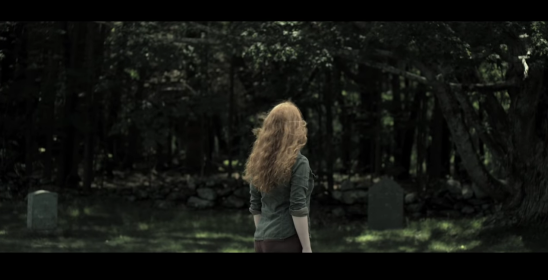
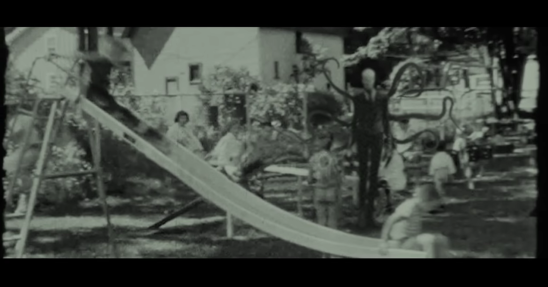
A Massachusetts foursome of girls, Wren, Chloe, Hallie, and Katie, invoke the summoning of an internet lore named Slender Man after watching an instructional online video on how to evoke his presence to reality. After the video completes and the girls dismissively chalk this activity up as hoax-filled rubbish, an embattled and disconnected Katie vanishes a few weeks later during a school sanctioned field trip to a historical graveyard, thrusting the remaining three friends into investigating her abrupt disappearance all the while they each experience an ominous figure haunting them in and out of consciousness. As the continue to look for Katie, Slender Man keeps popping up into the findings. Wren’s convinced, after suffering from terrifying visions, that Slender Man wants the four who’ve contacted him and when her friends dismiss Wren’s frantic ravings, she employs Hallie’s sister, Lizzie, to assist in stopping Slender Man. All of reality is being skewed while Slender Man hunts them down one-by-one and if they’re not taken, those left in Slender Man’s wake will forever be deranged with madness.

Straight from it’s internet meme playbook origins comes the constructed next chapter in “Slender Man’s” mythology from the “I’ll Always Know What You Did Last Summer” director Sylvain White and written by David Birke (“Elle”) that feels very familiar to “The Ring” premise. Based of the mythos created by Victor Surge, aka Eric Knudsen, “Slender Man” fruition onto the Hollywood scene finds a home under Sony’s Screen Gems division, the same division that delivered the Paul W.S. Anderson “Resident Evil” franchise. While not a mega-glossy action horror piece for Sony and Screen Gems, White’s take on one of the internet’s most popular and mysterious spawns revels in it’s own crowd funded supernatural element and White is the grand puppeteer behind the scenes piecing the material together that builds upon, and extends, “Slender Man” canon into film and video visuals. “Slender Man” provides the character flesh, extenuating doubt where special effects can make monolith his presence of inception and flourish from imagination to terrifying reality. If looking outside the box, “Slender Man” could also be translated into symbolism for the online predatory habits men take towards young, sometimes teenage and impressionable girls. There in lies references to this notion with such in Katie, who is a runaway teenage girl with a fixation toward an obscured man from the internet, aka Slender Man, and also Hallie’s vivid nightmares of being pregnant with the very Lovecraftian-esque spawn of Slender Man as tentacles shoot out from her large, protruding stomach. Yes, she’s a high school girl…

“Slender Man” centers around a four female, high school age characters: Chloe, Katie, Wren, and Hallie. The latter being the leader, Hallie, played by Julie Goldani Telles, is an unwavering non-believer of Slender Man, contributing her visions and feelings as some sort of coming of age Freudian bizarro show. The now 23-year old Telles convinces to pull off a well adjusted teenage girl spiraling into Slender Man’s otherworldly oblivion and absolutely turns the corner when younger sister Lizzie, Taylor Richardson, becomes an unwitting participate. Hallie almost comes toe-to-toe with her confident and frantic friend Wren, a character bestowed to Joey King of “Quarantine” and “White House Down.” King’s townboy-ish approach has served well to keep her character apart in order to not clash with other warring personalities. Yet, there’s not a whole lot interesting aspects associated with the other two characters, Chloe and Katie. If audiences were expected to be concerned for Katie, then Annalise Basso needed her character to have more screen time. The “Ouija: Origin of Evil” actress barely had a handful scenes to try to convey a poignant life with an alcoholic father before she’s whisked away to never been seen again. Chloe had a slight more substance as means to exhibit the result of not being taken by Slender Man; “Chilling Adventures of Sabrina’s” Jaz Sinclair didn’t really add any pizzaz to her poorly written flat character.

Though Slender Man’s origins surpasses being a byproduct of an internet meme and becomes woven into a lore of all it’s own through a global, technological network, the very fabric “Slender Man’s” tech horror theme had laid a negligent foundation. Viewers without a hint of Slender Man knowledge will find the connection between the shadowy figure that stalks and kidnaps children and the domain from which it was born, witnessing the technology used in the film being wielded as a tool of evil rather than a conduit of to connect two worlds. What works for Sylvain White is his knack for shaping Slender Man into physicality in an applauding effort that combines chilling atmospherics, well timed visual and audio cues, above decent special effects, and the crunchy, contorted body of Javier Botet as the Slender Man. We’ve covered Botet before in “Insidious: The Last Key” as the antagonistic KeyFace creature. KeyFace and Slender Man, two similar but still vastly different villains, wouldn’t be as influential or be brought to such a horrifying fruition if Botet was not behind the mask and it’s because of Botet’s blessing, but also a curse, Marfan Syndrome physique that he’s able to accomplish a wide range of distorted and malformed characters.

Sony Pictures presents “Slender Man” onto HD 1080p Blu-ray under the Screen Gems label. The Blu-ray is presented in widescreen of the film’s original aspect ratio, 2.39:1. “Slender Man” doesn’t sell itself as high performance, resulting in more details in the range of textures rather than relying on a clean, finished look. Colors are remain behind a cloak of darker shades to pull of gloomy atmospherics, but do brighten when the scene calls for it. The digital film looks great, if not fairly standard, for movies of today. The English DTS-HD Master Audio 5.1 track is quite high performance, like revving an engine on an imported roadster. Slender Man comes with his own cache of audio tinglers to send chills up your spin and invoke cold sweats. Every branch breaking ambiance and desperate and exasperated breath being took by the teen girls aligns cleanly and nicely with the visual representations. Dialogue is lossless and prevalent as well as being integrated seamlessly during more active sequences in a well balanced fit all with range and depth. Thin extras do put a damper on the release with a bland featurette entitled “Summoning ‘Slender Man:’ Meet the Cast.” The featurette doesn’t do much more than give the actors’ and White’s opinion of their characters and Slender Man. The shame of it is that the internet is a vast place of information and knowledge and, yet, the featurette doesn’t knick the surface of who and what is Slender Man. Plus, if remembering correctly, there are scenes omitted from this release; more intense and bloodshed scenes that would have granted a more adult friendly rating. This release doesn’t offer up two versions of the film. Despite embodying a rehashed, bi-annual story of supernatural and psychological tech horror of the PG-13 variety, “Slender Man” endures through with a sliver of appreciation for the easily missed facets that work as a positive in Sylvain White’s 2018 film, such as bleak atmospheric qualities and Javier Botet’s performance, but the diluted final product, released on Blu-ray, benches what could have an at home video entertainment home run for Sony Pictures.

Be Careful of the Evil You Wish For! “Pyewacket” review!


In the wake of losing their father and husband, Leah and her mother struggle to cope and are at their wits ends with each other. Leah, an impressionable and angst-filled teen, embraces the occult lifestyle after her father’s untimely death despite her mother’s distaste for it. Leah’s mother also battles the everyday familiar feelings of her constant surroundings that remind her of her dear husband and the sensations compel her to move her and Leah more than an hour away, away from Leah’s only friends including a boy she’s become fond of, but the constant and languishing heated disagreements invoke Leah to act impulsively, gathering her ritual articles, and while in the woods, naively summon a witch, named Pyewacket, to kill her mother. Regretting her actions almost immediately and fearful of what’s to come, Leah is cautiously ever attentive to her surroundings as each passing night a presence makes itself known and is eager to not only harm Leah’s mother, but also intends to rise it’s wickedness toward Leah.

“Pyewacket” is a 2017 Canadian horror-thriller from writer-director Adam MacDonald. The Montreal born MacDonald constructs an impressive and suspense-riddled sophomore film that offers a beautifully bleak atmosphere while touching upon layered themes that are relatable to anyone who grew up with an overbearing parent. “Pyewacket” succeeds as a stark melodrama of a hurting mother and daughter who are looking for some kind of pain relief and a fresh start. MacDonald takes it to the next level, churning out a cautionary tale, by implementing the theme of being careful for what you wish for because you just might get it. Oh, and there’s spine-tingling moments involving a ghoulish witch with an appetite for deception and have you squinting yours eyes in fearful anticipation of when she’ll strike.

Another Canadian, the Vancouver born Nicole Muñoz stars as the disquieted Leah. Muñoz dark assets heighten her disdain and resentment she evokes out from her character toward her mother, played by the former “The Walking Dead’s” Laurie Holden. Tall and blond with a more verbose attitude in putting her feelings outward, one would have difficulties placing Muñoz and the “Silent Hill” star as daughter and mother on screen. Holden manages to be the glue that keeps the story moving as Leah rarely has much to the say and is only reactive instead of proactive about her situation, making the two actresses dynamically challenging that purposefully sparks uneasiness in every scene. Leah’s friends serve as her lifelines to the world outside her new country home that her mother has unfairly displaced her to. Her best friend Janice, the Toronto born Chloe Rose, whose alternative appearance and nonchalant, cocky persona encourages her to be Leah’s confidant. Rose seemingly enjoys the role that offers vibrantly colorful stripes of hair with lots of gothic makeup that comes complete with leather and plaid outerwear. I was a little disappointed with Leah’s love interest that was Aaron, shoed by the tall and thin Eric Osborne. Aaron really wasn’t showcased much though MacDonald’s script attempts at hinting more to the character, but unfortunately for Osborne, Aaron falls the ranks of a back burner boyfriend trope.

What might be the undoing of “Pyewacket” is simply the timeliness. Robert Eggers’ “The Witch” and André Øvredal’s “The Autopsy of Jane Doe” completely overshadow the JoBro Production & Film Finance (which is kind of funny because the same production company also did some funding for “The Witch” so in essence, “Pyewacket” is “The Witch’s” little cousin) with two already fantastic tales of non-broom riding and mind tampering witches that share the same intense ferocity of pure hatred and dark magic on a much bigger and grander scale when considering production value that relies on a viewer relatable story. A story involving a mother-daughter warfare is inarguably human to us all, but in competition with that, MacDonald seems to embrace that side of the story with slight favoritism as the director is light with a slow burn of the catalytic turn of events that evokes the titular character despite it being the most gripping portion of the film; instead, the focus is more honed in on Leah’s experience that intimately distances her from each of those that are closest to her: Janice, Aaron, her mother. Left in the wind is much of the witch’s background and how the witch becomes familiar to Leah which goes relatively unknown. And, also, not to forget to mention that the witch, or familiar spirit, is screened through shadows, long shots, and quick takes so to get a shape or a image around the appearance, all I can suggest is that Pyewacket resembles Samara from “The Ring” with stringy, filthy hair, slender figure, and moves around like a spider. Aside from a popular teeny-bop occult novelist, Rowan Dove played by “Bitten’s” James McGowan, the only facts touched upon about “Pyewacket” are that the spirit is extremely malevolent and can deceive the perception of people and events.

From Signature Entertainment, the DVD and Digital release of Adam MacDonald’s “Pyewacket” hits retail shelves April 23rd and digital retail shelves even earlier on April 16th. Since a digital screener was provided for this review, an in-depth critique of the video, audio, and bonus material will not be covered. Though clutching to the money-bagged coattails of bigger, better witch films from the last three years, “Pyewacket” is still a mighty story with complex characters complete with sheer dread from an obscure and grievously sorcery crone pure with black heart that will definitely elicit shortness of breath and rapid heart palpitations if watched alone in the dark.