There’s EVIL in the Saying, No Other Choice. “Violation” reviewed! (Acorn Media International / Blu-ray)


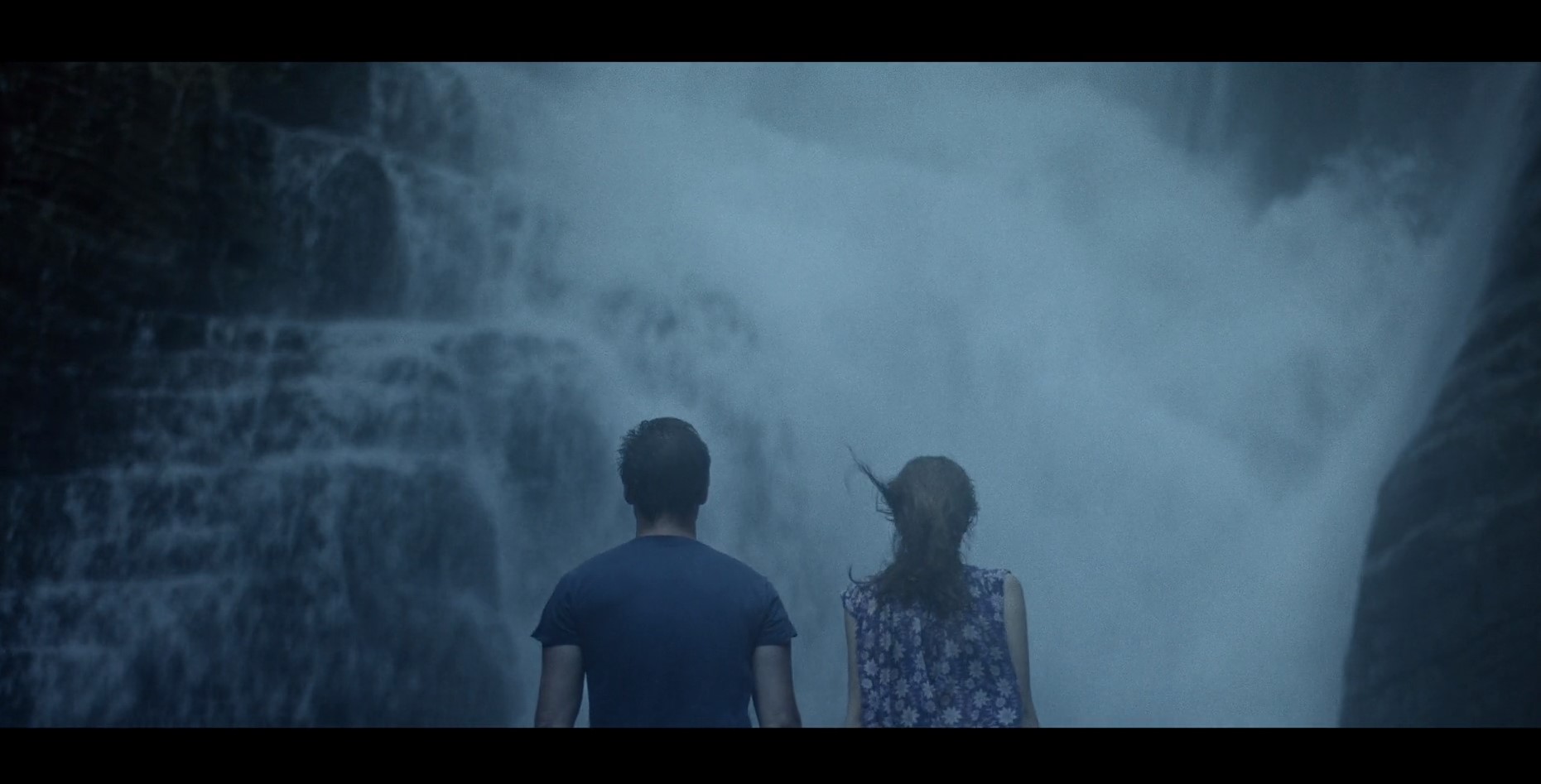
On the precipice of her loveless marriage ending, Miriam and her not-quite-yet estranged husband getaway to visit her sister, Greta, and husband, Dylan, at their quiet woodland and lakeside home, an area where Miriam and Greta fondly grew up together.  Also sharing a past together as high school friends, Miriam and Dylan enjoy each other’s company in a playful and quipping manner after a lifelong friendship, but after a night of drinking and an outpour of internalized emotions, Miriam slowly awakes to Dylan forcing his way inside her and is unable to stop him.  Confronting Dylan and Greta separately further strains the tense situation to the point that Miriam is made out to be the villain in her own sexual assault, sending Miriam to plot a thorough premediated revenge to not only avenge herself but also to save her sister still married to her attacker. 
Real hands-and-knees puked vomit splattering over a black tarp.  A blindfolded, naked man tied to a chair with a real erect penis saluting tall.  If you’ve never seen this Shudder exclusive 2020 released film and you’re reading this review opening fresh eyed, you might automatically presume Dusty Mancinelli and Madeleine Sims-Fewer’s “Violation” a work of pure vomit gore and BDSM pornography.   Let me quickly put your mind at ease by saying “Violation” is nothing of the sort, but these unmistakable aspects in the Canadian revenge drama are real and explicit as a deep-seeded personal choice for the writing and directing duo’s first feature length project.  Mancinelli and Sims-Fewer’s collaborated history goes back to 2017 as they together write, direct, and produce a handful of short films with a core base of dysfunctional sexual themes in “Slap Happy,” “Woman in Stall,” and “Chubby,” to name a few in their credits.  “Violation” continues the trend, providing cathartic discussion for the filmmakers’ tabooed motif at an attempt at bold realism.  “Violation” is self-produced by Sims-Fewer and Mancinelli under their production banner, the Toronto-based DM Films, in association with Telefilm Canada and The Talent Fund with financing from the executive producer line of independents, such as François Dagenais (“Ankle Biters”), and the husband-wife duo of David Hamilton and Deepa Mehta of Hamilton-Mehta Productions.
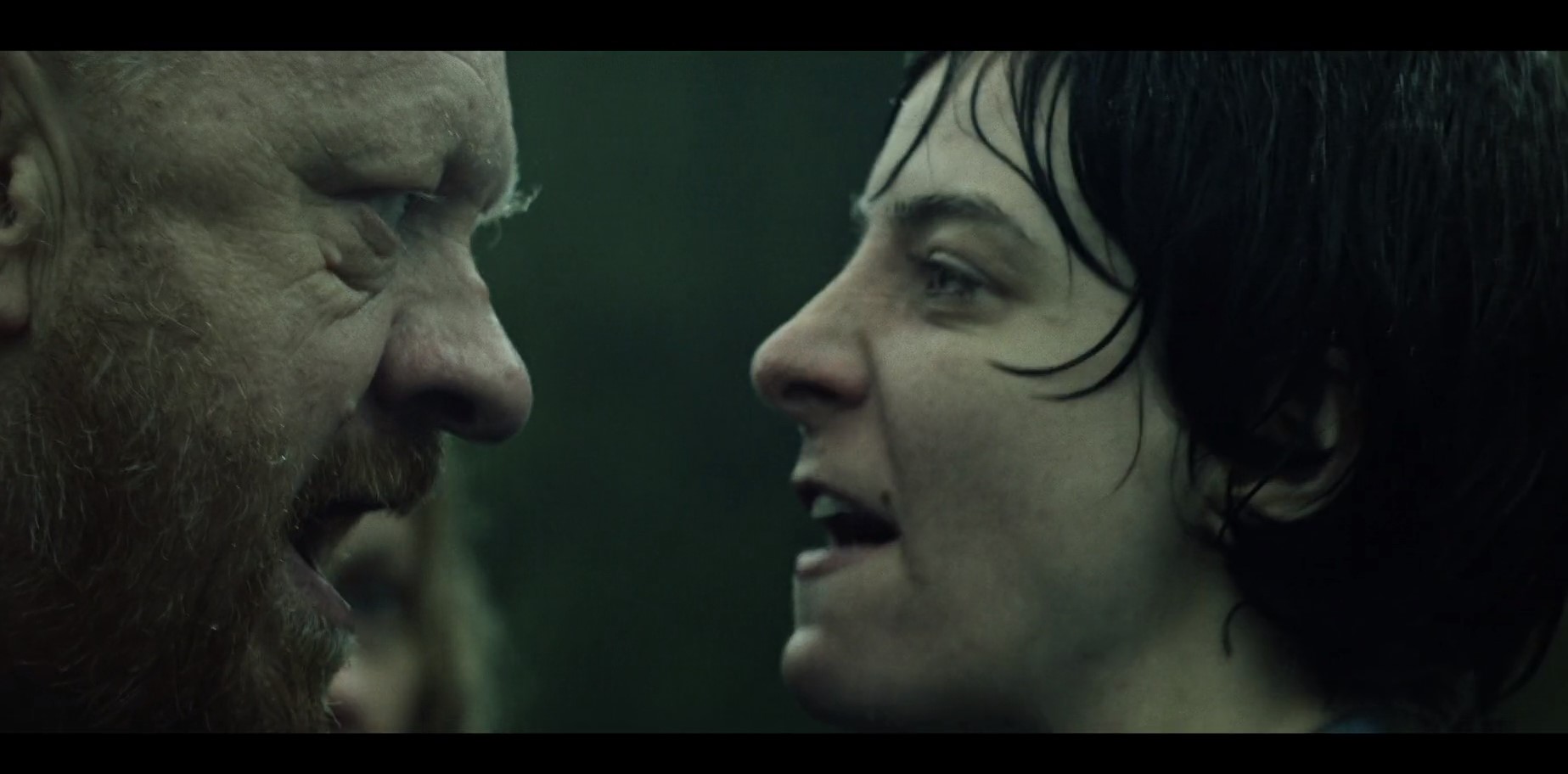
In the lead of Miriam is the writer, director, and producer herself, Madeleine Sims-Fewer, succumbing to a characterized funneling toward piteous rock bottom within her role who, from the get-go, is already in hot water with a dissatisfied husband about their trip to see Miriam’s sister. There’s rarely any happiness for Miriam throughout, even amongst the contentious heart-to-hearts with her own sister, and the little designated of joy to her is quickly squashed by the narrative’s crux and then that’s when Sims-Fewer has to about face to a deeper austere level than even before when those closest to Miriam push her away and become her worst enemies in a blink of an eye. Those mercurial enemies are played by Anna Maguire as Miriam’s fickle younger sister Greta, reteaming with her “Forgotten Man” costar Obi Abili as Miriam’s distant husband Caleb and rounding out the cast as Miriam’s alleged rapist and Greta’s husband Dylan is Jesse LaVercombe who also previously worked on the directors’ short films “Slap Happy” and “Chubby.”  Sims-Fewer and Lavercombe really deserve praise for their dedication and courage that circles back to the beginning of this review about real puke and real erection.  There’s vulnerability when totally exposed and these two actors, who have tremendous chemistry, shy very little away from the uncomfortable provocations in hard to swallow scenes of realism.  We also know where Greta stands in the whole scheme of things, but a big plot hole obtrudes with Obi Abili’s Caleb who unexplainably vanishes in the latter half of the two part narrative.  There’s an unsaid presumption that Caleb left Miriam as already rocky marriage kept spiraling down the toilet in the first act, but there was no resolution, leaving the character out in the wind and neglected from the what could have been an interesting interplay of Miriam’s obsessive plot.
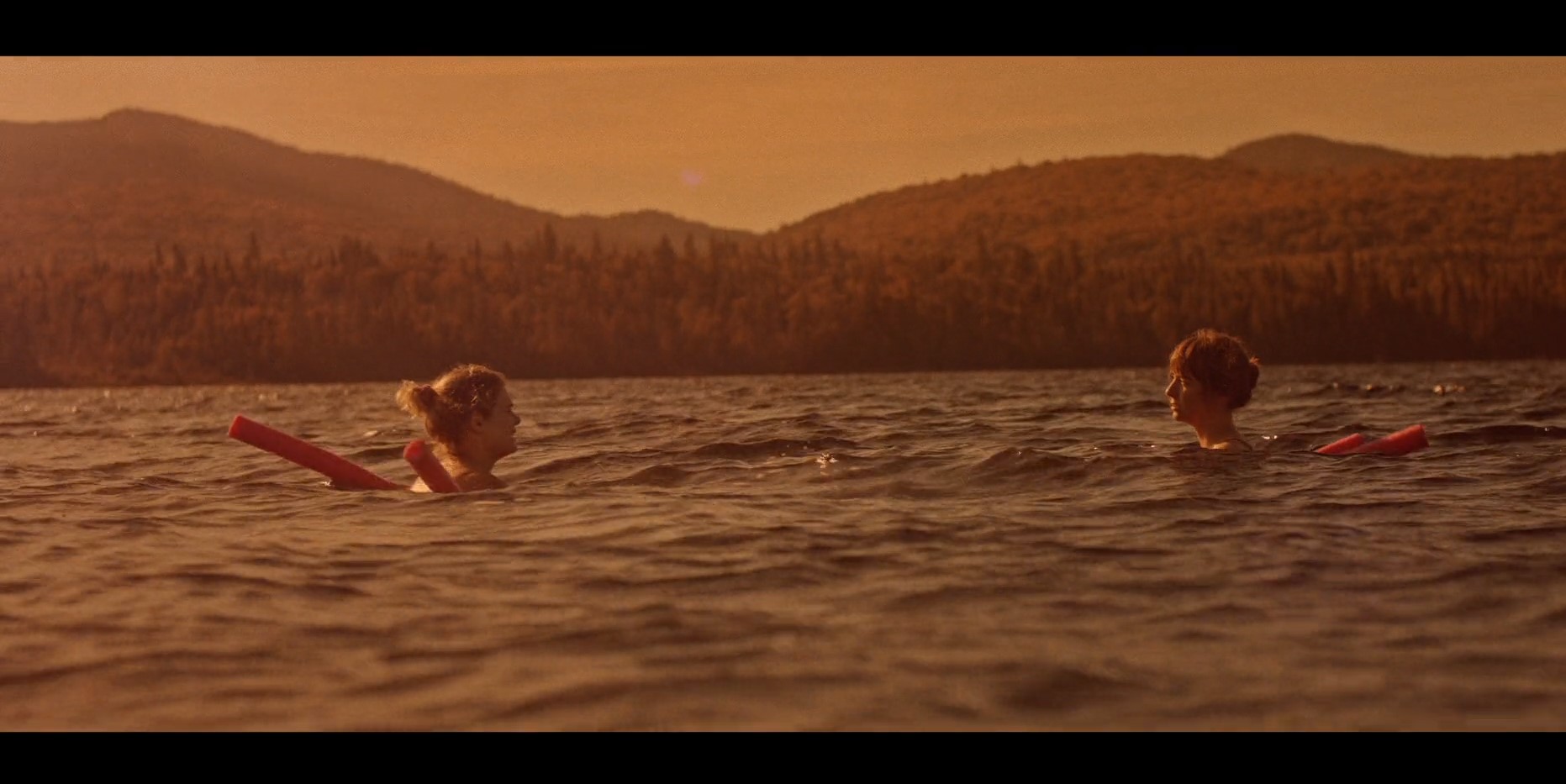
“Violation” is not the typical rape-revenge thriller where the victim rises from the ashes like a phoenix and has an insurmountable, if not endless, amount of hate and determination for street justice to see their rapist or rapists six feet under.  “Violation’s” slow burn method leans toward a character study with Miriam.  Her compassionate human side commingles with her victimized treatment and anger as she’s constantly and consistently second guessing her actions or feeling the utmost, sick-to-her-stomach remorse for her actions that needed to be done in order to avenge herself and also protect her sister as noted in a parallel dream she tells Greta about Miriam sitting in the next room while her sister is unintentionally self-strangulating.  Yet, another side to this tale that could also explain Miriam’s hesitancy and, perhaps, guilt.  Sims-Fewer and Mancinelli are very explicit in Miriam’s unhappiness with her marriage and also her flirtatious wanting of Dylan, pent up by the lack of sex and joy in her marriage, and she also initiates a kiss with Dylan.  Combine those details with a night of drinking, Dylan’s firm stance, and the way the film is shot ambiguously, a pressure cooker moment builds between the characters and viewers whether what stated happened actually happened.  Now, I’m not arguing a case for rape culture or make excuses for rapists, but “Violation” tilts toward Miriam’s mental quality that has been compromised by a contentious marriage, life envy, and the preconceived notion that she’s not a good person.  Either way, what follows the inconspicuous moment is sharply horrible, a real unsettling exhibition of meaningful art. 
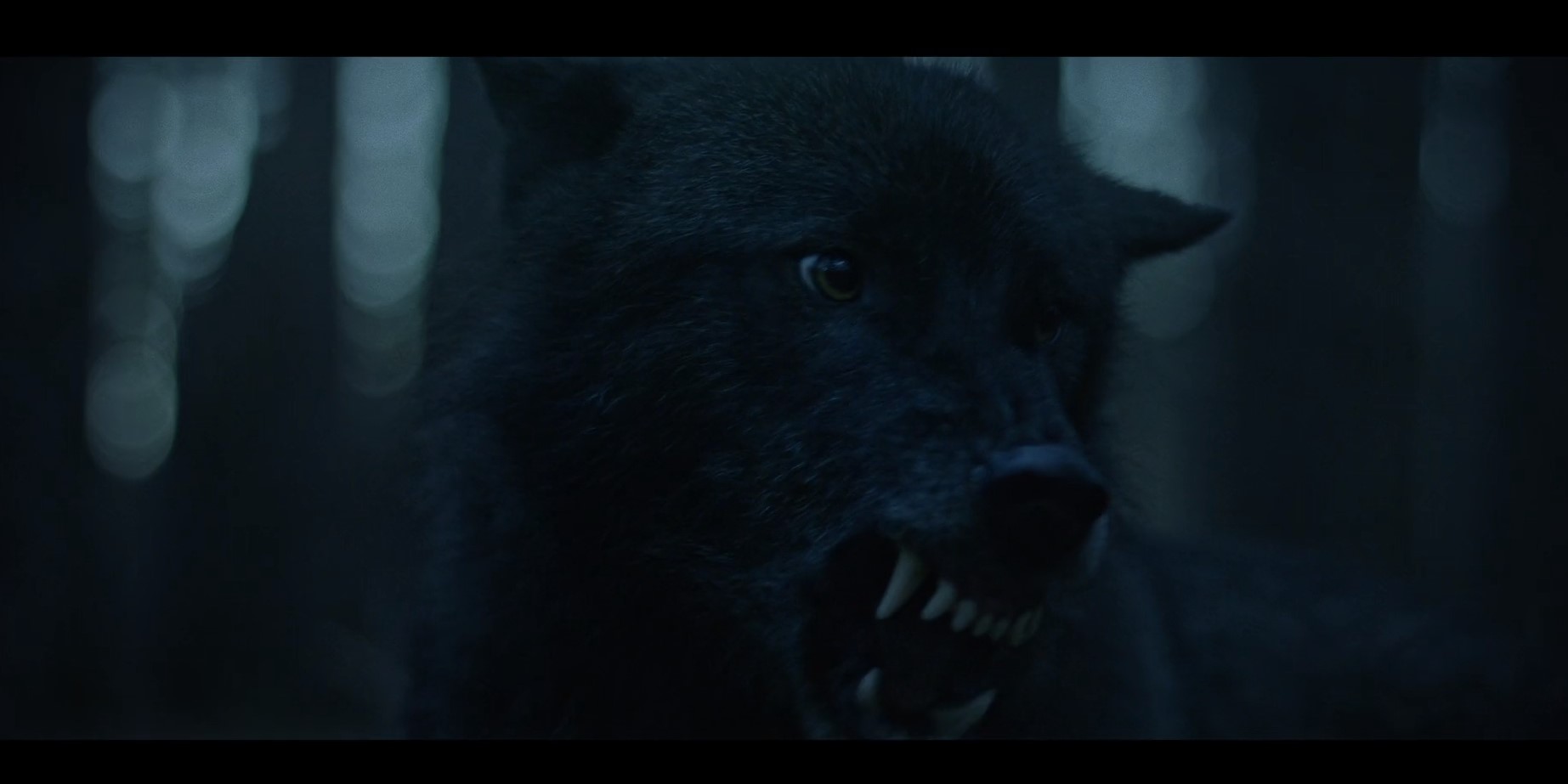
“Violation” is certifiably fresh and deservingly so with jarring scenes of gruesomeness, a topical theme of trivializing rape accusations, and compelling character study of one woman’s disharmonious existence in her small inner bubble.  Now, you can own it the Sims-Fewer and Mancinelli film on UK Blu-ray from Acorn Media International. The PAL encoded, region 2 Blu-ray presents the film in 1080p full high definition in a widescreen aspect ratio of 2:39:1. “Violation” embodies an engulfing nature domination of the screen through an Adam Crosby lens. No matter how big and important the moment may be in the story, Crosby’s entrancing us with the tiny embers with a close up of the camp fire or having the actors dwarfed by towering trees until the second act that compartmentalizes two antagonistic characters in the same room. The release shows no signs of deflating Crosby’s and the filmmakers’ semi-surreal, flora and fauna vision with a sleek digital recording teeming with a range of wide landscape shots, stark long shots, and super closeups. The English language Dolby Digital 5.1 surround sound captures as snap, crackle, and pop of the great outdoors; however, the dialogue, though quite clean and clearly audible, sounds a bit boxy at times. Special feature include two extras that are essentially one and the same taking up double the space on BD25 with a meet the filmmakers (Sims-Fewer and Mancinelli) talk very briefly about the genesis of the “Violation.” The second extra, the TIFF Intro, mirrors nearly world-for-world the first special feature. “Violation” has a runtime of 108 minutes and is rated 18 in the UK for strong violence, gore, sexual violence, sex references, and nudity. Viscerally intimate and ghastly, “Violation” is labeled the anti-rape revenge narrative with a close examination of trust and the unfortunate triviality of rape sure to churn stomachs and second guess the intentions of those close to you.

Own “Violation” on Blu-ray Home Video!

Dan Stevens. The New Face of EVIL? Freakin’ Love It! “The Guest” reviewed! (Second Sight Films / BD-R Screener)

Recently hospital discharged combat soldier David Collins visits a fallen brother in arms’ family, The Petersons, to convey their son’s last moments of love for his family.  Taken immediately in by the grieving mother, David stays for a few nights at the Peterson home, quickly befriending the family of four with his military “yes ma’am” charm and good looks.  When a string of accidental and homicide related deaths begin to flare up in what’s typically a quiet rural town, eldest daughter, Anna, suspicions turn to David.  As Anna digs deeper into David’s past, nothing can stop the elite special forces soldier from taking steps to protect his identity and his mission, even if that means turning the Petersons’ hometown into a deadly warzone. 

One part action, one part slasher – Adam Wingard’s “The Guest” is a hot take on the infiltrator horror subgenre.  The “Pop Skull” and “You’re Next” director, who went on to helm the epic clash of the two biggest creatures in all of creature feature history with this year’s “Godzilla vs. Kong,” directed “The Guest” to challenge the slasher narrative with an atypical, slightly campy, American indie thriller with an unanticipated and surprising twist that’s more than just your run-of-the-mill snapped war-traumatized soldier gone shell-shocked rogue.  The script reteams “Dead Birds’” writer Simon Barrett with Wingard for their eighth collaboration that pits all the story’s action into the rural confines of an unnamed small town in America while the actual shooting location takes place in New Mexico.  “The Guest” is a production of the UK based HanWay Films, which also oversaw the production of Wingard’s “You’re Next,” and Snoot Entertainment of the zomedy “Little Monsters” from the producing management team of Keith and Jess Wu Calder.

To put things simply, Dan Stevens is scary good.  The “Downtown Abbey” star plays the titular troublemaker and, now, I will never look at Matthew Crowley the same way again.  Stevens trades out the proper aristocracy of British English with a slight American English Southern draw, a heavily used trope portrayed with U.S. troops in cinema, but Stevens does more than just talk-the-talk.  The Surrey born actor who once played the Beast in Disney’s live-action version of “Beauty and the Beast” plays a different kind of monster that’s akin to a wolf in sheep’s clothing with David, adorning his physically fit character with a clandestine depth in his ambiguous background and sociopathic tendencies that makes him very much a mysterious maniac much in the same fashion as iconic slasher villains.  Trying to stop David’s undermining reign of controlled carnage is Anna Peterson, played by Maika Monroe (“It Follows,” “Independence Day:  Resurgence”).  Ana’s a levelheaded, yet rebellious, teenager adverse to being told what to do to much of her parents chagrin from dating a pot dealer to her objection in David’s stay with them.  Monre puts angsty effort behind Anna Peterson’s eyes, but the character herself is rather flimsy willing to put her trust in an unsponsored secret organization agent, “John Wick” films’ Lance Reddick, and his request to get into his car urgently without hesitation, but has a difficult time swallowing at her own pace her dead brother’s fellow soldier even with the stamp of whole heartily approval from her parents and little brother and photographic evidence of her brother’s relationship with David.  Yet, Barrett’s openly oblivious characters play into the slasher/thriller campiness of accepting everything at face value without ever an inkling of doubt.  Perfect examples of this would be 3/4th of the Peterson family: the mother (Sheila Kelley, “A Passion to Kill”) trust him with handling routine tasks like picking up her son from school or laundry, the father (the great supporting actor Leland Orser, “Alien:  Resurrection,” “The Bone Collector”) trusts him with personal secrets, and even the school outcast brother (Brendan Meyer, “The Color of Space”) desperately believes David is his friend.  Tabatha Shaun, Joel David Moore, Ethan Embry, Chase Williamson, and Steven Brown co-star.

Pulling loads of admiration and inspiration from the “Halloween” franchise, “The Guest” not only rocks as an action thriller but also mimicking a retrograded slasher in a subgenre slapped with a label I like to call the infiltrator subgenre.  David Collins is no mindless, walking and not talking, killing machine like The Shape, but instead gains trust, backdoors problems, and has the quick confident moves to see the job through with hand-to-hand combat and other more visceral merciless methods.  Barrett and Wingard purposefully leave much to the imagination with David’s past, turning what would usually outcome as frustrating ambiguity for an essential character to more of an enigmatic antagonist allure similar to the way we don’t have a clear-cut motivation why Michael Myers or Jason Voorhees shish kabob horny teens without a second thought.  Sure, there are sequels that try to enlighten reasons, such as being pure evil, but abstract is not concrete.  Same with “The Guest” with a control spoon feeding of just enough backstory to wet one’s thirst for more on David’s ruthless sociopathic behavior.  David’s also a very likeable with the impression that his good deeds done in violence speaks to a justice-driven character, but what’s brilliant about David, and enhanced profoundly by Dan Stevens, is that when he does kill someone in cold blood for this first time, the impact is tremendously unreal because it’s unexpected and off brand from the Barrett and Wingard’s buildup of him being a standup and do-what’s-right soldier.

Second Sight Films invites you to be their guest for their limited edition 4K Ultra Hi-Defintionand Blu-ray of Adam Wingard’s “The Guest” that hit retail shelves this month on October 25th.  The stunning makeover of this cult favorite, limited to 5,000 copies, offers a brand new color grading for both formats supervised by Wingard with 4K UHD presented in Dolby Vision HDR.  Since a BDR was provided, commenting on the exact audio and video quality of the release isn’t possible, but rest assured, knowing the care and attention Second Sight Films put into their releases, “The Guest” will surely not overstay it’s welcome in the image and audio department.  The film has runtime at 100 minutes and a UK 15 certification; however, there is much more to this 3-disc release that includes the film’s 80’s inspired soundtrack on a compact disc.  Special features include new Adam Wingard and Simon Barrett commentary plus an archive commentary track from the two filmmakers, a new interview with actor Dan Stevens The Uninvited Guest, a new interview with actress Maika Monroe A Perfect Stranger, a new interview with Wingard and Barett By Invitation Only, a new interview with producers Keith and Jessica Wu Calder Producing the Guest, a new interview with director of photography Robby Baumgartner Light and Fog, a new interview with production designer Tom Hammock Lightning Strikes, a new interview with composer Steve Moore The Sounds of The Guest, and deleted and alternate including an outtake gag with optional director commentary.  With this limited release comes a rigid slipcase with new artwork by Adam Stothard, 160-page booklet with new essays by script to screen storyboards and extracts, behind the scenes photos, Wingard’s soundtrack notes, and new essays about the film, and, lastly, 6 collector’s art cards. In a time when modern horror desperately needs a solid sequel, “The Guest” is a good candidate with it’s captivating villain with so much story still left to tell. Hopefully, Second Sight Films’ irrefutable powerhouse release will ignite step-taking action amongst the rumors.

Grab it fast!  Liminted Edition “The Guest” on 4K UHD and Blu-ray Now at Amazon.com!

Next Gen to Regain What EVIL Took. “The Walking Dead: World Beyond” reviewed! (Acorn Media International / Blu-ray)

Ten years after the sky fell and the undead walked the Earthed, a new generation of survivors live comfortably behind gated walls at the Nebraska University campus.  Sisters Iris and Hope sometimes counteract each other’s position on campus hardly see eye-to-eye and, especially when dealing with the clandestine Civic Republic Military who has recruited their scientific father to do research in New York, but when secret messages about their father’s safety in potential jeopardy, Iris and Hope come together, along with campus outcasts Elton and Silas, to trek East on foot through the hordes of undead and the dangerous obstacles that separate them from their father.  The first generation to grow up in the apocalypse must learn to survive in the ravaged world of today and battle not only the dead and evad the mighty Civic Republic Military but also confront their individual haunting pasts. 

“The Walking Dead” executive showrunners Scott Gimple, Robert Kirkman, Brian Bockrath, Matthew Negrete and David Alpert envision a vast Walking Dead universe filled with endless storylines searing with undead mayhem on the precipice a human emotional depth charge explosion.  In 2020, a new and limited two-season spinoff series of AMC’s “The Walked Dead” lumbered forward with “The Walking Dead:  World Beyond” that aimed to explore the untapped emotive locomotive with teenagers having grown up naïve of usual adolescent behavior while also learning how to survive the outside world having been safe behind guarded walls most of their young lives living inside a smaller-scale social structure and guidelines like pre-apocalypse.  While “The Walked Dead” focused on the mid-Atlantic, stretching from George to West Virginia, and “Fear of the Walking Dead” went to the West Coast in Cali, down the border to Mexico, and finally landing near the Gulf coast, “World Beyond” takes the Pacific Northwest beginning inside Nebraska then stretching our main character’s journey to New York state, through the upper areas of what’s left of the country, but filming is actually shot in yours truly home state of Virginia surrounding the capital Richmond area.  Based not off the popular graphic novel series by Robert Kirkman, albeit with a few minor connections, “World Beyond” is a production of AMC, Idiot Box, Skybound Entertainment, Circle of Confusion, and Valhalla Entertainment.

A younger, fresher cast of faces grace “The Walking Dead:  World Beyond” with an innocence facade and juvenile decision making that lifts the series into that rite of passage in adolescent-hood where the children of the apocalypse must explore their own needs and desires as if the evolutionary behavior of growing up has never changed.  Only this time, someone’s trying to bite your face off or actually steal everything you possess off your back.  Aliyah Royale and “Unfriended: Dark Web’s” Alexa Mansour play the contrasting adopted sisters Iris and Hope with an underlining bond that’ll blossom sluggishly forward to season one’s conclusion.  Iris has always conformed to safe living behind the campus walls, but takes a page out of Hope’s book of radical ideas to venture out against policy to find their CRM recruited, and possibly distressed, father.  Through the series, I found Royale to be slightly unauthentically preachy in her delivery that never fastens an emotional connection to her saintly-turned-intrepid persona.  Hope has more complexity turmoil tinned up inside of her pulled and worked very delicately by Mansour in becoming the wild card amongst the group.  “Nine Perfect Strangers’s” Hal Cumpston and voice actor Nicolas Cantu join Iris and Hope as the reserved Silas and the ever hopeful pessimistic Elton, searching for a fresh start and answers to their philosophical questions.  Silas and Elton add more dramatic complications than friendly assistance on the journey with personal violent demons resurging out form Silas’s past to the death of Elton’s mother in which Hope hesitant disclosure of her involvement in the killing of his mother back during the first days of apocalypse sets the tension for a good portion of their travels.  As supporting characters, Silas and Elton also provide sub-storylines “The Walking Dead” thrives on along with two more characters, a pair of campus security details in Nico Tortorella (“Scream 4”) and Annet Mahendru (“The Americans”) playing close friends and colleagues Felix and Huck venturing out to rescue the four inexperienced youngsters from a fate far worse than being a gnawed on scrap of undead jerky. Mahendru’s pulled up hair, facial scar, and widely inflated draw is quite a far cry from her dolled up and partial nudity espionage performance in “The Americans,” a performance that makes her nearly unrecognizable, while Tortorella shoulders a lot of personal baggage in self worth and difficult promises to his makeshift family built on friendship – a regular theme throughout not just with Felix but with the youth group searching for answers.  “World Beyond” rounds out the cast with Ted Sutherland (“Fear Street:  Part Two” and “Part Three”), Natalie Gold (“Birdman or (The Unexpected Virtue of Ignorance”)), Joe Holt, Jelani Alladin, and Julia Ormond (“Inland Empire”) as the CRM spearheading a covert operation.

The enormity of the “TWD” universe and with end in sight of the undead not working the Earth would inevitably bring up the question of how young children would grow up and face old world teenager issues.  Their not-so-normal childhood forged when the sky fell, as phrase that use to describe the day the dead risen, has ultimately molded who they are when we meet the characters 10 years after that doomed day, but the series dives into backstories on the regular with flashes back, turning every episode of the 10 episode series into a non-linear segment, something that strays, but is not completely foreign, to the “TWD” universe.  Another aspect that’s different, and is terribly detrimental, is the lack of graphic bloody violence, especially against the living.  “World Beyond” tries very hard to shield the viewers from gruesome dispatching of the undead by offscreen kills to implied deaths and not until the latter half of the season does “World Beyond” begin to ooze out of it’s conservative shell as the story becomes more complicated and into more adult themes from lies and betrayals to violence and loss, a parallel of the passage from childhood to adulthood when reality of the real world hits you in the face.  What does stay true to it’s origins us the same is the overgrown sets, the detailed decay, and same beautiful morbid imagery that really compliments to effort in production value and budget.  My only gripe is that many of the actors look fresh out of the shower with perfect hair and loads of makeup in a scenario that would harried and haggard any individual. The story also connects to it’s more fierce bigger brothers with a broader introduction of the Civic Republic Military whose symbol shows up in “The Walking Dead” when whisking Rick Grimes away in one of their helicopters and also in “Fear of the Walking Dead” in the troops who were the bite impervious suits, sleek black helmets, and the assault rifles with dual piercing bayonets. “World Beyond” builds upon their mysterious nature by giving an wider, longer look into their enigmatic, cavillation building window.

With the series finale, aka season two, in full swing this fall at AMC, Acorn Media International concurrently delivers the first season onto an UK 2-disc Blu-ray. The region 2, PAL encoded, BD50s are presented in a televised widescreen 1.78:1 aspect ratio with a total runtime of 453 minutes. Not discernable issues with the digital image that renders virtually the same veracious tone as the other two “Walking Dead” series with “World Beyond” being a tinge bit more colorful as if the saturation provided more youthful characteristics. There really is some nice imagery happening in certain episodes, such as in episodes “Brave” and “The Blaze of Gory,” that work the dead into being connected with the surrounded elements as if the dead are now the more natural bond with Earth. The English language Dolby Digital 5.1 surround sound audio channels with clarity and equally amongst the five points. Dialogue is clean and unobstructed with a balanced breadth of depth and range amongst the various scenarios of death and deception they stumble into. English subtitles are also optional. Bonus features include A Look at the Series that dives into what “World Beyond” aims to accomplish with a fresh young cast, A Meet the Character segment that, obliviously, dives into the actors going over their character profiles, and the Making of Season 1, split into two parts with one on each disc, with the cast and creators provided a deeper understanding of character headspaces. “World Beyond” is rated 15 for the violence, some language, and some gore. Diluted decimation of the dead with a softer complexion in an overall comparison, “The Walking Dead: World Beyond” is the naïve little brother of two juggernauting series macheting a path of blood and guts for the less traumatic to have a spot in the world. Yet, the sluggish first few episodes clears out for a much more palatable and gripping series that we’ve come to expect from a universe built on rotting corpses and collective violence.

Catch Up on “The Walking Dead: World Beyond” season 1.  Purchase the Blu-ray/DVD here!

The Most EVIL Being in the Galaxy Doesn’t Stand A Chance Against Little Mimi. “Psycho Goreman” reviewed! (Acorn Media International / Blu-ray)

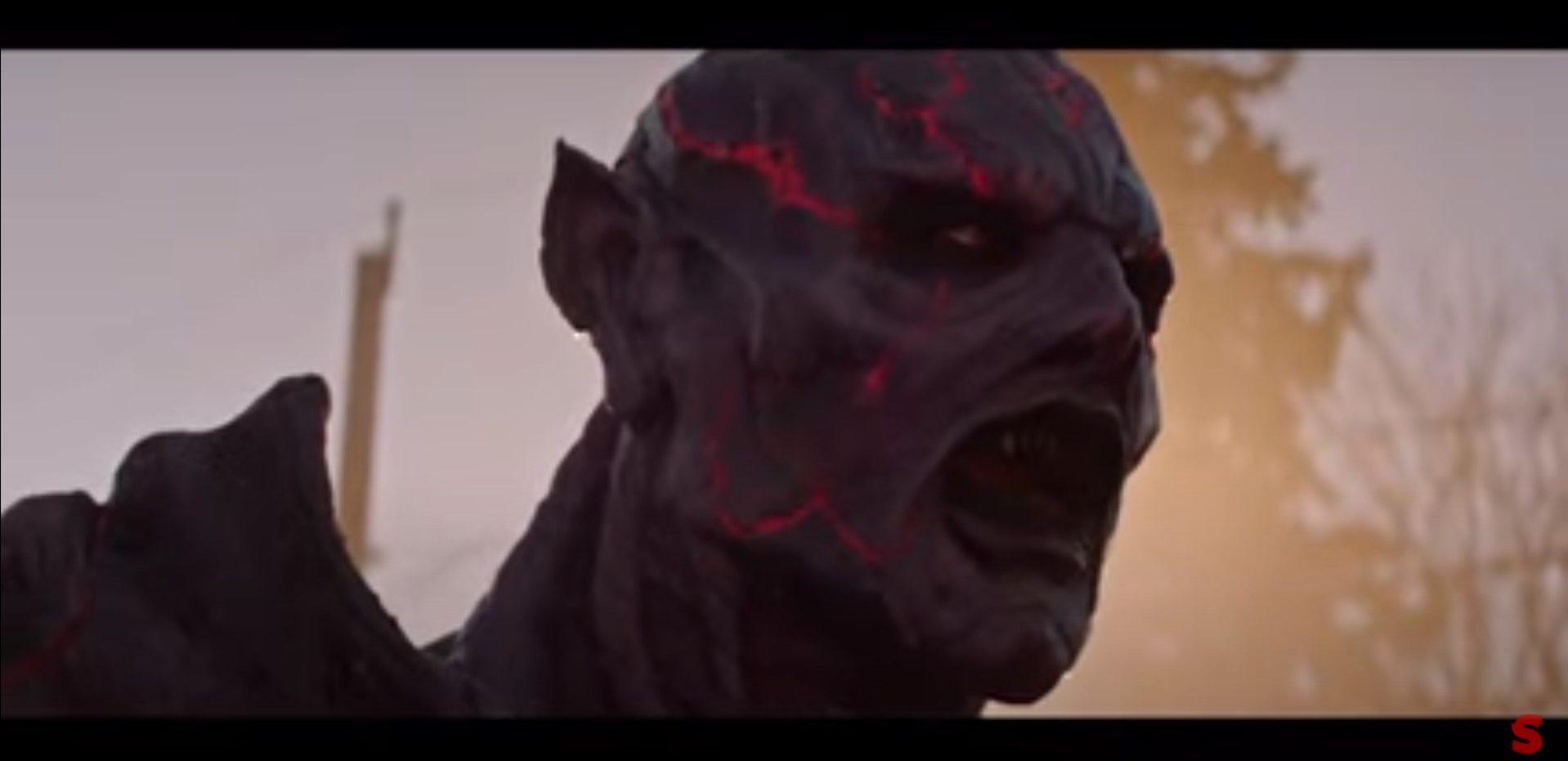
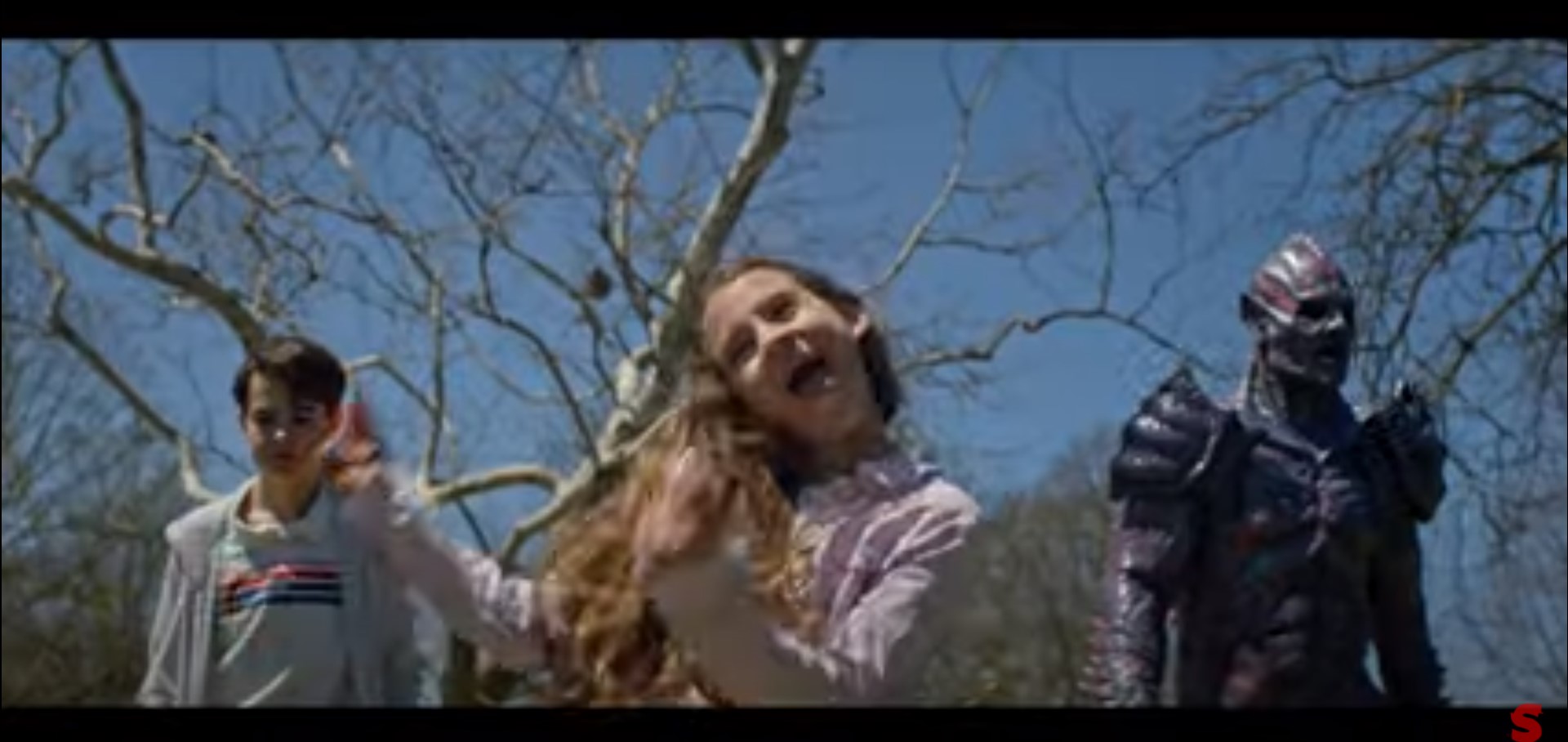
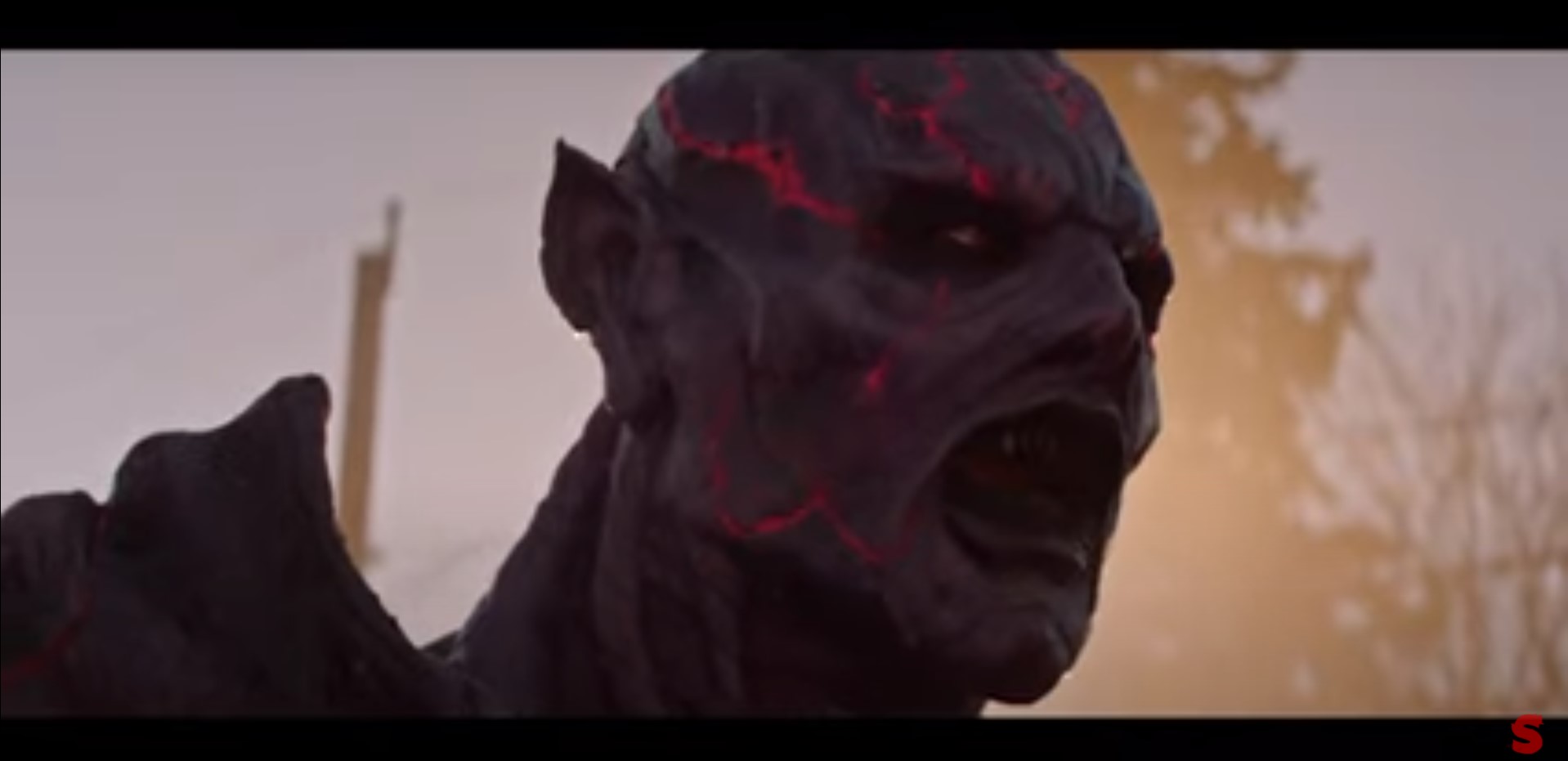
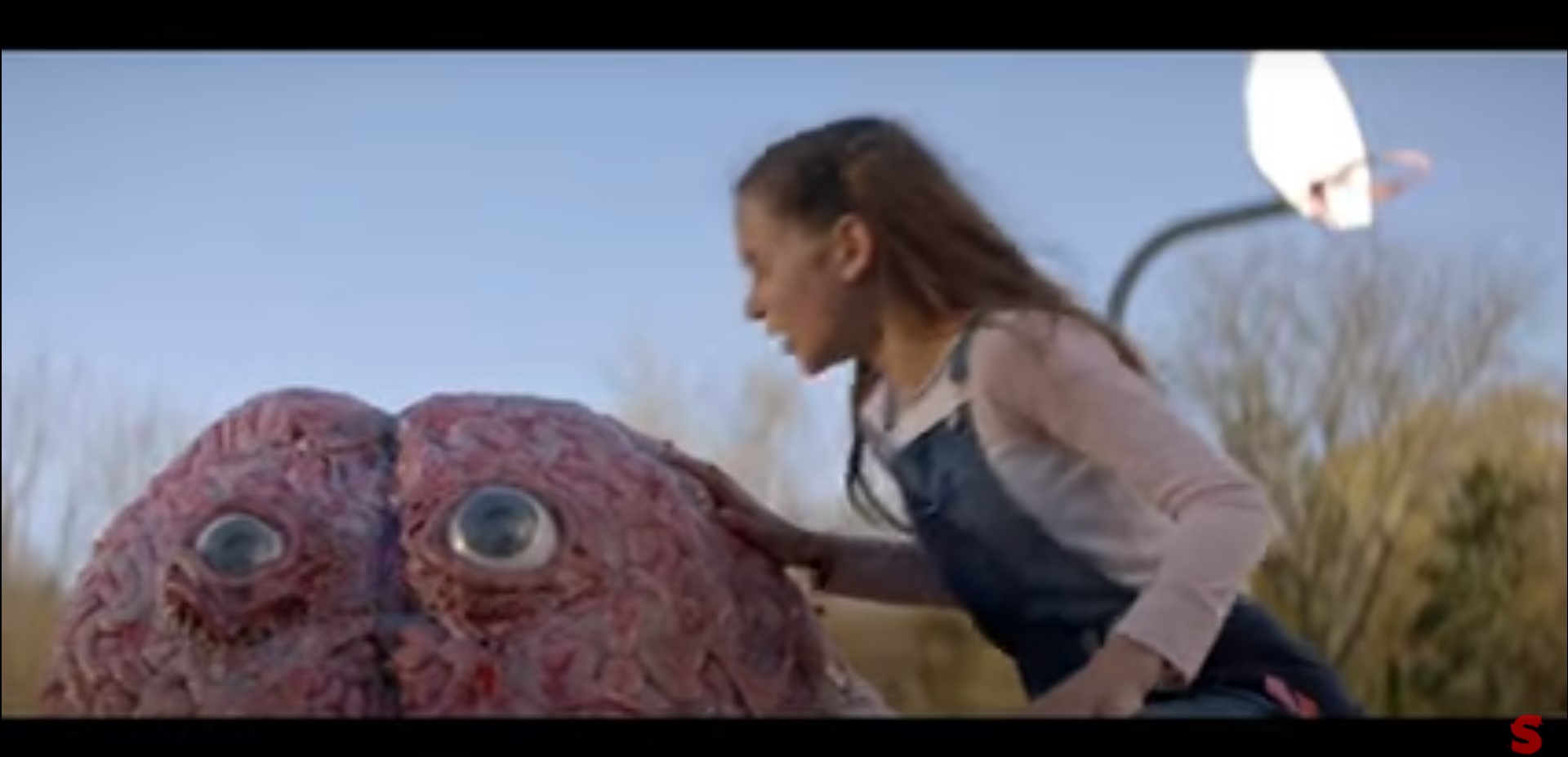
Brother and Sister, Luke and Mimi, discover a gem that unimprisons a dark alien warlord destined to destroy worlds.  The gem and the being are one, connected by the ancient forces powering the talisman, and whoever wields it can control the evil one.  Fortunately for now, the gem is in young Mimi’s possession.  The bossy and sassy preteen sees the alien, dubbed Psycho Goreman, as a new friend and toy, gallivanting around town catering to every Mimi whims.  Lightyears away on a distant planet, a council comprised with the forces of good, who banished Psycho Goreman to eternal banishment and imprisonment, learn of their once terrorizing tormentor having escaped his confines.  Leader of the council, an elysian warrior named Pandora, vows to track down their adversary and put an end to his existence, bringing a destructive showdown of good versus evil in Mimi and Luke’s small-town. 

The anomalous mind of filmmaker Steven Kostanski is vacillatingly distinctive and churning adulation for the late 1980’s to early 1990’s high camp, metal-infused horror films that heavily inspired him.  His latest written and directed Sci-Fi horror-comedy, “Psycho Goreman,” fits perfectly into Kostanski’s brand of stupidity, nonsensical, animation-saturated, bizarro reality horror that has made us, or at least me, fall heads over heels for his previous credits, such as “Manborg” and the “W is for Wish” segment of “The ABCs of Death 2.”  Kostanski is also a special effects guru having worked delivering gruesome terror and insane imagination skills to the big and small screen, but makeup FX artist takes a backseat to his employer, the Ontario-based MastersFX managed by Todd Masters, and they grab the reins by providing a slew of mixed bag practical and visual effects and animation styles that is a time warp back to the tangibly ridiculous and forged every follicle freakshow horror and science fiction celluloid from 30 some odd years ago.  “Psycho Gorman,” or “PG” for short, is a production of the pseudonym Crazy Ball Productions, as in the Crazy Ball game Mimi and Luke play, and Raven Banner, presented as an exclusive acquisition by RLJ Entertainment and Shudder.

To make something as ridiculous as PG to work, you need a colorful, wildcard cast to pull off every microfiber of manic personalities you can muster and sticking out with the wildest personality is not the titular character who is neither the brightest highlight nor the leader of the pack.  That spot was filled far before PG makes an unearthing introduction by the film’s smallest, youngest, and most delightfully sarcastic and ostentation lead in newcomer Nita-Josee Hanna as Mimi, who’s roughhouse and snarky sassiness goes unparalleled even up against the Arch Duke of Nightmares.  The dynamic plays on that whimsical idea of little girls with big personalities can be the center of attention.  In this case, Mimi requires the world, no, the universe to revolve around her ultra-spoiled nurturing.  Her possession of the gem gives her unlimited power with her possession of PG, played by undoubtedly hot and bothered by the latex suit, but otherwise good sport, Matthew Ninaber (“Transference”).  Hanna and Ninaber are an absolute joy to watch together with their contrasting comedic deliveries:  Hanna’s aggressive flamboyance compared to Ninaber’s subtle and solemn stewing.  Then there’s Mimi’s brother Luke, played by Owen Myre, who will have a role in the upcoming “Terrifier” sequel and one of the film’s running jokes is PG can never remember Luke’s name.  That lack of standout presence for Myre’s character is quite literal and not because Myre’s performance is forgettable and a complete wash (in fact, Myre is fantastic is the meek, submissive older brother), but between Mimi and PG, those overwhelming characters totally consume much of the attention.  Adam Brooks (“Manborg,” “Father’s Day”) and Alexis Kara Hancey fill in as Mimi and Luke’s lackadaisical father and frustrated mother while Kristen MacCulloch (“Motherly) suits up as the PG’s holier-than-thou arch nemesis, Pandora, in Templar species form while Roxine Latoya Plummer blends in with the rest of the population with Pandora’s human form.  “Pscyho Goreman” rounds out with Alex Chung, Scout Flint, Robert Homer, Conor Sweeney, Matthew Kennedy, Asuka Kurosawaw, and Scott Flint.

“Psycho Goreman” necessarily fills a pivotal void.  Most genre films aim to pass along a message, sometimes important to the filmmakers, to convey a lesson, an idea, a political or social protest, or to spark awareness on an issue, but with Steven Kostanski, watching his work is like taking a vacation with an immense clearing of any and all undercurrents and obvious messages for pure, unadulterated, frequently mindless entertainment that just looks cool.  Underneath the composited animation and practical effect layers is an anything goes, no strings attached, brutally-caked, dopamine drip that causes glossy-eyes and a warm wash over of all the senses.  Side effects I can definitely live with and be refreshed by when needing a break from reality.  The amount of space medieval practical effects alone makes “Psycho Goreman” feel like “He-Man and the Masters of the Universe” and while that Gary Goddard 1987 science-fiction fantasy starring Dolph Lundgren, perhaps, heavily inspires Kostanski’s intergalactic battle-royale on Earth, the story mirrors much to the tune of “Suburban Commando” with Hulk Hogan.  Hear me out.  Rogue-vigilante, played by Hogan, crashes into Earth where he winds up with the unsuspecting Wilcox family who melts the big, bad commando’s heart and simultaneously fix, mostly unwittingly, what’s broken with the family while alien bounty hunters track him down.  “Psycho Goreman” is the same storyline with less gore; hell, “PG” is even kid dialogue friendly.  If you know “Suburban Commando,” you know, and now you can’t unsee it! 

As part of Acorn Media International’s RLJ Entertainment and Shudder exclusive line, “Psycho Goreman” is destined for darkness onto Blu-ray home video with over 2 hours of special feature content.  The UK region 2, PAL encoded, BD50 is presented in a widescreen 2.39:1 aspect ratio with a runtime of 96 minutes.  Nothing noteworthy to terribly point out from the digital picture shot on an ARRI Alexa Mini with Angenieux Optimo Lens that produces a spherical image you’ll optically notice that seemingly has a rounded surface to bring wide framed objects closer together.  Kostanski utilizes a blend of stop-motion and green screen with seamless results and even though slightly on the caricature side of alien landscape and creature production, everything befits “Psycho Goreman’s” extensive universe.  The English language DTS-HD Master Audio 5.1 has excellent acoustical output in a vast array of vocal timbres and epic ambiance on and off of Earth.  Dialogue is clean and prominent on both the actors and voice actors with the latter sometimes, unfortunately, masked by the voice manipulator.  The Blu-ray release packs a punch with over 2 hours of special features including a director’s commentary, interviews with cast and crew including Steven Kostanski, Nina-Josee Hanna, Owne Myre, Adam Brooks, Alexis Hancy and Matthew Ninabar, different fight chirography records from location and in practice at a martial arts studio, behind the scenes featurettes with character backstories, a trading card gallery, concept art, a behind-the-scenes photo gallery, and the animation creation.  “Psycho Goreman” is rated 15 for strong bloody violence, gore, and injury detail.  Sit back, relax, and let Steven Kostanski speak to your childhood senses with his adult antihero, “Psycho Goreman.” 

Own “Psycho Goreman” on UK Blu-ray (Region 2)

Rats! EVIL Got Out! “The Mutation” reviewed (Uncork’d Entertainment / Digital Screener)

Three detectives and a zoologist and his assistant don’t exactly know what they’re hunting down. An unknown animal has brutally killed two people, including the scientist experimenting on it after breaking loose from his lab. Keeping close tabs on the scientist’s wife who’s eager for revenge, the investigators discover through DNA residue and a first hand attack that an uranium mutated lab rat, now the size of a human, is the responsible culprit terrorizing the city. Behind every dumpster, lurking in the sewers could be the giant, killer rat hungry for a next meal and it’s up to the desperate detectives and the zoologist to stop the creature before devouring the city whole.

Giant, mutant Rats!  The antisocial Willard isn’t back to his own vengeful tricks again nor has Bruno Mattei risen from his Eurotrash grave to resurrect a rodent-infested sequel to “Nights of Terror.”  No, this scuttling little creature feature isn’t so little in Scott Jeffrey’s 2021, man-in-a-body-suit terrorizing schlocker “The Mutation.”  Last time we covered a Scott Jeffrey written and directed project, the modern day serial B-horror director was breaking hearts (well, more like, puncturing them really) with his Valentine’s Day massacre slasher “Cupid” that saw the winged and chubby, love-matching cherub be only a figment of fables and myths as, in reality, Cupid’s broken, maligned heart aims to sever relationships, and sever heads, with his deadly bow and arrow and ninja star-like greeting cards.  Giant rats don’t need a holiday to wreak havoc in this United Kingdom independent film production from Scott Jeffrey’s own Jagged Edge Productions.

Battling against the rat’s superior stealth and strength is a cast of Jeffrey film regulars beginning with lead Ricardo Freitas as the zoologist Allen Marsh.  The upcoming “Conjuring The Plastic Surgeon 2” actor reteams alongside fellow “Bats” costar Amanda-Jade Tyler, who plays a medical doctor hellbent on exterminating an adversary fed up being a lab rat.  Other than their word, Freitas and Tyler exhibit little of their vocations and with “The Mutation’s” limited budget, to expect a hospital or zoo setting shouldn’t be on the realistic table, but aside from a little backstory about Marsh’s team work and a flimsy explanation of genetic manipulation testing, the characters’ poor technical knowledge, compounded by a lack of thespian vigor, ultimately becomes clear that what should be a rich in trait zoologist Allen Marsh and Dr. Linda Rowe are nothing more than a pair of regular commoners caught in in the middle of an investigation.  Megan Purvis (“It Came From Below), Andrew Rolfe (“Amityville Scarecrow”), and Jamie Robertson (“Conjuring the Genie”) spearhead the investigation as a hapless trio of officiating authority bumbling through the case.  I can literally see the figurative question marks over top of the actors’ heads, unable to detach and discern their character confusion about a humanoid rat terrorizing the city and their actual confusion about how to portray cops on a case.  Rounding out the cast of character is Sarah T. Cohen (“Hotel Inferno III: The Castle of Screams”), Abi Casson Thompson (“Cupid”), Nick Danan, and “A Werewolf in England’s” Derek Nelson who goes from a canine howling at the moon to an upright, human life-size rodent snapping necks at a posh restaurant in “The Mutation.”

Yes.  You read that last bit correctly.  Forget the transmission black plague that killed multi-millions of people, those rats are wimpy mice compared to a killer rat that understands how to meticulously break a human cervical vertebrae with uranium produced opposing thumbs.  The mutation not only granted the rat unnaturally large mass and superhuman strength but also instill lethal ninja abilities as the all hell breaks loose restaurant scene is pure rat-cheesy carnage.  Much of “The Mutation” is heavily moist in campy bog, hobbling on a fine line of either being intentional or unintentional with spotty dense character moments played off earnestly, such as Marsh looking directly into a lab ring light after turning it on himself and exclaiming, “god damn,” as he recoils from the blinding brightness is the most stupidly funny part of the film.  My guess is if “The Mutation” wields a man running around in a scruffy and latex snarly rat costume offing city denizens then more than likely the campy category is the former with a misguided sincere shot at adding gravity to the narrative.  Though overflowing with an abundance of bottom-barrel scenarios and inscrutable character head scratching, “The Mutation” does have select satisfying moments of post-mutilation gore and a neo-monstrous CGI rat briefly holding all the cards in the finale. From my little time with the filmmaker, Scott Jeffrey makes good with palpable bloodshed and kitsch visual effects, but the stale white bread acting pitches up a conspicuously lopsided crushing blow that can’t be ignored.

If you suffer from Musophobia then “The Mutation” is great cathartic exposure therapy, gnawing at the flesh and bone and toward DVD home video and Digital platforms today, October 5th, courtesy of Uncork’d Entertainment. Since a digital screen was provided for review coverage, the DVD home video release’s A/V aspects will not be analyzed in this critique; however, as far as the film’s appearance goes, Charles Jeffrey’s cinematography saturates our hairy rat-agonist in blue hues during more personal kill moments, but the backlighting is terrific, almost channel an 80’s slasher-esque of backlit vibrancy, when the man-rat is nothing but a silhouette perched on top of a trash dumpster. Classy. Yet, typical of many low-budget films, “The Mutation” is mostly otherwise softly lit that beams and ricochets lighting right off the skin, creating an overly polished varnish no self-respecting scummy rat would be caught dead in, and really could have benefit toning down the washout blue tint that steals from the details and the impact of earlier scenes. Specs are limited with no information on the DVD nor the rating or bonus content. With a creature that resembles more like a long-tailed gremlin than an oversized disease carrying rat, that’s the least of “The Mutation’s” troubles as Scott Jeffrey’s radioactive-rodent creature feature can’t find it’s four-legged footing with a languid cast and a disheveled script that gore alone can’t rescue.