The Bishop and Castle seek to Checkmate EVIL! “Sabotage” reviewed! (MVD Visual: Rewind Collection / Blu-ray)

“Sabotage” on MVD Visual’s Rewind Collection Blu-ray!

Former Navy Seal Michael Bishop was nearly killed on a gone awry Bosnia mission at the hands of former special forces soldier turned mercenary Jason Sherwood.  Three years and one court martial later, Bishop’s recently hired as a bodyguard for a wealthy businessman and his wife until a successful assassination on the businessman leaves Bishop as the prime suspect in the eyes of Special FBI Agent Louise Castle and his former Bosnia commander Nicholas Tollander now a spook with the CIA.  As Bishop strives to prove his innocence with the help of single mother Castle, looking to impress and rise in the agency to support her daughter, he’s determined to uncover an elaborate conspiracy that involves the FBI, CIA, and the man that put seven holes into him in Bosnia, Jason Sherwood, who enjoys the playful art of mercenary work.  The deep-rooted plot that exploited Bishop as a scapegoat to eliminate gunrunners plays out like a game of chess and each move is deadlier than the next. 
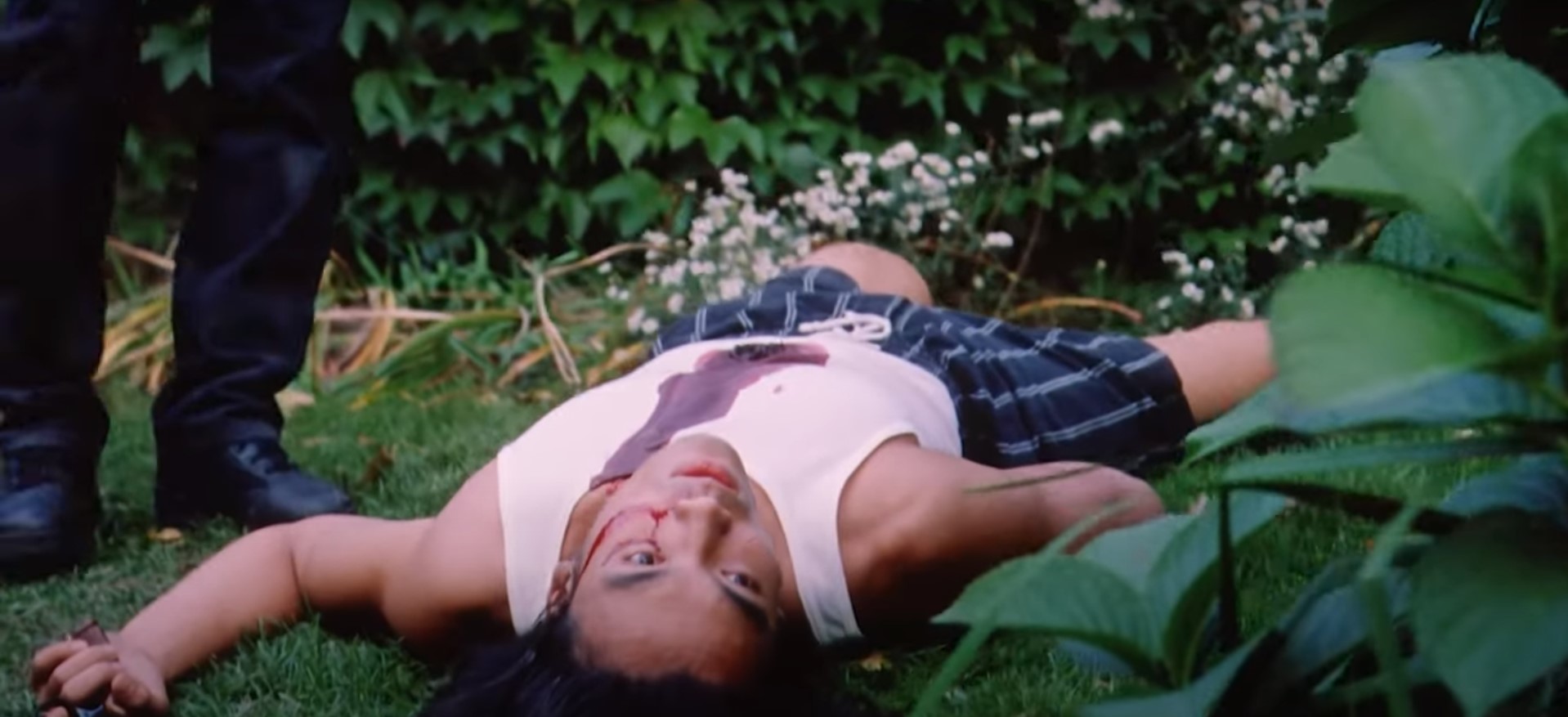
“Sabotage” is the 1996 independent, Canadian cloak-and-dagger thriller from “The Gate” and “I, Madman” director Tibor Takács and cowritten between Rick Filon (“The Redemption: Kickboxer 5”) and Michael Stokes (“Jungleground”).  “Sabotage’s” inspiration pulls from the simple, strategic game of chess where all the pieces, moves, and players are witnessed in plain sight in what is a tactical tornado of interagency spydom and the innocent are only the pawns in the middle, sacrificed to be a part of the puzzle to strike the monarchy behind the shadows on behalf of the across adversaries.  The Andy Emilio (“Shadow Builder”) produced and Ash R. Shan (“Lion Heart”) and Paul Wynn (“Tiger Claws III”) executively produced feature, shot in Toronto Canada (which also doubles for Bosnia in certain brushy areas), is a production of Applecreek Productions and presented by Imperial Entertainment. 
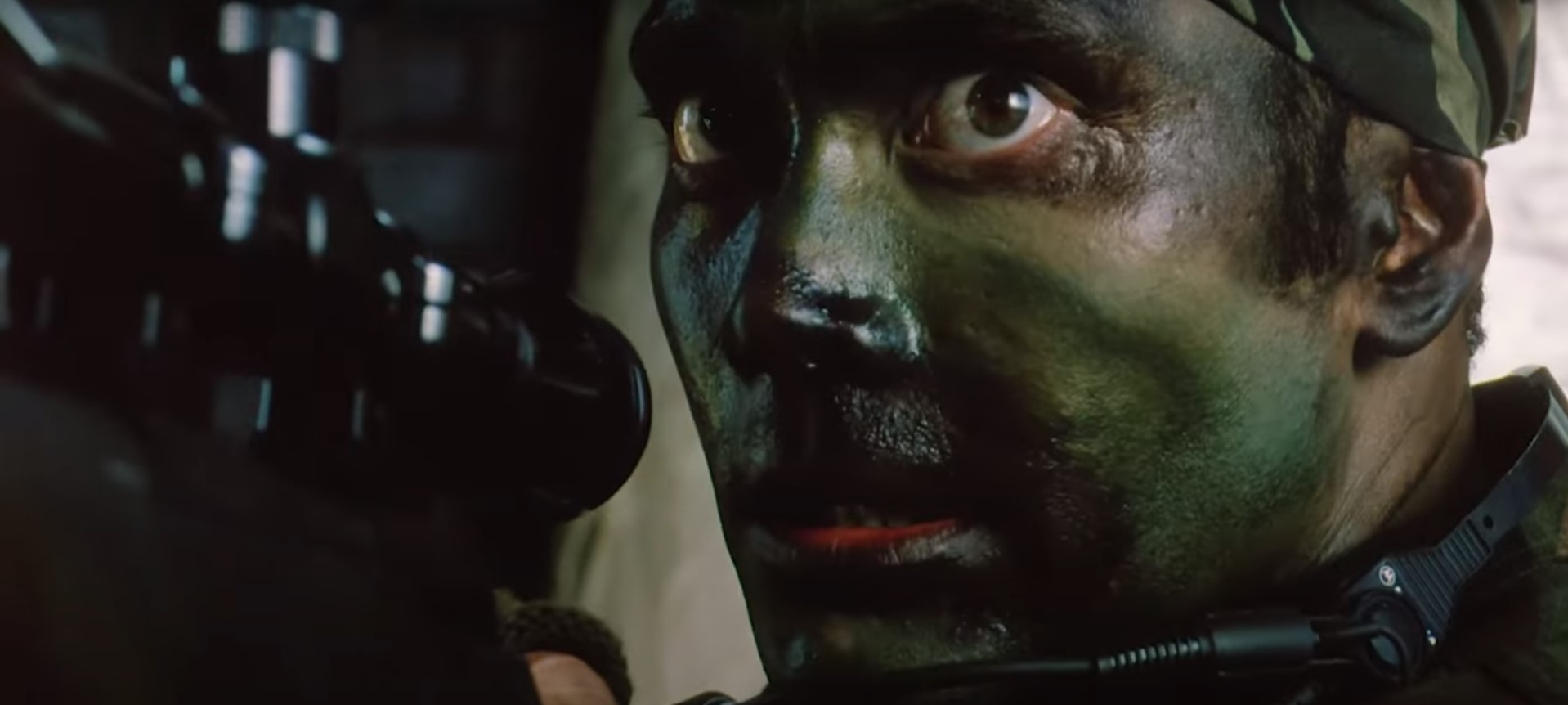
Working off another script from Rick Filon, the previous being “The Redemption : Kickboxer 5,” and hot off his humanoid cheetah role in John Frankenheimer’s “The Island of Dr. Moreau” remake, opposite Marlon Brando and Val Kilmer, the mixed martial artist Mark Dacascos plays the setup and scorned Michael Bishop, disgraced by his own military organizations, and reduced to being a bodyguard for an unscrupulous businessman.  Despite being soft spoken, Dacascos has great charisma on screen that mixes greatly with his eclectic array of martial art fighting styles, such as Muay Thai and Kung Fu.  Dacascos is a shoe in for leading man material, which also includes his swarthy good looks, and does fill the shoes of being a blacklisted former Navy Seal now on the hunt for who burned him in a botched Bosnia mission years earlier.  However, Bishop’s early motivation speaks more toward his character than his need for revenge as Bishop is not aware that it was his former attempted murderer James Sherwood, played by the towering and formidable Tony Todd (“Candyman”), who whacked his client.  Bishop becomes obsessed with the case which speaks to his loyalty and his completist mentality to see something through.  Overshadowing the leading man is Sherwood as Tony Todd instincts with this character is to be a merciless and cutting with his smooth handiwork and jibe remarks, all the while doing the horrible things with a sociopathic smile on his face.  Opposite Dacascos, in a semi-love interest role, is the pre-“Matrix” Carrie Anne Moss as Special Agent Castle who has more complexity of character than Dacascos and Todd combined.  Castle is a struggling single-mother trying to make headway in her governmental career but hits a snag when her morality is checked as she must either stay the course and go along with corruption to obtain security for her daughter or do the righteous thing and unsnarl dishonestly at the highest level with extreme prejudice for her sake of her daughter’s life.  Between the three principal leads, Castle’s arc is the steepest and more stirring with internal conflict, a testament to Moss’s performance.  Graham Greene (“Antlers”), James Purcell (“Bloodwork”), John Neville (“Urban Legend”), Heidi von Palleske (“Dead Ringers”), and Richard Coulter make up the rest of the cast.
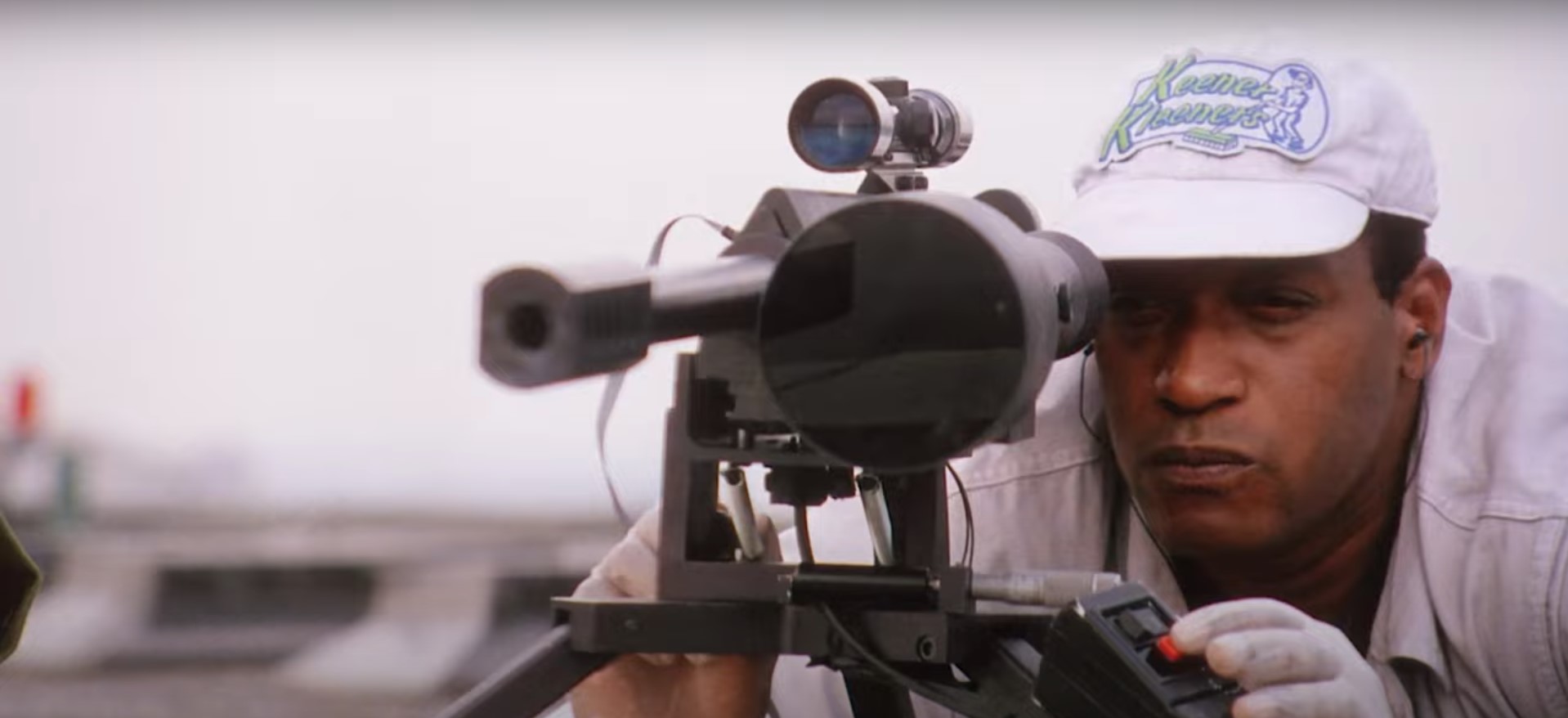
“Sabotage” is a down-the-rabbit hole spooktacular 90s thriller, and I don’t mean spooky as in scary.  What I’m referring to is the characters’ covert agencies, such as the spooks of the Counter-Intelligent Agencies, and far-reaching operations that meddle and deconstruct a what should be a tidy organizational design with pot-stirring double-crossing, even triple-crossing, narrative paths that can be a strain to keep straight.  The film’s prelude and core story span 3 years apart and connect while there’s a simultaneous backdrop narrative that’s also connects but only exclusively in exposition.  Audiences will have to hamster wheel their mental gears to connect the dots and keep up with the pacing in this ever-evolving plotline that keeps the action caffeinated with a winding, hard-target center.  Takács also stylizes “Sabotage” with bullet-tracking special effects, high impact shelling, and an indulgence of explosive blood squibs that elevates the independent picture to an upper-class of B movie and gives the feature an edge of fun and entertainment that dichotomizes it from the more slapdash action films of the mid-90s where sex-appeal played more of a role than any other kind of actual action. 

Number 60 on the spine of MVD Visual’s Rewind Collection Blu-ray, Tibor Takács’s “Sabotage” breathes new life into the crisscrossing, projectile-pursuing, scacchic espionage extraordinaire. The AVC encoded BD50 provides a 1080p high-def resolution presented in an anamorphic widescreen 1.78:1 aspect ratio. A well-suffused and maintained print results in an excellent detailing of pixels and a punchy-noir grading. Details on the 2K scan print are historically omitted here, like with many in the Rewind Collection catalogue, but “Sabotage” doesn’t feign to be a product of enhanced visual replication with an organically pleasing form with minimal grain and only one noted frame containing age or damage wear. The uncompressed English language LPCM 2.0 stereo has abundance of vitality, discerning the layers through the dual channel funnel. Range of melee fire power has individualized zenith occurrences rendered at the right synchronization and depth makes the distinction of foreground and background dialogue, ambience, and the sort. Speaking of dialogue (pun intended), the uncompressed encoding keeps faithful fidelity, an ample and adequate of clearly expressed conversations without ever sounding muddled or lost in the skirmish. Optional English subtitles are included. Special features are little light for a Rewind Collection bannered release but what’s available packs a wallop with two new interviews with stars Tony Todd and Mark Dacascos on Zoom, or whichever face time platform is being used, going through their recollection and thoughts of “Sabotage” from nearly three decades ago. A Mark Dacascos trailer reel rounds out the special feature content. The rigid slipcover contains the reprint of the original “Sabotage” poster in a mockup of a VHS case; however, this particular Rewind Collection cover composition has less flair to sell the VHS facsimile. Inside cover art of the clear Blu-ray Amaray case contains the same poster sheet but is reversible with a less-is-more one sheet. In the insert section is a folded mini-poster of the primary cover art and, opposite, the BD50 is pressed with a plastic-patterned, VHS-tape motif. The region free Blu-ray comes unrated and has a 99-minute runtime.

Last Rites: Overall, a gratifying A/V and physical presentation of a mid-90’s, mid-level action-thriller encompassing a showcase of Mark Dacascos’s leading man chops as well as a different side to Tony Todd that isn’t encapsulated in the supernatural during the height of his career.
“Sabotage” on MVD Visual’s Rewind Collection Blu-ray!

On the Verge of a New Millennium, New Faces and Stories Tell Their Terror on the Same Old EVIL Video Format! “V/H/S/99” reviewed! (Acorn Media International / Blu-ray)

Found Footage is all the 90’s Craze These Days! “V/H/S/99” Available at Amazon!

The year:  1999.  The format:  VHS.  The theme:  The most horrifying experiences caught on found footage camera.  A horror anthology for the turn of the century puts together five of the most terror-drenched short films that resurrects the punk-rock dead, turns urban legends into vindictive playthings, televises Lovecraftian game show frights, peers into the stone-cold eyes of a Gorgon neighbor, and goes to Hell and back!  All caught on camera from a first-person view as VHS vicariously relives the glory days through a digital world, capsulated by the horror realm and all its fanatical acolytes for the analogue video format to live undead forever. 

Living in the age of a VHS comeback is admittedly kind of weird.  VHS has become a hot collectible, especially and obvious the rate and obscure that mostly resides in the horror and cult genre.  Most recently, a discovery on a Brazilian VHS cut of Jaws 2 has a couple of minutes of shot footage that no other release holds to this day.  That, being just one example, is sought after power of VHS that saw various versions of one film be disperse far and wide across continents, which the same could be said about DVD that too saw a variety of different cuts due to the diversity of playback formats, distribute cuts, and numerous levels of censorship between countries.  VHS is also making a comeback in format style with gritty, faded, flat colored image veneer and tracking lines and the absent transmission signal of snow statically adorning the screen with beautifully hypnotical and flickering white dots.  So, it’s now surprise that on the heels of 2021’s “V/H/S/94,” another analog anthology is greenlit in 94’s wake with “V/H/S/99” for 2022, written and helmed by newcomers to the series but not necessarily newcomers to the horror scene.  The movie’s sequential lineup Is as follows:  Short filmmaker Maggie Levin writes-and-directors “Shredding,” taking a break from killer sharks is Johannes Roberts to oversee his “Suicide Bid” entry, musician Flying Lotus directs and co-writes with Zoe Cooper with “Ozzy’s Dungeon,” “Tragedy Girls’” director Tyler Macintyre writes-directs “The Gawkers” along with co-writer and fellow “Tragedy Girls’” screenwriter Chris Lee Hill, and the husband and wife tag team of Joseph and Vanessa Winter, filmmakers of “Deadstream,” helms-and-pens “To Hell And Back.”  The Shudder exclusive series latest is produced by Josh Goldbloom (“V/H/S/94”), David Bruckner (director of “Hellraiser” ‘22), Chad Villella (producer of the of 2022’s “Scream”), Bloody Disgusting’s Brad Miska, and “Scream” ’22 and “Scream VI” director Matt Bettinelli-Olpin under the production banner of Studio 71 and presented by Cinepocalypse Productions and Bloody Disgusting.

A new set of five tales of analog rendered terror invoke a new set of actors in each short film that carrier with them a broad range of experience. While a couple of the stories shred the narrative with hectic editing (I’m looking at you “Shredding”), performances throughout come over with blistering consternation and definitely a late 90’s grunge attitude with “Shredding” and “The Gawkers” delivering the full blunt force of period, heckling away in their baggy clothing, bohemian hairstyles, and a penchant for skateboard thrashing. The other films are merely timeless with only mere mentions of date, or their timestamped on the video tape recording, or are just a thematical proverbial nod to the specific point in time, lacking the keep it real essence that is quite idiosyncratic to the hop from a phasing out decade and into a whole new other. The cast of these shorts play their roles with exuberance and wackiness, which if you have lived in or can look back to the converging decades/millennium and see some of the gameshows or cultural shenanigans that defined America as people or, if you want to go smaller, just the pop culture, wacky is a pinpoint descriptor. The short films’ of “V/H/S/99” are comprised of a cast including, selectively, Steven Ogg (“The Walking Dead”), Ally Ioannides (“Synchronic”), Keanush Tafreshi, Jesse LaTourette (“There’s Someone In Your House”), Dashiell Derrickson, Isabelle Hahn, Sonya Eddy (“Blast”), Emily Sweet (“Castle Freak” ’20), Melanie Stone (“Deadstream”), Archelaus Crisanto, Luke Mullen, and Ethan Pogue.

Anthologies have been around for decades and are a great medium to showcase a multitude of individual storytelling from a variety of filmmakers walking different paths in life.  Fans can often salivate over these types of jump-the-shark formats that can start off with the zombie undead, transition 10 minutes later into a supernatural spooky, and then segue into a creature feature with a wraparound bonus story that may or may not connect them all and squeeze each episodic terror vision in a full-length feature runtime.  Though I enjoy a good collection of short and sheer frightful films, anthologies are not my cup of sanguinary tea.  Hopefully, no partisan takes seep out of this review as I attempt to examine “V/H/S/99” objectively.  Out of the five segments, three have landed strong with a right amount combination of style, gore, performance, narrative logic, and, of course, terror, and if you like comedic sugar in your black cup of horror then “To Hell And Back” is a perfect Venti-sized, well-blended mulatto of choice that thrusts two dimwitted demonic ritual documentarians into the pits of dark, gloomy, and malformed creature Hell and fight their way back to their own plane of existence.  Though one flaw some make catch when watching the caboose film of the anthology is that it doesn’t particularly reflect 1999 other than the small caveat, which is pivotal to the story, that at the turn of the millennia is when the veil between our world and Hell is as it’s thinnest.  The other two better entries capture more infinitesimally in detail of the late 90s, early 2000s clothing and discourse.  “The Gawkers” taps hard into the weird aggressive hormones of a teenage boy while exploring the newfound ways to use technology as spyware.   Webcams aboard big boxy desktops chauffeur in a whole new way to be creepy that lands them in hot water not by the law but by the wrath of ancient femme fatale of Greek mythology.  Johannes Roberts rounds out the better half with a sorority haze gone wrong that evokes an urban legend to become more than just a story and Roberts “Suicide Bid” offers, again, that period presence that feels like a tribute throwback to the 1998 “Urban Legend” film itself, but adds a supernatural surprise that utterly creepy and not as deep with only 6 feet underground rather than a 47 meters down, the director is slowing raising his fear to the surface.  The shorts left hanging below the bar are “Shredding” and “Ozzy’s Dungeon” and for reasons that have to do with their style and story. “Shredding” promising premise is plagued not by punk phantasms back from the dead but simply pilfered of focus with a hectic, if not severely chaotic, VHS-graded editing scheme that shocks the perception senses while “Ozzy’s Dungeon” is inspired by Nickelodeon’s Legends of the Hidden Temple gameshow where kids have to compete in toned down ancient society games to race up the temple to win the big prize. “Ozzy’s Dungeon” definitely is weird, sadistic, and Lovecraftian-inspired for sure but its story design loses motivation and often cheats rounding the bases in order to reach the shocking climatic finale.

Acorn Media International brings tape to the United Kingdom with a Blu-ray home entertainment release of “V/H/S/99.” Presented in a widescreen 1.78:1 aspect ratio, though doesn’t cater to the standard 4:3 ratio of video tape, the provided image quality purposefully varies to give audiences the titular analog experience. Faded grading, tracking lines, static and that jittery playback is all part of the visual environmental experience and even a few of the filmmakers shoot the film digitally to then run it through VHS to garnish with unnatural base video turbulence. The English DTS-HD 5.1 surround sound mix heightens the exposure and familiarity to of being that person behind the camera as all of these shorts of short POV. Intense and, often, cacophonous, the audio tracks still manage to level out, be discerned, and manage to relay the chaos no matter how much bedlam is thrown at the screen. From the zoom in-and-outs of the video tape recorder, there’s a clean sense of depth and the range is bountiful as the ambient track runs the gamut of omnifarious sounds that give each episode an individualized stamp. English SHD is optional. Bonus content includes an exclusive panel from New York’s Comic Con with guests producer Josh Goldbloom, “The Gawkers'” Tyler Macintyre, and “To Hell And Back’s” Joseph and Vanessa Winter as well as a total arc gag reel. After that encompassing project feature, the girth of the bonus content breaks down into the individual shorts with “Shredding” having a deleted scene and the complete fictious band BitchCat music video, “Ozzy Dungeon” has two deleted scenes, “The Gawkers” has a deleted scene as well as bloopers, camera tests, and The Making of Medusa, and “To Hell And Back” rounds out the features with a hefty look at the raw footage, scouted location, and a storyboard and blocking rehearsals. There are no bonus features for Johannes Roberts’ “Suicide Bid.” Physical features include a slightly thicker traditional Blu-ray snapper, a Europe standard, with a cover art that matches the North American RLJE release, a city being loomed over by skull made out of colorful galactic stars and a pair of video lenses for blank eyes. The disc art is pressed with the same front cover image. Though no mention of a region playback on the back cover, I suspect a region B encoded release as per usual with Acorn Media Interntional. “V/H/S/99” has a total runtime of 109 minutes and is UK certified 18 for strong blood violence/gore. “V/H/S/99” is not my kind of off the heasy subgenre, but the latest series anthology packs a punch and I would never discourage anyone from not experiencing firsthand an homage trip through terror.

Found Footage is all the 90’s Craze These Days! “V/H/S/99” Available at Amazon!

The EVIL is Inside Me! “Nightmare Man” reviewed! (Ronin Flix / Blu-ray)

“Nightmare Man” Is Here To Haunt Your Dreams in High-Definition!  Blu-ray Available at Amazon.com

To channel mystical help with her and her husband’s fertility issues, Ellen purchases a mask from overseas that supposed to provide fruitful results.   Instead, Ellen is plagued by nightmares of a demon figure, forcing himself onto her with a maniacally grin.  Diagnosed a paranoid schizophrenic and on medication to dilute the vivid dreams, Ellen’s husband chauffeurs her to the mountain isolated Devonshire Institute to commit her for treatment, but when the car runs out of gas and her husband ambles for gas, Ellen finds herself alone in the car at night and with the nightmare man lurking outside,   Escaping barely with her lift now that the physical form of her tormentor is no longer just in her dreams, Ellen takes refuge with a pair of couples celebrating an engagement party.  Rambling erratically about an entity no longer inside her, a debate between the group of friends question Ellen’s sanity until the nightmare man shows up and slaughters anyone in his path, but the party’s just beginning when another killer has been freed from suppression.

Pivot stories are the best!  The investments into a foundation roots a focus, provides a clear understanding of the forthcoming, and can be, for better or worse, an expectation of narrative structure.  What happens when a monkey wrench is thrown into the story and completely bends the storyline at a 90-degree angle onto another totally unexpected path?  Some would be too jarred by the jerk toward another direction, coming out of the film with a severe case of whiplash that joggles and boggles the mind, while others, like myself, would find a refreshing phoenix out of the tired ashes of a stale genre and welcome it with open, grateful arms to keep my rear-end sewn to the couch and eyes glued to the television to see what happens next!  Writer-Director Rolfe Kanefsky (“There’s Nothing Out There,” “Art of the Dead”) alters the early 2000s post-“Scream,” masked-slasher with a twist and never second guesses the decision to bounce from out of one subgenre and into another without skipping a beat.  “Nightmare Man” is a production of Delusional Films and is non-SAG, shot in the area of Big Bear, California, produced film by the father-son team of Rolfe and Victor Kanefsky and Esther Goodstein, and Frederico Lapenda.

What’s very curious as well as fascinating about “Nightmare Man’s” character hierarchy is that there isn’t just one lead principal throughout the film.  In fact, lead principals change hands at least three times and also misleads audiences into thinking someone is going to charge of the situation only to be cut down in a blink of eye and a jolt to the normal hardwires of our cerebral higher functioning.   The titular star of Rolfe Kanefsky’s “Jacqueline Hyde,” Blythe Metz, returns to work with the filmmaker as a woman overwhelmed by dreams of a demonic dybbuk of sorts who chases her and tries to force himself onto her, into her, in a violating way.  Metz convinces much later as someone suffering from delusions and paranoia but her Ellen character, a woman who is supposed to be wealthy from some of the dialogue bits, is a bit more lucid and grounded early into the story with only her frustration to lean back on to warrant being committed, which seems like a harsh and unconvincing setup for the character that also induces early suspicion on her husband’s (Luciano Szafir, “Hopekillers”) eagerness to check his wife into a mental institution.  Before long, we’re introduced to two couples, played by Jack Sallfield (aka Jack Sway), Johanna Putnam (“Feast II and III”), James Ferris (“Jacqueline Hyde”), and every fan’s favorite scream queen, who’s currently playing a reoccurring character in season 3 of “Picard,” Tiffany Shepis (“Abominable,” “The Black Room”), partaking in an intimate celebration and partaking in what mostly early 2000s portrayed characters love to participate in – sex themed conversation, games, and forbidden secrets.   Soon, the two parties collide when Ellen is chased through the woods by her African horn-masked dream stalker (Aaron Sherry) and then the situation turns into mice in a glass cage with a snake circling hungry.  Shepis doesn’t stray terrible too far from her normal cache of credits or Tromaville antics as a provocative, promiscuous, and downright master of her domain with intent.  While Shepis doesn’t necessarily compete with any other onscreen personas, as the long-time horror vet can steal a show with ease, we’re also treated to strong performances from her costars, such as Metz splitting into thirds with her diagnosed paranoid-schizophrenia, and we’re introduced to Johanna Putnam in her debut role as an engaged woman has who a dangling lesbian secret from her past hanging over her head.  The dynamic works not in a dramatic means but rather as a comedy portico tossed into the narrative structure to spruce up character conversing toward something humorous and interesting as arrows plunge into chests and knives are puncturing through lower jaws.  “Nightmare Man” rounds out the cast with Richard Moll.  Yes, Bull from Night Court, as well as “Scary Movie 2” and “Sorority Party Massacre, makes brief cameo appearance as the local sheriff and you need look very closely because the scene is so dark, you can barely tell it’s him. 

The one theme that keeps popping up in the recess of the mind is perhaps the one theme that eludes being talked enough about when overhauling “Nightmare Man” as a message bearer. Being an early 2000’s horror in the long established and well-dipped into the shadow of the “Scream,” “I Know What You Did Last Summer,” and “Urban Legend” franchises that defined the turn of century before it even happened might have had something to do with “Nightmare Man’s” lack of enticements for distributors to feel love for the man of nightmares and notice it for the novelty and the theme for what it is, an instilled paranoid fear that one’s sexual attacker leaves behind as a post-traumatic stress bomb that is everything all consuming. Kanefsky patterns the hallmarks of rape trauma stealthily into the script, disguised as a shadow, with a teethy mask, and vividly glowing and menacing eyes. Some other scenes are more obvious than others, such as Ellen’s dreams of the sinister smiling figure pinning her to the attic floor and spreading her legs right before she wakes or when she cries out, “I still feel him inside me,” while held up inside the cabin, with Kanefsky painting with a broader brush on “Nightmare Man’s” obscured presence and masked killer with an agenda that attaches itself directly in avoidance of calling a spade a spade. The kills and gore effect gags can stand up against any big budget, Hollywood production and are just unique enough to make the killer interesting in diversity and brutal enough to give “Nightmare Man” an edge sharper than the knife he wields.

If a Tiffany Shepis fan, or a fan of Tiffany Shepis in her underwear holding a crossbow and won’t be rattled by the bent elbow plot pivot, the Rolfe Kanefsky picture is an enjoyable, campy romp that gives homage to the horror films that have set the scene for “Nightmare man” to exist.   Ronin Flix plucks “Nightmare Man” out of standard definition dreamland and into the reality of high-def, 1080p Blu-ray.  Presented in an anamorphic widescreen 1.78:1 aspect ratio, the story is set almost entirely at night with more household lighting for interior shots and not too much exterior lighting to brighten objects or even cast hard-edged shadows.  While this creates more realistic atmospherics of isolating apprehension in the woods horror, Kanefsky and cinematographer Paul Deng (“Trancers 6,” “Song of the Vampire”) bathe many of the night shoots in deep blue tint and the Ronin Flix transfer appears to display in low contrast and is very dark, leaving focal objects nondelineated and obscured.  I haven’t checked out the Lionsgate After Dark DVD print of this film so I can’t compare.  There some dip in the compression decoding as the release hovers in the mid-30Mbps for good periods of time but does dip into the lower 20s and it shows with light phasing macroblocking.  When not bathed in blue, skin tones and grading often look natural and palpable.  The English language DTS-HD 5.1 Master Audio is balanced between all levels tracks, putting the dialogue in the forefront, keeping the range of ambient noises at an appropriate depth, and a soundtrack that maintains tensions rather than over intensifies to a fault.  I will say that the multi-channel lacked a significant stalwart production that didn’t provide the anticipated strength of audio.  Dialogue is clean and clear with no perceptible issues and the overall package track can be said the same.  English SDH are optional.  With the Ronin Flix release, new bonus supplementals extend more background and insight with retrospective discussions and distribution challenges associated with “Nightmare Man,” such has a new interview featurette with director Rolf Kanefsky, producer Esther Goodstein, and star Tiffany Shepis in There’s Something Out There:  The Making of Nightmare Man and a new audio track isolating the film score by Christopher Farrell (“Bus Party to Hell”).  Also included is Creating the Nightmare:  The Making of Nightmare Man – a raw footage behind-the-scenes look at some of special effects, makeup, and off-the-cuff tomfoolery during in between take down time, extended scenes, Tiffany’s Behind-the-Scenes of Tiffany Shepis weaponizing a handheld camera with her flare of sexualized humor and potty-mouth pizazz, an audio commentary track, on the audio setup, with director Rolf Kanefsky, producer Esther Goodstein, and star Tiffany Shepis, Flubbing a Nightmare Gag Reel, still photos, and a promo reel.  The physical features include a David Levine package design of an abract-esque composite of the Nightmare Man mask, Tiffany Shepis in a bra, and a knife all splashed in red lined inside a traditional Blu-ray snapper case with no insert.  The release is locked on Region A playback and the film has a runtime of 87 minutes and is rated R for horror violence, gore, some sexuality/nudity, and language – what Tiffany Shepis release wouldn’t include all of that?  “Nightmare Man” is a dream of a subgenre-bending film; sexy, gory, intense, and unpredictable, all the prefigures of a hell of a good time.

“Nightmare Man” Is Here To Haunt Your Dreams in High-Definition!  Blu-ray Available at Amazon.com

Out With the Old EVIL. In With the New! “Modern Vampires” reviewed! (Ronin Flix / Blu-ray)

“Modern Vampires” available for purchase on Blu-ray at Amazon.com

Blacklisted for not killing the vampire nemesis Dr. Van Helsing, Dallas is shunned by most of the underground Los Angeles vampire scene now presided over by Count Dracula himself, but as he returns to the city after decades of being gone and gathers with old – very old – dear friends, Dracula threatens him with being burned alive if he overstays his begrudged welcome.  When a newly turned rogue vampire under the pretense of a corner prostitute starts ripping the throats out of unsuspecting Johns, Count Dracula doesn’t want the potential public attention drawn on his species.  Taking a shine to this mysterious woman’s insubordinate nature, Dallas finds her, cleans her up, and introduces her to his inclusive friends, but little do any of the bloodsuckers know is that the Van Helsing is in town and has recruited local Crips to be the holy servants of God in wasting away the vampiric filth that plagues humanity.

Here I thought Casper Van Dien’s only good film was 1997’s galactic war with the extraterrestrial bug species in “Starship Troopers!”  Nope, one year later, Dien follows up his iconic global militant-nationalism and gory-filled sci-fi blockbuster with the little-known American comedy-horror “Modern Vampires.”  Better known around the world as “The Revenant” to not confused American audiences with a highly ingrained British term, “Modern Vampires” is directed by a principal one-half of the 80’s American new wave band Oingo Boingo in Richard Elfman.  The other half of that duo is Richard’s brother, who we all know and love in his unmistakable musical scores of “Batman” ’89 and “Edward Scissorhands,” Danny Elfman who also scores the opening theme to “Modern Vampires” with recognizable and trademark notes from those previously stated Tim Burton pictures.  The script was also penned by a fellow Oingo Boingo original member and the Kiefer Sutherland and Reese Witherspoon “Freeway” film, and its sequel, screenwriter Matthew Bright.  Bright and Richard Elfman had previously collaborated on the comedy-musical “Forbidden Zone” surrounding sixth dimensions and damsels in distress as well as the Charles Band produced “Shrunken Heads.”  “Modern Vampires” is produced by Elfman, Brad Wyman (“Barb Wire”), and Chris Hanley (“American Psycho”) under the Storm Entertainment and Muse/Wyman productions.

Ladies, if you thought you’ve seen the last of Casper Van Dien’s backside in “Starship Troopers,” then worry not! As the hunky, cigar-smoking, former World War II pilot Dallas, Van Dien, once again, shows off his hind parts in a steamy sex scene one top of Dallas’s car with costar Natasha Gregson Wagner (“Vampires: Los Muertos,” “Urban Legend”). As the indifferent vampire Nico under the pretense of a prostitute who seduces men into vulnerability before gashing open their necks, Wagner adds a bloodthirsty ferocity to her uncouth, undead character’s tremendous and tragic depth surrounding a trailer park trash childhood of sexual abuse and a grandstand mother. As a pair, Dallas and Nico are essentially made for each other or, rather, Dallas turned Nico because under all that pretty boy veneer, Dallas still has a beating heart for compassion and friendship as noted with Dr. Frederick Van Helsing’s crippled son, Hans, and the choice made between the two young men before the whole debacle of nixing to the fearless and relentless vampire killer of all time. Rob Stieger plays that character beautifully manically. “The Amityville Horror” and “End of Days” actor graces the production with seasoned vitality while also trying something new himself, a slightly fascist German vampire hunter who hires L.A. gangsters to help him do his dirty work and has to be the butt of the joke at times at the hands of Count Dracula (“Striking Distance”) as well as Dallas. Stieger does his scenes with great earnest yet great fun that puts the legendary actor into a new perspective. “Modern Vampires'” star-studded cast doesn’t end there was Dallas’s friends include performances from Kim Cattrall (“Big Trouble in Little China”), comedian Greg Furgeson, Natasha Lyonne (“Slums of Beverely Hills”), and the legendary Udo Kier (Andy Warhol’s “Dracula”) as well as a cast round out with Natalya Andreychenko, Gabriel Casseus, Peter Lucas, Victor Togunde, Cedric Terrell, Flex Alexander, and Conchata Ferrell.

Gory, sexy, and overflowing with politically incorrect humor, Richard Elfman’s “Modern Vampires” more than likely would not be a film made today, but definitely suits the 90’s scene.  There are stereotypes and jokes radically exaggerated for comical effect and land with such insouciant ease that the entire production felt at peace with the humor, emitting “Modern Vampires” as an enjoyable, blood-soaked, outrageous vampire comedy unearthed from over 20-years ago and landing onto a new Blu-ray release where the Elfman film deserved an upgraded treatment.  Los Angeles in ’98 didn’t look extremely different than what’s depicted in the film – late night clubs with half-naked patrons doing all sorts of weird and bloodletting fetishes, leeching prostitution on the delinquency riddled streets, and unsavory, unwilling gang bangs but, in “Modern Vampires’ case, the one tied to the bed is a female vamp fully-transformed into a human-sized bat and those who have sex with her, turn into a vampire themselves.  See the humor and symbolism in that?  Almost as if having unprotected sex with a creature of night is akin to contracting a sexually transmitted disease.  Despite the waggishness, “Modern Vampires” holds other staid themes as well with an arteria one being reflective in the title.  The genesis of the species emerged from Count Dracula who had moved from his old Germanic country to the hip and upcoming L.A. area. With each generation of vampire, the loyalty gap becomes wider until the turned from the 20th century are fully unmanageable by the Count’s supreme power. Nico, the youngest turned is in her vampiric infancy often noted throughout the film, can’t be contained and won’t be told what to do, much like teenagers butting heads with their parents on every little subject. Traditions are broken, heads are severed, bodies are burned, and the “Modern Vampires” is a wildly funny and gruesomely gnarly.

“Modern Vampires” is now the vintage vampires that hit the silver screen some 24 years ago and is now basking with the great 90’s flair of special effects, clothes, and hair on a new Blu-ray release from Ronin Flix in association with Quiver Distribution (“To Your Last Death”). Newly scanned in 2K of the Richard Elfman’s personal film print, the picture retains an unsullied quality with impeccable detail delineation for a story that’s mainly set/shot at night. There’s quite an overlay of purple flush that I’m fairly positive is not intended that pulls away, at times, from clearcut contrasting and blend the objects in the scene together. The film is presented in full high definition1080p in a widescreen aspect ratio of 1.85:1 with an English language DTS-HD master audio 2.0 stereo that retains the amplitude of every categorical track. Dialogue track provides a clean depth and clarity that doesn’t swerve into boxy territory like many indie productions do. Ambient and foley range is quite limited for a bunch of different locational shots and in a crowded location full of extras but the extent of the quality is good enough. The 91-minute film comes not rated and has an exclusive extra with an introduction by director Richard Elfman plus archival features, such as audio commentary with Richard Elfman and star Casper Van Dien, a behind-the-scenes featurette with on set mini-interviews with the cast and crew. and the theatrical trailer. “Modern Vampires” might now be long in the tooth (get it?) but has the classic campy escapades of an unpretentious good time and, that my friends, is timeless.

“Modern Vampires” available for purchase on Blu-ray at Amazon.com

EVIL Hoodooism is No Mumbo-Jumbo! “Spell” reviewed! (Paramount Pictures / Digital Screener)

Marquis E. Woods is a powerful defensive attorney good at his job, attaining wealth and position to the likes he’s never had as young boy raised by a fervent and abusive father in the Appalachian mountains of Kentucky; a life now he always wanted he can now share with wife, Veora, and pass to their children, Samsara and Tydon.  The news of the death of his father sends him and family on a flying to the rural part of Kentucky to pay their respects in Marquis’ personal small aircraft.  A terrible storm forces down the plane down in a remote wooded valley and an injured Marquis wakes up in attic on a farm ran by a proclaimed rootwork old woman, Ms. Eloise, with her husband and oxen-strong farm hand.  Trapped and concerned for his missing family, Ms. Eloise slowly nurses him back to health with a Boogity, a Hoodoo figured representation of Marquis comprised of his flesh, blood, and other DNA elements, but her Southern hospitality isn’t for good intentions as she mends and prepares his wounded body, brewing a sinister spell upon his soul, for the forthcoming blood moon that lies days ahead.

Experiencing Hoodoo dark magic horror back on a bigger production scale is on the same extraordinary gamut in discovering the lost city of Atlantis.  Well, maybe not as profoundly archeological as discovering Atlantis, but still immensely impactful. Films like the Mark Tonderai directed “Spell” hit like a ton of brick-shaped talismans, fettering the imagination with hexes that bewitch fascination and captivation, and roots through an endless torrential fountain of ancient beliefs to scour the dark side of the practices for celluloid terror. “The House at the End of the Street” director Tonderai moves away from restraints of PG-13 horror before heading into a stint of helming television episodes only to make a glorious return back to features with the R-rated black magic action-thriller, “Spell,” penned by Kurt Wimmer who knows a thing or two about action-thrillers as the writer of the gun-toting, martial arts dystopian, “Equilibrium,” and bloodily vindictive thriller, “Law Abiding Citizen”.  Filmed in Cape Town, South Africa that, through the slight of hand of movie magic, turns South Africa into rural Kentucky, “Spell” is a co-production of Paramount Pictures, LINK Entertainment, and MC8 Entertainment as well as being a product of puncturing the rarely topical social class and racism division within the same race.

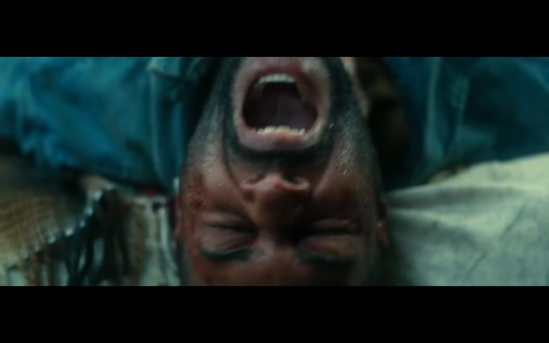
To play a determined and savvy father and husband on the ropes of survival, “Power’s” Omari Hardwick steps into the detained role of Marquis E. Woods, surely prepping himself against Ms. Eloise’s wicked dark magic before battling the flesh hungry undead in the upcoming Zack Snyder zombie-geddon horror, “Army of the Dead.” Hardwick is the ideal actor for a role that, at times, can be physical; his athletic build suits also Woods’ affluence though not required as scene with the brawny farm hand that introduces South Africa’s very own fitness entrepreneur, Steve Mululu.  Woods is pitted not only against formidable muscle, but also has to outwit the four or five lifetime smarts of an old root woman, Ms. Eloise, diabolically portrayed with a legendary entrenched Southern vernacular by the “Urban Legend” actress, Loretta Devine.  On the downside of the character, Ms. Eloise is rich with historical saturation that goes unchecked and unexplored and she seems a little more slapdash with her rituals and her captives.  In what really is a mind game of wit and Podunk wizardry between Hardwick’s Marquis E Woods and Devine’s Ms. Eloise, the remaining cast for “Spell” shoulders only little to annex more substance toward the tensions between the two principles, including performances from Lorraine Burroughs, John Beasley, Andrew Jacobs, Tumisho Masha, RJ-Karlo Handy, Hannah Gonera, and Kalifa Burton.

Aforementioned, “Spell,” between the domestic xenophobia opulence dividing the Woods family, the quaint, yet tangible body horror, and the abhorrent mysticism surrounding Hoodooism, teeters on loose ground with not only Ms. Eloise’s foundation, but also with main character, Marquis E. Woods, who suffers continuously from trauma-induced nightmares of his abusive father. Through flashbacks, Marquis is beaten with verbal assaults and even, seemingly, being stabbed or mutilated by his father. Yet, that’s about as far as the flashback dynamic progresses the thread bare bond until a minor moment at the climax is when Marquis then embraces his father’s aggressive nature, tuning more into a theme of stative stance that Marquis and father might not have seen eye-to-eye, but the son learns to survive through amplified evil by way of his father’s tough, tortuous care. The relationship circles backs with Marquis’ entitled children, whose piggyback wealth has molded them indifferent against the benefits given to them and partisan toward the backwoods people of color, and “Spell” becomes an insidious allegory creeping into the fold with a little tough love from your parents, in this case father, will go a long way. “Spell” also rarely pulls any punches with a welcoming cringe of ghastly violations of the human body (that pulling, inserting, and then re-pulling out the spike in the bottom of the foot gag will make you actually gag!) and inside the rustic and isolating confines of Ms. Eloise’s Kentucky farm compound, there’s a rough-hewn atmosphere that elevates the subgenre, shaking it to the core at times.

“Spell” is terrific urban horror tinged with “Misery” but driven by historical oppression stemmed Hoodoo, releasing just before Halloween on October 30th distributed by Paramount Players, a division of Paramount Pictures that’s still very much in it’s infancy. Jacques Jouffret (“The Purge” franchise) has a tight knit and jarring cinematography that puts the audience in the front, debilitating seat, empathizing the mind-warping effects that Marquis faces with a violent plane crash, nerve seizing torture, and banding Hoodoo hallucinations. Plus, there is fancy crane camerawork that marvels to capture multiple actions between characters. The score from Ben Onono fulfills the tension-riddle need with incessant zest, complimenting the narrative tenfold. Since “Spell” is a brand new release, there were no bonus material included and there were no bonus scenes during or after the credits. Don’t belittle the Boogity in this year’s most unique and contending horror movie that casts a “Spell” over the rest of the competition.

Pre-order “Spell” on Prime Video