EVIL Chews Through Its Own Loved Ones as “The Vourdalak” reviewed! (Oscilloscope Laboratories / Blu-ray)

“The Vourdalak” Available Now at Amazon.com!

The special emissary of the King of France is ambushed by Turks in an isolated Slovic countryside.  With his carriage and clothes stolen and his driver-servant dead, Monseigneur Marquis Jacques Antoine Saturnin d’Urfé has nothing more than the clothes on his back.  He finds himself in the home of Gorcha, an enemy of the Turks, who resides with his three adult children, a daughter in law, and a grandson, but Gorcha was not presently there to greet his hapless visitor until his returns later that day from fighting the Turkish raiders.  Yet, aside from the oldest son Jegor, the family’s superstitious beliefs lead them to doubt Gorcha returning home human and instead has returned as vourdalak, or a blood hungry vampiric creature who feeds on his own loving family to turn them all into the same unnatural ilk.  From an outsider’s point of view, what Marquis d’Urfé witnesses initially is a strange peasant family’s irritational fear turn into a harrowing horror as one-by-one the family members reach an unfortunate end after the return of Gorcha.

Based off the gothic novella “La Famille du Vourdalak. Fragment inedit des Memoires d’un inconnu” from Russian author Aleksey Konstantinovic Tolstoy, a story that plays on the etymology of the Slavic folklore word Wurdulac, or a vampire-like creature, that exacts a similar transpiring fate as described in the above plotline of Adrien Beau’s “The Vourdalak.”   The writer-director fleshes out the 1839 Tolstoy story, one that’s predates Bram Stoker’s “Dracula” by nearly 60 years, for his own period set rendition created for modern times almost two centuries later in 2023 as his debut feature-length film.  The French film is cowritten alongside Hadrien Bouvier who doesn’t depict the vampiric creature as a nobleman, or even a man of wealth, but rather as a likely lowly serf of the countryside under a noble or lord.  Yet, the script, very much like Tolstoy’s novella, is contained within the family and their home rather than expanding across continents and seas, as in Stoker’s “Dracula.”  “The Vourdalak” is produced by “Alone in Berlin’s” Marco and Lola Pacchnioni and Judith Lou Lévy (“Zombie Child”) under the production banners of Les Films du Ball, Master Movies and, in association with, Cinemage 17 and Amazon. 

A period piece with an intimate cast brings closer together the targeted era of late 18th century to early 19th century costuming, articles, and, to extent, performances that sell the monarchial times of French aristocracy and Slavic provincials living humbly on the fringes of an everlasting Russo-Turkish war that spanned decades.  Leading the charge is the only French aristocrat portrayed character in the story played by Kacey Mottet Klein (“The Suicide Shop”).  Dressed in traditional Empiric style high collar shirt, petty coat, and a white wig and garishly garnished with white pale-looking makeup with mouche, an adhesive mole, to reflect their wealth and status, Klein’s prim-and-proper, yet prudish and prissy, Marquis Jacques Antoine Saturnin d’Urfé is finely out of his element with a satisfiable character arc that has the Monseigneur go from a squeamish snob to finding compassion, sympathy, and courage amongst darkness aimed to swallow a family whole as d’Urfé’s high society and fantastical life clashes with the real world with war, necessity, death, natural beauty, unconventionalities, and consideration through another type of fantasy lens, a troubling, insidious darkness that plagues and feeds on the blood from within a domestic design that’s ruthless as it is unfathomable.  Jegor (Grégoire Colin, “Bastards”) is the loyal eldest son, Piotr (Vassili Schneider, “The Demons”) is the sexual orient ambiguous second son with external emotions unlike his other brother, Sdenka (Ariane Labed, “The Brutalist”) is the free-spirited but melancholic beauty, Anja (Claire Duburcq, “She is Conann”) as Jegor’s more than practical and realistic wife and young Vlad (Gabriel Pavie) is Jegor and Anje’s preadolescent boy.  The aforenoted characters are all embodied by a physical, living person to play the role but Gorcha is a horse of another color.  In fact, Gorcha’s not a living thing at all and is actually a puppet personified by two puppeteers and voiced by director Adrien Beau.  The puppet has an emaciated appearance, resembling closely to those used in “Return of the Living Dead, and with the power of green screen, the animating arms and bodies are overlayed out and Gorcha lives and breathes with an animatism spirit that’s creepy as all Hell with an underscoring tow of vampirism. 

In its essence, “The Vourdalak” embraces the simplicity with a less-is-more atmosphere, a self-assured reliance in the palpable and practical, and a confidence in its cast to extract the drama and horror of a longstanding folklore and deliver its poignant potency with eccentric diversity and steady anxiety.  Beau drenches dread into every crevice that sticks like humidity to its subdued black comedy attire.  Yes, “The Vourdalak,” though grim and dark, has a sliver of comedy course through its bloodlet and lapped up veins from the main character’s perspective who, at first, is quite out of his comfortable, aristocracy element being wiggled into a lower-class family’s unusual dysfunctionality.  There’s also the puppet aspect integrated into living, breathing actors as if one of their own and that certainly as a basic layer of absurd surrealism, the French know a thing or two about liberal arts absurdism.  Beau’s shooting style resembles a blend between the fixed camera and low-key lit silent films, also implementing throwback spyglass shots that were widely used in the early cinematic period, and the Euro-horror movement of the 1960s to early 1980s with an ominous romanticism, a dark and creepy-fog environment, and tinged to cooler shades of soft blues and greens all the while lightly touching upon themes of sexuality, homosexuality, and family structures that often collide with one another to stir the pot and overshadows the imminent danger in front of them. 

“The Vourdalak” is unpredictably grotesque in the most amusingly macabre way and is now on a region free Blu-ray release from our friends at Oscilloscope Laboratories.  AVC encoded onto the BD50, the high definition, 1080p resolution, might throw audiences and purveyors of physical media for a loop when the picture isn’t as fine as expected for a modern released picture.  That’s because Adrien Beau shot “The Dourdalak” in Super 16mm that enlivens a grainy and soft toned picture that can appear slightly blurry, resembling the ilk of European horror from the 1960s-1980s  Presented in an anamorphic widescreen 2.35:1 aspect ratio, Beau is very committed the coldness of bleak grays, blues, reds and the variant fused shades of purple, pink, and teals that sparingly envelope the entire frame with a lens tint in surreal moments, such as fever dreams or emulated night shots.  Though unfocused at times, plenty of distinction can still be rendered, such as the very stooge features and qualities of the Gorcha puppet.  The French DTS-HD Master Audio stereo track is an audio sensory mini-triumph.  In its modest sound design, minor qualitative sounds instill creepy atmospherics, especially the sound prominence of a raw chewing theme associated with the vourdalak creature’s folklore.  Adrien Beau also better animates and personifies his Gorcha puppet with a wheezy and struggling voice over for who is supposed to be a very elderly father-grandfather in an undernourished and skeletal appearance with sunken, bulging eyes and a near fully exposed teeth. The special features include two of Adrien Beau’s short films “Les Condiments Irreguliers” and “La Petite Sirene” as well as a behind-the-scenes featurette that’s more of the raw footage of animating and acting the Gorcha puppet without the visual effects removing the puppeteers. The Oscilloscope Laboratories Blu-ray comes in a clear Amaray case with soft, airbrushed quality composition artwork of a calm Marquis Jacques Antoine Saturnin d’Urfé being feasted upon around his neck by the vourdalak. The reverse side contains a still image of a medium-far shot of one of the more powerful images in the film of a graveyard d’Urfé passes through as if it was a revolving doorway in and out of death. A simple yellow title and label name are splayed across the disc, consistent and normal per the company’s design, and the film is not rated with a runtime of 90 minutes.

Last Rites: Rarely do I give a five-star review for a film but Adrien Beau’s “The Vourdalak” is a fascinating and frightening visualization of Aleksey Konstantinovic Tolstoy story that trades visceral images for palpable ones in a folkloric entrancement of unnatural beings disrupting the natural world, a concept worth chewing on the nape of the neck for.

“The Vourdalak” Available Now at Amazon.com!

Not a Plague of Rats Could Stop EVIL’s Obsession. “Nosferatu” reviewed! (Universal Films / Extended Cut Blu-ray)

Experience “Nosferatu” in 4K UHD or Blu-ray. Purchase Here!

Wisborg, Germany, 1838 – Thomas Hutter is a promising real estate apprentice appointed travel six weeks to the Carpathian Alps to settle on Wisborg real estate for the reclusive and mysterious Count Orlok.  Thomas Hutter is also a newlywed, married to the lovely Ellen Hutter whom together Thomas plans to solidify their proper social status with the wealth of this trip away from his wife despite her pleas for him to stay.  Upon meeting Count Orlok in his dark castle, Thomas is overcome by his host’s undying evil presence that confines him to the grounds while Orlok psychically holds spellbound Ellen’s mind to a fretful state.  When Thomas escapes, he makes it back home at the same time Orlok arrives by ship that brings a plague of rats to the city of Wiseborg as well as a nasty blood-loss disease affecting population.  As Thomas warns of Orlok’s intentions, discredited Prof. Albin Eberhart von Franz knowledge of the occult sees through the rat-plague and into the dark heart that has cast its shadow over the city and into Ellen Hutter’s soul.   

The acclaimed folkloric horror director of “The Witch” and “The Lighthouse” sinks his teeth into one of the most renowned classical villains of our time, a vampire known to most as Dracula and revised, at times, up to the Robert Eggers take on the timeless “Nosferatu” tale.  Eggers’s 2024 adaptation of Bram Stoker’s novel and the 1922 F.W. Murnau silent picture, “Nosferatu:  A Symphony of Horror,” written by Henrik Galeen, is also penned by the director, revamped to tell both classic narratives in a way that is his own and that’s reflective of his slow burn gothic dread style.  “Nosferatu” is a Focus Features presentation from the productions of Birch Hill Road Entertainment and Studio 8 as well as produced by Eggers alongside the industry esteemed Chris Columbus (“Home Alone,” “Harry Potter”) and daughter Eleanor Columbus under their Maiden Voyage Pictures co-founded company.

Stepping into the tall, slender, blood slurping role of the titular character, under a full-body prosthetic suit of what is essentially a rotting corpse with a wicked mustache, is Bill Skarsgård, the actor who is quickly rising to the top of heavy makeup and effects characters while making the star-studded Skarsgård name synonymous with horror in his breakout film playing the maniacal demon-clown Pennywise in the film remake adaptation of Stephen King’s “It.”  Skarsgård’s baby face is completely enveloped in the ancient Transylvania nobleman Count Orlok with a high-bridge nose, protruding and high cheekbones, a vertically elongated face, and a sparse hair straggling through presumably a latex mock of decaying skin.  Skarsgård also modulates his vocal chords to reach deep, resonating levels that gives Count Orlok an additional tier of terror.  Undoubtedly, Count Orlok is an omnipotent, powerfully entrenched presence brought to existence by Skarsgård and accentuated and elevated even further by Lily-Rose Depp in Orlok’s obsessive muse of Ellen Hutter.  Through choreographed body manipulation and control, the daughter of Johnny Depp has since put the gum-chewing, wise-cracking, convenient story clerk “Yoga Hosers” role behind to redefine herself as an austere period and physical role actress willing to go the extra mile for the story.  Nicholas Hoult (“Warm Bodies,” “Mad Max:  Fury Road”) updates his Dracula film resume with another after having just come off the heels of playing the titular character in “Renfield” to Nicholas Cage’s grotesquely campy version of the Prince of Darkness, but there’s nothing intentionally campy about this Stoker story nor his role as Thomas Hutter with first-hand experience of Count Orlok’s monstrous dysphoric plague in what would be, too, another physical, yet less so, role for Hoult as a concerned husband fighting for his wife.  Speaking of roles, or films, that come around again for certain actors, Willem Dafoe passes the torch of Count Orlok from his Max Schreck performance in “Shadow of a Vampire” and takes on the elder Professor von Franz, a once esteemed learned man of science and knowledge now a discredited scientific explorer of the occult brought in to see to Ellen Hutter’s feverish nightmares and hallucinations.  Dafoe’s just as spasmodic and expressive as ever to be a part of those knowledgeable opposition of the vampyr realm, giving prominence to the character Dafoe has bordering as a mad genius of sorts with eccentric behavior that never allows to be compassionate or otherwise emotionally driven, like a true scientist.  Principal cast rounds out with Aaron Taylor-Johnson (“Kickass”), Ralph Ineson (“The Witch”), Emma Corrin (“Deadpool & Wolverine”), and Simon McBurney (“The Conjuring 2”).

As much as Eggers wanted to make “Nosferatu” a scary film while staying to the themes of obsession and Stoker and Munrau’s core elements, the film only manages to scare up a couple of true moments of hold-your-breath terror with panning shots and swelling scores that composition a seat jumping jolt.  Like most of Egger’s previous work, a continuous course of dread, which the filmmaker produces well in droves, meanderingly streams through the narrative that slowly builds with each closing in step Count Orlok takes toward obtaining Ellen Hutter’s willing submission to him.  Between the 1922 and 2024, both films play the love-triangle card of a married couple’s happiness being compromised by a tall and dark outsider entrancing, enthralling the wife, diverting her loyalty by any means possible.  In this case, those means are to blackmail her by holding the city hostage to plague of rats and draining her of the loved ones surrounding her.  However, the genesis of Orlok’s obsession is built upon brittle sticks with a prologue that hamstrings a powerful, psychic ability unwittingly used by Ellen Hutter to awaken the ancient evil.  The whole origin of events feels threadlike and happenstance, perhaps to instill more mysterioso of the antediluvian universe on a smaller scale obsession story.   Aesthetically, “Nosferatu” follows the Robert Eggers’ cinematography trend of blacks, grays, and a reduction to dull of primary colors for a gloomy period piece of cold weathered melancholy and bleakness under the continuous collaboration camerawork eye of Jarin Blaschke, marking their fourth feature together that implements inventive, complicated shots to sell practicality as fantasy in an early 19th century European context.  Blaschke’s aesthetic style would not have worked without the makeup and prosthetics for Count Orlok as a decrepit evil nobleman juxtaposed against the period costuming and elevated higher by the massive set designs of creating the Wisborg city as well as all of the other sets built to scale on acres of movie lot land. 

Robert Eggers and “Nosferatu” is the match made in dark heaven to give that classical rebirth the kick in the Dracula cape it desperately needed for Universal.  The at-home, Blu-ray release brings the darkness into living room television sets and other media players with an AVC encoded, 1080p high-definition, BD50.  Eggers is also so fine and particular on detail, such as with all the production value listed above and the retro design company opening credits, “Nosferatu” is also presented in a European widescreen 1.66:1 aspect ratio used in antiquated times of the 60s to early 90s in Europe, to which this story is fictionally set.  The Universal Films release houses both the theatrical version and extended cut at their respective runtimes of 132 minutes and 136 minutes, which is pretty incredible being both versions compressed onto one disc and, in the same breadth, had me concerned for artefacts in what’s surely a beautifully dark and tenebrous veneered Egger feature.  However, low and behold, no signs of posterization or banding to speak of with a saturated void to keep the shadows menacing rather than murky or milky.  The overall grading is quite dark with a deep bluish hue that enriches the time piece as well as the gothic tones.  The unnatural density of color saturation leaves natural skin tones to sake of reality, but the details do emerge here and there when shadow play, mostly around the presence of Count Orlok, is abridged for quotidian life without the encroaching dread of supernatural omnipotence.  Both formats are encoded with lossy audio mixes, a quite of a bit of them actually, with an English Dolby Atmos, Spanish Dolby Digital Plus 7.1, a French Dolby Digital Plus 7.1, and, lastly, an English Dolby Virtual Speaker (DVS) 2.0.  The Dolby Atmos is tuned for a 7.1 configuration, emitting immersive and resonating sound to which “Nosferatu” laps up in luxury.  The most notable aspect of the entire design goes, without question, to Skarsgård voice modulation for Count Orlock, a deep, guttural, European-accented assertion of all-encompassing faculty highlighted in every scene when, even more so when Orlock is not physically in frame.  I like to think Robert Eggers is the Wes Anderson of horror when it comes to dialogue and entourage of ensemble casts and with dialogue range and depth that’s dynamic to flow with the ever-presence of physical change or to swell or diminish a moment.  Dialogue is also stable, clear, and without dodgy interference, the spatial environment diffuses and disperses nicely through side, back, and even upper channels in Atmos and, the illusion provided, in DVS, and LFE finds a proper level without overwhelming cataclysmic plagues, fever dreams, or Orlok’s dreadful lust.  Opted subtitles are available in English SDH, Spanish, and French.  Bonus content includes a feature length parallel commentary with writer-director Robert Eggers, a lengthy behind-the-scenes featurette with interviews from cast and crew, and deleted scenes that can be seen in the extended cut.  The Blu-ray, plus digital code, release comes with white-black and grayscale in between cardboard O-slip with the same Lily-Depp Rose’s face being caressed by Orlok’s sharp-nailed and decrepit hand image also as the cover art on the Amaray case.  Inside, you’ll find the digital code stage right while the disc is pressed like most of all of Universal’s home video Blu’s with a near translucent quality to them.  Theatrical cut is rated R for bloody/violent content, graphic nudity and some sexual content and the extended cut comes not rated.  Though not listed anywhere on the cover or disc, the Blu-ray is encoded with region A playback only.

Last Rites: Robert Eggers shoots his shot working his dream story under a major Hollywood studio providing him with a major Hollywood sized budget. “Nosferatu” is every bit of Eggers, carved out and etched to the gothic and folkloric perfection that has quickly skyrocketed his brief career and the eclectic cast stuns in their own right with otherworldly and creepy performances that revives ole’ Count Orlok back to from the celluloid dead.

Experience “Nosferatu” in 4K UHD or Blu-ray. Purchase Here!

The 90’s Played Videotapes by a Different Set of EVIL Rules. “V/H/S/94” reviewed! (Acorn Media International / Blu-ray)

V/H/S/94 Blu-ray Can be Purchased Here!

A police S.W.A.T. team raid a large warehouse where suspected drug storage and trafficking is being conducted.  Tagging along a camera man for code of conduct review, what the team discovers inside is more alarming than a stash of street narcotics.  The nearly empty warehouse is filled with gruesomely recorded VHS tapes, snowy television sets in every room, and recently deceased bodies with their eyes plucked from their heads.  As the investigation frantically continues through the labyrinth corridors that turns the capture and arrest mission into a mission of escape, the pre-recorded tapes they come across show vivid, nightmare-fueling horrors, including footage of a sewer-dwelling rat man, a near empty funeral home on a dark-and-story night, inhuman surgeries joining man and machine, and a militia preparing themselves to unleash true evil onto the government establishment.  What the officers see can’t be unseen as analog madness ensues them spurred by the motivations of a deadly cult.

The fourth installment of the David Bruckner and Brad Miska created analog-influenced V/H/S horror anthology.  Known as V/H/S/94, as in 1994 to mark the period of social and cultural influence, six new directors take the short movie helm in a new line of videotape terror.  “Night’s End” director Jennifer Reeder tackles the wraparound story “Holy Hell” that fills in between and shepherds in four frightening tales with “Watcher’s” Chloe Okunols “Storm Drain,” “V/H/S/2’s Simon Barrett’s “The Empty Wake,” “May the Devil Take You’s” Timo Tjahjanto’s “The Subject,” and “Lowlife’s” Ryan Prows’ “Terror.”  “Psycho Gorman” and “Manborg” filmmaker Steven Kostanski also directs a mini-pseudo infomercial entitled “The Veggie Masher.”  Together, the filmmakers for a new lot of under-the-radar talent to showcase an eclectic blend of 90’s set scary stories with Josh Goldboom, Kurtis David harder, and Brad Miska producing, Studio 71, Cinepocalypse Productions, and Hangar 18 Media as the production credits, and Bloody Disgusting and Raven Banner Entertainment presenting the production.

With any type of anthology, a variety of roles are laid out for different scenarios.  From newscasters (Anna Hopkins, “Tin Can”) and cameramen (Anthony Christian Potenza, “Bad Dreams”) to body-transfiguring mad scientists (Budi Ross), to greenhorn funeral home attendants (Kyal Legend), “V/H/S/94 reaches into the far corners of world while also breeding home grown terror right into suburban America.  Each episode develops and nurtures layered characters with fast-setting concrete, quickly building who and what they are in a matter of minutes to which some full-length features have to build in a whole act or in all three acts.  The writing of and the colorful depiction of each character sets the tone for the rest of short and whether the short will be a success hit or not.  An example of this would be in Timo Tjahjanto’s “The Subject” with The Creator, played renationalized and crazy by Budi Ross.  An eccentric acute accent in Ross’s Creator apexes the overall expectation of a mad scientist and in that there is an understanding of what’s coming while there’s still a simultaneous shroud of mystery of how batshit crazy things can really become. The episode that didn’t quite flesh out enough, in character and in story, was the wraparound “Hell Hole” segment that sees a S.W.A.T. team (Kimmy Choi, Nicholette Pearse, Dru Viergever, Thomas Mitchell) and ride-a-long cameraman (Kevin P. Gabel) storm a suspected drug warehouse and find nothing but death and VHS.  Tremendous pandemonium as the team charging into the multi-layered complex is roughly cleaved to not smoothly segue in-and-out with the intercut VHS episodes that also hinder the characters from really being built upon to relate any interest in them.  “Holy Hell’s” climatic reveal has little weight to then stand on without that much needed seething of every detailed bubble that pops in between the short films.  However, the wraparound story doesn’t snuff out the rest of eye-gluing terror you’re witnessing with solid, edge-of-your-seat performances from Donny Alamsyah, Tim Campbell, Brian Paul, Conor Sweeney, Devin Chin-Cheong, Juan Blone Subiantoro, Christian Lloyd, Cameron Kneteman, Steven McCarthy, Brenand McMurtry-Howlett, Slavic Rogozine, and Daniel Willston.

Zombies, cults, body horror, vampires, subterranean creatures, and much more are the selected subgenres that invade insidiously into our visual receptors and straight down to shake and scare stiff our stable core, each one idiosyncratically crafted and tailored by the filmmakers tastes to deliver a unique tale under the guise of those beautiful VHS artefacts.  Whether ran through a VHS recorder or filters are applied, each era-idolized short has a distinct visual approach and feel how the 1990s tape decks presented the goods that can be saturated in horizontal noise strips, tracking lines, and image ghosting.  Granted, and likely subjectively by yours truly, some shorts are better than others with a narrative outline and in special effects.  “Holy Hell” doesn’t let time to breath and let the dust setting to effectively lay in fear and frights because of the constant cacophony of the S.W.A.T. team’s frantic ambling through the complex, seeing each disturbing scene as if breezing through a museum and glimpsing at the exhibits.  I’m fully aware of the short film time crunch Reeder was under but breakneck pacing didn’t have time to elicit any type of reaction or setup a story.  “The Empty Wake,” “The Subject,” and “Terror,” reel in and piece together all the components of their tales and find room to make them thriller and terrifying.  Barrett’s is one of the simplest yet most anxiety-riddled shorts to come out of the V/H/S anthology run, creating a couped up Funeral home atmosphere, the background threat of a tornado out of the story night, and a coffin that goes bump-bump with a sole wake service attendant on the edge of fright for fear of what’s inside trying to get out.  Ryan Prows puts a spin on the whole vampire trope by never mentioning the creature as the living dead bloodsucker held captive by a radical, ring-wing militia under the influence of its power to destroy.  Instead, the creature is just plain and pure evil that, as the militia men find out by the flaws in themselves, can’t be contained.

Acorn Media, the United Kingdom subsidiary label of RLJ Entertainment, releases the Shudder exclusive anthology on Blu-ray home video.  THE AVC encoded, 1080p high-definition, BD50 of “V/H/S/64” goes by the oxymoronic details in the videotape artefacts.  Through various VHS filters and VHS recording deck converter, the widescreen 1.78:1 aspect ratio image is purposefully distorted, worn, and in standard definition to meet the standards of the V/H/S series, providing an anomalous analog outer shell so if you’re expect fine delineation, natural skin tones, or any clear details of any sorts, then the V/H/S franchise is not for you.  For the rest of us, “’94” parades the paltry resolution like gold in a true celebratory style, embracing the chroma spectrum for a maximum retro throwback.  However, the color bands on a couple shorts appear too vibrant, creeping more into digital age with flusher hues rather than tape degraded coloring.  The English and Indian language tracks are ran through a lossless DTS-HD 5.1 surround sound mix that offers punchy kbps decoding filtering through the appropriate side and back channels and right into your ears. The sonic palette has great depth and range in the midst of the crackling and warp-pops of damaged tape. Dialogue is clean, clear, and concise and there’s synched-well, error-free English subtitles for “The Subject.” Bonus features include a behind-the-scenes featurette with the directors speaking about how they were approached and crafted each of their respective shorts, a panel interview at the San Diego Comic Con, deleted and extended scenes, the special effects discussed by Patrick Magee, a quick glimpse at “The Wake’s” visual effects piece to the pie, the full-length Steven Kostanski “Veggie Masher” commercial, behind-the-scenes images, and Hail Raatma!, a special look at the sewer-dwelling creature. There are also two commentaries: a feature-length commentary track with the filmmakers and producers hosted by The Boo Crew and a second commentary track on “The Empty Wake” with writer-director Simon Barrett. There is no mid-credit or after-credit stingers. Sheathed inside a thicker UK Blu-ray casing is the “V/H/S/94” blocky cover art of a face screaming while tape emerges from their mouth and eyes. Inside lies bare with no insert but the disc art is different with a snow-static tube televisions outlining a techno-skull. With PAL encoded playback, the Acorn Media Blu-ray comes region free (tested) despite not proclaiming so on the back cover. The UK certified 18 releases has a runtime of approx. 104 minutes.

Last Rites: If anthologies get your horror rocks off, the “V/H/S” franchise continues to disturb, disgust, and dread with new filmmakers, new stories, and new horrors, but with the same amount of thirst-quenching blood shot on video!

V/H/S/94 Blu-ray Can be Purchased Here!

Is He an EVIL Vampire or a Just a Disturbed Young Man? “Martin” reviewed! (Second Sight / 4K UHD & Blu-ray)

Note:  Screen Caps do not reflect the Second Sight's A/V on this release.

“Martin” Limited Edition Second Sight Release Available at Amazon.com! 

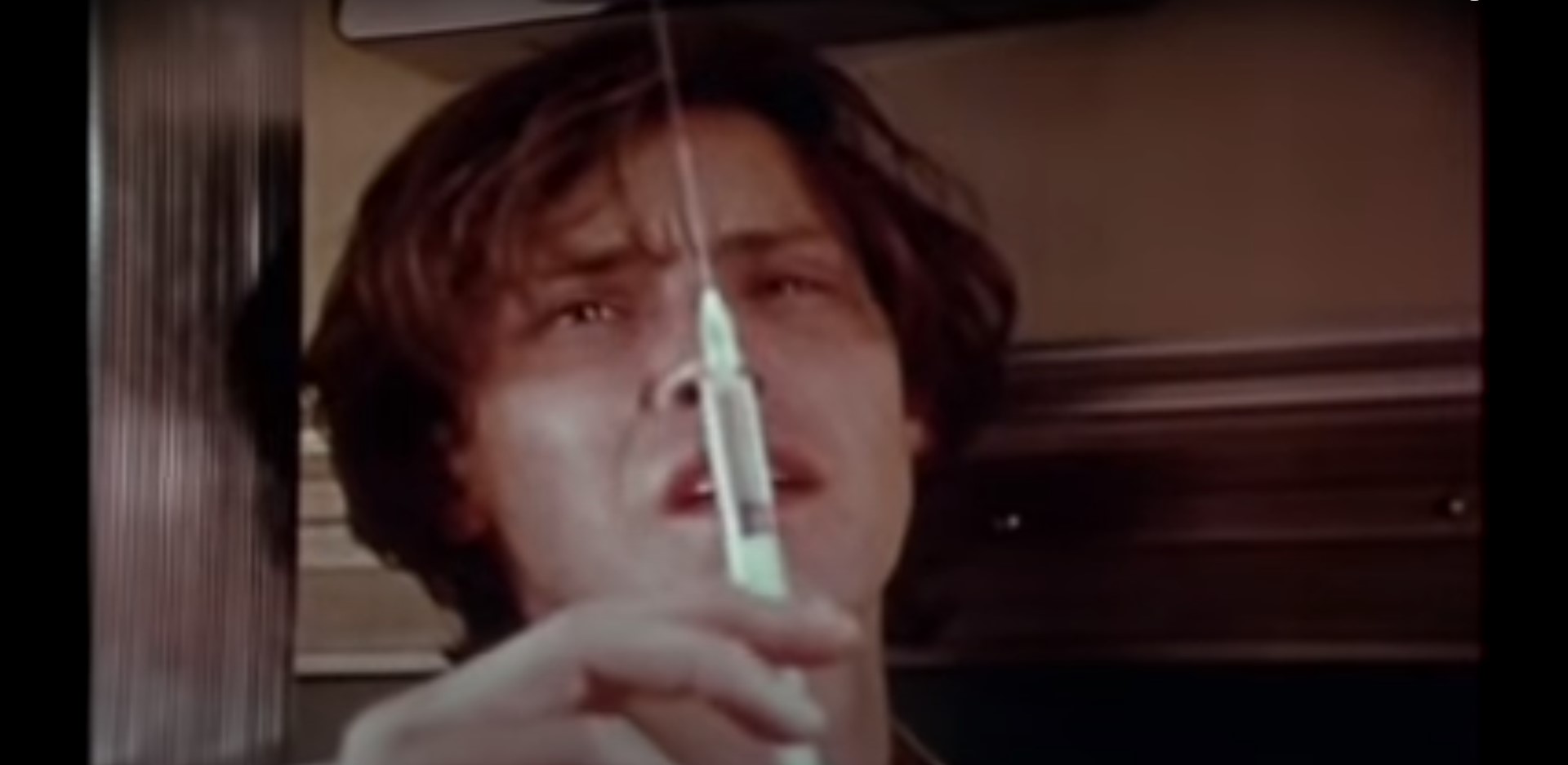
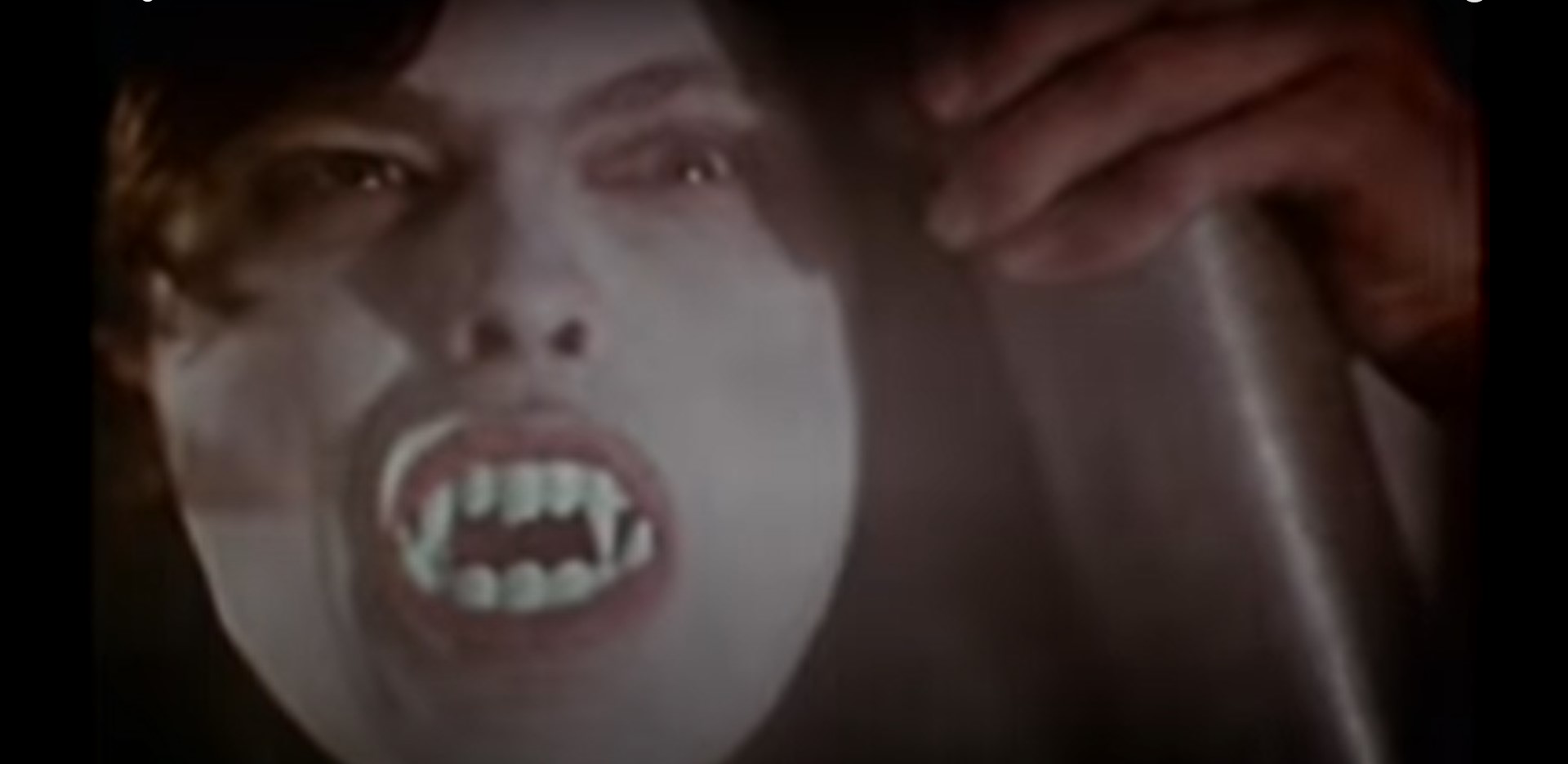
Martin, a young man from Indianapolis and upon recently lost his mother, travels by train to Braddock, Pennsylvania where he’s greeted by his elderly cousin Cuda, an old world believer that Martin has been selectively plagued by the family curse of vampirism and will take Martin in under his roof to cleanse his soul of evil, even if that means destroying him.  Though he doesn’t believe in the vampiric superstitions and the movie depictions, Martin truly believes he’s an 84-year-old vampire and does kill young, beautiful women to intimately drink their blood.  Being reserved and shy gives Martin an advantage to observe his potential victims from afar after gaining employment working as a delivery boy out of his cousin’s shop.  Cuda’s granddaughter, Christina, believes her lonely cousin’s mental illness is being exacerbated by grandfather’s archaic and draconian beliefs, fostered by a family history based off tradition rather than science.  When Martin meets an interested housewife on one of his delivery runs, the need to consume blood trickles when sex enters the picture, but also induces slipups in his well-oiled drug and drink operation whenever the need to feed becomes too much.

By now, “Martin” needs no introduction.  The father of the flesh-eating zombie, George Romero, delivered a neo-realism take on the vampiric mythology nearly 50 years ago in 1977.  “Martin” became the writer-director’s first all around filmic success after being royally screwed by the Walter Reade Organization for having failed to copyright the prints on the trailblazing and timeless classic “Night of the Living Dead,” the reason why you see so many Tom, Dick, and Harry remakes, revisions, sequels, and such of the 1968 black-and-white film that introduced zombies as flesh eaters, and a pair of box office failures that kept Romer in severe debt until slipping into business bed with producer Richard P. Rubinstein, the associate producer for Romero’s “The Amusement Park” and who would collaborate with Romero as a producer for the next subsequent decade years.  Filmed on location in the societal and industrial crumbling Western Pennsylvania town of Braddock, “Martin” remains one of George Romero’s quintessential and provocative pieces of work outside The Living Dead series under Rubinstein and Romero’s The Laurel Group production company.

In the titular role is the introduction of John Amplas who was discovered by Romero after watching Amplas in a play and the entire lead principal was reworked to accommodate Amplas boyish youth.  Amplas is instrumental to Martin’s success in a handful of ways:  the Pittsburgh native knew how to properly slink in an unsuspecting manner, he also didn’t overbear scenes and costars with a larger-than-life presence and could dip into this awkwardly retrieved guilt for the premediated murder to fulfill a need that either’s supernatural or unnaturally mental.  Amplas could walk that thin line that keeps the audience wondering how much Martin says and does is actually true or a misconception because of mental illness and this is coupled nicely with Romero’s direction, splicing in black-and-white scenes of gothic-laden, theater-esque vampire flashbacks that could either be a delusional reality or a very real backstory to Marin’s cursed heritage.  Polarizing external family forces in his elderly cousin Cuda (Lincoln Maazel, “The Amusement Park”) and age akin cousin Christina (Christine Forrest) combat on an emotionally taut and verbal levels between their corresponding character qualities of superstition and science that parallel Martin’s eventual damnation or salvation.  The principal trio are tightly compacted to strain the dynamic with a back-and-forth debate over which truth is behind Martin’s troubles.  Romero pens a good case for both by never fleshing out a legitimate truth all the way through to the end; instead, it’s a battle of save Martin from himself who understands the problem, wants to deal with it, but barely takes up arms to combat or even face his issues.  Special F/X legend Tom Savini, pre-trademark inky black mustache and goatee, makes his debut role as Christina’s boyfriend Arthur who serves only as a device to pull reason away from the table in a conflicted measure to pressurize Christina’s capacity beyond the limits of also caring for herself.  Eventually, Christina has to make a decision and, ultimately, choses herself to save, leaving Martin to fend against a sternly superstitious and old world Cuda.  Sara Venable, Roger Caine (“Dracula Exotica”), Donaldo Soviero, Francine Middleton (“The Love-Thrill Murders”), and Elyane Nadeau make up the supporting cast.

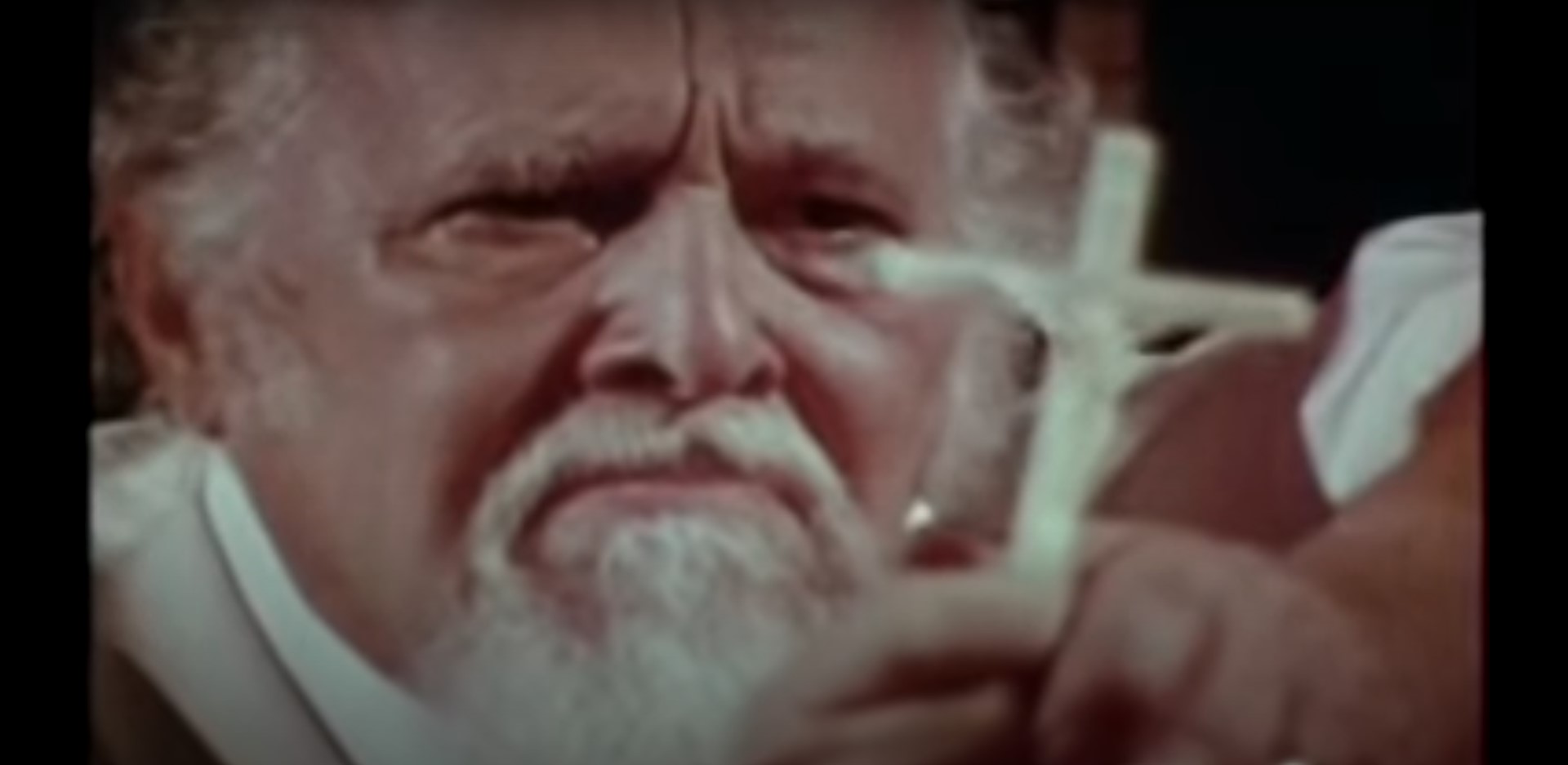
George Romero, again, redefines, or in a more fittingly descriptive – revamps, classic horror villainy that replaces the supernatural element with a realistic approach to weave the very fabric of horror into possibility while still hinting at something beyond the limits of reason.  “There is no real magic.  There’s no real magic, ever!” says Martin about the theatrical stereotypes used to display vampires in attempt by Romero to disenchant us from the ideologized mythos, the habitual characteristics, and the physiognomies of what we consider to be a night bloodsucker.  During that scene between him and Cuda, the words are potently effective in disapproving myths about vampires, but the words are supported with fact as Martin casually debunks garlic, crosses, and sunlight as vampiric weaponry at the expense of humiliating and entertaining Cuda.  “Martin” is at the forefront of being an allegory for loneliness and is a driving reason for presumably the real vampire’s gruesome habit to slice open wrists and drink blood.  Martin only targets young, beautiful women and becomes intimate with them while they are limp under sedation.  When he meets an equally lonely Mrs. Santini, a depressed housewife on the verge of an emotional collapse, and the two embrace each other with comfort against what dispirits them; disinterested in stalking her, Martin’s need to kill dampens and Mrs. Santini unhappy marriage in nullified by the young who listens more than speaks.  Maturity and youth meld together in a moment of peace between them but their bond still shows micro fissures of incompatibility that puts doubts into Martin’s 84-year, carefully planned practice and also doesn’t save Mrs. Santini completely from her too-little-too-late despair.  Braddock, Pennsylvania, a small town sinking into the slumps of becoming forgotten, is a once industrious backdrop integrated as a metaphor for being a forsaken place where things go to die.  Martin is sent to Braddock to paradoxically be cared for by a cousin determined to destroy him because of a family curse that afflicts select generations in what can be perceived as butting of heads between the defiance of angsty youth versus the traditions of an older individual set in the world with their linear ways of thinking.  

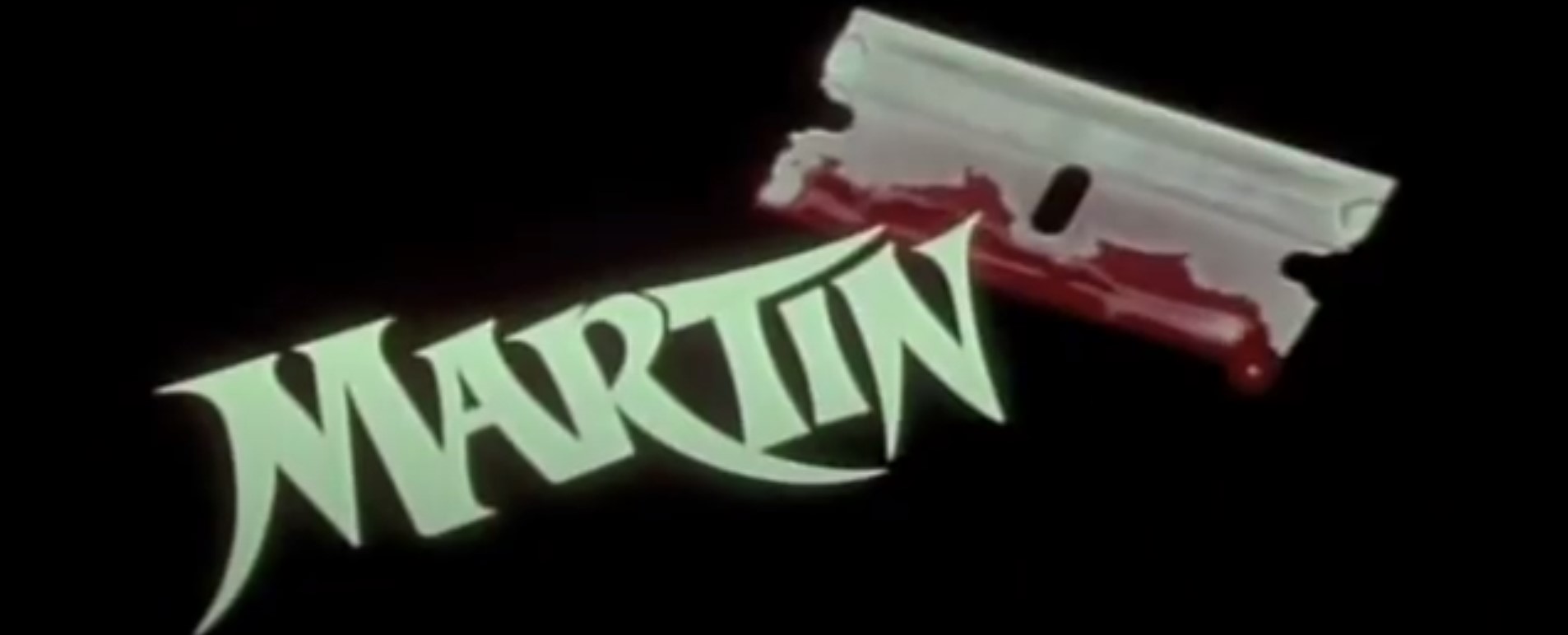
As aforementioned, “Martin” is a cult classic from one of the most notable masters of horror and as a film, “Martin” can stand on its own two feet on any format.  However, with that being said, UK home entertainment distributor, Second Sight, celebrates this early George Romero razor-edged thriller with a definitive 3-disc, 4K and Blu-ray release jammed back with software and firmware bonus content that fans can really sink their teeth into for a lifetime.  The limited edition UHD and Blu-ray O-slip box presents a 4K and 2K scan and restoration of a 35mm duplicate negative (note:  not from the original 16mm source) that has been supervised and approved by director of photography Michael Gornick and presented in the Academy aspect ratio of 1.37:1.  Considering the blown duplicated source of a 16mm grade, the 4K UHD scan on the BD66 won’t live up to 4K potential, as some may expect.  There’s quite a bit of varying levels detail discernibility, some shots look better than others, but the overall restoration renders a better than it’s ever looked product with natural grain and damaged reduced to some blue stock flaring around the side and edges, especially during night scenes.  Shadows looked deeper than previous versions, meaning that tenebrism isn’t lost amongst a softer image but rather creates depth with the additional of better sharpened edges to outline objects between the light source  Some speckle debris filters through at times but not enough to cause major concern with the overall experience watching and enjoying the restoration that has HD enhanced grading to make blood that richer technicolor coral color used in my subsequent Romero “Living Dead” films up to “Day of the Dead.”  The Blu-ray’s 2K works just as well due to the scrappy source equipment of what the budget allowed, delivering a fine product of the best transposed transfer known to fan kind and beating out the Lionsgate’s warming grading with a cooler, more hardline detail and delineation picture. The massive release comes with three audio options – an English DTS-HD 5.1 surround sound, an English DTS-HD 2.0 stereo, and an English DTS-HD 1.0. Though Martin audiophiles will likely gravitate toward a multiple channel output, “Martin” is one of those select features that does better in a less-is-more return by not forcing the limited and stronger signals, such as the dialogue and Donald Rubenstein’s experimentally spiritual score, to encoding competition with the milieu ambient and boom recorded sound effects, that for the most part, are background support for the bigger, better one-two punch of clean, clear, and presently full dialogue and a consciously curated soundtrack to walk with Martin every step of his journey. There’s a pinch of popping and a low-emanating droning that very discreet and negligible that won’t affect the experience on bite…I mean bit. English SDH are optional. Bonus materials are what shape the Second Sight releases to be greatly desirable amongst fans as the company continues to produce high-quality encoded bonus features as well as carefully and professionally organized tangible items inside the box. Both 4K UHD and Blu-ray have the same encoded bonus features that include four audio commentaries of old and new. The two archived commentaries include George Romero, John Amplas, and Tom Savini in one set and the other with Romero, Savini, Richard P. Rubenstein, and Michael Gorrick. The new commentaries are with Kat Ellinger, editor-in-chief of Diabolique Magazine, and the second with the recently deceased film curator, Travis Crawford. A vintage 2004 documentary from the Lionsgate release is included in the set with remarks from Romero, Savini, Gorrick, Donald Rubenstein, and Christine Forrest along with a new documentary echoing much of the 2004 doc, in collaboration with Severin Films, with John Amplas, Michel Gorrick, and Tom Dubensky strolling through Braddock, which hasn’t seemingly changed from the depths of poverty, on a raining day recalling nearly every moment of production during principal photography. The new doc includes other insights from Forrest, Savini, Tony Buba, and Sarah Venable in what feels like a complete celebration and overview of their entire journey through Romero’s personal favorite film. Donald Rubenstein also has a new interview discussing his score and meeting and working with Romero on a positive level. The disc features round out with one of Tony Buba’s short films “J. Roy – New and Used Furniture” revolving around the town of Braddock and the trailer, TV and radio spots. The third disc is the CD form of Donald Rubenstein’s soundtrack laid out in 22 distinct musical numbers. The limited-edition exclusive contents include a rigid O-slip case with a simple, yet effective sterile while and red font color contrast with MADE IN U.S.A. augmented razor blood with vampire teeth and blood dripping from the bottom right corner and a blood dripping cross squarely centered on the back. Inside the slipcase, a thick 104-paged color booklet with new in-depth essays and insights from Daniel Bird, Miranda Corcoran, Heather Drain, Kat Ellinger, Andrew Graves, Alexandra Heller-Nicholas, Elena Lazic, Stephen Thrower, Jon Towlson, Simon Ward, Tony Williams and an interview with Tony Buba by Travis Crawford. The booklet also contains colorized, behind-the-scenes photos of production and numerous one-sheets, promotion poster and ads, and a beautifully, expressionistic illustrated front and back cover. Adam Stothard illustrates 5 character lobby cards, including John Amplas’ Martin, Christine Forrest’s Christina, Tom Savini’s Arthur, Lincoln Maazel’s Cuda, and George Romero’s Father Howard. All 3 disc arts are the same as the front cover the release and contained a trifold, punch-lock case in reverse colors of the slipcase. The 4K UHD is region free but the Blu-ray is confirmed region locked B so you’ll need a region free or region B player. The runtime clocks in at 95 minutes and is certified 18 for sexualized violence and sexual threat. Second Sight must be a Disney fan with their monstrous beast of a limited edition that is also a thing of beauty; “Martin” deserves every square inch of this physical and digital display of expressionistic vampirism of underrated performances and from the mind’s eye of a dauntless George Romero, unafraid to take risks, show blood, and understand the human condition.

“Martin” Limited Edition Second Sight Release Available at Amazon.com! 

Vengeance Knows No Price on EVIL’s Head Alive. “L.A. Bounty” reviewed! (Scorpion Releasing / Blu-ray)

“L.A. Bounty” on Blu-ray and Available to Purchase at Amazon.com

When a Los Angeles mayor candidate is kidnapped from his home at gunpoint, suspicions immediately turn to the incumbent mayor in what seems cheap move to remove a rival, but the abduction is no snatch and grab for a quick buck and political advantage.  All-around prevailing bad guy Tim Cavanaugh is the spiritually unhinged mastermind orchestrating the scheme behind the scenes.  When the police don’t have a clue what to do next other than to wait for kidnapper demands, bounty hunter Ruger steps into the fold with a coerced hot tip about the kidnapping plan.  With a score to settle in the death of her ex-partner, Ruger is hot on Cavanaugh’s tail, foiling multiple assassination attempts on a witness, the mayor candidate’s wife, by Cavanaugh’s men, and determined to put an end to Cavanaugh once and for all.

If you’re a Sybil Danning fan whose had enough of seeing the blonde genre film icon in skimpy, or even sans, clothing, then “L.A. Bounty” should be your next upcoming feature with a leather-cladded Danning, in a nearly dialogue silent performance, blasting away henchmen left-and-right with a pump action shotgun.  The 1989 action thriller is penned by Michael W. Leighton (“Rush Week”), based off a story from the “Chained Heat” and “Howling II …. Your Sister is a Werewolf” cult actress and directed by “Power Ranger” franchise director Worth Keeter.  Before made-for-TV round house kicks, Zordon, and Kaiju monsters and machines that has become the mega “Power Ranger” franchise, Keeter had made a modest life out of obscure indie horror with “Dogs of Hell,” worked with buxom blondes such as Pamela Anderson in the thriller “Snapdragon,” and even dabbled in the exploitation ventures of Earl Owensby productions with “Chain Gang.”  Filmed in and around the Los Angeles area, “L.A. Bounty” is the ex-con gone vigilante with a vendetta from the production team of the Danny, Robert Palazzo, and S.C. Dacy founded Adventuress Productions International as well as a production of Leighton & Hilpert Productions, with Michael Leighton producing, and presented by the Noble Entertainment Group.

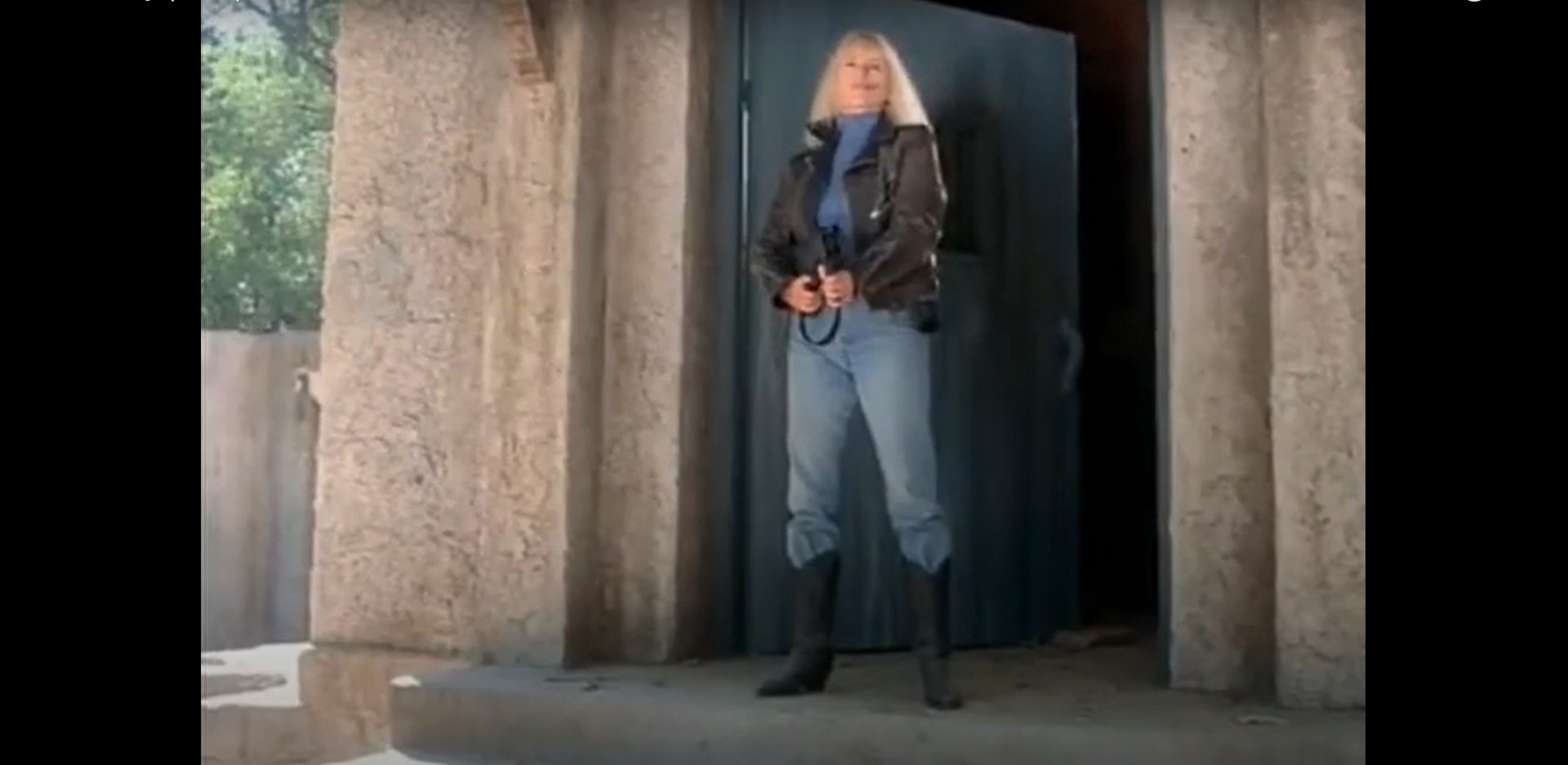
As one of renowned queens of scream, Sybil Danning, is a recognizable icon amongst low-budget horror fans as well as cheap thrill actioners and sexy thrillers.  So much so, that her fame has granted her the opportunity to work on a passion project where she can be the Sylvester Stallone or Chuck Norris shoot’em up action hero that was a popular juggernauting ilk in the 80’s.  Cladded in leather and denim, Danning plays the silent, strong type with emphasis on the silent. Her character, an ex-cop named Ruger now a bounty hunter looking to even the score with Cavanaugh who ruthlessly wasted her partner, has roughly three lines in the entire 1 hour and 25-minute runtime, but Ruger is in full blown view of being badass with a large gun and unafraid to use it on mindless grunts. Danning coldness compliments the contrary with Wings Hauser’s babbling, manic psychopath. The “Mutant” and “The Wind” actor’s sordid bad guy Tim Cavanaugh has a special relationship with God, warped by his twisted nature for organized chaos, but is unable to keep trusted entourage due to the fact he keeps killing them for not being able to nix Ruger. Hauser is fantastic to watch as the unconventional villain of unpredictability. For instance, Cavanaugh never leaves home base, a storage warehouse full of crates and containers and apparently inside those crates and containers are mechanism and gadgets to thwart off unwelcomed guests. As Hauser improves dancing through the hallways and displays erratic behavior while painting, we’re starting to realize Cavanaugh’s mindset is one we’ve seen before but without the Joker face paint and the act is entertaining and pairs well with Danning’s stoicism. While Ruger and Cavanaugh are obviously the main course, veteran TV actor Henry Darrow (“Tequila Body Shots”) and a slightly younger veteran TV actress Lenore Kasdorf (“Amityville Dollhouse”) appetize in between with sticking to the script of a routine kidnapper scenario, offering little to motivate the direction the story itself works toward itself. Robert Hanley, Van Quattro (“Agnes”), Bob Minor (“Commando”), Frank Doubleday (“Escape from New York”), Robert Quarry (“Count Yorga, Vampire”) and Maxine Wassa (“No Strings 2: Playtime is Hell”) as Cavanaugh’s nude muse for his art.

“L.A. Bounty” is about a bounty hunter tracking down an old adversary for retribution but other than a few pieces of wanted paper notices, there’s really no other indication that Ruger is like Dog Chapman the Bounty Hunter although the platinum blonde hair would suggest otherwise.  Sybil Danning is definitely sexier in leather and denim than Dog and sure does talk a whole lot less but as a part of general audience pool and with a title that suggest such a profession, wouldn’t it make more sense to build up Ruger’s caseload with a few introductory chases before we’re chin deep in the Cavanaugh obsession?  Also, that motivational drive that sends Ruger down a path of payback lacks substance and is sullied by a script snafu of Ruger having a flashback of Cavanaugh executed her partner despite not being present.  Fortunately, “L.A. Bounty” is not a feeble farce of an action flick.  Danning is a striking, statuesque presence, the squibs exhibit a bloody gun blazing firefight, and if you’re a disappointed perv in Danning keeping her clothes on this time around, there are a handful of brief nudity scenes from other actresses sprinkled throughout.  One of the other highlights is the eclectic score arrangement by then “Heart” guitarist Howard Leese and John Sterling of “Revenge of the Cheerleaders.”  With a Jan Hammer-esque synth-tense wave, a cop melodrama guitar riff, presumably provided by Leese, and a contemporary tribal beat, “L.A. Bounty” has immense range for every scenario with its own personal composition that’s high energy, catchy, and fits the action.

“L.A. Bounty” differs from any other role in the Sybil Danning canon that’s mostly action and barely any talk and is dead set on broadening the cult actress into the popular rogue cop role of the late 80’s-early 90’s. Scorpion Releasing presents the original MGM vault material of “L.A. Bounty” on a high definition, 1080p, AVC encoded Blu-ray release with an anamorphic widescreen 1.85:1 aspect ratio. The 35mm stock has retained its blue-ribbon quality from over the years and the transfer really accentuates the near timeless picture with a brilliant, well-balanced, color palette, an even contrast for production lighting to properly illuminate around the faint and dense shadows, and no noticeable meddling against a natural grain with a pleasant texture scheme. The English DTS-HD stereo mix is mighty donkey that might be lite but packs a punch when it kicks. The release could benefit from a multi-channel surround sound output to give a tumultuous sense of melee gun battles. Dialogue is clean, clear, and ample with good depth definition and plentiful range in ambience. Optional English SDH subtitles are available. What’s essentially a bare bones release, the Blu-ray only comes with chapter selection and setup options. The physical attributes echo the supplementary material with a traditional Blu-ray snapper with outer latch and cover art based off the film’s original one sheet. The film is rated R, is region A hard coded, and has a runtime of 85 minutes. “L.A. Bounty” remains a step or two above the Andy Sidaris guns, girls, and giant explosions fare with gilt-edge performances and stylistic avenues representing the best of the originating decade in what is the most divergent film of Sybil Danning’s typically typecasted career.


Hunt down “L.A. Bounty” into Your Sybil Danning Collection! Purchase here!