Rage EVIL Leads to A Legion of Drone Dwarfs! “The Brood” reviewed! (Second Sight / 4K UHD)

“The Brood” Available Now from Second Sight!

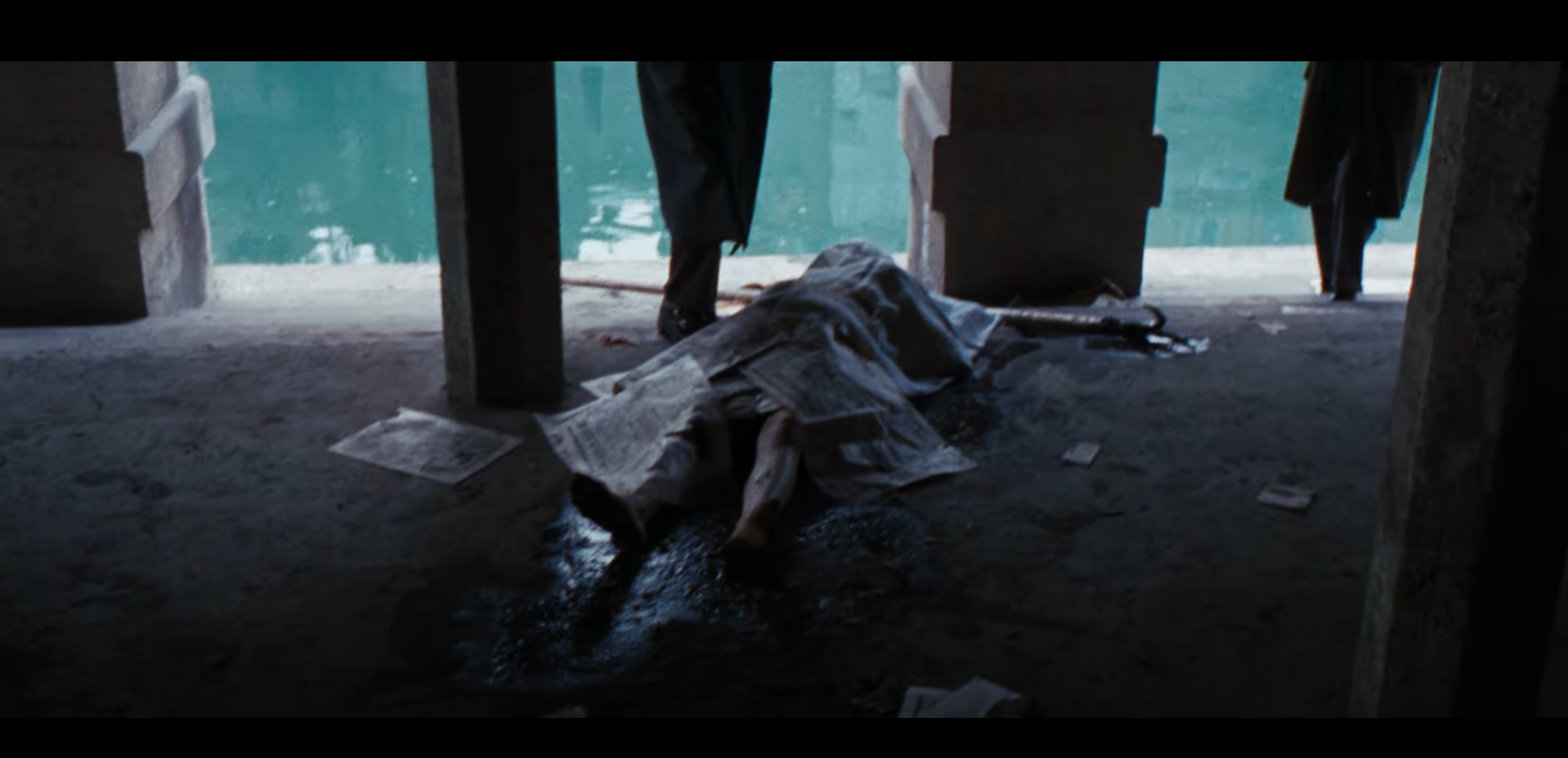
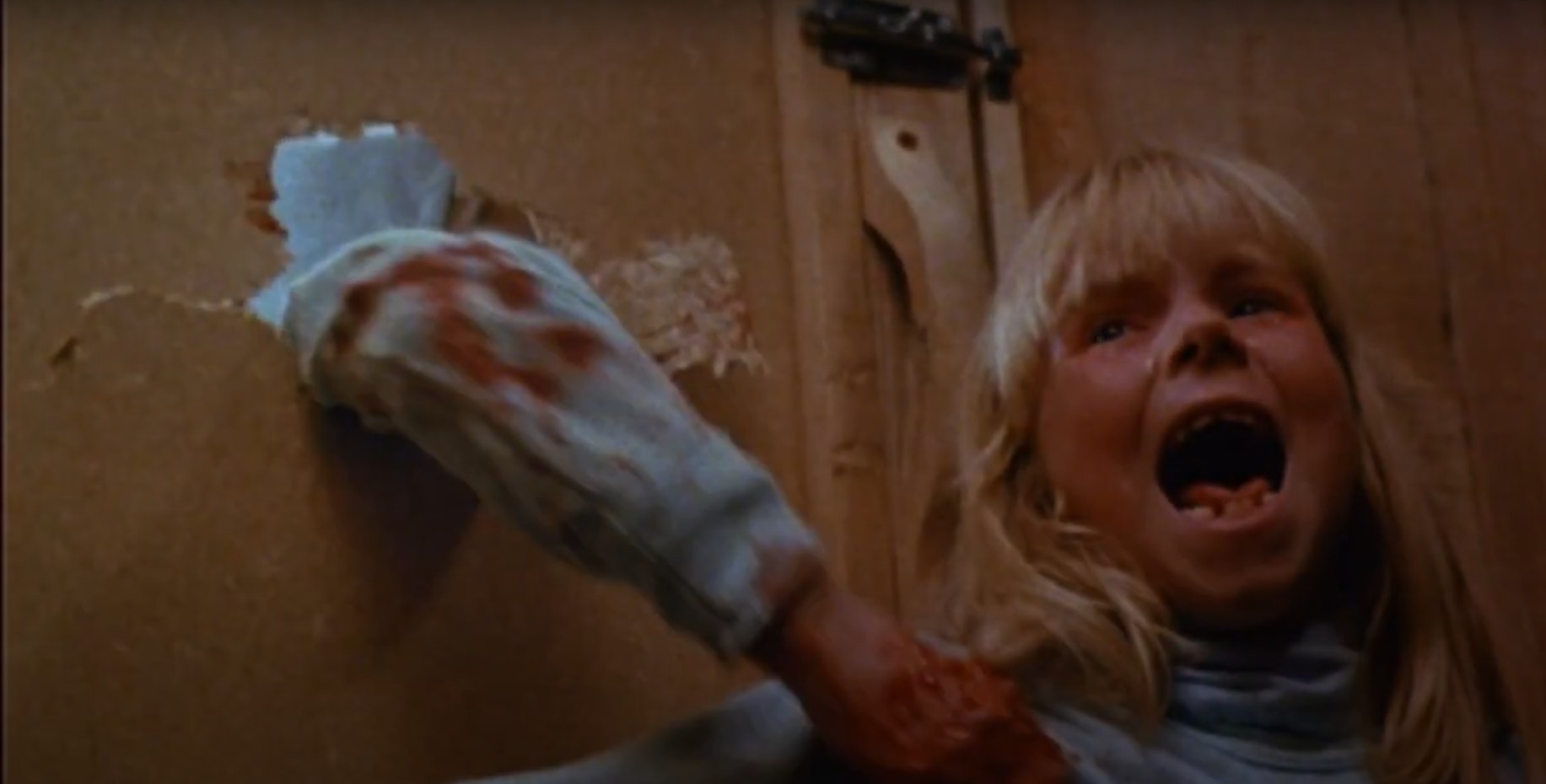
After a series of mentally abusive behavior, Frank Carveth’s wife Nola resides under the unorthodox psychology of Dr. Hal Raglan whose controversial impersonation techniques to break down his patients’ dissociative psychological hangups and destructive blocks.  After months of therapy and witnessing Dr. Raglan’s methods in action, Frank is ready to pull the plug on the doctor’s sideshow sessions he deems are doing more harm than good when his daughter shows signs of physical abuse after a visit with her mother.  The prolonged verbal bout to get his wife out of Raglan’s care leads to Frank confiding in Nola’s mother who is found brutally murdered soon after.  When Nola’s estranged father comes into town to oversee the burial arrangements, he’s also brutally murdered.  Frank begins to connect pieces, theorizing that Dr. Raglan’s procedures and the murders may be linked and as he investigates further, the truth is more terrifying than he could ever imagine. 

Surging with emotional turmoil through a bitter divorce with ex-wife Margaret Hindson, Canadian body-horror director David Cronenberg pulled the rancorous inspiration from that turbulent time to write the originial screenplay for “The Brood,” a 1979 released thriller between an estranged couple, the effect of their ascending troubles upon their only child during the separation, and the sort of radical and systematic behaviors and practices used to reform a relationship bond that actually divides the emotional expanse even further.  Sprinkle a little of the unknown and grotesque abilities of unnatural corporeal world in there and you have yourself one hell of a dysfunctional and undomesticated horror only the unconventional David Cronenberg could conjure.  “The Brood” is produced by Claude Héroux, who would go on to produce Cronenberg’s next series of films, “Scanners” and “Videodrome,” and the Ontario filmed production is a studio venture from the CFDC (Canadian Film Development Corporation), Elgin International Films, and Mutual Productions.

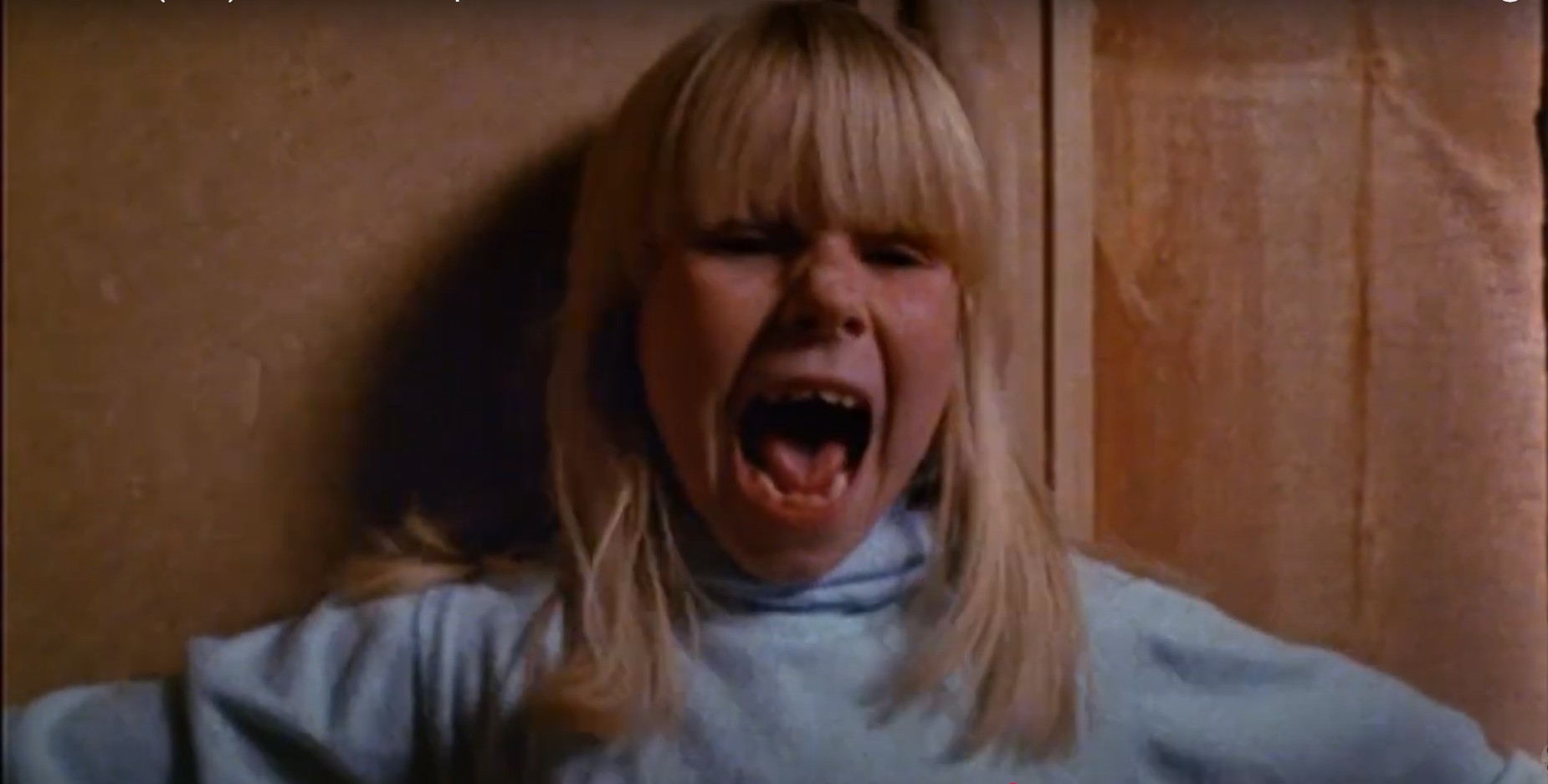
Art Hindle is in the role of Frank Carveth, a father initially skeptical and frustrated with his wife’s supervised treatment and care.  The “Black Christmas” and “Invasion of the Body Snatchers” actor Hindle plays the role of a hinged investigative husband-parent involved into something far more unbelievable than initially imagined.  Next to his on screen dazed and mentally tarnished wife by Samantha Eggar, of “The Exterminator” and “Demonoid,” Hindle enacts normal responses that carry over into extreme situations when those around him – his mother-in-law (Nuala Fitzgerald, “Obsession”), his father-in-law (Henry Beckman, “Side Roads”), and his daughter’s teacher (Susan Hogan, “Phobia”) who might have had a little something-something with while on the rocks with the misses – dies a violent death at the hands of kid-sized mutants that resemble, partially, his own daughter Candace (Cindy Hinds, “The Dead Zone”).  As Nola Carveth, Eggars is only present in a few scenes alongside Dr. Raglan, played by the formidable British actor Oliver Reed (“Paranoiac,” “Gladiator”), as a staring into space, emotionally compromised woman struggling to cope with her past that makes her angry and upset and, in turn, makes her inexplicably conjure do-bidders in the birthing means of advanced evolution or in a parallelism to eusocial insects, like bees or ants.  Reed is the monkey in the middle of all of this between fending off Frank Carveth who challenges the results of his unorthodox psychological methods while also using those methods to unearth the root cause of Nola Carveth’s strange and unusual behavior and, eventual, psychic abilities.  Reeds delivers his typical stoic indifference which makes him ideal for a confident character of the scientific community eager for results rather than feeding his motivations with emotional fodder by empathizing with Carveth’s concerns.  Gary McKeehan (“Rabid”) and Robert A. Silverman (“Naked Lunch”) costar.

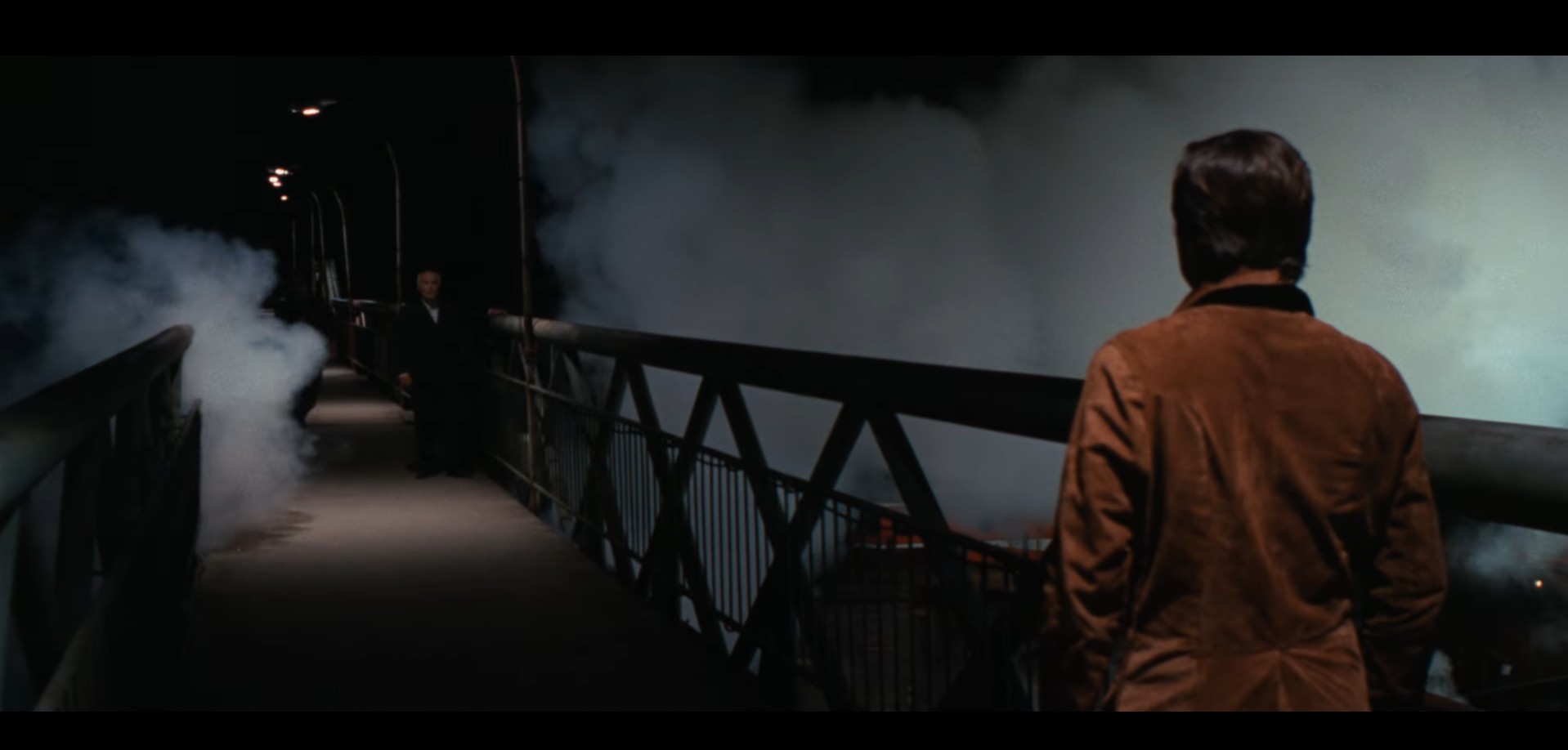
In his 50-year plus career, David Cronenberg has evolved in style, substance, and story that dip into more of alternate universes and deliver new ways to blend the future into an organic composite with commercial and social sub context.  While technology and personal and professional growth have developed the director into what he has accomplished and known for today, especially on the verge of his latest release with the living and dead connection theme in “The Shrouds,”  the core of what David Cronenberg does best and still does today has an etiology leading back to his earlier work and “The Brood” is definitely an archetype of his niche.  Cronenberg works the narrative up to his reveal of body horror, and “The Brood” is dangerously on the edge of being atypical, subjecting audiences to more of a buildup in the story and the delimitation of character  disclosure without a steady course of the maladjusted, mutated or modified human body as the villain or the escape, only for that theme to be quasi hinted and then unveiled at the end in a shocking reveal.  “The Brood” plays more of the slasher tones, using the children, dwarfs, or however you want to describe the little, mutant minions to be unknown villain tropes, even when one is laid up on a morgue slab for examination of its biology, or lack thereof.  Cronenberg’s directed ambiguity tees up one of the best endings of his career and, perhaps, even horror cinema as “The Brood” is queen sized stomach-churner, literally.

David Cronenberg’s “The Brood” arrives in 4K on a Ultra HD Blu-ray from UK boutique label Second Sight Films.  The BD100 is HEVC encoded with a 4K resolution or a pixel count of 2160 with Dolby Vision HDR10 and presented in a widescreen 1.85:1 aspect ratio.  On the back cover, the 4K restoration is approved by David Cronenberg.  There’s definitively a more positive treatment of the restored transfer that brightens with a slightly tweaked color grading compared to other DVD or Blu-ray releases, improving delineation as well as rectifying intended details to burst through what’s been long frustrating by a darkened wall of low-resolution definition.  Retaining and sustaining cinema coarse grain, the picture looks and feels incredibly natural without the presence of compromising touchups and smoothing overs that do more harm than good in the plastic-like approach to restoration.  The UHD reinforces the coloring with vibrant richness and range, boosting the once little Canadian film that could into an expensive-appearing optical overhaul that puts to shame previously shelved videos.  Audio fidelity is too retained with a LPCM 1.0 mono that although funnels through a single output is more than an adequate mix all in thanks to the competent sound engineering of Peter Burgess and team to amalgamate recorded sound and post-production ADR into a brawny singular unit that meshes nicely.  Dialogue foots the bill as a clean and clear presentation, the ambient sound design renders distinctly over without ambiguity, and longtime David Cronenberg collaborator and friend Howard Shore conducts an orchestra score that breaks through and keeps the course with an unforgettable amount of tension build.  English subtitles are available.  Special features are aplenty with a new audio commentary by film critics and historians Martyn Conterio and Kat Ellinger, a second commentary with film academic William Beard, interviews with actors Art Hindle and Cindy Hinds moderated by Fangoria’s editor Chris Alexander Meet the Carveths, an interview with executive producer Pierre David Producing the Brood, interview with cinematographer Mark Irwin The Look of Rage, interview with composer Howard Shore Scoring the Brood, an interview with actor Robert A Silverman Character for Cronenberg, a new video essay by film journalist Leigh Singer Anger Management: Cronenberg’s Brood and Shapes of Cinematic Rage, and an archived David Cronenberg interview The Early Years.  The standard Second Sight release comes in the traditional 4K UHD black Amaray case with new unnamed, unsigned illustrated cover art.  The UK certified 18 film is presented region free in this release and has a runtime of 92 minutes. 

Last Rites:  Cronenberg’s play on the word Brood is next level genius with litter rage as a result of mental health and a broken home.  The director’s filmic roots have proved time-and-time again his mastery of moviemaking as his body horror and thought-inducing stories, intermixed with social commentary, are complex visual and narrative devices braised an organic edge. 

“The Brood” Available Now from Second Sight!

Black Mamba Wriggles Only for EVIL! “Venom” reviewed! (4K UHD and Blu-ray / Blue Underground)

Slither into “Venom” on 4K UHD and Blu-ray Combo Set!

American family, the Hopkins, live in London and while Mr. Hopkins travels the globe to attend to his international hotel business, Mrs. Hopkins and son Philip, live wealthy in their three-story row home along with visiting, Safari-expert grandfather Howard Anderson.  When Mrs. Hopkins plans a trip to see her husband after a month a part, she’s worries for Philip’s severe asthma attacks but with the assurances of the grandfather, the housekeeper, and Philip’s rudimentary zoo in his room, full of furry creatures in vivarium cages, Mrs. Hopkins half-heartedly boards her international flight.   Not everything is going to fine, however, when the housekeeper schemes with the family chauffeur and an Interpol criminal Jacmel to kidnap Philip for ransom.  The foolproof plot commences to plan with departure of Mrs. Hopkins and the arrival of Jacmel but one little mishap causes the plan to quicky unravel when a Black Mamba, one of the most aggressive and poisonous snakes in the world, is mistakenly crated and provided to exotic animal enthusiast Philip instead of his harmless ordered common variety garden snake and when the Black Mamba gets loose, it slithers in the house’s ventilation system, the house they’re all hold up in when the police swarm the outside perimeter. 

What was once going to be a Tobe Hooper (“Texas Chainsaw Massacre”) directed production before his eventual and sudden departure from the film after a few weeks, the 1981 crime-thriller with a creature feature twist, “Venom,” is then picked up by the late director of  “The Blood on Satan’s Claw,” Piers Haggard, to finish the Robert Carrington (“Wait Until Dark”) adapted screenplay off the Alan Scholefield novel of the same title.  The American screenwriter Carrington writes nearly a faithful iteration of the Scholefield novel but with more emphasis on the serpent’s over-lurking presence as an important reptilian character to the story, serving as a catalyst for the upended kidnapping plot and determining the fate of certain characters.  The UK film is American produced by Martin Bregman, the spear runner for “Dog Day Afternoon” and “Serpico” as well as “Scarface” and “The Bone Collector” later in his career.  Morison Film Group served as production company on the mostly LLC entrusted venture.  

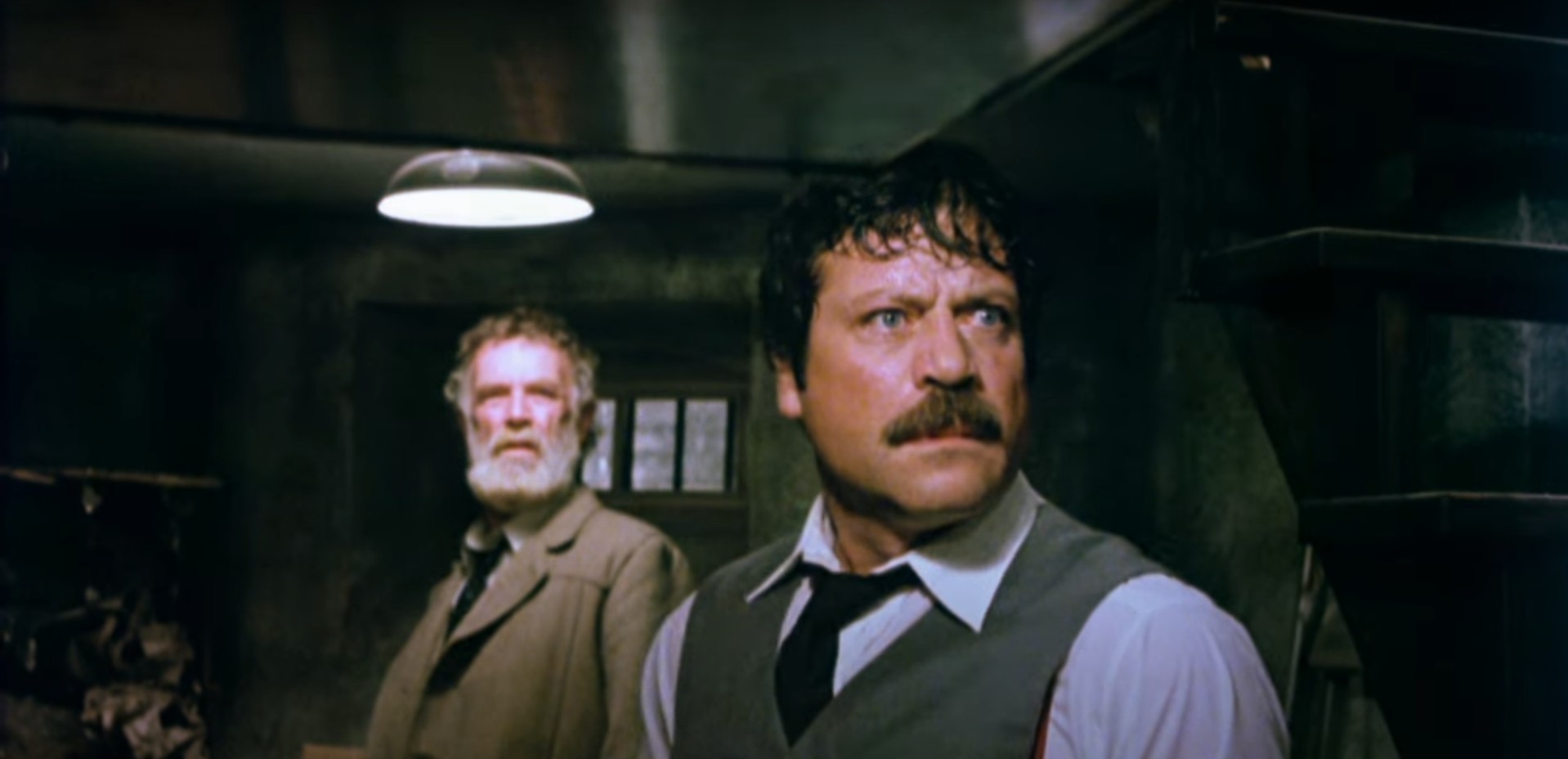
If the American Tobe Hooper did helm this picture, directing Leatherface as an actor would been child’s play in comparison to what would had been if he had to corral a pair of strong-willed, A-type personality Europeans in Germany’s Klaus Kinski and Britain’s Oliver Reed, both with well-known and formidable career of not only in genre films but also to be problematic and difficult to work with.  The “Nosferatu the Vampire” and “Aguiree, the Wrath of God” Kinski was perhaps mostly misunderstood for his not understanding of inflections, innuendos, and gestures of the English language that made him often sounds gruff and antagonistically questioning the director’s every choice whereas the “Paranoiac” and “The Brood” Reed was plagued with alcoholism and was equally gruff in his own right as a dedicated actor saturation with austere method stratagem.  Yet, on screen, Piers Haggard manages to get the two hurricane forces to be on-the-edge cooperating, backed-into-a-corner kidnappers without cutting any tension when interacting with each other.  Distinct in demeanor, Kinski as a calm, trench coat KGB-type and Reed as an anxiously and trigger-happy, hotheaded brute put on a good show in their respective performances and beat the odds of two notorious personas colliding.  Haggard doesn’t coddle them either and lets them loose to exact the carrier in their own right even if off-book and they’re even more vilified by taking hostage a young boy Phillip, the introduction of Lance Holcomb (“Christmas Evil,” “Ghost Story”), his Safari-seasoned grandfather Howard Anderson, played by beard-laden and serial gesticulating Sterling Hayden (“Dr. Strangelove,” “The Long Goodbye”), and a zoo toxicologist named Dr. Marion Stowe who is caught in the middle when checking up on the mishap switcheroo of the snake, played by Sarah Miles (“Blow-up”), neither in shape or in vigor to be a proactive hero.  The no-nonsense Police Commander William Bulloch, shoed with “The Exorcist III” actor Nicol Williamson, a brazen candor and stoic expression with Williamson offering frank wit and a sarcastic dryness that barely gets him one step into the house; instead, it’s the Black Mamba that’s the real and unintentional hero that seemingly only has a fork tongue and fangs for villains, leaving the other hostages alone.  “Venom’s” also has Susan George (“Straw Dogs”) as the traitorous housekeeper, Mike Gwilyn, Paul Williamson, Hugh Lloyd, and the first Butler of the 1980s-1990s Batman quadrilogy Michael Gough playing real life snake wrangler David Ball in tribute. 

From the pages of Alan Scholefield’s novel to the big screen, “Venom” has a slithery way about slipping into between the crosshairs of a crime-thriller and a venomous creature feature.  Leading “Venom’s” charge is an undoubtedly great, if not iconic, cast giving their all to a farfetched plot of bad luck Ophidiophobia.  While the snake seems to have heat vision eyes only for the Klaus Kinski, Oliver Reed, and Susan George trio of kidnap-for-ransom criminals, who amongst themselves are in a deceitful love triangle that’s doesn’t quite come to a head as one would expect, there’s no animal kingdom peril to the other victimized threesome who, on a physical, first glance surface, are less equipped to handle a dangerous snake with a young, asthmatic-plagued boy, an elderly grandfather, and a nerve-bitten woman but, in reality, Phillip Hopkins, Howard Anderson, and Dr. Marion Stowe are respectively the best equipped to handle the black mamba as an small animal atrium hobbyist, a former African safari survivalist and animal expert, and a venomous snake toxicologist.  Perhaps, this is why the Black Mamba avoids these three at all costs and never interacts with them on a perilous level.  The fantastical mist that’s sprays us lightly with a crimefighting snake has comical properties that standout against what is a palpable thriller involving an international criminal, cop killing, child abduction, and the mutilation of a corpse. 

Blue Underground continues to update their catalogue with a 2-disc, 4K UHD and Blu-ray combo set of ‘Venom.” The UHD is HVEC encoded, 2160p ultra-high-definition, BD66 and the Blu-ray is AVC encoded, 1080p high-definition, BD50. In regard to picture quality, both formats are nearly identical transfer that’s stems from an all new 4K 16-bit restoration from the original 35mm internegative, with the UHD receiving Dolby Vision HDR. UHD is slightly sharper around delineation when gliding between dark and light, which is often inside a merge of a half-lit house to draw more tension toward the potential presence of a deadly snake. The 1080p presentation also provides a pleasing clarity that offers little to negatively note. Color grading and saturation between the two formats show signs of varying quality by a thread with the 4K saturating that much more intently across the board with a better control over the grain levels with the Blu-ray appearing a touch thicker for the pixels to flare optically. The native 4K and 1080p come with an English Dolby Atmos as well as options for either an English DTS-HD 5.1 or a DTS-HD 2.0 stereo. Speaking only to the Atmos, the all-encompassing mix shepherds in a clean, discernible quality without any audible seams. Skirmishes, dialogues, and all the commotions in between find isolated channels of distinction that can put you immerse you into the action. And there’s plenty of action to be had coupled with a Michael Kamen’s brass horn and string score that’s both memorably building with excitement and thrilling that preludes Kamen’s orchestrated composition work of “Die Hard,” starring Bruce Willis. Despite the circumference of sound spaced mostly in interiors with a hodgepodge medley of a street full of police, reporters, and gawkers, the dialogue is equally distinct, discernible, clean, and clear without signs of hissing and crackling strains. Subtitles included are in English, French, and Spanish. The 4K special features include a new audio commentary with Film Historians and Blue Underground commenting regulars Troy Howarth, Nathniel Thompson, and Eugenio Ercolani, an archived commentary with director Piers Haggard, and film trailers. The Blu-ray disc contains the same commentaries and trailers but extends further with new exclusives in an interview with editor-second unit director Michael Bradsell Fangs For the Memories, an interview with makeup artist Nick Dudman A Slithery Story, a film historian point of view interview with British critic and author Kim Newman, and an interview with The Dark Side’s Allan Bryce providing his in-depth two cents and historical surveying. TV Spots are finish out the encoded extras. “Venom” 4K and Blu-ray combo set is physical appeasing to hold and behold with a muted black slipcover with tactile elements on both sides of embossed letters and stark coloring that’s striking in its simple snake fang design arraignment. The black, thick Amaray case has the original “Venom” artwork with the optional reverse cover art. I’m not a fan of the inside design that houses a disc on both sides as there is no room place for 18-page collectible, color picture booklet which just floats inside. The booklet features an essay by Michael Gingold, cast and crew acknowledgements, and chapter selection on the back. The discs are pressed with one or the other cover arts. This gorgeous-looking release, on the outside and inside, comes region free, has a runtime of 92 minutes, and is Rated R.

Last Rites: “Venom” might have been snakebitten back when selling book adaptations of crime capers stopped by a single snake might have seemed farfetched but, today, the 1981 film remains a cult classic of the ophidian nature being one of the earliest serpentine creature features with an imposing, impressive cast. Blue Underground proudly presents the film with a new, and improved, ultra high-definition release.

Slither into “Venom” on 4K UHD and Blu-ray Combo Set!

Low Box Office Attendance Won’t Stop This EVIL From a Having a 4K Release! “Zyzzyx Road” reviewed! (Dark Arts Entertainment / 4K UHD and Blu-ray)

“Zyzzyx Road” Collector’s Edition Now Available on Amazon.com!

Tax accountant Grant has become an unfulfilling, steady husband and father bred by many years of walking the straight line.  When he meets the young, hot Marissa while gambling in Las Vegas, Grant quickly becomes enamored by the youthful blonde with the two of them ending up in a hotel room together, but when Marissa’s violently jealous boyfriend Joey breaks into the room, Grant inadvertently kills him in self-defense.  Eager to do anything for Marissa, the once unadventurous accountant lugs Joey’s corpse into the back of his car and the two drive hours through the night to the middle of the Las Vegas desert off Zyzzyx Road in attempt to bury him.  Intermittent visions and voices drive Grant to put into question Marissa’s intentions and the death of Joey, whose has suddenly absconded the trunk and is out for blood for jilted revenge, puts a snag into his plan of being with Marissa forever. 

Infamously known at one time for being the lowest grossing theatrically run film ever, only making a grand total of $30, “Zyzzyx Road” is an American mystery-thriller from “The Kindred” and “Return of the Living Dead III” writer and debut directorial of John Penney.  The 2006 independent feature, based off and intentionally mislabeled Zzyzx Road, a 4.5 mile-long road in the same name California town formerly known as Soda Springs, was mishandled during it’s limited release by showing in just one cinema during it’s theatrical stretch, being dethroned by “The Worst Movie Ever!” In 2011 with a total earning of $11, and rightfully so.  “Zyzzyx Road” did not justifiably garner such notoriety but isn’t totally faultless it’s misunderstood essence.  Shot in the Mojave Desert, the film’s principal star Leo Grillo funded the project under an LLC with Penny and casting director Valerie McCaffrey serving as co-producers.  

As tax accountant Grant, Leo Grillo has no issues stepping into a role that’s supposed to sound as vanilla as the character’s vocation.  Whether it’s Grillo’s limited expressive range or perhaps playing Grant to the very letter, Grant’s monotony doesn’t exude any kind of excitement, suspense, trepidation, or passion.  It short, Grant is about as plain as white bread.  Being in the embrace of a younger woman nor skirmishing with a violent man in the desert seems to get Grillo out of his austere shell, even when in the final, when Grant is supposed to be elevated as an unpredictable loose cannon, the Massachusetts-born, animal rescuer and sanctuary founder can’t muster a three out of ten on an intensity scale.  Opposite Grillo and a ten on the intensity scale, for any he’s ever made, is the late Tom Sizemore at what was perhaps the height of his drug-fueled career.  The “Relic” and “Saving Private Ryan” actor’s aggression is harnessed for Joey, Marissa’s out-of-control yet controlling ex-boyfriend.  Sizemore’s unusual hand movements, long wide-eyed stares, and sneering tone provide the fervor needed for the thriller as the two men mix it up all because of the sweet and innocent Marissa.  Or is she sweet and innocent?  Katherine Heigl (“Valentine,” “Bride of Chucky”) had not really blown up yet in her career but the then up-and-coming, mid-20 something Heigl is playing a seemingly odd choice for a late teen woman, but Heigl pulls off being a candy-coated frighten kitten for as long as the story says so as Marissa may not be as she appears.  Heigl’s performance grounds the two extremes within her male co-star counterparts, bringing with her a better operating perspective for “Zyzzyx Road’s” twisting, winding, out-in-the-middle of nowhere road. 

Within “Zyzzyx Road’s” framework, therein lies a good premise.  However, the story, as a whole, has a number a plot holes that notch out and negate earlier elements along its enigmatic journey of a couple heading to desert without a game plan to bury a human corpse.  The rewound flashbacks that hark to the catalytic incident work to an extent to setup visuals and circumstances audiences are thrusted into right after the opening credits roll and this structural design is a cognitive tell, a non-linear, trope device used to say that everything is not initially laid out.  Crucial pieces of the puzzle are omitted for something that is more inconspicuously afoot that will explain the whole ordeal in an epiphanic ah-ha moment.  Penney ten breaks the film in two with a sharp snap, presenting “Zyzzyx Road” now with more than one perspective that changes the game from one thriller genus to another thriller genus. 

Brian Yuzna and John Penney are quickly making a name for themselves in the boutique label department. Penney’s own “Zyzzyx Road” receives the ultra high-definition treatment with a Collector’s Edition, 2-Disc 4K UHD and Blu-ray combo set with the restoration supervised by Penney and presented in HDR 10 and the original widescreen 1.85:1 aspect ratio. The 4K is HVEC encoded, 2160p resolution, with a BD66 capacity while the Blu-ray is AVC encoded, 1080p resolution, BD50. The UHD provides a cleaner look with intrinsic detailing mostly around daylit exteriors while both formats instill finesse with the fathomable. Where not fathomable are the nighttime interiors and exteriors that trade shadow and depth delineation for lineless and dark atmospherics under an interesting choice of garage grading until multi-perspectives emerge, dichotomizing the grading between a super flat and natural, desert sunlight to shed light. No signs of compression issues during these scenes which would be more than half of the runtime, biding its time with the cat-and-mouse ménage à trois in the desert. Practical effects mixed with visual effects endure the early 2000s variety of inorganic movement and off-texturing. Another interesting aspect of this collector’s set is the audio contains a lossless and a lossy surround sound mix with an English DTS-HD 5.1 Master Audio and a Dolby Digital 5.1. Not sure why there’s a need for both on both formats as most cine- and audiophiles would prefer more fidelity over compressed, reproduced audio any day of the week; yet, both files render a clean presentation with forward and prominent dialogue. Being in the desert where space is abundant, depth appears deeply snubbed by the initial recording and sound design, but the added ambience of critter chirping, heavy winds, and rustling of the brush diffuse nicely into the whole that barely isolates and recognizes the unique distances. English subtitles are available on both discs. UHD special features is quite compact to the Blu-ray because of the limited capacity with 4K’s size but does come with a new commentary track with actor-producer Leo Grillo and a new commentary with producer-writer-director John Penney. The commentaries, along with a new feature introduction by Grillo and Penney, are also included on the Blu-ray disc, plus The Legacy of Zyzzyx Road, feature-length discussion between Johny Penney, Leo Grillo, and co-producer and casting director Valerie McCaffrey going down memory lane covering everything from the film’s genesis to the box office bomb. Also encoded is 11 archival behind-the-scenes featurettes, an older interview with John Penney, a then & now shooting location revisitation, storyboard to live shots, a storyboard slideshow, the music video The Mystery of Zyzzyx Road, and the trailer. Outside from the inside, Dark Arts Entertainment’s physical presentation comes with a cardboard O-slipcover that speaks to the story’s puzzling mystery in a compositional layout with actual puzzle pieces with the flipside displaying no technical or credit information but rather a series of scattered photographs of certain scenes. The black 4K UHD Amaray case has the original one sheet artwork with the backside filling in the technical and credit information; however, there’s a noticeable error in the listing of both formats where the back cover doesn’t list the Blu-ray. Instead, 4K UHD is listed twice and the corresponding supplements representing the 4K UHD and the Blu-ray. At the bottom, under cast and crew acknowledgments, you’ll see both formats separated for A/V specifics. On the inside, each disc is kept in separately, one on each side, and pressed with arid Leo Grillo with a shotgun in hand. Both formats are hardcoded region A playback and have a runtime of 81 minutes in it’s not rated tale.

Last Rites: Though spelled differently from the actual road Zzyzx, “Zyzzyx Road” isn’t a long, dull stretch of unattractive landscape the box office numbers had suggested. Yes, “Zyzzyx Road” has potholes, or rather plot holes, that need to be addressed and filled and some minor tweaking with its cast, but the tangling, tangoing trio of Heigl, Grillo, and Sizemore is an amusing 81 minutes of cerebral-damage cat-and-mouse.

“Zyzzyx Road” Collector’s Edition Now Available on Amazon.com!

Tonight’s Next Guest is EVIL! “Late Night with the Devil!” reviewed! (Second Sight Films / Limited-Edition 4K UHD and Standard Blu-ray)

Check Out the Package on Second Sight’s Latest Limited Edition – “Late Night with the Devil!

In the golden age of late-night television shows, Jack Delroy was one of the hottest late-night comedians and talk show hosts of the early 1970s, only to be beaten out by inches by rival talk show host Johnny Carson every year.  By 1977, Delroy’s viewers and popularity on his show Night Owls was slipping after multiple failed attempts to revive the show’s viewership figures and to hit the number one spot for syndicated station UBL during sweeps week year after year.  That years Halloween episode, during the sweeps week, would promise to be one to be remembered when Delroy brings a medium, a magician-turned-magician promulgator, a paranormal psychologist, and her adopted subject, a young girl who was the last known survival of a Satanic cult.  While the lineup entertains the live audience and those viewers at home throughout the night as well as being excellent for the ratings game, Halloween thins the layer between the real world and the supernatural world and an awry demon summoning goes horribly wrong, caught on the station’s camera, and with Jack Delroy and his guests caught in the middle.

If you’ve never had the pleasure of seeing “100 Bloody Acres,” the 2012, underrated Australian comedy-horror has a fine entertaining balance of black humor, gore, and suspense.  The directors behind the little-known venture, brothers Cameron and Colin Cairnes, may not have moved the needle with their debut feature in Australia, nor globally for that matter, but their latest, a 1970s, found footage, period piece surrounding demonic catastrophe on live television entitled “Late Night with the Devil,” carries with it significance and growth, personally and globally.  Having also written the script, the Cairnes recreate a time period when television use to capture grotesque and jarring images to shock the masses in full, unbridled color through the whimsical lens of a late-night television show.  In a production company opening that seemingly would never end, “Late Night with the Devil” is a conglomerate effort from IFC Films, Shudder, Image Nation Abu Dhabi, Spooky Pictures, Good Fiend Films, AGC Studios, VicScreen, and Future Pictures and produced by Adam White, Steven Schneider (“Trap”), John Mulloy (“Killing Ground”), Mat Govoni, Derek Dauchy (“Watcher”), and Roy Lee (“Barbarian”).

In order for “Late Night with the Devil” to work, the Carines brothers needed a principal lead to understand what it means to be a charismatic and funny host of 1970s late night television.  They found niche trait in “The Last Voyage of the Demeter” and James Gunn’s “Suicide Squad’s” David Dastmalchian who is an adamant man of horror himself from genre scripts, articles, and comic books to being a horror themed host himself as Dr. Fearless hosted by Dark Horse comics.  Dastmalchian plays a different sort of host for the film, a quick-wit, neat as a pin, and handsome Jack Delroy who has lofty goals of elevating his show to the number one spot in the domestic market.  Early success drives Delroy who will do anything to outscore late night king Johnny Carson but when his wife (Georgina Haig, “Road Train”) falls ill and dies early, the ratings battle slows for Delory’s show until his return to try and revive glory with kitschy content.  Halloween 1977, sweeps weeks, proves to be a chance for Delroy and his manager (Josh Quong Tart, “Little Monsters”) to spice things up with phantasmagoric guests in Christou (Fayssal Bazzi), an arrogant former magician turned cynic (Ian Bliss, “The Matrix Reloaded”), and a paranormal psychologist (Laura Gordon, “Saw V”) and her adopted subject Lilly, the debut feature-length film of Ingrid Torelli.  Aside from Chicago-born Dastmalchian, the rest of the Australian production is casted natively and do an impeccable vocal mimicry of an American accent while stunning and convincing in their respective roles, especially for Torelli whose piercing blue eyes, rounded check line, and gently raspy voice gives her an uneasy accompaniment to her off-putting innocence that works to the story’s advantage.  The cast rounds out with key principal Rhys Auteri playing Jack Delroy’s quirky sidekick host Gus McConnell whose story progression trajectory borders the voice of reason ironically enough and without McConnell and Auteri’s spot-on depiction of host announcer and comedic adjutant, there wouldn’t be steady fidelity for those who grew up on late night TV.

Late night TV essence is beautifully captured with mock production set of a 70s television studio, acquired era garbs, costumes, and accessories, and performances that provide a real flavor for programming of that time, and I would know as I would obsessively glue my attention to Johnny Carson reruns at a young age in the 1980s to early 90s.  The Cairnes and director of photography Matthew Temple deploy a studio reproduction of a three-way camera system to unfold the carnage; yet the forementioned behind-the-scenes moments in between live-air tapings feels forced, unnecessary, and artificial to the story with a lack of explanation to who and why these in-betweens are being done.  The black-and-white scenes vary in cameraperson positions from behind the coffee and snack table, behind fake floral, or just right in their face that steals from the live-tape realism.  What then ensues when the demonic light beams from one of the guest’s split open head does redirect attention to the psychokinesis death and destruction and this removes those behind-the-scenes fabrications with a replaced personal, interdimensional Hell for Delroy, shot in a more conventional style outside the confines of found footage under omnipotent means.  Cameron and Colin’s part-documentary, part-found footage, and part-conventional efforts prologue the story with an out, one that sets up connections to link violence on a single character lightning rod with maximum collateral damage, and that lead up of information almost seems trivial but works to the advantage on not only the character’s background but also generates a real spark of juicy, full-circle, nearly imperceptible greed that comes with a cost. 

Second Sight Films knows a good movie when they see one and quickly snatches up the rights to release “Late Night with the Devil” on a limited-edition, dual-format collector’s set.  The UK distributor’s 4K UHD and Standard Blu-ray combo box comes with an HVEC encoded, HDR with Dolby Vision 2160p, BD66  and an AVC encoded, 1080p high-definition, BD50, both formats decoding at a refresh rate around 24 frames per second and presented in the three aspect ratios to reproduce 70’s era television ratios with a 1.33:1 and European ratio 1.66:1 as well as seldomly switching to a 2.39:1 widescreen for more down the rabbit hole sequences.  Much like the variety of aspect ratios, an intentional ebb and flow design between color and black-and-white draws demarcating lines from the colorful live tapings to the monochromic backstage footage after the live cameras stop broadcasting.  To help lift the period piece, three-way studio cameras film within a broadcast simulated fuzzy aberration, interlacing or analog abnormalities, and color reduction used to flatten out the vibrancy some, just enough to be perceptible, until the transcendental camera takes hold and the color because richer, glossier in a moment of unclear clarity.  Textures are often lost in the fuzziness but emerge better out of the backstage footage and the eye-in-the-sky scenes.  The lossless English language DTS-HD Master Audio 5.1 adds an eclectic charge to the mostly grounded television broadcast, rooted by a single set nearly most of the duration.  In frame band elements and instrumentation adds that upbeat and jazzier score denoting late night introductions and commercial breaks.  Vocals are often muffled when viewing the show on a screen and in depth but becomes more robust and clearer when switched to camera angle; this goes hand-in-hand with the dialogue which is clear and acute when needed.  The demonic presence can come off as artificial but still manages to work within the construct.  The range is impressive for a single setting that sees audience’s reactions and loop tracks, the hustle and bustle of backstage when off air, spontaneous combustion, sickening wrangling of bodies, and, naturally of course, a blazing beam of light.  English subtitles are optionally available for the hearing impaired.  With Second Sight’s limited-edition contents, you know you’re getting your money’s worth in exclusives.  Both formats include bonus features, which is surprising considering the UHD takes up a lot of space.  These features include a new audio commentary by film critics Alexandra Heller-Nicholas and Josh Nelson, a new interview with The Cairnes brothers Bringing Their ‘A’ Game, an interview with actor Ian Bliss Mind if I Smoke?, an interview with actress Ingrid Torelli We’re Gonna Make a Horror Movie, an interview with actor Rhys Auteri Extremely Lucky, a video essay entitled Cult Hits by Second Sight content creating regular Zoë “Zobo With A Shotgun” Rose Smith, behind-the-scenes, the making-of the Night Owls brassy band music, the SXSW 2023 Q&A panel with star David Dastmalchian and directors Colin and Cameron Cairnes.  Limited-edition contents come with a rigid, black slipcase of minimalistic but effective artistic work of Jack Delroy and the devil’s pitchfork complete with pentagram on the backside.  Inside the slipcase is a tall, media jewel case to hold both discs on each side, each represented with a story character in front of black backdrop.  A 120-page color book provides new essays by Kat Hughes, James Rose, Rebecca Sayce, Graham Skipper, Juliann Stipids, and Emma Westwood, plus storyboards, costume designs, and a behind-the-scenes gallery.  Lastly, there are six 5 ½’ by 7” character collector cards.  Second Sight’s Blu-ray release is hard encoded region B playback only but the 4K is region free with both formats clocking in with a runtime of 93 minutes and are UK certified 15 for strong horror, violence, gore, and language.

Last Rites: Once again, Second Sight Films clearly has their eyes on the prize and contributes to dishing out the best possible transfers and exclusives when considering physical media. Their latest, “Late Night with the Devil,” is no longer the host but the hosted with a tricked out limited-edition set best watched from under the sheets late at night and thoroughly enjoyed within its special features after the film credits roll.

Check Out the Package on Second Sight’s Latest Limited Edition – “Late Night with the Devil!

No Train Coach is Safe from a Family of EVIL Bandits. “Kill” reviewed! (Lionsgate / 4K UHD and Standard Blu-ray)

Get Your “Kill” on! 4K UHD and Standard Blu-ray Available at Amazon!

Captain Amrit of India’s National Security Guard boards a commuter train to stop the arranged marriage of his true love, Tulika.  As the two lovers reunite and promise each other to one another, a large family of thieves hijack the coach cars to loot the passengers.  Amrit and fellow captain and friend Verish fight to protect Tulika, her family, and the innocent passengers for the sake of their very lives.  When Tulika is taken by the hands of Fani, the ruthless thug son of the thieves’ leader, Amrit’s kill switch engages an unstoppable force of ferocity to get his blood-soaked hands around Fani’s neck.  He’ll first have to brutally bulldoze his way through 40 melee-weapon armed looters, all related to Fani, to get to his target while, at the same time, protect more innocent passengers from the hands of killer, uncompressing thieves and it’s a long train ride to destination New Delhi.

An India film that doesn’t have the typical unrealistic Bollywood action and violence and is labeled India’s most violent and gory film ever, “Kill” comes from writer-director Nikhil Nagesh Bhat (“Long Live Brij Mohan”).  Every ounce of close-quartered, free-for-all action is set entirely inside carefully detailed and constructed railcars that replicate almost down to the paint the very commuter diesel trains coursing the India rail lines. “Kill” accurately describes what Bhat accomplishes with a nonstop drive to protect the ones you love at no matter the cost and when moral planks are broken right underneath your feet.  The Lionsgate and Roadside Attractions presentation is a production of Sikhya Entertainment and Dharma Productions and is produced by Guneet Monga Kapoor (“Darkness Visible”), Apoorva Mehta (“Bhoot:  Part One – The Haunted Ship”), Achin Jain, Hiroo Johar (“Bhoot:  Part One – The Haunted Ship”), and Karan Johar (“Bhoot:  Part One – The Haunted Ship”).

“Kill” introduces actor Lakshya as the one-man army and killing machine Amrit, driven by love’s unflinching rage that’s about as unstoppable as the freight train he’s on.  The train has become a bout ring of carnage when a literal 40-person family of thieves, or dacoits, suddenly disperses to take control of multiple train cars, killing some passengers in the process.  At the head of the snake is a battle in itself between father Beni Bhushan (Ashish Vidyarthi, “AK 47”)) and son Fani (Raghav Juyal) but though they don’t see eye-to-eye on handle a sudden downturn with Amrit being a wrench in their looting scheme, there’s a glue that keeps them aligned.  Much of the loyalty is present throughout without ever a sense of treachery on either side but Vidyarthi and Juyal delineate juxtaposition well, especially with Fani’s loose cannon antics that make him formidable even if he’s not fully in charge. Lakshya and the rest of the cast move with intent when considering their action choreography but Lakshya offers one step further being a romantic and a tragic hero when it comes to his darling Tulika (Tanya Maniktala, “Tooth Pari:  When Love Bites”) as she’s used a pawn when the bandits discover her wealthy and powerful father on the train, Baldeo Singh Thakur (“Harsh Chhaya), to exploit him for more ransom riches.  There are also great dynamic interactions with standout sublevel principals in Amrit’s brother in arms and best friend, Viresh (Abhishek Chauhan) and Fani’s towering large and strong cousin Siddhi (Parth Tiwari) that support the main adversarial opposites.  The Bollywood actors in “Kill” round out with Pratap Verma, Devang Bagga, Adrija Sinha, Meenal Kapoor, and a train load supporting cast to play bandits and passengers.

Bollywood films are known for their grandiose appeal with beautifully crafted costumes, large scale sets, and physics defying action that’s makes the “Matrix” look like child’s play.  “Kill” hits different.  “Kill” offers some of the same characteristics of a “Bollywood” production, such as a lone-wolf hero slathered in a focused and swathed cool aura, but the film heavily contrasts with aspects that are uncommon in India’s moviemaking industry.  “Kill” is uber-violent that’s graphic, gory, and on a more realistic scale than other Bollywood action films which typically go against the laws of physics for pure ego-eccentric entertainment.  “Kill’s” heroic heart goes icy cold, reforming the moral principles of a man who out of duty and respect upheld life as precious to a man hurting with antiheroic qualities that sees every bad guy as just another disposable body in the way of his goal – revenge.  Amrit doesn’t turn into a Frank Castle killing machine until a little after 45 minutes when, at the same moment, the title drops in a surprise move of editing.  You really find yourself unaware that “Kill” did not name itself until almost halfway into the story and it becomes an indicator, a switch if you will, that Amrit, as too with the story’s tone, is different from before.  The kills pre-title and post-title change from barely a whisper with a few shrouded stabbings to a varietal, punchy onslaught of massacre proportions.

Pulling into the physical media station, carrier a story all the way from India, is “Kill” from Lionsgate.  The 2-Disc 4K UltraHD and Standard Blu-ray set comes with an HEVC encoded, 2160p resolution, BD100, per other source outlets on the UHD capacity; however, I only see two layers with code identifiers, which might suggest BD66.  Given that the UHD houses the movie plus special features, I’m inclined to agree with the BD100.  The Standard Blu-ray is AVC encoded, 1080p resolution, on a BD50.  HDR on the UHD provides a deeper saturation with easy transition between hues with the Blu-ray accomplishing much of the same with lesser color reproduction but that doesn’t stop the release from being vibrant and bold as mood density changes from a colorfully rich, jovial scheme of celebration and love to a colder tone with muted yellows, harsh grays, and milky blue as destruction and death continue down the rabbit hole.  The trains confined space doesn’t deter depth in either the parallel or perpendicular view of camera direction.  There’s also a great reproduction of textural details from clothes to skin to finer points, like hair or silks.  The Hindi Dolby Atmos 5.1 is a blaze of glory with full-bodied, immersive sound that puts you right in the middle of Coach A1 for the hand-to-hand melee with the rear and front channels while the back channels isolate the train’s depth of railway locomotion and exterior audibles created by the train’s passing, such as air ambient rearrangement when occupying the same space.  Dialogue is not compromised with a clean and forefront present track that progresses with each state of action.  The English subtitles are burned into the coding.  If native language audio tracks are not your thing, there is an English dub Dolby Digital 2.0 track available.  Spanish subtitles are optionally included on both tracks with English subtitle optionally available only on the English dub.  An approx. 46-minute making-of featurette How to Kill:  Making of a Bloody Train Ride goes into depth with set construction, interviews with cast and crew, action choreography, and the overall cinematography from the blood to standout in the picture to the natural colors of India being tweaked for the camera.  There are also individual behind-the-scenes and interviews that are basically Cliff Note versions of the arterial bonus feature with Making of the Train, Introduction Lakshya, Behind the Blood, and Behind the Action.  The theatrical trailer is also included.  The dual format release centers Amrit (Lakshya) about to take on knives, axes, and pipe-wielding attackers with the title yellow and largely in bold behind him.  The green UHD Amaray comes housed inside a rounded cardboard O-slipcover with a glossier version of the same cover art.  A disc of each format is snapped into each side interior with a blue hued 4K UHD for the hero and a red hued Standard Blu-ray for the villain.  A digital code is included in the insert of the 4K and Blu-ray release but is feature only.  Rated R for strong bloody violence throughout, grizzly images, and language, “Kill” is presented with a hard-encoded region A playback and clocks in at 105 minutes. 

Last Rites: Kill, Kill, Kill! India has stepped up the violence not yet seen in the land of Bollywood and “Kill” introduces a whole lot of new to the country’s movie industry that will revolutionize India’s filmmaking game.

Get Your “Kill” on! 4K UHD and Standard Blu-ray Available at Amazon!