An Old Woman Coughs Up Blood and Smells of Death. That’s When EVIL is Afoot! “Death Ride” reviewed! (International Media Network / DVD)

“Death Ride” Available on DVD!

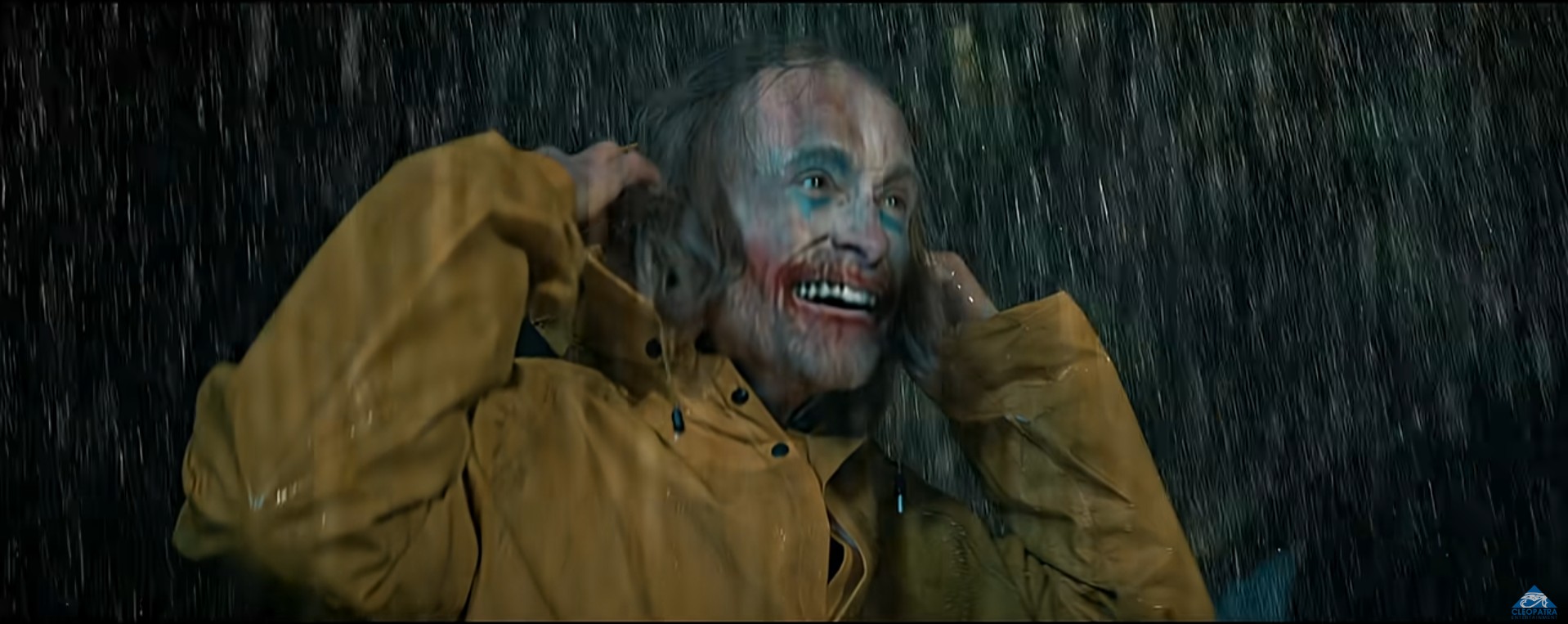
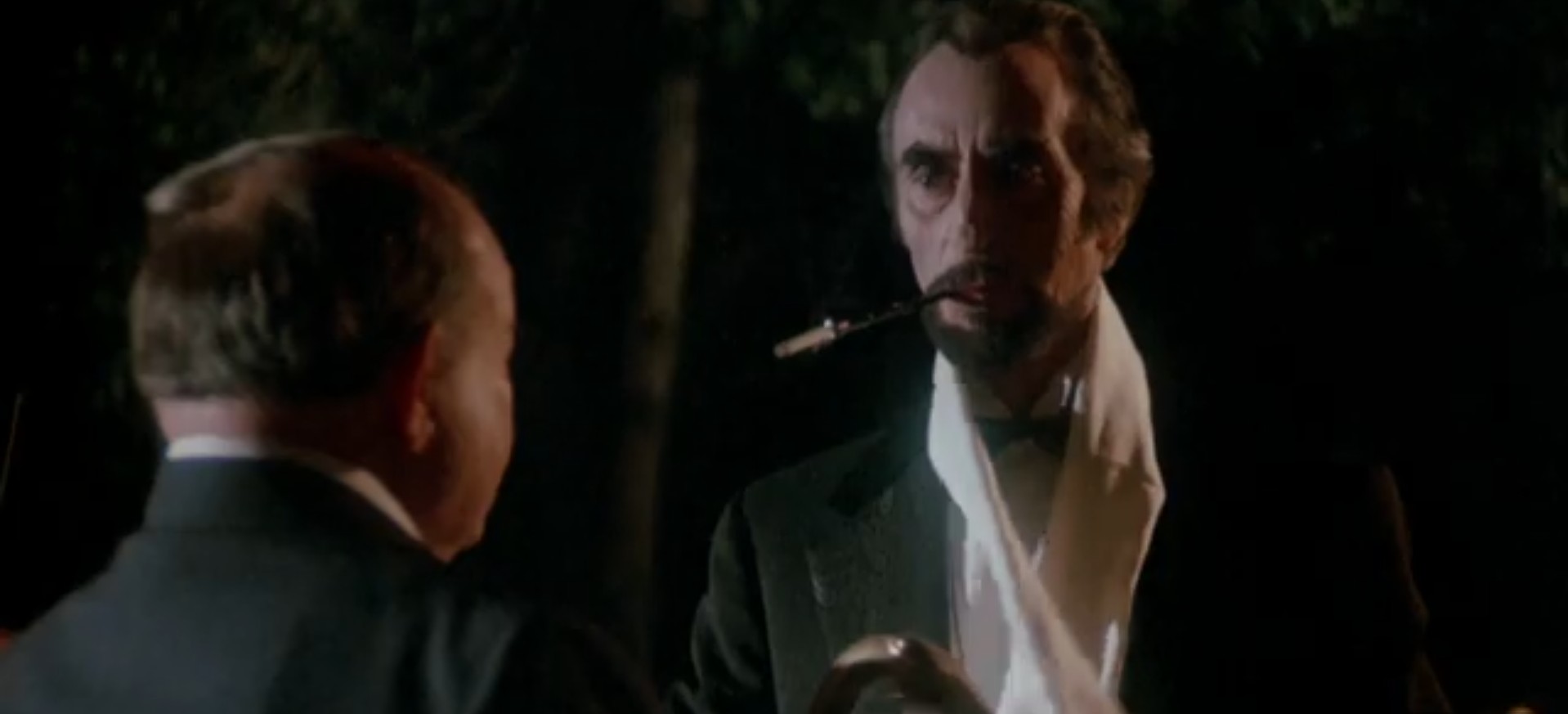
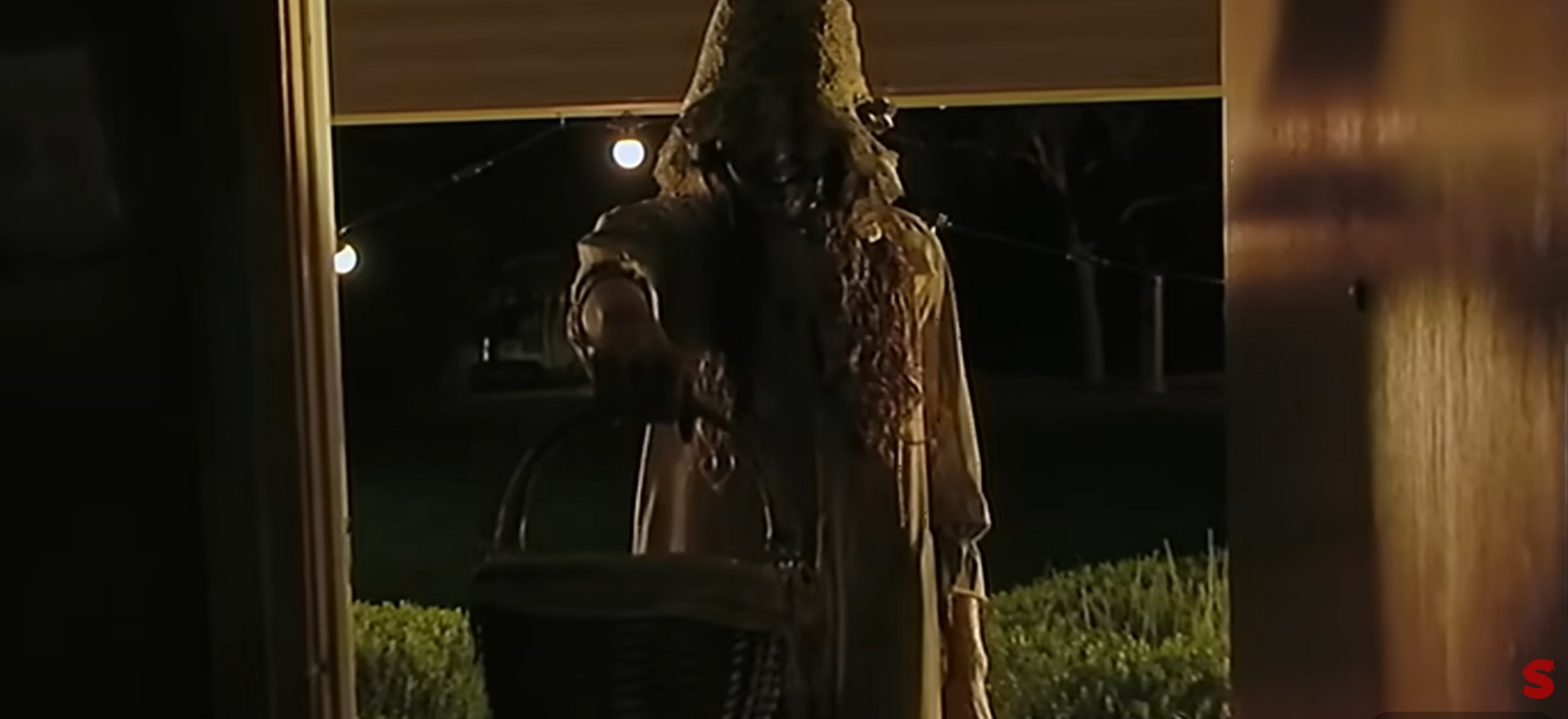
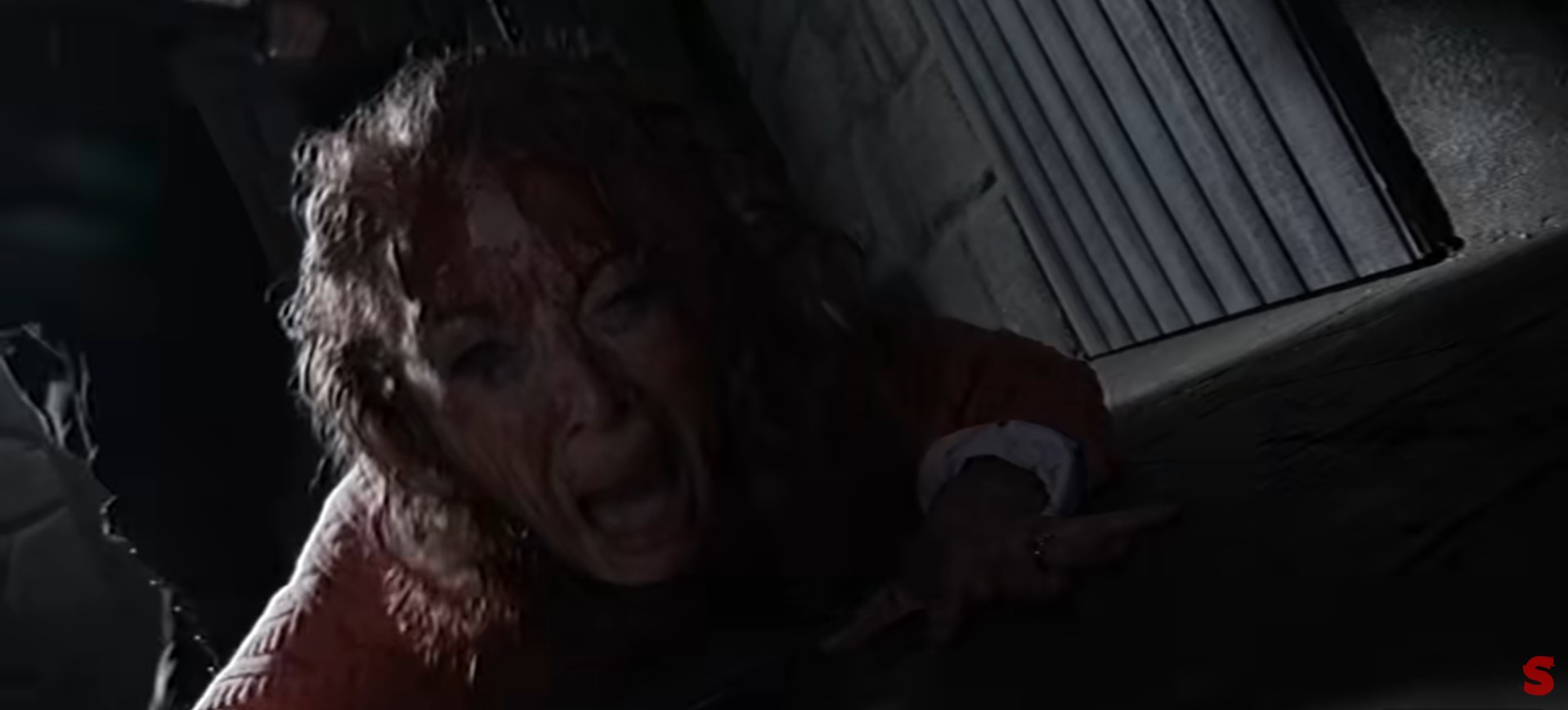
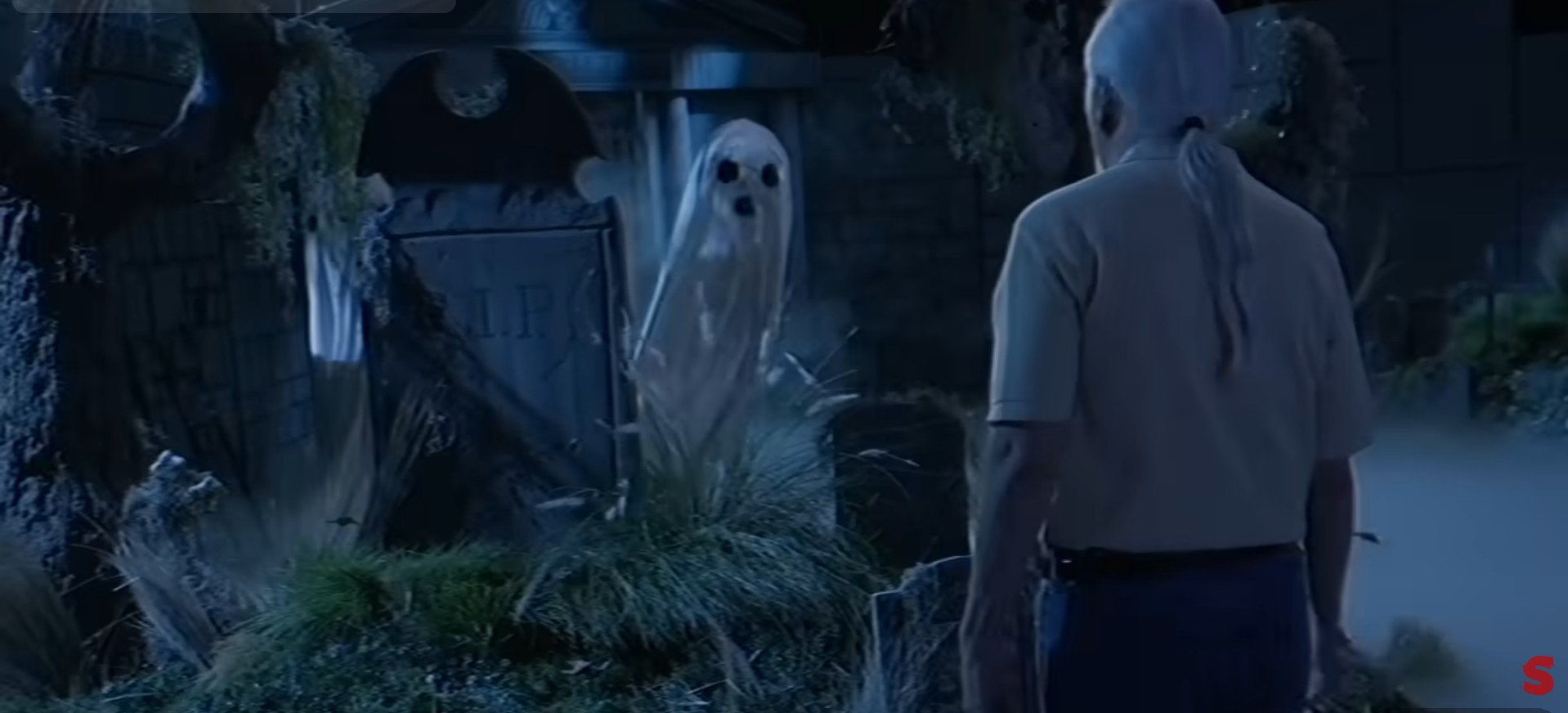
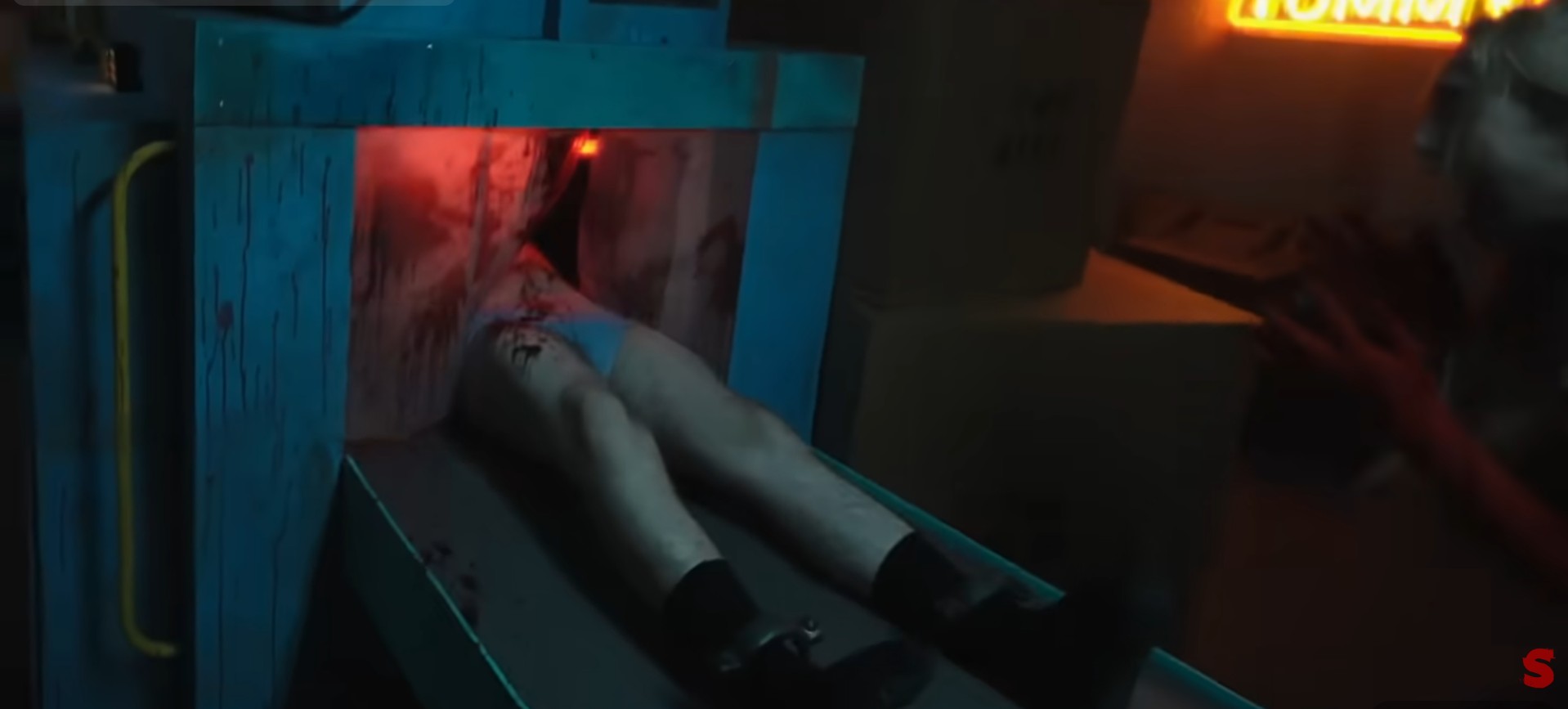
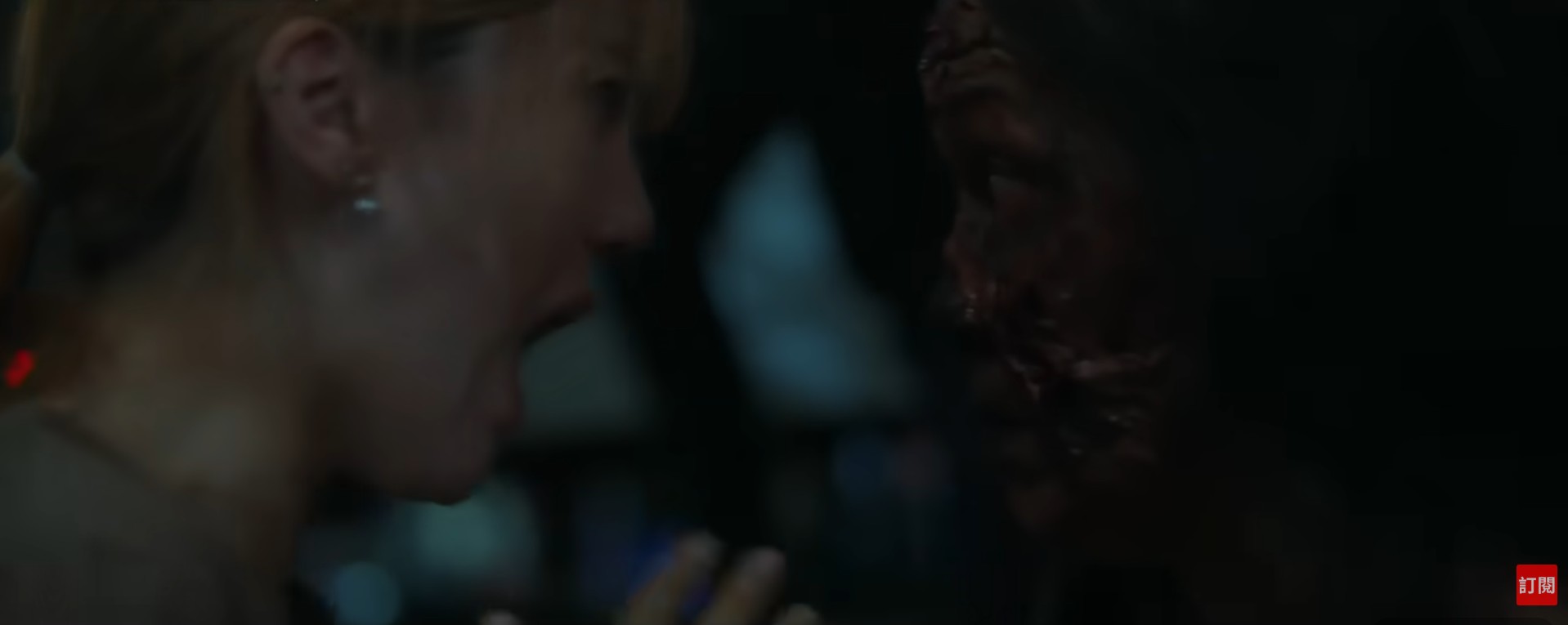
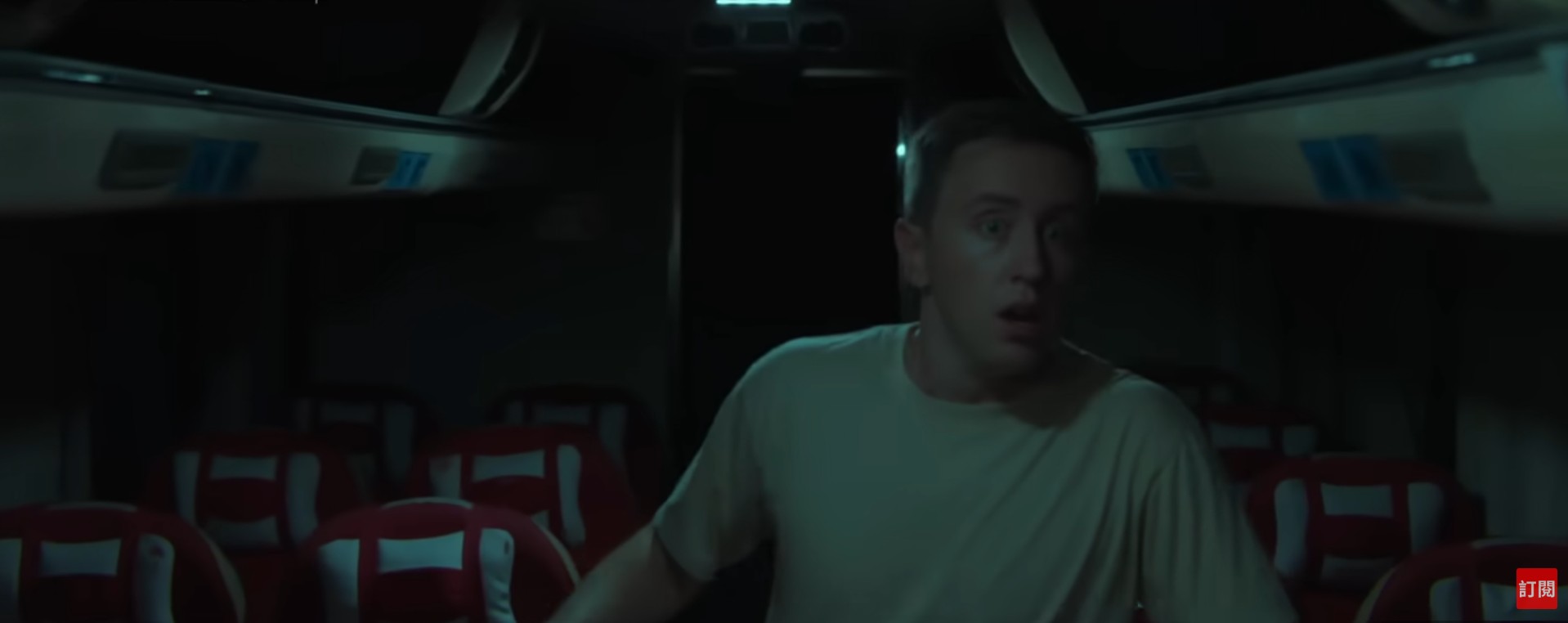
Nick’s about to board an overnight bus in Thailand with other passengers travelling toward the city.  As all passengers take their seats, luggage stowed, and the driver starting the engine, one last ticketed passenger boards, a quiet elderly woman who reeks of fermented fish and has a continuous cough.  What should have been a pleasant ride to the city has turned into an unbearable stench that’s seated right next to Nick.  When the woman dies after a severe coughing fit, neither passenger or bus staff know what to do when the body suddenly disappears, and the believed idea of ghost enters most of everybody’s assumptions.  With the small still strongly permeating inside the cabin, the driver agrees to stop at the next rest area and call for a replacement bus, but the dark road has seemingly no end and a strange curse of the old woman snatches the passengers one-by-one, providing a bus terminus of death.

“Death Ride,” aka “VIP Death Seat,” is the 2024 released commercial transportation ghost story hailing from Thailand.  One half of the “Black Magic Mask” directors, Pasit Panitijaroonroj, splinters off to helm the horror, credited in the title cards as Phasit Panitijaroonroj.  Known by various other interpreted titles, such as “Seat 204,” “The Seat,” and as “Rot Tour Wee Ai Phee” in native Thai, the feature is also written for cinematic screen by Panitijaroonroj with the conceptual story conceived by Wiroj Chotichiawong combines the already tense mass transit journey with a supernatural grim fated outcome that pits people not only against a malevolent and eerie force and terror but also seizes each other in a plight of fear of the unknown.  The production studio behind “Death Ride” is Arriya Film, who produced “Black Magic Mask,” “The Attic,” and “Check-in Shock,” and is distributed internationally by Antenna Entertainment. 

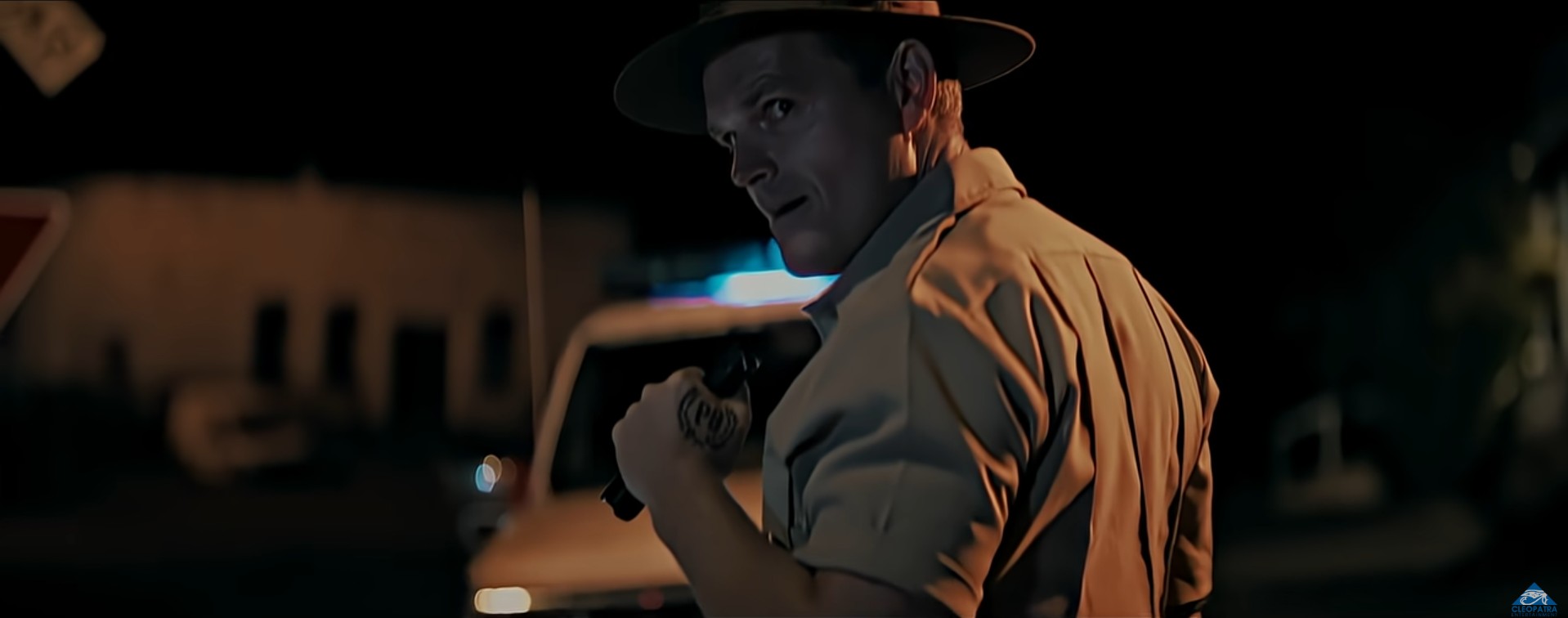
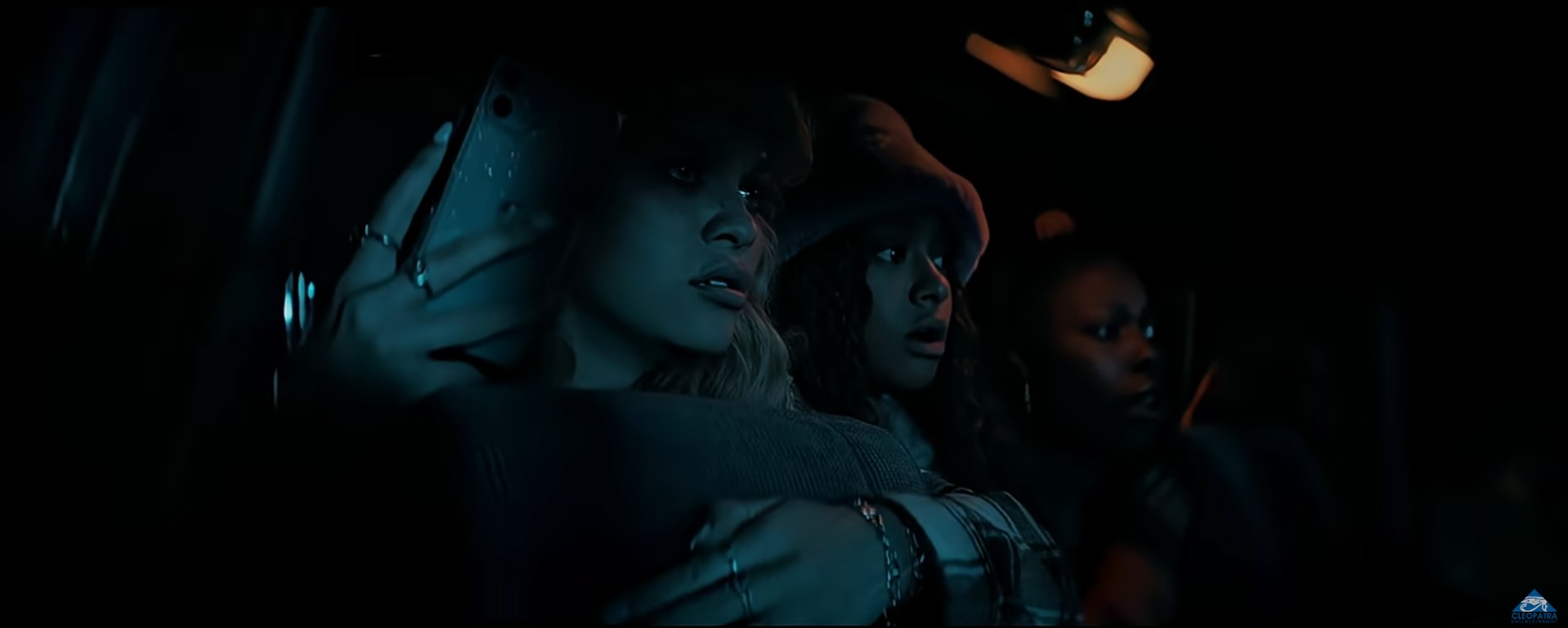
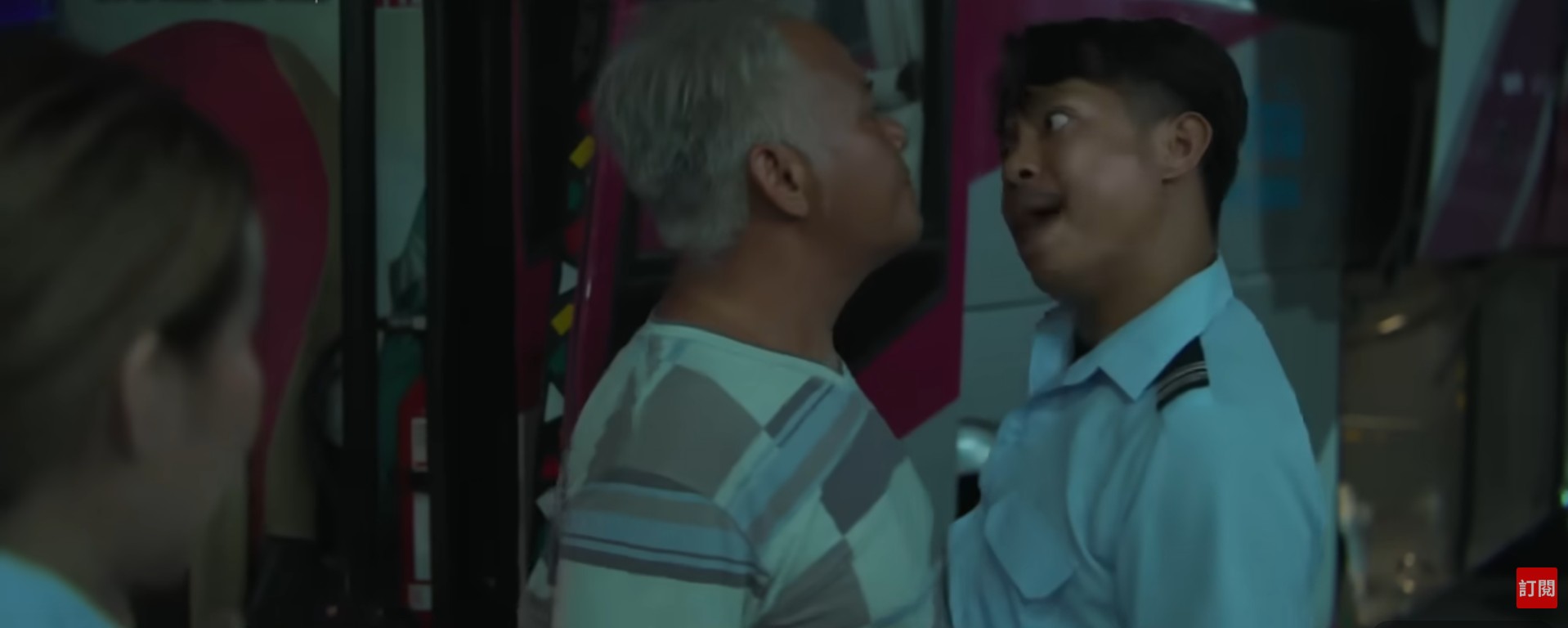
The “Death Ride” story has an ensemble cast setup that bounces between westerner Nick, a group of young people, an older narcissist, the pair of bus staffers, and briefly minor support characters who stand out but without expressed intent, such as the mother and son combo, Nick, who’s travelling solo on unmentioned grounds, has more attention as he wanders the bus stations, becomes the primary disgusted toward the old woman, and has an unaccompanied third act all to himself.  Nick is played by American Nathan Bartling, Youtuber of My Mate Nate, a bilingual prankster who actually was in Thailand authorities’ legal crosshairs for teaching Thai children how to flatten coins on a railway and he was threatened with railway obstruction and damage.  Bartling has since been promoting the Thailand in a positive light despite his expatriate infamy.  He goes on to star in the film as the ignorant and blamed party for the cursed bus ride.  Bartling is joined by Pawornwan Verapuchong, Nichapat Chaiaek (“Bangkok Dangerous”), Prasert Weangwichit, Innyada Yurot, and Jariya Rachomas as the group of youngsters on their way to the city and become intwined in the same mesas Nick but Nick ultimately becomes singled out for being a westerner, to stir up offensive requests to change seats, and because he’s an easy target as a lone travler whereas the group of young people travel in a pack.  Another social media personality-prankster in homegrown Jaturong Papho has a smaller but concentrated role as the trip’s first bus driver who must excuse himself from duty when the local cuisine bottoms out in the stomach.  Papho provides a lot, if not all, the comedy that’s been stitched into “Death Ride’s” loose haunting narrative with fart jokes, overreactions, and funny expressions.  The cast fills out with Pichet Iamchaona, Watsana Phunphone, Suchao Pongwilai, and Namgneun Boonnak as the sickly old woman. 

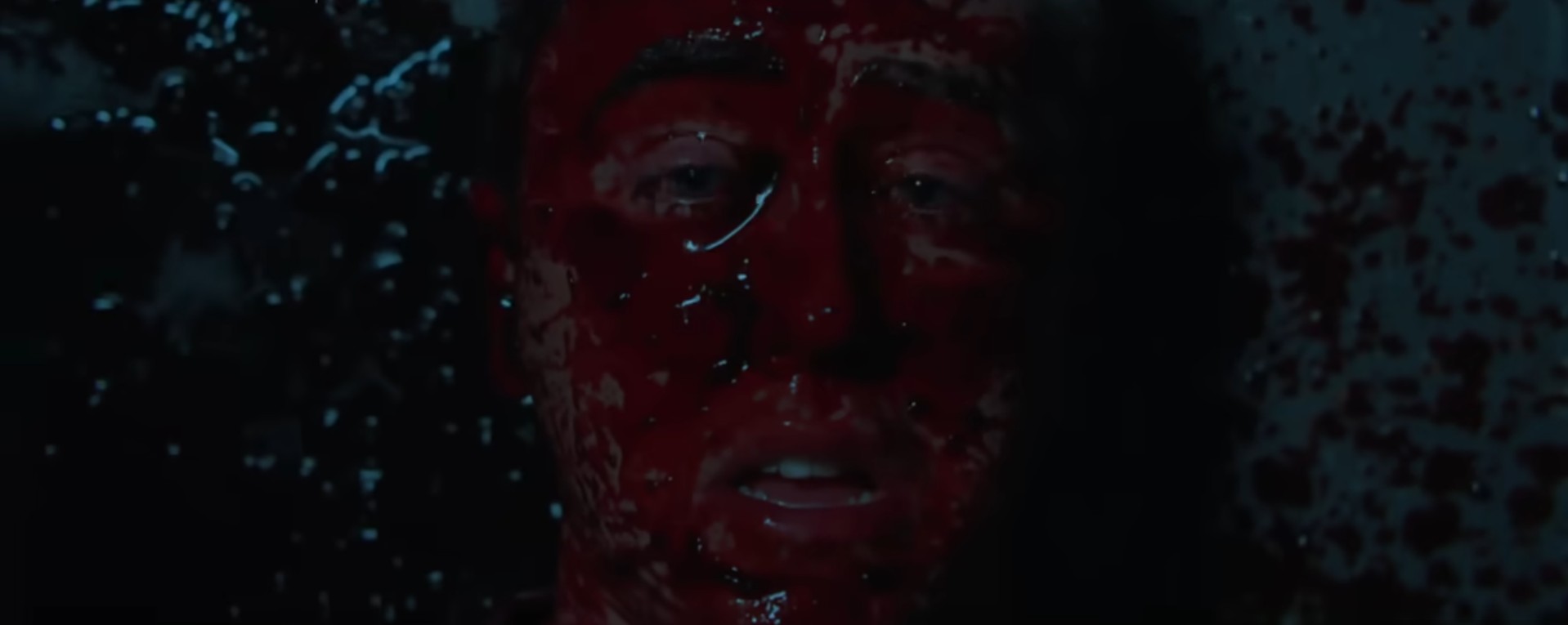
Panitijaroonroj pulls together an ensemble that audiences will have a difficulty relating to, will struggling favoring for in either demise or survival, and just plainly like as characters in general.  There’s nothing characteristically interesting about the ill-fated lot who come to the story without context to their lives or the reason why their on this bus trip the city anyway.  Nick’s is a solivagant who shares not one single tidbit of information about anything substantial to anyone.  In fact, Nick is brutally quiet for much of the duration.  The only time the principal character speaks is to question strange occurrences or be in complaint of the smelly old woman next to him.  The entire cast is written to complain, mostly about the decaying fish smell emanating from who the follow passengers constantly refer to as granny, and this leaves little room to get to know the players of the malevolent spirit misadventure who are trapped with it on a 22-ton bus careening into oblivion. There desperately needs to be some subtext conversations that reach deeper into their lives that sway their motivations or speak to their typology.  Instead, all there is is screaming, bickering, blame throwing, and just being a body just to be fringe fodder for the spirit.  The spirit itself lacks an understanding as the elderly woman is escorted to the bus stop by a boy, assumingly her grandson or nephew, but he wanders off the story at some point before disembarking. At least with the spirit, there can be assumptions made about it, such as a representation of death with the fermented fish smell and the bleeding from the facial orifices, and that suggest this bus fare could cost them everything.  “Death Ride” is also loosely similar to that of Jean-Baptiste Andrea and Fabrice Canepa’s better evolving and character steeping 2003 holiday-thriller, “Dead End,” but “Death Ride’s” ending steers wildly into a ghostly eldritch to resultingly shock viewers with its foreseeable twist ending.

Our first review coverage of an International Media Network distributed DVD begins with “Death Ride” with a DVD5 encoded with NTSC MPEG2 compression and presented in 720p and a widescreen 1.78:1 aspect ratio.  The first impressions are not off to a great start with a heavily aliasing with the lower bitrate that hangs around 3-5Mbps, creating an unnatural blur during active motion and reducing the detailed textures.  The story is entirely set at night that inherently produces the appropriately laid out negative spaces, casted shadows from key lighting, and a distinct higher contrast levels and while the negative spaces show some banding, there definitely some data loss with the image breaking down during the decoding.  Color saturation is left muted for a darker grading to set a bleaker tone and an eerie atmosphere.  The Thai PCM 2.0 Stereo track offers a front and center mix that retrieves and decodes dialogue in a precise and prominent reproduction with a range extended to the hum of the bus engine, the haunting echoes of a malevolent spirit, and perhaps the most asinine element, the hyperbolic hits passengers take against each other and from the angry spirit.  The ill-fitting score, uncredited, is what free stock music dreams are made of with an aggressive and overreaching tone harrowing score that was applied to every single situation the characters came to face.  Forced English subtitles appear error free and move along well enough with the quick Thai Siamese language.  IMN’s release is barebones with only a chapter selection in the static menu.  Also not impressive is the tangible DVD presence that doesn’t indicate even who the distributor is and luckily the IMN title card is presented precursing the feature.  What’s also missing is any kind of cast and crew credits from the back in what is rather also a bareboned informational and image design.  There is no MPAA rating listed but the assumption is unrated, if no rating is given.  The region free disc has a feature duration of 85 minutes.

Last Ride: “Death Ride” is a long, arduous trip to sit through. Lacking depth in story and in character, refunding the bus ticket is perhaps a better deal.

“Death Ride” Available on DVD!

This Serial Killer is the Mother of all EVILs. “Ed Kemper” reviewed! (Dread / Blu-ray)

“Ed Kemper” on Blu-ray Home Video

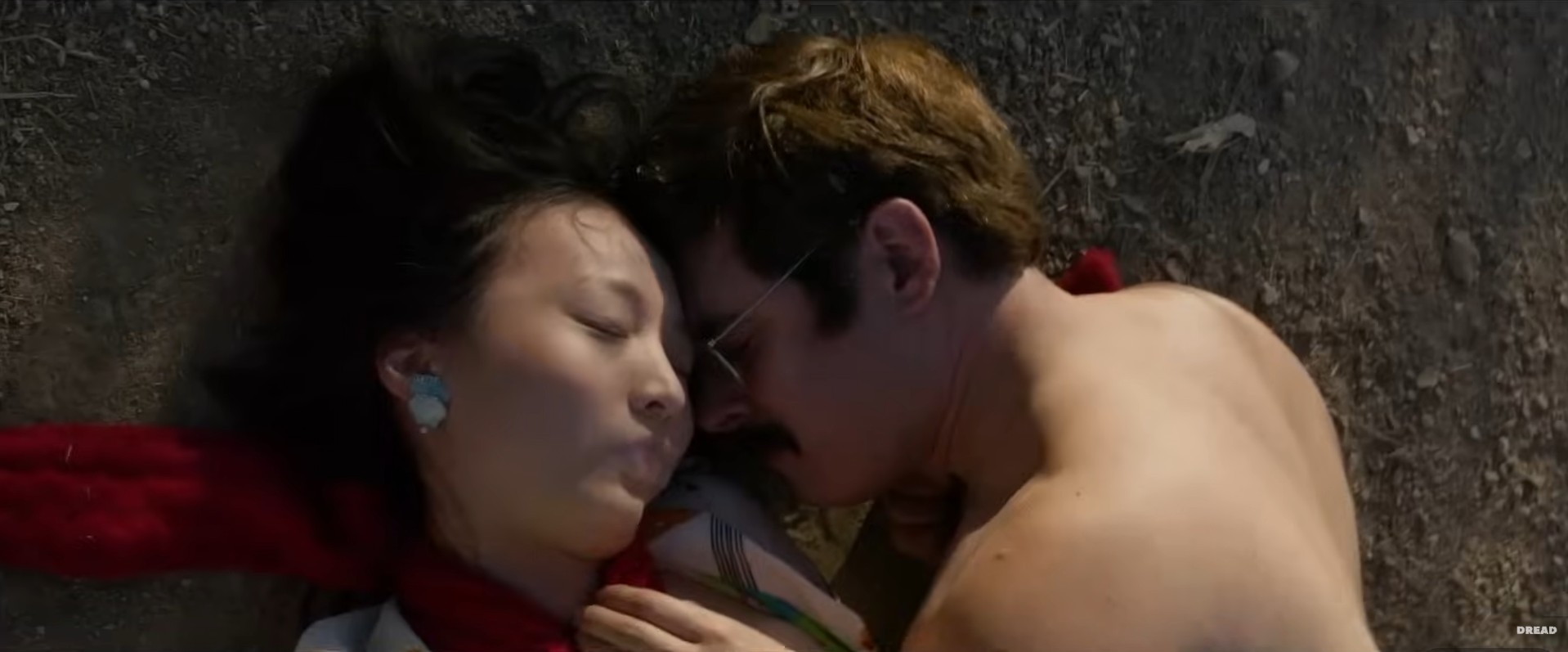
Edmund Kemper at the age of 15 tortured animals and killed his grandparents just to see what it was like.  For five years, Kemper was held at and subsequently released from a psychiatric ward where he was deemed not harmful to society.  His acrimonious relationship with his mother as a child did not stop Kemper from living with her as an adult man after his release and her abusive, alcoholic ways continued on him as well.  After some time, Kemper’s aggressive sexual urges sought out hitchhiking women and in the months between 1972 and 1973, Kemper had abducted multiple school age women and either strangled, stabbed, or shot them in isolated areas of arid California.  From there, Kemper satisfied his depravities with dismembering their bodies and committing necrophiliac acts with the sawed-off parts.  Before turning himself in to authorities, Kemper’s killing spree culminates back to his very existence with the death of his abusive mother and he does not spare her from receiving the same kind of posthumous dismemberment and sexual acts he done upon the young women before her.

American Edmund Kemper is the titular subject of the latest film from director Chad Ferrin, horror director known for pushing eyelids open for atrocity-laden films, such as “Someone’s Knocking at the Door,” “Pig Killer,” and “Scalper.”  Ferrin also cowrites the biographical horror drama with Stephen Johnston, a serial serial-killer screenwriter who has painted with font some of America’s most notorious serial murderers from Ed Gein to Ted Bundy, to Kenneth Bianchi from “The Hillside Strangler.”  The tall, dark complexioned, round glasses framed, and pitched mustached Kemper is the next subject for Johnston and the first serial killer biodoc from Ferrin that takes him from fiction to nonfiction while still retaining his admiration for graphic content, produced under Ferrin’s production company of Crappy World Films in association with Dance On Productions and Laurelwood Pictures.

In the role of Kemper is Brandon Kirk who is a by all comparisons a beefier Ed Helms and Kirk has worked with Ferrin on numerous projects since their first collab in 2021’s “Night Caller,” marking “Ed Kemper” as their sixth film together in Ferrin’s rapid release method.  Initially, Kirk seemed to not fit the role that started off with Kemper suitcase in hand being escorted out of the psych hospital and back into society.  His presence felt shallow, unimportant, and a punching bag for his mom’s barrage of boozy hate with little kickback from Kemper’s large and formidable frame and his deadly past which was only half a decade ago.  Kirk has the tall stature and framework to resemble Kemper in that department but didn’t quite fit the bill instill a confident killer that can chill to anyone to the bone with a simple smirk.   By the end, Kirk proves our conceptions incorrect by becoming a delusionally composed killer that no longer needed a smirk to make blood curdle but rather just look into the camera with his plain eyewear frames and mile stare when casually conversing atrocity as if noting the weather.  It’s plain to see how Kemper came to be with a mother like Clarnell Strandberg and her incessant physical and verbal abuse through and beyond Kemper’s youth; Susan Priver, who has also worked with Ferrin and Kirk since “Night Caller,” nails worst mother of the year being in Strandberg’s constant drunken tirade.  Kirk and Priver’s mother-son dynamic has no and is not depicted to have such traditional warmth or merit and, instead, is a one-sided browbeating at Kemper’s expense is fueled by necessity, and perhaps a little bit of masochism on Kemper’s part because if it really got under the skin of either one of them, I’m sure living on the street would have been better.  Repeat scene principals are laid with only a few with Brinke Stevens (“Nightmare Sisters,” “Slave Girls from Beyond Infinity”) in the role of Clarnell’s closeted lover Sally Hallett, adding a bit more complexion to Clarnell’s life choices and fueled bitterness after failed heterosexual marriages, and Joe Castro (“Blood Feast 2:  All U Can Eat”), special effects makeup artist on the film, also down the traditional black horn, red-caped devil that influences young Kemper’s abused mental state.  The co-ed of the Co-Ed Killer include roles filled in by Erin Luo (“Feral Female”), Patty Hayes, Isabelle Morgan, Autumn Rose Ruch, Gloria Therese, and Katie Silverman (“The Exorcists”).  Familiar faces of Lew Temple (“The Devil’s Rejects”), Robert Miano (“Chained Heat”), and Cassandra Gave (“Conan:  The Barbarian”) pop in supporting parts. 

If you’ve seen the deeply studio underappreciated and fan-favorite “Mindhunter” Netflix television series that was prematurely and devastatingly cancelled, Cameron Britton’s performance may have already seared a first impression of Kemper.  The David Fincher crime drama was dark, bleak, and interesting in what makes serial killers tick as the series investigators sat down with Kemper and utilized him as a source of knowledge, much like novelist Thomas Harris had done with his Hannibal Lector character to track down the Red Dragon killer.  Britton’s large stature and soft-spoken delivery made for a terrifying persona when Kemper goes bluntly, coldly, and without expression into detail of his own exploits and methodology with women and corpses.  Side-by-side, Britton and Kirk are starkly different portrayals and those familiar with “Mindhunter,” like me, may already have an impressed idea of Ed Kemper, but Kirk manages to reign in that initial impression and engrave his own version of the murderer into the solidified stone.  In contrasting stylistic and storytelling choices, Ferrin’s film also strays away from reality quite a bit with the Devil inside Kemper’s mind as a child, his frequent disconnection with time, and delusions with seeing things, like John Wayne knocking on his driver side window and giving him sage advice.  There’s more cinematic universe with “Ed Kemper” the feature film than reality-gripping realism to tell his tale without sensationalism, but the story does get down and dirty in Kemper’s Co-Ed killing days.  Initially, the feature felt watered down and wouldn’t go into the darkest of territories inside Kemper’s skeleton closet and deranged mindset but Ferrin, true to form, gets weird with Kemper and his sexualized obsession with dismembered corpses, unafraid to flash gore and nudity that couldn’t go untold with this type of nonfictional narrative, and to be honest, being the nudity shy Dread Presented film, I was shocked with their green light of certain scenes. 

Dread and Epic Pictures Group present true crime horror-drama “Ed Kemper” on Blu-ray that’s AV encoded with 1080p resolution on a BD25.  Presented in a widescreen 1.85:1 aspect ratio, Jeff Billings cinematographer handles the 70’s aesthetic of an arid brown California scenery melded perfectly with 70’s period specific avocado green, mustard yellow, and a singed orange while also tackling the black-and-white representing Kemper’s childhood past.  No compression issues to note, blacks are solid, the colors saturate and diffuse nicely throughout, and details are on the softer side but stick the detailed landing unequivocally in the color scenes with the black-and-white harnessing what it can through lack of color.  The English language audio track is compressed with a Dolby Digital 5.1 and Dolby Digital 2.0.  The sole compressed options hangs back the full potential of disorienting muscle, such as with Joe Castro’s basement dwelling devil who’s aimed to be an intense, delusional provocateur of Kemper’s evildoings and also Kemper himself when he goes into full-throttle turmoil within himself, when he can’t take his mother abuse or when he’s grinning ear-to-ear with killing, hacking up, and necrophiliac-loving co-ed victims.  Dialogue comes through clear and clean with optional English and Spanish subtitles available under the title menu.  What’s additional interesting about the “Ed Kemper” score is it’s orchestrated by Richard Band, brother of Charles Band, and is a stray away from his conventional carnivalesque tone into a more traditionally dark that swells tension when needed and coddles the more abusive scenes to picture Kemper as the victim of abuse.  Special features contain an audio commentary track with director Chad Ferrin, co-ed victim audition tapes, deleted scenes, a Kemper 70’s Psycho featurette documentary that’s a raw look behind-the-scenes and get a real sense of Chad Ferrin’s all-in, guts and all, directing style, a Lost Ending providing an alternate finale to the sensationalized Kemper tale for this release, “The Devil’s Slide” music video, the official theatrical trailer, and trailers for other Dread Presents films.  The traditional Blu-ray case has a mustard yellow covert art of Kemper’s face close up but does not appear to be Kirk’s Kemper mug.  The cover art is one sided and there are no other physical trimmings with a disc printed with Kirk’s Kemper mug split down the middle expressing two different faces and incorporated into a personnel file like design.  Not rated with a runtime of 92 minutes, “Ed Kemper” is encoded with a region free playback compatibility. 

Last Rites: To put all of his immoral and depraved transgressions into just over 90 minutes is simply skimming the odious surface but the Chad Ferrin and Dread / Epic Picture Group collaboration condense the irreverence and the ickiness of “Ed Kemper” onto a platform that reminds us all there is true pure evil in this world.

“Ed Kemper” on Blu-ray Home Video

The Shaw Brothers Deliver the EVIL Lovers! “Shaw Brothers Horror Collection Volume 2” reviewed! (Imprint Asia / Blu-ray)

Shaw-Shock Horror Collection Volume 2 is Now Avilable for Purchase!

The Qing Dynasty of Imperial China is full of spiritual folklore, mysticisms, and romance.  Three tales of supernatural passion arouse not only enduring amorousness and longing desire but also strikes fear of apparitional ghosts and grudges into naive and honest souls from beyond the grave, crossing existential planes to be with intended suitors no matter the cost.  These stories will send a pining chill down your spine:  a traveling scholar bunks at an abandoned temple to find he’s enchanted by a young woman not of life and protected by a blood thirsty lady-in-waiting, a provincial governor crosses paths with a beautiful virgin while taking shelter at her home.  When he catches her nude, he’s willing to marry her to avoid her shame but little does he know she’s a lonely ghost searching for love and revenge against those who raped and killed her, and, lastly, an arranged marriage is foiled by the sudden death of a young mistress and the late arrival of the master because he was being robbed of a debt he owned the mistress’s family.  Unfulfilled in love and life, the young woman returns to court the young master with the help of her elderly servant who took her own life to make the love between them possible.  Not believing the rumors of her death and discounting the spirit warnings from those close around him, the young master falls in love with his intended bride despite the obstacles put in between them by the master’s servants, Taoist priests, and even a band of bodyguards. 

Australian distributor Imprint, under their sublabel Imprint Asia, has released the second volume of the Shaw-Shock:  Show Brothers Horror Collection with three more titles that fall within the release window of 1960 to 1973.  These adapted stories stem from and inspired by Songling Pu’s Liaozhai Zhiyi, aka Strange Tales from a Chinese Studio, which is a collection of classical Chinese ghost narratives, and they include the 1960 “The Enchanting Shadow,” directed by Han Hsiang Li (“The Ghost Story,” “Return of the Dead”) and written by Yue-Ting Wang and Wong Yuet-Ting, the 1972 “The Bride from Hell,” directed Hsu-Chiang Chou (director of “The Enchanting Ghost,” not to be confused “The Enchanting Shadow”) and penned by Tien-Yung Hsu, and 1973’s “The Ghost Lovers,” the only film of the three from Korean-born filmmakers, director Shin Sang-ok (“3 Ninjas Knuckle Up”) and writer Il-ro Kwak (“Ghosts of Chosun”).  Runme Shaw produces all three films in the Shaw Brothers production studio. 

Other than being a Shaw production, each of the three stories are also connected by common elements – travelling male scholars or those high in station, a dead or recently deceased high-born woman in phantomic form, and the two intertwine romantically under false pretenses all the while Taoist priest, servants, or family of the living beg, plead, and even self-interject themselves in between the unnatural love affair to save the man from a wraith’s haunt, whether the affectionate intent by the ghost is malicious or benign, but each also differ in style and substance.  Lei Zhao (“Succubare”) plays a servant-less travelling scholar, Ning Tsai-Chen, unphased by the foreboding warning of ghosts and death of a dilapidated temple where those who stay the night don’t live the next morning.  Ning falls for adjacent neighbor maiden in Nie Xiaoqian (Betty Loh Ti) and between the actors there is a show of palpable and touching natural coquet that’s honorable to their period and to their characters’ hearts but their being from two different worlds puts up a marital blockade unlike in  “The Bride of Hell” that has generally has the same amorous bond between Yang Fang (Nie Yun Peng) and Anu (Margaret Hsing Hui) that eventually leads to marriage, but the Anu guileful portraying of a living is more deceitful to use Yang Fang despite also actually loving him in this more revenge based spookery involving Fang’s unscrupulous family members.  “The Ghost Lovers” also uses ghostly deceit to trick the master into a coitus cemented bond revolving and complicated around Han His-lung’s (Wei-Tu Lin, “Corpse Mania”) honor and shame and the affluent Sung Lien-hua’s (Ching Lee, “Sexy Girls of Denmark”) unfulfilled life and love before an untimely death.  There are of course the conflicts that get in the middle – the blood thirsty Lao Lao (Rhoqing Tang, “Brutal Sorcery”) aims to kill temple trespassers and Nie Xiaoqian suitors no matter how much a gentlemen they are, there’s the rape-revenge aspect in “The Bride of Hell,” and the sundry hindrances that try to keep the undead Sung and the alive Han from being unionized.  There’s quite a bit of hammy performances to digest in what’s relatively near being the same story said over thrice,  The three films fill out the cast with Chih-Ching Yang and Ho Li-Jen in “The Enchanting Shadow,” Carrie Ku Mei, Hsia Chiang, Chi Hu, Feng Chang, and Yi-Fei Chang in “The Bride from Hell,” and Shao-Hung Chan, Feng-Chen Chen, Ki-joo Kim, Ling Han, Han Chiang, and Mei Hua Chen in “The Ghost Lovers” as the belabor the melodramatics of ghostly fervor. 

From a bird’s eye view, the Shaw Brothers productions appears virtually unoffensive and harmless period pieces set in the Imperial China with romanticized slices of fantasy in love after death, unstoppable passion, and an adherence to honor, principles, and duty to others, but a closer look reveals a darker sliver coursing through the supernatural palaver with it’s unnatural fascination of hooking up dead beautiful women with eligible scholarly men.  The most outlying and blatant example would be the rape-revenge narrative of “The Bride form Hell,” a coarse title that’s been spun into various renditions over the decades – take Quentin Tarantino’s The Bride from “Kill Bill” for example – by a woman embarking on path of retribution after being wronged in a maliciously despicable way and she uses everything to her advantage, even if that means marrying a relative, while a spirit I might remind you, of the men who raped and murdered her during their plundering of riches.  The film also doesn’t mind it’s hands a little dirtier with some nudity unlike the other two films of the set.  “The Ghost Lovers” isn’t as deeply disturbing with more of an untimely and unfortunate situation robbing mistress Sung of life and love and master Han of time and wealth that would have solidified a bond if the elements were not stolen from them.  There’s also a misunderstanding with fear of the unknown and a twisted sense of intent by humble servants and priests who distress of anything not of this plane of existence.  Much can be said the same about “The Enchanging Shadow” but that also deploys a countermeasure to the good heart nature of spirit Nie Xiaoqian as she’s balanced by her pure evil and bloodthirsty caretaker Lao Lao who between love and represents unholy demise.  Han Hsiang Li, Hsu-Chiang Chou, and Shin Sang-ok don’t stray too far away from each other when it comes to production set and scene compositions by keeping much of the storylines set during the mischief of the night when folkloric ghosts are more awake and present and keep the coloring cold contoured under grays, blues, and only hints of muted vibrancy outside the monochrome.  Special effects are kept close to the chest with fleeting rudimentary prosthetic and makeup, superimpositions to liven the ghost effect, and lay a dense fog in certain moments of atmospherics.  Combine all the elements infused with Chinese culture and superstitions and you get three stories that shutter with phantasmic passion. 

The Shaw-Shock:  Shaw Brothers Horror Collection Vol. 2 from the Imprint Asia line under parent company Via Vision is another awesome Shawtastic boxset that takes obscurity into the light.  The three disc Blu-ray set is AVC encoded, 1080p high-definition resolution, encoded onto BD50 is limited to 1500 copes.  Each included film is catalogue as numbers 31 to 33 in the Imprint Asia sublabel.  “The Enchanting Shadow” is the only one of the three presented in a 1.66:1 aspect ratio, transferred from a rougher print that has patches of cell damage and varied grading as if a couple of prints were spliced together.  There is a prelude title card warning of the quality so there should be no surprise when it does come up.  “The Bride from Hell” and “The Ghost Lovers” are presented a widescreen 2.35:1 aspect ratio and have used a cleaner print for the hi-def transfer with no notice of damage issues.  All carrier a softer, airy image from the film stock and film processing scans and combine with sharp key lighting, there is a glow effect around objects but not enough radiance to affect the diffusion of colors and smooth out details.  Skin tones often fluctuate between an organic and an orange tinge that can sway the perceived quality.   The much older “The Enchanting Shadow” from 1960 definitely shows its age with more muted earthly tones within its darker scaling.  Each film uses a compressed, spherical lens as the curvature is more severe than you notice in more modern productions, hallmarking Hong Kong’s utilized lenses during the decades.  All three films are in Mandarin with no other language option within a LCPM 2.0 audio format that adequate fills the front channels of dialogue, ambience, and soundtrack.  Dialogue and ambience is not immersive with the stereo mix but the ADR track is present and discernible with some noticeable sparse hissing in the dialogue and low level gurgling interference amongst more docile moments.  Along with the image damage, “The Enchanting Shadow” has counterpart audio damage with tears in the audio layer that pop and crackle during the damage breaks. English subtitles are available on all three titles and are paced well but the subtitles on the “The Ghost Lovers” come with a few grammatical and misspelling errors. New special features encoded on the releases include an audio commentary by author Stafan Hammond and Asian film expert Arne Venema, film historian analysis by Paul Fonoroff, an archival interview with director Hun Hsiang Li, and the original and DVD trailer for “The Enchanting Shadow,” the “The Bride from Hell” has a new audio commentary also by Arne Venema with the DVD trailer, and “The Ghost Lovers, too, has a new audio commentary from critic and filmmaker Justin Decloux with film scholar Wayne Wong discussing the film. The new encoded special features compliment the tremendous and substantial Imprint Asia rigid box set with a removable jagged tooth locked top that includes compositional artwork and permeated with the Shaw Brothers insignia. Inside, the three Blu-rays sit snug in individual clear Amaray cases, each with their own original cover art reflecting the original posters with the reverse side pulling a still from the film. The total runtime of all three films is 4 hours and 14 minutes in its region free, unrated capacity.

Last Rites: A triple threat of Shaw Brothers’ classics resurrected from the dead to haunt your collection! Imprint Asia’s boxset continues to recover unearthed Hong Kong and Chinese culture, folklore, and fantasy for new enthusiasts of the far East and avid collectors of physical media!

Shaw-Shock Horror Collection Volume 2 is Now Avilable for Purchase!

Football, God, Family, and EVIL! “Him” reviewed! (Universal Pictures / Blu-ray)

“Him” Collector’s Edition Now Available from Universal Pictures!

Cameron Cade’s father has been firmly preparing his son to be a football GOAT since Cam was a young boy.  Inspired by the 8-time champion Isaiah White, star quarterback of the Saviors, Cam had trained and played through the years and ranks to be the game’s next promising rising superstar athlete.  When a mascot-dressed manic derails Cam with a head trauma-induced attack, Cam takes a step back from competing in the football showcase but receives hope when he receives an invitation from the Saviors to work with Isiah White at his isolated training camp deep in the desert.  Before long, a dream-come-true turns into a terrifying nightmare as the training sessions go deeper into something far more sinister and Isiah’s greatness may be contributed to unnatural forces bound by limited contracts.  How far and how much will Cam have to sacrifice to be the best football player ever and to live up to his idolized hero before the game and those who control it swallow his own soul. 

Jordan Peele, once skit comedian with Keegan-Michael Key in “Key and Peele” turned provocative social commentary director of such films as “Get Out” and “Us,” produces the next potshot at cultural critiquing with 2025 released “Him,” a football themed psychological horror that puts sacrifice for the game over family, intensifies the pressures of equating performance with success, and a misguidance from fatherhood/mentorship that intends on grooming a young person into superstardom.  “Him” is the sophomore feature length film for Justin Tipping who also cowrite the script along with Two-Up Productions cofounders Skip Bronkie and Zack Akers as the first major movie release for the company associated with Peele’s Monkeypaw Productions that not only produces his Peele’s own films but also invests into minority-driven projects, such as “The Candyman” remake, “Monkey Man” with Dev Patel, and Spike Lee’s the “BlacKKKlansman.” 

At top bill of “Him’s” roster is an established comedian, writer, and producer with an even more well-established and famous last name.  Marlon Wayans’s breakout project was the sketch comedy TV show “In Living Color” that also highlighted and rocketed the career of Jamie Fox and Jim Carrey but was also considered a family affair as Marlon’s siblings, Shawn, Kim, Keenan Ivory and Damon Wayans, cohosted with him the African-American centric comedy show.  In “Him,” Marlon plays the 8-time champion quarterback for a football team that is as venerated as his character Isiah White playing for the Saviors.  Wayans, known for his comedic role stints in favorites “Don’t Be a Menace to South Central While Drinking Your Juice in the Hood,” “Scary Movie,” and “White Chicks,” has a surface scratched darker side to his onscreen personas that leave him no stranger to a role like Isaiah White that’s dispassionate yet ferocious – his drug addiction role in  “A Requiem for a Dream” is one of those examples.  Opposite Wayans is the strong, muscular facial features underneath soft, piercing eyes of Tyriq Withers.  The then mid 20-year-old is in peak physical condition for his rising star quarterback Cameron Cade under the pressure cooker of family, agents, and a football league that expects greatness on every level.  Withers’ recent principal parts in perceptively pointless and under-the-radar remakes of classic cult films, “Don’t Tell Mom the Babysitter is Dead” and “I Know What You Did Last Summer,” didn’t elevate the Florida born actor into the spotlight, preparing him for an upcoming lead in a more visible original psychological horror themed around one of America’s favorite sports, but Withers meets the challenge with a promising performance for his promising character that makes “Him” standout above the rest and being his biggest role of his career catalogue.  Wayans and Withers battle out with testosterone trumping into a gray area of occultism that’s not so unlikely from the reality of professional sports.  The principal leads are supported by an eclectic supporting cast of eccentric oddities of the isolated training camp with Julia Fox (“Presence”) as Isiah White’s fast-and-loose, high-end wife Elise, standup comedian Jim Jefferies as White’s personal athletic physician Marco with baggage regrets, Tom Heidecker (“Us”) as Cade’s hype manager Tom, Indira G. Wilson (“The Perfect Host”) as Cam’s mother, and Richard Lippert (“Scare Us”) as the saviors behind-the-scenes owner. 

“Him” came and went from its theatrical run so fast it feels like only yesterday trailers were being played on commercial breaks and on online previews, denoting Justin Tipping’s movie offering not finding a significant audience for the anti-pro sports treatment of players message.  That’s what “Him” powerfully engrosses with is an anti-football message of dog-eat-dog cruelty that cannibalizes itself for what’s best of the sport and discard those who give the sport it all once their eliteness has been completely emaciated, as if the sport is a vampire and drains their athleticism through the carnivorous canines of fans, team, and ownership.  Tipping and his cowriters integrate religious and Roman motifs that relate the gridiron as Church or the blood of the GOAT coursing through another that offers divine playing sacrifice and supremacy while certain aspects of the film regard the football fields as coliseum with players being gladiators with even the finale reenacting scenes similar to that of “Gladiator.”  Along with those strong imageries, iconographies, and representations, Tipping’s linear telling of the story feeds off the phantasmagory and being on the edge of experimental that, in turn, puts into question Cameron Cade’s reality as everything he experiences from the ominous weirdness pulsating his path forward in football to the macabre training and cultish indoctrinations of Isiah White’s desert training camp don’t come about until Cam’s whacked over the head with a long handled and ornate hammer.  Then, the question becomes, is Cam in dead and a warped purgatory?  Is Cam hallucinating?  Or is Cam actually experiencing the darker side of a game he’s been bred to believe in and be the best at.  All of those existential and surreal components overload “Him’s” highbrow and social commentary horror that will fly over the audiences’ head like pre-game ceremony fighter jets. 

“Him” arrives onto a collector’s edition Blu-ray and digital combo set from Universal Pictures.  The AVC encoded, 1080p high-definition, film is stored on a BD50, ensuring room for a visually and audibly stimulating tryout of pigskin piety.  Infused darker tones of shadows, Brunswick greens, and plenty variations of brown from the football to the desert located training camp, there are a very few contrasting moments that embolden cinematographer Kira Kelly (“Skin in the Game”) to emerge out from the hefty draping shadows that obscure much of the compounding and confounding irrationality of the insular football fanaticisms.  Kelly utilizes an array of long to closeup shots from different scenes or even the same scene to throw off the balance and provide depth when needed for the moment.  In addition, the same moments can be implanted with a personal bubble of surrealism through Cameron’s perception of events, never leaving other characters to define the atmosphere or the behaviors that are inherently set by the principal lead character, who or who may not be suffering from an intense concussion untreated unintentionally by the internal turmoil of family politics.  Detailed textures and skin tones have organic qualities, and the X-ray vision has seamless segue with all its intensified bone crunching hits.   “Him” is presented in a widescreen 2.39:1 for an extra stretch of spherical sighted surroundings that work to enclose on Cameron the deeper he’s in with the mentor’s program as well as to fully embrace his destiny with obstinance in the grandest of finales.  The Blu-ray has encoded four audio option a with English Dolby Atmos, a Dolby Virtual Speaker 2.0, a Spanish Dolby Digital Plus 7.1, and a French Dolby Digital 7.1.  All options offer extended reach into the audio localization areas of the compressed, multiple channel formats, and even the DVS adds a little extra to throw sound inside a three-dimensional space which is important for “Him’s” haunting and bizarre oneiric structure.  The Atmos provides more depth and richer lagniappe effort where it comes with Cameron’s perceptive discords of racing arguments and whispering inceptions.  Dialogue is clean and clear throughout, and no issues imposed on The Haxan Cloak aka Bobby Krlic’s subtle descent of a score.  English, French, and Spanish subtitles are available.  Bonus contents include feature commentary with director Justin Tipping touching upon production areas and the cast to create his footprint as a movie artist, an alternate ending, a removed end credits scene, a handful of deleted scenes, two deconstruction of scenes on how they’re made, Becoming Them looks at Tyriq Withers and Marlon Wayans transformation into elite athletes, The Sport of Filmmaking featurette offers a behind-the-scenes look at production of “Him,” and the Hymns of a G.O.A.T. has composer Boby Krlic’s detailing the elements in creating his movie score for the film.  The collector’s edition also comes with a digital code insert to stream or download from anywhere on any device.  The physicality of the collector’s edition is more to the tune of a play fake that doesn’t allow the release to run with an overloaded package.  Instead, Universal laterally passes with a cardboard slipcover with an embossed title for some smooth font texture.  Instead, the standard VIVA case houses the same artwork as the slipcover without the raised lettering and the disc is translucently pressed with the title and film and format technical credits.  “Him” has a runtime of 97 minutes, region A encoded playback, and is rated R for strong bloody violence, language, sexual material, nudity, and some drug use.

Last Rites: If you’ve ever thought professional sport players were commodities before, “Him” brings the blitz of putting football above it all by bringing divine blood, sweat, and tears into a cult of sadists and stardom.

“Him” Collector’s Edition Now Available from Universal Pictures!

Welcome Proclaimed EVIL Into Your Home! “Video Psycho” reviewed! (SRS Cinema / Blu-ray)

“Video Psycho” on Blu-ray and DVD home video!

On his way back home, Jason picks up a Ryan, a hitchhiker looking for a new start in town, goaled to achieve three things:  a place to call his own, to obtain a job that pays minimum wage, and to find a girlfriend.  Empathetic to Ryan’s new beginnings having gone through himself, Jason invites the hopeful drifter to stay at his shared home with girlfriend Julie and little sister Kylie.  One night drinking between Jason and Ryan, Ryan confesses to killing a man and even delivers video proof with his own recorded snuff film the act.  Disregarding the video and Ryan’s confession immediately as a joke, Jason lets the man stay until another snuff video involving someone Jason knows puts Ryan in the driver’s seat that could set up Jason as the suspect.  Weeks go by and Ryan basically has the run of the house with Kylie and Julie being fed up with his intrusion and Jason’s illogical reasoning for continuing to let him stay.  With Kylie in his romantic sight, Ryan is on his path to achieve his goals. 

A SOV-horror that proves you should never pickup strange hitchhikers and also proves that there are really unsuspecting, trusting, and overall dumb people out there willing to open up themselves, their home, and their family members to complete strangers, even after adamantly admitting to their heinous crimes.  That’s the essential takeaway for Del Kary’s directed, shot-on-video thriller “Video Psycho,” co-written by Kary and Pete Jacelone, a long independent horror producer and writer who began his writing career on the 1997 film and went on to write an abundant of horror you’ve likely never heard of, such as the “Psycho Sisters” series, “The Killer Clown Meets the Candy Man,” and the eyebrow raising “Duck!  The Carbine High Massacre.”  Kary’s career is not as lustrously tarnished with two films in the late 90s, including this one and “Snuff Perversions:  Bizarre Cases of Death,” and not another until last year’s “Cheater, Cheater,” a slasher based off the childish rhyme cheater, cheater pumpkin eater.  Kary solely produces the PsYChO Films production, shot in Yakima, Washington. 

“Video Psycho” embodies that home movie aesthetic that was shot with poor equipment but amongst good friends, and probably a few beers too.  The cast is compromised a bunch of one-and-done actors with Kary’s film being their only credit as the story follows more from the perspective of serial killer Ryan, played by James Paulson.  With a soul patch, poofy dark features, and thick eyebrows that slant down in a malevolence manner, Paulson contains that judgy general appearance of a psychopath and distills apathetic patterns that are nonchalant and blunt.  While Paulson thrives as killer, Jason is the daftest, most gullible person to ever live in the cinematic universe.  Now, I’m not saying actor Adam Kraatz is the blame, performance has nothing to do with the way the character is written by Kary and Jacelone and that’s their own doing, but Jason’s inactivity to do anything or warn anyone is more frightening than the antagonist.  Girlfriend Julie (DeAnna Harrison) and baby sister Kylie (Jennifer Jordan) also can’t understand the man of the house’s submissiveness to a complete stranger who has this power over him.  When they both begin to question his authority and rational when weeks past and this random guy from off the road is still hanging around, Jason reverse psychologizes the two people closest to him which makes us wonder who the real villain is in the story.  The only other characters with substance are Kylie’s boyfriend Rick (Jared Treser), who has little impact being a buffer between sociopath Ryan and his tender beloved Kylie, and video store manager Steve (Art Molina), who does a better buffering job deflecting Ryan’s unwanted and stalkerish advances until Ryan has his way with him.  Outside the principal lot, the rest of the cast fills in with Ryan’s videoed victims, most come in a single montage of analog recorded murder, with Jason Alvord, Chris Valencia, Shannon Dimickl Brandy Jordan, Jack Meikle, Heidi Munson, and Charles Summons.

Lo-fi and dry, “Video Psycho” presents an invariability that ultimately kills any intrigue, tension, and fear.  With the cast being what it is, an adequate of inexperience, the narrative needed a lift to cannon itself beyond the routine of motiveless stranglers who kills for the love of killing.  Kary and Jacelone’s attempted twist for high impact is Ryan showcasing his snuff body of work to newfound friend and host Jason and for Jason to think nothing of it and let the maniac stay with him and his closest loved ones.  At this point, audiences will slap their foreheads so hard aspirin couldn’t handle the amount of pain to follow and attention to the rest of the story will begin to wane as disbelief ad improbability start to set in like a bad side effect of an illicit drug that clearly has said side effects.  Acts two and three barely blip on the developmental and dynamic activity meter between the characters conversations of the Ryan confoundment.  Essentially, they all talk about the inaction of others and give the benefit of doubt rather than taking action themselves to alleviate Ryan’s squatting.  Ryan’s the other character enacting real change during his weeks’ stay by videotaping every count like it’s his last and insidiously inflicting himself creepily toward Kylie.  Kary does output a few notable scenes of unsettlingly imagery, such as Kylie’s haunting dream of Ryan calling her name and getting closer to her bed as she sleeps while in strobe light and with the lo-fi videotape quality, the effect is definitely dream surreal, at least that is what “Video Psycho” has going for it.

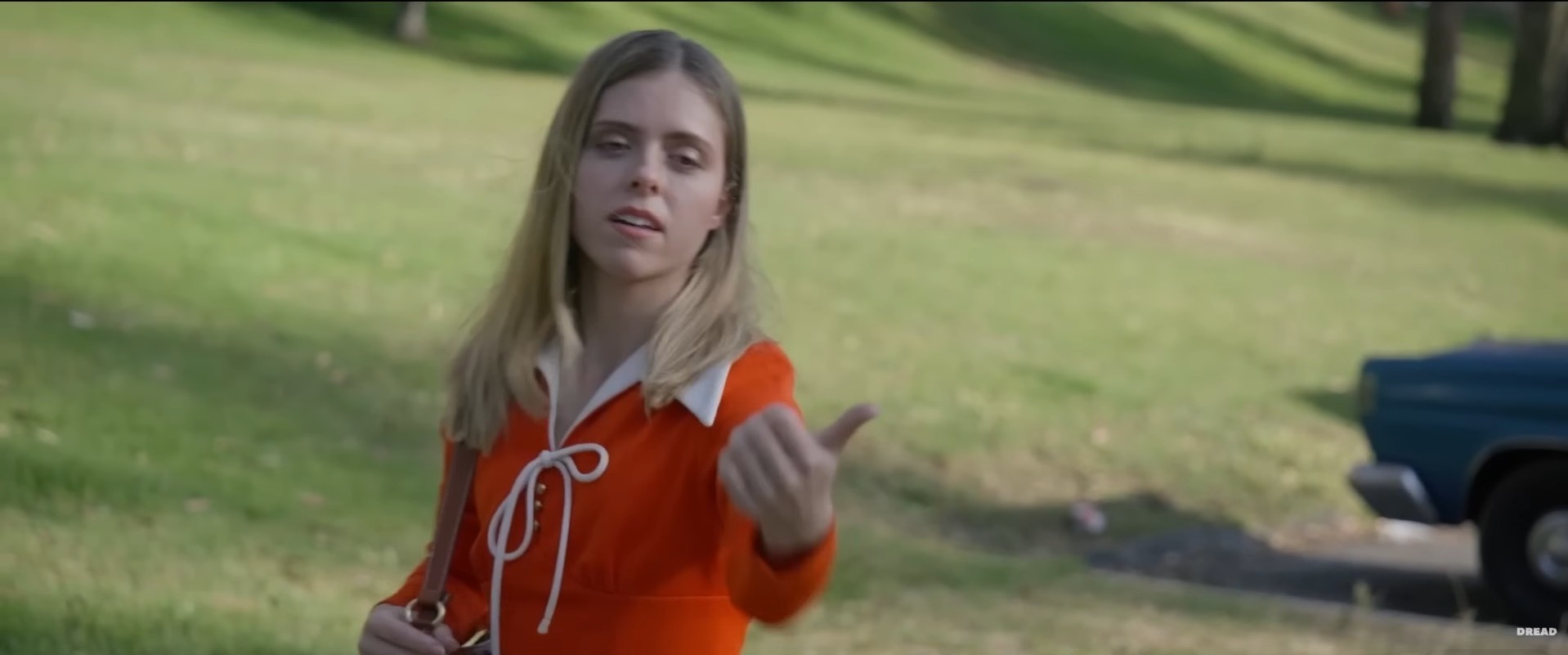
SRS Cinema’s newly restored and re-mastered Blu-ray edition is on AVC encoded onto a 25GB BD-R with 1080p high-definition resolution.  Not that the pixel count really matters with “Video Psycho” and it’s lo-fi videotape that’s neutralizes textures and color and comes with its share of interlacing and tracking issues.  To worry about compression problems, to which there is none within the uncomplex file and its size used for the codec, would be a waste of mental and visual space with an image that does delineate objects to differentiate, implies true hue, and does the job of lower grade, SOV-horror with authentic commercial SOV-qualities of home S-VHS camcorders.  SRS Cinema never really cared about being the picture of health when it comes to quality, so this isn’t off brand for their content and schtick but does heavily play more into the little-known obscurity of home-grown thrillers within its full frame 1.33:1 aspect ratio.  The English mono track offers parallel quality to the video with a static and lo-fi quality that won’t have the pithy impact of a robust and all-inclusive surround sound or even stereo.  Kary’s produced in minor key minimalism and dread score is one of the element’s that be elevated. Dialogue’s hit-or-miss with clarity that’s often impeded by the said interference and poor mic placement, or just the intrinsic issues of an on-board mic.  There are no subtitles available.  With poor A/V quality, why release this film on Blu-ray?  The answer is simply because of the wide-ranging special features that include interviews with the actors who play Ryan’s on-screen and video victims, such as Art Molina, Jennifer Jordan, and Adam Kraatz.  There’s also a feature paralleling commentary track, behind-the-scenes rehearsal footage, deleted scenes, alternate takes, and outtakes.  Plus, the official and teaser trailer along with additional SRS Cinema previews.  The company continues to commission some pretty rad artwork and that is also true here with Belgium graphic artist STEMO who electric saturations of purple, red, pink and blue make for a eye-catching and intriguing roadside killer artwork, even if a bit literal with a thumb up hitchhiker holding a video camera on the side of a blood soaked road in the foreground.  The artwork fits snuggly in between the film layer of a standard Blu-ray Amaray and the disc is pressed with the same front cover image.  The 75-minute feature comes not rated and the Blu-ray is available region free.

Last Rites: An unremarkable, home brewed, strangler picture with little to say, “Video Psycho” has unimaginative idiocy with characters and a narrative conclusion that can be seen a mile away, leaving the SRS Cinema’s title worth only to watch because of its catfishing artwork.

“Video Psycho” on Blu-ray and DVD home video!