The EVIL is Not Just in the Virus, but Also in the Cure! “Side Effects May Vary” reviewed! (Tempe Digital / Blu-ray)

“Side Effects May Vary” From This Blu-ray Drug!

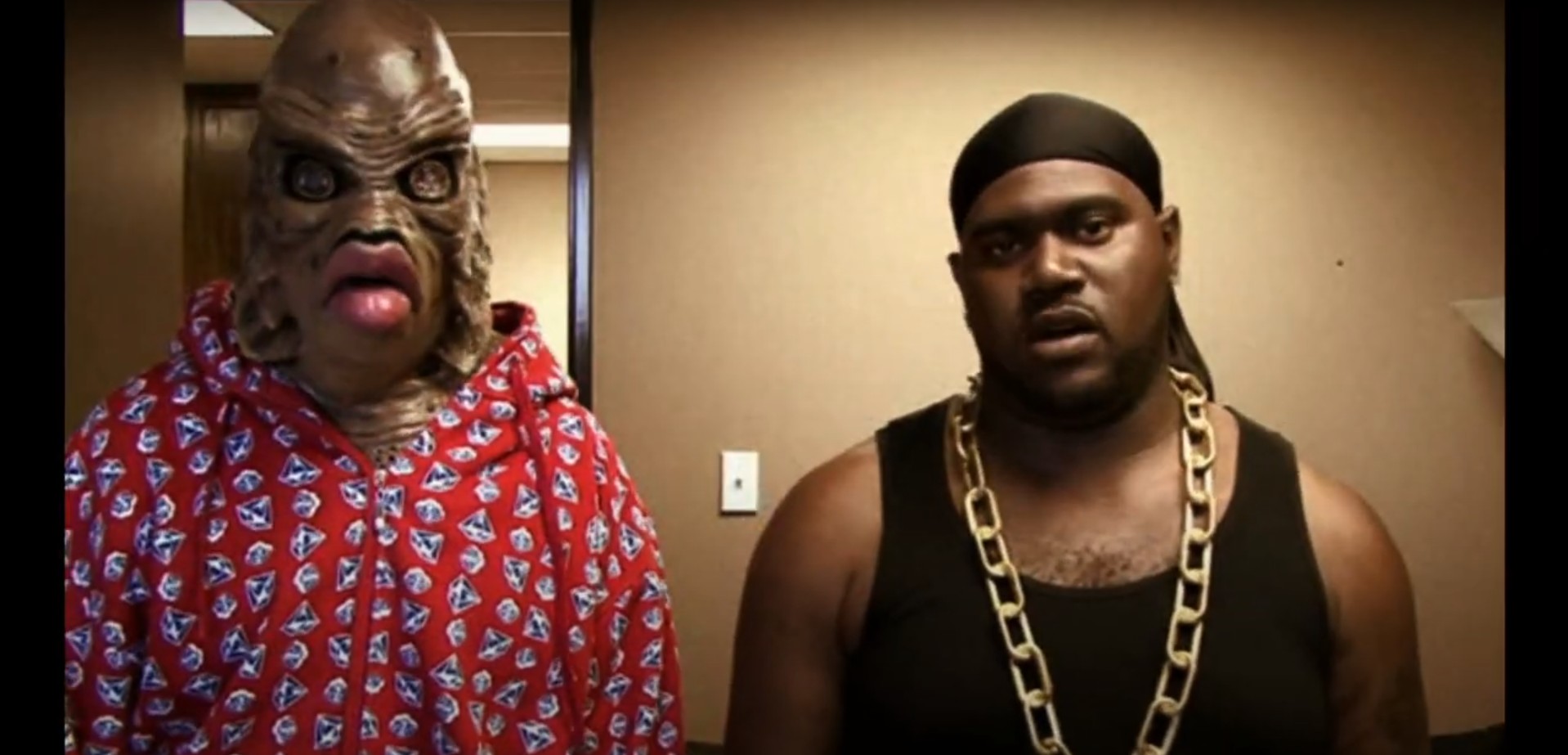
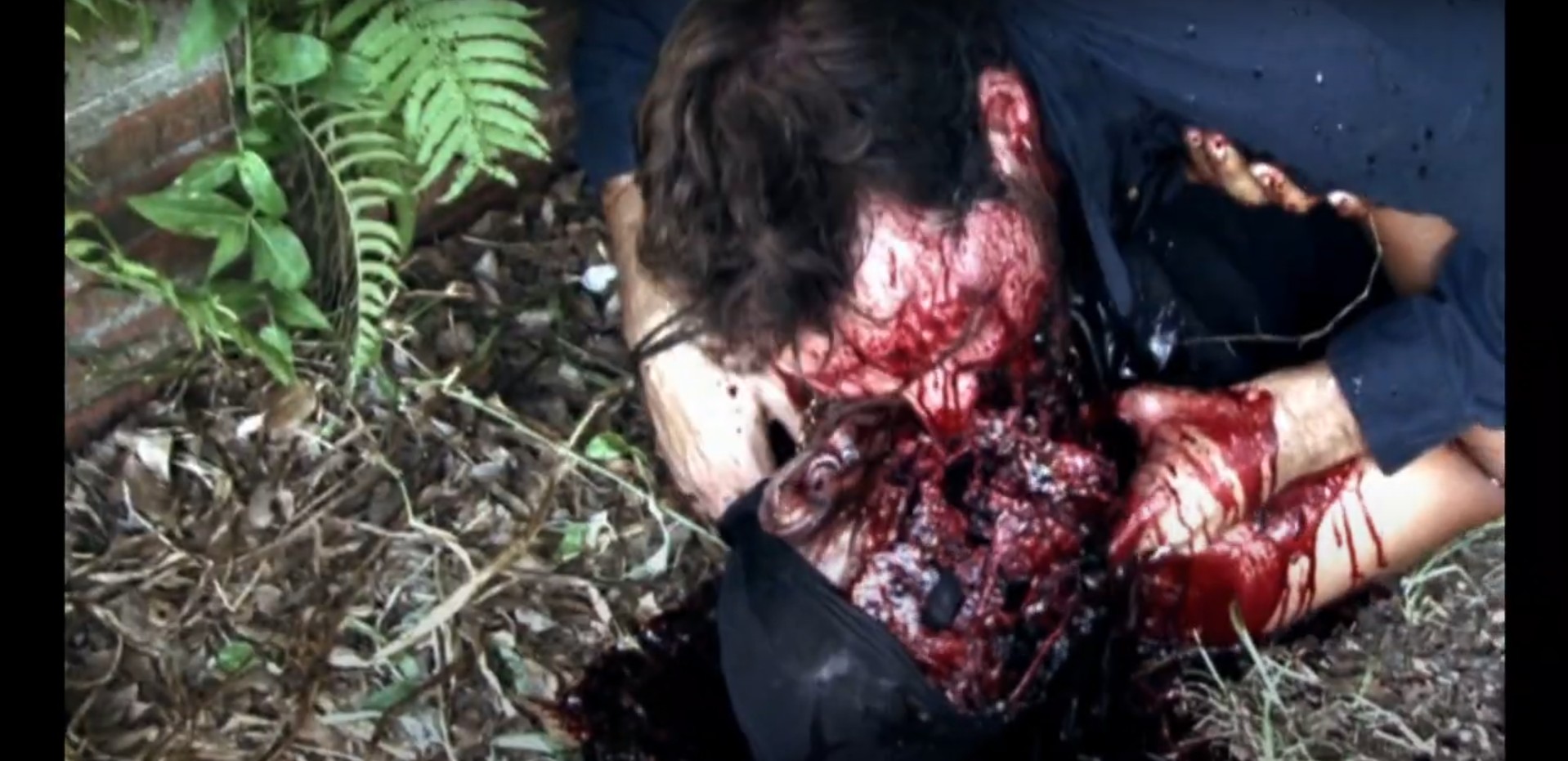
COVID-19 virus has the world masked up and social distancing in full effect with experimental vaccines being rushed toward a rollout.  For Glenn Rollins, being under the weather now for weeks still hasn’t convinced him to inject himself with experimental Government drugs meant to combat coronavirus but when wife Janelle does everything in her persuasive power to convince him to take the vaccine, Glenn reluctantly agrees to receive the shot at his doctor visit the next day.  What Glenn is given is no ordinary coronavirus vaccine, but the new Alpha-21 concoction just released for public intravenous inoculation, an rapidly tested serum that boils subjects from the inside-out.  Instead of completely exploding in a pile of blood and sinew, Glenn’s rare blood type maintains a semi-rigid form and the only way he can maintain from melting into a pile of goo is to feast on the blood and meat of the living in his zombified state.

The cult director behind “The Dead Next Door” and “Robot Ninja,” J.R. Bookwalter, returns to take a hypodermic needle stab at a world-crippling pandemic horror inspired by the COVD-19 virus and how the FDA rushed to approve emergency vaccinations on U.S. citizens in a comically satirical, gore-and-goo-filled comedy-horror.  The movie, “Side Effects May Vary,” is Bookwalter’s first film in over 20-years, the last being “Mega Scorpions” that only saw a streaming release due to a folding in the financing of a distribution deal.  “Psycho Sisters” and “Her Name Was Crista” writer James L. Edwards, who’s collaborated with Bookwalter since the very beginning of the filmmaker’s career, pens the script and also stars in the disturbing desquamation of Glenn role.  “Side Effects May Vary” is the second direct-and-writer production between Bookwalter and Edwards with the first being 1996’s “Polymorph.  As like many of Bookwalter’s films, he produces under his longstanding own indie label Tempe Digital serving as executive producer alongside Edwards producing and wife Lana Bookwalter as associate producer.

I wouldn’t call Glenn Rollins a right-wing conservative antivaxxer but, instead, Glenn’s a doubter of the vaccine’s testing measures with a range of side effects from an experimental injectable could cause from a vaccine so unproven swirling inside his head.  That’s the satirical concept Bookwalter and Edwards put into motion and deliver fully charged as mild-mannered Glenn gorges on the innards of family, friends, neighbors and strangers after unpleasantries arise from an untested product.  The likeable Rollins rears an ugliness brought upon by pressures of vaccination, especially from his wife Janelle, played by indie horror scream queen Tina Krause (“Crimson Nights,” “Bloodletting”).  Another scream queen of legendary acclamation is in on the fun with Brinke Stevens (“The Slumber Party Massacre,” “Sole Survivor”) as the saucy nosy neighbor who knows all the sexual acts by their sporty designations.  We journey from the beginnings of a substance subjugation and are wiggled into a buddy cop scenario between Glenn Rollins’ best friend and former cop turned private eye Jack Murray (Drew Foriter, “Trivial”) and his former boss and one-night-stand Chief Tom Danvers (“Floyd Ewing Jr., “Robot Ninja”) and their sudden thrust into an investigation to find Glen under their distinct impressions of his character, plus that one sexual encounter between them, makes for a good dynamic of sidetracking diversion that interrupts a constant flow, which can get stale, of formality and responsibility of chasing a killer.  The cast Sasha Graham (“Trivial”) as the prescribing primary care physician Dr. Fisher, Wendy Zier (“Trivial”), Tom Hoover (“Ozone”), and David Bachmeier (“Bathtub Shark Attack”) as the first scene test subject of Alpha-21’s explosive results. 

A relief will wash over fans to know J.R. Bookwalter is not dead in the water when it comes to directing.  A long hiatus was exactly what Bookwalter needed to get back to form after a string of mediocre horror that didn’t leave a bad taste in our mouths but wasn’t quite the standard of the Ohioan director’s carnage-laden caliber.  “Side Effects May Vary” spoke to nationwide fears during the global pandemic, in a humorously horrifying way, and even extends beyond that now historical portion of our time into the forefront of our minds that we may have not have yet seen the actual long-term effects of the COVID shots, if any.  The intention of “Side Effects May Vary” is not to instill fear, though does create a fraction of concern, but is more to the tune of exaggerated those once media covered and one-sided fears to the extreme by turning injected patients into boiling potato sacks of putrid cannibalism.  It’s pretty damn funny and gross.  To create a vibrant visual veneer, Bookwalter plays with different lighting angles and color gels of primary neon illumination that takes characters out of the real world and places them into a fantastical neon-noir that surrenders to the sexualized, the scandalous, and the scary story bits and pieces. The buddy-cop, manhunt storyline works as bodies are left as breadcrumbs for the two conflicting investigators that are on the precipice of making a final decision on Glenn Rollin’s fate while Glenn himself battles internally, both physically and emotionally, his wretched state that needs blood to slow down the process of his metaphorizing melting but his mild-manner, nice-guy identity doesn’t want to harm a soul. 

Tempe Digital castrates the COVID cure scare with an incredible liquescent comedy-horror in “Side Effects May Vary” on a director’s cut Blu-ray home video.  The AVC encoded, 1080p high-definition resolution, BD25 comes with a ton of color, contrast lighting, and a decent compression codec that makes the low-budget production appear a step or two up the upscale staircase.  The heavy neon light cuts into the skin and textural details but scenes more naturally lit, such as in the outdoors, fair better with more granular inside a digital presentation in its original aspect ratio of 1.78:1.  There are two English audio mixes available for selection and audiophile setup in a DTS-HD 5.1 Master Audio and a Dolby Digital 2.0 Stereo.  The surround sound selection has a semi-fluid dynamic that works in a contained closed to medium shot arrangement and doesn’t expand to anything beyond to warrant an immersive experience aside from a healthier fidelity of the dialogue, proximity milieu, and the gruesome creature sound effects.  Dialogue can get out of the reigned in alignment that breaks in with sparse unfiltered hissing but otherwise renders cleanly and clearly through the 81-minute runtime.  English subtitles are available.  Special features encoded are an audio commentary with director J.R Bookwalter, a Harris Theater Q&A in Pittsburgh at the Roadshow Opening Night with film guests Bookwalter, writer-star James L. Edwards, and actor Floyd Ewing Jr., a theatrical roadshow cut trailer, a teaser trailer, and the theatrical trailer. Art from the Alex Sarabia and Karl Munster collaboration gives a pulpy artistic rendition of Glenn Rollins oozing deterioration inside a clear Amaray Blu-ray with no supporting supplements other than a cropped version of the art on the disc. The not-rated, region free disc is a perfect cure for what ails you – bad indie comedy-horror done right!

Last Rites: A global pandemic killed millions of people, the silver-lining is now we can look back at that time of isolation and fear and honor those deaths with a coronavirus and rushed-cure blend act worthy of being to the likes of “Bad Taste.”

“Side Effects May Vary” From This Blu-ray Drug!

EVIL Nazis, Mad Lumberjacks, and Insatiable Nymphomaniacs! “Up!” reviewed! (Severin Films / Blu-ray)

It Won’t Be Hard to Get it “Up!” on Blu-ray!

Perverted Nazi, Adolf Schwartz, is murdered in his castle’s hot tub after a masochistic romp with his paid sadists, including male Dom named Paul.  Paul helps run a small restaurant-bar owned by his wife, Alice, and the two have a good thing going about town in working together and making love day-in, day-out.  When busty new neighbor Margo Winchester moves to their quiet, quaint town, she’s immediately raped by the locate hoodlum and kills him defending herself.  Officer Homer Johnson witnesses the entire ordeal and amends his report to reflect the hoodlum was not killed by Margo but rather fell off a cliff in order for him and Margo be constant bedfellows, but when Margo begins to work for Paul and Alice, a quadruple love-triangle ensues and there’s still the matter of who killed Adolf Schwartz in a small wooded community filled up to the brim with massive sexual appetites and ulterior hijinks. 

“Up!” is Russ Meyer’s 1976 released, oversexed gambol bringing with it an explicit nature a polyamorous, sex-for-all, character cast of players riding overtop a threadbare plot of that resembles something along the lines of murder mystery.  Is this Russ Meyer’s attempt the Italian giallo?  Offscreen killer, gloved hands, multiple suspects, most certainly a very vivid fleshy aesthetic, and a big brass jazz orchestra to back it up musically, “Up!” carries most, if not all, of the trademark building blocks that makeup popular thrilling subgenre but tailored in only a pageantry of perversion only Russ Meyer’s knows how to do it from his own imagination and story collaborated with Anthony-James Ryan (“Vixen!”) and the late, esteemed critic Robert Ebert.  Once under the working title of “Over, Under and Up!.” Meyer’s produces his production under his company RM Films International with associate producing credits attributed to long term collaborators Fred Owens and Uschi Digard.

Like most of Meyer’s auteur films, “Up!” is a quirky plotted story with quirky plowing characters converging into idiosyncratic copulating chaos surrounding a singular problem.  The cast of charactes are just as eccentric and eccentrically written as the inside of Meyer’s rapid storytelling and no-nonsense nudist eye.  Multiple principal leads create a confounding multi-string focus with an esemble character contingent that receive their own backstories, their own emphasized subplot tangents, and they crisscross paths with each other through an array of coitus montages that’s it would be no surprise if this small woodland community all had raging case of singularized strain of syphilis.  “Up!” opens with the masochist perversions of a Hitler variant in Adolf Schwartz (Edward Schaaf, “The Flesh Merchant”) in the throes of being self-purposefully exploited by bosomy gimp The Headperson (“Candy Samples, “Beneath the Valley of Ultra-Vixens”), the ball-bustin’ Ethopian Chef (Elaine Collins, “Fantasm Comes Again”), the Asian persuasion Limehouse (Su Ling, “Ilsa, Harem Keeper of the Oil Sheiks”), and whip-master and male dom Paul (Robert McClaine, “A Very Natural Thing”).  Paul’s the only character to continue through the story narrated nakedly through our breaking the third wall maestro, The Greek Chorus, played lively and in a state of fully and forever buff by former Russ Meyer wife and adult film star Kitten Navidad in her first principal acting role.  Paul along with Alice (Janet Wood, “Fangs!”) have a more stable presence in the story and same goes for who would likely be “Up’s!” lead character Margo Winchester (Raven de la Croix, “The Lost Empire”) and one of more prominent male lead characters, officer Homer Johnson (Monty Bane, “Sleepwalkers”) in a fervorous fit of philandering and fuc…I mean sexing…between the four while running the town full of loggers and locals on Alice’s grand opening of her second restaurant jamboree.  There are other side characters too that come and go, have more stage presence than others, but are always circled back to in flashback and in the Greek Chorus’s audience-directed commentating of suspicion and events, such the lesbian truck driver Gwendolyn (“Linda Sue Ragsdale), rapist Leonard Box (Larry Dean), the smoking peace pipe that is the stark naked Pocahontas (Foxy Lae), and Bob Schott (“Gymkata”) as the large grunting logger Rafe.

If what’s been described hasn’t been clear, perhaps to my horrendous descriptive writing no doubt, “Up!” has a political correctness that goes right into the garbage in scene one with a thrust-hard jab right at Adolf Hitler’s sexuality in the most hardcore and kinky perversity and, from there, plenty of other sexual objectifications against men and women, Native Indian American stereotyping, teetering racial commentary, and an overall nonchalant air quality on intimate encounters in Meyer’s inclination for spoof, satire, and sex.  Meyer shows no shame, remorse, or even letting his lead foot off the break toward the highly energetic debauchery between character carnality and his rapid-fire editing style that, as like throughout his career, has been seamlessly well put together to keep continuity integrity and make sense of the whole damn bedlam of frenzied bedding, violence, and fornicating flashbacks, but it must be noted that Meyer’s giallo with gusto storyline is severely stretched thin.  Unlike the “Beneath the Valley of the Ultra-Vixens” that was released a couple of years later, the same harnessed liveliness charged through both films is not as focused in “Up’s!” common core narrative primarily because of the continuously dwelled upon flashbacks of reintroducing characters repeatedly to build suspicion upon those possibly “Clue”-like designed list of suspects.  Campy and a jovial orgy, peppered with some tension and bloodshed excellent junctures, “Up!” is above and beyond a good time sexploitation drivellers will treasure. 

The latest release from Severin’s Russ Meyer’s Bosomania collection is “Up!” now on a 1080p high-definition, AVC encoded, BD50 Blu-ray presented in a widescreen 1.85:1 aspect ratio.  Scanned and restored in 4K from the original 35mm camera negative, “Up!” visually tickles the right spots with a vibrant and naturally granulated presentation, balanced in its color diffusion, and accurately represented and reproduced skin and texture tones to enhance the period’s cinematic appearance.  As far as pristine prints, the 35mm stock has held the test of time in its preservation without any major damage or plight hiccups aside from the more protuberant dust, dirt, and smaller scratches.  Contrast levels are a minor sore point in rendered night scenes that reduce delineation for more the nighttime effect but doesn’t hurt the overall value and restoration efforts.  The English LPCM mono track lacks the vitality as any fidelity true reproduction through a surround mix may offer as “Up!” is a fast-paced, ripping-and-roaring, chorus of sights and sounds meticulously constructed by the auteur himself but the mono honestly enthusiastic and we’re still able to distinct each note and ruckus through Meyer’s rapid-fire A/V design compositions, captured precising and without interference or intrusion through post Foley and dubbing work.  Same goes with ADR that’s always seemingly 2 or 3 layers above the rest of the soundtrack as Meyer’s script is flamboyantly dialogue heavy with Kitten Navidad’s narration of events and plenty of vocal deluge for flirtatious affairs by way of innuendo and blunt channels.  English closed captioning is available on this release.  The special features are not as plenty on “Up!” as they are on other Bosomania releases with an audio commentary by film historian Elizabeth Purchell, who was also on the previous Russ Meyer collection titles, an archived interview No Fair Tale….This! from The Russ Meyer Trust with star Raven De La Croix, and a radio spot for the feature.  Displayed like the rest with a primary red and black board surrounding white padding, “Up!” is down with the deep cleavage of Raven De La Croix on its one-sided cover art.  Inside the black Blu-ray Amaray, the disc is pressed with the same image but with greater resolution detail of Margo Winchester’s best assets in an open cut dress.  The region free release has a runtime of 80 minutes and is unrated.

Last Rites: A romp tour-de-force, “Up!” and the rest of the Russ Meyer’s Bosomania collection is Severin Films’ most bust-filled merry-go-rounds that’s one-part Benny Hill, one-part Fanny Hill, and all parts an sexploitation extravaganza.

It Won’t Be Hard to Get it “Up!” on Blu-ray!

EVIL Chews Through Its Own Loved Ones as “The Vourdalak” reviewed! (Oscilloscope Laboratories / Blu-ray)

“The Vourdalak” Available Now at Amazon.com!

The special emissary of the King of France is ambushed by Turks in an isolated Slovic countryside.  With his carriage and clothes stolen and his driver-servant dead, Monseigneur Marquis Jacques Antoine Saturnin d’Urfé has nothing more than the clothes on his back.  He finds himself in the home of Gorcha, an enemy of the Turks, who resides with his three adult children, a daughter in law, and a grandson, but Gorcha was not presently there to greet his hapless visitor until his returns later that day from fighting the Turkish raiders.  Yet, aside from the oldest son Jegor, the family’s superstitious beliefs lead them to doubt Gorcha returning home human and instead has returned as vourdalak, or a blood hungry vampiric creature who feeds on his own loving family to turn them all into the same unnatural ilk.  From an outsider’s point of view, what Marquis d’Urfé witnesses initially is a strange peasant family’s irritational fear turn into a harrowing horror as one-by-one the family members reach an unfortunate end after the return of Gorcha.

Based off the gothic novella “La Famille du Vourdalak. Fragment inedit des Memoires d’un inconnu” from Russian author Aleksey Konstantinovic Tolstoy, a story that plays on the etymology of the Slavic folklore word Wurdulac, or a vampire-like creature, that exacts a similar transpiring fate as described in the above plotline of Adrien Beau’s “The Vourdalak.”   The writer-director fleshes out the 1839 Tolstoy story, one that’s predates Bram Stoker’s “Dracula” by nearly 60 years, for his own period set rendition created for modern times almost two centuries later in 2023 as his debut feature-length film.  The French film is cowritten alongside Hadrien Bouvier who doesn’t depict the vampiric creature as a nobleman, or even a man of wealth, but rather as a likely lowly serf of the countryside under a noble or lord.  Yet, the script, very much like Tolstoy’s novella, is contained within the family and their home rather than expanding across continents and seas, as in Stoker’s “Dracula.”  “The Vourdalak” is produced by “Alone in Berlin’s” Marco and Lola Pacchnioni and Judith Lou Lévy (“Zombie Child”) under the production banners of Les Films du Ball, Master Movies and, in association with, Cinemage 17 and Amazon. 

A period piece with an intimate cast brings closer together the targeted era of late 18th century to early 19th century costuming, articles, and, to extent, performances that sell the monarchial times of French aristocracy and Slavic provincials living humbly on the fringes of an everlasting Russo-Turkish war that spanned decades.  Leading the charge is the only French aristocrat portrayed character in the story played by Kacey Mottet Klein (“The Suicide Shop”).  Dressed in traditional Empiric style high collar shirt, petty coat, and a white wig and garishly garnished with white pale-looking makeup with mouche, an adhesive mole, to reflect their wealth and status, Klein’s prim-and-proper, yet prudish and prissy, Marquis Jacques Antoine Saturnin d’Urfé is finely out of his element with a satisfiable character arc that has the Monseigneur go from a squeamish snob to finding compassion, sympathy, and courage amongst darkness aimed to swallow a family whole as d’Urfé’s high society and fantastical life clashes with the real world with war, necessity, death, natural beauty, unconventionalities, and consideration through another type of fantasy lens, a troubling, insidious darkness that plagues and feeds on the blood from within a domestic design that’s ruthless as it is unfathomable.  Jegor (Grégoire Colin, “Bastards”) is the loyal eldest son, Piotr (Vassili Schneider, “The Demons”) is the sexual orient ambiguous second son with external emotions unlike his other brother, Sdenka (Ariane Labed, “The Brutalist”) is the free-spirited but melancholic beauty, Anja (Claire Duburcq, “She is Conann”) as Jegor’s more than practical and realistic wife and young Vlad (Gabriel Pavie) is Jegor and Anje’s preadolescent boy.  The aforenoted characters are all embodied by a physical, living person to play the role but Gorcha is a horse of another color.  In fact, Gorcha’s not a living thing at all and is actually a puppet personified by two puppeteers and voiced by director Adrien Beau.  The puppet has an emaciated appearance, resembling closely to those used in “Return of the Living Dead, and with the power of green screen, the animating arms and bodies are overlayed out and Gorcha lives and breathes with an animatism spirit that’s creepy as all Hell with an underscoring tow of vampirism. 

In its essence, “The Vourdalak” embraces the simplicity with a less-is-more atmosphere, a self-assured reliance in the palpable and practical, and a confidence in its cast to extract the drama and horror of a longstanding folklore and deliver its poignant potency with eccentric diversity and steady anxiety.  Beau drenches dread into every crevice that sticks like humidity to its subdued black comedy attire.  Yes, “The Vourdalak,” though grim and dark, has a sliver of comedy course through its bloodlet and lapped up veins from the main character’s perspective who, at first, is quite out of his comfortable, aristocracy element being wiggled into a lower-class family’s unusual dysfunctionality.  There’s also the puppet aspect integrated into living, breathing actors as if one of their own and that certainly as a basic layer of absurd surrealism, the French know a thing or two about liberal arts absurdism.  Beau’s shooting style resembles a blend between the fixed camera and low-key lit silent films, also implementing throwback spyglass shots that were widely used in the early cinematic period, and the Euro-horror movement of the 1960s to early 1980s with an ominous romanticism, a dark and creepy-fog environment, and tinged to cooler shades of soft blues and greens all the while lightly touching upon themes of sexuality, homosexuality, and family structures that often collide with one another to stir the pot and overshadows the imminent danger in front of them. 

“The Vourdalak” is unpredictably grotesque in the most amusingly macabre way and is now on a region free Blu-ray release from our friends at Oscilloscope Laboratories.  AVC encoded onto the BD50, the high definition, 1080p resolution, might throw audiences and purveyors of physical media for a loop when the picture isn’t as fine as expected for a modern released picture.  That’s because Adrien Beau shot “The Dourdalak” in Super 16mm that enlivens a grainy and soft toned picture that can appear slightly blurry, resembling the ilk of European horror from the 1960s-1980s  Presented in an anamorphic widescreen 2.35:1 aspect ratio, Beau is very committed the coldness of bleak grays, blues, reds and the variant fused shades of purple, pink, and teals that sparingly envelope the entire frame with a lens tint in surreal moments, such as fever dreams or emulated night shots.  Though unfocused at times, plenty of distinction can still be rendered, such as the very stooge features and qualities of the Gorcha puppet.  The French DTS-HD Master Audio stereo track is an audio sensory mini-triumph.  In its modest sound design, minor qualitative sounds instill creepy atmospherics, especially the sound prominence of a raw chewing theme associated with the vourdalak creature’s folklore.  Adrien Beau also better animates and personifies his Gorcha puppet with a wheezy and struggling voice over for who is supposed to be a very elderly father-grandfather in an undernourished and skeletal appearance with sunken, bulging eyes and a near fully exposed teeth. The special features include two of Adrien Beau’s short films “Les Condiments Irreguliers” and “La Petite Sirene” as well as a behind-the-scenes featurette that’s more of the raw footage of animating and acting the Gorcha puppet without the visual effects removing the puppeteers. The Oscilloscope Laboratories Blu-ray comes in a clear Amaray case with soft, airbrushed quality composition artwork of a calm Marquis Jacques Antoine Saturnin d’Urfé being feasted upon around his neck by the vourdalak. The reverse side contains a still image of a medium-far shot of one of the more powerful images in the film of a graveyard d’Urfé passes through as if it was a revolving doorway in and out of death. A simple yellow title and label name are splayed across the disc, consistent and normal per the company’s design, and the film is not rated with a runtime of 90 minutes.

Last Rites: Rarely do I give a five-star review for a film but Adrien Beau’s “The Vourdalak” is a fascinating and frightening visualization of Aleksey Konstantinovic Tolstoy story that trades visceral images for palpable ones in a folkloric entrancement of unnatural beings disrupting the natural world, a concept worth chewing on the nape of the neck for.

“The Vourdalak” Available Now at Amazon.com!

Desert Rats Doing EVIL To Anyone Crossing Their Path! “Motorpsycho!” reviewed! (Severin Films / Blu-ray)

“Motorpsycho!” on a new 4K scan Blu-ray from Severin Films!

Three motorcycle hooligans on their way to Las Vegas through the Mojave Desert ride up on a smalltown Veterinarian named Cory Maddox and his voluptuous wife Gail.  A minor brush with the gang does little harm to the Maddoxes and the couple move on with their life certain the gang has moved on to the next town, but little does Cory know while on a professional checkup of a local mare, the gang invades his home and violently rapes his wife.  Hellbent for vengeance, Cory tracks their transgressive escapades through the arid landscape and comes across Ruby, a beautiful woman left for dead after her husband is gunned down and she herself being grazed by a bullet fired by the same delinquents.  The two track them down into an inescapable, unidirectional corner of the desert but with both sides facing car trouble, injury, and seeping slowly into mental instability, only one side will come out alive. 

By and large, “Motorpsycho!” is the Russ Meyer helmed B-picture that side straddles less explicit content.  The 1965 exploitational action feature, that sported less-than-speedy Honda Trials, flirted with bare-chested women, and immersed itself in light and dark innuendo, is nestled amongst two other Meyer films, “Mudhoney” and “Faster, Pussycat! Kill! Kill!,” released the same year and are showcase of unscrupulous violence and sexual content and innately sets the stage for Meyer’s bosomy and barren set movies that bestowed the former World War II photographer turned sexploitation director accolade success later in his career with the “Vixen!” branded films.  “Motorpsycho!” is co-written by Meyer and fellow “Mudhoney” writer William E. Sprague from an original idea from the screenwriters along with James Griffith (“Russ Meyer’s Lorna”) and Hal Hopper.  The Meyers, being Russ and wife Eve, produce the story in cahoots with Ross Massbaum (“Beach House”) and is produced and distributed theatrically by Eve Meyer’s Eve Productions.

The way Meyer sequences the “Motorpsycho!” story is an ebb and flow of events that culminate into a showdown and audiences, perhaps, won’t know exactly who the leads are until well into the chaos, such as with the female principal lead Ruby, a Cajun woman down on her luck travelling in a forced by necessity marriage to an older man in order ot start a new life in California, played by Haji, a Canadian dancer with a unique face and beautiful curves who caught Meyer’s eye for “Faster, Pussycat!  Kill!  Kill!”   For a new actress, Haji is impeccable and easy on the eyes while working off another first-time actor, principal lead Alex Rocco (“The Godfather”), playing vengeful veterinarian Cory Maddox.  Haji and Maddox have unquestionable sexual chemistry and tension despite their slight platonic relationship of seeking revenge as Meyer provides a great deal of sexual innuendo and reference instead, beating around the bush for the ultimate tease.  Don’t worry, “Motorpsycho!” doesn’t hang around the coquettish scene for entire duration as there’s plenty of one-on-one racy and salivating spiciness to sate sexploitation fans between the playful bedtime arousals of Rocco and on-screen wife Lane Carroll (“The Crazies”) and the playfully aggressive rape of Carroll and a fisherman’s wife a bikini-cladded large bosom.  “Motorpsycho!” has a man to woman ratio that strays from the normal Russ Meyer credits with the female cast rounding out with Sharon Lee in her usual typecasted role of a blonde bombshell and, more specifically in this story, a mare-owning flirt for Cory Maddox’s services.  While not a large breasted woman craving sex in every episodic scenario, this Meyer run has an interesting arc for the three ruffians who initially start with copasetic unity in their troublemaking fun through the Mojave only to end themselves in disbandment of backstabbing and derangement in unswerving performances from Timothy Scott (“Lolly-Madonna XXX”) as the handheld radio melomaniac, Joseph Cellini (“Beyond the Valley of the Dolls”) as a hip cat love-taker, Steve Oliver (“Werewolves on Wheels”) as their military vet leader with a stoic expression but unpredictably violent.  “Motorpsycho!” rounds out the cast with Coleman Francis (“Beyond the Valley of the Dolls”), Steve Masters, Fred Owens (“Supervixens!”), George Costello and Russ Meyer as the unsympathetic, cynical Sheriff.

Not as sordidly sleazy or insatiably randy as many of the Russ Meyer films we all know and love for their perky antics, voluptuous vixens, and zany comedy with a isolated desert town backdrop, “Motorpsycho!” is virtually nudity free in comparison to his thereafter work and shot entirely in black and white that, too, tones down the situationally shaded situations of diverging sexual overdrives that conclude around a centered focus, usually around something sexually themed.  That’s not to say just because production year is in the cinema puritanical early 60s and is in black and white does that mean the film goes without a fair amount of brief nudity as Meyer slips into a couple of nipple slipping instances and countless sideboob that would be deemed too salacious for media content harking back 60-years ago.  Innuendo has always been fair game in all sorts of production sizes and studios but couple what Meyer has done with the sexualized material with the gang violence and what you have is one of the earliest known grindhouse pictures prior to its monikered labeling in the 1970s.  Production value and authenticity floats around the low-budget spectrum with a film titled “Motorpsycho!” that spends what little funds there is to supply Honda Trials that are more the speed and look of Mopeds than motorcycles, but Meyer competently adds and edits fast paced car chases, the discharging of a single pump action rifle, and a curtain calling explosion with body prop fragmenting special effects to level up the value where it counts. 

The Museum of Modern Art and Severin Films restore and scan Russ Meyer’s “Motorpsycho!” onto a new 4K transfer from the original camera negative and encode the transfer onto a new Blu-ray release as part of the Russ Meyer’s Bosomania collection.  The region free AVC encoded, 1080p high-definition, BD25 is a perfect, snug fit for a well-endowed black-and-white feature restored to a virtually free of dust, dirt, and damage.  Meyer’s an eclectic electric editor and every transition is smooth and robust without fading reduction of quality in the rapid, rambunctious edits of his assembling panache.  Though in black-and-white, details don’t suffer from monochromic flattening and every inch of desert is captured with precision, every bodily curve is shapely contoured, and even when a resembled nights dims the lights, there’s plenty of definition of outline to let the mind do the rest of the work with textures and delineation within the presented 1.85:1 widescreen aspect ratio.  The English LPCM 1.0 track is about as expected, flat, but pumps through the single channel with great vitality and strength to be an effective, agreeable sound mix that, again, sees little-to-no distortion or interference.  Dialogue renders over clean and clearly without hissing or crackling in its ADR form with obvious but little asynchronous measure between visual and audio.  Closed captioning English subtitles are available.  Severin Films compiled special features, in association with the Russ Meyer Trust, include an audio commentary with queer film historian Elizabeth Purchell and “Malevolent” editor and filmmaker Zach Clark, archived interviews with stars Haji and Alex Rocco Desert Rats on Hondas, and the film’s trailer.  Primary red boxes in a mustard yellow background cover art with Steve Oliver and Sharon Lee providing the film’s genre caliber with fast bikes and big breasts plastically encased inside a black Blu-ray Amaray with the inside disc pressed with the same image, following suit to the previous first three Bosomania installments of “Vixen,” “Supervixens,” and “Beneath the Valley of Ultra-Vixens.”   The region free release has a runtime of 74-minutes.

Last Rites: “Motorpsycho!” is Russ Meyer convincing us he’s more than just a T&A sex hound with a 100% pure exploitation revved up with revenge, violence, and sordid sexual behavior.

“Motorpsycho!” on a new 4K scan Blu-ray from Severin Films!

Experimental, Recreational Drug Use in College has Killer, EVIL Effects! “Blue Suneshine” reviewed! (Synapse Films / 3-Disc 4K UHD, Blu-ray, and CD Limited Edition Set)

Trip Out on Synapse’s Limited Edition “Blue Sunshine”

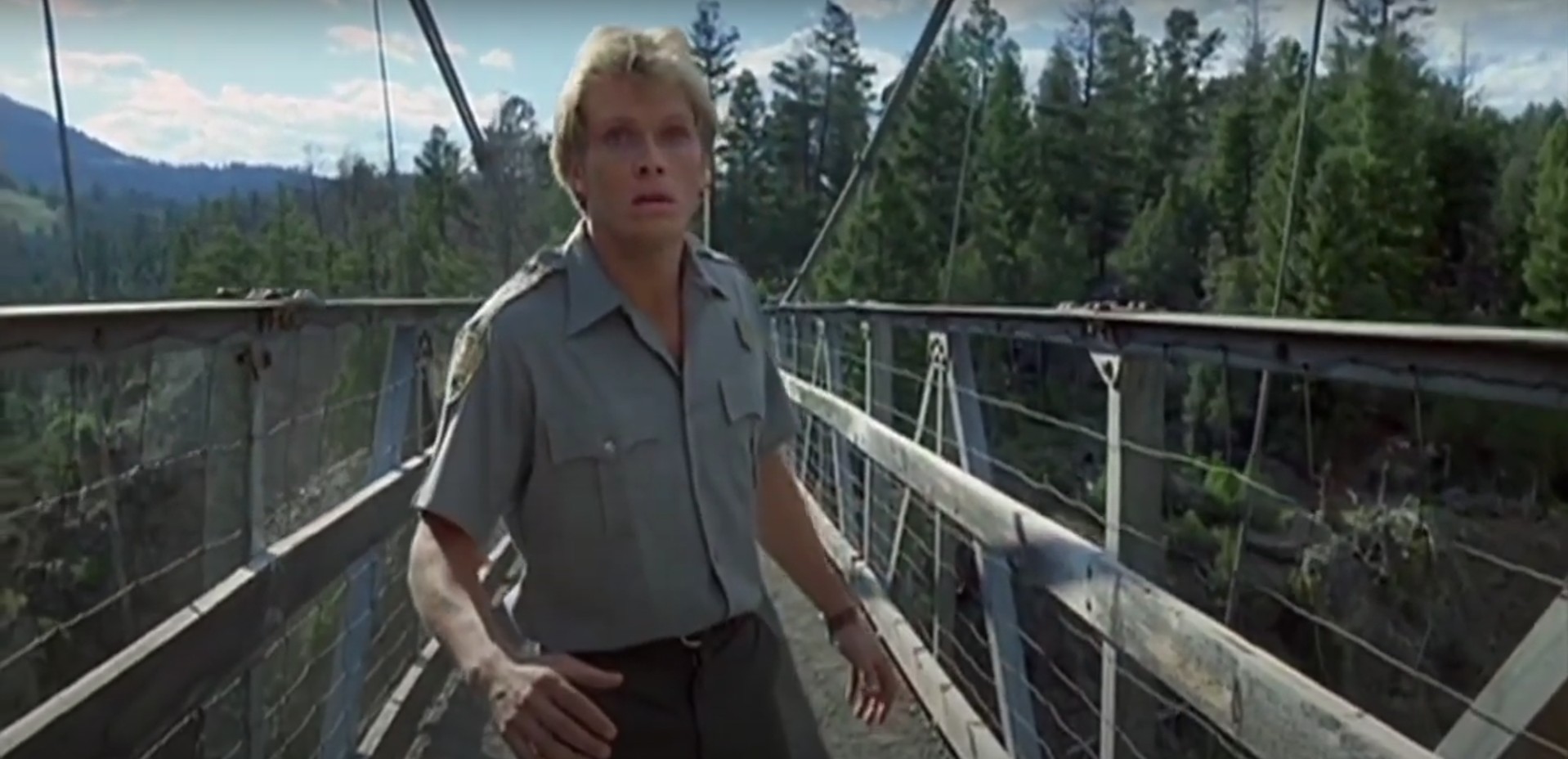
A party between friends turns deadly when one of them goes into a violent frenzy after being reveled his loss of all his hair.  Blamed for the murders, floating through life Jerry Zipkin is evading police investigators while also trying to connect the pieces on why a good friend of his would suddenly turn into a madman with no body hair and with five times the strength of any ordinary man.  His own investigation leads him to Blue Sunshine, an LSD variant connected to every transgressive event similar to the party, and at the center of it all is congressional frontrunner Edward Flemming who peddled Blue Sunshine 10 years ago at Stanford.  The latent consequence is now slowly surfacing to a head and more people are starting to experience the aggressive, alopecia effects, all Zipkin has to do to prove his innocent and a major ticking timebomb is to take a sample from a living specimen to show aberrant chromosome damage caused by the designer drug. 

Before becoming outed and investigated that the U.S. government experimented LSD on human subjects and it’s unknown but possible dormant side effects of years later, writer-director Jeff Lieberman put theory into sensationalized practicality with his post-psychedelic horror “Blue Sunshine” that turned ordinary, friendly people into headache-induced phonophobia sufferers and hairless, homicidal maniacs with super strength.  Lieberman’s 1977 released film snugs in between his killer Earthworm creature feature “Squirm” and one of the better backwoods slashers titled “Just Before Dawn,” tackling with themes of adverse effects from manmade drugs, political corruption, and to never judge a book by its cover.  The film is produced by “Squirm’s” George Manasse with “He Knows Your Alone” and “The Clairvoyant” producers Edgar Lansbury and Joseph Beruh serving as executive producers on the Ellanby Films production.

While the plot point that pushes Jerry Zipkin in the direction of investigation of the sudden fury and death surrounding his friend treads a threadbare rope with little background to suggest Zipkin is characteristically dedicated, loyal, curious, or all of the above to find out what happened, Zalman King’s overall performance as the path unaffixed Zipkin overshadows those missing background pieces and motivations.  In more key precise terms, Lieberman’s misdirection toward King’s erratic and strange behavior puts a lot of the focus on Zipkin rather than obvious derangement of the latent LSD maniacs with corrupted chromosomes in what was meant to puzzle the audiences in believing Zipkin himself might be the loose cannon cause behind the murders or, even perhaps, another ignorant victim of blue sunshine, which the latter would have been more intriguing and powerfully motivating for the Zipkin character as what drives him to solve the mystery and save himself.  None of the relationship resolve any type of secure or genuine interactions, specifically with Alicia Sweeney (Deborah Winters, “Tarantulas:  The Deadly Cargo”) with an unrealistic strong undying love for Zipkin despite only knowing him for a couple of months and the entire Stanford contingent from a decade earlier who Zipkin was able to easily link together within a matter of seconds of either examining a bloody crime scene or meeting a pair of the blue sunshine fiends.  One of the better, solid bonds is between the will-do-what-it-takes congress candidate Ed Flemming (Mark Goddard, Lost in Space) and his towering former college football buddy Wayne Mulligan (Ray Young, “Blood of Dracula’s Castle”) who becomes Flemming’s 6’6” advisor and bodyguard.  While might not seem like a well-rounded bond, Flemming and Mulligan have something tangible one can grab and understand when compared to other dynamic relationships that float in arbitrary.   Robert Walden (“Rage”), Charles Siebert (“Tarantulas:  The Deadly Cargo”), Ann Cooper, and Stefan Gierasch (“Carrie”) costar. 

“Blue Sunshine’s” premise has long stood the test of time because its more relatable now than ever as scientists and medical experts are in a fluid state of studying the effects of drugs digested, snorted, injected, or smoked weeks, months, years, and decades ago.  This premise also translates over to contaminants that cause sicknesses, such as the link between asbestos and cancer were tumors form years after exposure.  Lieberman catches wind early of the dangerous latent effects and manipulates it for the basis his film that is more fact than fiction.  Lieberman’s ability to minimize assurances on who is transfiguring into a killer is all in his characterizing nuances, shading in gray areas with excellently crafted character profile vignettes in between the opening credits that instill suspicion, fear, and some unknown stemmed danger ahead.  The unique setup is the filmmaker’s only real unconventional course in the narrative that plays out mostly a routine hand in a natural style albeit the surrealism of extreme closeups and angles on bald headed balefulness when the rage takes over or the slow, insidious madness that seeps into Zipkin’s mind causing hallucinations to exact an audience experiencing disturbance in the envisaged air.  Engaging and self-security eviscerating, “Blue Sunshine” is carbonated madness in a bottle, shook up and ready to pop. 

Synapse continues to upgrade their catalogue with Blue Sunshine next on the augmentation block with a new and mighty 3-disc Blu-ray and 4K UHD restoration release.  Presented in Dolby Vision HDR10, the restoration of the original 35mm camera negative sees it’s 4K transfer compressed with a HEVC codec that produces 2160p and is stored onto a BD100 while the Blu-ray is a compressed AVC, 1080p resolution, on a BD50.  The restoration will blow you away with diffused color palette and organic details that by far are the best they’ve ever looked with a balanced, natural grain level that keeps the speckling down in darker portions of the film to retain inkiness while securing the authenticity of the film stock without any smoothing over and artificial enhancements.  Vivid coloring, immersive details, and natural skin tones, when not softly grayed by the drug’s effects, throughout are appreciatively stable with no qualitative loss between cuts, creating a pleasurable and seamless visual experience on both formats.  Each format comes with two English audio options, a lossless DTS-HD master audio 5.1 surround sound, supervised and approved by director Jeff Lieberman, and a lossless DTS-HD master audio original theatrical mono 2.0.  While the amplification of the same sound output through the dual channels is inviting for purist, I highly recommend the immersive 5.1 surround sound that retains the genuine article of audio fidelity.   Charlie Gross’s orchestral strings instruments, percussive gongs, and synthesizing score fully engrosses the characters and audiences alike into a fold of unnerving, lingering tingles that evoke the monstrous maniac effect possibilities beyond the Jerry Zipkin tale.  Dialogue renders over with fine precision that hangs on every word and sentence with no hissing and crackling to obstruct it’s sweeping clarity.  A bountiful amount of Mind-Altering special features that fill this limited to 4000 copies set that include a new feature prologue introduction with director Jeff Lieberman.  There are two audio commentaries, an archived 2003 interview with Lieberman, a Channel Z Fantasy Film Festival ”Lieberman on Lieberman” interview with the director hosted by “Sleepwalkers” Mick Garris, a Q&A video from the Fantasia Film Festival 4K premiere moderated by Michael Gingold and Lieberman, an anti-drug scare-film “LSD-25” from 1967 and “LSD:  Insight or Insanity?” From 1968 from the American Genre Film Archive, Jeff Leiberman’s first film “The Ringer” with two cuts of the film, the original uncut version from the projection print source and the final release from the remastered Synapse Films 4K transfer with audio commentary included on the uncut version by Jeff Leiberman and moderator Howard S. Berger, still gallery and theatrical trailers. Synapse’s limited-edition boxset is nothing you’ve ever seen before from the company with not only a rigid slipbox case but there’s also a cardboard O-slipcover, both housing the clear, inch-thick Blu-ray Amaray case and both showcasing new illustrative, compositional, air brushed artwork of some of the key character scenes and expressions by Wes Benscoter, which is a real thing of beauty. The Amaray cover art is the regular 70’s grade cover art seen on previous releases from DVD to Blu-ray with a reverse side an image of the tripped-out Ed Flemming icon photo of his drug peddling days at Stanford. Overlapping 4K and Blu-ray discs display graphic presses in story moment compositions, though I don’t recall a half-naked woman in the film yet is on the cover. Not quite yet done with the bonus material, the 3rd disc is a 13-track Soundtrack CD of the score and laid overtop is the 11-page liner note booklet from Jeff Lieberman’s 2020 memoir “Day of the Living Me: Adventures of a Subversive Cult Filmmaker From the Golden Age,” plus the CD track listing, production credits, and special thanks on the backside. A reproduction of the original one sheet poster is stored in the insert as a mini-folded poster along with Synapse’s 2024 catalogue for your perusing pleasure. The rated-R film has a runtime of 95 minutes, and the limited edition doesn’t limit itself to a confined playback with region free decoding.

Last Rites: In order to snag a copy of this stellar Synapse set, muscles are required as this heavy boxset feels like 5lbs of software and hardware special features regarding Jeff Leiberman’s drugs-are-bad thriller “Blue Sunshine” with chrome dome, blank-stare killers doing the dormant bidding of 10-years-old recessed LSD.

Trip Out on Synapse’s Limited Edition “Blue Sunshine”