Oh, Unholy, EVIL Night! Oh, “Silent Bite” reviewed! (Cleopatra Entertainment / Blu-ray)

Santa Clauses vs Vampires in “Silent Bite” Now Available!

Four armed bank robbers hold up in a sleepy hotel on a snowy Christmas night as they hunker down and wait for their police-diverting and getaway driver to double back for them.  With the front deskman on the take, a quiet place to shelter, and no cops in sight, the eclectic bunch of thieves believe they’ve escaped scot-free from the long arm of the law with $1 million dollars in cash.  Unbeknownst to them, the desk clerk didn’t disclose the other guests staying at the hotel, a vampire mistress and her three daughters who have been hidden away waiting for the felons’ arrival to feed on their blood.  Refuge becomes an inescapable trap as the nearly unstoppable and ruthless force of beautiful, deadly women bear down on the scantily armed thieves whose automatic rifles are no match against the vampiric bloodsuckers.  With options limited, they rely on each other and a bitten young woman to survive the night.

Christmas time is upon us.  Joy to the world!  While cheerful idols of Saint Nick and Jesus Christ are erected for one of world’s holiest of days, while candy-canes, gumdrops, mistletoes, and wreath deck the brilliantly warm, primary-punchy colored lights, and while neatly wrapped presents present themselves under the garishly garnished evergreen tree with neat little tied ribbons and bows for all the good little boys and girls, the rest of us unsavory lot have blood red and scary monsters still on the brain.  This is where Christmas themed horror movies come in handy, a little blend of both worlds and holidays to sate our dueling desire to enjoy each holiday.  To begin this year off right, Taylor Martin’s 2024 vampire horror, Christmas comedy, “Silent Bite,” is the first genre-splitting seasonal movie to come across our desk!  Martin, actress of “Till Death Do We Rot” and “Anathema” turned director of short films, helms her first feature from a script by British writer-actor Simon Phillips, who is no stranger to the possible malevolence of a good Christmas horror film having penned and starred in a serial killer couple Mr. and Mrs. Clause “Once Upon A Time in Christmas” and it’s sequel “The Nights Before Christmas.”  Filmed at the Jolly Roger Inn & Resort hotel of Otter Lake, Ontario, Phillips produces the feature alongside Mem Ferda (“K-Shop,” “Bonehill Road”) and executive producers Ern Gerardo and Anubandh Lakhera under the Nox Luna Media Group, 9I Studios, EAG Enterprises, and Dystopian Films labels.

Not only does Phillips write and produce, he stars in the principal role of Father Christmas, the leader of the armed thieves who perhaps is the most even-keeled to bear the competency of a bad guy constitution.  The British national adds a morsel of mercenary radiancy to his role but can’t quite be all that he can be because Father Christmas is too busy babysitting a squabbling, bambino-acting crew too hopped up on booze, drugs, insults, and their social awkward hangups to level up to Father Christmas cool, calm, and collected.  The randomly selected pool of eclectic elves with codenames for hired robbery include the monolith muscle of the feral Snowman (Michael Swatton, “Snow and Blood”), the rootin-tootin’ hardnose Grinch (Nick Biskupek, “Until Death”), and the technological-savvy and brilliantly awkward Prancer (Luke Avoledo, feature film debut).  Phillips, Swatton, and Biskupek have collaborated in more recent projects, such as “What Lurks Beneath” and “The Mouse Trap,” with all three men also having a piece of the two Adrian Langley “Butchers” films pie in their own regard between original and sequel, evoking a comfortability in line and action delivery dynamic when they bicker amongst each other.  There’s a fifth member of the crew, Rudolph (Dan Molson, also from “Butchers Book Two:  Raghorn”), who is not directly described as the leader but led us to believe the decoy driver hand selected all members of Santa’s purloining party pitted against a stronger, deadlier, and more conniving coven of women vampires with Sayla de Goede (“The Nights Before Christmas”) playing the matriarch.  Goede really hams up the performance of a Victorian vampire who’s snobby and seducing by leaving threatening and opposing at the door.  Mother rears three women turned vampires turned daughters in Lucia (Louisa Capulet, “Butchers Book Three:  Bonesaw”), Selene (Sienne Star, “Fear Street:  Prom Queen”), and Victoria (Kelly Schwartz, “The Bermuda Triangle Project”) and, once again, are failed characters to bring the intensity required as hungry seductress for blood and sex, said as much in the exposition between Mother and daughters.  The caboose of the “Silent Bite” cast has Camille Blott and Paul Whitney (“Blood and Snow”) play the recent bitten, love interest of Prancer and a graceless Renfield-type hotel clerk, respectively.  

What started out as a high energy concept of a comic-book style opening credits, providing audience the background bank robbery and chase epilogue, quickly decelerates to brisk walk of more-or-less the two groups intermingling amongst themselves until what basically becomes the climax of the story.  For a tale that plot parallels the Robert Rodriguez-directed, Quentin Tarantino-penned “From Dusk till Dawn,” a severe lack of ceaseless combustible action gives way to just a bunch of roundabout buildup to avoid spending bank on blank cartridges, violent effects, and choreography.  Instead, the AR-15s and handguns are rarely fired, gory effects are reduced to CGI spurts and theatrical blood rivulets down the chin, and a bunch of exposition, which in all fairness is written well and has concentrations of amusing tongue-and-cheek wit.  Developing the characters to their full potential is wasted because conflict between mortal and immortal arrives too late into the story and all that rev-exciting, rock soundtrack-blasting title card illustration at the beginning pseudo-fed a spoonful of high-octane snake oil.  The overall aesthetic of the story indulges in the festivities of the yuletide season of snowy exteriors, garish garlands and other Christmastime decorations, and our five anti-heroes in Santa themed suits but the visual themes and motifs are limited to such and are interrupted by grinchier clunkers of the aforesaid blood spurts and UV light incineration visual effects.

Arriving on an AVC encoded, 1080p, single-layer BD25 on a bloodsucking sleigh is not Santa Clause but Santa Clause with fangs in Cleopatra Entertainment’s “Silent Bite.”  Presented in a widescreen 2.39:1 aspect ratio, the wider lens isn’t put to good use for a story that’s mostly set inside the tight confines of a hotel interior.  Even the pool room, where an opportunity to expand across a full-length swimming deck, is an opportunity that’s missed.  There are some exterior scenes of the Jolly Roger Resort & Inn as well as Rudolph’s eluding of the law that take the wider aspect ratio for a ride but are limited to these peripheral portions.  What really stands out are the colorful Christmas motifs of brilliant red, greens, and blues amongst the scantily cladded seasonal décor and while those areas are limited, the palette is vibrant and saturated to create a warm and cozy atmosphere contrasted against the dark snow.  Details are generally pleasing albeit select scenes where speckling occurs, such as Snowman dunking himself underwater that loose quite a sum of the previously clean image.  Two English audio options are available, a lossy Dolby Digital 5.1 mix and an uncompressed LPCM 2.0 Stereo.  Once again, Cleopatra Entertainment, the movie entertainment subsidiary of Cleopatra Records, continues to restrain their releases from full fidelity potential with not only a lossy surround sound format but also, compositionally, with combined tracks that rise and dive in bitrate, suppressing the audio quite a bit and then, randomly at varying intervals, relieves the pressure to provide a full-bodied, atmospheric contingent of diegetic sounds.  The notifiable difference is staggering and greatly exampled by Simon Phillips voice that sounds anemically high at a lower decoding rate then, all of the sudden, booms with accented resonation and vitality in it’s true uncompressed state. The uncompressed audio layer may not be as expansive but contains no stark erroneousness.  English captions are optional.  A scene clip fluid Blu-ray menu, framed by that same dark red, jet-black delimitation has a special features section only to offer little of said special features with a theatrical trailer and pictorial slideshow.  The physical release has a nice and simplistic black and red illustrative cover that’s a tell-all of what to expect.  The Blu-ray Amaray that holds the disc pressed with the same front cover art has no other supplements.  The region free Blu-ray has a runtime of 90 minutes and is unrated.

Last Rites: “Silent Bite” may not be the main present in Santa’s sack of sordid slayers but it’s definitely a stocking stuffer worthy of kicking off the Christmas season.

Santa Clauses vs Vampires in “Silent Bite” Now Available!

This EVIL Thanksgiving Bird Has Been Overcooked. “Amityville Turkey Day” reviewed! (SRS Cinema / DVD)

“Amityville Turkey Day” – That’s No Cranberry Sauce! Check Out the DVD Here!

Rocco, a sleazy indie film director, is given one last project to director with the stipulation of not to squander the funds and to make a competent hit movie without completely making principal photography a nightmare for the cast and crew.  Having landed a large estate to shoot his film, the house comes with a manservant named Bram to take care of their needs and see to the estate grounds.  When a man-eating Turkey from Hell, embodied by the evil soul of once infamous doctor, comes home for Thanksgiving dinner, Bram aims to curate a fine feast for the abrasive, wicked bird from the indie film production.  As cast and crew begin to dwindle down and disappear, the show-running producer takes charge to motivate and take care of the slipping through the cracks mess of, yet again, another Rocco botched production.  Yet, the turkey still hungers and when all the excess meat is consumed, he will then find a human mate to reincarnate himself for human form. 

After promising myself, swearing up and down, that I would never, ever watch and review another Amityville titled infused film again, “Amityville Turkey Day” had sucked me right back in, like a moth to the flame into another mindless and pointless, could I even call it this, money-grabbing exploitation of the Amityville title letdown of a holiday-comedy horror film.  The 2024, microbudget Thanksgiving themed sequel to “Amityville Thanksgiving” brings back the writing-and-directing duo of Will Collazo Jr. (“Amityville Shark House,” “Amityville Apocalypse”) and Julie Anne Prescott (indie film scream-queen of “The Amityville Harvest” and “Amityville Thanksgiving”) to add a little more sanguine stuffing in their continuation of a terrorizing wild Turkey.  Alternatively known as “Amityville Thanksgiving 2,” the feature is an indiegogo crowdfunded campaign that raised the $10,000 goal and became a Will Collazo Jr.’s Cult Cinema production.

The sequel doesn’t return most of the cast from the film.  Most sequels don’t, right?  Instead, a whole new batch of rough puff principals are basted over the story to try and moisten the flavor of a rather rough-and-ready follow-up.  Amongst the medley filled in with B-movie talent, there doesn’t seem to be a one standout lead role to take charge in what is more of convergence of counterproductive parts that overlap and overstep each other’s storyline.  Characters also disappear and reappear without context to about where they were and where they go, for example the sleazy director Rocco (Michael Ruggiere) vanishes for most of the story’s midriff and then just reappears in the third act without a sense of where he’s been.  Erica Dyer (“The Town Without Halloween,” “Attack of the Corn Zombies”) plays one of the few characters with an actual intact arc as the pissed off producer Ivy who storms in and takes charge of Rocco’s quickly deteriorating production, proving to be a competent leader to quickly organize the film crew into action, but as cast and crew begin to drop like flies and vanishing from the estate set within the Thanksgiving week, Ivy’s honed in focus doesn’t register the killer Turkey, voiced by Steven Kiseleski (“Amityville Karen,” “Amityville Bigfoot”), and it’s righthand caretaker Bram (Dino Castelli, “Screamwalkers”) slowly filleting the filmmakers for feasting.  A large portion of the character pie is throwaway fodder for the Turkey with only a couple of others to stand out with pointed out substance, that also point back to “Amityville Thanksgiving, with Kevin (Tim Hatch, “Amityville in Space, and the other actor to return from “Amityville Thanksgiving) on a mission to find out what happened to his sister from “Amityville Thanksgiving,” and his planted actress friend Jessica (Jen Elyse Feldy, “The Elder Hunters,” “Camp Blood 666 Part 2”), but their roles do get lost in the fray of the frenzied packed, plot hole-riddled storyline that crams in too much too hastily inside a jerry-built and unnecessary tale.  David Perry, Clint Beaver, Amanda Flowers, Shannon Hall, Jeff Webb, Thomas J. O’Brien, Ralph Rey, James Janso, Stephen Bloodworth, and the late Mark C. Fullhardt, to which this film is dedicated to, fill out as the at will Turkey fodder. And I hope all my listings of “Amityville” named films has brought awareness to this exploitative issue!

“Amityville Turkey Day” is no “Thankskilling.”  Jordan Downey has mastered the smack-talking, rude-with-tude, killer Turkey in style, substance, and outrageous kills.  Will Collazo Jr.’s film feels more like a cheap knockoff to the likes of the Italian unauthorized remakes, sequels, and spinoffs of American films of the 1980s, attaching the Amityville name to draw attention and sponge off the legitimate franchise that has now become a disgusting and disheartening running joke and parody of unoriginality. “Amityville Turkey Day” mirrors every ounce of that last sentiment with a shoddy, low rent feature that not only drags the Amityville title deeper into the overkill mud but also hurts the exposure of Jordan Downey’s “Thankskilling” to those viewers who do get their unsuspecting hands onto Collazo’s film first and leaves a residual bad taste toward more competent Turkey trot terrorizers.  That bitterness is contributed by the lack of story structure and coherency, a lost sense of unique personality and entertainment, and a brutal monotone flow that stagnates upon just one setting over the course of a few days, which is a major gap considering the film crew disappearing here and there during that time and no one happens to care or even hardly notice.  Comedy elements fall flat, reduced to fart and sexual gags and missing-the-mark cheap insults surrounded by dull kills, especially for a Turkey that goes for the juggler.  Very few moments of levity and intrigue can be pulled from “Amityville Turkey Day” with the puppeteered evil Turkey lobbing an occasional humorous one liner – “Look at all that blood!  She’s a squirter!” – and the manifested closet gimp is too strange of a guilty-allure to ignore, and these few and far in between bright spots add a layer of color to what is dull overall. 

The crowdfunded clucker had arrived just in time for this year’s Thanksgiving courtesy of indie film friendly distributor SRS Cinema.  “Amityville Turkey Day” is housed on an MPEG2 encoded, 480p resolution, 5 gigabyte DVD-R.  According to the crowdfunding page, Collazo offered an all-around bigger and better experience from the bareboned, nearly no-budget, precursor, yet the sequel didn’t live up to expectations and appeared to be more of the same slapdash as the first and this translates to a writeable DVD disc with a fuzzy picture, smoothed edges, and plenty of posterization and banding that digs the grave deeper for this overdone bird.  The ungraded picture produces unnatural lighting from a series of gelled flood lights, more so with deep red, aimed upward to evoke thicker upper shadow positions.  What the result constitutes with the unhelpful lower resolution camera is an overly hot and overly diffused image in what would be Turkey and Bram basement scheming scenes that renders any leftover details washed away from the effect.  The English LPCM 2.0 mono track is a flat fixture via the onboard microphone on the digital camera that creates an anemic dialogue presence with subtle distortion.  Range consists of post-production sound effects and the close quartered rooms of the “estate” has depth pretty much nonexistent.  I will say dialogue is prominent and clear though higher decibels overtake and clip the microphone’s volume intake.  English subtitles are optionally available. The release’s special features include a director’s commentary, a making-of behind-the-scenes, the original trailer, and other SRS Cinema prevuews. Aside from an enticing illustrated cover art, the DVD has no other supplemental cover art, inserts, and etc. “Amityville Turkey Day” has a runtime of 93 minutes, is region free, and comes not rated.

Last Rites: “Amityville Turkey Day” is difficult to gobble up. In fact, “Amityville Turkey Day” is much like having to go to your great Aunt’s house for a third Thanksgiving dinner of the day, the one that is the family’s black sheep, wears a muumuu, and her house smells like cheap cigarettes and cat dandruff, it’s a hard no thank you.

“Amityville Turkey Day” – That’s No Cranberry Sauce! Check Out the DVD Here!

EVIL Doesn’t Want You to Be All That You Can Be! “Despiser” reviewed! (Visual Vengeance / Blu-ray)

The “Despiser” Collector Edition Blu-ray Is a Must Own!

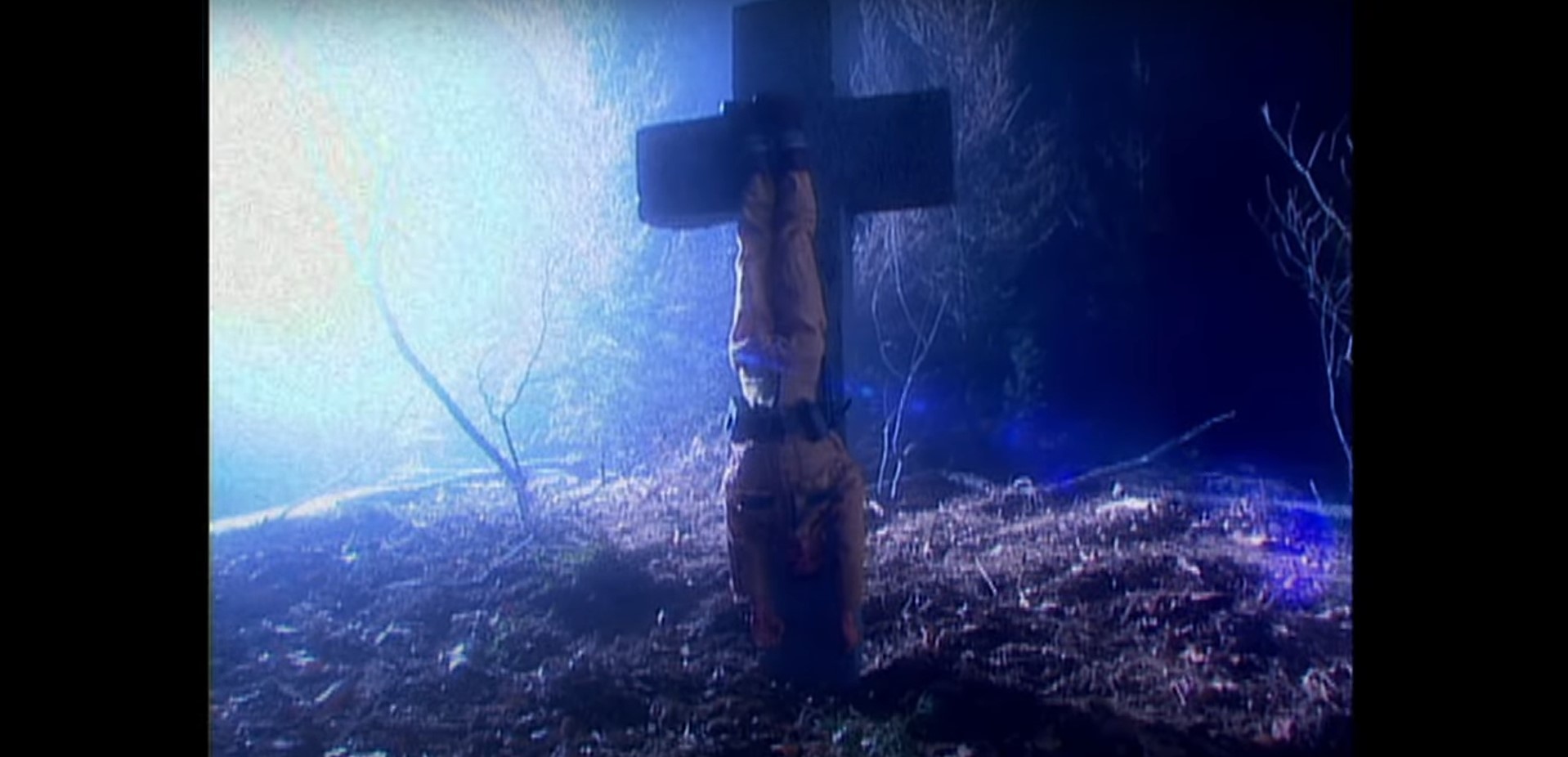
Gordon Hauge is an inspirating artist with little motivation.  Having just lost his contract work, being evicted from his home, and his wife leaving him, Gordon is left with virtually nothing, even no purpose.  While speeding home late a night, Gordon swerves to avoid pedestrians in the road and crashes his car, waking up in a nightmare-scape purgatory reigned by a malevolent monster known only as The Despiser.  The Despiser’s ragmen minions, governed by The Shadow Men, wreak havoc on the land by stealing nuclear warheads with the objective to rip a dimensional, absconding hole in their world that’ll lead into Gordon’s.  The Despiser’s only obstacle is a ragtag group of pious, historical fighters stuck too in purgatory after sacrificing their lives for a greater good and now are missioned to release everyone from The Despiser’s malicious hold over the Ragmen souls, as well as escape limbo themselves.  When The Despiser threatens his wife, Gordon joins the fight against evil and takes the battle head on.

Unlike anything you’ve ever seen before in the movie category, “Despiser” is the dark fantasy, action-thriller from 2003.  “Beyond the Rising Moon” and “Invader” Philip J. Cook’s own written-and-directed sci-fi odysseys distill the genre game by challenging the visual inside a unique story on a low-budget.  “Despiser” is no different digging into the horror building blocks of a soul-swallowing netherworld with a goliath creature having dominion.  Testing the waters with computer generated scenes still in their infancy and shot on the stringent, temperamental, and ever quality fluctuating video tape, the pre-millennium feature was shot in Cooke’s own home and makeshift production studio in Virginia of 1998, running against the wind and against the odds of coming out top with a promising product that audiences will like.  Cooke’s Eagle Film’s serves as the production company that naturally puts the filmmaker in the producer’s chair. 

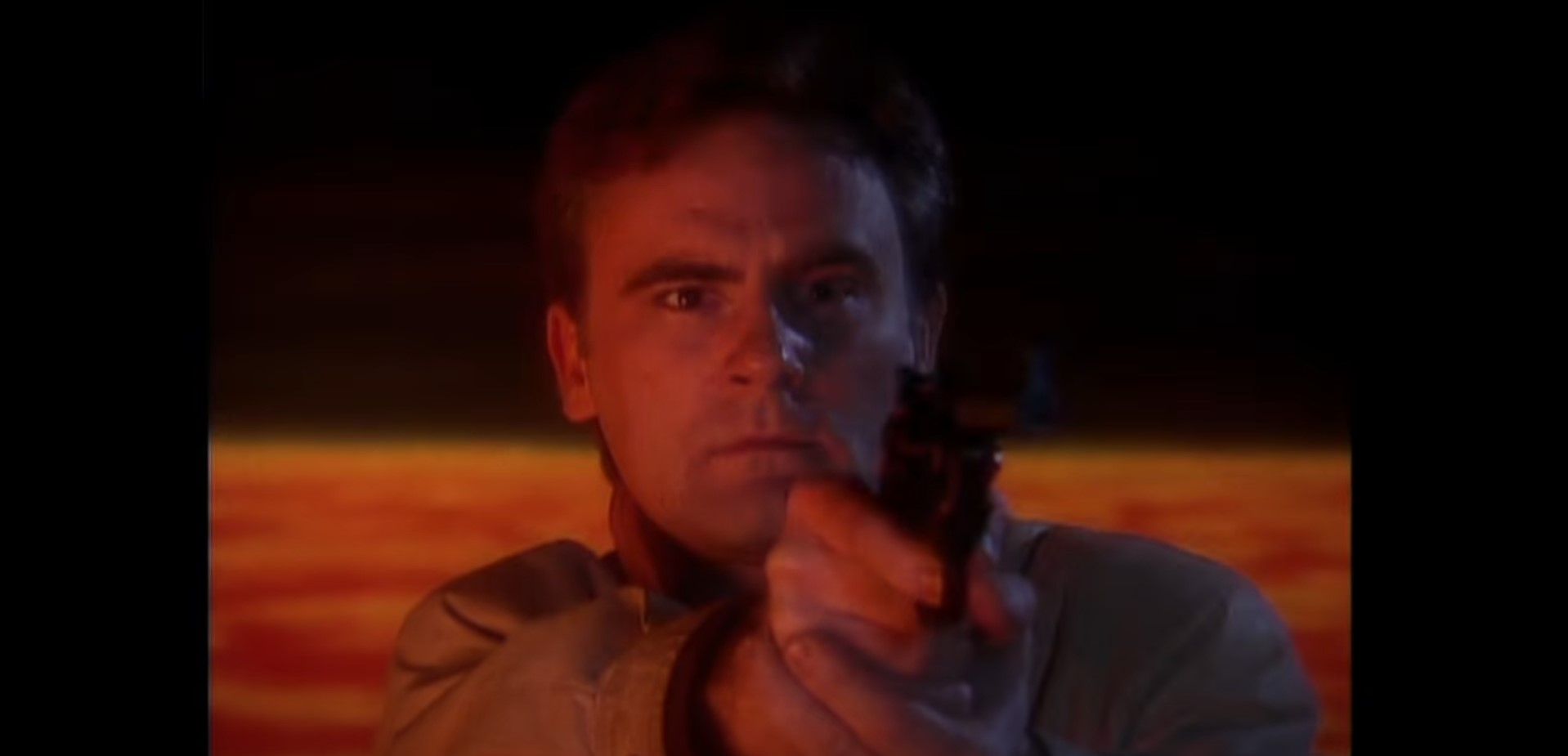
In the role of the disoriented artist down on his luck Gordon Hague is Mark Redfield (“Dark and Stormy Night,” “Chainsaw Sally,” and the producer of the Redfield Arts Audio Podcast “The Midnight Matinee”).  Brassy and cocky, Gordon Hague feels very much like a classic character browbeaten into being cheap ground coffee, diluted by his own lack of ambition with a flavorless future.  That is until Gordon dies unexpectedly and becomes the prophesized champion of gung-ho, gun-toting good doers at the edge of oblivion and obliteration.  Guided by Carl Nimbus, an early 1900s cavalry soldier played rather convincingly cool by Doug Brown, the group is contrived with different era, different walks-of-life, and different skillset individuals fighting the good fight against a soul-damning manipulator, whom in itself is alien to the purgatory topography of fire, brimstone, lave, and apparently littered with nuclear missiles.  Fumie Tomasawa (Frank Smith), Charlie Roadtrap (Tara Bilkins), and Jake Tulley (Michael Weitz) form what’s left of the crusading squad, and each have their own personalities, backgrounds, and views toward eliminating the threat of otherworldly damnation. On the opposite side of the spectrum are the Shadow Men, the Despiser’s right hands overseeing the mindless henchmen known as the Ragmen. Shadow Men inhabit corporeal bodies and are a wild bunch of frenzy determination. In the story, there are only two individualized Shadow Man but one of those goonish souls sees three embodiments in a variety of acting styles by Dan Poole, Richard Dorton, and Mark Hyde with Jeff Rathner giving us first taste for the Shadow Men’s near indestructibility. Gage Sheridan, Mike Diesel, Chris Hahn, and Brian Neary fill in the supporting cast.

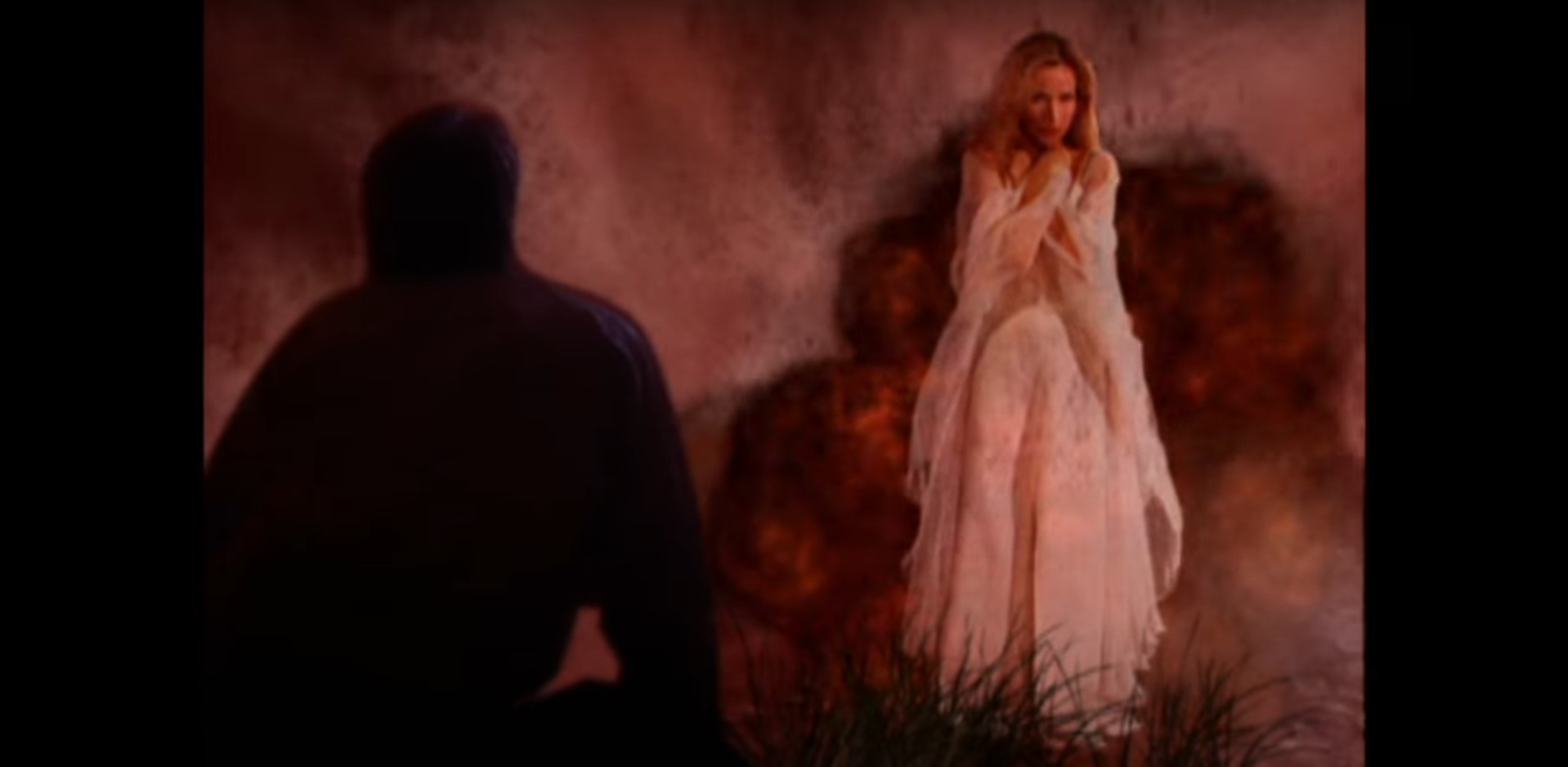
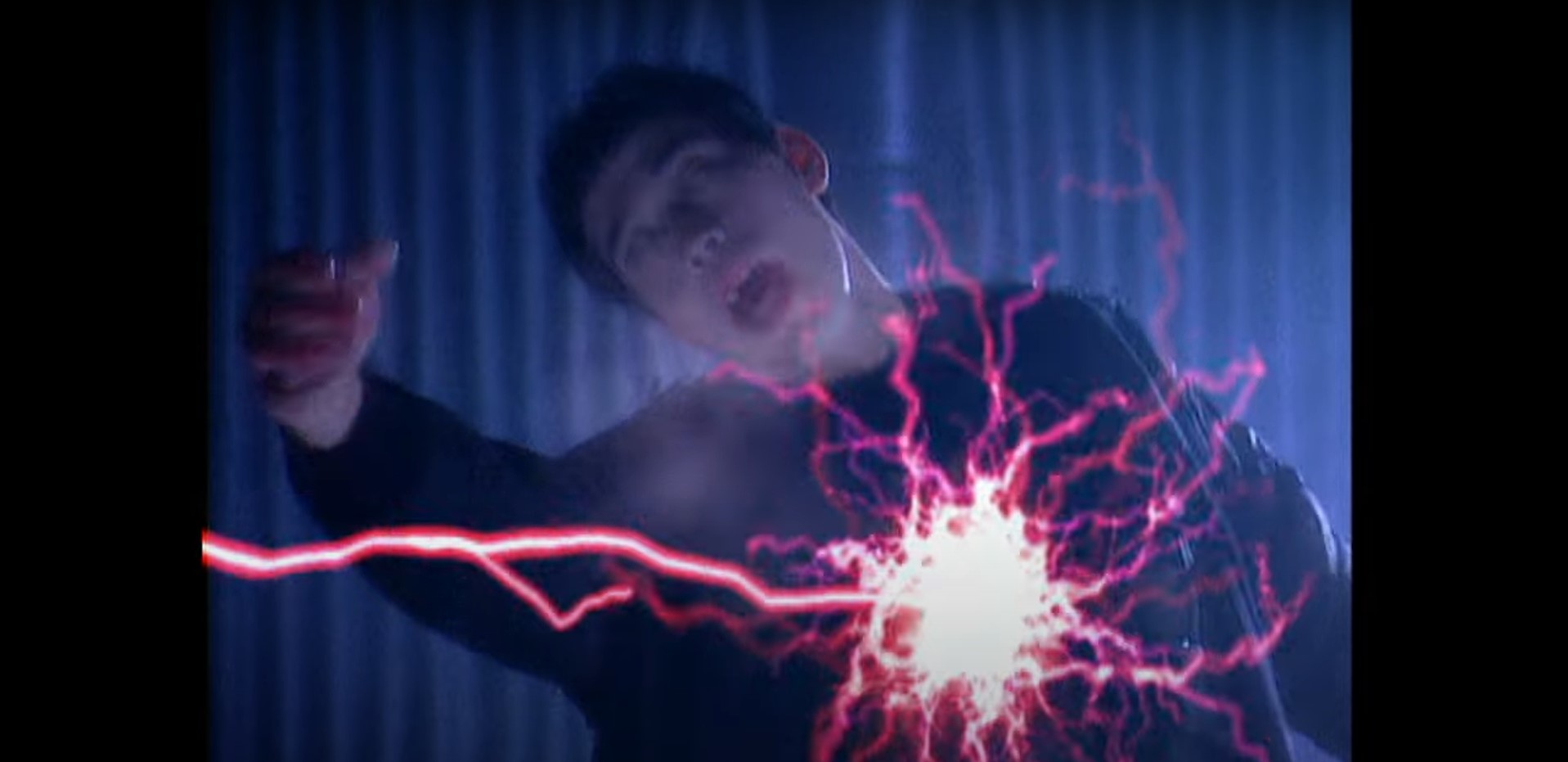
Early PlayStation graphics interlaced and spliced with live action shots of a doom and gloom purgatorial world is great way to surmise “Despiser.”  Just on the precipice of fine tuning the gaming-changing visual effects at the turn of the century, movie worlds go from tangible mattes, practical backgrounds, and hand-painted compositions to simply a green or, in “Despiser’s” case, a blue backdrop screen that allows actors to do their thespian work without anything around them to interact with or bounce off a certain emotion or reaction and visual effects artists will add-in and blend worlds, creatures, and effects in post-production.  Cook, along with Cory Collins, chiefly constructed an anhedonia embodied layer in between the plane of existence and the eternal beyond without losing a step with a seamless live actor application.  The whole film feels like the introduction prologue short in the first “Resident Evil” game, a mix exchanging edit of virtual and physical, but Cook doesn’t just switch frames between the two formats to tell the story, the imaginative animator and filmmaker adds life into his virtual landscape without being terribly clunky or be an ostentatious show his stitchwork.  Naturally with early VFX graphics, not every computer modeling element is forgiving and much of that expression lies with the antagonist, the Despiser himself.  The water-dwelling, dungeon being with limited movements and remains mostly in the shadows and for good reason with a scale that likely couldn’t be conceived or achieved in a technology that hasn’t yet be refined for the desired quality and public acceptance, and while the limited scope of the Despiser is bothersome, especially having to sit through it’s same motions over and over, Cook’s engaging story eases the pain tremendously with a suicide mission enlisted with likeable characters you really don’t want to see perish in purgatory. 

Evil Dam Trolls, holy light ammunitions, and nuclear missiles are only the tip of the iceberg in the new Visual Vengeance Blu-ray release of “Despiser.”  The Wild Eye Releasing subsidiary label prologues with the usual A/V disclaiming but the director-supervised transfer from the standard definition master of the original tape element holds up remarkably well on an AVC encoded, 1080p, BD50.  Perhaps a little radiantly effervescence, the frothy-rimmed and delicate in detail final product enhances the presentational submerged in sardonic storyline.  Besides, much of the early computer-generated imagery is smooth anyway and, in contrast, the palpable pieces often standout with deeper, textured nuances.  Bood spurts and muzzle flashes are, too, fashioned neatly into the frames.  Presented in a pillarbox full screen 1.33:1 aspect ratio, Cook balances the coloring and lighting inside the CGI world to roughly match the out-of-the-CGI-box steely tones of blue, green, and silver tints under softer shadows.   The lossless LPCM stereo mix offers up a pretty true to self fidelity that could, one day, receive an extensive channel and refining upgrade.  Machine gun fire, and there’s a ton of it, spatters off with an ingrained rat-a-tat force that’s more polished than your typical indie production whose discharges sound more like cap guns.  Dialogue plays to the makeshift setting strengths, providing echoes where needed in more cavernous locales to the muffled notes of long-range speak.  Optional English subtitles are available.  With a Visual Vengeance release you know you’re getting topnotch exclusive special features and packaging as well as archival goodies encoded onto the larger capacity disc, including two commentary tracks with director Philip J. Cook and actors Gage Sheridan and Mark Redfield on one and cult movie enthusiasts Sam Panico and Bill Van Ryn on the other, a making of “Despiser” featurette with Cook and Mark Hyde that goes deep within the nuts and bolts of it all, a handful of deleted scenes with title cards, a running blooper reel, outtakes, a storyboard to animation, the original lava-road DVD animated intro menu, a behind-the-scenes and art gallery, “Despiser” trailers, the Visual Vengeance advert trailer, and Cook’s “Outerworld” and “Invader” film trailers just beyond the fluid, cardboard cutout animated menu. But wait, that’s not all! Andrei Bouzikov’s illustrated compositional machine guns, mushroom clouds, and the four-armed Despiser, nearing Ghana-poster level but keeps in line with the filmic material, is a sight to behold on the cardboard O-slipcover. Inside, on the primary cover of the clear Blu-ray Amaray case, you get even more new art from Stefan “STEMO” Motmans that’s less tapestry art and more iconic as it is epic. The reverse side holds “Despiser'” original poster arrangement that’s simple yet effective. The disc is whimsically labeled with encircling blue, purple, green, and red evil trolls while the opposite, insert side has a folded mini poster of Bouzikov’s art, a colorful, dual-sided synopsis and Blu-ray acknowledgement sheet, and no release would be complete without the retro VHS sticker sheet. The 16th Visual Vengeance release is region free, unrated, and has a runtime of 105 minutes.

Last Rites: The soul wants what the soul wants and that is “Despiser” on a Visual Vengeance, collector’s edition Blu-ray. An out of pocket, retro-modeled, and portentous hell on Earth from beyond the stars movie too good to skip the bad parts.

The “Despiser” Collector Edition Blu-ray Is a Must Own!

EVIL Doesn’t Take Rejection Well. “Village of Doom” reviewed! (Unearthed Films / Collector’s Edition Blu-ray)

“Village of Doom” now on Unearthed Film’s Collector’s Edition Blu-ray!

Tsugio Inumaru is considered the smartest young man in his village.  Illness took the life of his parents, and he raised by his grandmother and lives off her land’s income, looking after him and dreading the day Tsugio becomes drafted as a soldier in war service, which bestows great honor from the villagers.  While husbands are away serving their country, bored and lonely housewives and bachelorettes desire the carnal company of the men remaining and with Tsugio’s youth and his own sexual yearnings bubbling to the surface, he’s prime Kobe beef for the hungry village women.  When Tsugio’s health examination reveals a tuberculosis diagnosis, he’s acutely shunned by the villagers, drying up his sexual escapades, as well as potential betrotheds.  Rejection by his village, and even his country, sends the young man into plotting a massive killing spree, targeting all of those who’ve forsaken or scorned him to a life not worth living. 

In the Tsuyama outskirt village of Kamo of 1938, 21-year-old Mutsuo Toi cut the village’s electricity, strapped flashlights to the side of his head, and took a mini arsenal that included a Browning shotgun, a katana, and an axe to 30 villagers, including his grandmother, in an act to revenge killing for being rejected socially and sexually because of his tuberculosis diagnosis.  What is known as the Tsuyama Massacre, Mutsuo Toi’s cold and merciless act of carnage was the basis for Noboru Tanaka’s “Village of Doom.”  The pinkupsloitation director of “Rape and Death of a Housewife” and “Angel Guts:  Nami” helms the Japanese, semi-biographical tale, penned by Takuya Nishioka (“Tattoo,” “Female Teacher:  Chain and Bondage”), that follows closely the bullet point events of Mustuo Toi but with different named characters and a strong pink eiga touch.  “Village of Doom” is one of Kazuyoshi Okuyama’s (“R100,” “Self-Bondage:  All Tied Up with My Own Rope”) first produced ventures and is a production of the Fuji Eiga and Shochiku Eizo Companies. 

While Mutsuo Toi is not directly portrayed, his downward spiraling steps are indirectly followed by Tsugio Inumaru, played by the late Nikkatsu actor Masato Furuoya.  Furuoya’s relationship with director Noboru Tanaka is well established within their director-actor collaborating context with Furuoya having roles in Tanaka’s previous credits of “Rape and Death of a Housewife” and “Angel Guts:  Nami.”  There’s a blanket of comfortability within Furuoya who must treat his character as one-part pink paramour and one-part biographical massacrer, seducing with a tantamount tease of fantasy and authenticity.  Furuoya’s beleaguered performance is a jagged mountainous range of emotions from confidence and compassion to hormonal desires, to the stressed misgivings from cold shoulders and bad fortune mishandled by Tsugio’s own sense of worth to his himself and the village that has turned its back on him.  In keeping with the simulated practice of Yobai, the night crawling sexual escapades amongst young men and women, typically unmarried men and women, Tanaka portions heavily toward Tsugio’s internal grievances with the suddenly thrusted into the primitive and stimulated needs of a young man’s novice sex drive awaken with a morsel nude photograph.  Furuoya’s costars are the collective antagonist from the perspective of Tsugio with their geniality turned hostility of the TB diagnosis.  Sexualized warmth and freedom run rampant, peppered in between with subdued duty to village and country, that cradles an shy Tsugio’s into his manhood but when his manhood is threatened and the village neglects and rejects his contributions, Tsugio’s acute ostracization from within the only community circle he’s ever known disfigures his rationality into revenge.  The cast is surprisingly pink vet lite with the actors coming from other Japanese oriented popular subgenres like samurai films, erotic but tasteful comedies and romance, and horror with Misako Tanaka, Isao Natsuyagi (“Female Prisoner #701: Scorpion,” Kumiko Ôba (“Hausu”), Shino Ikenami (“Evil Dead Trap 2”), Midori Satsuki, Yashiro Arai, Renji Ishibashi, and Izumi Hara (“Island of the Evil Spirits”).

“Village of the Doom” is a two-toned down spiral to build up only to crash down the hopes of an impressionable young person.  Similarly seen in later works like Gus Van Sant’s “Elephant” where the visually intense, raw, and viscerally slicing culmination of enough-is-enough points back to the series of occurrences that significantly mile mark every step lead to the slaughter.  Set inside a valley surrounded by green mountains, the idyllic and rural riverside village impresses more backdrop tranquility than doom with slower pace and dutiful lifestyles but like most cutoff societies, the slow, insidious corruption of morality courses with infectious infidelity under the guise of Yobai, upends rightful justice and trades in for lynch mobs, and wanes promises for easy streets and exploitation run out dates that run its course for one but not the other.  All these aspects have relevant translatability to today’s cliques and inner circles that oust the unusual to where a sense of belonging feels hopelessly frustrating.  The isolation is so engrained that it highlights, in a very matter-of-fact way but does speak to it quite a bit, is the incestuous relationships between related villagers with the instances of Tsugio and cousin Kazuko’s flirtatious meetups and talk of marriage as well as Tsugio accidental arousal around his cousin’s aunt.  This adds to the tension and the corruption of that old idiom of don’t shit where you eat and the evident sourness spoils relationship ties when family is important to lessen the blows of life’s subsidiary problems.  For Tsugio, who is already dealt a bad hand with both parents deceased and his illness, the whole village rots what’s left of his innocence and ambitions and, in turn, aims to exterminate those who’ve foiled his purity.

A wicked, notorious true crime story now for the rest of the world to visual in “Village of Doom” on Blu-ray, courtesy of Unearthed Films on their Unearthed Classics sublabel.  The new Collector’s Edition Blu-ray is format encoded onto an AVC encoded, 1080p high-definition, BD50.  The picture is tempered with the muted colors, or rather the scaled grays, of an archaic Japanese village coupled by the browns and straw hued housing set amongst in and surrounded by a sea of green foliaged valley, and while objects are delineated nicely without any saturation bleeding or compression issues, the colors don’t necessary pop.  What does pop are the textures of the same articles mentioned above.  The groves of thatched wooden abodes are remarkable deep, the greens, though seamless, are nicely touched upon in the foreground, and skin consistencies vary person-be-person within idiosyncratic personal brackets with dynamic sweatiness and emotion-delivery contouring to accentuate.  The Japanese LPCM 1.0 mono has no problem discerning elements.  Though all funneling through a single channel, the dialogue and ambience works together thanks to the clean, more immersive ADR.  Mashanori Sasaji’s tests the soundscapes of traditional Japanese drum rhythms of Oo-daiko with then modernized synthesized notes to create a forebodingly, entrancing composition.  With any post-production voiceover work, dialogue is very robust, and the synchronized English subtitles offer an error-free and organic translation.  The original audio file is compressed cleanly with no issues with crackling, hissing, or any other damage for noting. Unearthed Film’s 17th spined Classics title supplements with an audio commentary by Asian film experts Arne Venema and Mike Leeder, a look at the Tsuyama Massacre in Dark Asia with Megan: Case #57 Japan’s Darkest Night, a promotional gallery, and the theatrical trailer. The Amary Blu-ray case is housed in a cardboard O-slipcover featuring Mutsuo’s iconic night-crawlin’ getup on Masato Furuoya’s Tsugio in colorless black-and-white. The case has the same image used for the cover with no reversible sleeve and the inside does not contain any tangible inserts or materials. The disc is pressed with not the same image but the same head flashlight Tsugio, this time looking right at you in unison with his shotgun barrel. The not rated feature has a runtime of 106 minutes and is region A locked.

Last Rites: “Village of Doom” depicts the same sad story that strikes the hearts of today’s mass shootings, spurred by the dispel from those in proximity, intimate, and friendly. “Village of Doom” is a true classic of casted out carnage relit by Unearthed Films to retell the notorious narrative of Japan’s deadliest mass killing ever.

“Village of Doom” now on Unearthed Film’s Collector’s Edition Blu-ray!

EVIL’s One Brush Stroke Away From Losing It! “Spiral” reviewed! (Ronin Flix / Blu-ray)

The New “Spiral” Now on Blu-ray!

Mason, a socially awkward painter and car insurance telemarketer, struggles to cope with a seemingly bad breakup that might have turned into a misdeed, but a quick call to his only, childhood friend Berkeley helps keep his anxious emotions from spiraling out of control into nightmarish allusions.  As Mason gradually works to purge his previously relationship, a woman who was also his inspiration for his artistic work, he suddenly meets Amber, a new amiable hire in his company, sitting with him on his lunchbreak outside bench.  Amber’s able to slowly break down Mason’s guarded wall of insecurity and two begin an innocent, romantic relationship as Mason continues to push his haunting past aside for Amber to fully step into being his modeling muse, but the further imbed she becomes into his life the more enigmatic secrets are revealed surrounding Mason’s life, even the darkness that slowly spreads and loops into it.

Actor Joel David Moore had established himself as an actor in early 2000s, usually portraying the lanky, awkward, if not ungainly trope in comedies most notably in “Dodgeball” and “Grandma’s Boy,” playing a supporting protagonist as well as lead antagonist.  Director Adam Green quickly became an overnight success amongst genre fans with his release of the Cajun miscreant slasher in “Hatchet” that would spawn a pair of sequels.  Having worked as actor and director respectively on “Hatchet,” Moore and Adam became good friends and decided to take a step further to not only expand upon an acting career and expand upon the objectivity of storytelling but also to co-direct their next project entitled “Spiral.”  The script, that orbits around the romantic-psychological thriller purview, is cowritten between Moore with debut feature writer Jeremy Boreing.  The 2007 film revolves around and enters the disconnected mind of an emotionally compromised individual and how he copes and handles everyday life while in constant fear.  “Spiral” is executively produced by Moore and costar Zachary Levi along with Boreing, David Muller, Kurt Schemper and Cory Neal producing under the Balcony 9 and ArieScope Pictures production flag.

If you haven’t gathered already, “Spiral” is Joel David Moore’s baby.  Moore’s idea natural earmarked him as the executive producer and the project is the first to land him a directorial and a writer credit, so unsurprisingly, the role of the socially recluse and mentally scarred Mason went to the Portland, Oregon born actor, likely a role he wrote with himself in mind.  As Mason, Moore breaks the mold that has trapped him in previous films that were relegated to what producers might have considered not leading man material, leaving much to be desired when stuck in a second of third string supporting role.  Then Adam Green puts Moore in “Hatchet” and in the principal protagonist role.  The opportunity proves Moore had more than just comic, sidekick relief and he really cements Mason’s depth with ticks, tantrums, and a taste for tenterhook romance.  Meeting Mason in the ambiguous opening stirs internal conflict for how we’re supposed to receive this hyperventilating wailer confessing to something vile we’re not privy too just yet.  From there, we meet the philandering, go-with-the-flow, and Mason’s best bud, only friend at that, Berkeley (Zachary Levi, “Shazam!) and the quirky cute and Mason-eyer Amber (“Amber Tamblyn, “The Ring”) that develop upon Mason’s home-work relationship that highlight his interests – painting and jazz – as well as his disinterests – basketball and speaking about his past.  The very opening scene compared to the heart of much of the story has stark contrast and, so much so, that audiences will tend to forget Mason’s late-night phone call ramblings and fear to his friend Berkeley, his wake-up screaming nightmares to wear he looks at his hands for blood, and his overall highly anxious persona when he’s talking shop and girls with Berkeley and breaking out of his shell of solitude with Amber in a lengthy string of normalacy.  Ryan Chase, David Muller, Annie Neal and Lori Yohe fill out the cast.

“Spiral” is all about the trauma, a fiercely common theme inside the heads of the mental thriller subgenre.  With deeply troubled lead character, an at interval switchboard that lights and darkens between the protagonist and ambiguous antihero storyline, watching Mason grow, fall, grow, fall, grow, and then finally collapse in a heap of his own trauma is terrifyingly satisfying, mostly to the thanks of Moore’s added plummeting nuances that spit his character back into abnormality.  Mason’s arc circulates in a circular pattern and the evidently timebomb is ticking away but in the middle of that circulation forms a bond, a friendship, an affair, hope, compassion, and every affirmative adjective you can think of to bring happiness to what shouldn’t be a happy trajectory because in the back of our minds, darkness lies.  That’s the sublayer of this trauma-laden yarn with a repressive factor and the key to unleash years of pent up unlocks a whole new side of Mason, one that isn’t completely illuminated upon until the shocking, device-destroying end.  

Ronin Flix rekindles Joel David Moore and Adam Green’s “Spiral” back to Blu-ray with an AVC encoded, 1080p resolution, BD50. Comparatively to the Anchor Bay 2010 Blu-ray release, which also presents the film in a widescreen 1.78:1 aspect ratio, Ronin Flix edges out the now decade previous release but not by much. The back cover only notes the label went through a film restoration with no other details or specifics to elaborate but from a spectator’s view, the 2024 restoration handles a sharper delineation that provides excellent depth that plays key to the various scenes of Amber and Mason’s painting sessions, Mason’s guilt-ridden obsession with the bathroom door, and Mason’s overhead cubicle viewpoint to name a few examples. Details are much more specific in brighter, ambient-lit scenes than the darker shades of key lighting or night sequences not only because of the innate lack of illumining exposure. Blacks tend to crush slightly, bleeding in the details and washing them out in blank of black. Skin and textures particularize better on Ronin Flix’s upgrade that uses a newer codec for compression, elevating the elaboration for this under-the-radar indie. The English DTS-HD Master Audio 5.1 manages the lossless mix much in the same was as Anchor Bay’s with greatly clear articulation on the forefront, a spacious and spatial ambient track, a patterned sound design dynamic to the progression, and a supporting soundtrack that while isn’t overly worthwhile does aid the varying moods, especially when Mason turns on a dime intertwined with jazz brass. Decent sound diffusion through the back and side channels to harness surrounding elements while the fronts tackle the predominant dialogue until an occasion acousmatic turns our heads and our attention. English subtitles are available for selection. The static menu offers special features that includes exclusive content, such as a newly put together making-of “Spiral” entitled Paint it Red, an audio commentary with Adam Green and Joel David Moore, director of photography Will Barrett, and editor Cory Livingston an a behind-the-scenes documentary featurette with interviews from Green, Moore, Livingston, Barrett and co-star and producer Zachary Levi. Archival content includes an audio commentary with the co-directors, director of photography, Levi, writer Jeremy Boreing, and actress Amber Tamblyn, and rounds out with the theatrical trailer. A cardboard O-slipcover sheathes the Blu-ray Amaray case and both contain the same more-gruesome-than-it-really-is cover art and David Levine package design. Inside the case is just the disc pressed with a third copy of the hand dripping blood, or paint. Ronin Flix release is rated PG-13 for disturbing behavior, violence, some partial nudity and language, has a runtime of 91 minutes, and also unlike the Anchor Bay release, this release has region free playback.

Last Rites: “Spiral” paints Joel David Moore in a whole new light, colored in vague tones that just nip at nerves, and slaps you square in the face just when things start to feel warm, cozy, and safe.

The New “Spiral” Now on Blu-ray!