EVIL Will Suck on Your Menstrual Soaked Tampon. “The Hood Has Eyez” reviewed! (SRS Cinema / DVD)

An Early 2000s Exploitation With Lots of Infamy!  “The Hood Has Eyez” on DVD!

Attending a school ditch party was the last thing the obedient Kimmy wanted to do but the peer pressure from her fellow Catholic schoolgirl friends convinced her to the other side of the tracks of town.  On the way, a half-naked woman runs out in front of their car and in attempt to flee the scene on foot, to protect their innocent repute status, they run into two gangsters holding them at gunpoint in an alley.  The now frightened teens are forced into an isolated park area, joined by the now fully-clothed and not injured woman they hit earlier in what has been revealed to be a ruse to rob them, but the gang leader, Psycho, has more distasteful and violent plans to squeeze more out of his prize than cash.  Psycho brutally rapes Kimmy and is left for dead by not only the gangsters but also the one other surviving girl she had considered to be her friend.  Battered and broken, Kimmy’s morality and reality snaps, sending her down an unmerciful vengeful path against those who condemned her to die.

If filmmaker Terrence Williams set out to make an exploitation film of genital mutilation, forced sodomy, and a man sucking on a bloody tampon, then mission accomplished!  The straight-to-video, SOV rape-and-revenger of monstrosities, “The Hood Has Eyez,” pulls no punches, knows no limits, and cares to give no concern for the atrocities it depicts.  A bastardized yet familiar rephrasing of an early Wes Craven classic, “The Hills Have Eyes,” Williams uses Craven’s basic setup plot to write-and-direct his own version of uncivilized lowlifes exploiting and murdering out-of-their-element travelers in the most graphic and appalling ways.  Williams takes the fear out of the hills and drops it into a remote park plopped in-between the suburbs and urban grounds, swapping out inbred hillbillies for Latino gangsters and a nuclear family for schoolgirls in short skirts and one unlucky white dude.  Collaborating producer and wife of Terrence Williams, Nicole Williams, has previously and subsequently worked together other films, such as “Curse of La Llorona” and “Horno,” under their now defunct joint company, Cinema Threat Productions in Los Angeles. 

The 2007 released “The Hood Has Eyez” reunites a good chunk of the cast from Williams’ “The River:  Legend of La Llorona,” “Revenge of La Llorona, “Llorona Gone Wild” and “Curse of La Llorona” films completed and released within a couple years previously which created a certain level of comfortability and trust amongst the cast as well as the cast and director.  With some of the intimately graphic content of “The Hood Has Eyez,” those warm and cozy congenialities play key to selling a broken bottle scene being rammed up a vaginal cavity or a nail hammered down into penis urethra.  Without that delicate easiness in the air, scenes like the aforementioned won’t work, resulting in the entire project collapsing upon itself even before wrapping up principal photography.  At the tip of the spear are Cyd Chulte and Antonia Royuela as the principled Kimmy and her antithesis, the deranged Psycho.   Chulte, who cut her teeth with roles in “Curse of La Llorona,” takes one-half the lead of a young woman broken by the barbarity and succumbs to justified vehemence for torture, dismemberment, coat hanger abortions, and eventual death but before being pushed to the edge of her life and into a state of insanity, Kimmy’s presence melds into the group of a lemming unit and takes a backseat to the other lead half behind Royuela’s unhinged ultra-violence of a gangster gone rouge from the plan.  Psycho’s posse – Joker (Carlos Javier Castillo, “Axeman”) and She Girl (Anne Stinnett, “Revenge of La Llorona”) – truly reflect their handles as Psycho’s devil and angel on his shoulder, trying to either egg him on or have him withdrawal while withdrawing is still in his favor but, of course, we wouldn’t have a debauchery and savage movie if the angel over the shoulder had prevailed and so Psycho has his perverse way with Kimmy and friends – Susan (Jesselynn Desmond, “Horno”), Rachel (Jamielyn Lippman, “The Absent”), and Jerry (Tom Curitore, “Llorona Gone Wild”). 

The way I see it, Terrence William’s trashy exploitation nod “The Hood Has Eyez” has three distinct parts, much like the three-act structure of any narrative archetype.  Terrence Williams defines these acts tremendously clear in an almost too simple of a way that it feels rudimentary, maybe even old fashioned.  The setup is simple:  overweening teens doing what they’re not supposed to be doing become caught up in an unfavorable part of town with a maladjusted gang.  The confrontation squares the two factions to a literal position of facing each other while the teens coward in fright and disadvantage as they forcibly bend to the will of the gun-toting gang calling all the shots.  The resolution pivots the story 180 degrees, like any good rape-revenge thriller should, after misdeeds thin out whose left for dead and who’s intractable impulses are fully left satisfied and goes right into execution mode without passing go, without collecting $200, and without pause of a trauma processing moment as Terrence Williams wastes no time digging deep into the sludge of psychiatric stability with a hasty move right to rectifying an eye-for-an-eye balance.  Up until a point, “The Hood Has Eyez” carries a lot of dire weight within the confrontational girth that can be hard to stomach.  There’s a few casually lighthearted and fun witty moments peppered beforehand, such as a jokes at the expense of airhead Susan and her player boyfriend, but then after the grave assault that leaves Kimmy left to suffer all the post-traumatic syndrome results, things really go dark, and I’m’ talking black comedy dark.  Kimmy goes into full Rocky Balboa training mode, doing pushups and enthusiastically practicing staff spinning in the light of the falling sun.  Terrence Williams actually gives Kimmy a rousing montage before ripping the dick off a two-bit thug.  Where am I getting to with all this?  Well, I’m not sure how Terrence Williams wanted audiences to digest his brutal film that goes through touchpoints of opposing genres.  Usually, if comedy and gore are present in one narrative, slapstick typically is the go-to conduit – think “Evil Dead II” or “Dead Alive.”  For “The Hood Has Eyez,” the gore effects are hearty, the characters are vicious and victimizable, and Williams maintains an intact beginning-to-end narrative, but confounds with a few choice character actions that sully the overall presentation.

The Cinema Threat Production has now been integrated into SRS Cinema’s Extreme and Unrated Label – Nightmare Fuel – and unquestionably is underground extreme horror at its foulest.  Released with a widescreen aspect ratio of 1.85:1 of the 420p standard definition, camcorder tape footage and in a new director’s alternative cut, “The Hood Has Eyez” has relatively decent image clarity with a very subdued amount of lossy compression results, especially for progressive scan 480 pixels.  Details are soft as expected with the commercial equipment and lower resolution but though a slightly faded color scale, the coloring range renders intense enough for higher marks and can play a trick on the eyes by falsely delineating the objects to create a space based off the hue edging alone.  The English Dolby Digital 2.0 track props up the quality even more with Terrence Williams using a boom mic attachment instead of the built-in mic to gather meticulously the intended dialogue and skirmish kerfuffle.  As a result, dialogue is really sharp here, especially during Psycho’s off-the-rail verbal abuse, rants, and one-liners.  The post-production Foley stands apart from the inhouse sound with prefabricated sound bytes but that’s the way of micro-independent filmmaking.  The alternate cut includes a newly shot opening scene that was originally intended for the original script that was added back in to actualize the Williams’ vision after a cast sudden dropout departure.  Bonus features include a commentary with Terrence and Nicole, a raw, secondary cam behind the scenes footage in making certain scenes, a blooper reel, image slide show, two original cut trailers, a new trailer, and a Women in Horror vignette featuring Nicole Williams discussing the importance of women in horror and her contribution to the genre.  The release is presented in a traditional DVD snapper with a beautifully illustrated cover art based off the shoddy composited “The Hood Has Eyez’s” one sheet.  In the past few years, SRS has upped their game with cover arts and continue to impress with their new branding campaign that makes these films feel no longer cheap at first glance.  Inside, the DVD press art is the same as the cover with much of the RGB removed to a single layer red. There is no insert inside the case.  Terrence Williams set out to capture the inelegant essences of nitty-gritty exploitation and hits the nail on the head, literally, with this passion project of perversity. 

An Early 2000s Exploitation With Lots of Infamy!  “The Hood Has Eyez” on DVD!

Watch Out! EVIL is Coming for Your Dysfunctional Family! “The Bloody Man” reviewed! (Wild Eye Releasing / Blu-ray)

Better Behave or “The Bloody Man” Will Get You!  On Blu-ray at Amazon.com.

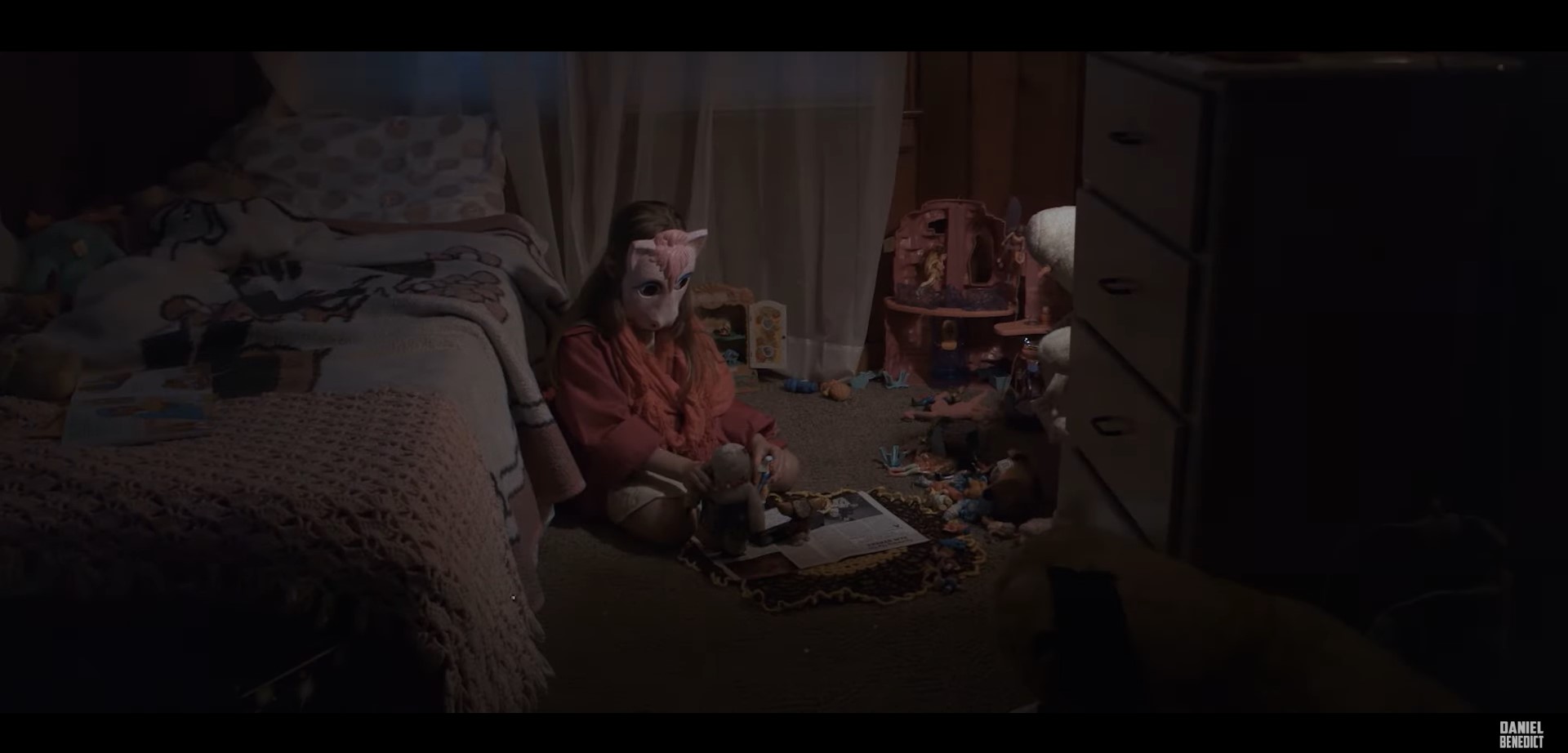
Set in the 1980s, Sam doesn’t cope well with life without his recently deceased beloved mother.  Getting along with his new stepmother proves to be challenging at best, his older brother continues to disregard him as an insignificant pest, his little sister gets under his skin in playing with his action figures without consent, and the school bully makes his life that much more difficult.  The young boy’s unhappiness spurs him into desperate measures by reciting a spell passage on the back of his favorite comic book, hoping the passage truthful to conjure up his deepest desire – to bring his mother back from the dead and fix a broken family.  The passage instead summons a demon, the Bloody Man, who seeks to rip fractured family apart even farther until their eventual dissolve and demise.  Able to possess and take shape of his stepmother, Sam must reunite his family in order to save not only his siblings but also his stepmother from fragmenting into nothingness and death at the hands of a demented demon trickster.

An homage to all things 1980s, “The Bloody Man” is a modern-day resemblance of one the more recent golden ages of cinema with a synth-laden soundtrack, all the popular play toy trinkets and new wave styles of the era, and a magazine loaded millimeter film stock shot in attempt to remove as much of the digital aerodynamics as possible in contemporary times.  Daniel Benedict, the director of the Halloween-themed slasher “Bunni” involving a sexy, leather-cladded, fishnet stockings wearing costume killer with bunny ears, takes a step back from extreme slashers and hops into more family-oriented terror with the protagonist heroes being kids stepping up against the forces of evil, think of films like “The Gate” or “Ernest Scarred Stupid.”  Not as slapstick as the “Ernest” droll-troll paragon of ritualized Halloween movie lineups, this crowdfunded project can be a little more vicious in delivering on the lines of the same heartwarming message that instilled into us from the Jim Varney 30-years-ago, that love is key in overcoming darkness.  Benedict pens and helms the 2020 production with wife Casi Clark, aka Casi Benedict, co-writing a script that loosely pulls in and indirectly references Benedicts’ collaborated efforts on a He-Man inspired fan made short “Fall of Grayskull” into their boogieman story.  The Benedicts’ production company Red Serial Films confects the film into fruition with Mercedez Varble, Jason L. Watson, Garrett M. Johnson, and Rihannon Crothers producing. 

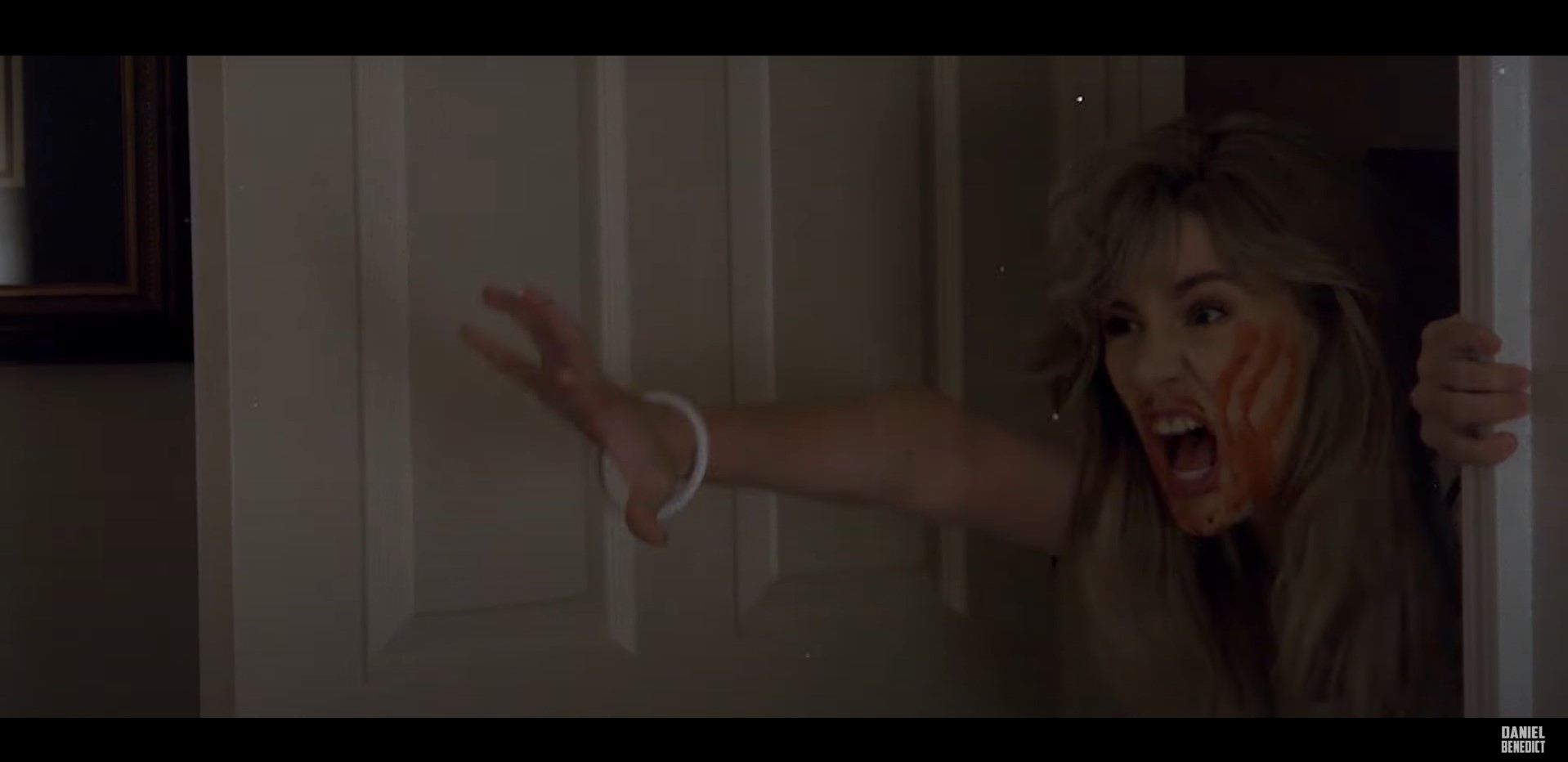
Despite not having top bill on the film, David Daniel leads us through the angsty complications of a new family dynamic as well as being the centric force of rebuilding a crumbling household as the middle child, feeling every bit like the world is against him, Sam Harris.  Daniels debut feature and leading role depicts well the internal argumentative aspects of having to go along with a life-forming change no child should ever go through, the death of a mother, and that sends him and his family careening toward dissolution despite his cheerful father’s overly confident optimism.  The top bills go to a pair of “A Nightmare on Elm Street” alum who both play mother to Sam.  Lisa Wilcox (“A Nightmare on Elm Street:  The Dream Master” and “A Nightmare on Elm Street:  The Dream Child”) and Tuesday Knight (“A Nightmare on Elm Street:  The Dream Master”) switch back-and-forth, between flashback-and-present, Sam’s biological mother and his new, soon to be, stepmother.  Surely, it comes to reason that the Wilcox and Knight names not only provide a couple of “The Bloody Man” selling points for die hard Freddy Kruger acolytes but could also be seen as an homage to the Robert Englund franchise with a similar living between two planes of existence nightmare antagonists hunting down a house full of kids, using unhappiness as a vessel rather than dreams.  Though not scarred by full body burns, wielding a finger bladed glove, and sporting a dirty striped sweater and fedora, the Bloody Man has his own characteristics being a black magic sorcerer.  Dressed traditionally in a snug black Chinese robe and blood running down his wild eyed face, Nicholas Redd enlivens the Bloody Man on a playfully perturbing level but the script doesn’t allow Redd to deliver the Bloody Man’s full potential while also not cutting the villain fully into the fold until the nearly last act.  Instead, the Bloody Man is reduced to a few here-and-there appearances, some one-liners, with half of the character’s screen time awarded to Tuesday Knight in a duality role as the Bloody Man uses the caregiver’s looks to draw in the Harris children.  Redd has promising lunacy that’s sorely underutilized in more ways than one and in so much so, the film itself shouldn’t be titled after the character.  “The Bloody Man” remaining cast includes Sam Hadden, Olivia Sanders, Jeremy Carr (“Calm Before”), Dominick Wilkins (“6 Feet Below Hell”), Dan Eardley (“Retro Freaks”), KateLynn E. Newberry (“O9en Up”), and Ellie Parker (“Bones and All”).

I’m all for a quasi-kid friendly horror of the same antithetical vein as “Monster Squad” or “Gremlins” where the subject matter borders the edge of being too risky, eking above the terror threshold for children who would be roughly the same age as the story’s principal leads battling for the very reconciliation of family before the Bloody Man kills them.  “The Bloody Man” lurks under the veil of being lighthearted in contrast to the brushing scenes of severed, sentient arms, blood streaking down various maniacal faces, a mildly gruesome decapitation, and moments of good ‘ole fashion terror that may induce nightmares for anyone under the age of 12.  A child’s lack of sleep because they’re waking up with fright-filled sweats will for sure not provide parents any favors, but Benedict skirts a fair amount of gore and does imply the significant damage and death offscreen almost as to shelter general audiences’ eyes for a broader invitation to watch the movie and, as mentioned previously, the titular bad guy doesn’t make an appearance until much later in the story that has been setup comically with a wrestling fanatic principal, Perry’s godawful verbal teasing, and a lot of 80’s inspired shots that nailed the decade’s analog paint job – a silver lining against the night terrors.  Honestly, the third act also drags out the culmination of events.  For such a small house, the Bloody Man chasing the Harris kids might as well taken place in a labyrinthine mansion, but the ground level with basement rancher slows down the hide-and-seek or maybe the Bloody Man is just really bad at childish game as the kids could stay in rooms for extended periods of time, even playing pretend with toys at one point, and in not once instance, does the Bloody Man bust in to snatch up a tyke to terminate.  Where “The Bloody Man” also struggles is buttoning up the summoning of the soulless sorcerer who’s conjured up by a mere passage reading off the back of Sam’s favorite Barbarian Man comic books.  The comic, which is introduced as a fairly over-the-counter object, holds this mystical darkness that must be conjoined with a family’s spiraling.  Yet, the story contradicts itself as the Bloody Man pursues another broken home that didn’t warrant the reading of the comic’s back cover passage, creating some confusion on how the cruel chaser of disconcerted children operates on a phantasmic plane.

As far as 80’s-inspired films go, “The Bloody Man” can run with the best of them, even with Netflix’s “Stranger Things,” and Wild Eye Releasing sees fit to drop a special edition Blu-ray of the Daniel Benedict comedic chiller.  The AVC encoded, high-definition 1080p, BD25 is presented in a widescreen 2.35:1 aspect ratio.  What makes the film feel decade authentic and that can suck you into it’s existence is Benedict’s decision to shoot either in 35mm or with a 35mm digital overlay that has characteristic dust speckles and a fine grain.  Image quality remain at a consistent color and black levels with a few flare ups of compression artefact issues, such as splotches in darker scenes, in squeezing this long runtime film onto a BD25 along with an atypical accompaniment of Wild Eye Release robust extras.  The bitrate does have large swings from lower teens to upwards of high 20s Mbps.  Yet, details generally come through with enough depth to create visual spacing between objects.  The English language Dolby Digital 2.0 stereo renders adequate for a narrative that doesn’t have a ton of range with an intimately tight story surrounding Sam and his siblings but is complimented greatly by Johnathan Fan Octo Evans retro-synth soundtrack with an oscillating pulse and a crescendo of tension, solidifying even more the 80’s inspiration. English subtitles are optionally available. The special features include a director’s commentary with Daniel Benedict, a gag-blooper reel, a local newscast behind-the-scenes segment, various promotional videos from Kickstarter, Indiegogo, Barbarian Man toys, an emulated One to Grown On based PSA show from the 80s, and a Showbox promo with the original trailer bringing up the tail. One last bonus scene is also at the end of the credits so stay to the very end. The physical features include a clear Blu-ray snapper case with latch that houses glow lit Harris kids geared up to tackle the looming Bloody Man, or that is my assumption of who that is on the front cover as that figure looks nothing like the Bloody Man on screen. A more true-to-form Bloody Man is on the cardboard slipcover in another retro illustrated, compositional mockup with a similar layout as the actual Blu-ray front cover. Inside the snapper case, the reverse front cover has a still image from the movie, typical of many Wild Eye Releases, a folded one-sheet with the additions of Tuesday Knight and Lisa Wilcox amongst the child leads, and a disc art pressed with the unknown version of Bloody Man. The region free release comes not rated and has an excessive runtime of 133 minutes, contributing to the pacing issues of the last act. “The Bloody Man” doesn’t exactly live up to the moniker in this tame throwback but what the film has is a mighty nostalgia that brings back feelings of a superlative horror age that was once, and still is, goosebump arousing.

Better Behave or “The Bloody Man” Will Get You!  On Blu-ray at Amazon.com.

Is He an EVIL Vampire or a Just a Disturbed Young Man? “Martin” reviewed! (Second Sight / 4K UHD & Blu-ray)

Note:  Screen Caps do not reflect the Second Sight's A/V on this release.

“Martin” Limited Edition Second Sight Release Available at Amazon.com! 

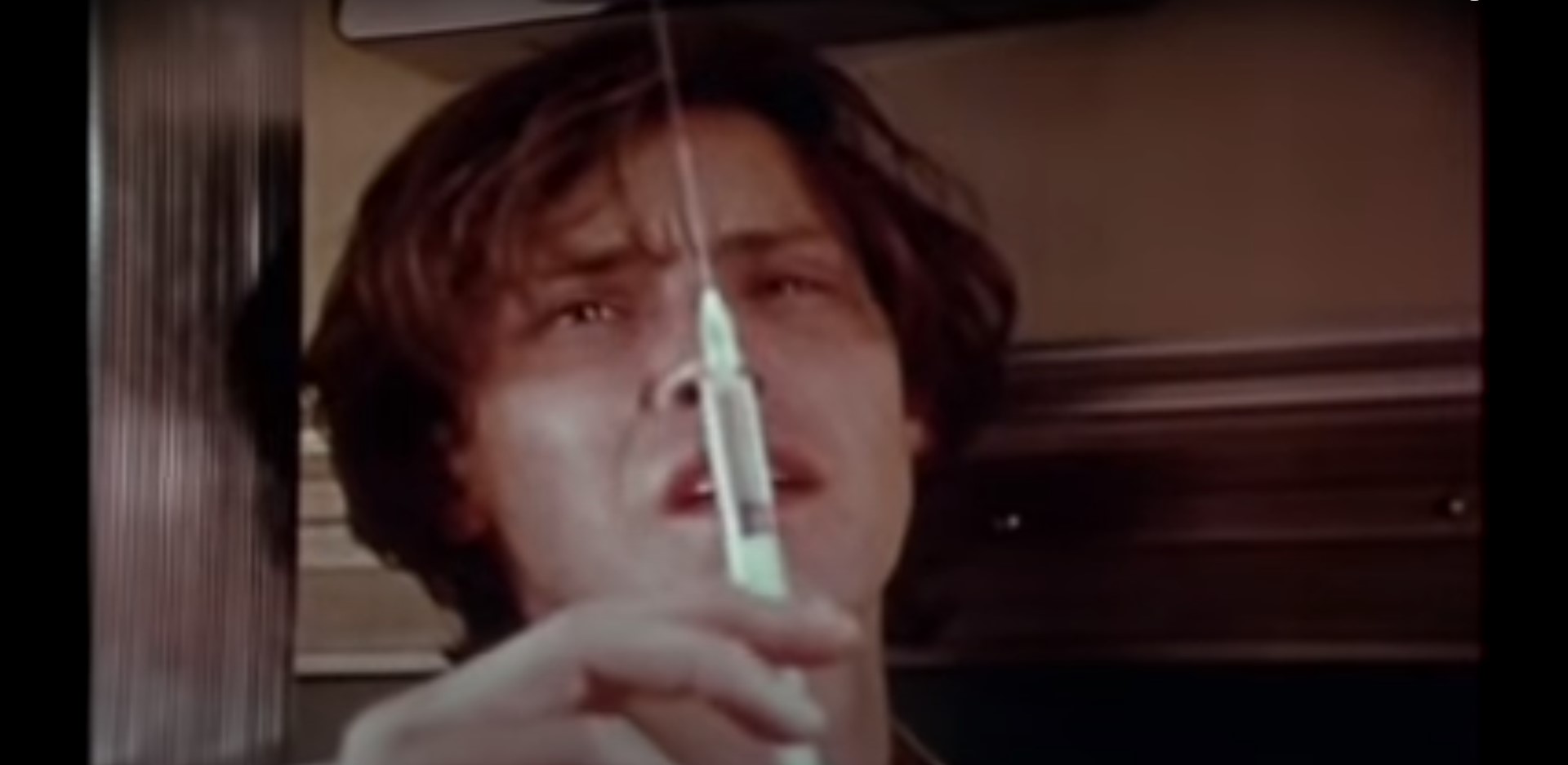
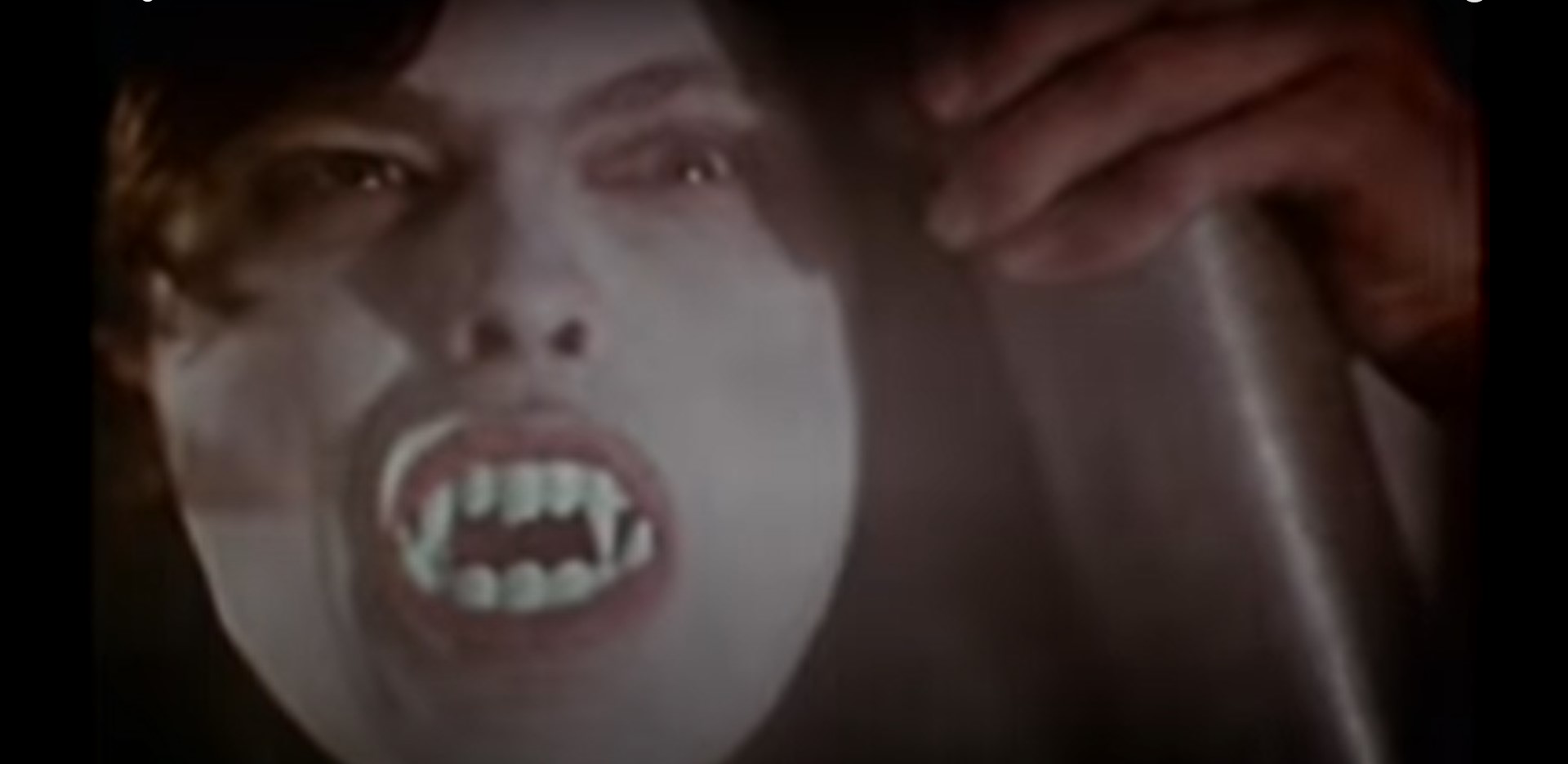
Martin, a young man from Indianapolis and upon recently lost his mother, travels by train to Braddock, Pennsylvania where he’s greeted by his elderly cousin Cuda, an old world believer that Martin has been selectively plagued by the family curse of vampirism and will take Martin in under his roof to cleanse his soul of evil, even if that means destroying him.  Though he doesn’t believe in the vampiric superstitions and the movie depictions, Martin truly believes he’s an 84-year-old vampire and does kill young, beautiful women to intimately drink their blood.  Being reserved and shy gives Martin an advantage to observe his potential victims from afar after gaining employment working as a delivery boy out of his cousin’s shop.  Cuda’s granddaughter, Christina, believes her lonely cousin’s mental illness is being exacerbated by grandfather’s archaic and draconian beliefs, fostered by a family history based off tradition rather than science.  When Martin meets an interested housewife on one of his delivery runs, the need to consume blood trickles when sex enters the picture, but also induces slipups in his well-oiled drug and drink operation whenever the need to feed becomes too much.

By now, “Martin” needs no introduction.  The father of the flesh-eating zombie, George Romero, delivered a neo-realism take on the vampiric mythology nearly 50 years ago in 1977.  “Martin” became the writer-director’s first all around filmic success after being royally screwed by the Walter Reade Organization for having failed to copyright the prints on the trailblazing and timeless classic “Night of the Living Dead,” the reason why you see so many Tom, Dick, and Harry remakes, revisions, sequels, and such of the 1968 black-and-white film that introduced zombies as flesh eaters, and a pair of box office failures that kept Romer in severe debt until slipping into business bed with producer Richard P. Rubinstein, the associate producer for Romero’s “The Amusement Park” and who would collaborate with Romero as a producer for the next subsequent decade years.  Filmed on location in the societal and industrial crumbling Western Pennsylvania town of Braddock, “Martin” remains one of George Romero’s quintessential and provocative pieces of work outside The Living Dead series under Rubinstein and Romero’s The Laurel Group production company.

In the titular role is the introduction of John Amplas who was discovered by Romero after watching Amplas in a play and the entire lead principal was reworked to accommodate Amplas boyish youth.  Amplas is instrumental to Martin’s success in a handful of ways:  the Pittsburgh native knew how to properly slink in an unsuspecting manner, he also didn’t overbear scenes and costars with a larger-than-life presence and could dip into this awkwardly retrieved guilt for the premediated murder to fulfill a need that either’s supernatural or unnaturally mental.  Amplas could walk that thin line that keeps the audience wondering how much Martin says and does is actually true or a misconception because of mental illness and this is coupled nicely with Romero’s direction, splicing in black-and-white scenes of gothic-laden, theater-esque vampire flashbacks that could either be a delusional reality or a very real backstory to Marin’s cursed heritage.  Polarizing external family forces in his elderly cousin Cuda (Lincoln Maazel, “The Amusement Park”) and age akin cousin Christina (Christine Forrest) combat on an emotionally taut and verbal levels between their corresponding character qualities of superstition and science that parallel Martin’s eventual damnation or salvation.  The principal trio are tightly compacted to strain the dynamic with a back-and-forth debate over which truth is behind Martin’s troubles.  Romero pens a good case for both by never fleshing out a legitimate truth all the way through to the end; instead, it’s a battle of save Martin from himself who understands the problem, wants to deal with it, but barely takes up arms to combat or even face his issues.  Special F/X legend Tom Savini, pre-trademark inky black mustache and goatee, makes his debut role as Christina’s boyfriend Arthur who serves only as a device to pull reason away from the table in a conflicted measure to pressurize Christina’s capacity beyond the limits of also caring for herself.  Eventually, Christina has to make a decision and, ultimately, choses herself to save, leaving Martin to fend against a sternly superstitious and old world Cuda.  Sara Venable, Roger Caine (“Dracula Exotica”), Donaldo Soviero, Francine Middleton (“The Love-Thrill Murders”), and Elyane Nadeau make up the supporting cast.

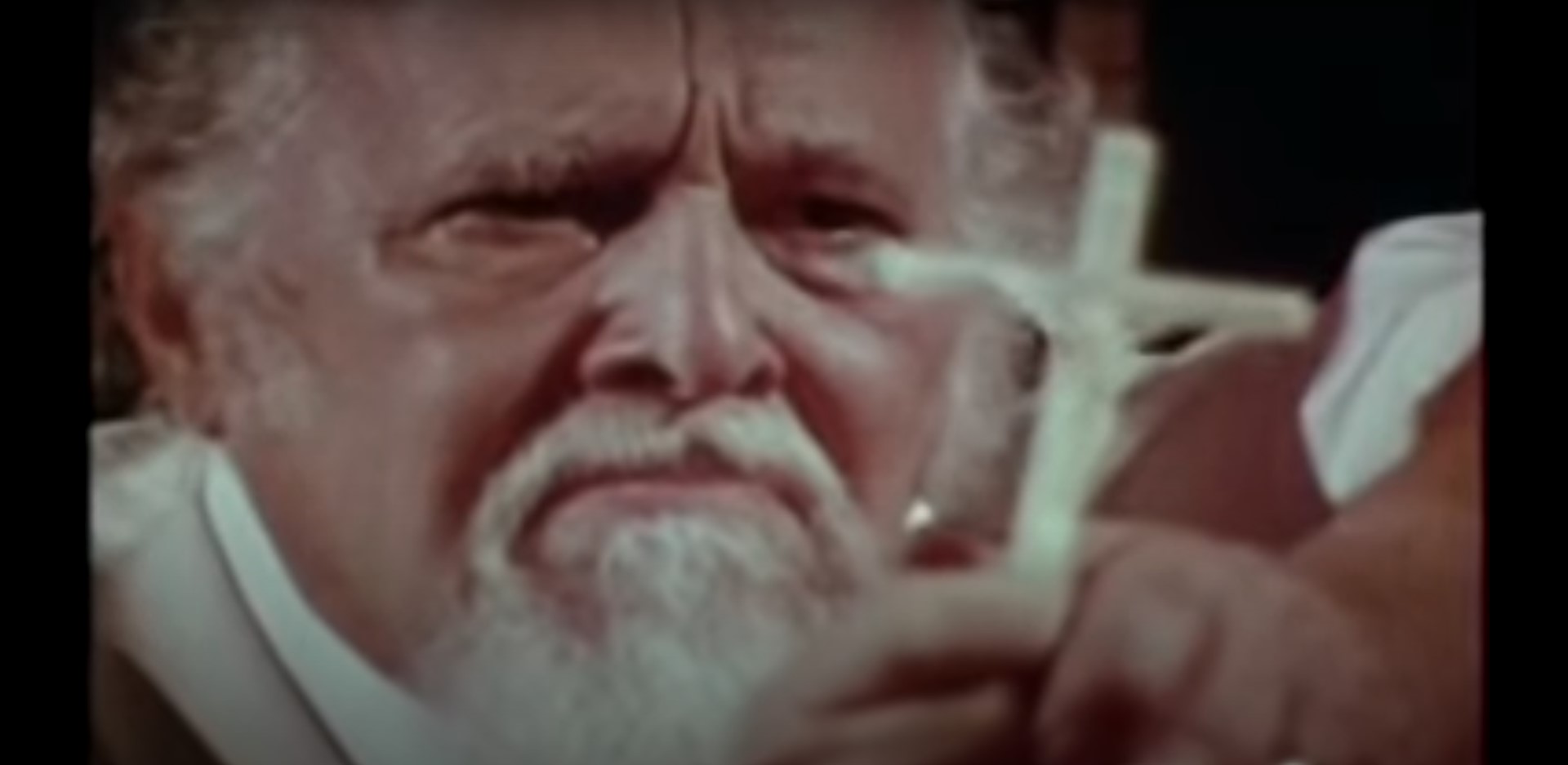
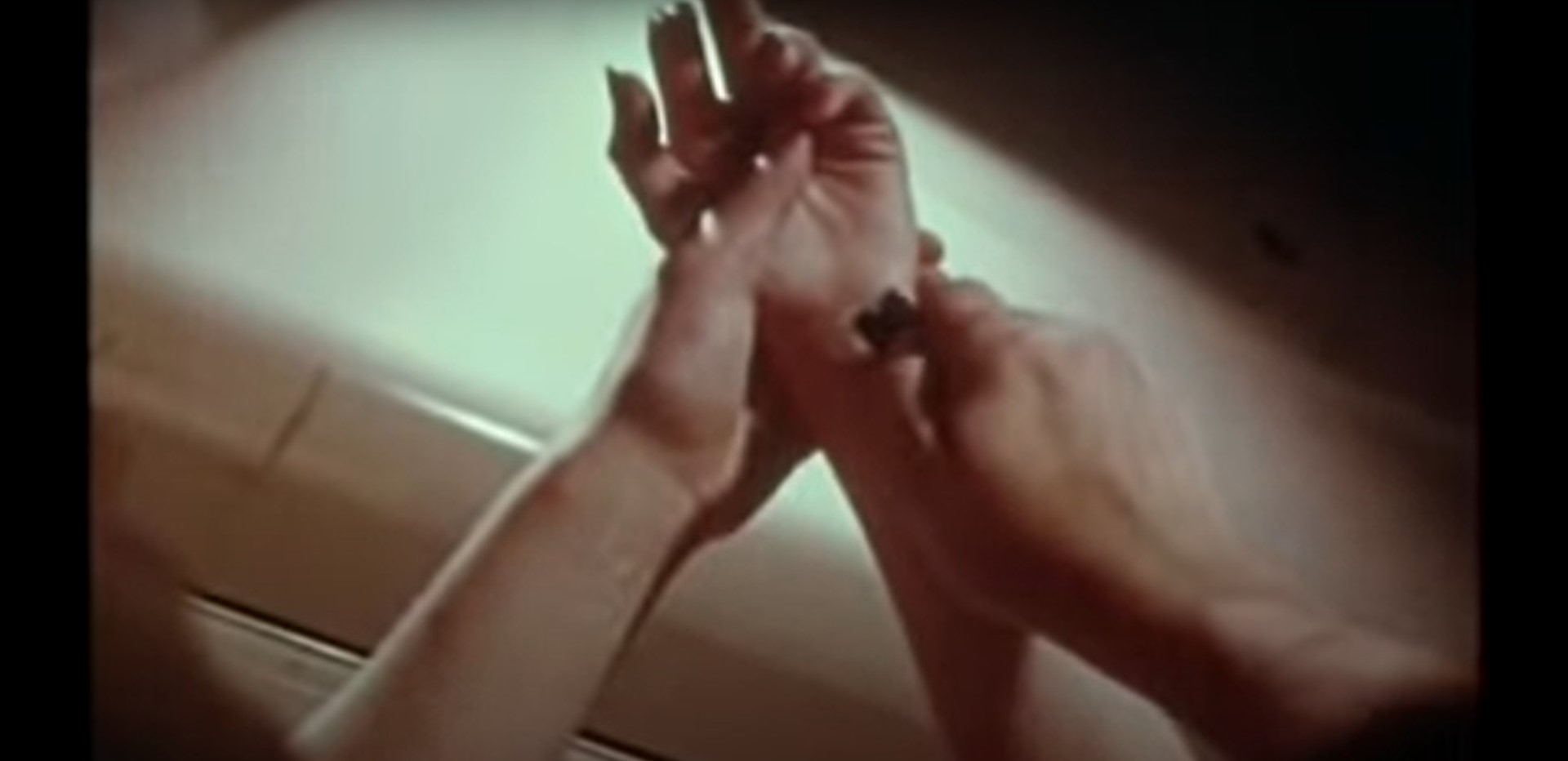
George Romero, again, redefines, or in a more fittingly descriptive – revamps, classic horror villainy that replaces the supernatural element with a realistic approach to weave the very fabric of horror into possibility while still hinting at something beyond the limits of reason.  “There is no real magic.  There’s no real magic, ever!” says Martin about the theatrical stereotypes used to display vampires in attempt by Romero to disenchant us from the ideologized mythos, the habitual characteristics, and the physiognomies of what we consider to be a night bloodsucker.  During that scene between him and Cuda, the words are potently effective in disapproving myths about vampires, but the words are supported with fact as Martin casually debunks garlic, crosses, and sunlight as vampiric weaponry at the expense of humiliating and entertaining Cuda.  “Martin” is at the forefront of being an allegory for loneliness and is a driving reason for presumably the real vampire’s gruesome habit to slice open wrists and drink blood.  Martin only targets young, beautiful women and becomes intimate with them while they are limp under sedation.  When he meets an equally lonely Mrs. Santini, a depressed housewife on the verge of an emotional collapse, and the two embrace each other with comfort against what dispirits them; disinterested in stalking her, Martin’s need to kill dampens and Mrs. Santini unhappy marriage in nullified by the young who listens more than speaks.  Maturity and youth meld together in a moment of peace between them but their bond still shows micro fissures of incompatibility that puts doubts into Martin’s 84-year, carefully planned practice and also doesn’t save Mrs. Santini completely from her too-little-too-late despair.  Braddock, Pennsylvania, a small town sinking into the slumps of becoming forgotten, is a once industrious backdrop integrated as a metaphor for being a forsaken place where things go to die.  Martin is sent to Braddock to paradoxically be cared for by a cousin determined to destroy him because of a family curse that afflicts select generations in what can be perceived as butting of heads between the defiance of angsty youth versus the traditions of an older individual set in the world with their linear ways of thinking.  

As aforementioned, “Martin” is a cult classic from one of the most notable masters of horror and as a film, “Martin” can stand on its own two feet on any format.  However, with that being said, UK home entertainment distributor, Second Sight, celebrates this early George Romero razor-edged thriller with a definitive 3-disc, 4K and Blu-ray release jammed back with software and firmware bonus content that fans can really sink their teeth into for a lifetime.  The limited edition UHD and Blu-ray O-slip box presents a 4K and 2K scan and restoration of a 35mm duplicate negative (note:  not from the original 16mm source) that has been supervised and approved by director of photography Michael Gornick and presented in the Academy aspect ratio of 1.37:1.  Considering the blown duplicated source of a 16mm grade, the 4K UHD scan on the BD66 won’t live up to 4K potential, as some may expect.  There’s quite a bit of varying levels detail discernibility, some shots look better than others, but the overall restoration renders a better than it’s ever looked product with natural grain and damaged reduced to some blue stock flaring around the side and edges, especially during night scenes.  Shadows looked deeper than previous versions, meaning that tenebrism isn’t lost amongst a softer image but rather creates depth with the additional of better sharpened edges to outline objects between the light source  Some speckle debris filters through at times but not enough to cause major concern with the overall experience watching and enjoying the restoration that has HD enhanced grading to make blood that richer technicolor coral color used in my subsequent Romero “Living Dead” films up to “Day of the Dead.”  The Blu-ray’s 2K works just as well due to the scrappy source equipment of what the budget allowed, delivering a fine product of the best transposed transfer known to fan kind and beating out the Lionsgate’s warming grading with a cooler, more hardline detail and delineation picture. The massive release comes with three audio options – an English DTS-HD 5.1 surround sound, an English DTS-HD 2.0 stereo, and an English DTS-HD 1.0. Though Martin audiophiles will likely gravitate toward a multiple channel output, “Martin” is one of those select features that does better in a less-is-more return by not forcing the limited and stronger signals, such as the dialogue and Donald Rubenstein’s experimentally spiritual score, to encoding competition with the milieu ambient and boom recorded sound effects, that for the most part, are background support for the bigger, better one-two punch of clean, clear, and presently full dialogue and a consciously curated soundtrack to walk with Martin every step of his journey. There’s a pinch of popping and a low-emanating droning that very discreet and negligible that won’t affect the experience on bite…I mean bit. English SDH are optional. Bonus materials are what shape the Second Sight releases to be greatly desirable amongst fans as the company continues to produce high-quality encoded bonus features as well as carefully and professionally organized tangible items inside the box. Both 4K UHD and Blu-ray have the same encoded bonus features that include four audio commentaries of old and new. The two archived commentaries include George Romero, John Amplas, and Tom Savini in one set and the other with Romero, Savini, Richard P. Rubenstein, and Michael Gorrick. The new commentaries are with Kat Ellinger, editor-in-chief of Diabolique Magazine, and the second with the recently deceased film curator, Travis Crawford. A vintage 2004 documentary from the Lionsgate release is included in the set with remarks from Romero, Savini, Gorrick, Donald Rubenstein, and Christine Forrest along with a new documentary echoing much of the 2004 doc, in collaboration with Severin Films, with John Amplas, Michel Gorrick, and Tom Dubensky strolling through Braddock, which hasn’t seemingly changed from the depths of poverty, on a raining day recalling nearly every moment of production during principal photography. The new doc includes other insights from Forrest, Savini, Tony Buba, and Sarah Venable in what feels like a complete celebration and overview of their entire journey through Romero’s personal favorite film. Donald Rubenstein also has a new interview discussing his score and meeting and working with Romero on a positive level. The disc features round out with one of Tony Buba’s short films “J. Roy – New and Used Furniture” revolving around the town of Braddock and the trailer, TV and radio spots. The third disc is the CD form of Donald Rubenstein’s soundtrack laid out in 22 distinct musical numbers. The limited-edition exclusive contents include a rigid O-slip case with a simple, yet effective sterile while and red font color contrast with MADE IN U.S.A. augmented razor blood with vampire teeth and blood dripping from the bottom right corner and a blood dripping cross squarely centered on the back. Inside the slipcase, a thick 104-paged color booklet with new in-depth essays and insights from Daniel Bird, Miranda Corcoran, Heather Drain, Kat Ellinger, Andrew Graves, Alexandra Heller-Nicholas, Elena Lazic, Stephen Thrower, Jon Towlson, Simon Ward, Tony Williams and an interview with Tony Buba by Travis Crawford. The booklet also contains colorized, behind-the-scenes photos of production and numerous one-sheets, promotion poster and ads, and a beautifully, expressionistic illustrated front and back cover. Adam Stothard illustrates 5 character lobby cards, including John Amplas’ Martin, Christine Forrest’s Christina, Tom Savini’s Arthur, Lincoln Maazel’s Cuda, and George Romero’s Father Howard. All 3 disc arts are the same as the front cover the release and contained a trifold, punch-lock case in reverse colors of the slipcase. The 4K UHD is region free but the Blu-ray is confirmed region locked B so you’ll need a region free or region B player. The runtime clocks in at 95 minutes and is certified 18 for sexualized violence and sexual threat. Second Sight must be a Disney fan with their monstrous beast of a limited edition that is also a thing of beauty; “Martin” deserves every square inch of this physical and digital display of expressionistic vampirism of underrated performances and from the mind’s eye of a dauntless George Romero, unafraid to take risks, show blood, and understand the human condition.

“Martin” Limited Edition Second Sight Release Available at Amazon.com! 

A Family of EVIL Walks, Talks, and Comes in a Putrid Shade of Blue! “Super Z” reviewed! (Synergetic / DVD)

“Super Z” Has Bites and Baffoonery!  Amazon.com Has it on DVD!

A genetically produced, made-to-order zombie foursome are grown in a private laboratory and continue to be experimented on by a greedy CEO and his team of mad scientists from conception to create a group of governable, intelligent, and unstoppable do-bidders.  The latest batch of untested cultivating serum provides the four with the ability to think and talk, the only severe drawback side-effect is the  foulmouthed and uncivilized behavior makes them spitefully aggressive.  Able to speak for the first time, the zombies are actually a family of four and are able to use their undead abilities to escape with their undead lives to plot a revenge on all of humankind for all the cruelty brought down upon the zombie gene.  Feasting on a nearby couple to stave their hunger and infecting the couple’s white-boy rapper son to join the family as one of their own, a male heir of sorts amongst two older sister siblings, the now nuclear zombie family forages for human flesh while turning a rundown cabin in the woods into a place they can call home and plan their worldwide retribution, but as mother and father work on their relationship issues, a son finding love to become a man, and two sisters with an uncontrollable bloodlust, the impatient CEO hires mercenaries to hunt them down as retrievable property.

Who better to create an absurd, over-the-top zombie comedy than the people of France, the national birthplace of the absurdism philosophy.  That is what the gonzo-gory “Super Z” reflects, a heightened realization of life and intelligence after many years of being a docile dead becomes the basis for French writer-directors Julien de Volte and Arnaud Tabarly in their first feature length film.  Grossly saturated with explicit pejoratives, zany antics, and is hairbrained on a level I never would have thought could be achieved, “Super Z,” short for Super Zombie, is based off the filmmakers’ 17-minute 2014 short film “The Foodies” and now in 2022, the film unlocks yet again a very seldomly explored narrative that walks the same flip-the-script lines on taking the George Romero-style zombie perspective, such as with 2007’s “Aaah! Zombies!!” or 2013’s “Warm Bodies,” and laces it with an unrestrainable absurdist style.  To be honest, “Super Z” will repel the majority of audiences who can’t embrace its border crossing childishness and cartoon consorting pursuance.   Following the success of the short film, Tabarly and Volte’s Orléans, France based La Ruche Productions is the production company’s first feature film outside the regular shorts and documentaries accomplished by the company and is produced Laura Townsend.

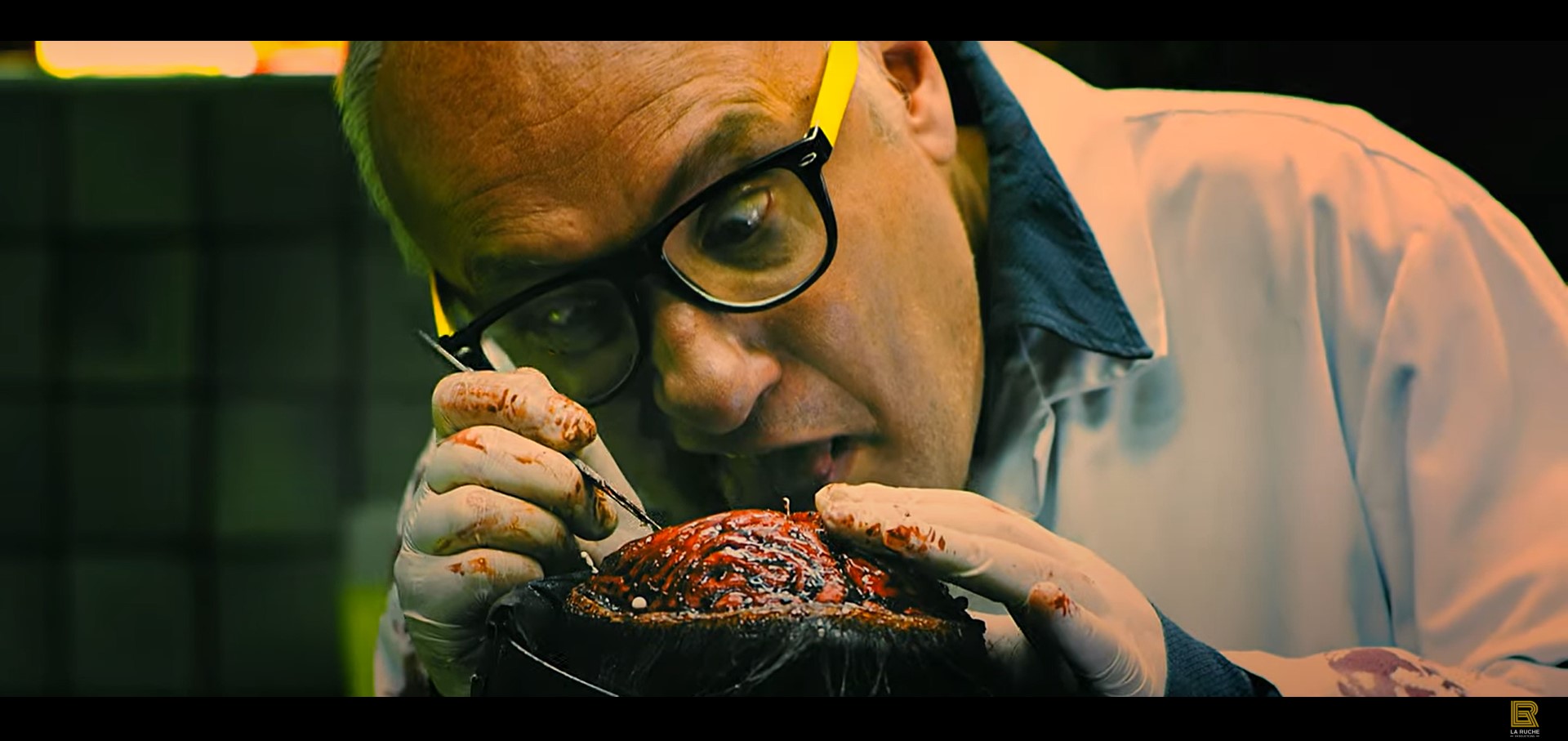
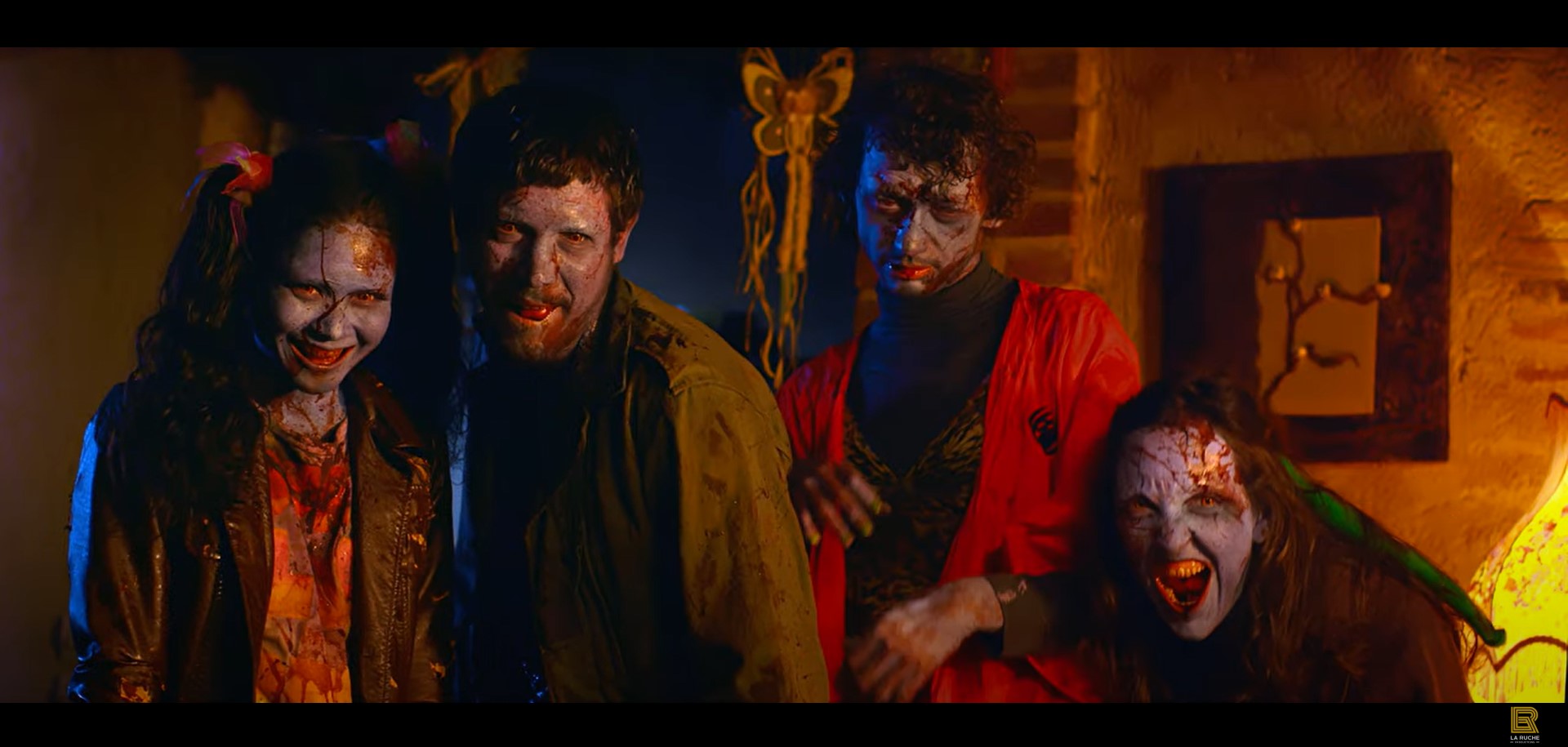
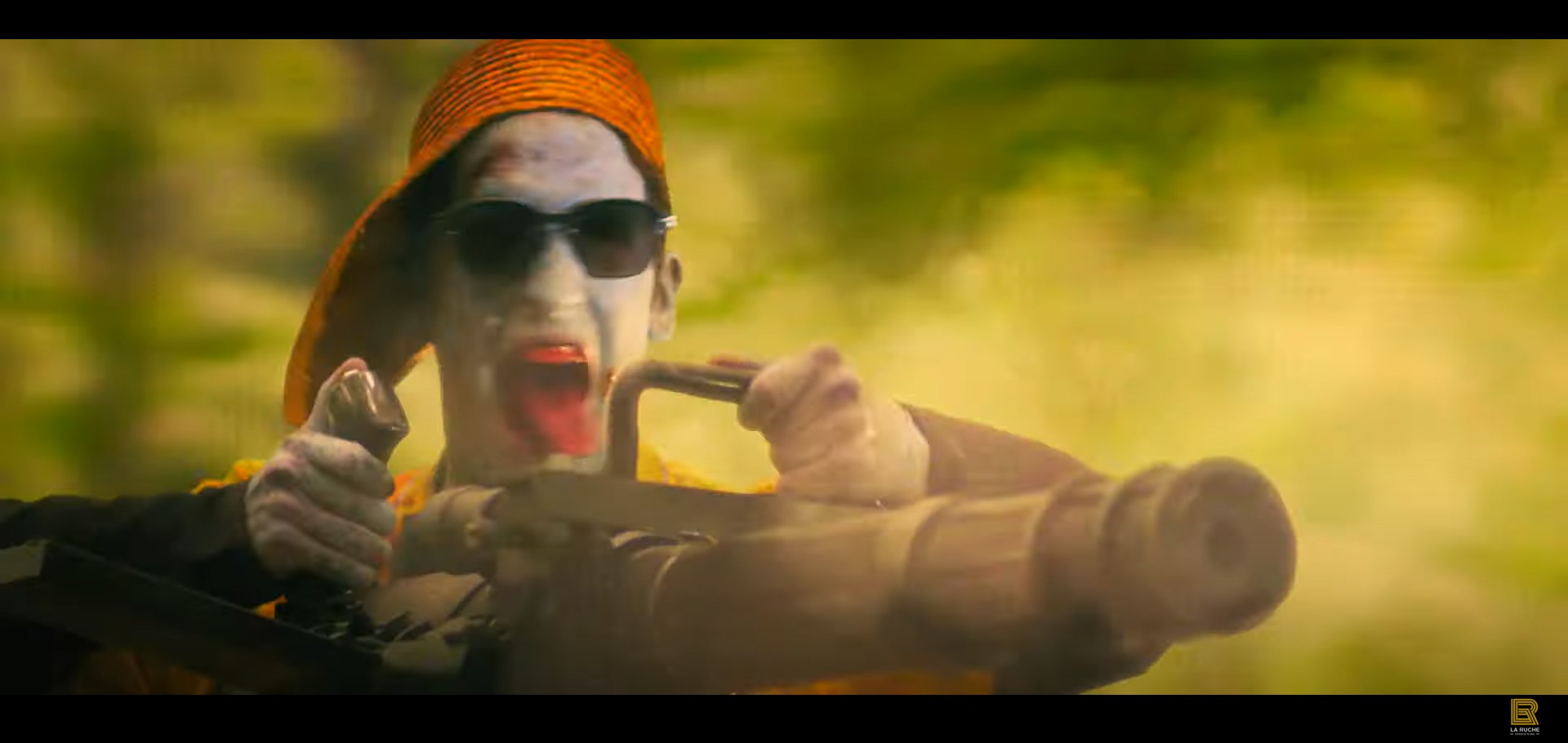
The story engrosses us into the ebb and flows of family dynamics, but not just any kind of family dynamics as it’s made up of genetically modified zombies.  Yet, Arnaud Tarably and Julien de Volte don’t divide the extremities of the living and dead too far apart.  Family dinners are still held together around the table, the purpose of existence within the fragile relationship construct comes into question quite about between father and mother, and even a teenage boy coming into manhood when washed over with an overpowering smitten sensation at first sight of a farm girl are all the things the zombie family experience making a life away from human interaction with the only human interacting being the one where the zombies have the upper hand as well as the severed torsos, the castrated genital organs, or the decapitated heads as a full table spread with dad’s special gravy (aka blood) as the secret sauce.  While their performances won’t win any kind of awards, at all, I do believe “High Lane’s” Johan Libéreau as the father Gertre and “Savage State’s” Julien Courbey as the mother Stephana cater to the bloody nub of gnarly passion between two also covered in filth and body fluid zombies lovingly trying to protect their unique family at a normalized primal cost and formulate a monumental revenge against humans.  One question that rises out of Gertre and Stephana’s relationship is is Stephana supposed to be a man actor playing a woman character assigned gender by genetic disposition or a zombified gay man in transition?  It’s never clear but it also doesn’t really matter as it adds to Stephana idiosyncratic comedy as she removes a female corpses breast to sew to her own chest but also pees blood standing up!  It becomes just a curiosity that arises but the crux of the character is nailed down by Courbey who shows a sensitive and savage side being a cabin-wife to three children and providing for Gertre’s quest to queen her zombie world domination.  Gertre and Stephana’s children are played by returning “The Foodies” actors Fabien Ara as the baby boy Yvon and Florence Bebic-Veruin as sister Georgette with the addition of Audrey Giacomini being adopted into the ferociously multifaceted family cast as the second sister Marcelline.  Ara and Bebic-Veruin reprise their colorfully blue necrotic-skinned and blood-red splattered characters as squabbling siblings as the babied Yvon is coddled to the point of seeking love in a local farmer’s verbally abused but carefree and nearly toothless daughter Augustine, another reprised performance by Marion Mezadorian who was also a farm gal in “The Foodies.”  “Super Z” fills out the cast with lots of zombie fodder but also includes Jean-François arises, (“Time Demon”), Ludovic Schoendoerffer (“Crime Scenes”), Jacques Boudet (“Dracula and Son”), Laurent Bouhnik, and Jo Prestia of “Irreversible” as the mercenary’s very much alive cousin and the zombie family’s bodiless uncle!  Wait, and you’ll see what I mean.

“Super Z” will not sate everyone’s thirst of comedy nor will be gripping horror, but the French absurdist film will quench with gore galore with a setup that’s real light on its feet, swiftly making haste through a narrative that if you blink or didn’t hear a certain part of the dialogue, or read the subtitles if you don’t understand French, than you’re left holding the bag trying to play catchup on what the hell is going on.  Not your fault by any means as “Super Z” goes at a super breakneck speed that aggressively aggregates zombie intelligence, a laboratory escape, a zombie-turned-son, and a quiet, secluded abode to make camp all within the first 15 minutes or so.  From there, we ease into the zombie family country life, getting to understand their troubles, their ambitions, and their family squabbles more-and-more while father and his daughters hunt down bypassing humans with a machete and make a smorgasbord of homecooked organs, blood, and flesh out of them that is fit for an undead king while the wife cooks the food and showers the biologically unrelated brat with pet names and adorable little hairdos to much of his disgust.  Zany can’t describe “Super Z’s” overzealous rubbish yet within that zany overzealous rubbish, a thin stream of guilty pleasures can result in keeping attentions from pressing the off button and burning the disc to a crisp.  “Super Z” is not a too terrible horror-comedy as long as understanding the premised background helps focus on the filmmakers’ key conveyances within an absurdist designed paradigm that just happens to have lots of blood and guts. 

If the zombie subgenre was becoming too stale as week old bread, then “Super Z” keeps the rotting bags of walking meat fresh with a managing ménage of the uncouth undead. Synergetic distribution goes international with domestic releases with “Super Z” on DVD. The Smart-Ass Zombies are presented in a widescreen 2.39:1 aspect ratio with a picture quality that renders clean just like many modern-day digital models. The Synergetic DVD has consistent Mbps decoding reliability on the DVD5, decoding at a rate of 8.9 Mbps with hardly a blip on compression. In regard to the coloring, the zombie family’s forest background pops with lush greenery that becomes invariably evident in other mise-en-scene aspects as a higher contrast delineation defines the boundaries super well, materializing emerging imagery with deep shadows and a vibrantly eclectic color palette resembling near comic book visuals that luckily absorb Cyril Féron’s cut-and-paste visual effects into the crass configuration. The French Stereo 2.0 offers free from nuisance tracks but definitely output in a two-dimensional standard that, since there’s more range than one might expect, softens the punch of this madcap zombie mayhem to a par mix that works well enough. The zombified autotune adds a layer of obstruction over the dialogue track but if reading the burned in English subtitles, then there’s nothing lost in that respect. The entire mix is an overall healthy dose of ambient bustle, sprightly dialogue, and lots of buffoonery snaking in between. The Synergetic DVD doesn’t support bonus material with only the feature and a chapter selection on the main menu but there is an after credits stinger of a cow and a severed head that attempts one last quick chuckle out of the viewer. Supporting all region codes, the DVD has a runtime of 80 minutes and is seemingly unrated, there is no stated rating on the back cover. Speaking of which, Synergetic DVD covers skirt the cost with slapdash compositions an eighth grader learning AutoCAD could have completed for a solid C+. The mustard yellow with black, nearly indistinct, vignettes don’t provide any kind of appetizing stimulation and, oppositely, can snuff out any sort of enthusiasm toward checking this French absurdist piece out, but don’t let the lackadaisical cover art dishearten a peak into what could be a considerably wild and gory experience. Just be warned that “Super Z” isn’t for everyone and everyone isn’t for “Super Z” living on a different, bizarro plane of existence.

“Super Z” Has Bites and Baffoonery!  Amazon.com Has it on DVD!

EVIL Strikes with Thousands of Disastrous, Deadly Fangs! “Calamity of Snakes” reviewed! (Unearthed Films / Blu-ray)

Save the Date!  “Calamity of Snakes” Slithers onto Blu-ray and DVD!  Available at Amazon!

A greedy, time-is-money land developer pushes his project manager and structural architect to complete his condo building earlier than scheduled, even if that means to cut corners.  While digging to lay the structure’s foundation, a massive pit of deadly snakes is unearthed.  With no times to waste, the land developer orders the mass killing of the snakes by the crew and even takes matters into his own hand using a backhoe as a weapon against the wishes of more sensible architect.  Those who are karma-included and God-fearing believe the mass murder of the snakes will result in retribution with fears being validated when workers fall victim to random snake attacks.  Shrugging it off as superstition mumbo-jumbo, the land developer finishes marvelous residential condo and fills the units in record numbers.  His success becomes the tenant’s death trap who can’t escape the swarming thousands of deadly slithery serpents infesting every nook and cranny and climbing toward his penthouse, seeking revenge against the snakebit developer’s cruelty and greed. 

Warning.  If you have a severely crippling phobia of snakes, then do not press play on “Calamity of Snakes” or you’ll be crying in the fetal position for hours afterwards with imaginational visions of venomous serpents dangling around your neck and arms, clinging to your punctured flesh with their sharp, tapered fangs. Trust me.  I know from experience after having watched the William Chang Kee (Chi Chang) creature feature and going into the viperous vengeance film with my own form of sweat-inducing ophidiophobia, an extreme fear of snakes.  Kee’s 1982 production comes with a bit of notoriety that may put the film in hot water with Peta or other animal rights organization, it also may be a silver lining for those petrified by the carnivorous reptilians that lurk underfoot, but don’t worry, from Unearthed Films news board, the home entertainment distribution company pledges to donate a percentage of the “Calamity of Snakes’” sale profits to the Save the Snakes, an organization that aims to converse and repopulate all species of snake around the world.  Penned by Kee with cowriters Kang-Nien Li (“The Lady Avenger”) and Kuo Jung Tsai (“Crouching Tiger, Hidden Drago”), The Chinese film made in Taiwan, “Calamity of Snakes” wriggles to-and-fro between different genre elements with pieces of horror, martial arts, and comedy packed so tightly together that making diamond shaped heads and rattling tails difficult to define the kind of film Kee intended to convey, but what came to fruition fabulously depicts the can-do attitudes of developing a preposterous idea into something insane, terrifying, and effectuated with countless real snakes.  Chi He Film Company and the Hong-Kong based Kee Woo Film Co. serve as the production companies with Tsai-Ching Wang producing and Golden Sun Films (“Dr. Lamb”) distributing.

Despite the animal cruelty, which undoubtedly can’t be ignored, you have to give credit to the Chinese for their willingness to do just about anything in order to get the shot.  If that means two of the actors’ role violently around on a floor covered with live snakes, screaming their heads off, then they certainly have more cojones than I ever will.  From a recent interview I watched with Michelle Yeoh, the “Everything Everywhere All At Once” Academy Award winning actress describe the Chinese film industry of the 1980s to be stunt demanding and really did lack the strict safety standards when compared to the U.S.  “Calamity of Snakes” appears to be no different with the easily handling of cobras and an overall serpent magnitude that can’t be denied. Yun-Peng Hsiang stars as the young, U.S.-studied architect with a sensible and rational head on top of his shoulders, overcome with the feeling that his dealings with the unscrupulous land developer (Yuen Kao) and the two passive aggressively buttheads throughout the narrative that eventually lends to the developer getting what he wants by way of money, power, and backdoor dealings that denotes an allegory of affluence being blind to the perceptible cause-and-effect dangers ahead while the studiously educated are left ignored, exploited for their talents. “Calamity of Snakes” cast rounds out with Lui Cheung, Ying Lee, Tung-Min Huang, Ying Lee, Pei-Ying Lo, and Ping-Ou Wei as the land developer’s chucklehead assistant.

“Calamity of Snakes'” hardest part to digest is the disgusting display of snake homicide. In what becomes a grouping of three scenarios that are just scene after scene of killing snakes by the hacks of machetes, the release of mongoose going right for the head of the snake, and in a blaze of flame throwing fire, cruelty is terribly too integrated into the pericardium encased heart of Kee’s ecohorror and makes the snake outdoor market delicatessen scene that dispatches a cobra for use of consumption that much more palatable despite the graphic skinning, organ removal, and blood draining for a special drink cocktail that can supposedly cure what ails you. Down the hatch! After the ginormous scenes of genocide, rooting for the snakes to bite back against the unbridled cruelty of humans to come crashing down in a heap of revenge-seeking serpents is a sight of satisfactory glory. Kee, also known for his cheap but fast-paced martial arts films, creates a loose hierarchy amongst the ophidians by fabricating a boa constrictor that can kung-fu with the best human snake whisperer. The showdown scene takes flight with the constrictor whipping through the air using its large, serpentine tail as a formidable blunt object and its body to innately crush the life out of foes. In contrasts, the chop-socky, though wonderfully fast-paced and choreographed, is a bit out of place with a flying, unrealistic boa against the real slithering slitherers creeping along the floors and walls, decorating the rooms with slick, shiny scales that encircle terror around frantic condominium residents and the boss-level land developer who unsheathes a katana in another scene of snake cleaving in slow motion.

The day of the snake is here and now, on a high definition 1080p, AVC encoded, Special Edition Blu-ray from Unearthed Films as part of the boutique distributor’s Unearthed Classics sublabel and slotted at number 12 on the spine. The primary feature is presented in a widescreen 2.35:1 aspect ratio with a genuine digitized effort toward the best possible 2K scan rendition of the photograph film source print. There’s not a ton of wear, tear, or much of anything regarding damage aside from a few vertical scratches. Delineation is consistent with delivering characters and snakes transposed clearly, but often you might see the boa constrictor scenes share a softer exposure because of that accelerated camera work with the martial arts. Color reproduction does maintain a certain image fidelity, but the grading comes off placid, never giving the snake, or snakes, a chance to gleam a venomous glare with those eyelid-less and verticalized wide-angle seeing eyes. The original elements offer little to work with, but the Unearthed Films’ release is still top-notch work in delivering the best possible picture. The Mandarin, Cantonese, and English dub PCM mono 1.0 provide the typical options available when released in Taiwan decades ago; In fact, they’re all scratch tracks but I went with the Mandarin track that synchs not too adversely to viewing pleasure. With the mono, dub track, depth is done before it can even get started but “Calamity of Snakes” has immense range that conveys the whooshing actions of living things flying through the air during fight sequences, flamethrowers singe the very audible air, and the Foley keeps up to any and all actions with a more than satisfactory overlay track. Dialogue being the important aspect of anything film is fine here being in the forefront and clean albeit some moderate background crackling-static throughout. English subtitles are available and discern no issues with pacing or with spelling slips but there is a sense of something lost in translation as the dynamic discourse seesaws in an irregular way that feels forced and unnatural. Unearthed Films doesn’t just deliver one version of the film, the company offers two more edits for equality. If you’re not one for animal cruelty, a cruelty free version is available that omits the snake snuff. Also, the theatrical edit is a censored version, but Unearthed Films does include the 4:3 uncut, unrestored versions that adds back in prolonged sex acts and one very brief nudity scene. A From Shaw to Snake: The Venom And Violence of Early Chinese Language Horror Cinema brings back some key far East scholars, such as Calum Waddel, and new academic faces with Dr. Lin Feng, to discuss the background limbotic tug-a-war of Taiwan between the democratic island and mainland China that also morphs into the rising of Shaw Brothers’ films in the mid-20 century to eventually Golden Sun’s competitive rise, and subsequently the Shaw Brothers’ as well, into the kitschy crowd favorites of the horror genre. Reptilian Recollections: Lin Kuang-Yung In Conversation With Chui-Yi Chung converses in an interview with Lin Kuang-Yung recalling moments from production involving the countless number of snakes and the safety assurances with the cast and crew, despite some being bit a few times. The special features round out with a commentary track with Nathan Hamilton and Brad Slaton, alternate opening and ending credits, and a still gallery. The physical portions of the release come with a traditional Blu-ray snapper case inside a cardboard o-slip with the original Thai poster art by illustrator Kham, provided by the M. Wright Collection. The same poster art is used for the disc art as well. Inside the snapper case lies no insert or reverse cover art. The region A locked Blu-ray clocks the feature presentation in at 96 minutes and is not rated. “Calamity of Snakes’ is the original “Snakes on a Plane” of the 1980’s, a coiling revenge plotted by nature with potent venom and disturbing imagery that deserves to be a classic in its own right soon to once again see the light of day on DVD and Blu-ray come April 25 from Unearthed Films.

Save the Date!  “Calamity of Snakes” Slithers onto Blu-ray and DVD!  Available at Amazon!