Experimental, Recreational Drug Use in College has Killer, EVIL Effects! “Blue Suneshine” reviewed! (Synapse Films / 3-Disc 4K UHD, Blu-ray, and CD Limited Edition Set)

Trip Out on Synapse’s Limited Edition “Blue Sunshine”

A party between friends turns deadly when one of them goes into a violent frenzy after being reveled his loss of all his hair.  Blamed for the murders, floating through life Jerry Zipkin is evading police investigators while also trying to connect the pieces on why a good friend of his would suddenly turn into a madman with no body hair and with five times the strength of any ordinary man.  His own investigation leads him to Blue Sunshine, an LSD variant connected to every transgressive event similar to the party, and at the center of it all is congressional frontrunner Edward Flemming who peddled Blue Sunshine 10 years ago at Stanford.  The latent consequence is now slowly surfacing to a head and more people are starting to experience the aggressive, alopecia effects, all Zipkin has to do to prove his innocent and a major ticking timebomb is to take a sample from a living specimen to show aberrant chromosome damage caused by the designer drug. 

Before becoming outed and investigated that the U.S. government experimented LSD on human subjects and it’s unknown but possible dormant side effects of years later, writer-director Jeff Lieberman put theory into sensationalized practicality with his post-psychedelic horror “Blue Sunshine” that turned ordinary, friendly people into headache-induced phonophobia sufferers and hairless, homicidal maniacs with super strength.  Lieberman’s 1977 released film snugs in between his killer Earthworm creature feature “Squirm” and one of the better backwoods slashers titled “Just Before Dawn,” tackling with themes of adverse effects from manmade drugs, political corruption, and to never judge a book by its cover.  The film is produced by “Squirm’s” George Manasse with “He Knows Your Alone” and “The Clairvoyant” producers Edgar Lansbury and Joseph Beruh serving as executive producers on the Ellanby Films production.

While the plot point that pushes Jerry Zipkin in the direction of investigation of the sudden fury and death surrounding his friend treads a threadbare rope with little background to suggest Zipkin is characteristically dedicated, loyal, curious, or all of the above to find out what happened, Zalman King’s overall performance as the path unaffixed Zipkin overshadows those missing background pieces and motivations.  In more key precise terms, Lieberman’s misdirection toward King’s erratic and strange behavior puts a lot of the focus on Zipkin rather than obvious derangement of the latent LSD maniacs with corrupted chromosomes in what was meant to puzzle the audiences in believing Zipkin himself might be the loose cannon cause behind the murders or, even perhaps, another ignorant victim of blue sunshine, which the latter would have been more intriguing and powerfully motivating for the Zipkin character as what drives him to solve the mystery and save himself.  None of the relationship resolve any type of secure or genuine interactions, specifically with Alicia Sweeney (Deborah Winters, “Tarantulas:  The Deadly Cargo”) with an unrealistic strong undying love for Zipkin despite only knowing him for a couple of months and the entire Stanford contingent from a decade earlier who Zipkin was able to easily link together within a matter of seconds of either examining a bloody crime scene or meeting a pair of the blue sunshine fiends.  One of the better, solid bonds is between the will-do-what-it-takes congress candidate Ed Flemming (Mark Goddard, Lost in Space) and his towering former college football buddy Wayne Mulligan (Ray Young, “Blood of Dracula’s Castle”) who becomes Flemming’s 6’6” advisor and bodyguard.  While might not seem like a well-rounded bond, Flemming and Mulligan have something tangible one can grab and understand when compared to other dynamic relationships that float in arbitrary.   Robert Walden (“Rage”), Charles Siebert (“Tarantulas:  The Deadly Cargo”), Ann Cooper, and Stefan Gierasch (“Carrie”) costar. 

“Blue Sunshine’s” premise has long stood the test of time because its more relatable now than ever as scientists and medical experts are in a fluid state of studying the effects of drugs digested, snorted, injected, or smoked weeks, months, years, and decades ago.  This premise also translates over to contaminants that cause sicknesses, such as the link between asbestos and cancer were tumors form years after exposure.  Lieberman catches wind early of the dangerous latent effects and manipulates it for the basis his film that is more fact than fiction.  Lieberman’s ability to minimize assurances on who is transfiguring into a killer is all in his characterizing nuances, shading in gray areas with excellently crafted character profile vignettes in between the opening credits that instill suspicion, fear, and some unknown stemmed danger ahead.  The unique setup is the filmmaker’s only real unconventional course in the narrative that plays out mostly a routine hand in a natural style albeit the surrealism of extreme closeups and angles on bald headed balefulness when the rage takes over or the slow, insidious madness that seeps into Zipkin’s mind causing hallucinations to exact an audience experiencing disturbance in the envisaged air.  Engaging and self-security eviscerating, “Blue Sunshine” is carbonated madness in a bottle, shook up and ready to pop. 

Synapse continues to upgrade their catalogue with Blue Sunshine next on the augmentation block with a new and mighty 3-disc Blu-ray and 4K UHD restoration release.  Presented in Dolby Vision HDR10, the restoration of the original 35mm camera negative sees it’s 4K transfer compressed with a HEVC codec that produces 2160p and is stored onto a BD100 while the Blu-ray is a compressed AVC, 1080p resolution, on a BD50.  The restoration will blow you away with diffused color palette and organic details that by far are the best they’ve ever looked with a balanced, natural grain level that keeps the speckling down in darker portions of the film to retain inkiness while securing the authenticity of the film stock without any smoothing over and artificial enhancements.  Vivid coloring, immersive details, and natural skin tones, when not softly grayed by the drug’s effects, throughout are appreciatively stable with no qualitative loss between cuts, creating a pleasurable and seamless visual experience on both formats.  Each format comes with two English audio options, a lossless DTS-HD master audio 5.1 surround sound, supervised and approved by director Jeff Lieberman, and a lossless DTS-HD master audio original theatrical mono 2.0.  While the amplification of the same sound output through the dual channels is inviting for purist, I highly recommend the immersive 5.1 surround sound that retains the genuine article of audio fidelity.   Charlie Gross’s orchestral strings instruments, percussive gongs, and synthesizing score fully engrosses the characters and audiences alike into a fold of unnerving, lingering tingles that evoke the monstrous maniac effect possibilities beyond the Jerry Zipkin tale.  Dialogue renders over with fine precision that hangs on every word and sentence with no hissing and crackling to obstruct it’s sweeping clarity.  A bountiful amount of Mind-Altering special features that fill this limited to 4000 copies set that include a new feature prologue introduction with director Jeff Lieberman.  There are two audio commentaries, an archived 2003 interview with Lieberman, a Channel Z Fantasy Film Festival ”Lieberman on Lieberman” interview with the director hosted by “Sleepwalkers” Mick Garris, a Q&A video from the Fantasia Film Festival 4K premiere moderated by Michael Gingold and Lieberman, an anti-drug scare-film “LSD-25” from 1967 and “LSD:  Insight or Insanity?” From 1968 from the American Genre Film Archive, Jeff Leiberman’s first film “The Ringer” with two cuts of the film, the original uncut version from the projection print source and the final release from the remastered Synapse Films 4K transfer with audio commentary included on the uncut version by Jeff Leiberman and moderator Howard S. Berger, still gallery and theatrical trailers. Synapse’s limited-edition boxset is nothing you’ve ever seen before from the company with not only a rigid slipbox case but there’s also a cardboard O-slipcover, both housing the clear, inch-thick Blu-ray Amaray case and both showcasing new illustrative, compositional, air brushed artwork of some of the key character scenes and expressions by Wes Benscoter, which is a real thing of beauty. The Amaray cover art is the regular 70’s grade cover art seen on previous releases from DVD to Blu-ray with a reverse side an image of the tripped-out Ed Flemming icon photo of his drug peddling days at Stanford. Overlapping 4K and Blu-ray discs display graphic presses in story moment compositions, though I don’t recall a half-naked woman in the film yet is on the cover. Not quite yet done with the bonus material, the 3rd disc is a 13-track Soundtrack CD of the score and laid overtop is the 11-page liner note booklet from Jeff Lieberman’s 2020 memoir “Day of the Living Me: Adventures of a Subversive Cult Filmmaker From the Golden Age,” plus the CD track listing, production credits, and special thanks on the backside. A reproduction of the original one sheet poster is stored in the insert as a mini-folded poster along with Synapse’s 2024 catalogue for your perusing pleasure. The rated-R film has a runtime of 95 minutes, and the limited edition doesn’t limit itself to a confined playback with region free decoding.

Last Rites: In order to snag a copy of this stellar Synapse set, muscles are required as this heavy boxset feels like 5lbs of software and hardware special features regarding Jeff Leiberman’s drugs-are-bad thriller “Blue Sunshine” with chrome dome, blank-stare killers doing the dormant bidding of 10-years-old recessed LSD.

Trip Out on Synapse’s Limited Edition “Blue Sunshine”

How Many Chickens Need to Have Their Throats Cut to Satisfying Ritualistic, Naked EVIL! “Voodoo Passion” reviewed! (Full Moon Features / Blu-ray)

Get Entranced by Full Moon’s “Voodoo Passion” Blu-ray!

Newly married Susan House travels to Haiti to join her consulate husband, Jack House, who has been stationed at the British Embassy.   Captivated by the Haitian voodoo religion and culture, Susan is eager to tour the island nation’s most ambiguous practice most don’t or will never understand all the while Jack’s naked and nymphomaniac Sister, Olga, makes forward, flirtatious advances toward her.  That fervor for voodooism and Olga’s point-blank seduction has seemingly incepted terrible nightmares of naked, animal sacrificial rituals and murder conducted beguilingly by a priestess in the form of Jack House’s native housekeeper, Inês.  When Susan awakes, the realism of her dreams afflicts her but her husband Jack and his colleague, a psychiatrist by the name of Dr. Pierre Barré swear there have been no police reported murders.  Night after night, Susan’s entranced nightmares continue to be vivid with murderous mysticism that’s slowly driving her mad in the land of voodoo. 

One of Jesus “Jess” Franco’s more bosom and bush erotic-thrillers, “Voodoo Passion” is nearly a fully naked runtime feature sprinkled with hints of the nation’s cultural religion.  The 1977 released, German Production, also known by the titles “”Call of the Blonde Goddess” or “Der Ruf der blonden Göttin,” was less about his own stylistic substance and auteur stamp and more about spasmatic, gyrating nudity under rhythmic bongo beats for the Spanish sleaze and exploitation genre filmmaker.   The gratuitously sexed-up, multinational feature is penned by the Switzerland born, sexploitation and adult genre screenwriter Erwin C. Dietrich under one of his pen names, Manfred Gregor.  Dietrich also produces the film amongst a substantially historical collaborative effort between himself and Franco over the course of the late 70s to early 80s.  Nestor Film Producktion serves as the production company, filming entirely not in Haiti but in the beautifully scenic and old-world allure of the seaside capital of Lisbon, Portugal.  

Lots of hot body action in this beat-driven, voodooism thriller primarily between a trio of character-diverse, titillating ladies and peppered with peripheral nude women and men tribals engaged in a ceaseless native, ritual thrusting, pulsing, and shaking trance dance.  “Voodoo Passion” grips itself around the rags-to-riches character of Mrs. Susan House in what is a matron-look for Spanish actress Ada Tauler (“The Sexy Horrible Vampire,” “Love Camp”) brought to Haiti at the behest of her British consult, newlywed husband Jack House, played by the stony-faced and “Eugenie” and “Pieces” American actor Jack Taylor able to swing both thrills and feminine frills in his films.  While Tauler’s doesn’t shy away from full nudity of Susan House’s fever dream state, the actress pales in comparison to the other two-thirds who are more engaged in sexual promiscuity and the liberating fervor of ethnic ceremony.   Those two actresses are “Caged Women’s” Karine Gambier as the nymphomaniac sister of Jack House and the face of most of “Voodoo Passion’s” physical marketing with French actress Muriel Montossé (“Cecilia”), under the more westernized stage name of Vicky Adams.  With a face and body like a model, Vicky Adams’s wild arm and stoic expression dance moves will hypnotize viewers entranced with the bongo tempo’s transfixing pomp, contributing to the film’s psychotronic premise of magical and religious rites, obfuscated nightmares, and, cue Austin Powers’s voice, murder.  Yeah, Baby!  “Voodoo Passion” has curves for days and in all different personas that keep things weirdly, but welcomingly, platonic on some level and not just an overly saturated sex-fest.  The film’s cast rounds out with Vitor Mendes (“Swedish Nympho Slaves”) and Ly Frey.

If asked to describe or give an opinion on “Voodoo Passion,” one would say cheekily the Jess Franco film is a thriller swathed in an eyeful of bosom and bush.  If the 4-minute introductory scene with voiceover exposition to the ceremonial voodoo band and half-naked native dancers wasn’t enough of a clue, Ada Tauler and Karine Gambier pull you right back into the soaking tub with their soapy, wet bodies as they immediately take a bath together upon meeting for the first time.  From that point on, the bosom and bush bar has been set and in that the thicket of unshaven landing strips, there’s a good story underneath about the mystics and misconceptions of Haitian voodooism.  Unfortunately, much of that story falls behind the showcases of skin, thrusting the principal ladies into the spotlight, overshadowing Jack Taylor’s performance as well as doing nothing for the poor psychologist in Vitor Mendes, and undercutting the very theme of ritual exploitation and misconduct which is half of “Voodoo Passion’s” concept.  The entirety is all quickly surmised in one fell swoop of exposition without the necessary leg work, that should have been carried out by either Susan House or the consul assistant Inês, of building evidence for or against the contrary exposed in the finale.  Then again, does gorgeous naked women dancing about really need a well-rounded plot?  All depends on the eyes of the beholder and these eyes needed that equilibrium!

Full Moon Features conjures up a Blu-ray for this Jess Franco thriller debased in sexploitation slather.  The AVC encoded, high-definition 1080p, is housed on a single layer BD25, yet not encoded heavily with bonus content, “Voodoo Passion” is able to retain a full-bodied image from a remastered German original negative owned by producer Erwin C. Dietrich.  Vivid color saturation, contrast levels accompanying each other, natural looking skin tons, and the stunning detail render this Full Moon Features release the bees’ knees.  No signs of blocking or banding but some celluloid frames are slightly grainier than others that might be a result of age, wear, or the variable of film stock.  There is only a single audio option, an English LPCM 5.1 renders lossless audio, clearing each channel with ease, and delivering a rhythmic bongo drum beat with intensity.  Dialogue mirrors the richness despite the ADR track overtop the diverse nationalities’ native tongues.  There are no English subtitles, or any setup option for that matter, for this English only track release.  Special features included are an archival interview with Jess Franco with forced English subtitles Franco, Bloody Franco, a rare photo slideshow of images from the film, the German trailer, and a Jess Franco vintage trailer reel of most of his schlocky Eurosleaze fair.  What’s party treasured about these newly re-released films onto a new full HD transfer is Full Moon’s physical package redesigns that offer a cardboard slipcover with new illustrated, pinup-esque, art.  “Voodoo Passion” has a half-naked woman, presumably the nymphomaniac sister Olga, moaning in ecstasy while holding a…hand mirror?  Wonder if that should have been the champaign bottle Olga uses to, well, you know, pleasure herself with.   There’s also a striking, NSFW, Muriel Montossé pose in a scene from the film on the traditional Blu-ray Amaray front cover with additional explicit scenes on the backside.  The disc is pressed with the same slipcover illustration and there are no inserts inside the case.  Presented uncut and region free, this Full Moon release of Jess Franco’s vintage sleaze has a runtime of 86-minutes.   

Last Rites:  Another wholly impressive picture quality presentation of another unwholesome, softcore sexploitation by Full Moon Features, a friend to Haitian voodoo and you, the licentiously greedy viewer! 

Get Entranced by Full Moon’s “Voodoo Passion” Blu-ray!

A CIA Plan is Being Sidelined by EVIL’s Rooftop Terrace Sniping! “Goodbye & Amen” reviewed! (Radiance Films / Blu-ray)

Own a Copy of “Goodbye & Amen” from Radiance Films. Click here to Purchase.

Ambitiously confident CIA agent John Dannahay eagerly wants to begin his plan for an African nation coup.  Based in Italy, Dannahay runs through his team the stage of events when suddenly a current administrative African agent, known for sniffing and snuffing out power-overthrowing schemes, suddenly arrives in town, Dannahay’s friend Harry Lambert up-and-leaves his wife and child and takes a rifle with him, and a gunman, supposedly Lambert, is at the top of a hotel terrace sniping down pedestrians.  Whatever surgical strike Dannahay had plan is now in jeopardy as a hostage situation occurs in one of the hotel rooms and agent Dannahay and Italian inspector Moreno must piece together why a longtime compliant and clean nosed American embassy worker has suddenly gone murderously berserk.  A public stir amidst a shrewd madman with a high-powered rifle creates a confounding panic of national security and for fear of what will happen next in the moment of mayhem.

Italian filmmaker Damiano Damiani, known for his crime thrillers, such as “Mafia” and “Confessions of a Police Captain,” and his small footprint in horror with the sequel “Amityville II:  The Possession,” had cowrite and directed an intense espionage thriller outside the confines of actual cloak-and-dagger activities with a multi-national cast.  The 1977 film titled “Goodbye & Amen”  is first and foremost an Italian production, cowritten by Damiani alongside “Wanted:  Babysitter” screenwriter Nicola Badalucco and is based off the novel “The Grosvenor Square Goodbye” by British writer Francis Clifford.   The gripping story draws upon multi-layered themes and twists to keep the narratively recycling on fresh and to never become stale with its intriguing mystery and taut tension, shot right in the heart of Rome, Italy at the Cavalieri Waldorf Astoria hotel.  “Goodbye & Amen” is a product of Capital Film and Rizzoli Film and produced by the profound producer Mario Cecchi Gori of Michele Soavi’s “The Sect” and Dino Risi’s “The Tiger and the Pussycat.”

Italians.  Americans.  British.  “Goodbye & Amen” has an all-star international cast that lines up and knocks down the perfectly scripted and beguilingly complex roles that warrant nothing less than the utmost praise for their personal performances. What starts off as a CIA caper to overthrow an African nation regime pivots acutely into a hostage standoff with many unanswered questions pelting down almost simultaneously in mass confusion and uproar in what translates to a very relatable, real moment.  Introductions begin with the CIA’s operational leader John Dannahay (Tony Musante, “The Bird with the Crystal Plumage”) spearheading the preparation meeting when suddenly his operational plans become under jeopardy.  Musante’s strongheaded approach to not lose control of the situation is fierce against the challenge his character faces – a lone gunman, a man Dannahay calls a friend played by “Tenebrae’s” John Steiner, holding hostage an actor (Gianrico Tondinelli, “Enter the Devil”) and his illicit mistress (Claudia Cardinale, “8 ½”).  Steiner delivers a sophisticated, twangy-accented killer hellbent on making a statement with a M1 Carbine rifle and a thought-out plan being a step ahead of Dannahay and Italian Inspector Moreno (Fabrizio Jovine, “The Psycho”).  The dynamic between Dannahay and Moreno, in my opinion, is rather lite for a fast and loose Dannahay and a by-the-book Moreno being two stags vying over how to handle an American mess on Italian land.  Other supporting characters add their creative two cents to “Goodbye & Amen’s” already swelling storyline with great additional principals from Renzo Palmer (“The Eroticist”), Wolfango Soldati (“The House at the Edge of the Lake”), John Forsythe (“Scrooged”), and Anna Zinnemann (“My Sister of Ursula”) that fillet down the mystery to reveal its coldblooded nature.

Not lately have I’ve impressed with a crime thriller and said to myself, wow, that was really engaging and unexpectedly good.  With confidence, “Goodbye and Amen” hit that satisfying note, a note thought to have strayed into an obscure black void never to be seen again, but the story coupled by Damiani perceptive big-world direction and some great camera work and angles by cinematographer Luigi Kuveiller, that shimmers hints of Kuveiller’s work on previous films like “Deep Red” and “A Lizard in a Woman’s Skin,” and “Goodbye and Amen” is one of the better Italian crime thrillers to come out of the country that isn’t in the giallo subgenre.  Incorporating wide shots with depth and a seriously oversaturation of characters and extras, plus not to forget to mention helicopters and shoot outs, create the illusion of a bigger film without manufacturing too many atmospherics to hoist suspense.  Plenty of red herrings and blunt force action, peppered with bare flesh sensuality, and heedful acting provides the film with an incredibly firm bite that sinks its teeth in and never releases.  Compelling and always one step ahead, “Goodbye & Amen’s” layers of excitement keep viewers simultaneously abreast and in the dark and with the seesaw suspense, which never falters with an overly opaque complex ingenuity, there’s a pleasant rollercoaster effective of up and downs between penetrating thrills and just enough down to Earth exposition in order to catch one’s breath.   

In a new limited edition Blu-ray release from UK distributor Radiance Films on their North American lineup, “Goodbye & Amen” receives a 2023 2K restoration scan from the original camera 35mm negative and presented on an AVC encoded, high-definition 1080p, BD50 in an anamorphic 1.85:1 aspect ratio. Certainly, a smooth image with no enhancement fluff or over-corrective, off-tilted coloring, the restoration brings out the best parts of Damniano Damiani’s natural approach with key lighting supporting exteriors and some intensely lit interiors without a smidgen of banding or posterization to complicate it. Details are razor sharp and the hue saturation is full-bodied and deep even along the line of a sunny Italian coastline where contours are a nice edge drop-off and shape. The English version has three exclusive shots pulled and scanned from the 16 reversal elements that create a slight grain difference that manages to nearly go unnoticed. Audio options come with the original Italian DTS-HD Master Audio 2.0 mono and, for the first time on home video, the English export in a DTS-HD Master Audio 2.0 mono. The English export’s audio track does come with a proclaimed statement right on the main menu about its unresolved damage. Like being pushed through a filter of interference, the English track is intelligible if not entirely clear and free from static and squelch. The Italian track offers a cleaner ordonnance albeit a few in-and-out moments of faint distortion of unrestorable audio ribbon snippets. New and approved English subtitles on both lossless, uncompressed tracks help alleviate some of the technical pain audio aficionados may suffer but, in my honest opinion, the Italian meets the bar whereas the English is under the bar by just a few clicks. Radiance’s special features include a new audio commentary track by Eurocrime experts Nathaniel Thompson and Howard S. Berger, a new interview with editor Antonio Siciliano, and an archival interview with actor Wolfango Soldati. Both interviews are in Italian with burned in English subtitles. Radiance’s physical approach to their releases is highly unique in format by using obscure poster elements, and sometimes often new illustrated art and compositions, to exact a striking front cover image. With “Goodbye & Amen,” the rendition of Italian’s finest in their version of S.W.A.T. body armor within the sites of a crosshair is clever and engaging to know more. The reverse cover offers more of the common language poster art. A 19-page color booklet, that contents the cast and crew information, transfer notes and credits, and a new essay from Lucio Rinaldi entitled “The American Connection: Damiano Damiani’s Goodbye & Amen,” accompanies a reserved blue background and yellow font disc art that befits Radiance’s retro-classy style. Being a UK distributor releasing in the North American market lends the title to have a region A and B playback for two varied runtimes, for the Italian and English version tracks, of 110 (Italian) and 102 (English) minutes. Radiance’s 38th release is also not rated.

Last Rites: “Goodbye & Amen” is a collaborative triumph, an arresting story anchored by monolithic performances, and imparted by director Daminano Damiani with attention, detail, and substance that makes the film a pillar amongst the Eurocrime narrative.

Own a Copy of “Goodbye & Amen” from Radiance Films. Click here to Purchase.

Is He an EVIL Vampire or a Just a Disturbed Young Man? “Martin” reviewed! (Second Sight / 4K UHD & Blu-ray)

Note:  Screen Caps do not reflect the Second Sight's A/V on this release.

“Martin” Limited Edition Second Sight Release Available at Amazon.com! 

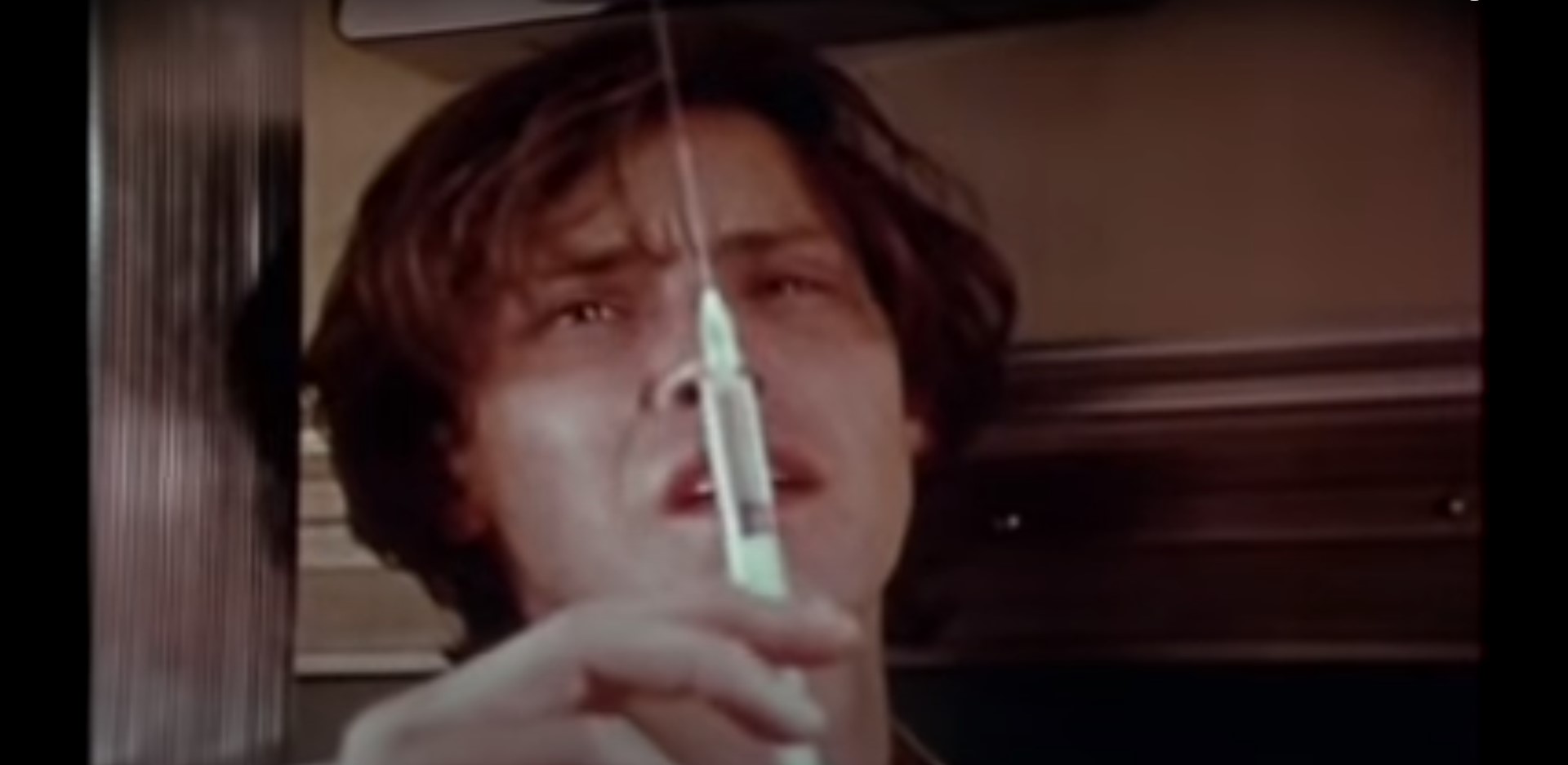
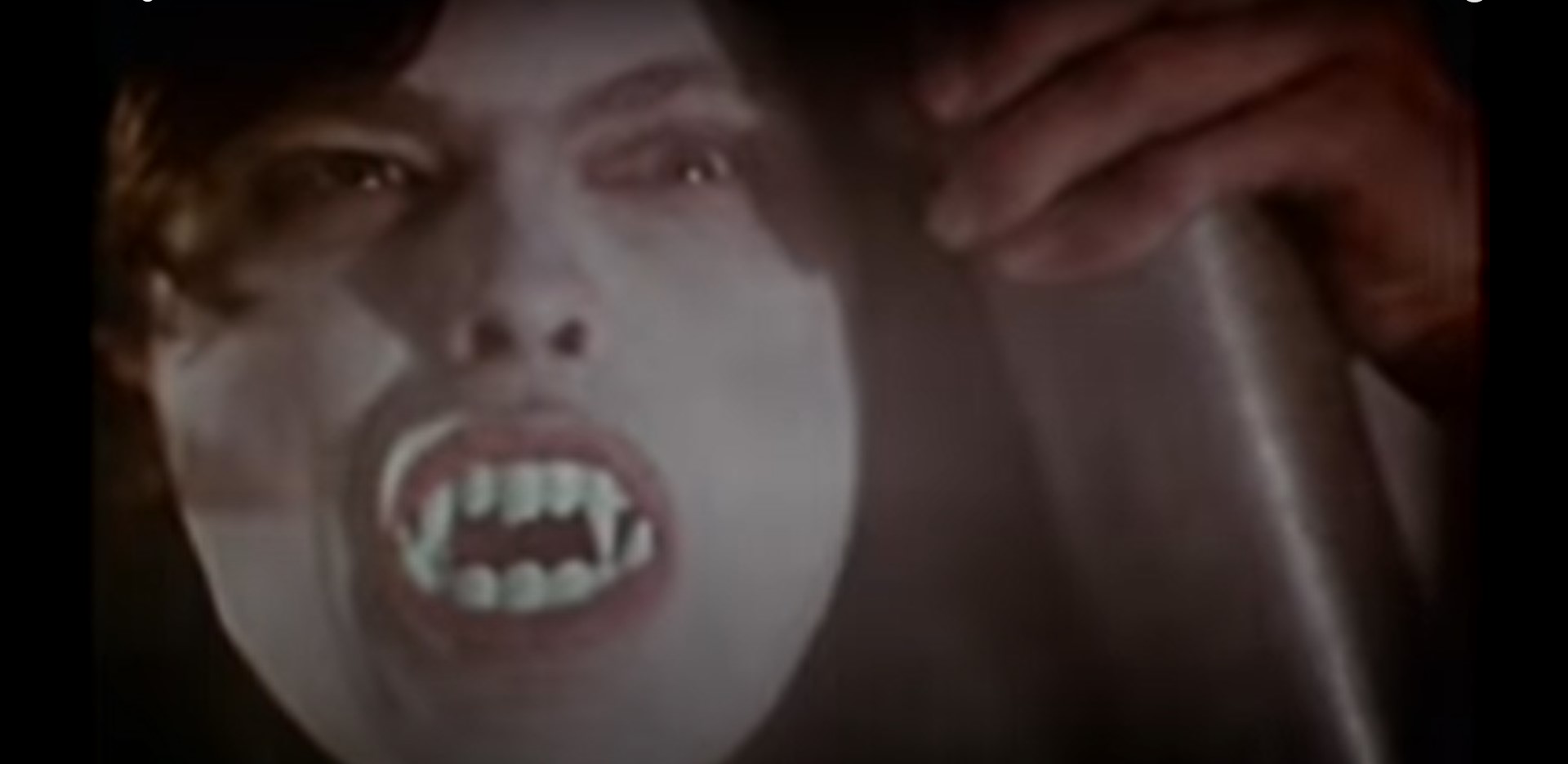
Martin, a young man from Indianapolis and upon recently lost his mother, travels by train to Braddock, Pennsylvania where he’s greeted by his elderly cousin Cuda, an old world believer that Martin has been selectively plagued by the family curse of vampirism and will take Martin in under his roof to cleanse his soul of evil, even if that means destroying him.  Though he doesn’t believe in the vampiric superstitions and the movie depictions, Martin truly believes he’s an 84-year-old vampire and does kill young, beautiful women to intimately drink their blood.  Being reserved and shy gives Martin an advantage to observe his potential victims from afar after gaining employment working as a delivery boy out of his cousin’s shop.  Cuda’s granddaughter, Christina, believes her lonely cousin’s mental illness is being exacerbated by grandfather’s archaic and draconian beliefs, fostered by a family history based off tradition rather than science.  When Martin meets an interested housewife on one of his delivery runs, the need to consume blood trickles when sex enters the picture, but also induces slipups in his well-oiled drug and drink operation whenever the need to feed becomes too much.

By now, “Martin” needs no introduction.  The father of the flesh-eating zombie, George Romero, delivered a neo-realism take on the vampiric mythology nearly 50 years ago in 1977.  “Martin” became the writer-director’s first all around filmic success after being royally screwed by the Walter Reade Organization for having failed to copyright the prints on the trailblazing and timeless classic “Night of the Living Dead,” the reason why you see so many Tom, Dick, and Harry remakes, revisions, sequels, and such of the 1968 black-and-white film that introduced zombies as flesh eaters, and a pair of box office failures that kept Romer in severe debt until slipping into business bed with producer Richard P. Rubinstein, the associate producer for Romero’s “The Amusement Park” and who would collaborate with Romero as a producer for the next subsequent decade years.  Filmed on location in the societal and industrial crumbling Western Pennsylvania town of Braddock, “Martin” remains one of George Romero’s quintessential and provocative pieces of work outside The Living Dead series under Rubinstein and Romero’s The Laurel Group production company.

In the titular role is the introduction of John Amplas who was discovered by Romero after watching Amplas in a play and the entire lead principal was reworked to accommodate Amplas boyish youth.  Amplas is instrumental to Martin’s success in a handful of ways:  the Pittsburgh native knew how to properly slink in an unsuspecting manner, he also didn’t overbear scenes and costars with a larger-than-life presence and could dip into this awkwardly retrieved guilt for the premediated murder to fulfill a need that either’s supernatural or unnaturally mental.  Amplas could walk that thin line that keeps the audience wondering how much Martin says and does is actually true or a misconception because of mental illness and this is coupled nicely with Romero’s direction, splicing in black-and-white scenes of gothic-laden, theater-esque vampire flashbacks that could either be a delusional reality or a very real backstory to Marin’s cursed heritage.  Polarizing external family forces in his elderly cousin Cuda (Lincoln Maazel, “The Amusement Park”) and age akin cousin Christina (Christine Forrest) combat on an emotionally taut and verbal levels between their corresponding character qualities of superstition and science that parallel Martin’s eventual damnation or salvation.  The principal trio are tightly compacted to strain the dynamic with a back-and-forth debate over which truth is behind Martin’s troubles.  Romero pens a good case for both by never fleshing out a legitimate truth all the way through to the end; instead, it’s a battle of save Martin from himself who understands the problem, wants to deal with it, but barely takes up arms to combat or even face his issues.  Special F/X legend Tom Savini, pre-trademark inky black mustache and goatee, makes his debut role as Christina’s boyfriend Arthur who serves only as a device to pull reason away from the table in a conflicted measure to pressurize Christina’s capacity beyond the limits of also caring for herself.  Eventually, Christina has to make a decision and, ultimately, choses herself to save, leaving Martin to fend against a sternly superstitious and old world Cuda.  Sara Venable, Roger Caine (“Dracula Exotica”), Donaldo Soviero, Francine Middleton (“The Love-Thrill Murders”), and Elyane Nadeau make up the supporting cast.

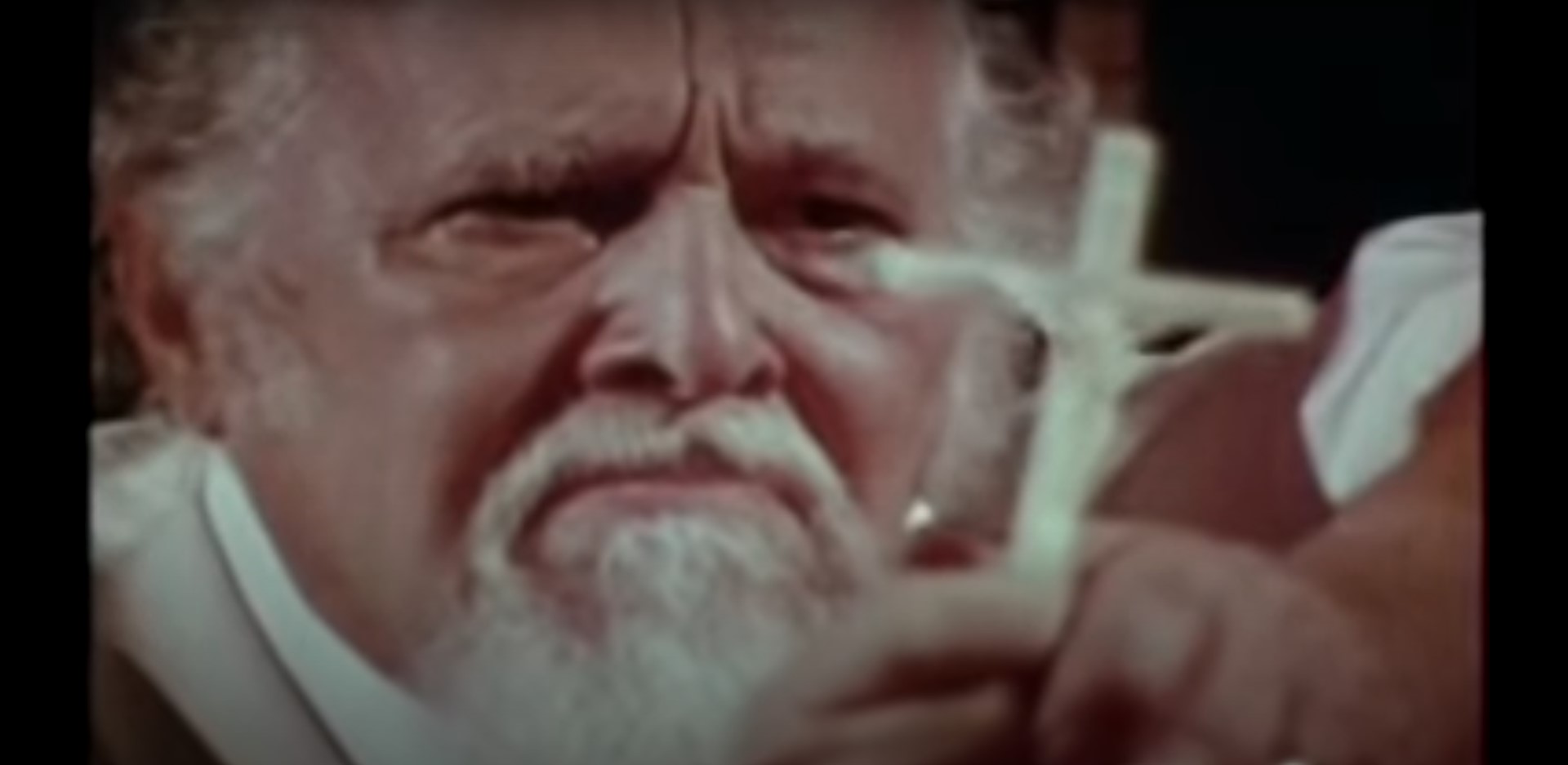
George Romero, again, redefines, or in a more fittingly descriptive – revamps, classic horror villainy that replaces the supernatural element with a realistic approach to weave the very fabric of horror into possibility while still hinting at something beyond the limits of reason.  “There is no real magic.  There’s no real magic, ever!” says Martin about the theatrical stereotypes used to display vampires in attempt by Romero to disenchant us from the ideologized mythos, the habitual characteristics, and the physiognomies of what we consider to be a night bloodsucker.  During that scene between him and Cuda, the words are potently effective in disapproving myths about vampires, but the words are supported with fact as Martin casually debunks garlic, crosses, and sunlight as vampiric weaponry at the expense of humiliating and entertaining Cuda.  “Martin” is at the forefront of being an allegory for loneliness and is a driving reason for presumably the real vampire’s gruesome habit to slice open wrists and drink blood.  Martin only targets young, beautiful women and becomes intimate with them while they are limp under sedation.  When he meets an equally lonely Mrs. Santini, a depressed housewife on the verge of an emotional collapse, and the two embrace each other with comfort against what dispirits them; disinterested in stalking her, Martin’s need to kill dampens and Mrs. Santini unhappy marriage in nullified by the young who listens more than speaks.  Maturity and youth meld together in a moment of peace between them but their bond still shows micro fissures of incompatibility that puts doubts into Martin’s 84-year, carefully planned practice and also doesn’t save Mrs. Santini completely from her too-little-too-late despair.  Braddock, Pennsylvania, a small town sinking into the slumps of becoming forgotten, is a once industrious backdrop integrated as a metaphor for being a forsaken place where things go to die.  Martin is sent to Braddock to paradoxically be cared for by a cousin determined to destroy him because of a family curse that afflicts select generations in what can be perceived as butting of heads between the defiance of angsty youth versus the traditions of an older individual set in the world with their linear ways of thinking.  

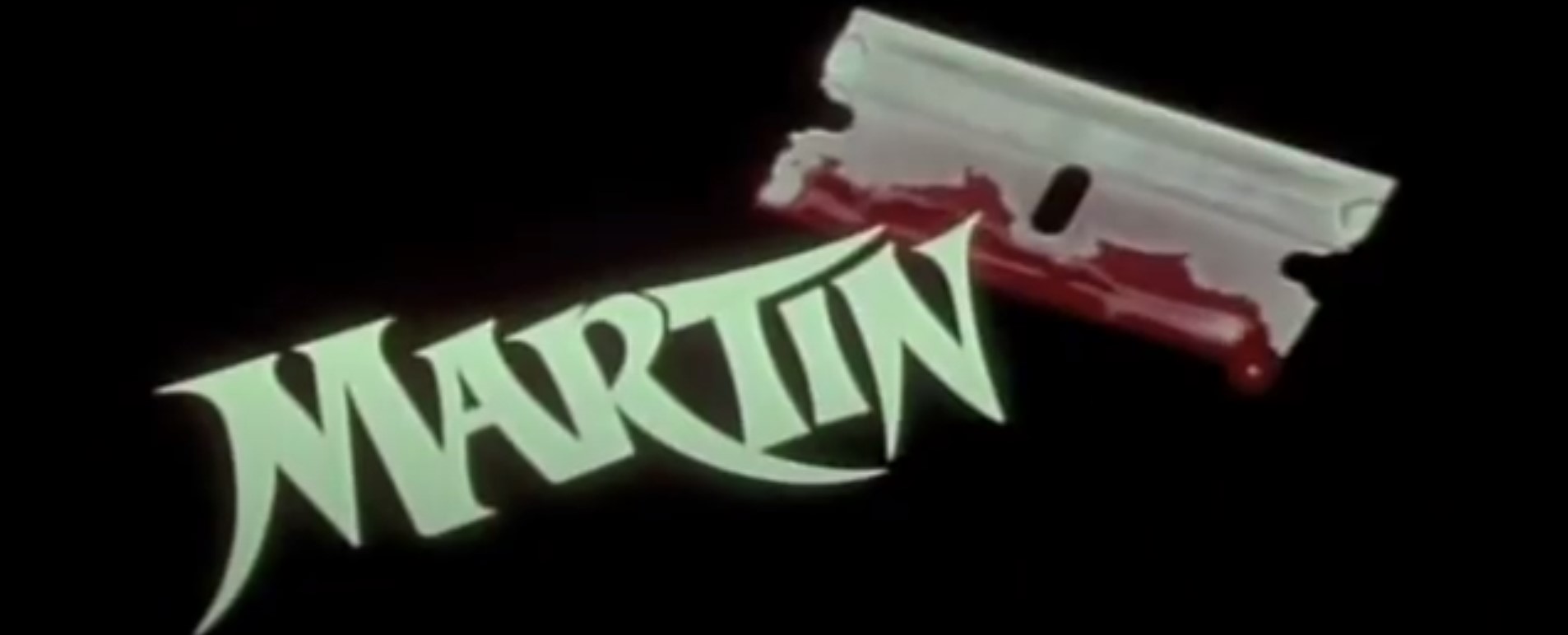
As aforementioned, “Martin” is a cult classic from one of the most notable masters of horror and as a film, “Martin” can stand on its own two feet on any format.  However, with that being said, UK home entertainment distributor, Second Sight, celebrates this early George Romero razor-edged thriller with a definitive 3-disc, 4K and Blu-ray release jammed back with software and firmware bonus content that fans can really sink their teeth into for a lifetime.  The limited edition UHD and Blu-ray O-slip box presents a 4K and 2K scan and restoration of a 35mm duplicate negative (note:  not from the original 16mm source) that has been supervised and approved by director of photography Michael Gornick and presented in the Academy aspect ratio of 1.37:1.  Considering the blown duplicated source of a 16mm grade, the 4K UHD scan on the BD66 won’t live up to 4K potential, as some may expect.  There’s quite a bit of varying levels detail discernibility, some shots look better than others, but the overall restoration renders a better than it’s ever looked product with natural grain and damaged reduced to some blue stock flaring around the side and edges, especially during night scenes.  Shadows looked deeper than previous versions, meaning that tenebrism isn’t lost amongst a softer image but rather creates depth with the additional of better sharpened edges to outline objects between the light source  Some speckle debris filters through at times but not enough to cause major concern with the overall experience watching and enjoying the restoration that has HD enhanced grading to make blood that richer technicolor coral color used in my subsequent Romero “Living Dead” films up to “Day of the Dead.”  The Blu-ray’s 2K works just as well due to the scrappy source equipment of what the budget allowed, delivering a fine product of the best transposed transfer known to fan kind and beating out the Lionsgate’s warming grading with a cooler, more hardline detail and delineation picture. The massive release comes with three audio options – an English DTS-HD 5.1 surround sound, an English DTS-HD 2.0 stereo, and an English DTS-HD 1.0. Though Martin audiophiles will likely gravitate toward a multiple channel output, “Martin” is one of those select features that does better in a less-is-more return by not forcing the limited and stronger signals, such as the dialogue and Donald Rubenstein’s experimentally spiritual score, to encoding competition with the milieu ambient and boom recorded sound effects, that for the most part, are background support for the bigger, better one-two punch of clean, clear, and presently full dialogue and a consciously curated soundtrack to walk with Martin every step of his journey. There’s a pinch of popping and a low-emanating droning that very discreet and negligible that won’t affect the experience on bite…I mean bit. English SDH are optional. Bonus materials are what shape the Second Sight releases to be greatly desirable amongst fans as the company continues to produce high-quality encoded bonus features as well as carefully and professionally organized tangible items inside the box. Both 4K UHD and Blu-ray have the same encoded bonus features that include four audio commentaries of old and new. The two archived commentaries include George Romero, John Amplas, and Tom Savini in one set and the other with Romero, Savini, Richard P. Rubenstein, and Michael Gorrick. The new commentaries are with Kat Ellinger, editor-in-chief of Diabolique Magazine, and the second with the recently deceased film curator, Travis Crawford. A vintage 2004 documentary from the Lionsgate release is included in the set with remarks from Romero, Savini, Gorrick, Donald Rubenstein, and Christine Forrest along with a new documentary echoing much of the 2004 doc, in collaboration with Severin Films, with John Amplas, Michel Gorrick, and Tom Dubensky strolling through Braddock, which hasn’t seemingly changed from the depths of poverty, on a raining day recalling nearly every moment of production during principal photography. The new doc includes other insights from Forrest, Savini, Tony Buba, and Sarah Venable in what feels like a complete celebration and overview of their entire journey through Romero’s personal favorite film. Donald Rubenstein also has a new interview discussing his score and meeting and working with Romero on a positive level. The disc features round out with one of Tony Buba’s short films “J. Roy – New and Used Furniture” revolving around the town of Braddock and the trailer, TV and radio spots. The third disc is the CD form of Donald Rubenstein’s soundtrack laid out in 22 distinct musical numbers. The limited-edition exclusive contents include a rigid O-slip case with a simple, yet effective sterile while and red font color contrast with MADE IN U.S.A. augmented razor blood with vampire teeth and blood dripping from the bottom right corner and a blood dripping cross squarely centered on the back. Inside the slipcase, a thick 104-paged color booklet with new in-depth essays and insights from Daniel Bird, Miranda Corcoran, Heather Drain, Kat Ellinger, Andrew Graves, Alexandra Heller-Nicholas, Elena Lazic, Stephen Thrower, Jon Towlson, Simon Ward, Tony Williams and an interview with Tony Buba by Travis Crawford. The booklet also contains colorized, behind-the-scenes photos of production and numerous one-sheets, promotion poster and ads, and a beautifully, expressionistic illustrated front and back cover. Adam Stothard illustrates 5 character lobby cards, including John Amplas’ Martin, Christine Forrest’s Christina, Tom Savini’s Arthur, Lincoln Maazel’s Cuda, and George Romero’s Father Howard. All 3 disc arts are the same as the front cover the release and contained a trifold, punch-lock case in reverse colors of the slipcase. The 4K UHD is region free but the Blu-ray is confirmed region locked B so you’ll need a region free or region B player. The runtime clocks in at 95 minutes and is certified 18 for sexualized violence and sexual threat. Second Sight must be a Disney fan with their monstrous beast of a limited edition that is also a thing of beauty; “Martin” deserves every square inch of this physical and digital display of expressionistic vampirism of underrated performances and from the mind’s eye of a dauntless George Romero, unafraid to take risks, show blood, and understand the human condition.

“Martin” Limited Edition Second Sight Release Available at Amazon.com! 

When the EVIL Novice Becomes the EVIL Master. “Assault! 13th hour!) reviewed! (Impulse Pictures / DVD)

“Assault!  13th Hour” on DVD from Impulse Pictures!

A gas station attendant is beguiled by the culpable bad boy antics of a serial rapist in a red jacket. As the attendant becomes more enthralled by the sociopath’s life-altering school of assault and apprenticeship, he attempts a solo flight to turn his women victims into loving his deplorable acts of sexual misconducts. His emulation of sprouting a decadent rape fantasy fails as the connective alternative sexual experience between the powerful and the powerless only induces complete fear. Curious to how the connoisseur of forced copulation gets away with women paying him for ravishment again, the novice learner of lechery aims to seek as much knowledge as possible without hesitation and without question but a homosexual gang hunts down his master in the crimson jacket for an unspecified act that warrants retribution. Caught in the middle, the gas station attendant must fight for his life if he wants to continue the legacy of violation.

Better known as “Rape! 13th Hour,” Yasuharu Hasebe’s “Assault! 13th Hour” is a perhaps a more marketable film for many western distributors with the world rape kicking off as an exclamational in the title. One of Japan’s well-known exploitation and pinku filmmakers, having directed a slew of films with a combination of action, crime, and sexual dysphoria and kink with the Stray Cat Rock film series (“Sex Hunter,” “Delinquent Girl Boss”) as well as “Rape!,” “Secret Honeymoon: Rape Train,” and “Raping!” Yeah, I would say Hasebe had a deviant fantasy for the subject. Released in 1977, “Assault! 13th Hour” comes from the same mind of “Hausu” screenwriter Chiho Katsura and Toshiro Masuda’s “The Perfect Game,” a Criterion release film, screenwriter Yoshio Shirasaka. Now, the 73-minute narrative rapt in the idea of women throwing themselves, as well as their yen, at the attacker in a twisted reaction to forceful violation with a greenhorn being trained-to-inherit the practice is by no means as surreally horrifying as “Hausu” or as complicatedly thrilling as the gambling-gone-awry “The Perfect Game.” Still, an underlying, nagging feeling of the patriarchal power that is deeply engrained into Japanese culture can be digested with this pinku-production under the company eye of Nikkatsu Corporation, releasing the film under its pinku eiga subsidiary, the Nikkatsu Roman Porn banner, with Ryoji Ito (“Cruel High School Girls: Sex Lynch”) producing.

Now, whether “Assault! 13th Hour” is a sequel to either Hasebe’s “Rape!” or “Assault!” is not clear from this reviewer’s eyes – I have yet to see either one of those particular previously films – but there lies one commonality between all of them, Akira Takahashi. A lifer in the pinku eiga industry, Takahashi has collaborated with Hasebe on a number of films that run the gamut of exploitation. For his role of Crimson, a serial rapist and delinquent who sports a red bomber jacket, the principal predator is more mysterious in not only his actions but his backstory involving the homosexual gang boss and his two equally sapphic goons and this is where I suspect “Assault! 13th Hour” might be a follow up film as Crimson’s historical transgressions don’t come to light. Hence, the gang’s manhunt never fleshes out to a warranted chase down and the unsuspected sexual tension that produces from it between Crimson and the gang boss. Takahashi brings a confident and suave creep to the lead but doesn’t necessarily have the charisma to make Crimson stand out on his own as a memorable character. Crimson’s accomplice, and the story’s perspective primary, played by Yûdai Ishiyama (“Izo”), fits snuggly into the part of curious in his character who takes uninitiated baby steps into wanting to be a part of this cabal of beastly baroque bedfellows that can persuade Stockholm syndrome upon their victims before they zip up their pants. Ishiyama’s role provides more depth as a low-end gas station attendant with a pent-up perversion and who’s better to exploit and nurture his willingness more than his equivocal new best friend, Crimson. The story’s unpublicized character list provides the story with a nebulous pall to make a statement that this can happen to anyone and can even happen to this cast list of Yuri Yamashina, Tamaki Katsura, Naomi Oka, and Rei Okamoto.

I’m still wrapping my head around the plot’s sudden drop into mid-story without a callback to Crimson’s sordid history that weaves between his seemingly magical persuasion of perversion and his tumultuous involvement with the homosexual gang who want more than just to beat him to pulp. The chance stance Hasebe has to fashion into a comprehensible story, based off the script’s limiting section of a whole, is turned into a wildly suitable and often alternate universe viewed milieu where corruption and immorality goes without proper attention or justice. There are no detectives tracking down the rapists’ rampage or even the display of just a single police vehicle at the aftermath of the crimes. Judgements are contained within the confines of the criminal underworld from a twisted perspective of vigilante justice and, you know, it works! The one-sided standpoint immerses the viewer into a filthy, degrading, and perversely fantastical sea of immorality where lawlessness is the law, but as far as pink films are concerned, “Assault! 13th Hour” is a tame entry that doesn’t shockingly exploit the senses. Likely, that reserved jolt from the jarring material stems from decades of repetitive similar films of the same genre and/or nature and we, those fans drowning in fascination of the pink film category, might feel a little numb to its debauchery though the ending’s infringing necrophilia onto nearly every possible orifice on the victim’s body can be an eye-opener, or an eye-closer depending on your level of comfort and intrigue. Assault! 13th Hour” explores a trade far less trodden in its unusual master and pupil dynamic and subjugates any ambiguities over the blurry line between heterosexuality and homosexually with a slightly biased preconceived notion that heterosexual assault leads to viable passion whereas the counter only offers brutality and bloodshed.

Arriving onto DVD from Impulse Pictures, the XXX and erotica sublabel of Synapse Films, is the Nikkatsu Roman released “Assault! 13th Hour!” The anamorphic 1.85:1 presentation renders a respectable transfer of the 35mm film despite the noticeable age and wear of the warm, inferior negative stock that often appears dark and detailed indiscernible, unlike the stylish use of high contrast. The Japanese Dolby Digital 2.0 dual channel casts a better-than-expected dialogue track and general ambient score albeit the overplayed audio bytes for cars revs and screeching tires. The constant low whir never goes above a whisper, leaving alone the dialogue to remain clear and free of obstructions and that also goes for the absence of pops and hissing. The newly translated and removable English subtitles pace well, display without typos, and are synchronously consistent. The 1977 Japanese erotica and roughie is a feature only release for Impulse Pictures with no bonus material included. The tight and taut, rough and dirty, “Assault! 13th Hour” is a tinderbox of ferocity as well as a tender box of far out fantasies that makes this dichotomy of sexuality and violence an interesting slice of Japanese erotic cinema.

“Assault!  13th Hour” on DVD from Impulse Pictures!