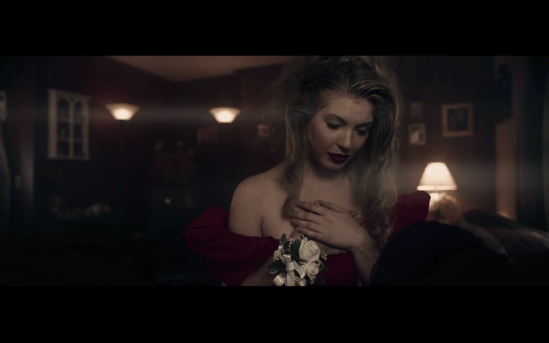
Traveling across a remote highway, five carnival workers journey to their next small top gig on Halloween day in 1976. Stopped by scarecrow-like figures in the middle of the road, the carnies find themselves led into a hostile trap and are kidnapped, held hostage to be poorly prepped for the dilapidated warehouse “Murderworld.” The violent death labyrinth is set for a hellish game entitled “31”, launched yearly by the sadist Father Death with Sister Serpent and Sister Dragon, that pits the captive against a series of killers, specialized in their own brand of merciless murder. To survive inside “Murderworld,” you have to stay alive for 12 hours in the dark, dank warehouse.

After a self produced campaign, a hefty amount of soul crushing crowdfunding, and a slew of production and distribution ups and downs, “House of a 1000 Corpses” director and shock rocker Rob Zombie was finally able to release this year his latest horror installment “31” since 2012’s “The Lords of Salem.” Lionsgate acquires the home entertainment rights to deliver “31” with a R-rated version of the Zombie’s claimed return to roots horror. The survival slasher, when compared to the director’s other work, capitalizes as the most seriously disturbed work to date, but the premise is not particularly original. We’ve all seen the placing of disoriented victims in a life or death game scenario before; Schwarzenegger’s “The Running Man,” based off the Stephen King novel, strikes many similarities, closely relating the two films by sheer plot alone. With Zombie’s “31,” the differences stagger between the main characters being simple carnies looking for a place in the world and “Murderworld” not being a total dystopian future of skewed justice. Instead, the shock rocker pens in his own ‘motherfucking’ motivations of satanic rituals to filthy the pot of sadism and mayhem.

Overall, I thought “31’s” characters were inviting and interesting even if they’re a cookie-cutter roster engineered by the likes of Rob Zombie. The idea is good to have five ordinary folks enduring a 12 hours bout of being hunted by a pint sized nazi enthusiast, a pair of chainsaw wielding hillbilly whack jobs, a tall German in a pink tutu and his Harley Quinn modeled femme fatale, and, then, there’s Doom-Head, portrayed by the impeccable Richard Brake. My first experience with Brake came from another facet of the word ‘doom,’ 2005’s “Doom,” to be exact, the adaptation of the popular id Software survival horror video game, and even then did Brake have the outer shell of a complete sleaze ball, dipped in an indescribable amount of pure malevolence. Rob Zombie is able to tap into Brake’s true potential with Doom-Head, an egocentric nihilist professionally suited for murder while oozing with unapologetic shamelessness. Along with Brake lies co-stars very familiar from prior Zombie films and these individuals are Jeff Daniel Phillips, deeply blue-eyed Meg Foster, and Judy Geeson from “The Lords of Salem,” the legendary Malcolm McDowell and Lew Temple from the “Halloween” remake, and, of course, Sheri Moon Zombie, the dedicated wife who stars in everything the man does from movies to music videos. Rounding out the film has Lawrence Hilton-Jacobs, Kevin Jackson, Jane Carr, Pachno Moler, David Ury, Torsten Voges, and “Pee-wee’s Big Adventure’s” Elizabeth Daily on the docket.

The problem with the characters are not that their ‘cookie-cutter’ characters, as I aforementioned, but rather their just well, well under written. Developmentally, almost every character becomes wasted space, floating stagnantly across the 103 minute runtime. For the hunters aside from Doom-Head, they’re backgrounds are mysterious which fits the rules of “31.” Doom-Head is a different story because he’s the golden child of “Murderworld,” spoken very highly by Father Murder and graced with so much monologuing that it’s absurdly comical and, unfortunately, predictable. As far as the carnies are concerned, most of the group never blooms into relevancy and I couldn’t help but to root for most of their savage deaths. Sheri Moon Zombie’s Charly character was the slice of life, the slither hope, that showed promise. Yeah, Charly looks and sounds much like Baby Firefly, but Charly is a fantasy heroine with a modest range of emotions and when even faced with defeat, she’s stands strong.

Though I wanted “31” to exceed all my expectations with the promise of untapped brutality, here we stand with a cut version Rob Zombie’s crowdfunded film. I’m interested in what exactly hit the cutting room floor because, just taking in “31” at first viewing, every single scene could be remedied by reimplementing, if any, omitted scenes. From my understanding, Rob Zombie submitted the survival horror numerous times to the MPAA in order to purposely retrieve a R-Rating and the ending result suggests a heavily cut film: off camera moments of attack, choppy warehouse segments, unintended shortened character developments, etc. Something more must be behind the scenes that holds back a fan well-deserved and fan well-funded unrated version and I’m not totally knocking this rated Lionsgate release, but a perception has been cemented on the fact that fans were promised an unadulterated Rob Zombie spook show and ended up not getting what they paid for ultimately.

Lionsgate Home Entertainment will be releasing the Saban Films’ “31” on Blu-ray on December 20th in 1080p High Definition with a 16×9 widescreen 2.46:1 presentation and an English 5.1 DTS-HD Master Audio track. A DVD version is also available. The presentation is in the detail of the image quality with only some minor dialogue loss, slightly muddled amongst the levels, in the DTS track. Certainly not a disparaging opinion, but once in close quarters, such as the carnies’ van, the ambiance hum of the engine, the tires on the road, and the jingle-jangle of objects in the van drown out parts of dialogue from Meg Froster and Jeff Daniel Phillips. An impressive 2-hour comprehensive documentary on the making of the film entitled “In Hell Everybody Loves Popcorn” and an audio commentary with writer-director Rob Zombie completes the bonus material. “31” feels like a Rob Zombie film; the rocker’s trash talking grit and loads of rockabilly swag leaves his unique brand seared into the horror scene, but Zombie’s “Murderworld” story is a promise-filled return to roots sensation for the director. Honestly, Zombie never strayed from his grungy grindhouse of inhuman torture and death origins, but only for a fleeting moment, and so “31” stays the abrasive, distasteful course that’ll speak, like in cult comprehensible tongues, to only his fan base.
Tag Archives: blu-ray
UK Release of “Lights Out” Wants to Remind You That Darkness is Evil!
With the Warner Bros. Home Entertainment December 12th release of David F. Sandberg’s “Lights Out,” a frightening film that will make you afraid of the being alone in the dark just as “Jaws” did for swimming in the ocean’s water, hitting Blu-ray, DVD, and Digital Download, there are others to celebrate the darkness surrounding them with a list of iconic horror (and comic book) legends in which the dark has influenced them, has inspired, has empowered them, and has made genre-bending characters the most evil monstrosities in their own right.
Count Dracula
As Seen In: Dracula (1931)
From: Transylvania. Though partial to the odd British holiday.
Profile: Dracula (Bela Lugosi) is an ancient-but-charming aristocrat with a big castle and dodgy accent. Likes sucking blood and terrorizing English toffs.
The Story: The Count comes to England for a spot of neck biting, but gets the stake from Professor Van Helsing (Edward Van Sloan).
The Dark Side: The sunlight kills Dracula. Or weakens him (depends on which film you’re watching, to be honest). Either way, he’d prefer you kept the blinds shut.
Some Light On The Subject: With his big shadowy castle, fear of daylight, and penchant for a midnight snack, Dracula is cinema’s original “creature of the night”.
Gremlins
As Seen In: Gremlins (1984)
From: Discovered in a Chinatown antiques shop, albeit in their much cuter Mogwai form.
Profile: The Mogwais turn into mischievous green monsters, who enjoy messing with electrics and, erm, watching Snow White and the Seven Dwarves.
The Story: The Gremlins run amok over wholesome town Kingston Falls and ruin Christmas.
The Dark Side: Much like Dracula, sunlight kills them. Even a camera flash sends them scurrying.
Some Light On The Subject: The Gremlins take a classic horror trope – the monster who doesn’t like light – and make it one the film’s three “rules” (no bright lights, no feeding after midnight, and DON’T get them wet – that’s just asking for trouble, that is).
Buffalo Bill
As Seen In: The Silence of the Lambs (1990)
From: Ohio, where he has the most bizarre workshop in the history of tailoring.
Profile: Real name Jame Gumb (Ted Levine), a serial killer who kidnaps women so he can make his his own “woman suit” with their skin.
The Story: Dr Hannibal Lecter (Anthony Hopkins) helps FBI agent Clarice Starling (Jodie Foster). After noshing the faces off a few prisons guards, naturally.
The Dark Side: Gumb traps Starling in his cellar, stalking her in his night vision goggles.
Some Light On The Subject: The dark becomes a deadly weapon. It’s masterful stuff, using the viewer’s primal fear of darkness to create scares.
Bioraptors
As Seen In: Pitch Black (2000)
From: A planet in the M-344/G System. Science speak for “somewhere in deep space”.
Profile: Species of aliens that live in the darkness. Look like a much daintier hammerhead shark. Dangerous, but no match for intergalactic criminal Riddick (Vin Diesel).
The Story: Riddick and a ship of space travelers crash land on the planet, just as it’s about to enter a moth-long eclipse. Typical.
The Dark Side: Another one that can’t stand the sunlight. Strange that they should live on a planet that only gets dark every 22 years.
Some Light On The Subject: This does for the dark what Jaws did for the ocean.
Anne and Nicholas Stewart
As Seen In: The Others (2001)
From: A dusty old house on Jersey, where they live with their uptight mother Grace (Nicole Kidman).
Profile: Deathly pale and mollycoddled.
The Story: After new servants arrives at the house, strange events lead the family to believe the house may be haunted. Probably never occurred to them that they’re the ghosts.
The Dark Side: They suffer from a rare photosensitive condition – forcing their neurotic mother to obsessively close the curtains. It wouldn’t be so bad if they didn’t keep mysteriously opening on their own. Spooky.
Some Light On The Subject: The kids’ condition is a smart twist on an old horror trope, making the darkness a key plot device.
Batman
As Seen In: Batman Begins (2005)
From: Gotham City. Which is about as dark-sounding as a city gets.
Profile: Orphaned billionaire who dresses up like a bat.
The Story: After witnessing his parents’ murder, Bruce Wayne (Christian Bale) reinvents himself as the Dark Knight, turning feat back on the criminals.
The Dark Side: Spends most of his time creeping around in the shadows on tip-toes so he can jump out on the baddies.
Some Light On The Subject: Though not an actual horror character, Batman is intrinsically tied to the night, fear, and darkness – fusing super-heroics with gothic elements. Check out his first mission in the Bat-suit, lunging out of the shadows vampire-like to snare his prey.
Diana
As Seen In: Lights Out (2016)
From: An old mental institute, where she was killed in a freak accident while doctors attempted to treat her light-sensitive skin condition.
Profile: Returning from the dead, she’s become a crazed psychotic obsessed with keeping former institute pal Sophie (Maria Bello) all to herself.
The Story: Diana stalks or kills anyone who stands in the way of her friendship with Sophie. Bad news for her kids Rebecca (Teresa Palmer) and Martin (Gabriel Bateman).
The Dark Side: Like all great monsters, Diana can only exist in the dark. So keep those lights very much on.
Some Light On The Subject: Perhaps the most ingenious take on cinema’s of the dark yet. The darkness becomes the monster.
“Lights Out” SYNOPSIS:
“When Rebecca left home, she thought she left her childhood fears behind. Growing up, she was never really sure of what was and wasn’t real when the lights went out…and now her little brother, Martin, is experiencing the same unexplained and terrifying events that had once tested her sanity and threatened her safety. A frightening entity with a mysterious attachment to their mother, Sophie, has reemerged. But this time, as Rebecca gets closer to unlocking the truth, there is no denying that all their lives are in danger…once the lights go out.”
Teresa Palmer (“Triple 9,” “Warm Bodies”) stars as Rebecca; Gabriel Bateman (“Annabelle”) as Martin; Billy Burke (the “Twilight” franchise) as Martin’s father, Paul; Alexander DiPersia (“Forever”) as Rebecca’s boyfriend, Bret; and Maria Bello (“Prisoners”) as Sophie. Annabelle 2’s David F. Sandberg helms the script of “Final Destination 5” screenwriter Eric Heisserer.
BLU-RAY AND DVD ELEMENTS
• Deleted scenes
DIGITAL DISTRIBUTION ELEMENTS
On December 12, “Lights Out” will be available to own for streaming and download to watch anywhere in high definition and standard definition on favorite devices from select digital retailers including; Amazon, Google Play, iTunes, Sky Store, Sony Playstation, Wuaki.tv and Talk Talk.
BASICS
PRODUCT SRP
Blu-ray £15.99
DVD £9.99
Street Date: December 12, 2016
DVD Languages: English
BD Languages
DVD Subtitles: English SDH
BD Subtitles: English
Running Time: 81 minutes
Rating: Rated 15 for strong supernatural threat, bloody images
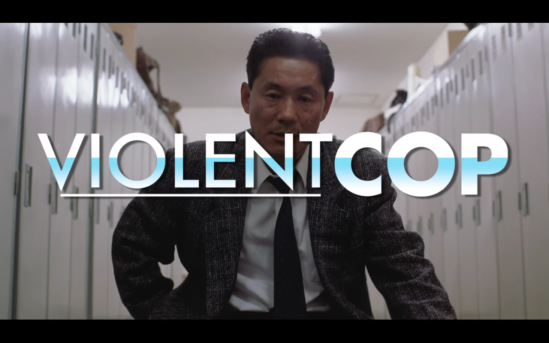
Dope Dealing Evil Doers Meet Their Match! “Violent Cop” review!

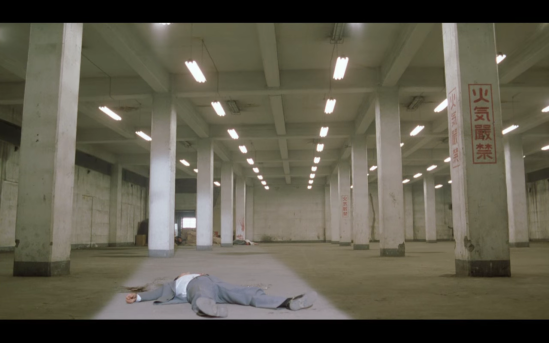
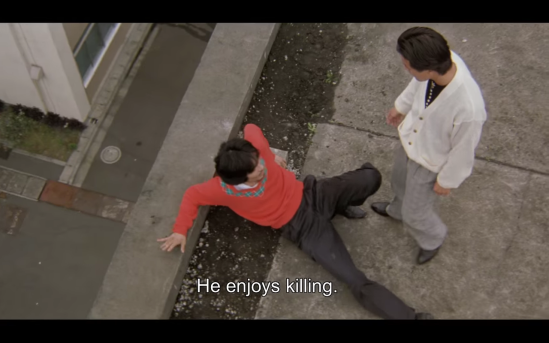
In a city fueled by constant drug trafficking and violence, a weak and corrupt police department has revolving leadership, but one good cop, detective Azuma, of the vice squad doesn’t have the taste for dope. Azuma’s wild card police tactics stir much controversy in his department, placing him on extremely thin ice, but he manages to get the job done no matter the destructive, if yet effective, trail left behind. When the detective learns that his long time colleague and best friend, detective Iwaki, has been involved with trafficking drugs, Iwaki ends up dead in apparent suicide and Azuma will stop at nothing to discover the truth behind his friend’s sudden death. Azuma’s Dirty Harry-style methods catch the attention of a powerful yakuza henchman who kidnaps her and lets his entourage gang rape his mentally unstable sister and with nothing else to lose, the rogue officer shoots first and never asks questions later.

“Violent Cop” is the breakout 1989 directorial film from Takeshi Kitano, one of the most recognizable names and faces in the revival of Japan’s film industry and a staple amongst other mediums including stage performance, television, and other various liberal arts. Kitano also headlines the yakuza genre film as the lead character, the ungovernable detective Azuma, in this unforgiving cop drama under his pseudonym ‘Beat’ Takeshi. Kitano’s harden plastered mug and short, stocky stature caters to the era of lone wolf. rogue cops, providing a hearty performance familiar to that of Clint Eastwood or Charles Bronson. “Violent Cop” quietly packs a punch, patiently waiting to seize the opportunity to display explicitly graphic violence while also being sleek in it’s construction, charmingly odd in it’s humor, and basking more in the parameters of performance than in it’s exposition of dialogue, which is kitano is known more for in his acting.

Much of the film revolves around Azuma’s cavalier and stoic personality. In the opening, three teenage boys unjustifiably harass and assault an elder homeless man. Azuma, who happened to witness the assault, follows one of the boys to his home, knocks on the door, identifies himself as a police offer to the boy’s mother, walks up the stairs alone, and slaps the boy around in his own room until the boy confesses and agrees to turn himself in at the station the following day. This introduction not only showcases Azuma’s descriptive title character as the violent cop, but also informs that the work alone Azuma has a vigilante moral principle that even isolates him from his unstable sister. Once a student of comedy, Kitano re-wrote the Hisashi Nozawa original comedic script into a brutal police drama, wanting to exhibit a serious side, but left alone some of the script’s initial comedy elements that blend the spirited yakuza film to being just inside the genre. Kitano’s progressive camera work includes deep long shots along with tight quarter setups, extensive and angled crane shots, slow motion sequences, and long track work that pinpoints Kitano’s diverse style.

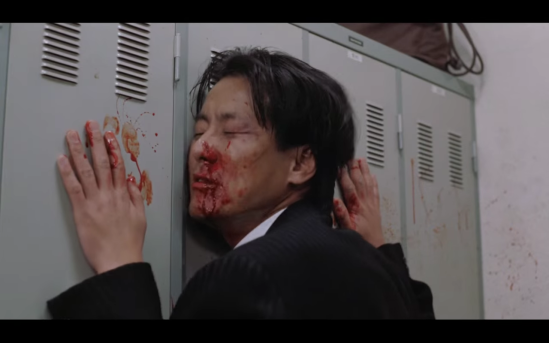
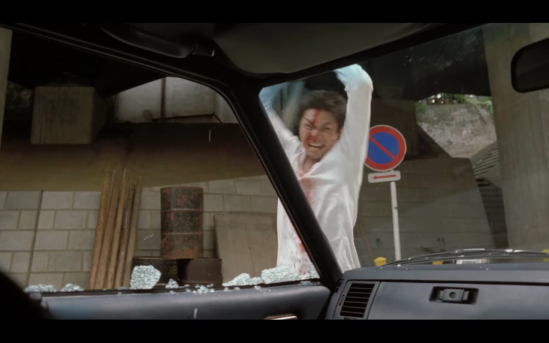
“Violent Cop” lives up to the title. Heads being bashed with an aluminum bat, multiple gory-soaked stabbings, and a sadistic, punishing maltreatments are just a few examples of “Violent Cops” barbaric qualities. The violent scenes feel almost peppered throughout, but they’re really strategically placed between character building segments that only support the necessity of brutality. Did detective Azuma really need to run over a suspect, who just murdered a colleague, down twice with the squad car? Yes, because the suspect desperately and dangerously wielded a baseball bat as a weapon and attacked them numerous time. The actions of the criminal warranted Azuma’s unethical position of bulldozing him over, twice. Only when Azuma is pushed beyond his limits does he lose what was left of any shred of restraints that were holding him back. Azuma meets an antagonistic match, a blood thirsty foe equally resistant and, at the same time, loyal with his boss, creating a villainous mirror image whose just as a loose canon as himself.

Film Movement, the New York based award-winning and foreign cinema distributor, presents a specialized hi-definition Blu-ray treatment of “Violent Cop” in a sharply detailed 1.85:1 aspect ratio stored on a single disc BD-50. The region A disc provides the best transfer quality of this 1989 film to date with stunning, natural coloring, balanced hues, and defined edges with no signs of compression artefacts. Darker scene noise is present, but to affect the experience, the noise would need to be more extensive. With Film Movement’s release, the noise is minimal and shouldn’t be considered a factor. The Japanese LCPM 2.0 audio track is quality with no hiss or pops. Dialogue is evident in the forefront, all other tracks seem level with an accompaniment range of ambiance, and, like aforementioned, all tracks are clean and clear of distortions. Extras include a featurette entitled “That Man is Dangerous: The Birth of Takeshi Kitano” and an booklet essay with the topic of Takehsi Kitano, written by Asian film expert and film curator Tom Vick. “Violent Cop” offers no sympathy, but provides an abundance of rich, dedicated filmmaking in a raw format that seems almost archaic in the present. Film Movement and “Violent Cop” go hand-in-hand, a foreign yakuza melodrama that saw the beginning stages of rebirth in the last days of a struggling Japanese cinema market and Kitano’s face is at the forefront of that movement.
This Is One Evil Bunny! “Bunny Und Sein Killerding” review!

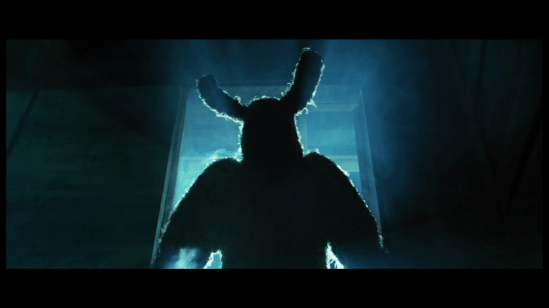
An ambivalent group of people are under the relentless rampaging attack of a half man, half bunny. Kidnapped and given an unknown chemical cocktail, one man looking for creative inspiration in a quiet snowy woodland becomes forced to be the object of experimentation by armed and dangerous thugs, transforming him into a vicious hybrid seeking only one desire…fresh pussy. Shredding through every single body who stands in the beast’s path, the chances of surviving the snowy night dims rapidly in the isolated Finnish Mountainside. Under the sheath of dirty fur, the unstoppable creature runs wildly with large limp genitalia flailing about, ready to stick it anywhere and into everyone with, what constitutes as, a fleshy hole.

“Bunny und sein Killerding,” otherwise known in English as “Bunny the Killer Thing,” is an insanely phallic and deranged creature feature with special needs under the madness of director Joonas Makkonen. Based off of Makkonen’s short film of the same name with a noticeably different storyline, both inhabit a mythically outlandish villain with a raging hard on and mouth agape to swallow any bulbous genitalia that’s ready for the taking. If you couldn’t tell already, Joonas Makkonen is a Finnish native and, thus, the film comes straight from Finland’s snowy landscape. München, Germany distribution company Tiberius Films releases Makkonne’s pet Bunny project onto a region 2 DVD given the reason for the German title “Bunny und sein Killerding.”

Makkonen’s unorthodox and unpredictable story scratches at being bold and unprecedented with a maniacal furry woodland animal while still being relative with the typical tropes when creating a horrific atmosphere. When dissecting what the director does best, not one character has been penned to stand above amongst the group that continues a revolving door of hero and heroine perceptions, opening up possibilities for each character on all fronts to come forth for glory. A killer bunny with a veiny stiffy looking for the freshest of the snatches doesn’t even explain the absurd juvenility that went through the creation of this film. Yet at the same time, something has to be said about the endless amount of sleazy enjoyment being had into the viewing experience. A slimy guilt residue overtakes just one piece more of your remaining morality and innocence every time Matti Kiviniemi, in a shamelessly shoddy adult bunny outfit, twirls clockwise the at least ten-inch lifelike dildo in such a menacing and manic manner that it makes turning away from the screen that much HARDer.

However, there’s plenty to dislike about this particular release and none of the negativity originates from the 2015 Finnish film. The Tiberius Films’ heavily edited treatment of this release has been reworked toward a more anti gun violence propaganda film rather than a bunny rocking out with a large cock out. About four minutes, most of it gun violence, has been purposefully omitted, resulting in a slew of choppy scenes that are attempting to piece together a coherent story. If you’re like me and never seen “Bunny the Killer Thing” before, then you may not know much better, construing a mental story about how foreign films sometimes just like to be too artsy. I did have an inkling that an edited disc was in my possession and I was unfortunately correct. The first two acts are passable in the reassembled manner, but the last act has been reduced to nothing more than shambles of it’s true, gory self and, disappointingly enough, the edit loses the required connectivity tissue needed to fire up the necessary neurons of associating scenes with one another. Pivotal scenes are harshly given the editorial boot to remove any type of explicit gun violence, leaving all overly graphic and icky parts of “Bunny und sein Killerding” involving firearms are solely on the Germany theatrical trailer.

Cut Scene from “Bunny und sein Killerding”
“Bunny the Killer Thing” runs the horror comedy at an uncut 88 minutes, but the Tiberius Films upcoming Region 2 DVD and Blu-ray December release will clock in at a shocking 84 minutes. Fortunately, the DVD and Blu-ray will be presented in a widescreen 2.35:1 aspect ratio with a German and Finnish Dolby Digital 5.1 surround sound and a German DTS option. I won’t be able to critique either the audio or video qualities as I was sent a press screener only; however the Ari Savonen and Janne Andberg special effects and the creations by the visual effects teams along with Makkonen’s directorial style dares to be big production and reminds me a lot of what the Spierig brothers accomplished with their Aussie zombie film “Undead” in 2003. Bonus features consists of a theatrical trailer, behind the scenes featurette, and Makkonen’s 17-minute plus short film of the same title. A remarkable class act of Finland and British actors comprises the film’s lineup in this raunchy and violent horror comedy including a stunning, on-point beauty in Enni Ojutkangas, Jari Manninen, Orwi Manny Ameh, Veera W. Vilo, Roope Olenius, Hiski Hämäläinen, Vincent Tsang, Marcus Massey, Katja Jaskari, Olli Saarenpää, Maria Kunnari, and Matti Kiviniemi as Bunny the killer thing. British actors, you say? Yes! Much like the Bunny creature, the film’s a bit a hybrid itself when on the topic of dialogue. The DVD and Blu-ray will have German or Finland audio tracks with German subtitles, but the natural dialogue track will be a combination of Finnish and English! In conclusion, I watched the film, but, at the same time, I didn’t because of the extreme cuts, whether to discourage gun violence or for whatever reason, made to the original runtime that reduced the intended gruesome firefight ending to nothing more than incomprehensible scenes resembling an intense slap fight.
UNCUT TRAILER!
Evil Never Breaks, But Your Mind Will! “The ID” review

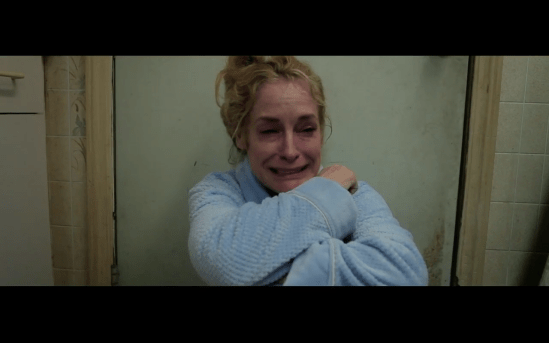
Feeling trapped inside her own childhood home, middle-aged Meredith Lane is stuck caring for her elderly and abusive father. Unable to live a life of her own beyond the house’s closing-in walls, Meredith uses her memories of her youth to create a world toward which she can escape. A world involving past loves, spinning them into what could have been, but as the years slip by and her youth fades in stasis, hope for a normal way of life seeps from her grasp…the same with reality. Meredith continues to humor her father’s oppressively verbal and physical mistreatment, sacrificing to his everlasting grip and blackmailed for when she tries to stand up for herself. When her judgement finally breaks down from complete desolation, the lines blur between what’s fantasy and what’s real. When a routine delivery woman starts to suspect Meredith’s instability in the midst of her father’s abrupt absence, Meredith’s real and fantastical world begins to crumble under the first, fine line cracks of psychosis.

“The ID” is a 2015 psychological narrative thriller from the “Never Sleep Again: The Elm Street Legacy” and “His Name Was Jason: 30 Years of Friday the 13th” documentarian producer Thommy Hutson. To keep with the “A Nightmare on Elm Street” theme, Amanda Wyss, who portrays Tina in the original Wes Craven film, headlines as the lonely and disturbed Meredith Lane, the sole caretaker of her limit pushing father, played unnervingly by an unkempt and unsympathetic Patrick Peduto. Initially, you have to compassionately feel for Meredith’s situation as her father, whether intentionally or not, absolutely tortures and demeans her to the fullest extent, but when getting down to the brass tax, Meredith has always held her father’s life in her hands. All she needs to do is act.

When Meredith’s quasi-levelness with reality is finally pushed over the brink, she does act, snapping toward a tone setting second half of the story that’s arguably more disturbing than her combative relationship between Meredith and her father. “The ID” morphs into full blown psychological horror and, not that Hutson’s film wasn’t a terror of the mind before, Meredith completely crosses that thick defined line between her father and her gentlemen caller from the past. These opposition of two worlds are in the beginning stages of a collision in which both can’t exist in the same space that’s familiar to a presentist perspective. Huston works diligently to deliver the inner workings of Meredith’s psyche, lingering her father’s vocal presence throughout the story even if his physical form vacates, and merging her wondrous past into an antagonistic present.

Amanda Wyss has a multifaceted performance that shouldn’t go without stating and Wyss should be praised for her representation of suffering from a delusional mental disorder, originating either from a family history, in this case her father’s state is quite the example, or from other external influences. Both factors could have contributed and Wyss’ precision in the character makes the result difficult to split the two possible origins for her breakdown. Wyss’s performance becomes overshadowed only by the fierce acting by Patrick Peduto, creating an uncomfortable hostile interaction that’s so alien to a father and daughter relationship, it should be illegal. There’s a lot of hate, disgust, regret, shame, and mistrust from Peduto’s character that one can certainly assume Meredith’s father is a few cards short of a full deck and Meredith’s intentions could have been absolutely sane. Only one character wasn’t impressive in the whole ordeal lies with Tricia played by Jamye Grant. The delivery care character felt overwritten to be the catalyst; her obsessiveness for Meredith and her father, as she notes getting close to the couple, felt right up there at stalker level with unnecessary cause and effect to bring Meredith in more trouble than she’s already in. Grant did what should could to absolve the character from being obscenely forthright, but Tricia’s unable to pull back just enough to allow comfortable separation of a concerned citizen.

CAV Releasing’s of the 87 minute runtime Blu-ray of “The ID” from the production companies Ranch Media and Panic Ventures is presented in the original 2.35:1 aspect ratio on a single BD-25 disc. The presentation doesn’t spin much of a colorful offering that’s slightly dull without a pop or a splash of vivid hues sans the split psychosis scenes that are hefty in blue while overly exposed. Prevalent details are far more unusually blotchy, glossy, and scattered under the lower bitrate encoding that isn’t necessarily noticeable because of the setting being isolated to just Meredith’s childhood home. “The ID” isn’t an action heavy or scenic riddled film that requires much detail. Under the Dolby Digital 5.0 mix, a fair amount of unmistakable clarity and range emits fully through each channel with solid LFE and balanced tracks to level out the video quality woes. An option for a LPCM 2.0 is also available. Plentiful bonus features include a feature length commentary with director Thommy Hutson and star Amanda Wyss, an interview featurette entitled Needs, Wants, & Desires, intercut behind-the-scenes segment, alternate and deleted scenes, audition footage, and official stills and trailer. Thommy Hutson’s “The ID” is far from his usually schtick of horror documentaries, but clearly showcases the director’s talents within the psychological horror subgenre and will be the building blocks of his narrative directorial career.