EVIL Tossing Back an EVIL Hail Mary! “The Last Match” reviewed! (Cauldron Films / Blu-ray)

“The Last Match” is Now on Blu-ray From Cauldron Films!

A sovereign, Latin American banana republic is a beautiful paradise for those seeking tropical getaways, such as with 18-year-old Susan Gaylor and her boyfriend George indulging in paradisial romance, but paradise turns into hell when Susan is accused of smuggling drugs out while going through the departure gate at airport security.  George flees the scene to evade capture and phones Susan’s father, famous football quarterback Cliff Gaylor, to help administer talks to release Susan.  When negotiations fall on deaf ears, the American consul is handcuffed by little-to-no relations with the incarcerating nation, and the local counsel are nothing more than greedy exploiters, Cliff and George have no one and nowhere else to turn to except for Cliff’s team of broad shoulder teammates and a gameplan-calling coach dedicating their lives to suit up and extract Cliff’s daughter from the cruel grip of Warden Yashin and his miscarriage of the law and order with an all-out offensive assault.

Italian filmmakers directed a football movie.  No, I don’t mean fútbol, aka soccer.  I’m talking about American football with face-masked helmets, shoulder pads, and a prolate spheroid shaped ball with laces you kick through the uprights.  The contradictory idea isn’t so much of a theorotical concept as it is a reality with Fabrizio De Angelis’s directorial attempt at pigskin gridiron in the early 1990s.  The “Killer Crocodile” director helms the jailhouse break picture entitled “The Last Match, or “L’ultima meta,” released in 1991, from a script by fellow Italians Gianfranco Clercic (“Cannibal Holocaust,” “The New York Ripper”) and Vincenzo Mannion (“Murder-Rock,” “The Last Shark”) that blitzes hardnosed foreign opponents with not only high caliber assault rifles and ammo but also done in full team gear, right down to the numbered jerseys and cleats.  Angelis produces the shot in the Dominican Republic film with Mark Young serving as executive producer with Fulvi Films as the production company.

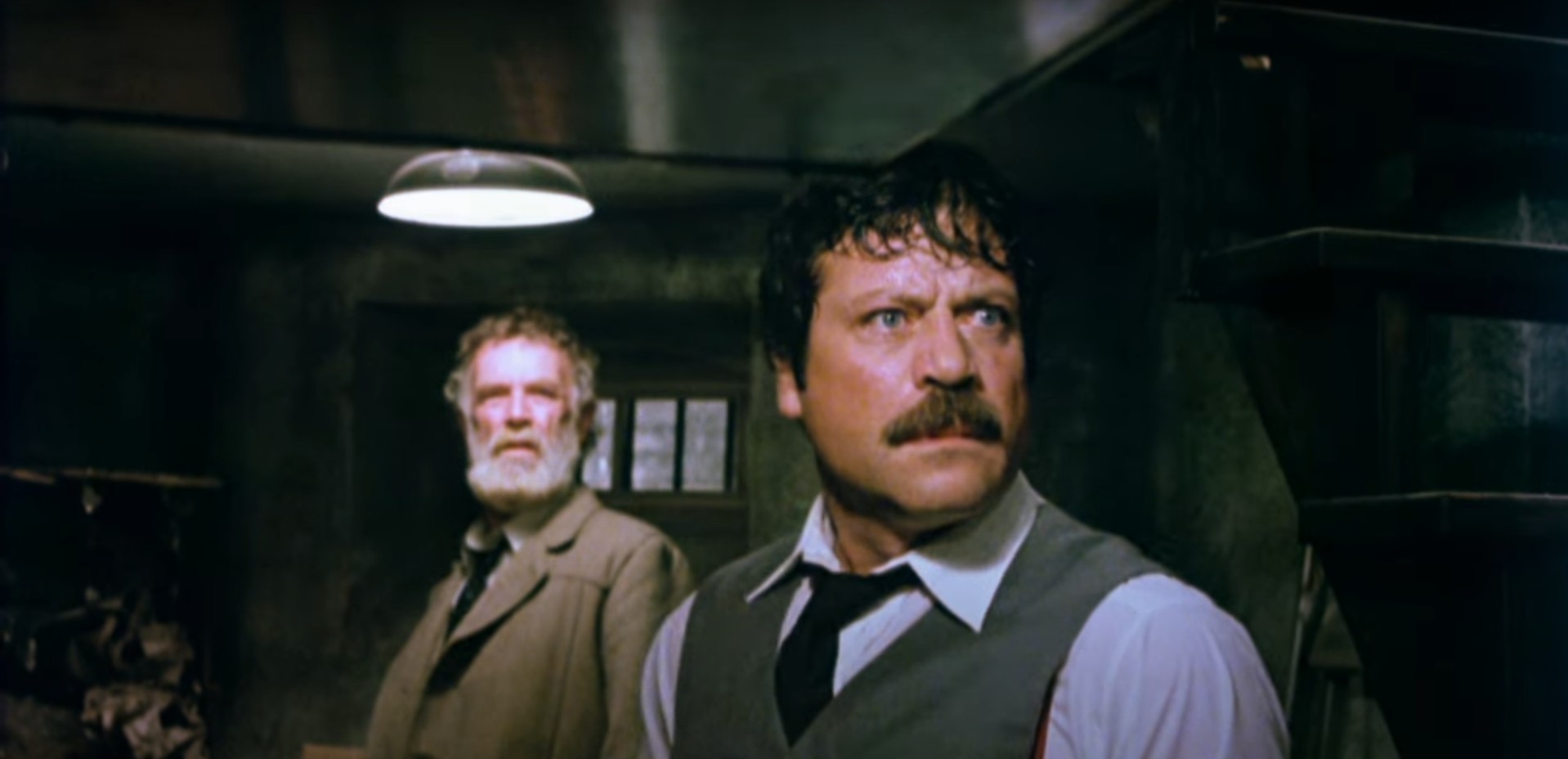
Not only does “The Last Match” have a theme around an American sport, but it also employs a nearly all-American cast, a popular course of casting once the Italian industry started to gain traction and making films in The Boot proved to be more costly at the time, plus American actors were also far more marketable than Italian actors.   Ernest Borgnine (“Escape from New York,” “The Poseidon Adventure”) plays the fair-weather looking coach who knows common football terms, about as generic as coaching on screen comes without dipping into play strategies and being inundated by the game.  Borgnine’s cruise control motivation is equaled by Charles Napier (“Supervixens,” “Rambo:  First Blood Part II”) in the performance of a hands-tied American Consul stationed in the unnamed tropical country.  While Borgnine and Naiper act in natural nationality aspects, there are also another pair of Americans who transition their talents to be native islanders who are subsequently more deviously portrayed in what becomes a pro-American, anti-foreigner perception.  The actors, whom are also both New York City born, are Martin Balsam (“Death Wish 3,” “The Delta Force”), as a greedy local defense attorney who tries to exploit Cliff Gaylor’s desperation, and Henry Silva (“Almost Human,” “Allan Quartermain and the Lost City of Gold”) with his wide face stretching a maniacal grin as the sadist warden Yashin and though Balsam and Silva tout the root of evil archetype, molded to their individualized immorality, they barely fit in the framework of Latin American men with a less than convincing swarthy spray tan.  In the middle of it all is German-born “’Tis Pity She’s A Whore” actor Oliver Tobias as football star father, Cliff Gaylor, determined to try every line of legal offense to acquit his daughter for the firm hand of the country’s tight authoritarian, punitive system.  Gaylor’s arc possess a line of natural progression through anger, confidence, and desperation, and perhaps even a little bit of all hope is lost but does become stymied, or neutralized, but Coach’s unconventional jailbreak playbook that sends Gaylor into the backseat though he still quarterbacks the mission, at least on paperwork.  Melissa Palmisano as the Gaylor’s wrongfully incarcerated daughter Susan and Rob Floyd playing her determined to help but pretty much young and useless boyfriend George fill out the remaining principal cast alongside bit part support from Jim Klick, Jim Jensen, Jim Kelly, Mike Kozlowsky, Mark Rush, Bart Schuchts and Elmer Bailey as Gaylor’s football brethren in arms. 

As for escape from foreign prison/work camp films go, “The Last Match” ranks at mid-range with a plausible conflict involving being a foreign tourist patsy to mule drugs through airport customs only to be caught, charged, and sentenced to be condemned without fair due process and entitled to incorruptible legal representation.  The scenario enacts frightening destabilizations of a pre-CCTV and security vigilance airport situation, evokes hopelessness of relief or assistance within a near lawless republic, and you can feel Gaylor being drained of all avenues where even his fame and fortune can’t even muster any type of traction in releasing his daughter.  Being a father myself, there’s a compelling aspect to see an expat father helpless in strange surroundings, suppled by indifferent and aggressive native blockades in a corrupt system, with his only choice then being to extract his only child with violent force.  This is the point where the compelling subjugation stops and the gaminess of the story begins to unravel when Coach brings the boys to the yard, yard being the tropical island, to acquire an arsenal, helicopter, and suit up in their conspicuous gridiron gear for an all-out prison assault.  Garbed in bumblebee yellow football pants, black helmets, and white jerseys, the elite wildcat formation commando unit isn’t dressed to blend into the background, foliage, or even the night with their reflective color gametime getup.  Coaching from the sky, Borgnine is perched high in the helicopter calling off plays while his offensive team makes quick and dirty work of the island prison defense without nearly a fumblerooskie.  Conceptual neat for the movies, but practically asinine for reality, “The Last Match” favors the fortunate heroes with a near obliteration of the entire prison camp without a single loss to their own, especially when they’re not in any kind of bullet resistance helmets or vests.  Fabrizio De Angelis runs the ball with confidence in his mildly amusing sports themed actioner as he’s able to blend footage of a national police bowl game into his narrative by fashioning matching football uniforms.  About as surprising as a fleaflicking trick play to win the game, “The Last Match” is worth going for the endzone on 4th and long.

A pulled-pin pigskin grenade explosion thrill ride in the tropics is “The Last Match’s” hard-hitting American football done the Italian way. Cauldron Films’ new Blu-ray release is the U.S. home video and worldwide debut from a new 4K restoration from the camera negative.  The AVC encoded, 1080p high-definition, BD50 presents the film in the original aspect ratio, the European widescreen 1.66:1.  There’s hardly anything to fault in this clean, sharp, diffused color saturated picture from a well-stored camera negative that has seemingly suffered no time or external wear and tear.  Grain appears naturally disseminating into a favorable detailed reproduction print with skin tones that are organic and don a nice sheen and rivulets of sweat when things get heated in football and in armed assault.  Tropical landscape remains focused in back and foregrounds, especially in instances of Giuseppe Ruzzolin’s (“Hitch-Hike,” “Firestarter”) mirror reflection shots, but not a ton of wide or long shots to take in the scope of the Caribbean battleground, limiting scenes to medium-to-closeups that crop the milieu quite a bit when you’re trying to sell a large-scale football bowl game or an ambiguous kakistocracy tropic nation.  The English language DTS-HD Master Audio 2.0 provides lossless fidelity with full range diffusing evenly through the dual-channel output, separating decisively the dialogue and the action.  With a majority of the cast native English speakers and having been filmed party in the U.S. and in the western hemisphere, ADR is not the main source of recorded dialogue with boom work providing and capturing the distinct voices and personalities of some of the more recognizable voice talent, such as Ernest Borgnine and, especially, Charles Napier’s Kentuckian twang.  However, there’s quite a bit of hissing feedback sporadically throughout.  Action depth is a bit front loaded, naturally with any dual channel, with the explosions and gunfire that never quite hit the same distance markers but do excel in being robust where needed.  English SDH subtitles are available.  Cauldron conjures new and exclusive special features with an interview with special effects artist Roberto Ricci Blown Away, a minidoc about American actors in Italian cinema narrated and directed by Mike Malloy, Italian film aficionado Eugenio Ercolani provides a video essay Understanding the Cobra, a commentary by Italian exploitation critic Michael A. Martinez, an image gallery, and the film’s trailer.  Cauldron Films has continued to provide eye-catching artwork with reversible cover sheets and “The Last Match” is no exception with dual compositional illustrations of football players wielding AR15 rifles and bazookas, though I’m not so confident the illegal purchase of Island armory would be police issued AR15s and bazookas.  Just sayin’.  There are no other tangible supplements with this release.  The region free Blu-ray is not rated and has a 94-minute runtime.

Last Rites: An Italian film using big named American actors pitting an armed, American football-cladded, rescue team against a hostile and sinister island prison, creating “The Last Match’s” action extraction of hairbreadth escape and pulling it off!

“The Last Match” is Now on Blu-ray From Cauldron Films!

Mother Russia’s Most EVIL Serial Killer is “Evilenko” reviewed! (Unearthed Films / Limited Collector’s Edition 4K UHD and Blu-ray)

Limited Collector’s Edition 4K and Blu-ray Available Here!

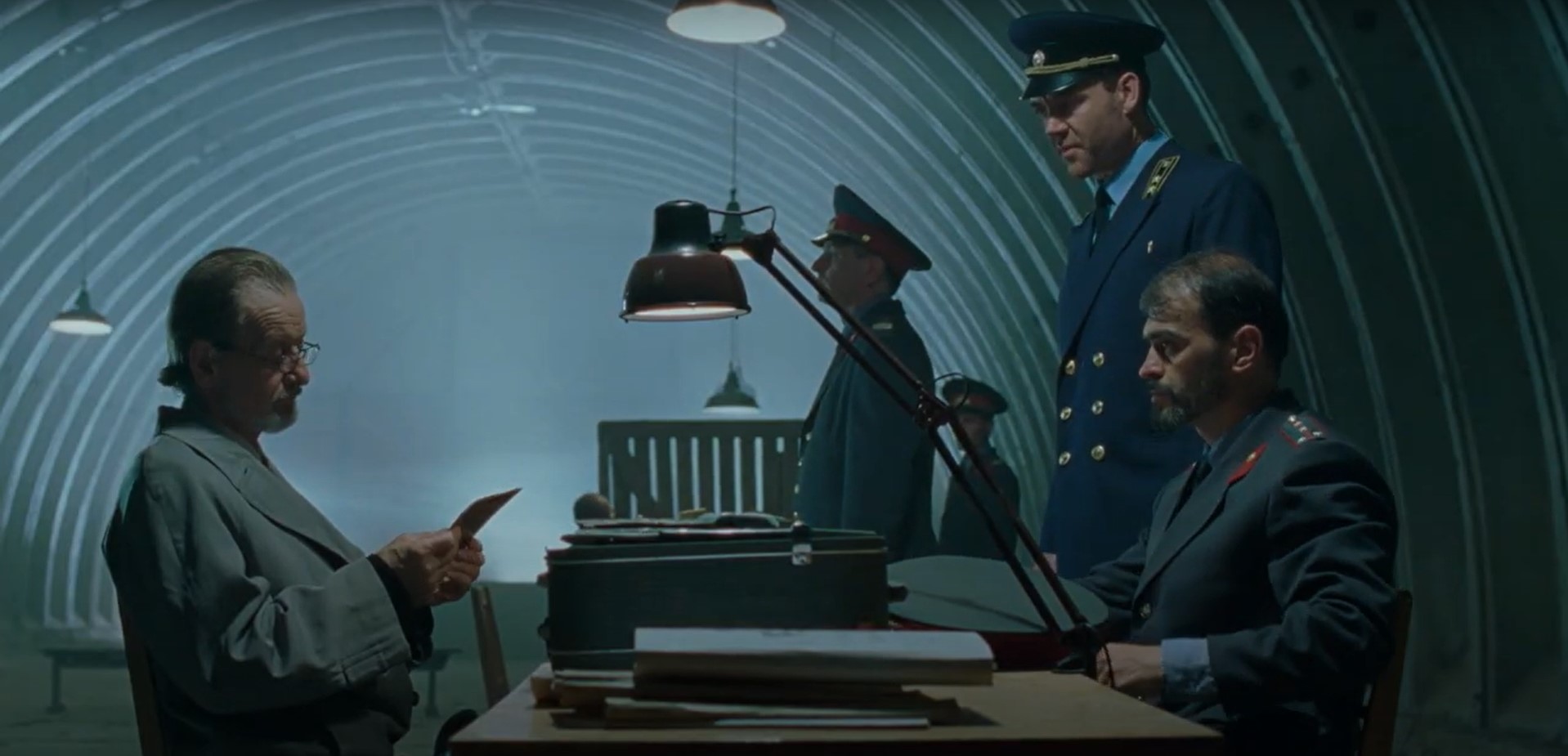
Kyiv, 1984 – An aging schoolteacher named Andrej Evilenko is stuck in Josef Stalin’s quickly dwindling sociopolitical communism party and finds himself dismissed from the school after being accused of attempted rape of one of his preteen students.  His release from vocation obligates him to write letters to the Communist party still clinging to control and from those letters comes a job with the KGB under the guise of a railroad inspector.  Evilenko’s empowerment by the party drives his dangerous urges to rape, kill, and cannibalize women and children over years around Kyiv and Crimea, using his position of inspector to travel.  In 1987, Magistrate inspector, Vadim Lesiev, is assigned by the D.A. to hunt down the serial killer who has by then murdered over 30 victims.  Over the course of the next eight years, Lesiev finds himself chasing his tail and fearing for his own family’s safety against a monster that has all of Kyiv frightened. 

Based off the true crime story of notorious Soviet Russian serial killer Andrei Chikatilo, “Evilenko” tells the fantastically frightful tale of the real “Butcher of Rostov” who did confess and was convicted for rape, murder, and the cannibalization of 52 young women and children, of both sexes, from 1978 to 1990.  The Italian-English production is spearheaded by Italian filmmaker David Grieco who directs the film as well as supplies the story’s base material from his own semi-biographical novel on Andrej Chiktilo, entitled “The Communist Who Ate Children” (“Il comunista che mangiava i bambini”).  Grieco, the son of the of the founding members of the Communist party, finds a financial means to produce a visual adaptation from Britain’s Pacific Pictures consisting of Michael Cowan and Jason Plette of “Killer Tongue” and produced by Italy’s Mario Cotone (“Malena”), representing the MiBAC, the Italian Ministry of Cultural Activity.

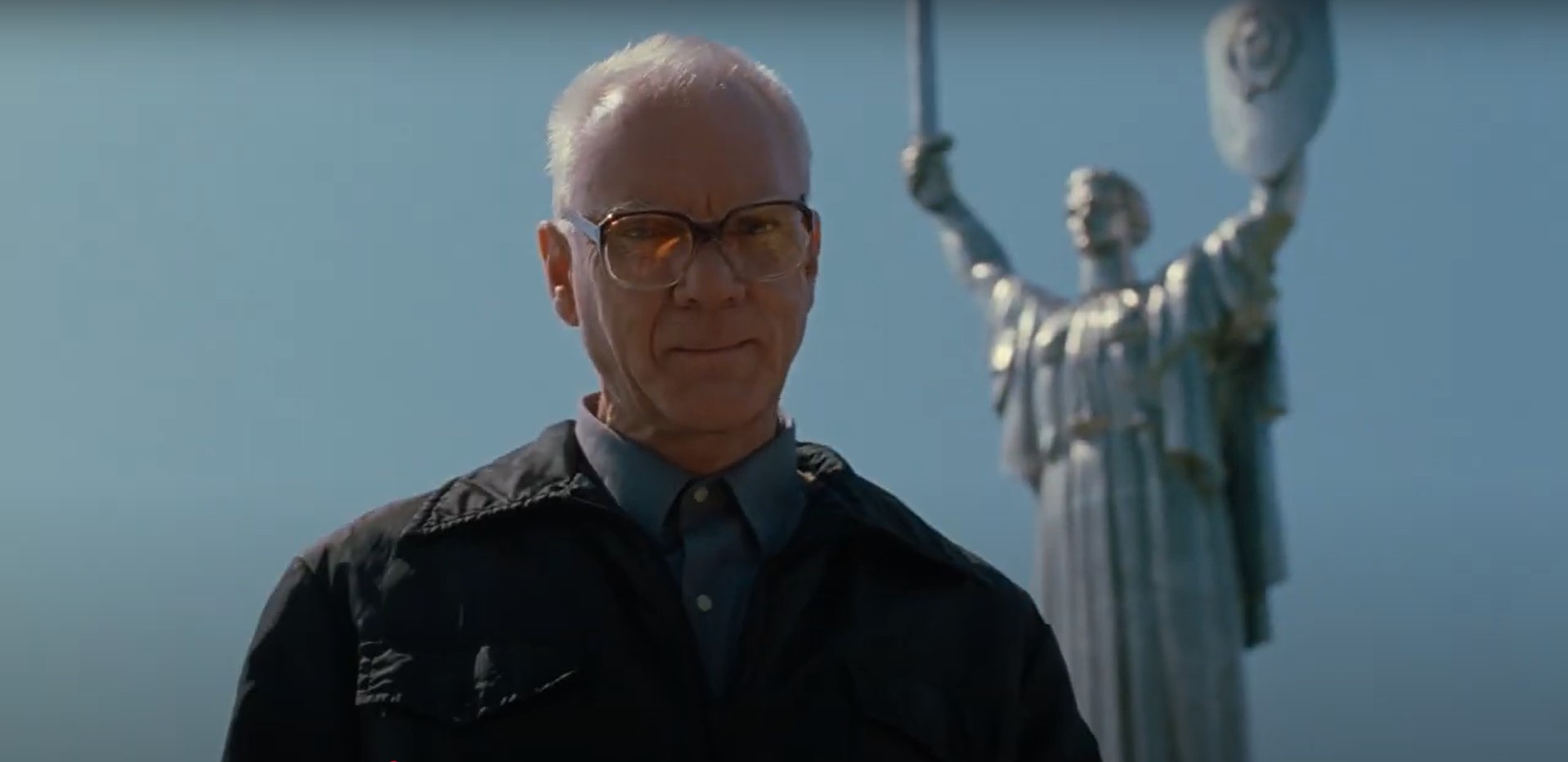
Who better than to portray a variant of the child molesting, murdering, and eating Soviet Andrej Chikatilo than Malcolm McDowell, the British actor who is no stranger to controversial films and performances having the lead roles in both Stanley Kubrick’s celebrated violence in a dystopian society in “A Clockwork Orange” and in the pornography spliced infiltrated titular performance film of the sultry period drama “Caligula.”  Being older and wiser doesn’t phase McDowell to shy away from committing to difficult scenes involving minor aged costars, especially scenes with sexually ambiguous dialogue and being pants less while speaking it, and while not a physically demanding role for McDowell nor is it filled with the intense-eyed actor’s usual fiery fervor, but in the shoes of Evilenko, he nails down the real serial killer Chikatilo’s exterior appearance, despite attempting to make McDowell appear younger with just only a wig to convince audiences of the 20-year span in the story, and touches upon the oddities and the quirks that make Chikatilo a delusionally faithful comrade, justified by his own investment into the communist party.  Evilenko’s archnemesis comes in the form of district attorney magistrate investigator Vadim Lesiev, played by the underutilized New Zealand born actor Marton Csokas (“Lord of the Rings,” “Cuckoo”).  “Evilenko” is clearly the Malcolm McDowell show but Csokas gives his all to a man not only doing his duty as an official of the Russian pervading prosecution but also as a family man haunted by his inadequacies and his inabilities to catch the perverted serial killer that might just strike close to home, putting Lesiev on edge with that nagging worriment.  Grieco’s editing and story development greatly undercurrent Csoka’s motivations and plights, distorting his complexities to a minor key of his true self, and letting McDowell have free reign over his subsidiary counterpart.   Yet, neither character is fleshed out definitively, none to compel a reason for their idiosyncratic methods and behaviors, which goes hand-in-hand with the purgatorial editing that is loose with the timeframe.  Ruby Krammer (“Alien Exorcism”), Frances Barber (“Superstitition”), Vladimir Levitskiy, Ihor Ciszkewycz, John Benfield (“Hitler’s S.S.:  Portrait in Evil”), and Ronald Pickup (“Zulu Dawn”) as a psychotherapist assisting tracking down the killer.  

As much as the Grieco and McDowell dynamic works to monstrously depict a coldhearted and crafty serial killer coupled with a sliver of slithering supernatural propensities to lure women and children in a fixed trance or, in more conventional means, into doing what he wants with an spellbinding combination of stares, manipulative conversation, or just overall emitting a towering communist cloud of authority, “Evilenko” is deflated by the story’s time lapsing.  Opening with Kyiv 1984 and then subsequently in Crimea five years later in 1989, the noting of years or periods is hereafter eliminated from the narrative that becomes a back-and-forth yarn between a select of Evilenko’s pied piper lures and kills and magistrate Lesiev always behind the eightball pursuit of the elusive, unknown killer.  There’s a loss of sight on Lesiev’s psyche that is very important to the story and more so at the climatic interrogation scene where both men are stark-naked in a power and controlling situation that harks back to Evilenko’s mesmerizing tactics used against the adolescent prey and Lesiev’s fear and obsession of losing his family to what once was an uncatchable slaughterer who hallmarked with mutilation and devouring.  Grieco’s willingness to be grisly is tamer than the expected based off the prologue scenes of Evilenko exploiting and nearly raping a preteen girl but doesn’t take away the effect that the entire narrative arouses an uncomfortable experience teased to always be on the edge of overly graphic but never breaking that threshold; “Evilenko” is one of the biggest blue balls instigators is in last 20 years and that rush of not seeing or knowing can be more thrillingly charged for some than anything totally explicit ever could produce. 

Unearthed Films limited collector’s edition has 2-disc, dual format capacity with a 4K UHD and Blu-ray.  The second 4K UHD from the label, behind their release of “The Guyver,” solidifies the extreme horror company a player in the ultra high-definition game.  The New 4K transfer restoration of the original camera negative is HVEC encoded, presented in a widescreen 1.85:1 aspect ratio with 2160p UHD, on a massive three layered BD100.  The Blu-ray comes AVC encoded, 1080p high-definition, on a BD50, presented in the same aspect ratio.  What’s gathered from both presentations is that there’s nothing to fault them with as both excel to their max output abilities.  In fact, the transfers are pretty much identical, integrally achieved by digital optimization of an already optimized digital camera, a Sony PMWEX3 with 35mm adapters, which at that time was the bigger brother and flagship model of the Sony line.  A slight grading reduction instills a sense of austere or lackluster coloring that mocks a communist Russia veneer.  Close ups on McDowell’s unique features and the expound of particulars in the surroundings, especially when engulfed in leaf-covered and tree-thick woods, tell of the emerged details and textures in a higher pixel count.  An English DTS-HD 5.1 Master Audio is the sole mix available.  The back and side channels are essentially used sparing for a few flakes of brief ambient hubbub in what’s mostly a frontloaded conversational piece of mostly McDowell in one of his great monologuing moments. We get some nice oblong orchestral pieces from the late David Lynch regular composer Angelo Badalamenti (“Lost Highway,” “Twin Peaks”) that incorporates haunting harmonies and soft, ethereal vocals that play into the loss of innocence theme. Dialogue’s healthy and prominently favorable next to the unchallenged low ran range. English subtitles are available for selection. The BD100 offers only the feature, and a new commentary track with director/writer David Griece and star Malcolm McDowell while the Blu-ray offers the same commentary plus Evilenko Dossier: Andrei Chikatilo, the examination of the real killer against the onscreen rendition, cast and crew interviews with Grieco, McDowell, and Badalamenti, a photo gallery, and the original film trailer all within the bonus content of a fluid menu with Badalamenti’s and vocalist Dolores O’Riordan’s main track “Angels Go to Heaven.” The limited collector’s edition is housed in a cardboard slipcover of one of the many variants of Malcolm McDowells face slathered in soviet red. The black Amaray has the same cover art with no reversible cover. The discs are snap-locked in place on opposite sides, pressed with another slathered in red image pulled from powerful interrogation scene between Evilenko and Lesiev. Both formats are not rated, locked region A encoded, and have a runtime of 111 minutes.

Last Rites: “Evilenko” is a heavy story that needed to be told. You don’t hear much about the USSR vulnerability and the real-life serial killer had frightened the proud, the stoic, and the impoverished alike as “Evilenko” seers as a case study mental illness, is a metaphor for deteriorating Communism, and a tale too terrible to forget and despite some pacing issues and timeline infractions, Grieco and McDowell pull off a rather nasty semi-doc of one of the worst killers to ever live.

Limited Collector’s Edition 4K and Blu-ray Available Here!

The Holidays Are Over, but the EVIL Remains With Us in this Cookie-Cutter Classic “The Gingerdead Man” reviewed! (Full Moon Features / Blu-ray)

Get Ready to Chomp on this Cookie! “The Gingerdead Man” Blu-ray Available Here!

Cold-hearted, mama’s boy killer, Millard Findlemeyer, brutally gun downs Sarah Leigh’s father and brother before wounding during a diner robbery.  Two years later, Findlemeyer is executed with the help of Sarah’s damning testimony and the traumatized survivor attempts to pick up the pieces of her life by keeping her crumbling family bakery business afloat.  With her mother a raging alcoholic and a competing business threatening to shut the business down, Sarah doesn’t realize the gingerbread seasoning dropped off at her doorstep is actually the ashes of the evil Findlemeyer.  Thrown in a gingerbread mix and baked to live again, Findlemeyer returns to continue his carnage but as a delectably devilish cookie sporting candied buttons and wielding a knife.  Trapped inside the bakery, a handful of survivors are being more-than-gingerly picked off one-by-one by Findlemeyer’s possession of a pint-sized cookie and Sarah must face again the evil that destroyed her family.  

“The Gingerdead Man” is one of Full Moon’s more contemporary repeat villains this side of the century.  Christmas may be over, but the holiday cookie carnage doesn’t just pack on the pounds, it also can shred and cut the waist, literally, with guts spilling out everywhere.  The Charles Brand directed, 2005 film that kicked off the icing for not one, not two, but three sequels and a timeline intertwinement with Full Moon’s “Evil Bong” series.  Pot and cookies, a perfect combination when blazed.  The script was penned by Full Moon regular and “Night of the Living Dead” remake actor William Butler, under the pseudonym of Silvia St. Croix, and fellow Full Moon regular Dominic Muir (“Critters,” “Doll Graveyard”), under the pseudonym of August White.  Filmed in Los Angeles, the indie horror-comedy is a Shoot Productions and Full Moon coproduction venture with Band producing and Dana Harrloe serving as executive producer. 

Adding to “The Gingerdead Man’s already zany resurrecting the evil dead into a baked good concept (there’s nothing good about this cookie monster), the untamed energy and distinguished voiceover from Gary Busey is better than self-rising flour for this doughy production.  The “Predator 2” and “Lethal Weapon” actor headlines as the despicable killer Millard Findelmeyer but only in the flesh for the opening diner sequence that establishes Findelmeyer as a coldblooded murderer.  The backstory of his apprehension, trial, and execution is whisked into a frothy afterthought after the title credits to establish more of Robin Sydney’s Sarah Leigh character of rebuilding her life.  Sydney, who would become Charles Band’s wife nearly two decades later after debuting in this role, reserves Sarah into a stasis of plugging along into a woe-as-me state as a setup for her to be heroine nemesis to Findlemeyer’s flaky, killer crust.  What’s neat about her character, along with a handful of other principal characters, is they’re subtly and smartly named after notable cookie making companies.  Sarah Leigh is an obvious rework of the frozen desserts company Sara Lee, Ryan Locke, an unlikely Sarah Leigh love interest cladded and carried by all things from early 2000s, is Amos Cadbury, a mixed play on Famous Amos and Cadbury confectionary, and Jonathan Chase as commercial wrestling enthusiast Brick Fields lends to believe the character’s name pulls inspiration from Mrs. Fields soft baked cookies.  There’s also the corporate-commercial takeover statement with an adjacent restaurant that threatens to put Sarah’s bakery out of business and the owner’s name is Jimmy Dean, as in the sausage company, with Larry Cedar (“The Hidden,” “C.H.U.D. II”) in the role.  Alexia Aleman, Margaret Blye, Daniela Melgoza, and James Synder fill out the cast.

Kitschy personification horror is all the rage in the independent genre circle.  Murderous dolls at are dime a dozen, but a few outliers stray into something more risking and adventures, like an evil llama pinata in “Killer Pinata,” a wicked snowman in “Jack Frost,” or even a killer unicorn standing figure in “CarousHELL” that make the niche subgenre fascinatingly tacky for all the right reasons.  Charles Band and team tap into that peculiar ripe vein to extract their own usually joyous, kid-friendly object and transfigure its G-rated image to a hard R with death, sass, and a whole bunch of mischief and what better wholesome inanimate object to vilify than a scrumptious gingerbread man?  Voiced by Busey and animated by the always preferred practical means, “The Gingderdead Man” evokes promises of a so-bad-its-good composite, especially since the antagonist for this franchise starter fits right into the Full Moon small things come in killer packages niche, and while half of “The Gingerdead Man” delivers on a havoc-wreaking spiced cookie, the execution, as a whole, leaves much to be desired by whirling through a two year story gap of the capture and execution of Findlemeyer and how and why his malevolent essence is mixed into the batter for resurrection.  The slapdashedly before and after title credits causes a brief loss of thought as the brain frantically tries to catch up and fill in the gaps as much of the images and exposition haphazardly piece together.  The Gingerdead Man isn’t also quite as quippy as his human form counterpart, but a ton of appreciation goes into the multiple renditions of the distorted faced Gingerdead Man character from hand puppets, to animatronics, to full size human suit provides that breadth of range in angles, perspectives, and appearances that shape a personality package to where dialogue can nearly be neutralized altogether.  “The Gingerbread Man” lives and breathes as its marketed image, a mediocre kill possession-slasher with a bunch of characters scratching their heads instead of building upon who they are and what hurdles, figuratively and literally, to jump, the latter mostly falls into the hands of Sarah Leigh and her depression-induced fear, an aspect she has to face when being revisited by the man who killed her father and brother. 

An all-new transfer and remastered from the original 35mm elements, Full Moon Features re-bakes “The Gingerdead Man” onto a new physical media cookie sheet.  The AVC encoded, 1080p resolution, BD25, presented in a widescreen 1.78:1 aspect ratio, had elevated some lower resolution complications with better definition appeal but the overall package isn’t an epitome showcase of the format possibilities with softer contrasts that leaves voids and shadows milkier, textures fluctuate during decode that sways in a range between 15 to 25 Mbps, and minor damaged portions, such as light scratches and speckling, are not touched up in the restoration.  Skin tones and other colorist applications appear organic and, when reaching peak performance, displays a nicely diffused sweat sheen in the lighting.  Two English, lossy audio options are available, a Dolby Digital 5.1 and a Stereo 2.0.  A clean and clear presentation on all layers with an amalgamated cast that just as good as any other solid sound design with powerful forefront and intelligible dialogue, an above par ambient dispersal that has suitable depth and range, and a Roger Ballenger carnivalesque score that isn’t from Richard Band but is a great mimic.  English subtitles are available.  Extras include an archival behind-the-scenes featurette with interviews with cast, crew, and Charles Band with some BTS-footage in creating the cookie monster, a blooper reel, the original trailer, and trailers for other Full Moon features.  Front cover on the Amaray Blu-ray is an illustrated composition of characters that clue in a sense of what to expect but other than that, this standard re-release has physical bare bones.  The region free release has a runtime of 71 minute and is not rated.

Last Rites: Though doesn’t reinvent the recipe nor does it not make this naughty killer cookie stale, “The Gingerdead Man” has come a long way with a new, revitalizing release onto a high-definition format pulled from the extensive and vast Full Moon catalogue that’s slowly but surely updating the filmic cache. This schlocky bad baked good should surely be in everyone’s holiday horror collection.

Get Ready to Chomp on this Cookie! “The Gingerdead Man” Blu-ray Available Here!

EVIL Ted Bundy is “The Black Mass” reviewed! (Cleopatra Entertainment / Blu-ray)

“The Black Mass” on Blu-ray Can Be Ordered Here!

Based off a slice of Ted Bundy’s murderous impulse-driven life, the notorious American serial killer’s escapes from the upper West Coast and lands him residence in Tallahassee, Florida in the moderately warm winter of 1978.  As he picks the pockets of those around him, scrounging up what little cash he needs to survive on, Bundy urges grow to kill grow more intense.  He begins to stalk a nearby university sorority house that’s buzzing with potential prey.  As works out a plan to attack, his good looks and impeccable charm make him desirable around women and men alike, offering opportunities that tend to fizzle out before they can begin, and when his need to spill blood agitates him excessively, he starts to creep out those around him by glaring out them and making off-the-cuff shrewd comments.  With his options declining rapidly, Bundy decides to take advantage of the sorority house’s broken backdoor lock and set in motion a night that will forever live in American infamy. 

For her feature length film debut, scream queen actress Devanny Pinn takes on one of the most vile villains ever to walk the Earth in her biographical horror “The Black Mass.”  The “Song of the Shattered” and “Frost” actress and producer brings a headspace perspective to Ted Bundy committed at least 20 confirmed murders between 1974 and 1978.  The true crime thriller named after what one of the victims described Bundy’s attack on her as simply as a black mass before being bludgeoned.  Brandon Slagle (“Song of the Shattered”) and Eric Pereira (“The Locals”) collaborate on penning the script.  Slagle directed Pinn in the 2022 element horror and survival feature “Frost” and now it’s Pinn to take a stab at the director’s chair with a Slagle screenplay, pun intended.  Pinn coproducers her film alongside Michelle Romano (“Night Aboard the Salem”) and Cleopatra Entertainment’s Tim Yasui (“Frost,” “The 27 Club”) under the production banners of Jaguar Motion Pictures (“Dead Sea”) and Roman Media (“Millwood”).

The main focus in the feature is of the titular character, “The Black Mass,” that is Ted Bundy, almost seeing what he sees through his eyes of skulking and morbid fantasy.  Played by British actor Andrew Sykes, the centrically focused character is experienced not directly through his eyes but over his shoulder, peering from behind as if audiences are accomplices to his murderous wake.  Sykes performs well in a nearly voiceless role that does more lurking than talking but Sykes’s worked up frustration clearly surfaces and erupts out of Bundy when strapped for cash and has a tremendous itch that needs to be scratched as his wishy-washy path to do good crumbles from under his footing.  As the main focal point, no other character really comes close to a lead principal.  The sorority girls are introduced in mass and jump from sister-to-sister individually conversating routine and tales of the day-to-day within the college student context with roles from but not limited to Lara Jean Mummert-Sullivan (“2 Jennifer”), Brittney Ayona Clemons (“Twisted Date”), and Alex Paige Fream (“Into the Arms of Danger”).  Yet, Pinn’s storytelling purpose is paradoxical with the whole story flowing through the perspective of Ted Bundy with his prey hanging mostly in the peripheral and not emanating the warm and fuzzies of sympathetic, relatable characters, but at the end of the film, there’s an acknowledging tribute for the victims who we really know nothing about from the narrative, creating an acute pivot from the killer’s personal bubble.  “The Black Mass” rounds out it’s relatively large passing-through cast with Chelsea Gilson, Susan Lanier, Eva Hamilton, Sarah Nicklin, Elisabeth Montanaro, Mikaylee Mina, Jennifer Wenger, Grace Newton, Devanny Pinn, and with cameos from Lew Temple (“The Devil’s Rejects”), Jeremy London (“Alien Opponent”), Lisa Wilcox (“A Nightmare on Elm Street 4:  The Dream Warriors”), Kathleen Kinmont (“Halloween 4:  The Return of Michael Myers”), and schlock movie veteran Mike Ferguson.

“The Black Mass” is the perfect example of style over substance.  While the story is formatted around Bundy’s outlook, there’s not a significant amount of edification for his warped mindset.  Some backstory leaks through his beseeching phone conversations with ex- or current girlfriend Liv, a phone voiceover presumingly based off the real Bundy girlfriend Elizabeth Kendall, that teeters the appearance of his humanity side as he talks about his addictive struggles and trying to walk a straight line, but any kind of sympathy is quickly tabled without an ounce of provision, likely for his inclination to lie for advantage and exploitation’s sake.  Pinn only teases the inexplicable morose and ghastly gears that rotate inside Bundy’s head, spurring a single blood-drenched daydream of a girl pulling off her skin in the shower, and erotically enjoying it immensely.  The scene feels sorely out of place amongst the rest of reality-grounded narrative that resorts to a cut-rate version of Bundy’s devolving surrounding is fleeting patience and feign niceties.  What’s appreciated mostly about “The Black Mass” is Pinn’s ability to work the camera in not revealing too much of a modern-day society by maintaining that closeup distance behind Bundy and only really showing what needs to be seen for a late 70’s biopic.  Costuming, production design, and vernacular are appropriate for the era as well.  Coming back to the proximity around Bundy, there’s a purposefulness in not showing his full face or looking at him from the front that keeps the particulars of his image in an effective, if not slightly scary, enigma albeit the other characters’ brief descriptions of him in conversation do provide a rough picture of him. 

MVD Visual distributes the newest cinematic Bundy biopic from Cleopatra Entertainment. The AVC encoded, high-definition 1080p, BD25, presented in a widescreen 2.39:1, has welcoming veneer, splashed with a 70’s color scheme saturation, and is graded with a middle-of-the-road or slightly darker color palette. Sufficient capacity and compression encoding offers a clean, sleek digital image without artifacts and with the ample attention to minor era details where possible and Noah Luke’s fill and back-lit cinematography when things get really dark, as in sinister, that snappy image presentation is key. The English language options are a lossy Dolby Digital 5.1 and a PCM 2.0 stereo renders a clean, balanced mix between dialogue, ambience, and dialogue with less suppression on the PCM audio if you’re looking for a lossless option. The setting sounds are nicely immersive compared to the limited and concise framing, opening up the world audibly rather than visually. No technical issues with the digital audio on neither front; however, depth and reality checks are missed marks as all the dialogue doesn’t abide by spatial awareness; when the sorority sisters are talking indoors or from afar while Bundy lurks outside the house, or from a distance, spying on them, all the dialogue is unobstructed and too prominently clear for natural conventions. Bonus features include an image slideshow and the feature trailer. Ancillary content includes other trailers for Cleopatra films with “Frost,” “The Ghosts of Monday,” “The Long Dark Trail,” “What the Waters Left Behind: Scars,” and “Lion-Girl.” Released in a traditional Amaray Blu-ray case, “The Black Mass” sports a Dimension-like front cover, dark and full of characters. No insert or tangible content inside and the disc art mirrors the front cover. Cleopatra’s region free Blu-ray comes unrated and has a runtime 82 minutes.

Last Rites: Devanny Pinn quarterbacking her first feature film with an à la mode Ted Bundy portion, an interpretative taste of his absolute madness, doesn’t faze the long-time scream queen actress and producer who takes on the subject head on, but the overall concept does need tweaking in the area of purpose that can be easily conquered with more practice.

“The Black Mass” on Blu-ray Can Be Ordered Here!

Killed by Your Monstrous, EVIL Twin Set on Repeat. “Island Escape” reviewed! (Dread / Blu-ray)

“Island Escape” Available Here at Amazon.com

Chase, a washed up mercenary with touch of amnesia regarding his past, is hired to round out a six-person team for a rescue mission on the Isle of Grand Manan where a top secret TSL research facility has gone dark and a high-level CEO’s daughter has gone missing.  Ordered to retrieve the daughter inside a 48-hour window, the team arrives on the seemingly deserted island to find multiple dead scientists having been torn to shreds.  The team soon learns they’re not alone when attacked by bigger, aggressive, monstrous versions of themselves.  Unable to believe their eyes, the one scientist left on the island has determined they’ve been trapped inside an encircling wormhole that resets the island and it’s inhabitants every 3 days, turning those left alive after the third day into these humongous, blood-hungry creatures.  With the mission quickly dissolution, it’s quickly being pieced together that the rescuing mercenaries are the ones who actually need rescuing and their only way to escape would nearly destroy them all.

I’ve said this once before and I’ll say it again.  Weaving wormholes, time loops, time travel, and the like into a narrative is a tricky, tricky business.  Bending time and space can calamitously collapse a story so bad that every internet warrior and science fiction nerd, including myself, will pick apart and ridicule the film until the end of time, but if the portent collapse can be averted and little-to-no complaints with the time travel aspect of the story can go unscathed for a better part of the runtime, then the power of the multi-dimensional space time continuum can be magical and enthralling.  Writer-director Bruce Wemple (“Altered Hours,” “My Best Friend’s Dead”) wraps his hand around a wormhole-driven action-horror “Island Escape” to grasp ahold of the unruly concept of time.   The Traverse Terror production, a division of producers Cole Payne and Mason Dwinell’s Traverse Media in association with Wemple’s 377 Films, and presented and produced by Patrick Ewald’s Dread Central, “Island Escape” rounds out the producer set with Vincent Conroy.

Bruce Wemple carries with him a cast entourage, a staple of actors who have worked years with the filmmaker through a number of project.  “Island Escape” is no different as Wemple signs aboard his trusted troupe to tackle the terror on TLS island with a rescue gone wormhole wrong.  The story has a trifold focus Chase (James Liddell, “Hell House LLC Origins:  The Carmichael Manor”) as the washed up gun for hire with memory loss, Addison (Ariella Mastroianni, “My Best Friend’s Dead”) as team lead and recruit of the Isle of Gran Manan mission, and Russ (Grant Schumacher, “My Best Friend’s Dead”) as the dithery team member not in Chase’s good graces based of fragmented memories of a failed mission.  Between the three characters there lies a fleeting tautness that’s not tremendous carried out as expected from initial introductions.  Instances such as Chase expressing his distrust for Russ never has the tension reach open air in any time they’re together or in the case of Addison as a melancholic memory for Chase that eventually evolves into mid-misison romance that’s more spontaneous than building momentum to in the first and second act.  The undercooked characters fail to establish boundaries, positions, and progressing or regressing dynamics and arcs.  There’s more headway with supporting staff in Tag, a self-penancing father doing dirty, dangerous work to support his young daughter and this consistently shows throughout his screen span, hitting upon the nerve of a father trying his best for the sake of his child.  The cast rounds out with a handful more of mercenaries and scientists to become minced meat by their devilish doppelgangers with Chris Cimperman (“First Contact”), Michael L. Parker (“First Contact”), Andrew Gombas (“The Tomorrow Job”), William Champion (“The Tomorrow Job”), and the feature length debut of Renee Gagner filling those roles. 

Wormholes.  The suspended openings in space let the Dominion race invade Star Fleet in the Alpha Quadrant of “Deep Space Nine,” dropped a fiery plane engine on top of the titular character “Donnie Darko,” and brought back something alien and terribly evil in the titular ship “Event Horizon.”  For Bruce Wemple and his “Island Escape,” wormholes have become more earthbound thanks to a shady research corporation delving into dangerous methods and unscrupulous science practices for the go-to cover up slogan of a better world tomorrow.  While Wemple spins an intriguing yarn needled quick to be full of cankerous clones coming from all corners of the island to attack their uncorrupted selves while trying to survive and flee, the filmmaker skip stitches during his knitting of a tight narrative, fashioning an uneven story that can’t quite get the pattern right for in some of the more restlessly difficult areas of trouble island.  Fleshing out Chase’s blank slate produces no reason to light, Russ’s lack of motivation in divulging life-and-death information, the deep dive into Island experiments fall to the wayside, the CEO’s daughter seemingly dead to all of a sudden be alive, and I could go on with all the loose ends that kneecap the better parts of story, such as the creature action and the wormhole aspect, but the fact won’t escape that there’s a mishandling of the island’s treacherous overgrowth that’s severely underplayed and the epic scale Wemple tries to impress is torpedoed by omitted small cogs that turn the bigger, weight-bearing gears. 

Dread presents Island Escape onto a high-definition Blu-ray distributed by Epic Pictures.  The AVC encoded, 1080pm, BD25, presenting the film in an anamorphic 2.35:1 aspect ratio, is a slurry of personal style and cinematography issues.  Capacity-wise, not a ton of wall-bearing issues that would make the visuals crumble; a few fleeting areas of dark side banding and quick movement aliasing pop up occasionally.  Where most of the issues stem are stylistically with poor VFX compositions that stymie any high-action utile climaxes.  The light pink/fuchsia grading replaces much of the island’s, or island-like setting’s, innate green foliage for a broad one-tone that has an adverse effect of unnaturally darkening the characters.  Two English audio options are available to select:  a Dolby Digital 5.1 and a Dolby Stereo 2.0.  Both lossy formats offer what this particular films needs, a fast and loose sufficient mix that gets the job done without causing too many waves.  Most of the dialogue has a ADR pretense that I would take a wild guess and say is more a sound design issue of not creating space in the depth field.  Each character sound to be on the same audio plane that forces a full-on push of dialogue right to the front of the audio layering that makes ever channel in the 5.1 the same.  Ambience Foley is harshly isolated from other tracks so if a character is walking through the forest, you hear nothing else but the lonely crunching the tree litter that doesn’t mesh with onscreen movements.  With most digital recording, no interference and damage flaws are present.  Optional English SDH and Spanish subtitles are available.  Special features include a roundtable commentary with writer-director Bruce Wemple at the helm with most of the cast speaking through Zoom or some kind of video chat program.  In addition, the commentary is greatly colorful with more jokes and jabs at one another and at themselves that reflect how much of a good time they have working with each other on this film and previous Wemple credits.  Also included in the special features are a few deleted scenes, the making of “Island Escape,” feature trailer, and other Dread presented film trailers.  Like most Epic Releasing products, a standard Blu-ray Amaray case displays an intriguing cover art for Dread’s 47th at-home title with a wormhole opening to an skull-faced Island and a helicopter and four soldiers walking toward it.  Disc art renders the same image and there’s no insert included opposite side of the case.  With a region free playback, “Island Escape” has a runtime of 86-minutes and is not rated. 

Last Rites:  The haphazardly executed science-fictional survival film “Island Escape” has good plot bones underneath the shambled edifice of an ambitious façade with only decent monster mayhem and creature effects dwelling inside. 

“Island Escape” Available Here at Amazon.com