Babysitter Wanted….by EVIL! “The House of the Devil” reviewed! (Second Sight Films / Blu-ray)

University student Samantha is strapped for cash when trying to express her independence from an invasive and inconsiderate college roommate by renting a house.  In need of quick money to put down the first month’s rent by upcoming Monday, Samatha answers a babysitting billboard ad that leads her to an isolated house outside city limits on a night when the moon is going to be fully eclipsed.  Misled by her employers, the Ulmans, that the care job is not for a child, but rather Mrs. Ulman’s elderly mother and in her desperation, Samantha accepts the odd job for the money needed to secure her new home.  Alone in a dark old house, Samantha’s nerves quickly tingle and recoil at every sound and strange occurrence, quickly coming to realize the Ulmans may be lying to her more than she knows, especially behind the locked rooms where satanic secrets reside and she’s the key to their black practices during the occultation. 

Perhaps one of the hottest directors in the horror genre today with his “X” trilogy, within the trilogy is also “Pearl” and “MaXXXine,” Ti West has been a consistent genre filmmaker since his first feature “The Roost” two decades ago.  Yet, before the “X” trilogy, the year was 2009 when West caught the attention of horror fans with his 198’s inspired and veneered satanic panic film, “The House of the Devil.”  Shot in Connecticut, primarily in an older woman’s gothic Victorian style home, West wanted to bring back the alone babysitter and old dark house theme from decade the story is set, shooting entirely on 16mm that, too, provides that grainy image and darker aesthetic through each frame of the stock.  Initially called just “The House” in initial script treatments, Ti West’s completed film is a production of Larry Fessenden’s Glass Eye Pix (“The Last Winter”) in association with RingTheJing Entertainment and Construtovision with MPI Media Group (“Henry:  Portrait of a Serial Killer” presenting and is produced by Fessenden, Josh Braun (“Creep”), Derek Curl (“Stake Land”), Roger Kass (“A History of Violence”), and Peter Phok (“X”).

In her western, button-up plaid shirt and high-rise mom jeans, Jocelin Donahue (“Doctor Sleep,” “The Burrowers”) epitomized the look of young college girl of the 1980s and with her dialogue and her eclectic 2-minute dance session through the Ulman house proved she has the speech and movements that resemble the timeframe as well.  Donahue is extremely good of taking her character, Samantha Hughes, from a panic scale of one straight up to panic scale of ten in this slow burn, tension-building thriller that isn’t a rollercoaster ride of the next attention deficient disorder event but rather a steady increase of anxiety and anticipation that nags in the back of one’s mind.  Donahue has good reason to be as frightened as she appears on screen with the towering presence of the ever something’s-terribly-off-about-this-character portrayal by “Manhunter’s” Tom Noonan and the malicious grim of a steely wolf under a pearly sheep’s wool from “Night of the Comet’s” Mary Woronov as a pair of satanists.  Noonan and Woronov don’t have immense screentime and are behaviorally underused in the interactions with their babysitter Samantha as West intended target is for Samantha to dynamically degrade within the shadows and creaks of a creepy old house rather have characters be the foremost formidable, focused fear.  In the peripherals is Samatha’s wealthy and vocally blunt friend Megan (Greta Gerwig and, yes, the same Greta Gerwig who wrong and directed that “Barbie” movie) who provides that calling of rationality toward a strange situation only to find herself too wrapped up in her friend’s choices rather than seeing the danger that’s in front of her and there’s also fellow Satan cultist Victor (AJ Bowen, “You’re Next”) who is more or less the son in this Ulman trio of terror.  The cast rounds out with Heather Robb (“The Roost”) as Samantha’s inconsiderate roommate and the genre actor Dee Wallace (“Cujo”) in a small cameo role of the Landlady who, refreshingly, isn’t part of the core plot to burden the actress as an accelerant to pulse the heart of the story faster.

Ti West really did harness and recreate the dark, solemn energy of the alone babysitter and/or the old dark house subgenres that propelled films such as “When a Stranger Calls,” “Black Christmas,” and even “Halloween” into the cult favorite cosmos.  These particular horror categories are obviously nothing new to diehard fans but they have unfortunately been, for a lack of a better term, forgotten, conjured up only in stored memory banks of those old enough, like me, to have lived consciously through the 70s and 80s and, maybe because of West, audiences starting to see a revival of sorts with modern day retrograding to relive the golden age of the slasher renaissance, popularized by hardcore and gory scares with films like “All Hallows Eve” and the “Terrifier” trilogy,.  Yet, “The House of the Devil” is not an overly gory and squirmy disgusting feature as West meticulously structures the narrative to be evidently tense in an uncomfortable, unfamiliar environmental setting of an antiquated house owned by equally antiquated, and frankly weird, bunch in Tom Noonan and Mary Woronov and West guides audiences step-by-step very slowly up to craggy edge before pushing us violently into the infernal grips of satanists and the demons that seek a female vessel for, whom we presume will be, their unholy lord and destructor.  The third act rips ferociously in contrast to earlier acts in a spiral fit of rite and sacrifice that incorporates more characters, more blood, and a cynical ending that requires no more exposition, no more scenes, and no further explanation in its wayward wake. 

Second Sight Films delivers Satan to us with a new UK Blu-ray release.  The AVC encoded, 1080p high-definition, BD50 is jam-packed with bonus content and a more than satisfactory A/V package.  Presented in a widescreen aspect ratio of 1.78:1, the colorist reproduction leans into that of an 80s horror with a diffused, mid-level saturation of frame cells on 16mm stock, bestowing the image quality with more noticeable grain elements because of its smaller size blown up.  The seemingly white fleck-riddled darker areas or clustering grain experience may discourage audiences of a broad digital generation but for those who know, know how great “The House of the Devil” aesthetically looks as a whole, complete with era appropriate wardrobe and set dressings.  Textures and details do come through despite the stock naturalities but they’re not terribly overpowering or as substantially present an a mostly tan or brown color scheme in a lower contrast.  The English language DTS-HD 5.1 Master Audio offers superb audio reproduction and spatial dissemination, especially through the wood-laden house to where the strain creaks of wood floors and doors offer a side and back-channel chill.  There’s plenty of front loaded, two channel action between the dialogue and the rest of the meium-to-close range shots with a range of diegetic effects – i.e. gunshots, telephone rings, and other actionable movements within the frame – and non-diegetic effects that include demonic whisper through moveless lips and, of course, those creaky noises amongst the empty house.  Dialogue is clean, clear, and prominent throughout.  There are English subtitles optionally available for selection.  Second Sight films did a ton of legwork here for special features, conducting and encoding new interviews with director Ti West The Right Vibe, actress Jocelin Donahue Satanic Panic, actor AJ Bowen Slowing Down is Death, producer Peter Phok A Level of Ambition, producer Larry Fessenden An Enduring Title, director of photography Eliot Rockett It All Feels Appropriate, and composer Jeff Grace Hiding the Seams, sound designer Graham Reznick Writing Through Sound.  There are also a pair of audio commentaries with 1) writer-director Ti West and actress Jocelin Donahue and 2) West with producers Larry Fessenden and Peter Phok along with sound designer Graham Reznick and the rounds out with a making-of featurette, deleted scenes, and original trailer.  Since we’re reviewing the standard Blu-ray release from Second Sights, this version does not call with all the physical bells and whistles associated with the limited, rigid slipbox releases that contain lobby cards and booklet, usually.  Instead, the standard release is a streamlined, green-hued Blu-ray Amaray with uncredited illustrated artwork of Donahue’s character overtop of the titular house with the dark and spooky moon in the background.  Instead, is just the disc pressed with the same front cover image of the house sans Donahue and the moon.  The UK certified 18 release contains strong violence and gore, is hard encoded B for regional playback, and has a runtime of 95 minutes.

Last Rites: The 80’s knock back with Ti West’s satanic panic inspired alone babysitter thriller with a sleek new Blu-ray, overflowing with new retrospective interviews, from Second Sight Films!

At Odds With Each Other Can’t Stop the EVIL That’s Coming for Them! “House of Dolls” reviewed! (VMI Releasing / Blu-ray)

“House of Dolls” Is Ready to Play! Blu-ray Available at Amazon.

Estranged sisters Jenn, Diana, and Adalene are summoned to reunite by their dying father.  Greeted by their grandmother and a lawyer informing them of an inheritance within their father’s will, the verbally combative sisters are more than eager for their fair share of the will and be happy to never see each other again as they go on with their lives, but the will’s stipulation states the sisters must work together and revitalize the long severed kinship within the walls of his hand-built estate, a life-size representation of a doll house constructed for the love of his life where clues to their inheritance lie hidden inside.  Before even the first ounce of hope to mend their broken bond, one of the sisters is found brutally murdered in one of garish rooms and a masked maniac hunts for not only the two remaining sisters but also those close to them outside the house of dolls.

Juan Sala’s “House of Dolls” is the return to horror for the Texas taught director since his urban-thriller “Alp” in 2016 and the first independent story helmed that didn’t involve Sala’s going pen-to-paper with a script.  That task was handled by another Texas film school graduate, Iv Amenti, in her first feather length screenwriter credit aimed to label itself as a mystery-slasher under the guise of grueling family rejuvenation.  The 2023 released film’s story was shot on location in Los Angeles with Juan Salas solo producing the feature.  Salas is no stranger producing his own work as he’s done with most of his own repertoire (“The Triple D,” “The Wolf Catcher,” and “The Devil’s Ring”) while also branching out occasionally to support and/or fund other creative minds, such as with Brian King’s “Hell of a Night.”  Polar Bear Films produced the film along with Vantage Media International, or VMI Worldwide, who produced and distributed the film.

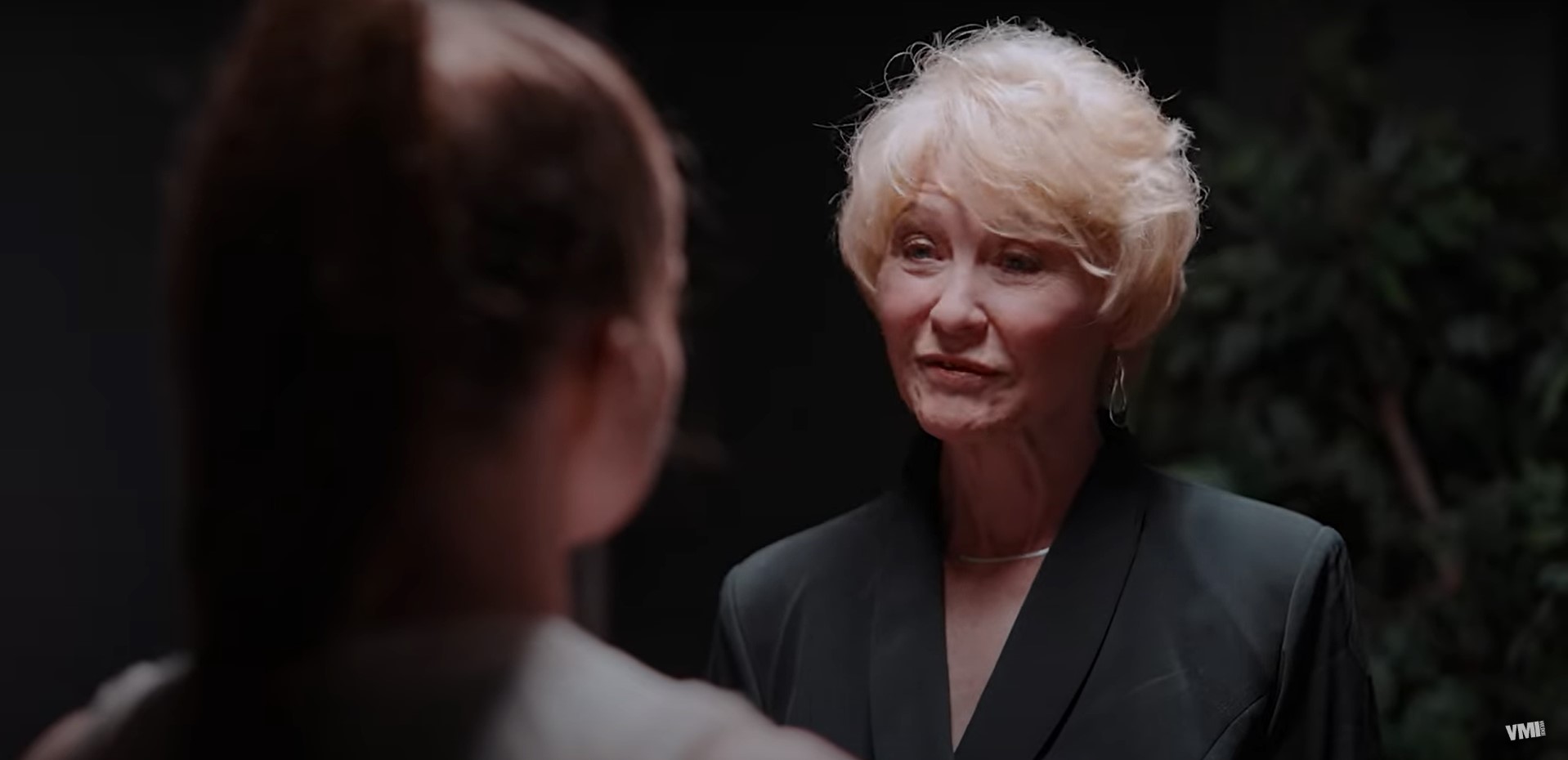
Powering “House of Dolls” vessel into explicit view is headliner Dee Wallace.  The “Cujo” and “Critters” scream queen has been on a junket of mom-and-pop productions for the better part of the last decade for aspiring horror filmmakers to leech off that eye-catching and weight-bearing Dee Wallace name.  Wallace reminds me of Linnea Quigley once said in an interview, if producers meet her price, she’ll star in pretty much anything.  Wallace seemingly has the same philosophy with a continuous stream of projects that screen her for no more than a total of 15-minutes, tops.  While this works to an extent, based off the prominence or the memorability of the role, most of that bankable name and face do little elevating the film, resulting in just a paycheck performance.  Sure, Wallace’s fans will check it out for the sake of Dee Wallace but for “House of Dolls,” as with the story or just as with the entity of the film, the gimmick doesn’t leave a mark.  The plot crux favors the three bickering sisters, Adalene (Violeta Ortega), Jenn (Stephanie Troyak), and Diana (Alicia Underwood).  Sibling diverging personalities uphold their seething hate for each other, that is much as obvious, but for what specific reason is never unfolded, or is unfolded but made unclear in the wake of its untidy heap.  What’s definingly unclear is the mother of these unlikeable brats.  Mentions of individually owning the unfortunate event of a mother’s death makes the ambiguous ruling that there is at least one half-sister.  They could all be half-sisters, but the unbridled dialogue and no conveyed backstory strays away from important pieces of the puzzle that make it as frustrating as trying to match a 2D puzzle piece within a 3D puzzle scheme.  The story also incorporates flimsy relationships with the sisters, Jenn’s drug buddy Justin (Jack Rain) who unexpectantly arrives with the sisters at their father’s estate, Adalene’s semi-sweet boyfriend Caleb (Phil Blevins), Diana’s vague friendzone coworker or perhaps boyfriend Lenny (Matt Blackwell”), and Diana’s out-of-nowhere go-to detective who just happens to be at her father’s hospital, dressed in beat cop fatigues, in Det. Ramierz (Meeko).  All these seedling characters are detached in their gravitational encircling around the sisters, pulling in zero weight on a story that’s quickly deflating.  Rounding out the fleeting supporting cast is Trey Peyton. 

Following “House of Dolls” plotline might as well be riddles with attention deficit disorder.  Too much is happening without the ease of transition or even sense to hold down a floating story that’s constituting forced uniformity and civility amongst rival siblings by way of a mysterious house with mysterious clues. Yet, those clues don’t flesh out and intrigue over what could have been a backstory backbone turns into gelatinous indiscretion of kill-after-kill by a leather coat-wearing masked-maniac with knives that offers up in the end being nothing more than surface level, superficial slasher.  Salas pulls off some decent, gory kills, such as a slimy disembowelment and a bisected torso that spills guts, to add some value to the production that’s ultimately equalized by areas of cut-rate props, such as the obviously flat and dull large knives that look more like cardboard than metal.  Like in true slasher tropes, the killer is seemingly everywhere at once, hopping from one location to the next, even if the other locations are across town, but this punk-cladded, homicidal maniac appears in-and-out of the alternating scenes too lackadaisically without systematic care to at least in try and make it plausible.   

VMI Releasing and MVD Visual handle the physical media distribution with a 1080p, high-definition Blu-ray.  The AVC encoded BD50 has the capacity for the eclectically ranged front lit key lighting and neon lighting, delivering a clean picture without compression issues.  Details waver between certain aspects of lighting, which is expected, but the details that do emerge pinpoint textural qualities and the key lighting reveals appropriate, vivid coloring and skin tones when contrasted against heavier background shadows.  Jorge Villa’s sizzling neon gives a warm glow in purple, blues, reds, and orange that enhances to a near music video quality outside the normal lighting and production parameters.  The film is presented in a 1.78:1 aspect ratio.  The uncompressed DTS-HD 5.1 English audio mix is an upbeat combination of verbal jabs, deregulated dialogue, and a medley of pop music and low-tone beat creator for the villain peppered with hip-hop rhythms, violin and piano down tone, and some suspense synthesized keyboard notes that do lean into what makes a decent horror soundtrack.  No complaints on the dialogue track that’s fairly level but doesn’t explore much in depth as characters are often up front and center on the camera.  There’s also not enough range to really utilize the multi-channel network and so the lack of miscellany fight for audible supremacy. Subtitles are available in English only.  Bonus features are aplenty on this larger capacity disc with Juan Salas commentary track that runs parallel to the feature, Juan Salas and Dee Wallace have a Halloween special video chat to converse about their time in production, a Natasha Martinez hosted cast Q&A for the U.S. premiere, a making-of featurette, and a MiB Legacy music video The Man Who Was Death.  On the outside, VMI’s standard Blu-ray comes with an appealing touchup of the killer in full dress from the chest-up, singled out by a black background and the title just overhead.  The disc is pressed with the same image with no other tangible features.  The film is not rated with region free capabilities and has a runtime of 84 minutes.    

Last Rites: “House of Dolls” crumbles as a clunky attempt at a slasher with a twist ending. The story shatters like someone pulling a pin on a grenade and pieces of act structure shrapnel propel in all different directions and never once hit target in the latest from director Juan Salas.

“House of Dolls” Is Ready to Play! Blu-ray Available at Amazon.

Beer Can Stuff Boots Give EVIL a New Height! “The Lost” reviewed! (Ronin Flix / Blu-ray)

Click Here to Purchase “The Lost” on Blu-ray!

Sociopathic teen-adult Ray Pye guns down two young women he suspects are romantically involved with each other and wants to feel the thrill of the kill for the first time with his two friends, Jennifer and Tim, as frightened, reluctant witnesses and abettors to his heinous crime.  Four years later, police investigation can’t pinpoint Pye as the culprit when the only surviving victim succumbs to her wounds after being in a coma all this time.  Pye, the slicked haired, pathological liar and assistant manager of his mother’s motel, continues his nice boy act as he peddles drugs and tries to woo any girl into bed while having a firm, feared grip on best friend Tim and girlfriend Jennifer to keep them in line.  As Pye chases after new women that enter in his world, the police continue their unofficial investigation, waiting for Pye to slip up and make a mistake but as his manipulation backfires and things don’t go his way, Pye’s already unstable nature morphs into an all-in, serial killer rampage and kidnapping of the three prominent women that have recently challenged his masculinity.

A real down spiral of machoism and growing up out of the adolescent fantasy world, “The Lost” is the 2006, loosely based biopic thriller inspired by real-life serial killer, the Pied Piper of Tucson, Charles Schmid interpreted from the book of the same title by late horror novelist Jack Ketchum.  This part II of our serial killer film review coverage, following the Robert “Willy” Pickton Canadian murders inspiring “Pig Killer,” “The Lost” bring us back to American murderers and is the first solo feature run for writer-and-director Chris Sivertson.   The father-son duo Mike and Lucky McKee, the filmmakers behind “May” and “Roman” co-produce “The Lost” alongside Sivertson and Shelli Merrill under the production company banners of Silver Web Productions.

To play Ray Pye, the actor must incarnate being on the edge of principles and be crazed to the point of no return.   For Marc Senter, Ray Pye was a means to break from minor television roles and star as a leading man defying principal conventions in being the best bad guy he could cook up.  Senter, who went on to be in credited roles of “Wicked Lake,” “Cabin Fever 2:  Spring Fever,” and “Old Man,” will forever be seen as the crushed soda can-filled boot wearing and greaser veneered Ray Pye as the boyish-looking Colorado native brings the ferocity, the energy, and the killer instinct of a high-strung teen teetering the line of losing it all.  Senter’s approach rides on insecure masculinity of being a short man showing teeth to appear larger than life and exacts a screen perforating fear that holds friends Jennifer (Shay Aster, “Ernest Scared Stupid”) and Tim (Alex Frost, “Elephant”) in a tail-between-the-leg stasis of his end all, be all despot presence.  Aside from the Ray Pye storyline, a trio of sub-stories add more development and substance to other principal characters, such as Tim and Jennifer hooking up dictated by them inching out from under Ray Pye’s reach, a washed out midlife Detective (Ed Lauter, “Cujo”), who was formerly on the Ray Pye investigation, and his romantic involvement with a Pye pursuant Sally (Megan Henning, “I Know Who Killed Me”), who is approx. 40-years the Detective’s junior that creates an intriguing, struggling dichotomy between love and appearance, and with the alluring Katherine Wallace (Full Moon regular actress Robin Sydney, “Evil Bong” franchise) in a love-hate, obstinate relationship with an absent psychotic mother and her fondness for Ray in who on some levels mirrors the same qualities as Katherine’s mother.  Michael Bowen (“Deadgirl”), Dee Wallace (“Cujo”), Tom Ayers (“Bloody Bridget”), Cynthia Cervini, Richard Riehle (“3 From Hell”), and to compound skin scenes, soft-core erotic starlets Erin Brown (aka Misty Mundae, “An Erotic Werewolf in London”), and Elise Larocca (“Blood for the Muse”) co-star.

What first struck me about Sivertson’s “The Lost” is it doesn’t define a period in time.  Charles Schmid’s reign of terror coursed the span of a year in the mid-to-late 60s, which follow’s Ketchum’s timeline in the novel.  Yet, the books’ characters follow the movie’s scheme without clearly stating the years, stringing the connection between the three like step-relationships.  Pye’s greaser finish, drive-in burger joints, boxy-rectangle cars and VW Beetles, and a motel as one of the principal shooting locations float in the very essence of the title itself, as a Lost in time story that stretches the decades.  What’s not lost is the aggressive sexual nature that drives the nihilistic Ray Pye’s bedding scorecard by feigned compassion and romance; yet there’s plenty depth behind his sleazy cockiness that warrants more discussion into his problematic psyche, such as how he’s able to charm the pants of these women and how he’s able to keep those who fear him, close to him.  Sivertson’s unafraid to make a statement in “The Lost’s” sexuality with plenty of skin from a number of the principal actresses to the simulated sexual acts in and out the vein of style and in and out of Pye’s sociopathic tantrums that’s more self-doubting bullying than actual power.  At a young age, Pye aims high for machohood by the misguided dealings of the cards he’s dealt, augmenting himself with shoe stuffers and makeup to make him taller and more attractive.  “The Lost” is very much a deconstruction of masculinity mania in the way we see Pye’s worlds comes crashing down and he loses everything when his guard is down by one swift moment of real, tangible love with Katherine and the only way to gain back control, like a hissy-fitting baby, is to go berserk in a if I can’t have it, nobody will tear. 

Evil never looked so dapper as “The Lost” receives a new 2K remaster produced from a 4K scan of the original camera negative by the boutique label Ronin Flix.  The AVC encoded, 1080p, high-definition BD50 contains the presented anamorphic widescreen 2.35:1 film with pixel-by-pixel coherence exacting extensive details and chromatic fidelity.  What stuck out the most from the 4K scan was the night scenes blanked in near sheer darkness with minimal direction illumination from natural and unnatural lighting in a positive, well, light.  In night forest scenes, especially around the lake, objects are lost in the void of shadows, tenebrously covered in obscurity, and that’s accomplished and accentuated in the opening moments of Ray Pye’s debut double murder, creating a better illusion of reality rather than creating an illusion out of often folly fabrication of dark blue gels or immense random key lighting.  Textures are strong through, greatly defined by the delineating of edges on striking clothing, cars, and the amount of skin displayed.  Two lossless English audio options are available to select from:  a 5.1 DTS-HD Master Audio and a 2.0 Stereo DTS-HD Master Audio.  “The Lost’s” audio/video design produces a high fidelity and contains a blend of unprocessed and stylistic expression that stretch the audio range depending on the current Ray Pye Richter scaled mood.  Pye’s occasional rapid-fire rants are unmistakable and clear as the decoding unfolds every syllable without sounding seamless or garbled.  English SDH are optionally available.  Ronin Flix delivers new and previously owned special features.  New content like an audio commentary with director Chris Sivertson and Lucky Mckee serve as a trip down memory lane with new, pondered upon insights and recalled tales and new individualized interviews with principal actors Marc Senter, Robin Sydney, and Shay Astar in regard to auditioning, prepping for the role, and recalling their experience on the shoot expand more into “The Lost’s” attention and what it took to illuminate focus on the Pied Piper of Tucson.  A second, archival commentary with writer Monica O’Rourke moderating conversation with late novelist Jack Ketchum, audition tapes, outtakes, storyboard sequence, and the original “Jack and Jill” short film directed by Chris Sivertson fill out the special features.  A new front cover design, replacing the bland bullet hole-riddled and blood-puddled eyes cover on the Anchor Bay DVD and Blu-ray, on the trio of cardboard O-slipcover, translucent Blu-ray Amaray case, and disc art spruces up the Ronin Flix’s lifted release with a sense of hep threads and fatal knuckle sandwiches.; however, that’s about the extent of its physical beauty and tangible adjuncts.  The region free Blu-ray comes not rated and has a runtime of 119 minutes.  Marc Senter’s tour de force burns rubber, a ferocity of friction and perpetual anger sculps one of the best true-to-life silver screen villains from the last two decades. 

Click Here to Purchase “The Lost” on Blu-ray!

The Fourth Go-Around with an EVIL Icon Is An Inferior Copy. “Jeepers Creepers: Reborn” reviewed! (101 Films / BD-R)

Laine and her boyfriend Chase drive toward Jackson, Louisiana where Chase has planned a fun-filled weekend in the land of the notorious Creeper legend and where the annual HorrorHound festival lures fans from all over the world for a carnival celebration of horror. Rolling her eyes at Chase’s complete obsession with the Creeper and his love for horror, Laine indulges her boyfriend’s every geeked-out whim, including entering a contest for a chance to enter a Creeper inspired escape room held at a dilapidated manor house on the outskirts of town. The lucky winners and the producing team find themselves lured into a deadly trap orchestrated by a cult loyal to the Creeper and Laine, who has been handpicked by his disciples, learns through premonitions that the Creeper hungers for her unborn child. Trapped inside with an unstoppable winged monster hunting them down, Laine and Chase implore the others to fight back against a living legend of lore.

Fascinating is the monster that is the Creeper, a versatile humanoid with batlike wings, a serious sniffer, and a flesh-eating connoisseur with the strength of 10 men and a primitive, yet effective assorted arsenal of deadly melee weapons. The Creeper is a modern marvel and icon of contemporary antagonistic favorites this side of the early millennium having arrived on the big screen now over two decades ago back in 2001 and producing now four films between that time span, but within those 21 years, a tremendous controversy has tarnished the good name of the “Jeepers Creepers” legacy. That name is “Jeepers Creepers” creator Victor Salva who conviction as a child sex offender might not have stopped him from directing three “Jeepers Creepers” films but certainly put the rubber stamp of disapproval against any kind of box-office success with audiences steering clear of work. 2022 saw promise for the Creeper with a new, fourth entry entitled “Jeepers Creepers: Reborn,” a title resembling a phoenix being risen from the fiery ashes type of project that removed Salva not only from the director’s chair but also any kind of substantial compensation for the legal rights. Timo Vuorensola (“Iron Sky”) steps into frame as the franchise’s newest visionary to hopefully resurrect the Creeper from the depths of indirect persecution. With a story written by Sean-Michael Argo (erotic-fantasy-horror writer of “Sineaters” and “Fable: Teeth and Beasts”), “Jeepers Creepers: Reborn” promises new blood and a new creative process with possible white glove treatment without the sully of sin behind the scenes. The first “Jeepers Creepers” film to be shot almost entirely in the United Kingdom with a few Louisiana locale shots, the fourth flight of the Creeper entry is a coproduction between Black Hanger Studios and Orwo Studios.

With a new “Jeepers Creepers” installment focused on adverting attention away from its creator, “Reborn” comes with an overhauled cast, including a new face toward the Creeper.  Instead of Jonathan Breck returning to resume the role in a fourth film, complications from an overseas production, English actor Jarreau Benjamin tackles the role with everything he’s got and with everything he has to work with.  Breck cobbled together large boots for the assimilation of a western horror villain with a mischievous and ruthless personality as he toys with his food before he eats it in the first three films.  Benjamin does a remarkable job attempting to emulate much of the same albeit the Creeper have a slightly different look because of Benjamin’s build and face structure.  Nonetheless, as the Creeper, the greenhorn fills in quite well tormenting conned prey that includes on screen couple Sydney Craven (“York Witches Society”) as Laine and Imran Adams as Chase.  To be honest, Craven and Adams had little emotion weight beyond a fantasy and lust dynamic and couldn’t find character and story support in what seems to be more of a close acquaintance rather than a highly involved and evolved romantic relationship.  They’re teamed with producers of a reality show, game show, some kind of vague media show of sorts, as the unfortunate lucky winners of an escape room challenge as well as a local Jackson resident, Stu, with a Duck Dynasty beard and salty arura about him, played by Peter Brooke (“Wrong Turn 5:  Bloodlines”) and I wanted to know more about Stu.  Is he good or bad?  Is he a patsy?  He’s mysterious but likeable and he’s written enigmatically up to a point but the descends into just another ordinary link in the chain. Ocean Navarro (“Infamous Six”), Matt Barkley, and Alexander Halsall round out the victims corralled by the cult of the Creeper. The Creeper worshipping group represented by a local shopkeeper (Georgia Goodman), a fire and brimstone preacher (Saverio Buono), and a horror hostess named Madam Carnage (Jodie Mcmullen) are a flake of a bigger scab that reveals nothing about their reasoning or their cause in helping every 23rd year for 23 days and the element of the cult cheapens the story because it goes unexplained. Overall, the performances are steady, if not slightly cliche at times, and the cast rounds out with Dee Wallace (“Cujo”) and Gary Graham (“Robot Jox”) with a familiar and strong opener that gets the blood going.

That very 15-or-so minute opener is “Jeepers Creepers: Reborn.” That’s it. That’s the film. It’s classic Creeper with a new, beaten down, larger box truck, starkly different from his rusted Chevy HD COE that’s like a supercharged street-legal tank but with the same BEATINGU double entendre license plate and malevolent-ripping energy that would make anyone’s heart race with fear as he tailgates and blares the horn at high speed. Yet, the opener quickly rescinds into an unsolved mystery-like episode and from that point on, Vuorensola and Argo work diligently to rapidly dismiss the first three films by meta means with one of the principals stating the Creeper stories gave way to three films, hence why the fourth film is subtitled “Reborn” and acts more like a reboot than a sequel. Perhaps that is why the plot adds a stronger motivation for the Creeper who is hellbent on extracting a prenatal child from Laine. “Reborn” invokes a return to the premonition theme that go hand-and-hand with the Creeper’s return as Laine has visions of her the centerpiece of attention, covered in blood, and a baby carriage containing, supposedly, the target, but the story is so far up the abstract tail with the visions and conjectural dialogue, we never receive a straight answer as to why the Creeper is after the peanut-sized pregnancy. With any of the four films, the Creeper dispatches prey in various neat ways with a primordial arsenal of medieval killing tools and the scenes of slaughter don’t disappoint. There’s actually a gory moment of a scalp flip and a brain snack that’s well executed. What kills “Reborn” with a stake through the heart is the rotoscoping at climatic end. Clunky, chunky, and disproportionate, the actors appear to be standing and moving around in a 2D environment with unintended rigid actions that dispel realism after a wonderful show of makeup and practical effects in the first two acts.

You don’t have to wait another 23 years to see the Creeper as “Jeepers Creepers: Reborn” lands on UK digital platforms on October 10th and on UK DVD and Blu-ray October 24th courtesy of UK distributor 101 Films. The just-before-Halloween release will contain a 15 certification and is available preorder at the https://101-films-store.com/. Unfortunately, I’m unable to dive into neither of the DVD or Blu-ray spec details or give a full critique of the audio/video aspects as a BD-R was provided for feature screening purposes only. The screener also didn’t have any bonus features and included only an English subtitle option. The film runs clocks in at 88 minutes and is shot with an Arri Alexa camera. “Jeepers Creepers: Reborn” might have dropped the surface level controversial dead weight but can’t fully shake the stigma and in an opportunity to reboot or rebrand the franchise, the effort is squandered by production snafus and shoddy presentation that’ll put the Creeper asleep for another 23 years until the next film.

There is no EVIL like the Firefly Family! “3 From Hell” reviewed!


A bullet-riddled shootout with police left Baby Firefly, Otis Driftwood, and Captain Spaulding full lead, but not dead! The trio barely survives despite getting shelled by 20 gunshot wounds a piece and are tried and incarcerated for over a decade in maximum security prisons. After Captain Spaulding’s wears out his welcome on death row and becomes the first one executed, a merciless escape carried out by Otis’ half-brother, Winslow Foxworth Coltrane aka The Midnight Wolf, leaves a trail of blood and violence in their wake up to freeing Baby Firefly who can’t wait to play and unleash her uncontrollable crazy cyanide upon the world. However, there’s only one itsy-bitsy problem – they’re faces are about as dangerous to themselves as they are dangerous to others. The three from hell vamoose to a dumpy Mexico town to start afresh, but little do they know, no place is safe for long.

Over the span of 16 years and 14 years since “The Devil’s Rejects,” shock rock and rockabilly, metal rocker Rob Zombie returns to write and direct the third and highly anticipated sequel film in the Firefly trilogy with “3 From Hell.” The 2019 continuation of the Baby, Otis, and Captain Spaulding rejuvenates interesting in returning hellions that’ll undoubtedly wreak havoc across the midwest plains, splatter some brains, remove some flesh, and, well, you get the gist of their unholy hobbies. “3 From Hell” had to literally dig out these characters from the grave since being shot to shreds at the end of,***spoiler alert***, “The Devil’s Rejects” and Zombie was able to sell Lionsgate and Saban Films on the story divergent from the last film, much like “House of a 1000 Corpses” horror show went straight into exploitation extravaganza with “The Devil’s Rejects.” “3 From Hell” is a whole new animal, an anti-hero’s indulgent fantasy of crime, action, and still barely kickin’ to kick ass through the rampaging blood.

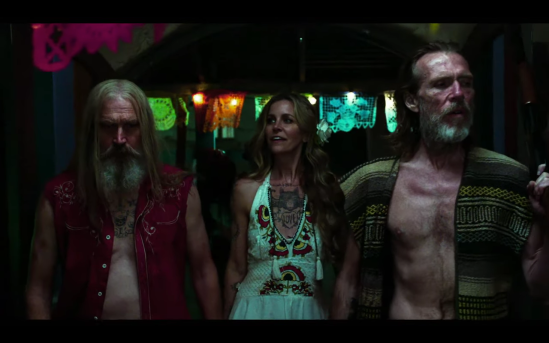
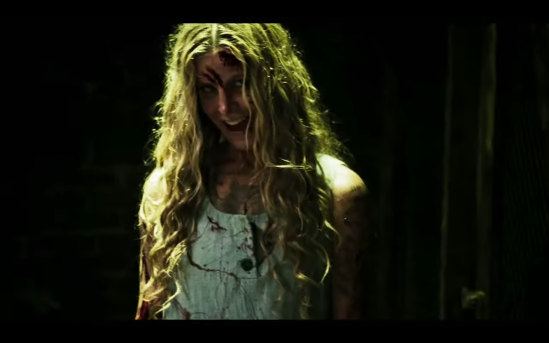
The three in “3 from Hell,” Baby Firefly, Otis Driftwood, and Captain Spaulding, return for one more three amigo misadventure through hell and brimstone and the original cast, respectively include Sheri Moon Zombie, Bill Moseley, and Sid Haig, suit up to be a depraved family once again. Sadly, Sid Haig’s health rapidly deteriorates in the midst of filming, leaving Zombie no other choice other than to write him quickly from the script and introduce a new character, a transgression tyrant to pass the torch to, with Winslow Coltrane played fittingly by “31’s” Richard Brake. As though like never missing a backwoods bumpkin beat, Richard Brake embraces the Midnight Wolf and breaks in the character with such ease and fortitude that the question never arises if the Midnight Wolf should be a part of the sacred Firefly pack. Sheri Moon Zombie steps out of a time machine and right into Baby Firefly, despite being a little aged around the eyes. The quirky and unpredictable Baby doesn’t reinvent the wheel, which should please the fandom, and is a wonderful sadistic mecha with Sheri Moon at the helm. The same can be said about Bill Moseley who, goes without saying, has a unique voice that’s been rebranded as Otis Driftwood. Every other movie, old or new, with Bill Moseley starring, or not starring, will forever be tainted by Otis Driftwood for when Moseley monologues or even just speaking one or two words of dialogue, the spine starts to twinge and tingle, the hairs shoots straight up, and that stepping on your grave feeling of cold desolation swallows you in an instant. The “3 From Hell,” plus Coltrane, face the world with a big knife and lots of guns and those who stand in their way are played by co-stars Danny Trejo (“Machete”), Jeff Daniel Phillips (“31”), Emilio Rivera (“Sons of Anarchy”), Richard Edson (“Super Mario Bros.”), Pancho Molar (“Candy Corn”), Dee Wallace (“Cujo”), Sean Whale (“The People Under the Stairs”), Clint Howard (“Evilspeak”) and Bill Oberst Jr. (“Dis”).

Rob Zombie has mentioned in a behind the scenes featurette that he didn’t want to recapture the magic of the previous Firefly cruelty and the rocker-filmmaker has done that just, straying away from the horror of “House of the 1000 Corpses” and the exploitation vehemence of “The Devil’s Rejects,” which the fans groveled for, and going bravely, or blindly, into crime action with the “3 From Hell” that still’s beholden to Rob Zombie’s hillbilly swank. Rob Zombie risks a new path and also gambling on more of Lionsgate’s capital with showing off more visual effects than in the former films. Bullets tearing through flesh and flying straight toward the camera lend to example of the computer imagery effects that, from a fan’s perspective, dilute Rob Zombie’s adoration for horror who takes less and less chances with this film that not only feels rather ordinary and just another piece of maize in the field, but “3 For Hell” also doesn’t feel to have substance to all the madness. Baby, Otis, and Coltrane go from point-to-point, aimlessly pondering what’s next, and just happen to fall into a barrage of bullets and blood, rather than being the epitome of evil bring vile upon mankind. Just being a Rob Zombie film that resurrects his beloved and beguiling modern iconic characters, “3 From Hell” coopers the longing with a fierce show of violence that opens the door for one more installment.

Lionsgate and Saban Films, along with Spookshow International, proudly presents Rob Zombie’s “3 From Hell” onto a R rated DVD and an unrated, 1080p Blu-ray sheathed inside a slipcover. The two disc, dual format release are both presented in a widescreen, 1.85:1 aspect ratio, and the image is about as sleek as they come with an ARRIRAW formatted 2.8k ARRI camera that shoots 48fps. Zombie reins back on the color palette and hones onto more natural coloring. The details are delineating, as aforesaid with Sheri Moon Zombie’s crows feet. The English language 7.1 Dolby TrueHD audio track is lossless with a crisp dialogue and ambient mix. The range and depth are robust with explosions and gunfire. The release comes with Spanish subtitles and English SDH subtitles. In accompaniment with the 115 runtime, bonus features include To Hell and Back: the Making of 3 From Hell which is a 4-part documentary on the Blu-ray only and both formats include an audio commentary from writer-director Rob Zombie. Also included is a digital copy to instantly stream and download onto personal devices. The horror element might be gone, but the inexplicable chaos surges through death row to desperado Mexico in Rob Zombie’s “# From Hell!”

Own “3 From Hell” on Blu-ray/DVD!