Black Mamba Wriggles Only for EVIL! “Venom” reviewed! (4K UHD and Blu-ray / Blue Underground)

Slither into “Venom” on 4K UHD and Blu-ray Combo Set!

American family, the Hopkins, live in London and while Mr. Hopkins travels the globe to attend to his international hotel business, Mrs. Hopkins and son Philip, live wealthy in their three-story row home along with visiting, Safari-expert grandfather Howard Anderson.  When Mrs. Hopkins plans a trip to see her husband after a month a part, she’s worries for Philip’s severe asthma attacks but with the assurances of the grandfather, the housekeeper, and Philip’s rudimentary zoo in his room, full of furry creatures in vivarium cages, Mrs. Hopkins half-heartedly boards her international flight.   Not everything is going to fine, however, when the housekeeper schemes with the family chauffeur and an Interpol criminal Jacmel to kidnap Philip for ransom.  The foolproof plot commences to plan with departure of Mrs. Hopkins and the arrival of Jacmel but one little mishap causes the plan to quicky unravel when a Black Mamba, one of the most aggressive and poisonous snakes in the world, is mistakenly crated and provided to exotic animal enthusiast Philip instead of his harmless ordered common variety garden snake and when the Black Mamba gets loose, it slithers in the house’s ventilation system, the house they’re all hold up in when the police swarm the outside perimeter. 

What was once going to be a Tobe Hooper (“Texas Chainsaw Massacre”) directed production before his eventual and sudden departure from the film after a few weeks, the 1981 crime-thriller with a creature feature twist, “Venom,” is then picked up by the late director of  “The Blood on Satan’s Claw,” Piers Haggard, to finish the Robert Carrington (“Wait Until Dark”) adapted screenplay off the Alan Scholefield novel of the same title.  The American screenwriter Carrington writes nearly a faithful iteration of the Scholefield novel but with more emphasis on the serpent’s over-lurking presence as an important reptilian character to the story, serving as a catalyst for the upended kidnapping plot and determining the fate of certain characters.  The UK film is American produced by Martin Bregman, the spear runner for “Dog Day Afternoon” and “Serpico” as well as “Scarface” and “The Bone Collector” later in his career.  Morison Film Group served as production company on the mostly LLC entrusted venture.  

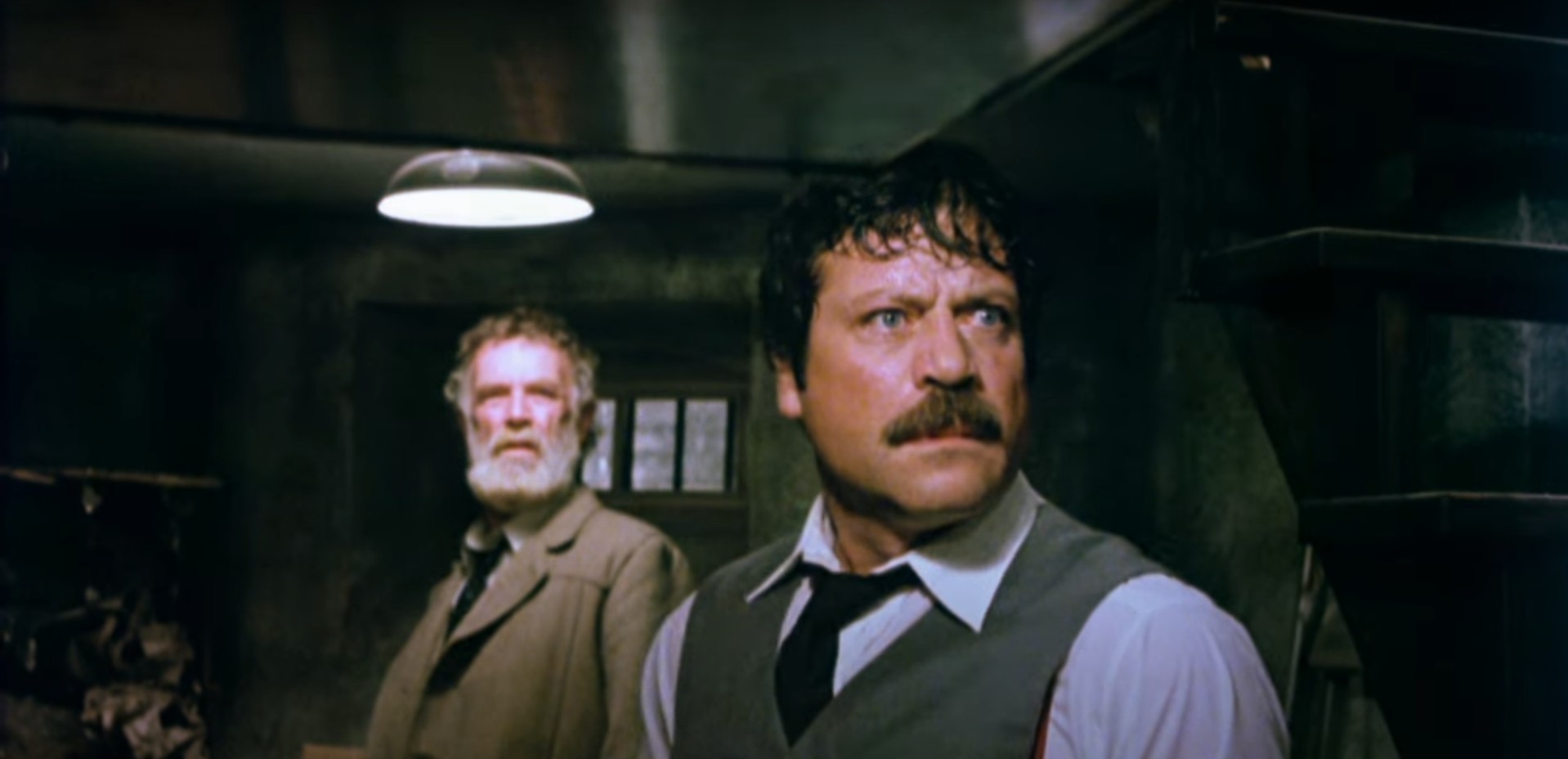
If the American Tobe Hooper did helm this picture, directing Leatherface as an actor would been child’s play in comparison to what would had been if he had to corral a pair of strong-willed, A-type personality Europeans in Germany’s Klaus Kinski and Britain’s Oliver Reed, both with well-known and formidable career of not only in genre films but also to be problematic and difficult to work with.  The “Nosferatu the Vampire” and “Aguiree, the Wrath of God” Kinski was perhaps mostly misunderstood for his not understanding of inflections, innuendos, and gestures of the English language that made him often sounds gruff and antagonistically questioning the director’s every choice whereas the “Paranoiac” and “The Brood” Reed was plagued with alcoholism and was equally gruff in his own right as a dedicated actor saturation with austere method stratagem.  Yet, on screen, Piers Haggard manages to get the two hurricane forces to be on-the-edge cooperating, backed-into-a-corner kidnappers without cutting any tension when interacting with each other.  Distinct in demeanor, Kinski as a calm, trench coat KGB-type and Reed as an anxiously and trigger-happy, hotheaded brute put on a good show in their respective performances and beat the odds of two notorious personas colliding.  Haggard doesn’t coddle them either and lets them loose to exact the carrier in their own right even if off-book and they’re even more vilified by taking hostage a young boy Phillip, the introduction of Lance Holcomb (“Christmas Evil,” “Ghost Story”), his Safari-seasoned grandfather Howard Anderson, played by beard-laden and serial gesticulating Sterling Hayden (“Dr. Strangelove,” “The Long Goodbye”), and a zoo toxicologist named Dr. Marion Stowe who is caught in the middle when checking up on the mishap switcheroo of the snake, played by Sarah Miles (“Blow-up”), neither in shape or in vigor to be a proactive hero.  The no-nonsense Police Commander William Bulloch, shoed with “The Exorcist III” actor Nicol Williamson, a brazen candor and stoic expression with Williamson offering frank wit and a sarcastic dryness that barely gets him one step into the house; instead, it’s the Black Mamba that’s the real and unintentional hero that seemingly only has a fork tongue and fangs for villains, leaving the other hostages alone.  “Venom’s” also has Susan George (“Straw Dogs”) as the traitorous housekeeper, Mike Gwilyn, Paul Williamson, Hugh Lloyd, and the first Butler of the 1980s-1990s Batman quadrilogy Michael Gough playing real life snake wrangler David Ball in tribute. 
From the pages of Alan Scholefield’s novel to the big screen, “Venom” has a slithery way about slipping into between the crosshairs of a crime-thriller and a venomous creature feature.  Leading “Venom’s” charge is an undoubtedly great, if not iconic, cast giving their all to a farfetched plot of bad luck Ophidiophobia.  While the snake seems to have heat vision eyes only for the Klaus Kinski, Oliver Reed, and Susan George trio of kidnap-for-ransom criminals, who amongst themselves are in a deceitful love triangle that’s doesn’t quite come to a head as one would expect, there’s no animal kingdom peril to the other victimized threesome who, on a physical, first glance surface, are less equipped to handle a dangerous snake with a young, asthmatic-plagued boy, an elderly grandfather, and a nerve-bitten woman but, in reality, Phillip Hopkins, Howard Anderson, and Dr. Marion Stowe are respectively the best equipped to handle the black mamba as an small animal atrium hobbyist, a former African safari survivalist and animal expert, and a venomous snake toxicologist.  Perhaps, this is why the Black Mamba avoids these three at all costs and never interacts with them on a perilous level.  The fantastical mist that’s sprays us lightly with a crimefighting snake has comical properties that standout against what is a palpable thriller involving an international criminal, cop killing, child abduction, and the mutilation of a corpse. 

Blue Underground continues to update their catalogue with a 2-disc, 4K UHD and Blu-ray combo set of ‘Venom.” The UHD is HVEC encoded, 2160p ultra-high-definition, BD66 and the Blu-ray is AVC encoded, 1080p high-definition, BD50. In regard to picture quality, both formats are nearly identical transfer that’s stems from an all new 4K 16-bit restoration from the original 35mm internegative, with the UHD receiving Dolby Vision HDR. UHD is slightly sharper around delineation when gliding between dark and light, which is often inside a merge of a half-lit house to draw more tension toward the potential presence of a deadly snake. The 1080p presentation also provides a pleasing clarity that offers little to negatively note. Color grading and saturation between the two formats show signs of varying quality by a thread with the 4K saturating that much more intently across the board with a better control over the grain levels with the Blu-ray appearing a touch thicker for the pixels to flare optically. The native 4K and 1080p come with an English Dolby Atmos as well as options for either an English DTS-HD 5.1 or a DTS-HD 2.0 stereo. Speaking only to the Atmos, the all-encompassing mix shepherds in a clean, discernible quality without any audible seams. Skirmishes, dialogues, and all the commotions in between find isolated channels of distinction that can put you immerse you into the action. And there’s plenty of action to be had coupled with a Michael Kamen’s brass horn and string score that’s both memorably building with excitement and thrilling that preludes Kamen’s orchestrated composition work of “Die Hard,” starring Bruce Willis. Despite the circumference of sound spaced mostly in interiors with a hodgepodge medley of a street full of police, reporters, and gawkers, the dialogue is equally distinct, discernible, clean, and clear without signs of hissing and crackling strains. Subtitles included are in English, French, and Spanish. The 4K special features include a new audio commentary with Film Historians and Blue Underground commenting regulars Troy Howarth, Nathniel Thompson, and Eugenio Ercolani, an archived commentary with director Piers Haggard, and film trailers. The Blu-ray disc contains the same commentaries and trailers but extends further with new exclusives in an interview with editor-second unit director Michael Bradsell Fangs For the Memories, an interview with makeup artist Nick Dudman A Slithery Story, a film historian point of view interview with British critic and author Kim Newman, and an interview with The Dark Side’s Allan Bryce providing his in-depth two cents and historical surveying. TV Spots are finish out the encoded extras. “Venom” 4K and Blu-ray combo set is physical appeasing to hold and behold with a muted black slipcover with tactile elements on both sides of embossed letters and stark coloring that’s striking in its simple snake fang design arraignment. The black, thick Amaray case has the original “Venom” artwork with the optional reverse cover art. I’m not a fan of the inside design that houses a disc on both sides as there is no room place for 18-page collectible, color picture booklet which just floats inside. The booklet features an essay by Michael Gingold, cast and crew acknowledgements, and chapter selection on the back. The discs are pressed with one or the other cover arts. This gorgeous-looking release, on the outside and inside, comes region free, has a runtime of 92 minutes, and is Rated R.

Last Rites: “Venom” might have been snakebitten back when selling book adaptations of crime capers stopped by a single snake might have seemed farfetched but, today, the 1981 film remains a cult classic of the ophidian nature being one of the earliest serpentine creature features with an imposing, impressive cast. Blue Underground proudly presents the film with a new, and improved, ultra high-definition release.

Slither into “Venom” on 4K UHD and Blu-ray Combo Set!

Who Dat? Dat EVIL! “Creature from Black Lake” reviewed! (Synapse / Blu-ray)

“Creature From Black Lake” on Blu-ray is Bigfoot’s Bestfriend

Two University of Chicago students interested in discovering the legendary creature bigfoot take a road trip down to Oil City, Louisiana where there have been multiple reports and sightings of a ape-like man wandering in the Bayou and even an attack on a local trapper, witness by the gruffy drunk, Joe Canton.  Met with stern resistance from the Oil City Sheriff Billy Carter and some reluctance from scared locals in the Bridges family after an mortal encounter with the beast that killed two of their family members, the students dig in and continue their swampy-laden search for bigfoot as well as finding the time to mingle with Louisiana women.  When they discover the mythical beast actually exists, nothing can stop them into catching sight of the creature or maybe even snaring it, not even the Sheriff’s threat of jail time if they don’t high tail it out of town could persuade their mania, but their expedition deep into the swamp and coming in proxmital contact with the aggressive primate outlier may prove to be a fatal mistake rather than a claim to fame. 

Having searched high and low for many years to review just any Bigfoot film that’s above average worthy has been a wearisomely long and arduous task.  A slew of movies dedicated to the big hairy fella have been nothing but a mockery, whether intention or unintentional, of the Sasquatchsploitation horror subgenre.  Instead of being subjugated to the countless, blasphemous modern tales of the mythical monster, I had to travel back in time to 1976 to retrieve what I’ve been searching for in the last decade or so.  The late J.N. Houck Jr’s “Creature from Black Lake” fulfills a great need with very little in its idiosyncratic cast and its obscure visibility of the creature that creates upscale mystery.  The based out of Louisiana “Night of Bloody Horror” and “The Night of the Strangler” director, whose father, owner of The Joy Theaters, already had an established footing not only in the movie business but also in the horror genre when helming a script penned by Jim McCullough Jr. as his first grindhouse treatment blessed by his father, producer Jim McCullough.  McCullough Jr. co-produces the film under the Jim McCullough Productions banner along with William Lewis Ryder Jr. serving as executive producer of the shoot shot on location in Oil City and Shreveport, L.A.

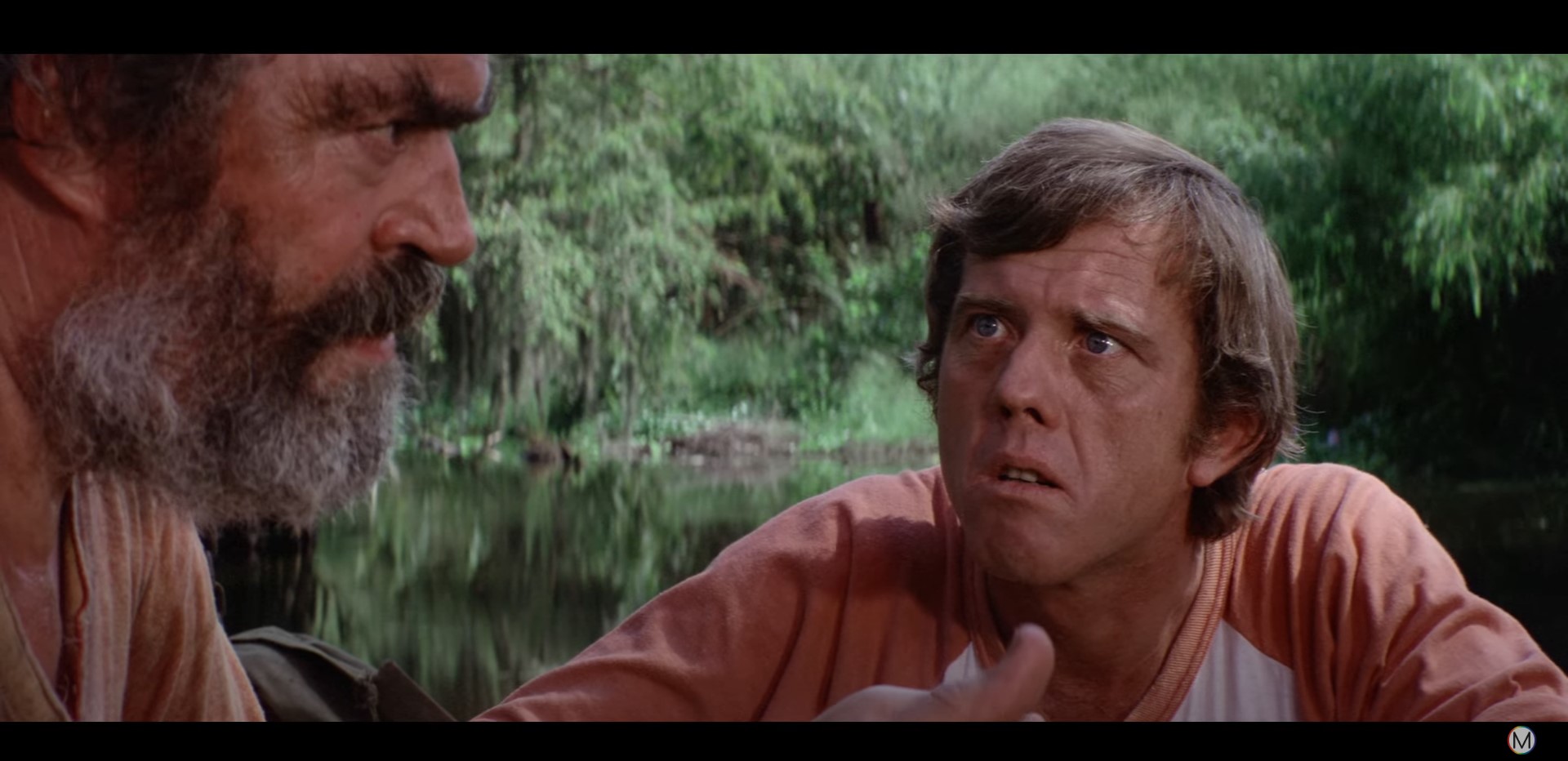
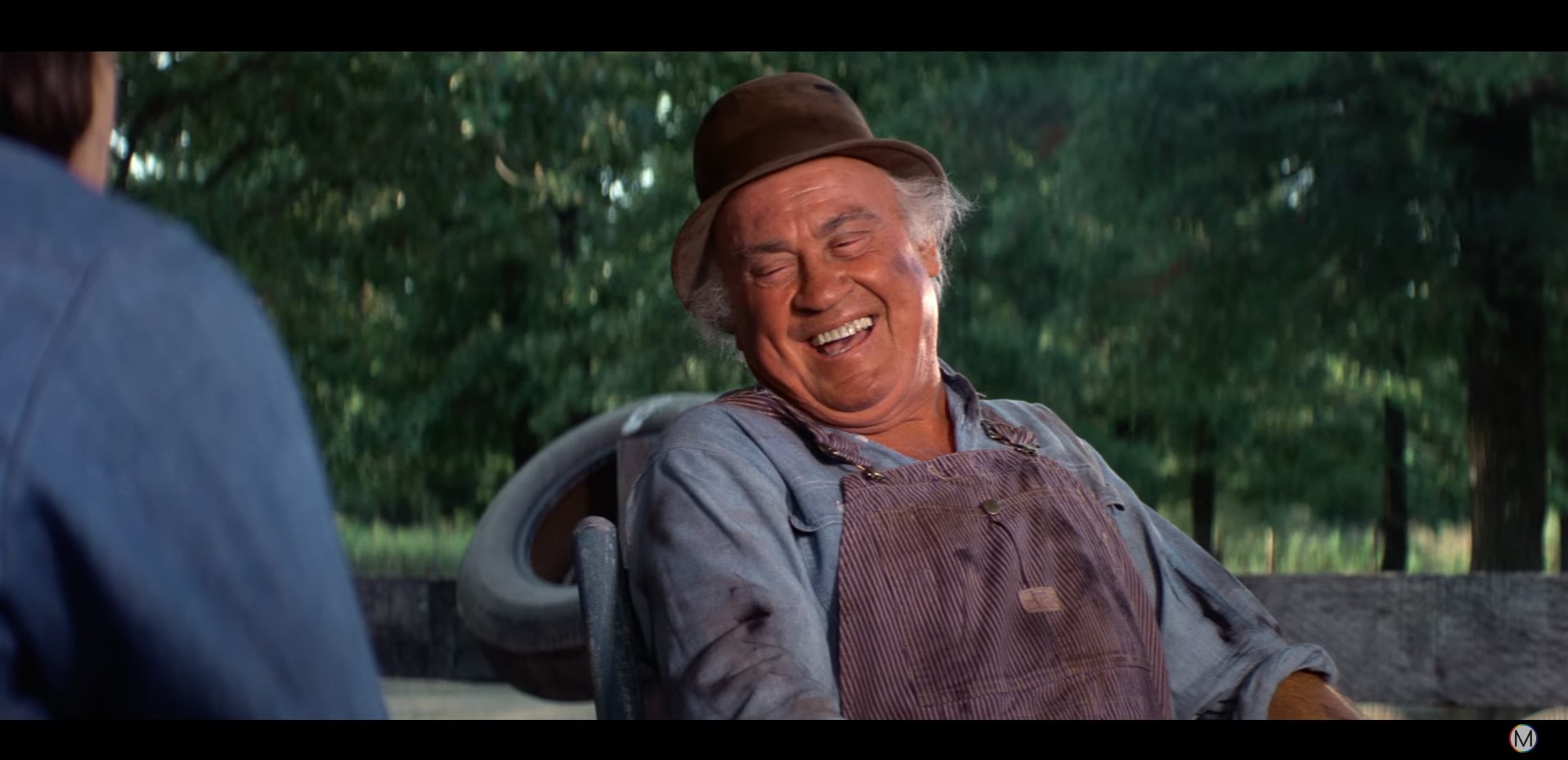
“Creature from Black Lake’s” cast is a distinctive assembly as aforementioned earlier.  Not only do they play their roles well by incorporating localisms where needed but they add a blend of intensity with chunky bits of comedy marbled through a storyline that’s half-anecdotal and half-present action. University of Chicago students Rives (John David Carson, “Empire of the Ants”) and Pahoo (Dennis Fimple, “House of a 1000 Corpses”) set course to Oil City, Louisiana where an indistinct creature is suspected to be in area based of science and suspected fish stories told by local kooks and drunks that turned out to be horribly true. Rives and Pahoo, who in McCullough script is constantly chaffed about his unique name but shrugs and deflects like he’s done it all his life, interview Oil City residents who believed to have bare witnessed firsthand the beast’s atrocities that has taken the lives close to them. These Bayou denizens are enriched by veteran actors with robustly created caricature personalities. Surly voiced with bulging, wild eyes, typecasted western actor Jack Elam had branched out from films like “Gunfight at the O.K. Corral” and “Once Upon a Time in the West” to play a similar grouchy character dwelling in the swamps as a trapper. Elam’s great a feigning an intoxicated mess as you can literally taste the alcohol sweat from his porous skin sheltered by an unkempt beard and a loose fitting crumpled up onesie that’s staple motif for any drunk Cajun or drunk cowpoke, so Elam was fairly comfortable in the role. Dub Taylor is another big old-timey name in the western genre and rarely saw horror as a place to call home. For Taylor, his role as Grandpaw Bridges gave the actor a chance to play an old hayseed complete with a solid effort in Cajun English. Taylor’s lively at times with an animated excitement but can turn somber and stern as soon as his character’s scorned and calls for a more serious tone. Compared to Elam and Taylor, youngsters Carson and Fimple pilfer very little from the veteran’s epic role characteristics but do fine in their own rite with carrying the hunt’s harrowing third act. Bill Thurman (“‘Gator Bait”), Jim McCullough Jr., Cathryn Hartt (“Open House”), Becky Smiser, Michelle Willingham, and Evelyn Hindricks round out “Creature from Black Lake’s” cast.

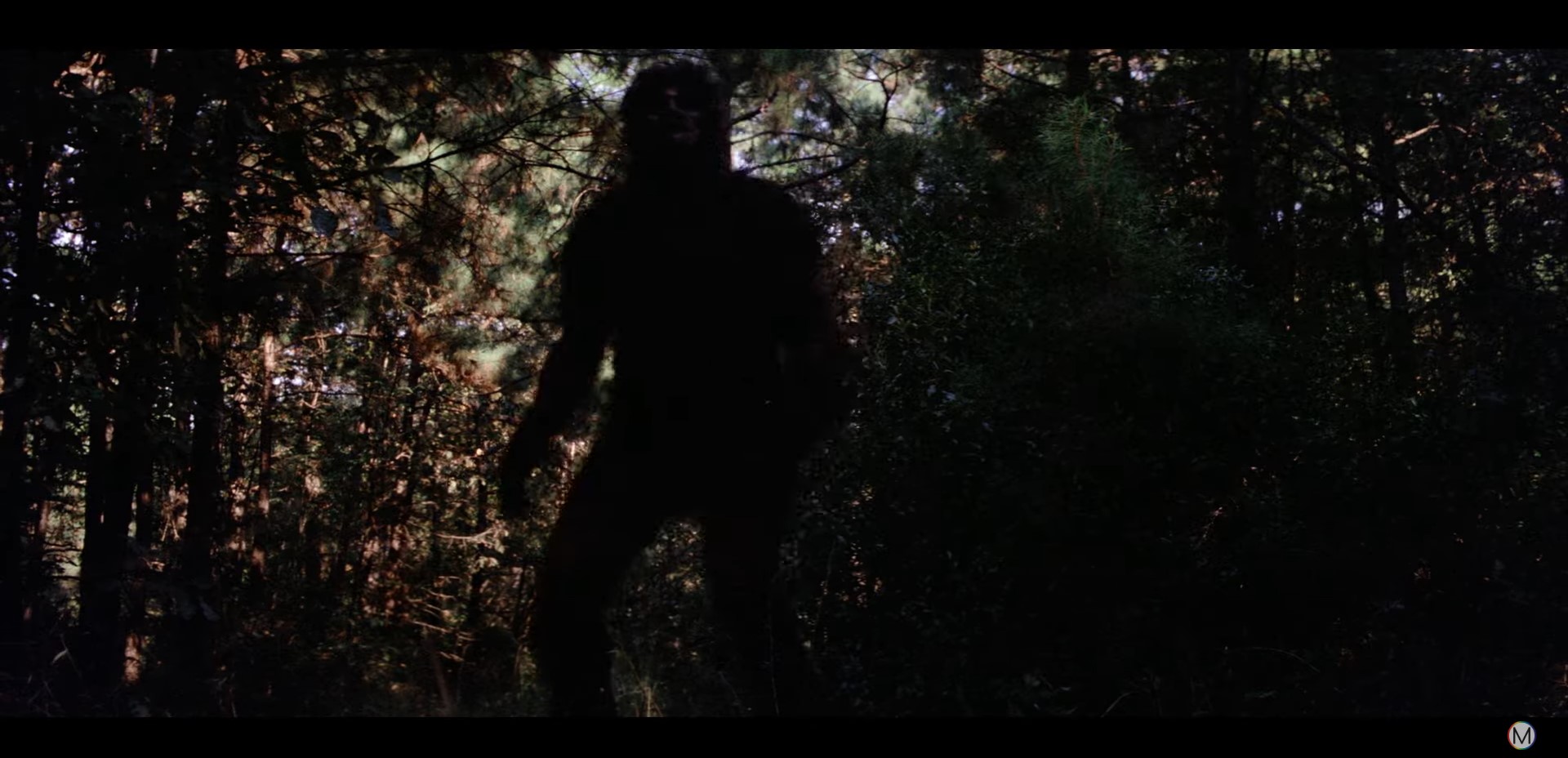
How could a 1976 bigfoot feature be more surprising and compelling than any modernized version? Well, one of the biggest pros to “Creature from Black Lake’s” success is Jim McCullough Jr.’s script that’s surprisingly well written by the first go-around screenwriter and while I’m not primarily speaking on behalf of the principal leads’ motivation or the slightly lack thereof, there lies more interest in the quick-witted dialogue and the blunt banter to keep Rives and Pahoo from being dullards and to keep the story from being a slog. Another aspect that is sharp as a tack is Dean Cundey’s cinematography that keeps the creature firmly in the shadows, producing that suspenseful and mysterious “Jaws” effect where we actually don’t see the shark until the third act. Cundey, best known for handling the cinematography on titles you might have heard of such as “Jurassic Park,” “Death Becomes Her,” and “Big Trouble in Little China,” made a name for himself first in grindhouse horror and exploitation of the early 1970s.  Cundey keeps the apelike creature shrouded from direct light, lurking mostly in the shadows with only a glimmer quickly streaking across the snarling face and an animalistic outline of its furred body and tall stature.  The full effect of bigfoot is never directly in your face or full in view which can be best at times depending on the look of the creature.  Cundey had partially designed the face of bigfoot and thus covering up perhaps his own shoddy work with how to film the titular antagonist of Black Lake.  Now, Black Lake is an actual lake in Louisiana but is about 100 miles SE of Oil City and Shreveport and likely used a combination of Big Lake and Cross Lake that were near the majority of shooting locations to serve as representation of Black Lake.  Where “Creature from Black Lake” struggles is with the Rives and Pahoo dynamic that barely tether’s to how their friendship, though diverse individually, becomes stronger up the end with a near death experience.  Pahoo’s a Vietnam vet and with his wartime experience, he’s the more on edged character out of the two suggesting an underlining PTSD theme when the creature’s roar and circling of the camp puts Pahoo into an eye-widening internal panic.  Rives is cool as a cucumber and is determined to prove something inexplicable in pushing forth and bagging a big hairy beast.  At times, contention flares up between them but is quickly extinguished with a simple sharing of homemade fireside baked beans to sate Pahoo’s ever ravenous stomach.  Their hot and cold amity and indeterminable mission into the Bayou shapes very unsatisfactory their resulting unbreakable bond that hints at something more than just friendship, as if there is metaphorical points of betrayal and forgiveness that makes their connection scar tissue stronger but are not clearly delineated.

Finally!  A bigfoot feature that works mostly at every angle, is more than just palatable from a story standpoint, and has a formidable bigfoot presence that’s more than just a man in a monkey suit. Synapse Films restores not only “Creature from Black Lake’s” original widescreen 2.35:1 aspect ratio onto a high-definition Blu-ray from the dreadfully cropped VHS and TV versions but also restores the creature feature with a brand new 4K scan from the original 35mm camera negative. The result is phenomenal with a widow’s peak view and the grading is touch of tailored class that freshens the 46-year-old with new vigor. No instantaneous signs of compressions issues on the AVC encoded BD50 with inky black shadows and profiles that are sharp around the edges, never losing sight of image and never losing the quality. The Blu-ray comes with only one audio option – DTS-HD Master Audio 2.0 mono track. Not the best representation but perhaps the best that’ll get, some audio elements succumb to the production limitations, such as the stifled dialogue track early on in the film that leaves exchanges between Rives and Pahoo soft and scarcely perceptible. The dialogue issues alleviate as the story progresses, falling in line into an even keeled dual channel output. “Creature from Black Lake” has ample range between the booming closeup shotgun and rifle shots to the light tinkering of utensils and camping gear. We don’t receive much depth, not even with the creature’s roar as it thunders into much of audio space and overtakes everything else. Newly translated English subtitles are available. Bonus features includes an audio commentary with author/filmmaker Michael Gingold and film historian Chris Polliali, a brand-new featurette with cinematographer Dean Cundey Swamp Stories, the original theatrical trailer, and radio spot. The physical release comes in a blacked-out Blu-ray snapper, Synapse Films’ catalogue insert, and has Ralph McQuarrie illustrated cover art that’s an unmistakable masterstroke of his craft. The region free Blu-ray of “Creature from Black Lake” is rated PG and has a runtime of 95 minutes. If you’re on a quest to quench a midnight movie about bigfoot, journey no further as Synapse Films delivers one of the better, more comical and terrifying, Sasquatch movies of our time and in beautiful high definition!

“Creature From Black Lake” on Blu-ray is Bigfoot’s Bestfriend

The Reining Bullies Get the EVIL They Deserve! “Massacre at Central High” reviewed! (Synapse / Blu-ray)

“Massacre at Central High” is Grade A Exploitation!

David just transferred to Central High School, reuniting with his good friend Mark, but Mark is no longer a part of the outcasted crowd at his new high school as he has joined Bruce and his pals to be the apex elite in the school’s lopsided social hierarchy.   Refusing to abide by the relentless and ruthless bullying, attempted rape, and intended bodily harm, David stands up for the oppressed with firm and actionable rebuke.  Bruce and his gang don’t take kindly to David’s opposing behavior and purposefully cripple him to teach him a lesson in disobedience punishment under their sovereign thumb, but what doesn’t kill David makes him a retribution killer as he begins his one-by-one takedown of the disparaging upper-class.  When there are no more bullies left at Central High, the once oppressed turn into the oppressors and it’s up to David to continue the cleanse of megalomanias.   

Now here’s a unique take on the revenge thriller that doesn’t involve the conventional concepts of a slaughter escapade return from being nearly raped to death or to exact revenge for the untimely and heinous murder of a loved one at the hand of sociopathic other.  “Massacre at Central High,” written and directed by the late Netherlands filmmaker Rene Daalder, is the sociopolitical, slashereseque picture from 1976 that is just as parentless and bizarre as it is cold in its exaggerated truth of undiplomatic ways.  Also known as “Sexy Jeans,” the Italian X-rated interposed cut, “Massacre at Central High,“ is Daalder’s second feature behind his 1969 exploitation and organized crime thriller “The White Slave” that tells the story of one man’s righteous crusade turns into a bungled mess with him being intertwined in a scheme to sell unsuspecting young Dutch women into sexual slavery.  Daalder’s sophomore film might not be as controversial, but certainly maintains that provocative and erotica bravado under the otherworldly shadow of an ultra-angsty high school veneer.  Filmed in and mostly around Los Angeles’s Griffith Park that included an abandoned private high school in Burbank, “Massacre at Central High” is produced Harold Sobel (“Very Close Quarters”) with Jerome Bauman serving as executive producer.

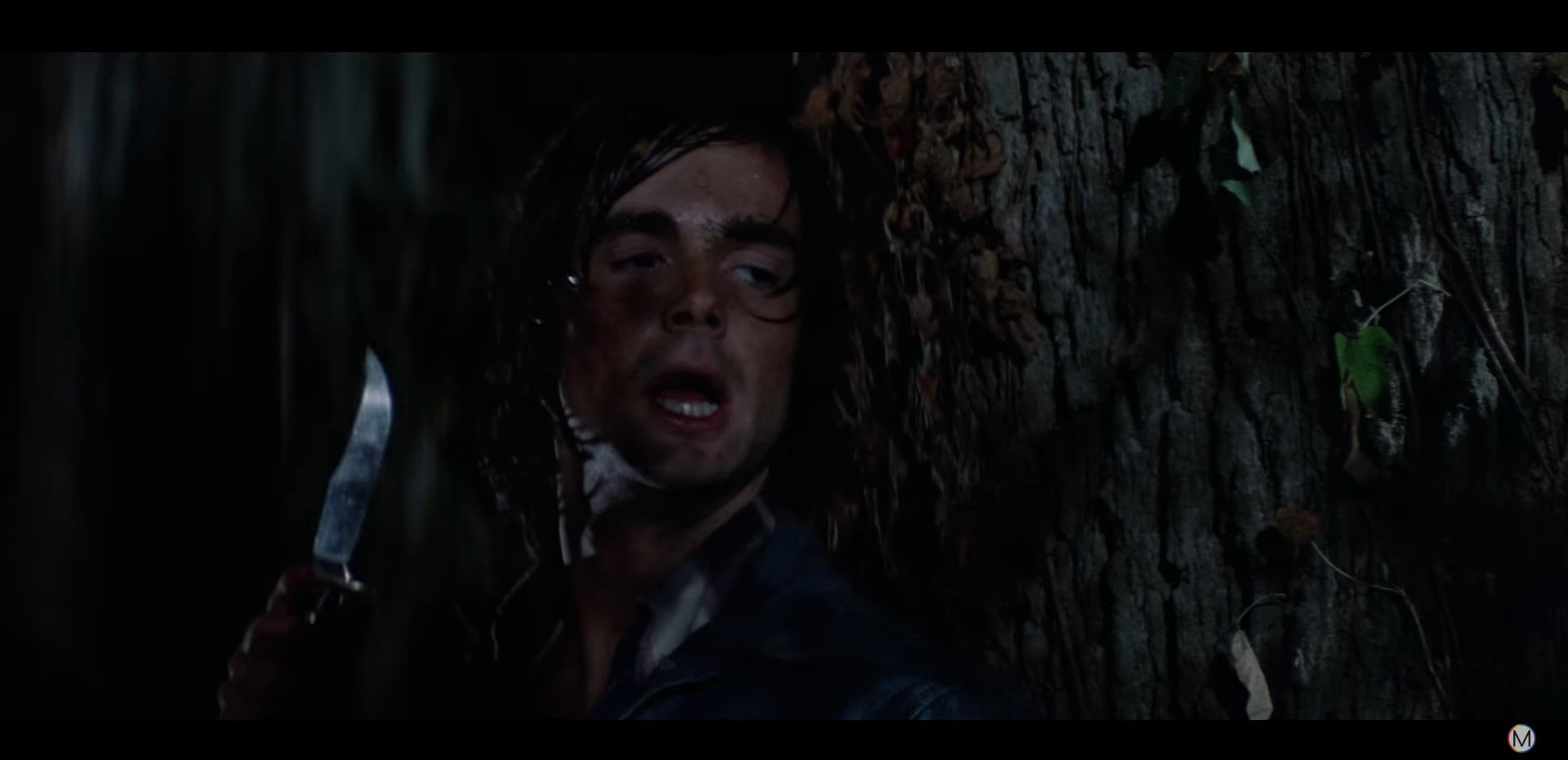
Before he was the four-eyed face of the franchise where it was cool to be square in “Revenge of the Nerds,” Robert Carradine landed one of his first principal roles in Daalder’s “Massacre at Central High” as free-lovin’ hippie, Spoony. Though Spoony is an activist idealist and gets two chicks, the half-brother of David Carradine wasn’t in the star lead though he certainly had the presence and the state of mind to withstand it. Instead, Derrel Maury enveloped the role David that seeks vigilante justice to a bunch of entitled school bullies lead by Bruce (Ray Underwood, “Jennifer”) with Craig (Steve Bond, “The Prey”) and Paul (Damon Douglas) being a part of his gang. Maury’s deep eyes and good looks make him a shoe in to be one of the top-predators to join Bruce’s paleoconservative circle and, as David, his personal connection with good friend Mark (Andrew Stevens, “The Terror Within”) who eggs, basically begging and pleading, David continuously to join or face the consequences of Bruce’s wrath. The acting and dynamics between this already complicated group of late teens is basic in its formulaic high school turmoil but also very disturbing on many levels that puts the boys-will-by-boys mantra into a whole new comfortless light. We all know characters like Bruce and his lackeys from High School where guys like him think the student body pledges allegiance to their unofficial rule; Ray Underwood, Steve Bond, and Damon Douglas do a phenomenal job of letting you hate them for who they portray with characters who are not beneath attempting the rape of two female peers in broad daylight and in one of the classrooms. To provide another twist to this tale, Bruce and his gang are not the real antagonists in the story but rather just a part of a bigger, broader discernment that’s infectious as it is dangerous in the realm of political power and hierarchy. Kimberly Beck is the angling love interesting that teeters between good friends Mark and David and “Friday the 13 Part IV: The Final Chapter” actress ultimately doesn’t become the focal purpose to David’s revenge (remember, this isn’t a typical revenge narrative) as Beck more than spurs jealously with her feelings for David as well as become eye candy with gratuitous and beachy full frontal nudie scenes. “Massacre at Central High” rounds out the cast with Steve Sikes (“Horrid”), Tom Logan, Jeffrey Winner, Rainbeaux Smith, Dennis Kort, and Lani O’Grady.

The sociopolitical aspect of “Massacre at Central High” is by far the most compelling with the story’s uncompromising subcomponents of teenage high school perils. The fact that are zero parents introduced into the mix makes Daalder’s narrative that much crisper in its poignancy as these children are left to fend for themselves in like some bizarro version of William Golding “Lord of the Flies” that dives into similar themes such as groupthink mentality, social organizations that reshuffles into a lemming trajectory, and even outlier themes comparing Bruce’s gang to Nazism. Behaviors turn on a dime for the worst and bring out the worst when the opportunity to govern the school affairs leads to an asymmetrical power struggle. Even David, our hero of the story, isn’t immune to the adverse effects of change when pushed beyond reasonable reaction after having his leg crushed and he left maimed by Bruce. To David, this turning point reduces down below differentiating the difference between morality and immorality as he views them as equals to right-the-wrongs and to be a way to level out toward equity for all, a quality that’s been an attribute to David’s pre-murderous existence ever since transferring to the school, but the all-around good guy couldn’t rub off the impartial view of the world to others and so he finds himself in a continuous solo crusade of course correcting. “Massacre of Central High” isn’t as austere as “House of the Flies” as its facade is campy and contrived in an artificial manner. The parentless environment disintegrates principles right at the door in “Massacre of Central High’s” biodome of guttersnipes and that sections off this gem from other exploitation ventures in a must-see good way.

Enroll yourself for September 13th releasing of “Massacre at Central High” on Blu-ray home video from Synapse! The spectacular course offers a region free, AVC encoded BD50 Blu-ray that presents the feature in 1080p at a widescreen 1.78:1 aspect ratio and the take on the director’s approved 35mm remastered presentation is tight, detailed, and utterly clean. Color palette is warm but diverse with a great bit of contrast where needed, such as the nighttime skinny dip and love-makin’ beach scenes. Virtually free of wear and imperfections, the impeccable transfer dodges four and half decades of negative ageing with great delineation to show for it. The original English DTS-HD Master Audio mono soundtrack is the only audio option on this release and is more than adequate with the same clarity as the picture. There’s quite a few, ACME-ish style explosions, a tumbling rocks scene, and spates of variable automobile revs, exhausts, and engines to quench an audiophile’s interest with a broad ambient range. With the original soundtrack comes Tommy Leonetti’s clashing lead melodic and easy listening track “Crossroads” that sticks out like a sore love song thumb in the background of murderous revenge. Newly translated optional English subtitles are available. The bonus material includes an audio commentary by “The Projection Booth” podcaster Mike White interviewing cast members Andrew Stevens, Robert Carradine, Derrel Maury, and Rex Steven Sikes. Also included is an archived audio interview with director Renee Daalder with horror historian Michael Gingold, Hell in the Hallways making of featurette with new recollection interviews from the cast and cinematographer, fellow Netherlands native Bertram van Munster, theatrical trailer, TV, and radio spots, and a still gallery. The film is rated R and has a runtime of 88-minutes. “Massacre at Central High” focuses more on detonation than detention as bodies pile high in this explosive dog-eat-dog hatchetjob of unsupervised minors gone wild.

“Massacre at Central High” is Grade A Exploitation!

Don’t Let Evil Give You The Shaft! “Down” review!


One of New York City’s popular skyscrapers, the Millennial Building, is a modern marvel with 102 floors sought to be visited by national and international tourists, looking to reach the zenith and take a once-in-a-lifetime, awe inspiring gander across the Big Apple’s urban jungle landscape or seeking to be a working stiff inside the immaculate bones of the building’s historical foundation. Every day, thousands of visitors and employees ride the Millennial Building’s 73 elevators, assuming the safest ride possible to the touch the bottom of the sky, but when a deranged scientist implements a controversial biomedical computer into the building’s elevator vascular network, one tragic accident after another compiles fatal consequences within the vertical box that draws negative national attention. Elevator mechanic Mark Newman teams up with a rebellious newspaper reporter Jennifer Evans to investigate and uncover the a larger-than-life conspiracy behind a killer elevator organism.

Over three decades ago, Dutch filmmaker Dick Maas wrote, directed, and released the killer elevator film, simply titled “De Lift,” in the Netherlands. About 18 years later after his commercial success for “De Lift,” Mass spawned an American remake of the film entitled “Down,” also known as “The Shaft,” that transformed into the forgotten bastard when compared to Maas’ 1983 feature. To be frankly, “Down’s” terror-comedy knack with spunky characters and zany deaths put the 2001 remake right smack dab at the top of the repeat value charts and despite the lack of rigorous plausibility, the refreshingly no-holds barred, fun zone horror film doesn’t think twice, charging forward with gun blazing in an elevator ride to cinematic hell that shows no mercy and gives not one single care with each surpassing floor level. Be damned the backstory with meager exposition! Be damned the underdeveloped characters who are pivotal to the plot! Be damned the complexities of how the biomedical elevator system is able to live, breath, and reproduce through murder and mayhem! “Down” has a black and white, up and down glory that’s considered b-horror good that’s very reminiscent of the early films of Peter Jackson.

If you’re going to remake a killer elevator film, go big with the cast and Mass surely pulled through by signing cult genre stars of the time. Naomi Watts was just coming into the mainstream scene as she tackled well-received projects around that same time frame between David Lynch’s “Mulholland Dr.” and “The Ring” a year later, but the “Tank Girl” actress showed more than just her aesthetic assets, more than just shrieking horrific screams, and more than just displaying her big guns. In “Down,” she proved to be a gung-ho, rough-it-with-the-boys portrayer of a feisty reporter whose hot on the trail of a conspiracy helmed by surreptitious characters played Michael Ironside, who did not lose an arm in this film like he does in “Total Recall,” “Starship Troopers,” and “The Machinist,” and Ron Pearlman (“Hellboy,” “Cronos”). However, James Marshall, in the lead as the elevator mechanic, couldn’t ratchet tight a performance that called for concern and durability; instead, Marshall, known for playing James Hurley in “Twin Peaks,” schlepped clumsily on screen compared to the aggressively hungry Watts. Eric Thal (“The Puppet Masters”), Dan Hedaya (“Alien: Resurrection”), Edward Herrmann (“The Lost Boys”), and Kathryn Meisle (“Basket Case 2”) round out the remaining cast.

“Down’s” commercial success was plunging disaster. Reasons ranging from a flimsy premise to being an unconventional horror to the genre were, more than likely, not the major players in “Down’s” inability to elevate an audience. More so, the reasons stem solely between one or two factors, if not both. For one, Maas writes New Yorkers as belligerent morons, cocky, greedy, and deranged. Many of the characters are like this and if there was any that embodied any sliver of rationality or humanitarian attributes, there screen time was quick and fruitless. Secondly, though “Down” released in the spring of 2001, a film set in a New York City high rise with multiple mentions of terrorists and even verbally conveying a foiled plot to take down the twin towers probably hurt the film’s home entertainment value to the point where a DVD release didn’t surface until a good two years after the theatrical premiere.

Aside from all the delays, harsh reviews, and a shoddily cropped Artisan DVD release, Blue Underground delivers a godsend presenting “Down” on Blu-ray/DVD combo. The 1080 HD on a BD 50 dual layer disc has a widescreen 2.35:1 aspect ratio and radiates with clarity; so clear, that I had a hard time placing the year as the image certainly outshines most turn of the century products. An immense amount of detail just exemplifies the extraordinary content without appearing as a discount deal for special effects. Audio options include an English and French 5.1 DTS-HD and an English and French Dolby Digital stereo with both including optional English SDH subtitles and Spanish subtitles. The amount of range is leaps and bounds beyond the Artisan’s par quality with the 5.1 channelling maximized quality and clarity. Dialogue track is clear and free from obstructions with the only stain being the horrendously dubbed diner jerk that punches James Marshall in the face, but that’s not necessary a make or break blemish. Bonus materials include audio commentary with writer-director Dick Maas and stunt coordinator Willem de Beukelaer, the making of “Down,” behind-the-scenes footage that’s exclusive to the Blu-ray, theatrical trailer, poster and still gallery, and teaser trailers of upcoming releases. The casing itself harnesses a collectible booklet with new essays by Michael Gingold. “Down” finally shines through with a stellar release from Blue Underground, a leader in restoring and releasing cult films. If in the mood for a story without much thought while desiring to choke on out of this world terror-comedy then “Down” is a must on the upcoming marquee!

Own “Down” on Blu-ray!