EVIL’s Casting Couch Could Be the Last Audition! “Young Blondes, Stalked and Murdered!” reviewed! (Anchor Bay / Blu-ray)

Not Red Heads, Not Brunettes, Blondes! “Young Blondes, Stalked and Murdered!” on Blu-ray!

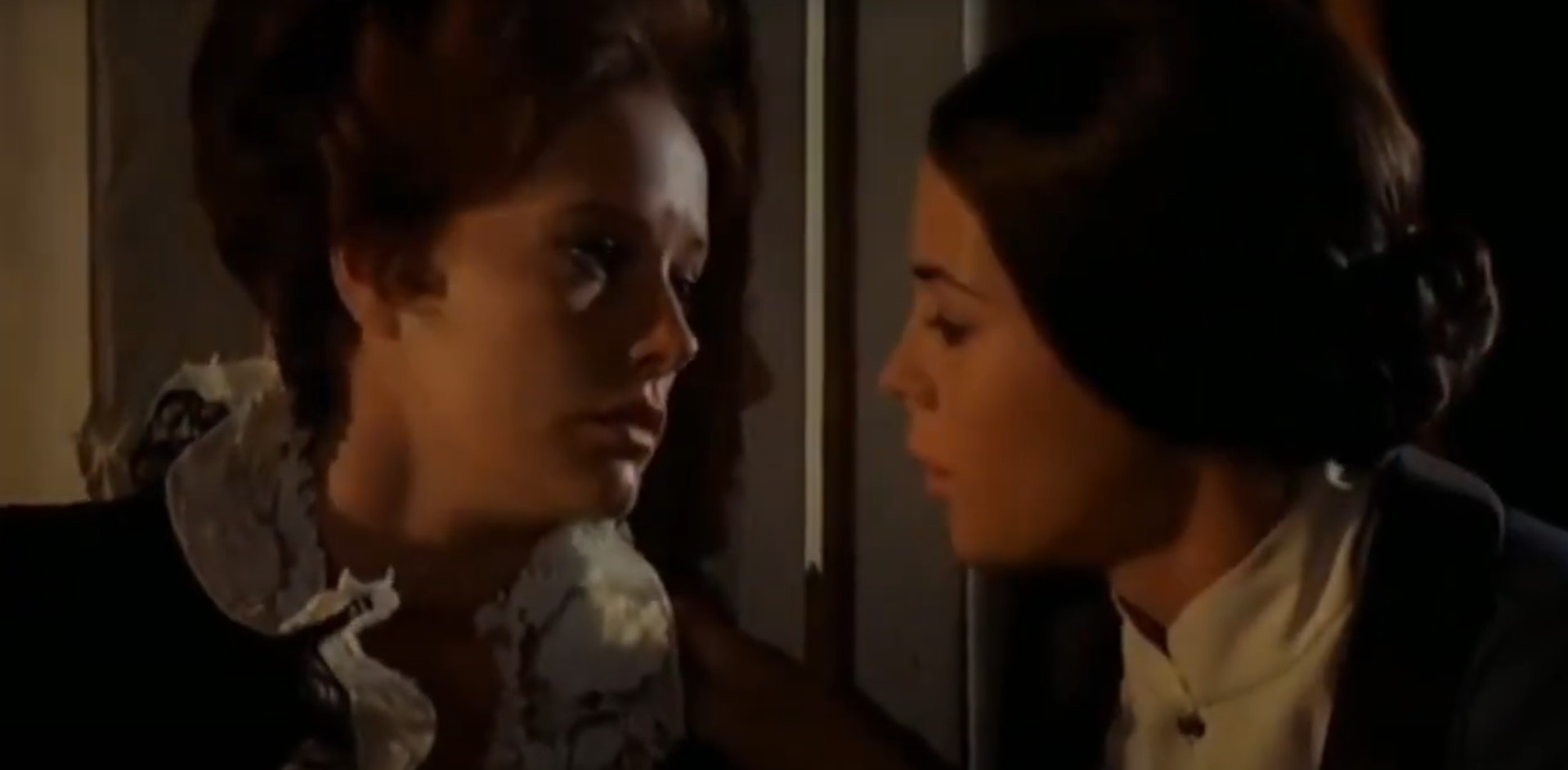
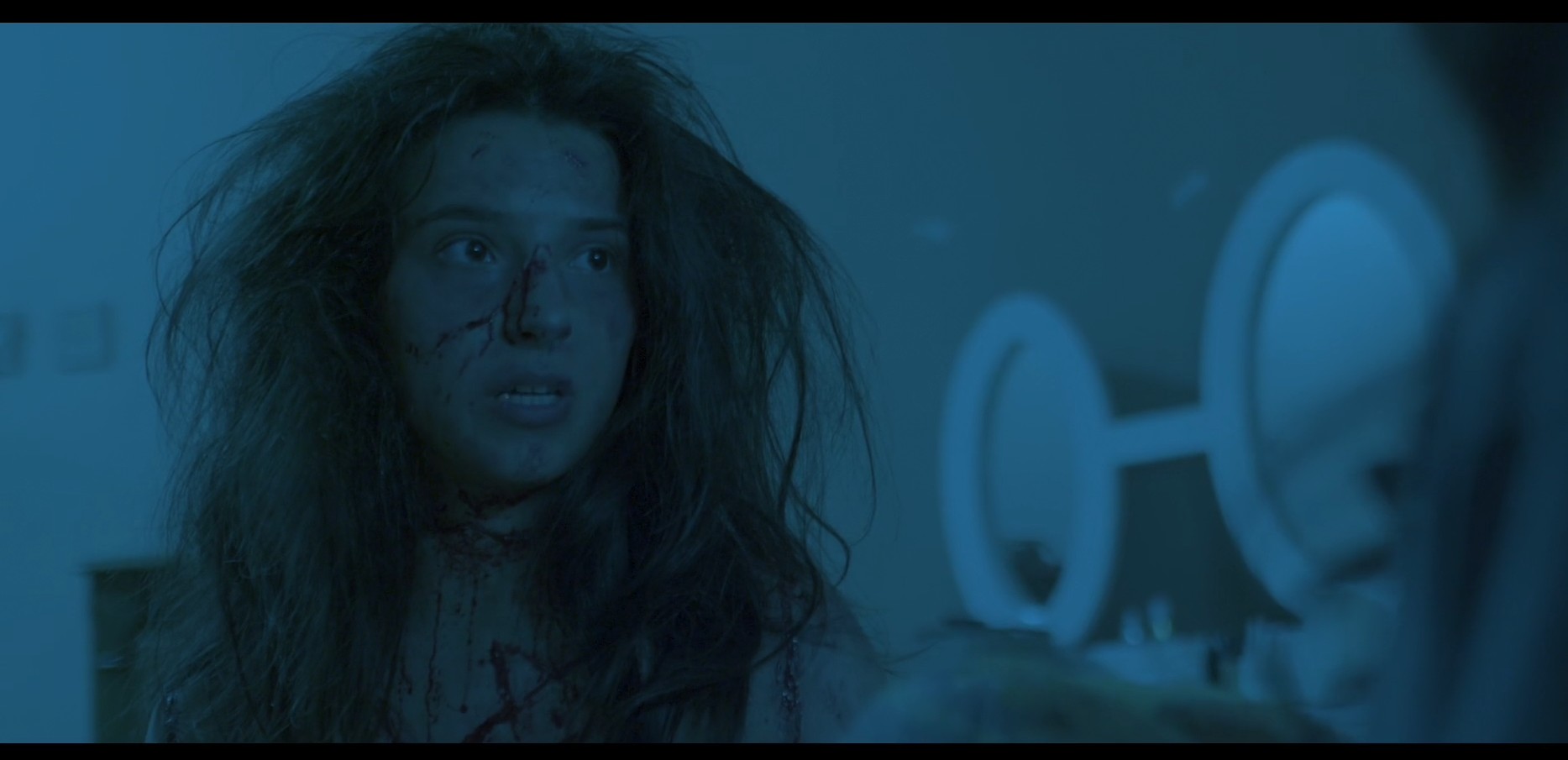
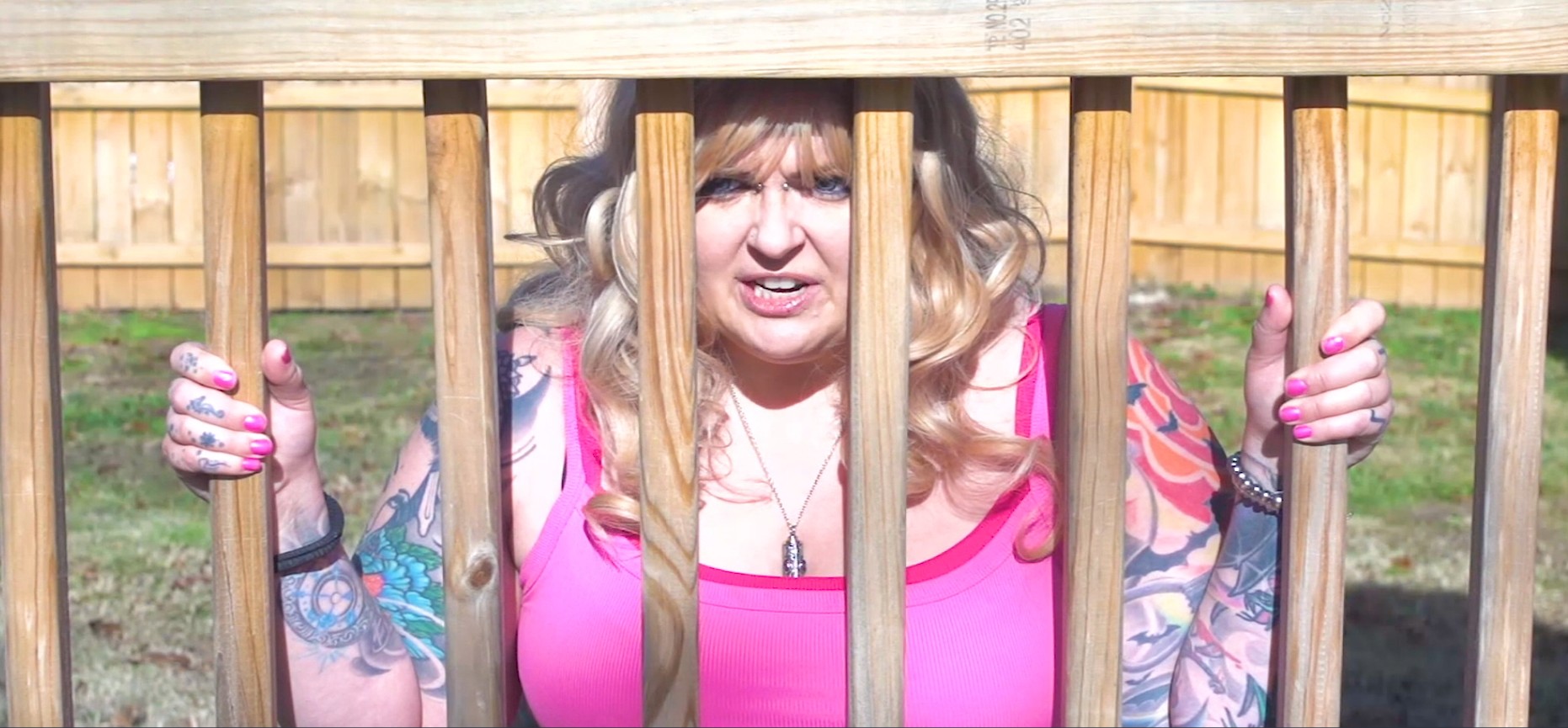
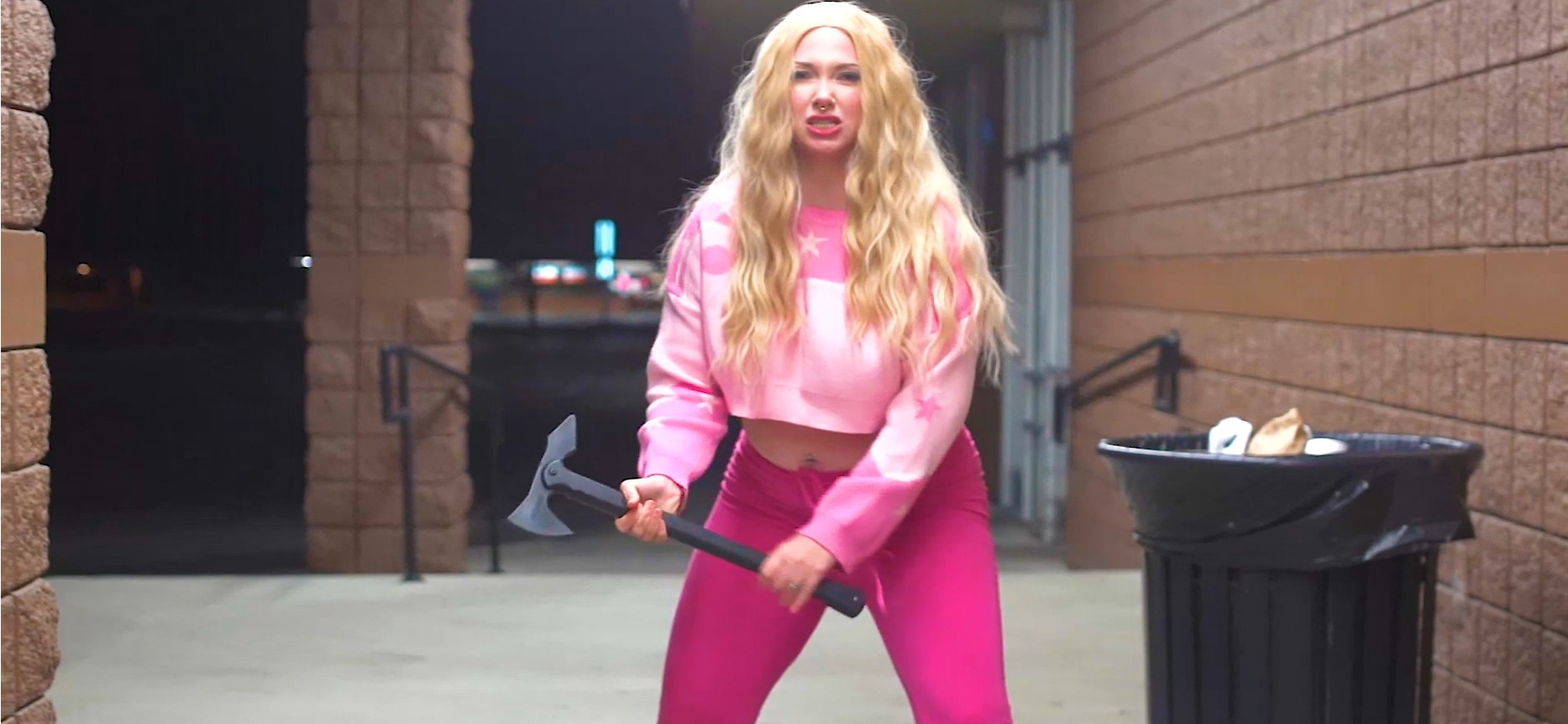
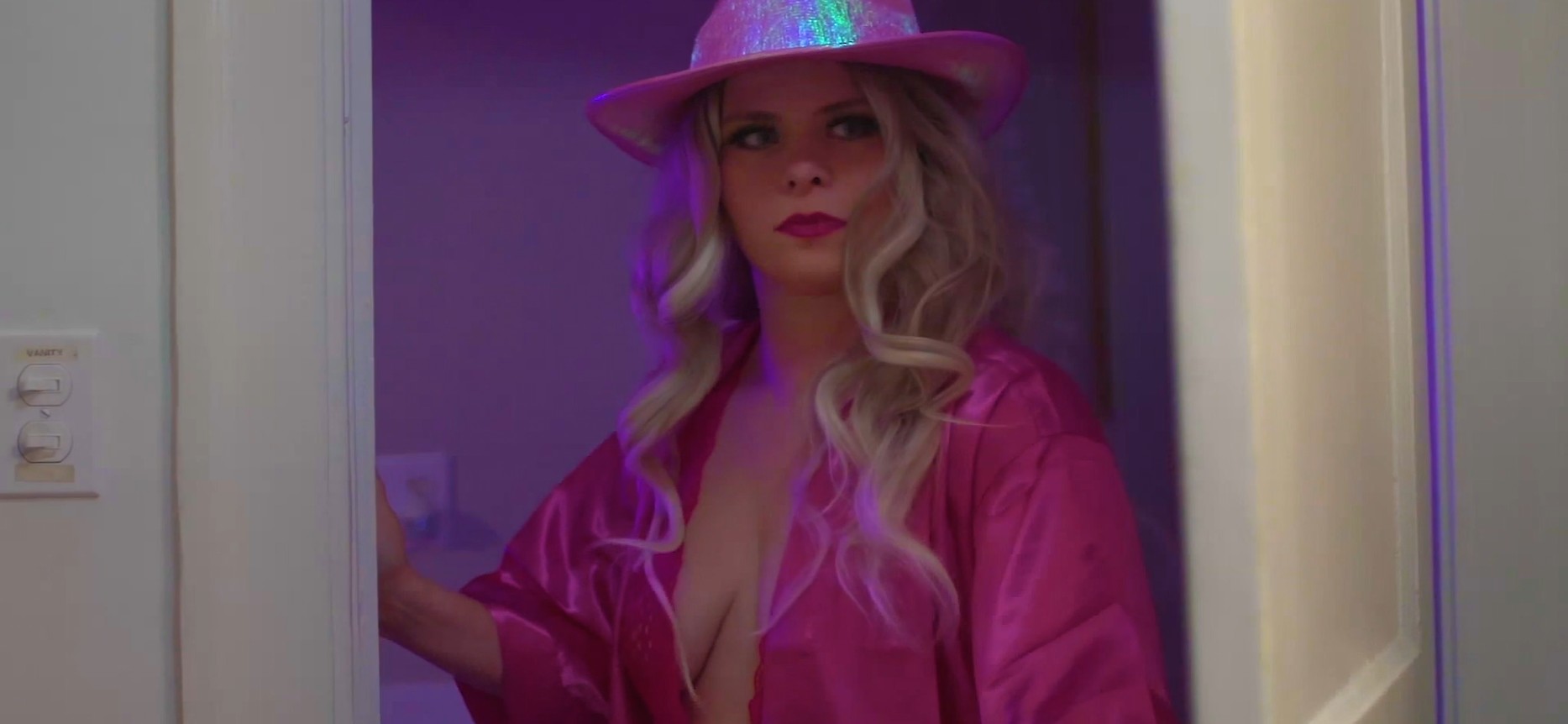
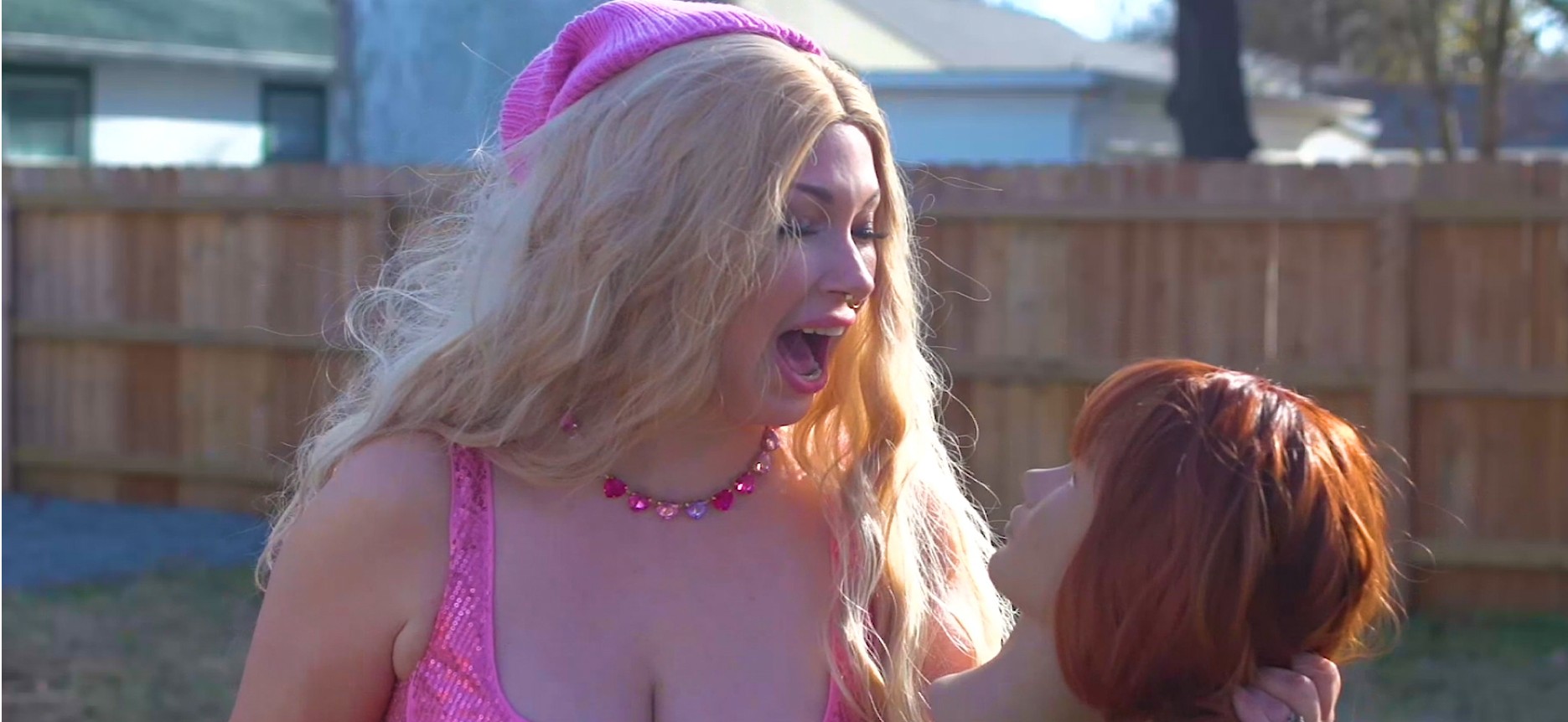
Stacy and Josie are two aspiring young actresses living in Los Angeles.  Both women are blonde and both ambitious to make it big in acting while being friends vying for the same work in the difficult industry that involves casting couches and who-knowing-who to get even just a foot into the door.  As Stacey’s journey to fulfil her acting career stumbles role-after-role, especially after a unique pre-casting session with a film director named Sasha, she finds that Josie receives role interest from the same director.  The pressure gets under Stacey’s skin to where nightmares evoke jealousy and a thin layer of fear, raised by the widespread terror of blonde women, also aspiring actresses, being discovered horrible murdered by a killer who records every kill.  Stacy pushes forward but her friendship with Josey wanes with her casting success and the news of more blonde actresses found gruesomely murdered unlock her nightmares to their full potential. 

“Young Blondes, Stalked and Murdered” catches the eye with a lustrous, vice-drenched title, but the narrative layout is anything but candidly conventional.  The film can be described as a reverse slasher that keeps the serial killer of young, blonde actresses in the peripherals integrated ever so delicately inside a character study of the principal lead, in this case with Stacey, a Minnesotan with stars in her eyes.  Those stars eventually lose their sheen, but the desire doesn’t dull amongst a deficiently of roles for an overabundance of the same type of actress going for them.  For writer-director, “Young Blondes, Stalked and Murdered” is Nick Funess’s first feature-length production based loosely on the trials and tribulations of young women cat scratching their way into the business with a hairline hook of a maniac with a murdered type.  Silence Films serves as the production company with Corentin Leroux and Matt Morello co-executive producing alongside Funess for the L.A. shot film.

Inhabiting as the primary character learning the curve of your desired trade is Samantha Carroll in her second full-length feature role but first at the helm as the star.  However, as Stacy, Carroll plays a character who doesn’t feel like her longed dream of being a star.  Instead, Stacy plays by the rules as if there’s a guide or a playbook to becoming a successful on-screen thespian.  Carroll’s range of emotions can peak from mile excitement to absolutely feeling crushed by the weight of failure.  Disdain and jealousy also rear their ugly heads in between inside a structure that isn’t exclusive in following Stacy as Josie runs a parallel course with less touch-upons in the grind that is to follow one’s dreams.  Elle Chapman’s more dolled up for the role by accentuating her natural beautiful for perkier and more cosmetically inclined haughtiness to contrast her conceit against Stacy’s honest efforts.  Though Funess essentially wraps the story around two actresses, the extent of supporting actors is limited to the exact same number with Gemma Remington as another blonde, actress acquittance and/or rival to Stacy and Zachary Grant as a casting filmmaking who has unspoken quirks about his character Sascha that are told through his rather distinct distilled friendliness and the way Funess and Corentin Leroux frame him by cropping out portions of his body by the frame itself or by objects, as if hiding bits and pieces of his truth in obscurity.  Both Remington and Grant’s scenes are brief and spliced in to add to the stress of an actress’s day-in-a-life, to terraform the the gossipy, cutthroat world, and, in earnest, to be more a grounding third-dimensional force that doesn’t allow Josey to be the only other character for Stacy to bounce off of, yet the characters do add impact with the peripheral killer with Remington’s gruesome news update of another blonde-headed body found as well as hinting at the killer’s possible modus operandi of how he selects, hunts, and dispatches his victims and Grant going further with that idea with a seemingly irrelevant and odd casting couch method depicted with Stacey on screen and with Josey off-screen told anecdotally through her perception, and from both experiences may leave breadcrumb clues toward a suspect without ever divulging concrete evidence toward an unnamed and masked killer rarity making an appearance in the film.

Like most moviegoers might experience, my eyes bored with interest into the unique title.  So much so, my mind started an imagination factory of possibilities there could be inside the encoded disc.  A true-blue slasher initially became settled on with a conventional killer stalking, hunting, and the eventual demise of the titular, ill-fated blondes and while that sort of terminus concept is hackneyed beyond repair, excitement still bubbles to the surface because the method itself sells from it’s tried and true history with genre fans and general audiences alike.  “Young Blondes, Stalked and Murdered” is not that kind of film.  You can label it a deconstructive or backwards slasher, but the subgenre thriller has deeper drama roots in the grounded character conflict garden, blossoming more toward a psychological thriller with a rear mirror, background view of a niche specific serial killer.  Funess’s film is akin to some apocalyptic thrillers of an impending, world-ending devastator on the horizon that you know is coming but it’s the interpersonal dynamics, or maybe even political and authoritarian moments, leading up to that catastrophe that are the heart-and-soul of the story.  Funess’s film is very much a slice of life rather than a slice of flesh with an eye for framed shot, the draw of contention through personal hindrance and envy, the melting mindset stemmed by failure, and it’s an overall celebration of performance by the cast in a story with minimal violence because the violence itself is at the very back of the mind, forgotten almost as these young blonde women continue to strive for just an ounce of limelight no matter the cost that stares directly at their faces. 

Anchor Bay continues to release rebellious films on their revamped label with “Young Blondes, Stalked and Murdered” now available on Blu-ray.  Stored on a single-layered BD25, the AVC encoded high-definition film, 1080p resolution, is presented in widescreen 1.78:1 aspect ratio.  Image wise, the picture captures natural appearances with a soft grading that lightly brightens the image.  There is some excellent use of blacks that are solid and deep with crush but works to the advantage of the scene to create a void tension of what’s inside’s it’s inkiness.  Skin textures are fair with some smoothing over of texture, but the tones appear organic and consistent throughout; the same can be said about fabric and surface textures in a range of settings and outfits that add unconscious concentrated coatings to the mise-en-scene.  The English 5.1 DTS-HD MA audio is overkill for a dialogue and score-driven soundtrack narrative but does provide clean conversation with plenty of clarity and no interference.  The back and side channels are less utilized with most of the action held within camera lens view, reducing any kind of non-diegetic milieu activity to the flutter of soft intrusions.  Sergei Kofman’s delicate perceptible score hangs in the rafters for the most part but does come down form time-to-time when needed to either build tension and show discourse in Stacey’s life/wellbeing as she struggles to get ahead with acting gigs. The special features include a scene-by-scene breakdown audio commentary from writer-director Nick Funess and executive producer-cinematographer Coretin Leroux. Anchor Bay’s Blu-ray is encased in a standard Blu-ray Amaray with a white, yellow, and poker hot red artwork of a splattered star with Stacey’s face inside staring back out at you. A leafy insert depicts the same primary artwork plus additional, similar artwork. Clocking in just above an hour at 65 minutes, “Young Blondes, Stalked and Murdered” has region free playback and is unrated.

Last Rites: “Young Blondes, Stalked and Murdered” is a hard sell as a backwards slasher but the unsettling disseminating of ruthless Hollywood is a methodology projecting hopelessness, defeating, and hostility, metaphorically represented by a killer on the hunt for blonde actresses and could pop into frame at any moment.

Not Red Heads, Not Brunettes, Blondes! “Young Blondes, Stalked and Murdered!” on Blu-ray!

The Key to EVIL is to Kill Each Other For It! “A Hyena in the Safe” reviewed! (Celluloid Dreams / Blu-ray)

“A Hyena in the Safe” is on Black Friday sale! Get It at Amazon.com

Eleven months after a jewelry safe heist at the Bank of Amsterdam, a group of specialized international thieves from all over Europe reunite at an Italian mansion estate during a city carnival celebrate used as a distracting facade for their gathering.  Each have a key that form a coalescence to open the safe to ensure not one of them will swindle the others and make off with the jewels worth millions.  Their ringleader Boris, who’s now deceased, hid the safe in his mansion with this wife Anna overseeing his plan and portion of their lifted prize.  When one of the keys end up missing, a series of deceptions and murders begin a feisty vying for the each of the keys.  One-by-one, the criminals fall for inconspicuous laid deadly traps and engage in murderous rendezvous until there’s only one left standing as the old saying goes, there is no honor amongst thieves.

Italy director Cesare Canevari, notable for his contribution to the exploitation subgenre with “A Man for Emmanuelle,” “The Nude Princess,” and the notoriously renowned “The Gestapo’s Last Orgy,” wrote-and-direct a post-caper, bordering giallo in 1968 titled “Una iena in cassaforte,” aka “A Hyena in the Safe.”  Coming in on the incline toward giallo’s height of success, Canevari’s whodunit has less the conventional murder mystery elements but does have arouse that lack of trust amongst the principal characters, a high body count, a vaguely mysterious killer, and definitely a highly stylization of camera angles and visuals that’s correlates with the time period and give this giallo less of a terror firming shape and more of a “Clue” like profile.  Canevari cowrites the script with Alberto Penna and is a production of Fering SRL based in Milano, Italy where the film was shot.

“A Hyena in the Safe” is carried by an eclectic, ensemble cast of international actors and actresses playing the roles that are not of their respective nationalities.  Going around the horn first with the keyholding thieves begins with Stan O’Gadwin’s Klaus, the German, Ben Salvador’s Juan, the Spaniard, Karina Kar’s Karina, the Tangerine and the only non-European of the group, opera singer Dimitri Nabokov’s Steve, The Englishman, and “The Slasher … Is a Sex Maniac!’s” Sandro Pizzchero’s Albert, the Frenchman.  The aforementioned cast primarily reduces to Italian and German actors in a virtually performance only role to exact and exude their character personality types in with Salvador, who gives Juan a thinking man’s confidence within a patient self and has a way of seducing women to extract information, or with Klaus, who’s aggressive pressing as an authoritarian German leans toward pursuit efficiency, or Steve, who’s quietly plotting multiple reserved schemes to deploy later.  Those not a part of the heist crew from the Bank of Amsterdam is Anna, the criminal mastermind’s wife portrayed by Maria Luisa Geisberger, and she, too, is a keyholder but only because the attractive femme fatale takes over the helm with the storage of the jewel vault and implants her own brand of deception after announcing her husband’s demise from an illness.  Jeanine (Cristina Gaioni) and Callaghan (Otto Tinard) are the last two who round out the ensemble in their corresponding roles of Albert’s blonde bombshell girlfriend who’s folded into the scheme at the chagrin of the others, and boy does she take a humiliating beating when Albert comes up short on his key, and the jewel appraiser who watches all the backstabbing unfold from the sidelines and counts down the bodies with the metaphorical removal of their party favor baggies, ones that would have been used to split the jewels between them upon opening the safe.

What’s interesting about “A Hyena in the Safe” is the beginning of the story plotted at the act of reassembling the team and only provide expositional context to a heist well after it’s been done, eleven months ago in fact.  All the characters are fresh and unknown to the audiences, we don’t know their personalities, their skills, their habits, or their attitudes toward one another, and all that dynamical odds and ends has processed, forcing those new to the film to watch, listen, and learn their way through the personality types and the situation at hand.  The tension is quickly laid out amongst the already side-eying and suspicious group of sophisticated thieves that react no differently from the lower class of thief with same cutthroat intent.  Keeping up with Canevari’s edited pacing and unconventional angle shots that squeeze out the tension with taut framing on expression-filled cutting of eyes and fear-induced faces, the mounting intriguing factors wet story hungry appetites with playful catering of the imagery that also consists of fixed and tracking shots.  Considering the film’s more conservative decade, Canevari builds tasteful implied sexual acts between conniving characters and is only explicitly, in physical means, when the scene calls for it, leaving gratuitousness begging to be let in.   One aspect with the pacing that hurts the enticingly heightening pressure cooker between the first act’s slow trot through choppy seas of character dynamics to elucidate taciturn behaviors and backdoor alliances and the last act’s spit firing and cutdown of those who are left standing, there is seemingly no middle act to funnel the trepidation and mystery from one end to the other in an abrupt ease into a quickly diminishing situation that goes from murder mystery to battle royale with switchblade umbrellas, electrifying door handles, and an indoor garage that can turn into an asphyxiating fish tank in a matter of minutes.  There’s an early James Bond campiness to the story’s temperament that can’t be ignored while be positively and simultaneously interesting.

Celluloid Dream’s third release title today “A Hyena in the Safe” arrives onto a new high-definition Blu-ray for the first time that’s AVC encoded onto a BD50 and presented in 1080p and in its televised pillar boxed full screen 1.33:1 aspect ratio.  The restoration of the original, likely, 35mm film stock was done by Rome’s Cinelab Services from the original camera negative, which also included the color grading.  The resulting transfer is peak restoration quality with a fresh coat of brilliant paint, a clear coating of texture producing details, and a virtually flawless image within the spherical lens picture.  Perhaps slightly on the orange side, skin tones come through a variety of shades to match the nationalities of the criminal enterprising collective.  Juan’s dinner jacket evokes tweed textures while Jeanine’s high, golden hair style never loses individual strands in the near all-bright-and-golden wash.  The original Italian mono mix was secured from the optical sound negatives attached to the filmstrip.  The mix had processed the Italian ADR in post and attached to synch to the celluloid, creating a near perfect pace and synchronicity with the conversational action though the lips doesn’t exactly match the actual words being spoken.  Speaking of dialogue, for a mono track the nice and robust with clarity from an untarnished negative albeit it’s lack of depth and not from the true source, and that goes for ambience as well.  English closed captioning is available.  Special features pack the encoding with a commentary track by Celluloid Dreams found and film critic Guido Henkel, interview featurette 7 Guests for a Massacre with Cesare Canevari (misspelled Canevaro on the back cover), Albert actor Sandro Pizzochero, Nini Della Misericordia, journalist/critic Adriana Morlacchi, and journalist/critic Diego Pisati discussing the film’s influence and pizzas from cast, crew, and critic perspective, a video essay by Andy Marshall-Roberts Schrodinger’s Diamonds:  The Duplicitous Mystery of Hyena in the Safe, a location featurette of the shooting setting The Mysteries of Villa Toeplitz, an image gallery, and the theatrical trailer.  The two-faced cover art, same art of dead bodies falling out of a safe, is set with the primary English language on the cover with the Italian language title cover on the reverse side.  The cover art on the encasing O-slip with a character composition design of a shadow-induced, high-contrast illustration by graphic artist Thu-Lieu Pham of Covertopia.com has slip art similarities with same art on both sides but with the title in either in English or Italian.  In the insert is advert for Celluloid Dream’s previous two releases – “The Case of the Bloody Iris” and “Short Night of Glass Dolls” and its upcoming fourth release “The Black Belly of the Tarantula” while the reverse side gives credits and acknowledgement in regard to the film restoration.  “A Hyena in the Safe” comes not rated, clocks in at 92 minutes, and is region locked for A, North America.

Last Rites: “A Hyena in the Safe” is a no laughs, all bite giallo caper once obscured from the public view now brought to the forefront of our attentions with a new Blu-ray release worth backstabbing for!

“A Hyena in the Safe” is on Black Friday sale! Get It at Amazon.com

Welcome Proclaimed EVIL Into Your Home! “Video Psycho” reviewed! (SRS Cinema / Blu-ray)

“Video Psycho” on Blu-ray and DVD home video!

On his way back home, Jason picks up a Ryan, a hitchhiker looking for a new start in town, goaled to achieve three things:  a place to call his own, to obtain a job that pays minimum wage, and to find a girlfriend.  Empathetic to Ryan’s new beginnings having gone through himself, Jason invites the hopeful drifter to stay at his shared home with girlfriend Julie and little sister Kylie.  One night drinking between Jason and Ryan, Ryan confesses to killing a man and even delivers video proof with his own recorded snuff film the act.  Disregarding the video and Ryan’s confession immediately as a joke, Jason lets the man stay until another snuff video involving someone Jason knows puts Ryan in the driver’s seat that could set up Jason as the suspect.  Weeks go by and Ryan basically has the run of the house with Kylie and Julie being fed up with his intrusion and Jason’s illogical reasoning for continuing to let him stay.  With Kylie in his romantic sight, Ryan is on his path to achieve his goals. 

A SOV-horror that proves you should never pickup strange hitchhikers and also proves that there are really unsuspecting, trusting, and overall dumb people out there willing to open up themselves, their home, and their family members to complete strangers, even after adamantly admitting to their heinous crimes.  That’s the essential takeaway for Del Kary’s directed, shot-on-video thriller “Video Psycho,” co-written by Kary and Pete Jacelone, a long independent horror producer and writer who began his writing career on the 1997 film and went on to write an abundant of horror you’ve likely never heard of, such as the “Psycho Sisters” series, “The Killer Clown Meets the Candy Man,” and the eyebrow raising “Duck!  The Carbine High Massacre.”  Kary’s career is not as lustrously tarnished with two films in the late 90s, including this one and “Snuff Perversions:  Bizarre Cases of Death,” and not another until last year’s “Cheater, Cheater,” a slasher based off the childish rhyme cheater, cheater pumpkin eater.  Kary solely produces the PsYChO Films production, shot in Yakima, Washington. 

“Video Psycho” embodies that home movie aesthetic that was shot with poor equipment but amongst good friends, and probably a few beers too.  The cast is compromised a bunch of one-and-done actors with Kary’s film being their only credit as the story follows more from the perspective of serial killer Ryan, played by James Paulson.  With a soul patch, poofy dark features, and thick eyebrows that slant down in a malevolence manner, Paulson contains that judgy general appearance of a psychopath and distills apathetic patterns that are nonchalant and blunt.  While Paulson thrives as killer, Jason is the daftest, most gullible person to ever live in the cinematic universe.  Now, I’m not saying actor Adam Kraatz is the blame, performance has nothing to do with the way the character is written by Kary and Jacelone and that’s their own doing, but Jason’s inactivity to do anything or warn anyone is more frightening than the antagonist.  Girlfriend Julie (DeAnna Harrison) and baby sister Kylie (Jennifer Jordan) also can’t understand the man of the house’s submissiveness to a complete stranger who has this power over him.  When they both begin to question his authority and rational when weeks past and this random guy from off the road is still hanging around, Jason reverse psychologizes the two people closest to him which makes us wonder who the real villain is in the story.  The only other characters with substance are Kylie’s boyfriend Rick (Jared Treser), who has little impact being a buffer between sociopath Ryan and his tender beloved Kylie, and video store manager Steve (Art Molina), who does a better buffering job deflecting Ryan’s unwanted and stalkerish advances until Ryan has his way with him.  Outside the principal lot, the rest of the cast fills in with Ryan’s videoed victims, most come in a single montage of analog recorded murder, with Jason Alvord, Chris Valencia, Shannon Dimickl Brandy Jordan, Jack Meikle, Heidi Munson, and Charles Summons.

Lo-fi and dry, “Video Psycho” presents an invariability that ultimately kills any intrigue, tension, and fear.  With the cast being what it is, an adequate of inexperience, the narrative needed a lift to cannon itself beyond the routine of motiveless stranglers who kills for the love of killing.  Kary and Jacelone’s attempted twist for high impact is Ryan showcasing his snuff body of work to newfound friend and host Jason and for Jason to think nothing of it and let the maniac stay with him and his closest loved ones.  At this point, audiences will slap their foreheads so hard aspirin couldn’t handle the amount of pain to follow and attention to the rest of the story will begin to wane as disbelief ad improbability start to set in like a bad side effect of an illicit drug that clearly has said side effects.  Acts two and three barely blip on the developmental and dynamic activity meter between the characters conversations of the Ryan confoundment.  Essentially, they all talk about the inaction of others and give the benefit of doubt rather than taking action themselves to alleviate Ryan’s squatting.  Ryan’s the other character enacting real change during his weeks’ stay by videotaping every count like it’s his last and insidiously inflicting himself creepily toward Kylie.  Kary does output a few notable scenes of unsettlingly imagery, such as Kylie’s haunting dream of Ryan calling her name and getting closer to her bed as she sleeps while in strobe light and with the lo-fi videotape quality, the effect is definitely dream surreal, at least that is what “Video Psycho” has going for it.

SRS Cinema’s newly restored and re-mastered Blu-ray edition is on AVC encoded onto a 25GB BD-R with 1080p high-definition resolution.  Not that the pixel count really matters with “Video Psycho” and it’s lo-fi videotape that’s neutralizes textures and color and comes with its share of interlacing and tracking issues.  To worry about compression problems, to which there is none within the uncomplex file and its size used for the codec, would be a waste of mental and visual space with an image that does delineate objects to differentiate, implies true hue, and does the job of lower grade, SOV-horror with authentic commercial SOV-qualities of home S-VHS camcorders.  SRS Cinema never really cared about being the picture of health when it comes to quality, so this isn’t off brand for their content and schtick but does heavily play more into the little-known obscurity of home-grown thrillers within its full frame 1.33:1 aspect ratio.  The English mono track offers parallel quality to the video with a static and lo-fi quality that won’t have the pithy impact of a robust and all-inclusive surround sound or even stereo.  Kary’s produced in minor key minimalism and dread score is one of the element’s that be elevated. Dialogue’s hit-or-miss with clarity that’s often impeded by the said interference and poor mic placement, or just the intrinsic issues of an on-board mic.  There are no subtitles available.  With poor A/V quality, why release this film on Blu-ray?  The answer is simply because of the wide-ranging special features that include interviews with the actors who play Ryan’s on-screen and video victims, such as Art Molina, Jennifer Jordan, and Adam Kraatz.  There’s also a feature paralleling commentary track, behind-the-scenes rehearsal footage, deleted scenes, alternate takes, and outtakes.  Plus, the official and teaser trailer along with additional SRS Cinema previews.  The company continues to commission some pretty rad artwork and that is also true here with Belgium graphic artist STEMO who electric saturations of purple, red, pink and blue make for a eye-catching and intriguing roadside killer artwork, even if a bit literal with a thumb up hitchhiker holding a video camera on the side of a blood soaked road in the foreground.  The artwork fits snuggly in between the film layer of a standard Blu-ray Amaray and the disc is pressed with the same front cover image.  The 75-minute feature comes not rated and the Blu-ray is available region free.

Last Rites: An unremarkable, home brewed, strangler picture with little to say, “Video Psycho” has unimaginative idiocy with characters and a narrative conclusion that can be seen a mile away, leaving the SRS Cinema’s title worth only to watch because of its catfishing artwork.

“Video Psycho” on Blu-ray and DVD home video!

To Be or Not To Be EVIL? That is the Question! “#Shakespeare Shitstorm” reviewed! (Troma / 3-Disc 4K UHD and Standard Blu-ray)

A Wild and Crazy Shakespearean Parody of “The Tempest!” Own it here!

Inspired by William Shakespeare’s revenge and restoration themed play, “The Tempest,” the ostracized pharmaceutical scientist Prospero plots his revenge with whale laxative as gushes of multiple killer whale defecation shipwreck the excrement slathered global elite to the shores of Tromaville, New Jersey where Prospero owns a nightclub and laboratory for his mad experiments.  Miranda, his beautiful daughter blinded by the Trauma of her mother’s suicide, falls for Ferdinand, son of the rich pharmaceutical king Big Al who, along with Prospero’s twin sister Antoinette, betrayed Prospero to exile and displacement.  Revenge is a dish best served as cocaine tainted with mutant growth hormones concocted in Prospero lab.  With the help of a wheelchair bound crack-whore as his right-hand pusher, Prospero’s vindictive plan melds bodies and bodily fluids together in one flesh heap of disfigured dysfunction against the conglomerating corporate greed in the midst of two lovers formulating a bound beyond partisan lines.

Troma Entertainment president Lloyd Kaufman returns to the director’s chair to helm a classical rendition of William Shakespeare’s “The Tempest” with the NSFW eloquent title “#Shakespeare Shitstorm” and, as any self-respecting Tromaville fan knows, Troma titles can be extreme literally and, in this case, the adaptation is one big splash park of diarrhea.  “The Tempest” isn’t the company’s first re-imagining of a Shakespeare’s work with “Tromeo and Juliette” being the humble career beginnings of now mega-MCU and DCU director James Gunn (“Guardians of the Galaxy,” “Superman”).  For Kaufman, “#Shakespeare Shitstorm” might be one of the last directing efforts for the independent filmmaker and social justice warrior as he reaches into his 80th year of age, but that doesn’t stop the 50-year moviemaking vet from passionately wanting to create art from behind the camera to in front of it with this Brandon Bassham script based off a story between Kaufman, Gabriel Friedman (“Slashing:  The Final Beginning”), and, of course, the Bard of Avon.  While Shakespeare doesn’t foot the bill for the budget, him and Troma do have something wildly in common being masters of the low-cost arts as Kaufman, Troma cofounded Michael Herz, Doug Sakmann, Justin A. Martell, and John Patrick Brennan produce “#Shakespeare Shitstorm” on a shoestring budget put muster together a wild and crazy story and effects movie.

Kaufman’s so passionately about making art and filmmaking, and also watching his bottom line, that he also dons a dual role playing the revenge-seeking and masterclass scientist Prospero and crossdressing, which he’s done frequently and without a morsel of shame, to become the treacherous twin sister and marketing guru Antoinette.  Kaufman’s continues to throw caution to the wind in an unabashed performance that’s outrageously crude and lined with verbose dialogue that’s definitely memorized with monotonic intention but none of that should be surprising as Troma was built on fervor absurdity, and all the actors have a range of tactlessness that runs the gamut.  The eclectic personalities never conflict with overlapping or feel forced as sometimes they often do with Troma or with farce comedies in general.  Each character shines on an idiosyncratic level, such as Abraham Sparrow’s Big Al’s magnified pompous and drug-fueled pharmaceutical big shot, Amanda Flowers (“Werewolf Bitches from Outer Space”) crack-whore cripple Ariel, and Dylan Mars Greenberg (“Psychic Vampire”) as a social media influence and justice warrior.  Kate McGarrigle and Erin Patrick Miller, like Kaufman’s Prospero and Antoinette, play two characters from the Shakespearean play with Miranda and Ferdinand respectively.  Their opposite sides, Romeo & Juliet-esque affair has more an even keel, still absurd without a doubt, but better balances the stranger side of the deep character pool.  Let’s also note that “#Shakespeare Shitstorm” is also a musical that puts more effort in synching action and lyrics into a frame already filled with slapstick surrealism and socio-political satire.  The cast rounds out with Frazer Brown, Monique Dupree, Teresa Hui, Ahkai Franklin, Zoë Geltman, Zac Amico, Elizabeth D’Ambrosio, Nadia White, Dai Green, Vada Callisto, and special guest stars Ming Chen, Tommy Pistol, Bill Weeden, Julie Anne Prescott, Doug Sakmann, and Catherine Corcoran.

If afraid to get down and dirty with drowning in logs of whale feces, be offended by the large, and small, phalluses and other nudist behavior, be enraged by the comedic appropriation of the disabled, transgendered, and race communities, or just become upset at the smallest off-kilter behavior and uncouth conduct, then “#Shakespeare Shitstorm” should be on your top ten list of must watch because that’s Troma’s whole schtick is to challenge the uptight and corporate commercial narrative that has everyone on edge and afraid to walk on the permissible wild side, especially in art that’s supposed to covered by freedom of expression and speech.  Kaufman puts the light on the irony, the preposterousness, and the two-faced hypocrisy that is the dark side of social media, such as cancel culture, which is in itself is an ironical dig at far liberal thinking, a stance bred from the same gene pool that has supported Troma over the last half a century, but that doesn’t mean Troma stops parodying and caricaturing the gentrifying and oligarchical elite with their own brand of downright vulgarity, and being funny and rights advocating while doing it, such as an extreme deluge of whale feces being evacuated right onto a luxury yacht, shipwrecking the survivors onto the seedy shores where a tainted drug nightclub brings revenge to a fleshy, body-horror amalgam finale that is Brian Yuzna’s “Society” on steroids and Viagra.  Characters Miranda and Ferdinand represent the best parts of both worlds, restoring and evolving out from their parental trauma induced wormwood ways into love and hope, two core values Troma preaches from the rooftop.

“#Shakespeare Shitstorm” receives a huge 3-disc UHD Blu-ray and standard Blu-ray release that’s….not a shit storm.  The UHD is HEVC encoded, 2160p ultra-high definition resolution, BD66 with an HDR10 range and the standard Blu-ray is AVC encoded, 1080p resolution, BD50.  Troma pulls out all the stops for what could have been Kaufman’s last feature film directorial, leaving nothing to chance with detail and sound immersion to make sure audiences get into the sticky crevices of every mutated orifice.  Cloudy with haze, bathed in neon lighting, and lots of rough, low-lighting doesn’t provide the utmost specifics surrounding every textural aspect but there’s plenty to field in both formats that warrant squeamish reactions and repulsive states through the mound of transformative flesh that for the most of the time show their fabricated prosthetic qualities.  While both formats produce a vivid image, neither one of them really stand out above the other with only minor, insignificant detailing coming through the UHD.  The film is presented in a widescreen 1.78:1 aspect ratio.  An English DTS-HD 5.1 master audio mix is surprisingly utilized!  Environmental ambience, diegetic and non-diegetic, has isolated channeling, such as the pitter-patter of rain through the back channels, that provide a layered sound design and added depth to the picture.  The dialogue, through regular conversation and musical numbers, retains a clear understanding without any feebleness and often times with Troma productions, the audio can sound one-dimension, but this Kaufmann film is a multi-diagonal product with an abundance of surround sound through all the bodily fluids and it’s acts of secretion sounds.  Rob Gabriele, Filipe Melo, and Louise Aronowitz music and compositions run with the Troma tide in executing highlighted whimsical and comedically inclined numbers for the actors to either be engulfed by or lip-sync.  English subtitles are available.  Two discs packed with extras extend the endless absurdity.  First disc includes a typical introduction from Lloyd Kaufman, also available before running the feature, who teases the road ahead and shows enthusiasm for the film’s UHD properties, there’s also two commenter tracks – one with Lloyd Kaufman and fellow producers Justin Martell, John Brennan, and Mark Finch and the other with actors Zac Amico, Teresa Hui, Amanda Flowers, and Dylan Mars Greenberg, producer John Brennan and production designer Yuki Nakamura, who both also work on the Last Drive-in with Joe Bob Briggs, regaling their tales through production designing, a music video Tromatized featuring Abbie Harper, a Troma Now advert featuring two lone Tromettes bored and looking for something to do/watch when Uncle Lloyd gives them Troma streaming guidance before locking lips, and the teaser plus three theatrical trailers for the feature.  The bonus 2nd disc includes the full-length, behind-the-scenes documentary Brown is the Warmest Color (a riff on “Blue is the Warmest Color”) that follows the pre-principal-and-post production and all its departmental successes, problems, and day-to-day that though even shows how ardent Lloyd Kaufman is about his on-set direction for art, love, and expression, it also does show how tyrannical, at times, he can be on set with an impatient nature and rigorous time productivity.  Also including on the disc is Tromalbania as the production goes to Albania to finish the yacht sequence, Troma in Times Square is another video marketing maneuver for the company’s streaming service by having Toxic Avenger face off against the evil Netpix, isolated musical numbers from the film in #Shakespeare’s Shitstorm:  Musical Numbers, and the auditions for select roles, including but not limited to Dylan Greenberg Mars, Nadia White, and Amanda Flowers.  The encoded features are definitely good insight and tourist attraction beacons that depict movie magic, intent, and can offer comedic and cringeworthy states of independent filmmaking, but packing a punch as well is the packaging that offers embossed tactile elements of the O-slip with some sick (awesome) illustrative, back-and-front artwork by Sadist Art Designs  The black UHD Amaray sports a white trimmed version of the O-slip backside artwork and inside is a hinged flap that tightly secures discs 1 (UHD feature) and 2 (standard Blu-ray feature) with the third disc snapped securely onto the interior back cover.  Each disc displays a different story depiction with either the front O-slip art on the UHD disc with the standard Blu-ray and the bonus disc with memorable movie imagery.  The self-labeled comedy-epic, with gashes of unhinged body-horror, has a runtime of 94 minutes with the not rated 4K UHD disc is encoded as region free while the Blu-rays are region A.

Last Rites: “#Shakespeare Shitstorm” may be a lot of things – crude, offensive, over-the-top – but Lloyd Kaufman’s supposed last magnum opus seizes every opportunity to make a statement, one that’s literally on a crapload of sociopolitical and cultural renaissance level!

A Wild and Crazy Shakespearean Parody of “The Tempest!” Own it here!

There’s No EVIL Treat with This EVIL Trickster! “The Jester 2” reviewed! (Dread Present / Blu-ray)

“The Jester 2” Blu-ray Is a Must-Get Sequel!

15-year-old Max is a girl without friends and with her bordering the edge of maturity that leaves her too old for trick-or-treating.  Dressed as magician with an enthusiasm for card tricks and slight of hand, Max tries unsuccessfully to make the best of her Halloween night as school peers mock and tease her until the animated and sinister Jester comes before her to show her a trick of his own.  When Max foils his trick, the Jester’s undertaking to contractually collect souls for Devil every All Hollows Eve comes into jeopardy as he loses his power to trick others.  The Jester forces Max’s hand to play tricks on others for their souls to be collected by the end of the night before his own soul burns in the internal inferno.  As the night goes on, Max must outplay the supernatural killer whose desperate game to spill as much blood as possible before the end of the night is coming to a full carnage head.

Our review of Colin Krawchuk’s “The Jester” called it “clever, entertaining, and devilish,” concluding out the review with “The Jester” acts the whimsical clown of conscience-stricken torment with an indelible joker different from the rest of the villainy pool. Yeah, we liked it.  Krawchuk and team return for a sequel, simply entitled “The Jester 2,” that opens backstory doors for the mischievous maniac whose mask grins from ear-to-ear and knows all of the tricks of the soul reaping trade.  Only one problem lies in his path, a 15-year-old girl who may be better a deceiving than he is.  The standalone sequel doesn’t segue with the original film, creating a new whole installment that anyone could enjoy without watching the original 2023 film or it’s viral short films both films are based off of.  Krawchuk writes-and-directs to be inherently different not only from the first film but from the large slasher genre that’s seen its fair share of clownish killers as of late.  Traverse Terror and Epic Picture Group collab once again for another Dread Presents release with Epic Picture Group leadership of Patrick Ewald coproducing side-by-side with “Bag of Lies” producing team of Victoria McDevitt, Jake Heineke, and Cole Payne. 

Michael Sheffield returns with his top hat and cane as the manically mute and mischievous Jester but with a slightly different approach to the Jester’s appearance.  Instead of a Venetian mask strapped around his head by an elastic band, the sequel’s Jester has a mask that’s seemingly an extension of his face, delineated by the rivulet of exposed under flesh between where skin ends and where mask begins.  Without Sheffield’s enthusiastic harlequinade and long, drawn out glares and motionless menace through empty, black eyes of the mask, “The Jester” films and shorts would without a doubt not be as entertaining and terrifying.  This time around, the Jester has a new foe in a 15-year-old girl with puerile dreams of magic and trick-or-treating.  It’s safe to say this girl, Max, is a loner with her peers making fun at her expense, but Max, as a final girl against the Jester, is intelligent and crafty in the face of pure evil despite her ounce of fear to live and be free of his threat against those she cares for – mother (Jessica Ambuehl, “Black Mold”) and sister – and strangers, even the ones that bully her.   Making her feature film debut, the then early 20-something Kaitlyn Trentham has a convincible foot in the door of “The Jester’s” awkward teen being the equalizer against supernatural Hell spawn.  Trentham can pivot between dejected loner to confident talent to the improvising fighter in the matter of circumstances, and when one of those circumstantial events involves Max’s family, a game of wits opens the chessboard for the next few moves.  Forced to align before “Halloween” night comes to close, “The Jester 2” is exclusively between Max and The Jester, good versus evil, for most of the narrative with filler, supporting characters weaved into the pattern to support the threat of tension and a high body count a sequel can be proud of.

Sequels tend to do everything bigger with their inlaid bigger budget off the back of a successful first film.  Big name talent, bigger effects, higher body count, etc., but character and story creator Colin Krawchuk doesn’t take the bait for a bigger boat and pushes that need to multiply tenfold “The Jesser’s” presence amongst audiences down to a suppressed level.  While that might seem counterintuitive to the idea of sequels, “The Jester “thrives on story and sf/x simplicity, letting Sheffield and Trentham battle it out and drive the story of certainly a different scenario from the first film.  The original “The Jester” embodies a similar tone but the control was imbalanced to “The Jester” with a supernatural upper hand always on the pulse of his tricked prey.  The sequel kinks the hose, stopping the Jester’s paranormal flow of life and soul snatching to be humbled by his need from a mortal who ultimately has his existence hanging in this teen girl’s sleight of hands.  This creates a perceptional shift from the Jester’s omnipresence, omnipotent immortality to he’s scraping by with desperation and longshot dependency on a young teen magician with a homemade costume.  This is not to say this new installment into the Jester’s ethos and extended qualities is downgraded or is riding the exact same original wave toward a mundane surf as the kills do have incremental whimsical value and there’s certainly more of a visual effects presence than before and it’s done well to push the sequel to be a step up and forward in conjunction with the good versus evil alliance storyline.

Epic Picture Group and Dread Presents returns the Jester for another go-around of illusionary ill intention with a Blu-ray release.  AVC encoded with 1080p, high-definition resolution on a BD25 and presented in a widescreen 1.78:1, the standard for video metrics supplies “The Jester 2” with adequate levels of a color saturation on a graded scale that leans toward ever so slightly a piano black finish.  Details hover between great depth to vague depending on the focus which Krawchuk and “2 Lava 2 Lantula’s” cinematographer Kevin Duggan who play with the perspective focus in the realm of an already detail-vague and hard-lit night shoot that’s contrast heavy, obtaining nice shadows around the contours of the Jester’s mask.  Duggan is not the returning cinematographer from the original 2023 film but really channels Joe Davidson’s (“President’s Day”) style that’s near raw with graded elements and focus precision.  “The Jester 2” offers an English Dolby Digital 5.1 surround sound and a Dolby Digital 2.0.  Much of the 5.1 is frontloaded with a trickle of atmospheric coming through side and back channels in a watery compressed copy of the track, that was likely recorded in Dolby.  Dialogues rendered clearly and cleanly, the Jester doesn’t speak anyway so much of his diegetic sounds are the ruffling swifts of his suit and hat with some walking cane taps, and the supernatural and killing ambient action has a punchy quality of a slight toon quality.  English subtitles are available for selection.  Special features include a director’s commentary, a making of featurette which is of Colin Krawchuk speaking on camera about the genesis and fruition of creating a sequel and sustaining villain with clips intercut into the interview footage, and the trailer as well as other Dread Presents’ previews.  The 87-minute Blu-ray is open to all regions for playback and is the film is not rated.

Last Rites: “The Jester 2” is the same but different and kills as a context sequel for a villain on the right path to being a successful franchise.

“The Jester 2” Blu-ray Is a Must-Get Sequel!