EVIL Would Be to Not Allow Yourself to Enjoy Japanese Gravure! “J-Girl Yummy: Mitsuha Kikukawa, Toka Rinne, and Reona Kirishima” reviewed! (Gravure Glamour Girls / Blu-ray)

You Can Find Mitsuha Kikukawa, Toka Rinne, and Reona Kirishima on DVD and Blu-ray at JGirlYummy.com

The J-Girl Yummy series presents three gorgeous new women who are prevalent from the pornographic Japanese Adult Videos (JAV).  Instead of hardcore assembly of action that often doesn’t feel as intimate as maybe one hopes, your favorite starlet now only has eyes for you in this softcore series that nearly leaves nothing to the imagination.  Mitsuha Kikukawa (“My Father Steals My Beautiful Fiancé,” “My Compliant Pet”), Toka Rinne (“Mamacita Stories,” “Married Woman’s Cheating Heart”), and Reona Kirishima (“Countdown to Nakadashi,” “On a Stormy Night – I found Myself Alone with My Sister-in-Law Upon Whom I had a Crush”) find themselves as the next trio lot for the showcasing series that explores their solo talents and provides a one-on-one between their hot bodies and the camera, seducing the lens with playful flirtation, a captivating allure, and a stimulating interaction that breaks the fourth wall as they stare, talk, and moan back with inviting eyes for their loyal fanbase. 

In a world where sex sells, any form of the vice is surely to be valuable.  Hardcore adult films reign as king amongst viewers but there’s also a sizable market for softcore productions, if the ever-desired Skinemax and more highly sought after risky mainstream erotic dramas were not prime evidence enough to make the case.  Across the oceans and lands, hailing from Japan, and landing in the North Americas are the gravure videos, Japanese media of idols, or models, posing suggestively with innocence, brazenness, and fun time pleasureful.  Gravure videos are typically bikini-cladded women, but the Gravure Glamour Girls produced J-Girl Yummy series go the extra mile by rolling back the clothes with the Japanese censorship working overtime trying to keep the pelvis area obscured from view with impenetrable strategically placed objects.  The films offer no credits other than its centerpiece idol on all surfaces of the packaging and in the encoding on the feature.   

We begin with Mitsuha Kikukawa, the now 28-year-old from Tokyo measures in at 5’5” tall with a waist at 61cm (24 inches) that curve down to just above a 3’ hip span and a Japanese F cup bust, equivalent to a U.S size between B and C cup.  With a high and full cheek bone structure, large round eyes, and pearly white teeth underneath a lighter color bob cut, Mitsuha has petite in all the right places of her traditional Japanese physique with a nicely round and slightly larger than hand size breasts and thick tail end around the thighs and rear.  Mitsuha’s presence the best example of erotic foreplay without any physical interaction with a partner as she’s able to work the camera with her eyes, mouth, and body language by herself and that speaks to her level of rising arousal talent coupled by her unique look that closely resembles a live example of an Anime interpretation of a young girl.  Each scene introduces a new element into her working the camera to maximize the intended result, to provoke the viewer’s keen feelings for their obsession, or sex in general, and Mitsuha is the clear winner amongst her J-Girl Yummy counterparts. 

Next, Toka Rinne from the China prefecture feels like a whole foot taller than Mitsuha but according to her stats, Rinne is the same 5’5” in height.  Waist and hips are similar too at 58cm (23 inches) and 90cm (35 inches), making this Amazonian-built like woman smaller around the torso than Mitsuha, despite a small and immaterial front pooch belly, yet her bust size measures in a 98cm, a Japanese I cup, that would secure a U.S. 34D.  Rinne also has long auburn-black hair down to mid-back with a big smile and almond-shaped eyes, Rinne has a classical Japanese face that can be slightly masculine in some areas, such as cheek bones and chin and while she may have more of an hour glass figure with a large rack to appease breast men, she tightens and tucks her chin while leaning her forehead forward slightly.  This might be age related as she’s a whole 6-7 years older than her counterparts, born in 1990.  This is about the tip of the iceberg for her awkward and stiff movements in front of the camera, as if she doesn’t know how to work her hands on herself and she nearly sticks to a single pose for most of the clothes on portions.  Rinne’s body carries her through each scene but is less adventurous within the confines of her imagination to pretend being an intimate partner where it counts. 

Lastly, we come to Tokyo’s Reona Kirishima, the shortest of the three standing at 5’ tall that translates to her 56cm waist (22 inches), hips (33 inches), and a perky D cup bust, a healthy C-cup in the U.S.  Kirishima has lower back length dark hair with a red tint stringing through overtop her girl-next-door-face, well-manicured, slightly freckled face in which she looks more Latina than Japanese.  Though cute and appetizing in all regards to her physical appearance, her camerawork lacks the energy and the sensuality that graces the lens with little-to-no smiles but rather dull, blank stares; her eyes are not overly unique to warrant gazing alone.  She poses half-heartedly through her scenes with a hand timidity and rigidity in her movements, often revealing her hesitation where and how to move her body and, likely, working off verbal instruction from the videographer.  Though lacking kinetic enticements, Kirishima does unveil a little more bush area than Mitsuha (who has no bush) and Rinna (who has some bush).  This opens more opportunity for visual cues for the viewers’ imagination to run wild when teasing just below the top waistline of her bikini bottoms and with her last few scenes, Kirishima may be the most adventurously provocative gravure model of the three despite her lack of expression. 

Each gravure idol entry follows a similar formula that begins innocently enough in the backyard with a simple strip down of clothing, moving toward a semblance of athleticism, such as Mitsuha playing with a toy bat and ball that speaks to her love of baseball, Rinna’s bouncy-in-all-the-right-places jump roping, and Kirishima working the hips quite well with hula hooping.  After breaking a sweat going through the fun physical play motions, it’s time to get ironically down and dirty with a shower scene that begins with a coursing shower head around the button-down white shirt to finally ending up in the tub of murky soap water.  In between, each lady does soap up and massage themselves, missing no spot of skin in the process.  Kirishima nearly bypasses the censorship leg spread in her bath water which is less opaque compared to the others.  From there, it’s sexy secretary time as the ladies’ don similar black skirts, white button downs, and thigh-high or full black stockings that cover a bad girl’s lingerie beneath, slowly being unveiled in an enticing dress down as they longue seductively on leather or velvety upholstered furniture.  Through all the down shirts, up skirts, extreme closeups, thrustings, grindings, and overall peeling back of innocence, the next to last scene embarks head first into a spicier flair by already skimping down the idols into lingerie or bikini in a more vibrantly hot colored walls and décor and introducing a toy of sorts, such as a glass phallus or a fur wand, to accentuate and punctuate their desire and kink.  This sets up the JOI or POV scene of intercourse simulation to the eventual explosion of the male kind right onto the idol’s chest.  These scenes drop the soundtrack and volume up the in-scene sound for erotic dialogue or moaning.  However, not all three participate in the grand finale with Toka Rinna having either opted out or her footage was not included as her video ends with the spicier scene prior; speculation is that since Rinna had retired from JAV a few years prior, she may have opted out of a ”sex” scene.  There’s plenty to like from each three gravure idols but I do wish production was more attended to especially around covering up certain scuffs on the models’ bodies with simple makeup, such as a pair of clotted scrapes on Mitsuha’s hand or even removal of the Band-Aids on the back of Kirishima’s ankles, and this surely speaks to the limited crew and price value of the series and something we’ve noticed before with our last J-Girl Yummy trio review of Ryo Harusaki, Ai Haneda, and Aoi Kurungi.

From Pink Eiga and Gravure Glamour Girls, Mitsuha Kikukawa, Toka Rinne, and Reona Kirishima are now personally available to you in high-definition on the J-Girl Yummy gravures.  The Blu-rays are AVC encoded, offer 1080p resolution, on a 25 gigabyte BD-R, presented in a widescreen 1.78:1 aspect ratio.  Organic image and lots of natural lighting use, the picture often appears with a resulting soft effulgence, or a heavenly light to go with the heavenly bodies, but there are also no counteractive measures to stop the overexposure, washing out some of details not only in the backdrop but also on the body and face.  The digital quality, in its natural state, can’t re-produce the exact detail without a filter or touchup but this more natural approach provides a realism to the gravure despite the non-compression issue image loss.  A BD-R does not replicate or help retain the picture integrity to its fullest, but the J-Girl Yummy product encoding still manages to sustain a sharper image.  I did notice on Reona Kirishima’s static menu some macroblocking with the replay loop but that’s the extent of the glaring artefacts.  I suspect there is an issue with the encoding as Mitsuha and Toka come with an elevator music layer with the static menu but for Reona there is no music but the menu still loops.  The Japanese PCM Stereo is mostly silent during the feature with a genre variety of music from instrumental piano lounge to alternative rock, to a dabble in a low-key synth mix, often rough cutting from on to another in the same scene.  Dialogue, mostly pleasure derived moans and groans, does come about in the last simulated sex scene from the idol and is organically resonating within the given space and unfiltered camera mic.  There are no translation subtitles with the feature dialogue.  Special features are generally the same across the board that includes a captioned interview with the model just after wrapping the gravure, focusing primarily on their sexual habits and pleasures while dipping toes into their personal time favorites, such as hobbies when not filming scenes.  Compared to Mitsuha and Tokas’ interviews, Reona was extremely short with only a couple questions and a statement to the fans.  There is also a still gallery with each idol, the J-Girl Yummy trailer for them, and a preview of the next gravure model.  The Blu-rays come in standard Amaray with half-naked model front and center overtop a black banner with their name and a rainbow design in the backdrop.  Inside is an insert card with a definite NSFW image of them.  Each title is unrated and are region free with runtimes of 60 minutes for Mitsuha, 58 minutes for Toka, and a full feature-length of 80 minutes for Reona.

Last Rites: Sex is subjective. Depending on your desires and your hots for certain Japanese models, these gravure ladies – Mitsuha, Toka, and Reona – could make for great softcore sessions tailored to be tease in a solo performance that makes intimate and sexy. One thing is for sure, J-Girl Yummy series eases the most beautiful women adult stars from the East to the West and we just might not be ready for them yet!

You Can Find Mitsuha Kikukawa, Toka Rinne, and Reona Kirishima on DVD and Blu-ray at JGirlYummy.com

EVIL is Waking Up to Find Yourself Married as a Simple Wife to An Abusive Island Fisherman. “Splendid Outing” reviewed! (Radiance Films /Limited Edition Blu-ray)

“Splendid Outing” on Limited Edition Blu-ray!

President Gong Do-hee is an elite executive on top of the business world that’s mostly male-dominated profession.  Securing trade agreements, being head speaker at events, and forming relationships with male peers of other nations, President Gong is exhausted by the end of the day, returning home to regain recharge even if that means not spending time with her two children by letting the governess oversee play and bedtime.  Vivid dreams of being called to the seaside by a mirror image of herself and her therapist reminding her of her dead twin sister in relation to the dream sends President Gong on a road trip to the shore where she’s tumultuous caught up in a riot and chased by a mob only to find herself waking up to four fishermen handing her off to an agitated Island fisherman, Lee Min-Joo, who claims to be her husband.  Seeming stripped of her life on the mainland, she’s constantly under surveillance and abused by Lee’s certainly of her place under him as a dutiful wife by cooking, cleaning, hosting, and taking care of their crippled daughter. Gong Do-hae plays along, submitting to Lee’s instruction, until the right moment to escape back to Seoul where her past life may not be there anymore. 

Coursing with gender inequality, patriarchal oppression, and imposter syndrome, director Kim Soo-young (“Sorrow Even Up in Heaven”) challenges reality with a surrealistic dissociation and inescapable threat of being forcibly tied to an insufferable situation in his 1978 drama-thriller “Splendid Outing.” The South Korean film, originally titled “Hwaryeohan wichul,” is written by Cho Moon-jin (“Dying in Your Arms”) as a personal nightmare where one loses their existence and cut off from the rest of the world, essentially torpedoing their life before and being replaced or forgotten.  Kim Tae-su’s longstanding Taechang Productions (“Deadly Kick,” “Red Eye”) produces the feature from Seoul on the mainland to the adjacent unnamed islands where filming took place.

Without dishonoring or neglecting her costars’ performances, Yung Jeong-hie is “Splendid Outing’s” one woman show as the stoically exhausted President Gong.  From her POV entrance being escorted to her office where the camera turns to face her undivided business façade to the moment she steps into her affluent home with a nanny and maid, the “Village in the Mist” actress can rub elbows with elite professionals as if gender didn’t exist but there’s still this unbalanced tension that’s unsettling for President Gong, one that’s a male-driven society that flippantly places expectations of systematic conventions in regard to women’s placement within the workforce and society.  That pressure through peer misconduct induces anxiety, subverting her subconscious into a trip toward the seaside where being called to ends up being appallingly costly in a mind-boggling spirit-breaking deconstruction of herself.  This is when she meets Lee Min-joo claiming to be her husband, a brutish fisherman with an abusive hand and tongue with stereotypical, old-fashion perspective on where wife should be spending their time.  “Eros” actor Lee Dae-kun rendition of the role depicts an uncouthly aggressive and maybe even on the spectrum with his island bumpkin behavior.  Lee Min-joo’s not niceties extent beyond his mistreatment of Gong with womanizing ways and thievery.  Being trapped on the island, there’s nothing Gong can do is bide her time, time the punishment, and try to use her decision-making skills for the right time to escape but even when she does, the life that she once knew is over like it never existed before.  Those who saw her daily only see a faint resemblance in who they now considered long dead, her children have moved out of their family home with no mention of a forwarding address, and even her bank accounts of whittled down to nothing to complete the total erasure of her life after a year of living on the island.  “Splendid Outing” rounds out with significantly minor supporting roles in Lee Yeong-ha as the visiting island doctor and Kim Jeong-ian as Gong’s island daughter. 

From the opening walk-through of President Gong’s daily schedule and interactions to the oppressive nature of Lee Min-joo’s husbandry, themes of inequality stack up and out of “Splendid Outing’s” Lynchian narrative that courses like a bad dream of subdued impostorism.  President Gong single-handed success is stolen away by the cackling jabs of male perception that women should get married, someone to take care of them.  That seemingly innocent interaction brings big consequences to the executive’s psyche, inducing dreams of the seaside and her sister, and influencing a far drive to an unnamed fishing town where she doesn’t provoke to be whisked away in an unconscious state only to awake married, handed off to a stranger claiming to be her husband.  From there, President Gong is not only top executive of her class but rather in the position she has feared most – in stereotypical relationship with conventional gender roles of men providing, women working, and its askew gender dominance controlled and welded like a weapon by the uneducated island man called her husband.  Other than dreams and flashbacks during Gong’s time on the island, Kim Soo-young doesn’t lean on fantastical uneasiness to culture the effect.  The situation itself bores that sensation right into your core and frantic motions kick in to try and piece the puzzle together of how, why, and when she ended up on a strange fishing island with a strange fisherman.  Combination of her twin sister and the seashore experienced during the dream deduces possibility – perhaps her twin sister isn’t dead but just ran away?  Or perhaps President Gong is mistaken for her deceased twin and the man claiming to be her husband is her brother-in-law?  And even with sprawling open-aired island with jagged rocky hills and lush nature, a feeling of claustrophobia encompasses her as there’s no escape from the island, a hovering over every move husband, and the distance between neighbors creates a sense of confining isolation.

Coming back from dead, President Gong lost everything, or so she thought.  For Kim Soo-young and “Splendid Outing” coming back from the video graveyard, their feature fairs better, gaining all the glow-ups of a new and improved release with Radiance Films’ Blu-ray.  The limited-edition, single disc Blu-ray, “Splendid Outing’s” world-wide debut on the format, comes AVC encoded with 1080p high-def resolution onto a BD50.  The digitized transfer is produced from a 4K scan from the 35mm negative stored at the Korean Film Archive that was sent to Radiance Films for restoration at the Heavenly Movie Corp and presented to us today in an anamorphic widescreen 2.35:1 aspect ratio.  Overall, the picture looks phenomenal with a natural diffused saturation, depth of focus in the details between background and foreground, and a fabric texturing that presents no challenges to distinguish.  Skin coloring appears also organic and captures enough glinty sheen of sweat and wet soaked skin and the coarse nature of a days long stubble.  The original print has survived the test of time to assist in producing a freshened up and restored transfer but there are noticeable but minor and faint instances of vertical scratching, mostly on the viewers’ right side of the frame.  The Korean language PCM mono mix offers an adequate mix that harnesses the surrounding the background noise and integrates it harmoniously in with the dialogue and sound designed or hard sound effects.   Dialogue tops the layers with a vigorous ADR that matches the movements with pleasing synchronicity, especially early on in President Gong’s routine where numerous different languages are spoken, such as Japanese and English before entirely switching solely to Korean.  The range extends from the hustle and bustle of a city urbanscape to the coastal sounds of calling seagulls and water splashes against rocks and shores.  Improved English subtitles are available with this Blu-ray.  Limited to 2500 copies, the catch them if you can special features a new audio commentary from Ariel Schudson, writer of classic gender and Korean films, a new opinion interview with “Peppermint Candy” and “Burning” filmmaker Lee Chang-dong, a new interview with assistant director Chung Ji-young, and a Pierce Conran visual essay Stranded But Not Afraid:  The Island Women of Classic Korean Cinema.”  The interviews are in Korean with English subs.  The Blu-ray comes with Time Tomorrow’s new (primary) and the film’s original artwork (reverse) with an informational technical and synopsis obi strip behind the plastic of a clear Amaray case.  The disc is pressed in the Radiance Films’ conventional single block color of mostly pink with black lettering for the title.  The insert contains a 35-page color picture and essay booklet with essays and excerpts from Chonghwa Chung, director Kim Soo-young, and Pierce Conran along with the cast and crew credits and Blu-ray release notes and acknowledgements.  The region free playback gives all nations the availability to enjoy the 94-minute, unrated mainland to island mystery and psychological thriller. 

Last Rites: “Splendid Outing” is a trip down the rabbit hole and Kim Soo-young is Lewis Carroll surrealistically asserting our Alice, aka President Gong, onto a topsy-turvy island of a have-no-say and abusive marriage, ideals and concepts not of her own nor not of her favor. Soo-yonng’s story deconstructs the consummate family idea into an utter nightmare subverted by a male influenced traditionalist society.

“Splendid Outing” on Limited Edition Blu-ray!

EVIL Pays High Dollar to Hunt, Kill, and Play With their Prey! “Game in the Woods” reviewed! (Jinga Films – Danse Macabre / DVD)

Survive the “Game in the Woods!” Buy the DVD!

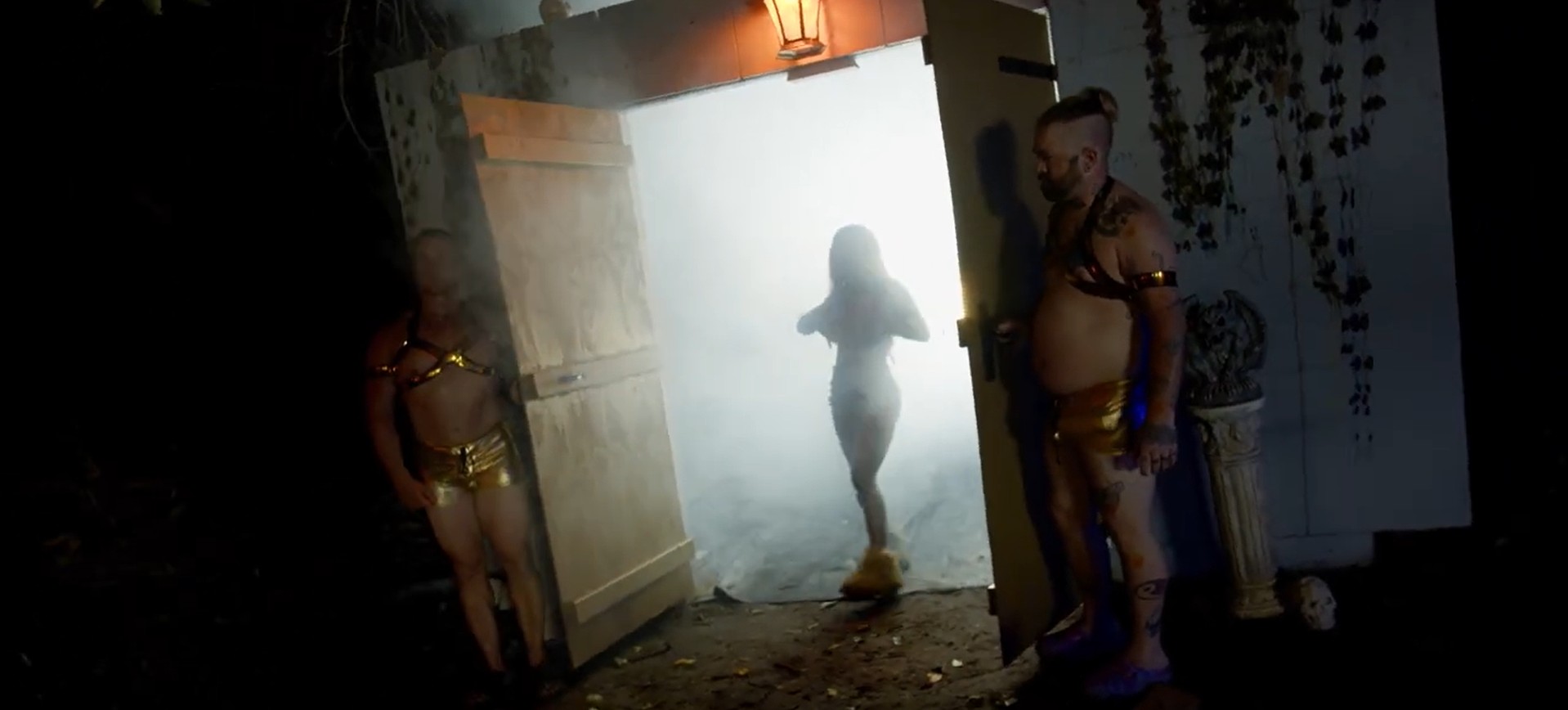
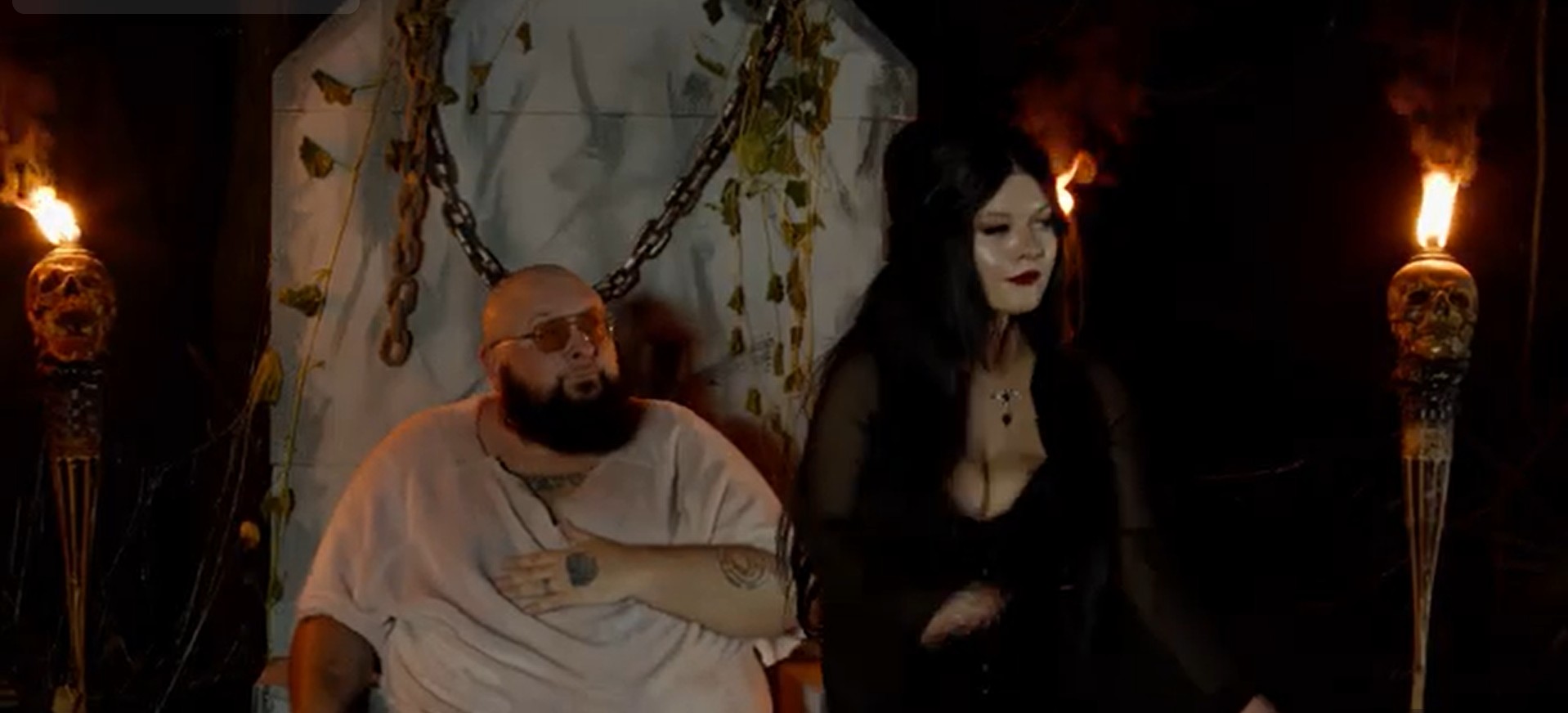
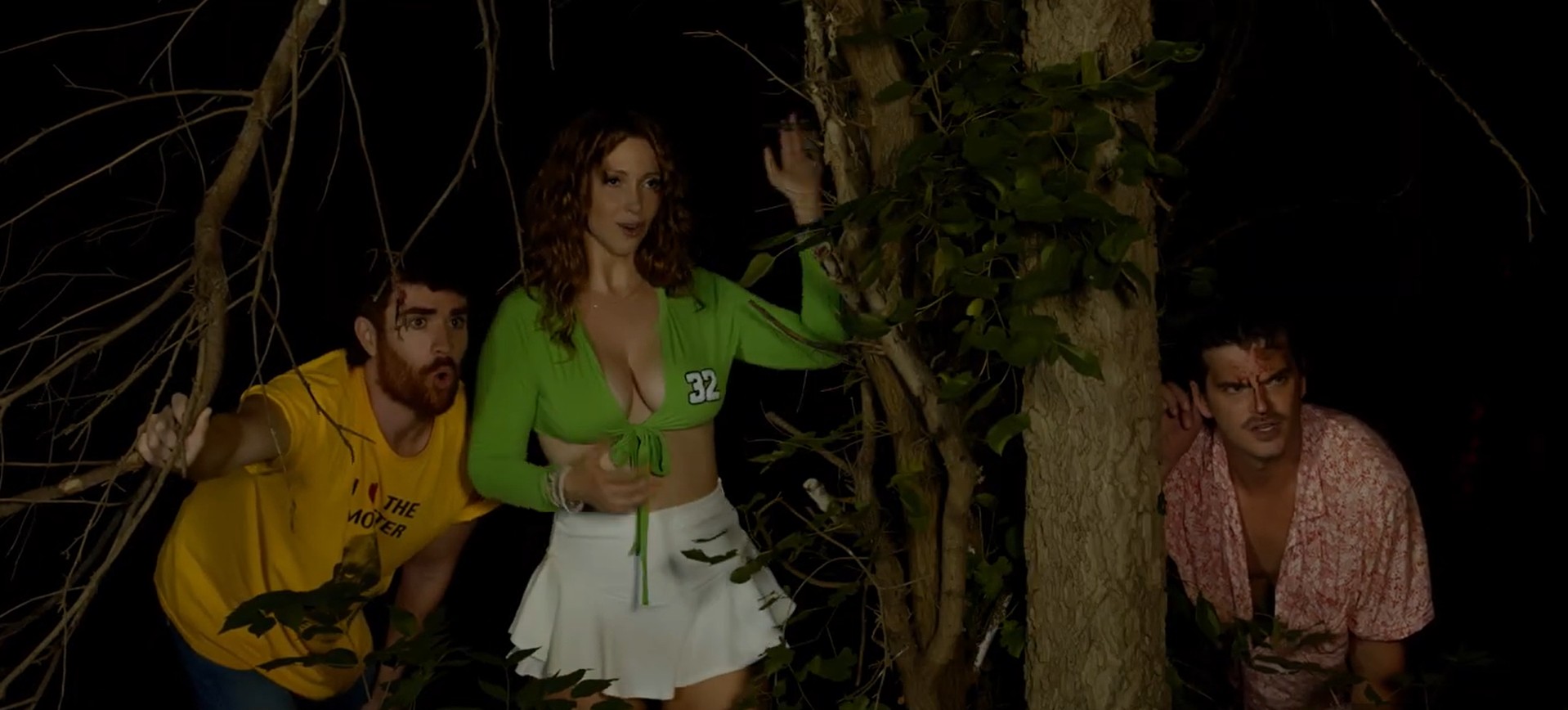
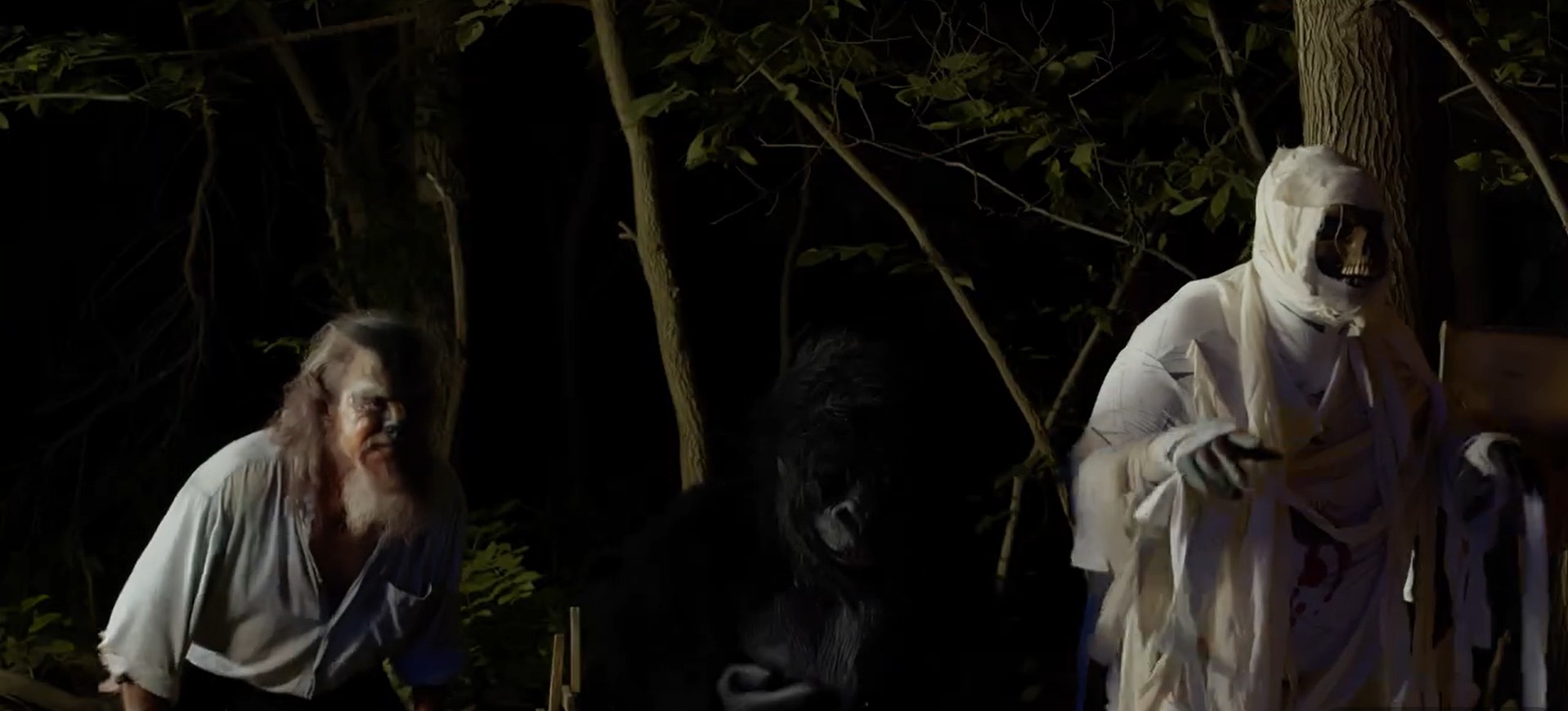
After her grandfather’s death, Ash travels through Texas with her brother Ted and girlfriend Sam to his isolated ranch cabin to be the first to claim his most valuable possessions before their Ash’s cousin, Bobbie Jo.  They arrive to find the cabin unlocked but about the same as it always been and go into woods for a little rest and relaxation, enjoying nature with a little alcoholic to supplement the relief of tension between the turbulent odds of Ash’s fast-and-loose ways and Sam’s more strict conservatism in regard to their relationship.  When they found a spray painted, screaming woman with a metal collar around her neck and a bear trap lodged into her ankle, they found themselves in the middle of a hunting party of masked men with melee weapons.  Ran by The Game Warden, Ash’s grandfather leased the land for a deadly game of sadistic clients hunting down non-English speaking immigrants for sport and depravity with their bodies no matter if they were alive or deceased. 

A surely bastardized version of “The Most Dangerous Game,” a novel that’s been re-imagined many times over about one man’s obsessive hunting for man, director Mike McCutchen follows up his debut violent chase thriller film “The Next Kill” with “A Game in the Woods” as his sophomore feature that eases him into the horror and exploitation subgenre.  McCutchen cowrites the script with Drew Thomas, the first feature film writing credit for the “Sex Terrorists on Wheels” cinematographer, and is based off a story by the collaboration between McCutchen and Drew Guajardo set in the boondocks of nowhere, Texas where land is aplenty and help is scarce if cried for.  The 2024 produced picture is a product of McCutchen’s Austin, TX based Fault Pictures and is produced by J.J. Weber (“The Next Kill”) with Andrew Bragdon and Kyle Seipp serving associate producers with Lonnie Seipp in the executive producer role. 

Eleanor Newman and Emily Skeen play the lesbian couple Ash and Sam and I make it a point to call out their characters’ sexuality because it feels inherently important to the story.  Newman comes to light in the sophomore Mike McCutchen feature that takes her from out of a minor role to a key lead, if not near final girl protagonist, in the unconventional fearful female but rather head-on heroine in “A Game in the Woods.”  Skeen’s more sensible Sam becomes a quasi-damsel in distress without the distressing part but tries to formulate plans on the fly to escape her demented captors.  Ash and Sam have a palpable troubled relationship like oil and water but find themselves commingling when the right sadistic additives are involved, spearheaded by the apathetic Game Warden from John P. Crowley who also finds himself in a more visible and prominent principal role.  Crowley’s Game Warden harnesses a Bill Moseley energy and sarcastic tone but not in a carbon copy way that adjusts just enough to make confident and cocky Game Warden is own.  The lesbian portion of Ash and Sam does feel engrained into the narrative, especially with two women with shortened names for Ashley and Samantha but it also implies a male identity, as if equal sex.  All the women in the story have a common them about them too, they all have tenacity and a fighting spirit from Ash and Sam’s battling Crowley and the masked hunters to the captured women who fight and kill, to even Ash’s cousin, Bobbie Jo (Grace Robbins), who joins in on the offensive fight for survival.  There are zero helpless women, which is an amazing elemental theme and characterization.  As mentioned, all the male hunters wear masks, hiding themselves behind theiran masks, and the hunted men are tied to an object, make poor decisions, and just have no fight in them.  Even Ash’s brother Ted (Jamison Pitts) doesn’t put up resistance when confront and is more of the farting, comic relief.  Aside from the Game Warden, the male presence is weak charactered by far.  The hunters and the hunted fill out with Gary Kent, Steve Wilson, Kevin Corn, Caroline Schmitt, Doug Field, Scott Kimbrough, J.J. Weber, Ray L. Perez, Kyle Seipp, Yane Carvalho, Lonnie Seipp, Morgan Faber, and Michelle Mendiola with Lloyd Kaufman (“The Toxic Avenger”) making a cameo appearance. 

Working on one’s relationship with their partner usually takes a time, some self- reflection, or maybe even a little therapy.  For Ash and Sam, they come together be means of violence, tossed into the throes of their grandfather’s ghastly involvement in man’s flawed thirst for the cruel and unusual sadism, and though there’s never a come to Jesus epiphanic moment that they can overcome anything, the blood-soaked trial by fire is proof enough.  McCutchen immerses the women, and explosive collar device and spray-painted prey, into a whole new world of hurt in Earth’s backyard.  The clandestine organization the Game Warden works for laces are slightly untied and unkempt with the full scope of their national, maybe even international, chapters of a snuff wonderland where murder is king and nearly anything goes from chopping up bodies to molesting corpses.  McCutchen brings enough gore to the table without it being over gratuitous and overkill, literally.  Exploding heads, a chainsaw eviscerated torso, body parts strewn here, there, everywhere are what to mostly expect as the game devolves with the hunters becoming the hunted as the emotional depth is quickly pushed aside for the conflict ensued rising action, leaving no time for Ash and Sam to master their relationship troubles as the spider never contemplates life when winged food is snared in it’s web. 

From Danse Macabre and Jinga Films LTD comes “A Game in the Woods” on region free, R-rated DVD.  Encoded with MPEG-2 compression onto a single layer DVD5, the film is presented in with an upscale 720p resolution and a widescreen 1.78:1 aspect ratio.  Basking in the warmth of a dessert brown and tan, Cinematographer Zedrick Hamblin DiMenno opts for a natural approach aesthetic that focuses heavily on the medium-close to extreme closeup shots of gory bits and pieces of tear away flesh.  There’s nothing too terribly stylistic to note with only a hint of television glow and a momentarily use of key lighting with interior scenes.  Compression encoding goes without a hitch that captures image reproduction just find for viewing pleasures, losing only some minor background details of blended foliage and objects viewed from afar.  The English audio formats include a PCM stereo 2.0 and a 5.1 Surround.  The surround sound mix will be the preferred option dependent on your audio setup as the environment layers diffuse evenly through the back and side channels, leaving dialogue and proximity action, such as the kill scenes, to translate with full-bodied effect to squeeze out every squish and squirt from the practical effects carcass.  There are ideal pitch, tone, and range with the clear and prominent dialogue without any underlining interference or hissing effect through the clear, digital recording.  English subtitles are available for selection.  Aside from the feature trailer on the main static menu, there is no other encoded bonus content.  Though the movie is engaging enough through evisceration through torture and there’s a a glimmering theme of women empowerment, if I saw this DVD on the store shelf, the cover art isn’t attractive enough to pickup with its dark imagery of a shadowy hunter drawing his bow toward something off scene.  The façade doesn’t offer a flutter of fancy and there’s no other physical features to warrant a second glance if physical media shopping.  However, give this region free film a once over and there’s a solid film underneath’s it’s dull shell. 

Last Rites: Despite the run-of-the-mill, uninspired DVD cover, check out this sadistic Jinga Films and Danse Macabre “Game in the Woods” where the hunt is solely for the thrill to kill.

Survive the “Game in the Woods!” Buy the DVD!

The Demon Concubine Is After the EVIL Power of Demon Summoning Upon Earth! “Saga of the Phoenix” reviewed! (88 Films / Limited Edition Blu-ray)

Own “Saga of the Phoenix” on Blu-ray from 88 Films!

For 660 years, Ashura, the Holy Virgin of Hell, has used her powers to resurrect demons from the underworld.  With the help of virtuous fighters Lucky Fruit and Peacock from the spirit realm, has renounced her temperamental intentions to use her powers for evil ever again and live beside the mortals under the warmth of sunshine.  When she accidently summons demons on Earth, Ashura is brought before Master Jiku and the Divine Nun to access the damage and reign judgement.  They sentence her to live in cell of the relaxed Buddha for all of eternity, but she persuades them one chance to live amongst the humans for seven days, just enough time to live under and enjoy the only thing she wants, the sun.  The Demon Concubine has a different plan for Ashura.  Seeking her demon resurrection powers, the Demon Concubine aims kill her but with the help of Lucky Fruit, Peacock, and her new human friends, Ashura will battle against the Demon Concubine and her demonic forces. 

“Saga of the Phoenix” is the Golden Harvest produced, 1989 released sequel following quickly behind the 1988 released “Peacock King.”  Based off the Japanese manga “Peacock King” written by Makoto Ogino from 1985 to 1989, the action-fantasy film was codirected by returning “Peacock King” director Ngai Choi Lam (“Riki-Oh: The Story of Ricky,” “The Cat”), aka Lam Nai-Choi, and newcomer to the series Sze-Yu Lau (“Forced Nightmare,” “My Neighbors are Phantoms!”) with “Game of Death” actor Biao Yuen stepping away from writing the follow-up and be more involved on the acting by returning to one of the main roles from “Peacock King.”  The script is from a confluence of Japanese and Hong Kong screenwriters, initially scripted by Japanese manga adaptation to television screen writer Hirohisa Soda and then adapted by Tsui-Wah Wong, You-Ming Leung (“Once Upon a Time in China”), and Sau-Ling Chan, none of whom were involved in “Peacock King.”  Hong Kong’s cult and genre film product Lam Chua (“Erotic Ghost Story, “A Chinese Torture Chamber Story”) serves as producer on the Golden Harvest and Paragon Films Hong Kong-Japanese coproduction. 

Gloria Yip returns as the Holy Virgin of Hell, Ashura.  Having never seen “Peacock King,” I’m not sure what type of temperament Ashura donned in a role where the character seems like one of the main antagonists according to the synopsis, but for “Saga of the Phoenix,” Ashura is joyful, childlike mischievous, and humble and is the center focus between the forces of good versus evil.  Als returning is Biao Yuen, but not in his screenwriter role.  Yuen, known for starring alongside female martial artist and star Cynthia Rothrock in “Righting Wrongs,” reprising Peacock, a fierce spirit realm guardian who befriends Ashura along with fellow guardian Lucky Fruit, played by Hiroshi Abe (“Godzilla 2000”) who replaced Hiroshi Mikami from the first film.  Much of Yuen is taken out of the story while being in frozen captivity by the Demon Concubine, leaving Abe and Yip to better struggle one-on-one connecting in the human world, facing human problem, and accessing the threat from the Demon World.  Yip’s candid antics exact the innocence of a young child like making snarky faces when corrected or obsessing over trivial things like sunshine, and especially when Ashura befriends a small, gremlin-like troll or creature named Tricky Ghost and holding it like a favorite stuffed toy, and this leaves Abe to be the role model, or the parental guardian if you will, stoic in stance and a reasonable thinker for his character.  It all comes off as silly until Ngai Suet and the Demon Concubine enters the frame.  The “The Ghost Ballroom” actress Suet takes on the evilly empowered role armed with seven demon subjects to do her bidding, such as trying to kidnap Ashura, and Suet runs with the role caked in a pale makeup, high pointy eyebrows that open up her eyes, and shoulder-padded dark dress.  Embroiled in the spirit world clash are two mortal siblings in Chin (Loletta Lee, “Mr. Vampire Saga IV”), who saves unintentionally saves Tricky Ghost, and her mad scientist brother Tan (Shek-Yin Lau, “Resort Massacre”) who finds himself in bitter rivalry with Tricky Ghost’s mischief ways spurring some comic relief into the fantastical brew and they represent the workable relationship between man and godlike individuals.  “Zatoichi” series actor Shintarô Katsu is in the role of Master Jiku, “Carmen 1945’s” Yûko Natori is the Divine Nun, and Noriko Arai (“Death Note”), Megumi Sakita (“Bodyguard Kiba”), and Yukari Tachibana (“The Scissors Massacre”) as the three nun warriors to round out the Hong Kong-Japanese cast.

If you’re familiar with director Lam Nai-Choi, then it comes no surprise to you the kind of practical effects juggernaut “Saga of the Phoenix” can become and, in the end, doesn’t disappointment.  Choi often overscales the effort of tangibility, bringing unbelievable imagination and larger than life objects to manifestation without much, if any, assistance from computer generated imagery, and in the late 1980s, that technology wasn’t exactly perfected to what modern cinema sees today with skilled visual artistry and the introduction of artificial intelligence that’s on the verge of possibly shoving itself into the actor pool once the kinks are worked out.  In “Saga of the Phoenix,” the palpable physical presence involved is mostly at the finale third act where good versus evil face off between Ashura, Peacock, and Lucky Fruit and the ravenously aggressive Demon Concubine, the latter transforming like a Power Ranger Megazord into a gray-skeletal winged creature large enough to tower over the heroes and wide enough to swallow them nearly by three times.   Of course, this is not to say there hasn’t been other practical effects along the way which include demons inhabiting dragon statues, high wire acts of characters soaring during fight sequences, and the little mischievous imp, Tricky Monkey, from being a manipulated puppetry that weirdly reminisces Jim Henson’s “Labyrinth.”  The painted optical tricks to render color bolts of energy weaponry are a nice classic touch toward a pop of color as well as creating the inherent superhuman element of the principal players.  For someone going into “Sage of the Phoenix” headfirst without having seen or any knowledge of “Peacock King,” room for the film to standalone is rather thin but not egregiously reliant on the first film.  There’s a bit of recapping at the begging with narrative voiceover and get some clue-ins about the past from the dialogue but there’s still quite a bit unexplained, such as Ashura’s behavior fabled to be a powerful demonic necromancer who has somewhere along the way had a change of heart and we’re not privy to why.  That sense of uncertainly never really goes away through the comedy, action, and laser-firing, high-flying martial arts sinew, that something is innately missing from the story that’s saturated with wuxia themes. 

If looking to increase your bicep’s muscle mass, 88 Film’s limited-edition Blu-ray is weighty with content and it’s only one disc!  The AVC encoded, 1080p high-definition resolution, BD50 is encoded with a cherished updated 2K restored transfer from the original 35mm negative that looks unquestionably majestic on screen.  Vibrant and diffused evenly colors, high decode rate, and flawless textures, there’s nothing to dislike about this release, visually technical.  Deep in the color range and Chi-Kan Kwan’s sundry cinematography that offers vast length shots and a warm neon haze of blue and magenta through tint or gels, with a matted golden peacock rising against the monstrosities of the demon world, “Saga of the Phoenix” resurrects an aesthetic only Lam Nai-Choi could manifest from pure imagination.  The original negative is virtually pristine with no signs of damage or wear to note, nor any compression issues to note.  The uncompressed PCM Cantonese 2.0 mono offers a forward heavy diegetic sound that separate each layer favorably diversified. Clean and clear ADR make for easy discernability, capturing every bit of dialogue despite the post-production mis-synchronous acceptance. Laser action, creature roars, and other detailed measured sounds really give “Sage of the Phoenix” body, depth, and range that makes it an overall A/V highlight amongst its wuxia genre counterparts that tend to omit the smaller particulars of a scene. English subtitles pace just fine and are errorfree in a UK text. Most of the heavy lifting is done by the physical presence of the 88 Films Blu-ray that’s housed in a rigid slipbox and sheathed in a cardboard O-Slip, both containing new arranged illustrated artwork by R.P. “Kung Fu Bob” O’Brien that’s takes the true elements from the film and places them on the cover in a sure-fire canvas of what to expect. The clear Amaray cases also has O’Brien artwork as the primary cover art with the reverse side featuring the original Hong Kong poster art. Along with the O-slipcover, other limited-edition contents include a two-sided collectible art card and a 40-page illustrated book with color pictures and essays from Andrew Heskins (From Panel to Screen) and David West (The Japanese Connection), along with featured Japanese cover art Kujakuoh-Legend of Ashure. If the physical properties were not enough, the encoded content, available on the LE and Standard Edition, will bring this set home as it details with an audio commentary by Hong Kong Cinema Experts Frank Djeng and F.J. DeSanto, alternate footage from the Japanese cut of the film, executive producer Albert Lee discusses the international distribution plan from Golden Harvest Sage of Golden Harvest – The International Connection, an image gallery, and the original trailer. The 88 Films release is unrated, has region A and B playback, and has a runtime of 94 minutes.

Last Rites: Wuxia movies like “Saga of the Phoenix” are no surprise to where John Carpenter found influence for “Big Trouble in Little China” and it’s the director Lam Nai-Choi who didn’t shy away from the difficulties and inauthentic problems of physical effects but the film has its own innate issues with story that downgrade from a saga to just being an epic picture with winged creatures, bright energy blasts, and a lovely Gloria Yip succumbing to age, and status, regression with her Holy Virgin From Hell role.

Own “Saga of the Phoenix” on Blu-ray from 88 Films!

The EVILs that Lie Behind the Mask. “2551” Trology reviewed! (Deaf Crocodile / 4-Disc Blu-ray)

This One You’ll Need to See to Believe! “2551” Trilogy on Blu-ray!

In an underground dystopia ruled with by an ironfisted police state, dwelling creature-noid mutants violently clash with white-suited, gas-masked tactical units of a cruel despot.  One of the rioters, an Apeman, rescues a child with a burlap mask from being trampled between the two groups, injuring his hand in the process.  The child desperately clings to him, unwilling to part far from the Apeman who tries to turn over the child’s care to others, but as soon as the child is taken by the despot’s men, the Apeman goes through the depths of grotesque seediness to rescue the child forced into the training ranks of the police state.  He befriends and falls in love with luchadora who joins forces with him to rescue the child, but her betrayal whisks the child away from his grasp yet again.  Years later, the Apeman has become a salvaging source for an art purveyor’s gallery, but arrogant high society dismisses his efforts, and he’s thrust into violence, resulting him to face the despot’s capital judgement.  He’s saved from death by the child, now ga grown adult employed as a despot inspector, and when the inspector is given a traitorous execution, the Apeman’s immense adoration for the child sends him on a path of retribution to which there’s no coming back from.  

Born into an immense pro-fascism Austrian society a few years after World War II, influenced by political and societal unrest and protest of his time, and a devout mask collector, Norbert Pfaffenbichler construct a dystopian world unlike any other seen before.  Inspired by silent movie slapstick and black-and-white films, Pfaffenbichler channels the likes of Charlie Chaplin, Boris Karloff, and Lon Chaney into his trilogy of experimental grotesquerie of “2551.”  “2551” potentially references a futuristic, numerical year where a post-apocalyptic society, as we know it, has broken down into a sparring duality of survival, either as a penniless mutant driver to beg, sell, or give one’s body to live or a merciless enforcer to be wielded by an authoritarian ruler.  Set as a trilogy that began in 2021 and ended in 2025, Pfaffenbichler also wrote the screenplay for each installment, chaptered with decimal designations and subtitles: “2551.01:  The Kid,” “2551.02:  Orgy of the Damned”, and 255.03:  The End.”  Shot in Vienna, the trilogy is a production support of the BKA (Bundeskanzleramt), The City of Vienna’s Department of Cultural Affairs, and Land Oberosterreich with Pfaffenbichler producing “Orgy of the Damned” and “The End” while coproducing with Bianca Jasmina Rauch on “The Kid”

The ”2551” trilogy goes through the entire three features without a single piece of dialogue spoken from the main cast.  Though the characters may be roughly silent, albeit some added grunts, groans, and wails, added Foley action and movements along with an eclectic and often brooding industrial, punk-rock soundtrack ultimately tell the story coincided with impressive body expression and language.  At center stage, in his own petite personal plight in the aftermath of a devastated and derelict dystopia, is Apeman, a rebellious scavenger just trying to survive like all other half-creature, half-man mutants.  Played by Stefan Erber in all three films, Apeman is the only credit to Erber’s short breadth career but Erber’s very important to “2551’s” storytelling because even though he’s wearing a mask the entire time, his actions and reactions convey a broad range of emotions to where there’s no ambiguity in the scene.  Erber has a number of unique characters to interact with and each do not repeat across the films, such as David Ionescu in “2551.01:  The Kid” as the gunny masked child who clings in desperation to the initially reluctant to care Apeman, and after years passed into “2551.03:  The End,” the now grown child is an adult with Ben Schidla donning the mask as one of the despot’s inspector who helps Apeman escape the grasps of a tyrannical police state gunning for dissidence.  Both Ionescu and Schidla play into the different stage of their child and adult life; Inoescu’s awkward child movements and possessive need for Apeman is true child antics while Schidla provides the maturity and responsibility of being his own, self-reliant person now, one who doesn’t forget Apeman’s selfly act of rescuing him.  Veronika Susanna Harb wrestles as Apeman’s warring love interesting and street fighter in “Orgy of the Damned” and Manuela Deac is another strong female presence in the trilogy in a duel role in “The End” as the Apeman transitions into Apewoman in an anti-matter, alternate dimensional space that looks into the soul and she also is the hypnotic dancing deity near the beginning audience encircling with Apeman being chosen, or perhaps reminded, of his ward. 

When I say you’ve never seen a world like the one Pfaffenbichler pieces together, literally with pieces of severed limbs, stitched flesh, and an eclectic mix of masks, I mean it.  We’ve seen dystopian worlds before of desolate terrains, destructive and cruel authoritarian regimes, hunger, famine, and a dying race and there are obvious signs of influences pulled into “2551” from the likes of Phil Tippett animated and stop motion style to the comical ties of Charlie Chaplin, and the overall components of certain silent movie scenes and improvised, jaunty scores make the disgusting and derelict dark alleys and strange creatures more light-hearted and whimsical.  “2551.01:  The Kid” is a direct homage to Chaplin’’s 1921 “The Kid” by following along the lines of the same premise of a nomadic loner finds and cares for an abandoned child, their relationship jeopardized by their own problems with the law.  The sequels have a different direction but maintains the same bizarre world behind grotesque masks, a normalized consumption of dead animals and body parts, body horror fetishism beyond our comprehension, and a systematic oppression based off one person’s version of Tindr’s swipe right.  “Orgy of the Damned” mines the carnal shale with simulated sexual acts that go beyond missionary ways and into the sordid surgery and beastly BDSM while “The End” explores existentialism through past, present, and future that ultimately leads to a self-destructive revenge, hence the subtitle.  Bazaars of skulls, organic trinkets, and edible organs, flesh, and bone are a traversing theme of near desperation and survival within a concreted underground life where nothing grows, nothing thrives, and all succumb to its darkness.  Motifs of monkeys, including in the protagonists, are strung strongly through the trilogy in perhaps a reflection of the homo sapien within the de-evolved primate, aka the hidden humanity inside the beast.  Masks are the true and standard icon that obscurely hides the fact whether these people are real or whether their mask is their reverse personified reality.   Pfaffenbichler’s metaphorical social commentary is beautiful in its misproportioned and mutated state of mass oppression and the little good that glints through is all the hope in the world, and even in upside-down worlds, the need to recover its benignity is more important than ever.

In today’s society, especially in the U.S., autocratic governance is king or at least thinks it’s king.  For Norbert Pfaffenbichler, his “2551” trilogy parallels the present as well as the past.  Deaf Crocodile, under the playful label guise of Dead Crocodile because of the film’s subject matter, releases Pfaffenbichler’s trilogy on a 4-disc Blu-ray set that’s AVC encoded, 1080p high-definition resolution, on single layer BD25s.  The post-apocalypse is grim looking with a slightly tinged monochromatic experience, often with high levels of grain, and a fluttering of crisp detail through stroboscopic and rotoscope effects but that’s the entire intention of Pfaffenbichler and his cinematographer Martin Putz on all three films, creating a gritty, grungy, bunker-laden, desolate atmospheric that’s a hypogean house of horrors.  Most of the more grainer moments are when the image is blown up to focus on characters and some distress, alien scenes of a grotesque nature.  The black-and-white goes through periods of tint, muted coloring that run the hue gamut, with more traditional colorless scenes fining solace in their antecedent silent films.  Compared to a more austere impressed first film, the sequels do have a more polished appearance than “The Kid” when traversing through the sordid muck of a hazy underworld of flesh and fetishism in “Orgy of the Damned,” laced in tight leather, elegant lace, pastel pasties, and a myriad of masks and rags, while “The End” trades out tint for pure while in the interdimensional void Apeman navigates to find himself.  Each entry adds something a little different to mix up what could be a monotone milieu with bits of experimental panache that’s sustain the post-apocalypse colony.  Entirely shot without any production dialogue, Deaf Crocodile’s release comes with a DTS-HD 2.0 stereo mix to punctuate the action and to provide vitality through its punk and metal soundtracks and dark industrial whir and hum from composers Wolfgang Frisch and Simon Spitzer.   The added in effects applied after in the post sync very well and with the appropriate echo of being in tunnels and dark, hollow spaces.  So well in fact that you don’t realize it’s post-production sound.  The 4th disc is bonus features that include Pfaffenbichler’s seven short films, five new, individual interviews (Dir. Norbert Pfaffenbichler, Apeman actor Stefan Erber, cinematographer Martin Putz, stop motion and visual effects artist Paul Lechmann, and a Q&A hosted by Rolf Giesen with Pflaffenbichler answering), two visual essays (Angel of the Abject:  The 2551 Trilogy as a Necropolis of Cinema by film scholar Stephen Broomer and Don’t Let it Fester:  (Anti)Sentimentality in 2551.01 by Ryan Verrill), each film has its own commentary track that include input from film scholar Shelagh Rowan-Legg, film historian Eva Letourneau, artist and writer Anne Golden, and podcaster Mike White, a “2551.03:  The End” featurette Jam of the Damned is a behind the scenes look into the last film, the soundtrack score on all three films, three new trailers, new art by Beth Morris, and a prelude warning that states:  Trigger Warning:  all 3 films contain nightmarish images featuring simulated sexual and violent acts, as well las strobe lights and stroboscopic effects.  For adult viewers only.  The four-disc standard release is laid out two on each side and one overlapping one of the other in the thicker, clear Amaray with new cover art that’s a composition of stills arranged in a nonconformist arrangement that’s truly unnerving to behold.  The reverse cover art has an equally intense image but more simplistic red and black image with the film and Blu-ray spec info backside.  With a runtime total of 227 minutes, “2551” trilogy is not rated and is encoded for region A playback only.

Last Rites: “2551” is a myriad trilogy of influence and expression through Norbert Pfaffenbichler’s endless mask of hope in a world of oppression. The worldwide debut Blu-ray release from Deaf (Dead) Crocodile respects the subterranean story filled to the brim with sadomasochism, odd creatures, and authoritarian subjugation and the auteur’s unconventional and pallor style in its comprehensive 4-disc set of experimental, cinematic encomium.

This One You’ll Need to See to Believe! “2551” Trilogy on Blu-ray!