Interrogating EVIL Mounts to Hundreds of Deaths. “Confessions of a Serial Killer” reviewed! (Unearthed Films / Blu-ray)

An Unearthed Classic Now Available on Blu-ray! “Confessions of a Serial Killer”

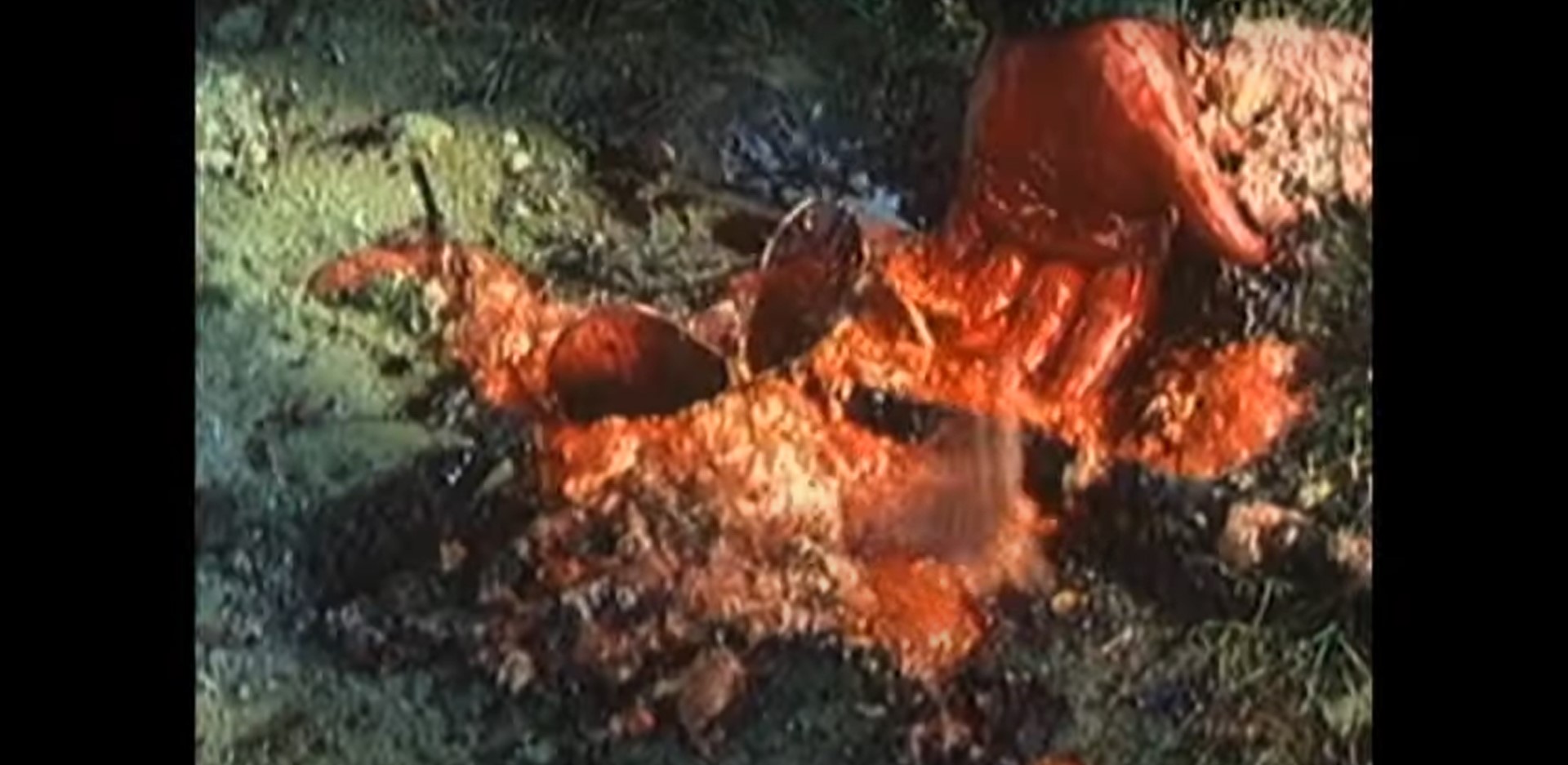
Daniel Ray Hawkins drives an unsettling, nomadic lifestyle as he travels across different parts of the country.  With no money, no place to call home, and little friends, Hawkins lives a life of mostly solitude, odd jobs, and equally as strange as him acquaintances spurred from his childhood, shaped by his promiscuously prostitute mother and a war veteran disabled father who gruesomely took his own life, both of which displaying their iniquities right in front of him.  Hawkins also lives a life of torture and murder, being one of the most prolific American serial killers ever of mostly young women.  When caught by authorities, Hawkins is willing to confess to everything and help unearth bodies from over decades on the road to ensure families he’s stolen from receive some sliver of solace.  His anecdotal accounts of individual disappearances and murders shock authorities to the core, so much so that Hawkins may just be unstable and not telling the truth.  That is until he informs them of and leads them to the cached polaroids and decaying corpses. 

Based on the American serial killer Henry Lee Lucas, who notoriously claims killing over 200 people has earned him a trio of film adaptations, at least, with “Henry:  Portrait of a Serial Killer,” directed by John McNaughton and starring Michael Rooker in the titular role, the subsequent lesser part II, and the more obscurely known Mark Blair written and directed production, “Confession of a Serial Killer.”  Much like “Armageddon” and “Deep Impact,” or “End of Days” and “Stigmata,” both movies fall into the paradoxical twin film phenomena of sharing the same them and having both been released approx. within a year of each other.  While “Henry:  Portrait of a Serial Killer” may have taken the top spot with a bigger budget played in more widespread venues, Blair’s rendition was released prior and closer to Lucas’s active killing spree that saw an end in 1983, just didn’t get released in America until a few years later to not duel with McNaughton’s film and thus didn’t succeed as much.  The Cedarwood Productions film was produced by Cecyle Osgood Rexrode, distributed by Roger Corman and his company, Concorde Pictures. 

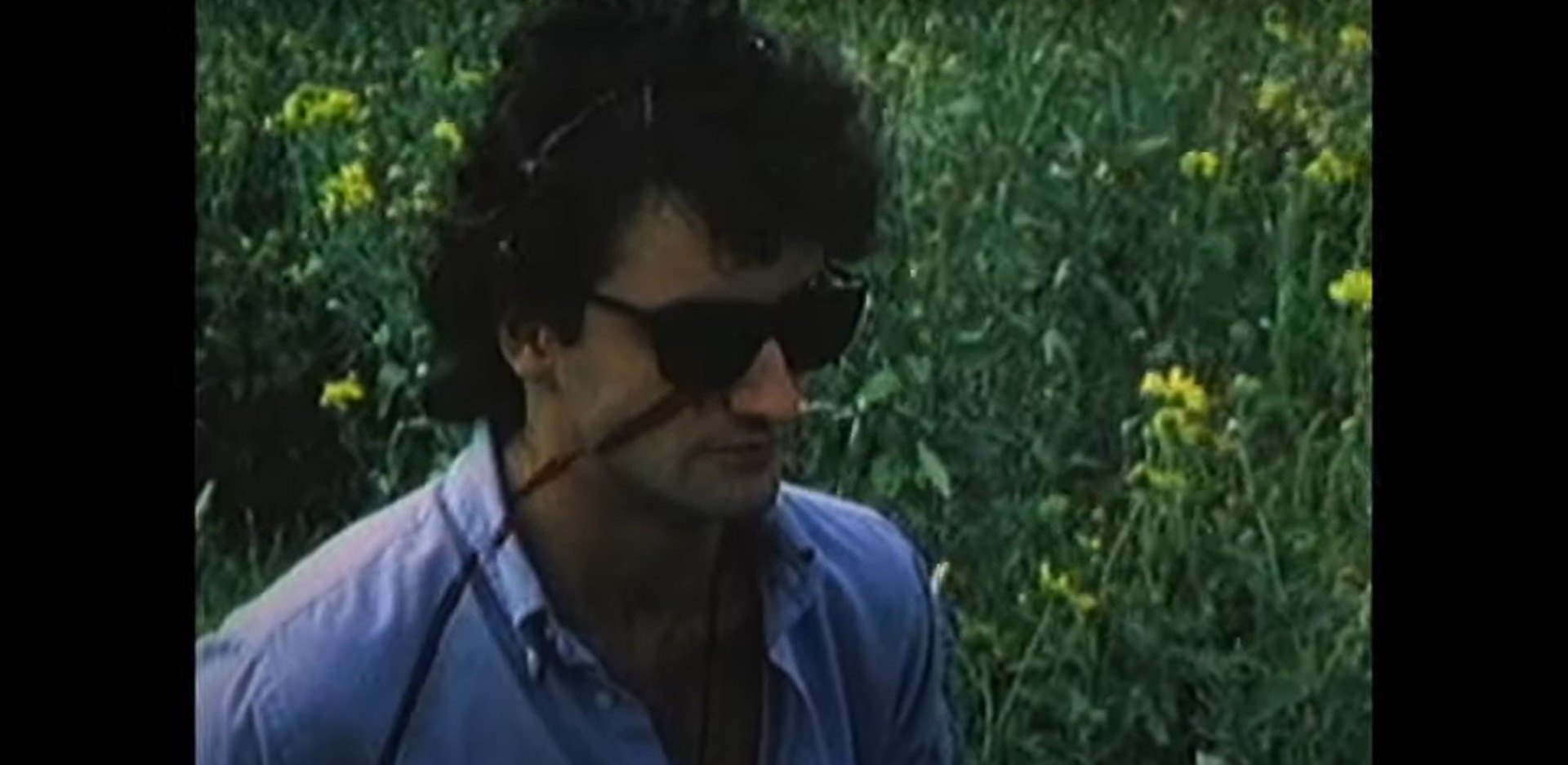
While he was not the first choice for the titular character of Daniel Ray Hawkins, production designer, the late Robert A. Burns, filled in the sociopathic shoes with great monotonic conviction.  Burns, who has ties as Art Director and makeup effects on some of the most iconic and seminal genre films, such as “The Texas Chain Saw Massacre,” “The Hills Have Eyes,” and “Tourist Trap,” matches the makings of an unempathetic, unsympathetic, natural born killer with a glazed deadpan austere and matter-a-fact knowledge and every evil committed.  “Confessions of a Serial Killer” would not be as laced with depravity if Burns didn’t push the demented drugs to keep audiences hooked on overdosed deviancy.  Not a tall or broadly muscular stature, curly outstretched and receding hair, scruffily unshaven with a consistent 5 o’clock shadow, and wide rimmed glasses, Daniel Ray Hawkins epitomizes the very essence of a creep and accentuates the behavior even further with his leisurely composure and straight-faced simplicity.  Other side characters exist around Hawkins’ maniacal run with the bisexual Moon Lewton (Dennis Hill) and his sister Molly (Sidney Brammer), who marries the pansexual Hawkins out of necessity rather than sexual desire, and while Moon and Molly share Hawkins deranged apathy, they are completely overshadowed by the more controlling and interesting lead principal character due to half the murderous anecdotes are solo ran and all of the perception in the stories is through Hawkins’ recollection, giving him more power in the trio in perceptional self-interest, if Hawkins is capable of such consciousness.  The cast fleshes out with lawmen and victims in Berkley Garrett, Ollie Handley, DeeDee Norton, Demp Toney, Eleese Lester, Colom L. Keating, and Lainie Frasier in the opening stranded motorist scene that sets up Hawkins diabolical reach in turning a car into a trap. 

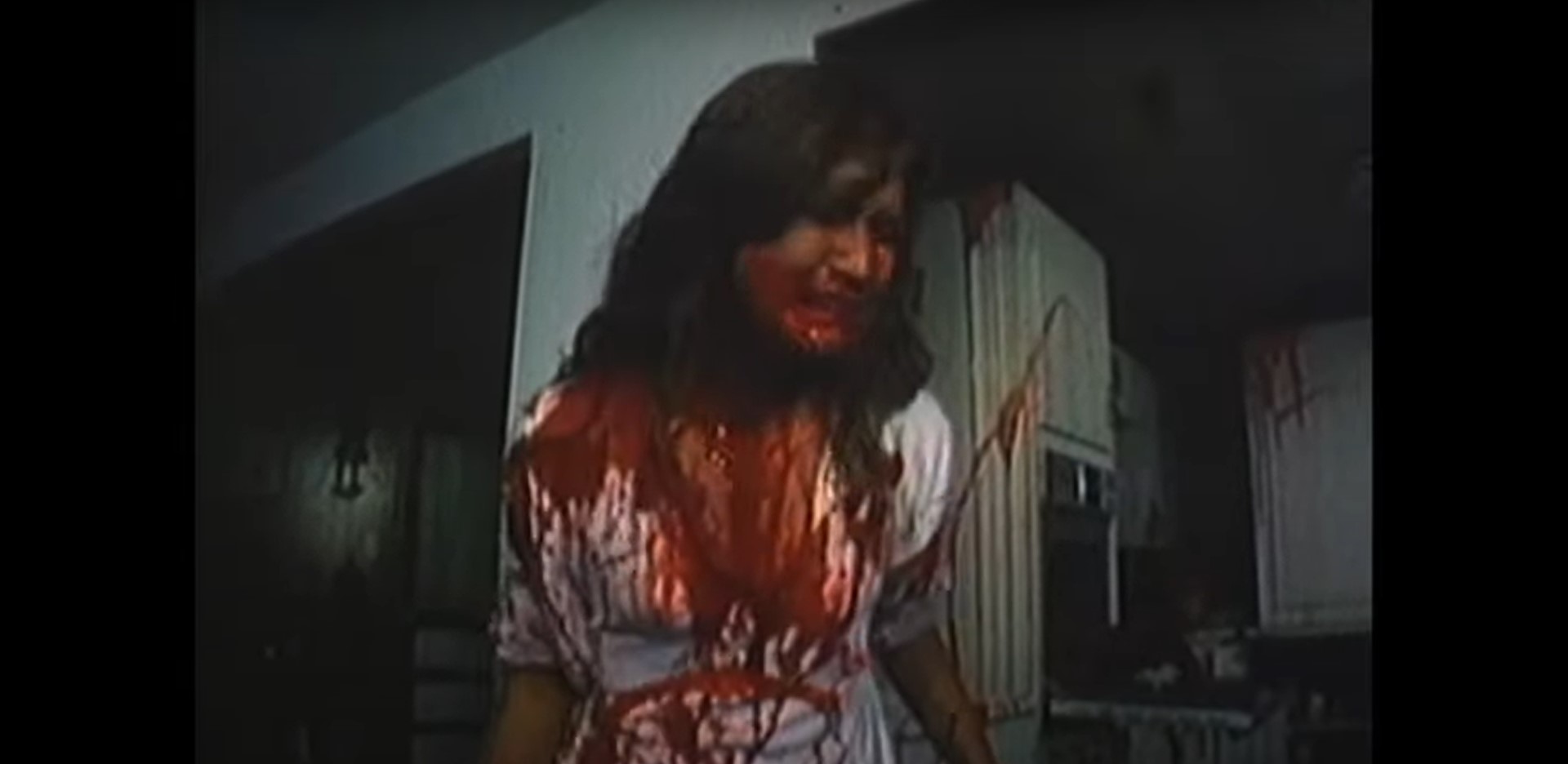
Bathed in realism, “Confessions of a Serial Killer” does not embellish with surrealistic temperament.  The story never dives into Hawkins’ head to show any indication or any kind of visual mental degradation or reality breakage toward being a coldblooded killer.  His violence is spartan, acidic, and raw to the bone, leaving a gritty taste in your mouth, with only a bleak childhood to blame for his adult obsessions to kill that he describes as necessary as breathing.  Blair distills the story to a “Mindhunter’” episode in trying to understand the killer and recover skeletons from his past, literally, through rational and respect ways rather than boiler room beatings and power-tripping threats.   Blair’s concept humanizes the inhuman and having Hawkins’s reminiscence each account is like recalling childhood memories with a smirk and fond remembrance splayed across his face adds another layer of iciness.  Grounded by pedestrian scenarios, “Confessions of a Serial Killer” disrupts the routine, the familiar, and the unscripted ways we live our lives unconsciously to the fiends living among us that look like you or me.  It’s a very palpable fear Blair conveys under the semi-biopic film.  The director does eventually let loose the reigns in the final third act with a finale account of Hawkins, Moon, and Molly shacking up with an amiable doctor, his suspicious assistant, and his shapely young daughter that boils to a head when one bad decision leas to another. 
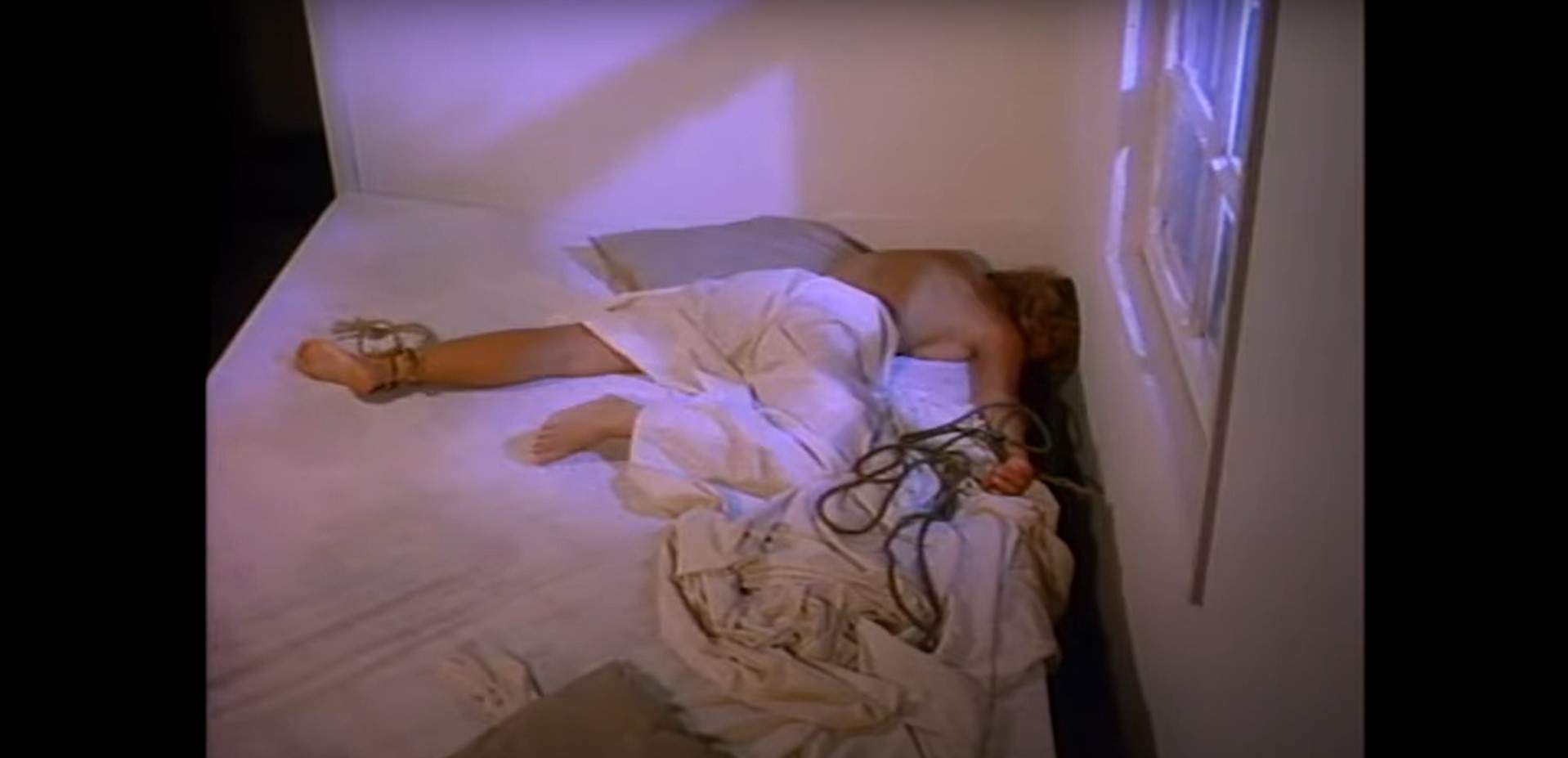
For the first time on Blu-ray anywhere as a part of Unearthed Films’ Unearthed Classics sub-banner, “Confessions of a Serial Killer” receives a high-definition, 1080p release on an AVC encoded, single ring BD25.  Higher contrast and a lesser diffusion to create a harsher, flatter color scheme, the intention is to fully base the story in reality as much as possible, to structure an abrasive look of grain and low lighting that parallels the seediness the tale touts. inspired from the facts of an American serial killer without having to fully give recognition to the actual killer.  Shadows are key to Hawkins nightly runs, adding back-alley value to his viciousness, and the more lighter scenes, such as brighter-by-color interiors or day exteriors, are ample with natural grain that cut into the details but don’t necessarily knock them out entirely.  With the lesser capacity disc, compression doesn’t appear to be an issue with no sign of macroblocking, banding, or posterization. The English language LCPM 2.0 mono possesses lo-fi aspects kept true to the original audio master. The dual-channel conduit amasses the layers mostly in the forefront without ascendancy in the environment, creating a flat approach, rendering the audio mostly fixed and depthless with the action creeping onto the dialogue, but this also adds the realism of a real world chaos where cacophony reigns. William Penn’s effectively, inlaid soundtrack has hallmarks of Wayne Bell and Tobe Hooper’s “Texas Chain Saw Massacre in the minor key with added notes of an otherworldly tune fork keyboard and lingering bass elements that’s just infests with the sounds of deceit and death, reminding me also a lot of a George A. Romero’s “Night of the Living Dead’s” atmospheric arrangement. English SDH are an available option. The collector’s edition contents include a commentary with director Mark Blair, aka John Dwyer, director of photography Layton Blacklock, and actor Sidney Brammer (Molly), The Henry Lee Lucas Story by author and former TV news reporter James Moore, and a full-lengthy documentary Rondo and Bob examines Robert Burns being the foremost expert on uniquely deformed actor Rondo Hatton as well as examines Burns’ own career, a polaroid gallery, promotional gallery, and the trailer. Displaying the iconic poster, a profit from rip of Hannibal Lector with a devilishly masked killer behind bars, Unearthed Films’ releases the stark image onto a planar cardboard slipcover. Same image is used from the standard Blu-ray Amaray case with no reverse side. Disc is pressed with a memorable and anxiety-filled chase scenes. There are no inserts material included. The region A encoded Blu-ray has a runtime of 107 minutes and is unrated.

Last Rites: One of the better biopics on U.S. serial killers even if a little bit of speculation and sensationalism increases the already verbose notoriety of one Henry Lee Lucas. Scary and bleak, “Confessions of a Serial Killer” continues to remind us that no one is safe from the everyday sociopath.
An Unearthed Classic Now Available on Blu-ray! “Confessions of a Serial Killer”

The Little EVIL in the Cupboard. “The Abomination” reviewed! (Visual Vengeance / Blu-ray)

Cody’s devout mother has a large tumor growing in her lung.  Her piety believes will cure her from the ailment or so says the televised evangelical priest Brother Fogg who once listened to her plea.  When she coughs up the tumor onto the kitchen floor one night, the relieved woman becomes ecstatic having been miraculous cured by brother Fogg’s channeling of the holy spirit and her $20 donation to him but little does she know that the tumor is actually a blood lusting demon that slithers down Cody’s sleeping throat, turning the young man zombified and obedient to the demon’s ever starvation for human blood and flesh in order to grow.  Inhabiting Cody’s house like a shell and monstrous with tentacles and large teeth chomping from out of cupboards and the top loading washing machine, Cody heads out into the world to brutally murder his own boss, friends, and even family to serve and feed the abomination living in his home.

Tantamount to “A Little Shop of Horrors” and released the very same year as the Rick Moranis remake of the original Roger Corman killer-plant picture, writer-director Bret McCormick waters to grow his gelatinous creature-feature “The Abomination” onto the home video market.  Ultra-violent and gory against the more, what would be considered in comparison, family-friendly and Hollywood produced rowdy giant flytrap ravenous to devour victims, “The Abomination” is by no means a musical but delivers a tone of tentacle-laden terror around a subtle theme of mental health.  Shot in Poolville, Texas, from the then future filmmaker of “Repligator” and “Highway to Hell” under his pseudonym of Max Raven, the guts-galore indie was also produced by McCormick as well as with longtime partner Matt Devlen, director of “Ozone:  The Attack of the Redneck Mutants” and producer of “The Upstairs Neighbor” with “Woodchip Massacre” and “Cannibal Hookers’” Donna Michelle Productions picking up the film for at-home VHS distribution rights.

However unlikely it may seem with these types of splatter films and with a cast credited with different stage names and pseudonyms, “The Abomination” is undoubtedly a family affair.  Bret McCormick has employed a great deal of his once intact family into filmic roles as creature fodder, which some of us would like to dish up on a daily basis.  Well, McCormick did it from his brother Brad McCormick as Ike, mother Victoria Chaney (“Christmas Craft Fair Massacre”), former father-in-law Van Connery, and even his wife, now ex-wife, Blue Thompson (“Ozone:  The Attack of the Redneck Mutants,” “Highway to Hell”).  Relatives appear game to be in a next-to-nothing splatter horror that offers a soup kitchen of out of body organs being pitchforked fed into gaping jaws living a cupboard.  Performances render suitably as bored rural clodhoppers who fear God, work at junkyards, and give into evangelical sermon with Cody (Scott Davis) and his friends often the more sensible foursome of youth yearning for fun and beer as they race down dirt roads and yuk it up on the back of their 4×4 truck beds.  All of the dialogue is done in post with ADR and so we’re not offered the actors’ original gutturals, conversations, and screams with the silver lining in the audio track being a clean post-principals photography recording of the dialogue.  One shortcoming of the dialogue track lies with Cody’s mother Sarah, played by Jude Johnson (“Tabloid”), with earsplitting screams set on linger as she discovers the truth.  With a small, intimate cast with most being within McCormick’s inner circle, every character is essentially core to the story with the rest being rounded out with performances from Suzy Meyer, Gaye Bottoms, Matt Devlen, and Rex Morton as the equivocally moral televangelist Brother Fogg.

There’s something to be said for low-budget, do-it-yourself, indie horror films with exaggerated and practical special effects.  “The Abomination” is one of those said features that’s’ more splatter than substance but the splatter and the palpable puppetry are the driving force behind McCormick’s attempt to enter the gonzo-gory market of cost nothing commodities popular at the time.  “The Abomination” evokes the very truth of the titular creature without being ambiguously metaphorical, becoming a character, much like Audrey II in “The Little Shop of Horrors,” in itself even if it didn’t talk or sing with boisterously briar.  Before delving into the core narrative, skipping the opening dream sequence/montage may be in your favor as the series of random images of grotesque violence, splatter, and such sum up the film’s entirety in a disordered delusion of dreams. If you can fast forward the montage, the opening secondary setup of Cody and Dr. Russell’s voiceover conversation will suitably add the necessary layer to peel back not only to expose the carnages to come but also sneaks in a thought-provoking twist that will leave audiences reeling over the bookend voiceover conversation between a distraught Cody and the doctor in the final moments.  Not to be exceedingly overshadowed by the immense deluge of blood, the pint size pivot juts out like a nail in a floorboard, insignificant across the entire square footage but once you step on it, the punctured wound leaves an unforgettable impression that makes the entire floor feel the need to be tiptoed around because of the dreadful sensation of sharp, pointy objects covering the entire area.  Narratively, the linear structure works as a son and his mother struggling on the precipice of her cancerous death while believing the televangelist Brother Fogg’s wisdom and spiritual healing will come to her rescue before her demise, but the one element that doesn’t quite work, or is more so unclear, is Brother Fogg’s part in the much darker side of the abomination’s arrival.  In scene, Fogg’s has all the hallmarks of a fire and brimstone swindler but no other clues hint to his involvement in the scourge spawn other than a few dropped lines by other indirect characters that more disconnect the dots then link them.

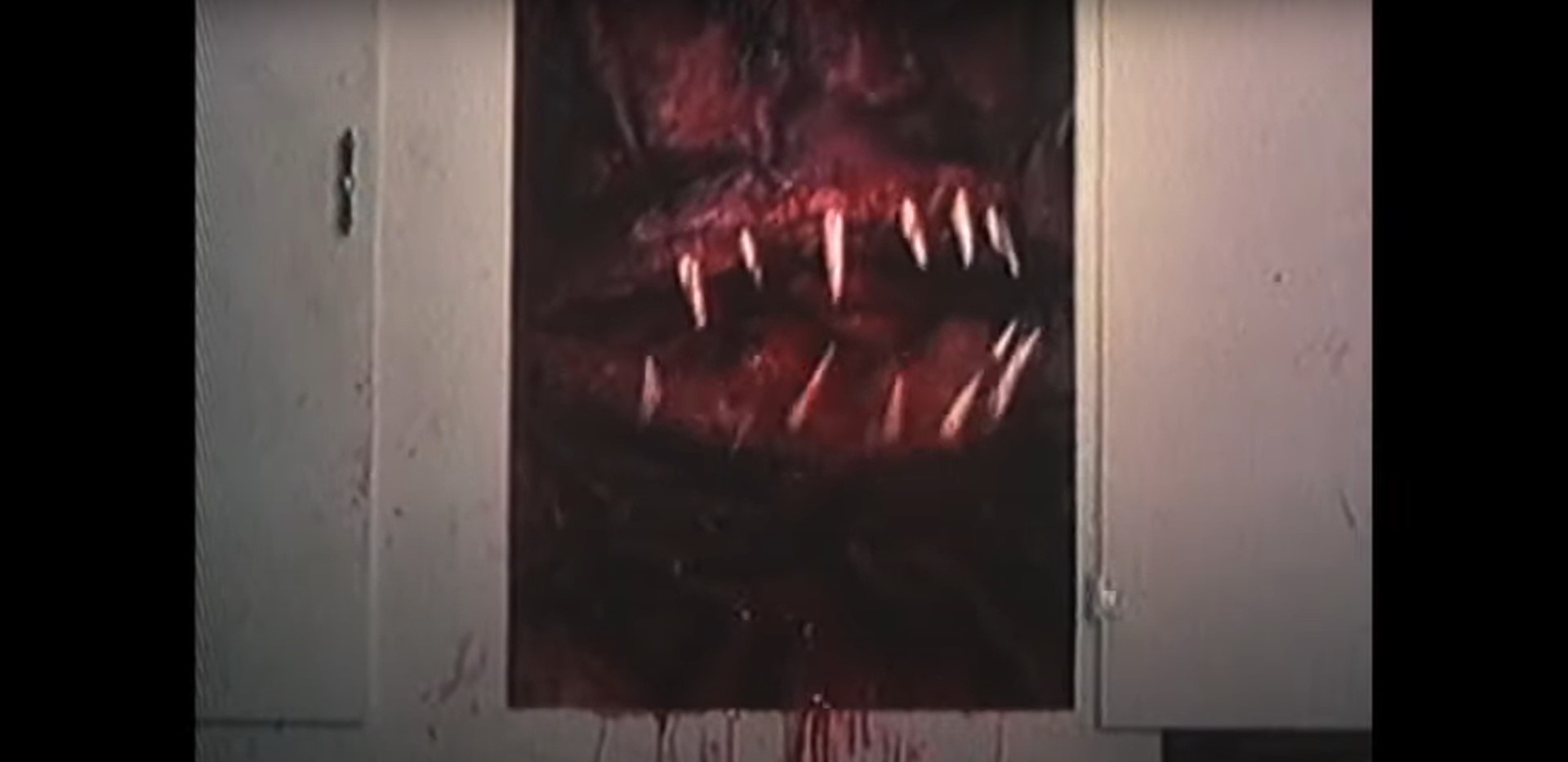
You have to continue to love Visual Vengeance for their pastime presentation of splatter and obscure VHS films.  “The Abomination” slithers out of incubation as one of their latest releases onto a full-bodied Blu-ray with new artwork, new bonus features, and a new high-definition transfer! The AVC encoded, 1080p, BD50 is presented in a 1.33:1 aspect ratio. McCormick filmed “The Abomination” on Super 8 but had converted the feature through a U-matic VHS playback, resulting in two very different technical looks with the grainy celluloid of a Super 8 integrated into the softer gauze and tape degradation of VHS. We usually see this in the reverse with modern releases being played back through VHS to obtain that SOV/retro look. Visual Vengeance continues to preface all their releases with a warning of quality with their obtaining the best possible standard definition tape masters that may still render poor video and audio quality. A/V does convey a softer simulacrum and a pallid color palette with the occasional tracking lines and even seldom frame damage, but the overall finished product is visually rock solid. The English Dolby Digital stereo mix has the same pallidity as the video but is balanced within the amplification ilk where fading or becoming distorted is virtually nonexistent. Automated dialogue replacement as well as overstepping foley is evident from the start that does provide an undertow of clear consistency without fluctuation. Soundtrack and sound design by Kim and Richard Davis and John Hudek really shines through with a pulsating ghoulish synth-piano key that hints at giallo undertones. Optional English subtitles are available. Visual Vengeance really did outdo themselves with sizeable supplementals beginning with a pair of commentary: Bret McCormick joins Visual Vengeance’s Rob Hauschild and Matt Desiderio while Tony Strauss of Weng’s Chop Magazine goes solo. There’s also a new feature-length interview with McCormick Monster Kid Movie Maverick that entails McCormick starting his life story from Super 8 home movies to the present, a new interview with Blue Thompson, a new interview with Victoria Chaney, and an interview with Michael Jack Shoel of the original Donna Michelle Productions’ VHS distributor. McCormick provides a new location tour between his involvement in “The Abomination” and “Ozone,” raw footage of the testing the tumor and the death of Cody’s boss, McCormick’s Super 8 movies from his youth, a multi-page text screen interview with “The Abomination,” a behind the scenes image gallery, and a trailer archive. Release number 10 on the spine, this Visual Vengeance piece of home video art comes with The Dude Designs’, aka Tom Hodge’s, illustrated rendition of “The Abomination” with phallic tentacles, blood-stained teeth, and a mustard yellow title. Sheathed inside is an even more beautiful front cover art adapted from the iconic scene that left a lasting impression with this reviewer. The uncredited cover, or uncredited because I could not locate the signature or the credit, possesses more depth in detail than the comic book-esque slipcover, a comparable contending front cover from the original VHS art on the reverse side. Visual Vengeance provides hefty insert material that not only includes their staple retro sticker sheet but also a 14-page, black and white official comic book illustrated by Marc Gras, a trifold essay entitled The Tumor that Came to Fort Worth: Apocalypse on a Budget by Tony Strauss, and a folded mini-poster of the front-facing cover art inside the clear Blu-ray case. The disc art has the same The Dude Design slipcover art cropped to fit the BR disc. Bret McCormick fed his ferociously tumorous feature with all that he had, spellbinding with shocking serration, and now three and half decades later, Visual Vengeance celebrates McCormick’s cancerous creature with one hell of a soul-swallowing souvenir!

There’s Nothing Abominable About “The Abomination” Release!  

Surrounded by Aquatic EVIL, No One Can Escape “The Island of the Fishmen!” reviewed! (Full Moon / Blu-ray)

Check out the scantily-cladded woman encroached upon on “The Island of the Fishmen” Blu-ray!

A French prisoner ship sinks to the bottom of the Caribbean leaving only a handful of prisoners and the Left Lieutenant Claude de Ross, the ship’s doctor, stranded on a lifeboat for weeks until they a mysterious force drives them through the fog and crash them on the rocks of a seemingly deserted volcanic island. Only a few prisoners and the doctor manage to survive the wreckage, stumbling upon a ritualistic area of empty graves and abandoned artifacts of an island society. This is where the haggard and hungry men meet the beautiful Amanda Marvin on horseback and follow her through the island jungle to a clearing where the edifice of Edmond Rackham sits imposing on them. Having left his home country, Rackham settled upon this uncharted island, garnering local Caribbean inhabitants as servants, and being a greedy treasure hunter who might have just discovered the lost city of Atlantis. There’s only one problem, the city is surrounded by aggressive fishmen kept at bay by Amanda’s famed disgraced biologist father who has fallen severely ill, charting a course for the good doctor, Lt. Claude de Ross, to be unharmed in order to care for perhaps the only person who knows how to manage the wrath of the fishmen.

A swimmingly aquatic creature feature with an all-around gratifying men in costume pastiche, familiar to the style of “The Creature from the Black Lagoon,” in Sergio Martino action-adventure horror “The Island of the Fishman.” Also know under the revamped shots of “Screamers” aka “Something Waits in the Dark,” here we have the original film in all it’s natural glory from the director of “Your Vice Is a Locked Room and Only I Have the Key” and “Torso” director Martino from a script by Martino, Sergio Donati (“Orca”), “Slave of the Cannibal God’s” Cesare Frugoni who workshopped with Sergio Martino’s older brother, Luciano Martino, (“So Sweet… So Perverse”) on the original story. Some would also say that “The Island of the Fishmen” is also a crossbreed between H.G. Wells’ “The Island of Dr. Moreau,” H.P. Lovecraft’s “The Shadow Over Innsmouth,” and, aforementioned, “The Creature from the Black Lagoon.” The 1979 Italian production stars an international cast shooting along various locations in Italy and is produced by Luciano Martino under Dania Films and Medusa Distribution.

American, United Kingdom, and, of course, Italian come together to form “The Island of the Fishmen” cast that doesn’t stray too far away from their individual innate dialects. The most pompous is he Essex-born Richard Johnson’s sadistic and fortune hungry Edmond Rackham with a caricature of a voice that isn’t like anything in his performance in Lucio Fulci’s “Zombie.” As Rackham, the inflections reminisce of a British Humphrey Bogart mixed with a one Dick Dasterdly and so Johnson comes off a bit cartoony and overly dramatic compared to the film’s panache malnourished yet earnest hero in Italian actor Claudio Cassinelli (“Murder Rock,” “The Scorpion With Two Tails”) as Left Lieutenant Claude de Ross, a ship’s doctor who suddenly becomes the medical caretaker and leading guard over a lifeboat full of hardened prisoners, some who have blood on their hands. Franco Javarone and Roberto Posse play a pair of surviving convicts, especially two at odds on how they should treat their next in rank penal officer. Though being thrust into the oversight position, the Lieutenant doesn’t have to worry about his prisoners for too long as the island’s baleful environment with jungle death traps, poisonous water, voodoo priestess, a sadistic lord of estate, and mutant fish people swimming in circles around the island’s parameter and through the cut through waterways sees to their wellbeing. “Island of the Fishmen” does have a few predominant male figures of different caliber but there are also a pair of women inhabiting the island who, too, have counteracting roles. Bond girl Barabara Bach (“The Spy Who Loved Me”) became plagued by the ocean’s frightening fishmen only two years later as the captive dame of Edmond Rackham who holds her hostage as he pushes her father (Joseph Cotton, “The Survivor”) to continue with his mind control potion over the fishmen. Then, there’s Shakira. No, not the Brazilian singer-song writer with the hypnotizing booty shaker. This Shakira is a voodoo priestess, played by Jamaican actress Beryl Cunningham (“Dorian Gray”), who works for Rackham but ultimately envisions foreboding doom on the volcanic island. Giuseppe Castellano and Franco Mazzieri round out the cast.

A whole lot is going on in this film that from the surface seems, surfacing meaning the home video covers and posters, to focus chiefly on the hostile half-fish half-man creatures that bubble to surface, check out top side for any unwanted visitors, and quickly dispatch them before disappearing under the glassy waters of the Caribbean. I adore the design of the rather stiff but crudely convincing creature suits with buggy fisheyes, razor piranha like teeth, and cladded entirely green and scaley in a design by Massimo Antonello Geleng who by vocation was more a production designer with credits including this film along with “Cannibal Holocaust,” “City of the Living Dead,” “The Church,” and “Dellamorte Dellamore” to name a few. Yet, the fishmen were not a sole source of danger on an island that had a deadly schemer in Edmond Rackham, the motif of voodoo and jungle trap throughout, a volcano ready to erupt and engulf the island with lava, and the lost city of Atlantis as the grand epic finale that pivots this story on an acute elbow left that shows a mighty ambitious story on an Italian slim budget. To put it frank, Sergio Martino was able to put all the elements together into a cohesive, coherent plot with action, horror, exploitation, and mad science fiction albeit the story’s wild and diverging concepts.

Though many U.S. audiences know this film as Roger Corman’s highly altered, New World Pictures presented cut retitled as “Screamers,” Full Moon features releases the original oeuvre of Sergio Martino with a remastered Blu-ray release from the original 35mm negative. The 99-minute film is presented in a widescreen 2.35:1 aspect ratio that captures in perfect matte composition and frame the locational miniatures, such as the manor house or the underwater Atlantis temples, in a compression that doesn’t make the structures obvious fakes. Slightly tinged yellow, the overall color palette is renders out well enough to suit the release with a pristine transfer seeing no signs of real significant damage. The English language tracks come in two formats – a PCM 2.0 and a Dolby Digital 5.1 surround sound. The English-speaking actors have their original tracks intact while the Italian cast have their original dialogue re-dubbed in English for posterity on new releases such as this one. Dialogue, nor any of the corresponding audio tracks, show any signs of fidelity issues or damage, but do feel muffled, even on the 5.1 as if the sound was boost stifled and left with some of the channels lacking vigor. Aside from Full Moon trailers, the R-rated film rides solo on this hi-def release. “Island of the Fishmen” is a small film fighting hard to swim upstream and really does a number on many different levels regarding where the audiences should focus their attention on, but I can see why Roger Corman wanted to give Martino’s film a second run after a commercial flop with a new, gory scenes edited right into the heart of “Island of the Fishmen’s” flexible, cartilaginous bones. Despite Corman’s efforts, Sergio Martino’s unmolested, original reeling reel is the one and only catch of the day for this purist.

Check out the scantily-cladded woman encroached upon on “The Island of the Fishmen” Blu-ray!

Honey’s Sweet, But There’s EVIL in the “Royal Jelly” reviewed! (Uncork’d Entertainment / Digital Screener)


Bee careful what you wish for in this apiary tale that tells a story of high school misfit, Aster, an easy target for unsympathetic pubescent bullies, including the continuing at-home abuse from her half-sister, Drew, and pitiless stepmother.  With neither school or home being a safe retreat, Aster finds comfort in an unorthodox and brash substitute female teacher who has taken a shine to Aster and provides her shelter when she’s distraught after discovering her collection of apiary beehives was maliciously destroyed in an act of malice.  After living with her teacher and her son for some time, they exhibit strange behaviors, develop skin rashes, and Aster begins to notice that she doesn’t quite feel like herself either as her safe haven is unveiled as a façade for her grooming to become the next hive queen.   

“Royal Jelly” isn’t exactly the killer bee movie you’d be expecting.  Writer-director Sean Riley invites a new take of the Apiformes horror subgenre outside the beehive of being per se a creature feature with his new film, “Royal Jelly.”  And, yes, even though tiny in size, bees are still tiny creatures with mighty (painful) stingers.  Those not familiar with the term royal jelly, other than it being an unique title for Riley’s sophomore feature, royal jelly is the honey bee secretion from glands located in the hypopharynx and is the chief nourishment for colony’s larvae.  See!  Who says horror movies can’t be education?  Somehow, someway the Baton Rouge, Louisiana-born director found malefic inspiration secreting from his metaphorical hypopharynx domiciled glands and packages with it a paralleling an all too familiar fairy tale crowdfunded by Indiegogo backers, second feature funded this way behind his breakout directorial of the comedy “Fighting Belle,” and Riley’s Integral Motion Pictures.

Now, who is this leading lady willing to be misled into a turned-out humanoid life sized queen bee?  The University of Southern Mississippi Fine Arts graduate Elizabeth McCoy, of course.  The Greater New Orleans actress slips into an quasi-goth cladded outcast Aster sporting fishnet stockings and a black graphic t-shirt promoting the band Queen, a bit of fitting foreshadowing if I’ve ever come across one.  Before being bequeathed the hive throne, McCoy has to render Aster a meek existence made small by the death of her beekeeper mother backstory and surrounded by loneliness stemmed by an abusive sister and stepmother and a coward of a father.  The only joy made clear in Aster’s life is her bees.  When her apiaries are decimated, that is when high school sub Tresa (Sherry Lattanzi) flies in and shelters Aster under her wing that makes for an odd couple combination that’s one part predatory teacher fraternizing with a vulnerable student and one part comical motherhood to see McCoy tower over a short Lattanzi who is in this insect sovereign role. Doesn’t Darwin always say the strongest always survive? I guess there’s nothing in Darwinism about the tallest. Lattanzi expresses Tresa about as audaciously enigmatic as they come with little-to-no story arc to move in accord with as Tresa just shows up, out of the blue, and after a scene where Aster’s teacher has had his throat slit and I’m still trying to fathom the plot hole of how the hell Tresa entered the frame so quickly, as a substitute teacher, without ever laying eyes on Aster until stepping into her classroom. Sparse is the name of the game as Tresa, as well as Aster, are poorly written without much density and neither actress can pull off miracles adding layers to already rotten onion. The rest of the cast includes Raylan Ladner, Lucas T. Matchett, Fiona McQuinn, Jonas Chartock, and Jake McCoy.

Pulling inspiration from Roger Corman’s “The Wasp Woman,” Riley’s “Royal Jelly” ditches the experimental cosmetics for timeless folk lore while still vaunting a Corman class cinema gooey with bee secretion center. Instead of an enchanting tale of rags to riches, this loose Cinderella adaptation comes with all the classic hallmarks like an evil stepmother, a wicked stepsister, and a fairy godmother manifesting Aster’s dreams on the spot, but instead of a magical wand and a pointy hat, this fairy godmother comes in the form of a personified bee queen wearing a façade of a presumptuous substitute teacher. Riley’s openly emblematic killer bee story could go one or two ways. 1 – Aster is actually being groomed by a bee queen to take over her hive as a homolog event to Aster’s earlier class presentation on the eusocial bee social organization or 2 – Aster has snapped due to bullying and she’s daydreaming, hallucination, or dead and the bee-havorial chaos she’s experiencing is either in her head or is sardonic Hell. I like the second theory better over the first as I don’t find Aster’s sprouting of inorganic and rigid Halloween costume bee wings and a makeshift stinger, that appears more phallic than necessary, to be enticing me with a freakish reality. I still can’t get over the possibility of a predator allegory as a big truck cruising Tresa targets Aster to mate with her “sons” “Henry” or “David” to produce a heir of sorts. Either way you slice into Sean Riley’s “Royal Jelly,” little feels right story-wise with the delimited, bareboned farmhouse and apiary analogy and with the flighty characters leaving all their aces on the table which Riley scarcely goes back to address, such as with Aster’s family who just disappear from the story altogether though scenes of her snide stepsister showing slithers of guilt and sympathy go unfounded.

The bee invasion has landed with Uncork’d Entertainment’s release of Sean Riley’s “Royal Jelly” this September on all digital platforms From the unhinged “Homewrecker” to the love you to death “Cupid,” Uncork’d Entertainment distributes a wide berth of independent horror, stretching to all home entertainment platforms, and acquires the bee-horror “Royal Jelly” that fits into the company’s catalogue. Since released digital, the audio and visual aspects won’t be given the once over. Jonathan Hammond (“Attack of the Southern Friend Zombie”) serves as cinematographer who’s overexposed day scenes are starkly contrasted by the night scenes’ hard lighting slathered with an unforgiven blue tint. The inconsistent visual styles and slips, such as unfocused, blurry scenes at the dinner table near the beginning of the story, clash in the 94 minute runtime. Joe Hodges lays down a common brooding industrial score that’s not half-bad as the melodies change with the extent of the solid sound design. Stay tuned post credits scene for a millennial targeted public service announcement to protect and support the bee way of life by scanning a QR code to receive information on how to exactly do that. Pleasantly informative and certainly unusual, “Royal Jelly” evinces more the echelons of bee society and lot less the terror of horror and that takes a lot of the sting of Riley’s film, making this bee killer movie a total buzz kill.

Own or Rent “Royal Jelly” on Amazon Prime Video

Evil Scores Big by Burning Rubber! “Death Race 2050” review!

vlcsnap-00027
In the dystopian America of 2050, commercialism presides over the middle and lower classes in the constructed wasteland that is United Corporation of States led by an impeccable and blood thirsty Chairman. A popular, carnage-laden sport known as the high octane Death Race has become beloved by all Americans, giving them an escape from their mundane and pitiful existence. The Death Race is simple: war-modified cars trek across the United Corporation of States in a 3-day race to score points by running down citizens of an overpopulated nation as an encouraged way of resetting the out of control producing rate and racers can also seek glory to reach the finish line with best time. Four-time champion, Frankenstein, is the returning crowd favorite and seeks to win a fifth crown, unless the powerful and conniving Chairman decides otherwise.
vlcsnap-00034
Under Universal Studio’s filmic sequel and reboot sublabel, Universal 1440 Entertainment’s “Death Race 2050” is a rip-roaring start toward 2017’s best intense action cinema and despite being pre-labeled as just another diluted and benign remake of the Roger Corman produced, Paul Bartel directed “Death Race 2000” from 1975, the modern day G.J. Echternkamp directed and co-directed film with Matt Tamashita honorably doesn’t lose the rich, yet full of cheap thrills, heritage that makes the original “Death Race” so fun, so entertaining, and so campy keeping the pandemonium on four high-performance, face-shearing tires. Even though Death Race has been quiet for over thirty years since 1975, the last decade has been riddled with Death Race films produced by the legendary low-budget filmmaker Roger Corman and all have been complimentary exclusive in their charm, mayhem, and versions of the lead character Frankenstein to thrill audiences, but it’s “Death Race 2050” that revs in true remake fashion of similar plot structure that changes all but one character.
vlcsnap-00045
New Zealander Manu Bennet carries the torch in portraying the original character Frankenstein, a four time champion with a leather covered body that’s been ravaged and cybernetically repaired from previous race crashes. Manu’s charisma and rugged image will win over audiences as he perfectly embodies a conflicted champion on the brink of doing what’s right; a tone very similar in all “Death Race” films. Manu is paired with actress Marci Miller, as Frankenstein’s passenger proxy, who dishes out the good girl sex appeal with a self-reliant rind. Beyond these two characters, even with a moniker like Frankenstein, the remaining characters make Mike Judge’s “Idiocracy” a college course of rocket science! Deliveries were timely, actions were precise, and performances couldn’t have been more meticulous in scenes with Jed Perfectus, the genetically engineered and ambiguous pretty boy played by Burt Grinstead, Minerva Jefferson, the wealthy ghetto rapper forged to life by Folake Olowofoyeku, and with Tammy the Terrorist, a cult leader with a celebrity high power portrayed by 2007’s “The Signal’s” Anessa Ramsey. The relatively unknown cast is whole-heartedly glued together by the flamboyant performance of “Clockwork Orange’s” and “31’s” Malcolm McDowell as the Chairman.
vlcsnap-00063
One could take a good stab in the dark on what the quality of the effects would be like for any Roger Corman produced film. In this instance, “Death Race 2050” channels much of Corman’s style with Echternkamp and his visual effects supervisor Anthony J. Rickert-Epstein (“Sharktopus vs. Whalewolf”) supplying rotoscope blood and dismemberments that pin-pricks a visual stimulate into the vein of the snobbiest of film aficionados and can be on an everlasting high. The simple, but effect, gasoline based pyrotechnics attest to the dedication of the crew and to the stunt work to know that if they miss their spot, they’re literally toast. However, the sometimes choppy, rapid editing drains some of the juice from the kills that attempt to piece coherent death sequences with humor and action. In fact, “Death Race 2050” redlines just like the modified, manslaughter vehicles used to rundown babies and the elderly to score points by quickly jumping to the next segment in order to sustain all the gory story’s girth.
vlcsnap-00062
“Death Race 2050” is adrenaline flowing wildly adjacent with gasoline, exploding with gore, and is terrifically enjoyable. Echternkamp’s script bares no sense with the sensitivities, secreting American wealth, greed, and stupidity in an environmentally degraded America filled with large high fructose corn syrup soda, an addictive cheese whiz byproduct, and borders that are named after corporate conglomerate of brands such as Walmart or Texaco. Universal’s R rated Blu-ray, DVD, and Digital HD release of the New Horizon film is an 1080p of the 1.78:1 widescreen presentation that makes the film look cheap due it’s hi-def attributes. The image quality is sleek and vibrant with a wide range of rainbow hues and the definition doesn’t ever thrown in the towel. The three option audio selection that consists of an English DTS-HD Master Audio has a lossless appetite that delectable distinguishes the channels where explosions are bombastically LFE and the gory parts are viscerally squishy. The dialogue is surprisingly clear through the amount of chaos. Bonus features include “The Making of Roger Corman’s Death Race 2050,” “The Look of 2050″ featurette,” a closer look at the cars in a segment entitled “Cars! Cars! Cars!,” a cast car tour, and deleted scenes. Even if the story’s timing is a spastic, “Death Race 2050’s” a guilty pleasure from start to finish line under the caustic cinematic eye of Roger Corman!
vlcsnap-00064

Buy it today on Bluray/DVD/Digital HD!