A New Drug, A New Promised Cure, a Result of EVIL Side Effects! “Mirror Life: Modern Zombies” reviewed! (Cleopatra Entertainment / DVD)

“Mirror Life” on DVD from Cleopatra Entertainment!

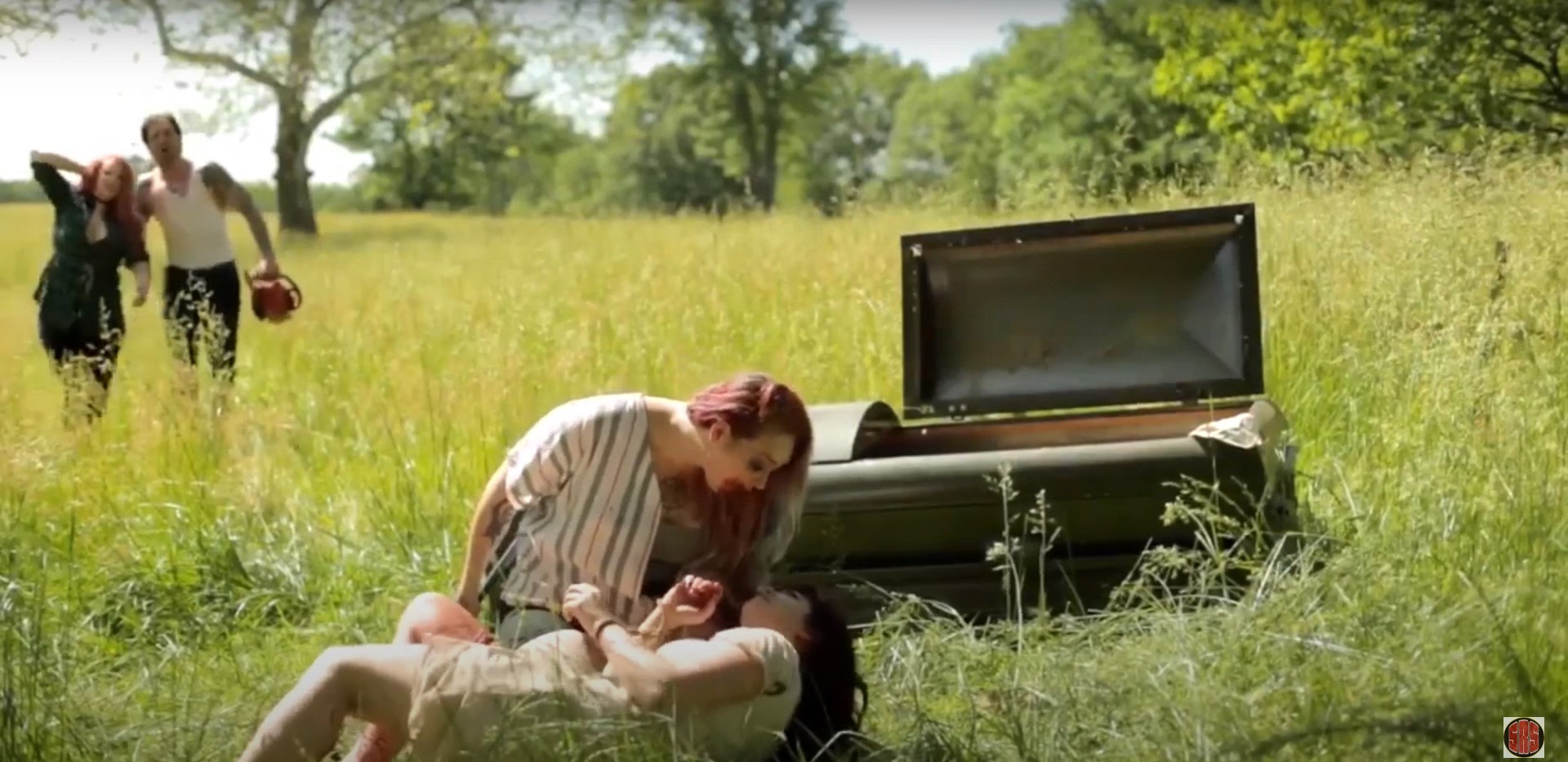
An experimental drug known as Dumitor has the promise to cure all known ailments but while the animal testing proved encouraging, scientists Donovan and Taylor need to prove their miracle formulation on people.  The formulation creates a mirror reversal of the right-handed nucleotides and the left-handed amino proteins in the biological DNA sequence that could contrary the effects of chronic sickness.  Halfway through the experiment trial, Dumitor appears to be working until one of the participants comes down with hallucinations stemmed by an overload of endorphins resulting in violent behavior.  A failed lockdown and execution of all infected puts the world on the precipice of a pandemic and video journalist Tracy aims to find out what happened to her cousin, one of Dumitor’s trial members, who has mysteriously disappeared.  As Tracy gets closer to the truth, the pandemic spreads, the violence spreads, and the coverup to debunk accusations and prominent names out of the media has turned to desperate aggressive measures by Dumitor’s benefactors.

Based on the actual scientific and controversial theory called Mirror Life and transposed as the basis for the 2025, American horror-thriller, “Mirror Life,” the movie, depicts the cinema sensationalized effects from the synthesized molecular theory put into practice on the human body and mind as the be-all and end all cure for persistent ailments, turning usually mild-mannered and sensible people into crazed and delusion killers being masked under a whitewashing umbrella.  Also known as “Mirror Life:  Modern Zombies,” the film is written and directed by former amateur boxer turned filmmaker Kazy Tauginas in what would be listed as his debut writing credit and directorial.  With that being said, “Mirror Life” is actually a doubled up and mirrored concept of itself in some weird kind of way as a different cut of the Brian Kazmarck written-and-directed “Terminal Legacy” from 2012 that has Tauginas as the story creator.  The plot above is essentially the same with the original shoots being spliced with the integrated documentary investigation from Jordan’s cousin Tracy and her cameraman, interwoven as a non-linear parallel extension to the original concept and re-released with a new title, with the genre hot term zombie thrown into the subtitle for good measure.  “Mirror Life” or “Terminal Legacy” part deux is a production from Crapshoot Productions, New Lease Films, Ugly Puppy Productions and Open Fire Films, produced by Aidan Kane, Louise M. Peduto, Nat Prinzi, Stanislav Puzdriak, Brian Smith, and Kazy Tauginas.

Tauginas also costars in the film as Jordan, a surviving trial participant and Tracy’s missing cousin who finds himself chin deep in Dumitor contagion and a prime target in a containment massacre of his fellow trial mates Lindsay (Tationna Bosier, “Supernaturalz:  Weird, Creepy, & Random), Rosemary (Elise Rovinsky, “Fog Warning”), and Keith (Corey Scott Rutledge) when disturbing signs of infection show.  The small sample group have a decent dynamic with Jordan and Lindsay become hot for each other, Keith donning the bad boy antagonist persona, and Rosemary bringing up the rear as the withdrawn woman as they interact with the three doctors conducting the experiments in a cautious and courteous Dr. Taylor (Cuyle Carvin, “Dolls”), a more confident formulation scientist Donovon (Bristol Pomeroy, “Devil and the Nail”), and a more charge-forth with testing and results in Dr. Campbell (“The House on Tombstone Hill) who have their own contentious dynamic when fast and loose trial and error butts heads with steady-as-she-goes testing.  The original “Terminal Legacy” shot cast has their story spliced with a documentary style investigation by Jordan’s concerned cousin Tracy, played by Courtney Cavanagh who was also in anthological spinoff short of “Terminal Legacy” subtitled “Lost Souls” which doesn’t connect with the Kazmarck feature.  Both “Terminal Legacy” and it’s subsequent, unconnected short tread into being a lesser-known version of the popular sci-fi horror series and movies of “Black Mirror,” hence the word mirror being used to attach “Mirror Life” onto the success of the Charlie Brooker written and produced creation.  The cast fills out with Lawrence Ballard, Sally Greenland, Erica Becker, Mako San, Marc Reign, and Brian O’Neill.

Two shoots from two different times mashed together to form a single narrative structure doesn’t come without any issues, also being a non-linear story that toggles time and characters also doesn’t help.  Yet, “Mirror Life” bulldozes its way to being sound with little overlap puzzlement and only sustaining portions of a la carte plot holes.  Kazmarck’s 2012 script and direction nail a successfully conceive pre-apocalyptic thriller narratively designed like a Steven Soderbergh’s “Contagion” released a year prior snuggly fit into the “Black Mirror” like mold.  Where “Mirror Life” becomes a choppy is with the present tense portion of the shot of video documentary, added in as surplus offshoot to perhaps clean up and close out “Terminal Legacy” with fleshier reel and complexity toward the coverup concept.  By using interchangeable lensed cameras and mock security CCTVs, the spliced in sections create a whole new aesthetic and feels that grasping connection to the original film.  Plus, Tracy’s connection and motivation doesn’t appease her drive to make a documentary or even explain why the compulsive, go-getting cousin is compelled to do the extra leg work for her cousin other than their quickly mentioning their blood relation; there needed to be a deeper conversation of exposition out of Tracy’s emotional vault to get the audience on her side for hounding doctors, sneaking into apartment buildings, and the, essentially, putting herself and her crew in harm’s way for Jordan.  In short, “Terminal Legacy” had the makings of a sufficient sci-fi and apocalypse thrills and chills but without actually seeing the film in its entirety, there’s no way to know if the Kazmarck production went into being development hell, shelved for budget reasons, or had a more incongruous outcome that warranted a redo.

Cleopatra Entertainment distributes “Mirror Life:  modern Zombies” onto DVD home video with a MPEG2 encoded, upscaled 720p, DVD 5.  Presented in a widescreen 1.78:1 aspect ratio, image quality ranges from a third person graded digital capture, a first person raw digital capture, and pseudo-CCTV filter.  For lower DVD storage and the range of perspectives, compression issues are limited to smaller banding issues albeit plenty of darker and negative space opportunities for those milky arch lines to appear.  The grading, however, has a bit of milky residue but not terribly soaked but does keep the black saturation diluted.  Textures around skin and clothing have limited emersion with a smooth or slightly splotchy limitation from the 5-gigabyte compression that has a feature plus bonus content and a soundtrack menu.  For Cleopatra Entertainment, “Mirror Life” is a rights only distributed release, meaning they do not own the music, or rather soundtrack, from the parent company Cleopatra Records.  However, the mix is still an encoded English Dolby Digital 2.0 that has some bite in decibel volume but still can’t quite compare to an uncompressed stereo with “Mirror Life’s” gun-firing, fist-throwing, and the infected guttural sounds; however, the Dolby compression factors into saving space for a decent picture and its accompanying special features.  More importantly, dialogue comes through clearly and prominent.  Bonus features include a director’s DVD commentary, outtakes, deleted scenes, a slideshow, and theatrical trailer.  Cleopatra Entertainment has been constant on packaging with a standard DVD Amaray containing stark and intriguing cover art, especially with “Mirror Life’s” Kerry Russell and Alexandria Deddario-esque Sally Greenland appearing manically and sepia toned with a pair of scissors on the DVD and disc cover.  There are no other physical supplements on the region free DVD that houses an 89-minute, unrated feature.

Last Rites: “Mirror Life” mirrors itself from 2012 with a retouched version of the original film, “Terminal Legacy,” with little-to-no differences and another name slapped on in the director’s section. The horror comes from an effective, scientific relevant story of side effects and coverups but does the Modern Zombies subtitle really, and I mean really, come into play here? It’s a stretch to say the least.

“Mirror Life” on DVD from Cleopatra Entertainment!

A Memory Fuels EVIL’s Sexualized Resurrection. “Scream of the Blind Dead” reviewed! (Full Moon Features / DVD)

“Scream of the Blind Dead” Now on DVD!

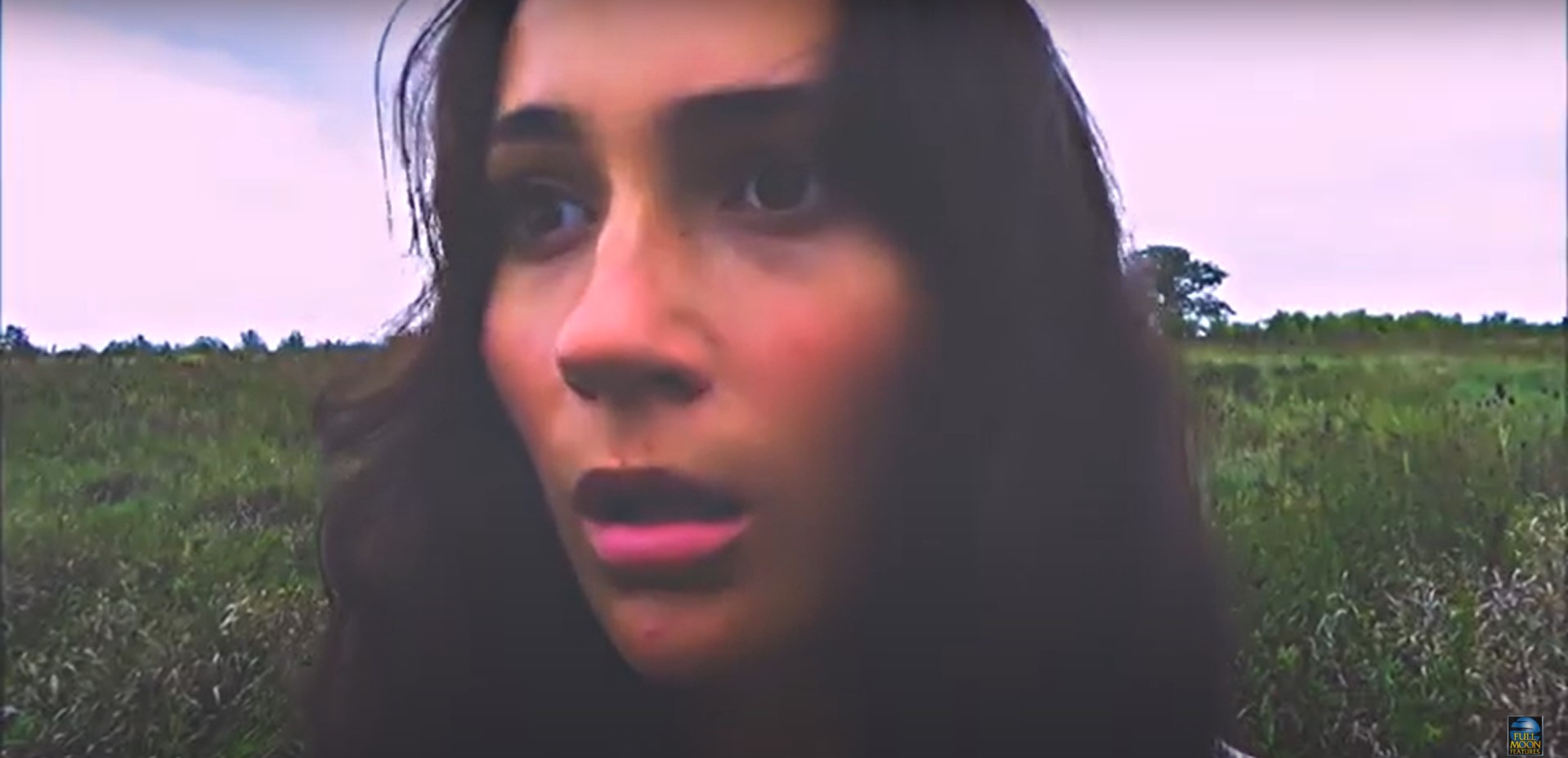
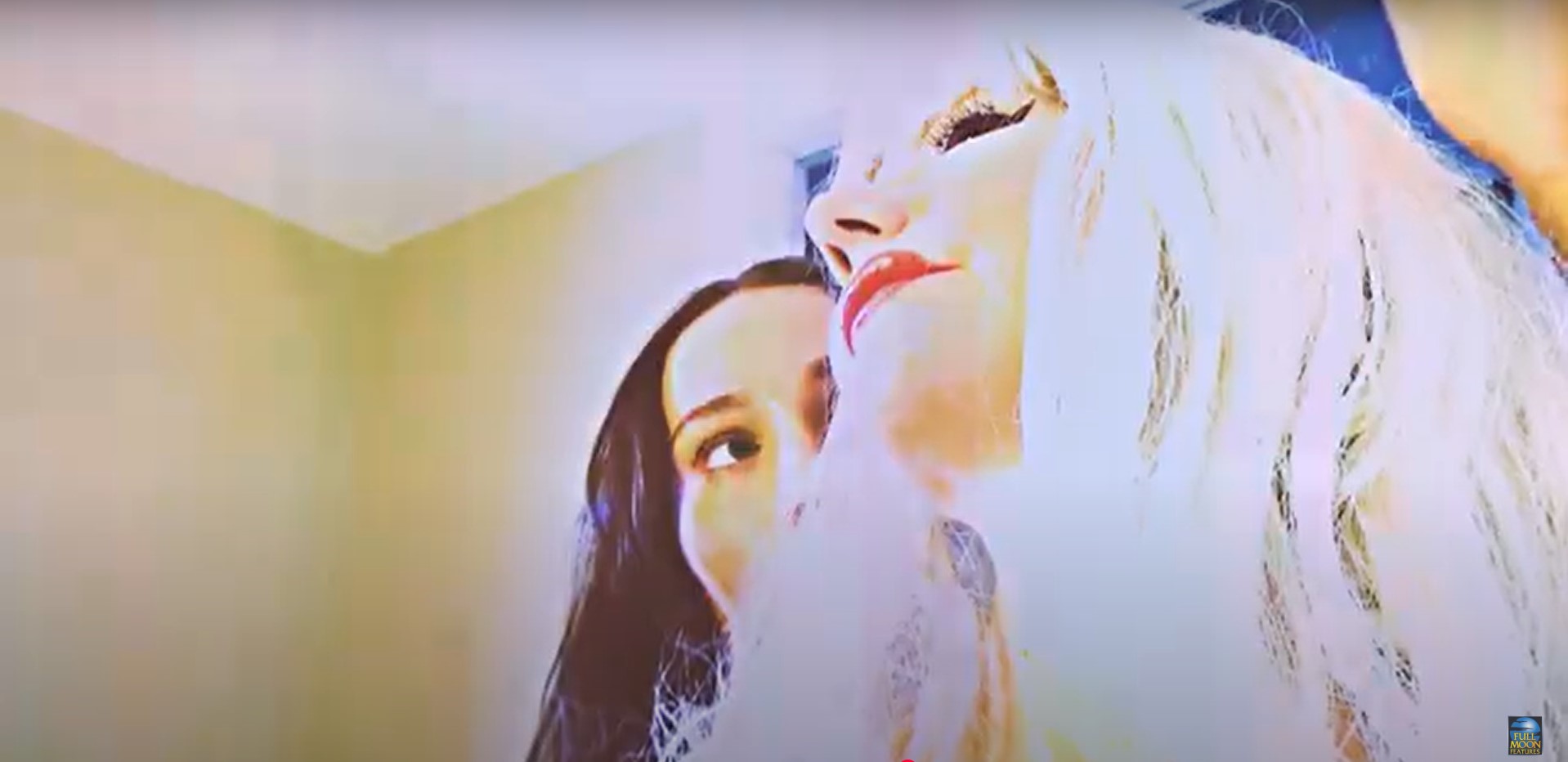
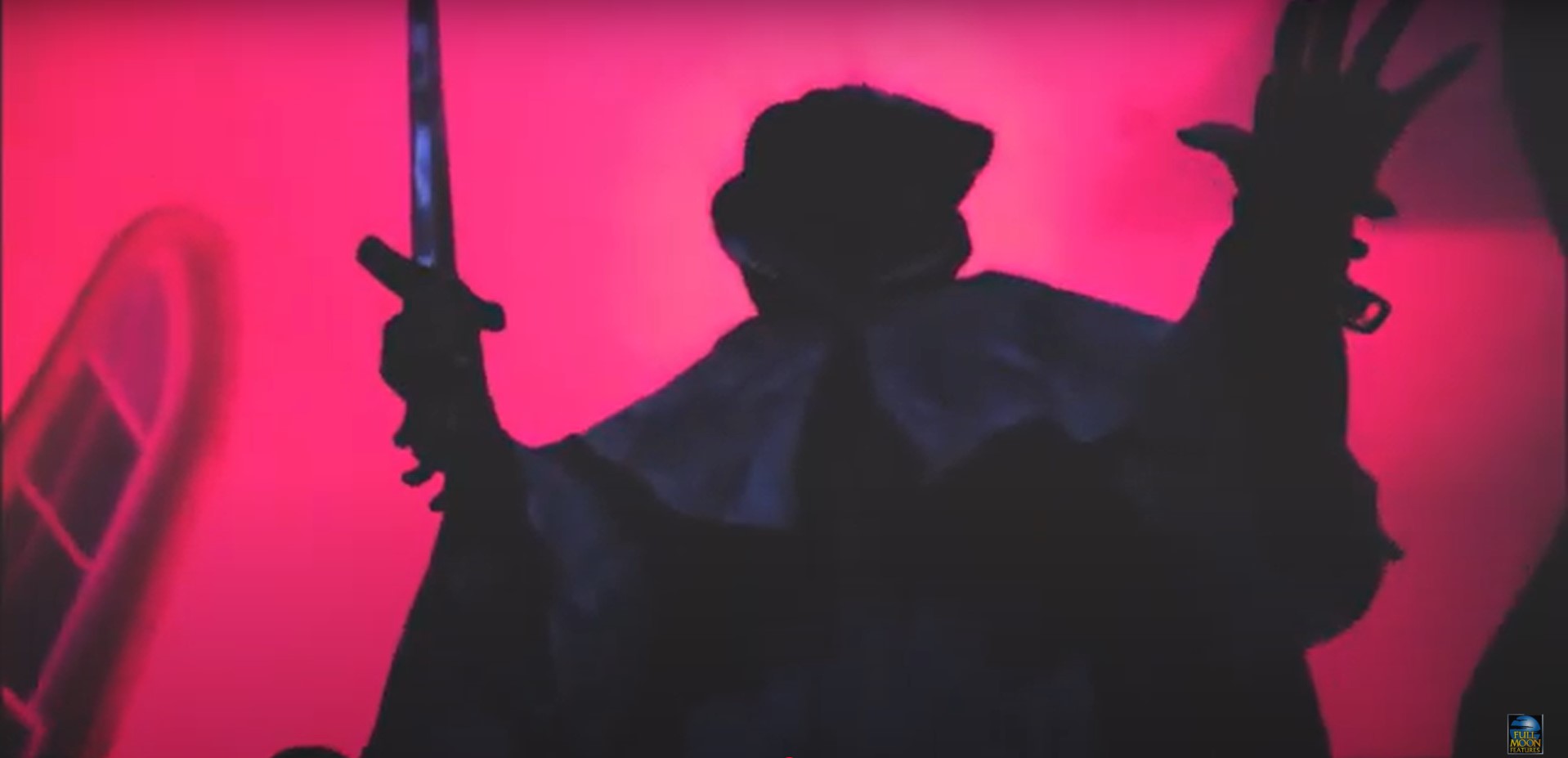
Arriving by train to the deserted, medieval ruins of a once great 14th century town, a woman wanders aimlessly through the dilapidated structures left standing and eventually finding a peaceful resting spot on a church pew before the Holy Trinity.  Alone with her amorous thoughts for another woman, her very presence stirs the awakening a blind undead corpse out from the slumbering, Earthly tomb, the resting place of a once righteous Templar knight of a prestigious order once assigned to protect Christian values with sword and shield but disbanded and accused of occult heresy.  Being chased from dark corner to dark corner inside the ruins’ isolated, labyrinth wall, the woman narrowly escapes the relentless knight’s bloodlust blade.  She is not only frightened by the razor-sharp sword of the ghostly, ghastly figure, a dirtily shrouded, mummified corpse, but what evokes within her, her own dark, secretive past of love, murder, and vengeance, will haunt her to death.  

Director Chris Alexander has settled himself in the realm of the homage.  The Canadian filmmaker is well-known for his tribute films toward specific directors and trope styles within the creepshow genre that allow him to express his own artistic take on a classic.  “Scream of the Blind Dead” is Alexander’s latest to follow suit based off the original concept and characters by Amando de Ossorio and the Spanish director’s Blind Dead series, beginning with “Tombs of the Blind Dead” in 1972 which is the featured inspiration of Alexander’s short remake film.  The 2021 homage is penned by the “Girl with a Straight Razor” director but is also progresses forward without dialogue in what is like a music video for Ossorio’s original film, slimmed down to the principal character and one blind undead knight for much of the story.   Alexander created Delirium Films, a Full Moon sublabel to release his own productions under, conjoining the once Fangoria editor to the hip of Charles Band, as coproducer, to stretch the imagination of terror even further.  Kevin Cormier and Cheryl Singleton also coproduce the short.

You won’t see a herd of horses or a horde of blind, rotting knights on horseback in the “Scream of the Blind Dead” nor will you there be a collective degree of humans fighting for against the dead for their very lives.  Instead, two women and one knight consist of the entire cast, pared down to the two chief female characters Betty and Virginia, though they’re not explicitly named in the story, but the gist of designation is there.  Betty is played by Ali Chappell, a mainstay regular in many of Chris Alexander directorial repertoire, having roles in “Necropolis:  Legion,” “Girl with a Straight Razor,” and “It Knows Your Alone” while also being quite the scream queen in other horror projects from the 2019 anthological “The Final Ride” to last year’s “Malediction” which she debuted as a director as well.  As Betty, the short-lived role sets the dark synth soundtrack-driven tone lengthened by use of slow-motion and additional edits to build suspense and does harp back to the premise and spirt of Ossorio’s brand of Spanish horror.  Not as seasoned as Chappell in credits, the casting of Virginia goes to Stephanie Delorme, a brunette in contrast to Chappell’s blonder shade, who finds herself being chased, melodramatically I might add, by an undead knight.  Delorme’s frightful face and lumbering getaway cadence have the hallmarks of a good final victim being pursued on common horror of past, present, and future but her direction to stop and stare, almost waiting in frozen terror, is reminiscent of yore when the act of escape is negated by the sheer shock.  These are the moments audiences yell at the screen, pleading for movement, to do something other than just stand there and gape at the monster before them.  Chasing Virginia is no ordinary templar knight but a female templar knight, played by all-things-horror enthusiast, musician, and another of Alexander’s on-screen regulars Thea Faulds, under her showbiz name of Thea Munster.  Munster dons two parts connected by death as Virginia’s lover in flashback and the ghoulish knight chasing Virginia. 

“Scream of the Blind Dead” has haunting connotations of past guilt or along the lines of the soul-touching past catching up to one’s beleaguered conscious, hence why Virginia wanders the countryside in search for answers, stopping or resting along the way into a state of pain or melancholy of a memory, and comes upon a church, perhaps unintentionally to confess her darkest sins or find solace in forgiveness.  However, it wouldn’t be a horror show without some fort of graveside penance from an unearthing corpse, slowly sauntering to seek eviscerating Virginia’s regret from her exposed, beach chic-cladded abdomen.  Right before being engrossed in the standard chase fair, scenes of Virginia self-groping from fantasizing the physical touch her female lover add a layer of sensuality yet to have context other than a strong passion within Virginia, whether it’s in her heart or loins is indeterminable, but shortly after singlehandedly pleasuring herself, a female knight, with pursed mummified lips, resurrects from inside the church where Virginia rests and the slow-motion macabre begins, moving about different backdrops within the ruins and field exteriors that are basked in neon gelled key lighting that creates a smokey psychedelic, or hallucinogenic, fever dream atmosphere, a nightmare experience only fabricated in deep-seeded guilt-trips.

“Scream of the Blind Dead” short salute to Amando de Ossorio and the “Blind Dead” series is honorable enough to keep the always nitpicking fanbase from picketing. Full Moon Features distributes the MPEG2 encoded DVD5 presented in 720p resolution and a widescreen 1.78:1 aspect ratio. Picture quality through a lower resolution and a patchwork of sizzling vibrant neon lights scores across a refined image with fuzzy details and indiscernible outlines. On the color scale, there’s plenty of range through the assortment of abrasive key lighting that illuminates the rustic, rundown church and surrounding area of mostly greens and browns. Sound selection offers a lossy English Dolby Digital 5.1 and Stereo 2.0 that absolutely has a soundtrack that trades the tings of a fortepiano for a theremin but still digs into the familiar tones of Antón García Abril’s ominous industrial-synth score that lingers eerily with resonating vocals. Very few moments do in-frame sounds from the actresses come over, entirely all screams in what was mostly done in post with a clear separation from action. Because of the music video approach with no dialogue, the lossy format is nulled by what’s really a psychosexual visual experience. English closed captioning is available. Special features a feature-length director’s commentary with Chris Alexander, two music videos including Thea Munster with her thermin solo entitled Werewolfry and the other track Burial Ground from her band Night Chill, the official trailer, and the Delirium Films’ trailers. Full Moon’s No. 355 title comes in a standard DVD Amary with a mixed illustration and live photo cover art that befits the body of work. There are no slipcovers, inserts, or other tangible materials set next to the disc pressed with the same knight silhouette but with a buzzing blue outline. At feature length, “Scream of the Blind Dead” would have been too long with Alexander’s stylistic outlet but at a crisp 40 minutes has a greater success rate for a not rated, region free releases that mostly lambent lights and ethereally evil sans actor dialogue.

Last Rites: “Scream of the Blind Dead” is not blind to the Ossorio source material and captures the core center of the Spanish director’s picture of history crusades on the ignoble never dies while Chris Alexander twists into it a fever dream of sexual fervor, slenderized for a post-impressionist style.

“Scream of the Blind Dead” Now on DVD!

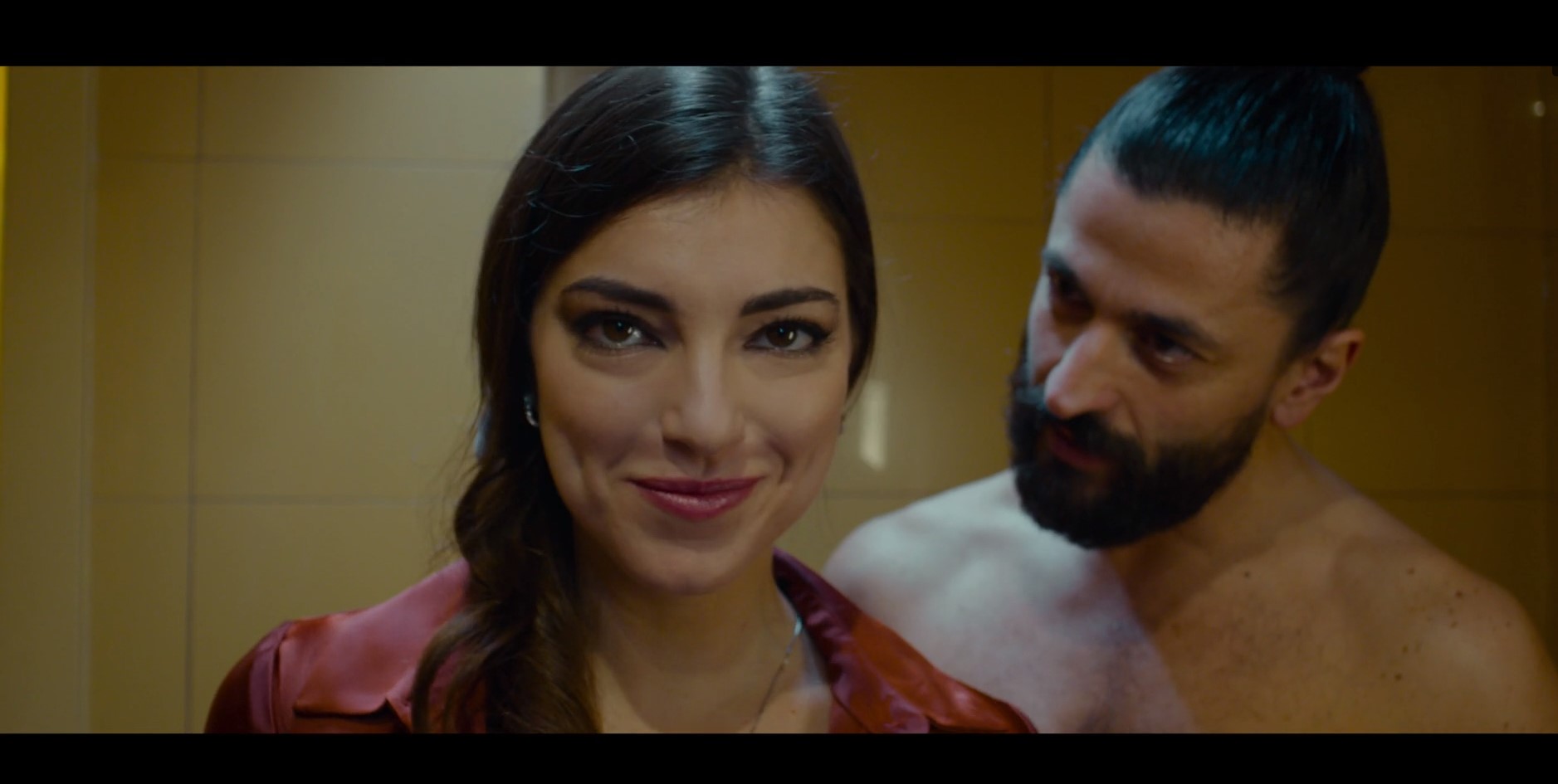
Playboy Discovers Vengeful EVIL’s Hidden BDSM Room A Little Too Snug. “Emanuelle’s Revenge” reviewed! (Cinephobia Releasing / DVD)

Emanuelle’s Revenge now on DVD from Cinephobia Releasing!

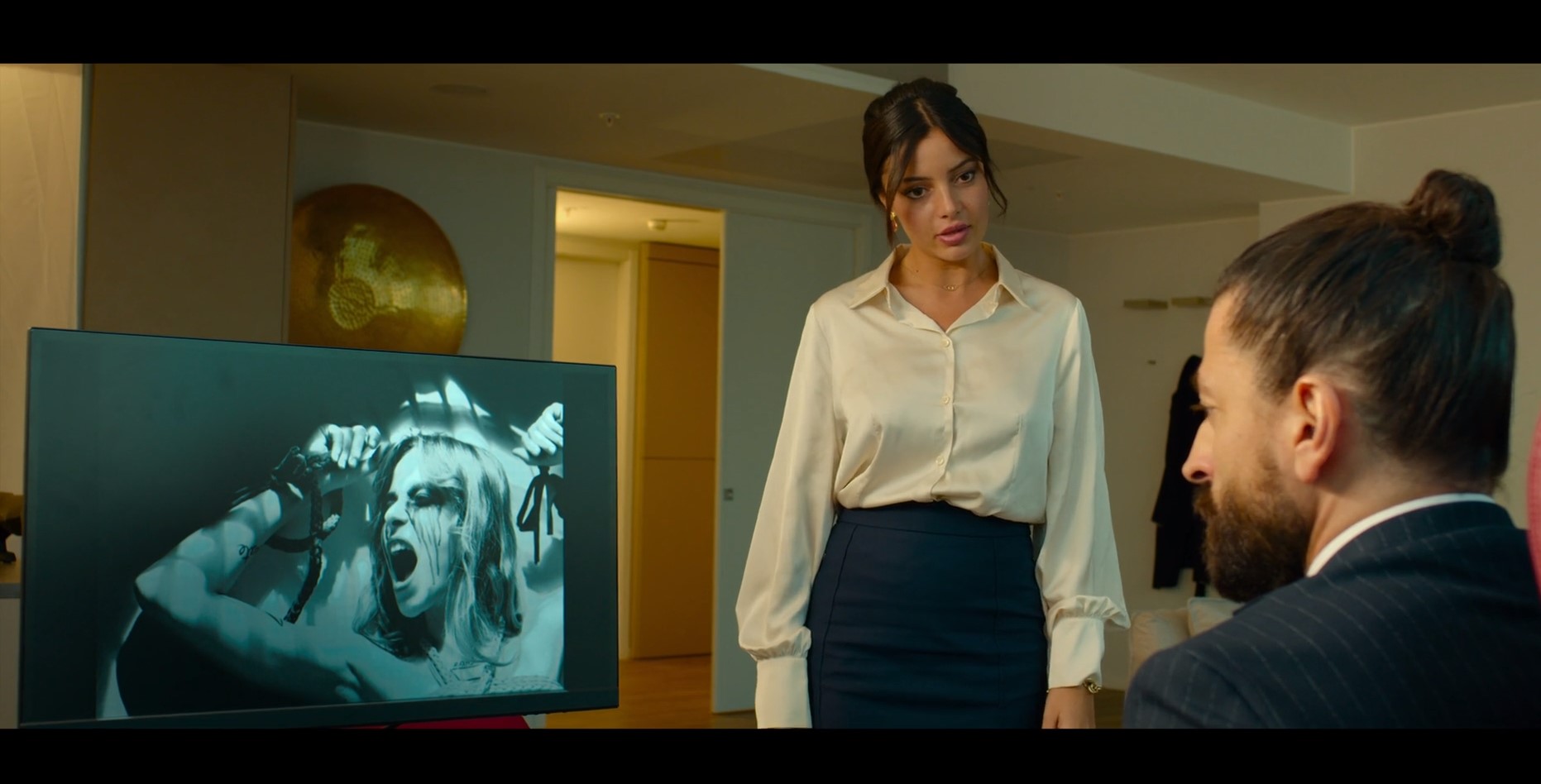
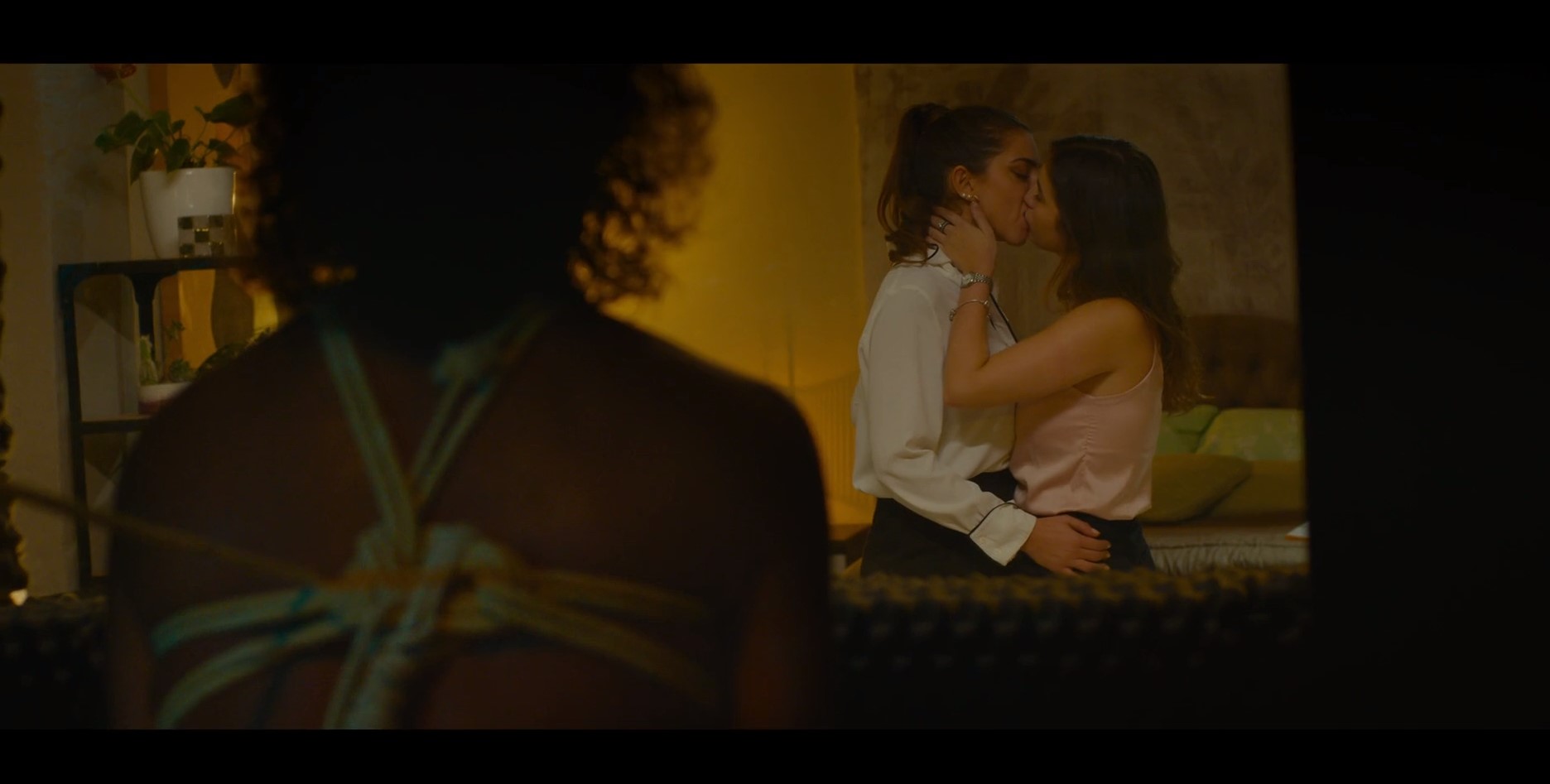
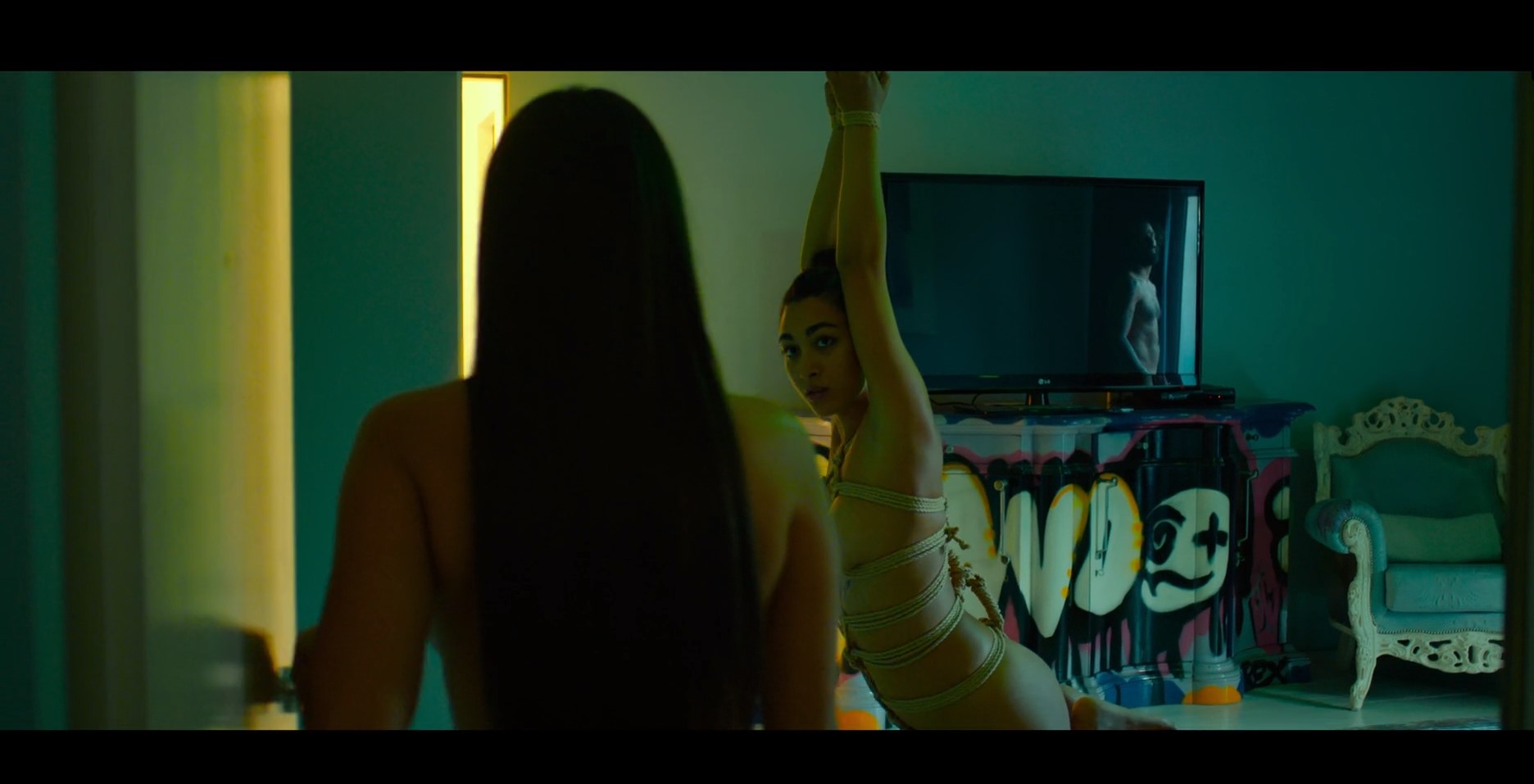
A wealthy businessman philanders his way through woman in a pursuit of satisfactory conquest.  The formidable challenge of bedding a hard-to-get woman arouses him and the chase is all that more thrilling and erotic.  His persistence and perfect man act pays off with up-and-coming model Francesca, but for the playboy, Francesca becomes another notch in his belt and quickly implodes Francesca’s romanticized relationship after a sexual tryst in the public eye.  A year later, he begins his surmounting quest again with Emanuelle, a renowned writer in a lesbian relationship.  The beautiful and darkly seductive woman catches his eye and the game begins as he uses every excuse to rendezvous with her despite the Emanuelle’s partner standoffish opposition, but as his tenacity appears to be paying off as she leads him on, awarding his constant charm with favorable kittenish returns, Emanuelle is actually leading him straight into the jaws of a deceitful plan.

Italian co-directors Monica Carpanese and Dario Germani are copiously inspired by the heyday of Italian Eurotrash cinema.  The actress-turned-debut director Carpanese has starred in a handful of erotic and horror thrillers of the prolific trashy filmmaker Bruno Mattei, such as “Dangerous Attraction” and “Madness,” while also having a principal performance in the 2022 sequel to Joe D’Amato’s notorious cannibalism film “Anthropophagus.  Her colleague Dario Germani is also the cinematographer for the spaced-out follow-up as well as establishing himself in the genre not as a filmmaker behind the lens but also a director with genre films under the belt with “Anthropophagus II,” a dissimilar lover’s anguish in “Lettera H,” and a snuff-slasher “The Slaughter.”  Carpanese and Germani’s next collaborating venture continues with another D’Amato influence mixed with the popular erotic series, and its tangent spinoffs, of Just Jaeckin’s “Emmanuelle” that has official and unofficial sequels spanning all through Europe with enticingly, titillating erotic stimuli and thrills.  Their explicit explication of the near 50-year-old sexy-laced franchise comes in the form of “Emanuelle’s Revenge.”  Dropping the second “m” along with the choice of similar story and title moves the film closer to being a remake of the Joe D’Amato “Emanuelle and Francoise,” aka “Emanuelle e Francoise” or “Emanuelle’s Revenge.”  Carpanese pens the Marco Gaudenzi and Pierpaolo Marcelli produced script under the production flags of Flat Parioli, Haley Pictures, and TNM Productions. 

“Emanuelle’s Revenge” is carried by a small, four-person principal cast and half that for peripheral players within a dual-timeline story that provides the same cat-and-mouse game but with different, yet shocking outcomes on both of them.  At the tip of the spear is playboy Leonardo played by Gianni Rosato.  Sporting his best bandholz beard and pony bun, Rosato’s aggressive entrepreneurship extends beyond the working stiff hours and into the extracurricular activities of hunting down and dominating the opposite sex to sate his kicks for kink.  As the primary principal, Rosata receives the screen time that digs further into Leonardo’s psyche and what’s revealed about Leonardo’s nature is obvious trouble with an aggressive flirtation to the point where his whole game is akin to a stalker, showing up unannounced where he knows his targeted woman will be, obtaining their property that he has no right to, and essentially sucking their face with really bellicose kisses that look like they hurt.  Okay, maybe the latter is more overzealousness on Rosata’s part but certainly adds to Leonardo’s alarming behavior to which women seem to be attracted to as if giving into the idea that women prefer bad boys.  Such as the case in the first narrative with Francesca, a promising model with a now sex-relationship smart attitude after a previous relationship went terribly wrong with revenge porn.  Played by Ilaria Loriga in her own credited role, the young actress isn’t quite the epitome of innocence but is understandably weary to fall in love again with the persistent Leonardo but with all the foretell warnings of a disaster in the making, Francesca’s penned as sorely naïve and having learned not one single lesson of her past relationship with promiscuous men.  A year later, in the second act’s story, Emanuelle strolls into the picture under the olive-skin and deep eyebrows of Beatric Schiaffino who bats enticing eyes of the titular character’s hidden agenda. Schiaffino’s crafts a demeaner starkly different against her previous year counterpart as Emanuelle’s coquettishness doesn’t refrain from the fact she’s already in a hot-and-heavy relationship and matching Leonardo’s hot-to-trot escapade with a come-hither that’s just out of his reach. If a rake beckons a game of amorous desire, then Emanuelle enacts a game of her own, one of a lure to lead the blind right into her spider’s web and Schiaffino properly tightropes pleasure and purpose to a somatosensory stimulation level. “Emanuelle’s Revenge” rounds out with Luca Avallone as Leonardo’s licentious friend and business understudy, Ilde Mauri as Emanuelle’s lesbian partner, and Miriam Dossena as Leonardo’s 20-something daughter who suddenly pops into play in the Emanuelle story.

Even though “Emanuelle and Francoise” has never traipsed across my eyes, from what I’ve read the Joe D’Amato and the coproduction of Monica Carpanese and Dario Germani share a lot in common, but the modern-day version of this sordid tale of lust and revenge sticks to the venereal veneer only whereas D’Amato engages a cannibalism and other ghastly horrors. “Emanuelle’s Revenge” seduces with melodramatics, frisky fantasies, and contemptible thralldom because of one man’s wandering libido, focusing tremendously on the building game of mostly pavalar rather than diving into shock value. The narrative begins with a suicide of Francesca, jumping half nude off a busy passenger vehicle bridge, and this segues into Leonardo’s assertive activity into Francesca’s life and so the tale’s non-linear format is already incredulously fated with tossed in opening scene just to grab attention. When following Leonardo’s uncomfortable pursuit, and uncomfortable henpeck kissing, of Francesca, the audience is just along for the ride up to the point of incident where they’re abruptly blue-balled by cut-to a year later without knowing why Francesca decided to throw in her life towel. The brain and our movie-watching experience eventually catchup with the fact everything will be explained at the climatic, but the format jars the assimilating process a tad. Throughout the narrative, there’s plenty of a T&A to go around as I believe nearly every actress with speaking lines drops at least her top, living up to the long history of “Emmanuelle’s,” or “Emanuelle’s” fleshy affluence and erotic elements. Considering the plot twist, Carpanese’s approach doesn’t compel any creativity into the mostly remade erotic-revenger and makes contact with formulaic properties that poison any kind of novel ideas that might have been indited in the inner story layers.

Arriving at number 8 on the spine for Cinephobia Releasing, “Emanuelle’s Revenge” is now on DVD, presented in a widescreen 2.35:1 aspect ratio. The MPEG-2 encoded DVD9 has a sleek look albeit tumbling through a bitrate spread of 5 to 7 Mbps. Some surface coloring suffuse, especially on skin where similar tones seep into the adjacent due to block boundary artifact, but the amount is very little and doesn’t sully much to render the picture an admixed wash in the lion’s share of soft lighting. Details are okay here with the stunning urban landscapes and more opened metropolitan venues, such as a rooftop party, opening up audiences to the chic levels of high society’s profanation of control and sex. The release offers two Italian language audio tracks: A Dolby Digital 5.1 surround and a 2.0 stereo. If asked, I would suggest less channels as they are redundant and useless and go for the 2.0 stereo as there’s not much frequential range in what is essentially a talking head film with an exposition driven narrative. Dialogue is clearly and cleanly stated overtop other audio layers with a powerfully boosted stock file soundtrack in parallel unison to the theatrics. English subtitles are optionally available and the error-free translations keep up with dialogue pacing. Only other Cinephobia Releasing film trailers, including “Brightwood,” “The Goldsmith,” “The Human Trap,” and “Amor Bandido,” are available bonus content. The black background front cover delineates deliciously Beatric Schiaffino as the titular Emanuelle sitting open robed, in thigh-high laced stockings, and on her wicker chair throne. This image reminds me of a mistake in this revealing scene with the very first image of Emanuelle sitting in the oversized back chair resembling closely the front cover image, but the subsequent scenes have her once flesh exposed chest to midriff covered up with censurable continuity. Inside the DVD Amary case lie no insert and the same provocative front cover Emanuelle image more centrally cropped down and blow up to emphasize the seductive siren. The not rated, 83-minute feature is limited to a region one playback. “Emanuelle’s Revenge” spices up the contemporary franchise with erotic entails, exorbitant egos, and illicit indecencies despite its sacrificing of pacing and organization for sleaze, skin, and a side dish of kink.


Emanuelle’s Revenge now on DVD from Cinephobia Releasing!

An EVIL Re-Imaging of a Donald Farmer Classic! “Savage Vengeance” reviewed! (SRS Cinema / DVD)

“Savage Vengeance” now available on DVD home video!

Best friends and law students Tara and Meghan take a much needed depressurizing road trip and run into a Ronnie and Thom, a pair of locals with car trouble looking for assistance at the nearby gas station.  Hesitate to offer a ride, Tara agrees to their proposal of a life for sleep accommodations at Ronnie and Thom’s lake house in the Ozarks.  A serene lake and a drink in hand relaxes Tara’s foremost suspicions about the sketchy couple who seemingly chill and all about a good time catering to Tara’s stressed out needs.  The next thing Tara remembers is waking up to Ronnie and Thom standing over her, tied up, and her and Meghan threatened to become dinner for a pair of bloodthirsty cannibals who’ve just about wrapped up their previous viscera meal, but Tara isn’t as innocent as she appears as she shares the same killer instinct as her captors.  A struggle ensues, the tables begin to turn, and what was once prey has now become the predator!

A re-imagining of Donald Farmer’s 1993 original of the same title starring “I Spit On Your Grave’s” Camille Keaton, director Jake Zelch takes a pun-intended stab at “Savage Vengeance” with a twist in the schlocky sordid and dark tale by replacing Farmer’s original motivation for revenge for cannibalistic carnage.  “The Haunting of Mia Moss” and “The Dark Web Tapes” director helms Farmer’s story as a base while attempting a revamp and build upon with new characters and new plot devices along with contributing screenwriting by “Another Evil Night’s” Jason Harlow and “Lycanimator’s” Sébastien Godin.  Shot in Tennessee, “Savage Vengeance” is a production of Zelch’s Missouri based company, Unreality, and is produced by the filmmaker and headlining star Tamara Glynn (“Halloween 5:  The Revenge of Michael Myers”) with Donald Farmer and Curtis Carnahan as executive producers, marking the third feature film collaboration between Carnahan and Zelch.  Stratosphere Films handled the theatrical distribution.

Zelch’s “Savage Vengeance” has an identity problem.  Having reformulated the original premise, which doesn’t offend me as I think reinventing the wheel can sometimes be fresh and creative under the same directive title, the script has trouble nailing down a proper principal by shooting, by my count, three different segments disconnected from each other and with three different protagonists leading the charge in each.  Tamara Glynn receives top bill despite only garnering about 10 minutes of screen time in the beginning due to much of the opening footage being lost due to backup hard drive failure, according to Zelch on the director’s commentary.  The “Terrifier 2” and “Halloween 5” actress is essentially captured, chained, and trying to find a way out after waking up in a scarce-looking attic but because of her aforesaid credits, the DVD front cover banner head makes for a great advert sell point.  Instead, modern scream queen Roni Jonah (“Kill, Granny, Kill!,” “The Bloody Man”) becomes the runtime face of “Savage Vengeance” as Jake Zelch intends for the girth of the story.  Jonah, as Tara, paired with Jasper Evans as best friend Meghan heading toward an in schtook situation not only the cannibals on the road ahead but internally with rape, pregnancy, and a dysfunctional love triangle that has more to do with illicit lust than love with Tara’s boyfriend David (Dave Ivan), a theme much closer to the original essence of Donald Farmer’s rape-revenge exploitation.  However, what’s assumed is taken for granted and not utilized to all its pathways the concept could have complexed the characters rather than freezing them in a face value understanding.  That understanding comes a tool against cannibals Ronnie (Kat Underwood) and Thom (Cody Alexander, “Eat the Rich”) who are your typical crazed anthropophagus antagonists, as well as sadistic sodomist as we see with Adam Freeman’s (“Debbie Does Demons”) character, of film.  When these characters meet and try to be merge an acquaintance or friendship, in Tara’s shoes, I might just be a little more judgmental of two heavily tattooed wanderers, the male sporting a knife sheathed in holster around his backside as he walks around his wifebeater tank-top, handing out to me mysterious drinks on their isolated, rural property.  The whole setup doesn’t do the story justice to Tara’s decision making but then again, she’s not as pulled together as Zelch’s useable footage relays.  The third segment pops up after initial closing credits with Jessa Flux (“Debbie Does Demons”) to possibly offer up an imminent sequel “Savage Vengeance 2:  Better Off Dead, starring Flux.

Almost seems unfair to cover and review Zelch’s “Savage Vengeance” because of so much of the footage being forcibly cut and the shot narrative going through essentially restructured surgery to make pieces segue and make sense on screen.  Honestly, the recut doesn’t work, leaving too much unanswered and too much to decipher to put a solidified stamp on the series of events.  Thus pushing forward the abridged cut may warrant an impartial review until a more definitive, complete cut sees the light of day.  The material “Savage Vengeance” shows currently splices together the MPEG files that survived the great blue screen of death and transfer fail, such as with the Tamara Glynn opening that’s only connected by the brief present of Ronnie eating cat guts and Thom surprising and looming over Glynn before her deafening scream.  The additional footage explained by Zelch added context to the cannibals and provided a memorable kill to setup the tone of Zelch’s homage to late 70’s rural horror.  Fortunately for Zelch, horror fanatic brains are wired differently, able to fill in most of the gaps of a formulaic building blocks; however, the success of this can also be attributed to Zelch’s scramble editing to make a semi-intelligible story with what’s left contextless of the low budget nitty-gritty.  Another highlight is the blood with pretty-penny special effects from the multi-hat wearing Kat Underwood and her colleague Erin Felts who drum the gore the best they can with prop dummies for splitting in two, a whistle dogged dildo-penis gag, and saucy blood and guts to give the film the edge it needs to tribute Farmer’s ferociously.

I’ve said it once and I’ll say it again, I do applaud SRS Cinema’s time, effort, and creativity in the physical media artwork as the gorgeously dripping blood, sex, and horror pulp is quintessential eye candy for fans in what is typically a microbudget and mediocrity poor effort in the graphic cover art department of terribly arranged and hack job compositions. None of that rubbish here with many of the SRS Cinema titles, including “Savage Vengeance” on DVD.  The 1.85:1 widescreen and 720p standard definition presented DVD5 might have a deliciously illustrated cover but the film itself is marred by the artificial VHS overlay of tracking lines and macroblocking, especially when Zelch aims for a 70’s exploitation veneer that was mostly 16 or 35mm.  Instead of a grainy-laced, dirt-spotted, cigarette-burned, and scratched up celluloid frames, or a resemblance of something akin to it, “Savage Vengeance’s” aesthetics only bask in the softer details of lower resolution clarity and in the ethereal of a delicate lighting that eliminates shadowy contours that offer depth.  Frame rate also seems to be slow down some sporadically throughout as well as the erratic focus as if you’re coming out of sleep and trying to regulate your eyes from dark to light.  The English Dolby Digital 2.0 audio mix stems from the onboard, built-in camera mic that captures the surroundings which has pros and cons, such as diluting the dialogue to a subdued audible.  Not a ton of balance from the surrounding environment when augmented sounds, like the zaps of the electric fence or the overpower roar of chainsaw decibels that don’t change in closeups or wide shots, make their way into the fold.  No subtitles are available.  Bonus features include a Jake Zelch commentary with scene-by-scene backstory and explanation as well as the full explanation of his lost footage, actor Adam Freeman commentary that revolves around his acting craft, male nudity on screen, and his opinions of rape and sexual assault in general, a gallery slideshow, and the feature’s trailer.  Aforementioned, the illustrated cover of Tamara Glynn looking slyly and sexy holding a blood chainsaw is primo quality on front of the standard DVD case.  Inside lies no insert and with the same image on the disc art. Until a completely restored version of director Jake Zelch’s vision, the filmmaker’s “Savage Vengeance” can barely stand as perspicuous testimony of an uncalled for 30-year-reimagining.

“Savage Vengeance” now available on DVD home video!

EVIL Inspires a New Concert. “Nightmare Symphony” reviewed! (Reel Gore Releasing / Blu-ray)

“Nightmare Symphony” is a Falsetto of Praise for Lucio Fulci.  Purchase the Blu-ray Below!

Unable to cope with another large box-office failure, the American indie horror director, Frank LaLoggia, is in the travails of a make-or-break psychological thriller overseas in Kosovo.  With an executive producer forcibly pulling LaLoggia’s creative marionette strings and the film’s screenwriter displeased and disapproving LaLoggia’s arm-twisted version of the story, the struggling director finds himself frantic and in the middle of a breakdown caught between a rock and a hard place with a postproduction from Hell.  Those around him, the conceited producer, the upset screenwriter, the pushy wannabe actor, and more, are being hunted down and brutally murdered by a masked killer and the imaginary line between Frank’s reality and paranoia grows in intensity coming down the wire of completing his career-saving, or rather lifesaving, film.

Long time since I’ve heard the name Frank LaLoggia enter the dark corners of my brain as it relates to the horror genre.  The director of 1981’s “Fear No Evil” and 1995’s “Mother” had seemingly vanished from the director’s chair spotlight and more-or-less, or rather more so than less so, vanished from the broader film industry altogether.  Then, Domiziano Cristopharo’s “Nightmare Symphony” suddenly drops on the doorstep and there’s Frank LaLoggia, starring in the lead role of an Italian horror production.  Domiziano, known from his entries of extreme horror, such as with “Red Krokodil,” “Doll Syndrome,” and “Xpiation,” engages LaLoggia to act in an unusual role, as himself, and turns away from the acuteness depths of uber-violence and acrid allegories to a toned down, more conventionally structured, narrative inspired by the Lucio Fulci psychological slasher “Nightmare Concert,” aka “A Cat in the Brain.” Co-directed with first time feature director Daniele Trani, who also edited and provided the cinematography, and penned by the original screenwriter of “A Cat in the Brain,” Antonio Tentori, “Nightmare Sympathy” plays into questioning reality, the external pressures that drive sanities, and weaves it with a meta thread and needle. The 2020 release is produced by Coulson Rutter (“Your Flesh, Your Curse”) and is an Italian film from Cristopharo’s The Enchanted Architect production company as well as companies Ulkûrzu (“Cold Ground”) and HH Kosova (“The Mad MacBeth”).

Much like “A Cat in the Brain,” Frank LaLoggia depicts his best Lucio Fulci representation as a horror filmmaker whose storyline production mirrors the individual slayings surrounding him. As a character, LaLoggia is not entirely aware of the murders as the peacock headed slasher’s string of sadism runs parallel to LaLoggia’s post-productional workload. Cristopharo pays a simultaneous tribute to not only Fulci but also LaLoggia with a built-in brief, off-plot moment of the editor, Isabella, a good friend and longtime partner of LaLoggia, running a reel of “Fear No Evil” to reminisce over his debut picture. Antonella Salvucci (“Dark Waves,” “The Torturer”) plays Isabella but also LaLoggia’s pseudo film lead actress Catherine in a dual role performance with the latter marking Salvucci’s topless kill scene that hits and sets up the giallo notes. Isabella denotes the director’s only real friend with everyone else, from the screenwriter to the executive producer, push their own self-gratifying wants onto the American filmmaker from all angles. A vulgar herd of personalities descend upon LaLoggia to exact their strong-willed ideas on how the film should appear and be marketed. From the screenwriter Antonio (Antonio Tentori, ‘Symphony in Blood Red”), the imposing desperate actor David (Halil Budakova, “Virus: Extreme Contamination”), to the uncultured and pushy executive producer Fernando Lola (Lumi Budakova) and his aspiring actress Debbie (Poison Rouge, “House of the Flesh Mannequins”), they all look to exploit LaLoggia’s modest career for their own benefit. Performances vary with a range of experience, and we receive more noticeably rigid recites and acts from the Kosovo cast in a clashing pattern with the Italy cast that has worked with Cristopharo previously. Ilmi Hajzeri (“Reaction Killers”), Pietro Cinieri, and Merita Budakova as a chain-smoking lady stalker that has glaring eyes for Frank LaLoggia.

While not necessarily thought of as a remake, “Nightmare Symphony” is certainly a re-envision of the Fulci’s “Cat in the Brain.” What Cristapharo and Trani don’t quite well connect on is connecting all the pieces of the psychotronic puzzle together into what is meant to be expressed. The giallo imagery is quite good, a praise of the golden era period in itself, with a mask and glove killer, the closeup of gratuitous violence, most of the score, and the stylistic visuals imparted with ominous shadow work, foggy and violent dream sequences, and with congruous cinematography and editing of earlier giallo. Plus, audiences are treated to not only the aforementioned Antonio Tentori, screenwriter of “Cat in the Brain,” but also have composer Fabio Frizzi score the opening title. Frizzi, who has orchestrated a score of Lucio Fulci films, such as “Zombie,” “The Beyond,” “Manhattan Baby,” and even “Cat in the Brain” just to select a few notable titles, adds that proverbial cherry on top to evoke Fulci directing “Nightmare Symphony” vicariously through Cristapharo and Trani. There are some questionable portions to reimagining’s take on the original work that are more the brand of the contemporary filmmakers. The presence of death metal prior to one of the kill moments puts the overall giallo at odds with itself in a fish out of water aspectual scene composition. Another out of place component are the external characters that are not directly involved with LaLoggia’s peacock-head themed slasher; the ironical venatic of an animal hunting down people is the reversal of a Darwinism theory that instead of sexual selection, the beautiful and elegant peacock forgoes using grace to attract and aims to survive by natural selection and thus the killer kills to remain alive. However, the story and the directors never reach that summit of summation and with the oddball characters adrift from the core story – such as the stalking woman and the eager actor – “Nightmare Symphony” flounders at the revealing end with its severe case of blinding mental delirium.

With a cover art of an upside skull overfilled with film reels and unfurling celluloid through the soft tissue cavities, “Cat in the Brain” continues to be reflected in “Nightmare Symphony” up to the release’s physical attributes on the Reel Gore Releasing’s Blu-ray. Presented in on a AVC encoded BD25, with a high definition 1080p resolution, and in a widescreen 2.35:1 aspect ratio, the Reel Gore Releasing espouses the Germany 8-Films’ Blu-ray transfer for a North American emanation, which might explain some of the complications with the bonus features that’ll I’ll cover in a bit. Situated in a low contrast and often set in a softer detail light, “Nightmare Symphony” doesn’t pop in any sense of term with a hazy air appearance and a muted color grading that goes against the giallo characteristics, especially when the clothing and set designs have the same desaturation or are colors inherent of low light intensity. Despite appearing like a slightly degraded transfer on a lower BD storage format, compression issues are slim-to-none with artefacts, banding, or blocking and this results in no tampering edge enhancements or digital noise reduction. The release comes with three audio options: A German DTS-HD 5.1, German DTS-HD 2.0 Master Audio and an English and Italian DTS-HD Stereo 2.0 all of which are Master Audio. The German audio tracks are a dub from the 8-Film Blu-ray and the 5.1 offers an amplified dynamics of the eclectic soundtrack and limited environment ambience. Dialogue remains outside the dynamics on a monotone course but is clean and clear with good mic placement and a neat, fidelity fine, digital recording. The German dub has a distinct detachment from the video because of its own layer environment, sounding a little sterile than the natural English or Italian, but works well enough as expected with the supplement multi-channel surround sound. English SDH and German subtitles are optional. Bonus contents feature a behind-the-scenes which is entirely just a blooper reel, an English language interview with co-director Domiziano Cristopharo whose secondary language is English, the original soundtrack playlist, and the teaser and theatrical trailer. I mentioned an 8-Films’ transfer complication with the bonus content because there’s is also an interview with Italian screenwriter Antonio Tentori that’s only in German dubbed and subtitled with no option for English subtitles or dub. When you insert “Nightmare Symphony” into your player, an introductory option displays to either pick German or English and I considered this to be the issue for the German only interview with Tentori; however, that is not the case as both country options are encoded in German for the interview, so at the beginning option display, I would recommend the German selection because the setup will have contain all audio options for the feature whereas the English selection will only contain the English 2.0. Reel Gore Releasing’s Blu-ray comes housed in a red snapper case, the same as the company’s release of “Maniac Driver,” and has a less tributing reversible cover art with more revealing and illustrated aspects of the narrative. The release is region free, unrated, and has a runtime of 78 minutes. Another little fun fact about the release is the incorrect spelling of the director’s name on the back cover that credits his surname as Christopharo instead of Cristopharo. Influenced by Lucio Fulci beyond a shadow of a doubt, “Nightmare Symphony” proffers the Horror Maestro’s less notable credit with a companion piece that punctuates both films love for the giallo genre, love for the violence, and love for the morbidly unhinged human condition.

“Nightmare Symphony” is a Falsetto of Praise for Lucio Fulci.  Purchase the Blu-ray Below!