After EVIL Was Executed, A Movie Was Released! “Monster” reviewed! (Second Sight Films / Blu-ray)

Own Second Sight Films’ Blu-ray of “Monster.” Order Here!

Aileen had big dreams and big ambitions to be someone in life.  Growing up, she did what she had to do to get ahead, even if that means selling her body at a young age when she had no advantages unlike her peers.  Now getting longer in the tooth, Aileen still unhappily hooks to live hand-to-mouth, day-by-day, just to survive cruel circumstances.  When she meets Selby, a young, lonely lesbian looking for friend, the two become attached at the hip becoming exactly what each other need at that moment.  The two become intwined was not only friendship but passion as Aileen promises to quit the streets and make a better life for her and Shelby but when one of the last nights of prostitution winds up almost killing her and her unloading bullets into attacker, Aileen succumbs to a taste for murdering sleazy men in order to satisfy Selby’s love.  How far will Aileen go to achieve her dream?

The sad story of Aileen Wuornos life is much more than the serial killer segment she’s most infamous for.  Wuornos unlucky dealt hand could be considered the archetype of white trash narratives being born to teenage parents, practically raised without role models or stable parents, sexual and physically abused by those close to her, impregnated during the middle of her high school teen years, kicked out of her grandparents’ house, and learned to survive through the old profession of prostitution.  Yet, all that tragedy is not in the story that is about to unfold before you in “Monster,” the 2003 biopic thriller from “Wonder Woman” director Patty Jenkins.  Mostly authentic with bits and pieces adjusted to protect individuals from the public eye, “Monster” accounts for what Aileen is responsible for, the multiple slayings of clients who were accused by Aileen as rapists and abusers during their sexual transaction.  Also touch upon, and in a very heart-rending sense, is Aileen’s love for another woman and how their relationship crumbled under the stress of life’s tremendously unfair hard knocks.  Jenkins writes-and-directs the film with Wuornos’ blessing under the multiple production umbrella of Media 8 Entertainment, New Market Films, Denver & Delilah Films, K/W Productions, DEJ Productions, and, in association with, MDP Worldwide. 

To play labeled America’s first female serial killer, Patty Jenkins sought after Charlize Theron who, at that time of the early 2000s, was hitting the height of her career having starred alongside Keanu Reeves and Al Pacino in “The Devil’s Advocate,” Johnny Depp in “The Astronaut’s Wife,” and Mark Wahlberg in the remake heist film “The Italian Job.”  Theron, a stunning woman who became the epitome of glamour and beauty in the eyes of Hollywood, put herself through a transfiguration for the role of Aileen Wuornos.  Gaining weight and capturing Wuornos mannerisms and thoughts-process to play, as close as possible, the woman who would go on to murder 7 men in late 80s, early 90s.  Play is perhaps too broad of term for Theron who depicts a drastic overhaul of her looks and her idiosyncrasies to recreate Wuornos in the flesh and in the mind, creating a lifelike illusion of Wuornos on screen that garnered her an Oscar.  Theron’s costar, however, did not dress the part of Aileen’s real-life lover who opted to remain in the shadows of a private life, disconnected from her past sordid by true life crime.  That costar is none other than Christina Ricci.  The “Addams Family” and “Sleepy Hollow” star adds a slender, petite, fictional companion as lonely-lesbian Selby Wall against, who we know more about today, was a heavier set and butch woman that was Aileen’s romantic partner, Tyria Moore.  Jenkins invokes a sense of loneliness between the two women who find each other when they need each other the most, at the lowest point in their lives, and when their journey together seems hopeful, bright, and prosperous, life’s muck and judgement comes raining down life hellfire.  Aileen’s series of johns make up the rest of the cast and a few have familiar faces, such as Pruitt Taylor Vince (“Identity,” “Constantine”), Scott Wilson (“The Walking Dead”), Marc Macaulay (“Wild Things”) and Lee Tergensen (“The Texas Chainsaw Massacre:  The Beginning”) with Tim Ware, Brett Rice, Marco St. John, and the Oscar winner Bruce Dern (“The Burbs’) rounding the cast out. 

Having been released over two decades ago, “Monster” still retains relevance even when the real-life Aileen Wuornos no longer breathing after her execution in 2002.   “Monster’s” focus isn’t about the episodic killings of a laundry list of varietal behavioral clients who either seek sex out of loneliness or seek it for other devilish, wicked means as Patty Jenkins hones in on a more strung along motif of loneliness that connections not just our principal characters but, in a way, most of the Aileen’s men, the clients.  Baked and weathered by the hot Floridan sun and about as vocally turbo-charged as they come, Aileen isn’t the most beautiful street girl, and not even the most pure and refined soul, but provides a service, a service of warm skin, closeness, and pent-up relief.  In turn, that same service becomes her jailor and her undoing, shackling and imprisoning her growth form an early age, stemmed by a childhood she didn’t have, that didn’t allow her to become somebody and to make something of her downtrodden existence.  The murders are in a backseat, second fiddle to that blossoming love story between her and Selby that engulfs and drives the violence that seeks no end.  Itty-bitty details shine through into Aileen’s humanity, as a perk of the person rather than the monster she’s perceived after the fact, after the trail, and after her capitalized death.  Patty Jenkins sought to make an homage as the reason rather than just the basic news coverage of Aileen Wuornos and achieved eye-opening success.

Second Sight Films invests into a new Blu-ray release with new content encoded onto AVC, 1080p resolution, 50-gigabyte disc, scanned in 2K from the original 35mm film and presented in a 1.85:1 widescreen aspect ratio.  What’s impressive about the Second Sight release is retaining the natural looking grain of celluloid film.  Hues are approached organically without an overabundance of grading and this release sees to preserve “Monster’s” hard-edge and enough definitional nooks-and-crannies, especially around the weathered skin and fibrous features of Aileen Wuornos biological appearance.  The Blu-ray comes with two lossless, English audio options:  DTS-HD Master Audio 5.1 and a LPCM stereo 2.0.  Both offers true fidelity through the layers of range and depth but whichever A/V setup you have will dictate the format you choose.  However, the Stereo option is a good, well-rounded, full-bodied option for all as “Monster” is more a talking narrative than a caffeinated spear of action, but the rear and side channels due funnel a nicely diffused environmental ambience of highway traffic and some supplementary crowd noise underneath a well-verbose and amply clean and clear dialogue track.  New, exclusive content line the special features option on the fluid menu, such as a new interview with Patty Jenkins Making a Murderer that goes into depth about her relationship with muse Aileen Wuornos through conversation and letters as well as Charlize Theron’s transformation and performance, a new interview with producer Brad Wyman Producing a Monster, and a new interview with Director of Photography Steven Bernstein Light from Within that captures a late 80s-early 90s without infusing artificial concealer.  Other supplementals available are an audio commentary with director Patty Jenkins, actress Charlize Theron, and producer Clark Peterson, the evolution of the score featurette, deleted and extended scenes with Patty Jenkins commentary, a making-of featurette that bases the film out of being a true story, and the original theatrical trailer.  For a standard Blu-ray release, Second Sight provides a ton of content; however, there are no physical goodies, nor does the standard release come in a rigid box.  Inside a green Amary case, the single sided front comes, in what has become a prolonged motif amongst Second Sight releases, with a two-tone of black and blue or black and purple and austere cover art of Theron’s portrayal of Wuornos looking worn down.  The UK certified 18 release for strong violence and sexual violence has a runtime of 109 minutes and is hard encoded region B locked so you’ll need either a region B or region free player for playback in the Americas.

Last Rites: A beaut of a Blu-ray for the now over 20-year-old “Monster” that sees new content and insights that cast less shade over a troubled existence that inflicted real life killer Aillen Wuornos. Patty Jenkins and Charlize Theron do the story justice and Second Sight Films just follows suit with enhancing its story told quality.

Own Second Sight Films’ Blu-ray of “Monster.” Order Here!

Josef’s Little One-Day Video Diary Bares Unnerving EVIL! “Creep” reviewed! (Second Sight Films / Limited-Edition Blu-ray)

“Creep” on a Limited Edition Second Sight Films Boxset!

Aaron, a videographer, travels to a lakeside cabin in Crestline, California after responding to an online ad for a single day’s worth of work.  There is where he meets Josef, a husband and soon-to-be father dying of terminal brain cancer who wants to film the entire day as a memoriam video for his unborn child.  As the camera rolls, Aaron captures Josef’s strange yet sad behavior in an outpour of unstable emotions that put Aaron in an uncomfortable spot.  When Aaron learns Josef might not be sane, he’s able to elude the creep’s attempts to hold Aaron captive, but the videographer hasn’t entirely escaped Josef’s obsession with video recordings and unusual gifts being sent to Aaron’s home address.  The call to the police proves pointless when Aaron can’t provide detail information about his former, one-day employer and he often feels not alone in his home, but Josef’s last recording shows a different, desperate side of Josef Aaron can’t ignore. 

What happens when two guys with a camera try to shoot a comedy about two strangers having an awkward encounter?  They end up making one hell of an awkwardly scary horror film.  That’s what happened to Patrick Brice and Mark Duplass on their 2014 found footage film “Creep.”   Brice directed the feature along with co-writing the unsettling dark human nature story with Mark Duplass that proved to be more than just another found footage folly as the original film spawned an expansive, 2017 sequel and this year’s Shudder series “The Creep Tapes” with both Brice and Duplass returning to fill their original, multi-capacitated roles in front and behind the camera.  When those close to Brice and Duplass had screened the originally intended comedy, the feedback was to pivot to an uneasy loner and a serial stalker and that’s where producer Jason Blum of Blumhouse Productions came into play that secured additional shots and reshoots to recut and expand upon the creepy creeper.  “Creep” is also a production Duplass Brothers Productions with another “Creep” franchise regular, Christopher Donlon, serving as co-producer.

With a cast of two, the story must be engaging, interesting, scary, and above in order to continuously captivate or induce edge of your seat anxiety-riddled anticipation.  Brice and Duplass control the narrative by being on both ends of the camera that could only go in one of two directions – be a disastrous outcome of looping and stagnant underdevelopments really about nothing at all or could be evolve constantly, but slowly, to build upon, but not reveal to hastily, a slow burn of psychopathic tendencies toward one person.  Duplass as the dying Josef leaves a frightening, unsettling impression of a man glowing with mania and he’s ever effervescent in trying to playfully scare Aaron, played by Patrick Brice looking through the lens, anyway he can, such as running off into the wilderness to pop up and scream, put on a ferocious-looking wolf mask and do a song and dance act that pinches the nerves, and tell him secretive stories of his life that would disturb any listener.  Amid the craziness, we’re not sure why the character of Aaron would stay and film while being subjected to Josef’s impulses.  Yes, Josef pays him handsomely for a one-day gig but there’s no desperation in Aaron to warrant what seems to be frisky abuse at hands of a grown man on the verge of breakdown.  Audiences from the get-go will experience Aaron’s painful staidness of passivity while Josef just runs him like a high school track and while internally thinking how absent Aaron’s situational awareness is, this act of humoring another person can be totally plausible to a fatal flaw.

Found footage has been mostly overused, misused, and abused for the better part of 20-or-so plus years thanks to the global success of “Blair Witch Project,” but there are diamonds in the rough that stand out amongst the murky muddied subgenre and “Creep” is one of those sparkling few to emerge.  What’s fascinating about the design is it doesn’t try to do too much within the frame.  Simple jump scare gags, such as popping out behind doors, are heart-jarringly effective without all the razzle dazzle of visual effects or practical makeup effects.  Another star quality is the story’s music soundtrack, there is none.  Silence is golden.  One of my personal pet peeves with found footage is the use of a musical score that instantly eliminates the realism the subgenre naturally wants to perceive.  “Creep’s” longevity as a realistic scary situation within the unembellished optical camera nerve lasts because of the smaller things, such as having no soundtrack alongside the raw video recording that creates a deafening, shivering quietness and enhances those basic jump scares to a pee-your-pants level.  There’s no overcomplication of material, no unnecessary enhancing, just two guys with a camera trying to make a comedy and come out with a “Creep” of a film. 

“Creep,” the small film that could, receives a new limited-edition Blu-ray set from UK label, Second Sight Films.  The AVC encoded, 1080p resolution, BD50 is collaborative product with Kaleidoscope Home Entertainment and denotes a picture-perfect home video quality found footage always strives to reflect with a 24 FPS run and an image decoding that averages in the mid-30s.  A wide variety of healthy raw-for-realism shots from a Panasonic AG-DVX100 B version digital handheld that allowed to shoot in a widescreen 1.78:1 aspect ratio.  Darkened shades, contrasting variables, and an ungraded finish is a part of the found footage game, but the way Brice handles the camera is less shaky than most of the subgenre, completed with steadier, tracking shots or left-in-place recordings.  Details are not always going to be defined but for this subgenre, a subtle interlacing effect is appropriate and welcoming.  The lossless English DTS-HD Master Audio 2.0 Stereo mix is recorded from the DVX100’s onboard external microphone that captures the natural elements as well as a softer dialogue track for those in front of the camera compared to behind, creating an organic depth where needed, such as when Josef runs off into the woods we hear the fading crackling of brush under running footsteps.  There are some added elements into the sound design for long shots that need more than what the microphone can offer and those are meticulous placed to work with the images.  The softer dialogue does not give away to intelligible or obstructed dialogue as conversation, whether at a slower speech delivery or a heighted yell or scream, maintains prominence and, occasionally, does feedback slightly into the external microphone, adding to the realism of found footage.  English subtitles are optionally available.  Second Sight boxset are jammed packed full of succulent, exclusive content and “Creep” is not exception to the rule.  The set houses a new audio commentary with director Patrick Brice, editor Christopher Donlon, and actor Mark Duplass, an archival commentary with Brice and Duplass from the initial home video release, a new interview with Patrick Brice Peachfuzz, a new interview with Mark Duplass Into Darker Territory, a new interview with editor Christopher Donlon Expand the Universe, a live Q&A with cast and crew 10 Years of Creep, and deleted and alternate scenes and ending that hark back to the “Creep’s” original intention of an awkward and sad comedy.  The limited-edition contents include a rigid slipcase with new artwork by Luke Headland that plays into the fuchsia coloring motif we’ve seen lately with Second Sight front covers, 6 collectible art cards, and a 70-page colored book with additional Headland art and new essays from Kat Ellinger, David Kittredge, Amber T, Sarah Appleton, and Blu-ray acknowledgments and credits.  The release comes region free with an open licensing and so the 78-minute film, which is UK certified 15 film for strong violence, and references to sexual violence, can be enjoyed globally.

Last Rites: “Creep” will definitely creep you out. Second Sight’s highly anticipated and supplemental heavy set contends to be the last best physical release of this calendar year, closing 2024 by showcasing a troublesome and quirky sociopath and his unforgettable aberrant fixations.

“Creep” on a Limited Edition Second Sight Films Boxset!

Tonight’s Next Guest is EVIL! “Late Night with the Devil!” reviewed! (Second Sight Films / Limited-Edition 4K UHD and Standard Blu-ray)

Check Out the Package on Second Sight’s Latest Limited Edition – “Late Night with the Devil!

In the golden age of late-night television shows, Jack Delroy was one of the hottest late-night comedians and talk show hosts of the early 1970s, only to be beaten out by inches by rival talk show host Johnny Carson every year.  By 1977, Delroy’s viewers and popularity on his show Night Owls was slipping after multiple failed attempts to revive the show’s viewership figures and to hit the number one spot for syndicated station UBL during sweeps week year after year.  That years Halloween episode, during the sweeps week, would promise to be one to be remembered when Delroy brings a medium, a magician-turned-magician promulgator, a paranormal psychologist, and her adopted subject, a young girl who was the last known survival of a Satanic cult.  While the lineup entertains the live audience and those viewers at home throughout the night as well as being excellent for the ratings game, Halloween thins the layer between the real world and the supernatural world and an awry demon summoning goes horribly wrong, caught on the station’s camera, and with Jack Delroy and his guests caught in the middle.

If you’ve never had the pleasure of seeing “100 Bloody Acres,” the 2012, underrated Australian comedy-horror has a fine entertaining balance of black humor, gore, and suspense.  The directors behind the little-known venture, brothers Cameron and Colin Cairnes, may not have moved the needle with their debut feature in Australia, nor globally for that matter, but their latest, a 1970s, found footage, period piece surrounding demonic catastrophe on live television entitled “Late Night with the Devil,” carries with it significance and growth, personally and globally.  Having also written the script, the Cairnes recreate a time period when television use to capture grotesque and jarring images to shock the masses in full, unbridled color through the whimsical lens of a late-night television show.  In a production company opening that seemingly would never end, “Late Night with the Devil” is a conglomerate effort from IFC Films, Shudder, Image Nation Abu Dhabi, Spooky Pictures, Good Fiend Films, AGC Studios, VicScreen, and Future Pictures and produced by Adam White, Steven Schneider (“Trap”), John Mulloy (“Killing Ground”), Mat Govoni, Derek Dauchy (“Watcher”), and Roy Lee (“Barbarian”).

In order for “Late Night with the Devil” to work, the Carines brothers needed a principal lead to understand what it means to be a charismatic and funny host of 1970s late night television.  They found niche trait in “The Last Voyage of the Demeter” and James Gunn’s “Suicide Squad’s” David Dastmalchian who is an adamant man of horror himself from genre scripts, articles, and comic books to being a horror themed host himself as Dr. Fearless hosted by Dark Horse comics.  Dastmalchian plays a different sort of host for the film, a quick-wit, neat as a pin, and handsome Jack Delroy who has lofty goals of elevating his show to the number one spot in the domestic market.  Early success drives Delroy who will do anything to outscore late night king Johnny Carson but when his wife (Georgina Haig, “Road Train”) falls ill and dies early, the ratings battle slows for Delory’s show until his return to try and revive glory with kitschy content.  Halloween 1977, sweeps weeks, proves to be a chance for Delroy and his manager (Josh Quong Tart, “Little Monsters”) to spice things up with phantasmagoric guests in Christou (Fayssal Bazzi), an arrogant former magician turned cynic (Ian Bliss, “The Matrix Reloaded”), and a paranormal psychologist (Laura Gordon, “Saw V”) and her adopted subject Lilly, the debut feature-length film of Ingrid Torelli.  Aside from Chicago-born Dastmalchian, the rest of the Australian production is casted natively and do an impeccable vocal mimicry of an American accent while stunning and convincing in their respective roles, especially for Torelli whose piercing blue eyes, rounded check line, and gently raspy voice gives her an uneasy accompaniment to her off-putting innocence that works to the story’s advantage.  The cast rounds out with key principal Rhys Auteri playing Jack Delroy’s quirky sidekick host Gus McConnell whose story progression trajectory borders the voice of reason ironically enough and without McConnell and Auteri’s spot-on depiction of host announcer and comedic adjutant, there wouldn’t be steady fidelity for those who grew up on late night TV.

Late night TV essence is beautifully captured with mock production set of a 70s television studio, acquired era garbs, costumes, and accessories, and performances that provide a real flavor for programming of that time, and I would know as I would obsessively glue my attention to Johnny Carson reruns at a young age in the 1980s to early 90s.  The Cairnes and director of photography Matthew Temple deploy a studio reproduction of a three-way camera system to unfold the carnage; yet the forementioned behind-the-scenes moments in between live-air tapings feels forced, unnecessary, and artificial to the story with a lack of explanation to who and why these in-betweens are being done.  The black-and-white scenes vary in cameraperson positions from behind the coffee and snack table, behind fake floral, or just right in their face that steals from the live-tape realism.  What then ensues when the demonic light beams from one of the guest’s split open head does redirect attention to the psychokinesis death and destruction and this removes those behind-the-scenes fabrications with a replaced personal, interdimensional Hell for Delroy, shot in a more conventional style outside the confines of found footage under omnipotent means.  Cameron and Colin’s part-documentary, part-found footage, and part-conventional efforts prologue the story with an out, one that sets up connections to link violence on a single character lightning rod with maximum collateral damage, and that lead up of information almost seems trivial but works to the advantage on not only the character’s background but also generates a real spark of juicy, full-circle, nearly imperceptible greed that comes with a cost. 

Second Sight Films knows a good movie when they see one and quickly snatches up the rights to release “Late Night with the Devil” on a limited-edition, dual-format collector’s set.  The UK distributor’s 4K UHD and Standard Blu-ray combo box comes with an HVEC encoded, HDR with Dolby Vision 2160p, BD66  and an AVC encoded, 1080p high-definition, BD50, both formats decoding at a refresh rate around 24 frames per second and presented in the three aspect ratios to reproduce 70’s era television ratios with a 1.33:1 and European ratio 1.66:1 as well as seldomly switching to a 2.39:1 widescreen for more down the rabbit hole sequences.  Much like the variety of aspect ratios, an intentional ebb and flow design between color and black-and-white draws demarcating lines from the colorful live tapings to the monochromic backstage footage after the live cameras stop broadcasting.  To help lift the period piece, three-way studio cameras film within a broadcast simulated fuzzy aberration, interlacing or analog abnormalities, and color reduction used to flatten out the vibrancy some, just enough to be perceptible, until the transcendental camera takes hold and the color because richer, glossier in a moment of unclear clarity.  Textures are often lost in the fuzziness but emerge better out of the backstage footage and the eye-in-the-sky scenes.  The lossless English language DTS-HD Master Audio 5.1 adds an eclectic charge to the mostly grounded television broadcast, rooted by a single set nearly most of the duration.  In frame band elements and instrumentation adds that upbeat and jazzier score denoting late night introductions and commercial breaks.  Vocals are often muffled when viewing the show on a screen and in depth but becomes more robust and clearer when switched to camera angle; this goes hand-in-hand with the dialogue which is clear and acute when needed.  The demonic presence can come off as artificial but still manages to work within the construct.  The range is impressive for a single setting that sees audience’s reactions and loop tracks, the hustle and bustle of backstage when off air, spontaneous combustion, sickening wrangling of bodies, and, naturally of course, a blazing beam of light.  English subtitles are optionally available for the hearing impaired.  With Second Sight’s limited-edition contents, you know you’re getting your money’s worth in exclusives.  Both formats include bonus features, which is surprising considering the UHD takes up a lot of space.  These features include a new audio commentary by film critics Alexandra Heller-Nicholas and Josh Nelson, a new interview with The Cairnes brothers Bringing Their ‘A’ Game, an interview with actor Ian Bliss Mind if I Smoke?, an interview with actress Ingrid Torelli We’re Gonna Make a Horror Movie, an interview with actor Rhys Auteri Extremely Lucky, a video essay entitled Cult Hits by Second Sight content creating regular Zoë “Zobo With A Shotgun” Rose Smith, behind-the-scenes, the making-of the Night Owls brassy band music, the SXSW 2023 Q&A panel with star David Dastmalchian and directors Colin and Cameron Cairnes.  Limited-edition contents come with a rigid, black slipcase of minimalistic but effective artistic work of Jack Delroy and the devil’s pitchfork complete with pentagram on the backside.  Inside the slipcase is a tall, media jewel case to hold both discs on each side, each represented with a story character in front of black backdrop.  A 120-page color book provides new essays by Kat Hughes, James Rose, Rebecca Sayce, Graham Skipper, Juliann Stipids, and Emma Westwood, plus storyboards, costume designs, and a behind-the-scenes gallery.  Lastly, there are six 5 ½’ by 7” character collector cards.  Second Sight’s Blu-ray release is hard encoded region B playback only but the 4K is region free with both formats clocking in with a runtime of 93 minutes and are UK certified 15 for strong horror, violence, gore, and language.

Last Rites: Once again, Second Sight Films clearly has their eyes on the prize and contributes to dishing out the best possible transfers and exclusives when considering physical media. Their latest, “Late Night with the Devil,” is no longer the host but the hosted with a tricked out limited-edition set best watched from under the sheets late at night and thoroughly enjoyed within its special features after the film credits roll.

Check Out the Package on Second Sight’s Latest Limited Edition – “Late Night with the Devil!

EVIL Lies in Ancestral Ties! “Dogra Magra” reviewed! (Radiance Films / Limited-Edition Blu-ray)

“Dogra Magra” on Limited Edition Blu-ray! Purchase Here!

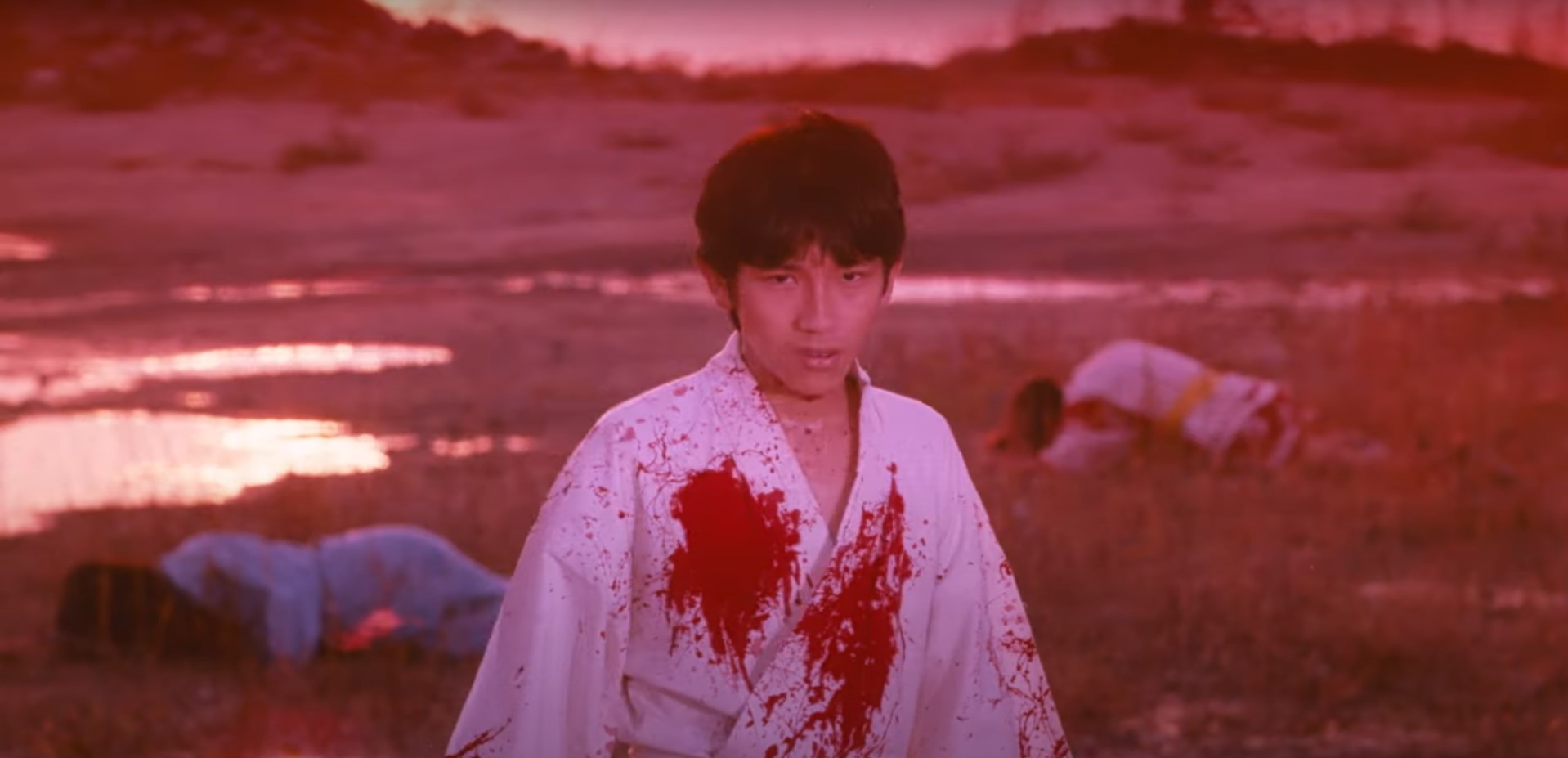
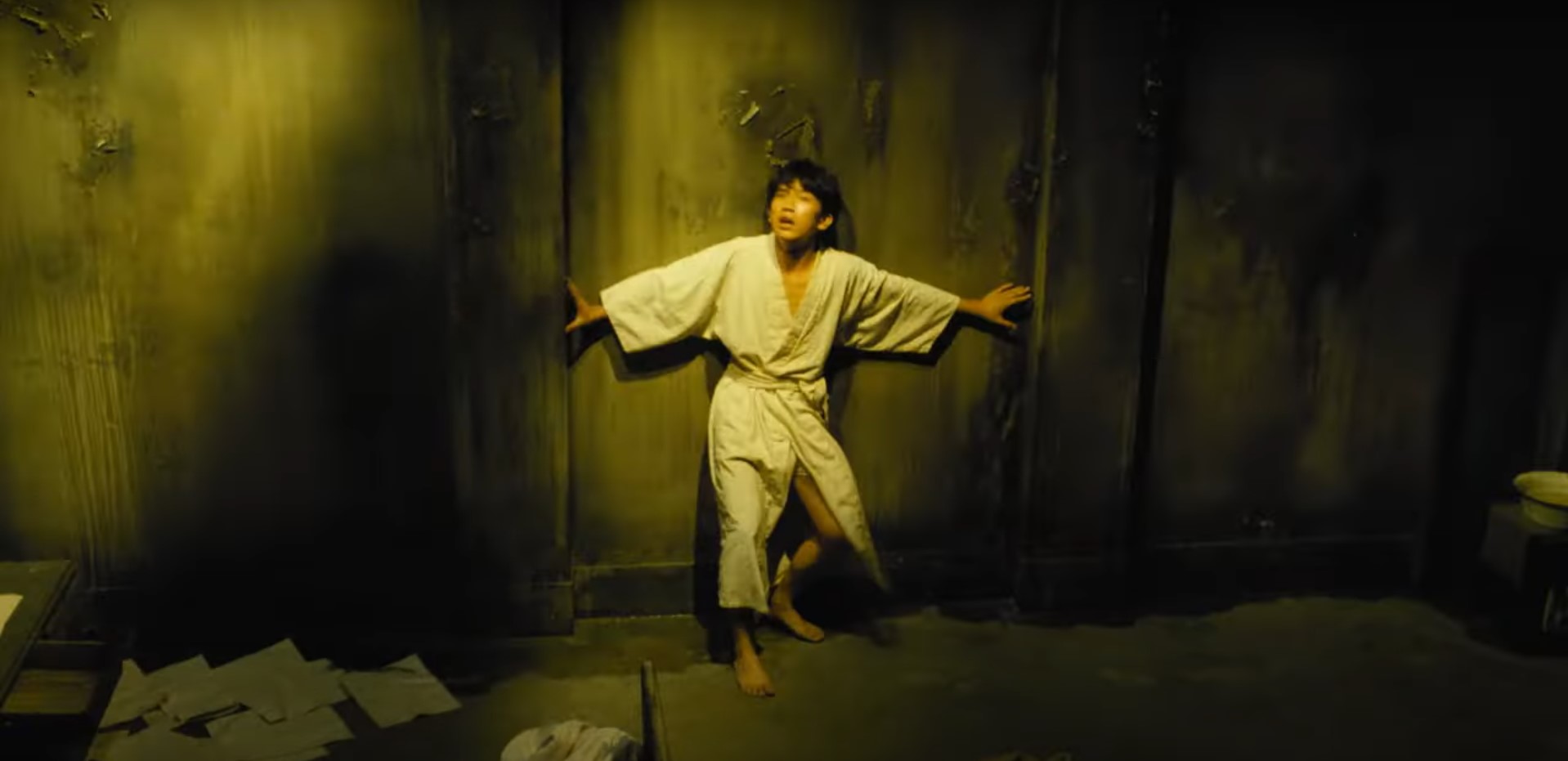
A young man wakes up in an asylum cell, unable to remember how he got there, his name, and doesn’t even recognize his face.  The asylum supervisor, Prof. Wakabayashi, has been overseeing his condition ever since the suicidal passing of former experimenting director, Dr. Masaki, nearly a month ago.  Disoriented, the young man is toured around the hospital grounds where Wakabayashi tells him the tragic tale of a 9th century man who kills his bride the day before their wedding day to capture the stages of her decomposition recorded onto a sacred scroll.  Distancing himself from the possibility of being murderous man, Wakabayashi informs him he is Kure Ichiro, the direct descendent of the groom and he enacted the very same events his ancestor committed long ago.  When the sudden reemergence of Dr. Masaki covertly corners Ichiro in his office, Masaki divulges his and Wakabayashi’s theories about Ichiro’s case but how the events came to fruition just may be plain and simple murder. 

Nature versus Nurture and the psychosis that ensues when discussing Pre-World War II context of Empirical Japan and their either inherent tendencies to repeat a violent past or to be triggered, poked, and prodded toward repeating history is the surmised and experimental plot of writer Yumeno Kyūsaku and his psychoanalytical novel “Dogura Magura.”  The title rearranged to “Dogra Mogra” is used for the film adaptation of Kyūsaku’s novel with the script written-and-directed by the avant-garde filmmaker Toshio Matsumoto (Japan’s “Demons” of 1971).  Matsumoto cowrites the script with Atsushi Yamatoya (“Story of David:  Hunting for Beautiful Girls”) written primarily from the distressed perspective of the protagonist Kure Ichiro only to switch hands when the experimenting Masaki enters the fold.  Shuji Shibata and Kazuo Shimizu inpendently produce the 1988 film under production companies Katsujindo Cinema and Toshykanky Kaihatsu AG.

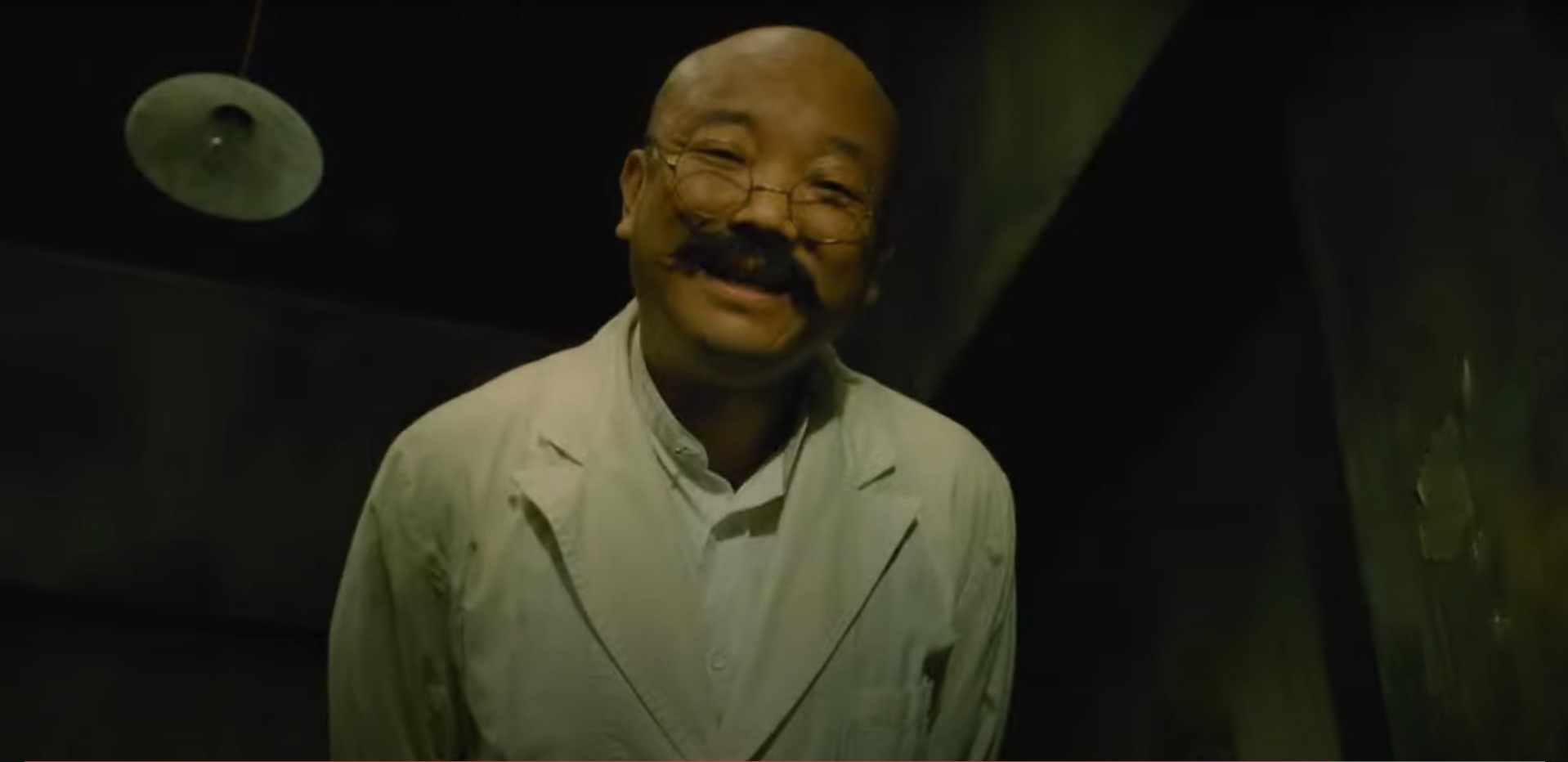
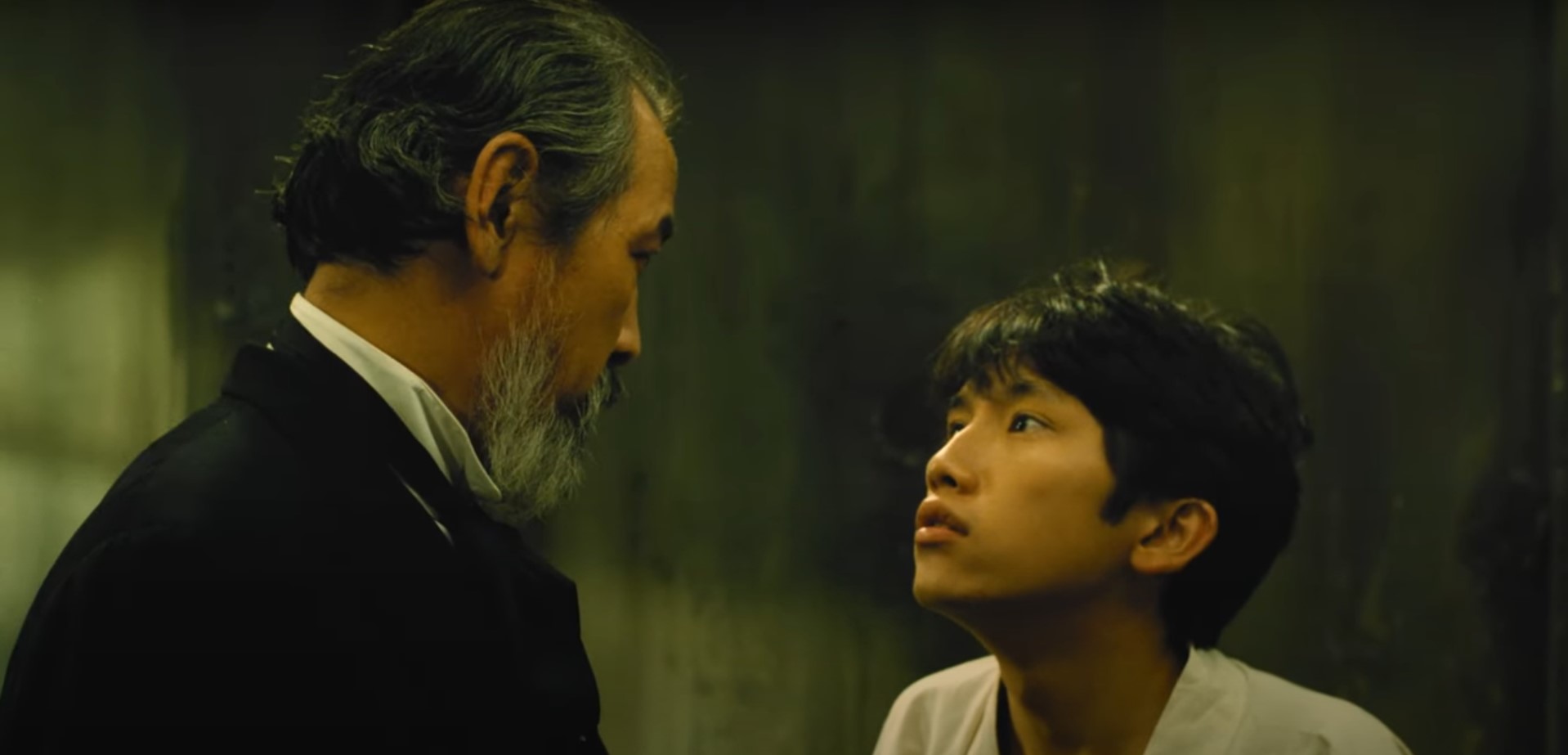
Principal players of “Dogra Magra” boil down to a three-prong outfit centered around Kure Ichiro and his theorized amnesia.  Before being the lead voice actor in “Prince Mononoke,” a decade earlier Yôji Matsuda was waking up with an inexplicable unawareness of who he was or what he had done as Kure Ichiro.  Matsuda feigns forgetfulness with shock and surprise, that will too place audiences in situational darkness, with the young Ichiro arousing in a powerful moment of unfamiliarity.  A shaken, discombobulated Ichiro becomes the object of obsessional mark between two theoretical and experimental-competing psychoanalysts in Prof. Wakabayashi and Dr. Masaki, played respectively by a collectively calm and bearded Hideo Murota (“Rape and Death of a Housewife,” “Original Sin”) that emits a sense of academia and medical security and reason and a hyenic-laughing, bald and glasses-wearing Eri Misawa who is more maniacal and unconventional to the likes of a mad-scientist   Yet both men have motivation that stirs the enigmatic pot of Kure Ichiro’s plight, stemmed from the very same source that drives the brutal murder of his beautiful bride one day before their wedding that eerily follows the footsteps of his macabre ancestral history.  There’s an inarguable difference between Wakabayashi and Masaki’s approach handling the curious case of Kure Ichiro; Wakabayashi’s hides in the clandestine shadows that aims to subvert the thought dead Masaki’s work whereas Masaki, under his blunt-force mania, is straight forward, almost apathetically.  In either case, both psychoanalytical professionals are indifferent to the crux of human life by focusing solely on whether either one of their theories is correct in an odd game of deception and death.  “Dogra Magra” rounds out the cast with Kyôko Enami (“Curse, Death & Spirit”) and Eri Misawa.

An attribute for audiences to become lost in “Dogra Magra’s” ethereal can be contributed by Toshio Matsumoto’s accosting avant-garde disorientation that swallows Kure Ichiro past, present, and future, plays tricks on his mind and eyes, and that also fishes patiently for a conclusion that rarely seems apparent.  The experimental qualities of “Dogra Magra” seep out of the tap of dark comedy and amnestic thriller and into a basin of spreading horror and exploitation.  “Dogra Magra’s” surreal storytelling and interesting, visceral visuals often reminds us of an old-dark house film a decade prior with the Nobuhiko Obayashi film, “Hausu,” and while not based in satirical foreplay like “Hausu,” “Dogra Magra” begins to unravel more questions than answers with a fleeting sense that nothing is real, nothing is as it seems, and maybe perhaps were all stuck in Kure Ichiro’s herded and scrambled mind that may or may not be his inherent, innate doing after all and that changes the narrative entirely.  Themes of historical repetition, ancestral culpability, forgetting the past, and empirical brainwashing are churned intrinsically into “Dogra Magra’s” constitution as well as within Japanese legacy with a formidable and prophetical proposition for no hope on horizon through a chimerical lens of learning and growing into the truth.

Radiance Films continues to starkly highlight underscored and wayward films from around the globe and “Dogra Magra” is no exception with a beautifully curated Blu-ray release.  The AVC encoded, 1080p high-definition, BD50 features the original widescreen aspect ratio of 1.85:1 filmed by cinematographer Tatsuo Suzuki.  The Radiance print for the limited-edition Blu-ray is pulled from the original 35mm elements and transferred in Hi-Def by producer Shuji Shibata and supervised by Tatsuo Suzuki.  The stunning upgrade leaves nothing to the imagination with a starkly harsh color grading that appears rawer than air or bright, leaning into grayscale more with darker tones of a greenish-yellow to accentuate the morbid, maybe even grittier, side of this tale, but often has naturally flourishing landscapes, such as the beach cove and the asylum yard that provides a good stretch of depth when not filtered through a POV celluloid handheld.  What’s a real winner here are the textural details that emerge through a blanket of consistent, healthy stock grain with dust and dirt retained to an extreme minimum.  The Japanese LPCM Mono mix disperse a sure-designed composition between natural audio elements layered upon or spliced with the incongruous tunes of one going through a hallucinogenic and dissociative state.  Dr. Masaki’s maniacal laughter has a sharp authoritarian jest that makes it even more frighteningly surreal.  Dialogue withholds that same sharpness and clarity throughout channeled through a single output, harnessing all the action into a funnel but clearly distinct.  English subtitles are optionally available.  The static menu’s special features store an achieved commentary track from late director Toshio Matsumoto, a 2003 interview with the director, programmer and curator Julian Ross’s visual essay on the cinematography Dogra Magra Through the Eyes of Tatsuo Suzuki, a featurette Instructions on Ahodara Sutra on the subject of the chant used in the story, a still gallery of production sketches, and the trailer.  A 51-page, color book weighs the Blu-ray package with contents that include a director’s statement from 1988, exclusive essays and an interview by Hirofumi Sakamoto Late-Period Toshio Matsumoto and Dogra Magra, Jasper Sharp The Pen is Mightier than the Sword:  The Life of Atsushi Yamatoya, and Alexander Fee and Karin Yamamoto Memory traces:  Interview with Producer Shuji Shibata, and rounding out with transfer credits and release acknowledgements.  The reversible sleeve is housed in a clear Blu-ray Amaray with new illustration compositional art and the original, more traditionally composed, Ukiyo-e artwork on the reverse.  Encoded only for regions A and B, Radiance Films’ limited-edition release to 3000 copies has a runtime of 109 minutes and is not rated. 

Last Rites: “Dogra Magra” psychosomatic surrealism is mind games on methamphetamines and Radiance Films does the 1988 Japanese picture justice rekindling its worth to the world of cinema.

“Dogra Magra” on Limited Edition Blu-ray! Purchase Here!

No Train Coach is Safe from a Family of EVIL Bandits. “Kill” reviewed! (Lionsgate / 4K UHD and Standard Blu-ray)

Get Your “Kill” on! 4K UHD and Standard Blu-ray Available at Amazon!

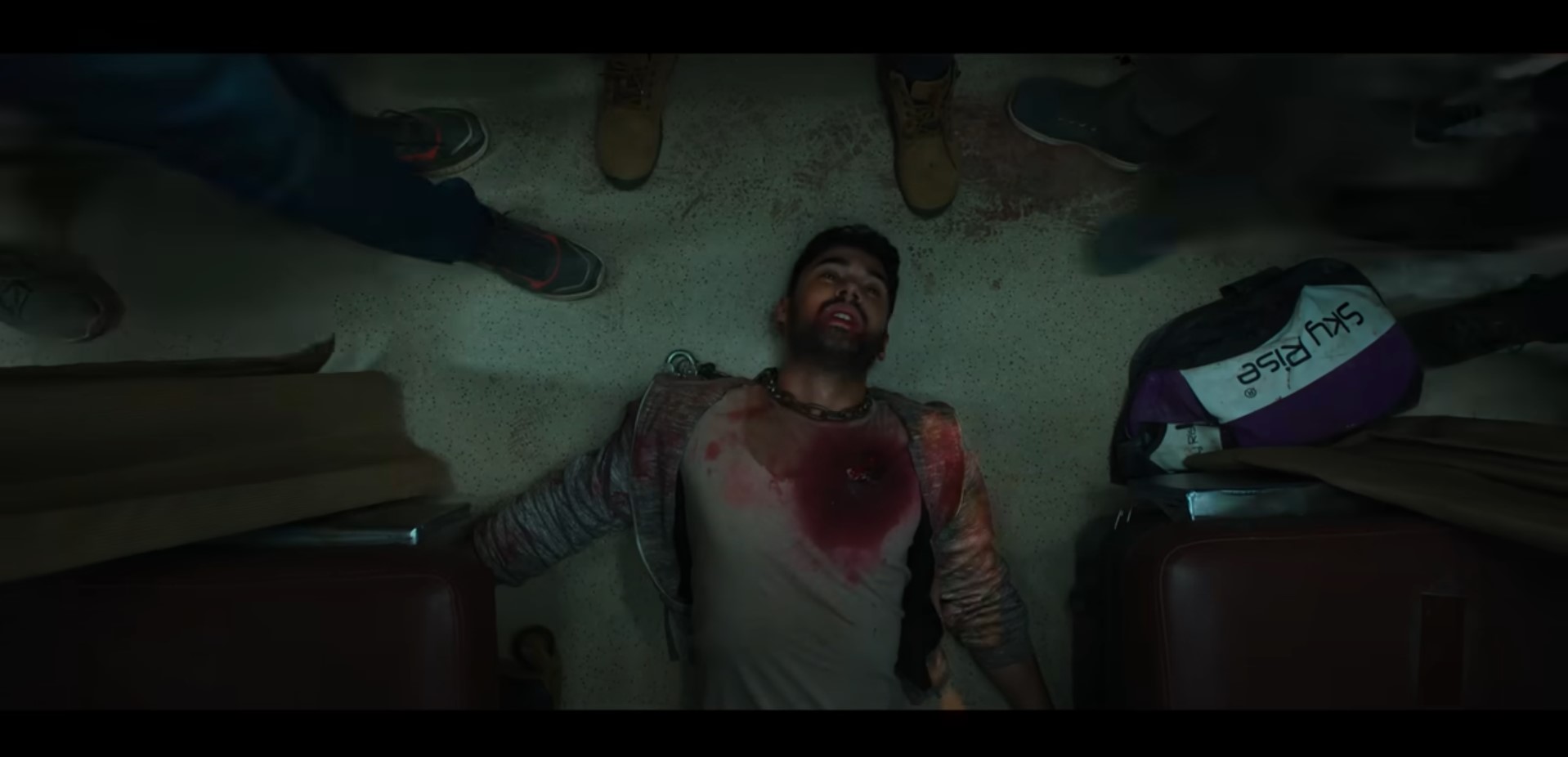
Captain Amrit of India’s National Security Guard boards a commuter train to stop the arranged marriage of his true love, Tulika.  As the two lovers reunite and promise each other to one another, a large family of thieves hijack the coach cars to loot the passengers.  Amrit and fellow captain and friend Verish fight to protect Tulika, her family, and the innocent passengers for the sake of their very lives.  When Tulika is taken by the hands of Fani, the ruthless thug son of the thieves’ leader, Amrit’s kill switch engages an unstoppable force of ferocity to get his blood-soaked hands around Fani’s neck.  He’ll first have to brutally bulldoze his way through 40 melee-weapon armed looters, all related to Fani, to get to his target while, at the same time, protect more innocent passengers from the hands of killer, uncompressing thieves and it’s a long train ride to destination New Delhi.

An India film that doesn’t have the typical unrealistic Bollywood action and violence and is labeled India’s most violent and gory film ever, “Kill” comes from writer-director Nikhil Nagesh Bhat (“Long Live Brij Mohan”).  Every ounce of close-quartered, free-for-all action is set entirely inside carefully detailed and constructed railcars that replicate almost down to the paint the very commuter diesel trains coursing the India rail lines. “Kill” accurately describes what Bhat accomplishes with a nonstop drive to protect the ones you love at no matter the cost and when moral planks are broken right underneath your feet.  The Lionsgate and Roadside Attractions presentation is a production of Sikhya Entertainment and Dharma Productions and is produced by Guneet Monga Kapoor (“Darkness Visible”), Apoorva Mehta (“Bhoot:  Part One – The Haunted Ship”), Achin Jain, Hiroo Johar (“Bhoot:  Part One – The Haunted Ship”), and Karan Johar (“Bhoot:  Part One – The Haunted Ship”).

“Kill” introduces actor Lakshya as the one-man army and killing machine Amrit, driven by love’s unflinching rage that’s about as unstoppable as the freight train he’s on.  The train has become a bout ring of carnage when a literal 40-person family of thieves, or dacoits, suddenly disperses to take control of multiple train cars, killing some passengers in the process.  At the head of the snake is a battle in itself between father Beni Bhushan (Ashish Vidyarthi, “AK 47”)) and son Fani (Raghav Juyal) but though they don’t see eye-to-eye on handle a sudden downturn with Amrit being a wrench in their looting scheme, there’s a glue that keeps them aligned.  Much of the loyalty is present throughout without ever a sense of treachery on either side but Vidyarthi and Juyal delineate juxtaposition well, especially with Fani’s loose cannon antics that make him formidable even if he’s not fully in charge. Lakshya and the rest of the cast move with intent when considering their action choreography but Lakshya offers one step further being a romantic and a tragic hero when it comes to his darling Tulika (Tanya Maniktala, “Tooth Pari:  When Love Bites”) as she’s used a pawn when the bandits discover her wealthy and powerful father on the train, Baldeo Singh Thakur (“Harsh Chhaya), to exploit him for more ransom riches.  There are also great dynamic interactions with standout sublevel principals in Amrit’s brother in arms and best friend, Viresh (Abhishek Chauhan) and Fani’s towering large and strong cousin Siddhi (Parth Tiwari) that support the main adversarial opposites.  The Bollywood actors in “Kill” round out with Pratap Verma, Devang Bagga, Adrija Sinha, Meenal Kapoor, and a train load supporting cast to play bandits and passengers.

Bollywood films are known for their grandiose appeal with beautifully crafted costumes, large scale sets, and physics defying action that’s makes the “Matrix” look like child’s play.  “Kill” hits different.  “Kill” offers some of the same characteristics of a “Bollywood” production, such as a lone-wolf hero slathered in a focused and swathed cool aura, but the film heavily contrasts with aspects that are uncommon in India’s moviemaking industry.  “Kill” is uber-violent that’s graphic, gory, and on a more realistic scale than other Bollywood action films which typically go against the laws of physics for pure ego-eccentric entertainment.  “Kill’s” heroic heart goes icy cold, reforming the moral principles of a man who out of duty and respect upheld life as precious to a man hurting with antiheroic qualities that sees every bad guy as just another disposable body in the way of his goal – revenge.  Amrit doesn’t turn into a Frank Castle killing machine until a little after 45 minutes when, at the same moment, the title drops in a surprise move of editing.  You really find yourself unaware that “Kill” did not name itself until almost halfway into the story and it becomes an indicator, a switch if you will, that Amrit, as too with the story’s tone, is different from before.  The kills pre-title and post-title change from barely a whisper with a few shrouded stabbings to a varietal, punchy onslaught of massacre proportions.

Pulling into the physical media station, carrier a story all the way from India, is “Kill” from Lionsgate.  The 2-Disc 4K UltraHD and Standard Blu-ray set comes with an HEVC encoded, 2160p resolution, BD100, per other source outlets on the UHD capacity; however, I only see two layers with code identifiers, which might suggest BD66.  Given that the UHD houses the movie plus special features, I’m inclined to agree with the BD100.  The Standard Blu-ray is AVC encoded, 1080p resolution, on a BD50.  HDR on the UHD provides a deeper saturation with easy transition between hues with the Blu-ray accomplishing much of the same with lesser color reproduction but that doesn’t stop the release from being vibrant and bold as mood density changes from a colorfully rich, jovial scheme of celebration and love to a colder tone with muted yellows, harsh grays, and milky blue as destruction and death continue down the rabbit hole.  The trains confined space doesn’t deter depth in either the parallel or perpendicular view of camera direction.  There’s also a great reproduction of textural details from clothes to skin to finer points, like hair or silks.  The Hindi Dolby Atmos 5.1 is a blaze of glory with full-bodied, immersive sound that puts you right in the middle of Coach A1 for the hand-to-hand melee with the rear and front channels while the back channels isolate the train’s depth of railway locomotion and exterior audibles created by the train’s passing, such as air ambient rearrangement when occupying the same space.  Dialogue is not compromised with a clean and forefront present track that progresses with each state of action.  The English subtitles are burned into the coding.  If native language audio tracks are not your thing, there is an English dub Dolby Digital 2.0 track available.  Spanish subtitles are optionally included on both tracks with English subtitle optionally available only on the English dub.  An approx. 46-minute making-of featurette How to Kill:  Making of a Bloody Train Ride goes into depth with set construction, interviews with cast and crew, action choreography, and the overall cinematography from the blood to standout in the picture to the natural colors of India being tweaked for the camera.  There are also individual behind-the-scenes and interviews that are basically Cliff Note versions of the arterial bonus feature with Making of the Train, Introduction Lakshya, Behind the Blood, and Behind the Action.  The theatrical trailer is also included.  The dual format release centers Amrit (Lakshya) about to take on knives, axes, and pipe-wielding attackers with the title yellow and largely in bold behind him.  The green UHD Amaray comes housed inside a rounded cardboard O-slipcover with a glossier version of the same cover art.  A disc of each format is snapped into each side interior with a blue hued 4K UHD for the hero and a red hued Standard Blu-ray for the villain.  A digital code is included in the insert of the 4K and Blu-ray release but is feature only.  Rated R for strong bloody violence throughout, grizzly images, and language, “Kill” is presented with a hard-encoded region A playback and clocks in at 105 minutes. 

Last Rites: Kill, Kill, Kill! India has stepped up the violence not yet seen in the land of Bollywood and “Kill” introduces a whole lot of new to the country’s movie industry that will revolutionize India’s filmmaking game.

Get Your “Kill” on! 4K UHD and Standard Blu-ray Available at Amazon!